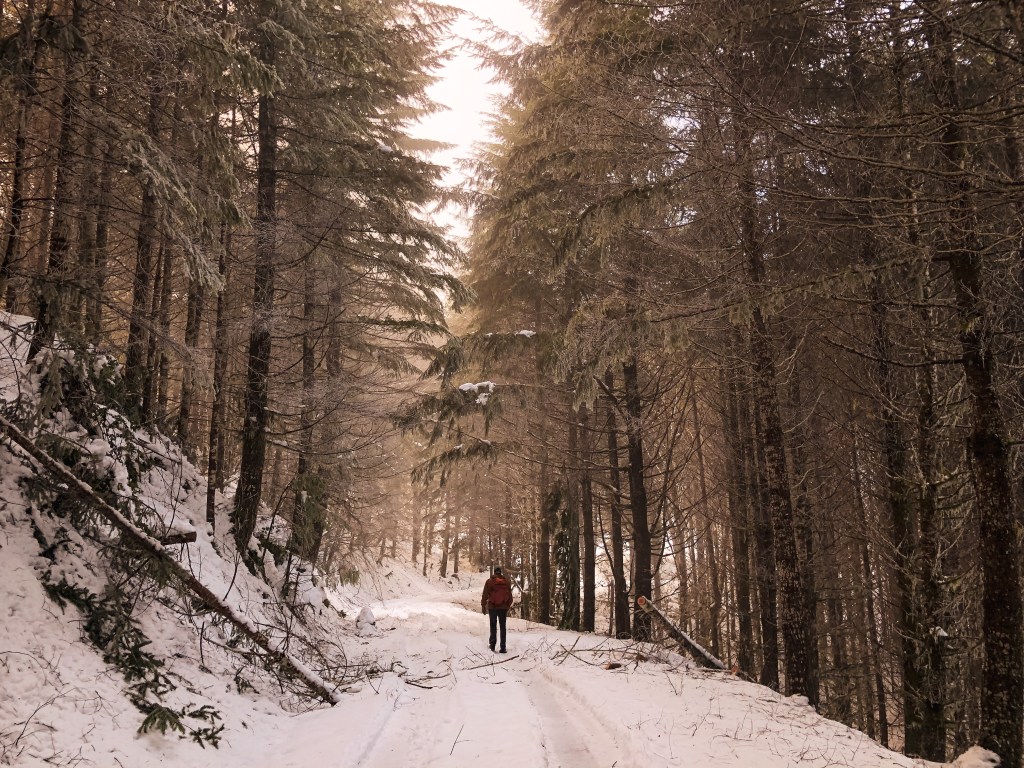
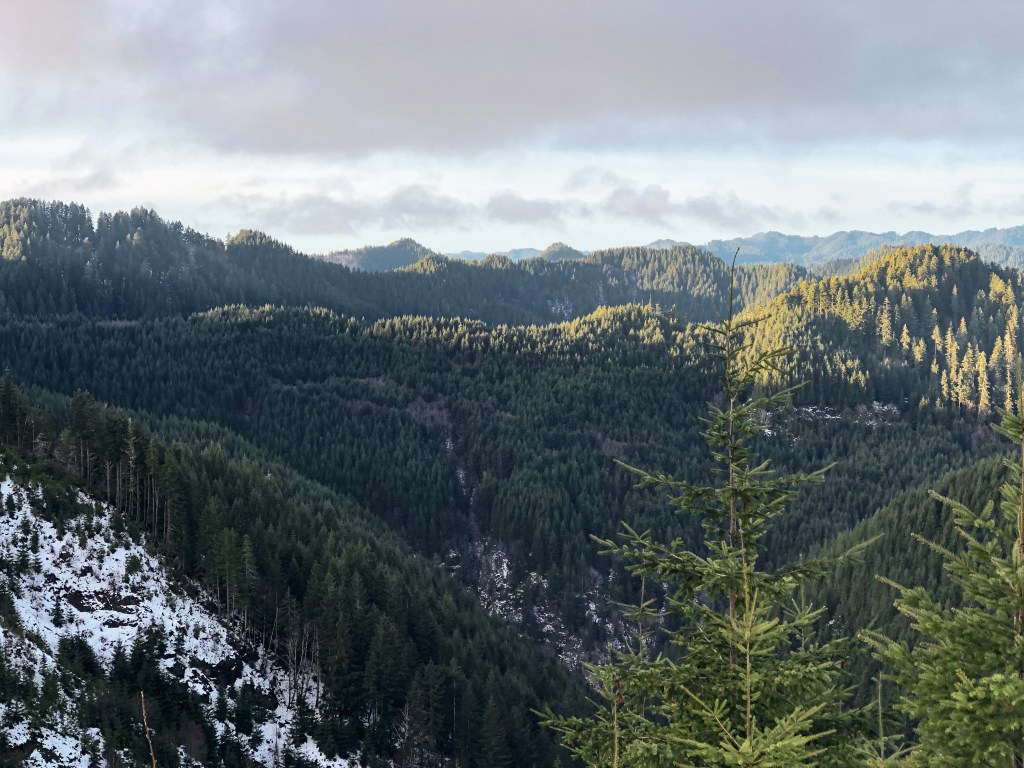
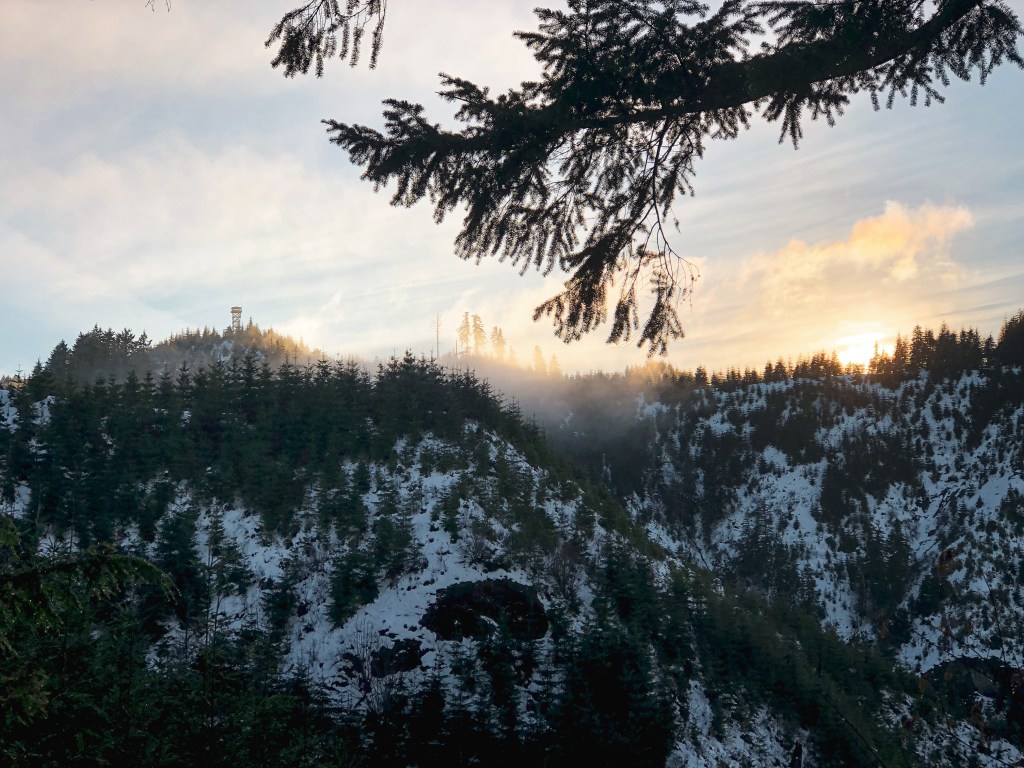
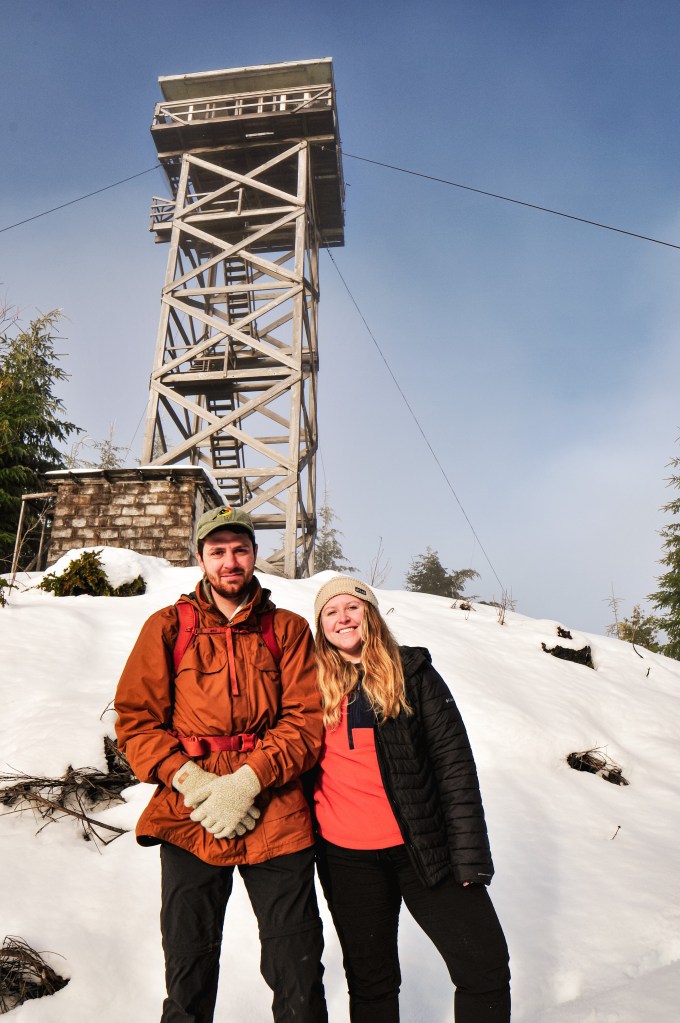
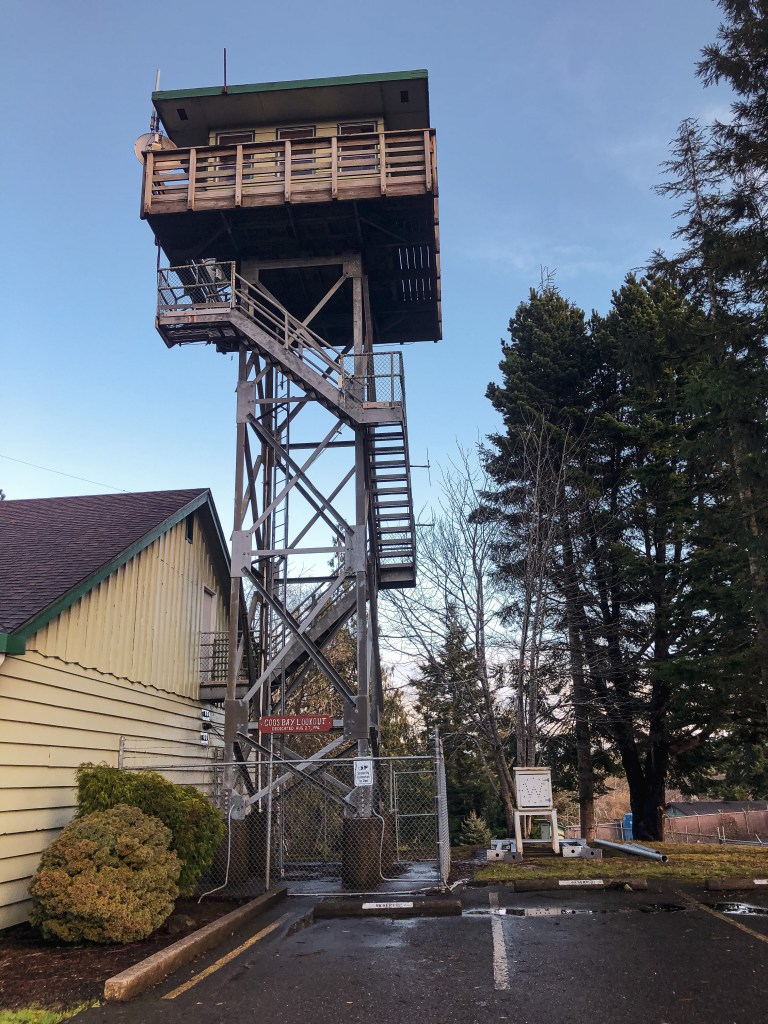
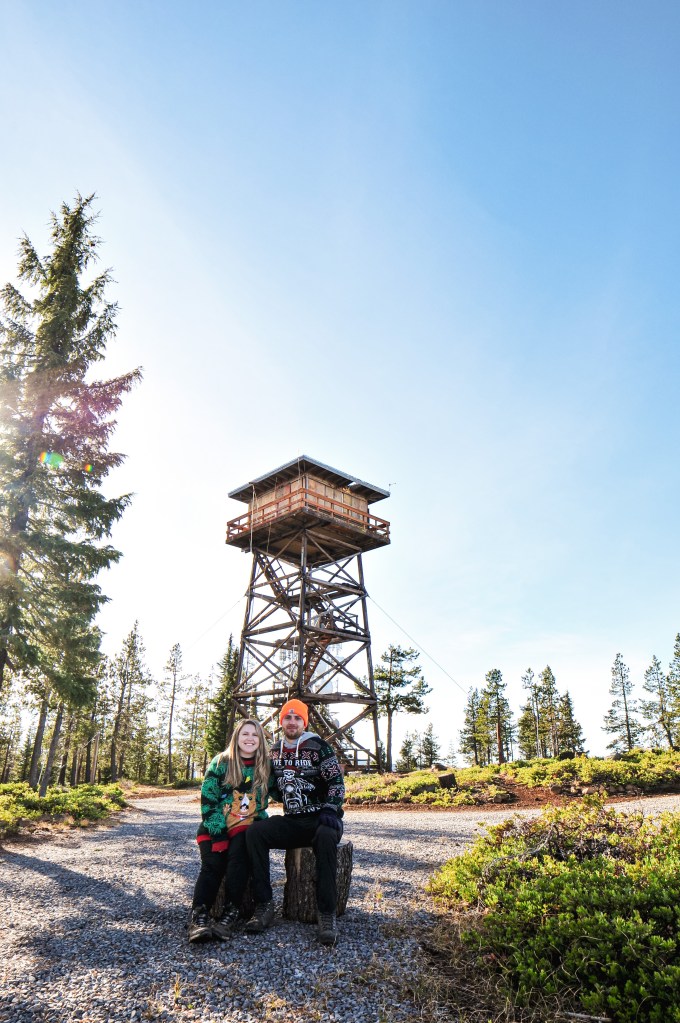
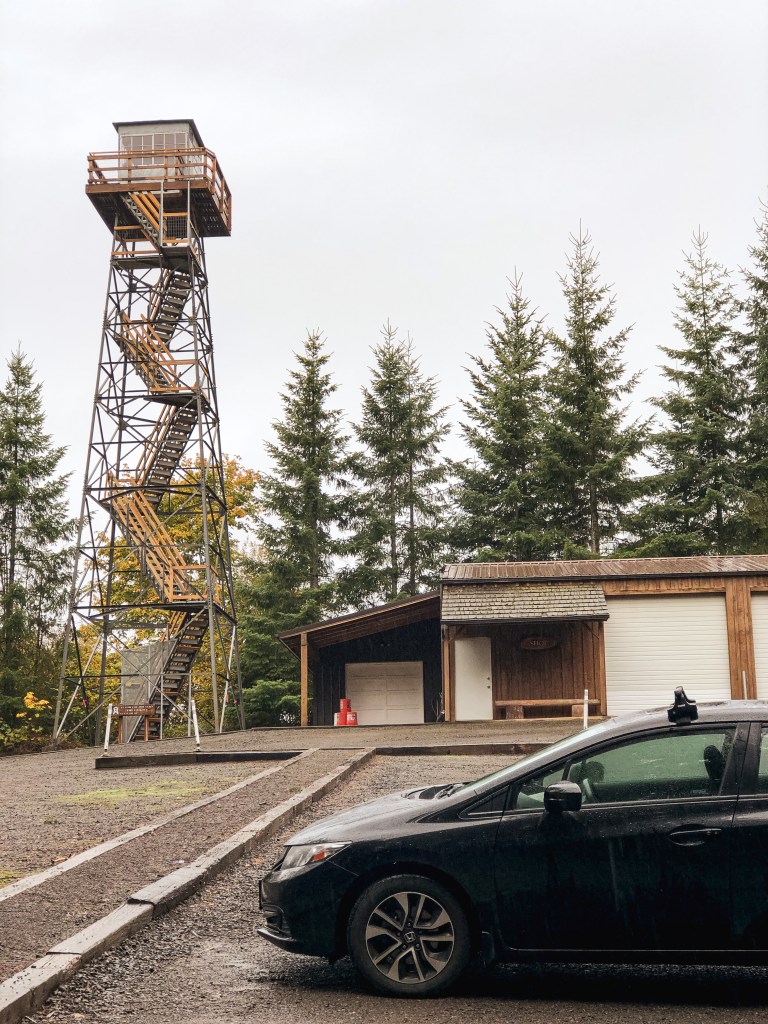
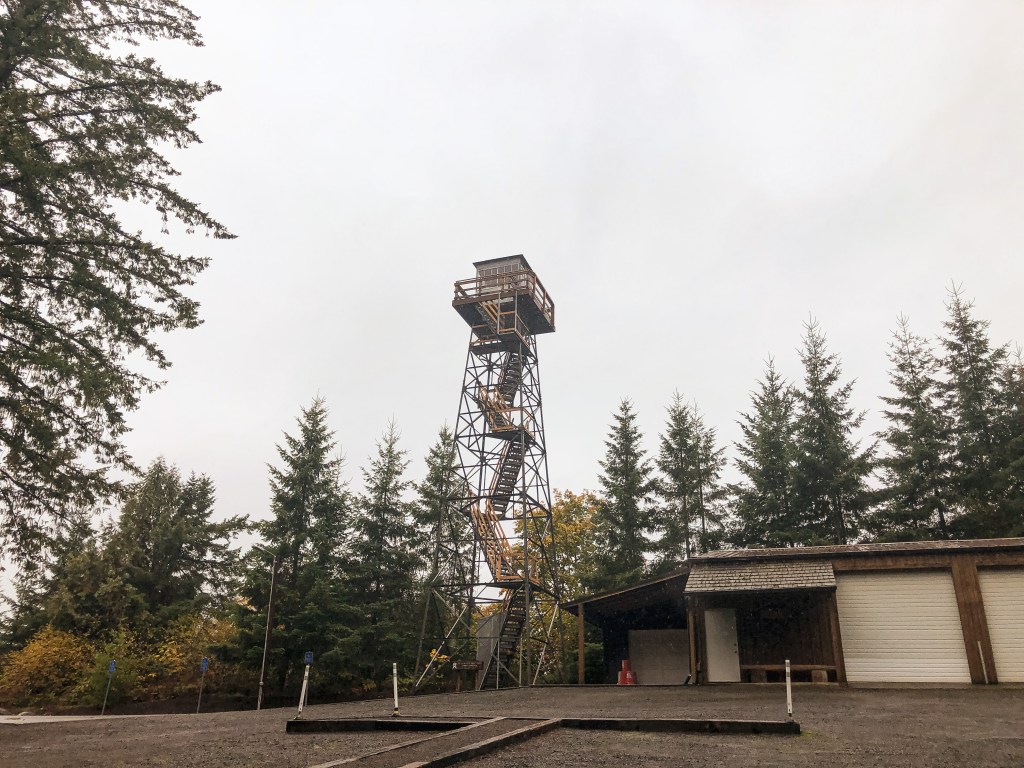
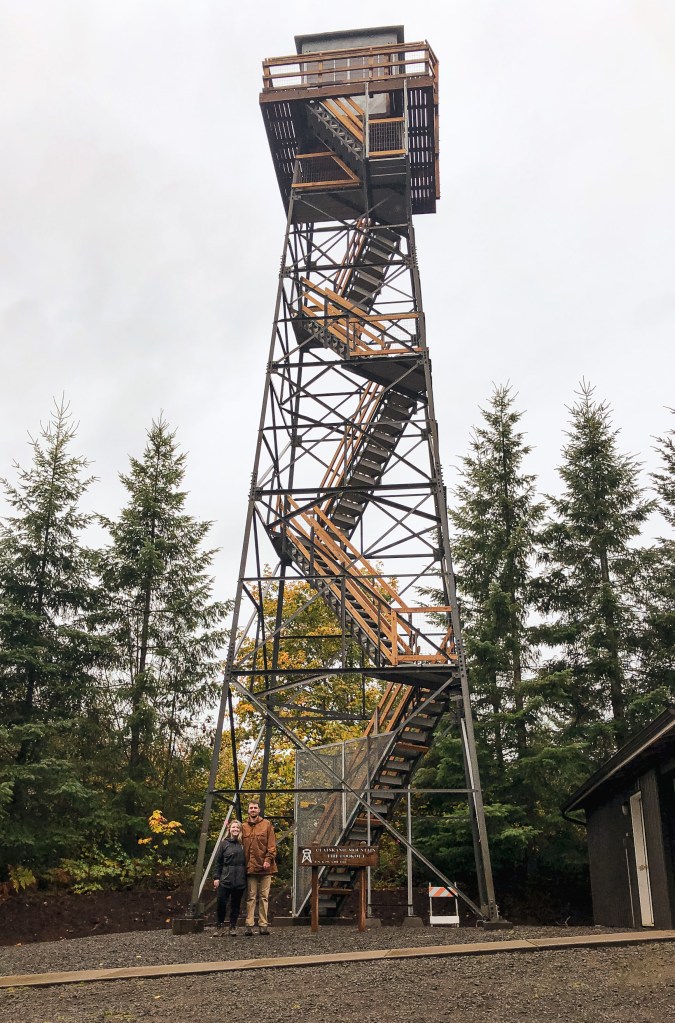
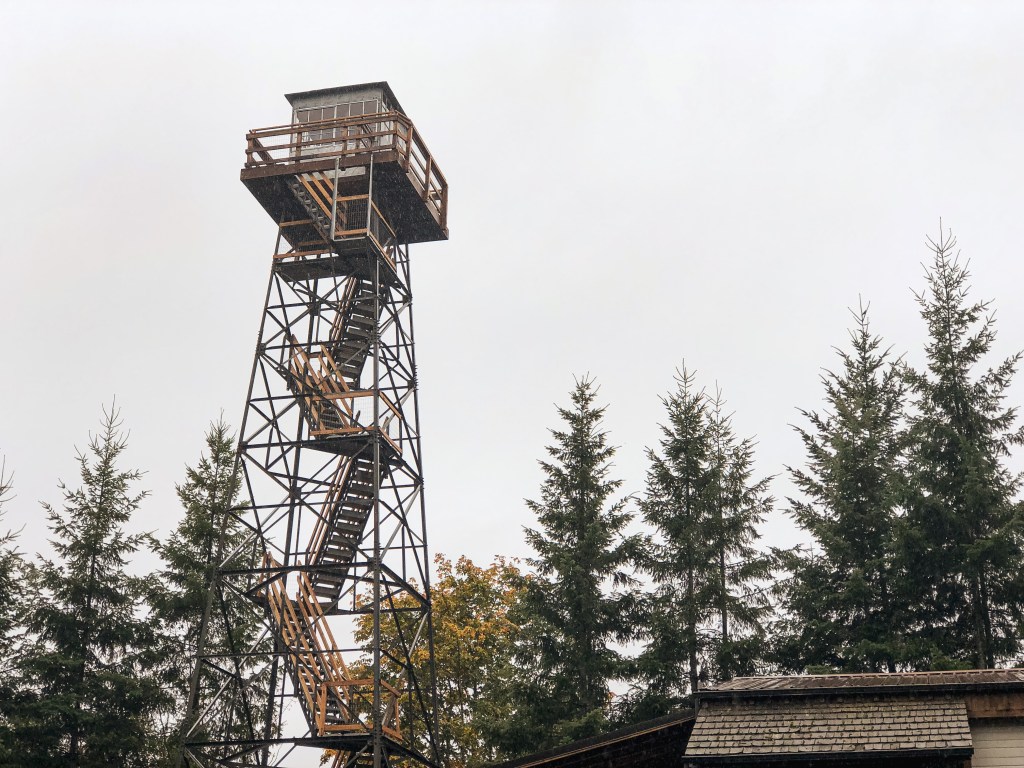
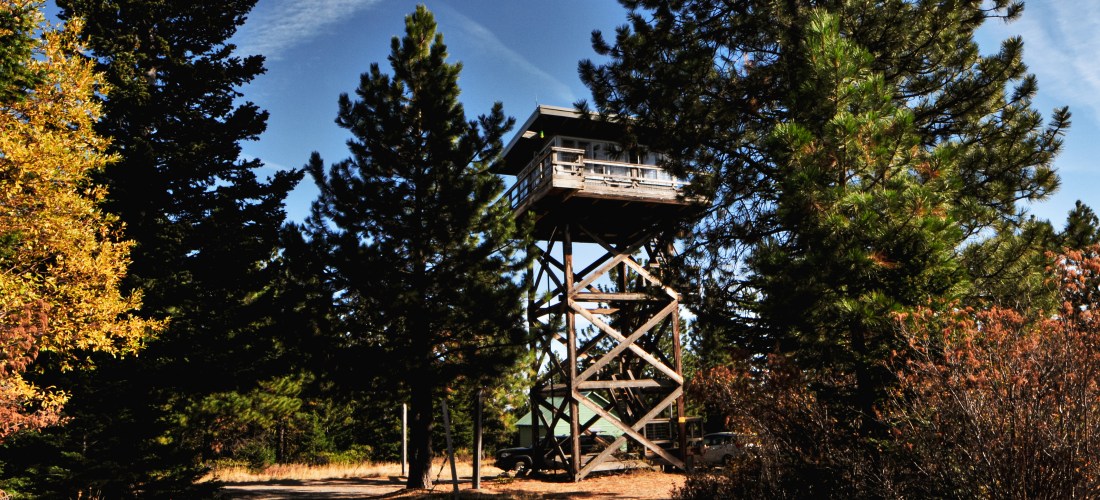
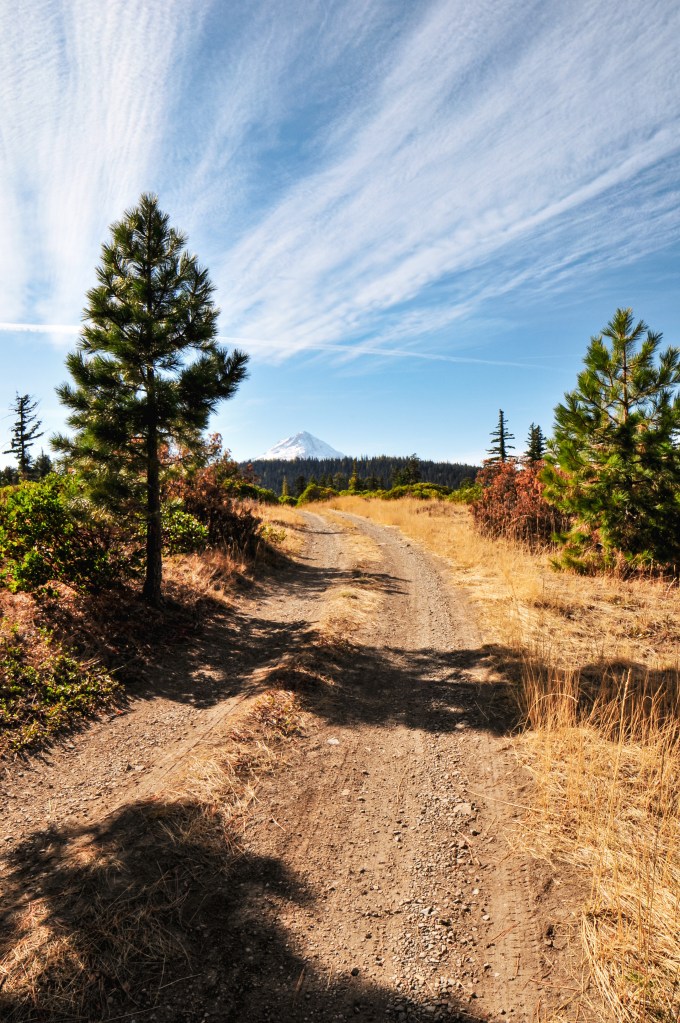
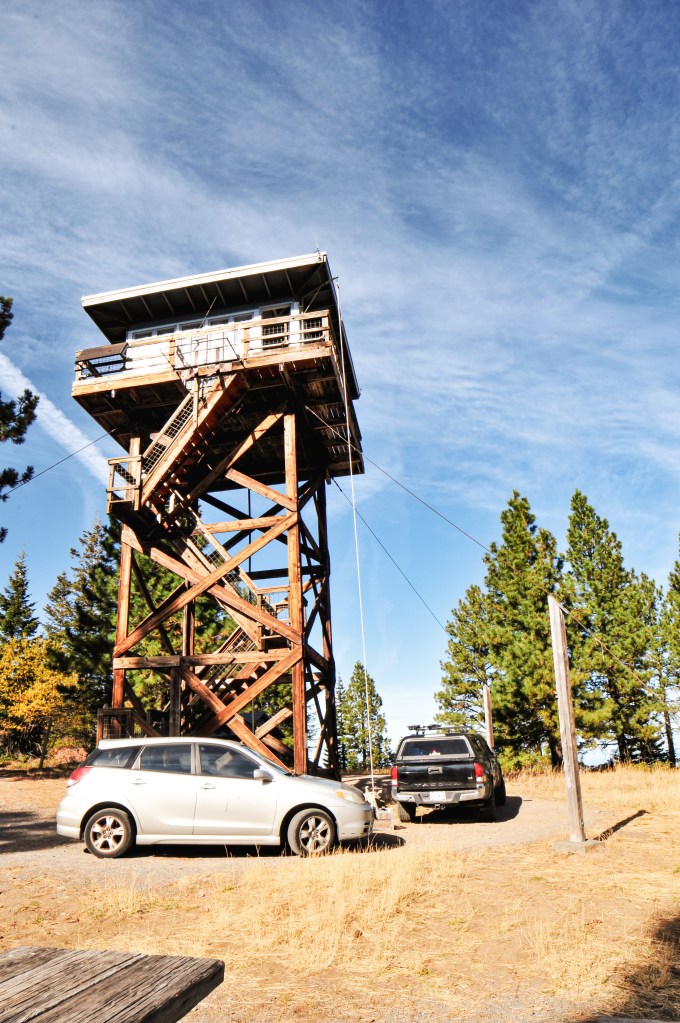
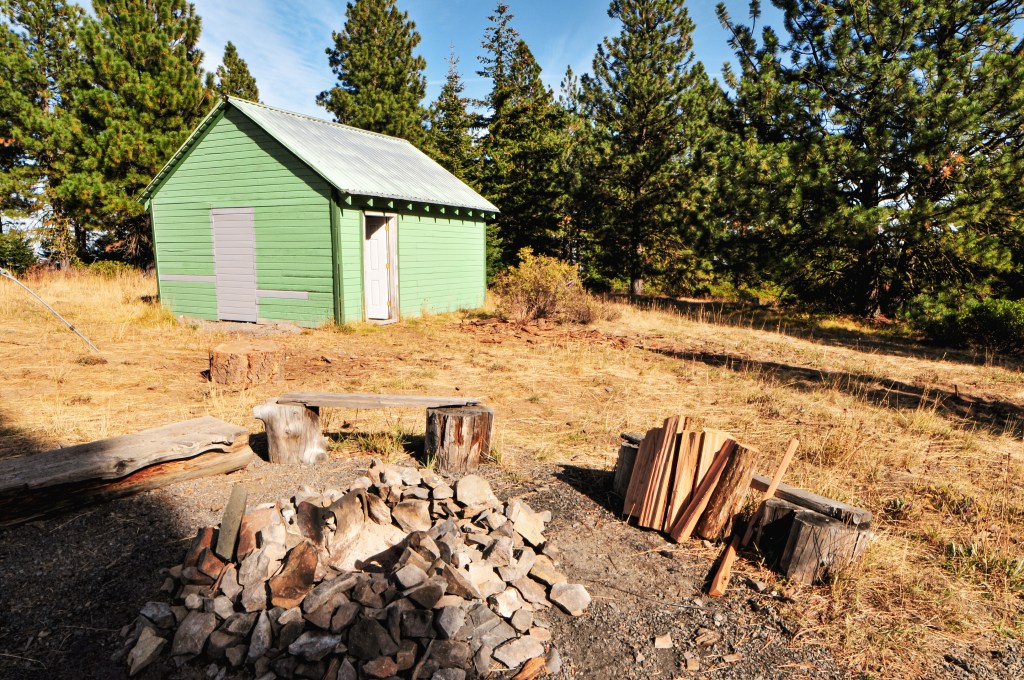
My partner and I decided to book a rental in Reedsport for the New Year and our 3-year anniversary. We chose Reedsport for it’s proximity to two lookouts along the coast. We figured we could end and start the year doing what we enjoyed most. We headed to Bunker Hill L.O. since we had some time to kill before checking into our rental. This will be our last lookout visit for the year! It’s located in the coastal town of Coos Bay at the Oregon Department of Forestry building. We were able to find it by following signs to the ODF building from HWY-101. Heading south on HWY-101 you will turn right on to Flanagan Road. You will stay on Flanagan Road until you reach Lookout Lane. Turn Left on to Lookout Lane. If you end up driving past Lookout Lane you can still get there by turning left on to Bay Park Lane and then another left on Fifth Road. The junction of Bay Park Lane and Fifth Road has an ODF sign. The buildings were closed for the holiday but we were still able to access the grounds and view the lookout from the parking lot. There is marked visitor parking just past the gate.
History.
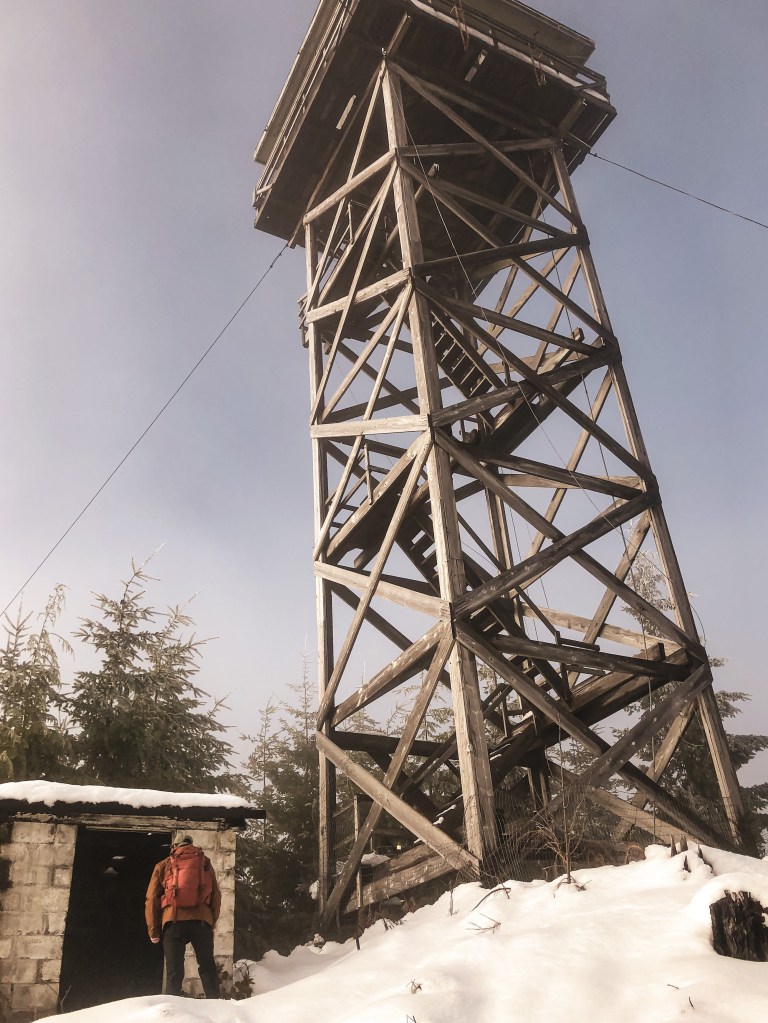
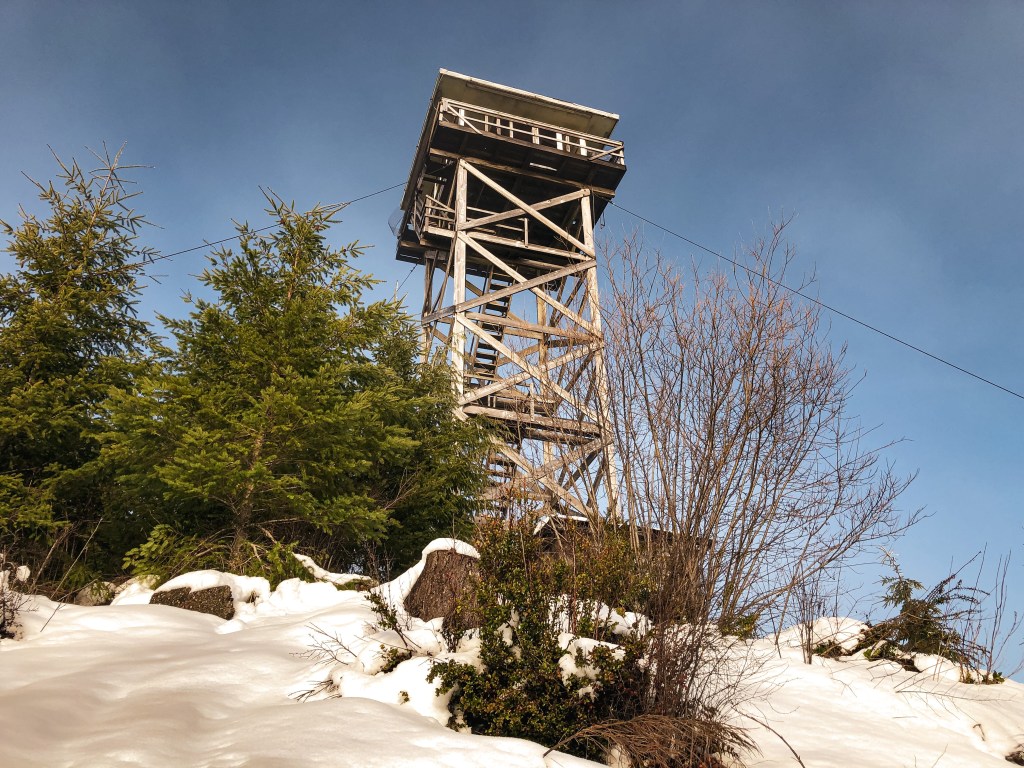
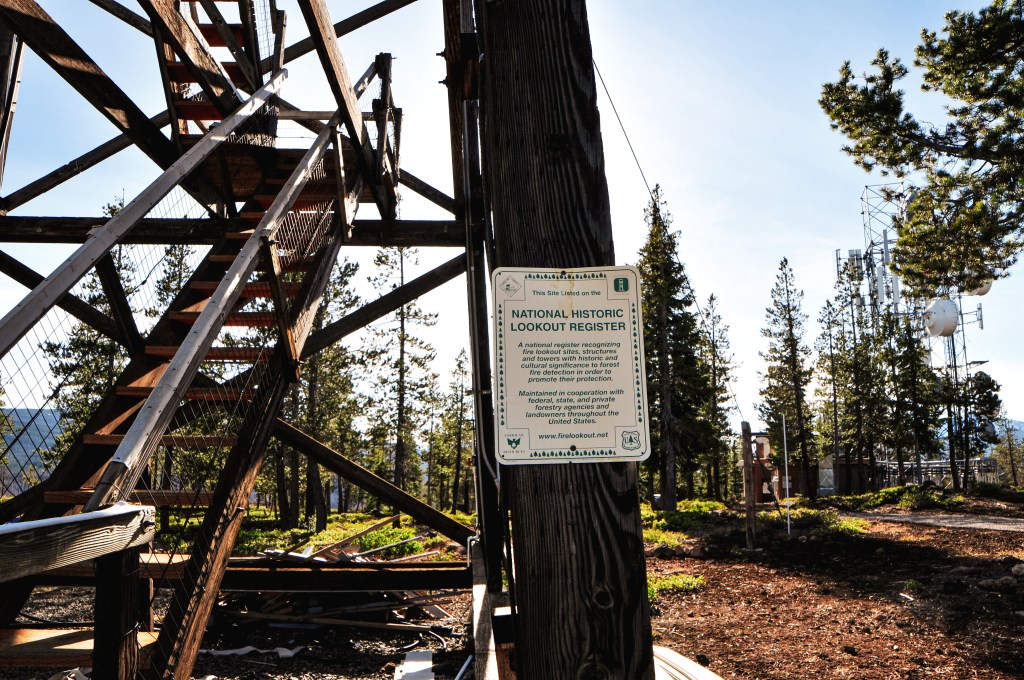
In 1937, a combination lookout and water tower were built for the ODF by the CCC of Camp Walker. A 7’x7′ lookout cab was built atop a 3,000 gallon 52′ water tank. This lookout tower was used by the Coos Fire Patrol until the 1950’s. It was also used briefly for air raid spotting during the war, but it was found that most spotting had been done from the ground. The combined lookout and water tower was dismantled in 1965. It wasn’t until 1996 that they decided to build a new lookout tower on Bunker Hill for training. The existing 12’x12′ lookout sits atop a 40′ steel tower next to the district headquarters. The steel tower used was donated by the U.S. Coast Guard. It is currently an interpretive site for visitors and listed on the National Historic Lookout Register. it’s labeled as the Coos Bay Lookout on the tower itself.
Bonus: We visited the Umpqua Lighthouse State Park to check out the lighthouse before heading to Bunker Hill L.O. It is ran by the U.S. Coast Guard and tours are offered through the museum. While parked we spotted another structure closer to the ocean that resembled a lookout. I’m sure it’s used by the U.S. Coast Guard for some sort of training but the base looked almost identical to Bunker Hill L.O.
NOTICE: As of July 20, 2024 this area is currently closed due to the active Diamond Complex.
Location.
Umpqua National Forest
Status.
Active; Currently standing
Estimated drive time from Portland, OR.
4 hours
Date visited.
December 4, 2021
Elevation.
6,417′
National Historic Lookout Register.
US 486; OR 79
Trip Report.
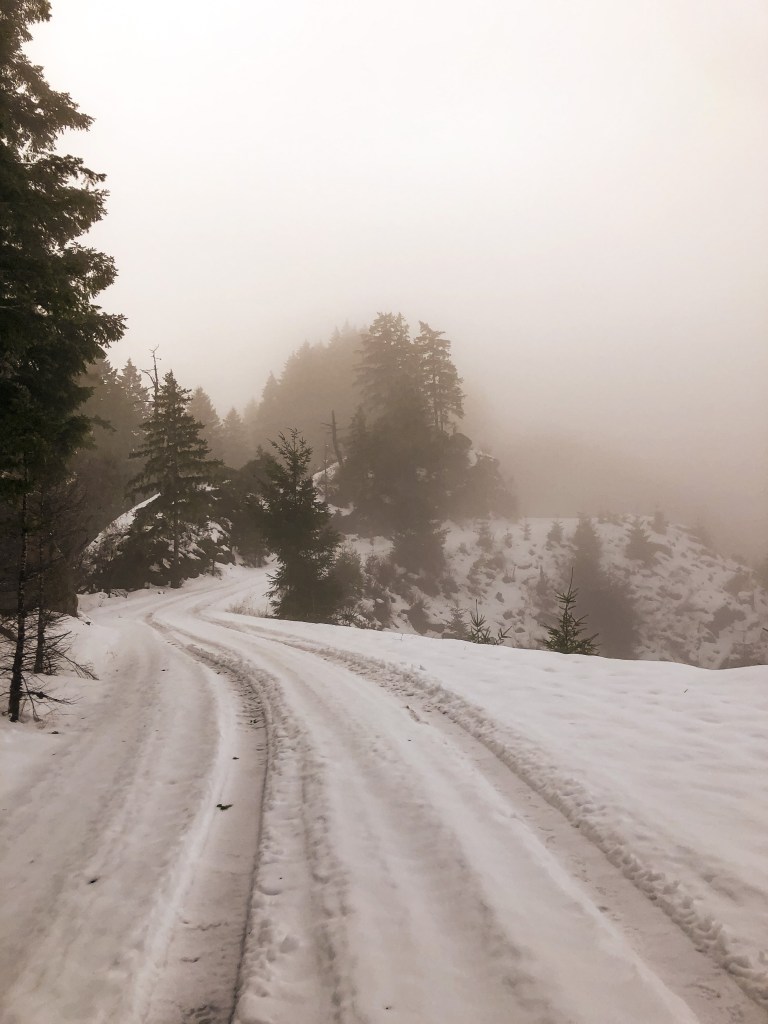
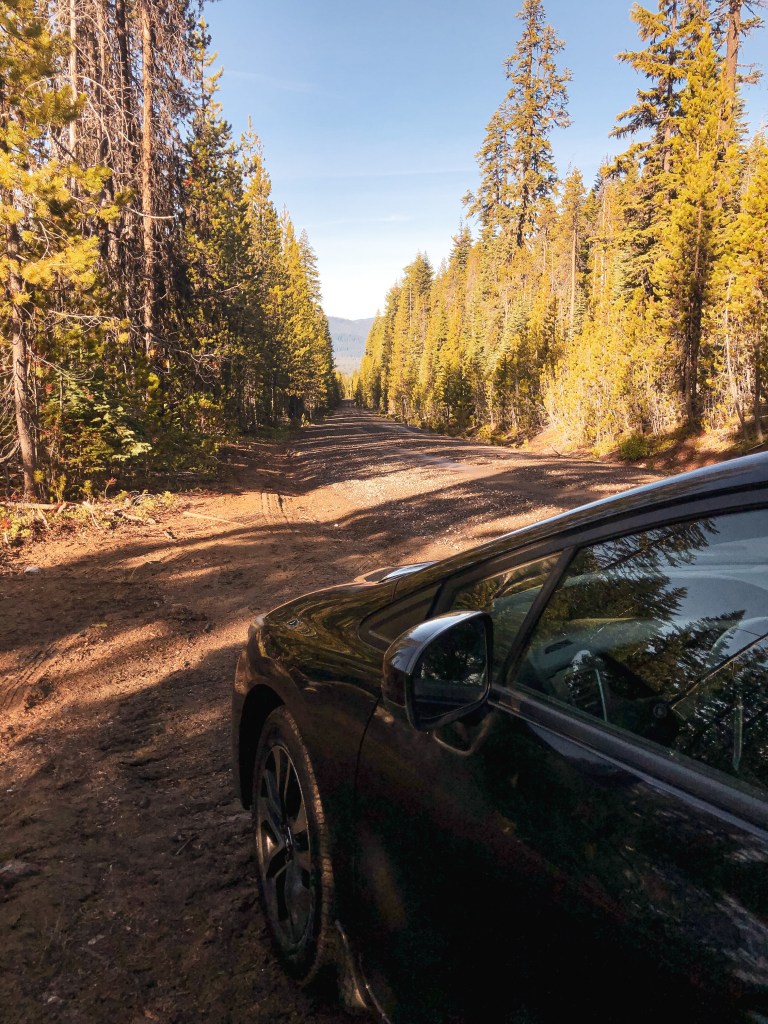
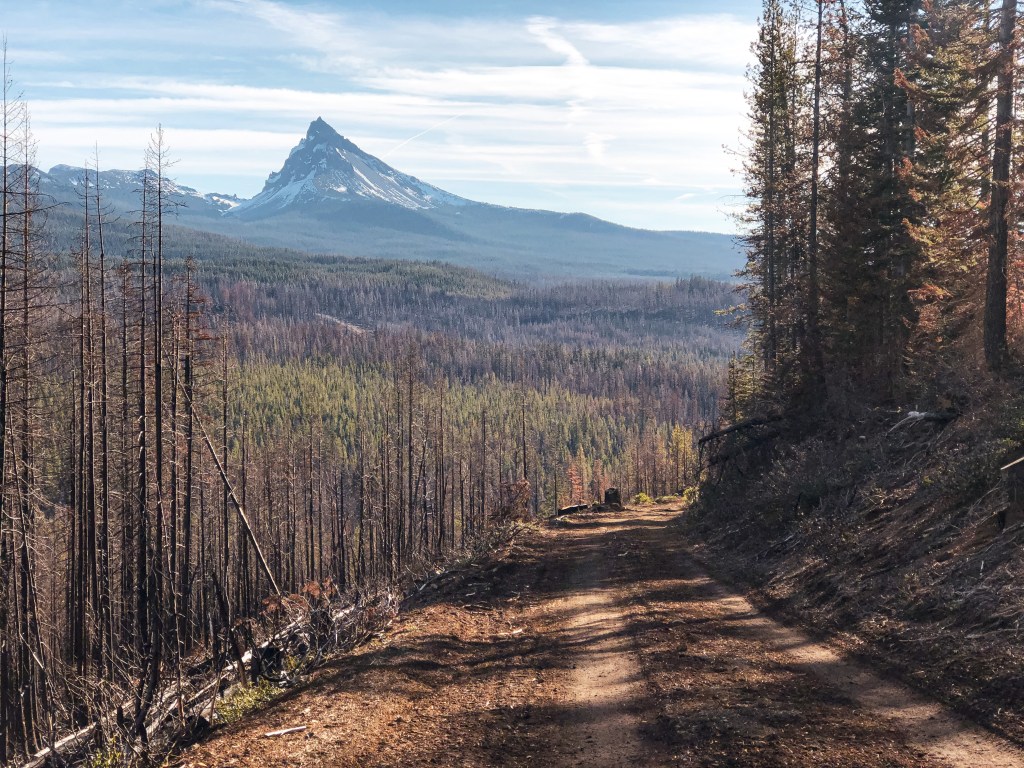
We debated visiting this lookout during the winter months and planning it as a snowshoe since the access road, NF-4793, is located right off of HWY-138. There’s also a small snow park located right at the turn off. This would be easy to access since it is plowed in the winter. There hadn’t been much snow in this area as of recently and we decided to check it out as a day hike instead. The weekend forecasted for cold but sunny skies. We were hopeful we wouldn’t be met with any snow and decided to try for Garwood Butte (post) while we were in the area too. As we made our way down to the Umpqua NF from Portland, we could see patchy snow on the tips of the high peaks. We decided to head for Garwood Butte (post) first but only made it a little less than a mile down the road before we were met with deep snow. It wasn’t worth the risk to drive, so we continued on to Cinnamon Butte. We turned on to NF-4793 and were uncertain if we’d be met with more snow. There is a sign for the lookout from HWY-138 and at the road junction off of NF-4793, so it is easy to find. The turn off for the lookout access road is only a mile and a half up NF-4793. I figure this road gets more sun exposure since we were able to drive to the junction with no issues. It is a gated road so you will need to park and walk the remaining distance. From the gate it is another 1.5 miles to the summit. As you hike up the road, you will already start to get some great views of Mt. Thielsen and the surrounding Diamond Lake area. There is a large parking lot on the summit which makes me believe you can drive there in the summer months. We had the summit to ourselves for the majority of the time. Another couple had hiked up while we were eating lunch but didn’t stay for very long. We took our time on the summit since we already had reservations in Roseburg for the night. It was a gorgeous day to visit!
History.
The current lookout tower was built for Buster Butte in 1955 as a 41′ treated tower and R-6 flat roof cab. It wasn’t moved to Cinnamon Butte until 1976. It has since seen some renovations. The original Cinnamon Butte L.O. was developed as a 35′ tower with L-4 cab in 1934 by the CCC. This lookout is one of the few that is still actively staffed every summer. The structure was threatened by the Thielsen Fire in September 2020. Evidence on how close the fire came can be seen on your hike up the road. It’s apparent that the access road was part of the fire break.
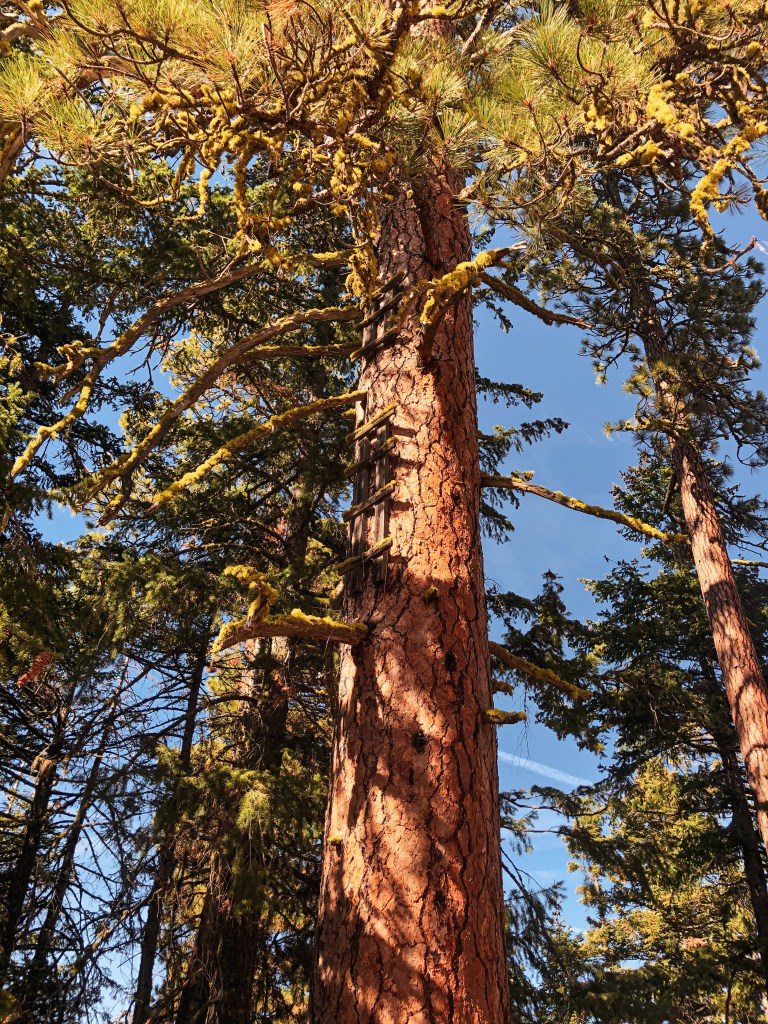
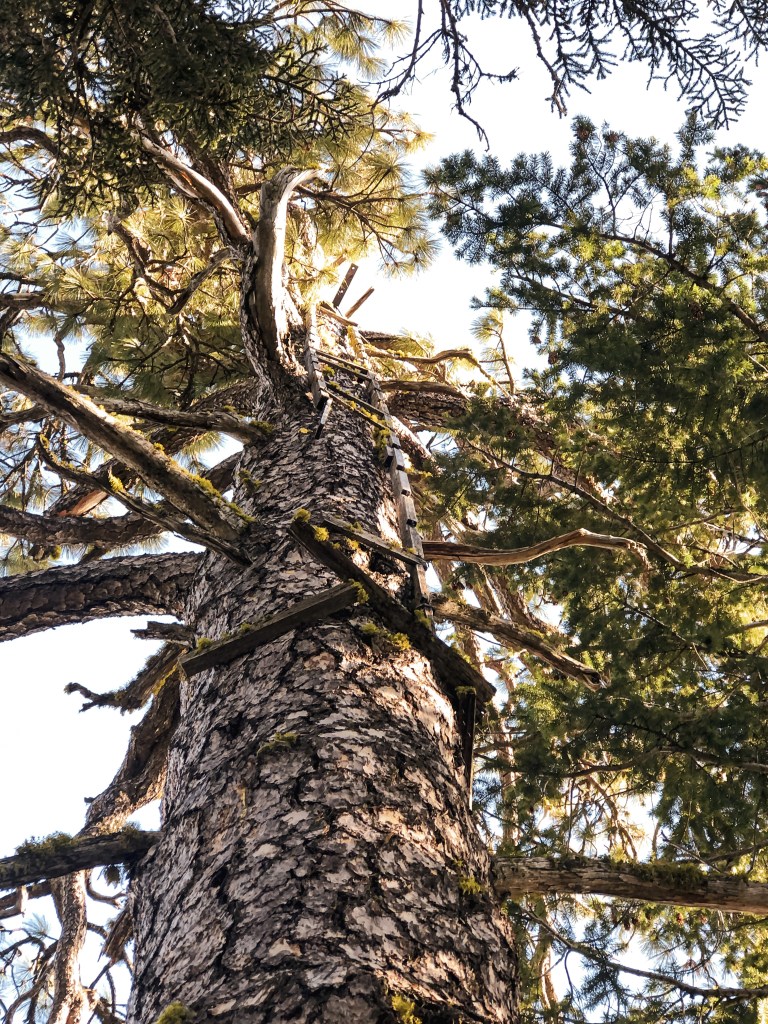
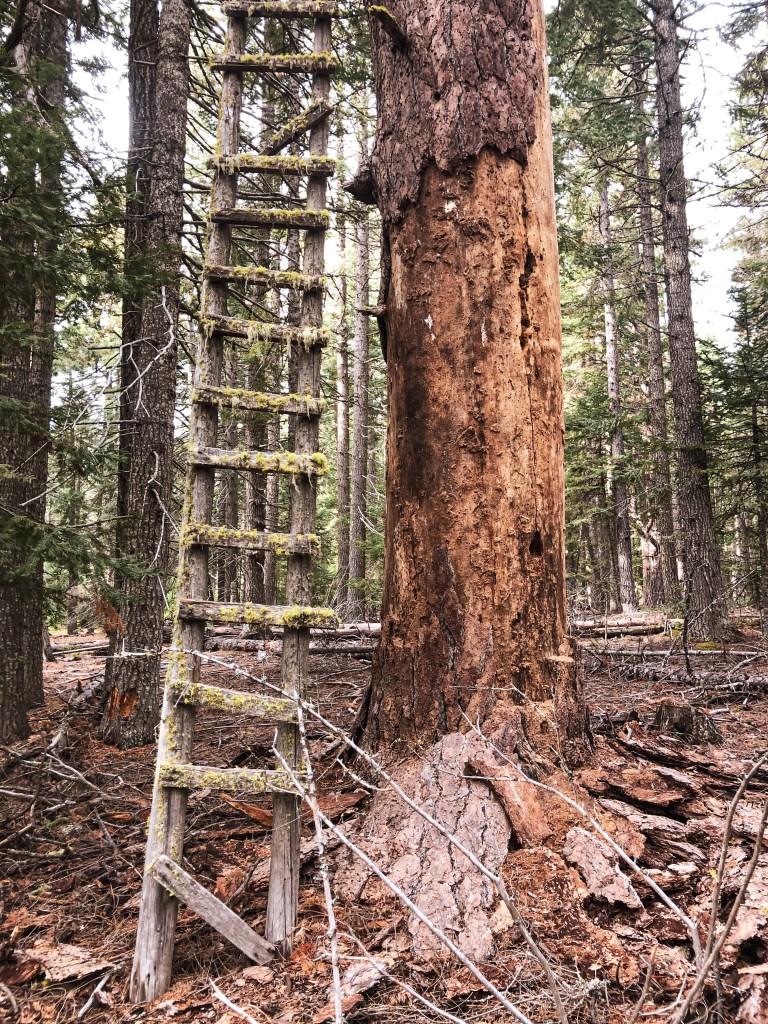
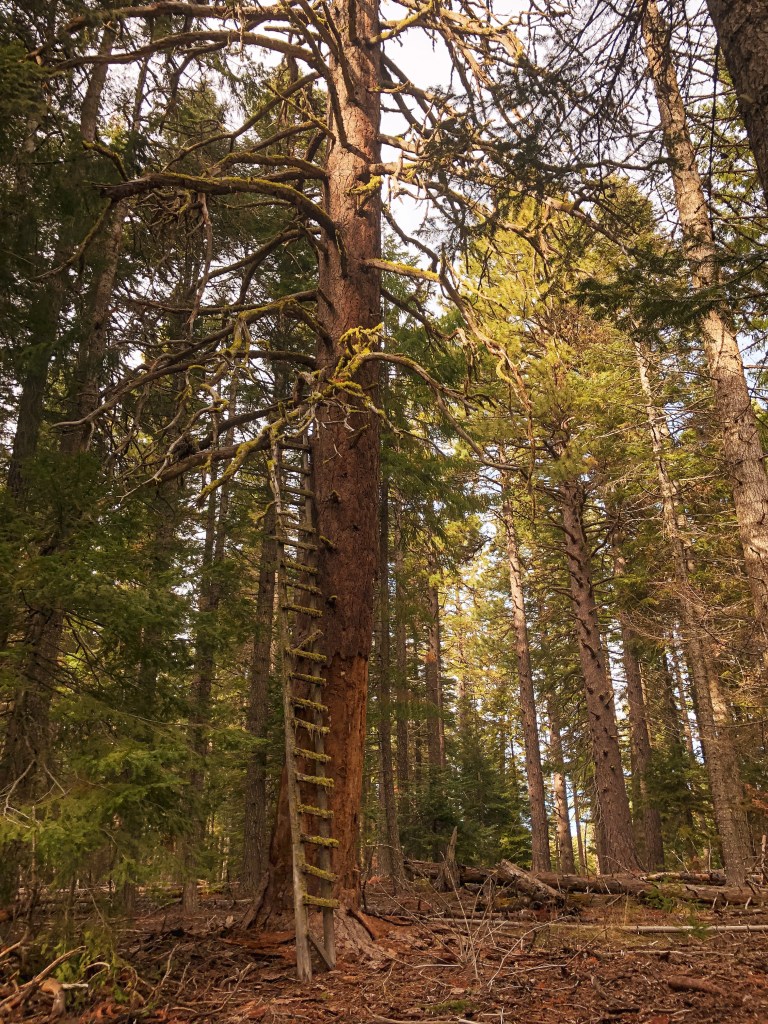
Remnants to the early days of fire detection can still be found in parts of the Mt Hood National Forest. Crow’s nest lookouts are typically a platform that sits on top of a tree with a ladder nailed to the trunk. Before there were lookout towers, fire attendants used to climb the trees to spot fires in the area.
Joe’s Point.
Date visited.
October 16, 2021; October 9, 2022
Elevation.
3,653′
History.
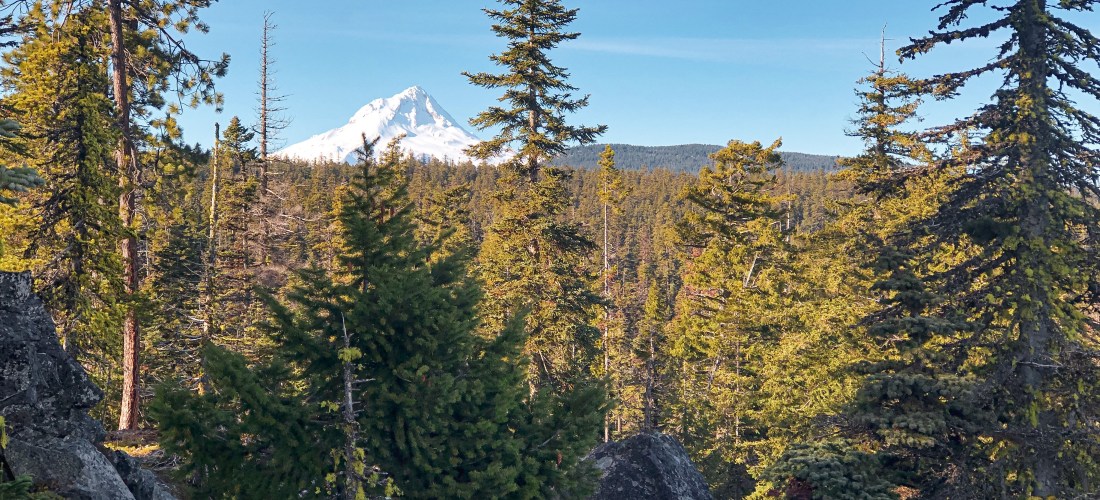
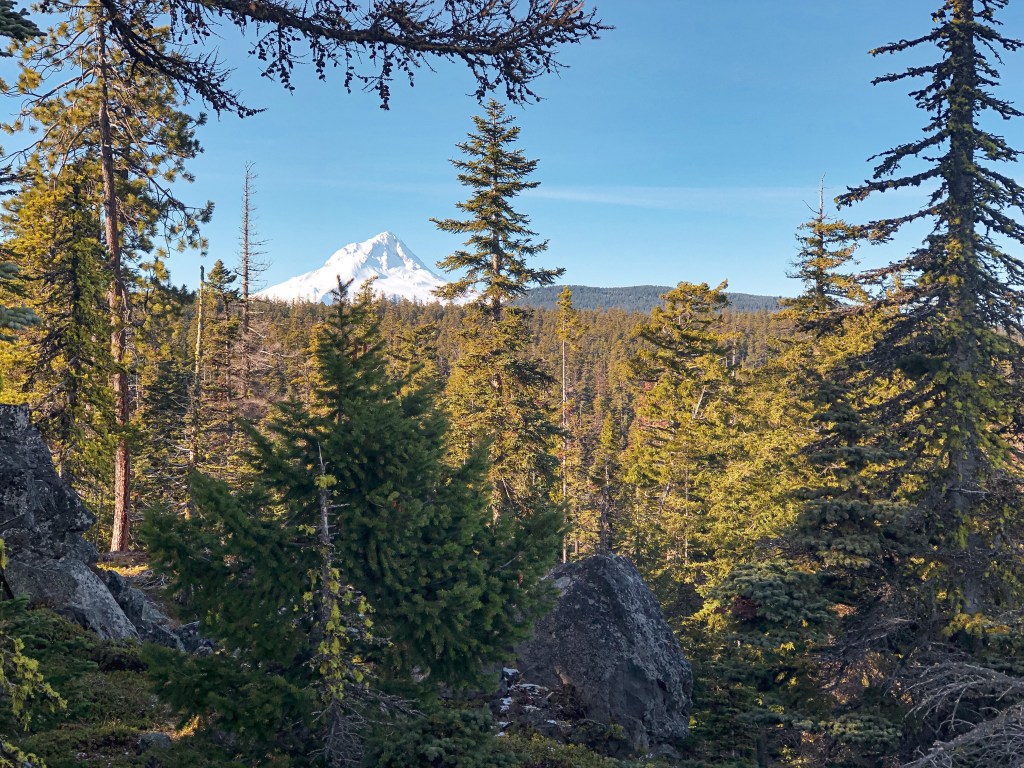
Joe’s point was an open platform built atop a large Ponderosa Pine in the 1930s. There was also a 12×12 cabin built for the lookout in the 1940s. The cabin is no longer on the summit, but you can still see pieces of the old platform and ladder. There’s a nice view of Mt Hood from the rock quarry where you park your car.
Directions.
Take NF-44 to NF-4440 to NF-140. Drive to the end of NF-140 and park your car. NF-140 is a bit bumpy in a passenger vehicle but doable. Once parked you will need to hike the old decommissioned road for about a mile. Follow the blue diamond markers on the trees, but be aware there are other roads in this area marked with blue diamonds that could lead you astray.
Perry Point.
Date visited.
October 17, 2021
Elevation.
4,920′
History.
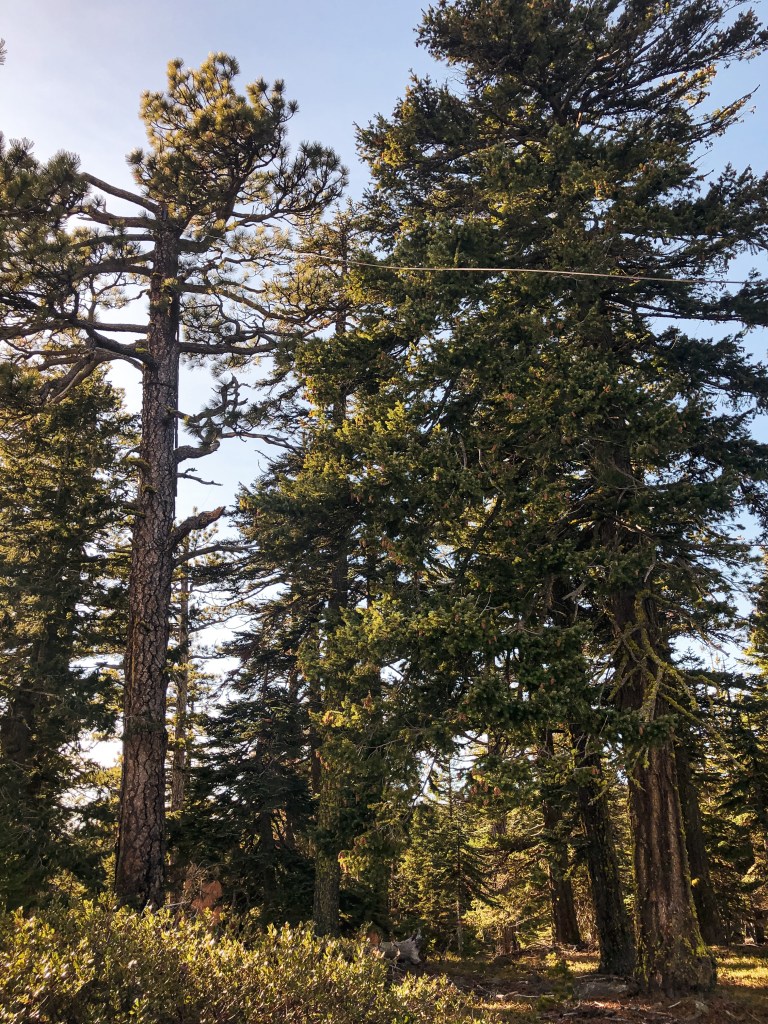
Perry point was a crow’s nest platform built atop a Douglas Fir in the 1930s and abandoned in the 1940s. It was noted as a potential patrol point for Fivemile Butte L.O. There are only a few boards left on top of the tree and will most likely not be there for much longer. The view from the point is still worth the short hike up.
Directions.
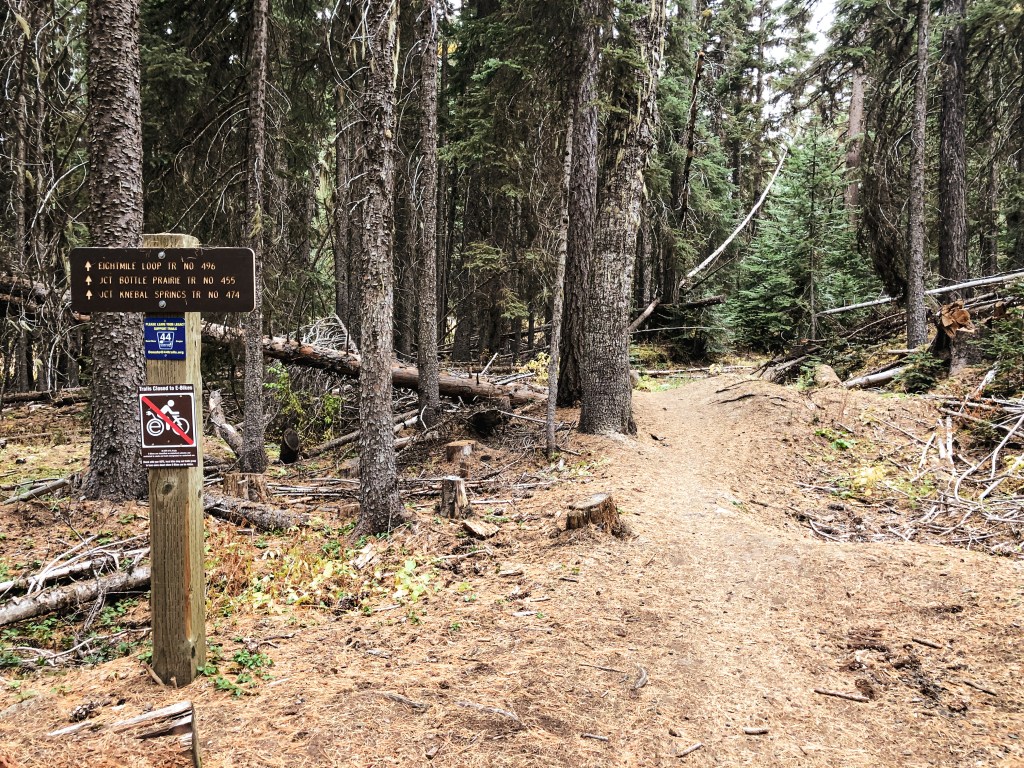
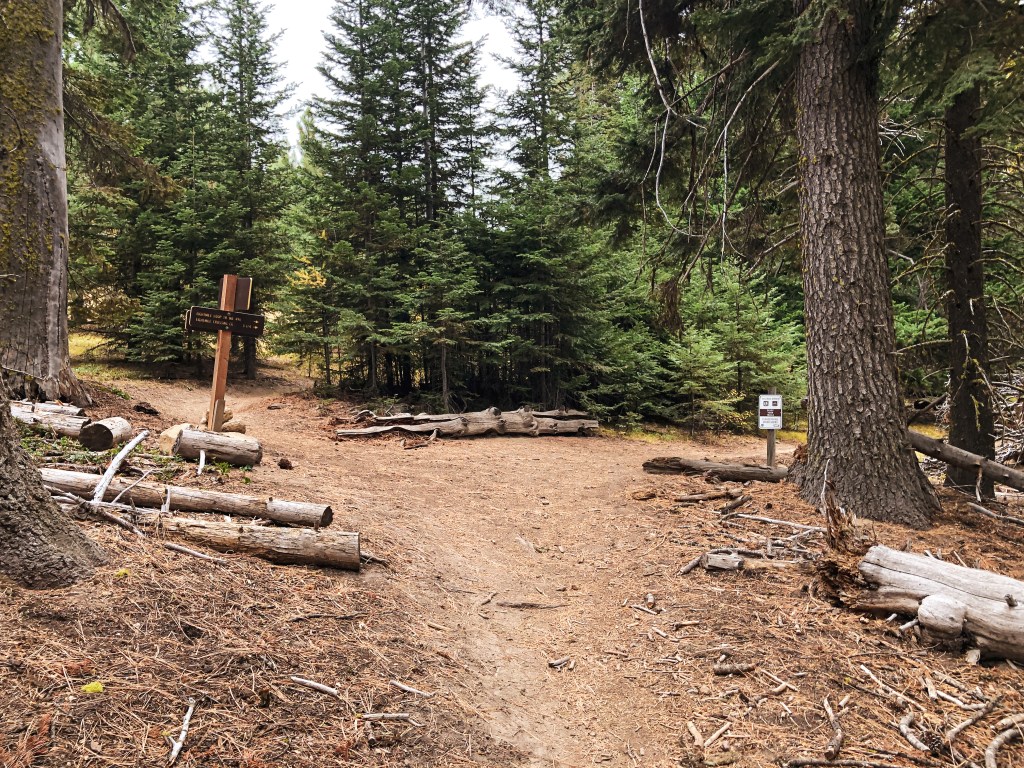
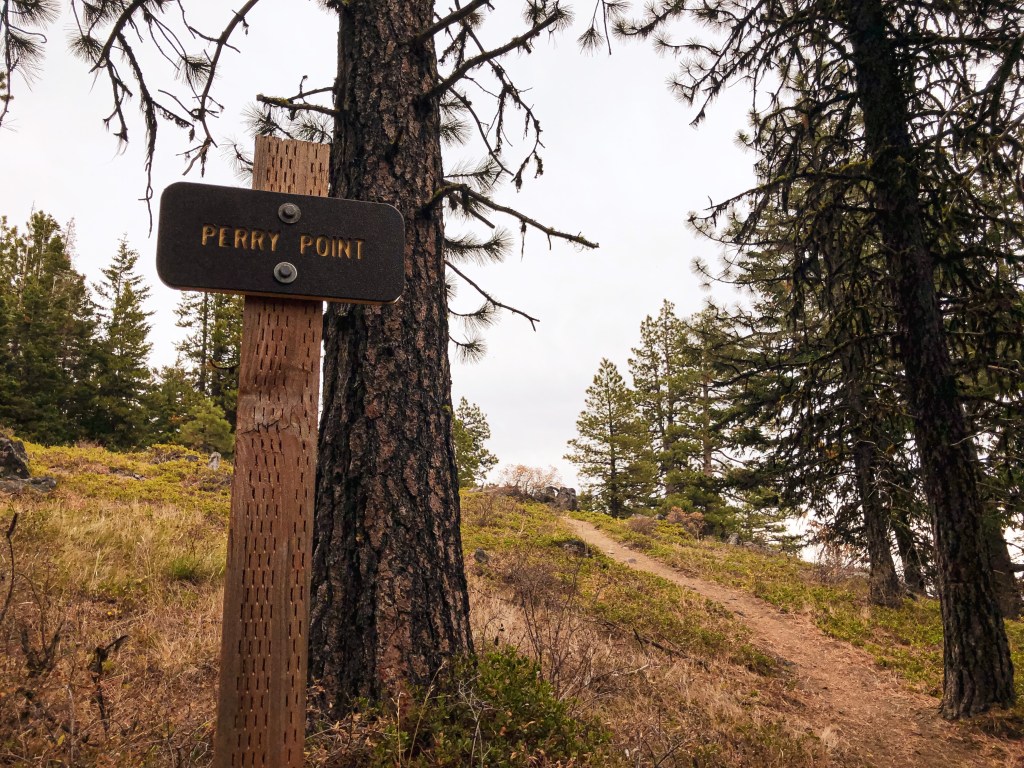
Take NF-44 to NF-120 and park you car at the trailhead for Eightmile Loop Trail #496. From the trailhead it is a little under a mile to Perry Point. You will want to follow the signs for Bottle Prairie Trail #455. The first trail junction is only marked in one direction. You will want to take the trail to the right until you meet the second junction. From the second junction stay left until you see a sign for Perry Point. The trail to the right of the sign will take you directly to the crow’s nest. It is the tree at the very end of a rocky butte and can be hard to spot.
Take the trail to the rightTake the trail to the leftTake the trail to the right of the sign
Rocky Butte.
Date visited.
November 20, 2021
Elevation.
4,796′
History.
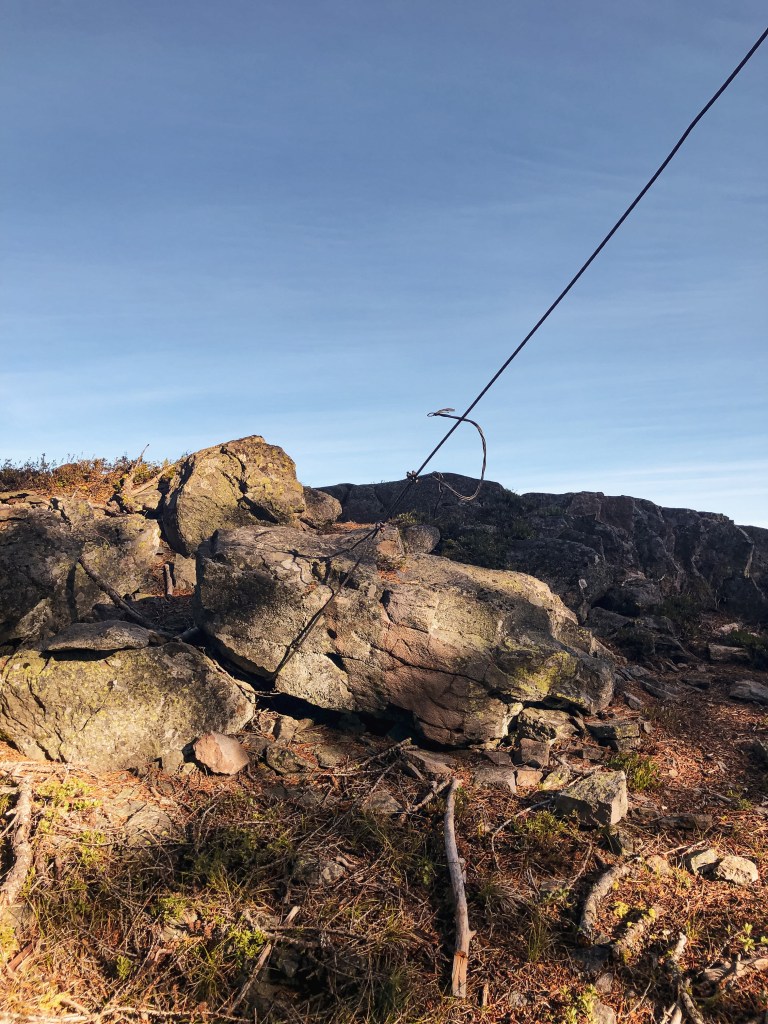
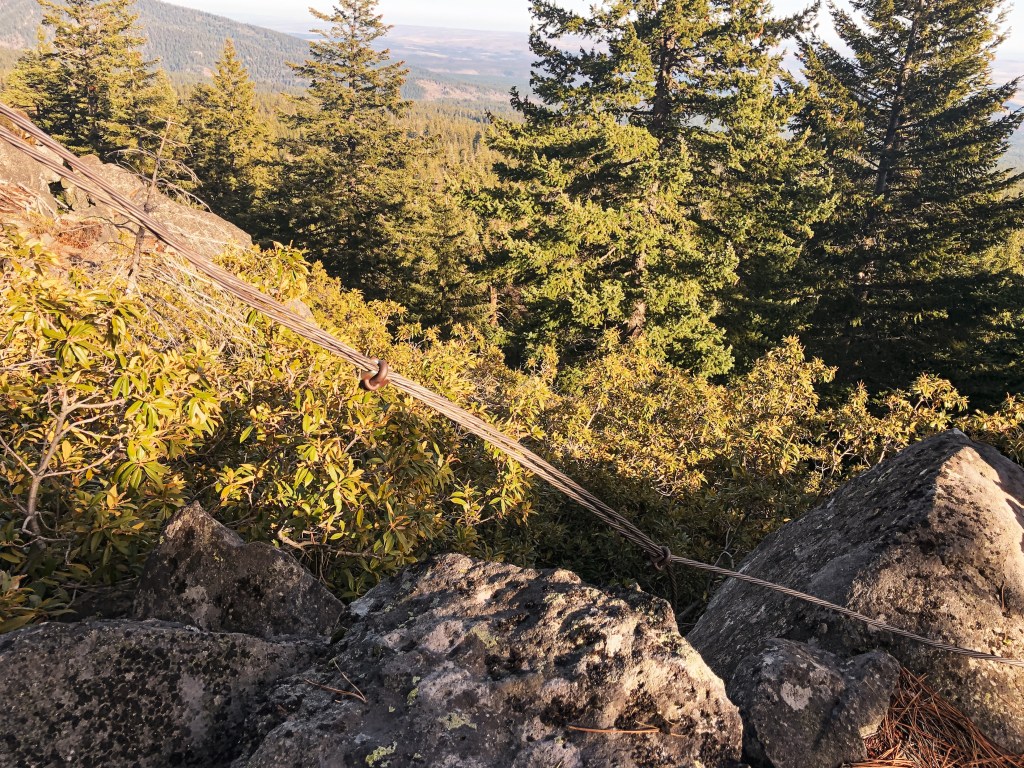
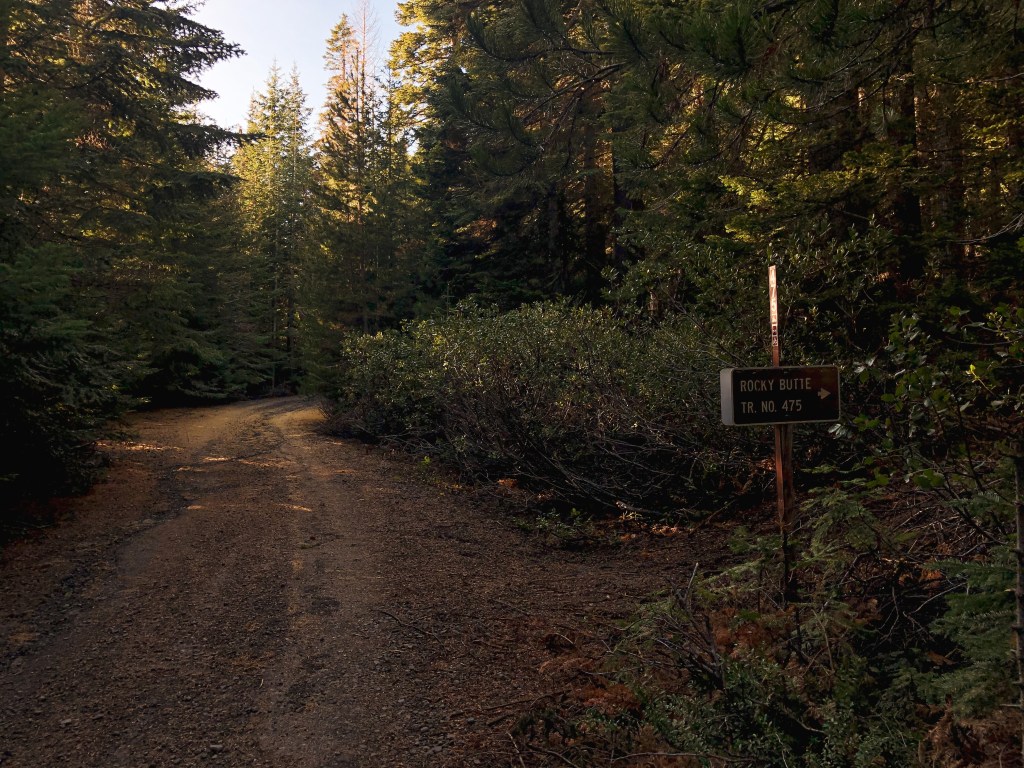
Rocky Butte crows nest was built in 1929 atop a 60′ Ponderosa Pine. It has been abandoned for a long time, but remnants of the ladder and guy wires can still be found on the summit. You can also find a USDA Forest Service Benchmark on the summit dated back to 1924. This is my favorite of the crow’s nests we’ve been able to locate. The views from the summit are worth the short climb up alone.
Directions.
From Tygh Valley take Wamic-Market Road through Wamic. This road eventually turns into NF-48. Turn right onto NF-4810 towards Camp Cody. Stay on NF-4810 until you reach a four way junction with NF-4811 and NF-4813. Turn right onto NF-4811 and then left on to NF-4812 shortly after. Continue on this road until you reach the trailhead sign. The road washes out about a 1/2 mile from the trailhead but a higher clearance vehicle will have no issues. There is limited pull out room for parking. It’s only a short 1/2 mile hike up the trail once you find the trailhead.
Bus Point.
Date visited.
November 21, 2021
Elevation.
3,333′
History.
Bus point was built as a crow’s nest in 1933 but has since been abandoned. It sat atop a 95′ Ponderosa Pine and was accessed via a 32′ ladder. The ladder leaned against the tree and was wired in place. From the ladder, the lookout attendant then had to navigate the branches to reach the top. The ladder and tree were still standing when we visited but the tree is no longer living and there are visible signs of rot. I would recommend seeing this one sooner than later.
Directions.
Same directions as Rocky Butte but instead of turning right on to NF-4811 at the four way junction, you will turn left. You will take NF-4811 until you reach an un-signed three way junction. NF-4811 in this directions has some large potholes but I was able to maneuver them with caution in my Civic. You will pass NF-4814 on the right and paved NF-4820 on the left before reaching the major junction where you will park. It’s good to have a detailed map of this area since there are a lot of skid roads you will pass as well and no definitive marker for this one. From the junction you will cross country hike off the road to the right following a game path. My tracker said we only went 0.16 miles before reaching the tree. We were able to find it right away with no issues.
Parking at Junction
Where the game trail starts
Eightmile Point.
Date visited.
October 8, 2022
Elevation.
5,280′
History.
There isn’t much history on this crow’s nest. It was built in the 1930’s atop a Fir and I presume abandoned in the 1940s with the rest of them. Unfortunately, this one is no longer standing and we were only able to find remnants of it. It was hard to pin point which tree was the previous lookout tree on the ground. But, we found the general area with some remaining wire, boards, an insulator, and the help of some other lookout enthusiasts that were also trying to find it that day.
Directions.
Head into the Mt. Hood NF from Dufur taking a right on Dufur Valley Road that eventually turns into NF-44 once you reach the forest. Turn left on NF-4420 until you reach a junction with a major gravel road leading right. From here, if you continue straight it turns into NF-2730. But, you will want to stay on NF-4420 and turn right onto the gravel. You will stay on this road until you reach the trailhead for Fifteenmile Trail #456 off to the left (parking on the right). It’s an obvious trail just past the junction with spur road NF-160. Park your car and walk the remaining distance up the trail to reach Eightmile Point. It is less than a half of a mile up the trail. The trail connects to other roads and can be reached from other directions, but we found this to be the most direct.
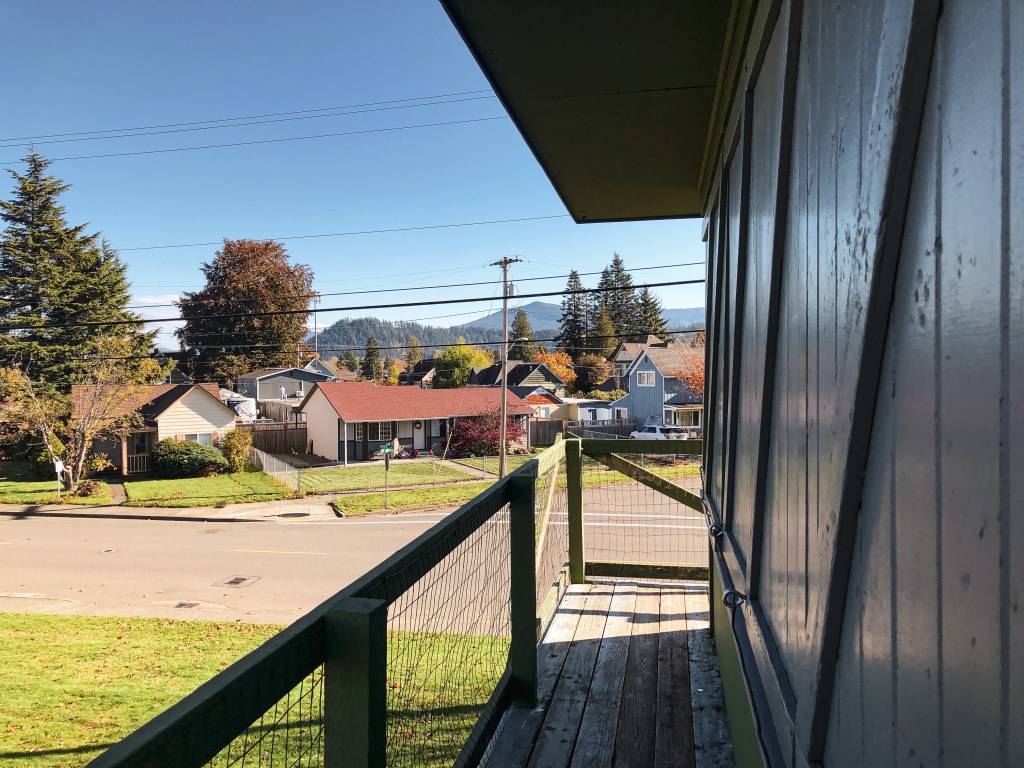
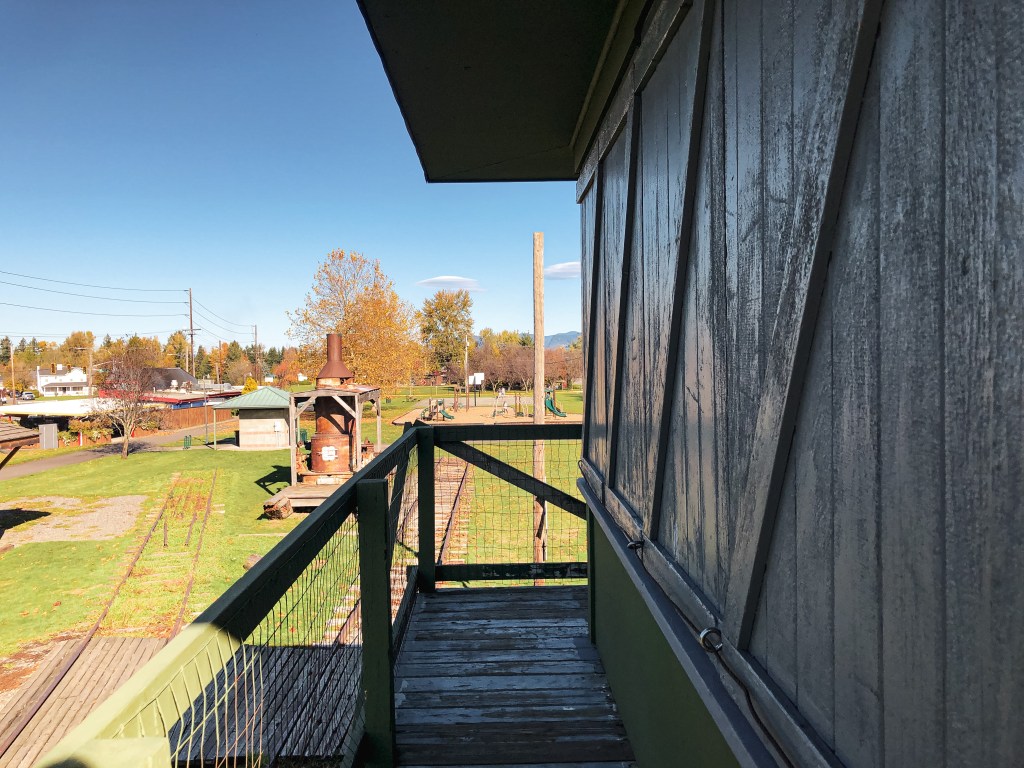
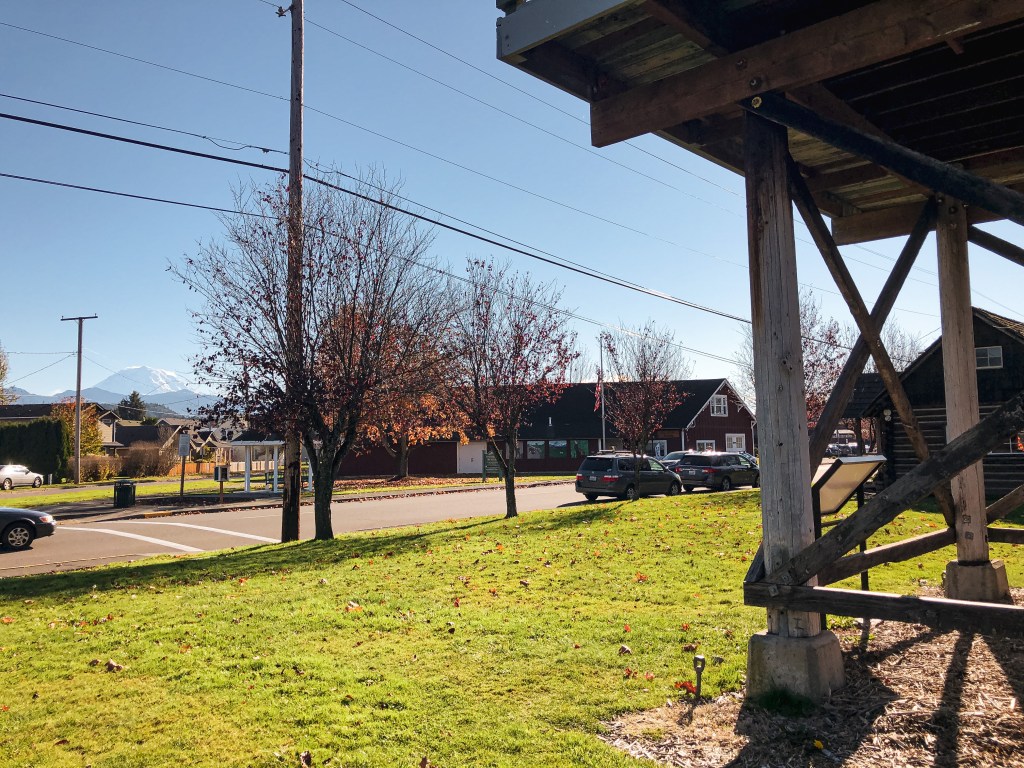
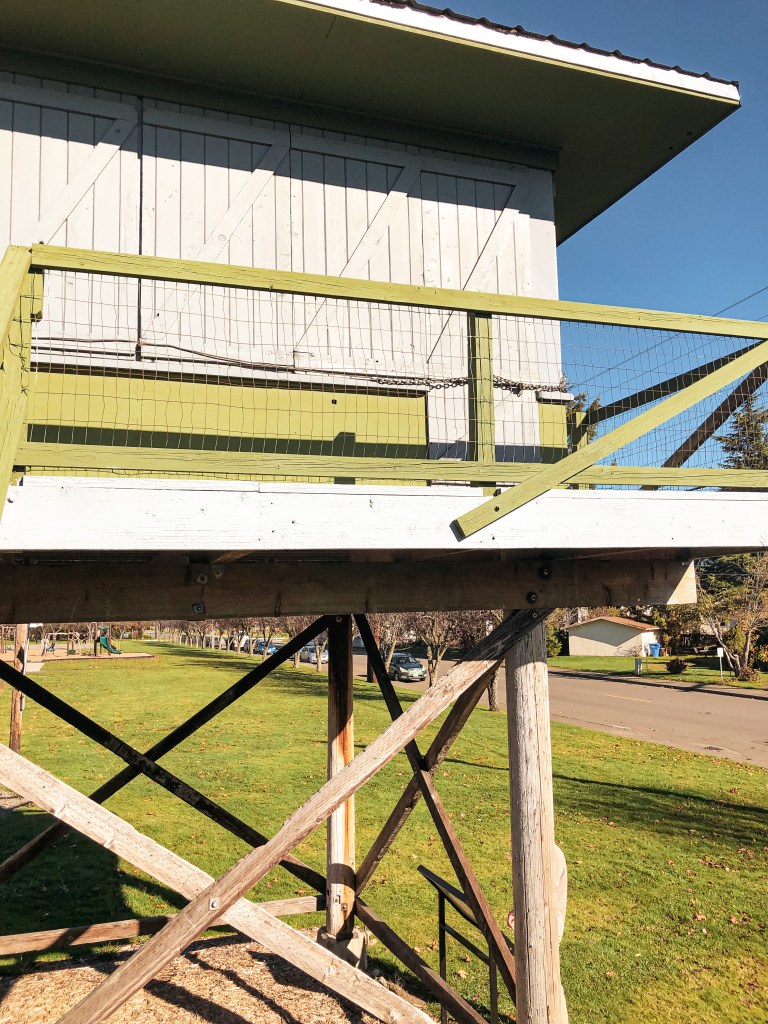
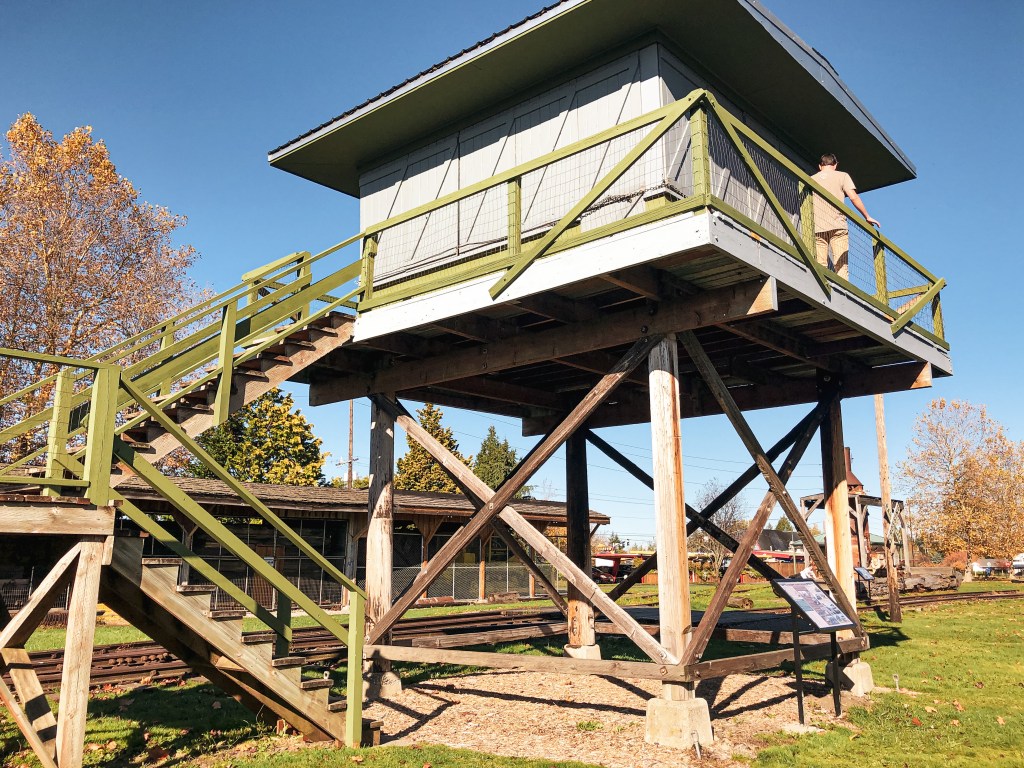
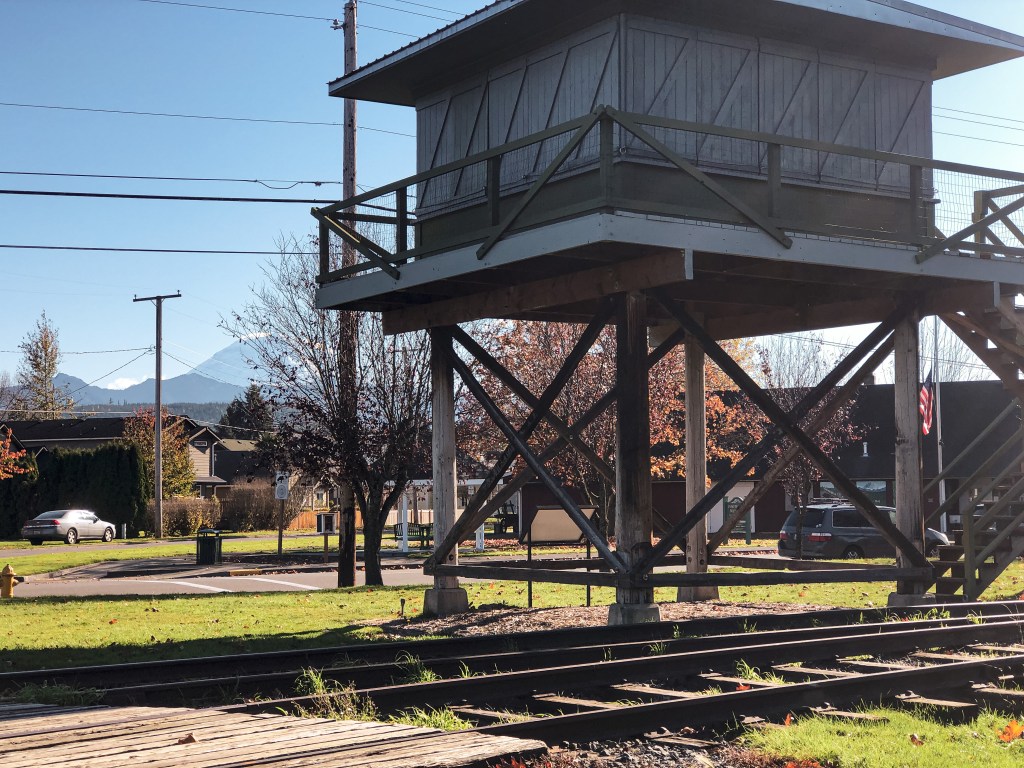
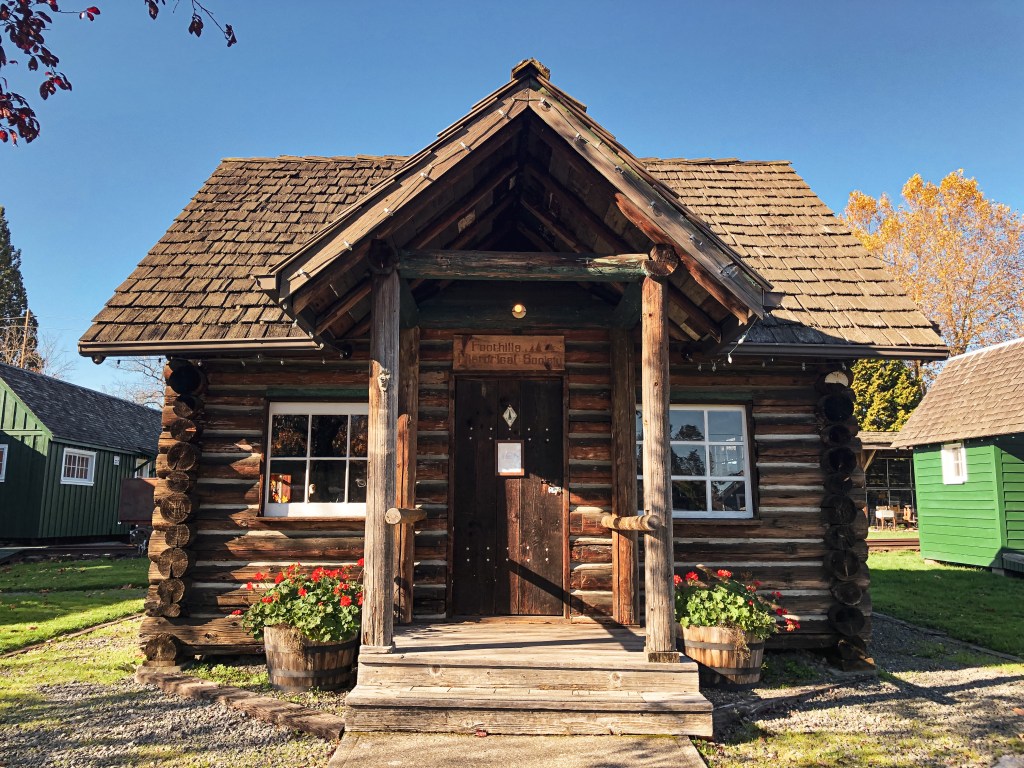
My partner and I decided to swing by the Foothills Historical Museum on our way home from visiting friends in Kirkland. It’s right off N River Avenue in the city of Buckley and easy to access. We parked on the street right across from Buckley Hall in front of the main museum building. The park that hosts these structures, Van Hoof Park, is across the street. You are welcome to climb the lookout tower and catwalk at anytime. The cab was shuttered and closed during our visit but I believe they open it during events and summer for visitors. The museum focuses on conservation of the history of Buckley and the surrounding Carbon River Corridor. The Foothills Historical Society that manages the museum is completely run by volunteers and financed through donations. Places like this are important for preservation and education. Please donate if you are able or visit their website to learn about getting involved!
History.
The Salmon River L.O. site was originally established in 1965 with a platform and trailer along Salmon River Ridge near Lake Quinault. In 1967, a 2-story live in cab was built on the summit and ran by the Washington Department of Natural Resources. It’s ownership was later transferred to the Quinault Nation after discovering it was built on their reservation land. They had believed it was just east of the boundary when the structure was originally built. In 2000, the Quinault Nation donated the structure to the Foothills Historical Society for preservation. The lookout was dismantled and then transported by pick up and flatbed trailers to its current location in Van Hoof Park. Volunteers and many locals helped rebuild the structure on a log tower with wooden steps instead of the original cinderblock.
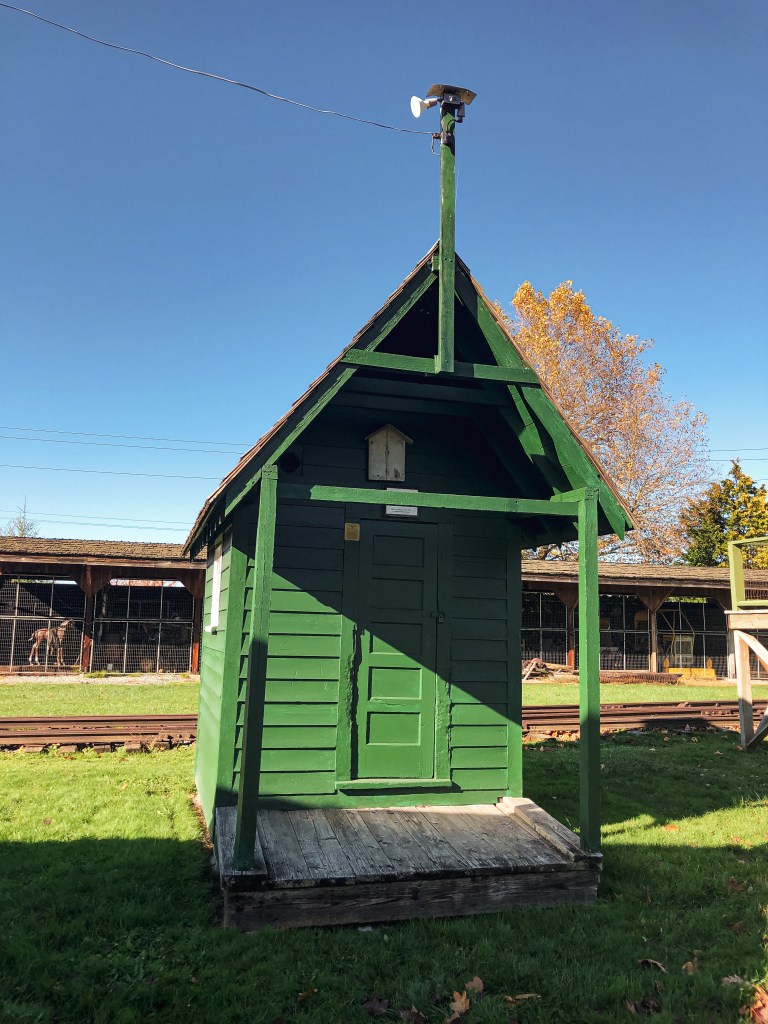
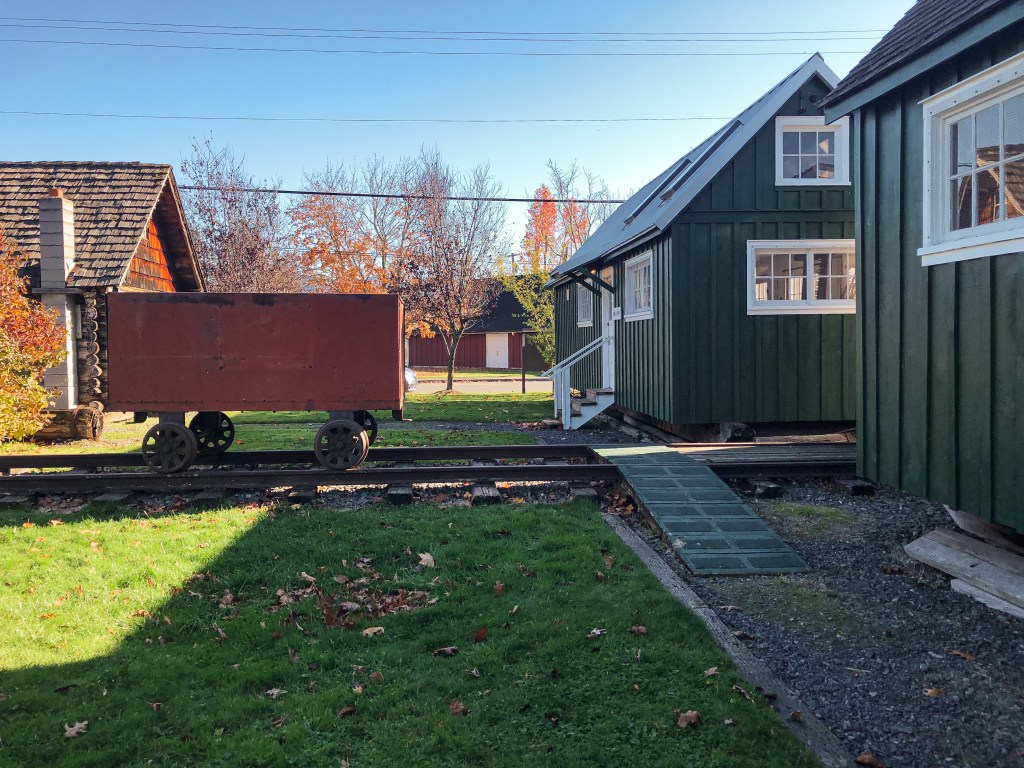
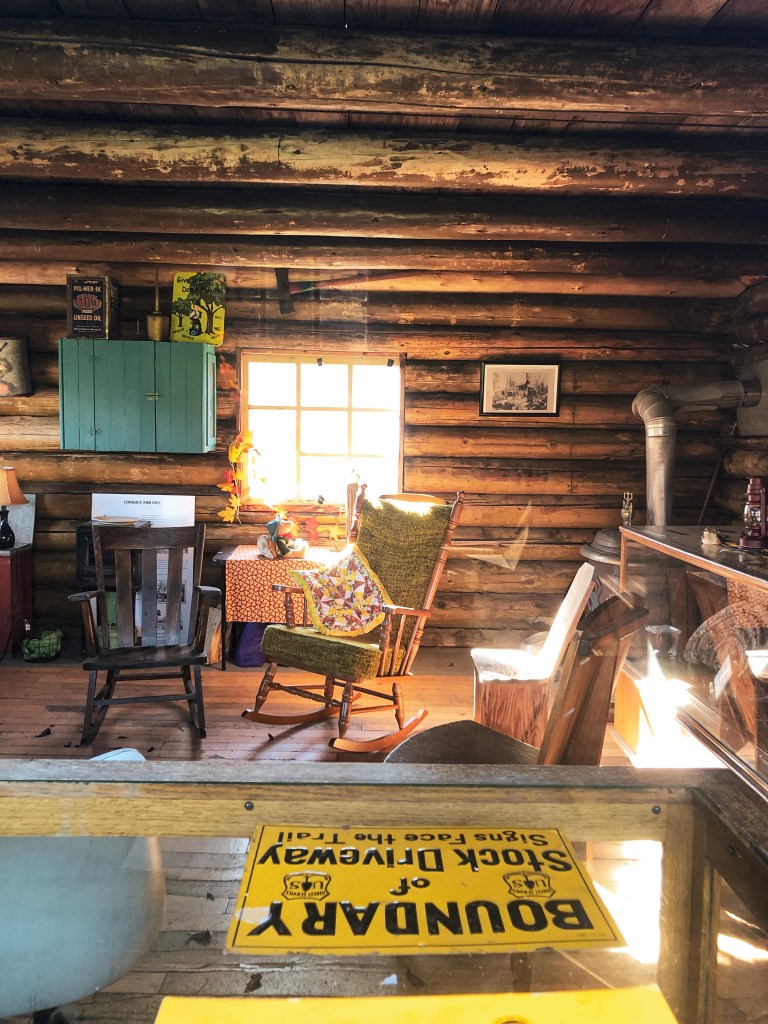
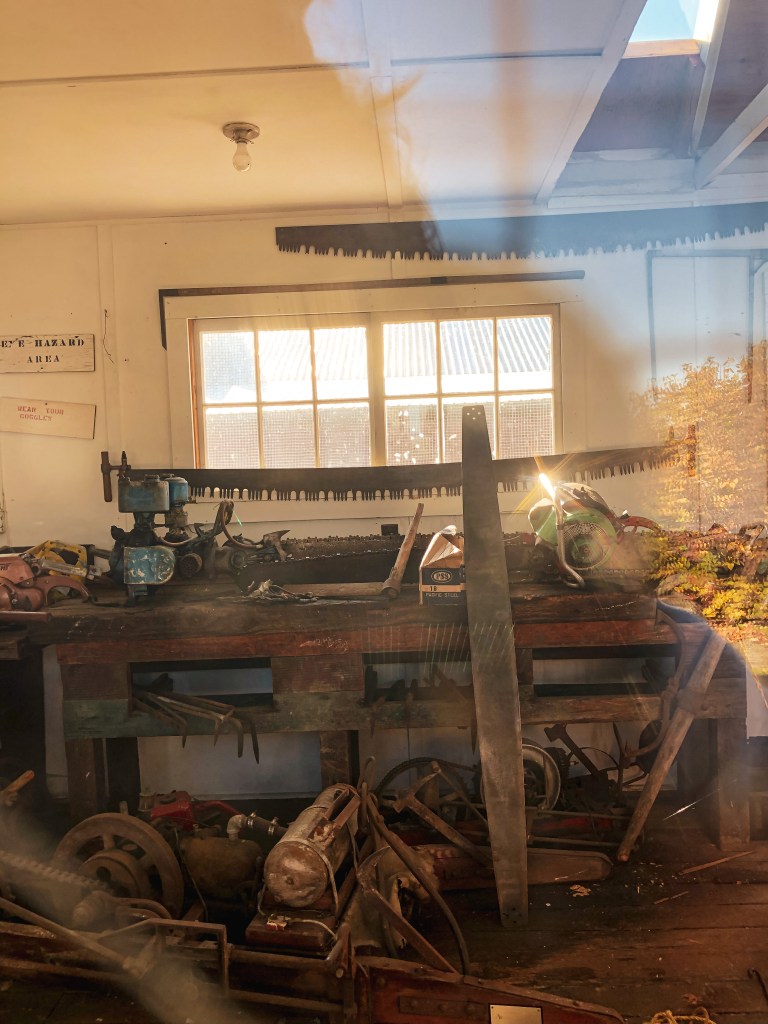
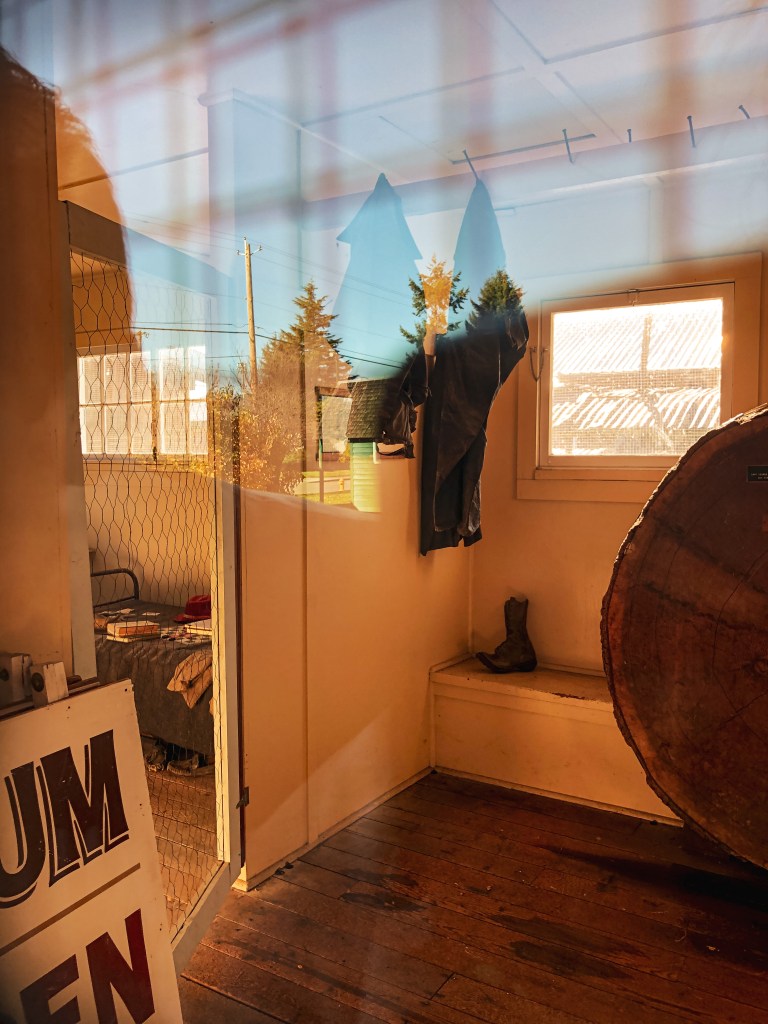
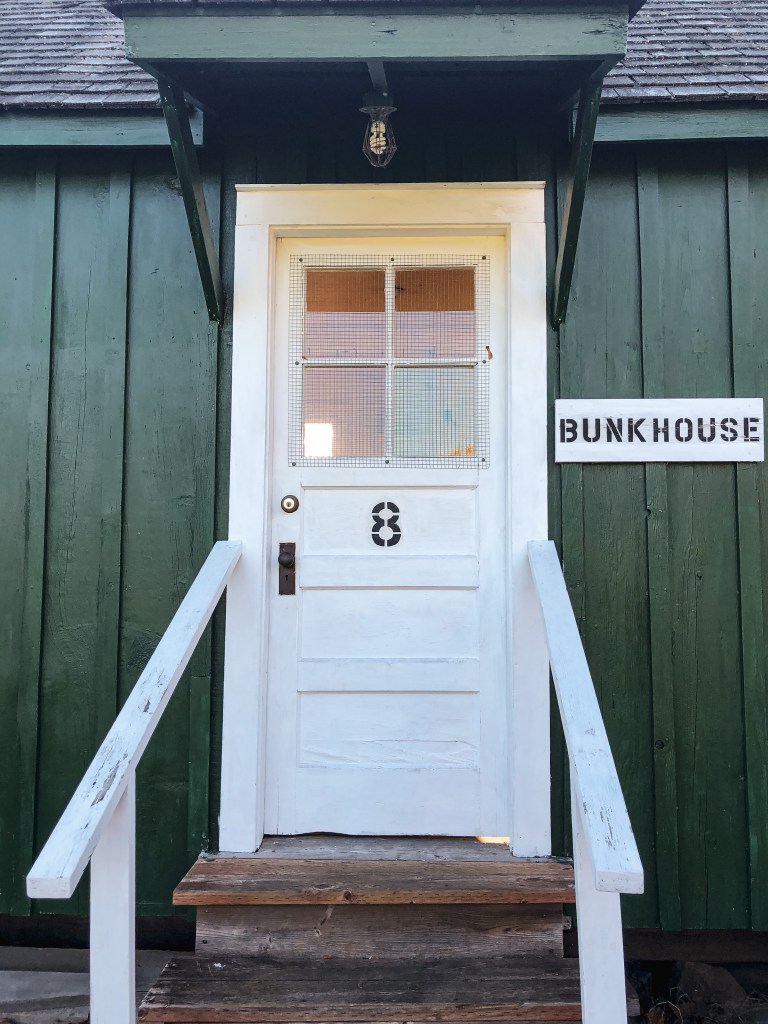
Next to the Salmon River L.O. is another observation structure that was built during World War II for aircraft spotting. It was originally located atop Huckleberry Mountain near Mule Springs. It was later used by fire patrols until it was moved to Buckley in 1991 by Southworth & Sons. Some other notable structures maintained on the property are a State Forest Ranger Cabin, 1870 Stiller Log Cabin, Lester Bunkhouse & Saw Shop, Blacksmith Shop, Steam Donkey, and Lester RR siding.
Maintained; Occupied by City of Portland Park Rangers
Estimated drive time from Portland, OR.
Within city limits
Date visited.
October 24, 2021
Elevation.
143′
National Historic Lookout Register.
Not registered
Trip Report.
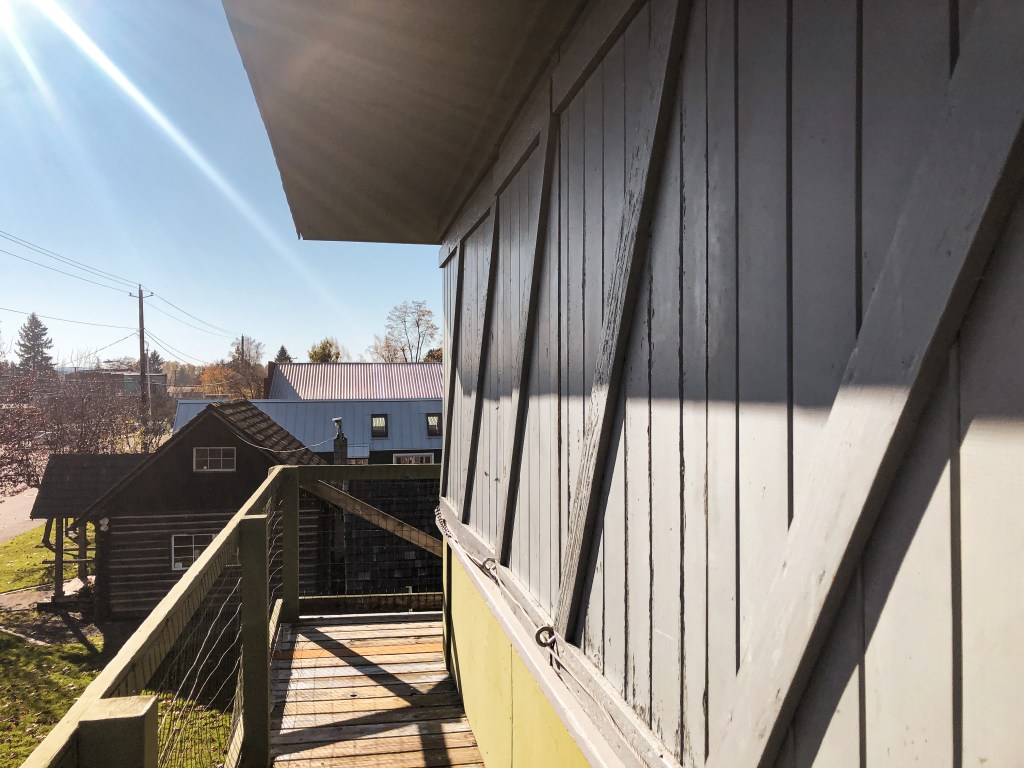
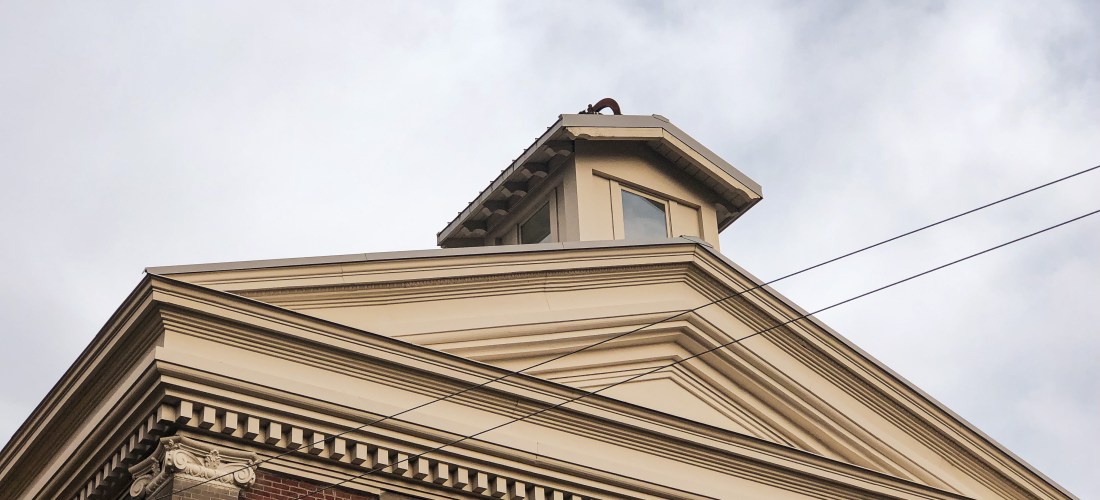
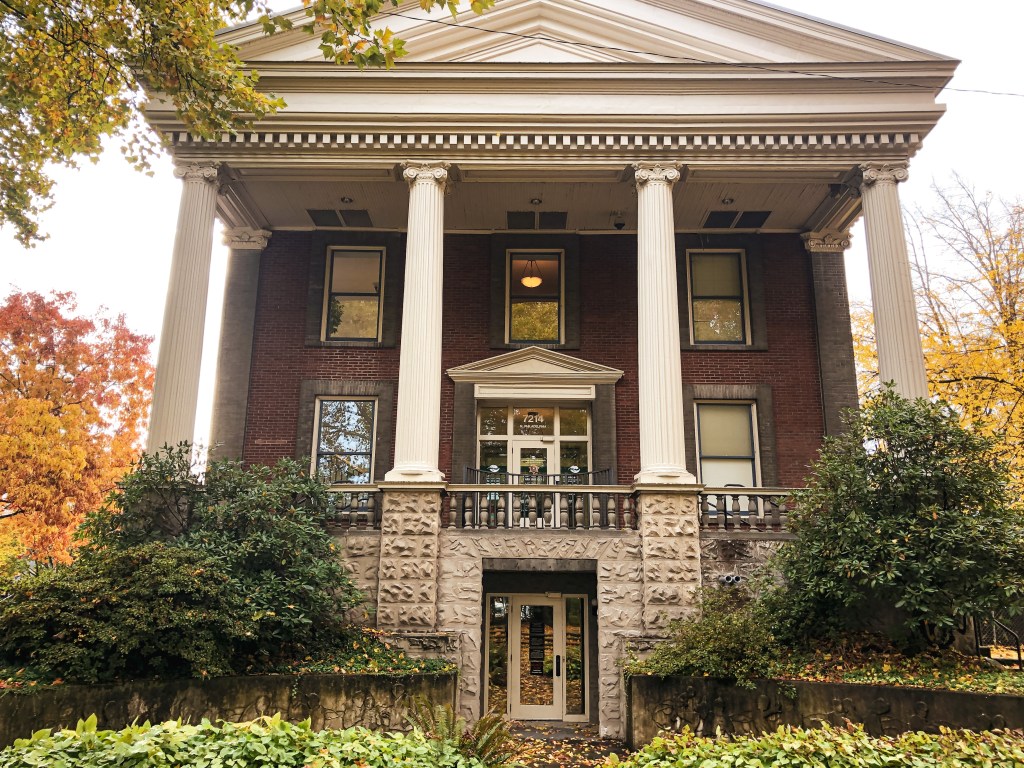
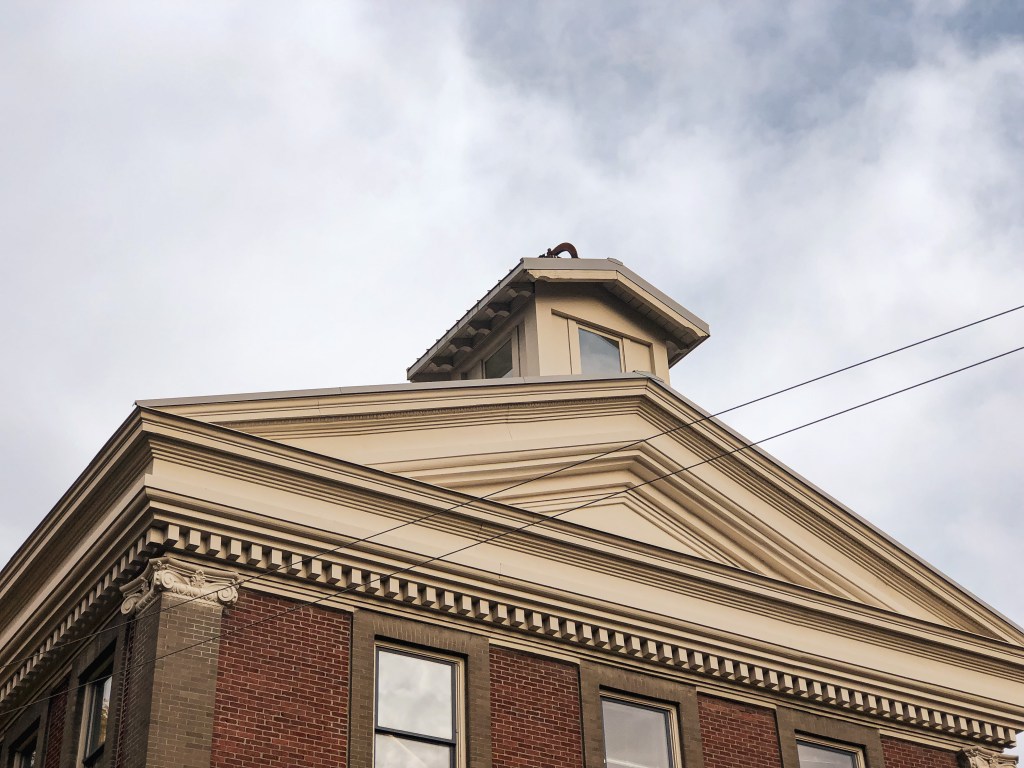
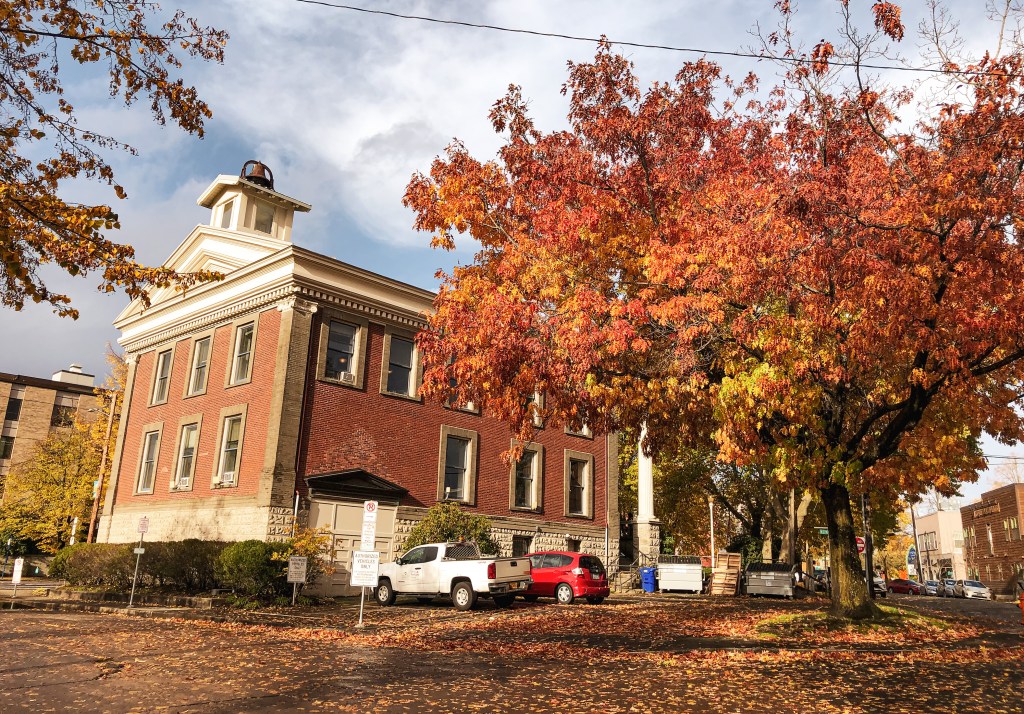
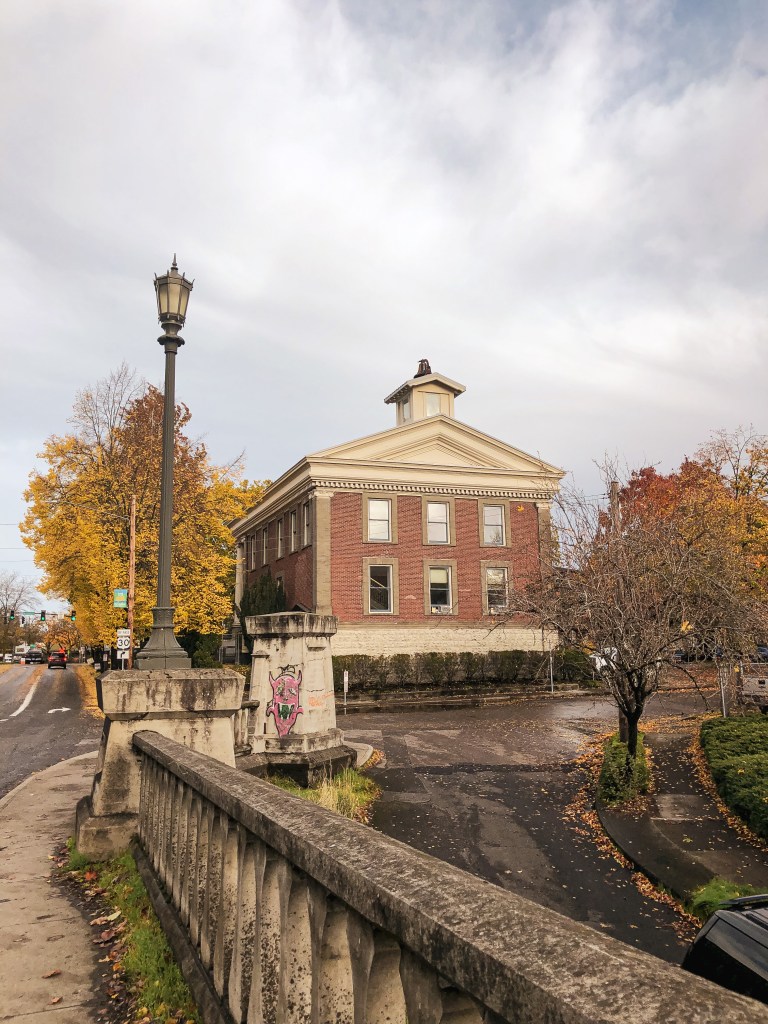
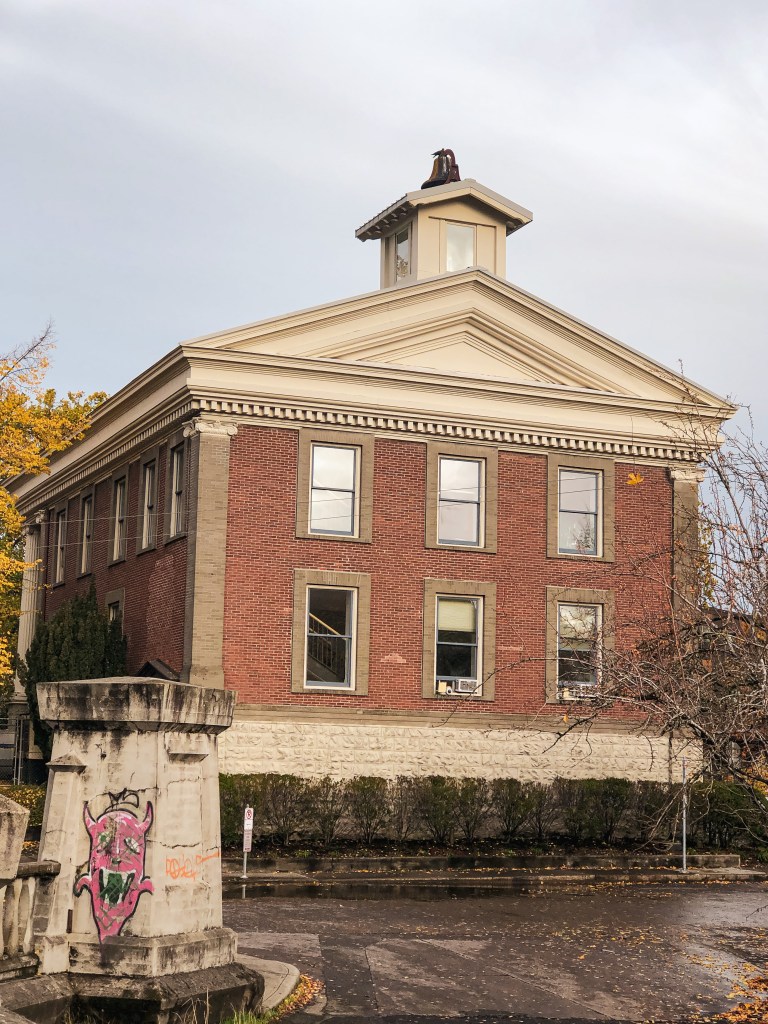
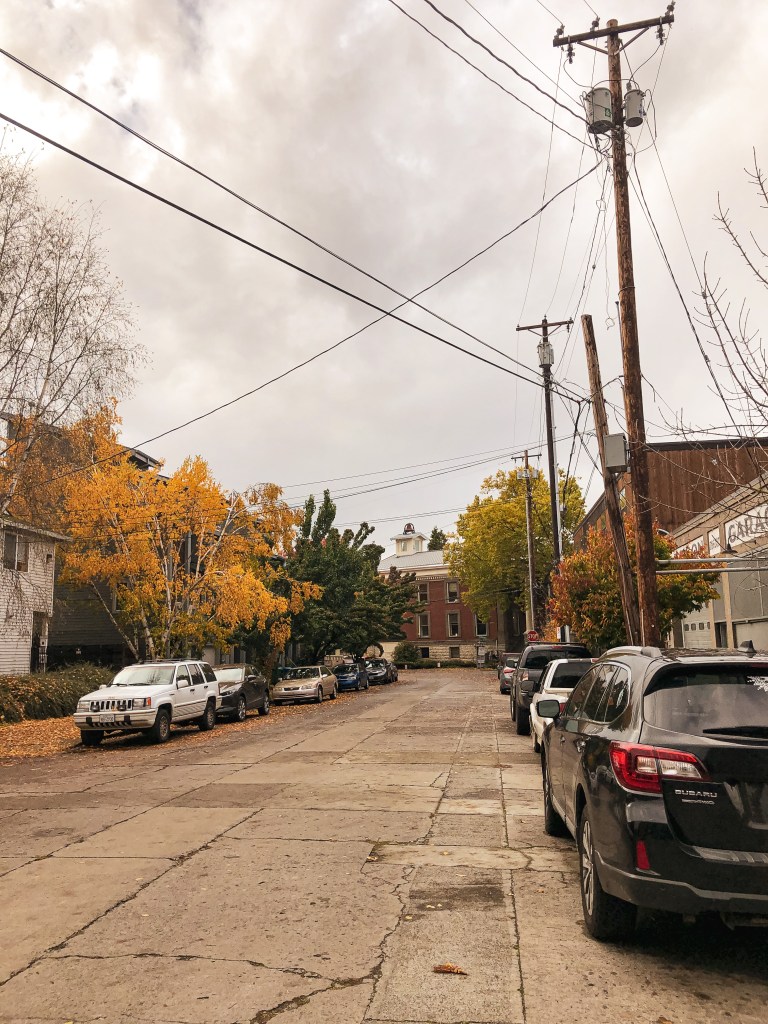
This is a building in the city of Portland that was used for fire detection in Forest Park. It’s located right next to the historic St Johns bridge and overlooks the Willamette River. The building is now used for the city Park Rangers office. My Partner and I decided to walk around the neighborhoods of North Portland and St Johns instead of driving directly to the site. I love looking at the different houses and architecture in this area. It was a rainy fall day but we got a break in the weather for our 6.5 mile walk. You are unable to access the building unless you have an appointment. I’m unsure if they’d grant access to the cupola though.
History.
This historical building was built in 1907 as the city hall for St Johns City. It was converted to a fire station in 1915. There was a fire in August 1951 that devastated Forest Park and lead to the construction of three emergency fire lookouts in the area. The fire burned 2,400 acres which was about 25 percent of the park. The Portland Parks Bureau with the assistance of Engine 32 of the Portland Fire Bureau erected the one in St Johns in 1952. They mounted a firefinder to the exterior wall from the second floor window. I couldn’t find confirmation on when the cupola tower was added. In 1959, it was noted by a survey crew that the original cupola and flagpole had been removed from the building. The building was later renovated in 1964 and 1996, but it’s unclear on which renovations lead to rebuilding the existing cupola.
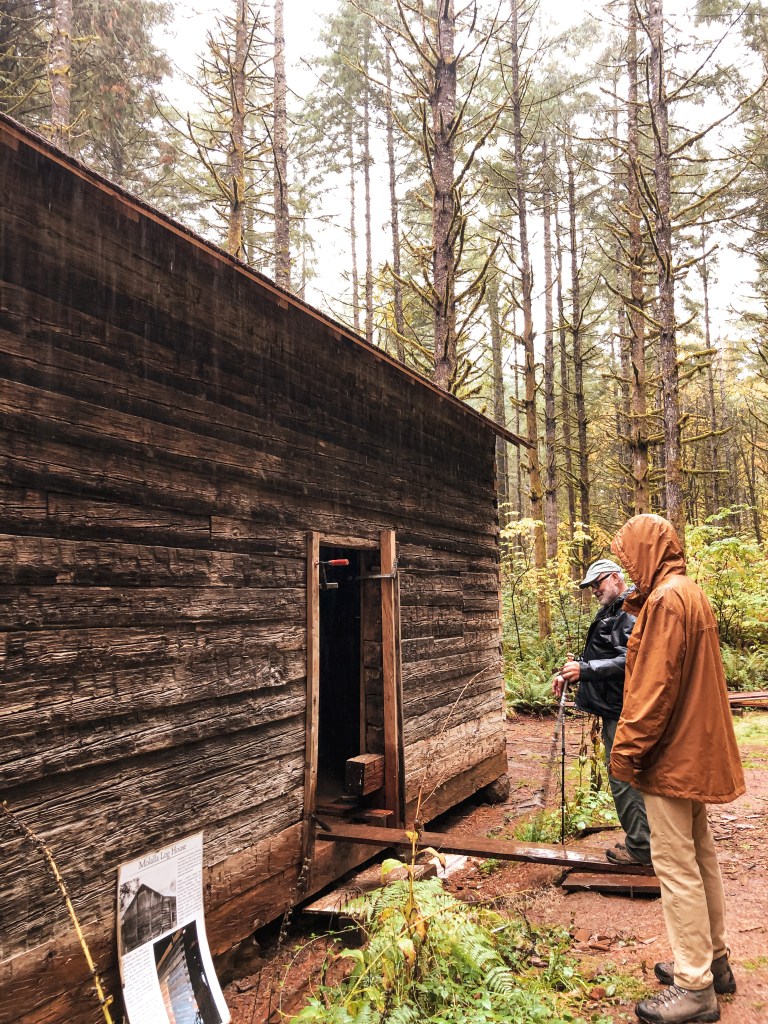
My partner, his dad, and I decided to take a trip to Hopkins Demonstration Forest in Beavercreek. They had recently finished reconstruction of the Clatskanie Mountain L.O. in February 2021. The lookout is located right in the parking lot and easy to access. It was a really rainy fall day, so we were unable to climb the tower. I believe they will open this to the public on nicer days for tours. We checked out the adjacent Everett Hall, historic Molalla Log House, and hiking trails on the property as well. Hopkins Demonstration Forest offers learning opportunities about different sustainable forest management techniques over 140-acres and is operated by Forest Forever Inc. Places like this are important for preservation and education. Please donate if you are able or visit their website to learn more about getting involved!
History.
The Clatskanie Mountain L.O. is a 65′ Aermotor tower with 7×7 cab. it was originally built in 1954 and managed by the ODF in the coastal range near Astoria. It was constructed as a replacement for the Benson Lookout. In 1984, it was dismantled and moved to the Magness Tree Farm. Fun Fact: It was dismantled by the same person, Don Rust, that had originally assembled it. The World Forestry Center operated it there as an educational exhibit and historic display. They experienced issues with vandalism and the continued maintenance over the years. In 2008, they decided to refurbish and relocate the tower. It stood on the Hopkins property for 9 years before reconstruction started in 2019. Finding the proper components, knowledge, and skills needed took time. They were able to find a company to fabricate all the needed components to restore the structure to it’s original specifications. The company, Fire Tower Restoration, specializes in finding and saving Fire Lookouts before they are sold for scrap. The remaining work of replacing treads, railings, and safety fencing was completed by Hopkins volunteers over the last year. It is now open and ready for the public thanks to all their hard work! It’s registered under the Former Fire Lookout Site Register, but not the National Historic Lookout Register.
The Hopkins Demonstration Forest is also currently working on restoring the Molalla Log House which will be completed in 2022. This historic log house is believed to be the oldest building in Oregon, if not the entire Pacific Northwest. It is made of Douglas Fir that had been hand hewn and held in place by tight half-dovetail notching. The origins of the log house are un-known even after extensive research, but believed to be built by fur hunters and trappers from Canada in the late 1790s. The building securely sat in the foothills of the cascades near Molalla for 200 years before it was dismantled in 2007. It was warehoused with plans for rehabilitation and preservation until it found it’s forever home in 2017. The building is a 18’x25′ log cabin with 1-1/2 stories. We will have to make a trip out to see it once completed!
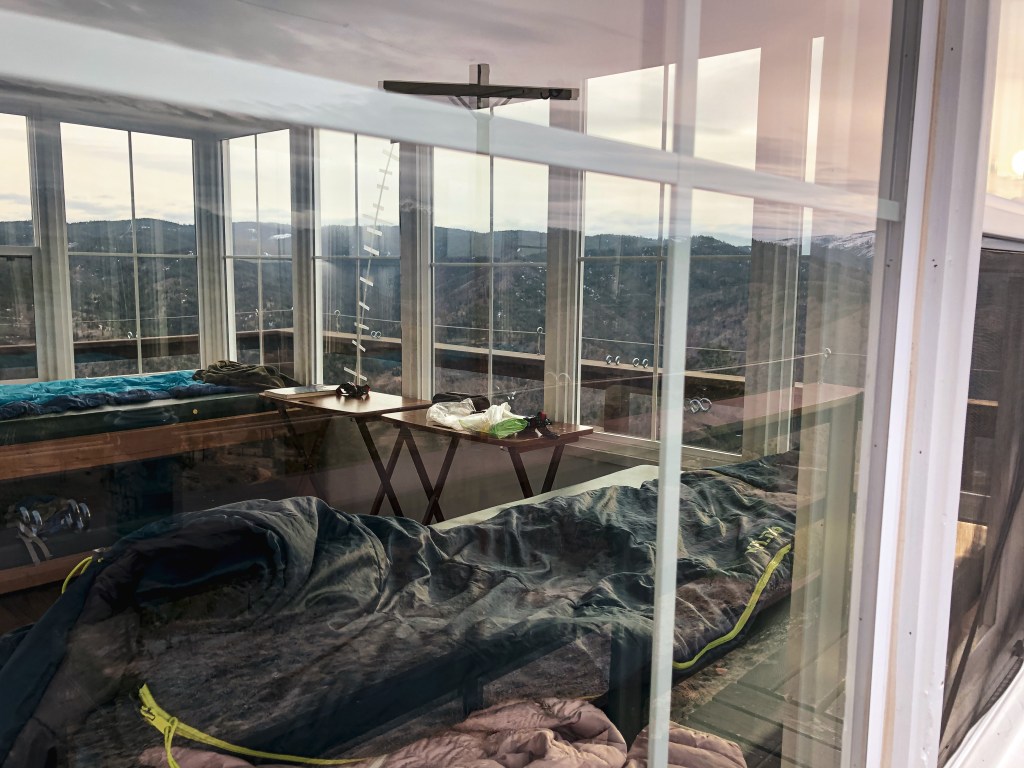
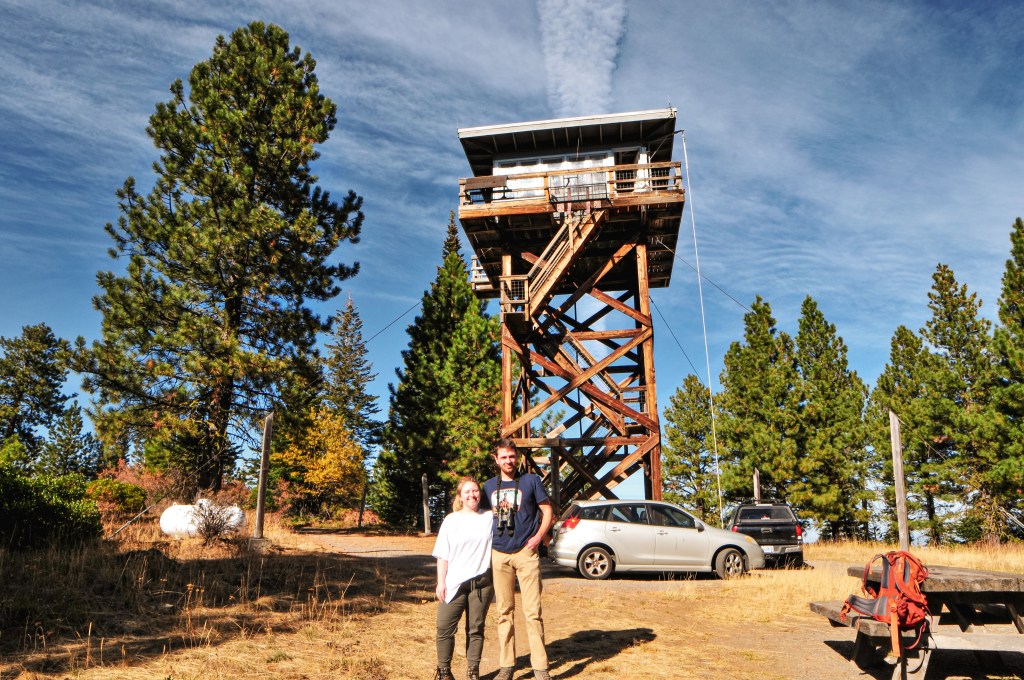
My partner already visited Fivemile Butte L.O. earlier this year with his dad. We decided to come back for the weekend since I still needed to check it off my list. We also wanted to see if we could locate some of the crow’s nests in the area. The best access for passenger vehicles is to take NF-44 to NF-4430 until you reach the gate on NF-122. Reminder to not block the gate and park near the road junction instead. From the gate, it is a short 1/2 mile road walk. The road is drivable but requires caution on some of the more rutted out portions. It can also be accessed via hiking trails if you are not comfortable driving. In the winter, you can access it via the Billy Bob Sno-Park. This lookout is part of the rental program and can be booked year-round. Fivemile Butte L.O. is very popular due to its easy access and proximity. There were renters there when we checked it out which was expected but a bit awkward. Make sure to respect their space and do not climb the stairs. We didn’t stay long except to take a few pictures before heading back to my car for lunch. We were surprised to find no other visitors on the summit since we had passed a full trailhead. I think I would have a hard time staying here with all the day hikers and traffic. I assume you would get less visitation in the winter months though.
History.
The current lookout on Fivemile Butte was built in 1957 as a 14×14 R-6 flat roof cab atop a 40′ treated timber tower. It is furnished with a small bed, wood stove, propane cooking stove, table, chairs, and solar-powered lights. There is a vault toilet, storage shed full of firewood, picnic table, and fire ring on the summit as well. Everything else is on a pack it in, pack it out basis. The original lookout for this site was built in the 1920s. It was a 30′ pole tower with a small cab. It was replaced in 1932 by another 30′ tower with standard L-4 cab. This was later destroyed by heavy snow in 1942. The L-4 tower that replaced it untraditionally had a trap door inside the cab. I couldn’t find any information on when this lookout stopped being staffed and became part of the rental program.
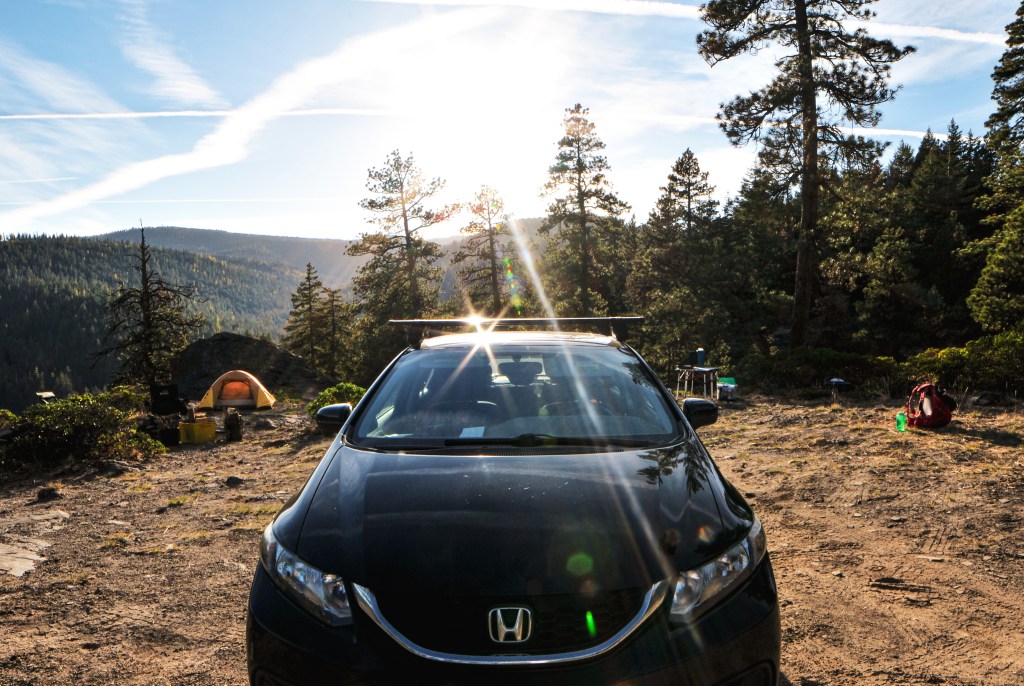
Bonus pictures of our camp spot because we had a view of Flag Point (post) on the ridgeline.
Newberry National Volcanic Monument; Deschutes National Forest
Status.
Active; Currently standing
Estimated drive time from Portland, OR.
3-hours
Date visited.
October 10, 2021
Elevation.
5,016′
National Historic Lookout Register.
US 508; OR 100
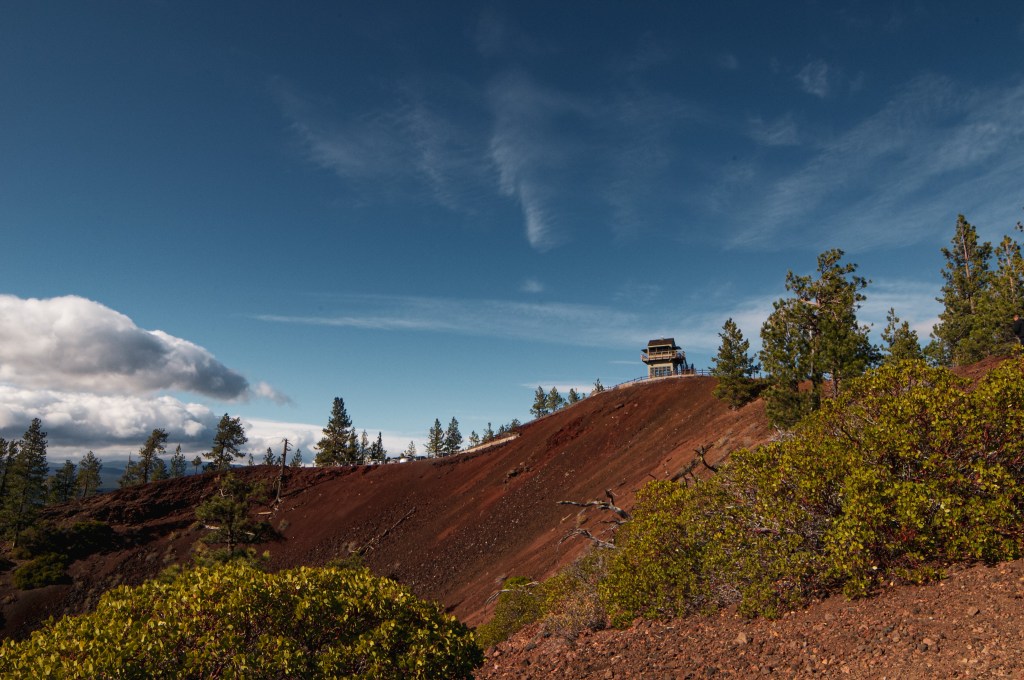
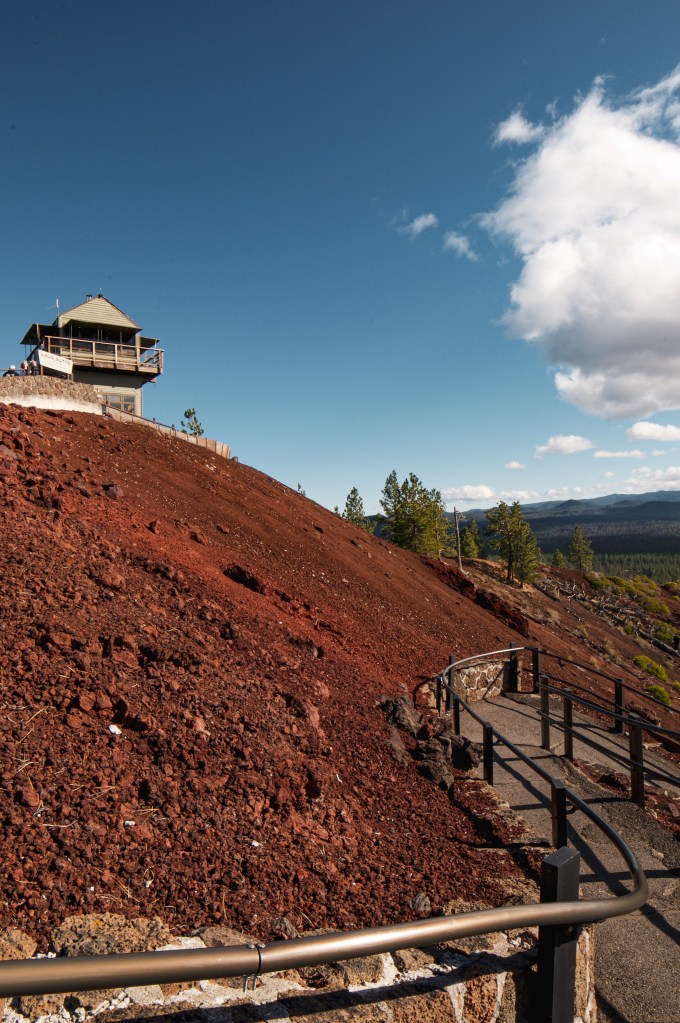
Looking at Lava Butte From Black Rock Trail
Trip Report.
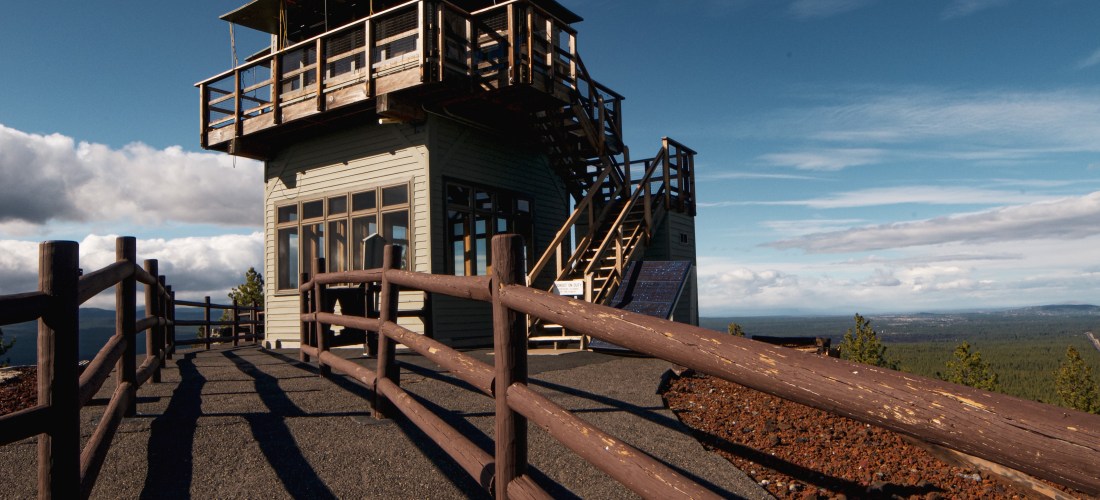
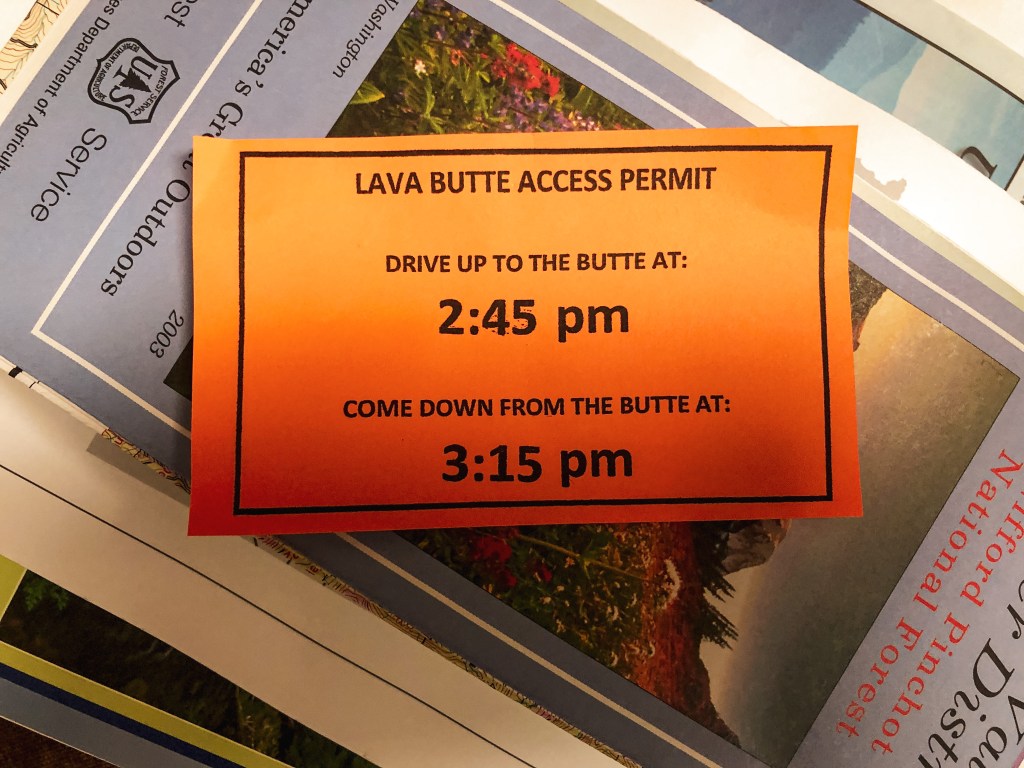
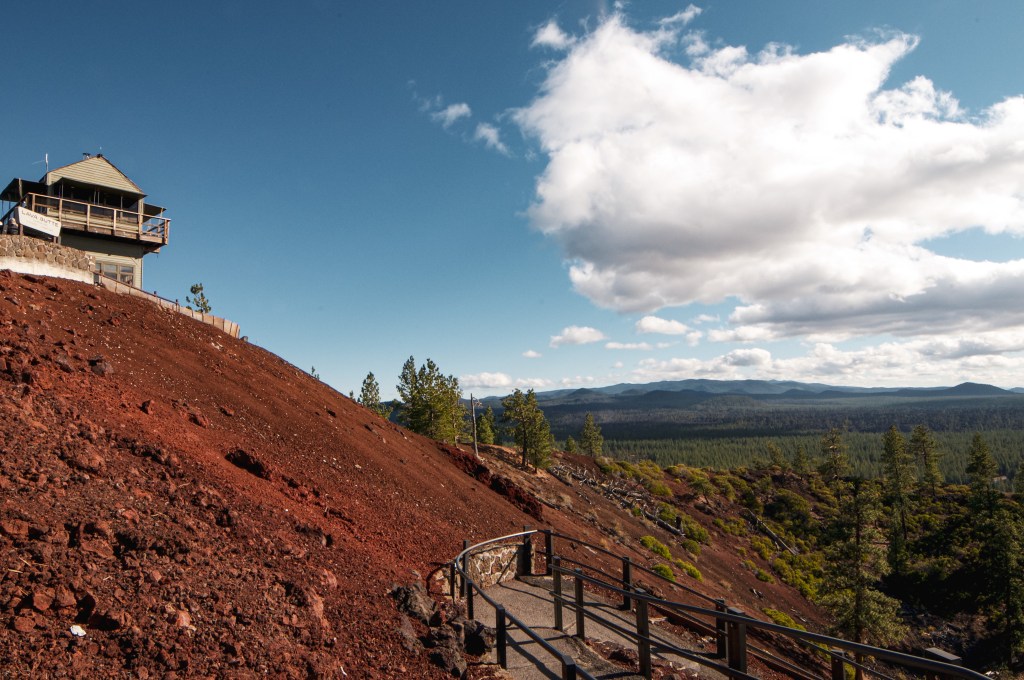
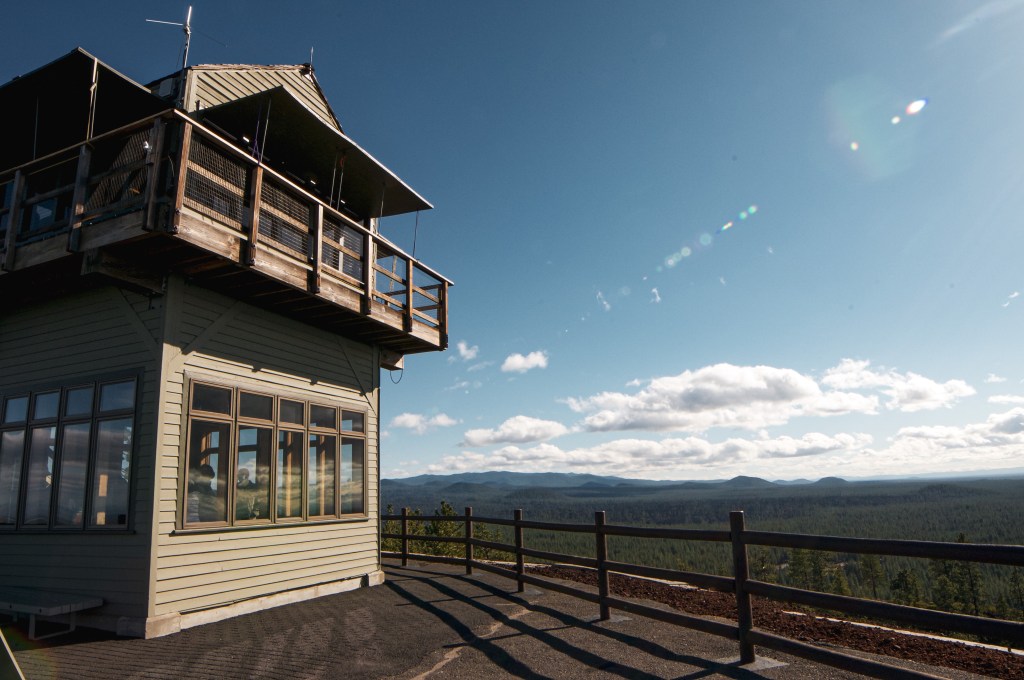
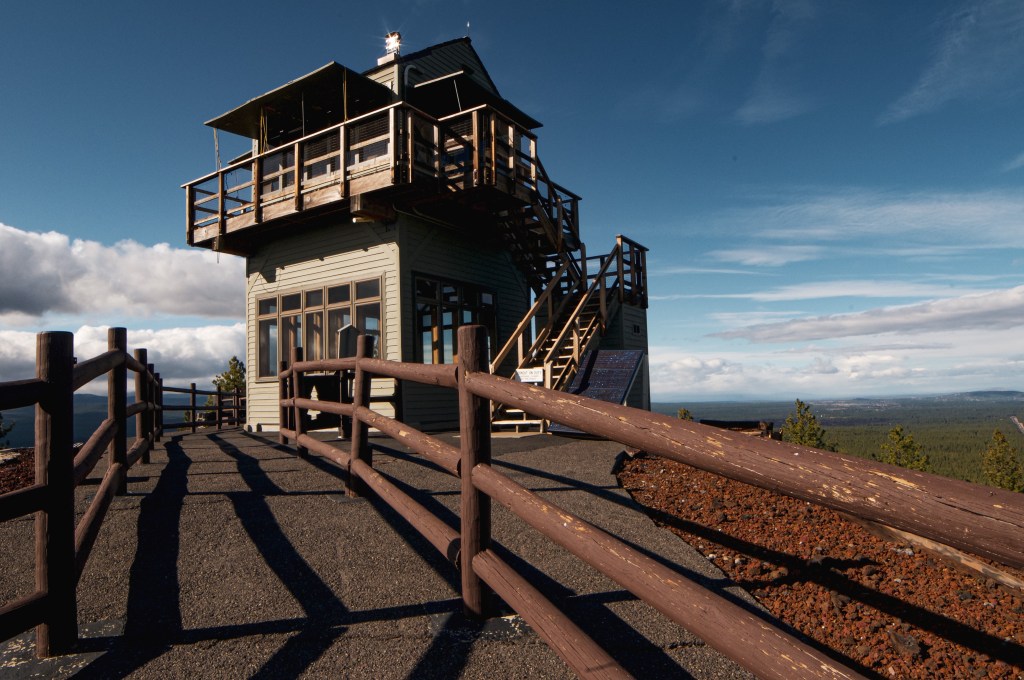
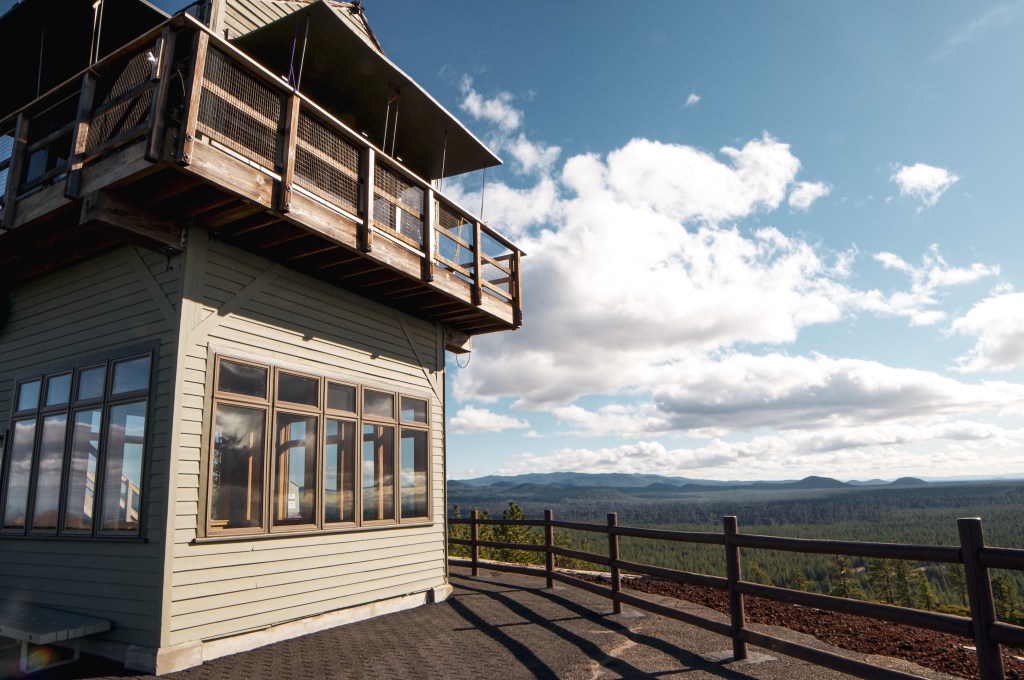
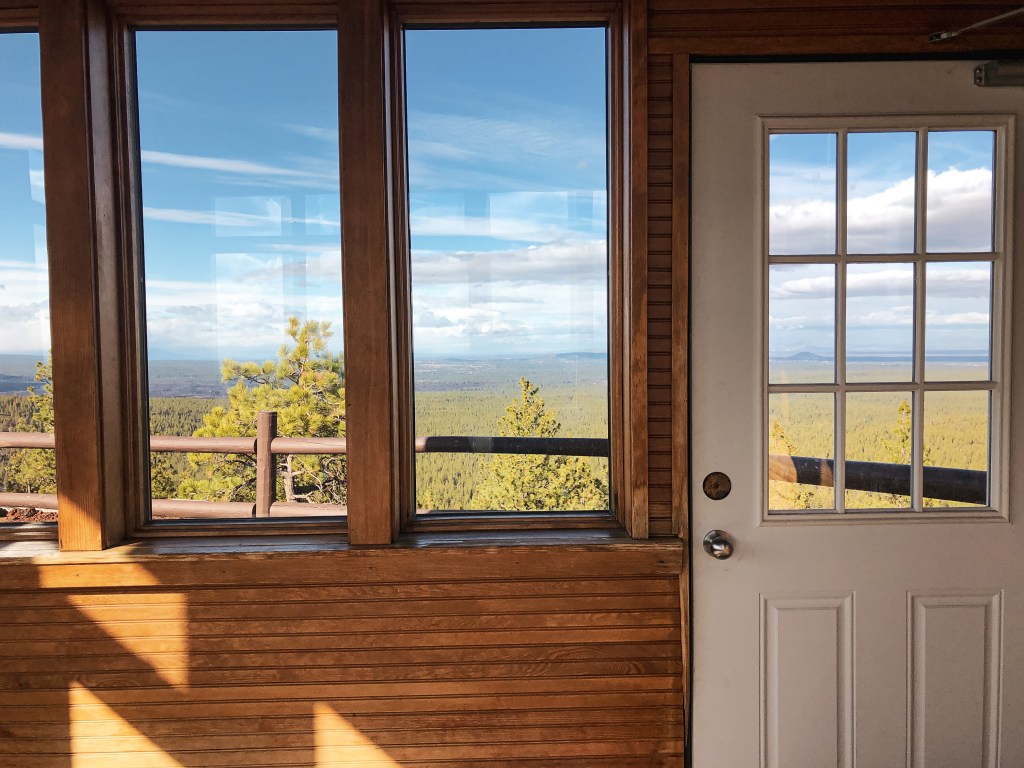
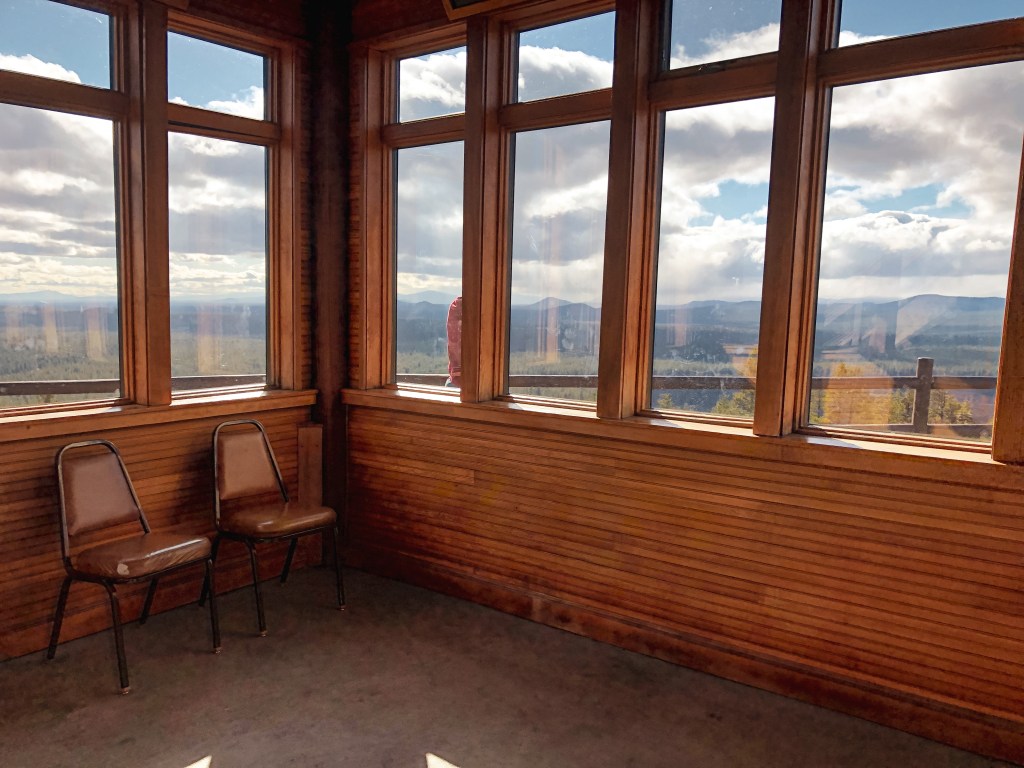
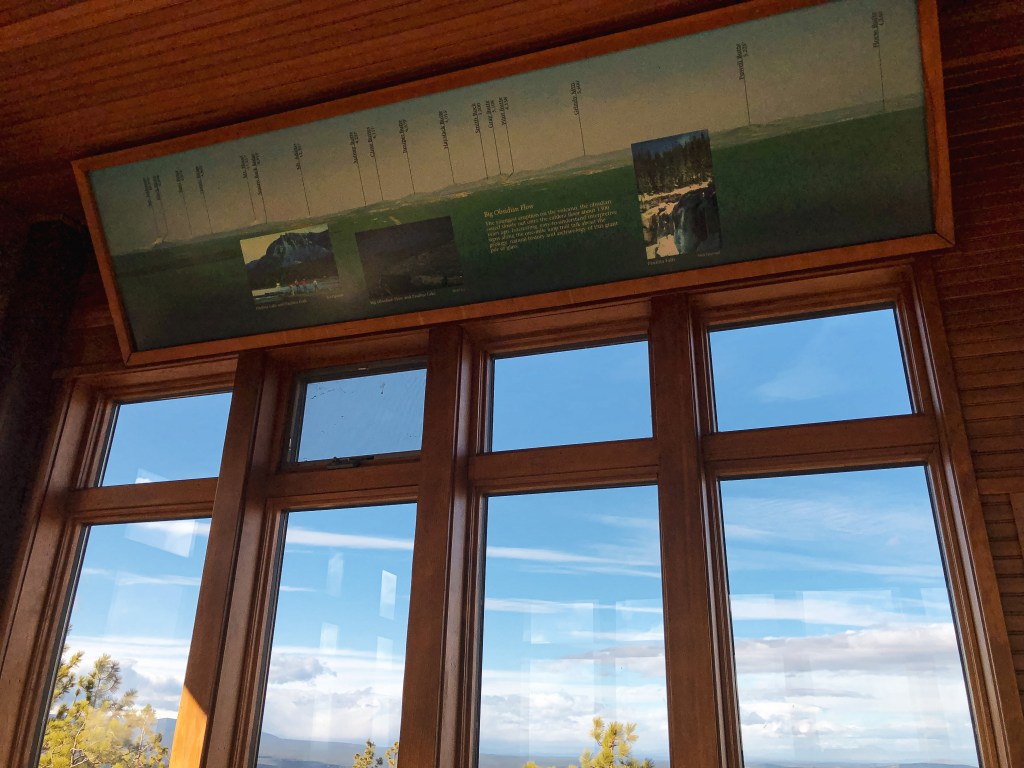
Lava Butte L.O. is one of the easiest accessed active fire lookouts in Oregon and, no doubt, the most visited. We decided to stop here on our way back to Portland since it is only a short paved drive to the top. The lookout is within the Newberry National Volcanic Monument near the Lava Lands Visitor Center. You will need to have a Northwest Forest Pass, National Parks Pass, or pay an entry fee to access. Due to the limited parking at the top of the cinder cone, you need to have a time access permit. These are free to visitors and are handed out at the entry kiosk. We did not know this at the time of our visit and were told we’d have to wait an hour to gain access. Driving to the top of the cinder cone is only permitted from late May to mid-October. We just happened to be here on the last day it was open for the season. Hiking up the road to the top is permitted year-round and is an alternative option if you do not want to wait for a time permit. We figured by the time we hiked to the top and back it’d be our time to drive anyway. We decided to wait and check out the Black Rock trail on the other side of the parking lot in the mean time. Once on the summit it is a short paved walk to the base of the lookout. The top is actively staffed and inaccessible to the public. The base of the lookout acts as a visitor center that has informative signs to help locate the surrounding landmarks. There is also a short un-paved trail that hikes away from the lookout around the cone. The time permit for the top only allows for 30-minutes, but we found this was plenty of time to check it out and take some pictures.
History.
Lava Butte has been a site used for fire detection since 1913 and has had four different types of lookout structures. In 1913, they only had a telephone line to the summit and were expected to camp near the base. The fire attendants during this time were staffed by the Deschutes Valley Fire Patrol Association. It wasn’t adopted as a fire lookout by the Forest Service until 1924. The first lookout structure was built in 1931 as a 14×14 L-4 hip-roof house. It was one of the three first lookouts established in the Deschutes NF and was considered one of the most visited lookouts even then. The other two were Odell Butte L.O. and Black Butte L.O. (post) The second structure built on Lava Butte was a 2-story R-6 flat cab in 1957 to replace the existing. In 1960, the first floor was expanded to include a visitor center. It was later dismantled in 1997 to start construction on the current lookout. In 1998, they completed a 2-story replica of a gable-roofed L-4 cab with a 1st floor visitor center. Despite the easy access to this lookout and proximity to Bend, it plays a pivotal role and is noted as reporting more fires first than any other lookout on the Deschutes NF.
Henkle Butte is a lookout ran by the Oregon Department of Forestry and staffed every summer. It sits on top of a butte that overlooks expensive neighborhoods in Deschutes County. The tower isn’t accessible to the public but can be viewed from the road. It’s listed on geocache and peak bagger sites, but it’s unclear if the summit is accessible to the public. Be aware a lot of this area is private property and posted signs should be respected.
History.
Henkle Butte received its name from a competition. The commander stationed at Camp Polk offered a prize to the soldier that could make the quickest trek to and from the butte. It was around two miles northeast from the camp. The butte was named after the winner, Jeremiah F. Henkle. He was stationed at Camp Polk during the winter of 1865-1866. It is commonly mislabeled as Hinkle Butte. The first live-in fire tower wasn’t built until 1943. It was constructed from recycled material by the CCC as a 42′ tower with a 14×14 L-4 cab. The current structure was built in 1961 as a 3-story enclosed ODF cab.
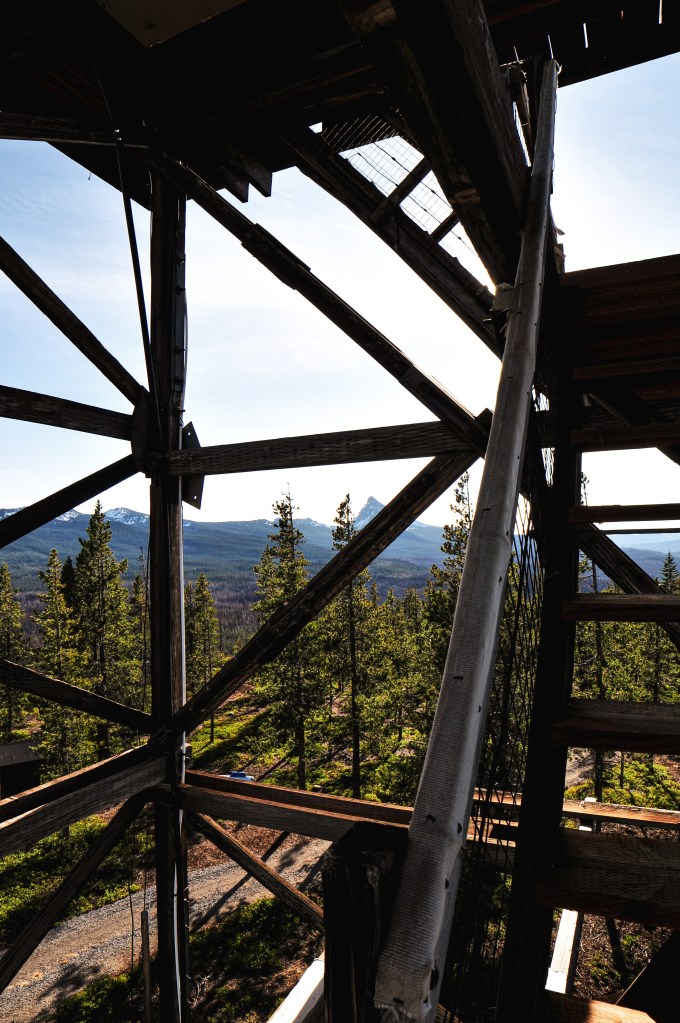
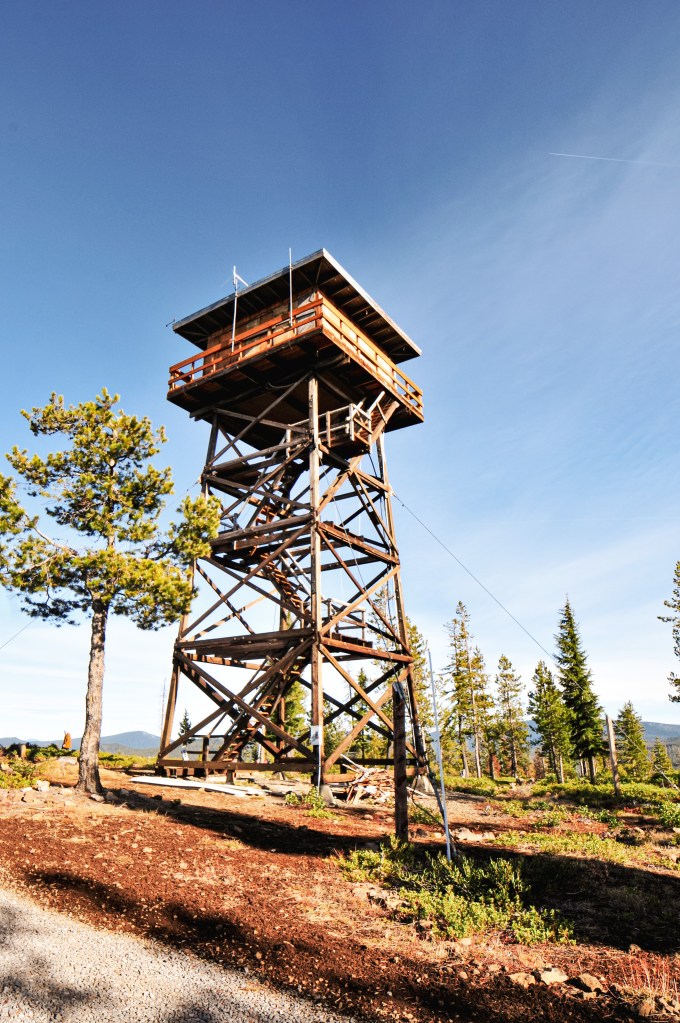
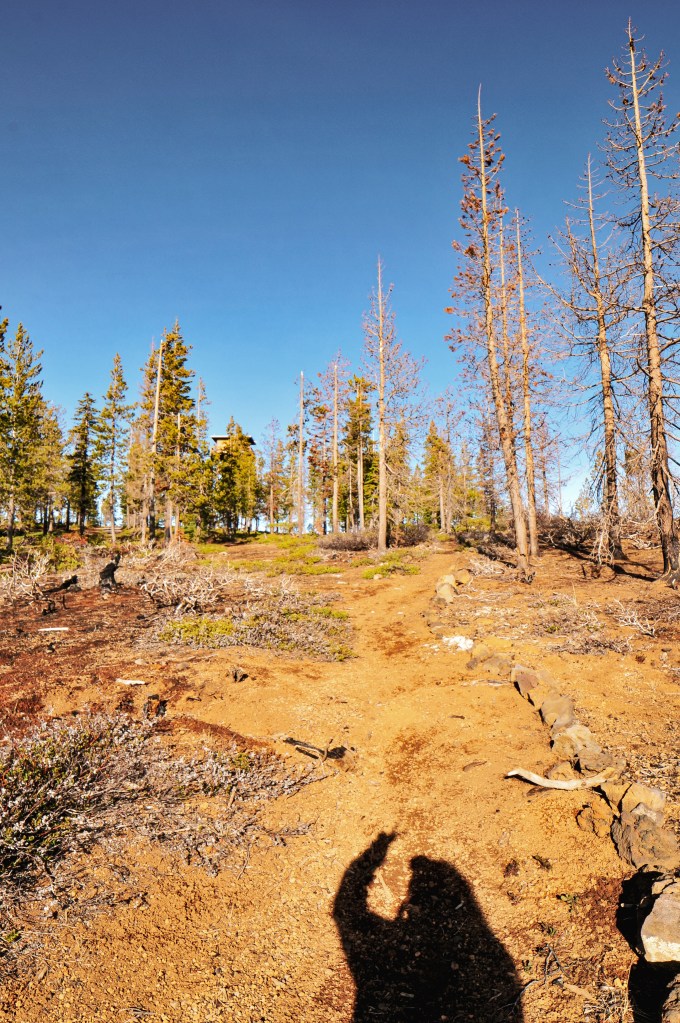
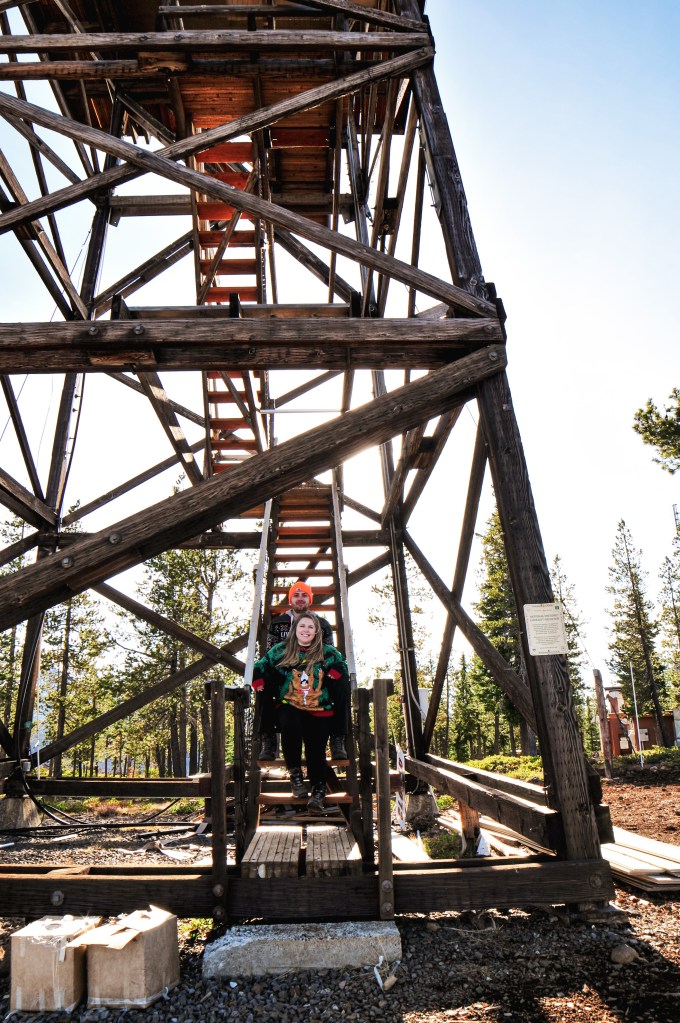
My partner and I decided to make a quick one-night trip down to the Deschutes National Forest area for the weekend. We wanted to try and see Henkle Butte (post), Trout Creek Butte, and Lava Butte (post) lookouts. Trout Creek Butte L.O. is an easy drive just outside of Sisters. We took the Mackenzie HWY-242 to signed NF-15 to get there. The NF-15 road starts out paved and eventually turns into well-maintained gravel. After 5 miles it forks to become NF-1524 and NF-1522. We kept right to stay on NF-1524. Eventually it will fork again with NF-1524 continuing to the left and NF-1018 to the right. We stayed right at this junction as well. We continued on NF-1018 until we reached the NF-800 spur on the right. It was a pretty distinct road since it is made up of red rock instead of fresh gravel. NF-800 will take you the remaining way to the summit. All roads were in decent condition and are manageable in a passenger vehicle. There are a few bumps on NF-800 but you’ll make it with caution to at least the gate. We decided not to drive to the summit and parked in a pull out before the old gate. The gate is still there but no longer blocks the road. It’s about a 1/2 mile walk to the summit from this point in the road. As we were walking up the road to the summit, we became worried that the tower might have fallen or already been removed. The area was burned over in the 2017 Milli Fire but there are still a lot of tall trees on the summit obscuring the view. We weren’t able to see the tower until we were almost to the base of it. It was like playing Where’s Waldo? with a lookout. Scroll down if you want to try and spot it in my pictures. The first three levels of stairs are removed due to safety concerns and to help deter vandalism. The tower is in terrible condition. The cab on top is missing its floor, window glass, and part of the roof. Although there is not much of a view from the summit, the views from the road before the summit are worth the stop alone. We drove back down NF-800 to the junction with NF-1018. Instead of heading back out the way we came, we turned to take NF-1018 in the other direction. If you stay on NF-1018, it will eventually take you all the way back to HWY-242. We were running out of day light so we decided to camp at the Whispering Pine C.G. for the night.
History.
This 75′ steel Aermotor tower with 7×7 cab is the original built by the CCC in 1933. Some sources note this as a 86′ tower instead, but I believe this is counting the concrete poured for the tower. The tower was last used for emergencies up until the 1970s. There used to be a T-1E 16×18 garage and 14×16 wood living cabin on the summit as well. Both were built a year after the tower in 1934, but I couldn’t confirm any information on what happened to these structures. The outhouse was relocated to Sand Mountain L.O. as part of a restoration project in 1992. The tower is the only remaining structure on the summit and is slated to be decommissioned by the Deschutes NF.
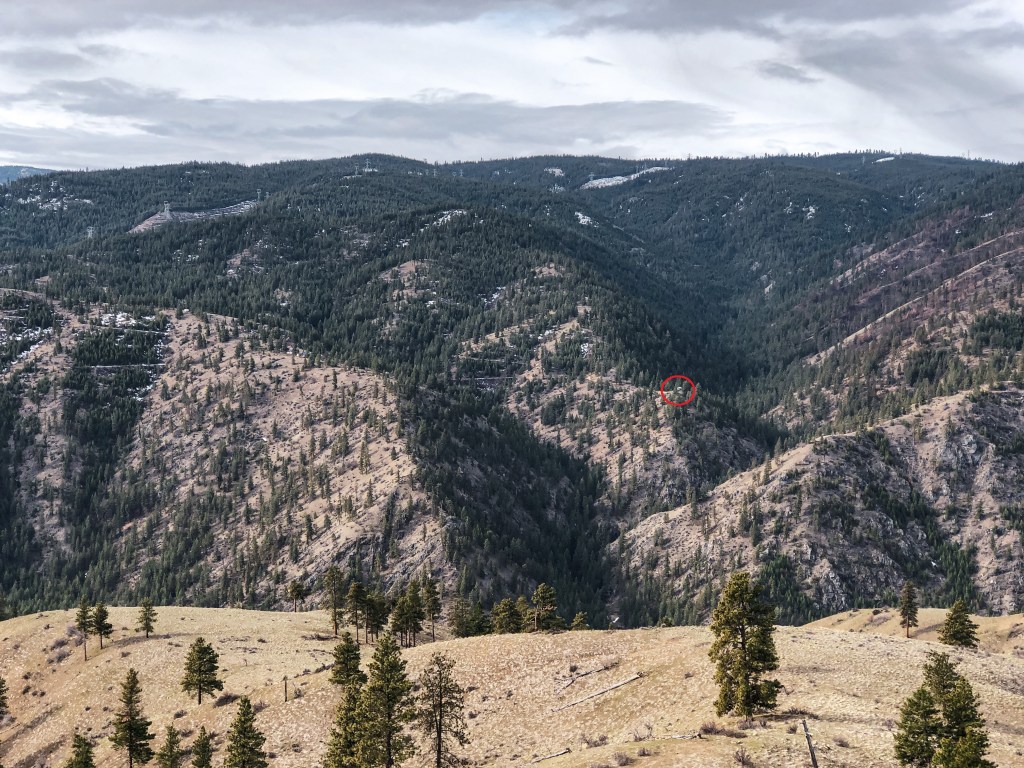
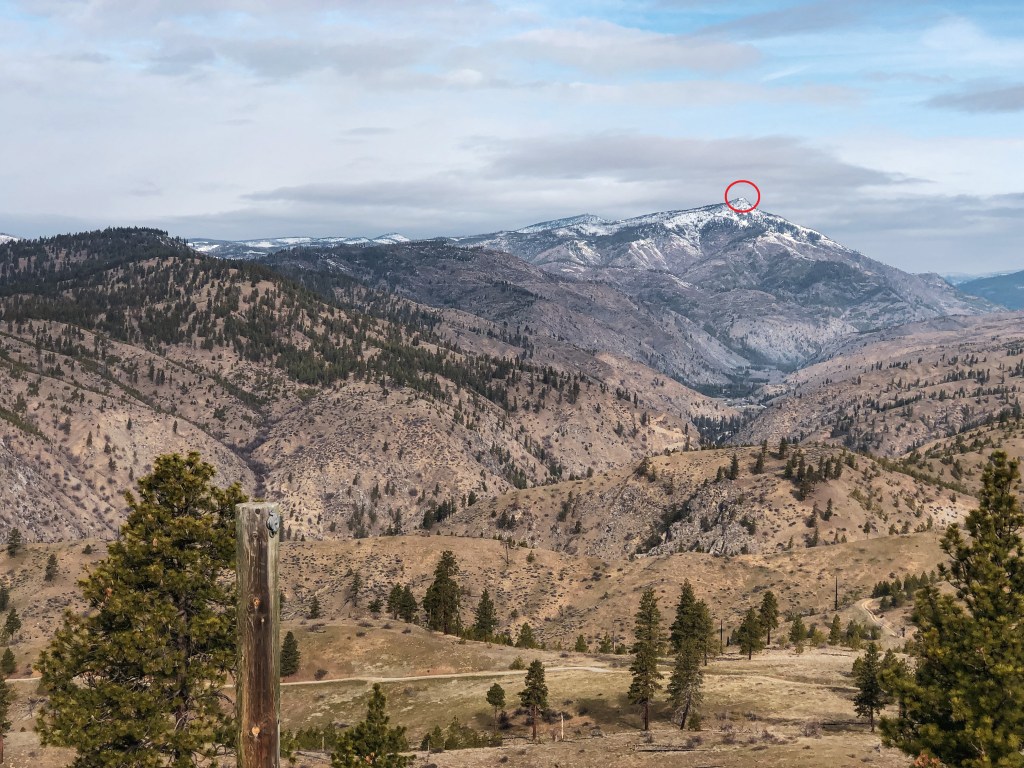
Can you spot the lookout?
Pull the slider to the left to see where the lookout is located in the below pictures.