Soda Mountain L.O.

Oregon Lookouts

Location.

Cascade-Siskiyou National Monument; Oregon Department of Forestry

Status.

Fire Detection Camera; Currently standing

Estimated drive time from Portland, OR.

5-1/2 hours

Date visited.

June 26, 2022

Elevation.

6,091′

National Historic Lookout Register.

US 340; OR 39

Trip Report.

Day 2/10: Lookout Road Trip 2022

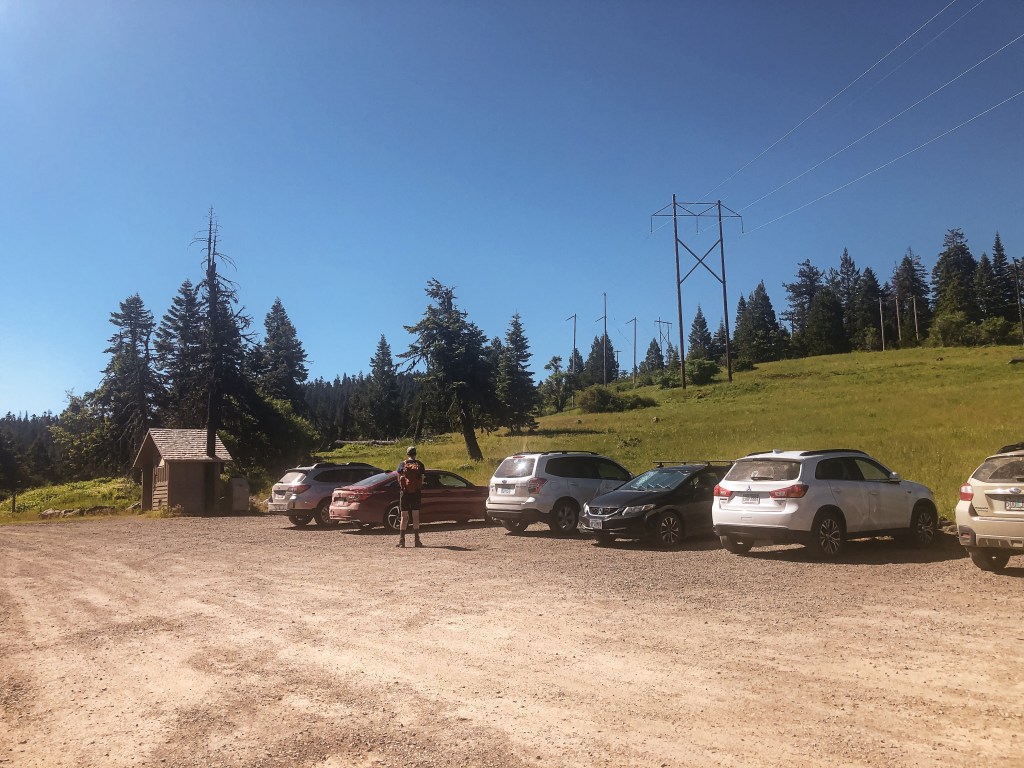
Another early morning was on the schedule. Though, we were able to sleep in an extra hour due to the central location of our camp. The plan for the day was to hike to Soda Mountain via the PCT, potentially visit Parker Mountain (post) if we finished early, and check off Table Mountain (post) near sunset. We packed a lunch and headed out of the Hyatt Lake Recreation Area towards HWY-66. From HWY-66, we took a road conveniently marked as Soda Mountain Road. This lead us all the way to the Hobart Bluff Trailhead to start our hike. The road is decent gravel but has a few potholes to avoid. It was nothing unmanageable to us low clearance folk. There were a few cars parked at the trailhead already. We figured this would be the busiest lookout we’d visit this trip given its proximity to the PCT and being within a National Monument.
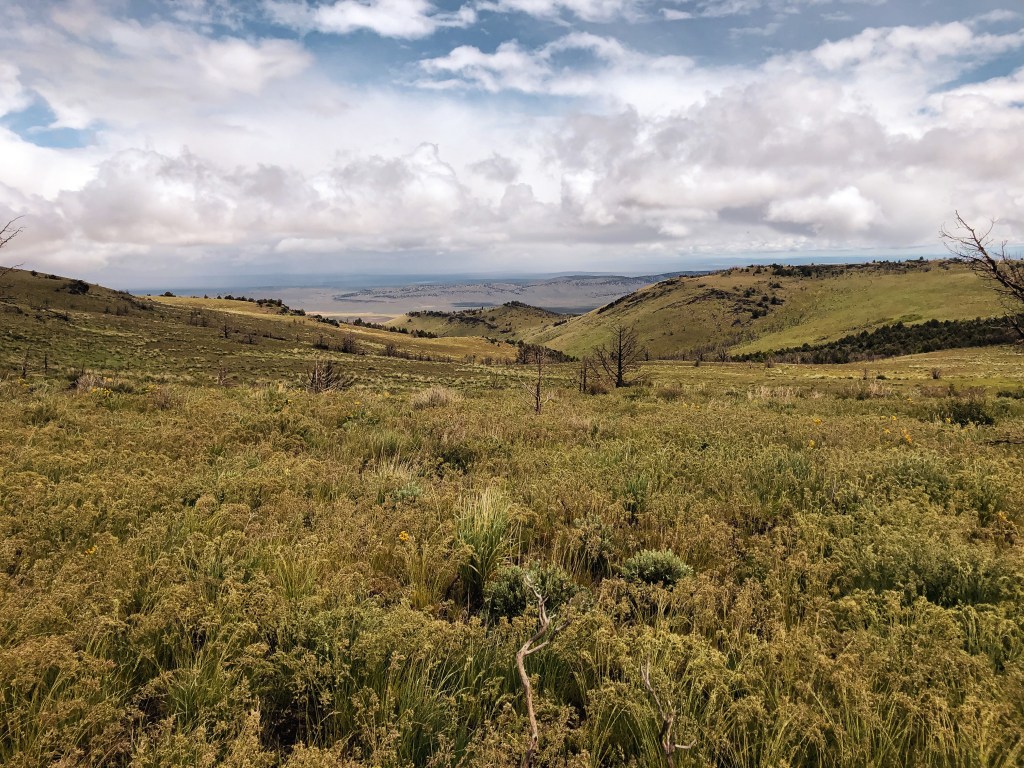
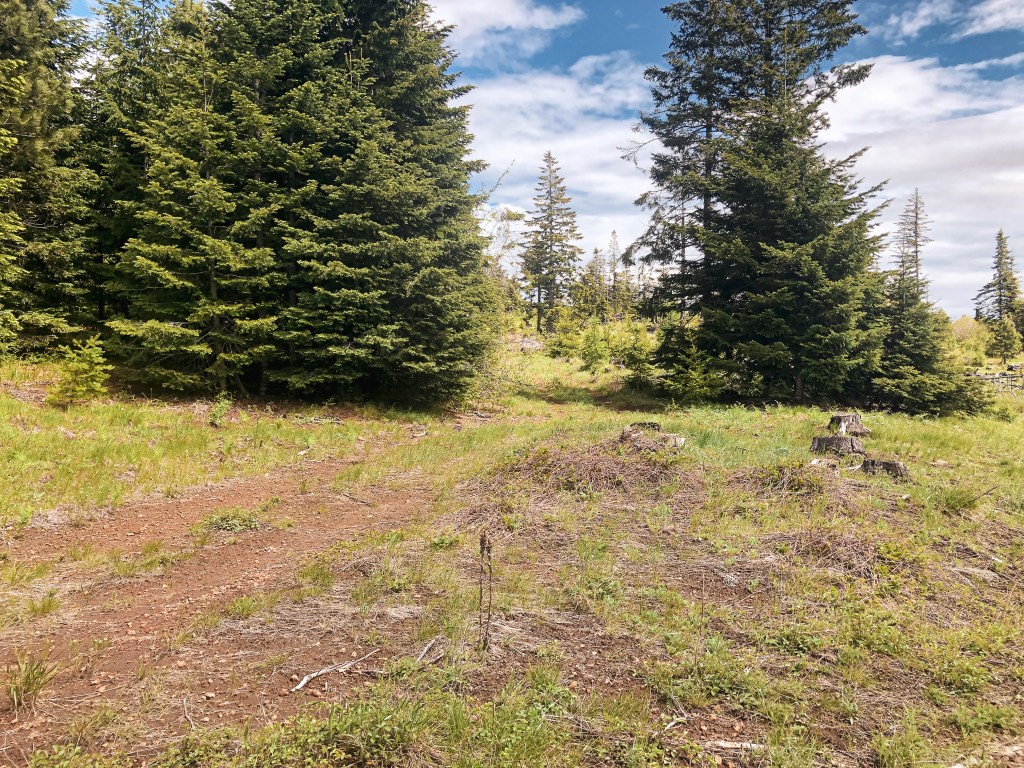
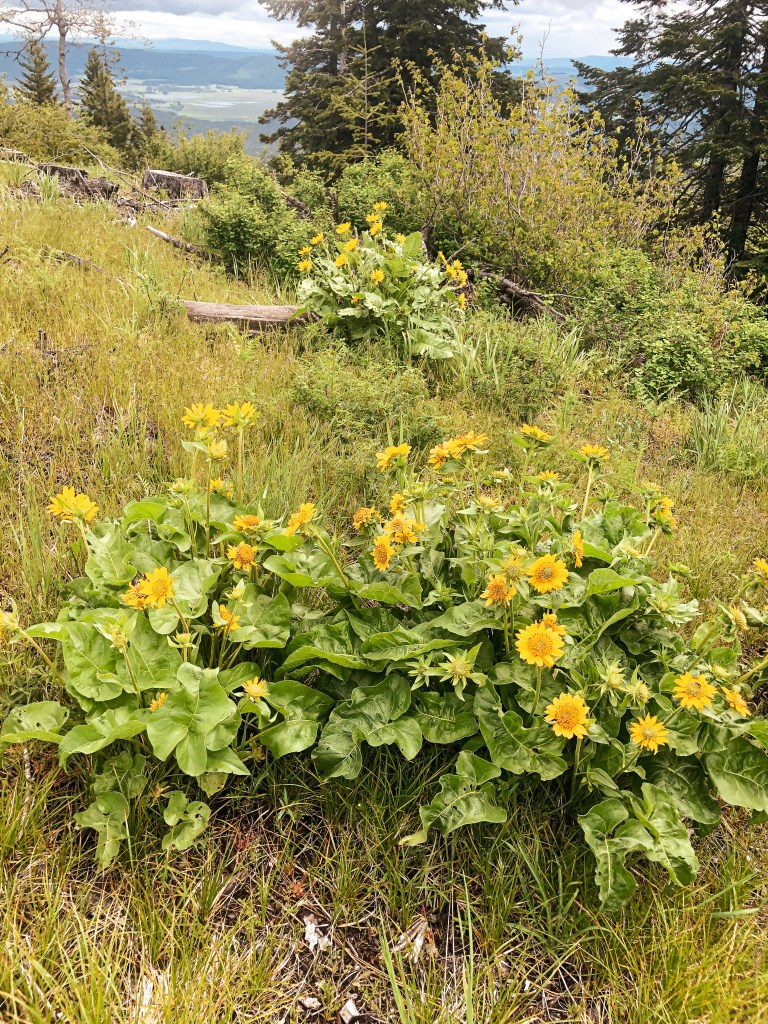
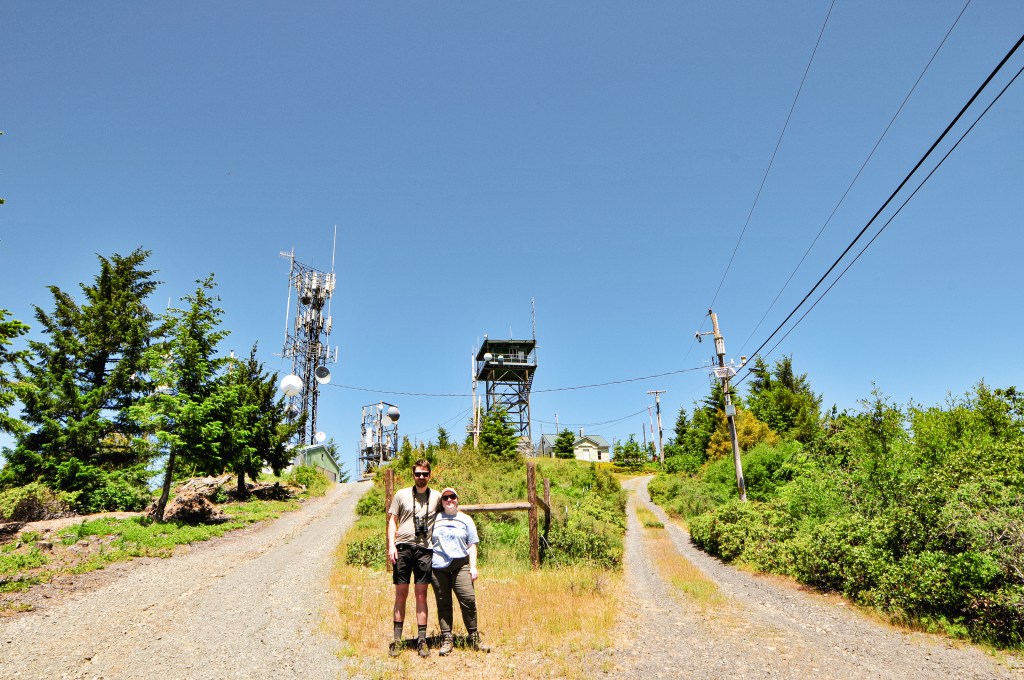
The trail starts out on the PCT heading south towards the California border over an exposed slope. It was covered in all sorts of wildflowers while we were there. Eventually, it enters a shaded forest that occasionally opens up to views out towards Pilot Rock and Mt Ashland. You will stay on the PCT for about a mile until you reach a trail junction. There is no sign stating this is the trail to Soda Mountain but there is a trail marker to help identify the junction. It takes a sharp left up the slope and connects with the road that will take you to the summit. Be aware of where you come out on the road, the trail becomes faint here. There is a “Soda Mountain-Pilot Rock Jeep Road” sign that can be used as a marker to find where you need to turn on the way back. You also have the option to walk the road back to the trailhead. We passed a few day and section hikers along the PCT, but once we turned up the connector trail we surprisingly had it to ourselves. There was a section hiker sitting at the junction that asked where we were headed. We mentioned the lookout and he asked how far it was from there. I didn’t know the exact distance but guesstimated about a mile or mile and a half. Too far for him he grunted. His pack looked pretty loaded and I agreed. Round trip from the trailhead it is roughly 4 miles with a little over 800′ in elevation gain. It was a pleasant hike that was mostly in the shade.

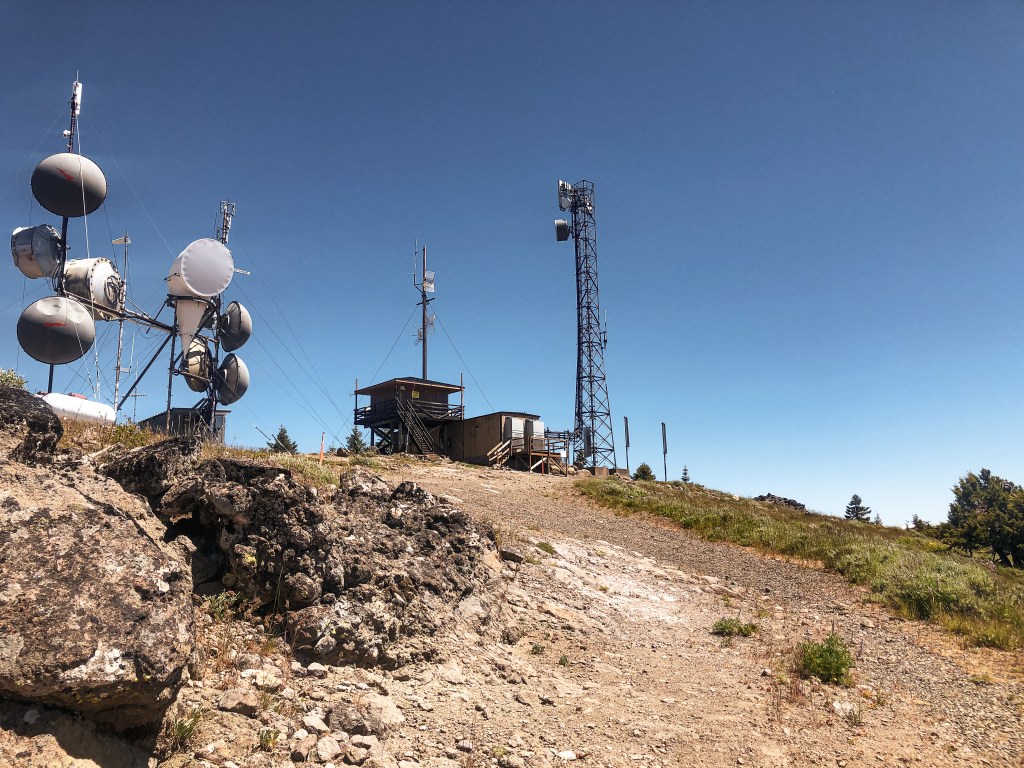
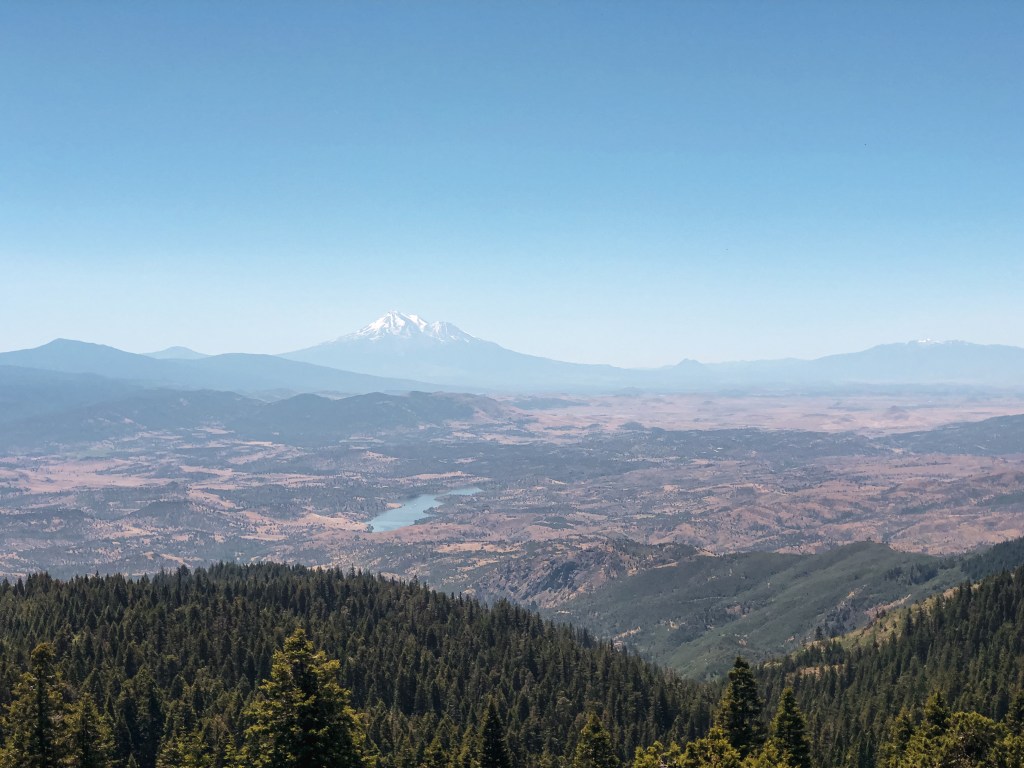
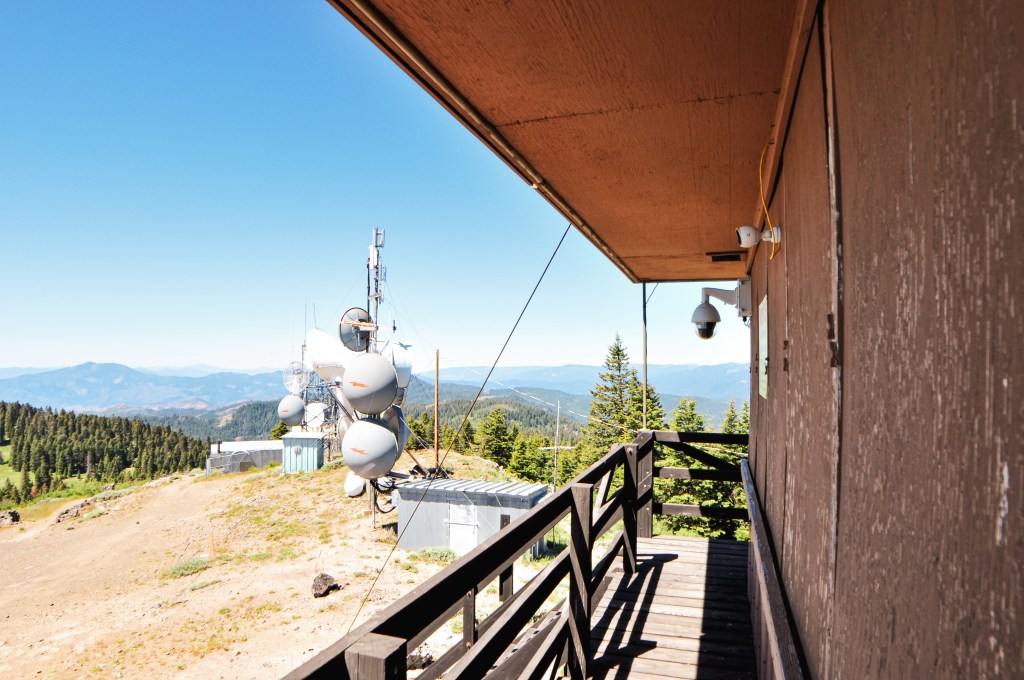
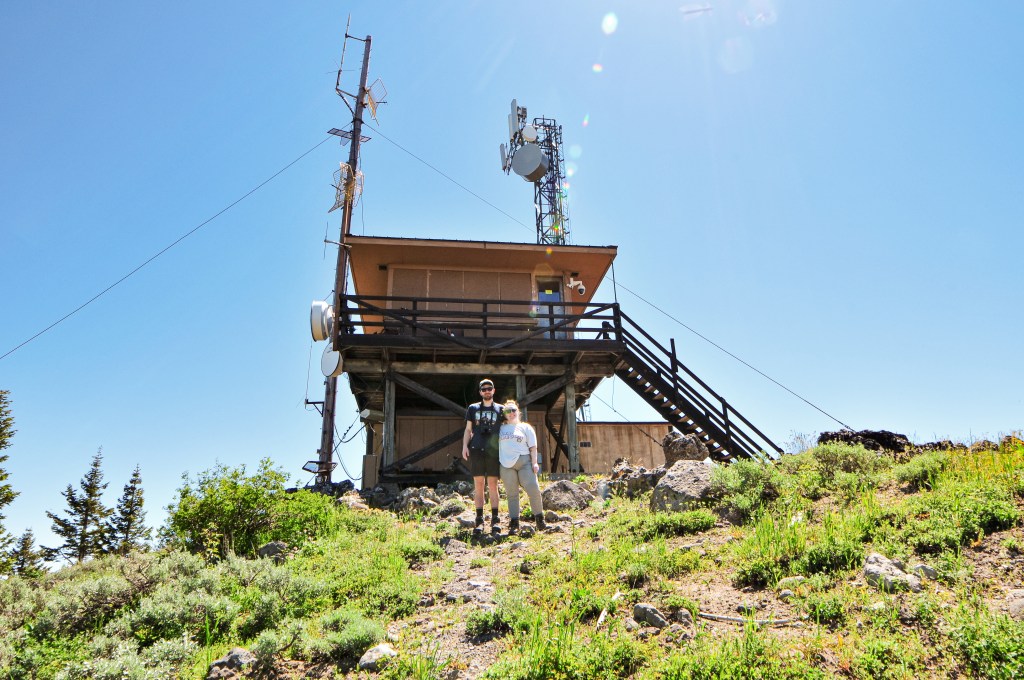
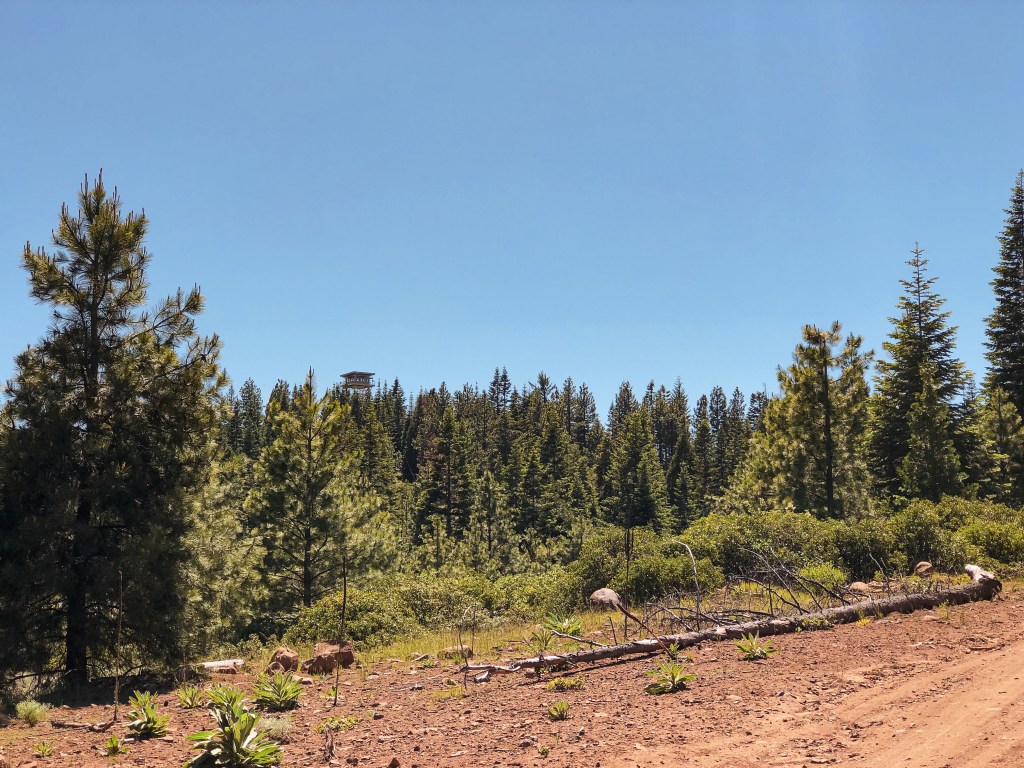
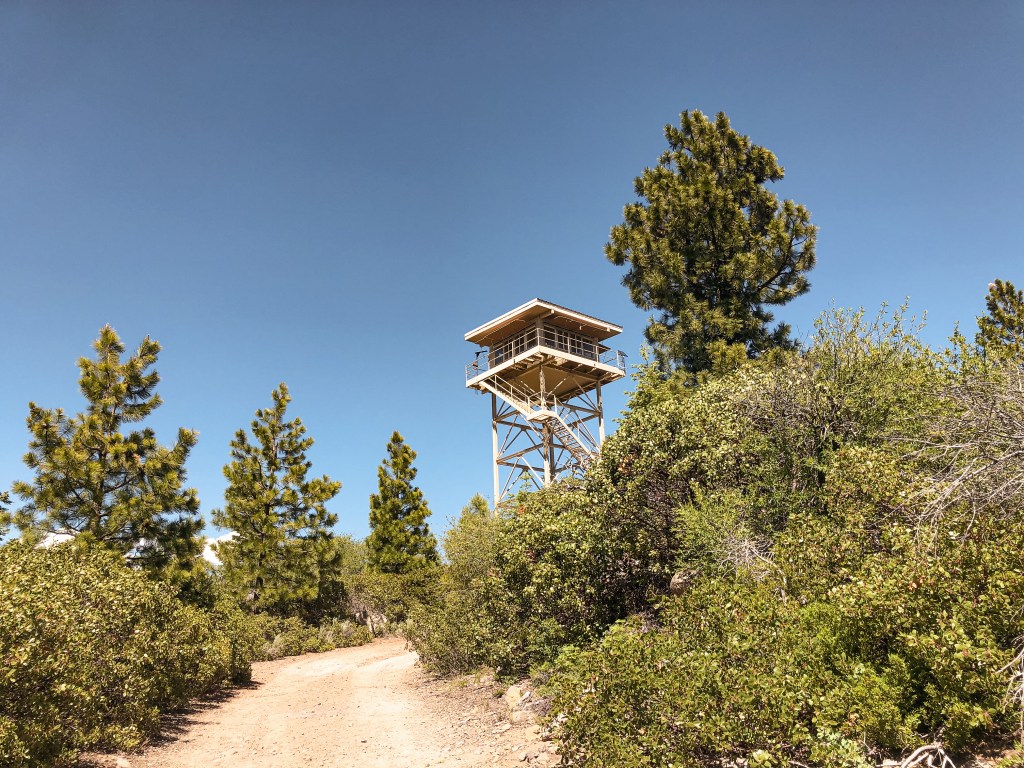
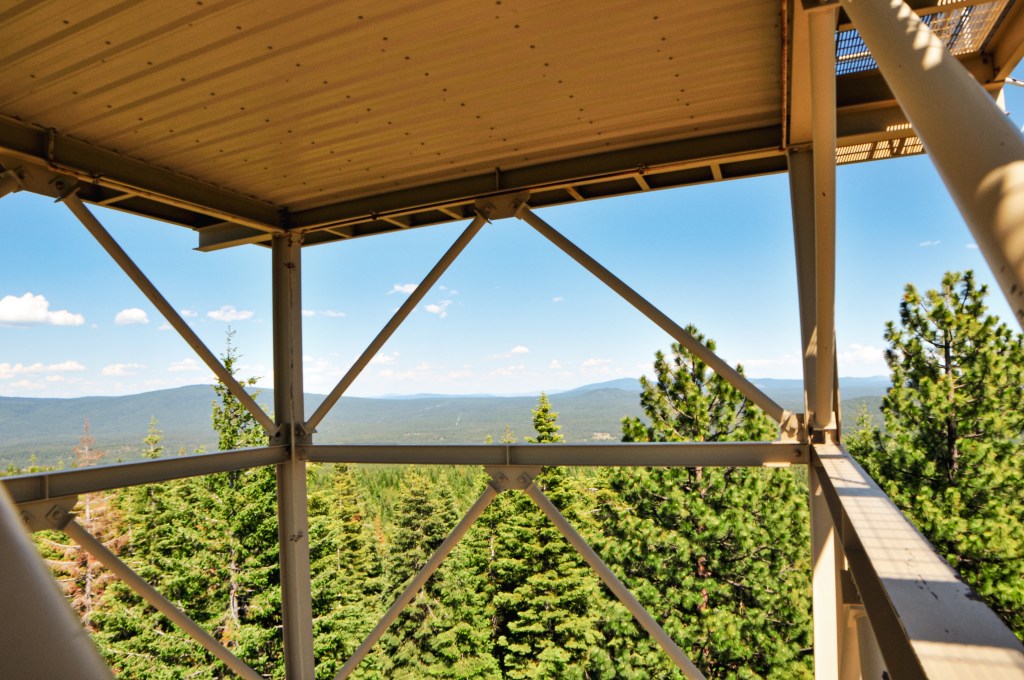
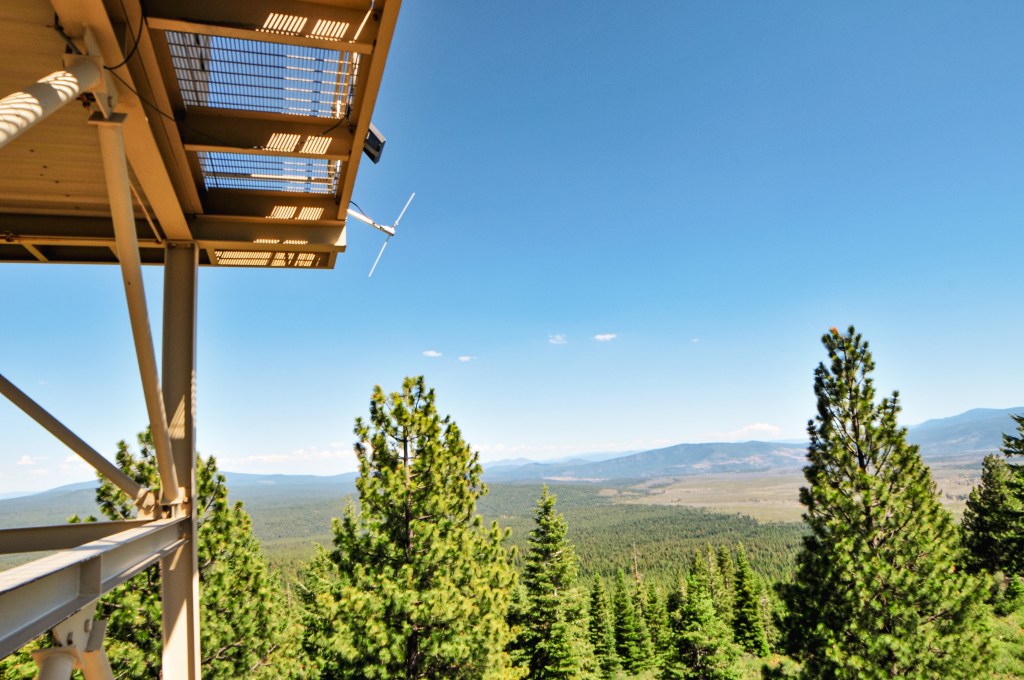
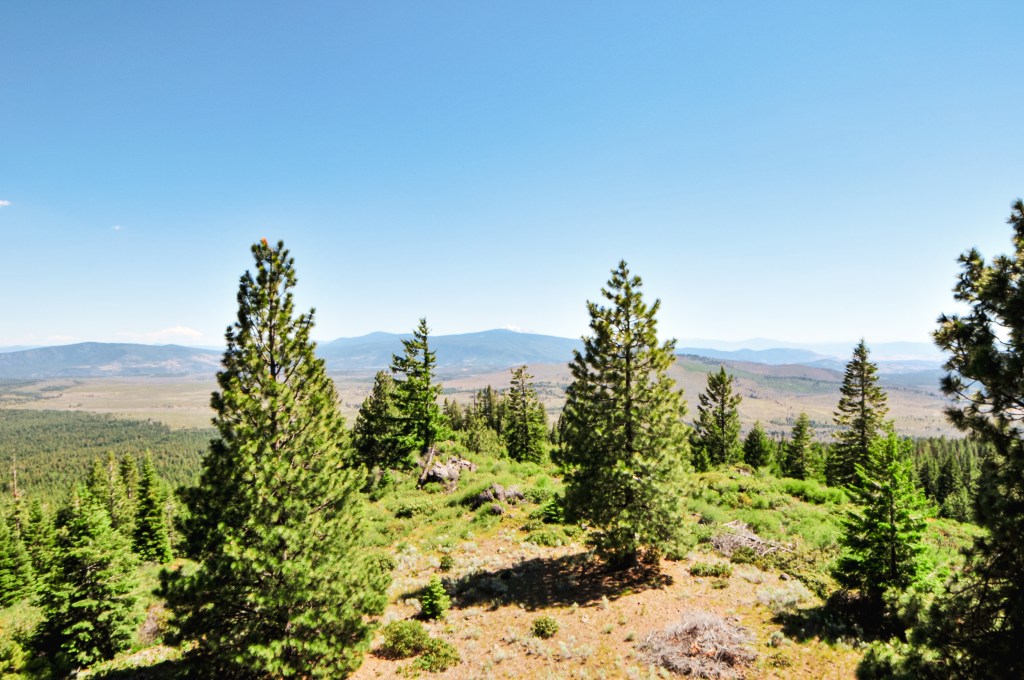
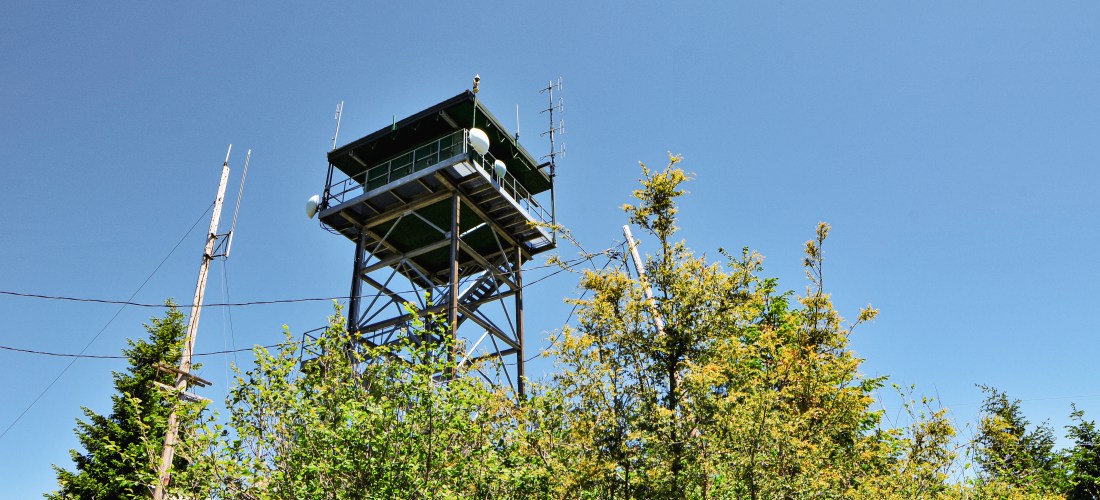
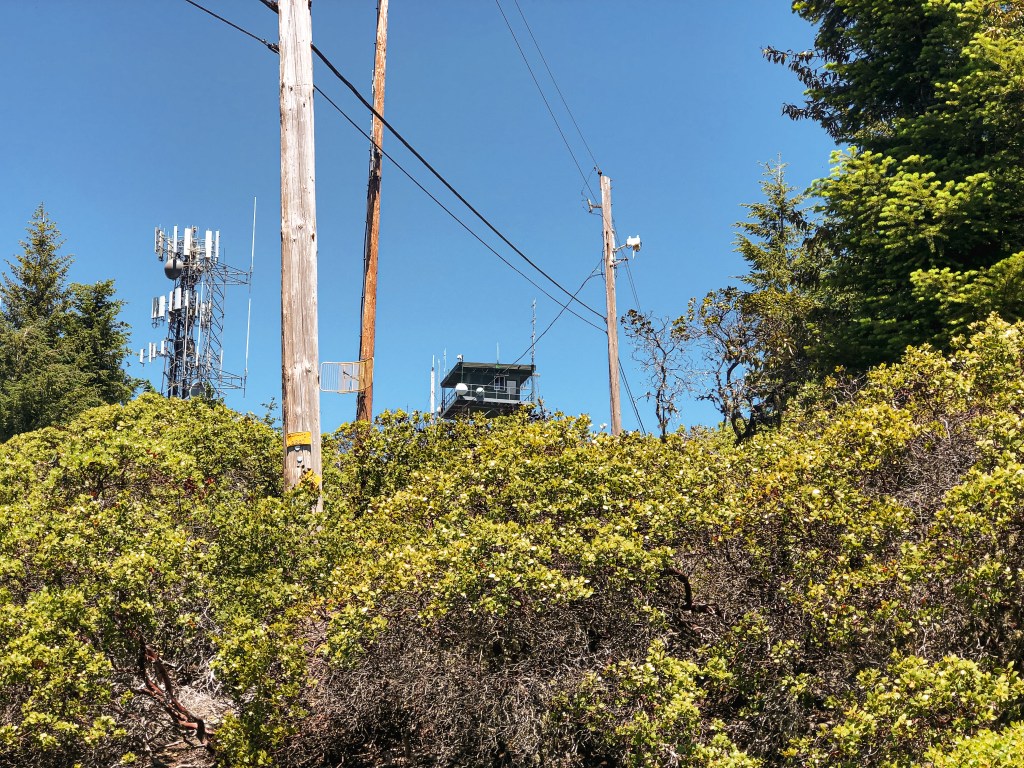
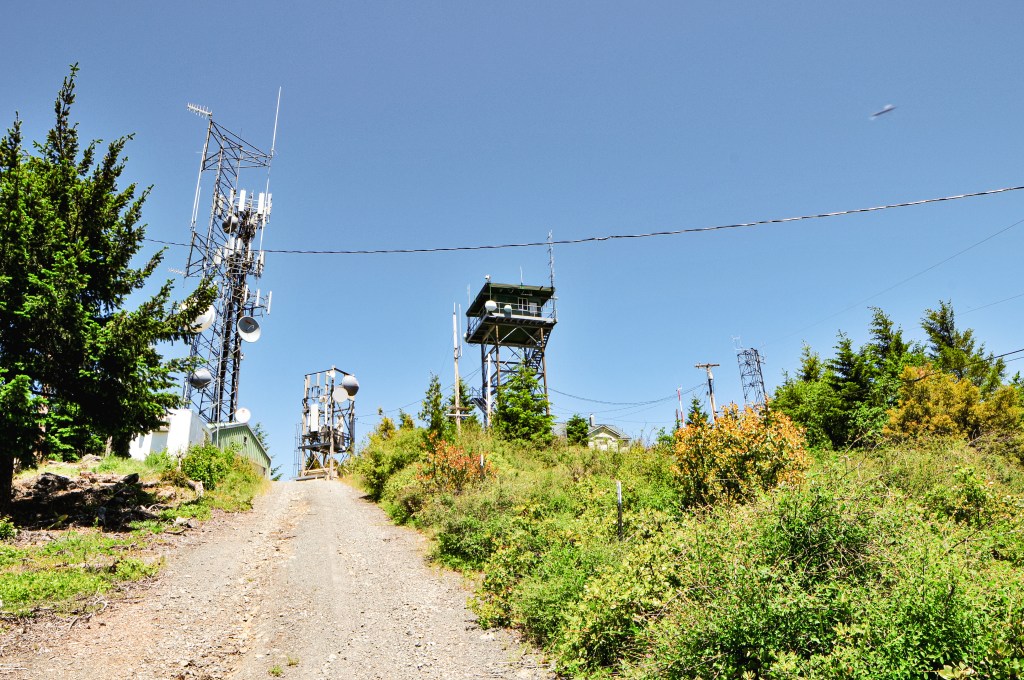
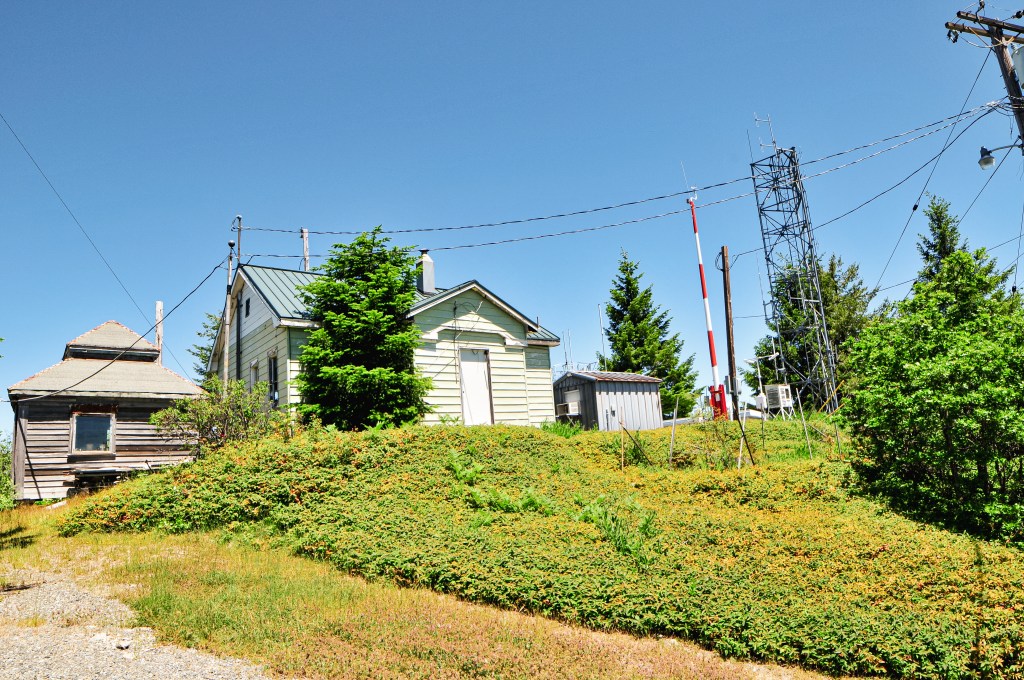
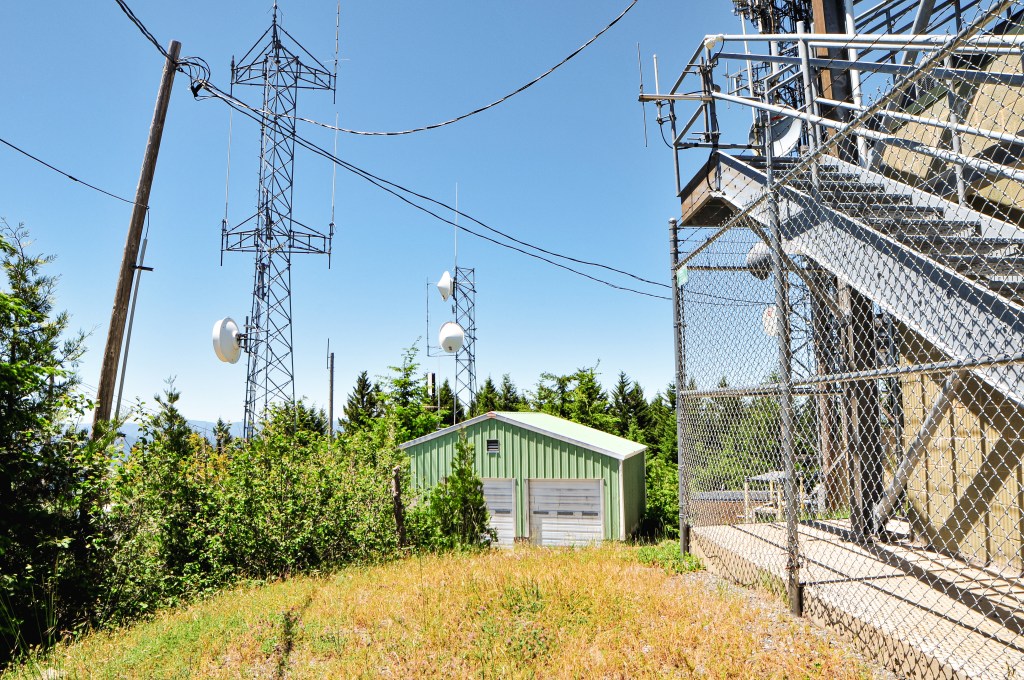
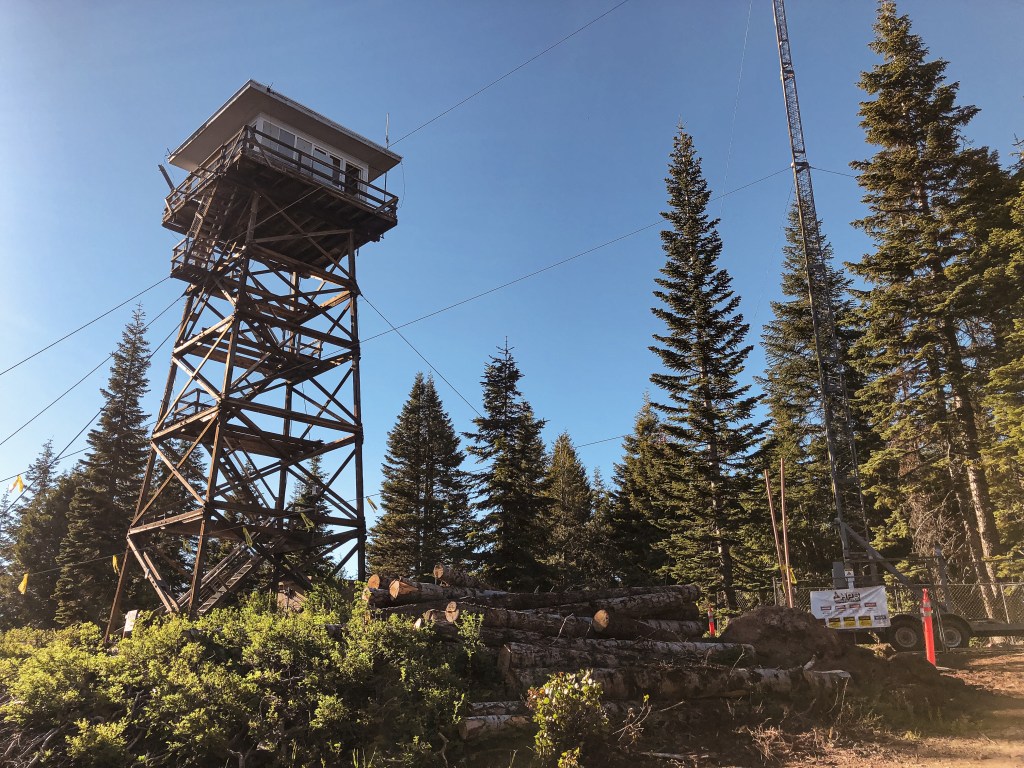
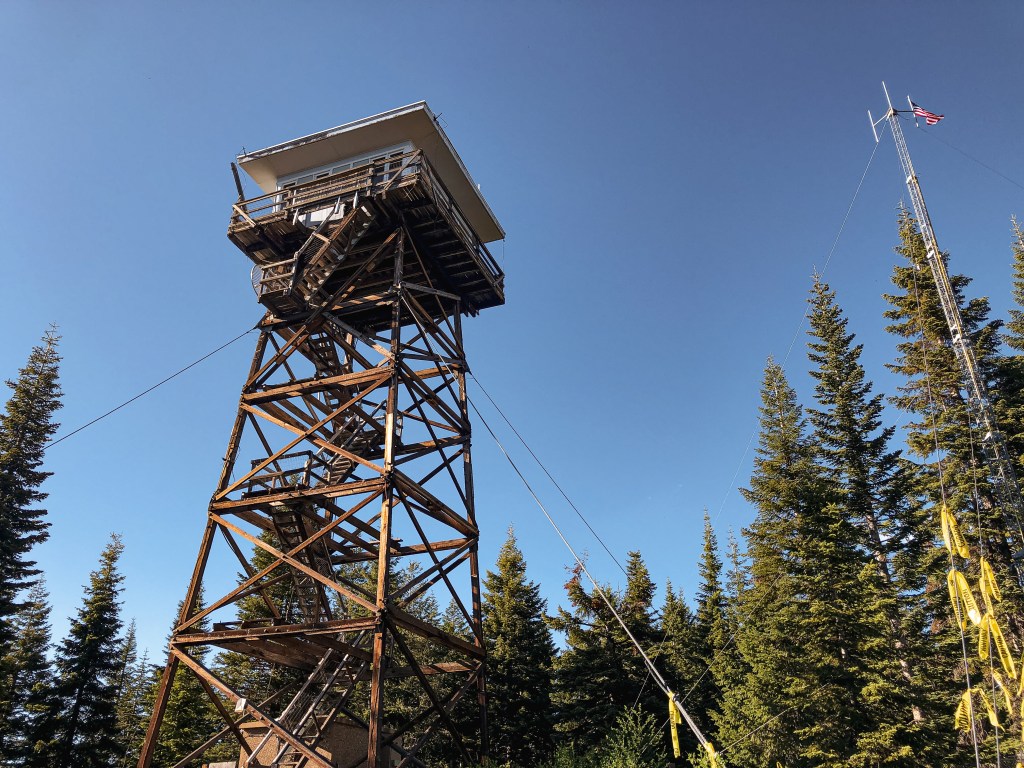
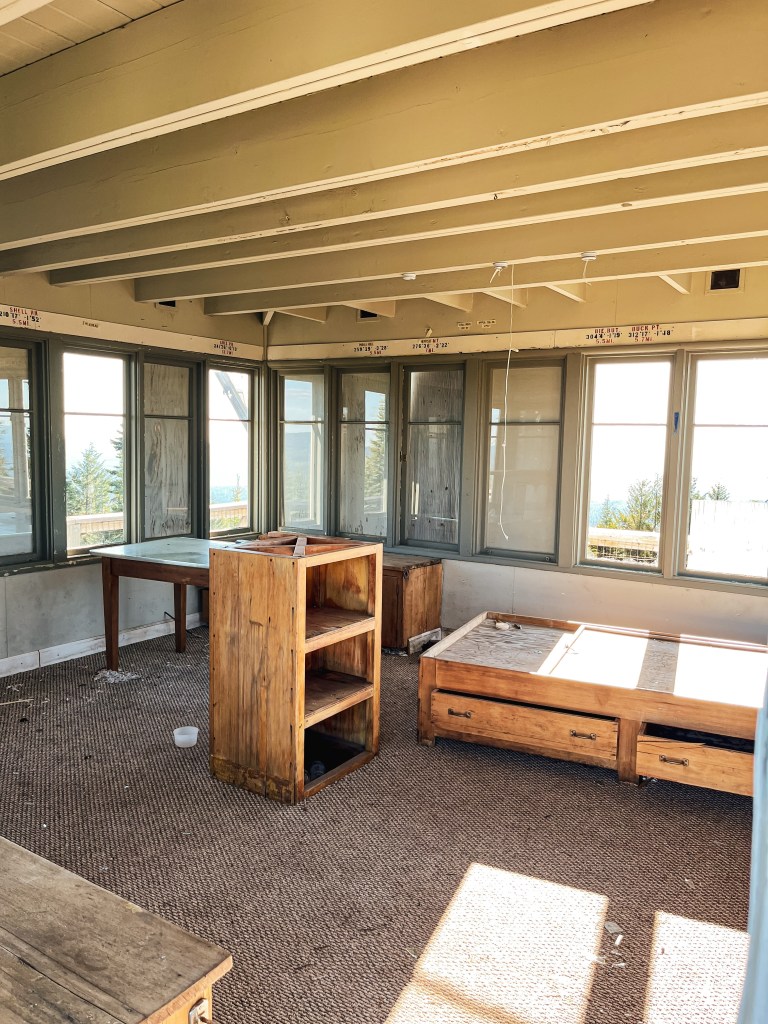
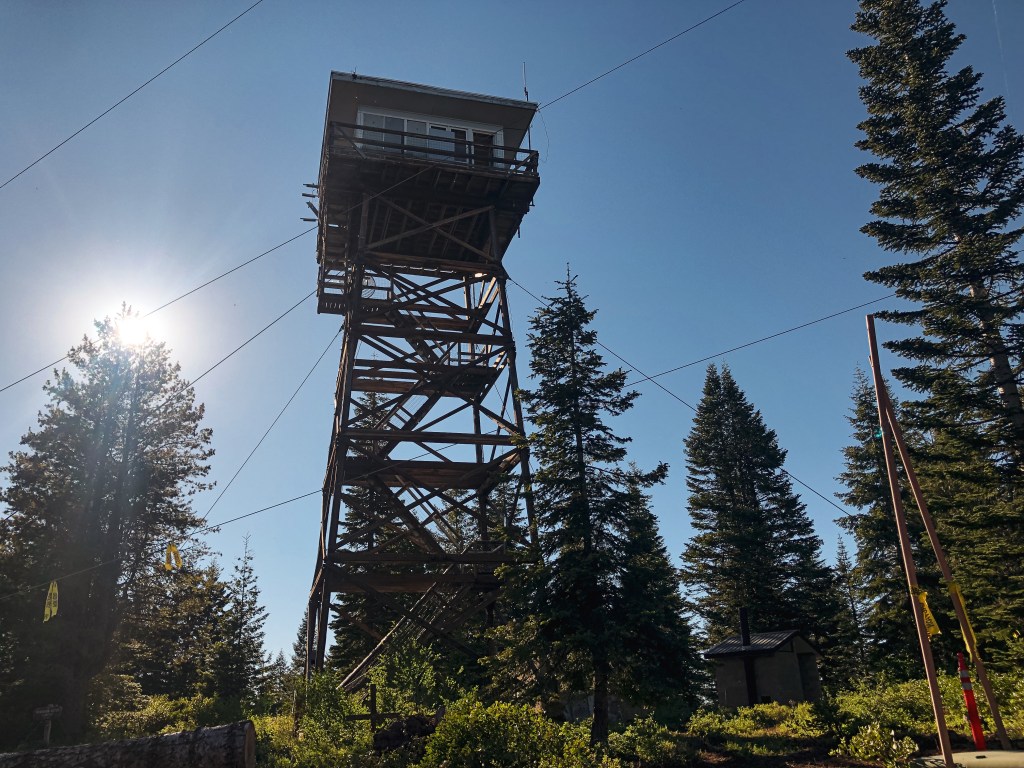
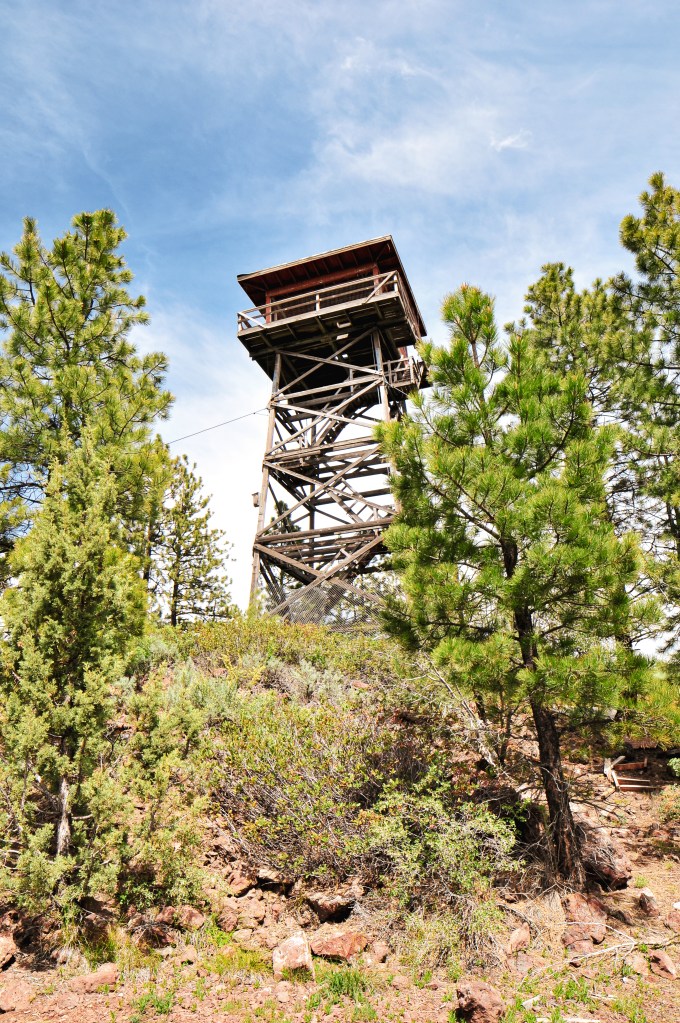
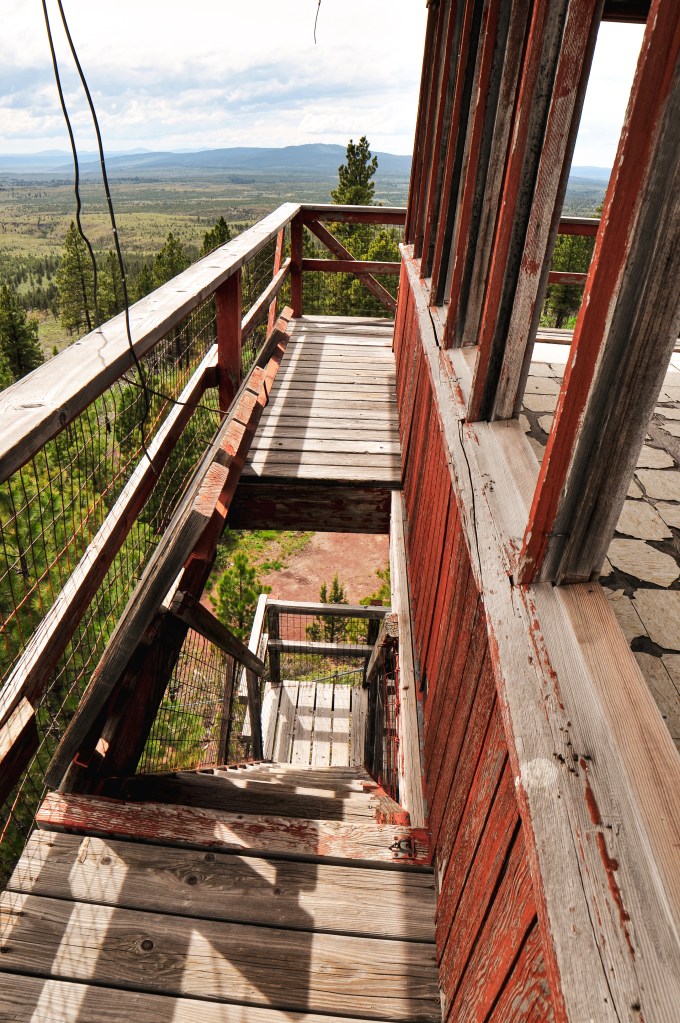
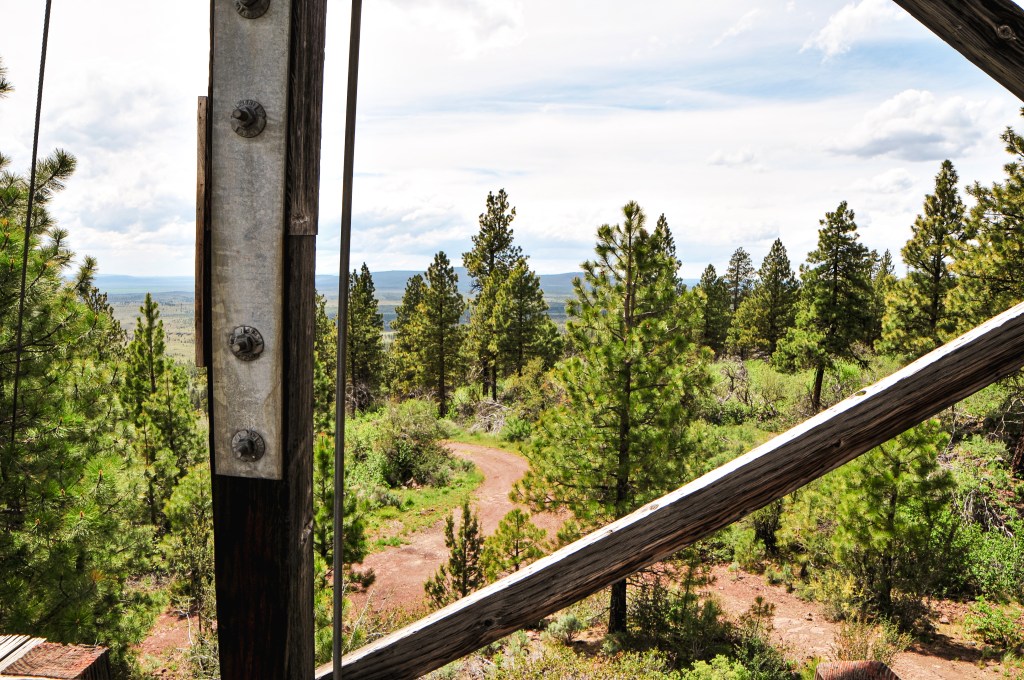
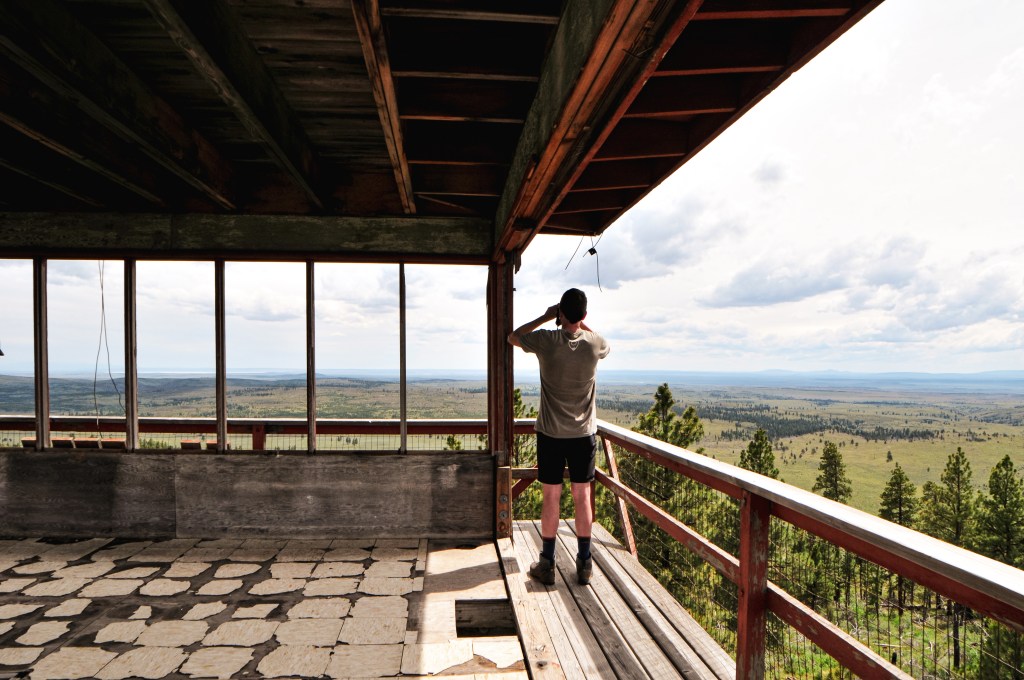
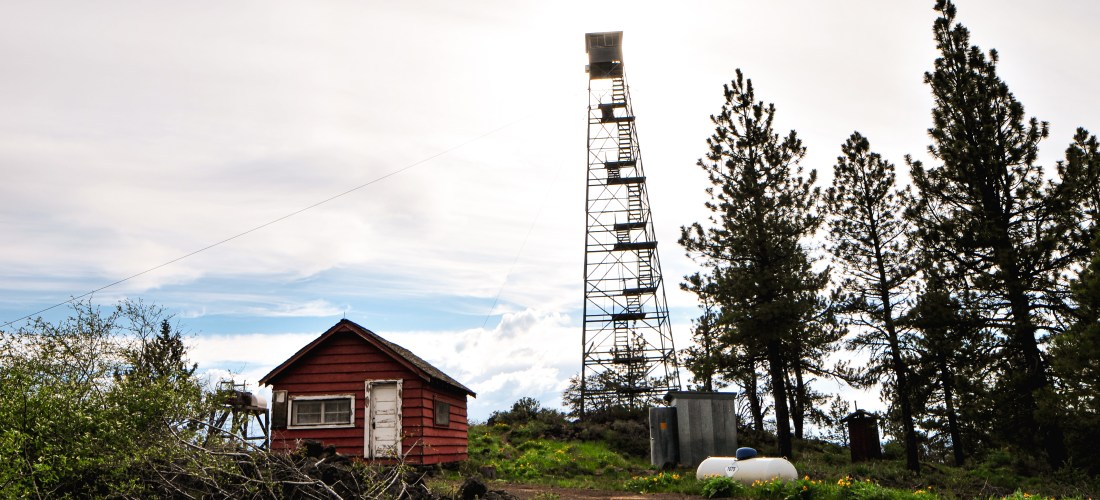
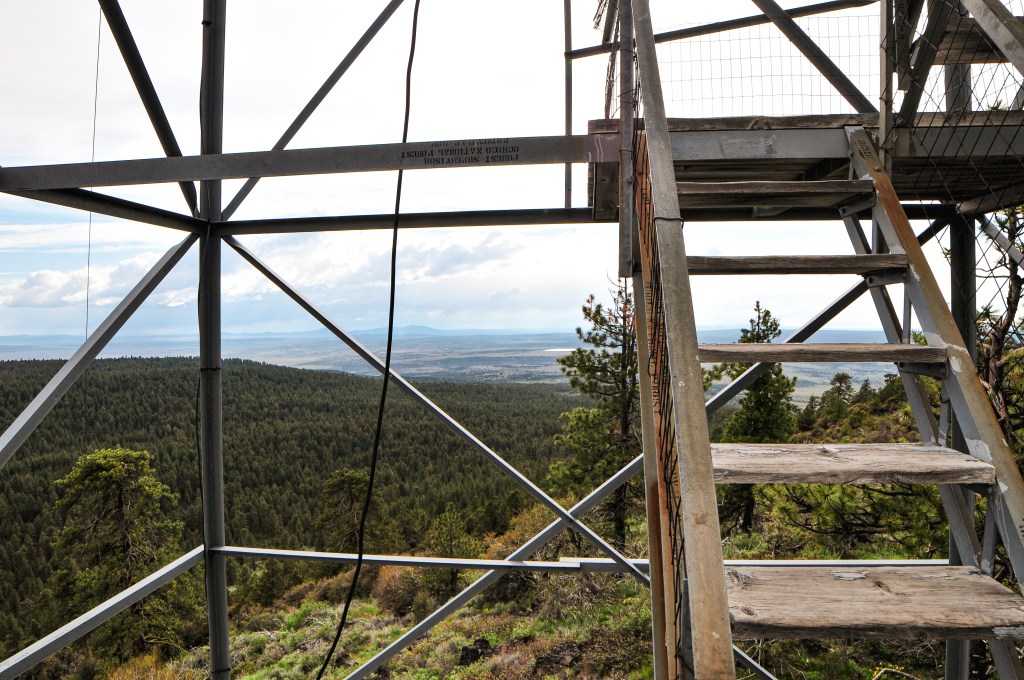
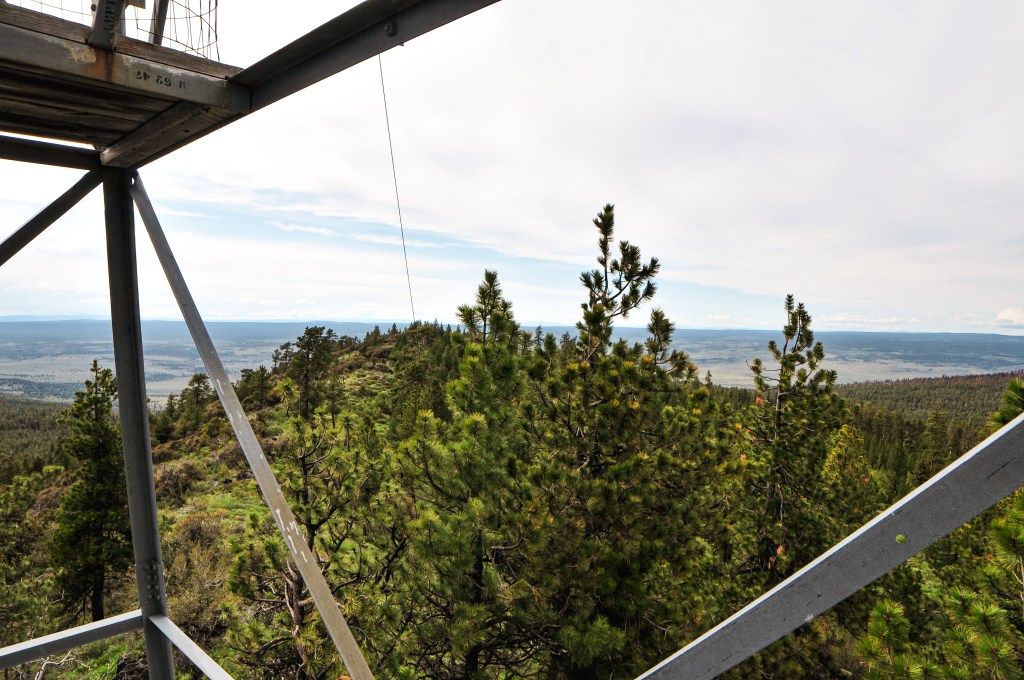
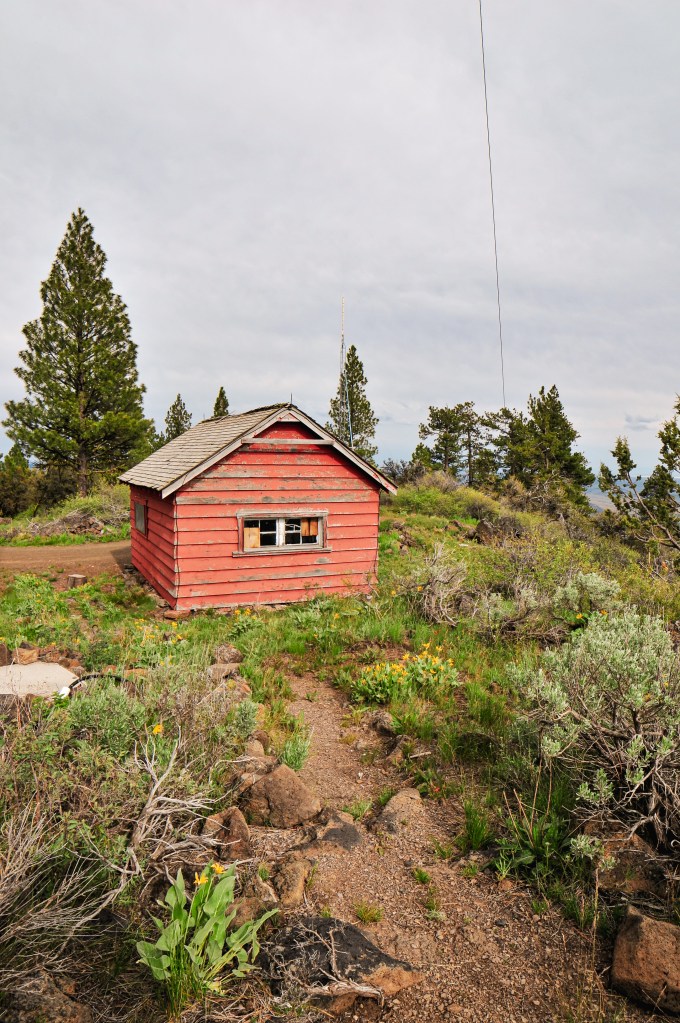
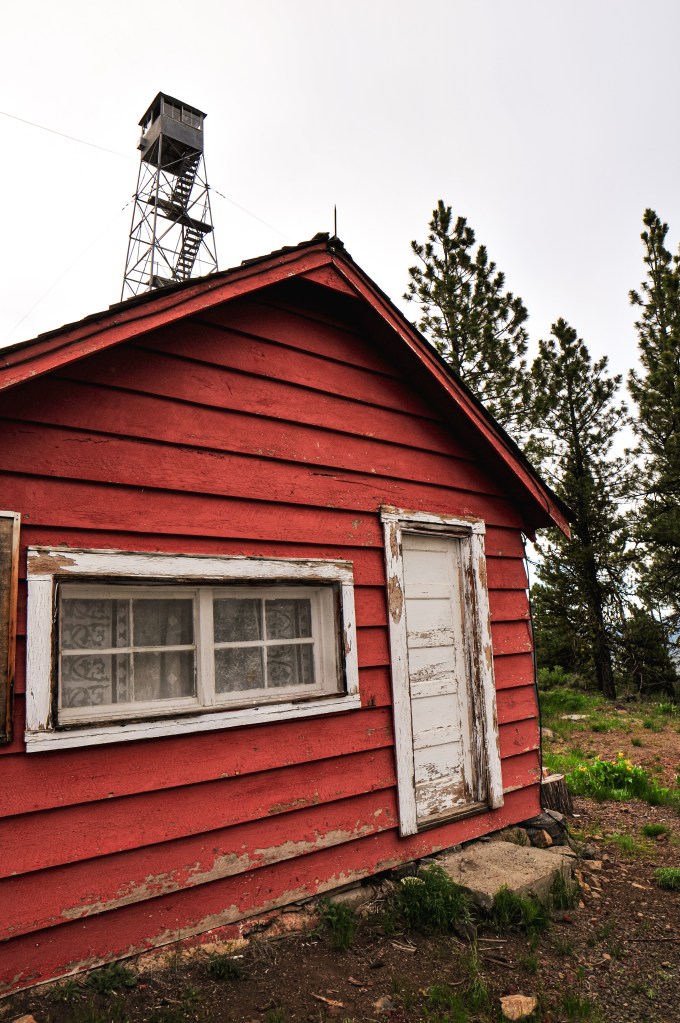
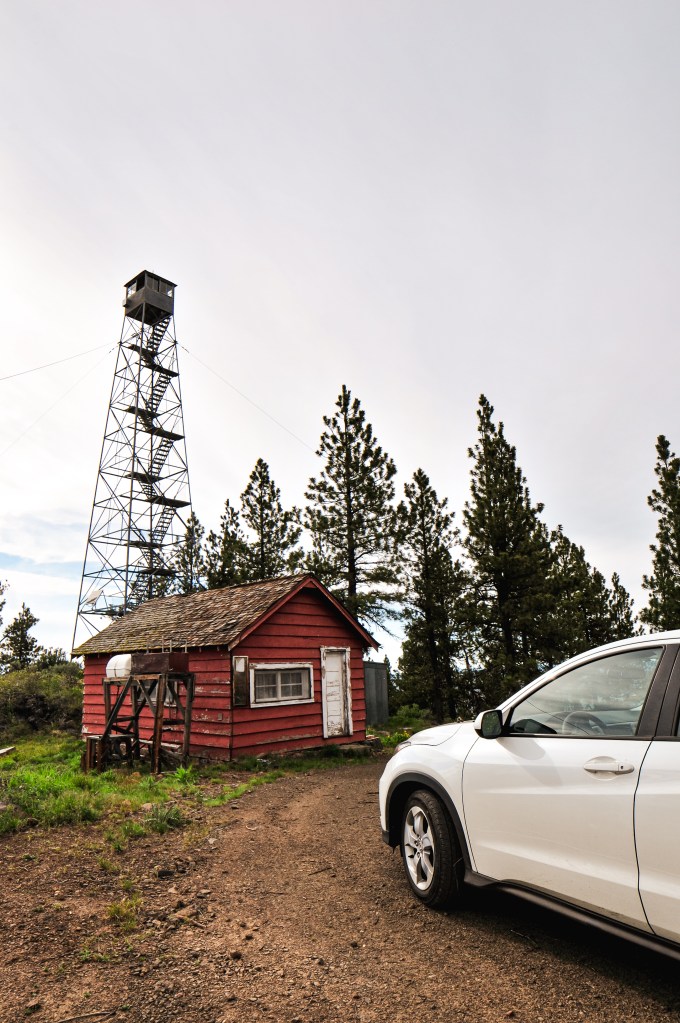
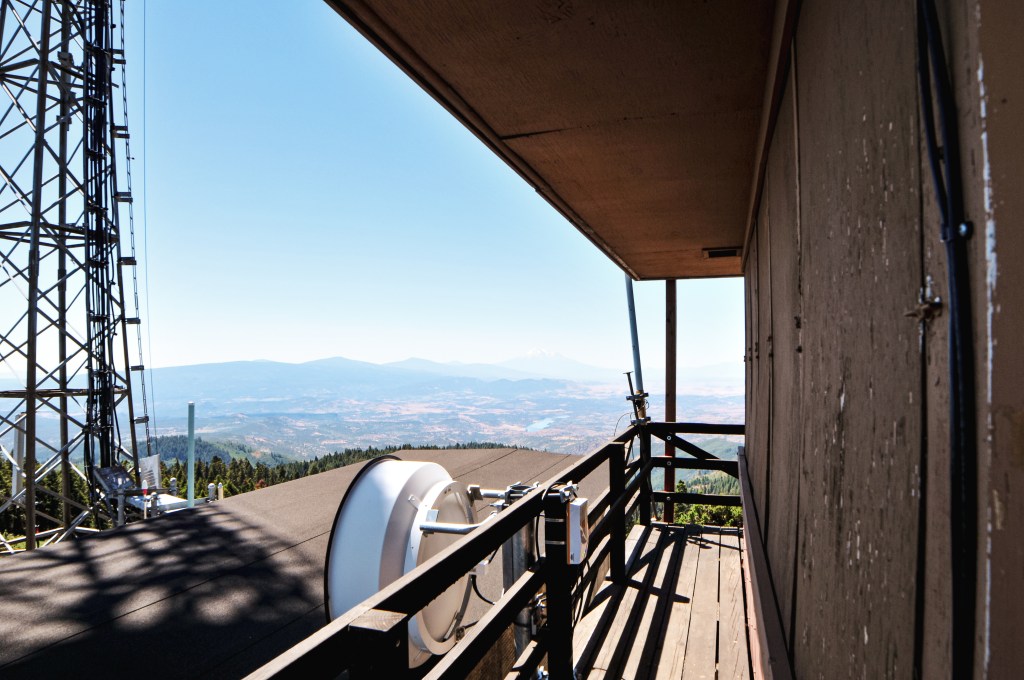
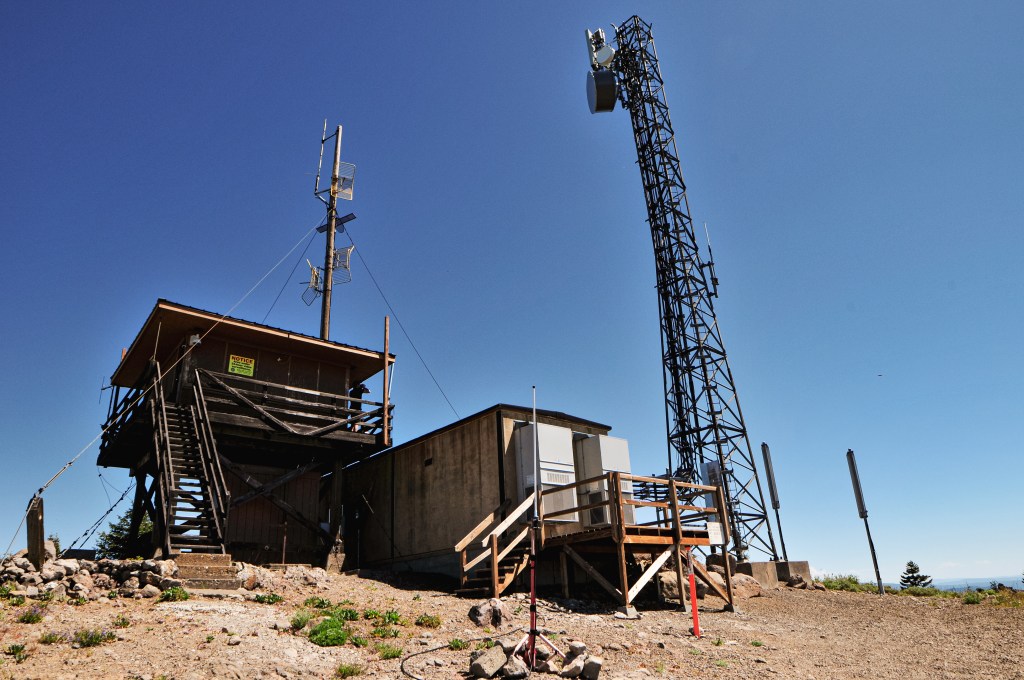
Once on the summit, you are exposed to the excessive amount of communication towers. The short little fire lookout can be found tucked in between them. Despite minor obstructions, you still get pretty great views of Mt Shasta, Mt McLoughlin, Mt Ashland, Soda Mountain Wilderness, and the surrounding valleys. We enjoyed our lunch in the shade of the catwalk with no other visitors. Once we decided to head down we figured we’d run into at least one person. It’s the weekend for Pete’s Sake! But, we only ever saw people hiking on the PCT portion. The day was still young when we reached the car and we decided we had time to head farther east to Parker Mountain (post).

History.

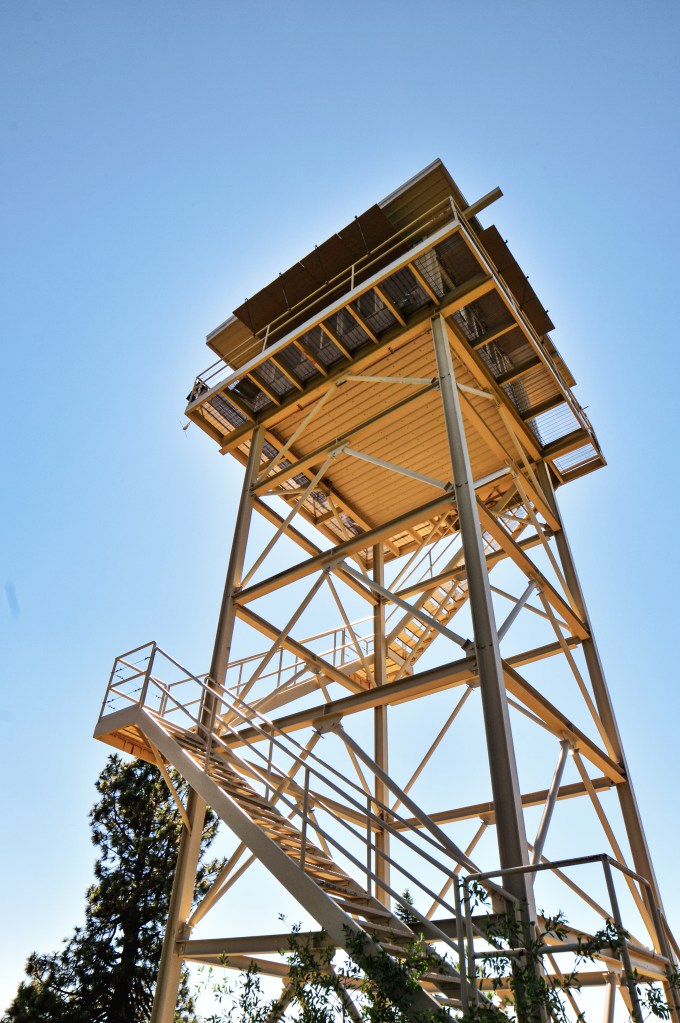
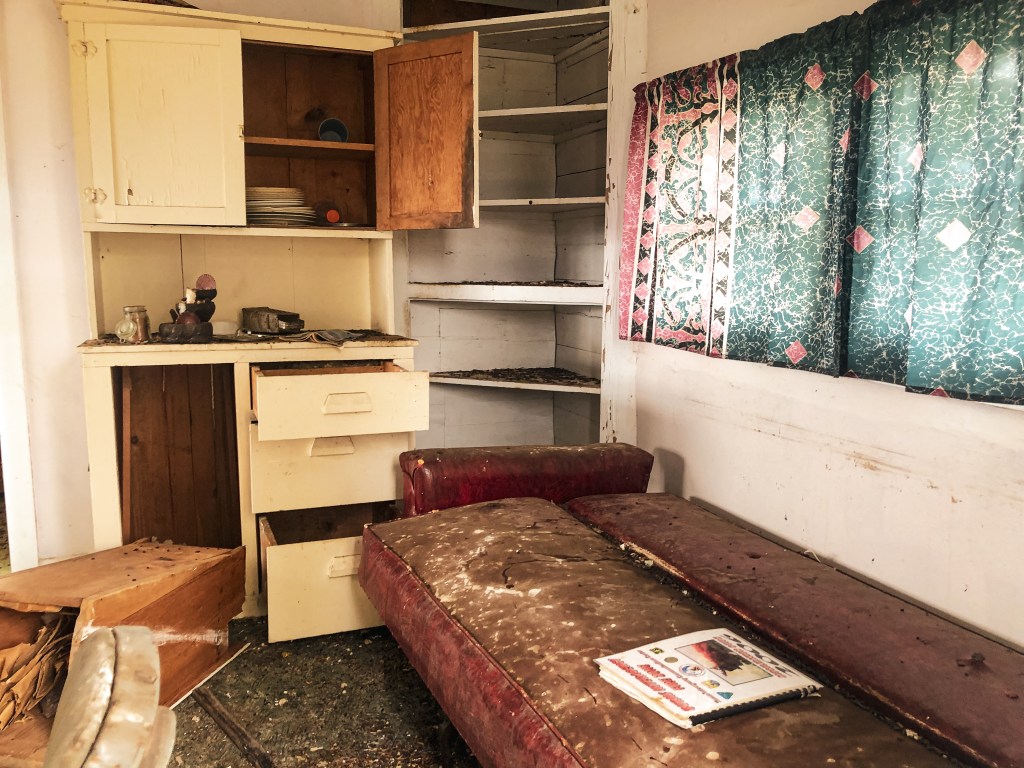
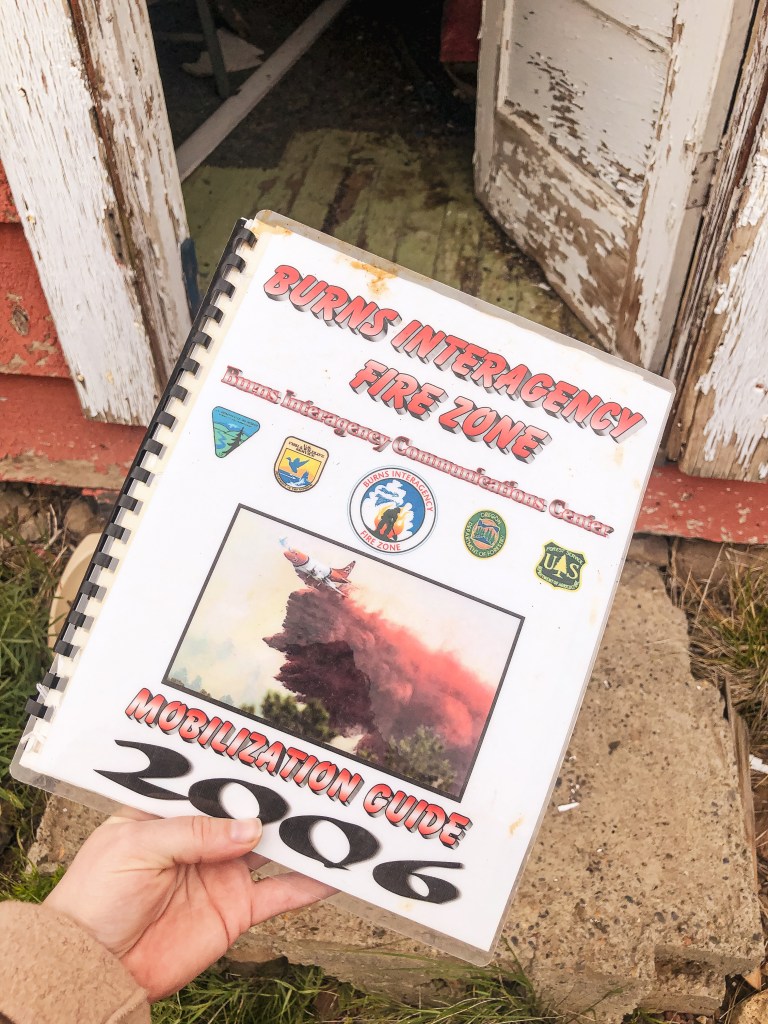
Established in 1933, Soda Mountain was built by the CCC as a 6′ enclosed tower with L-4 cab. It was located on land owned by the Bureau of Land Management just four miles north of the California border, but it seems it was managed by the ODF. In 1962, the lookout was rebuilt raising the tower to 8′ and restructuring the cab as a 14’x14′ ODF flat top. A communication site was added to the summit in 1968 which was able to provide electricity to the lookout as well. Cellular towers were added in 1992 that partially blocked the view. A year later they raised the tower to 10′ and added a storage shed underneath. The area wasn’t considered a National Monument until June 2000. It was designated by President Clinton to protect the biodiversity of where the Cascade Range and Siskiyou Mountains meet. In 2015, the metal roof sustained damage from the harsh winter and had to be temporarily tarped to cover the exposed area. It was actively staffed every season up until 2017. I assume that’s when they installed a camera similar to most other ODF fire lookouts we’ve visited.
More Information.

Oregon Hikers

AllTrails

Parker Mountain L.O.

Oregon Lookouts

Location.
Klamath County; Oregon Department of Forestry

Status.

Active; Currently standing

Estimated drive time from Portland, OR.

6 hours

Date visited.

June 26, 2022

Elevation.

5,210′

National Historic Lookout Register.

US 497; OR 90

Trip Report.

Day 2/10: Lookout Road Trip 2022

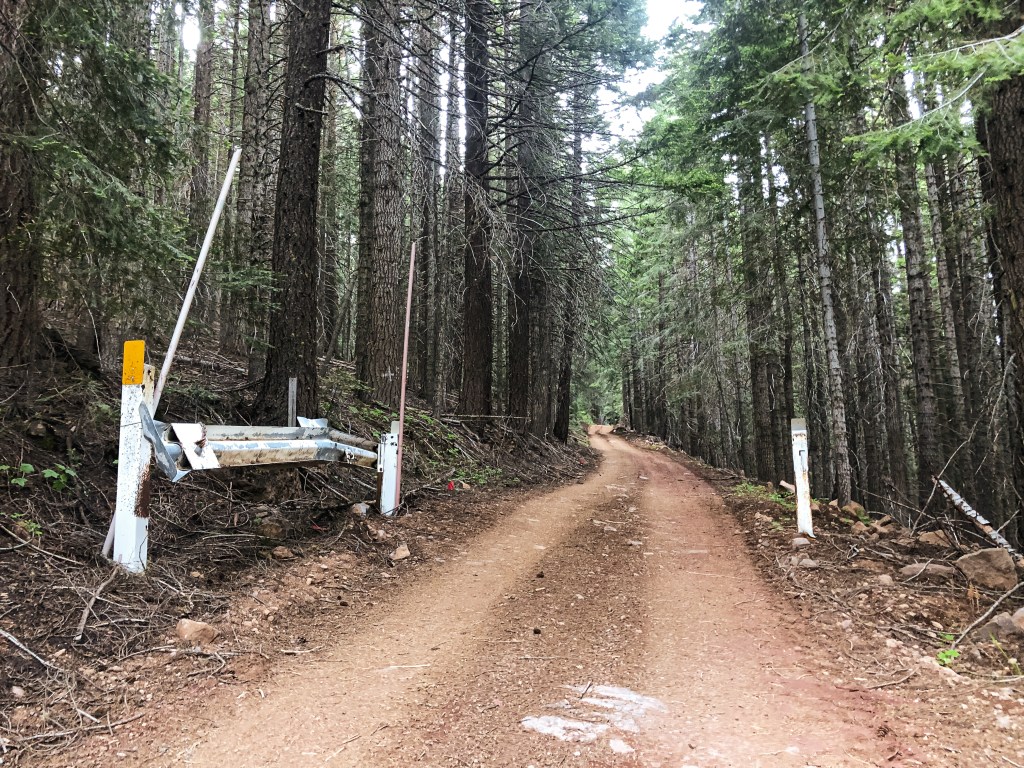
My partner, for some reason, only brought one 32oz water bottle with him for the day and had easily drank it all on our hike to Soda Mountain (post). We were headed east on HWY-66 towards the community of Pinehurst, but we needed to find water if we wanted to continue on to Parker Mountain. We stopped near the Green Springs Inn & Cabins to see if there was anywhere to fill up. It had a small information center dedicated to the Cascade-Siskiyou National Monument, but no one was inside. The BBQ restaurant attached to the Inn was closed too, but they had an accessible water fill station outside. Thank you Green Springs Inn! We came to the conclusion on our drive to Parker Mountain that HWY-66 is one of the sleepiest highways we’ve ever driven. You might pass one car every 10 minutes. There will be a sign from the highway for the needed turn to Parker Mountain L.O. It is otherwise an unmarked junction. Once off the highway, we immediately passed through an open gate to a four way junction. I believe the gate is closed seasonally during the winter. This is unsigned but you will want to continue straight. We followed this road to another junction that was surprisingly signed for Parker Mountain. It looked like a fairly new sign too. If for some reason the sign isn’t there, you will want to take the road to the right. The road starts to deteriorate after this junction with larger rocks to avoid. We decided to park near the sign and walk the remaining mile and a half to the lookout.
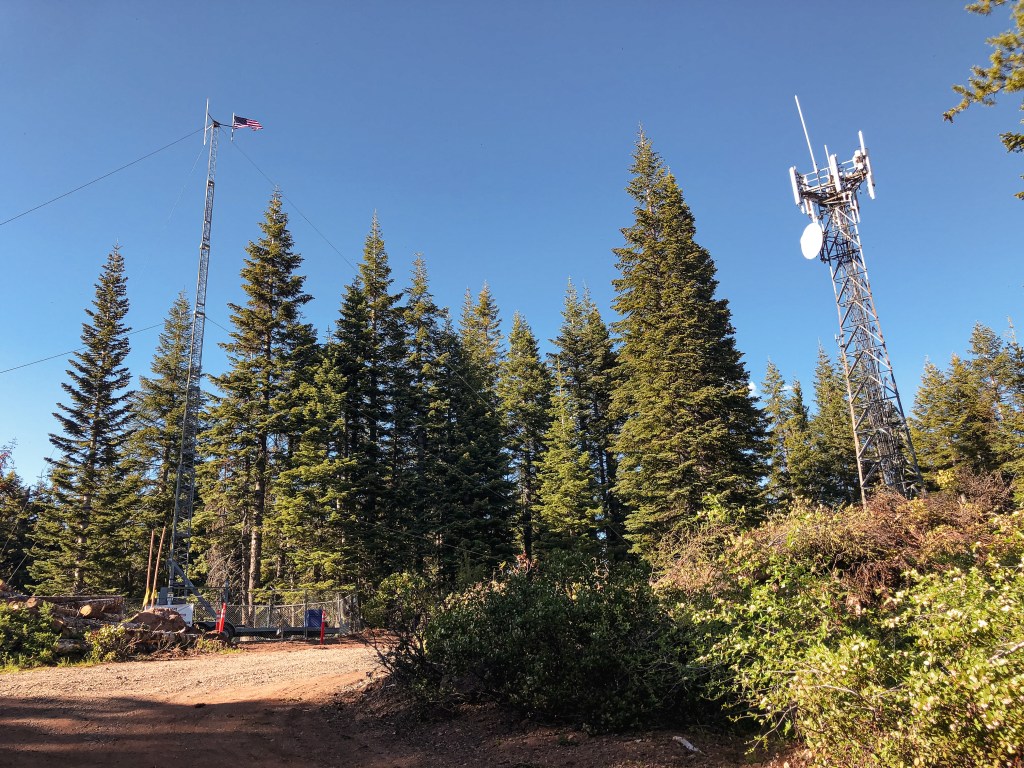
We started hiking during the hottest part of the day. I had to take a much needed break in every patch of shade I found. It felt like it took us forever to get anywhere. There are some spurs leading off of this road, but I felt it was fairly obvious which road you needed to stay on. Parker Mountain was one of the few lookouts during this trip that was supposedly staffed. We eventually came to the gate and found it was open. Just past the gate you will get your first glimpse of the lookout. It appeared to be open for the season. As we got closer, we approached with caution. We never want to disturb the fire attendant or make them feel like we are invading their space. Turns out it was all for naught since no one was there. Though, there were signs of someone recently being there and the cab had been opened up. We speculated that they were either on their day off or hadn’t started their season yet. Either way it gave us free range to climb the tower and explore the summit fully. The catwalk was still locked, of course, but we were able to get a pretty good view from the highest landing. It was nice to be on a summit without a bunch of communication equipment for a change. I really enjoyed the sizing of the staircase on this lookout too. The steps weren’t as narrow or steep as other towers. There was also a water barrel and trough located under one of the trees for the wildlife. It was fun to watch all the different little birdies come down to take a drink. After Parker Mountain, we decided to head back to camp for a quick dinner in between lookouts.

History.

The first fire lookout was constructed on Parker Mountain in 1934 by the CCC. It was a 50′ round timber tower with a steeply pitched roof. John Colvard of the Klamath Forest Protective Association primarily staffed this lookout for almost 20 years until he passed away in 1952. He previously worked on Calimus Butte (post) for 3 years when it was used as the main fire lookout for the Klamath Indian Reservation. In 1956, the previous tower was replaced by a 30′ steel tower with 14×14 wooden cab. In 1965, Parker Mountain was considered one of four lookouts located on Weyerhaeuser Company land. They allowed a permit for the Klamath FPA to continue maintaining and staffing the existing lookout. Eventually, it was managed and operated by the Oregon Department of Forestry. I’m not sure when exactly the land and fire lookout changed hands though. There was an old 16×24 living quarters cabin that was purposefully burned in 1968 due to being unusable. The steel tower was damaged by an arsonist in 1995 and needed to be replaced. In 1997, the existing lookout was constructed by the Steve Burrows Construction Company. It is an ODF design with 40′ steel tower and 15×15 wood cab. It is still actively staffed every season.

Sexton Mountain L.O.

Oregon Lookouts

Location.

Josephine County; Oregon Department of Forestry

Status.

Fire Detection Camera; Currently standing

Estimated drive time from Portland, OR.

4-1/2 hours

Date visited.

June 25, 2022

Elevation.
3,834′

National Historic Lookout Register.

US 741; OR 113

Trip Report.

Day 1/10: Lookout Road Trip 2022

Our alarm went off begrudgingly at 6:30AM, a time at which we would wake many more times this trip. We had a jam packed road trip planned to visit 17 fire lookouts, potentially 18 if things went our way, in southern Oregon over the next 10 days. My partner and I knew we needed to get up if we wanted this to work, but the lack of sleep had us calling for the snooze button. I made the mistake of thinking I could squeeze in an afternoon hike and dinner with my friend before finishing off my needed prep the night before. Of course, things took longer than expected and I wasn’t in bed until well after midnight. My partner works a swing shift, so he’s typically not home until around that time as well. Needless to say, we are not early risers by any means (although I was for a brief time during my mid-twenties). Eventually we were able to collect ourselves enough to climb out of bed and start packing the car. Our plan for the day was to bomb down I-5 towards the most southern portions of Oregon. We would hit Sexton Mountain then cross over HWY-140 to Robinson Butte (post), and if time permitted we would head up to Table Mountain (post) on our way to camp.
Sexton Mountain is located just off I-5 outside of the community of Sunny Valley. We were following directions from a Geocache (site) that mentioned a route suitable for most vehicles. From I-5, we took exit 71 and turned left onto Sunny Valley Loop Road. You will want to take a right on to Placer Road that is immediately after the single lane covered bridge over Grave Creek. You will take another right onto Beecher Road that will eventually turn into BLM Road 34-6-12 that takes you to the junction of BLM Road 34-6-23 with a locked gate. It is around 5 miles from Placer Road to the gate. The road was passable but not necessarily great for low clearance vehicles. On the steeper sections there was wash out from water run off to straddle and the flatter sections had pot holes to avoid. The junction before the gate has ample parking for a few cars, though I doubt you will see anyone else. From the gate, you will need to road walk a little under a mile to reach the summit.

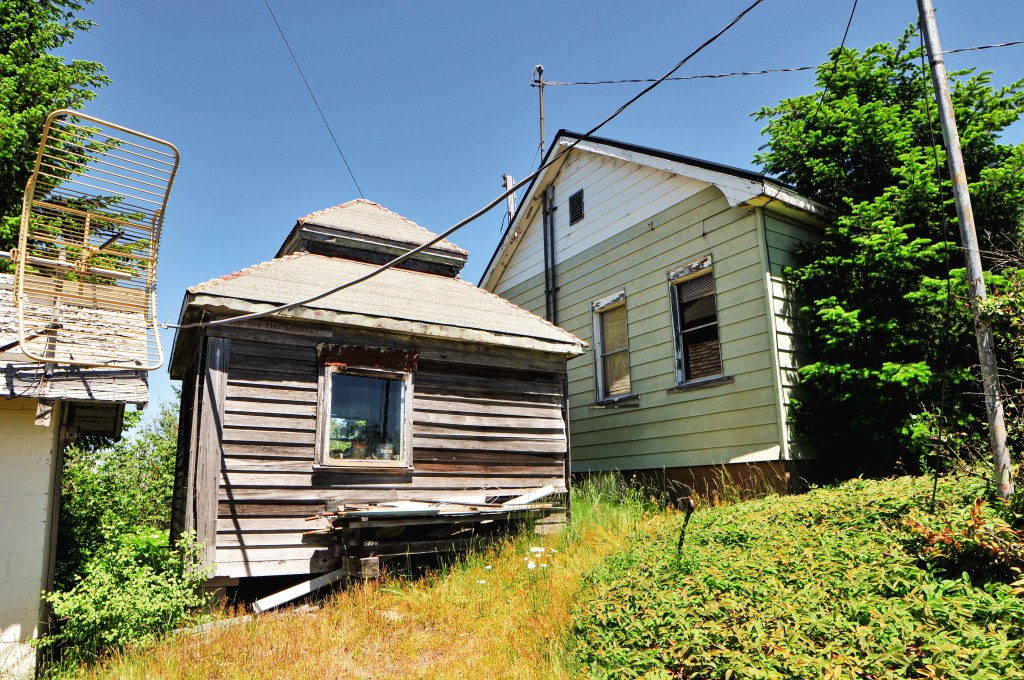
Summer decided to finally show itself with 90+ degree weather forecasted for the upcoming week. Given our recent bout with a wet spring, we had little to no time to acclimate to this warmer weather. I could feel the moisture leave my body the second I stepped out of the car and started hiking up the road. I was drier than the Alvord Desert despite constantly consuming as much water as possible. The hike to the summit isn’t long but it felt fairly steep. I struggled my way to the top with every hot dusty step. On the hike up, we were surprised to see two jeeps bumping down from the summit. At first I thought they must be some sort of maintenance crew since they were behind the gate, but then they took off on a bumpy road that seemingly headed straight down the side of the mountain. The summit is littered with communication towers and the lookout tower itself is locked behind a barbed wire fence. There wasn’t much of a view from the base either. It was definitely one of the least pretty summits we’ve been to so far. The original historic D-6 cupola cabin from the 1920s was cool though. We spent very little time on the summit due to the oppressive heat and pressed on to Robinson Butte (post).

History.

Sexton Mountain was first established for fire detection in 1914 with a tent camp. A D-6 cupola cabin was constructed in 1920 and was used as the main lookout until 1932. They moved the existing D-6 cupola cabin over, lowered the cupola, and converted it into living quarters while a house with taller cupola was built for their working quarters. In 1962, the house with taller cupola was moved and turned over to the US Weather Bureau. A 30′ timber tower with Amort ODF cab was built to replace the house. It was maintained and used up until April 2006 when some vandals burned it to the ground along with some repeater antennas. The damages were estimated around $500,000 according to the Oregon State Police. A replacement all-steel 40′ live-in tower with flat roofed cab was built in 2007 and staffed well into the 2010’s. It is now only used in emergencies and the original D-6 Cupola from the 1920s can still be found on the summit.

Robinson Butte L.O.

Oregon Lookouts

Location.

Rogue River-Siskiyou National Forest

Status.

Abandoned; Currently standing

Estimated drive time from Portland, OR.

6 hours

Date visited.

June 25, 2022

Elevation.

5,864′

National Historic Lookout Register.

US 740; OR 112

Trip Report.

Day 1/10: Lookout Road Trip 2022

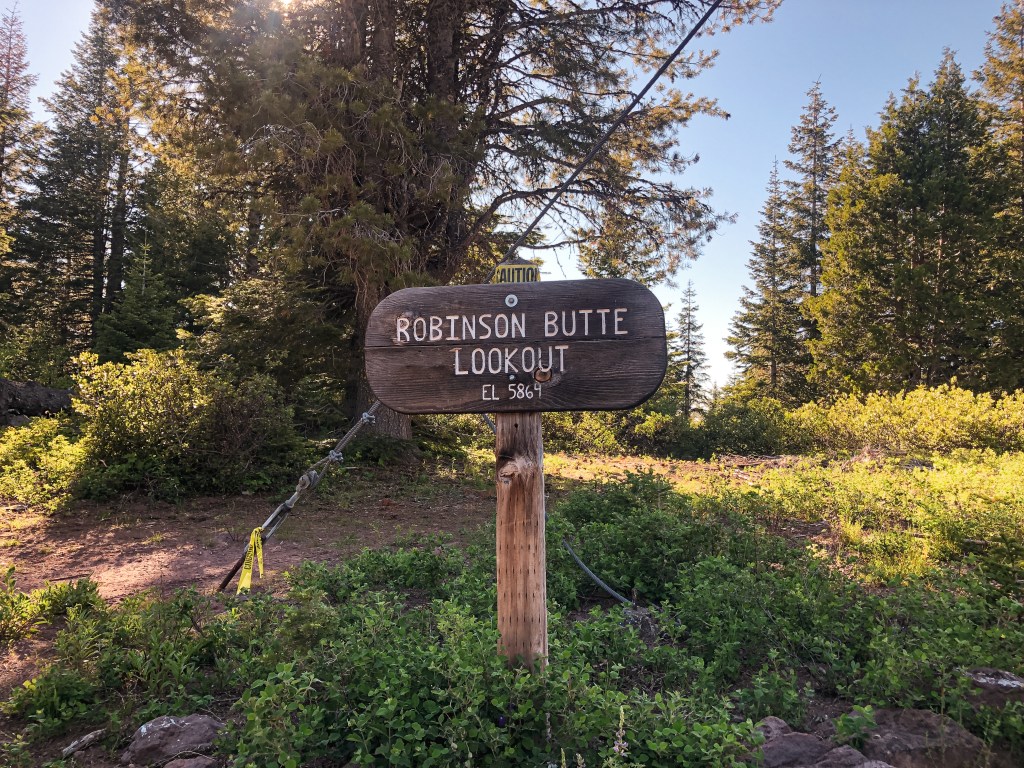
After dusting our way back down the BLM road from Sexton Mountain (post), we popped on I-5 to head farther south. From Medford, we headed east via HWY-62 to connect with HWY-140. We winded along HWY-140 until we entered the forest and reached NF-37 off to the right. You will head towards the Big Elk Guard Station, which is a rental unit through the Forest Service. We turned right on to NF-3730 just across from the Guard Station. The spur that leads to Robinson Butte is NF-050 and is only a short distance down NF-3730. Some of the roads weren’t marked but there is a notable corral next to the NF-050 junction. We headed up the spur and were met by a fairly large water bar that made us turn around. We concluded it made more sense to park and walk the road instead. By this time, the heat and lack of sleep had caught up with me. I was feeling pretty green and didn’t know if I could make it. I told my partner to continue on without me while I waited at the car. I few minutes later he came running back down the road and told me the water bar looked worse than what it was. He was determined to get me as close to Robinson Butte as possible before I gave up completely.

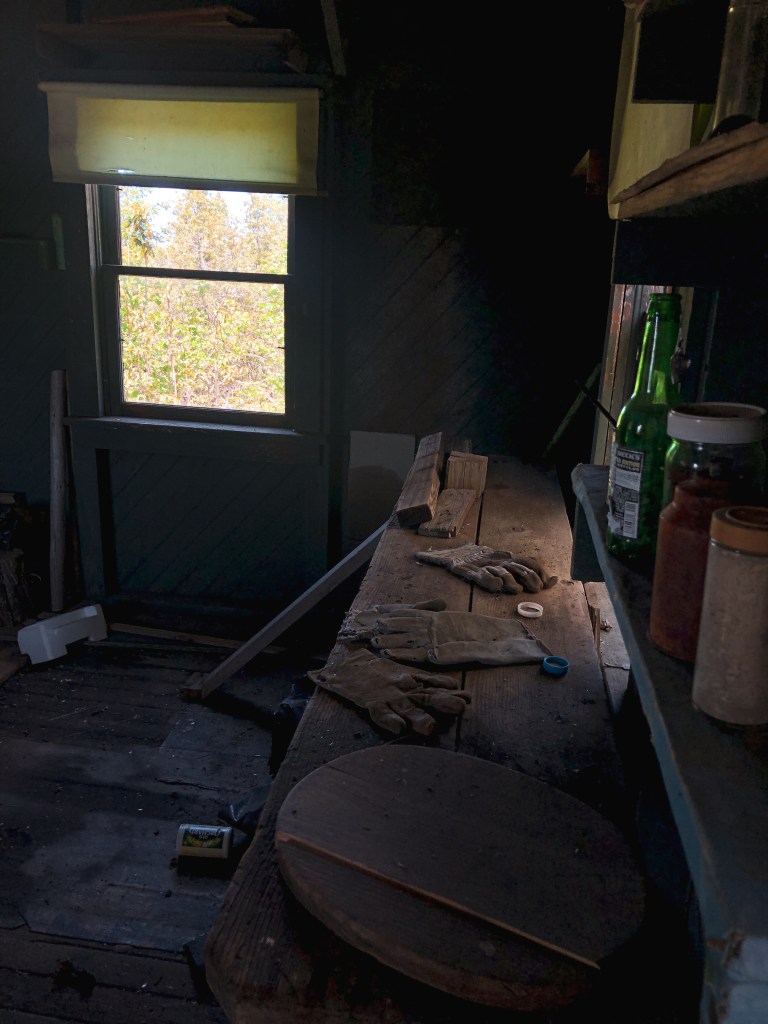
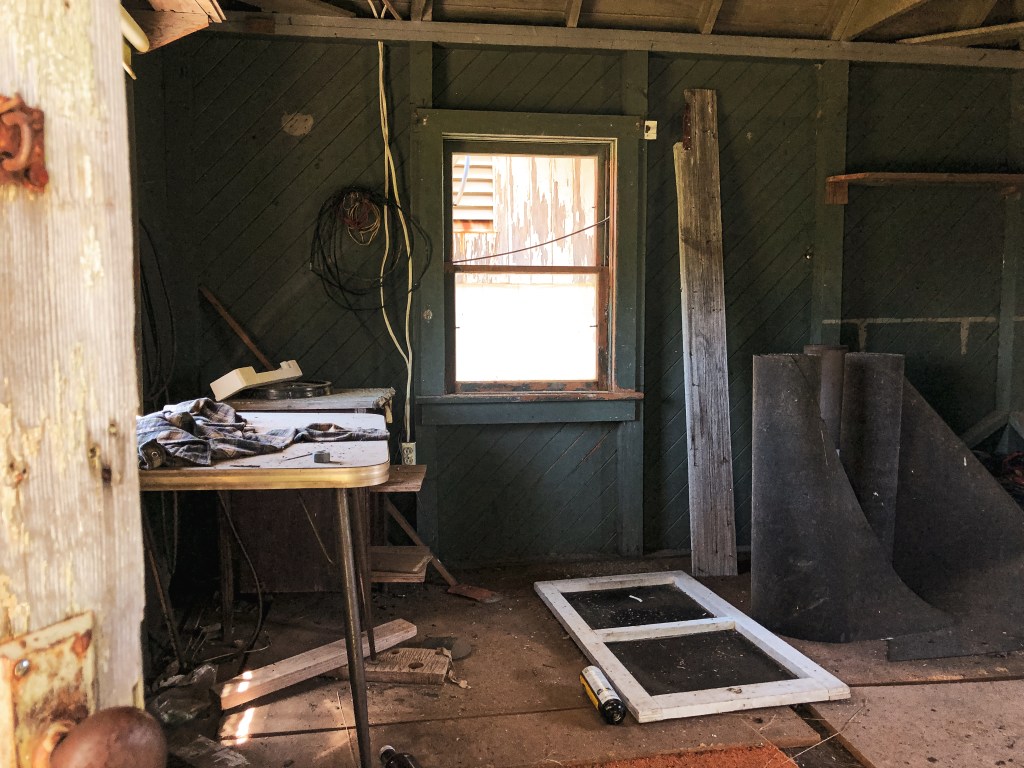
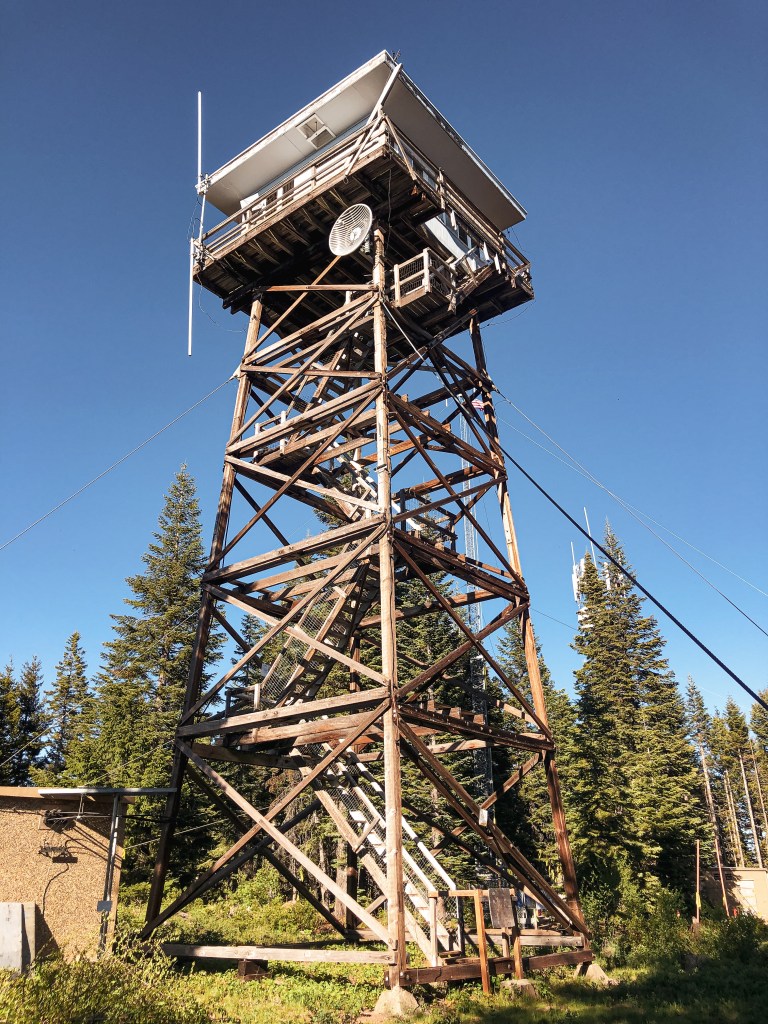
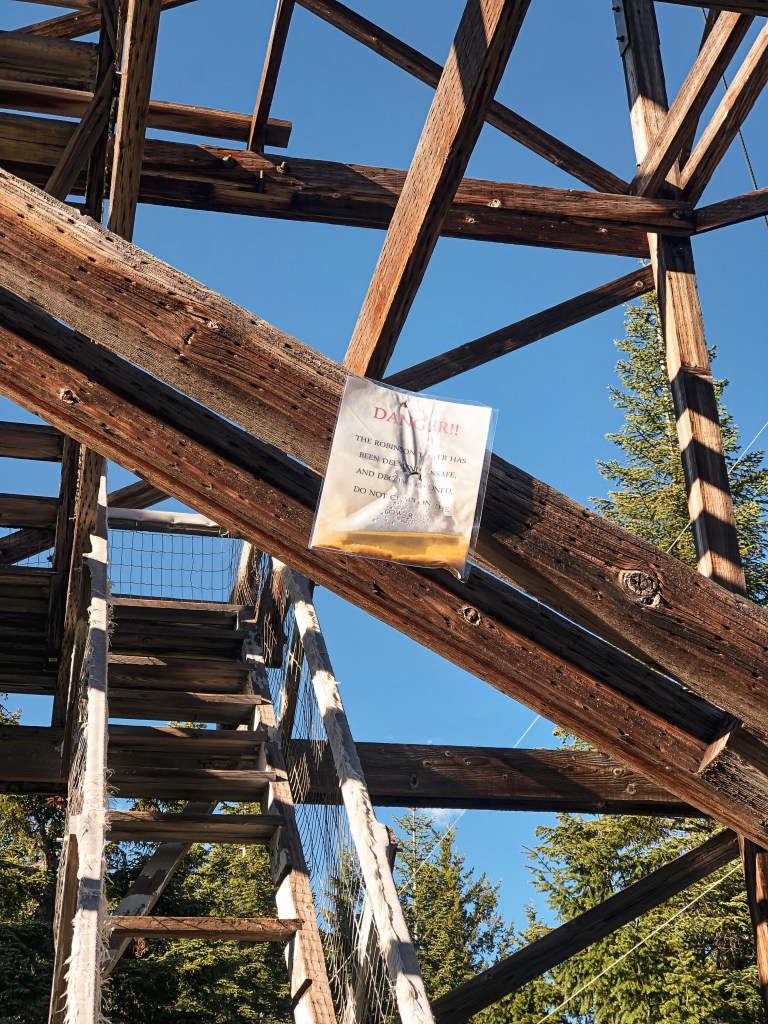
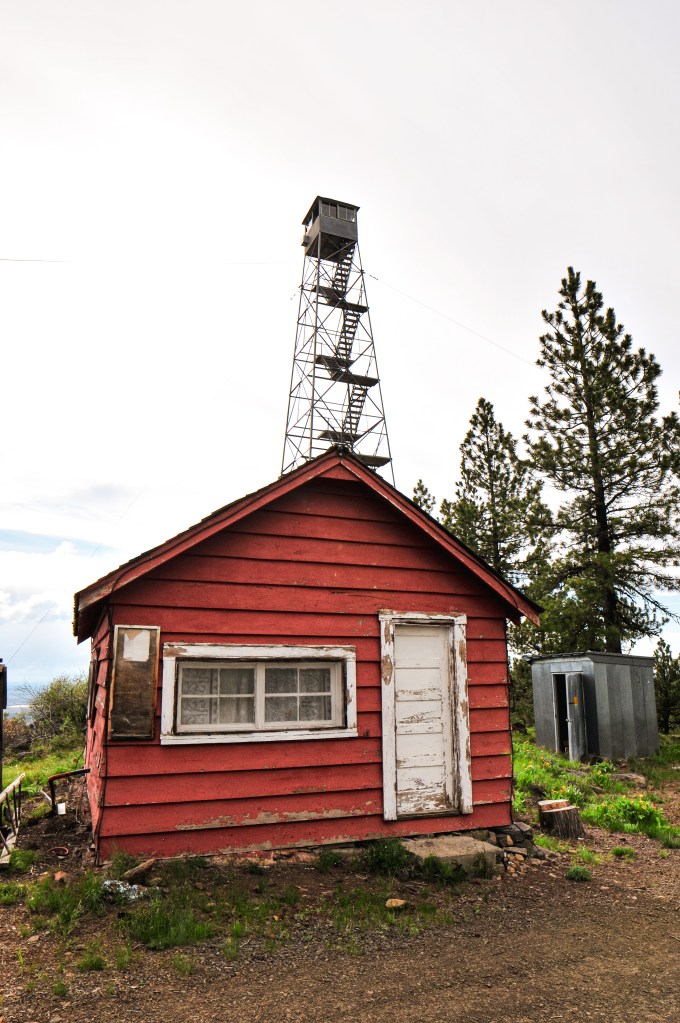
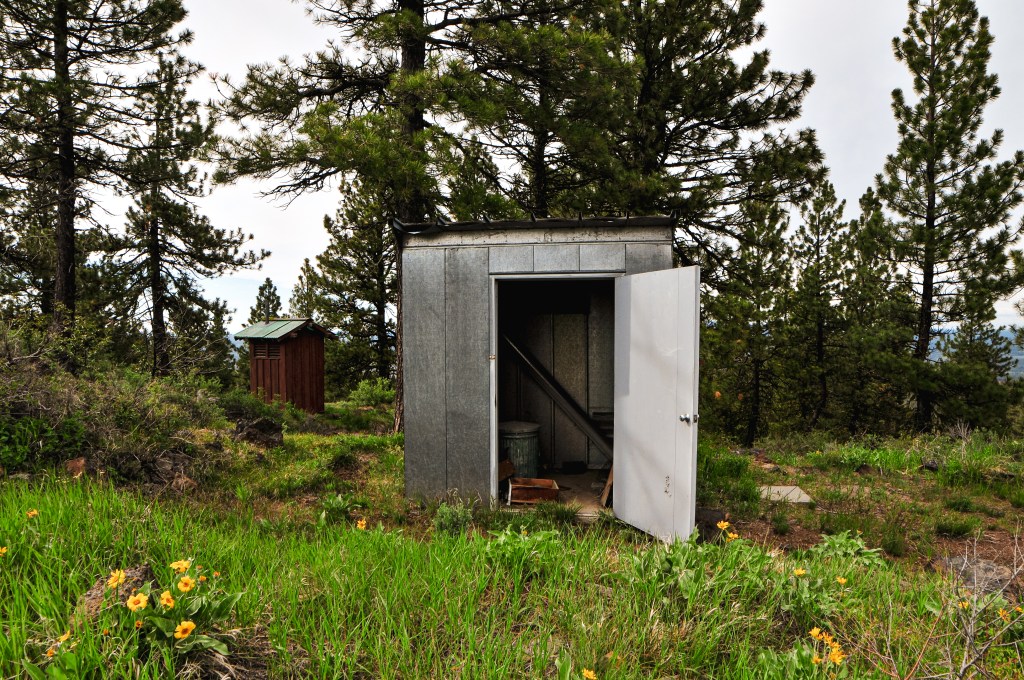
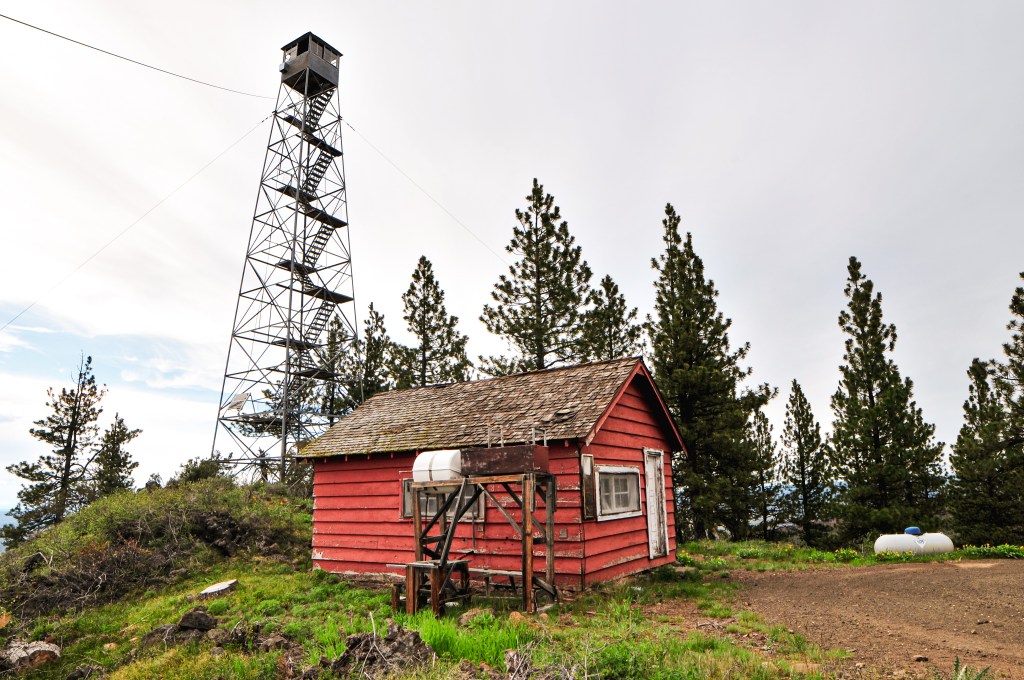
We started the car back up NF-050 and proceeded to bump over 11 different water bars before we reached the gate. It was otherwise a very good road. The bumps only nauseated me more and, to put it lightly, I lost my lunch near where we parked by the gate. I felt much better afterwards. Normally, I wouldn’t push myself but we were less than a mile from the lookout. I knew we wouldn’t be in the area again anytime soon and started to slowly crawl up the road. The gate was open but there were some larger rocks that looked like they could take out our oil pan. There was a fairly new communication building that we speculated must have been added earlier this year. The base of the lookout offers no views, but I was just happy to be able to make it. My partner decided to climb the tower despite the missing steps and ominous note. As always climb at your own risk. I wasn’t able to reach the summit until a little after 6PM. Even if I had been feeling one hundred percent, we were running out of time to make it to Table Mountain (post). We decided to push it off until tomorrow since we would still be in the area.

Normally, we prefer to disperse camp for free but the area is surrounded by a patchwork of private land and parts of the Cascade-Siskiyou National Monument. With our packed schedule, we wouldn’t have had time to search for camp either. We made a last minute decision before we left to camp at the Hyatt Reservoir Campground for 2-nights. We were lucky that they still had availability online given the impending holiday weekend. I believe this was due to the lack of water in the Reservoir, it was lower than normal and the boat ramps were even closed. I was thankful for this decision because that meant we had showers and potable water for the next two nights. Something we would be severely lacking the next three nights. I felt like a whole new person after showering, eating something, and getting a good night of sleep. But, the next day was expected to be just as full as today. No rest for the wicked.

Pictures of Robinson Butte cab courtesy of my partner

History.

Robinson Butte was first noted as a fire detection camp in 1917. According to Ron Kemnow’s website, it is possible it was even used as early as 1913 with plans to potentially add a crow’s nest in 1916. The first structures were built in 1933 by the Moon Prairie CCC. The lookout was a 20′ pole tower with L-4 cab and neighboring garage. It was replaced in 1974 when the 53′ treated tower with R-6 cab was moved from Blue Rock L.O. by truck. As of 2016, it failed inspection and was listed as condemned.

Wagontire Mountain L.O.

Oregon Lookouts

Location.

Bureau of Land Management – Burns District

Status.

Emergency; Currently standing

Estimated drive time from Portland, OR.

6 hours

Date visited.

June 18, 2022

Elevation.

6,510′

National Historic Lookout Register.

US 954;OR 126

Trip Report.

We tried to wake up early Saturday morning to give us as much time as possible to visit Wagontire Mountain, fondly referred to as Wagon-TEER by my partner. It was an unfortunately damp morning and looked like it would be a rainy day ahead. From Hines to the community of Wagontire is about 50 miles of highway driving that doesn’t include our drive out of the forest, the 5 miles of gravel to the gate, or the 6 miles of hiking we’d need to do round trip. We headed out of camp back towards Hines and out on HWY-20 towards Riley. From Riley, we turned on to HWY-395 to the community of Wagontire. We weren’t able to see the lookout from the highway since it was deep within a rain cloud. The road you will take to get to the lookout is unmarked. It will be the first right turn after mile post 29D outside of the community of Wagontire. None of the roads leading to the lookout in this area are marked at all and could be confusing without the proper directions. I had done some prior research and found detailed directions from an Ascent Trip Report by Paul McClellan on PeakBagger. It’s helpful to zero your odometer and follow his below directions.

  • 0.0 cross a cattle guard
  • 0.4 continue straight, right at the junction
  • 1.5 continue straight, right at the junction
  • 3.2 cross a dry creek bed. I’d barely consider this a creek bed and given that it was dry even during a wet spring makes me think it only flows when the snow melts.
  • 4.0 cross a cattle guard
  • 5.2 cross a cattle guard
  • 5.6 bear right at the junction, you should see the gate shortly after
  • 5.8 arrive at gate and park

It seems in previous years the gate leading to the lookout has been locked, but it was open on our trip. The road just past the gate is overgrown and full of large rocks that I wouldn’t want to attempt even on a good day. We parked to start our 3-mile hike to the summit. The roads getting to the gate alternate between dirt and rock. The dirt sections were a bit slick after all the rain and the rocky sections would pose a threat to a lower clearance. I was once again thankful for the extra clearance provided by the HR-V and speculated if my Civic could handle this road too. I think if one was to attempt this in a lower clearance vehicle they would need to do this on a dry day with a lot of confidence.

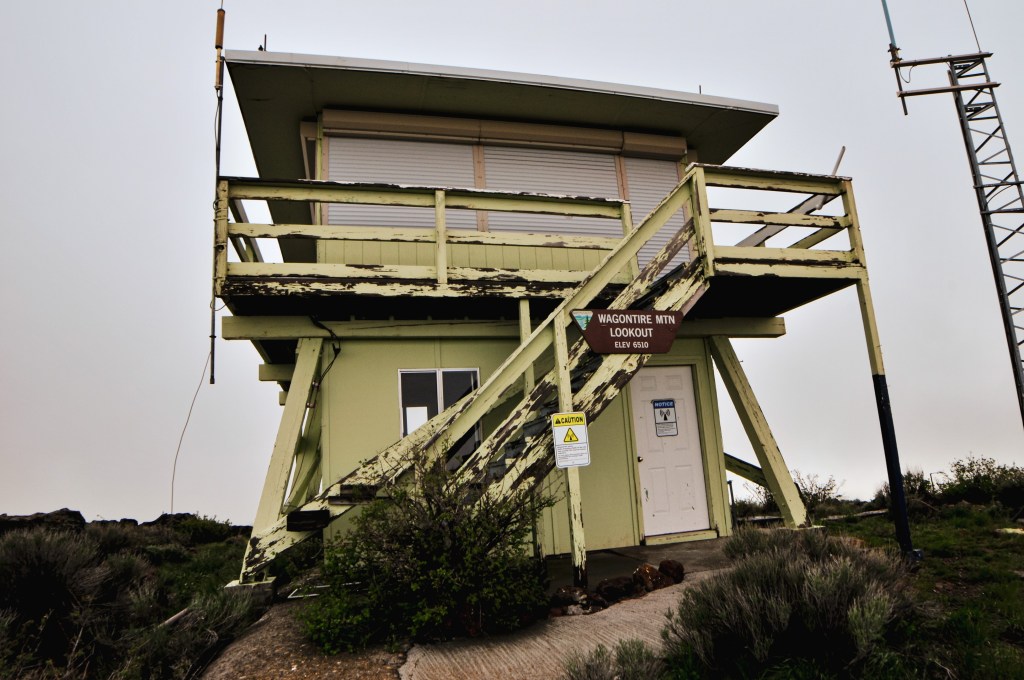
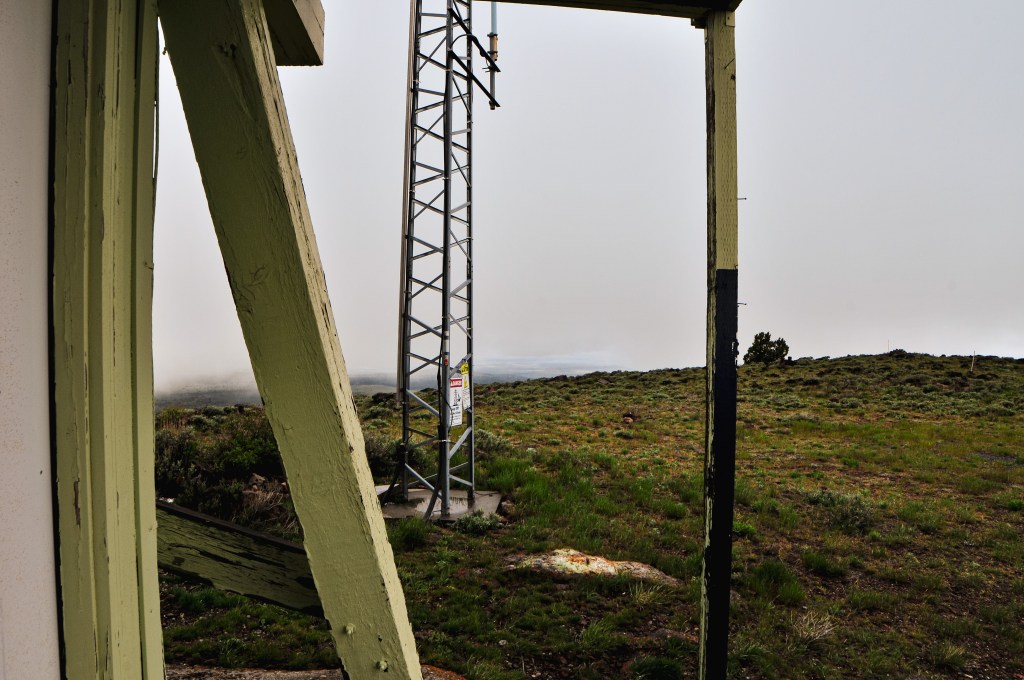
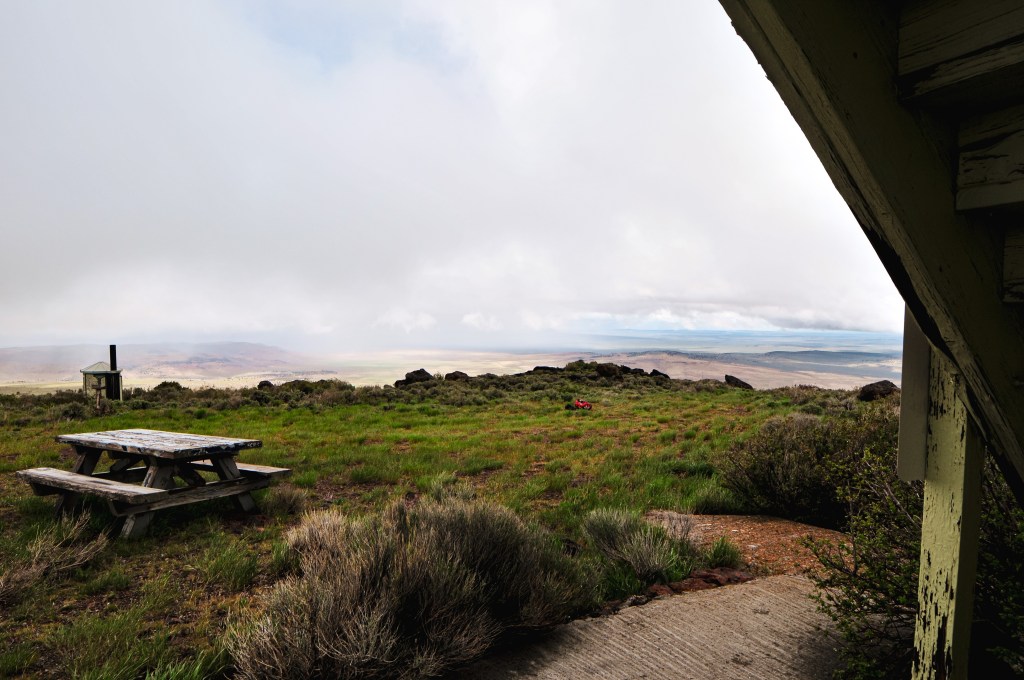
The hike up follows the road but was pleasant and it didn’t feel like much of a road walk at all. You will start up a hill that has signs of a more recent fire, possibly the Cinder Butte Fire in 2017. The rolling hills were covered in meadows with all sorts of different wildflowers. The weather even started to break for us and opened up to some views to the valleys below. Once on top of the hill you will follow a flat ridge for a while before heading up to the final high point. Similar to most lookouts, you will not be able to see Wagontire Mountain L.O. until you are almost there. This lookout is relatively new in comparison to most and was in great condition besides needing a fresh coat of paint. We enjoyed some snacks on the summit while the weather alternated between clear and cloudy. We would’ve stayed longer but we knew we still had a 3-mile hike back to the car and longer drive back to camp. It didn’t really start raining on us until we started to hike down. It was such a pretty road walk that I didn’t really mind the rain. It was crisp and refreshing, a literal breath of fresh air. I thought about how miserable those biking the Skull 120/60/30 must have been that day.

History.

The existing lookout structure on the summit is a 2-story BLM style cab that was built in 1967. This is the first and only lookout that was built here. The name Wagontire comes from an immigrant wagon that was burned by indigenous people in the mid-1800s. Only one wheel was left behind and it remained on the slop until 1925.

Bald Butte L.O. (Ochoco NF)

Oregon Lookouts

Location.

Ochoco National Forest; Managed by Malheur National Forest

Status.

Abandoned; Currently standing

Estimated drive time from Portland, OR.

6 hours

Date visited.

June 17th, 2022

Elevation.

5,920′

National Historic Lookout Register.

US 425; OR 50

Trip Report.

My partner, his mom, and I headed out on a 3-day camping trip to kick off her recent retirement. We left it up to her on what kind of trip she wanted to take, whether it be backpacking or car camping. She decided she was interested in visiting some fire lookouts with us and we set out to plan accordingly. Bald Butte, Dry Mountain (post), and Wagontire Mountain (post)were all lookouts we had planned for our road trip this summer. They were a bit farther out than the rest of our route and we figured it would make a decent 3-day trip instead. This way we could re-route our road trip to other fire lookouts farther south as well. We headed out early Friday morning towards Hines, Oregon. We decided to drive her Honda HR-V since it can fit three people plus camping gear more comfortably than my Civic. It also has the added benefit of additional clearance for the rougher Forest Service roads. From Hines, we headed into the forest via the Hines Logging Road that is right next to the Sinclair truck stop. It will eventually turn into NF-47 once you reach the boundary. Our plan was to visit Bald Butte and Dry Mountain (post) before setting up camp for two nights. You will want to take a left onto NF-41 after entering the forest to get to both of these. The turn is signed but it was hard to see from the approach out of Hines. We actually drove past it and had to turn around.

On our drive in we noticed there were interesting arrows and signage noting there would be bikes on the road tomorrow, June 18th. My partner and I joked that we always seem to run into these extreme races while out in the woods. It turns out we were right in assuming it was another one. We looked it up when we had service the next day and found the Skull 120/60/30, also considered America’s Gnarliest Gravel Race (site). It’s a gravel bike race hosted by Harney County to help showcase Eastern Oregon and help bring money into the county. There are three different lengths to the race you can sign up for; 38 miles, 65 miles, or the gnarliest 128 miles. We have also managed to stumbled upon the Baker City Cycling Classic during their Stage 4 Anthony Lakes Road Race in June of 2021 (site). We were driving home from a 9-day backpacking trip through the North Fork of the John Day Wilderness when we had to drive around the peloton. My partner was also passed by some racers from the America’s Toughest Race while camping in the Deschutes NF with his dad in May of 2021 (site). They even had a chance to talk to one of the racers and asked them where they were coming from to which they responded “a long ways away”. The America’s Toughest Race is a combination of foot travel, water travel, and cycle travel through rugged off trail routes. Everyone from your team must finish together otherwise you are disqualified. Anyway, it seems most of these races attract extreme masochists. It’s not what I would consider a fun time outside, but to each their own.

We were glad that we decided to do Bald Butte and Dry Mountain (post) on Friday instead of Saturday. It seemed that a lot of the bike route for the Skull 120/60/30 was along the roads we needed to take to get there. You will be able to see Bald Butte L.O. as you drive along NF-41. It is a surprisingly nice paved Forest Service road that I expected to be gravel. From NF-41, Bald Butte is less than a mile up NF-4117 off to the left. There is a sign but it is covered by trees and I wasn’t able to spot it until we were driving out. Luckily, even without the sign it is pretty obvious which road will take you to the summit. There are some deep washouts and water bars along NF-4117 that would make the drive difficult to impossible for lower clearance vehicles. I wasn’t comfortable driving the HR-V up the road, so we parked near the NF-050 spur and walked the remainder. It was a pleasant walk to the summit and the road had a lot of wildflowers along it. The lookout on Bald Butte, unfortunately, has seen better days. The tower seems to be standing strong but the cab has lost a supporting wall and a few support beams. I wouldn’t be surprised if the cab collapses under heavy snow within the next few years. I believe the glass was removed and salvaged by Howard Verschoor though. An assessment done by the Friends of the Blue Mountains Lookouts in 2021 found it to be too unstable for any additional salvage work. They even mentioned that it would be torn down later that year. We were happy to find that they were wrong and the lookout was still standing. There is a wire fence surrounding the base but someone had cut a hole in it and the trap door was open to the catwalk. Climb at your own risk. We savored the views and said our good-byes to the lookout before hiking down to the car and heading on to Dry Mountain (post).

History.

Established in 1931, Bald Butte originally had a 45′ pole tower with 8’x8′ cab. It was replaced in 1959 with the existing R-6 cab and 41′ treated timber tower. It was moved to emergency use in 1964 and on the emergency list up until the 1990s. As of 2017, it has been listed for decommission by the Forest Service.

Dry Mountain L.O.

Oregon Lookouts

Location.

Ochoco National Forest; Managed by Malheur National Forest

Status.

Emergency; Currently standing

Estimated drive time from Portland, OR.

6-1/2 hours

Date visited.

June 17, 2022

Elevation.

6,281′

National Historic Lookout Register.

US 426; OR 51

Trip Report.

After visiting Bald Butte L.O. (post), we headed farther west along NF-41 until we reached NF-4120 off to the left. This road will take you all the way to the summit of Dry Mountain. There are a couple of junctions along this road that could be mistaken for the route if you’re not careful but it is all signed and should be easy to follow if you’re paying attention. From the Junction of NF-41 and NF-4120 it is 12 miles of gravel to reach the fire lookout. The first 8 miles of gravel are well maintained and passable to any vehicle. It’s a really pretty drive through a canyon and ponderosa forest. The last 4 miles are a bit rough and rocky that could potentially be hazardous to low clearance vehicles. I was thankful for the additional clearance on the HR-V during this section and it had no issues driving all the way. My partner and I speculated whether we would be able to drive this section in my Civic. I don’t think I would’ve enjoyed it but I think we could have made it with a lot of caution, getting out to move rocks, riding high lines, and slow driving. It’s definitely a road for the heartier 2WD adventurers.

On the summit, there is a cabin and Aermotor tower with a couple of communication buildings. The cabin is completely wood rat infested and I was only able to comfortably look inside from the frame of the un-locked door. My partner climbed all the way to the top of the Aermotor where he found a 2006 Burns Interagency Fire Zone Mobilization Guide and an old log book that the lookout attendants used. His mom and I only felt the need to climb part way up the tower to a few of the landings. You are basically on the edge of the forest and there is a lovely view into the valleys below. For some reason, there were a bunch of mosquitos in this area. It would be the only time we ran into them this trip but we all walked away with a few bites. They were so distracting that we even forgot to take our group picture with the lookout. My partner and I realized this after bumping down the road a ways but it was a bit too far to justify turning around. We were both pretty bummed even though it’s mostly for posterity.

After leaving Dry Mountain, we were able to find a nice camp with a view of Bald Butte (post) and even enjoyed a camp fire. It wasn’t until we were getting ready to go to bed that it started raining on us. Yes, that’s right, more rain. Thunderstorms rolled in later that night and struck within less than a mile of our camp twice. My intrusive thoughts kept me up for most of the night after that. I ran through what I knew about thunderstorms and why or why not I would be its next target. Is being in a tent safe with metal poles? Does my air mattress act as a buffer since I’m not touching the ground? Is it more likely to hit the lightning rod on Bald Butte, the car, or the tree next to us? Is it better to be curled up or lay flat? Does moving around help or hinder? Does it matter if we’re on the highest point or not? Of course, the storm passed quickly and we were all fine, but it made me think about safety tips. There seems to be more thunderstorms on our recent trips and I’m sure there will continue to be more in the future as weather reaches more extremes and climates change.

Lightning Safety Outdoors

  1. The flash-to-bang method is the quickest way to calculate how close you are to a storm. It is calculated by how many seconds pass between the flash of lightning to the sound of thunder. You will then need to divide by 5 to estimate the distance it is in miles. I used to only count the seconds as the distance in miles which means some thunderstorms have been closer than I initially thought. If the time between lightning and thunder is less than 30 seconds, it is close enough to be dangerous.
  2. Minimize contact with the ground. Lightning is typically looking for the easiest path of least resistance to the ground. The best position to be in is crouched in a ball-like position with your head tucked and hands over your ears, avoid laying flat.
  3. Avoid elevated areas. If you’re on a peak or high point, attempt to reach lower ground and avoid sheltering under isolated trees. Lightning will most likely strike the tallest object.
  4. Avoid water and metal since both can carry an electrical current. If you’re in the water or on a boat, head to shore immediately.
  5. Find shelter. If going indoors is not an option, your hard-top vehicle with the windows rolled up or lower trees in a forest will work. Do not use a cliff or rocky overhang as shelter.
  6. Avoid open spaces. Avoid open vehicles and open structures since these will not sufficiently protect you from lightning.
  7. If you are in a group, separate. This will help reduce the number of injuries if lightning strikes the ground.

History.

In 1929, a platform was constructed near the top of a yellow pine tree making a 110′ crows nest. This was the highest platform occupied by a lookout on the Ochoco NF. A ground cabin was added in 1930 for the lookout’s living quarters. The existing 70′ Aermotor tower with 7’x7′ cab was built in 1932. It was moved to emergency use in the 1970s, but has been staffed more recently in the 2000s during extreme weather by the BLM. As of 2017, it has been listed for decommission by the Forest Service.

Meadow Butte L.O.

Washington Lookouts

Location.

Washington State Division of Forestry

Status.

Abandoned; Currently standing

Estimated drive time from Portland, OR.

2 hours

Date visited.

June 11, 2022

Elevation.

3,620′

National Historic Lookout Register.

US 1550; WA 80

Trip Report.

The weather in the Pacific Northwest the last few weeks has been nothing but rain. This is good for our fire season but has been a bit depressing for finding motivation. It seems to not matter what corner of the state you look in, you will find rain in the forecast. It has been a much wetter spring than the past few years. According to The Oregonian, it’s the wettest spring we’ve had in the past 81 years. My partner and I have surrendered to the fact that we’re just going to have to do some things in the rain since staying home does little for our mental health. I am not one to let a little rain stop me but it is that time of year where I’m ready for some sun and clearer skies. We first looked farther south towards Wagontire Mountain L.O. (post) which seemed to have the least predicted precipitation for the weekend. We debated whether a one way 5-hour drive plus 6 miles RT hiking in potentially rainy weather was worth it for one night. On most weekends, this would be a yes from me but my motivation was severely drained. The area was also forecasted for windy conditions with potential thunderstorms. It was less than ideal after our Memorial weekend trip. On a whim I decided to look at the forecast for Meadow Butte. I was shocked to find a partly sunny forecast. This one had been on our list to revisit since our first failed attempt in November last year. We concluded that Wagontire Mountain (post) could wait and it was time for a redemption.

November 6th, 2021 – We attempted to visit Meadow Butte on a rainy fall day. Meadow Butte is a crows nest lookout and we figured there wouldn’t be any significant views from the summit. From Trout Lake, we took the right at a Y-intersection onto the Mount Adams Recreation HWY then another right onto Sunnyside Road. If you continue straight on Sunnyside Road it eventually turns into the Trout Lake HWY. The Trout Lake HWY will take you up out of the valley into a more forested area. Once in the forested area you will want to take a left on to S-1400. The wood road sign is small, weathered, and easy to miss. You will stay on S-1400 until you reach a 6-way junction. The roads out here are poorly marked, but you will want to continue straight at this junction onto S-4210. S-4210 isn’t as good of a road and has some road hazards for lower clearance vehicles. We parked in a pull out after an unmarked spur junction. The spur is off to the right and you will want to stay to the left. I think most of the road hazards could be navigated with caution if you have the determination to drive all the way in a low clearance vehicle. We walked up the road another 1/3 of a mile to where it ends. You will pass another unmarked spur on the left but you will want to keep to the right. Once at the end of the road you will need to start walking if you haven’t already. It was elk rifle season when we went so there were already a few trucks parked here. Make sure to wear something bright when hiking during hunting season and always be cautious of where you’re traveling. We wore blaze orange beanies to help us stand out. You will walk on old decommissioned roads all the way to the summit. It is roughly 2.5 to 3 miles from this point to the crows nest. We knew the weather wasn’t going to be good, but we didn’t expect it would be as bad as it was. It started snowing on us with significant wind shortly after we started hiking the decommissioned road. We were following directions and a map from Eric Willhite’s trip report (site). You should be able to see the crows nest from your road walk but our visibility was only about 100 yards. The roads out here are not marked either. We first headed up the fourth spur off to the left based on Whillhite’s map but it seemed to head away from the butte, so my partner and I decided to turn around. We then headed up the third spur from the left but as it headed up hill we still couldn’t see any signs of a lookout. We were both cold, frustrated, and tired of being pelted in the face by snow. We disappointedly surrendered to the weather and headed back to the car.

S-1400 sign
Start of S-1400 road
End of S-4210; Park here
Start of the hike
5-way junction; continue straight
Junction with 4th spur; Head left
View up the 4th spur road
1st junction off the spur; head left
View up the left turn
Overgrown junction across the meadow from the approach; Take a hard right between the trees
overgrown junction; head up the road between the trees
This road will take you to the summit

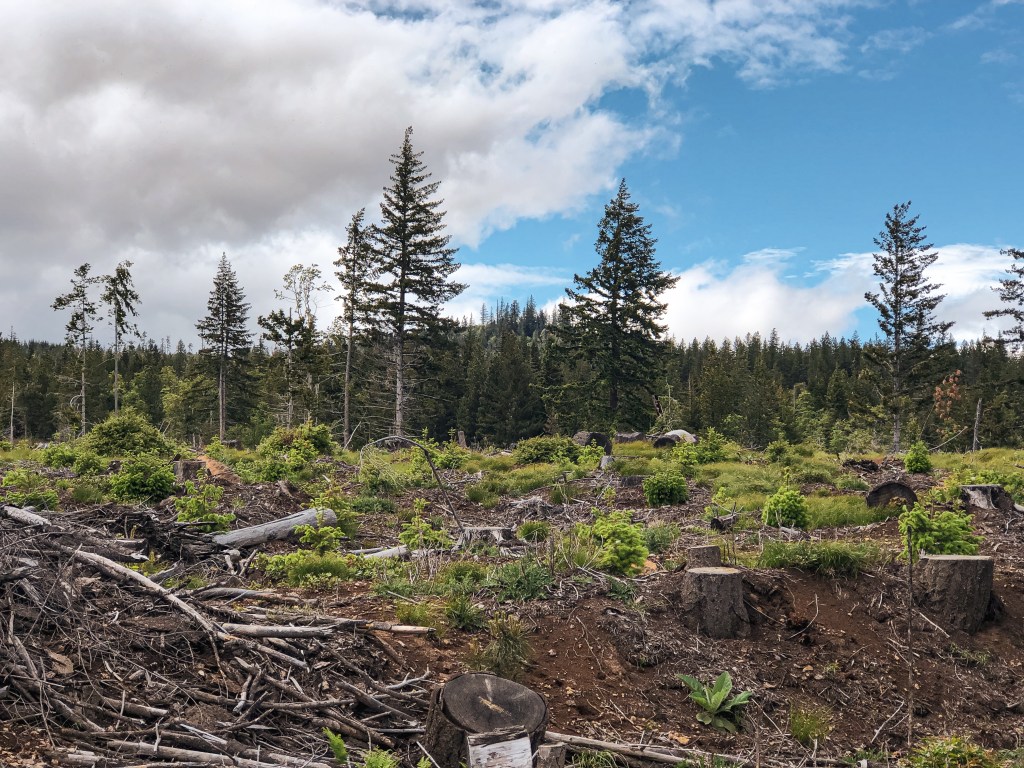
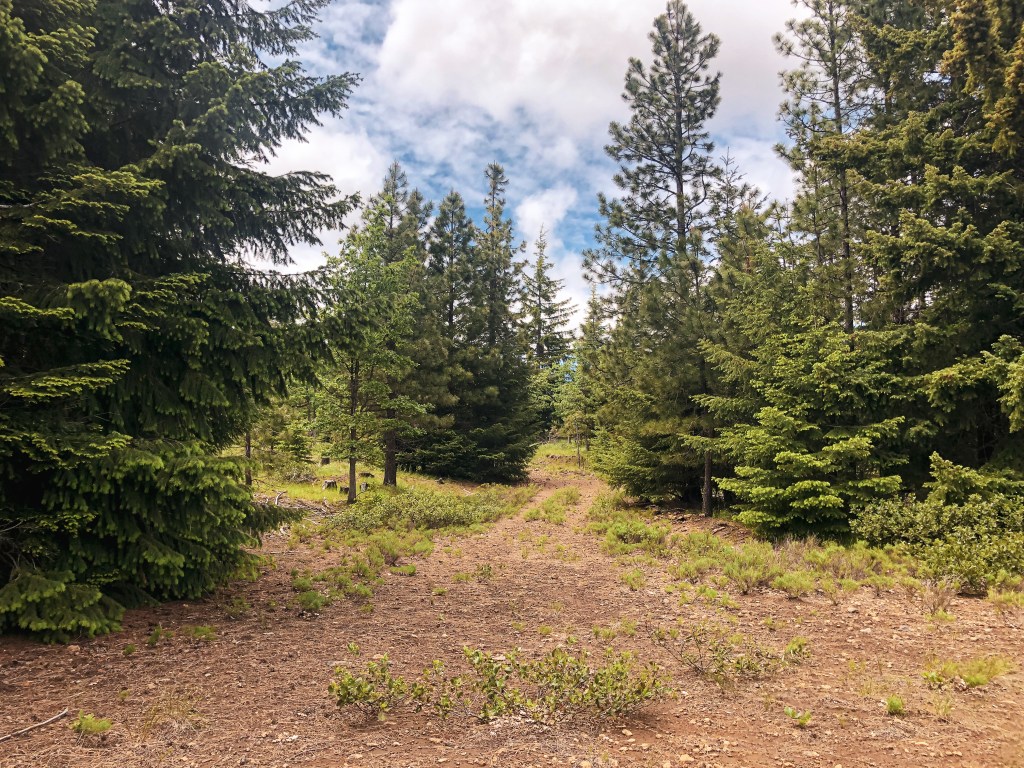
June 11th, 2022 – We parked our car before 11AM in another pull out on the same road and walked up the remainder of the way. Our drive over was wet but the forecast called for a break in weather closer to noon. The sun made an appearance shortly after we parked and decided to stick around this time. I even had to break out my sunscreen. The old road starts out fairly overgrown and opens up into an area that has been logged significantly. Once in the clear cut, we had a direct view of Meadow Butte. This made it much easier to determine where we were headed and if we were on the right roads. You will pass three roads off to the left before you reach the correct road. The first spur off to the left looks like it climbs steeply up to Quigley Butte. The second road is at a major 5-way junction where you will want to continue straight. The third road looks like it might head towards Meadow Butte but is not the route you want. The fourth spur off to the left is the correct road. You will lose sight of the crows nest before reaching this spur. It turns out we initially had the right road during our first attempt, we just didn’t continue far enough up. We were probably less than half of a mile from it. Once on this road you will meet a couple more junctions as you climb towards the summit. The first junction is with an overgrown road off to the right, you will want to stay left. The road to the left heads up the butte and eventually provides a view of the crows nest again. You will be very close from here and have the option to bushwhack to the summit or continue on the road. We decided to continue on the road which will appear to head away from the direction you need to go and drops down into a meadow. The road is faint here but continues across the meadow. At the end of the meadow the road meets a junction which makes a sharp right turn back towards the butte. This road will take you all the way to the summit. Once on the summit, we were surprised to get decent views towards Mount Adams and the Trout Lake valley. I believe on a clearer day you would be able to see most of the high peaks. We enjoyed a late lunch while taking pictures. It’s amazing how much of it is still here after being abandoned for over 60 years. We said our goodbyes to Meadow Butte and celebrated a successful redemption on our way back to the car. Despite some ominous clouds in the distance threatening to come our way, we didn’t get rained on at all during our hike.

History.

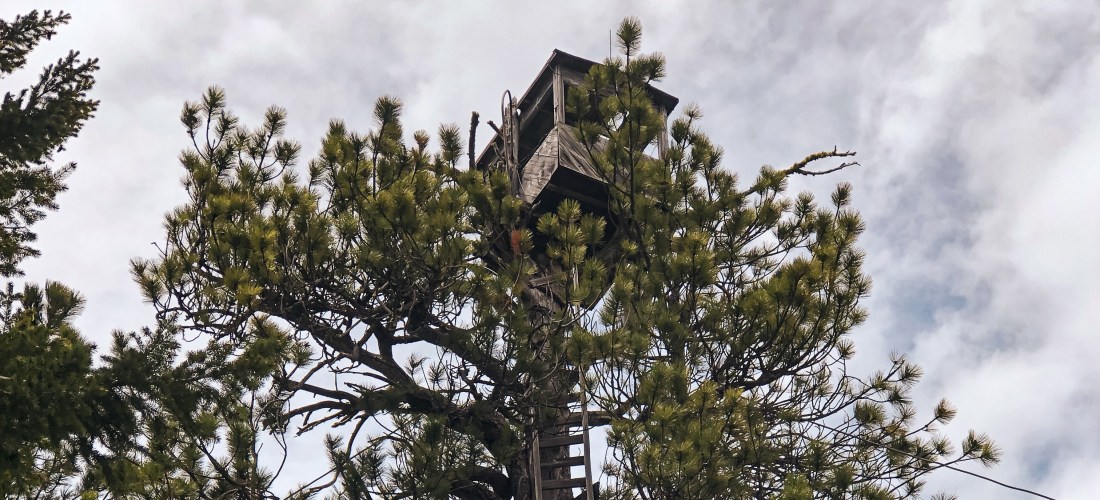
Meadow Butte was established in the early 1940s when an enclosed cab was built atop of a 86′ ponderosa pine tree. It was originally used to oversee railroad logging operations by the J. Neal Lumber Company until the Washington Division of Forestry took ownership in 1944. A cabin was built during this time for the lookout attendants to use as living quarters. It’s presumed they used a tent before this was built. The crows nest was abandoned in 1958 but is still standing strong. The cabin used for the living quarters was moved to the DNR compound in Glenwood and used as a storm shelter. There is also some sort of communication building and rod on the summit that look like a fairly recent addition.