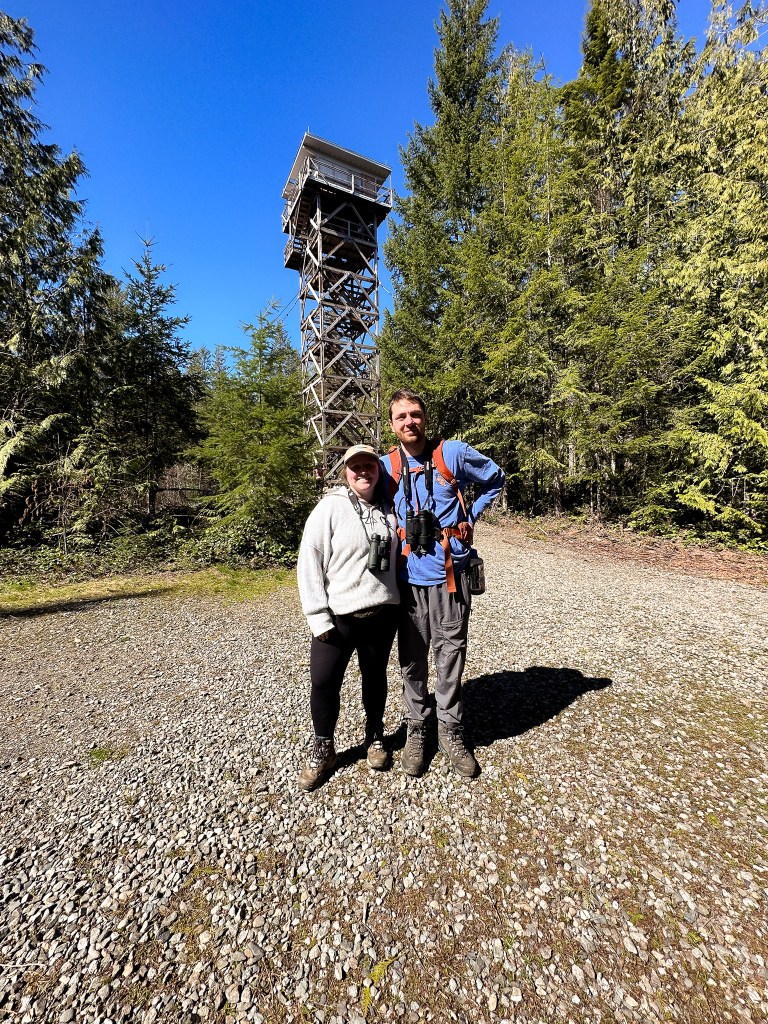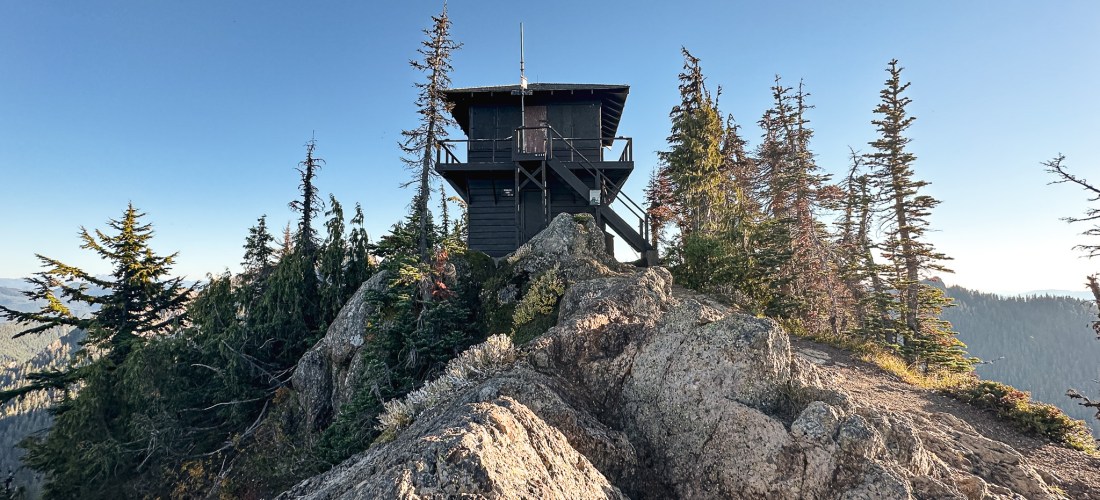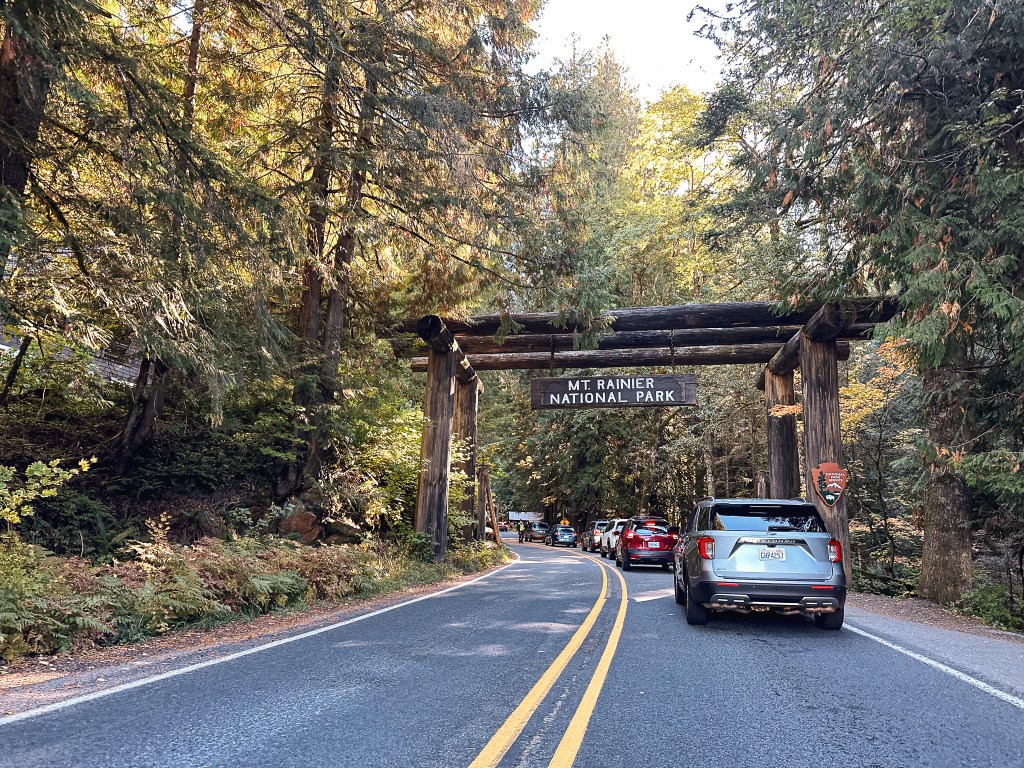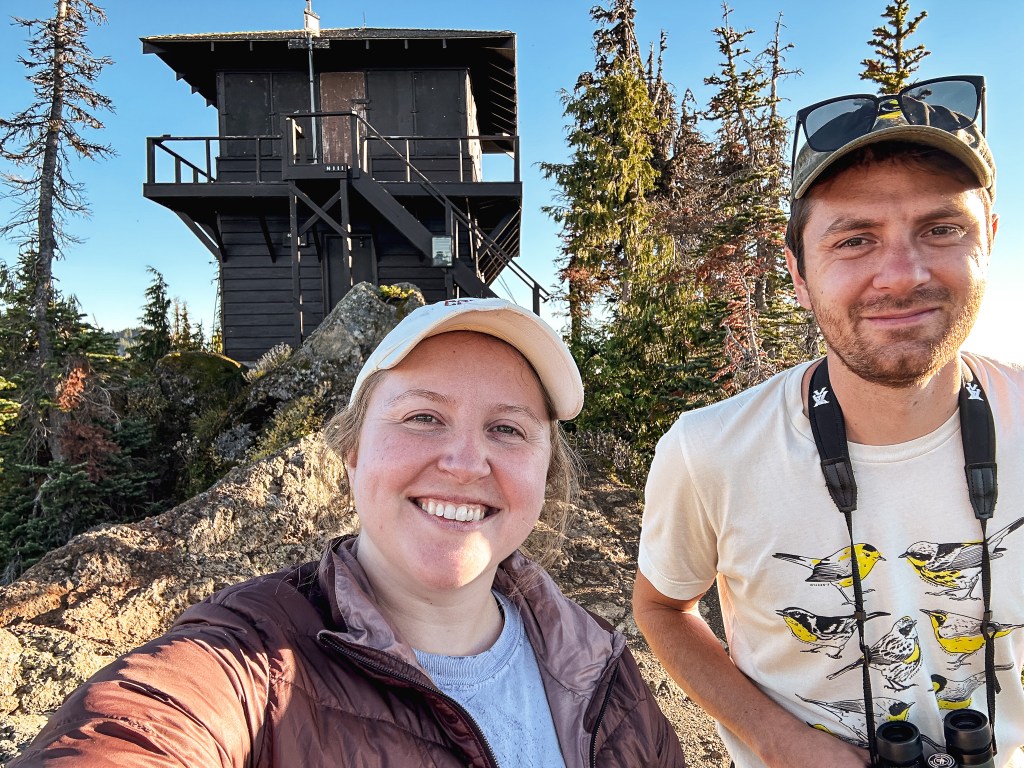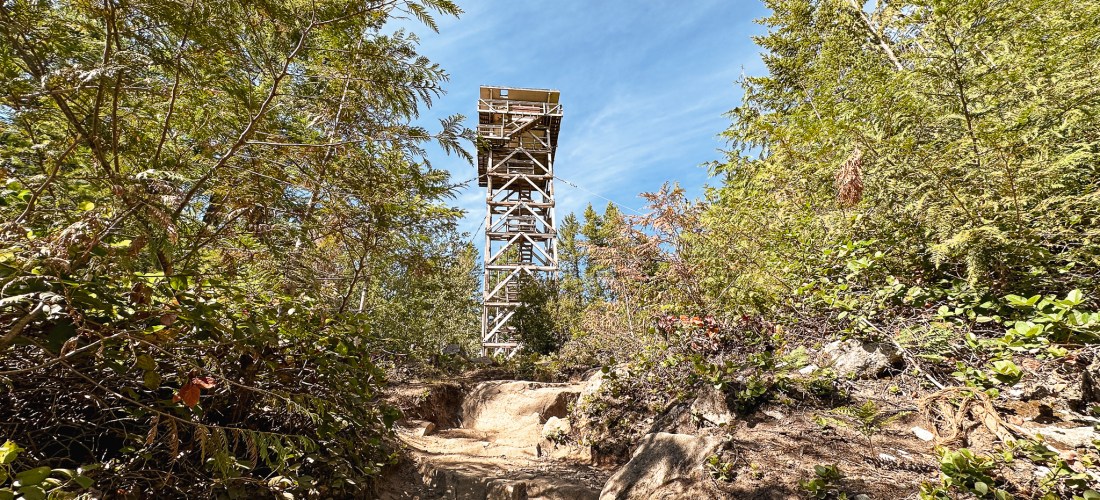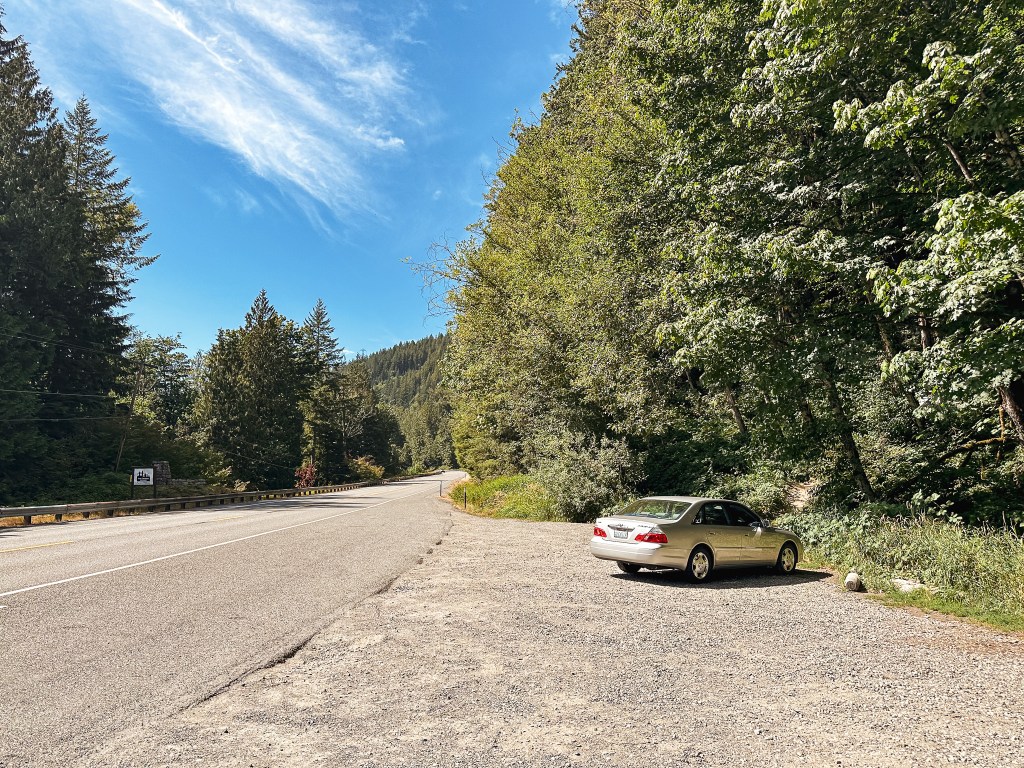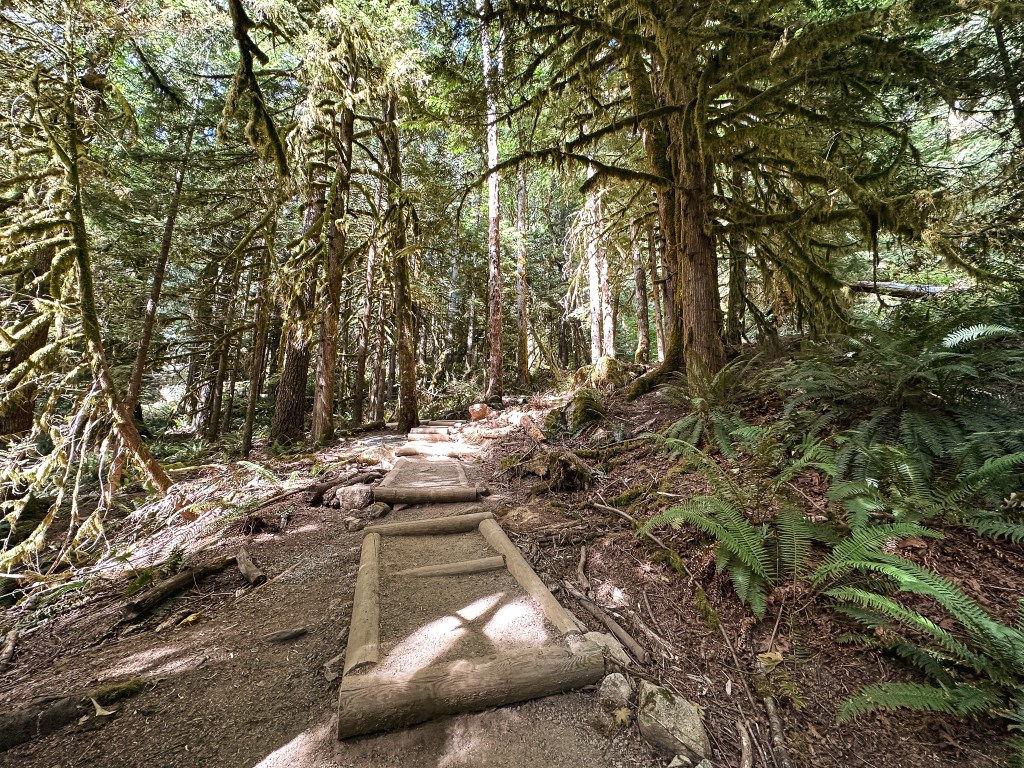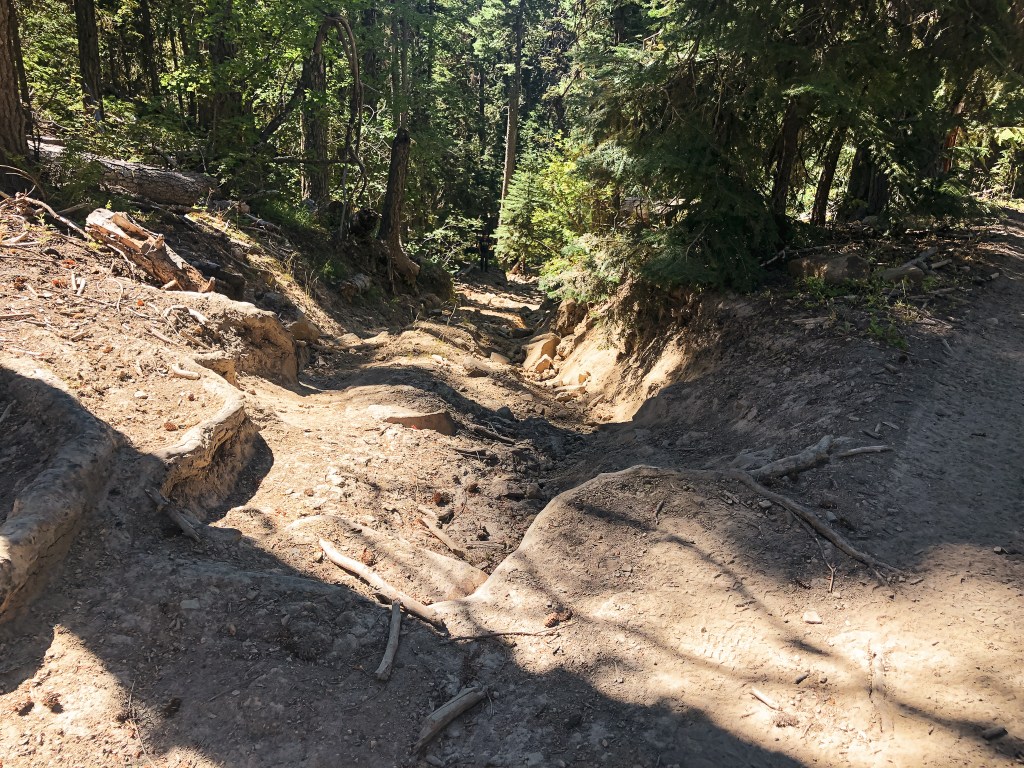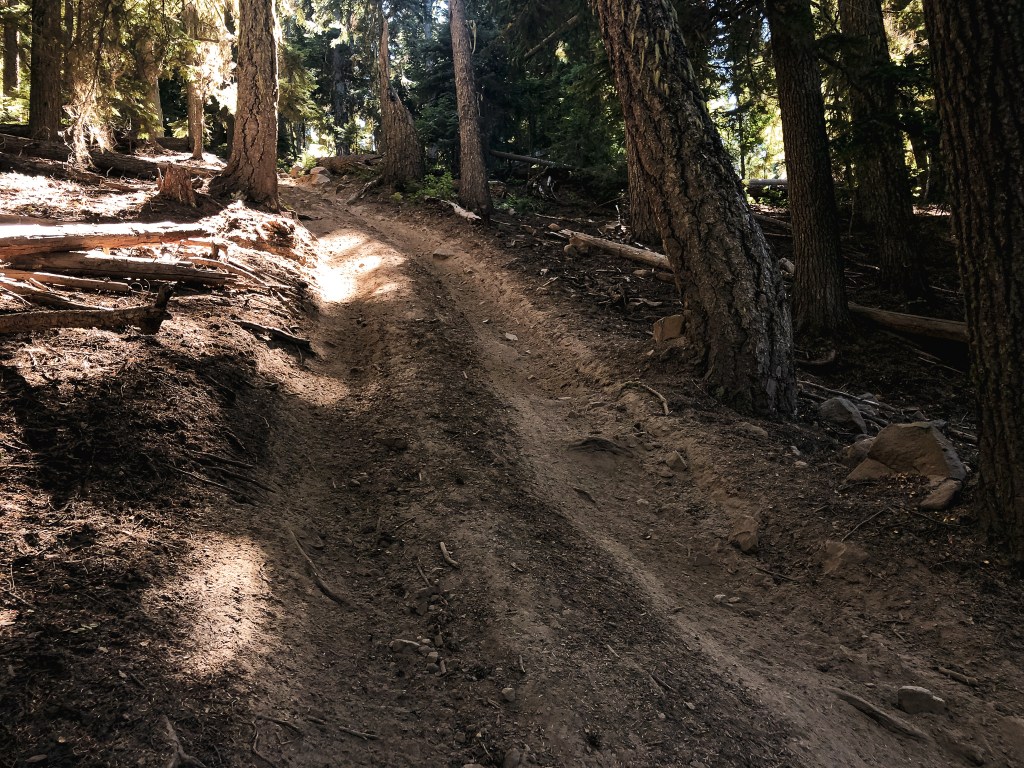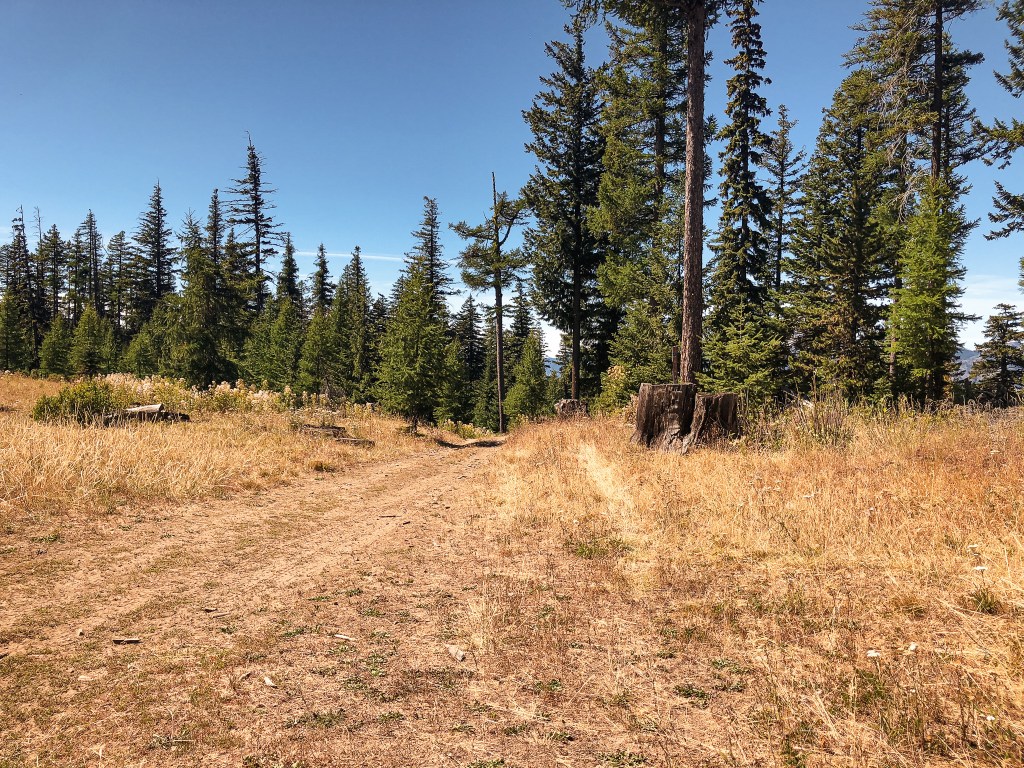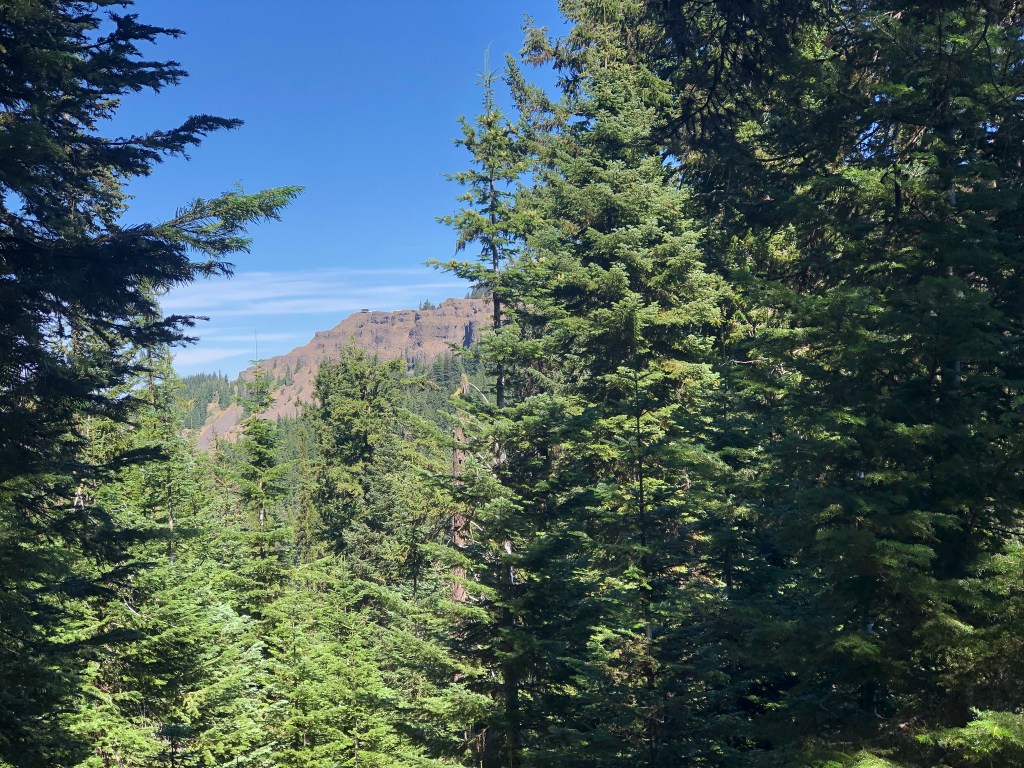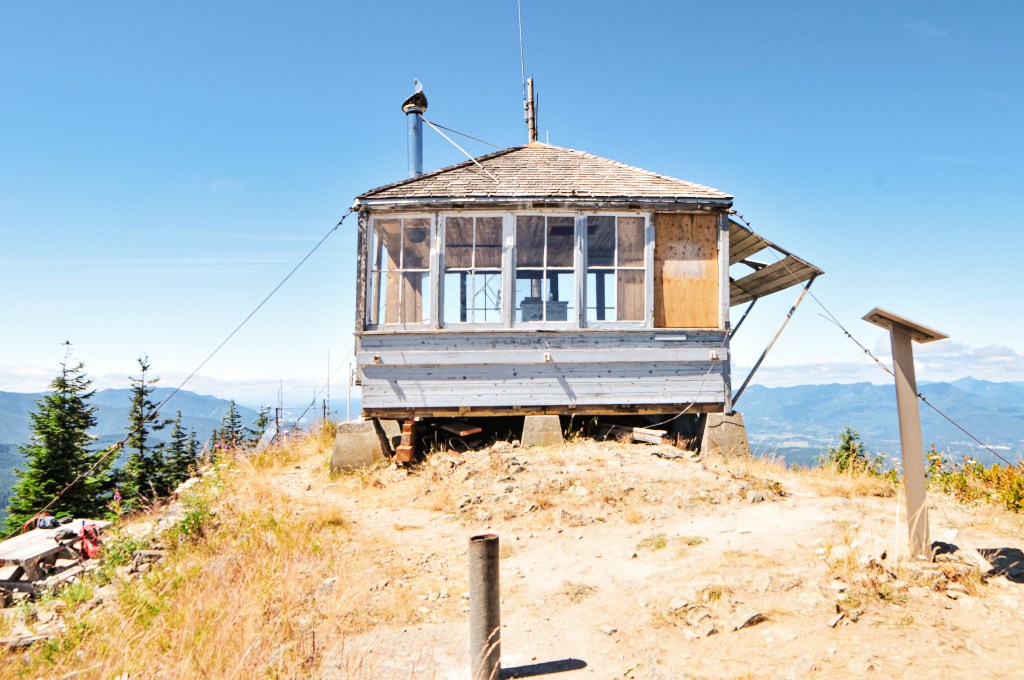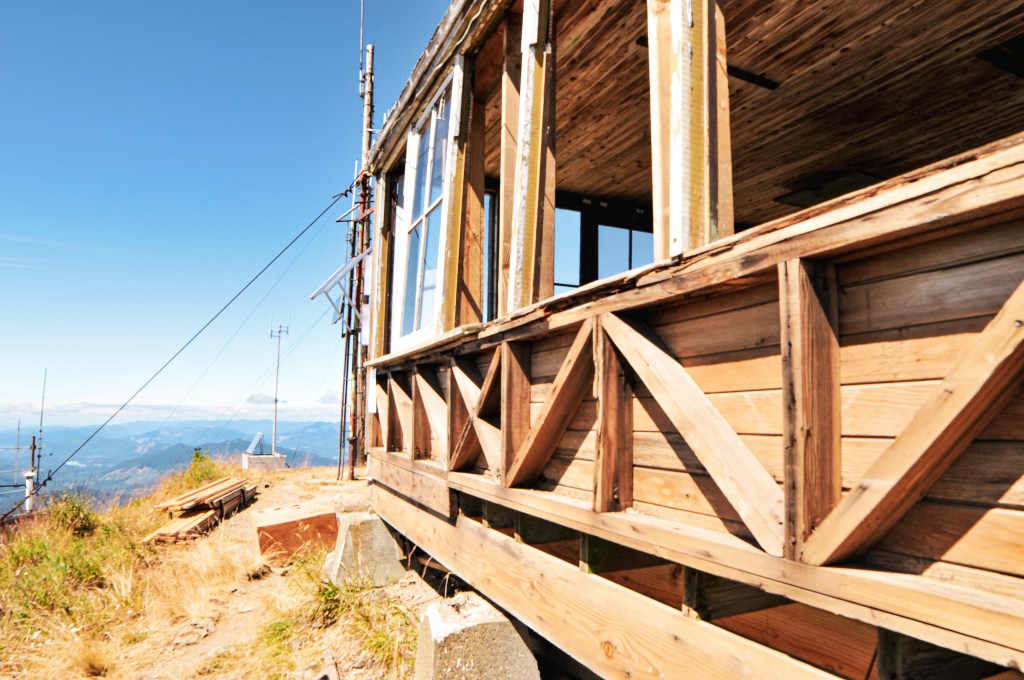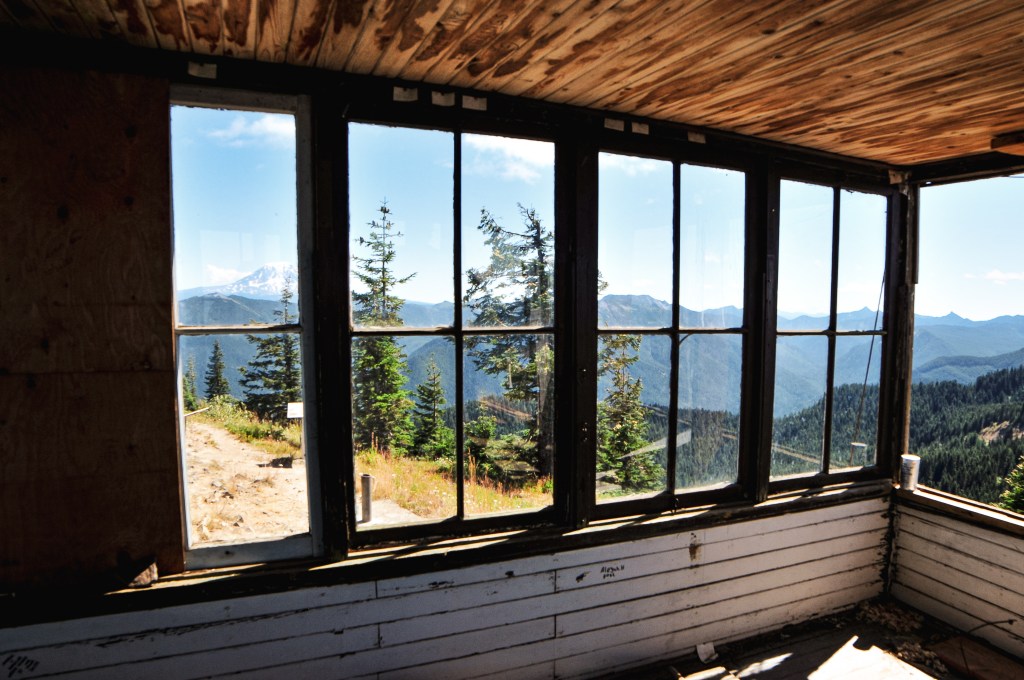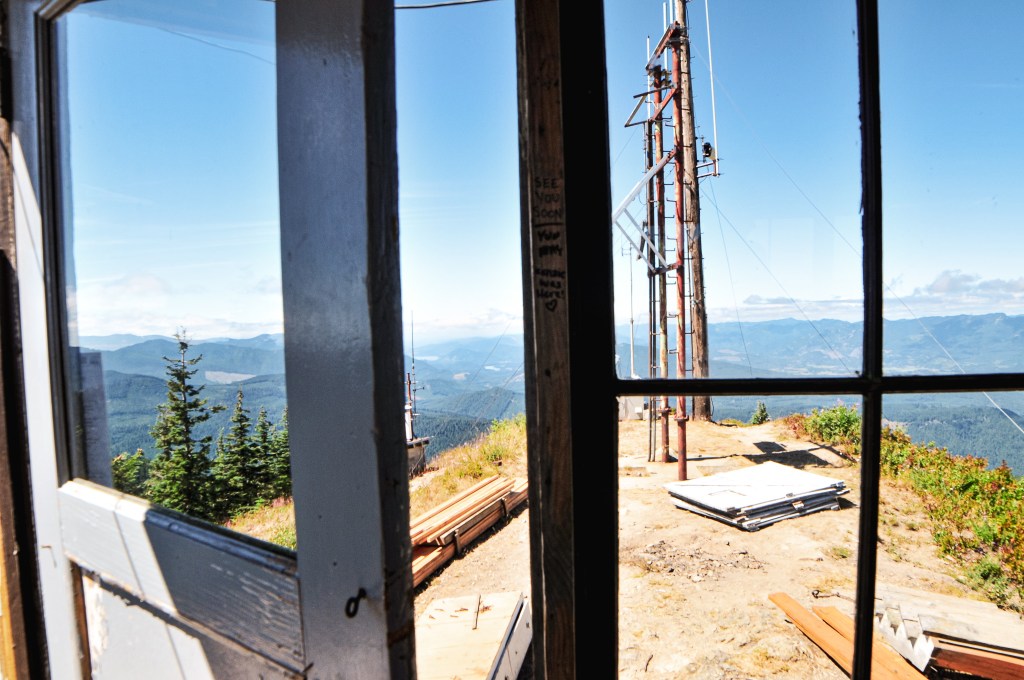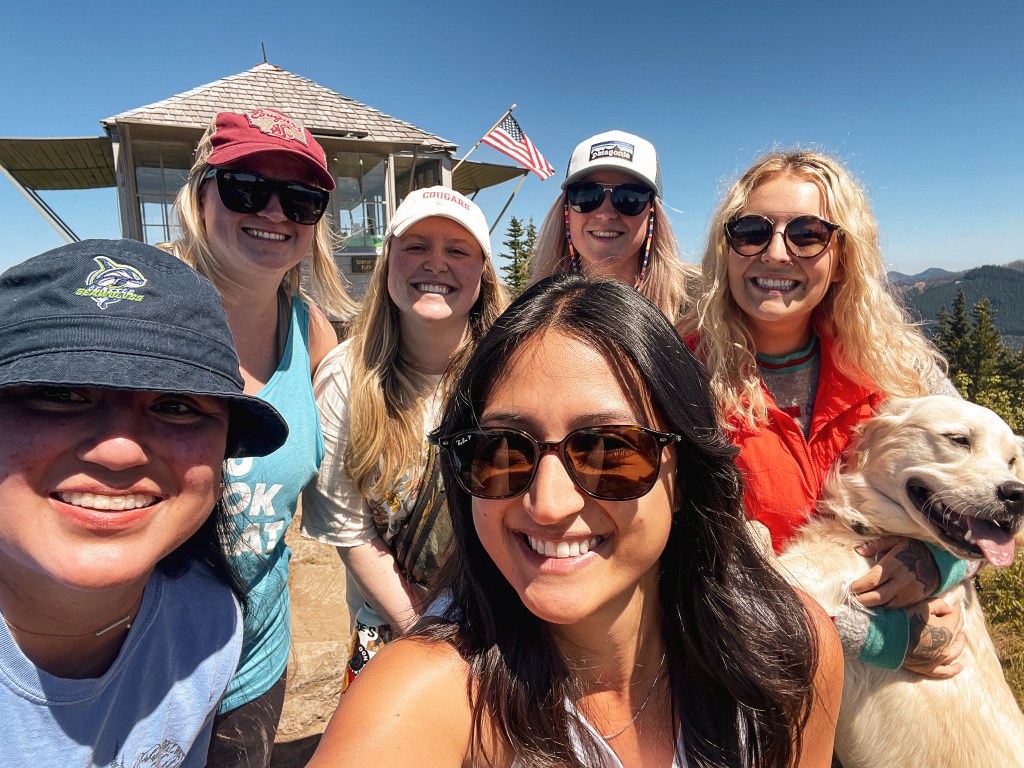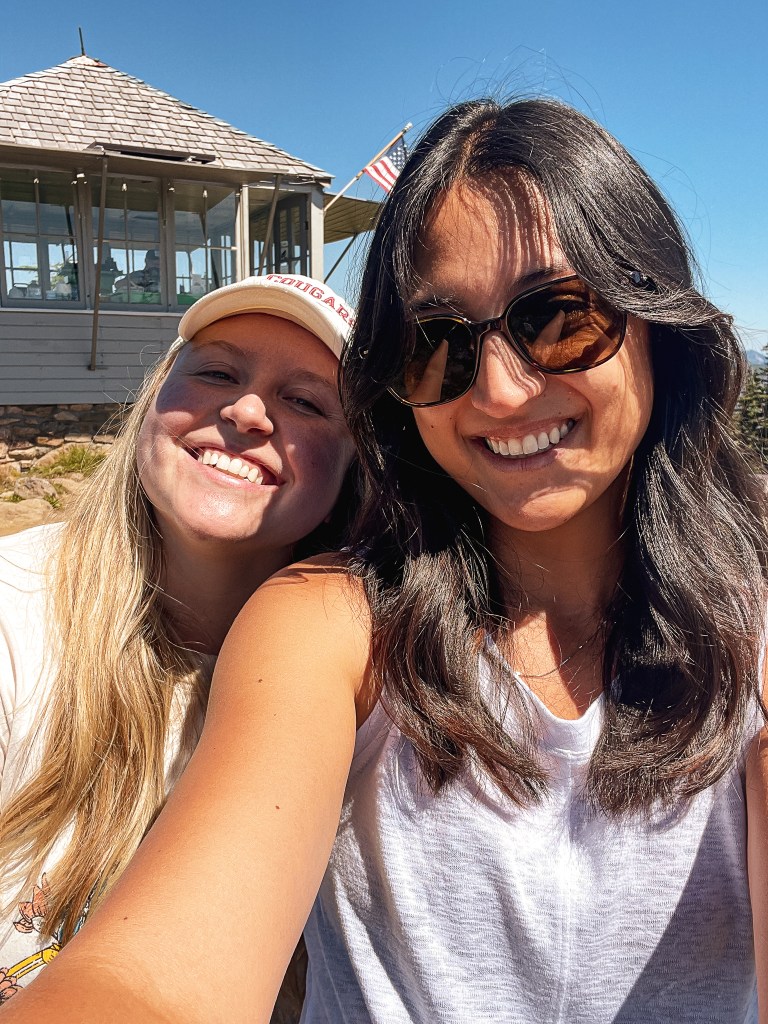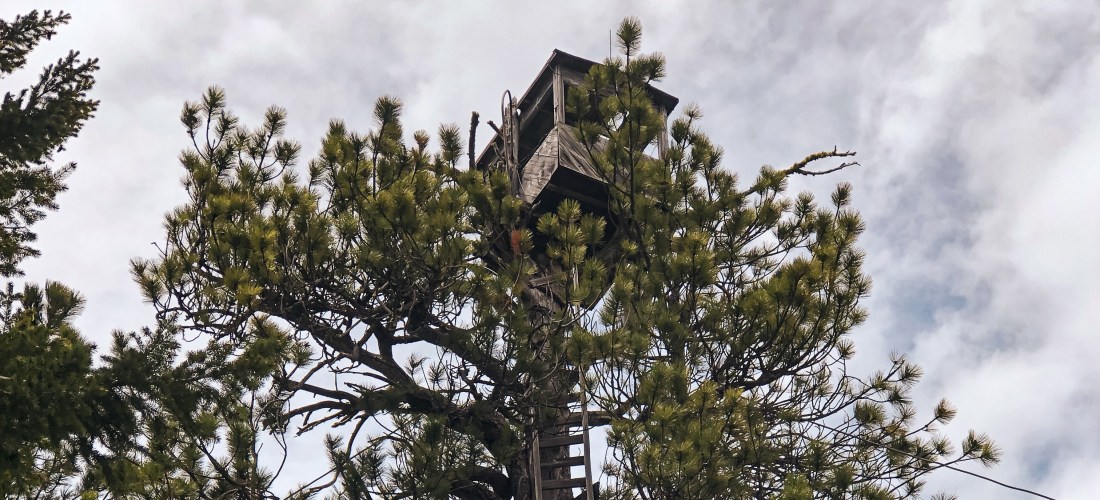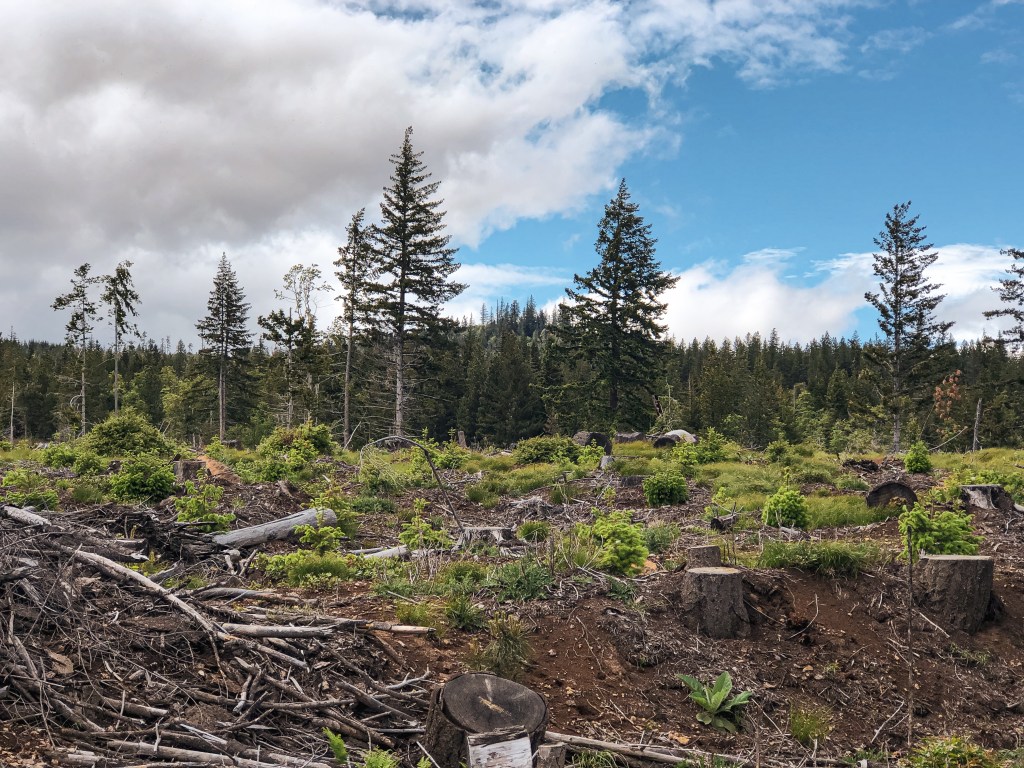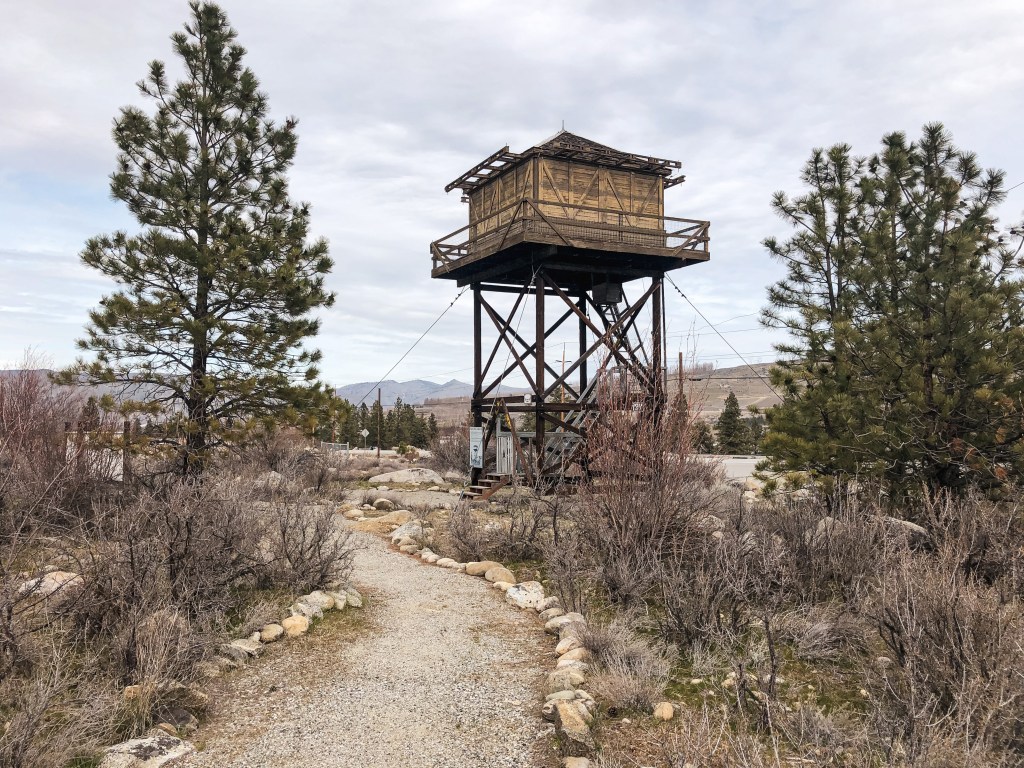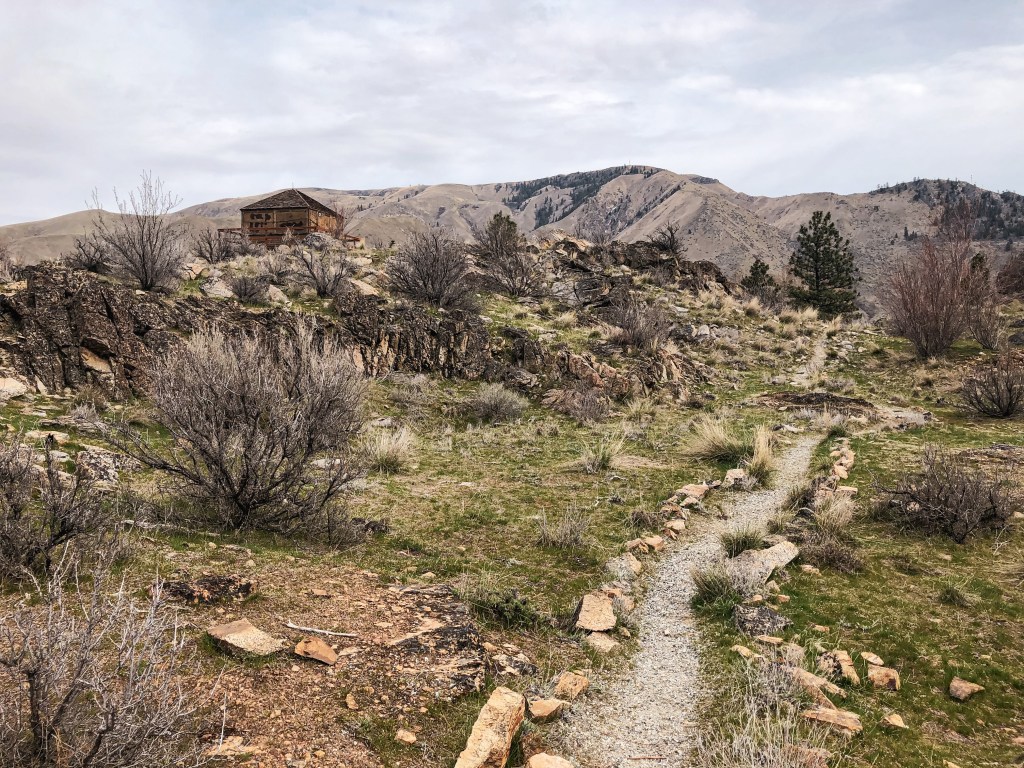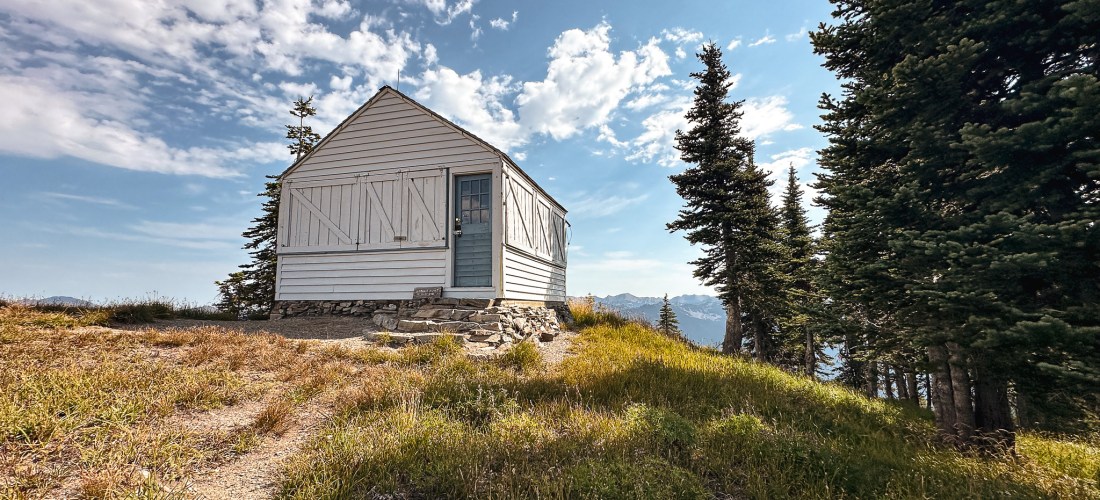
Dodger Point L.O.

Washington Lookouts

Location.

Olympic National Park

Status.

Currently standing

Estimated drive time from Portland, OR.

4-1/2 hours

Date visited.

September 1, 2024

Elevation.

5,728′

National Historic Lookout Register.

US 1112; WA 65

Trip Report.

We bounced around a few different ideas for our Labor Day trip this year ranging from the Sky Lakes to the Salmo-Priest Wilderness. We have been heavy handed on the backpacking this year and wanted to continue that trend. Our final decision wasn’t made until the Monday prior when I booked our permits. The wildfire season has been hot and fast this year, but had quieted down some in the mild August conditions. Though after regaining cell service this weekend we found the fire season had been extended. Lightning had caused some new fires over the weekend and predictions are calling for a hot September. It was quite the contrast from when we left the cell service range prior. Normally smoke and fire ends up dictating our plans for this high holiday weekend. It still played a minor role but it was nice to have what felt like more flexibility. Dodger Point has been thrown around a couple times in the past as a potential trip option, but we have been deterred by the cost of permits and the time needed to get there. It requires a bit more planning than your typical fire lookout. We ultimately decided to bite the bullet after agreeing that the permits are not going to get any cheaper or the distance any shorter or us any younger.

Things to note for a trip to Dodger Point L.O.:

  • America the Beautiful Pass – Annual $80 or 7-Day $30 for trailhead parking
  • Olympic National Park Wilderness Permits – $8 per adult per night + $6 reservation fee (2-adults for 4-nights was $70). Permits for this can be found under the Elwha starting area on Recreation.gov. Please note: Recreation.gov imposes a 15-mile limit between campsite permits. If you select another campsite first such as Humes Ranch, the Dodger Point campsite should appear as an option for the second night. If you plan to hike to the Dodger Point campsite on the first night the permit will have to be set up in person, via e-mail, or over the phone with the WIC.
  • Bear Canister – the back country campground below Dodger Point does not have a bear hang wire and a bear canister is required for storing your food properly. You can check these out from a WIC on a first-come first-serve basis with your permit if you do not own one.
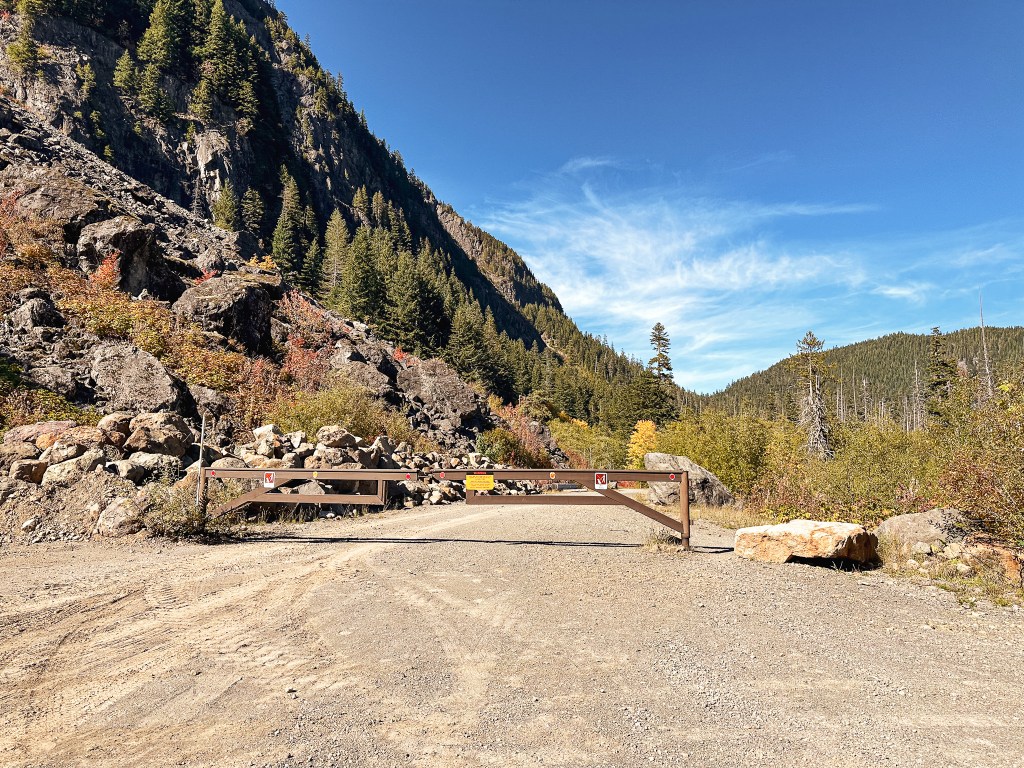
  • Parking – the Olympic Hot Springs Road which had previously provided access to the Whiskey Bend trailhead has been washed out indefinitely since December 2017. The closest trailhead for parking is Madison Falls and the remaining distance along the road must be hiked or biked. This adds an additional 7 miles (one-way) of hiking along the road to access the necessary trailhead.
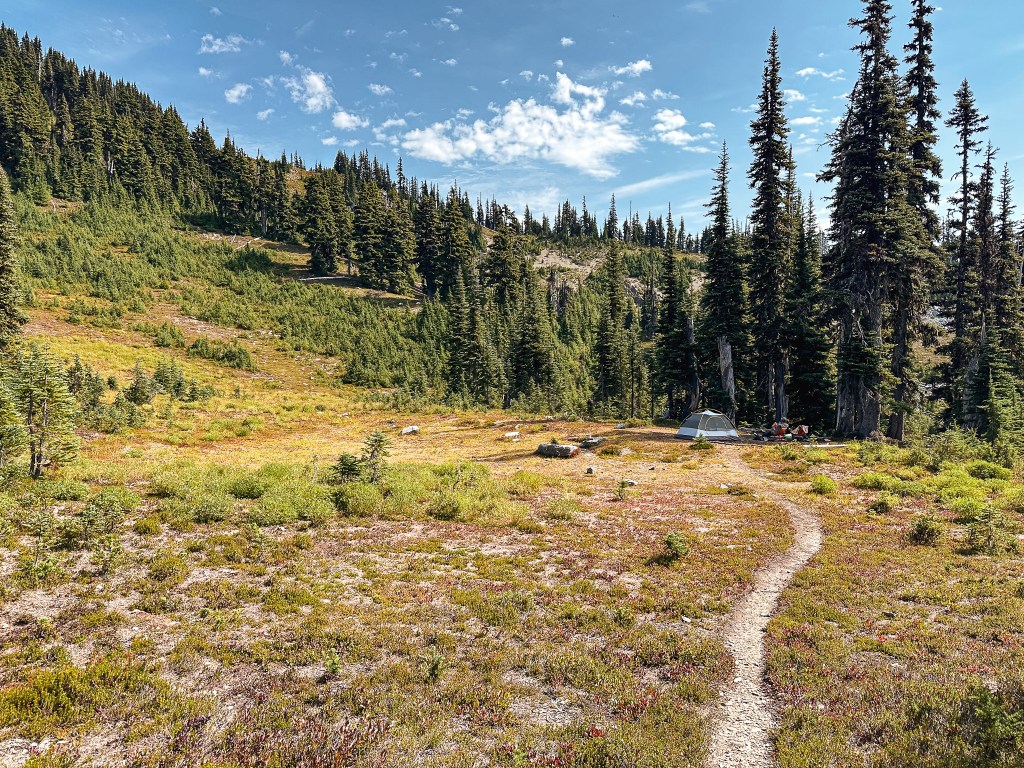
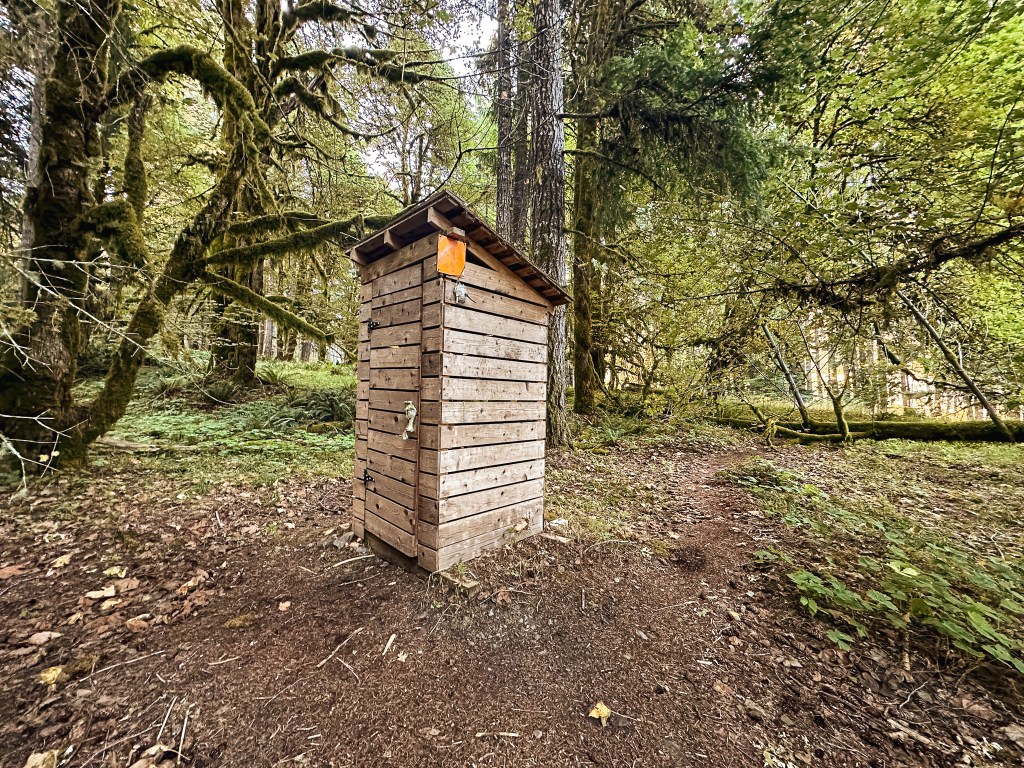
  • Camping – There are two backcountry campgrounds that hikers typically use on their route to Dodger Point. The first is Humes Ranch along the Elwha River at 9.5 miles from Madison Falls TH. There is a bear hang wire here and back country toilet. Though trip reports confirm the bear wire is in bad shape and is noted as more of a bear piñata. It was completely down during our visit but I’m not sure if that was intentional or not. The second is appropriately named Dodge Point as it sits just below the fire lookout off of the Long Ridge trail. This campground is located 20 miles from the Madison Falls TH. There is no bear hang wire, no toilet, and no campfires allowed. It seems that most break up this hike into a 2 or 3-night backpacking trip.
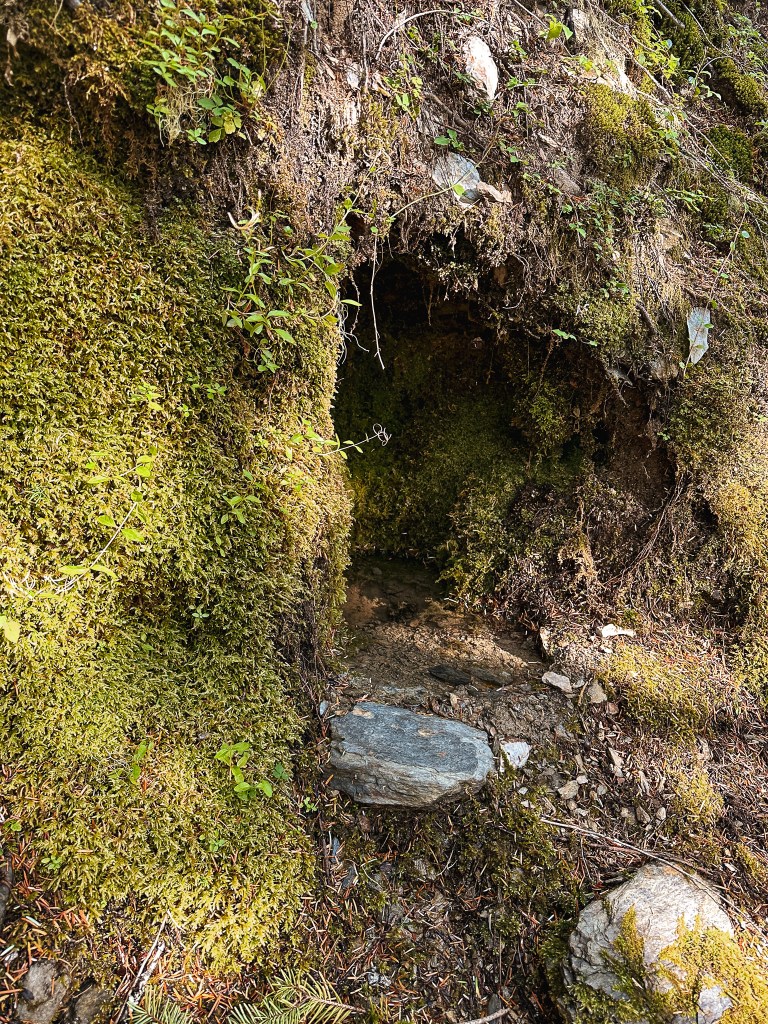
  • Water – the water source located at the Dodger Point camp is noted as unreliable especially late in the season. You will need to plan appropriately to carry enough water for your stay. There is a reliable spring 2-1/2 miles before you reach the camp that we found to be the best water source. We did notice a few sources closer to the camp still running but they were much smaller or stagnate.

Friday.

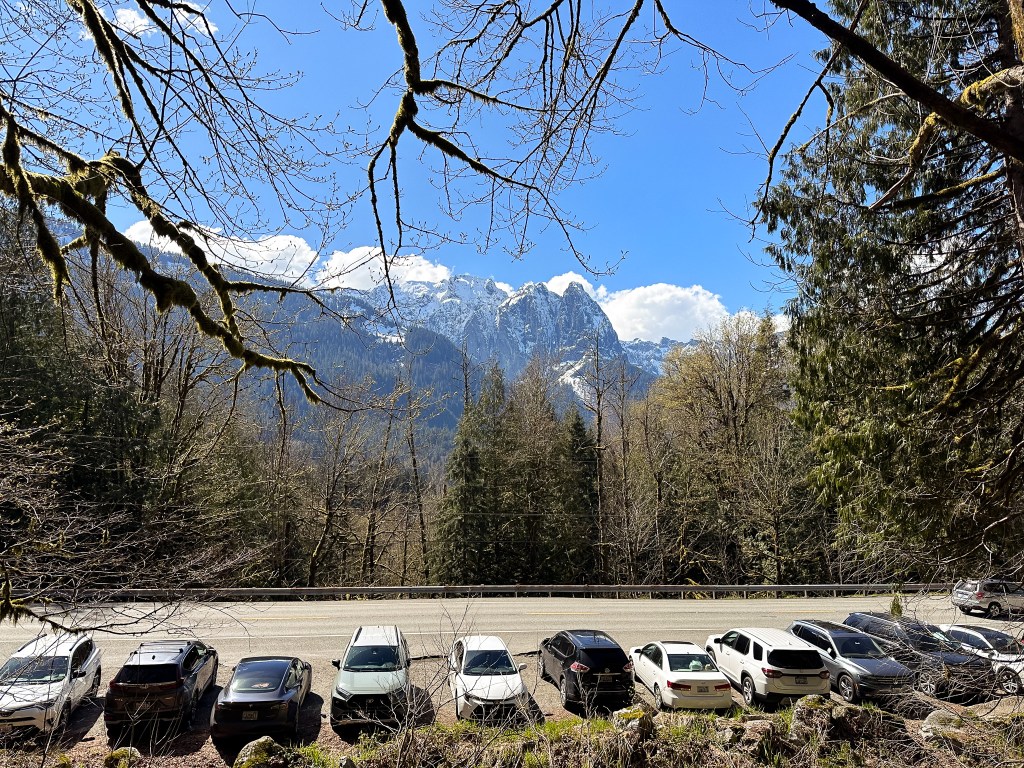
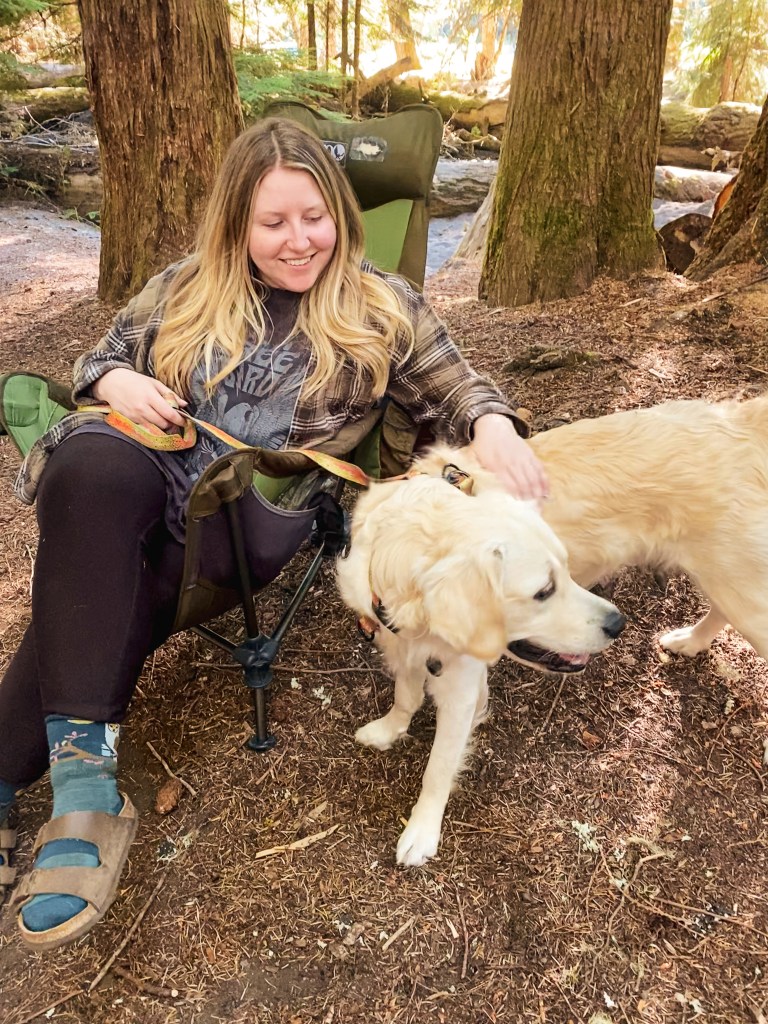
We decided to plan our route to Dodger Point as a 5-day/4-night trip since those were the days we had already requested off from work. This allowed us to camp below Dodger Point for two nights giving us a rest day between the longer hiking days. I already own a BV500 bear canister that I bought specifically to have on hand for back country trips like this to Washington. But given the length of our trip we quickly realized it would not fit all of our food. We decided to test our luck at the Port Angeles WIC to rent a second one for the weekend. Our hopes were slim to none since it was the Friday of Labor Day weekend, but it never hurts to ask. We didn’t leave Portland until 7:30AM since I needed to book a last minute camp spot for a planned girls trip, but they weren’t available on Recreation.gov until 7AM PST. We still managed to avoid most of the holiday traffic until we reached Port Angeles. The WIC located in town was busy but we were surprised to see they had rows of bear canisters ready for use over the long weekend. We were able to check out one with no issues and were headed to the trailhead shortly after noon. The Ranger that assisted us with the bear can mentioned we might be visiting the only quiet part of the park this weekend. Finding a less traveled trail in some of the busiest areas is our forte. The Madison Falls TH was only 15 minutes outside of Port Angeles off of the paved Olympic Hot Springs road. The main parking area was full, but we had no issues finding parking in the overflow area. We brought lunch to eat in the car before starting our trek out to Humes Ranch. Garnet didn’t want to leave any food in the car after our mouse experience from Jarbidge and was trying to finish off everything we brought before heading out. I was getting worried about time since I’m not a fast hiker especially when saddled with a backpack and decided to get a head start.

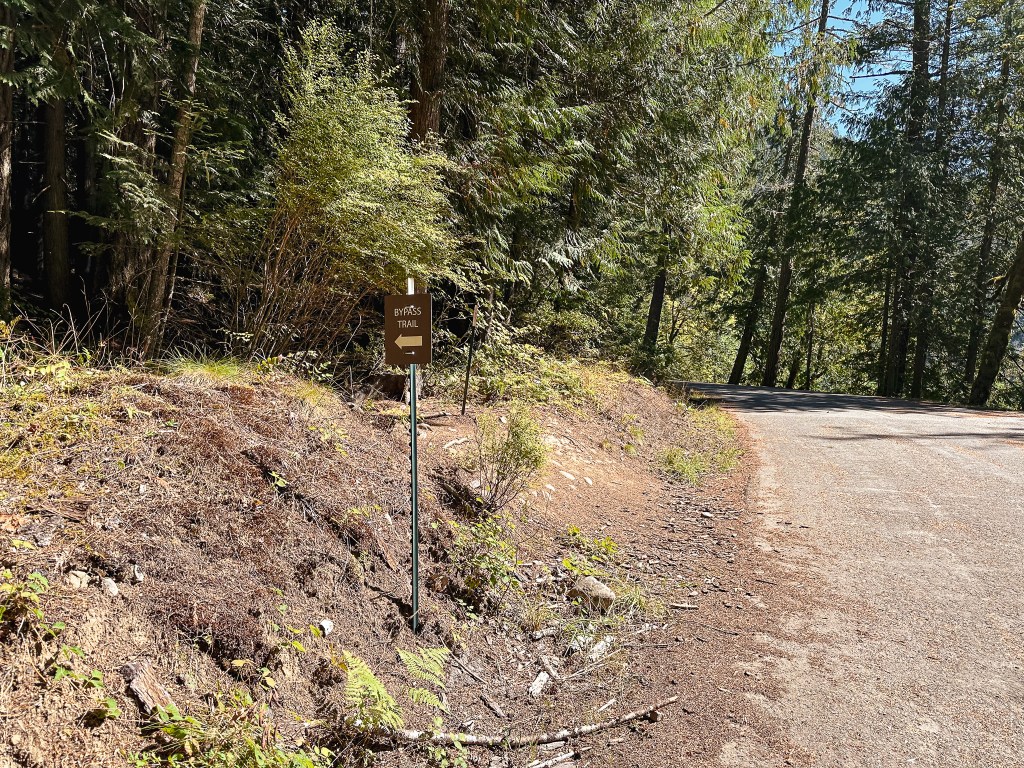
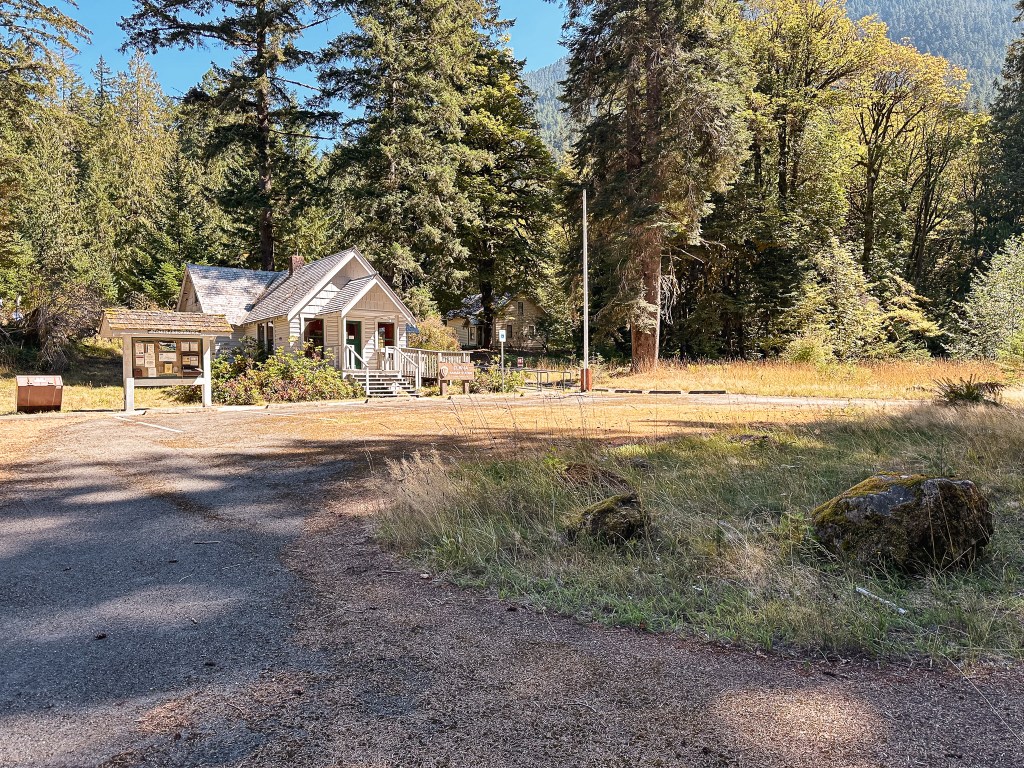
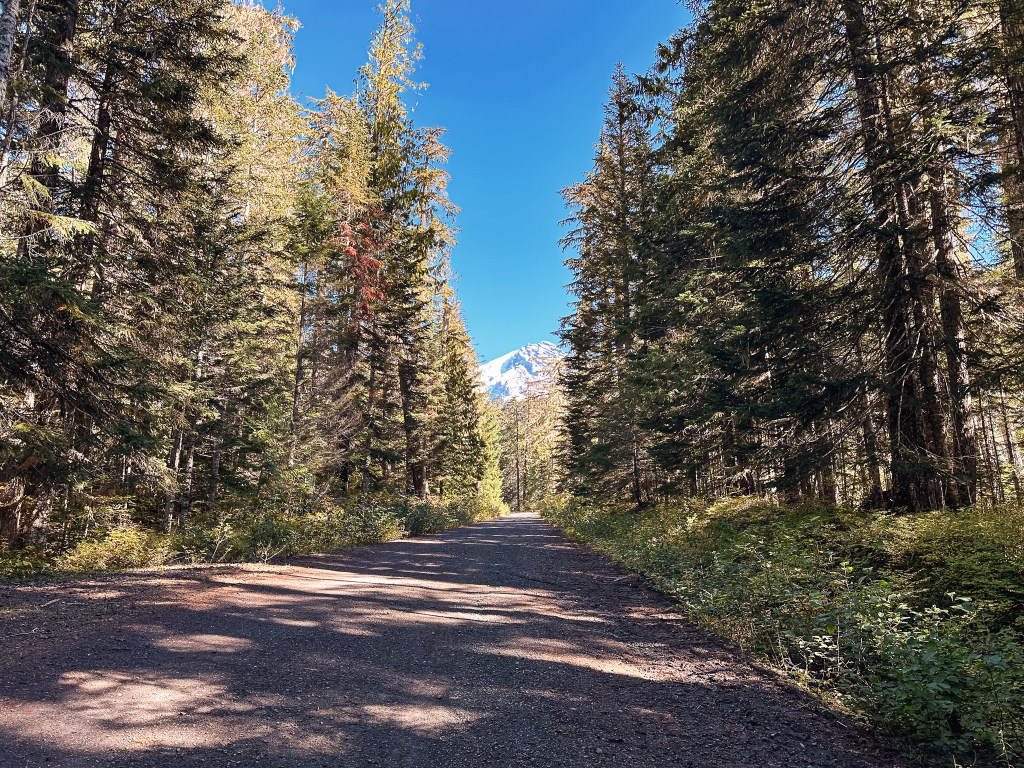
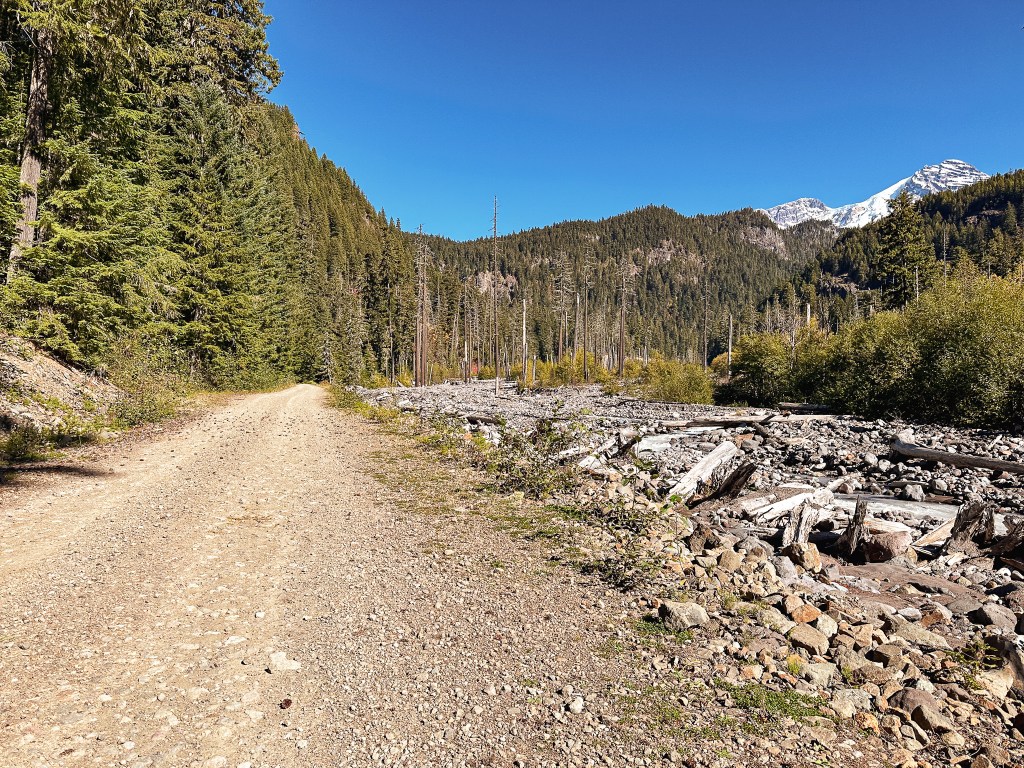
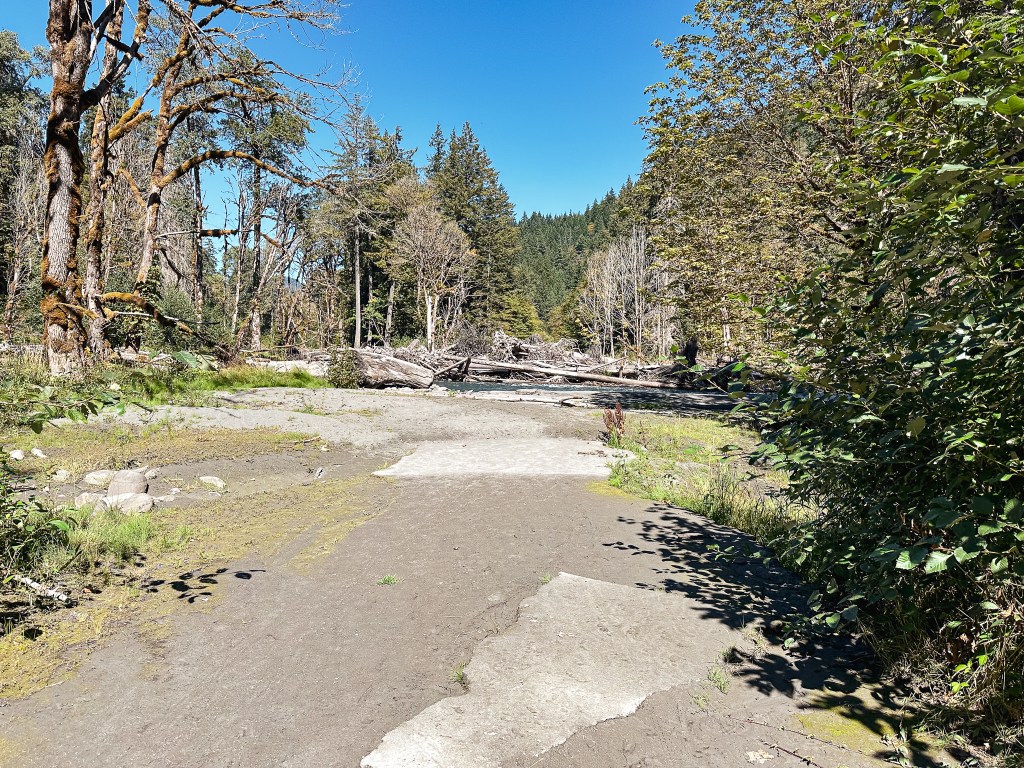
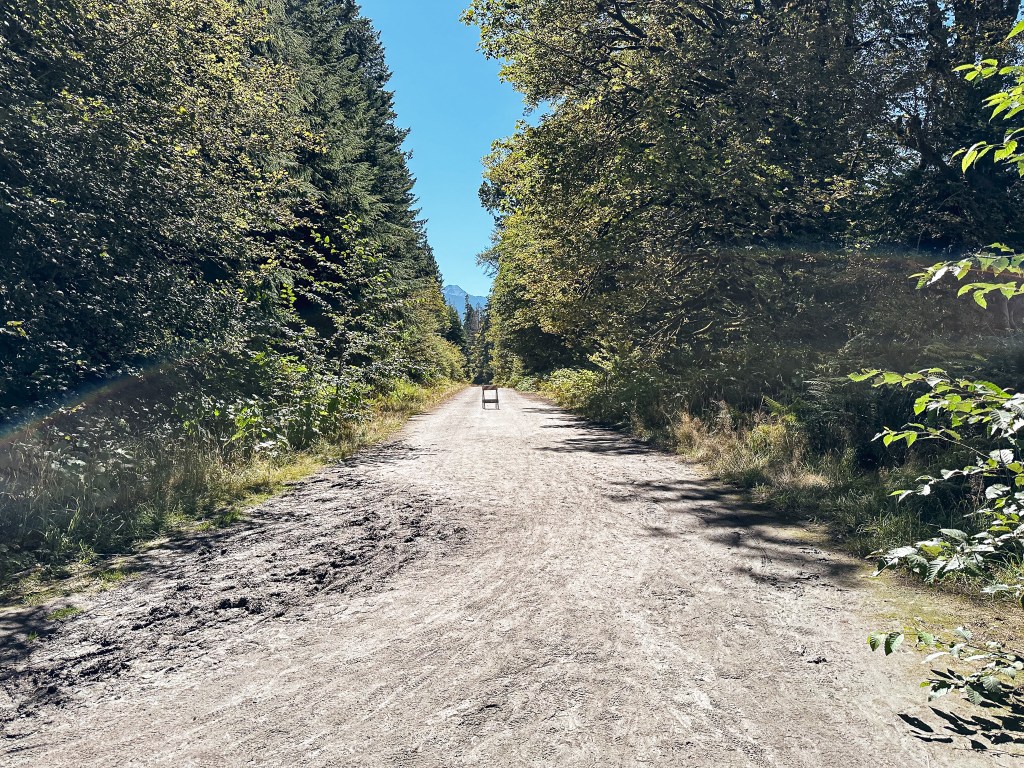
The “hike” starts beyond the gate along the Olympic Hot Springs road. This portion is on pavement until you reach the Bypass Trail that circumvents the road wash out. It was a surprisingly steep little trail as it directs you up and away from the road before dropping back down. This section can be challenging for those trying to bike the road. Once off the Bypass Trail it was back to pavement until I reached the old Elwha Ranger Station. The ranger station is located 2-1/2 miles from the trailhead and makes a good turn around point for day hikers. It is an interesting collection of buildings that are starting to show signs of neglect. It seems this area has been mostly abandoned by the parks service after the road washed out. I met where the road forks just beyond the station and continued left to turn onto the Whiskey Bend road. The paved Olympic Hot Springs road continues further to the right to access different areas within the park. The road walking turns to gravel from this junction to the trailhead. It was another 4-1/2 miles along this road. I had been hiking ahead of Garnet at this point, but I was slightly worried he might not notice the road turn off. There was a sign but it was mostly worn down and unreadable. I waited for a bit near the junction until I saw him heading up the road. From there, he caught up to me quickly. My legs were feeling good at this point and for once we were able to keep a similar pace. We stopped briefly to check out the remains of the Elwha Dam that had been removed in 2011-2012 to help restore the river. I’m pretty sure this is what eventually led to the road being washed out. The gravel road was mostly in good condition minus one or two parts that have sunk down. Something to note if they do manage to reconstruct the Olympic Hot Springs road in the future. There were some signs of construction along the bypass trail that suggested it might be in progress, but I haven’t done any additional research to confirm.
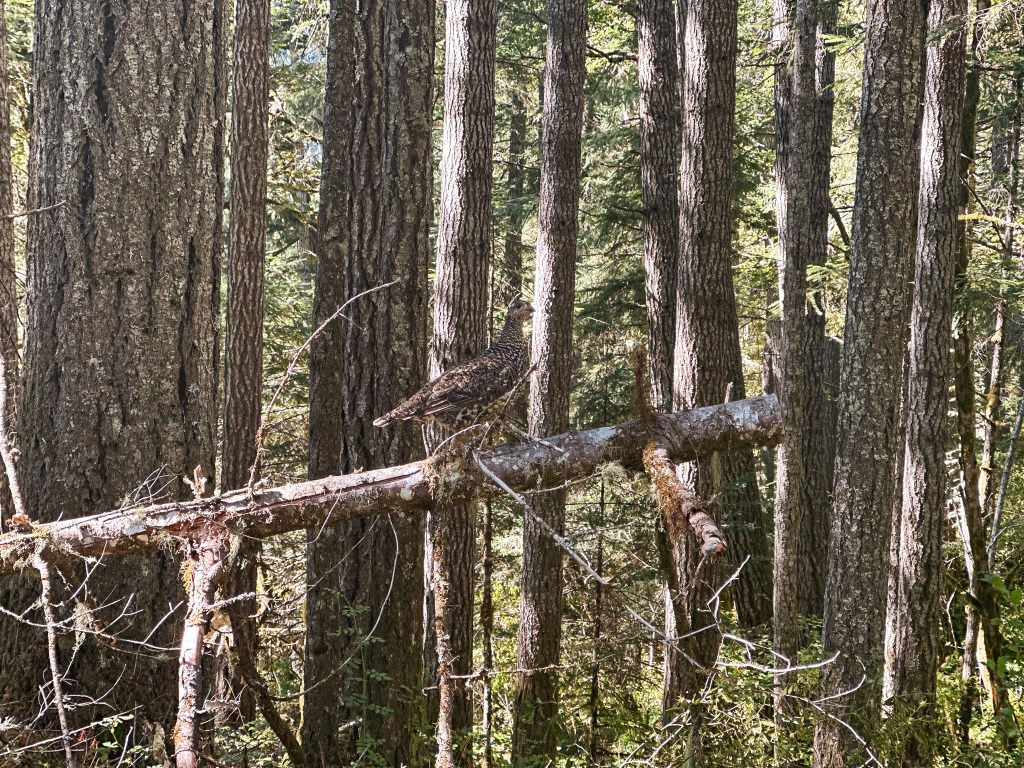
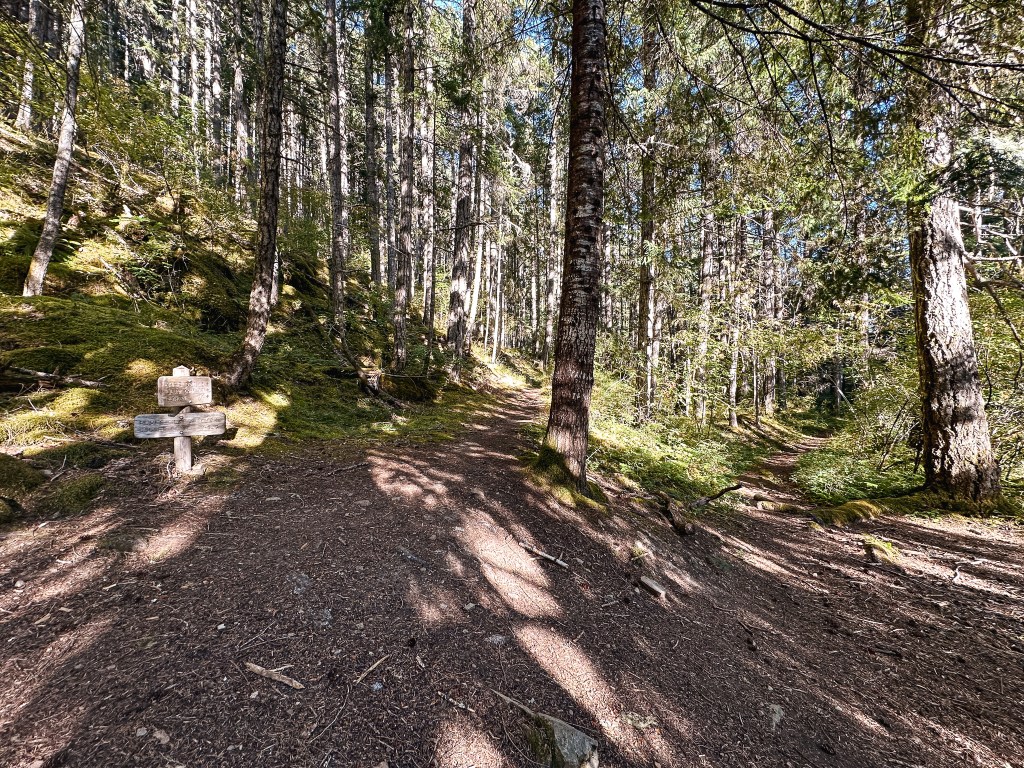
While hiking along the road we were met with a family of grouse, I believe they were Sooty Grouse, that seemed completely unbothered by us. It reminded me of the Spruce Grouse we encountered while in Minnesota’s Boundary Waters in 2022. They did not have the best fight or flight instincts and were willing to get within an arms reach. Garnet fell behind trying to identify them with the Merlin app as I continued ahead. I finally reached the trailhead, sweaty and tired, after 7 miles of road walking. I took off my pack and laid down on the picnic table until Garnet arrived. Road walking can be really hard on your feet. The remaining distance to Humes Ranch was 2-1/2 miles along the official Elwha River trail. There are a few different junctions heading off to the right to note along this trail. The first we came to was an over grown trail that had a sign for an overlook. The second was an obvious junction but was not signed. We debated whether this was our turn or not since the trails all seemed to interconnect on the map. We decided to stay on the Elwha River trail. Looking at a map after the fact, it appears this was the Rica Canyon trail. The third junction we came to was labelled with a sign for Krause Bottom. We figured this might be our junction and even started to head down the trail a bit, but decided to turn around after the tread started to grow faint. Once again looking at a map after the fact, it looks like this would have connected to Humes Ranch but it is not the main route. We continued on the Elwha River trail until we reached Michael’s Cabin. There is an obvious junction here signed for Humes Ranch and Dodger Point. The trail drops down from here to the edges of the Elwha River passing another trail fork for Dodger Point, a cabin from the Humes Ranch, and a junction that connects to Krause Bottom. There is a small camp spot where the trail first meets up with the Humes Meadow, but the main camping area is located across the meadow. We assumed we would see people while we were here since there were more than just our permits taken out for the night. We were surprised to find an empty campground and as the sun started to set we were surprised no one ended up joining us later in the evening. We hadn’t seen anyone else since we left the paved part of the road.

Our estimated mileage for the day was 9-1/2 miles with 1,800′ of elevation gain. These numbers are just an estimation since I didn’t use the tracker on my phone due to being worried about conserving my battery.
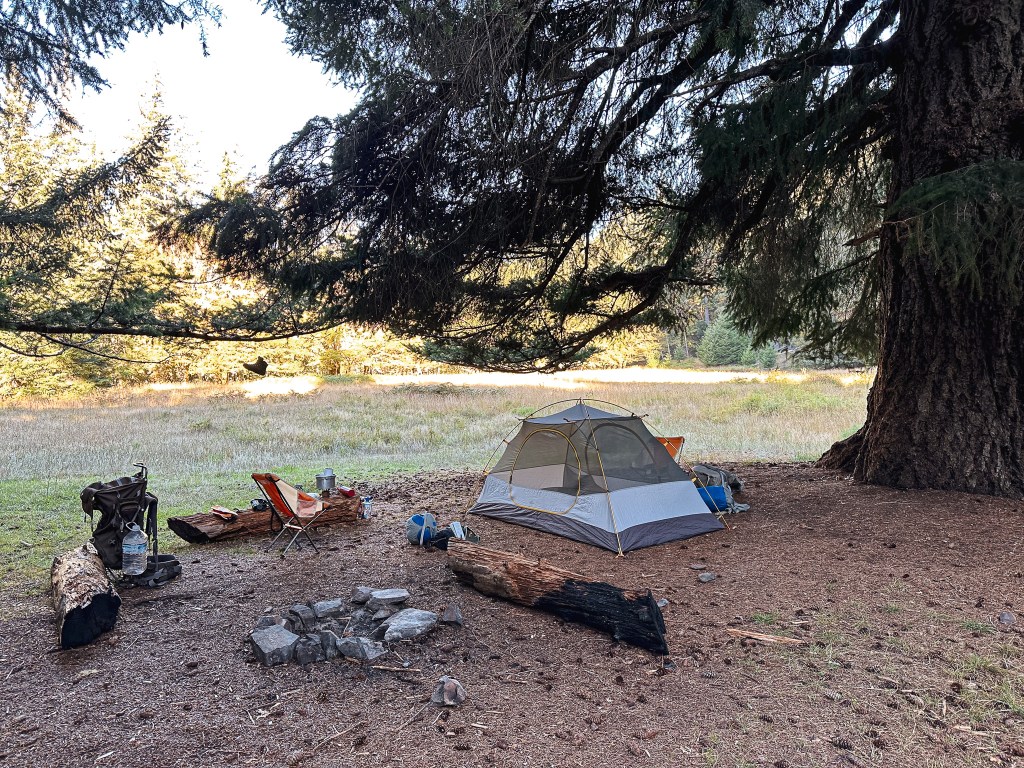
Saturday.

We didn’t set an alarm for the morning and didn’t attempt to wake up any earlier than we normally would while camping. This probably wasn’t our best call, but today was going to be an uphill marathon not a sprint. My joints were still stiff from the day prior and I hoped I’d be able to make it all the way. I decided to get a head start on Garnet since I had finished repacking my bag before he was ready. I headed back up the steep little trail we came down yesterday until I met up with the fork that was signed for Dodge Point. I turned right to continue on this trail. I could tell no one had been this way in the last day or two due to the amount of cobwebs that greeted my face. After hiking for a mile I came to another junction pointing back to Humes Ranch. I cursed myself for not looking closer for a cut off trail while in camp the day prior and made a note to take it on the way back. I had known all the trails around Humes Ranch interconnected, I just hadn’t known where it ended and began. I wasn’t completely sure how much mileage this would have cut off, but it would have definitely saved some back tracking and unnecessary elevation gain. I debated whether to wait at this junction for Garnet or not, but shortly became worried he might already be ahead of me if he found this junction from camp. I continued on since there were still many more miles to be seen for the day and Garnet would catch up soon enough. The trail had been mostly in good condition until it started to turn back towards the Elwha River where signs of erosion have crept in. One particular section of note was only a short distance but barely wider than my foot. In a more exposed rockier section you could tell where the land had slid and users had reworked their own trail over the moved debris. Both of these sections made me a bit uneasy knowing I was barely over a mile into our hike for the day; what other obstacles lie ahead? would the suspension bridge still be there? and why hadn’t Garnet caught up yet?

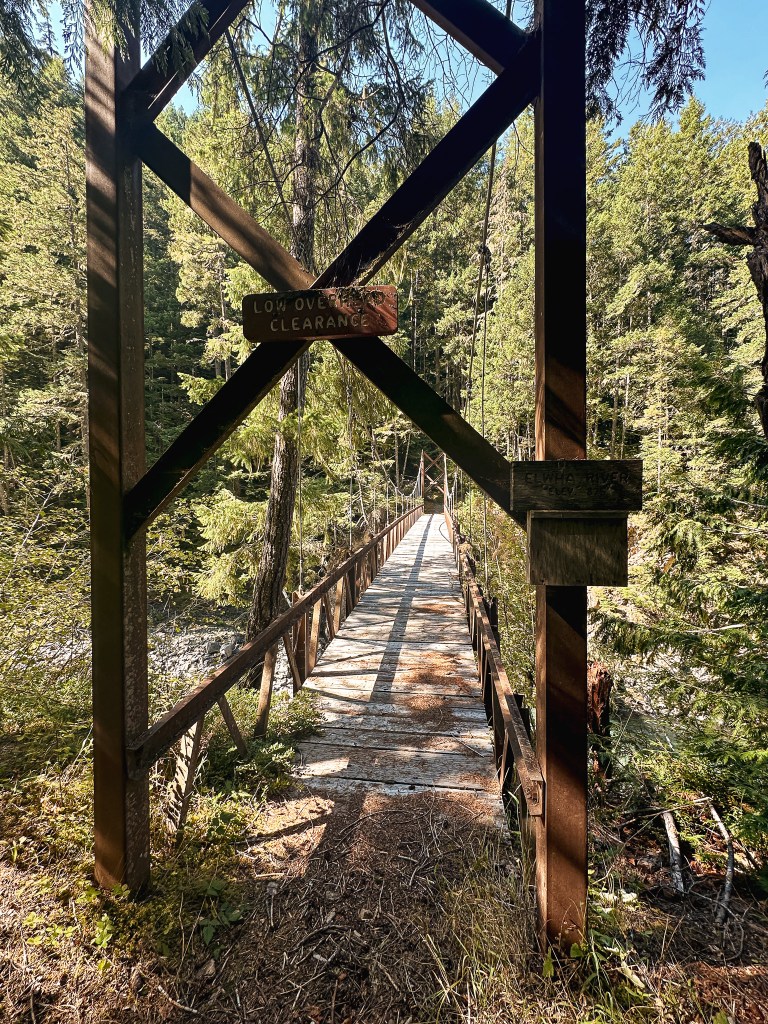
One of my questions were quickly answered as the trail headed steeply down to meet the suspension bridge to cross the Elwha. It’s an impressive bridge. The river crossing would not be possible without it, at least at this section of trail. I crossed the bridge after taking in the impressive flow and drop down to the river. The bounce of the suspension always gives me a bit of anxiety. I paused on the other side and decided to wait a bit for Garnet again. But the longer I waited, the more I felt the pressure of the miles ahead. I continued on with the reminder that today was a marathon not a sprint. The trail turned gently up from here and any signs of erosion where left behind the other side of the bridge. I started to lollygag after every downed tree or mild obstruction wondering “how Garnet hadn’t caught up yet?”. I probably should have just stayed focused on making it farther but my mind always ponders if something could have gone wrong. He caught up to me around 2-1/2 miles into the hike as we continued our way up, up, up. There was a brief section of flat trail as we met a shelf in the ridge. If you look at the topo lines on the map the real climb begins beyond this shelf as you switch back quickly up to the main ridge line. The trail straightens out after this initial climb to make a gradual ascent for the rest of the way. This section is aptly named the Long Ridge Trail as you follow the ridge for what feels like a very, very long time. We stopped to have our lunch around 3:30PM and roughly 6 miles into our hike along the main section of switchbacks. We had been holding out for a decent place to sit but had no luck and eventually just picked somewhere along the trail. At this point we thought we were over halfway to our camp for the night with only a few miles left. Oh how wrong we were. The information I had from online stated that it was only 10-1/2 miles from Humes Ranch to Dodger Point camp. Oh how wrong we were.
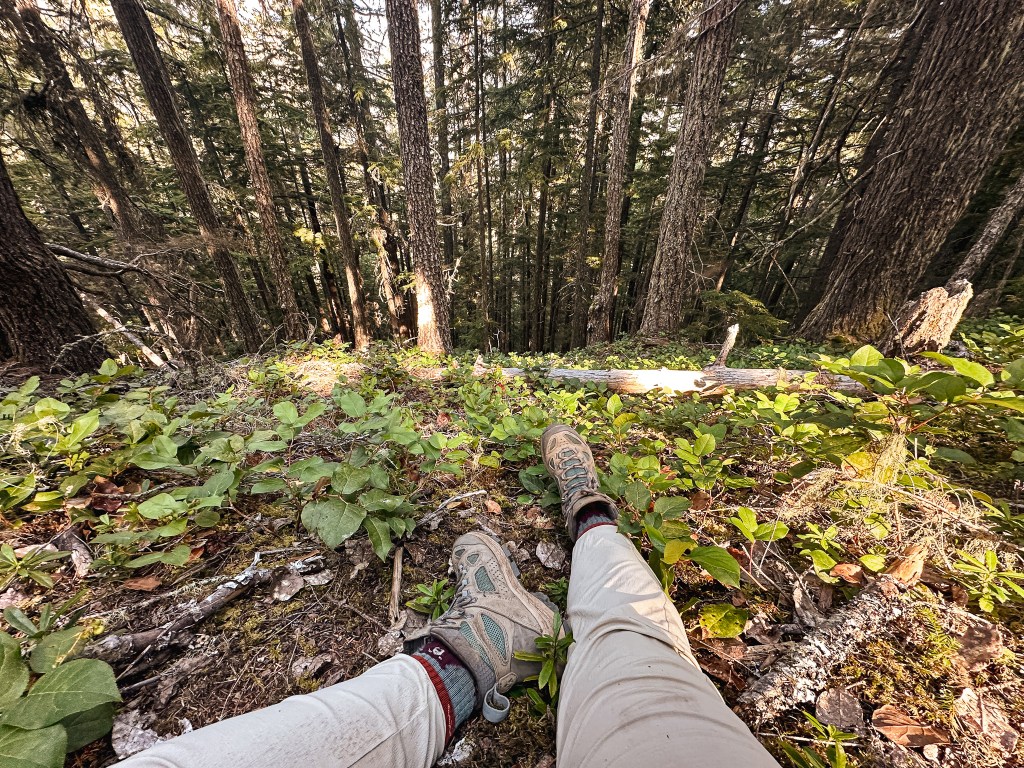
Dramatics aside, this piece of misinformation really added to how long the ridge felt. There comes a point in the trail where you can start to see out beyond the trees. This unfortunately didn’t help with our perceived length of the trail either as we thought our destination grew closer only to turn the corner and find more ridge. I knew this late in the season we would have to find a water source prior to camp and water carry for a least a couple of miles. I was unsure of the exact location of the recommended water source and thinking that we were closer than we actually were made me worried when we came upon the first water source. It was barely a drip of a spring with a mildly murky pool that didn’t replenish fast enough to fill all of our water containers. We took what we could and hoped for a better source along the way. Luckily, we found a few better sources roughly between 8.3 to 8.8 miles into the hike. We ended up dumping the murky water we had and replacing it once clearer sources were found. We were also able to fill the remainder of our containers with these sources. We each had two 32oz Nalgene bottles, along with my 3L water filter, and a plastic gallon jug. The goal was to bring enough water to support us for the next two nights until we could return to these sources on the way out. We cursed a bit for being too proactive as we came to the best and most reliable water source at 9.7 miles into the hike. This was the one I had seen recommended previously on someone else’s trip report. Their report mentioned it was around 2-1/2 miles from the camp which is accurate. Unfortunately, given that I thought we only had to hike 10-1/2 miles, the water sources back at the 8-1/5 mile made sense to me. We decided it didn’t hurt to replenish our water again and topped everything off for the last time. It was roughly 6:45PM now.
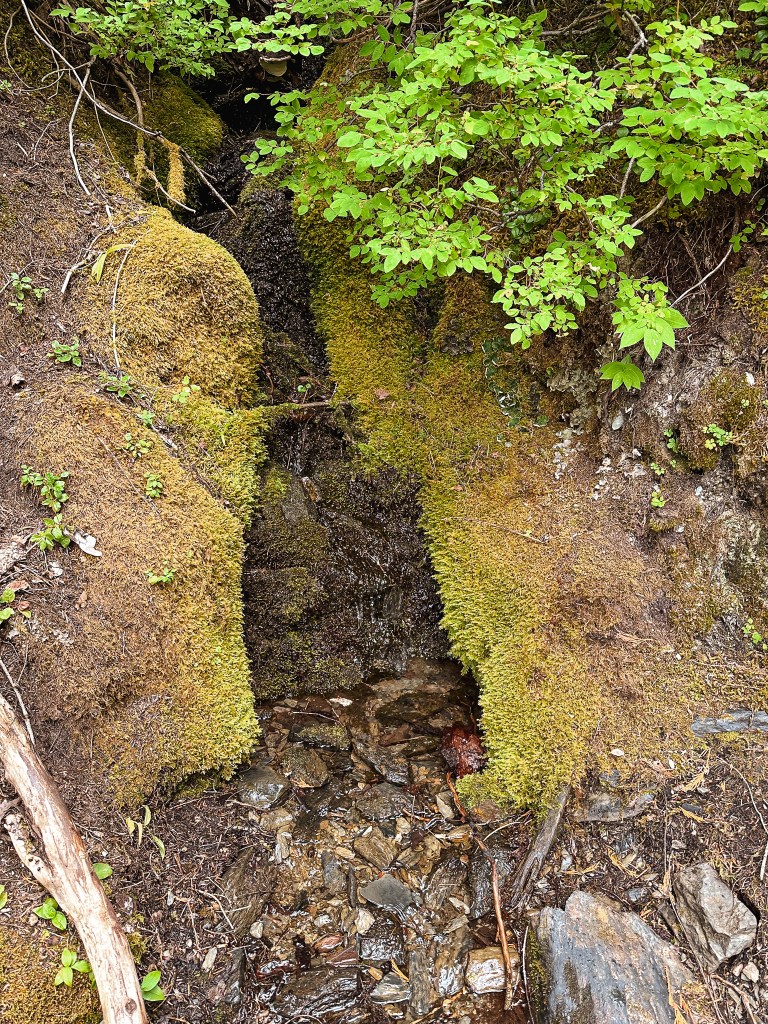
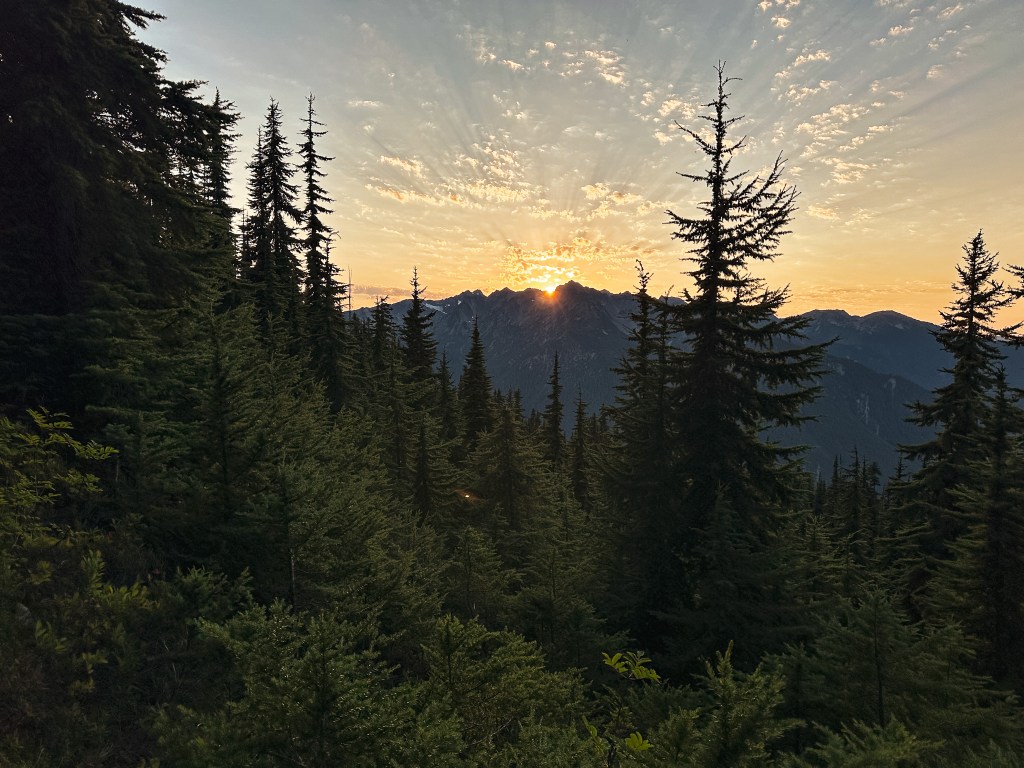
From here, I let Garnet hike ahead since he was carrying the gallon jug for us and I figured I wasn’t going to get there any faster at this point. I continued on with the reminder that today was a marathon not a sprint! The additional water weight stacked on top of the miles for the day started to slow me down and I had to start a mantra in my head to keep my feet moving. I had to keep telling myself that there was still a mile left to go because every corner and downed tree was starting to deceive me of ever reaching our destination. I was thankful that the days still had some length to them otherwise I would have been hiking in the dark. I still came very close as the sun set behind the ridge and I was still hiking at 8PM. I knew I was at least somewhat close to camp as I saw the tarns below that I recognized from many previous trip reports. I started to lose it a bit as I crested the hill beyond into a more open area with no sign of Garnet or an obvious camping area. Garnet eventually spotted me as I was hobbling along the trail and called out to me from behind the trees that obscured my view of the camp. Originally we had hoped to make it up to the lookout today, but any plans of that were thrown out along the Long Ridge trail. I was just happy to make it to camp as my feet screamed at me and the final bits of sunset dropped away. We set up camp and ate our dinner under the light of our headlamps. My body was equal parts stiff and restless as I tried to lay down for the night.
The total mileage for the day came out to 12.11 Miles and 4,845′ of elevation gain according to my Strava tracker. The final 4 miles included the additional water carry which could have been lessened if I had been more aware of where the reliable water source was located. Some mileage probably could have been cut if we had found that connector from camp at the beginning. One forgiving aspect of this trail was the gentle grade, it was a continuous up for most of it but never gruelingly steep.
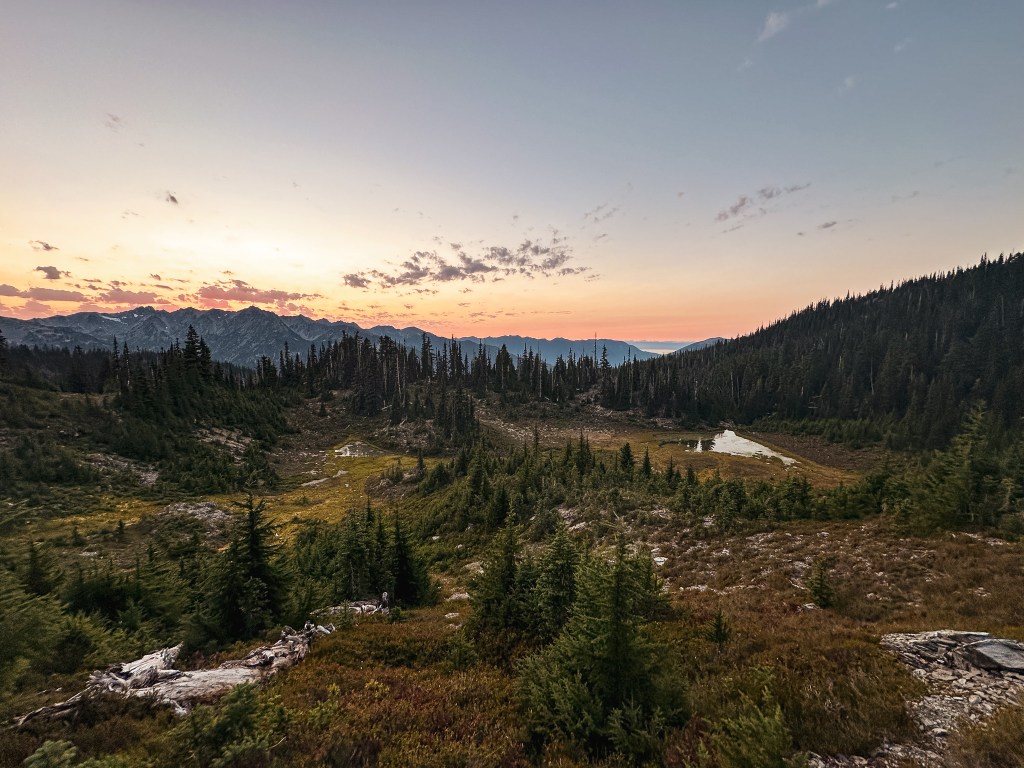
Sunday.

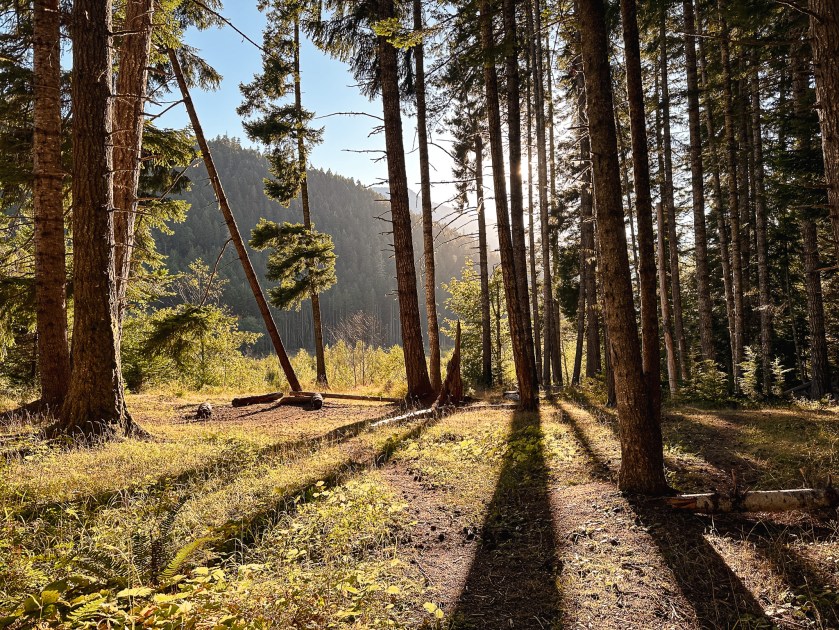
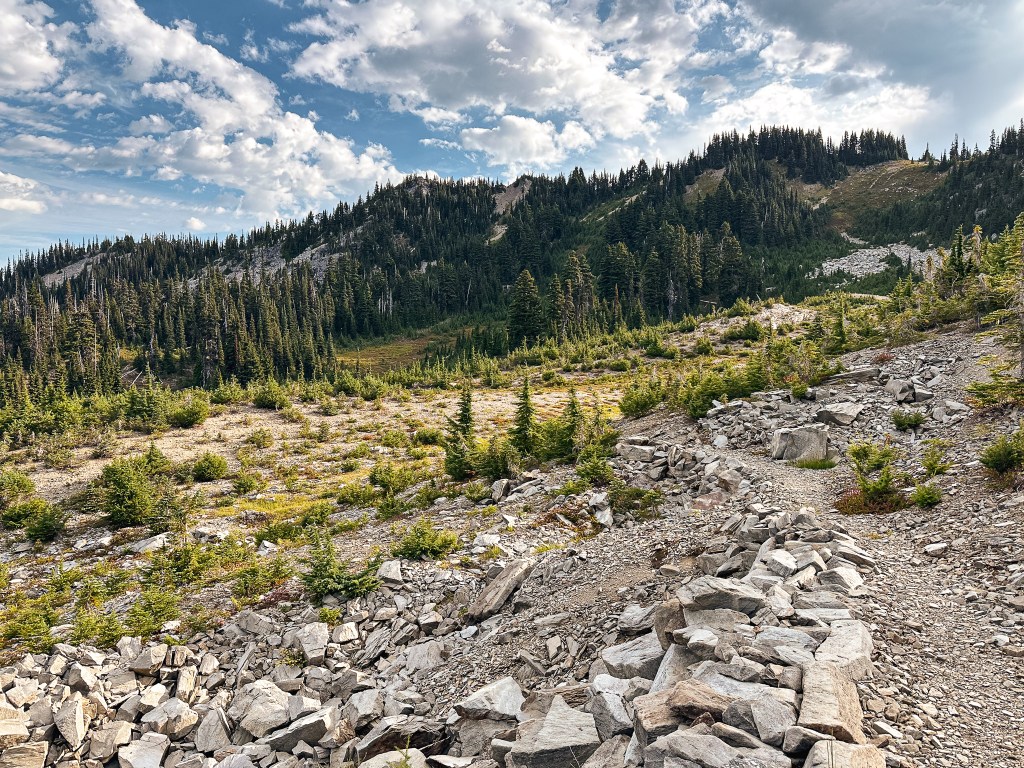
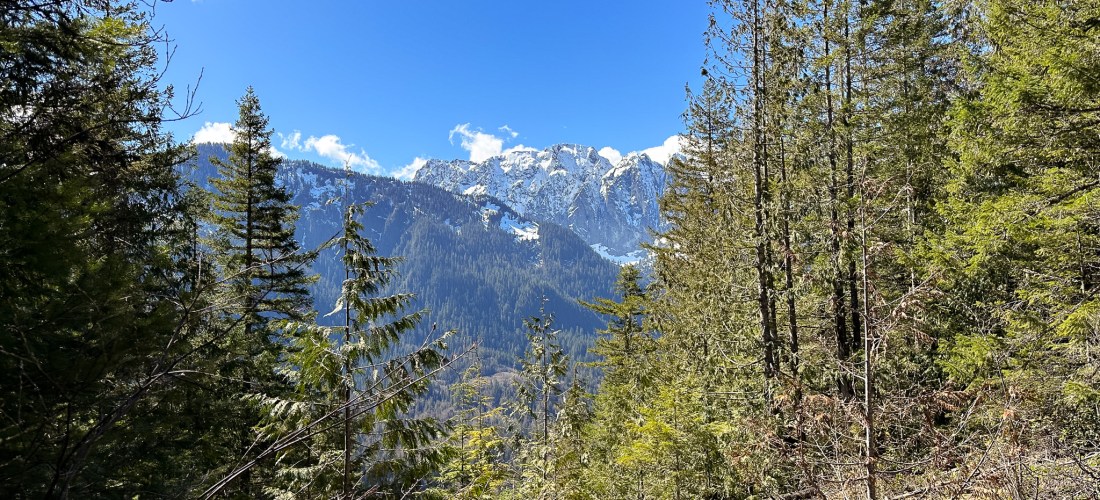
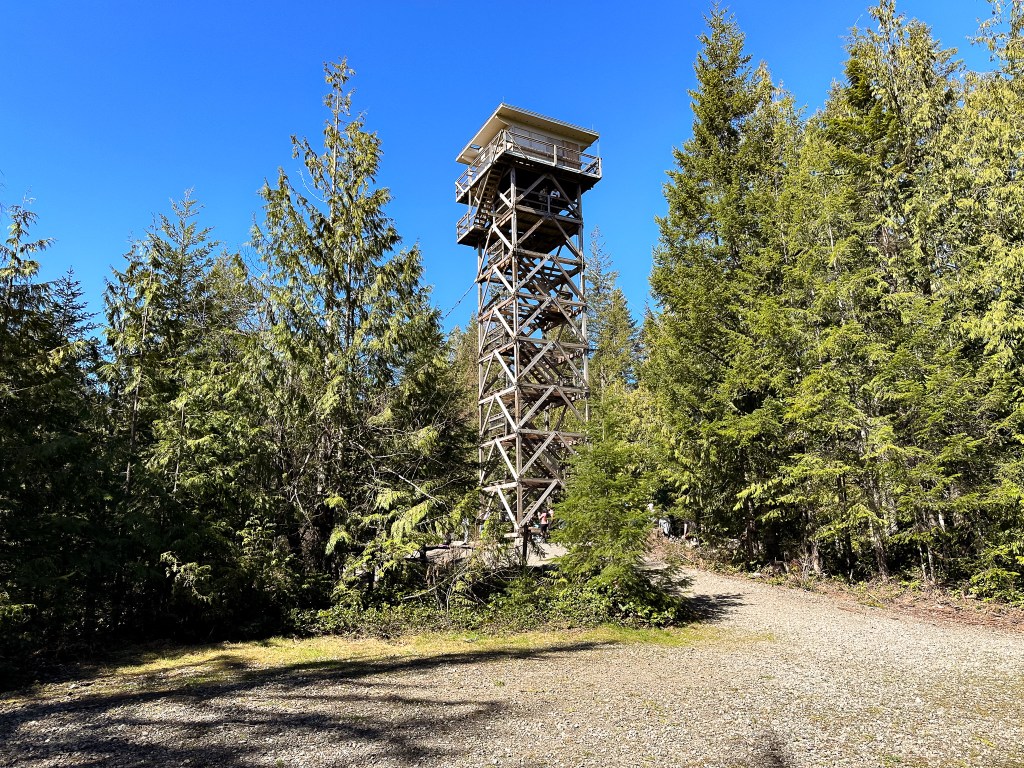
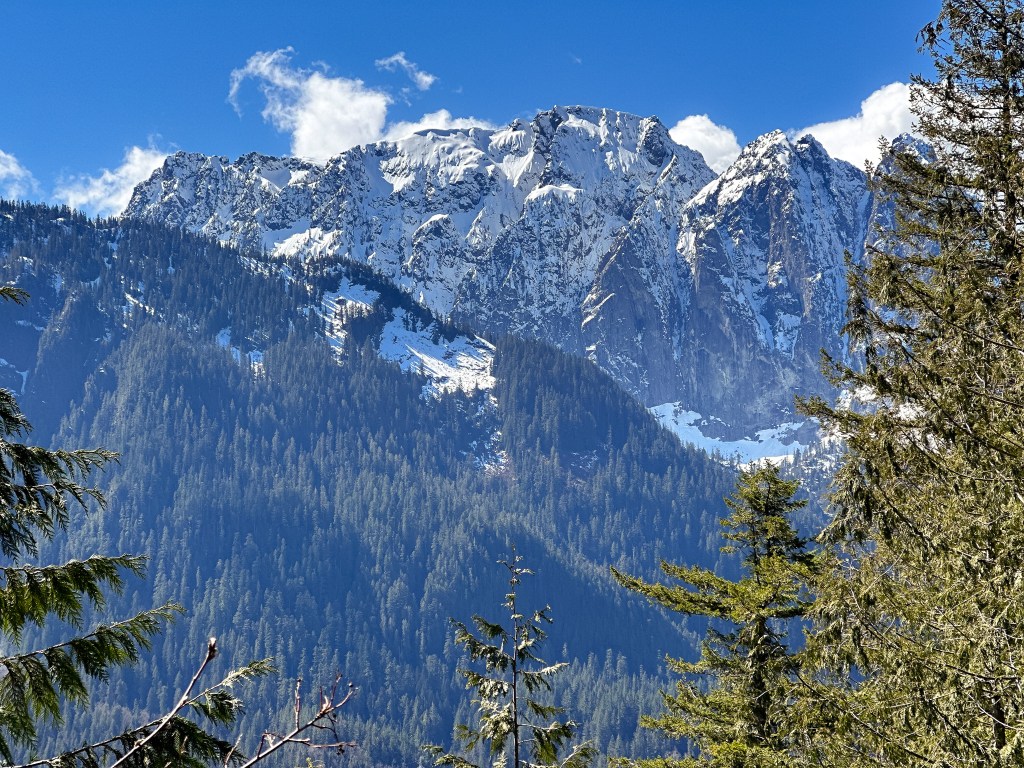
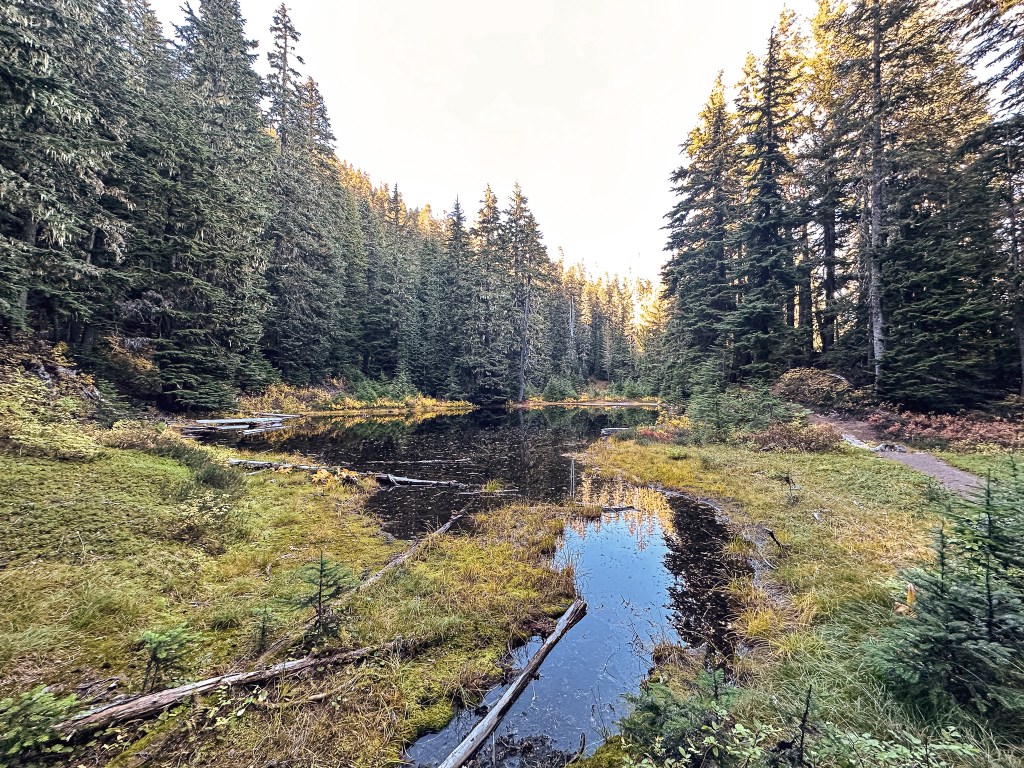
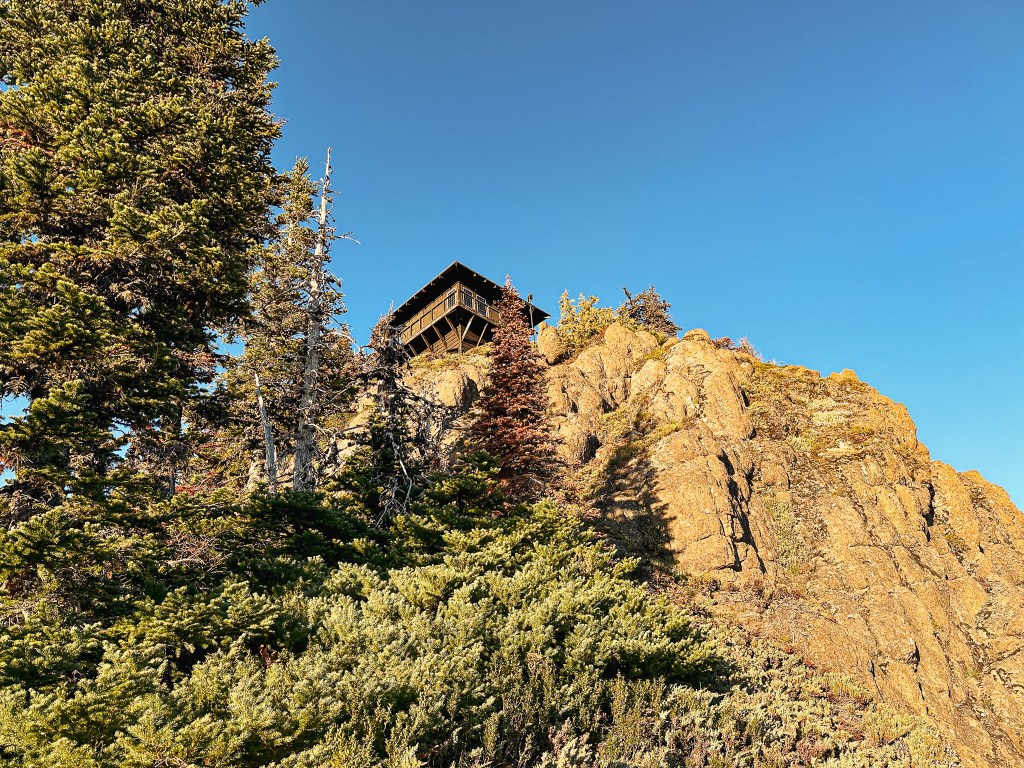
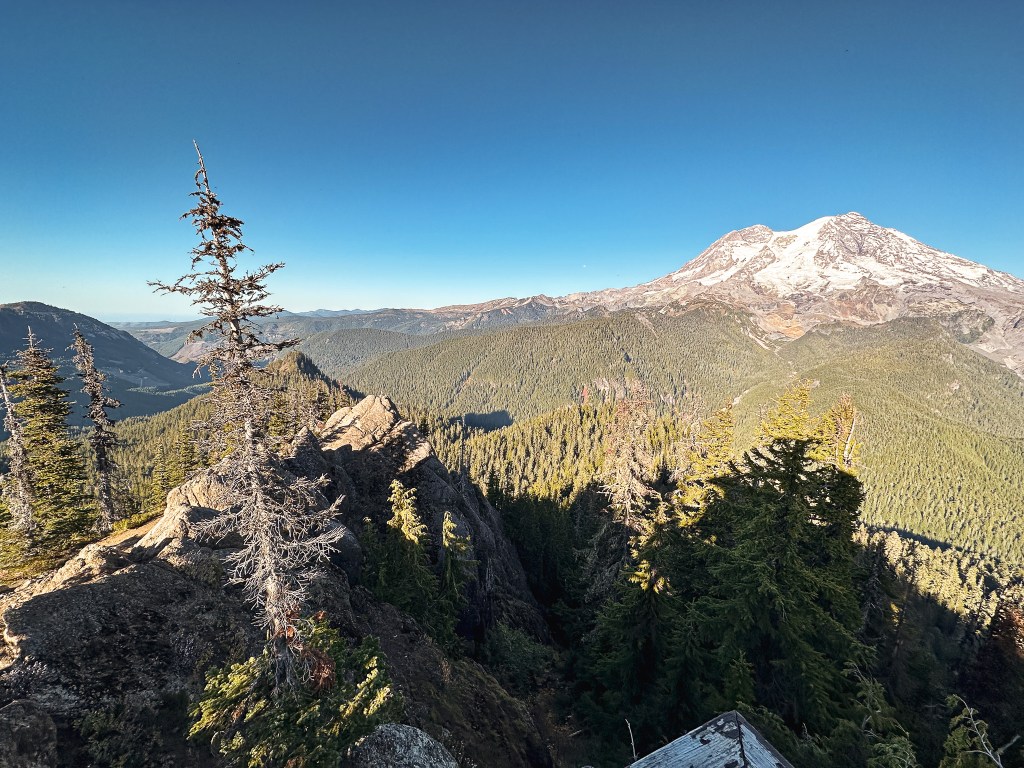
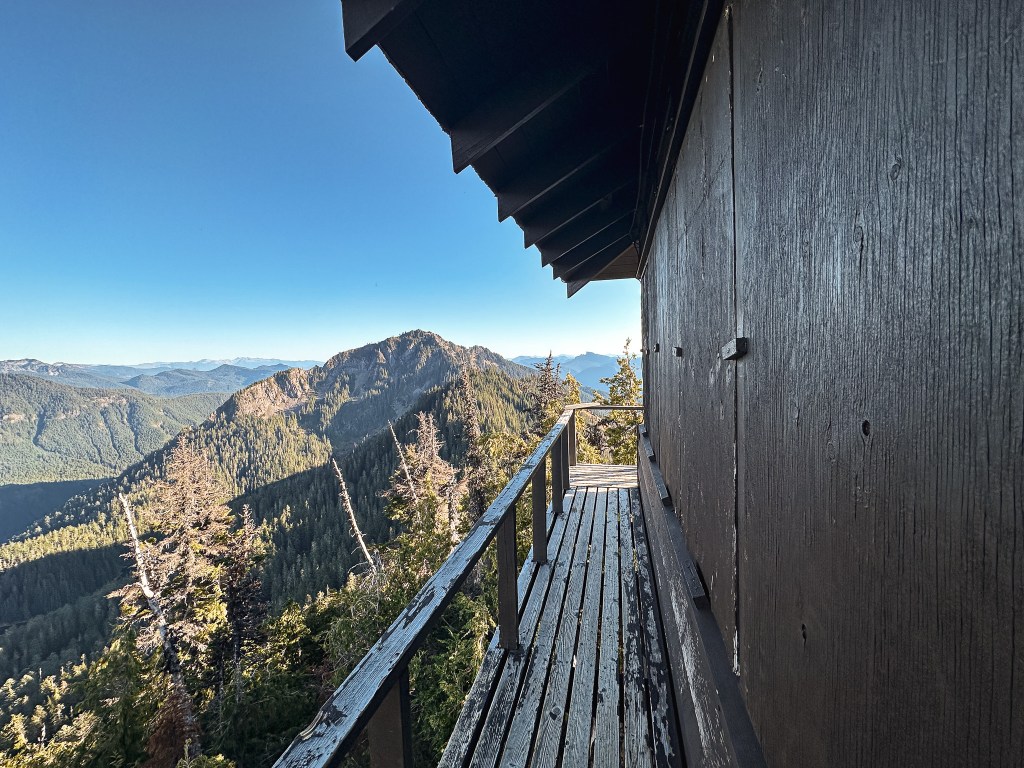
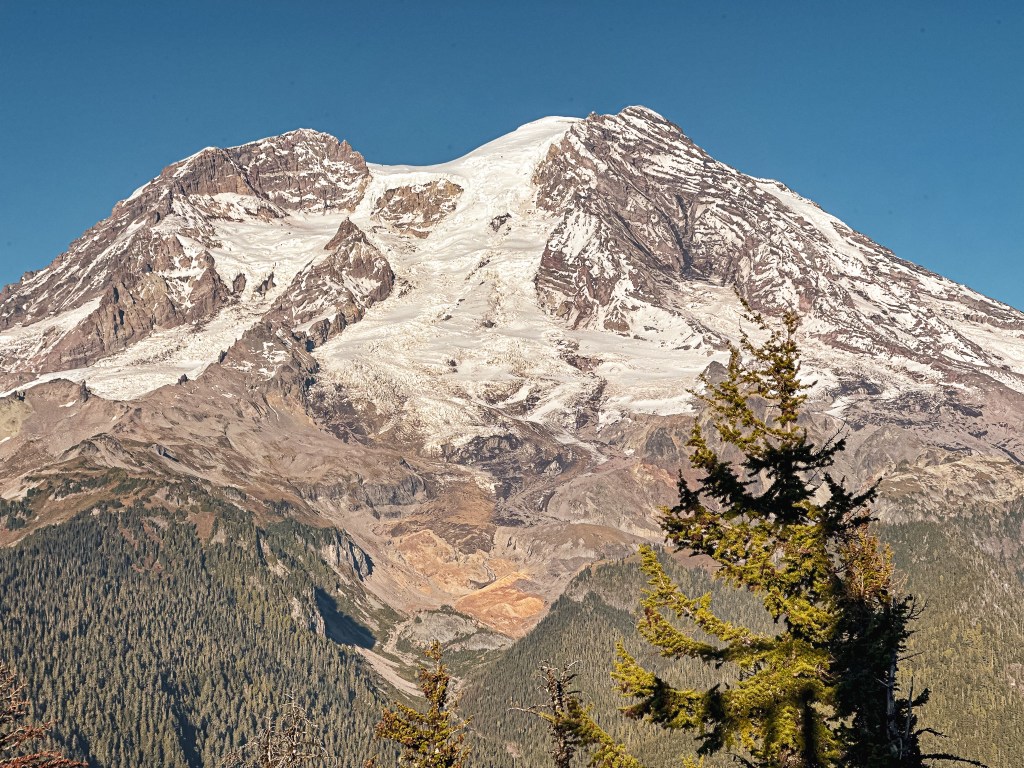
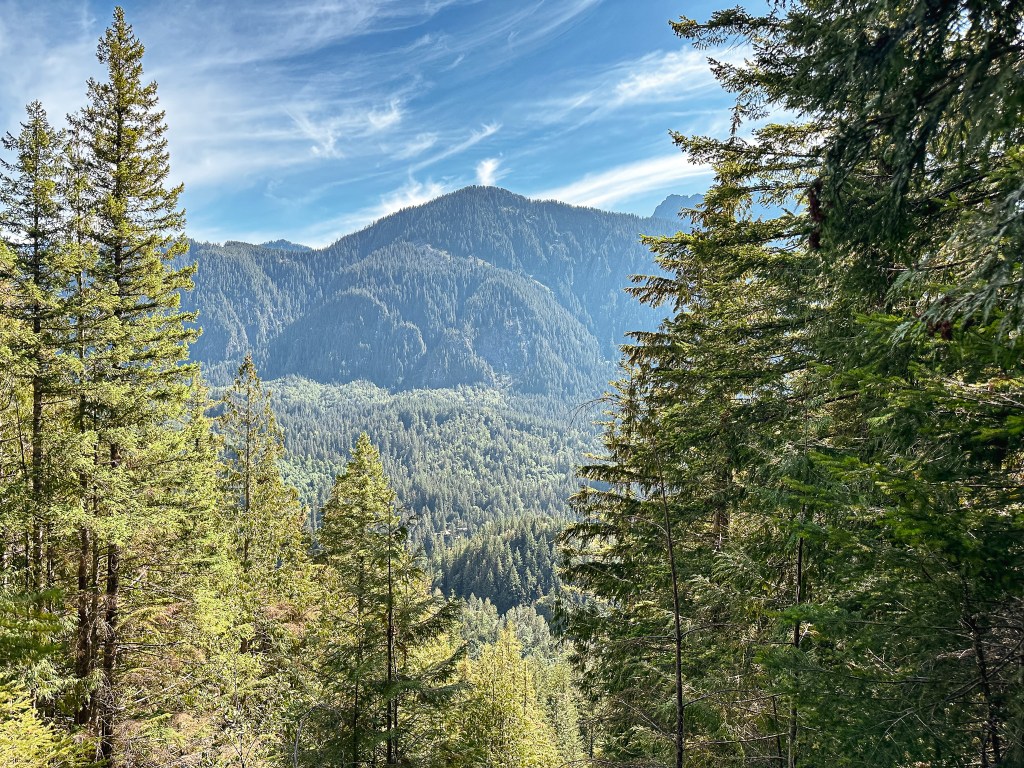
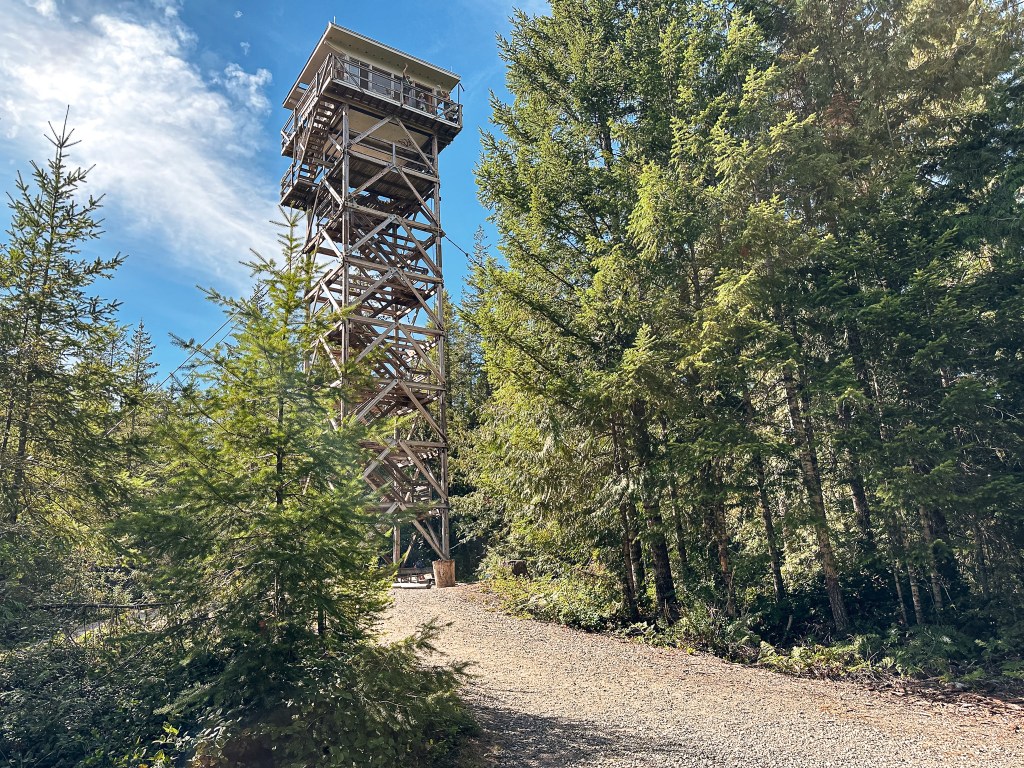
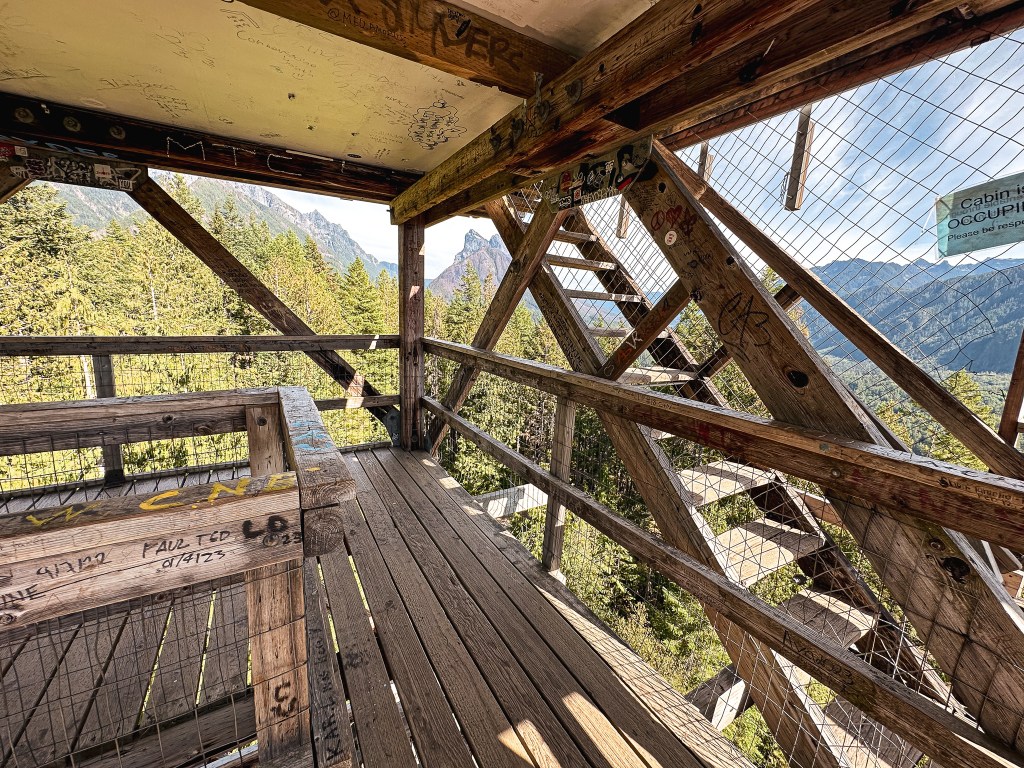
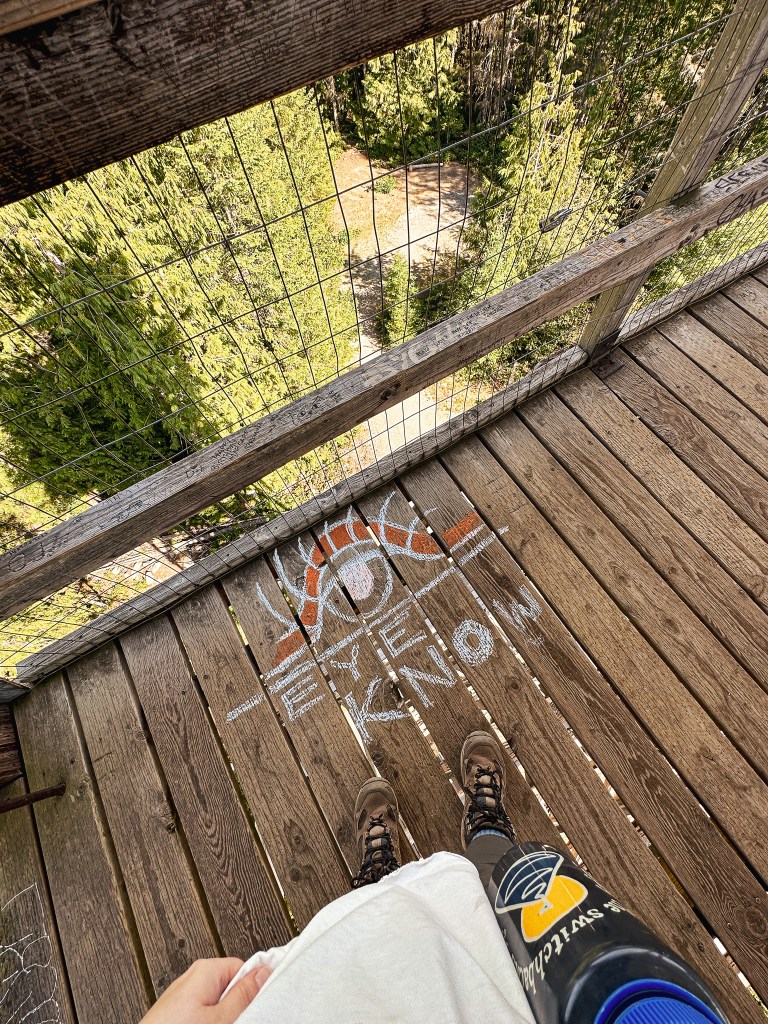
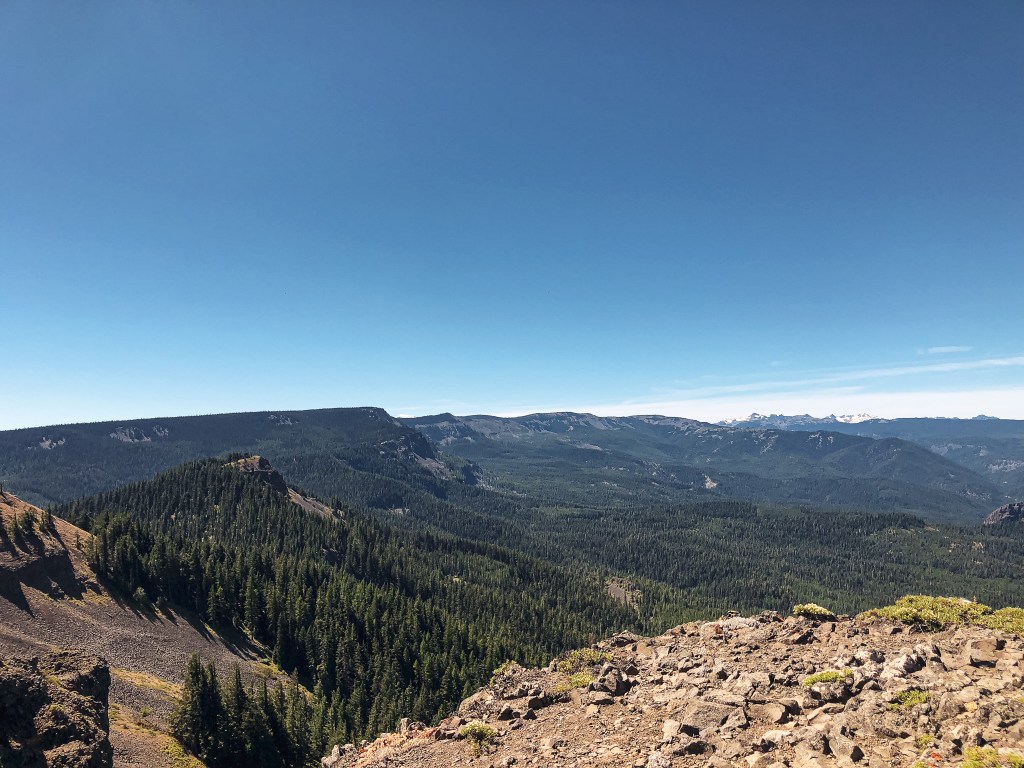
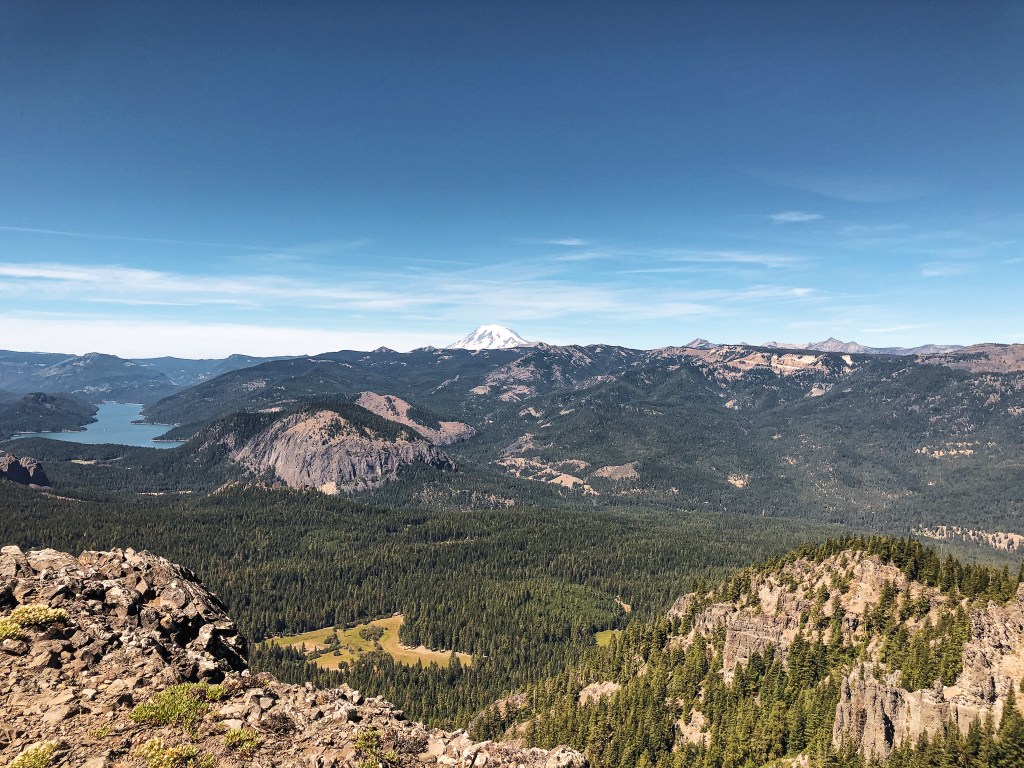
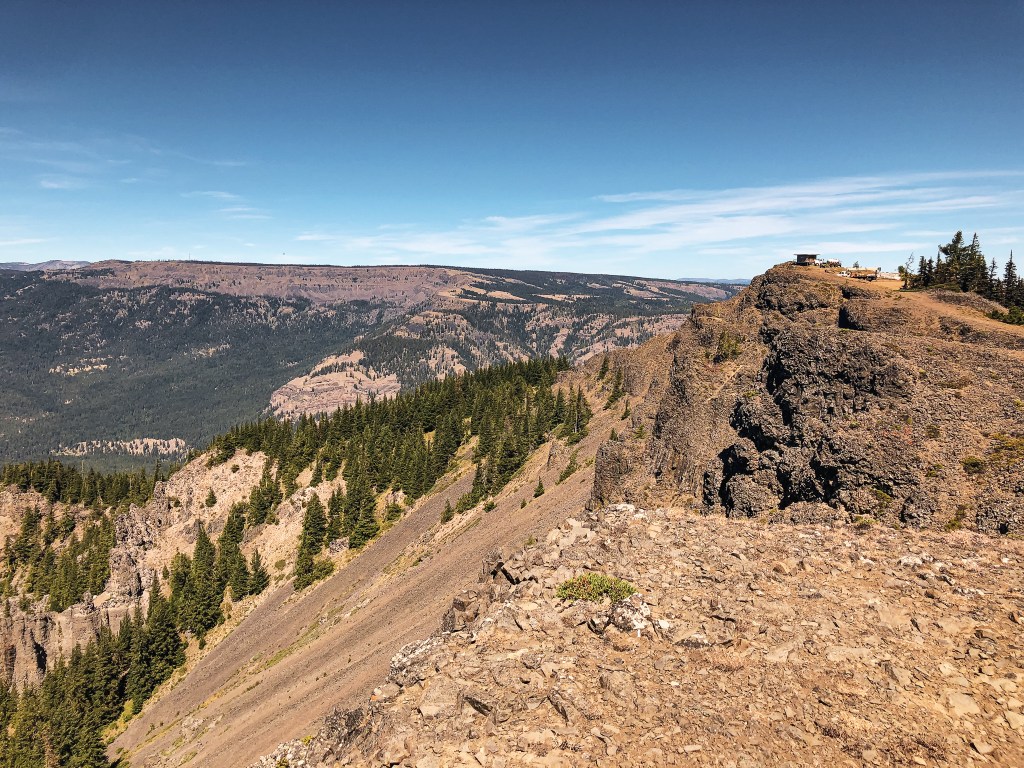
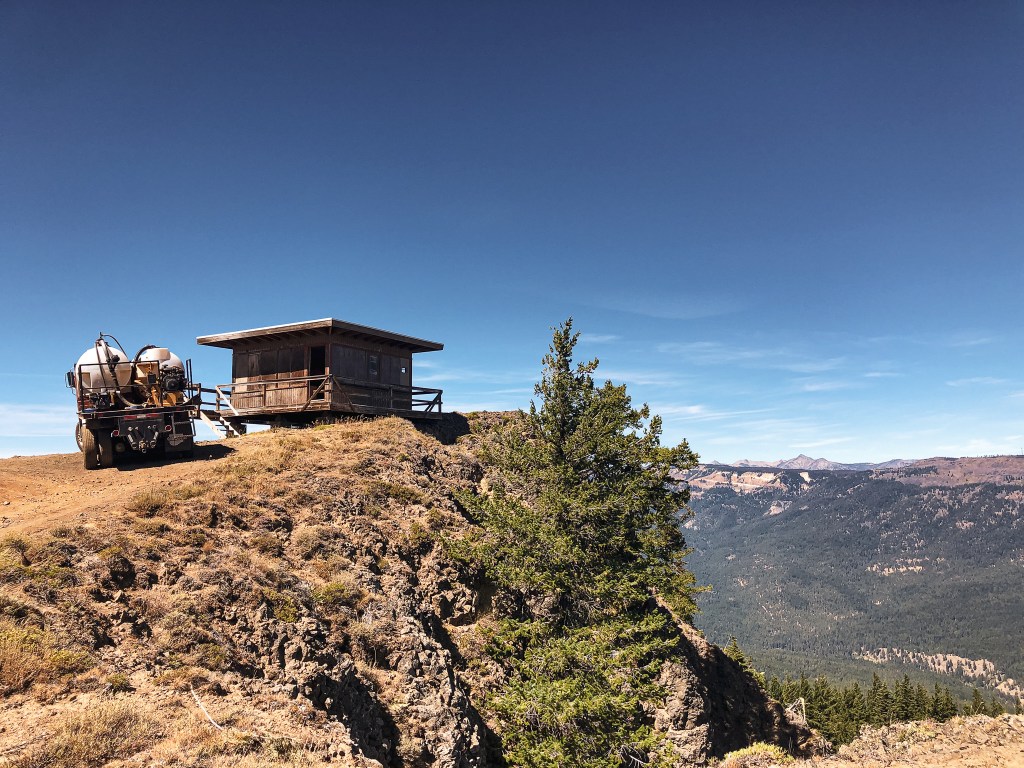
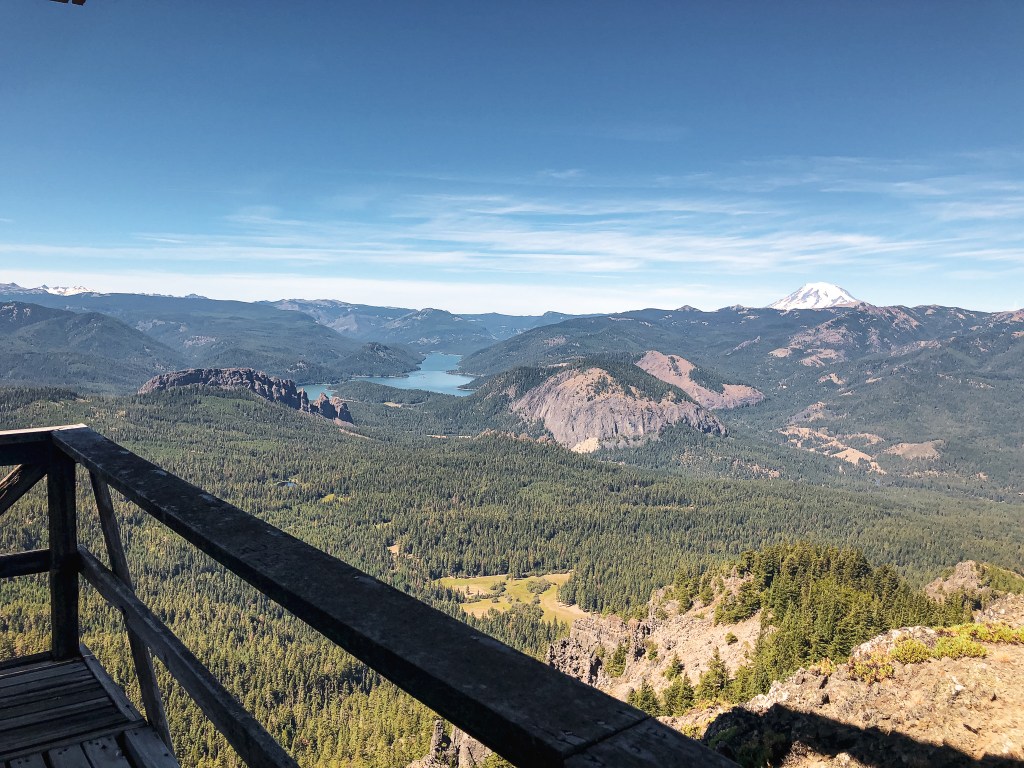
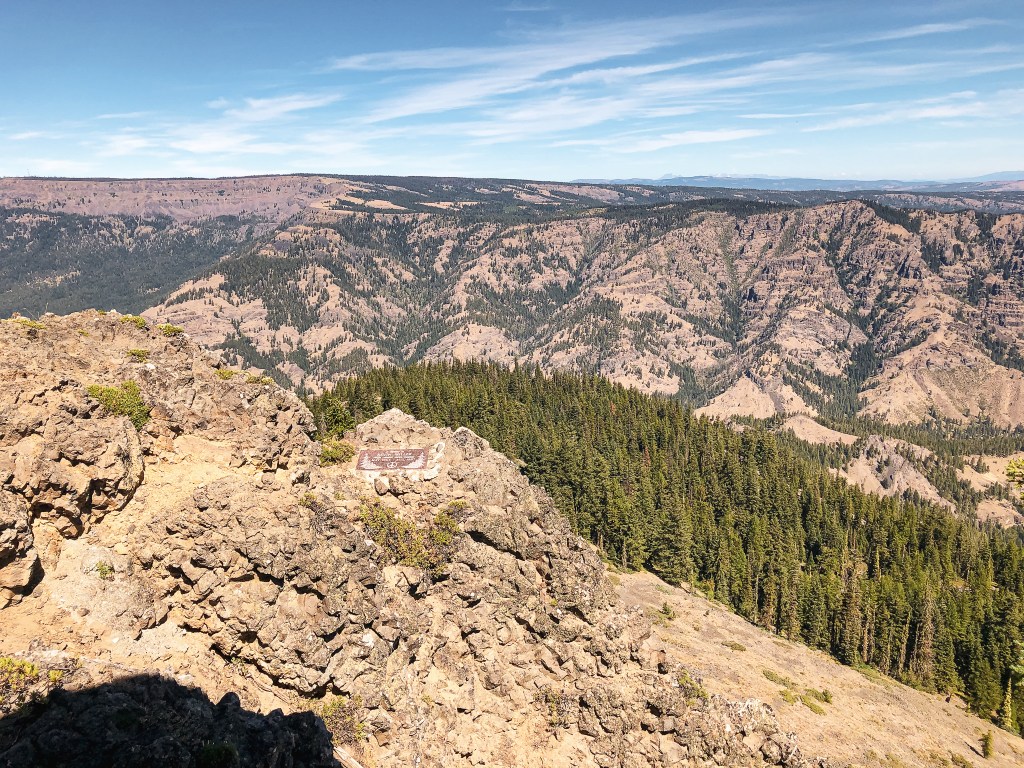
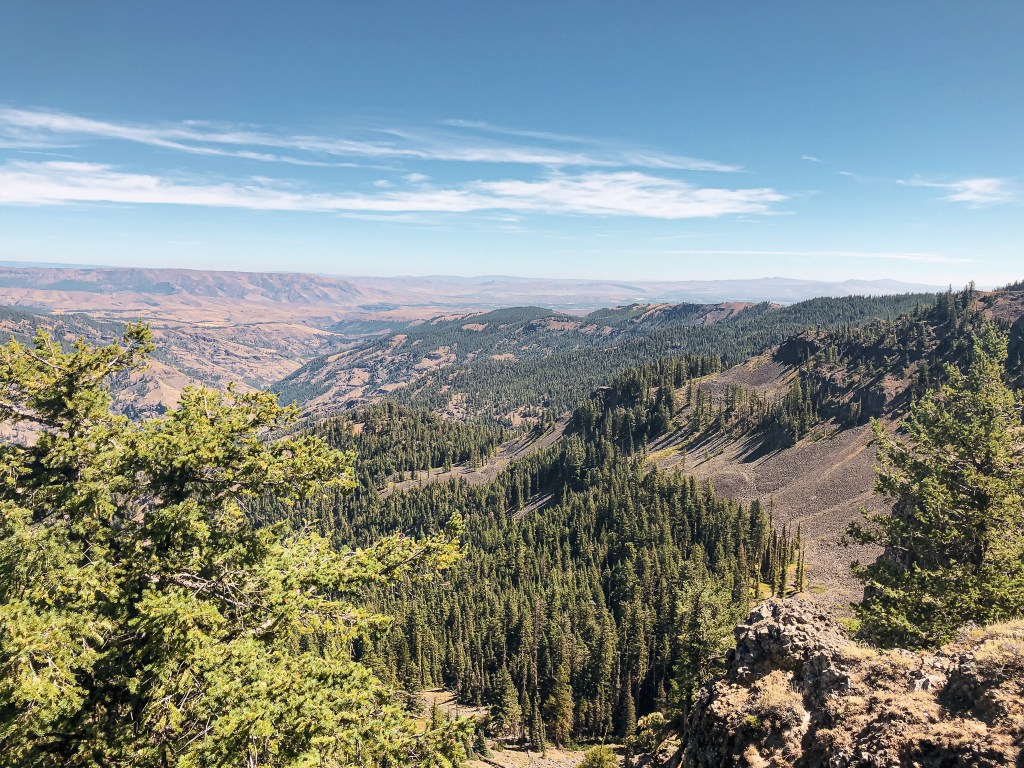
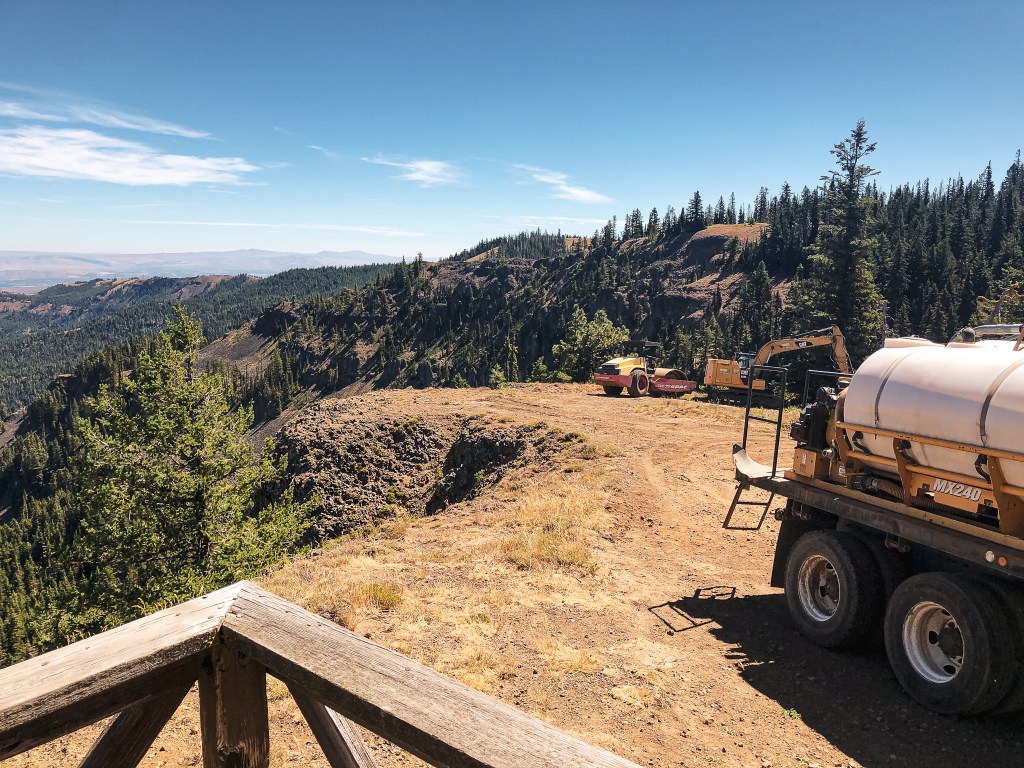
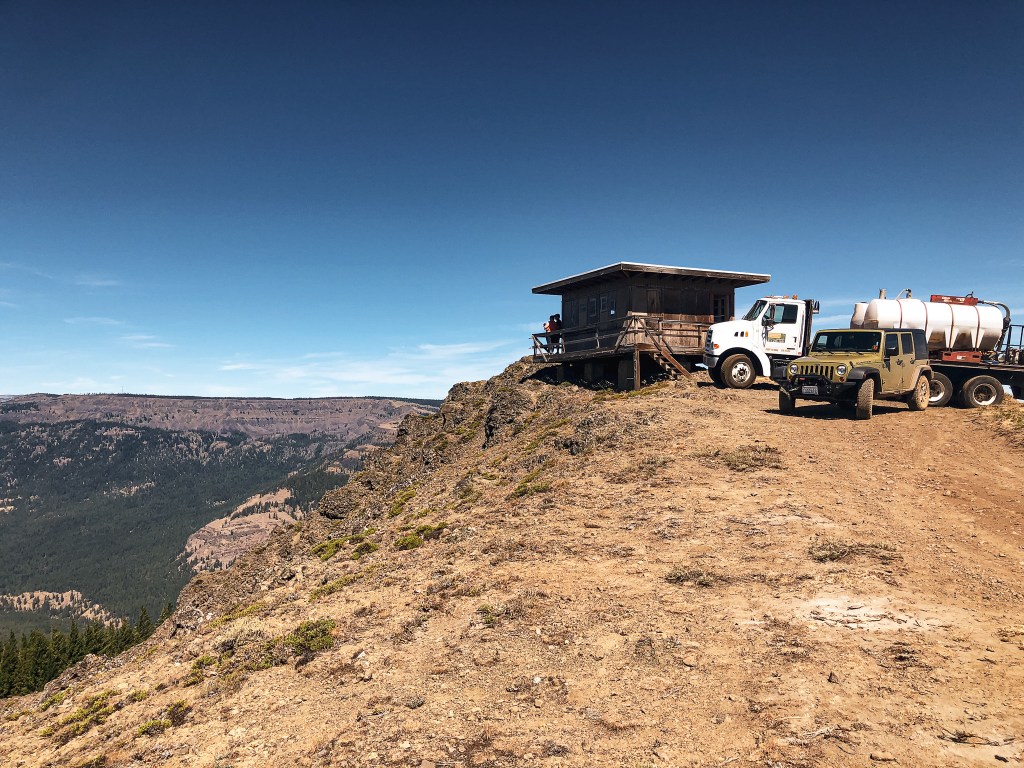
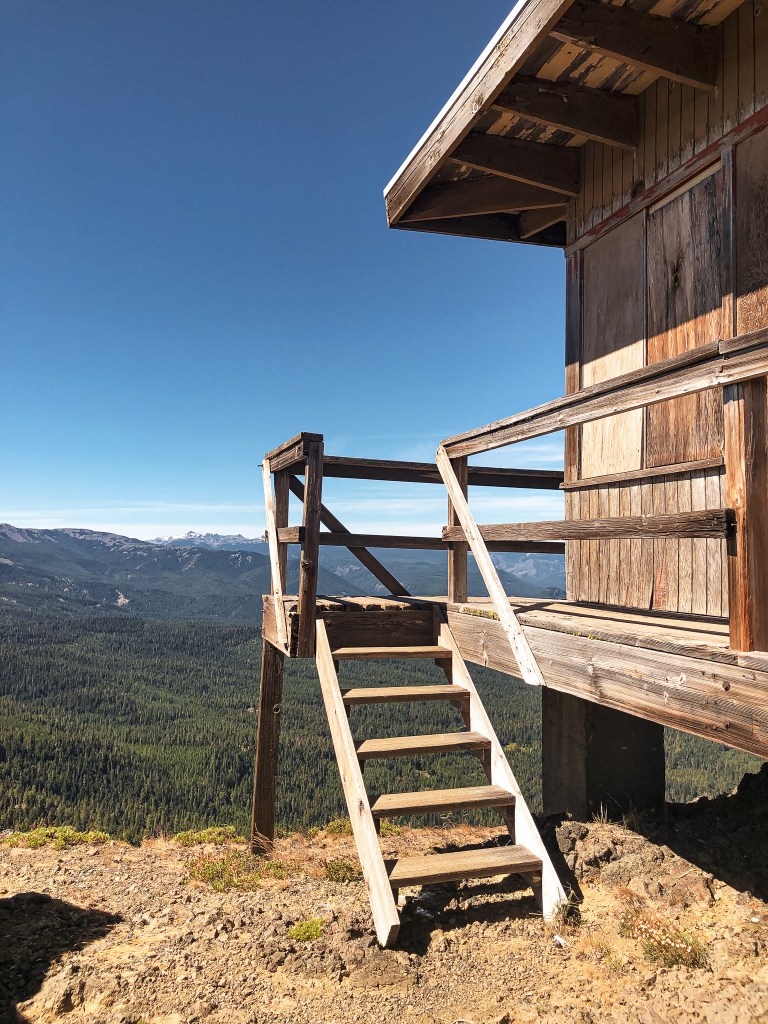
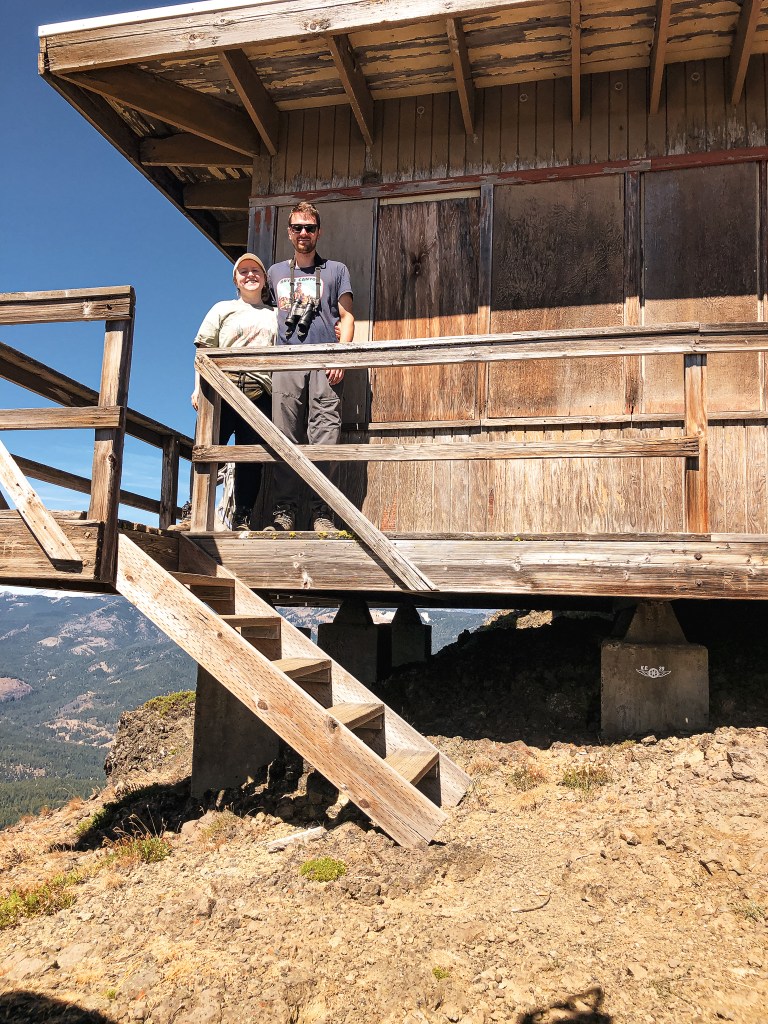
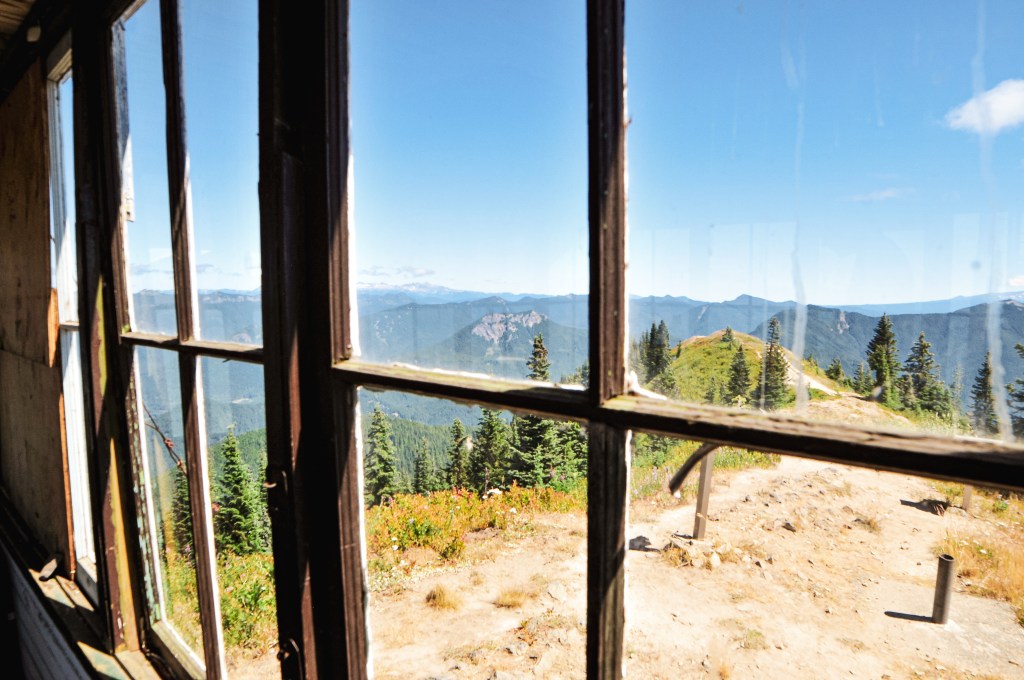
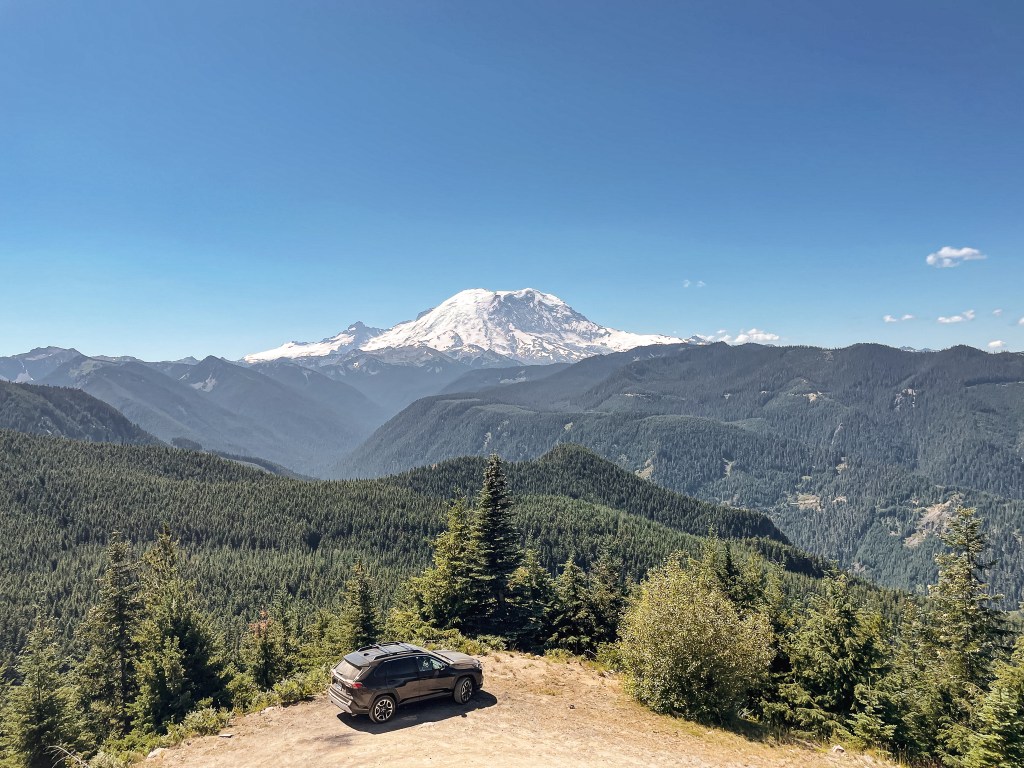
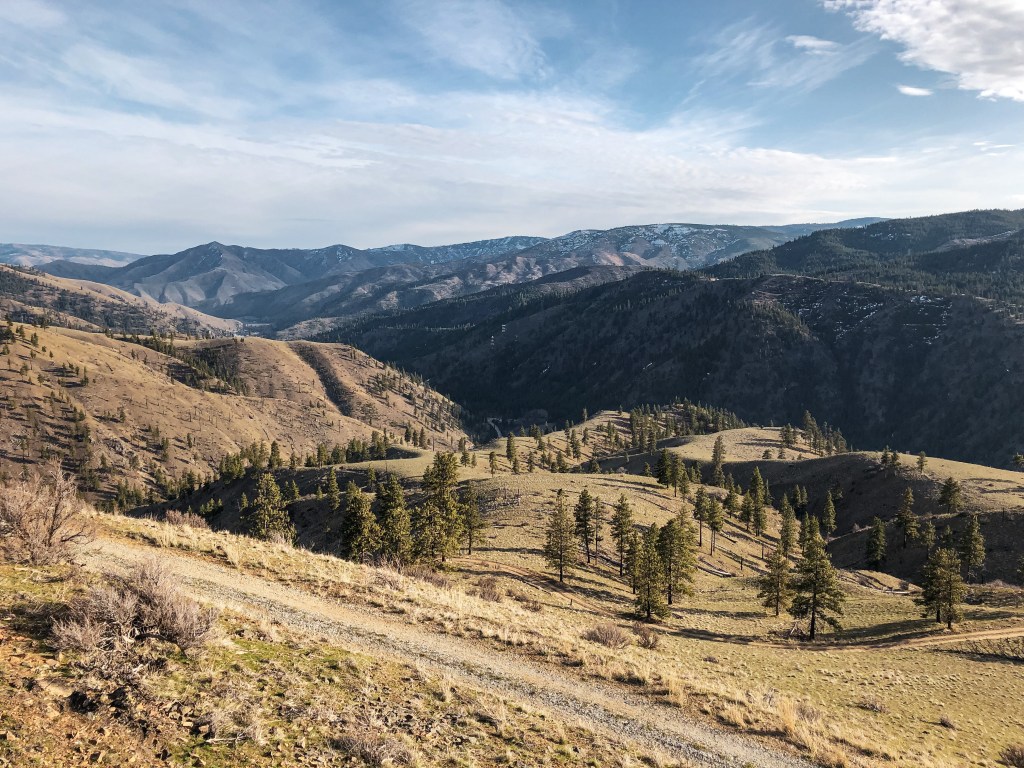
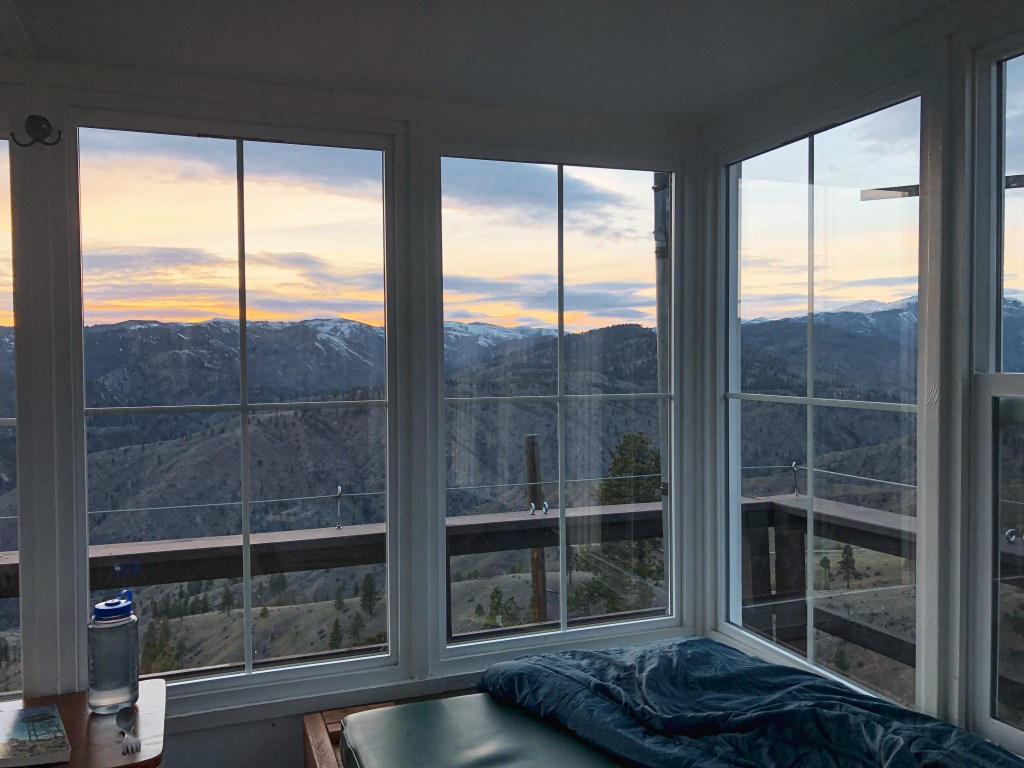
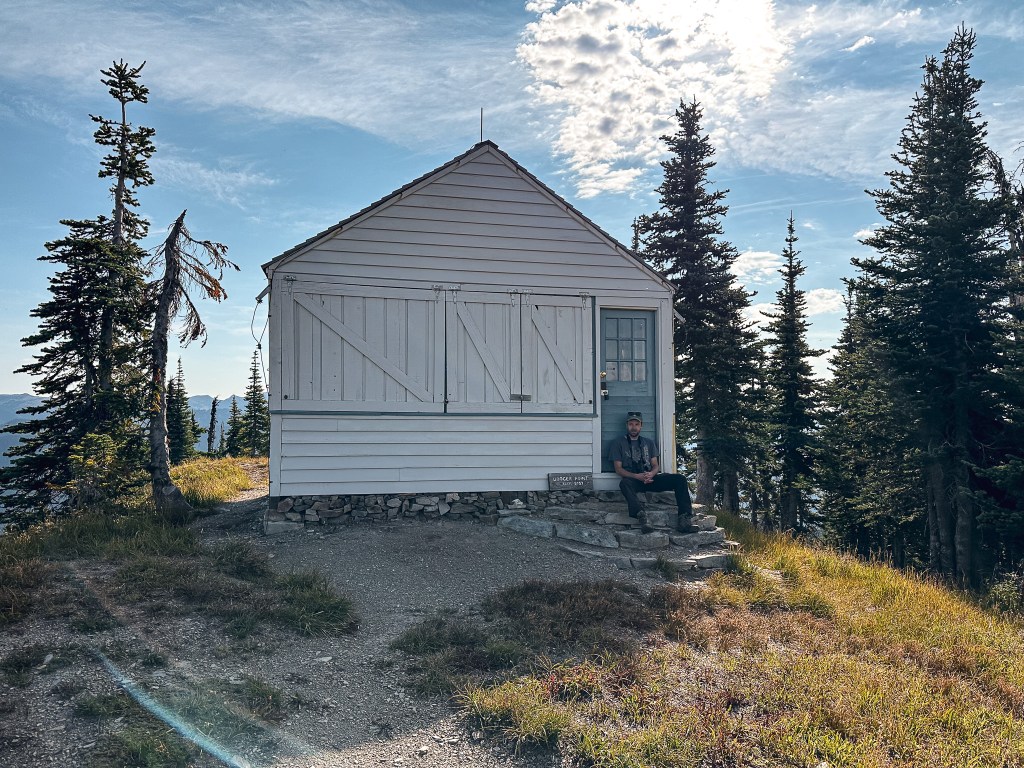
The only agenda for the day was to make it the remaining distance to the fire lookout just above camp. We decided to make this our first task after breakfast to avoid the heat of the day. I got another head start on Garnet since he was still fussing around camp and I wanted to take my time getting there. My legs and feet were still very sore from our prior two days of hiking. I meandered my way up to the top of the ridge and reached the lookout around 9:30AM. I took some photos and sat on the steps to enjoy the view while I waited for Garnet to join me 30 minutes later. Dodger point has a spectacular view of the inner Olympics, the Strait of Juan de Fuca, and even some peaks of Canada in the back drop. We had a pretty clear view of Hurricane Ridge as well. It was an interesting contrast watching the endless cycle of cars and hikers while we were completely alone. Both locations are similar in elevation and views, but have drastically different means of reaching them. We hung out on the summit for a couple of hours before we decided to head back down for lunch. We figured we could always make our way back up for sunset if we felt the need.
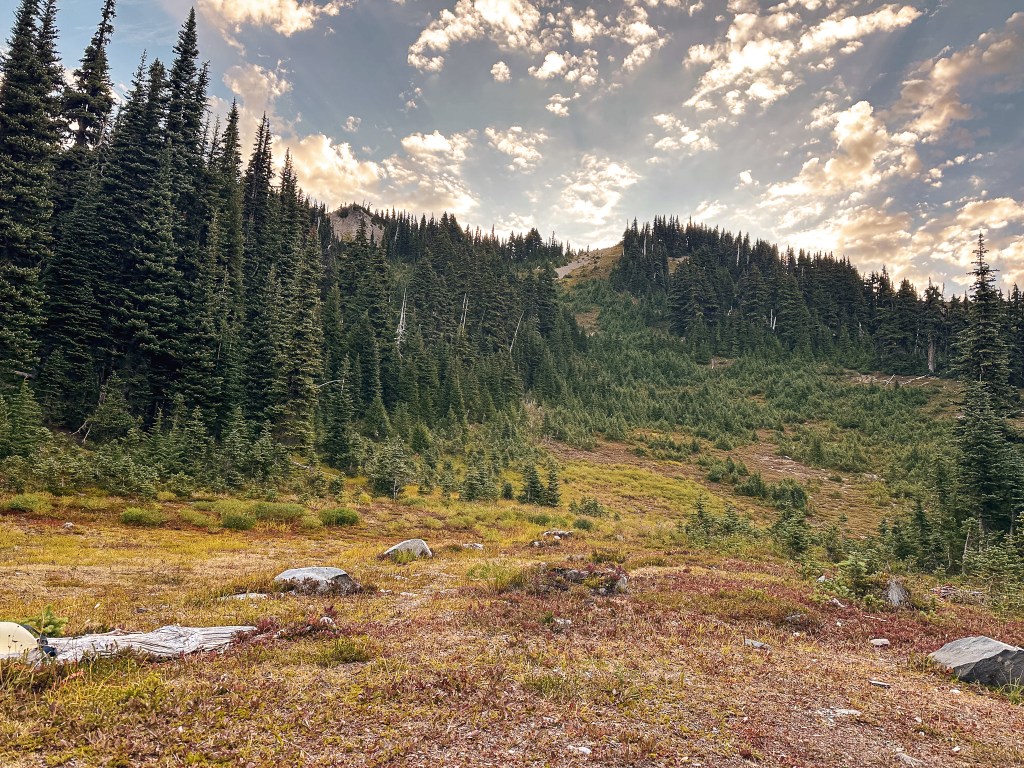
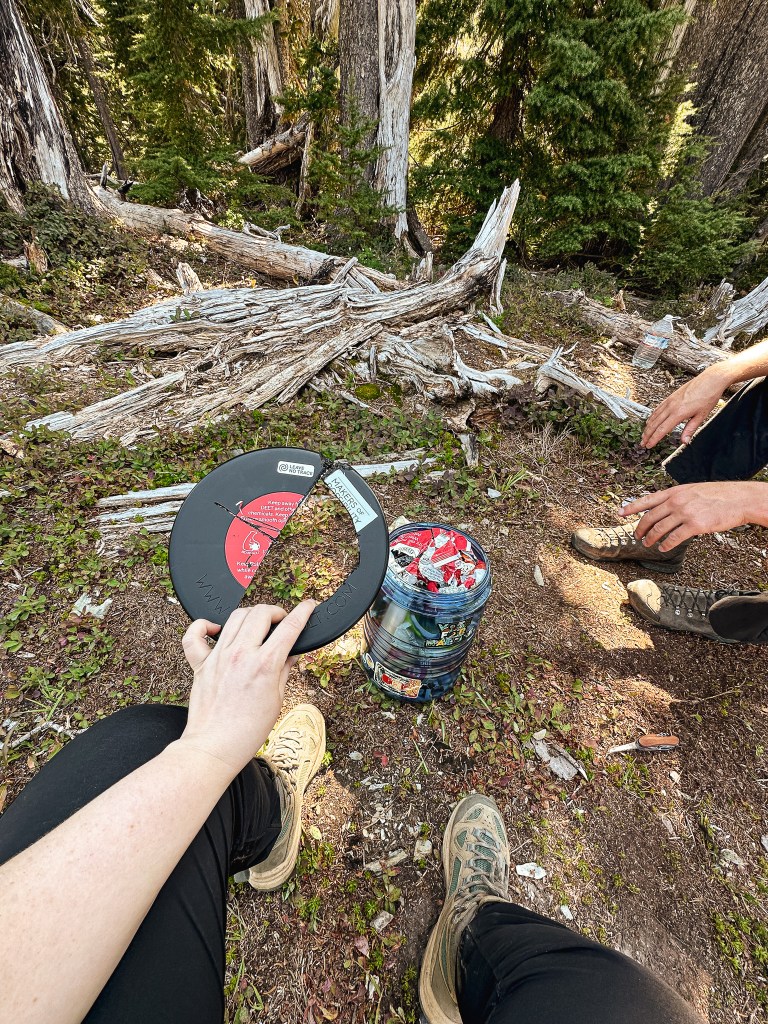
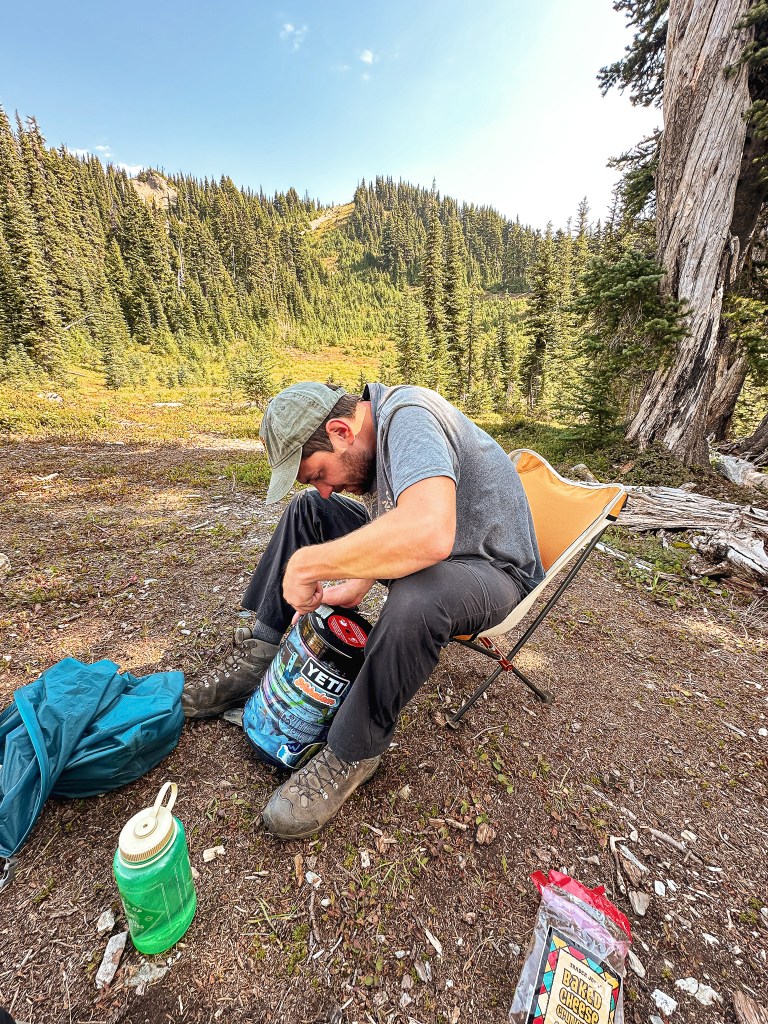
We expected to laze about camp for the remainder of the day; reading, eating, and lounging. And although that was the gist of our day, we were met with an additional complication. The bear canister lid on my BV500 would not open. This was a problem because it contained half of our food for the trip. Garnet is a very strong individual and despite his multiple attempts was unable to get it to budge. I tried too but it is to be expected that I was unsuccessful as well. The solution ended with us sawing off the lid using my multi-tool and finding that it was all due to a well placed chip clip. The bright side was that due to the placement the outcome would have had to happen regardless of where we were located, so it wasn’t a wasted effort. The down side was that it could have been avoided if the chip clip had been placed in a different location before the lid was closed. I was also thankful that I left my multi-tool in my backpack. We normally rely on Garnet’s Leatherman, but it had been stored away in the bear canister as well. This would have left us in a much different predicament. Luckily, we usually overpack our food so there was no danger of us going hungry even if we had been unsuccessful.
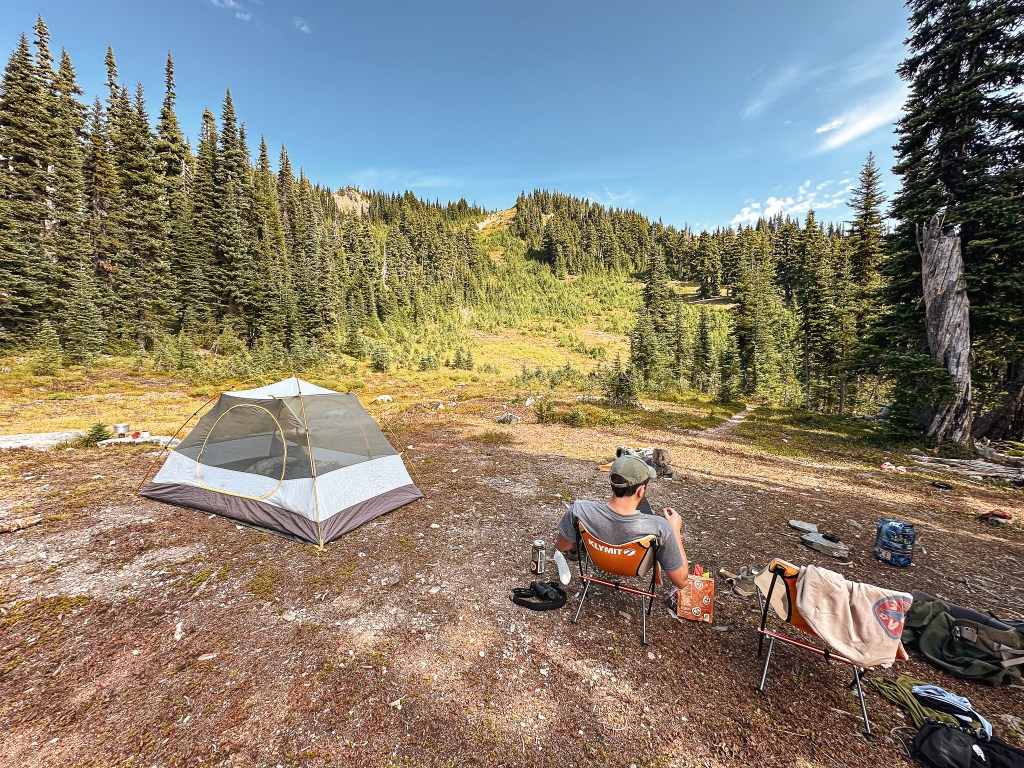
Prior to leaving for the weekend, I hadn’t seen any other permits taken out for Dodger Point. We knew it was still a possibility that we might see someone, but it felt unlikely given that we hadn’t seen a soul since we left the paved road on Friday. That’s why it was a shock to see someone show up in camp without a pack on. It was just a girl and she was asking if there was a water source nearby to which we had to inform her of our water carry. The tarns below camp would be her best option if she didn’t want to hike back 2-1/2 miles to the spring. After talking with her for a bit, her hiking partner joined us in camp seeking the same answer. They both didn’t have packs on which we can only assume they dropped back on the trail to scope around for water. We asked them where they had come from and if they were camping here for the night. It seemed like the most logical assumption since they came up from Humes Ranch. When he responded he seemed unsure of where they planned to camp. Their “route” headed toward Ludden Peak and would hopefully loop back via the Olympic Hot Springs road. I was confused by this initially since there was no mapped trail in the direction he mentioned. We wished them luck on their trip as they headed out into the afternoon. Once back in cell service I was able to find the route he was describing known as the Bailey Range Traverse. Let’s just say they were on a much more extreme wilderness experience than I would prefer and I hope they made it through without issues. I’m not sure how the permitting works for those kind of routes either.

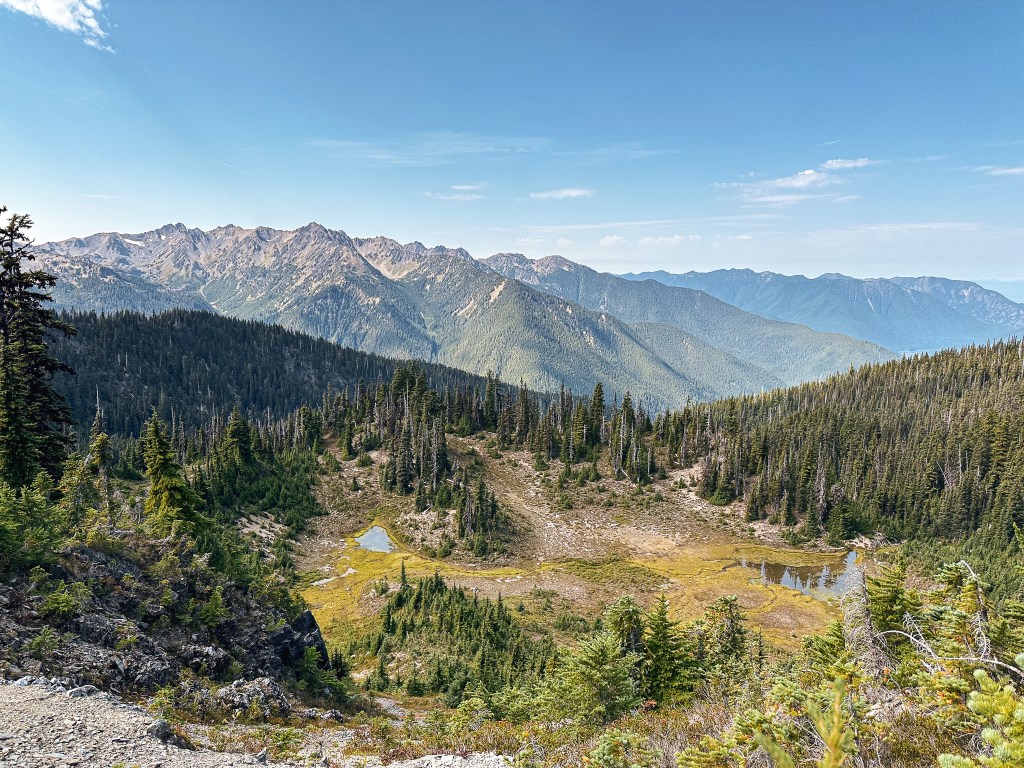
The exact distance from our camp to the fire lookout was only 0.81 miles with 482′ of elevation gain according to my Strava tracker. Round trip this made our total mileage for the day 1.62 miles (excluding any wandering done around camp). We didn’t end up hiking back for sunset, but we did get to see a full grown Black Bear grazing on the hill from camp.
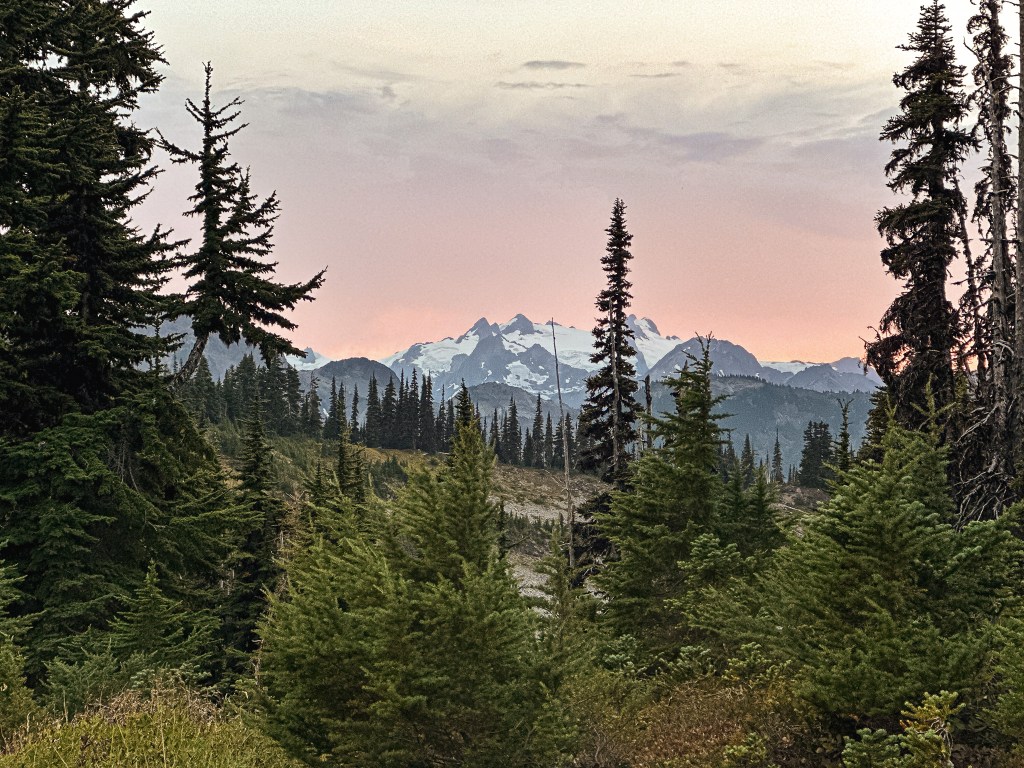
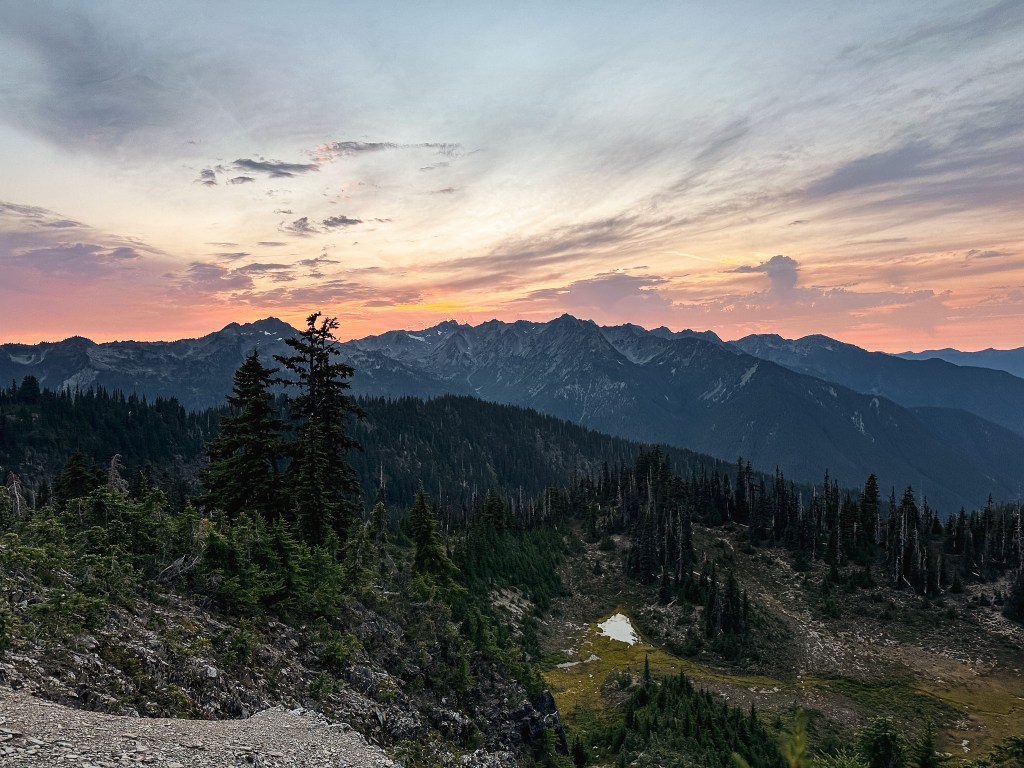
Monday.

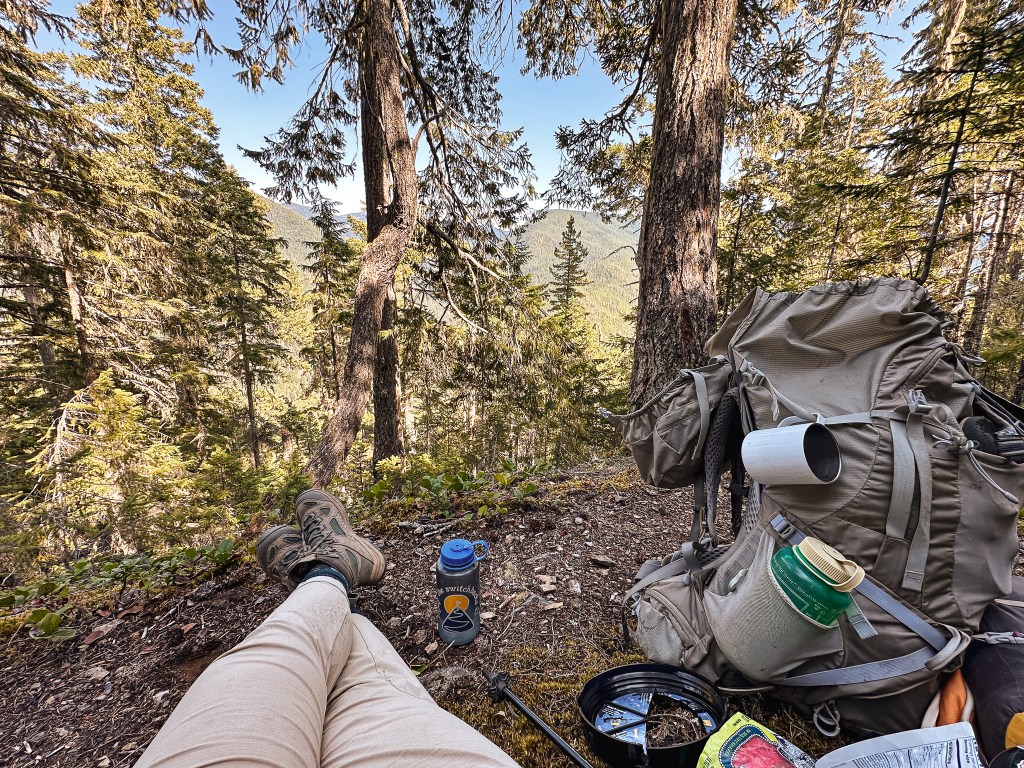
We didn’t manage to get an earlier start even though we knew it would take us a while to get back down to Humes Ranch. Though not nearly as long as it took for us to get up the ridge. We started our downward trek around 10:30AM. Sometimes this can be harder than the up on the joints. The route had quite a bit of downed trees, mostly small and easy to maneuver. We decided to count them as we headed down since I recalled reading a previous trip report stating there were 100 along the route the year prior. I was curious to find out if they had been right or were over exaggerating. We called out the count as we stepped over each tree to help keep track. And down, down, down we continued. We replenished our water once we reached the spring at the 2-1/2 mile mark even though we still had some left over from our original water carry. The gallon jug, 3 liters, and four 32oz nalgene bottles worth of water ended up being the perfect amount for us over two nights. The hike down was fairly uneventful since we knew what to expect. It was much easier to track our progress as we passed notable milestones. There were the false final springs where we filled up the water first. The sign stating we were at 3,500′ and no open fires/stoves beyond that point. The end of the long ridge into the switch backs. The random spot along the trail we decided to have lunch previously. We opted not to have lunch in the same location. We wanted to make it to what we deemed the “comfy spot” because it was located closer to camp and had a nice bed of moss to lay on. Garnet had stopped there on the way up while waiting for me along the switchbacks. When I had finally caught up with him he looked so peaceful and comfortable hence the name “comfy spot”. There were still a few times we passed switchbacks thinking we had made more progress than we actually had. From the “comfy spot” we had roughly 4-1/2 miles left to camp. And down, down, down we continued. Passing the small flat section of trail and eventually meeting up with the suspension bridge again. Garnet and I had hiked together most of the trail leap frogging each other every so often until he eventually ended up ahead. He waited for me once he reached the bridge and we crossed it together.

The small section heading up and away from the river felt much steeper than it did when we had hiked down it two days prior. My joints and feet were screaming at me during this final push. The eroded portion of trail felt insignificant now but I still stopped to take pictures. We turned on the connector trail we missed previously leaving camp and were dumped out at the other end of the campground. This trail was much shorter and flatter than the other one we had taken out. We made it to camp a little after 5PM. I had stopped counting the downed trees after I reached 100 but there were definitely more (somewhere in the 106-116 range). We encountered our first person of the day once we reached Humes Ranch. There was one other backpacker camped in the spot we had taken originally. There are a few other spots in the camp ground and we choose the next best one that offered the most amount of privacy. A group of three joined us a couple hours later. We spoke with them briefly about their route and they had hiked across the length of the Olympics from a southern starting point in the same amount of days. We didn’t get a chance to talk with the other backpacker and were unsure if they were starting or ending their journey. I’m always impressed at how much mileage people can cover with what seems like ease. Meanwhile, I feel like I am struggling to convince my joints to make it the 12 miles down hill.

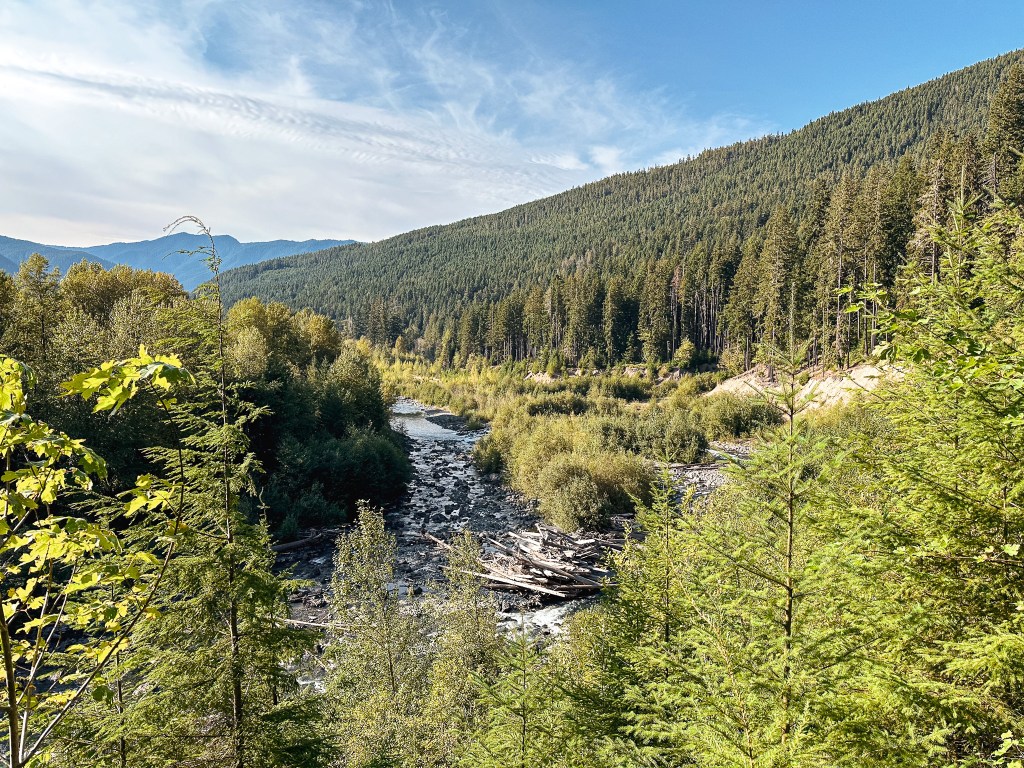
I didn’t track the mileage for this day since I had tracked it on the way up and wanted to conserve battery for the final day. We can assume it was around 12 miles with mostly elevation loss. The connector trail probably cut off 1/2 of a mile total.

Tuesday.

This morning we made more of an effort to start early since we knew we had a 9-1/2 mile hike out, at least a 4-1/2 hour drive home, and minor stopovers to return the bear canister and see Garnet’s mom for her birthday. The other backpackers in camp were already up as well getting ready to move out. The solo backpacker was the first to depart with us shortly after. We managed to eat, pack up, and knock out the first 2-1/2 miles from Humes Ranch to the former trailhead by 10AM and thus began the long road walk back to the new trailhead. Once on the road Garnet ended up ahead of me. It wasn’t long before the group of three caught up and passed me as well. I didn’t manage to take any pictures on the hike back besides the one in front of the trailhead sign. I was only focused on keeping my body moving and getting back to the car. Garnet had been waiting for me near the old guard station, but I wasn’t able to keep up with him at this point and fell behind again. Back on the pavement we saw a lot more day hikers and other backpackers heading out. I tried to keep my composure so I didn’t look like I was in as much pain as I was, but Garnet told me later I had a very noticeable limp by the time I reached the car. Two people at the trailhead ended up asking if I had made it to the Hot Springs to which I told them no and that I had gone much deeper than that. They followed up with “was it pretty at least?” to which I responded with “it was gorgeous!”.

Strava tracked our final day at 9-1/2 miles with 941′ of elevation gain. We had no issues returning the bear canister or driving home. It made for a long travel day home, but it was worth the effort. This was definitely the most remote fire lookout we have visited to date. There are not many left this deep within the wilderness and it is a destination we will remember for a life time. Our total trip mileage estimation from start to finish is around 45 miles with at least 5,000′ of elevation gain (if not more).

History.

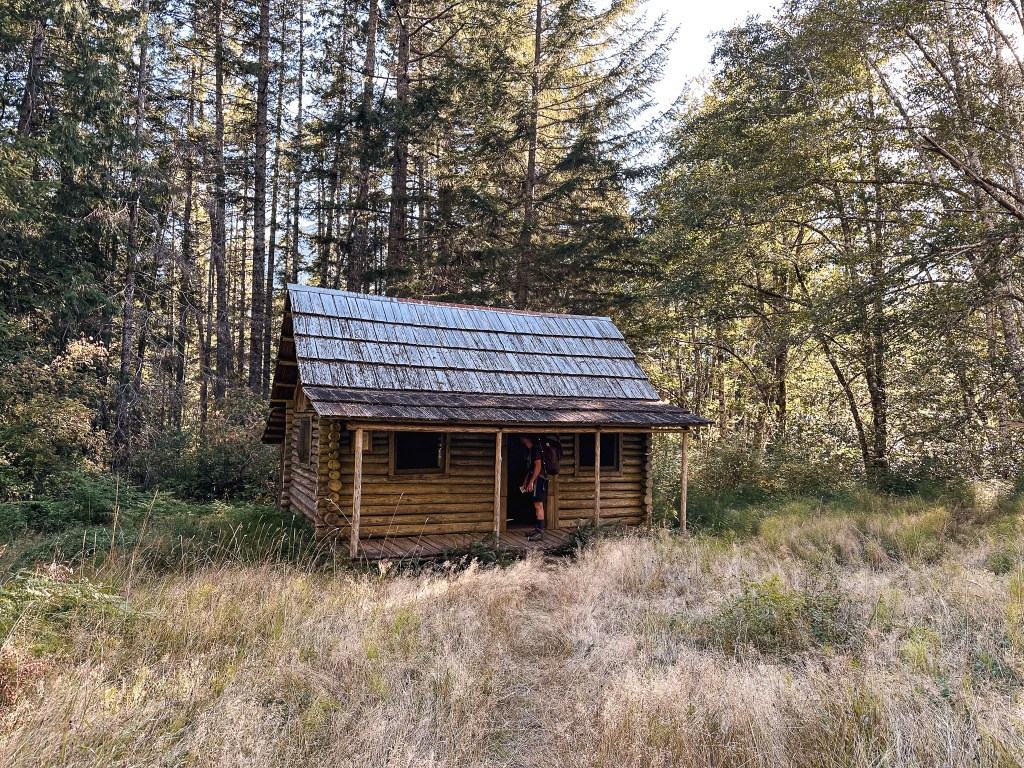
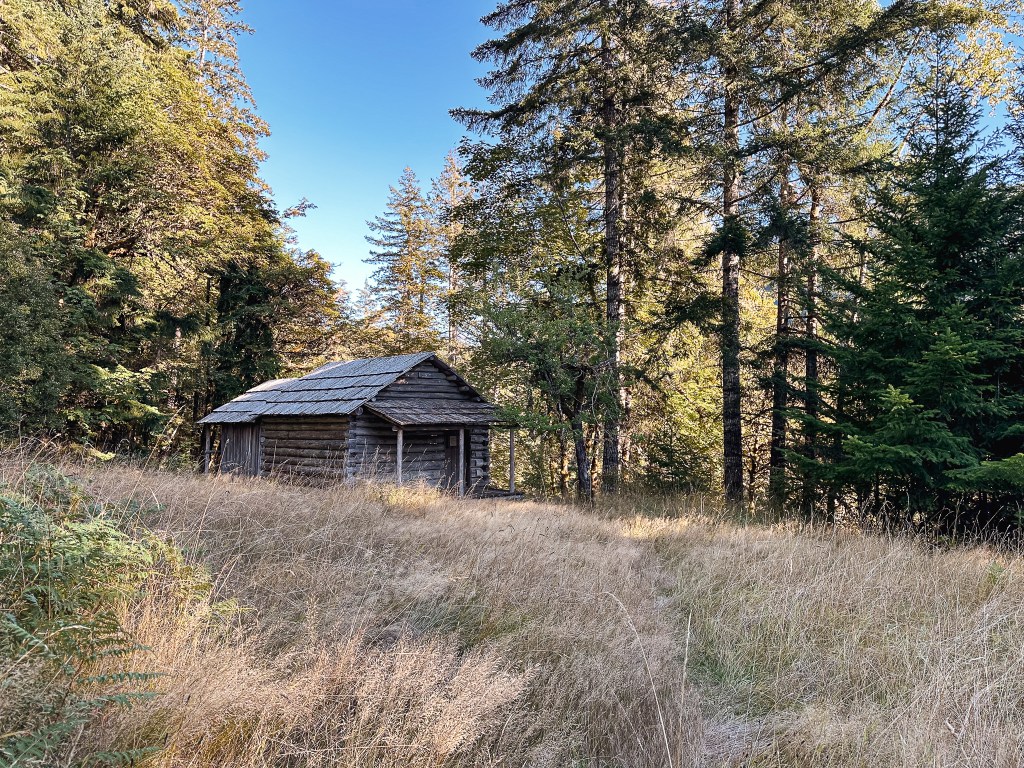
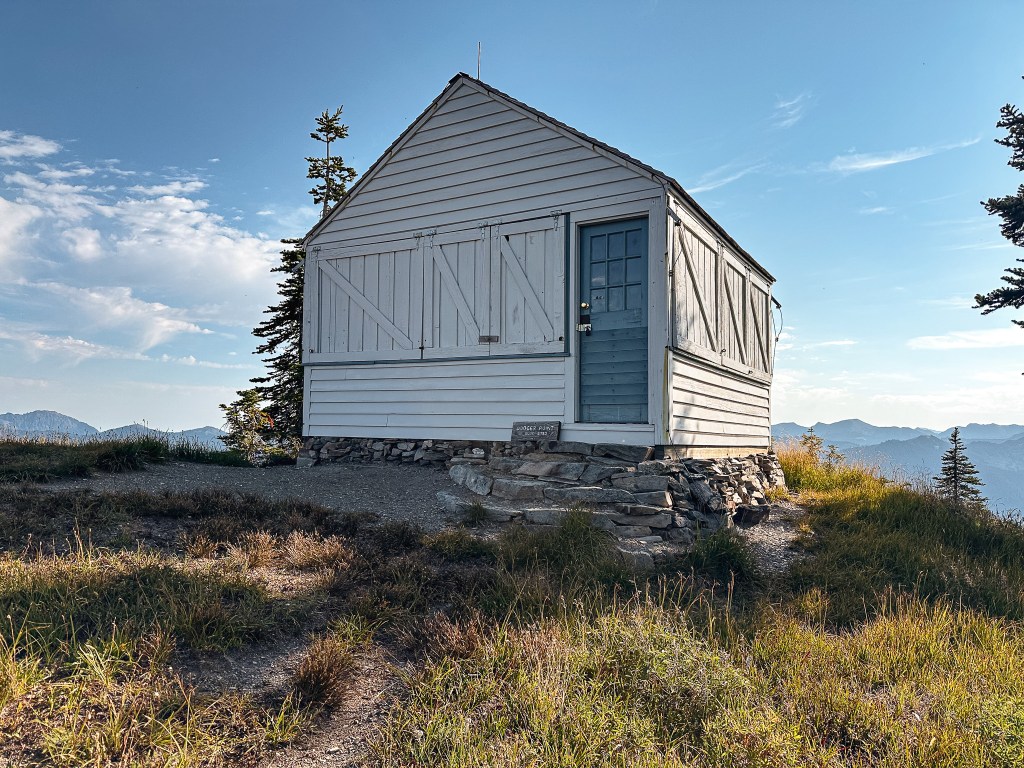
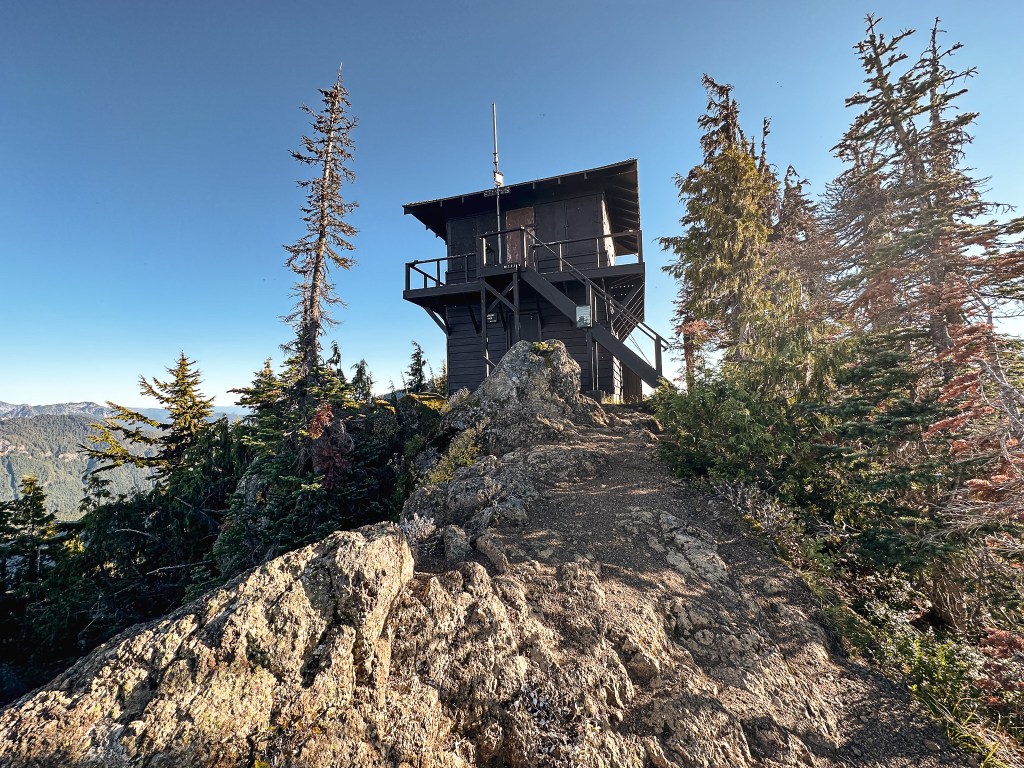
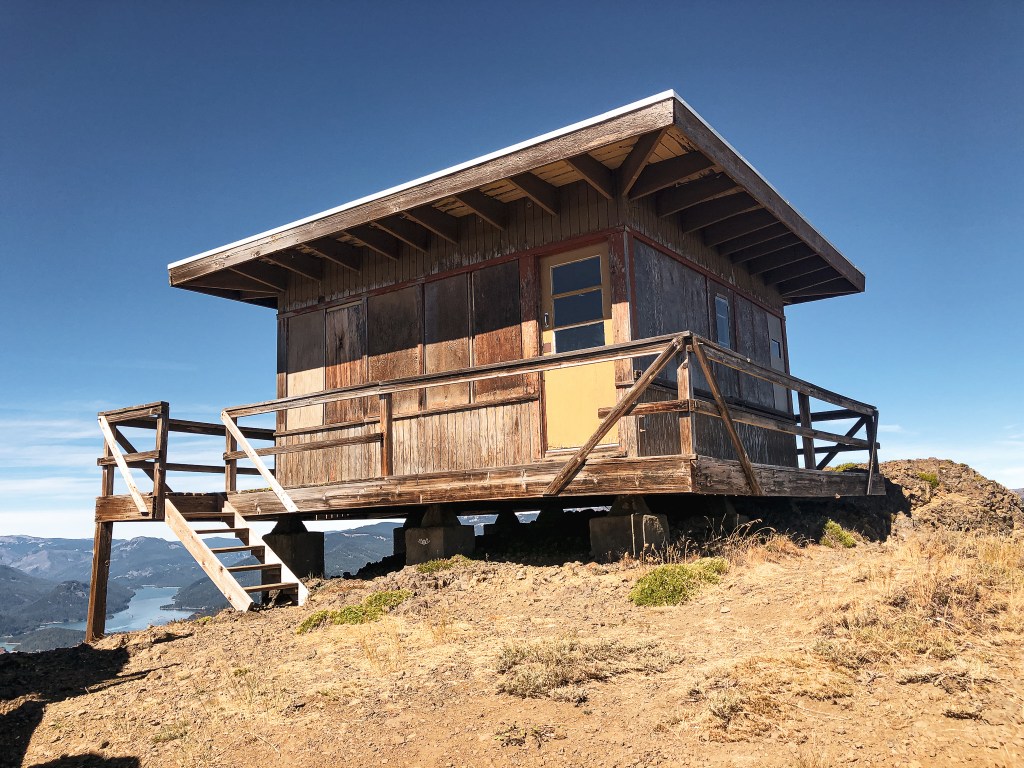
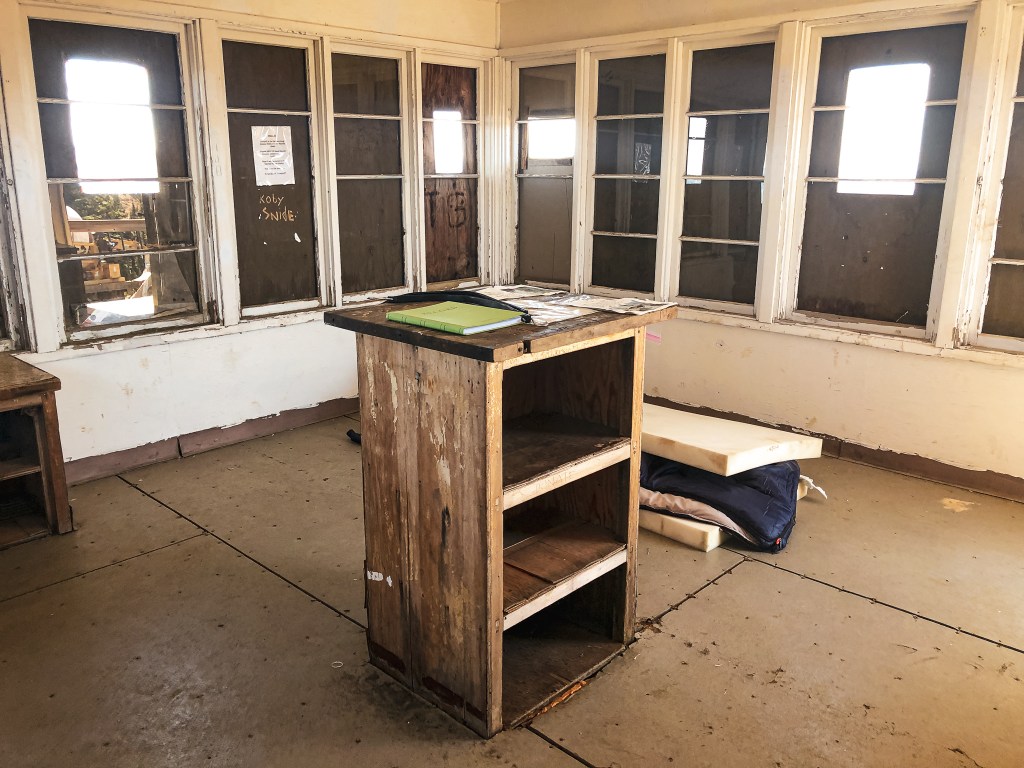
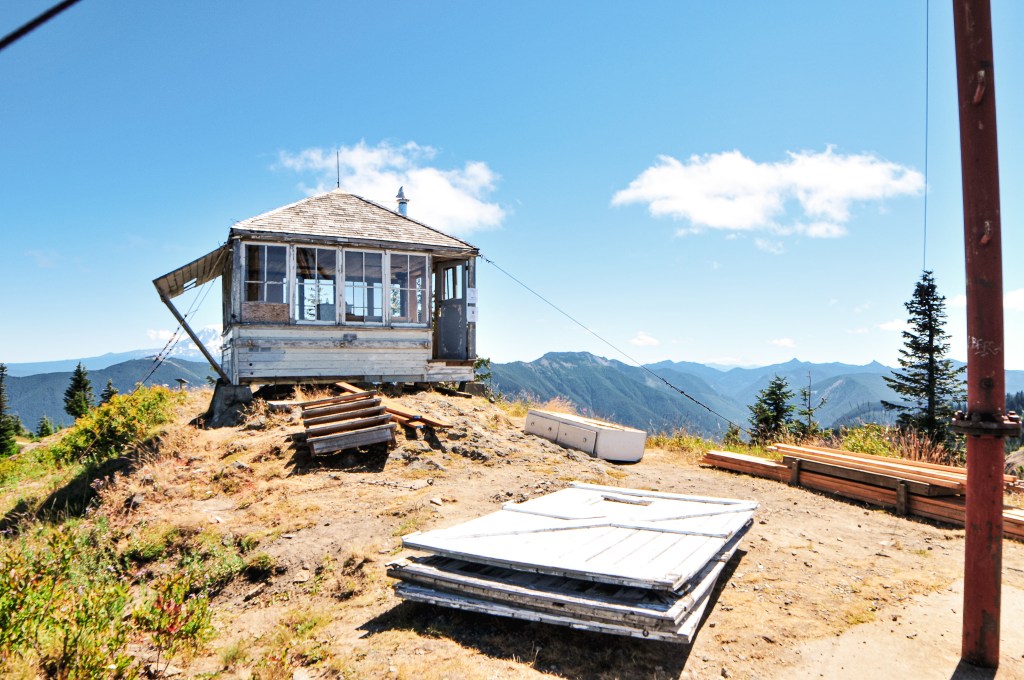
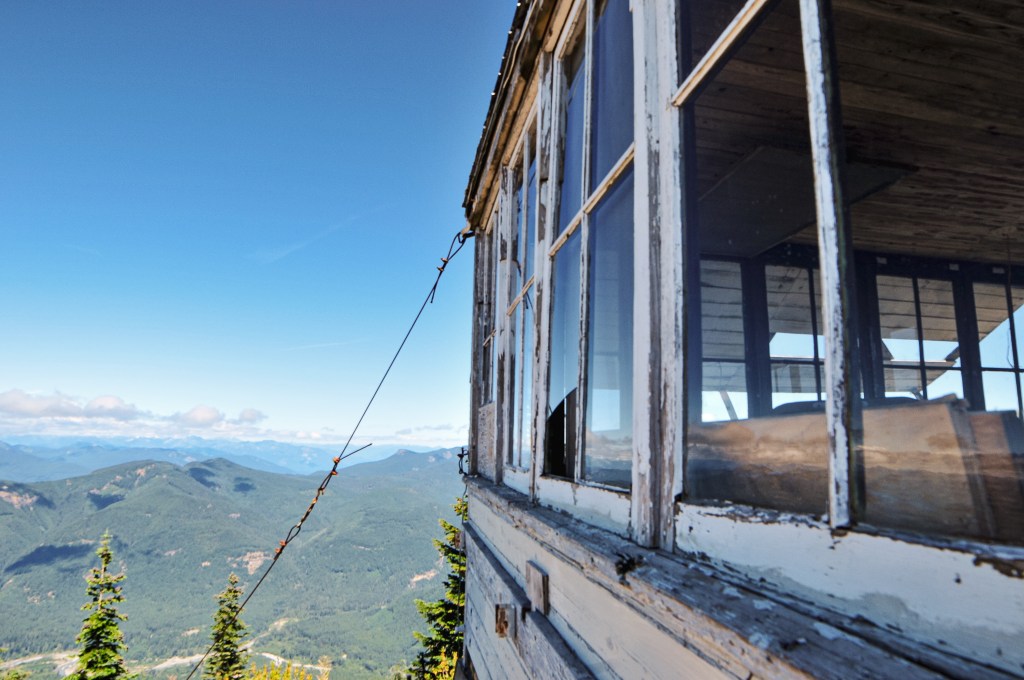
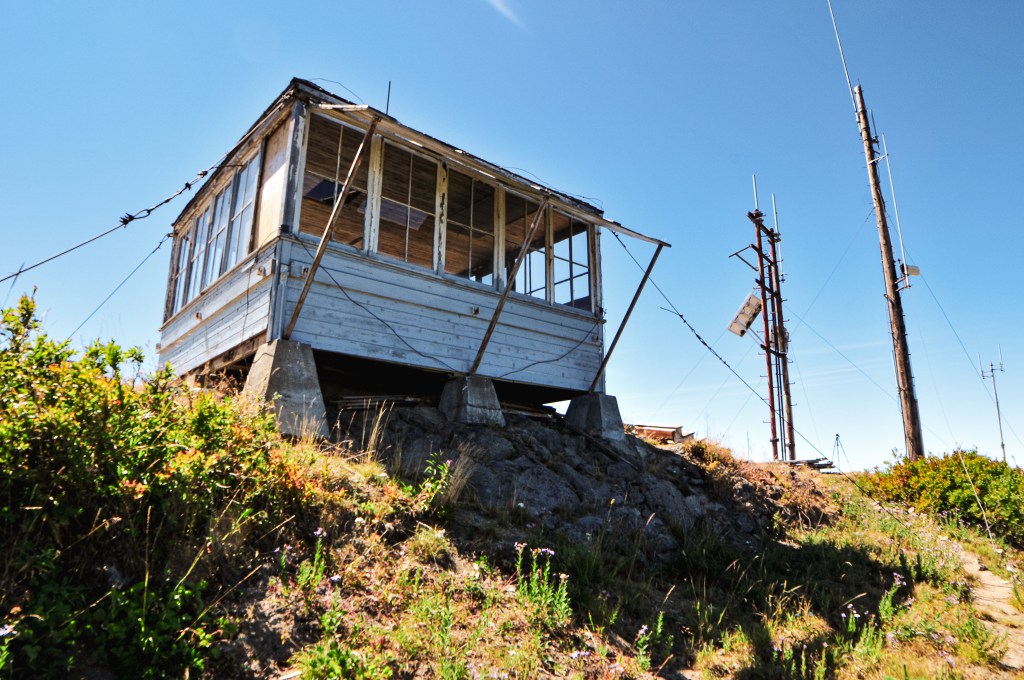
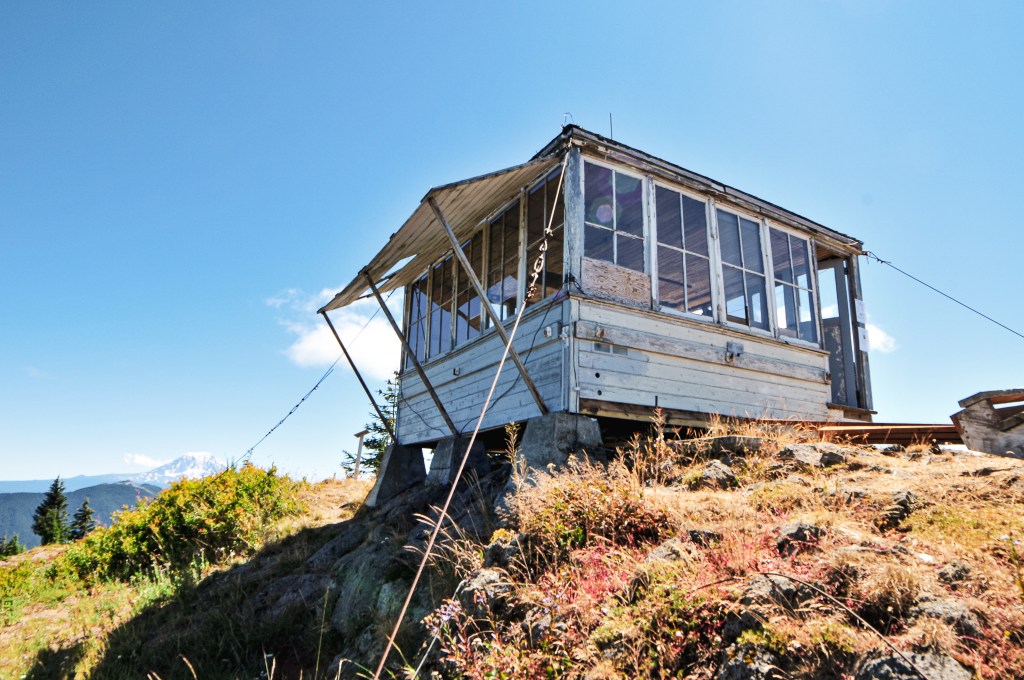
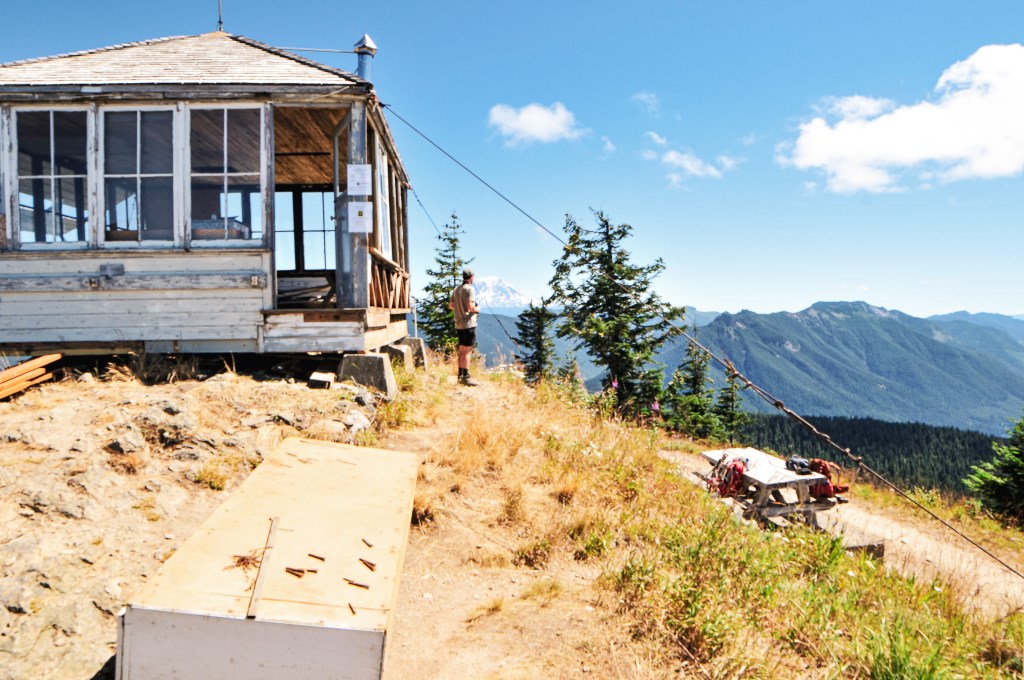
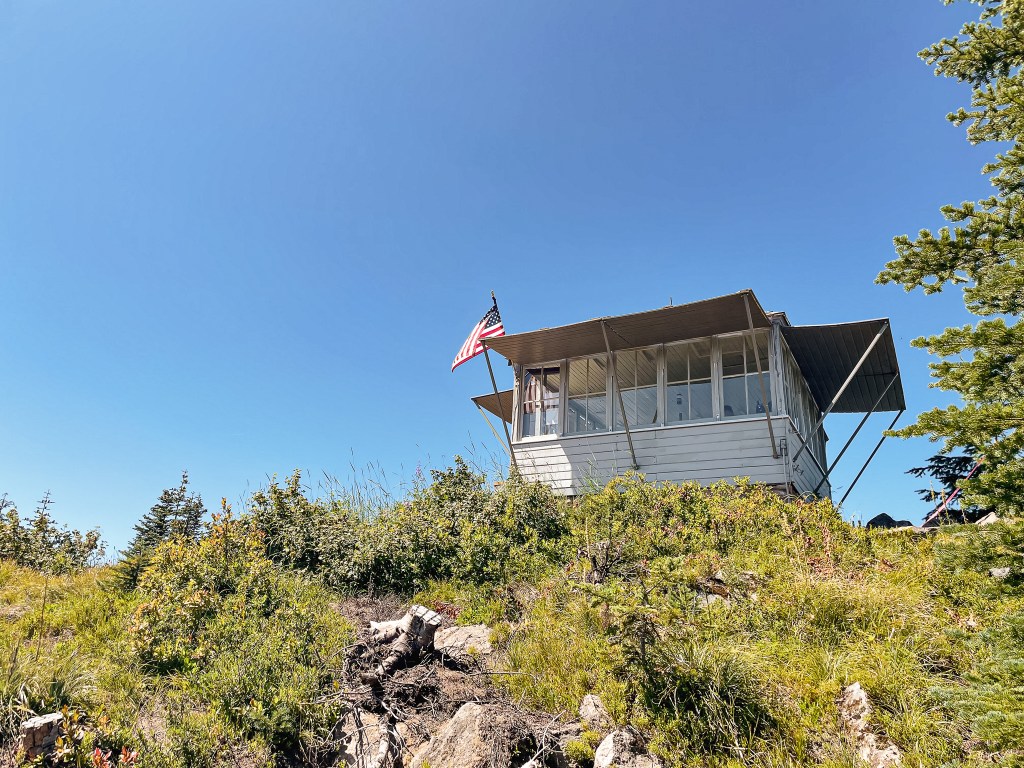
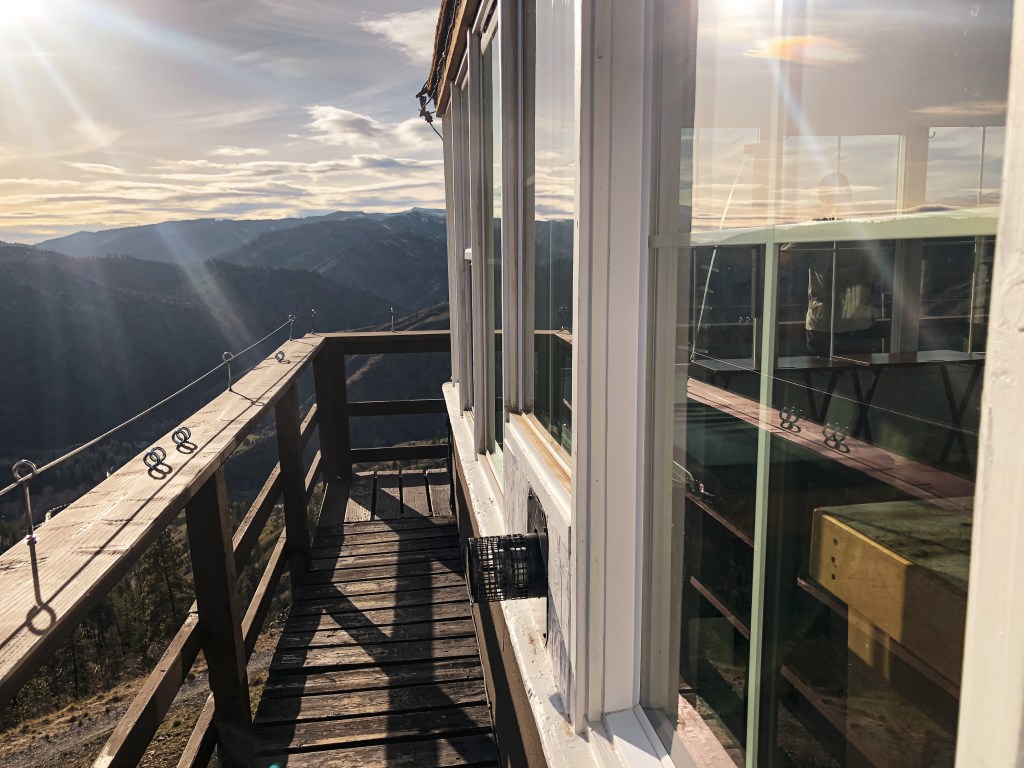
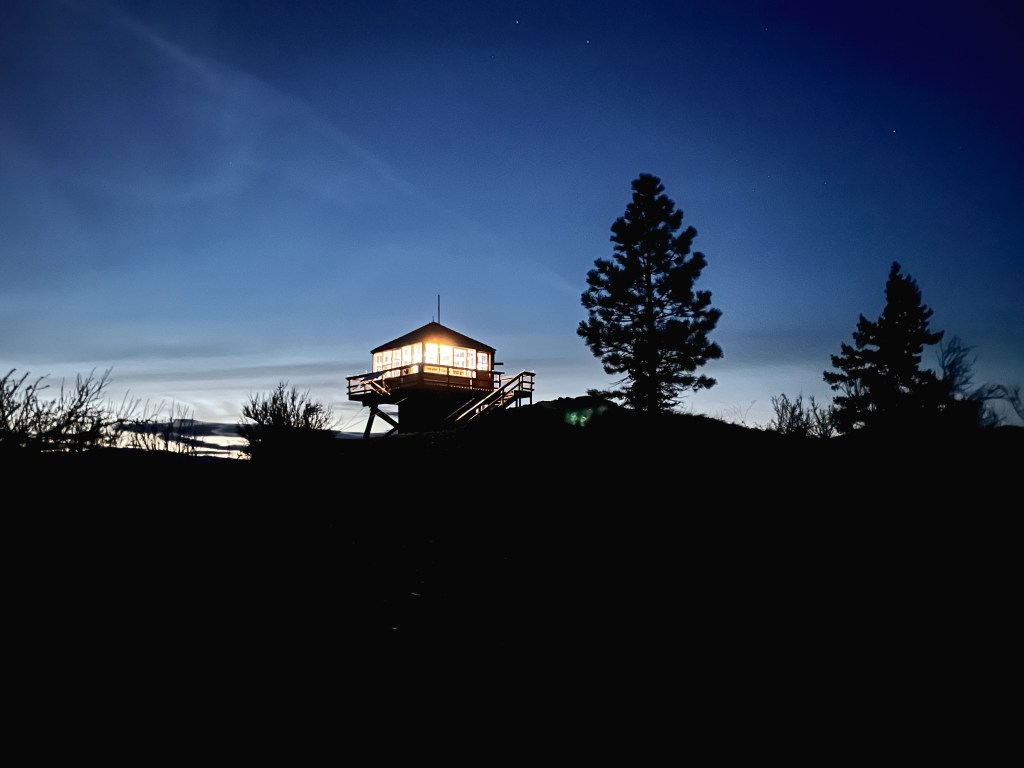
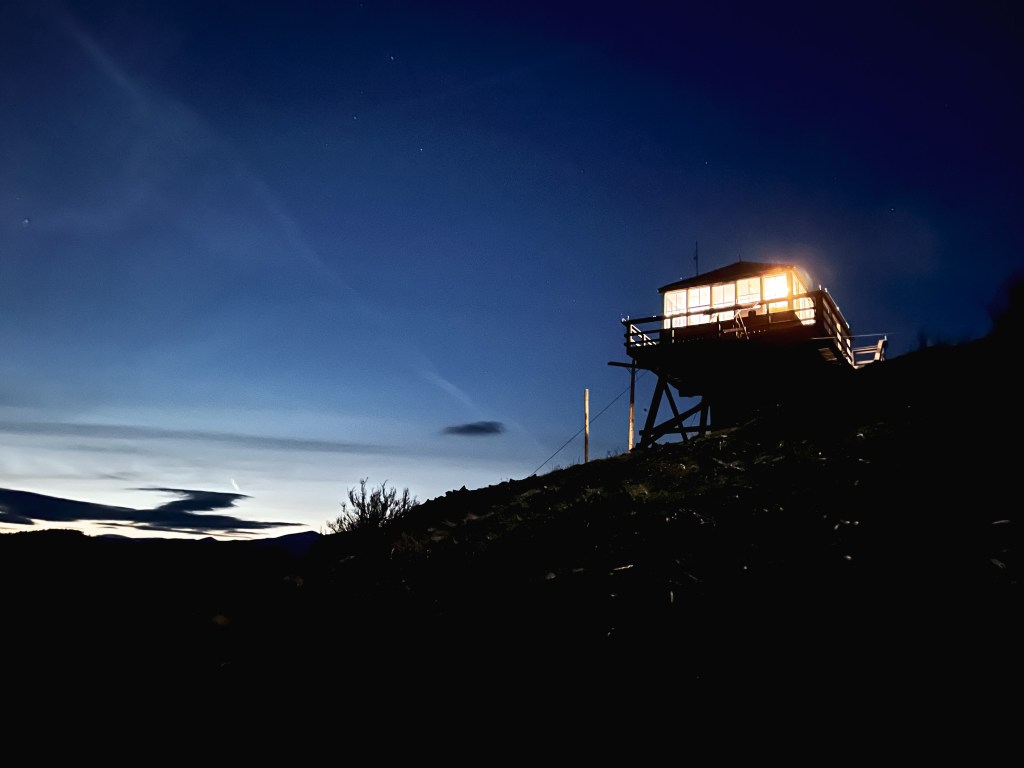
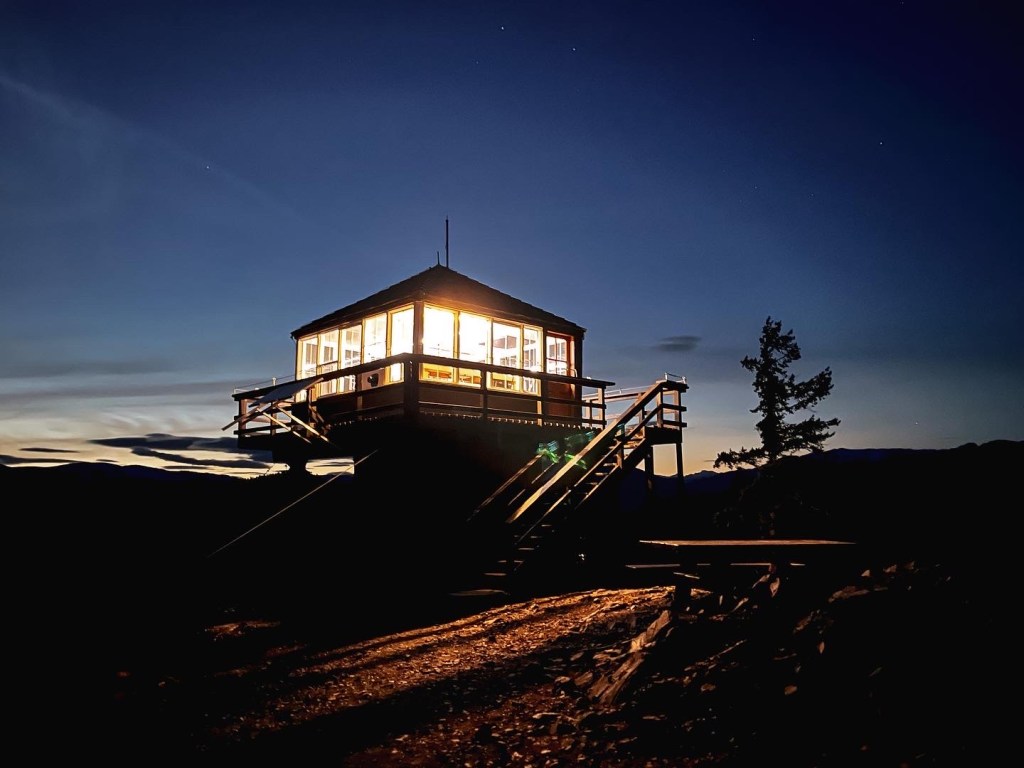
The fire lookout located on Dodger Point is a standard 14’x14′ L-4 ground cabin that was built in 1933. At the time this was built and managed by the U.S. Forest Service and considered a part of the Olympic National Forest. All of the lumber and windows were packed to the remote location via horse back. The point was named Dodger Point after Dodger Bender who had done trail, telephone maintenance, and construction work for the Forest Service. The Olympic National Forest wasn’t designated as a National Park until 1938. It was utilized as an Aircraft Warning System in early 1940s like many other fire lookouts within the area during WWII. It was most recently restored in 2017 by a group of volunteers with grant funding from the National Park Fund and REI Foundation. This is one of two remaining fire lookouts standing within the Olympic National Park boundaries today. I could not locate information on when the fire lookout was last staffed, but it appears it is still listed for emergency use. The cabin is locked and not open to public use.

Heybrook L.O. (Revisited)

Washington Lookouts

Please reference our original trip report on Heybrook L.O. for information on the history of the lookout, status, our initial site visit, and directions (post).

Date revisited: March 31, 2024

Trip Report.

We found ourselves in Kirkland once again for the weekend visiting my friend, Anjelica. The reason for this trip was bittersweet since we were getting together to celebrate our mutual friend’s engagement and simultaneous going away party. Her and her now fiancé are moving to California to be closer to his family (and a multitude of other reasons). I already only get to see her a handful of times a year, so the move won’t be much of a change in that aspect. But, it still offers the emotional growing pains of early adulthood as we all search for our next steps in life. Last time Garnet and I were in the area together was for Friendsgiving in November, which is when said friends announced their upcoming move. We had debated making a trip to Heybrook L.O. before heading home then, since Garnet hadn’t been yet, but the weather wasn’t ideal at the time. This time around the forecasted weather was sunny with a potential high of 57 degrees. Where we were staying in Kirkland was conveniently located for a visit to Heybrook and it only took us 50 minutes to get to the trailhead off of HWY-2. Unfortunately, a lot of people had the same idea as us and the parking lot was completely full when we got there around 11AM. There was enough of a pull out across the highway to park our cars and no signs in sight prohibiting us. It’s a busy highway though so always be cautious and careful of oncoming traffic. We noticed a few people were double parked in the actual parking lot just waiting like sharks for someone else to leave. This is on par with most of what I’ve experienced from popular hikes in WA, there’s just so many more people in this area than Oregon and it seems to be a larger international tourist destination. This isn’t to say you can’t find uncrowded hikes there, they exist, but if you want to visit somewhere you’ve seen online close to Seattle you better be prepared to join the assembly lines or go extremely early (even then I’ve been to a popular trailhead and just barely snagged the last parking spot at 7AM). Oregon is much less competitive in my opinion. We spent the first steeper portions of the hike leap frogging with some other groups as we each stopped to catch our breath. I haven’t been on a trail since January 1st and my stamina reflected that significantly. This is my sign to start conditioning now for our summer season before I hurt myself later. Once we reached the ridgeline we had a little more breathing room from the other hikers until it bottle necked again right before the lookout. There were a good amount of people on and around the lookout when we got there. We waited awhile at the base before Garnet and Anjelica decided to hike up the tower while I opted to wait at the bottom. They said there weren’t too many people on the viewing platform, but squeezing past people on the stairs was difficult. We were surprised to see that the cab was completely boarded up for the season, I had thought it was rented year round. A quick search on Recreaton.gov confirmed it’s only rented from May 1st to October 31st. I’m sure I mentioned it in my other trip report, but I would feel like Rapunzel trapped in my tower if I ever stayed in this lookout during a weekend. It was still nice to get outside and absorb some much needed Vitamin D, but Garnet and I both agreed we probably won’t be back here again. The amount of people would not be as bad if everyone respected hiking etiquette and had more spatial awareness. But unfortunately, when you get a hike this busy you have people blasting their music and no yielding of any kind. And you kind of have to do the same in return to make any progress. On the hike down, Anjelica and I were separated from Garnet due to people not being able to wait to get by us going in both directions. We yielded for them, but no one yielded for us. Once back at the trailhead, the cars had multiplied in the pull out we had parked and was now full of cars as well. There were even some people walking along the highway from a more distant pull out. It starts to reach dangerous territory when you have this much crowding and is part of the reason places end up being permitted. I know it probably seems like I complain a lot about the amount of people, but it is meant to provide a realistic expectation. I am not out seeking nature to be apart of the crowds. If you still plan on visiting, I’d recommend it during a weekday. I saw significantly less people on an early Friday afternoon in August and it was much more enjoyable to me. My Strava app only calculated this hike at 2.07 Miles RT with 812′ of elevation, but I had forgotten to start it from the trailhead.

We have been in a deep hibernation this winter and are finally defrosting ourselves for the season. Although this is a repeat for me, this was a first for Garnet and is our first visited fire lookout for 2024. We will have to wait and see where else the Forest Service roads, weather, and fires take us this year. In the meantime, I will try to finish up our trip reports from Montana before our busy season begins. Happy Trails!

Gobblers Knob L.O.

Washington Lookouts

Location.

Mount Rainier National Park

Status.

Maintained; Currently standing

Estimated drive time from Portland, OR.

3 hours

Date visited.

October 7, 2023

Elevation.

5,485′

National Historic Lookout Register.

US 478; WA 51

Trip Report.

Gobbler’s Knob has been long standing in my back pocket for a decent late season hike or backpack. It has eluded us the last couple of years due to early season snow or bad weather during the weekends we had previously allotted for it. This was the last fire lookout I needed to visit to complete my set for Mount Rainier’s fire lookouts within the National Park. There are lists that include others, but they are technically not located within the park boundaries. Garnet still has Tolmie Peak (post) and Mount Fremont (post) to visit since I did both prior to meeting him. These are ones I look forward to revisiting when the time comes. Especially, Mount Fremont (post) since that was the first fire lookout I ever had the pleasure of visiting. We had just returned from our week away in Glacier National Park and there was definitely house projects and work to catch up on at home. September has been busy (the outdoorsy fun kind of busy) and progress has been slow. But, when we noticed the weekend forecast called for sunny skies and warm temperatures, decisions were made. The other late season backpackers must not have checked the forecast yet because there were still all the wilderness permits available online when this idea took shape Monday and was executed by Tuesday. At the time you did not need a permit to hike to this fire lookout as a day hike, just a National Parks Pass for access and parking. Though it sounds like Mount Rainier is going to be adopting the limited entry/day use permits in 2024 for high use areas of the park. Make sure to do your own due diligence when visiting the park. Our plan was to stay the night at Lake George for the evening to help break up the distance. For this, a backcountry permit is required and can be booked ahead of time via Recreation.gov. You will need to pick up the permit in person from your choice of Wilderness Information Centers. These are only held until noon the day your hike is scheduled to begin and can be picked up as early as one day prior. If you know you will be picking up your permit later than noon, you will need to notify the Rangers ahead of time to schedule a later pick up. Otherwise your permit reservation is cancelled and re-designated as a first-come, first-serve. You also have the option to try and snag a walk up permit but there are usually only two designated for walk up in this area and it’s never a guarantee. There are limited permits available and this can be a popular destination during the summer months, so additional planning may be required. The closest WIC to Gobbler’s Knob is located in Longmire, or the Longmire Museum if it’s during the off season. Always double check the operating hours before selecting your pick up location.

We planned to pick up our permit from the Longmire WIC since it wasn’t closing for the season until October 10th. This is just shy of a 3 hour drive from Portland depending on traffic. We knew this meant we would need to get an early start and set our alarms for 5:45AM. Our wheels didn’t hit the pavement until 7:30AM though, since we wanted to make a hearty breakfast and needed to button up things around the house. We set out via I-205 to I-5 to connect to HWY-12 and cut up via HWY-7 to eventually get to HWY-706 that would take us to our needed entrance of the park. By the time we reached Ashford, we realized everyone had a similar idea to us. October is supposed to be a time of the year when hiking trails settle down and get less use, but the unseasonably warm weekend brought everyone out for one last hoorah (ourselves included). The forecast called for clear skies and temperatures somewhere in the 70-80 degree range depending on what elevation you were situated. We joined the assembly line of vehicles and waited for our turn at the kiosk. I know Mount Rainier is a popular National Park, but after seeing the entrance back up at 10AM in October I can’t even fathom how the summer lines compare. As the line crept on at a snails pace with no entrance in sight, we started to get worried we wouldn’t make it through before our noon deadline. We debated calling the ranger station, but had spotty service near the entrance. Luckily we did end up making it through just fine after a 30-40 minute wait, but it’s definitely something one should factor in to their travel time. Once in the park you will still need to drive a little ways past the entrance to get to Longmire. We even passed the turn to access the trailhead and had to back track after picking up our permit. The WIC was easy to find and was one of the farthest buildings to the left of the lodge. Something else to note is this backcountry campsite requires you to use their bear hang or a bear canister. We were aware of this but didn’t bring our bear canister with us since it said online the bear pole was usually up until there is snow on the ground. The ranger informed us due to how late in the season it was the pole had already been removed for winter and offered to let us check out one of their bear canisters for the night. The National Park offers these for free to check out as long as their supplies last. You only need to provide a drivers license to obtain this. Once again something to keep in mind if you’re visiting in the off season. Now with permit and bear canister in hand, we headed for the trailhead.

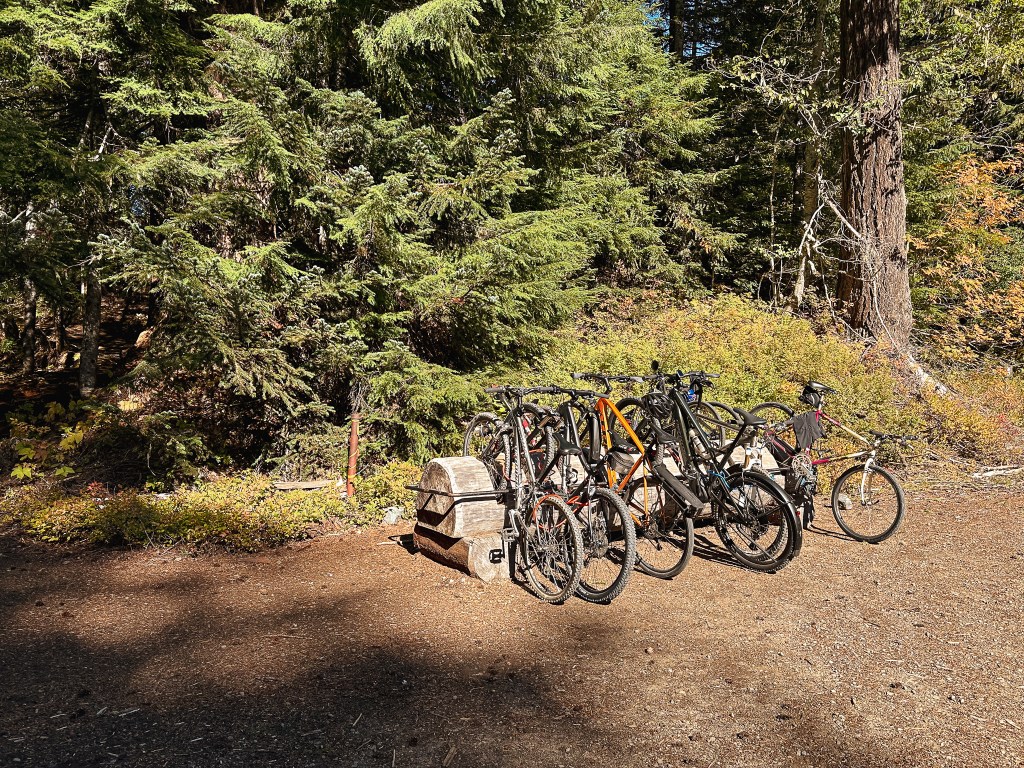
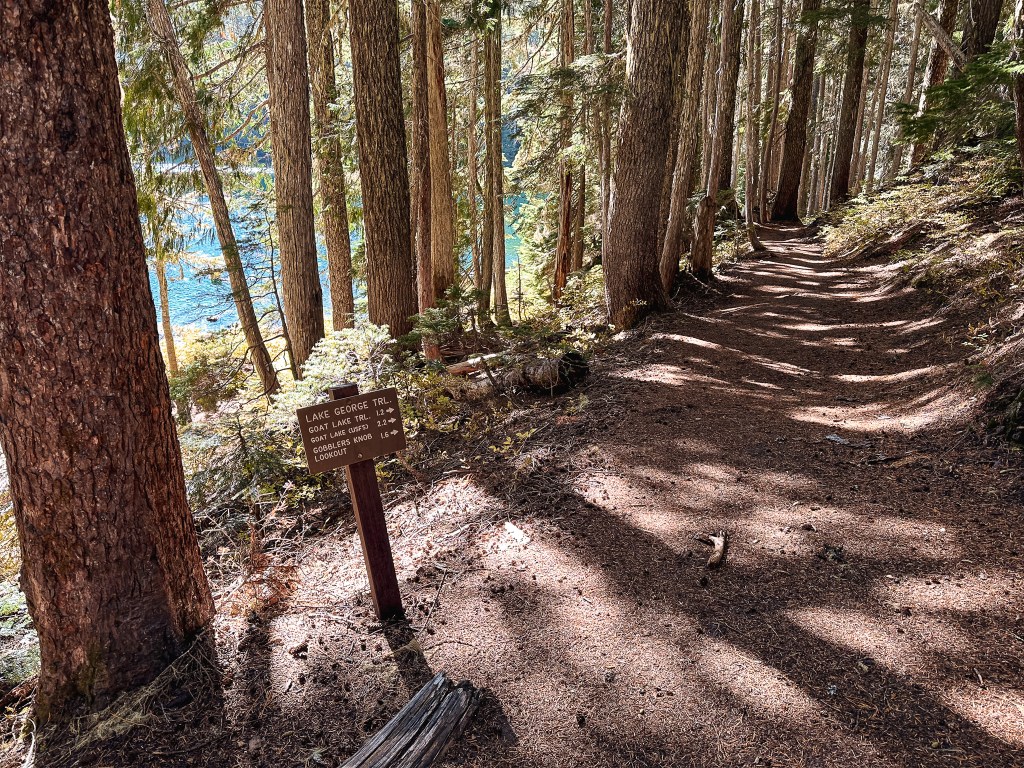
To access the trailhead, we turned on to the Westside road and followed it until the road closure. The road is off to the left if you’re heading in from the entrance of the park, but off to the right if you’re heading back from Longmire. There was ample parking for 15-20 vehicles where the road was closed (possibly more). It should be noted the Westside road is made up of gravel, but in decent condition with only minor potholes and rocks to avoid. Any standard low clearance vehicle should be able to make it without issue, but you can always ask the Ranger for current conditions. Once parked, we readied our packs and started up the road. At the time, I didn’t connect that this road continued on past the Lake George trailhead to access other areas within the park. I thought every car parked here was either at Lake George, the fire lookout, or on their way there as we hiked the road. With a mostly full parking lot this left us speculating for the next four miles on how busy it was going to be there, if there might be people there trying to backpack without a permit, or if last nights backpackers hadn’t left their camp spots yet. The hike along the road is fairly uneventful and mostly shaded by the surrounding trees. Don’t get me wrong though, it’s a nice walk in the woods. You will start out by passing around a large locked gate that marks the beginning of your road walk. Shortly after you will cross a bridge over Fish Creek. Once over the bridge there will be signs of washouts until it eventually opens up to a view of the mountain top and a ragging creek. This section parallels what I believe to be Tahoma Creek. There are plenty of signs of how this creek has pushed, overflowed, and manipulated the landscape around it which I can only assume is part of the reason why the road is kept closed. You will wind your way along the road for roughly 4 miles until you see a hiker sign off to your left. There is a distinguishable bike rack made from a tree trunk to mark the trailhead as well. It was full of bikes when we reached the trailhead despite not seeing many people along the road. The official hiking trail starts to the left of the bike rack. From here, it is 0.9 miles to reach Lake George and 2.5 miles if you are headed for the fire lookout. The tread becomes steeper once you leave the road and the real climb to the fire lookout begins.

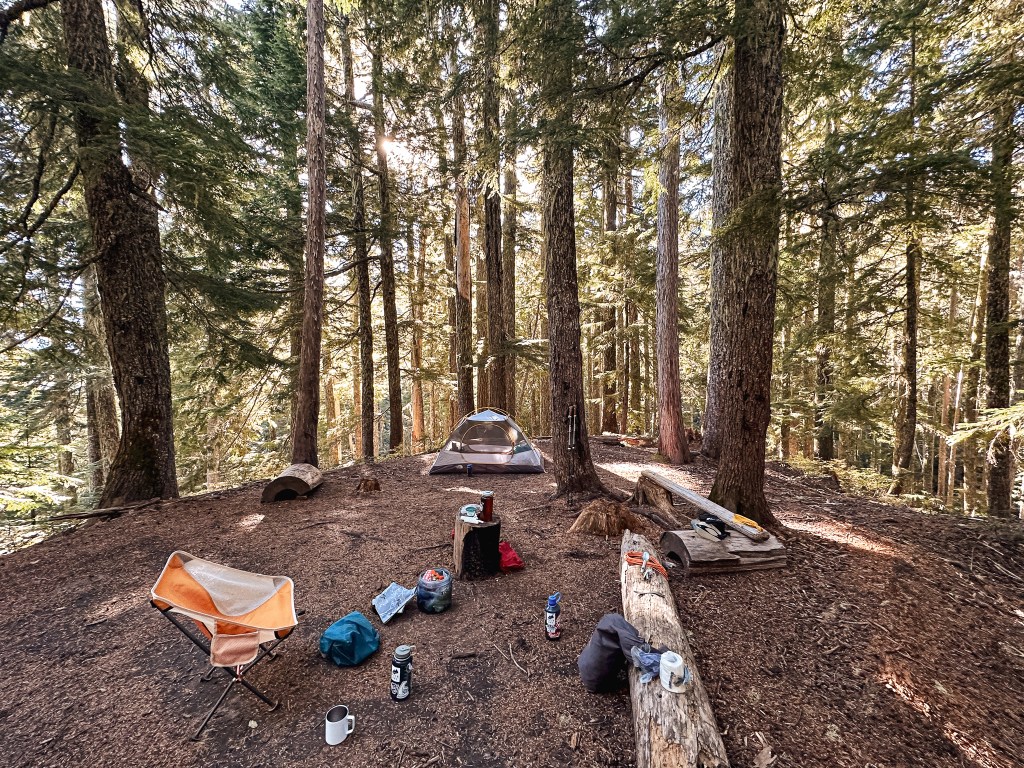
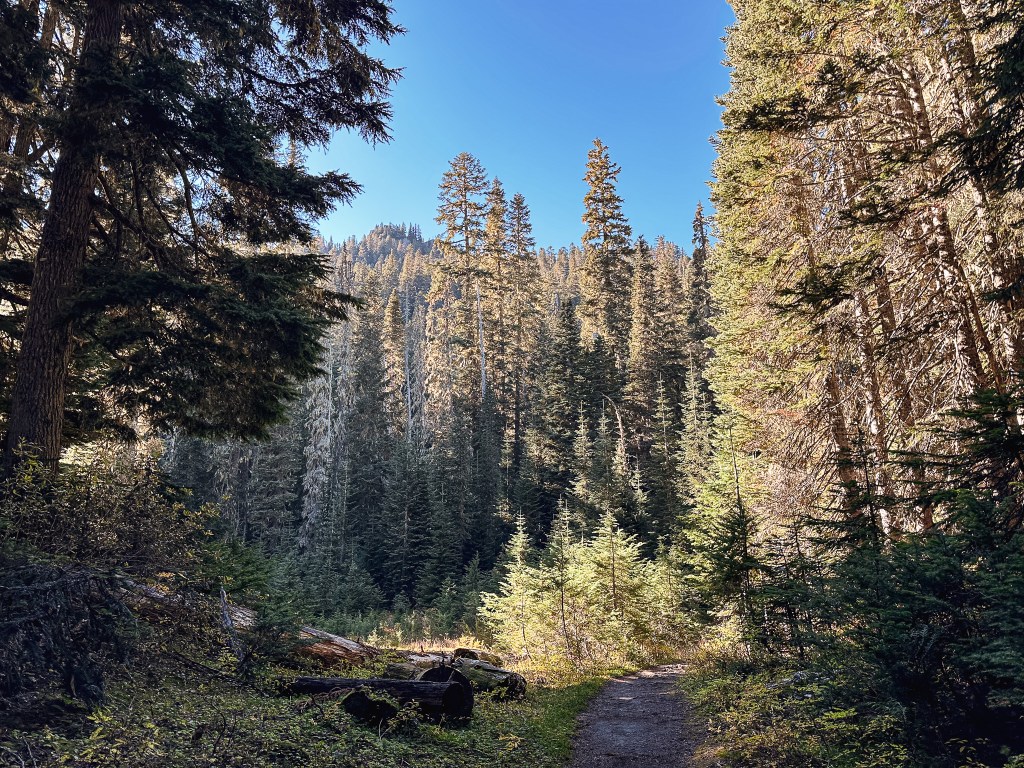
We were surprised to find all the camp spots were empty when we reached Lake George and had our pick of the five. We only passed one group of four day hikers hiking out and were left wondering where the heck everyone was? Were they all at the fire lookout? Did they hike farther into the Goat Lake Wilderness? At this point, I knew the road continued to other trails which explained the amount of cars but why were there so many bikes at the trailhead and so few people on this trail? We decided to set our speculations aside for awhile to pick our camp spot for the night. We both agreed on number 4 since it was the farthest spot to the back and offered the most amount of privacy from the other camps. This was strategic since we knew we’d be joined by at least two other groups later in the day (potentially more if people snagged the walk up permits as well). After our stake was claimed and lunch was devoured, we felt re-energized to continue our ascent to the fire lookout. You gain most of the elevation during this hike within this last 1.6 miles from Lake Georg to Gobblers Knob. We kept our loads light by leaving most of our gear in camp for the remainder of the hike. I only brought my valuables (i.e. car keys, wallet, phone) in a fanny pack, a warm puffy layer, headlamp, a 32oz Nalgene, and my trekking poles. We passed a couple of day hikers coming back from their visit to the fire lookout and asked them if anyone else was currently up there. They said they had it to themselves and were wondering where everyone else was as well (they too mentioned a full bike rack). So, the mystery continues. We were excited at the potential of having the summit to ourselves though. This section was slow going since my body was still feeling the fatigue of hiking in Glacier NP. There are not too many views to expect from the trail since it is mostly treed until you get closer to the summit. But eventually your slog ends, you round that corner, and the views open up. And what a spectacular view it is.

Per usual, the hike back down felt like a breeze in comparison to the hike up. We didn’t see anyone else while on the summit or on the hike down, but the other two groups of backpackers had finally showed up in camp. It was almost dark by the time we reached our camp again, started filtering water, and making dinner. This was partially due to us lingering on the summit longer than normal and partially due to the days getting shorter. This was our official end to the 2023 season and we felt it. We slept in a bit the next morning holding on to the last glimpses of summer. We were the last group to leave camp. Our hike out was spent forecasting where we wanted to go in 2024 and what our favorite trips were from 2023. We never did figure out the mystery of where everyone else was either because the bikes were no longer at the trailhead when we left and most of the cars were gone from the parking lot. The hike from the trailhead to the summit came out at 6.7 miles with 2,744′ in elevation gain on the Strava app. In total, it was 13.34 miles and 2,792′ in elevation. Depending on what kind of adventure you are looking for this can make for a hardy day hike or a fair backpack.

History.

This is one of the four remaining Fire Lookouts within the Mount Rainier NP and the closest to the peak. This lookout was built in 1933 and is the same standard 2-story frame cab design that you will find within the park. It was staffed into the 1980’s but stands now as an educational site. It is also occasionally used as a standby detection or recreation site for backcountry rangers.

More Information.

Washington Trails Association

National Park Service

AllTrails

Heybrook L.O.

Washington Lookouts

Location.

Mt. Baker-Snoqualmie National Forest

Status.

Rental program; Currently standing

Estimated drive time from Portland, OR.

4 hours (5 hours with traffic)

Date visited.

August 4, 2023

Elevation.

1,701′

National Historic Lookout Register.

US 1094; WA 60

Trip Report.

One thing I try and do every year is make time to go on a ladies only backpacking trip with my friend, Anjelica. I always think it’s important to make time for friends and yourself outside of a relationship, sorry Garnet! We’ve invited other lady friends in the past, but most have not been interested in taking the extra step from car camping to backpacking. This trip was just the two of us. Our original plan was to spend two nights somewhere in northern Washington, but her work schedule recently changed which limited us to one night. I don’t work on Fridays so I was left with an extra day to potentially do something else in the area after my drive up. She lives in Kirkland and I noticed her place was less than an hour from Heybrook. This is a popular fire lookout that is shared all over social media and it was still on my list of Washington lookouts to check off. This felt like the perfect solution to drive up earlier to beat traffic, but still be able get to her house around the same time she’d be off work.

I set out from Portland around 10AM via I-205 north towards Washington and eventually merged with I-5 after passing Vancouver. There are more than a few ways that you can take to get to HWY-2 from I-5. Given the accessibility and popularity of this trail, you can easily get here via GPS navigation without getting lost. This goes against my normal recommendation to always use a paper map. But, I didn’t have the luxury of Garnet being my navigator, so GPS it was. The route it took me was most likely an unnecessary maze of turns through rural roads, but it could have also been avoiding the afternoon traffic. From I-5, I headed on I-405 to HWY-520 until the highway ended and turned into Avondale Road. I turned right on to Novelty Hill Road, left onto Snoqualmie Valley Road, and then right onto Woodinville-Duval Road until I reached the community of Duval. This road met up with HWY-203 in the center of Duval where I turned left to continue heading north. HWY-203 will take you all the way to Monroe where it meets up with HWY-2. I turned right to head east on HWY-2 passing through the towns of Sultan, Startup, and Gold Bar. I passed the turn off for Index and the trailhead was only a little farther past this off to the left. There wasn’t a sign from the highway to indicate the pull out was for the trailhead, but most likely there will be other cars to make it obvious. This is where the GPS actually came in handy for a change.

I pulled into the parking area just after 3PM and there were only 5 other cars besides mine. I would barely count one of those since there was a couple getting into their car to leave when I arrived. There is plenty of space for parking right off of HWY-2, but I can imagine it fills up quickly on weekends. I actually expected to see more people here on a Friday afternoon. I stopped briefly to read the trailhead board to see if there was anything of note I should be aware of. I noticed a sign asking to count the cars at the trailhead and to text it to a phone number. This was for an Outdoor Recreation & Data lab hosted by the University of Washington (link). I thought it was interesting that they were collecting data on usage of this trail and sent them a text. You will get an automated response that takes you through a few other questions and prompts about your visit to the area. I started my hike up the trail and could immediately feel the heat from the day. Since I was hiking alone, I made sure to stop and take breaks often. I didn’t make it very far up the trail before I was met by another pair of hikers coming back to the trailhead. But, after I had passed them, I had the entire hike up to the fire lookout to myself. There are a lot of steps in the first steeper portions of the trail that you can tell the WTA has put effort into for erosion control. Once you reach the ridge line the trail becomes more gradual until the final steps to the lookout. The trail is completely forested until you reach the base of the lookout, but even then most of the views are gained from the viewing platform on the tower.

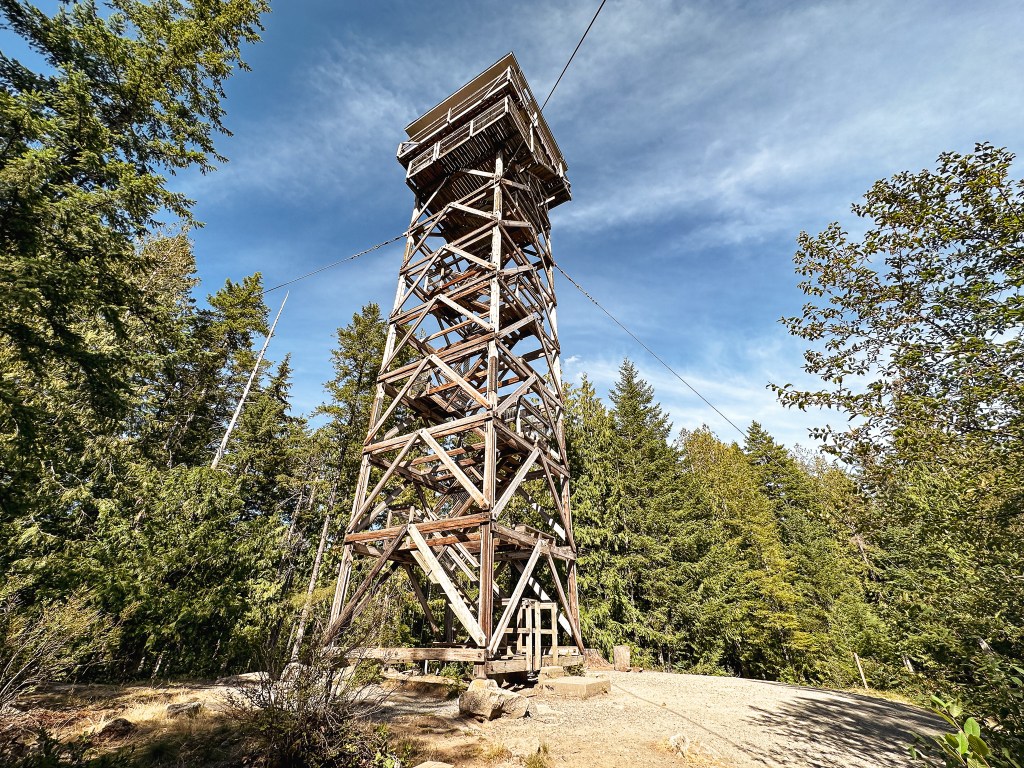
I walked around the base of the fire lookout first to take a few pictures before heading up the stairs. There was a group of four on the catwalk which I assumed were the renters for the evening. I think they thought I waved at them when I raised my hand to shield my face from the sun while taking a picture. I said hello back, but you can see them waving in one of the pictures. Aside from them there was no one else on the summit. I climbed the stairs to the viewing platform that sits just below the catwalk. It’s nice that they added this for day hikers to take in the view, but as a renter I personally would find this slightly annoying. I’m sure you can hear people climbing the stairs at all hours. I did appreciate that there were a couple signs stating not to bother the renters. Not all fire lookout rentals will include this small step to offer some privacy. There was also a disappointing amount of graffiti on the platform. Unfortunately, busier places like this attract all walks of life including the disrespectful and damaging.

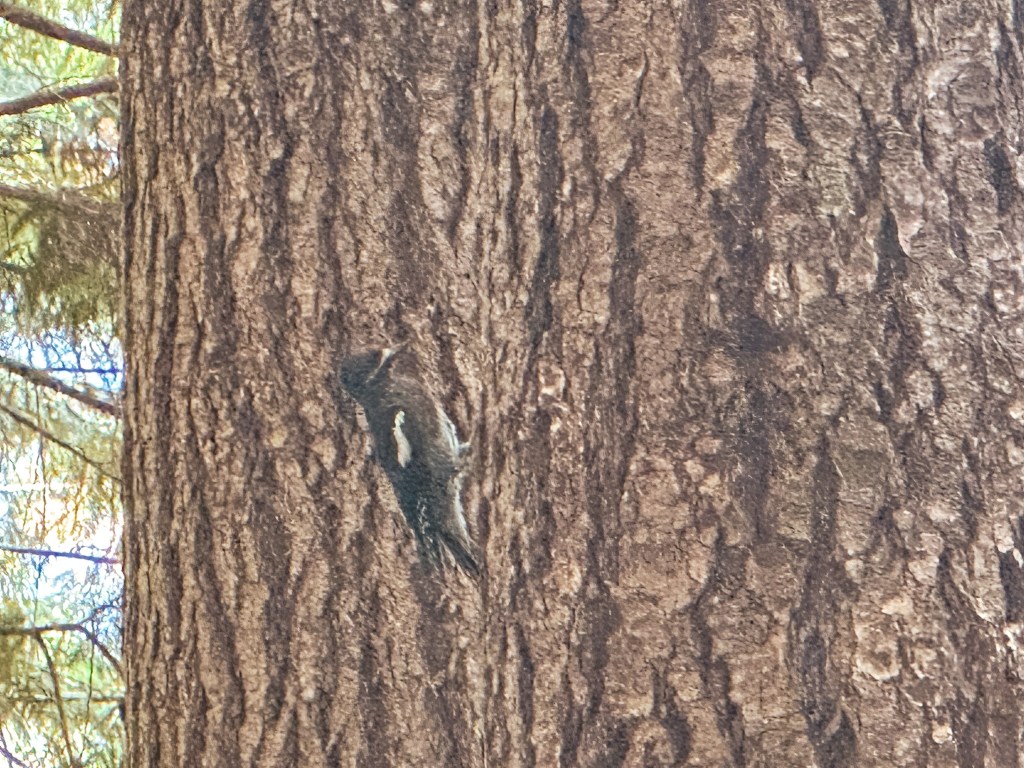
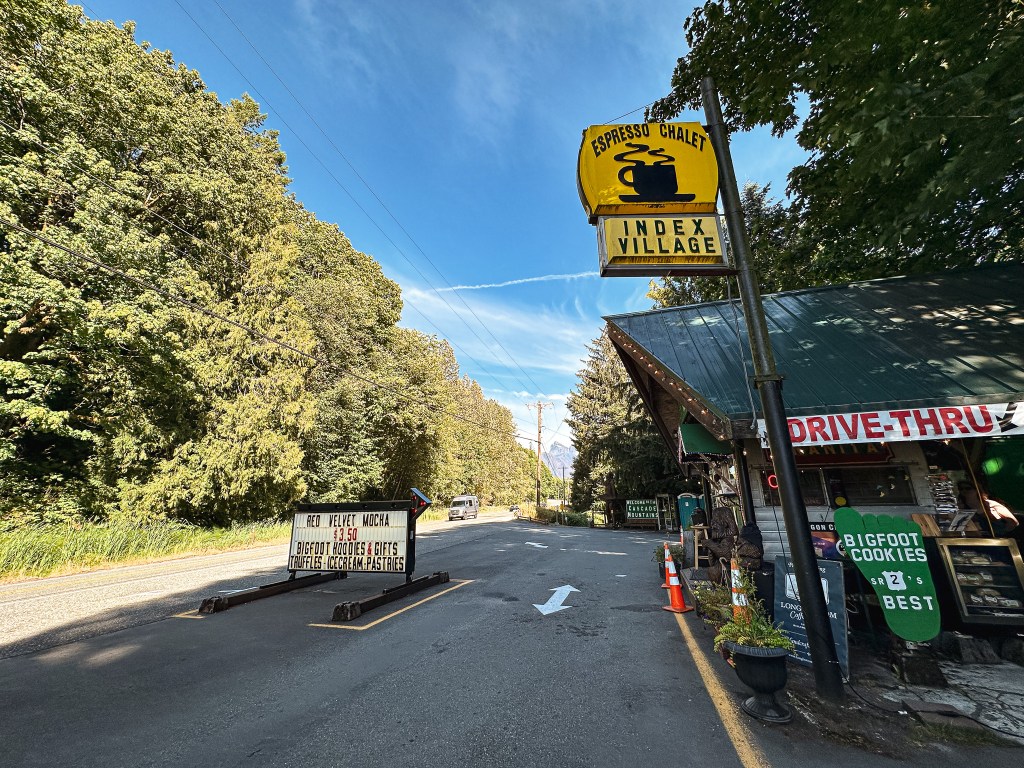
I was passed by another pair of hikers as I headed down the stairs. Once back on the more gradual portion of trail along the ridge, I was typing some notes on my phone from the hike and ended up slipping on some loose dirt. This caught me off balance and I slowly slid right onto my butt. I chuckled to myself and was glad no one else was around to see it. I’m normally more paranoid of falling and take extra careful steps, especially by myself. I had put too much faith in the well graded trail this time. I once again had most of the trail to myself until just before the trailhead. There wasn’t much wildlife around either except for a few ground squirrels and robins. I did stop to watch a mostly black woodpecker for a while though. I originally thought it was a female black backed woodpecker, but after doing some research it appears to be a type of sapsucker instead. The white wing bar was a defining characteristic. I passed two more groups of hikers just before reaching the trailhead, but it was an overall quiet hike for me. It felt good to complete a solo hike for a change. I used to solo hike all the time and it was how I reintroduced myself to nature. But I don’t often find myself alone anymore between my friends and partner that are down to adventure. My Strava app calculated this hike at 2.25 miles RT with 897′ of elevation gain. I decided to stop to get a small latte, as a treat, at the Index Espresso Chalet before heading on to meet my friend in Kirkland. It’s a cute road side coffee stand that offers views from the back deck and sasquatch merch.

History.

Heybrook has been used as a fire detection site since 1925 when a platform tower was built. This was later replaced by a 45′ tower with L-4 cab in 1932. The existing 67′ treated timber tower with 14’x14′ cab was built sometime between 1963 to 1965. The cab was specially designed by the Forest Product Labs per the request of USFS Region 6 engineers. It looks similar to an R-6 cab but was designed to use lighter weight material and be prefabricated off site. It was built with the intention of being packaged and bundled to be delivered by helicopter. This was the only lookout to use this cab design. It was actively staffed into the early 1970s until it was abandoned. The Forest Service site states that the lookout was rebuilt by the Everett Mountaineer Volunteers. But, Rex’s site mentions that volunteers worked on reconstructing the cab during the late 1990s. While TrailChick’s site states the outdoor retailer, Filson, partnered with the National Forest Foundation to refurbish the lookout for rentals. It’s unclear if those three things are referencing the same incident of the lookout being reconstructed or if there were multiple times it received work. Either way, it was opened to the public for overnight stays in 2017 and is still a part of the rental program today.

More Information.

US Forest Service

Washington Trails Association

AllTrails

Recreation.gov

Jumpoff L.O.

Washington Lookouts

Location.

Mt. Baker Snoqualmie National Forest; Administered by Wenatchee National Forest

Status.

Maintained by Volunteers; Currently standing

Estimated drive time from Portland, OR.

4 hours

Date visited.

August 21, 2022

Elevation.

5,670′

National Historic Lookout Register.

US 1518; WA 69

Trip Report.

I’ve come to the conclusion that August is my least favorite month. It has nice longer days, but that is about all it has going for it in my opinion. It is otherwise too hot and things are usually on fire by now. This tends to mean trail closures and lingering smoke as well. My partner often says he’ll fight anyone who prefers 90 to 100 degree temps. I’ll complain about the rain, but I eventually long for it. The smell before it rains. The cooler temperatures associated with it. The fresh air that comes with a well hydrated forest. But I absolutely, whole-heartedly, never long for 100 degree summer days. Maybe I’m being dramatic, but the heat really kicked my butt this weekend. It wasn’t even forecasted to be as hot as it has been the last few weeks. We had just emerged from a one-night backpacking trip with our friends in the William O. Douglas Wilderness. We had an extra day left over for the weekend due to our friends schedules not quite lining up. It was a pretty gradual 5-mile hike out (10-miles RT), but the heat had zapped all the energy from me. Our plan was to head over to Jumpoff L.O. for another night of backpacking without friends. Based on the description from the WTA site there was a nice dry camp 2-1/2 miles into the hike to Jumpoff from Long Lake. But, I vetoed this after getting back to the car and we opted to disperse camp for the night. I needed to recoup if I was going to make the 8-mile RT hike up with over 2,500′ of elevation gain. We would later agree that this was a good call for a multitude of reasons.

Start of NF-653
Pull out parking
Long Lake
Shelter at Long Lake

From HWY-12, we headed east towards Yakima. This was the farthest either of us had been on this highway. We turned right at the junction marked for Rimrock Lake Recreation Area. This is NF-12 on the map, but there were no signs noting that on the road. We followed this paved road until we reached Milk Creed Road, NF-570, off to the left. This is a well-graded gravel road that we took to reach NF-1201. I read online that the paved portion of NF-1201 is a terrible road and this was the better route to access Long or Lost Lake. We didn’t spend much time scoping out the best dispersed spots in the area and picked one in close proximity to where we wanted to be in the morning. Our alarm was set for 5AM with the intention of starting our hike early to avoid the heat. It was still dark when the alarm went off the next morning which prompted us to reset it for 6AM. We then proceed to hit snooze until a little after 6:30AM. We weren’t up and moving as quickly as we had hoped. We turned right onto NF-1201 to head towards Long Lake. You can start the hike at Lost Lake as well but it adds an extra mile both ways that felt unnecessary for this trip. The gravel portion of NF-1201 was well graded as well and only had a few minor bumps to avoid. We parked in a pull out at the junction with NF-653, off to the left, based on a recommendation from a trip report posted to WTA. This is where we would start our hike.

First steep section looking up (sorry bad lighting)
First steep section looking down
Second steep section looking up
Second steep section looking down
Third steep section looking up (bad lighting again)
Third steep section looking down

The morning temps were still cool and bearable as we started walking down NF-653. It appeared to be a crummy spur road from the junction, but quickly turned into more of an ATV track with roots and embedded large rocks. Shortly after we reached the north side of Long Lake, which was blanketed in a green algae, and the notable shelter that marks the start of the route. We were surprised to see a truck on this portion of road too. It’s amazing where people are willing to drive instead of walk. From the shelter, the road continues steeply up a small hill. I had a screenshot of the trail description from WTA since many have mentioned it can be a confusing maze of roads and trails to the summit. Although, I didn’t find the route finding as difficult as mentioned, it was helpful to have for some of the way points. We also had a ranger district map for reference as well. After heading up the road away from the shelter, we were met with an immediate fork. Both routes meet back up with each other a short distance later, but the left is easier on foot. The second fork we headed left again, or straight depending on how you want to look at it. The trail you are following is an OHV trail and has no directional markings for you to follow to the summit. I thought that meant it would be similar to a road walk with some steeper sections thrown in. But, boy was I wrong! In the more gradual sections it was basically a road walk, but the steep sections were no joke. Toss in my fear of heights for good measure and this was now a challenging route for me. There were three notably steep sections that were problematic. All are within the first mile and a half before you reach Louie Way Gap. In all three sections, the road heads up at a steep angle that would be difficult even in an ATV to traverse. It is also made up of loose, rocky, and slick dirt that can make it hard to find stable footings. Heading up wasn’t great, but I knew heading down would be much worse. I took pictures for reference, but you can never quite capture the depth of field in a picture. The second steep section is avoidable by hiking cross country on the slope next to it. The ground is much more stable there than on the road. After the last steep section, we reached Louie Way Gap. It is an open field with a four way junction. I thought the hard climbing was over from here and that we’d have a gradual few miles to the lookout. Wrong again!

Louie Way Gap looking toward the road you came up
Louie Way Gap looking toward the road to Jumpoff
Louie Way Gap
Trail #1127 sign heading back down
It looked so far away from here

We turned left from Louie Way Gap on to NF-613. This is shown as trail #1127 on most maps, but it was once an old continuation of NF-613. It does eventually turn into a single track trail and is no longer drivable to any four wheeled vehicle. There were a few warning signs posted to trees about the upcoming side hill before the road deteriorated in case someone was to try it. The road from Louie Way Gap headed steeply up again. Nothing unmanageable, but it was starting to wear us down as the day was heating up. I thought this would be our final push to the gradual slopes of the Divide Ridge. but wrong, wrong, wrong I was! We found the aforementioned dry camp that had a nice view to the valley below. I would have struggled greatly with a loaded pack to make it here. I’m not sure if that is more a commentary on my fitness level or to the trail conditions. This marked that we were a little over half way there. The trail started to head down from here and the trees opened briefly to a view of our end goal. I stared on in confusion, the lookout appeared to be on a completely different ridge line from where we were. We both had the thought that we were somehow on the wrong trail, but that was impossible given that we followed all the directions. It just so happens that the trail heads down again to a saddle before the final climb. Something I completely missed when looking at the topo map. We could see where the trail crossed the exposed slope to the final ridge line, but it was a bit defeating to see. I already made it this far though, there was no turning back now. The WTA description describes the trail as Jekyll-and-Hyde conditions, which is accurate. Despite drinking water constantly, I could feel my body drying up on the final push, the actual final push, to the ridge. It stayed exposed the remainder of the way to the lookout, but was fairly flat from there. We crossed another four way junction where we headed straight. The NF-613, or Trail #1127, route eventually meets up with the drivable road NF-1302 to the summit.

I’ve read the NF-1302 road is 13 miles of rough and rocky conditions. But, they are in the process of building a communication tower on the summit which means improvements could be made. This was partially our motivation for making it up here sooner than later. We wanted to see the fire lookout before the area was obstructed by more communication buildings. The 100′ communication tower is already in process and the summit was littered with building equipment. We had the lookout to ourselves while we took pictures, signed the log book, and enjoyed a brief lunch. As we were finishing lunch, a couple drove up in their Jeep and greeted us on the catwalk. We asked about the road conditions and the guy said they had improved since the last time he was up there on his motorcycle. They joked that they took the easy way up in comparison. We only saw them and a group of three ATVs near the summit. We had the trail to ourselves the remainder of the time.

The hike back down was less grueling, but the heat was still giving me a hard time. I was dehydrated and dreaded descending the steep sections. The first one I ended up making it down by half sliding on my hip while I braced and stepped with my dominant foot. Mind you this is only a me problem between the two of us. My partner has little to no issues scrambling down these kinds of slopes. Yes, he’d agree it was steep and a bit sketchy, but he can at least descend while standing up. My main issue, besides just having the fear of heights, is that my center of gravity is in my ankles. It should be located somewhere like your core, but for me it’s not. Or at least I have that perception and my body acts accordingly to that perception. I typically use trekking poles to help stabilize my upper body. Anyway, this means that any time I feel unstable or like I’m going to fall I get low to find my stability. This leads to crab-walking, side-stepping, butt-scooting, or bear-crawling my way down steep loose slopes. I have no shame in getting dirty if I don’t feel safe. I’ve done it before and I will continue to do so in the future. Though I will note there have only been a few trails steep enough for me to roll around in the dirt like this. The second steep portion was once again easily avoided by cross country hiking the stable slope on the side of the road. I was already covered in dirt by the third steep section that I decided to take it low again. We made it back to the car in one piece, but not before this trail chewed me up and spit me out rotten. I conceded the car to my partner to drive us most of the way home.

History.

Jumpoff, often mistakenly labelled as Jumpoff Joe, was first established in 1923 with a D-6 cupola cabin. It was replaced by the existing R-6 flat cab sometime between 1958 and 1961. It was only sporadically staffed after the 1960s for emergencies. It fell into a state of disrepair with heavy vandalism and neglect. Starting in 2010, a group of volunteers decided to start restoring and maintaining it. Mike Hiller, who staffed the lookout during the summers of 1969 to 1973, was the driving force along with the “Friends of Jumpoff” volunteers. They completed a lot of their work by the summer of 2018. It is in better shape and still standing thanks to their efforts.

More Information.

Washington Trails Association

AllTrails

Willhite Web

TrailChick

Peakbagger

Burley Mountain L.O.

Washington Lookouts

Location.

Gifford Pinchot National Forest

Status.

Restoration in progress; Currently standing

Estimated drive time from Portland, OR.

3 hours

Date visited.

August 13, 2022

Elevation.

5,304′

National Historic Lookout Register.

US 356; WA 37

Trip Report.

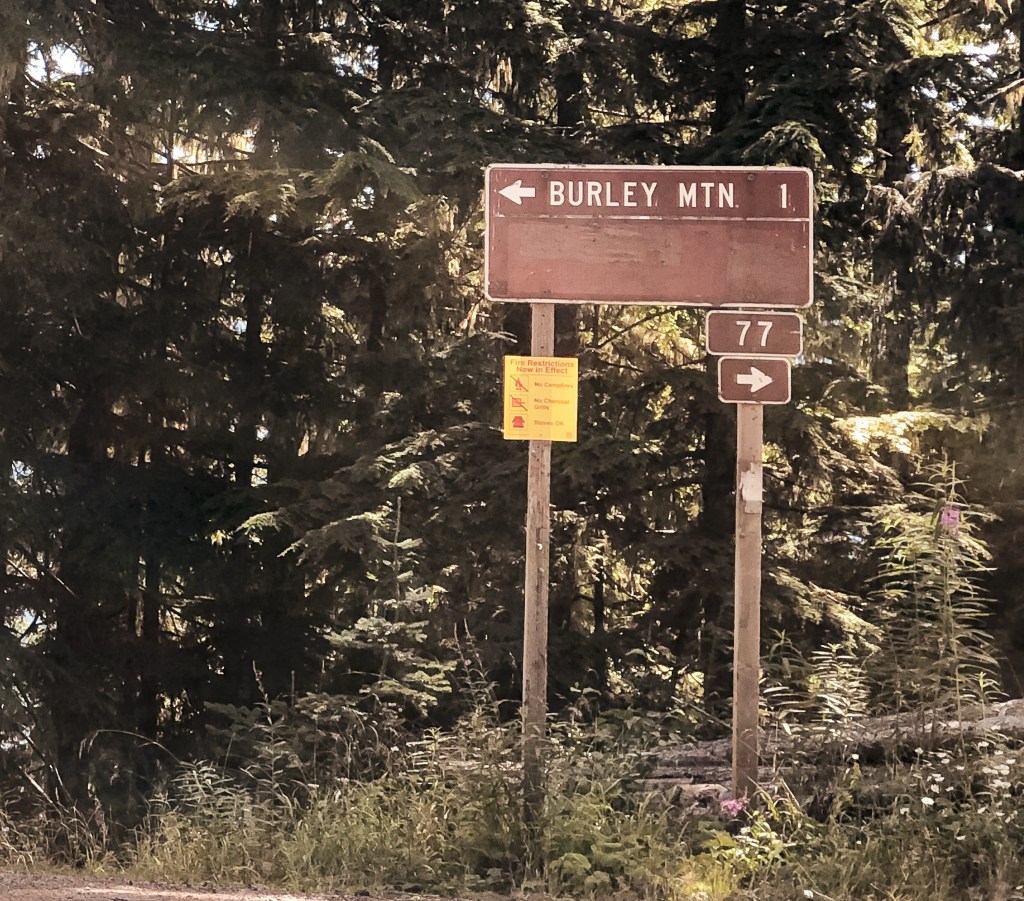
My partner and I weren’t as motivated to get up this morning. We planned to head to Burley Mountain as a day trip since I had family obligations on Sunday. This definitely would have been better for an overnight trip, but it’s doable as a really long day. We hit snooze a few times before grumbling out of bed around 8AM. After getting ourselves in order, we were able to get on the road before 9AM. We headed north on I-5 into Washington until it met up with HWY-12. The section of HWY-12 from I-5 to Packwood provides great access to different recreation opportunities in Central Washington. I’ve used this same highway to access Suntop Mountain L.O., Shriner Peak L.O., and some other trips not mentioned on the blog. This time we stayed on HWY-12 until we reached the community of Randle. We turned right onto Cispus Road which also starts out as HWY-131. Shortly after crossing a bridge you will want to bear left to diverge from HWY-131 and stay on Cispus Road. We stayed on Cispus Road until we reached the Cispus Learning Center. There were a few needed turns to stay on the right road but all were marked with a sign. You can either park at the trailhead here for a 14 mile RT hike via the Covel Creek Trail or continue past to attempt a drive up. I’ve read the trail is riddled with dead fall that can be difficult to navigate. We opted to attempt a drive up to get as close as possible for a road walk. From the Cispus Learning Center the Cispus Road turns into NF-76. There are two different access routes from here. You can either turn left onto NF-77 or NF-7605. I read that NF-7605 is a rough high clearance only route, so we opted for NF-77 that is partially paved. There is a sign for Burley Mountain at the NF-77 junction that notes it at 16 miles away. I zeroed my odometer here.

Sign at NF-77 and NF-76 Junction
Sign at NF-7605 and NF-77 Junction
Landslide over NF-77
NF-086 sign
Sign at NF-086 and NF-7605 Junction

The NF-77 road might be paved, but it is not a good road. My partner and I have found that paved roads in the forest tend to be worse than gravel. Any deterioration, pothole, or washout becomes significantly more treacherous with broken pavement. They just don’t see the maintenance needed to stay in decent condition. We were on pavement until the road reached a junction with NF-7708. After NF-7708, the NF-77 road turns to gravel and the conditions improve significantly. There were still a few potholes to avoid and a section that was covered by a landslide, but it all felt like gliding over silk in comparison. Eventually, we came to a four way junction that was signed. The sign noted Burley Mountain was only a mile away. Not only is this sign incorrect on mileage, but if you’re not paying attention you could head down the wrong road. We took a left onto NF-7605 at the junction, which is marked by a road sign. I was worried about the conditions along NF-7605 and that we’d get stuck in a tricky situation. While my partner was worried about not having enough time for a long road walk and getting back late. But, I was motivated to get in some hiking miles since we seem to be doing more driving than walking these days. I pulled us over in a pull out shortly after heading up NF-7605 and we started our road walk. My odometer read that we drove 14 miles. We walked along NF-7605 for at least a mile or mile and a half until we reached the junction with NF-086. There is another sign here for Burley Mountain that says it’s only a mile away. Deja vu! This time it was accurate. After walking along NF-7605, we realized the Civic could have made it to the junction with NF-086. I wouldn’t drive a low clearance vehicle on NF-086 though.

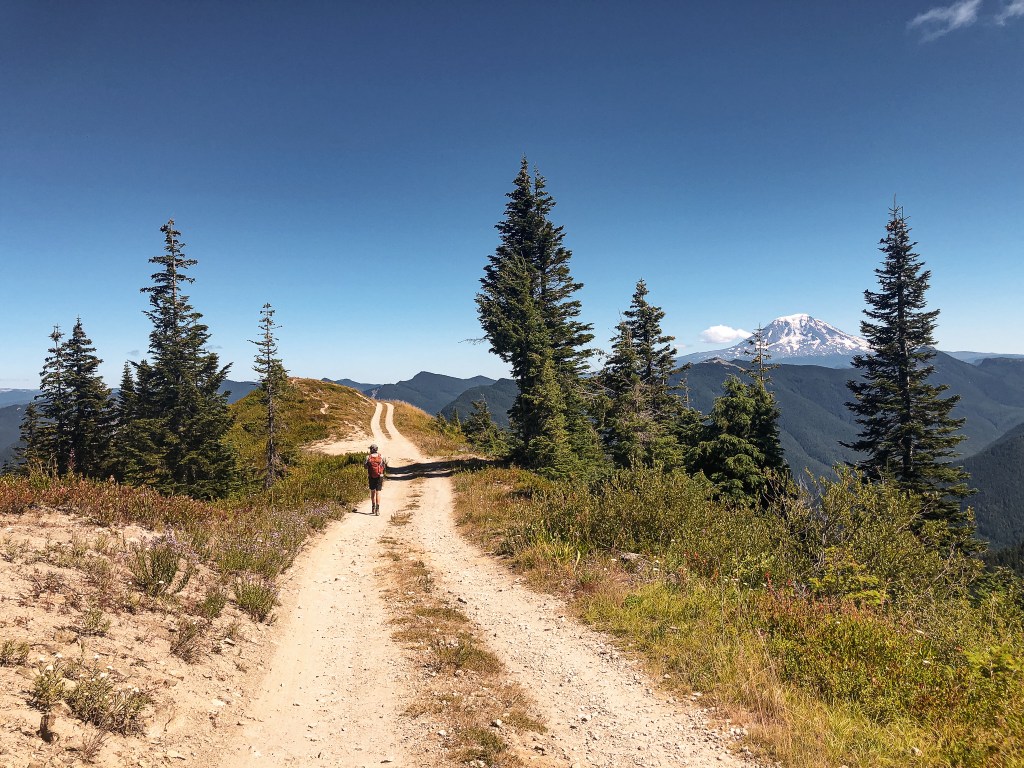
The final mile to Burley Mountain was hot, dusty, and exposed. It’s a narrow road with steep drop offs and is fairly busy to vehicle traffic. I would proceed with caution if you decide to drive the road. There is no where to pass on certain sections if you meet oncoming traffic. There was a dirt bike and truck heading down as we were walking up. The only people on the summit when we arrived was an older couple from Nevada that had parked in the lower pull out. We briefly spoke to them because they had initially been trying to find the alternate trail to Angel Falls. This is a hike that starts at the trailhead by the Cispus Learning Center. They had heard the bridges were washed out and wanted to try from the Burley Trailhead. Instead, they had accidentally ended up all the way up here after following their GPS. I’m not sure if by Burley Trailhead they meant where the trail meets up with NF-7605. But, if they did, it would have been a long and steep hike down to the waterfall. I asked if it wasn’t a ford-able creek, but it sounded like they only read online about the bridge washouts and didn’t check it out for themselves. We couldn’t offer them much more information than that since we walked the road instead of the trail. We wished them luck as they headed back to their truck and we continued to check out the lookout.

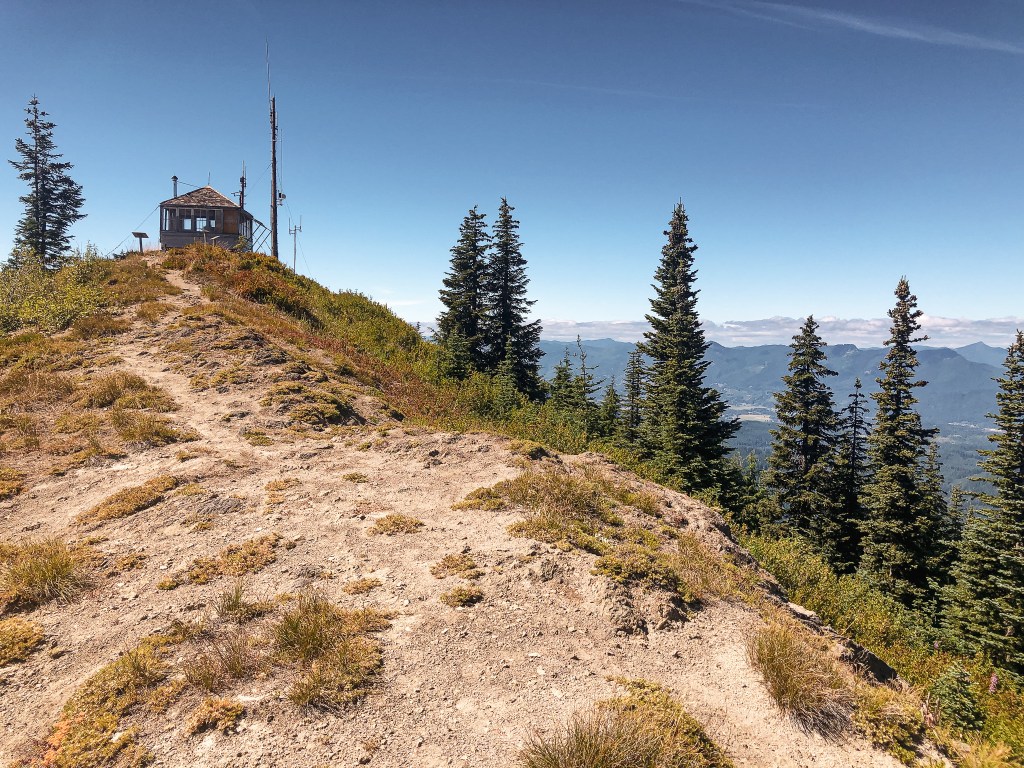
As far as I had known, Burley Mountain was still available for overnight stays on a first-come first-serve basis. We had even talked about potentially doing that, but we were dissuaded by the popularity of this area. We had read of reports from people driving up at all hours of the night which would, personally, freak me out. But, after seeing the condition of the lookout it is obvious that this is no longer an option. There were signs posted on it from the Forest Service stating it was currently under restoration work and being proposed for the rental program. You can tell it was recent work too. The windows were gone on one side and it looked like there were new wall supports added. The stairs had been removed and it looked like there was work being done on the foundation as well. Inside the lookout there is still a logbook to sign and a hand written note stating that the USFS is planning restoration work for the Summers of 2022 and 2023. We had the summit to ourselves after the couple from Nevada left and enjoyed a late lunch at the picnic table. It seemed we were getting lucky on our timing visiting some of these busier fire lookouts. We didn’t see anyone else until we started to head back down the road. A truck, 4-runner, and two dirt bikes proceeded to pass us all within our walk back down NF-086. We didn’t get back to the car until close to 4PM and home until around 7PM. It was a long day.

If you have any questions about the Burley Mountain project, you can e-mail matthew.mawhirter@usda.gov or call the Randle ranger station.

History.

Burley Mountain started as a fire camp in the 1930s back when the forest was known as the Rainier National Forest. In 1934, a 14’x14′ L-4 ground cab was built on the summit and still stands today. It offers views to Mount Rainier, Mount Adams, Mount Saint Helens, and even Mount Hood. It was actively staffed every summer until 1974 when it was subsequently abandoned. It had been vandalized and neglected over the years, but was updated in 1984 by a group of Volunteers and Forest Service employees. The most recent restoration work was completed in 2009 by FFLA member Dick Morrison and volunteers. For a long time, it has been open to the public for first-come first-serve overnight stays. But, it seems even with the love of the community this Fire Lookout has fallen into bad shape once again. Possibly due to the popularity of the area and the ability to drive up. The Forest Service has taken restoration work into their hands once again to potentially add this on to their rental program. We will see if their venture is successful. I’d personally recommend adding a gate.

More Information.

US Forest Service

Washington Trails Association

AllTrails

Suntop Mountain L.O.

Washington Lookouts

Location.

Mt. Baker-Snoqualmie National Forest

Status.

Staffed by Volunteers; Currently standing

Estimated drive time from Portland, OR.

4 hours

Date visited.

August 6, 2022

Elevation.

5,280′

National Historic Lookout Register.

US 92; WA 7

Trip Report.

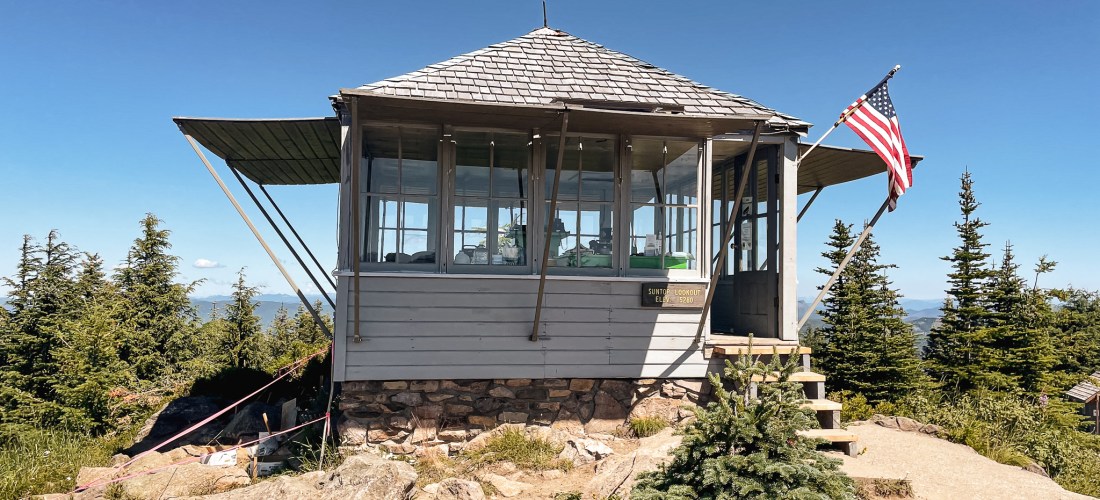
Every year I like to plan a camping trip for my friends and I, or at least for the ones that are interested in camping. It started as a tradition with my friend, Anjelica, at South Beach State Park in 2016. It was the first time we came to the realization that we could plan a camping trip without our parents. It was just us and her boyfriend at the time. In 2017, it really took on its true form as a girls trip when two more friends joined us. During that trip, on a hike, there was a trail sign that someone had carved in the words “Lost Boys” and the year they were there. We joked that we were now considered the Lost Girls. Since then our little group of four has managed to go camping every year (minus a year for the Pandemic) and we still jokingly refer to ourselves as the Lost Girls. I always try and pick somewhere new for us to explore when planning. It generally ends up being in central or northern portions of Washington since we are split between Portland and Seattle. This year was a bit different since we had two more friends and three dogs joining us. The campground I picked this year, Silver Springs, was in the Mt. Baker-Snoqualmie NF and close to plenty of recreation opportunities. I didn’t expect to explore as much as we usually do just based on the logistics of getting us all around. Traveling with dogs immediately cuts out any trail options in the National Park too. Out of curiosity, I decided to look at the potential fire lookouts in the area. I saw we were really close to Suntop, which is just outside of the National Park with a great view of Mount Rainier. I recommended it to my friends who all seemed to be down. Step one in slowly tricking my friends into going to fire lookouts. I was still skeptical we’d be able to round up everyone for the caravan and short hike though. But, even after we all made it to camp they seemed motivated to make it happen. Not that any of them read this blog, but thanks friends!

We left camp around late-morning on Saturday with a two car caravan. I made the mistake of not bringing a map or doing much research on the route needed to get there. That’s on me, but I truly didn’t think it was going to happen. Luckily, I had a vague idea on where we needed to turn from looking at the route prior to the trip and guessed correctly. From HWY-410, we headed north and turned left onto NF-73. There wasn’t a sign for this road, so it would have most likely been a guessing game regardless. We were able to get service here and confirmed the remainder of the route. We stayed on NF-73 for a little over a mile before we turned left onto NF-7315 which was signed. You will stay on NF-7315 for around 5 miles until you reach the trailhead or summit. There is a gate just past the trailhead that might be open depending on when you visit. We were able to continue past the gate since it was open and I have the luxury of friends with high-clearance vehicles. The road getting there was rough and would need caution in a low-clearance vehicle just to reach the trailhead. Past the gate the road is significantly worse, but we were able to roll around the large embedded rocks with no issues in a Toyota RAV4 and Subaru Outback. There was a sedan that had made it to the summit too, but it didn’t look like it would have been worth it. We also passed a large RV broken down in a pull out along NF-7315 which is a skinny and steep mostly single track road. A reminder that just because someone has done it doesn’t necessarily mean it’s a good idea. My partner and I always joke about meeting something like that on these back roads, but I never thought I’d actually ever see one.

From the parking area on the summit, which has room for 10 to 15 vehicles, it was a short easy walk to the lookout. I was hoping to at least do a little portion of the hike, but I can’t complain about being chauffeured to the summit. The fire lookout can also be reached via the Suntop Trail #1183. If you park at the trailhead along NF-7315 it is only a half of a mile to the summit. But, if you are looking for more of an adventure you can start at the Suntop trailhead, which is accessed from a different road, and hike the 16 miles round trip. When we approached the fire lookout we were greeted by the friendly attendant on duty. I didn’t catch his name or ask as many questions as I wanted to because of all the people. But, he did mention he was staffing it through a volunteer partnership with the Forest Service. He was also only staffing it for two or three days before someone else would come up to volunteer and rotate service. We didn’t stay for long after taking pictures since we left our lunch at camp. I ended up driving my friend’s RAV4 back to camp since she wasn’t keen on the steep drop offs along the road. She also has a fear of heights like me, but I’m more used to driving on these kinds of roads. It was helpful for me to see the road conditions from the drivers seat for when I inevitably come back with my partner.

History.

Suntop was built in 1933 as a 14’x14′ L-4 ground cab. It is one of two remaining lookouts of its kind on the Snoqualmie NF. It was used for the Aircraft Warning Service from 1942 to 1943 during World War II. An access road wasn’t built to the summit until 1956. Although the same structure still stands today, it was refurbished in 1989. It is still staffed on a volunteer basis through the Forest Service.

More Information.

AllTrails

US Forest Service

Washington Trails Association

Meadow Butte L.O.

Washington Lookouts

Location.

Washington State Division of Forestry

Status.

Abandoned; Currently standing

Estimated drive time from Portland, OR.

2 hours

Date visited.

June 11, 2022

Elevation.

3,620′

National Historic Lookout Register.

US 1550; WA 80

Trip Report.

The weather in the Pacific Northwest the last few weeks has been nothing but rain. This is good for our fire season but has been a bit depressing for finding motivation. It seems to not matter what corner of the state you look in, you will find rain in the forecast. It has been a much wetter spring than the past few years. According to The Oregonian, it’s the wettest spring we’ve had in the past 81 years. My partner and I have surrendered to the fact that we’re just going to have to do some things in the rain since staying home does little for our mental health. I am not one to let a little rain stop me but it is that time of year where I’m ready for some sun and clearer skies. We first looked farther south towards Wagontire Mountain L.O. (post) which seemed to have the least predicted precipitation for the weekend. We debated whether a one way 5-hour drive plus 6 miles RT hiking in potentially rainy weather was worth it for one night. On most weekends, this would be a yes from me but my motivation was severely drained. The area was also forecasted for windy conditions with potential thunderstorms. It was less than ideal after our Memorial weekend trip. On a whim I decided to look at the forecast for Meadow Butte. I was shocked to find a partly sunny forecast. This one had been on our list to revisit since our first failed attempt in November last year. We concluded that Wagontire Mountain (post) could wait and it was time for a redemption.

November 6th, 2021 – We attempted to visit Meadow Butte on a rainy fall day. Meadow Butte is a crows nest lookout and we figured there wouldn’t be any significant views from the summit. From Trout Lake, we took the right at a Y-intersection onto the Mount Adams Recreation HWY then another right onto Sunnyside Road. If you continue straight on Sunnyside Road it eventually turns into the Trout Lake HWY. The Trout Lake HWY will take you up out of the valley into a more forested area. Once in the forested area you will want to take a left on to S-1400. The wood road sign is small, weathered, and easy to miss. You will stay on S-1400 until you reach a 6-way junction. The roads out here are poorly marked, but you will want to continue straight at this junction onto S-4210. S-4210 isn’t as good of a road and has some road hazards for lower clearance vehicles. We parked in a pull out after an unmarked spur junction. The spur is off to the right and you will want to stay to the left. I think most of the road hazards could be navigated with caution if you have the determination to drive all the way in a low clearance vehicle. We walked up the road another 1/3 of a mile to where it ends. You will pass another unmarked spur on the left but you will want to keep to the right. Once at the end of the road you will need to start walking if you haven’t already. It was elk rifle season when we went so there were already a few trucks parked here. Make sure to wear something bright when hiking during hunting season and always be cautious of where you’re traveling. We wore blaze orange beanies to help us stand out. You will walk on old decommissioned roads all the way to the summit. It is roughly 2.5 to 3 miles from this point to the crows nest. We knew the weather wasn’t going to be good, but we didn’t expect it would be as bad as it was. It started snowing on us with significant wind shortly after we started hiking the decommissioned road. We were following directions and a map from Eric Willhite’s trip report (site). You should be able to see the crows nest from your road walk but our visibility was only about 100 yards. The roads out here are not marked either. We first headed up the fourth spur off to the left based on Whillhite’s map but it seemed to head away from the butte, so my partner and I decided to turn around. We then headed up the third spur from the left but as it headed up hill we still couldn’t see any signs of a lookout. We were both cold, frustrated, and tired of being pelted in the face by snow. We disappointedly surrendered to the weather and headed back to the car.

S-1400 sign
Start of S-1400 road
End of S-4210; Park here
Start of the hike
5-way junction; continue straight
Junction with 4th spur; Head left
View up the 4th spur road
1st junction off the spur; head left
View up the left turn
Overgrown junction across the meadow from the approach; Take a hard right between the trees
overgrown junction; head up the road between the trees
This road will take you to the summit

June 11th, 2022 – We parked our car before 11AM in another pull out on the same road and walked up the remainder of the way. Our drive over was wet but the forecast called for a break in weather closer to noon. The sun made an appearance shortly after we parked and decided to stick around this time. I even had to break out my sunscreen. The old road starts out fairly overgrown and opens up into an area that has been logged significantly. Once in the clear cut, we had a direct view of Meadow Butte. This made it much easier to determine where we were headed and if we were on the right roads. You will pass three roads off to the left before you reach the correct road. The first spur off to the left looks like it climbs steeply up to Quigley Butte. The second road is at a major 5-way junction where you will want to continue straight. The third road looks like it might head towards Meadow Butte but is not the route you want. The fourth spur off to the left is the correct road. You will lose sight of the crows nest before reaching this spur. It turns out we initially had the right road during our first attempt, we just didn’t continue far enough up. We were probably less than half of a mile from it. Once on this road you will meet a couple more junctions as you climb towards the summit. The first junction is with an overgrown road off to the right, you will want to stay left. The road to the left heads up the butte and eventually provides a view of the crows nest again. You will be very close from here and have the option to bushwhack to the summit or continue on the road. We decided to continue on the road which will appear to head away from the direction you need to go and drops down into a meadow. The road is faint here but continues across the meadow. At the end of the meadow the road meets a junction which makes a sharp right turn back towards the butte. This road will take you all the way to the summit. Once on the summit, we were surprised to get decent views towards Mount Adams and the Trout Lake valley. I believe on a clearer day you would be able to see most of the high peaks. We enjoyed a late lunch while taking pictures. It’s amazing how much of it is still here after being abandoned for over 60 years. We said our goodbyes to Meadow Butte and celebrated a successful redemption on our way back to the car. Despite some ominous clouds in the distance threatening to come our way, we didn’t get rained on at all during our hike.

History.

Meadow Butte was established in the early 1940s when an enclosed cab was built atop of a 86′ ponderosa pine tree. It was originally used to oversee railroad logging operations by the J. Neal Lumber Company until the Washington Division of Forestry took ownership in 1944. A cabin was built during this time for the lookout attendants to use as living quarters. It’s presumed they used a tent before this was built. The crows nest was abandoned in 1958 but is still standing strong. The cabin used for the living quarters was moved to the DNR compound in Glenwood and used as a storm shelter. There is also some sort of communication building and rod on the summit that look like a fairly recent addition.

Columbia Breaks Fire Interpretive Center

Washington Lookouts

Location.

Entiat, WA

Date visited.

March 25, 2022

Trip Report.

We decided to stop off at the Columbia Breaks Fire Interpretive Center for a quick stretch and lunch before heading to our weekend reservations at Steliko Point (post). The building was closed during our visit but the parking area and interpretive trail were still open to the public. The self guided trail is only 1/2 mile and features three fire lookouts that were relocated and restored. You might also see a few Marmot’s along the trail, they like to hide among the rocks. The main focus of the trail is to educate on the historic impact of wildfires and its importance in ecology. It also touches on the pros and cons of human effects in fire management. If you like fire lookouts and find the history of wildfires interesting this is worth the stop while in the area. The CBFIC is a non-profit and financed through donations. Places like this are important for preservation and education. Please donate if you are able or visit their website to learn about getting involved!

Chelan Butte L.O.

Former Fire Lookout Site Register: US 1391; WA 291

Chelan Butte L.O. is a 28′ treated timber tower with 14’x14′ standard L-4 cab. It was moved to the CBFIC in 1995, but originally sat at 3,835′ on a butte overlooking the town of Chelan and Lake Chelan. The current lookout was built in 1938 by the CCC as a replacement for the original tower that burned down. The original lookout built on Chelan Butte was a 40′ pole tower with L-4 cab in 1936. It was placed on the National Historic Register of Historic Places in 1990. The lookout, for the most part, maintains it’s original integrity but the shutters were replaced and the tower was lowered by 4′ to accommodate the CBFIC site.

Flattop Mountain L.O.

Former Fire Lookout Site Register: US 1315; WA 215

Flattop Mountain has had a unique history of lookouts throughout the years. It has an elevation of 4,394′ and is located in the Gifford Pinchot NF. It was named due to it’s broad and flat summit. It was so broad that they developed the site with two fire finders at each end in the 1920’s. The remaining lookout that can be found at the CBFIC is a replica of the lookout from the east point of the mountain. Some of the old wood from the lookout was used in the reconstruction, specifically the roof and wooden frame supports.

East Point

The first structure built on the summit of Flattop Mountain was a 16’x20′ frame house on the east point in the early 1920s. Around the 1930s they moved the frame house to the west point and built a 7’x7′ foot frame cab in it’s place. It was quickly replaced by an L-5 cab in 1933. The reconstructed replica that can be found at the CBFIC is based off the lookout that was built in 1946. It was a prototype 2-story 14’x14′ foot frame cab with slanted windows and curved hip roof. It is the only one of this style to ever be built. Originally it was thought to be the next generation of lookouts, but the Pacific Northwest was standardized on the R-6 flat top cab instead. The site was abandoned in 1960 where the lookout was subject to vandalism and fell into disrepair. There were plans to destroy it, but the Forest Fire Lookout Association was able to dismantle and relocate it to the CBFIC in 2005.

West Point

The history of the west point of Flattop started in 1930 when they moved the 16’x20′ frame house over from the east point. The house was updated in 1934 when they added two screen porches and an observation cupola. This was used until the site was abandoned and the west point house was destroyed in 1960.

Badger Mountain L.O.

Former Fire Lookout Site Register: US 1383; WA 283

Badger Mountain L.O. is a 14’x14′ standard L-4 cab that used to have a 18′ treated timber tower. It was originally constructed in the 1930s by the CCC for Lion Rock located in the Cle Elum Ranger District. It was later moved to Badger Mountain just outside the Wenatchee NF in Douglas County. The site was situated at 3,498′ and chosen due to its vantage point of the Wenatchee NF across the Columbia River. The lookout was actively staffed up until the 1970s where it was moved to emergency status. Its last recorded use was during the Dinkelman Fire in 1988. In 1990, it was placed on the National Historic Register of Historic Places and then relocated to the CBFIC in the fall of 1999. The shutters were replaced due to prolonged weather exposure but otherwise the lookout has undergone minimal change since it was originally constructed.

More Information.

Columbia Breaks Fire Interpretive Center

Steliko Point L.O.

Washington Lookouts

Location.

Okanogan-Wenatchee National Forest

Status.

Rental program; Currently standing

Estimated drive time from Portland, OR.

5-1/2 hours

Date visited.

March 25-27, 2022

Elevation.

2,586′

National Historic Lookout Register.

US 1096; WA 62

Trip Report.

My partner and I found Steliko Point L.O. when we were researching how many lookouts are currently on the rental program in Washington. We were surprised to find that there were still a decent amount of openings for reservation, unlike Oregon lookout rentals that book up the instant they are listed as available. I’ve always wanted to stay in a lookout but never really took the time to do my research to obtain a reservation. We picked the last weekend in March because we wanted a weekend that would possibly be snow free, decent weather, and still have the gate up on the road. Based on past trip reports my Civic wouldn’t have made it up the road anyway and we wanted to decrease the amount of un-expected visitors possible.

Friday.

We woke up early Friday morning and started our long drive towards Steliko Point. There are a few ways to get there from Portland but we decided to head up I-5. From I-5 you will need to cross over via I-90 to connect with HWY-97 to eventually get to HWY-97A. We made a quick stop in Entiat to refuel and visit the Columbia Breaks Fire Interpretive Center (post). A must see if you are a lookout enthusiast like us! After visiting the museum, we headed back down HWY-97A and turned right on to Entiat River Road towards the town of Ardenvoir. Just past Ardenvoir you will turn right on to Steliko Canyon Road which turns into NF-5310. The road will be gated but there is a sign for parking near the Forest Service sheds. You will need to park parallel with the cement blocks. Once parked we had a quick lunch and loaded up our packs for the short but steep 1.6 mile trek up the road. You will gain around 1,200′ of elevation during your hike. The lookout is outfitted with mattresses, folding tables, a propane stove, a propane fridge, heater, and other basic cleaning amenities. This means you can leave your sleeping pad and camping stove at home. The only essentials we had to carry up were our clothes, cook ware, sleeping bags, food, and water. There is no water source at the summit and it is a very exposed area, so make sure to plan accordingly. We over shot on the amount of water needed by bringing (1) 3 gallon jug, (2) 3 liter hydro packs, and (8) 32oz Nalgene bottles worth. The amount of water weighing us down made the hike up harder than it needed to be. Once at the summit you are able to access the lookout via keyed entry. There is a lockbox that you are given the code to with your reservation. We were surprised to find that previous guests had stocked the lookout with even more amenities than listed. You shouldn’t assume there will be everything you need there but there are a lot of leave behinds incase you do forget something such as games, cooking utensils, books, food, and even water. I loved the community feel and connection it gave from past guests especially after reading the entries in the guest book. This lookout has only been on the rental program since November 2019 and had a brief gap where it was closed from April 2020 until May 2021 due to the Pandemic. Or at least that is what I gathered based on the gap in entries from the guest book. We enjoyed our dinner with a nice sunset before heading to bed early. We were both tired from the long day of driving to get there.

Photo taken by Garnet

Saturday.

I woke up at 6:30AM to see if I could catch the sunrise but it was mostly clouded and didn’t offer anything spectacular. We still had great weather for most of our trip with mild temperatures and partly cloudy skies. During breakfast on the catwalk we were able to spot 40+ mule deer grazing on the hillsides. I read that this was a known area for their winter range and that they were frequently spotted from the lookout, but I didn’t think we’d see so many of them together. We were also able to spot Tyee L.O. and another lookout that someone built on private property. A trip report mentioned that you could see Sugarloaf Peak L.O. from here as well but the mountain that they identified was actually Baldy Mountain. After breakfast, my partner decided to hike along the ridge trail while I hung around the lookout to read and draw. He came back for lunch and we relaxed around the lookout for most of the afternoon. A day hiker with their dog was the only person we saw for most of the day. My guest book entry mentions that this is the only person we saw the whole trip but that is inaccurate. Later in the evening, we decided to hike down to the ridge below where there is another road and walk around. My partner ended up hiking cross-country in a different direction, so I was back at the lookout earlier than him. While I was waiting for his return, a runner came up the road and climbed the catwalk. He said he was training as a wildland firefighter in the area but didn’t realize anyone was up here this time of year. I don’t think he knew this was listed as a rental. He apologized for spooking me and invading my space before heading back down. Our interaction was brief and friendly but it might be worth adding a sign somewhere visible for day hikers and visitors to be aware. After eating dinner, we both read the books we brought until it got dark. I ended up finishing my book while there and decided to leave it behind for future guests to enjoy. Hopefully someone enjoys true crime as much as I do because I left behind a copy of Red River Girl: The Life and Death of Tina Fontaine by Joanna Jolly. Saturday night was a bit stormy with mild winds and a sprinkle of rain. We even saw a bit of lightning in the distance as we were trying to fall asleep.

Private Lookout
Tyee Lookout

Sunday.

Sunday morning, we saw the same herd of 40+ mule deer while we savored our last few hours at the lookout. Part of the condition of your stay is to pack out your trash, sweep, and wipe down the counters. Although this rental is managed by Wenatchee Valley TREAD, It’s a collective responsibility to help keep this place in good condition for others to enjoy. We left behind any remaining water we didn’t use for future guest who might need it. We spotted some day hikers headed up the road while we were locking up and took that as our cue to leave. Our packs were significantly lighter than when we started and the hike down was a breeze. We passed another group of day hikers on our hike out and even saw the same wildland firefighter start his run up the road while we were having lunch at the car. Driving back to Portland, we decided to take the more scenic route following HWY-97 most of the way until it meets up with I-84. We could see Lorena Butte L.O. from our drive and stopped at the Stonehenge Memorial while in the area. Overall it was a relaxing and quiet weekend away.

History.

Steliko Point has been used as an observation camp site since 1925. The current lookout is a 16’x16′ L-4 cab with 10′ tower and was built in 1947. It was actively staffed up until the mid-1990s and is still registered for emergency use. There are signs of another foundation on the summit, but I couldn’t find any information online about previous additional structures. Steliko Point is one of only three remaining lookouts in the Entiat Ranger District. Given it’s proximity to Ardenvoir and low elevation, it is also one of the few lookouts wired on the power grid. Yes, that means you can charge your phone during your stay. There are only USB ports though, so don’t bring anything that requires a plug. Over the last few years it has undergone remodeling and updates by volunteers to open it up for the rental program. It is now mostly managed by the non-profit Wenatchee Valley TREAD for maintenance and overnight stays.
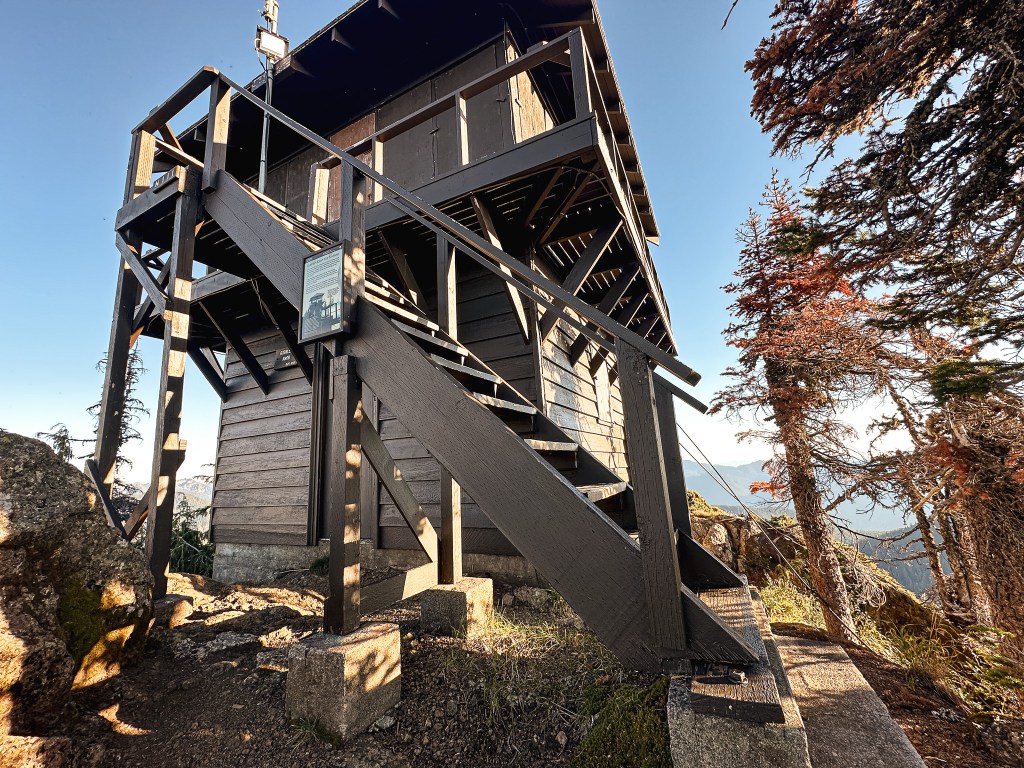
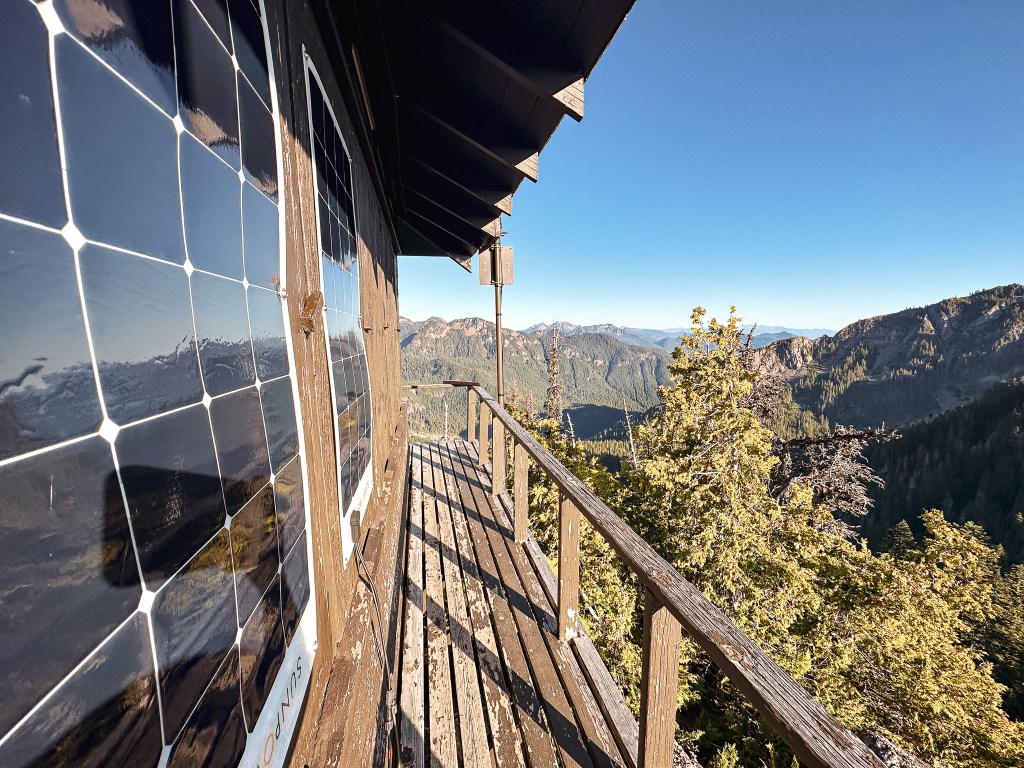
More Information.

Washington Trails Association

US Forest Service

Recreation.gov

AllTrails