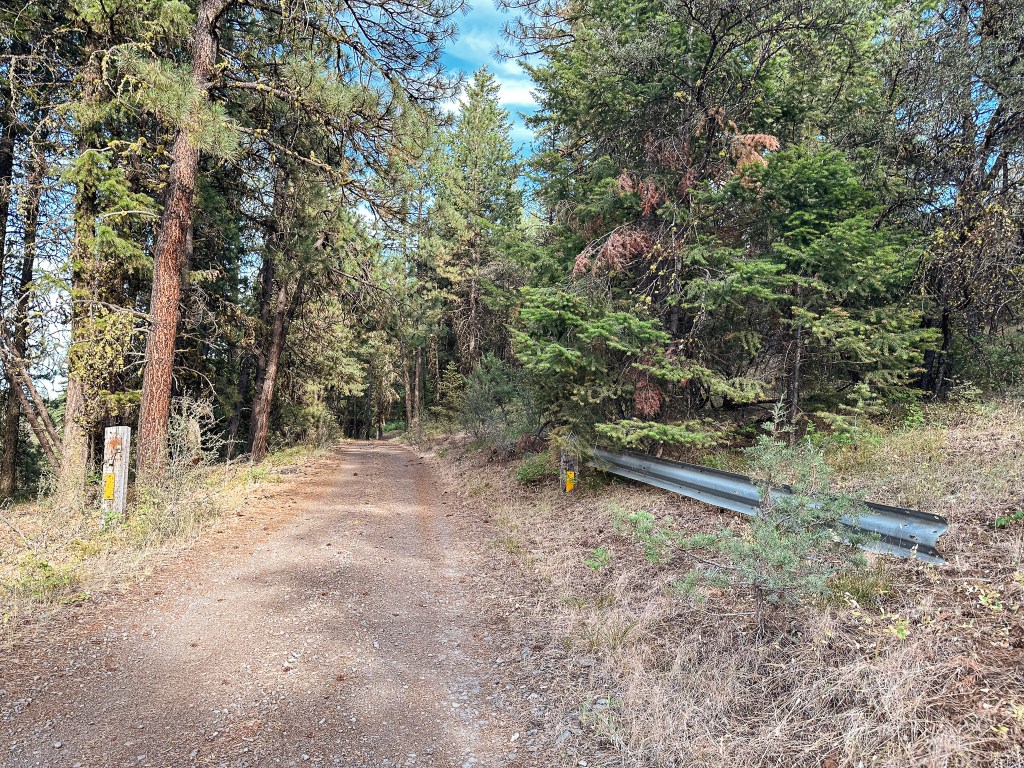
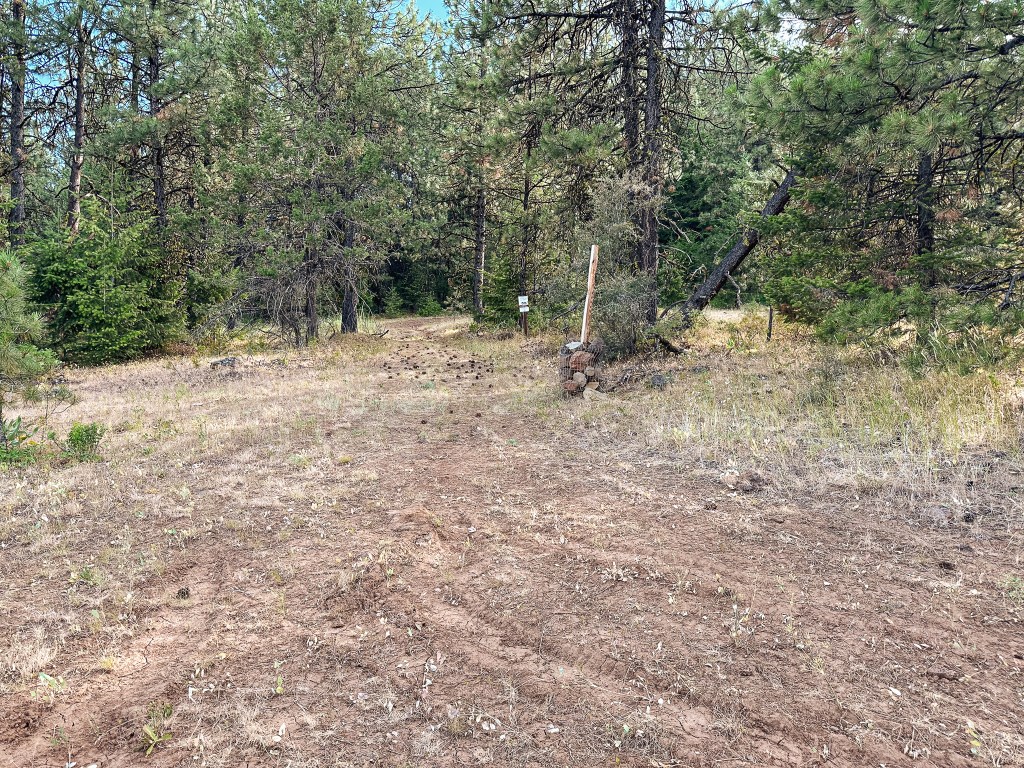
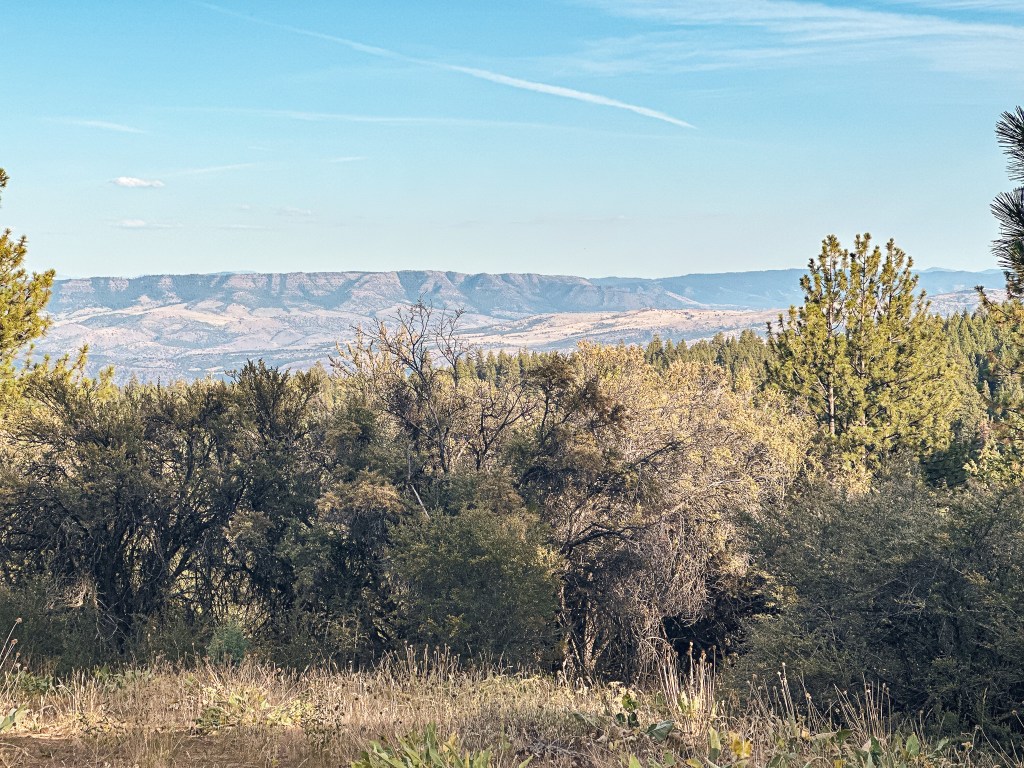
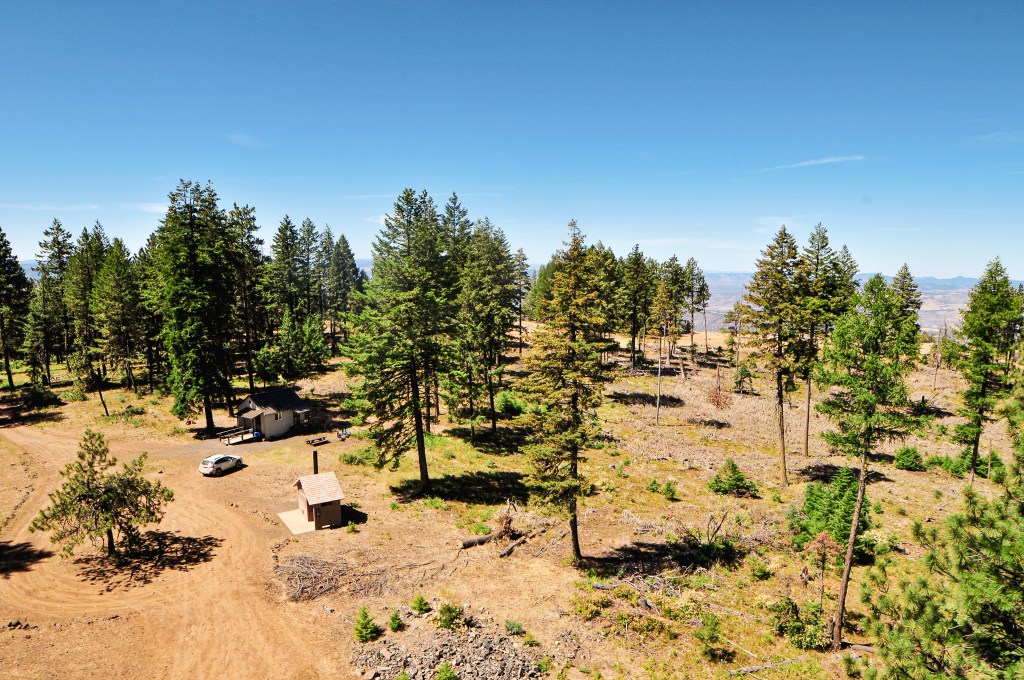
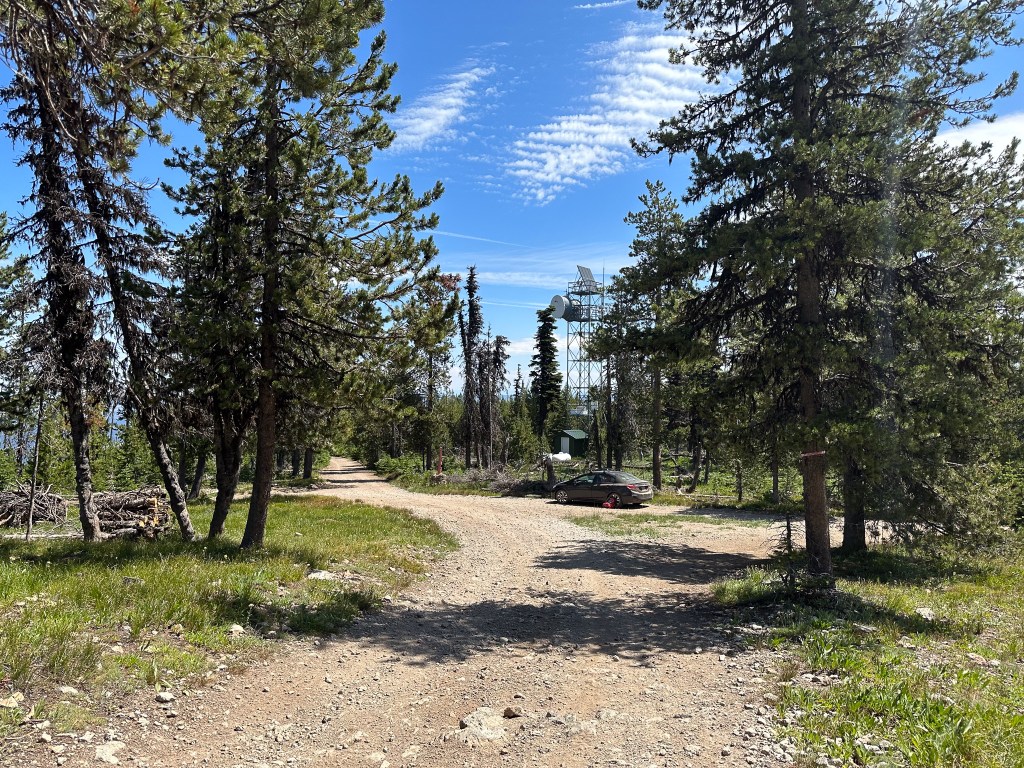
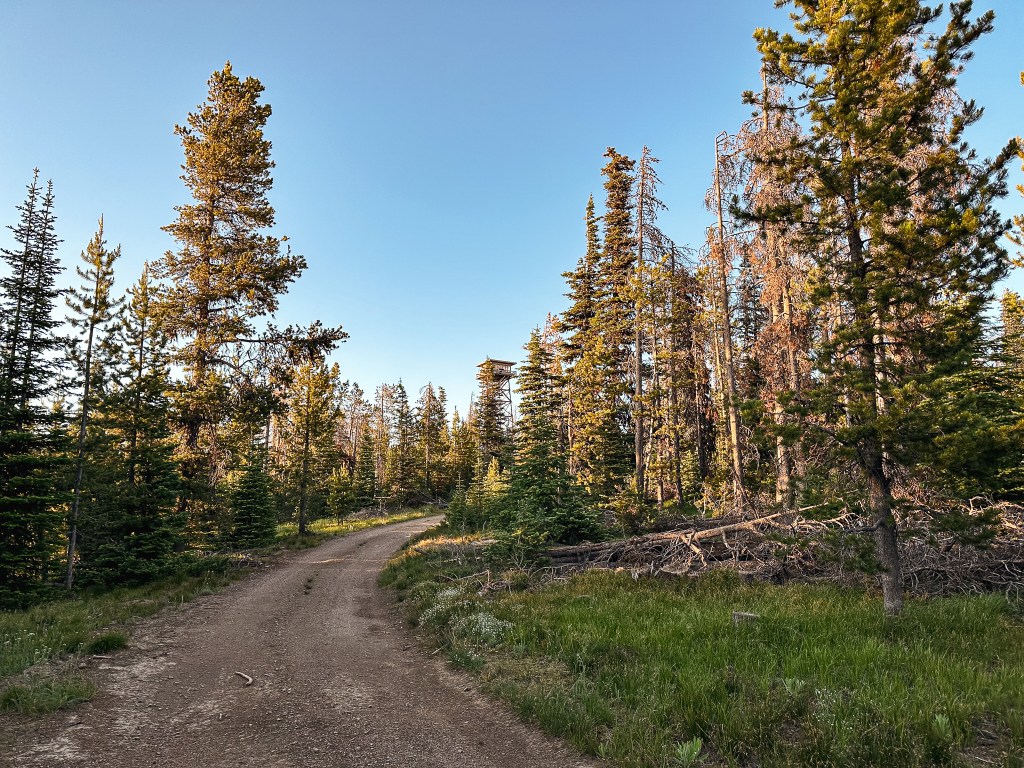
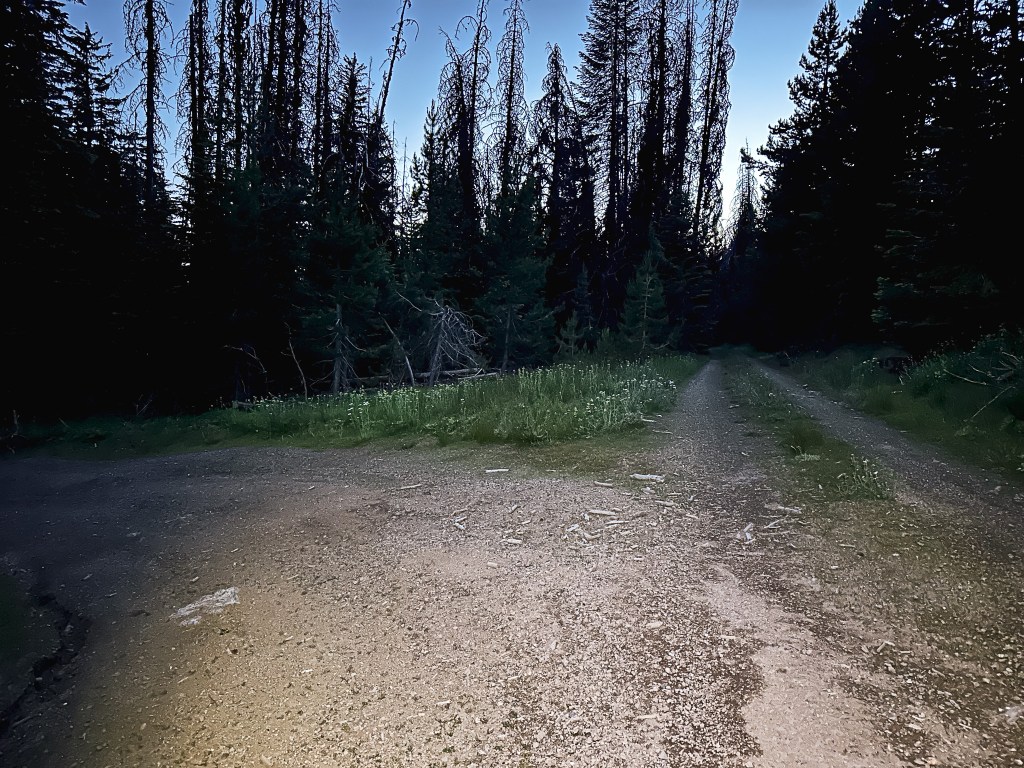
We headed back to NF-24 from Tamarack Mountain (post) and turned right to continue through the forest. We stayed on NF-24 until we reached NF-180 off to the right. We decided to park here to wait out the heat of the day. Ant Hill was only a little bit farther up the road, but it was so hot that the air was thick with heat even in the shade. We ate lunch and killed time by napping in our camp chairs or reading until we could feel the day starting to cool down. We walked the remaining distance up NF-180 to the junction with the decommissioned road NF-182. You could easily drive to this junction as well, the road is in decent condition. There is no sign at the NF-182 junction to indicate the turn besides a “closed to all motorized equipment” sign and a post with rocks. It’ll be off to the right once the road starts to curve and opens up to a view. The NF-182 road is closed to motorized traffic and you will need to walk from here. Though there is no gate or berm to stop someone from driving up. We could see tire tracks leading up the road despite the sign. Obviously, don’t be those people. No one likes those kinds of people. The NF-182 road will wind you around until you reach the summit of Ant Hill. There are no views from the summit except for just below it on the road. From where we parked our car at the junction with NF-180 and NF-24, the Strava app calculated the road walk at 1.30 miles RT with 136′ elevation gain.
Day 9/9: We drove home without incident. This trip might not have gone as smoothly as we initially hoped, but we still successfully made it to all our destinations with only a few additional scrapes added to the car. Somewhere along the way I visited my 100th fire lookout as well. I can’t say for sure which one it was since it’s dependent on your definition of an official fire lookout. One could make arguments for or against some of the ones I have listed and for that reason I am not going to claim one specific lookout as my official 100th visited. We can celebrate once I reach my 100th visited in Oregon, but even that might come with a few asterisks in place.
History.
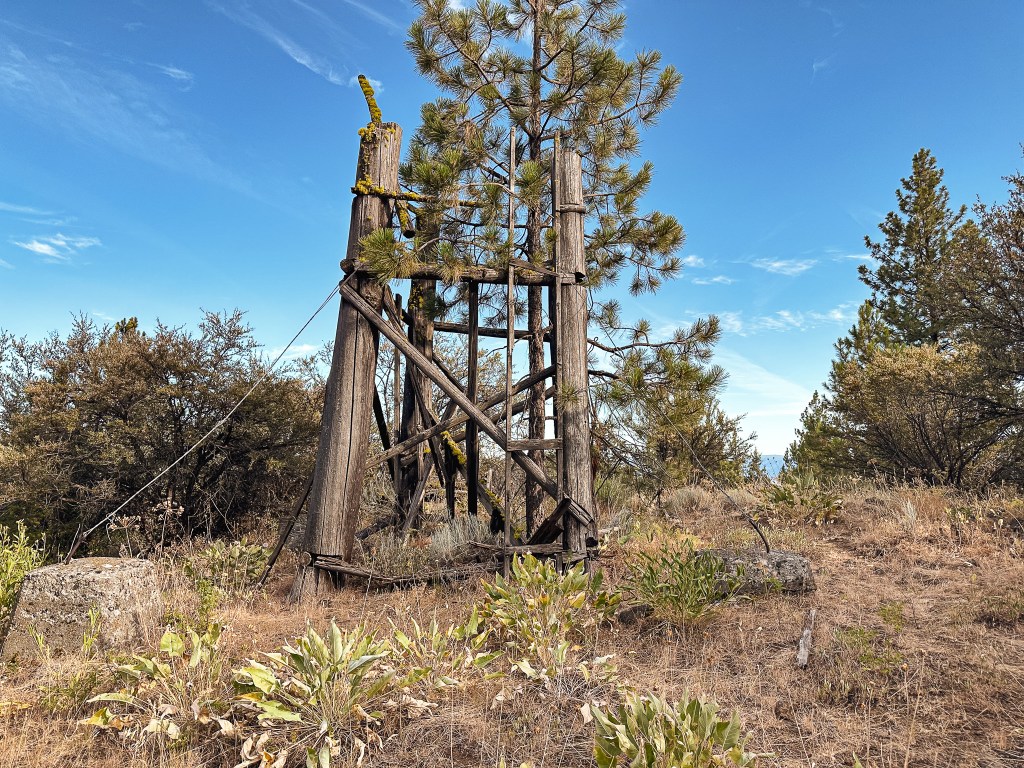
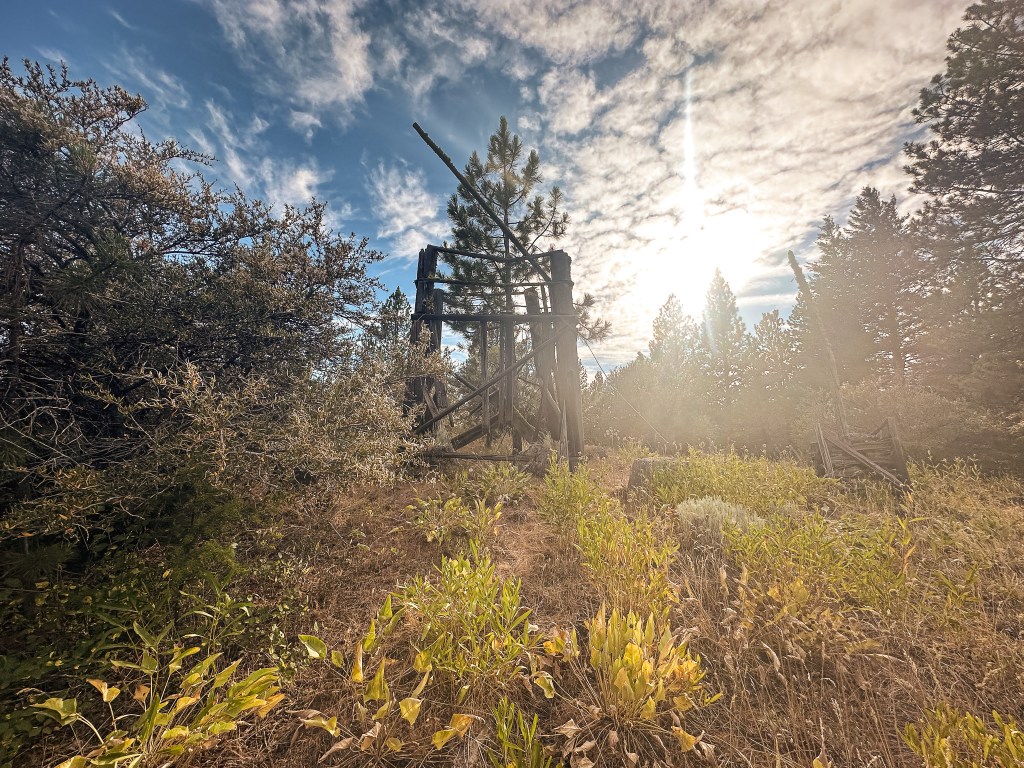
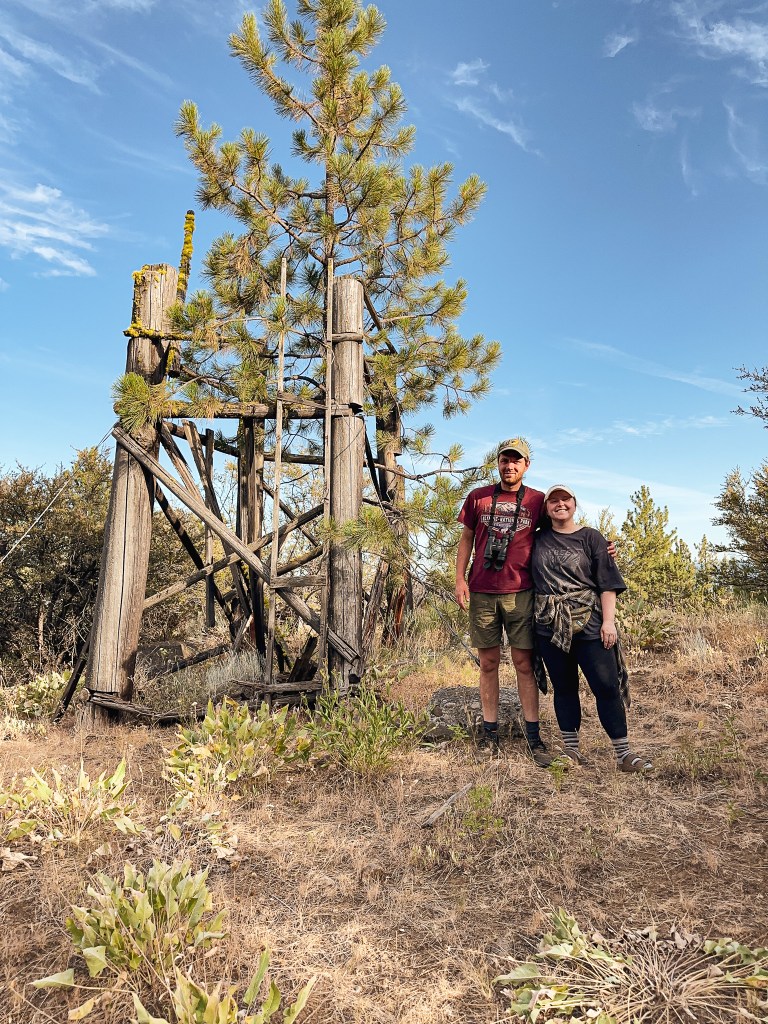
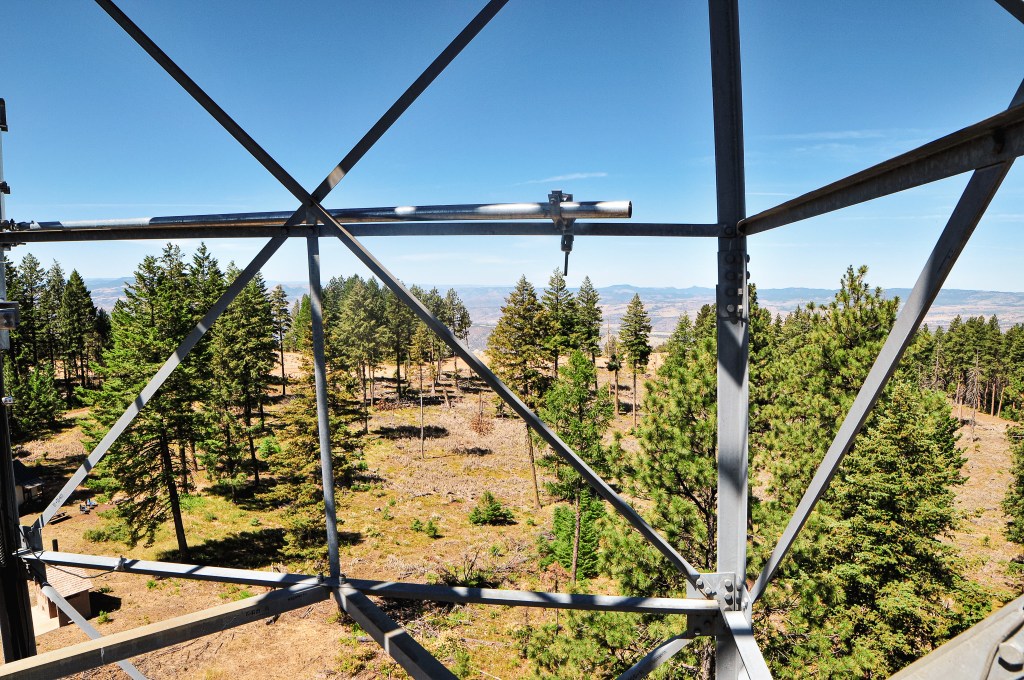
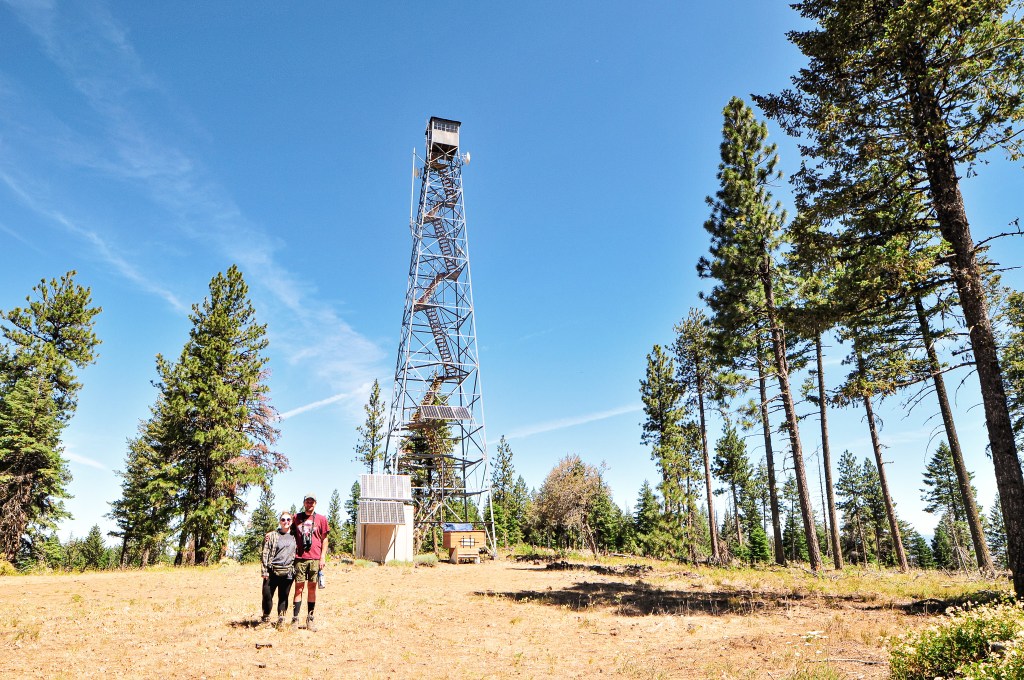
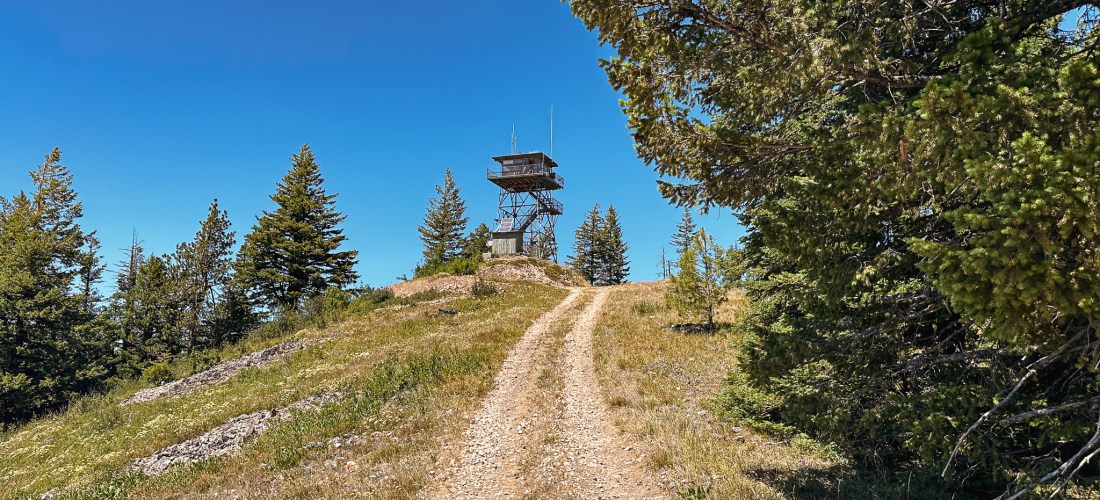
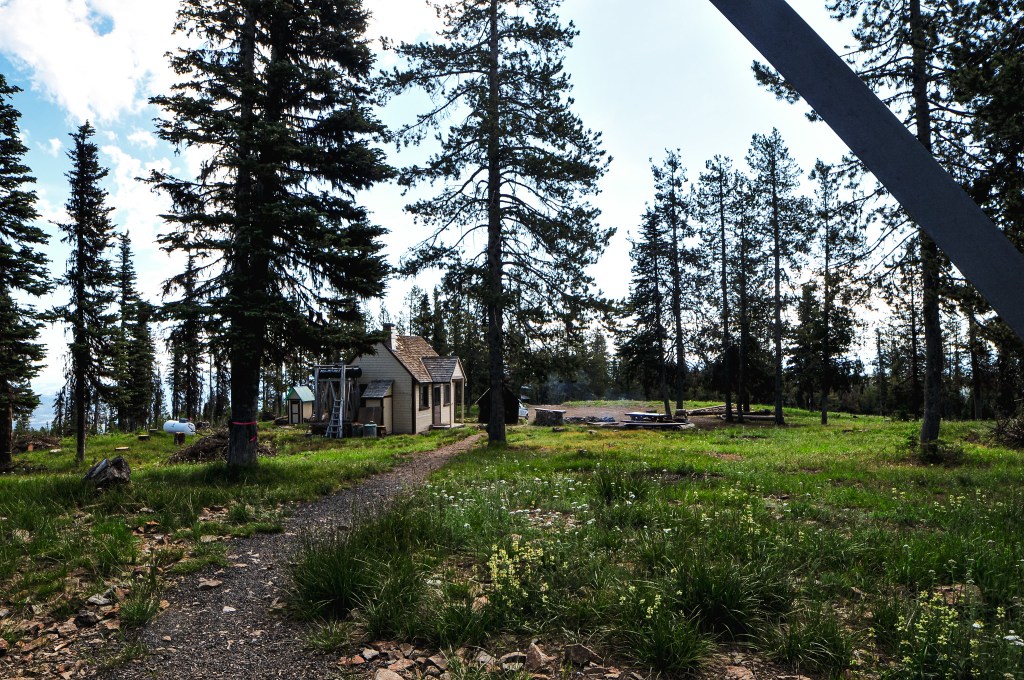
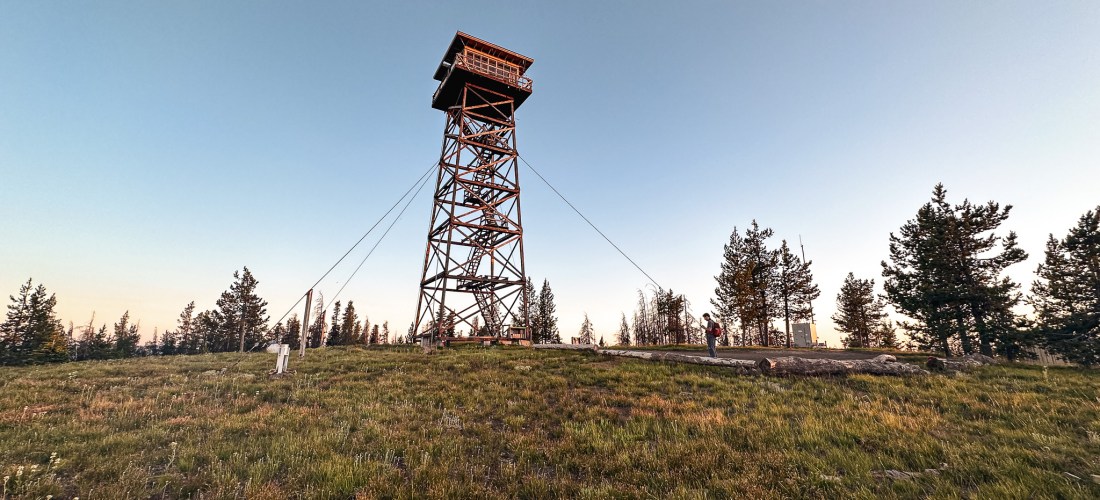
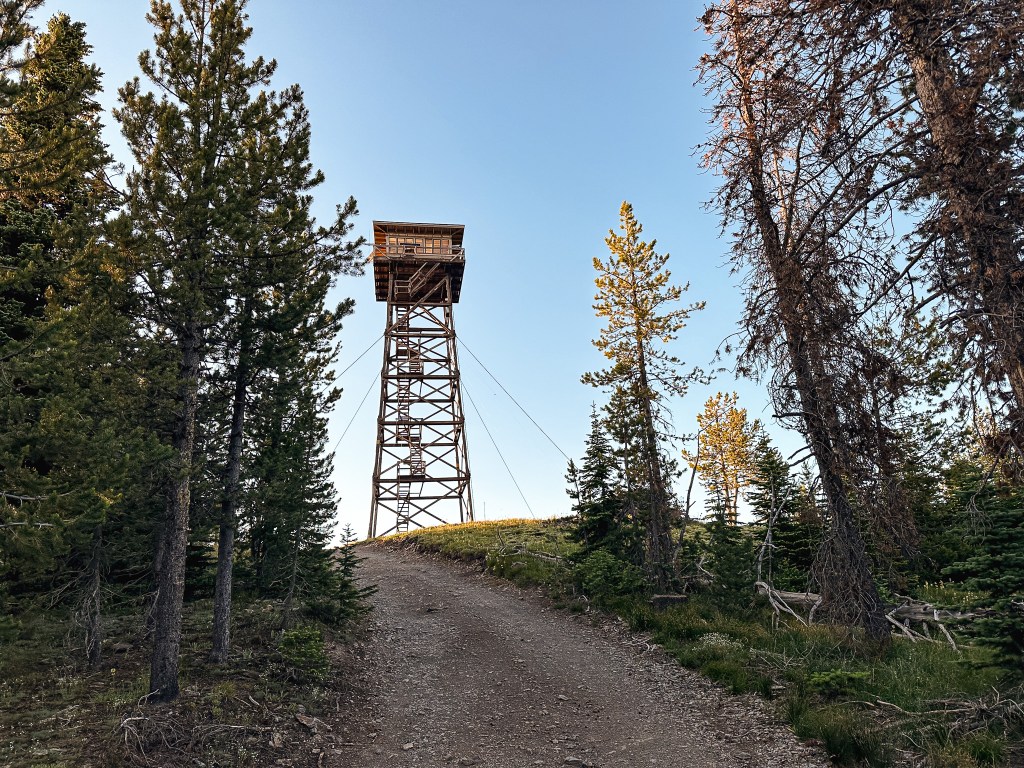
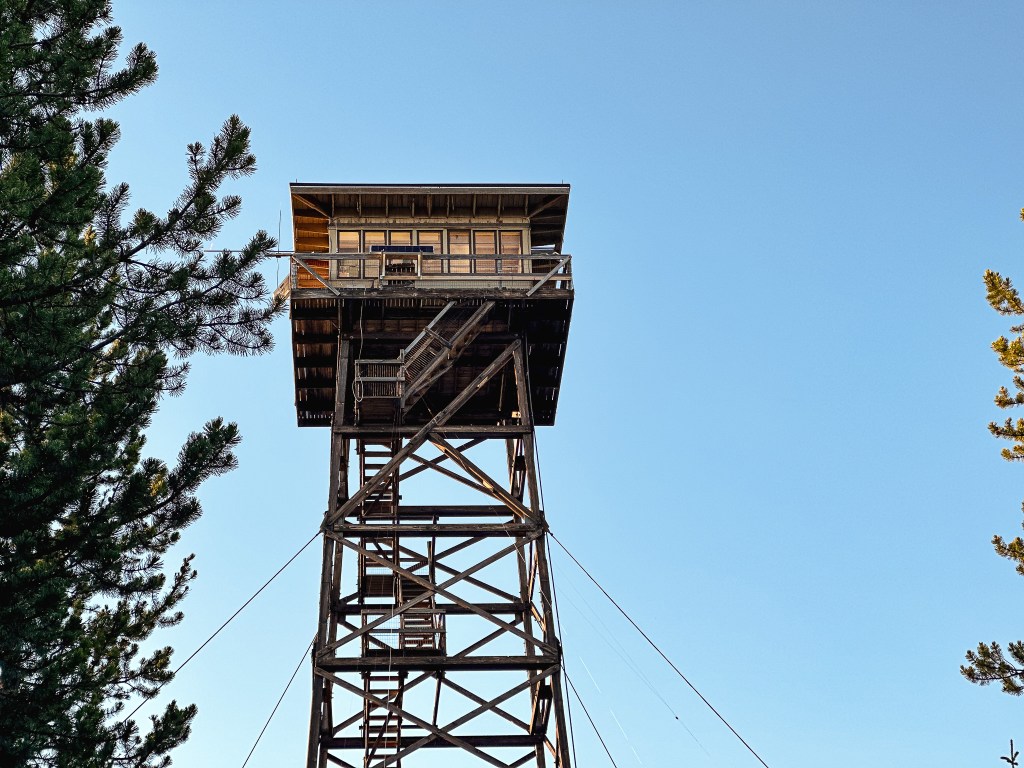
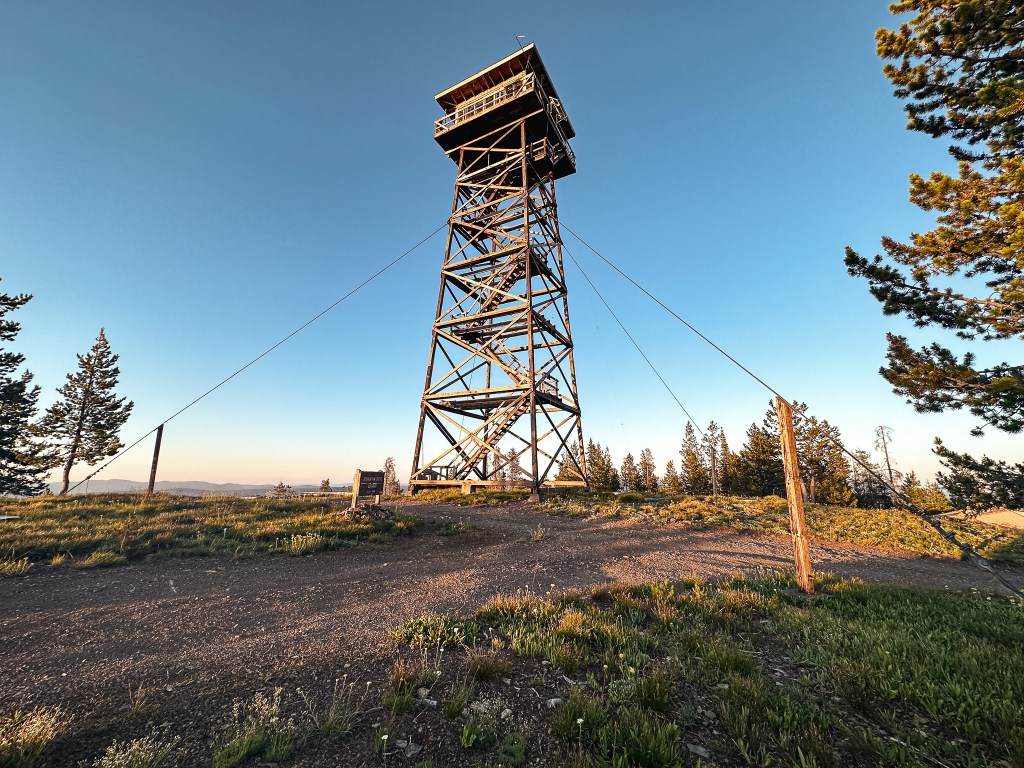
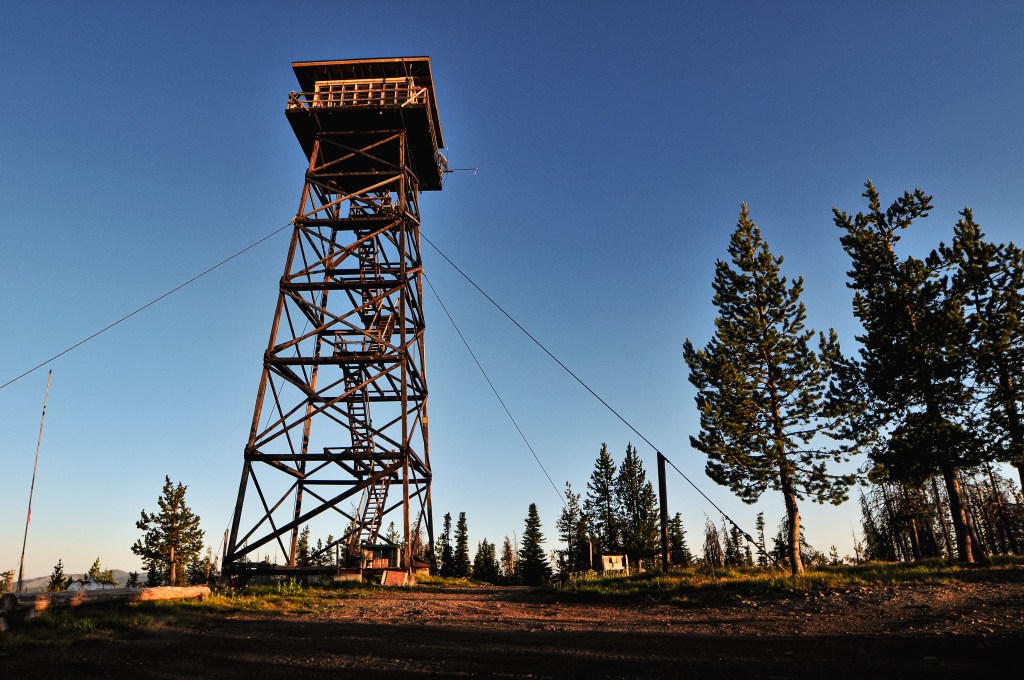
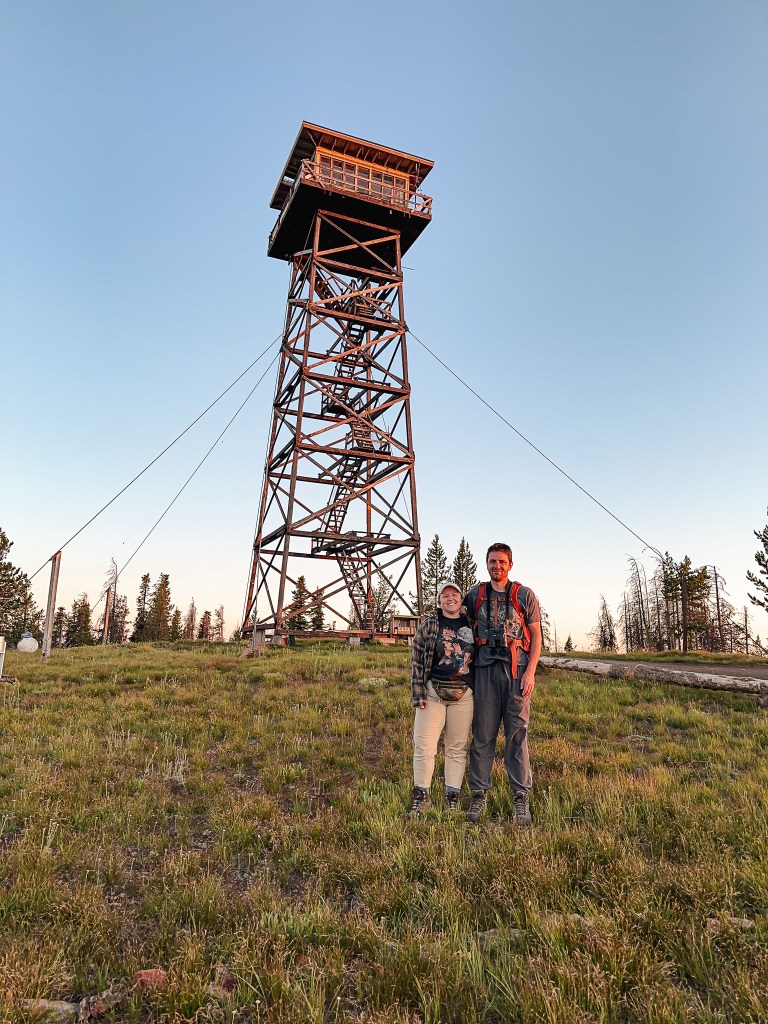
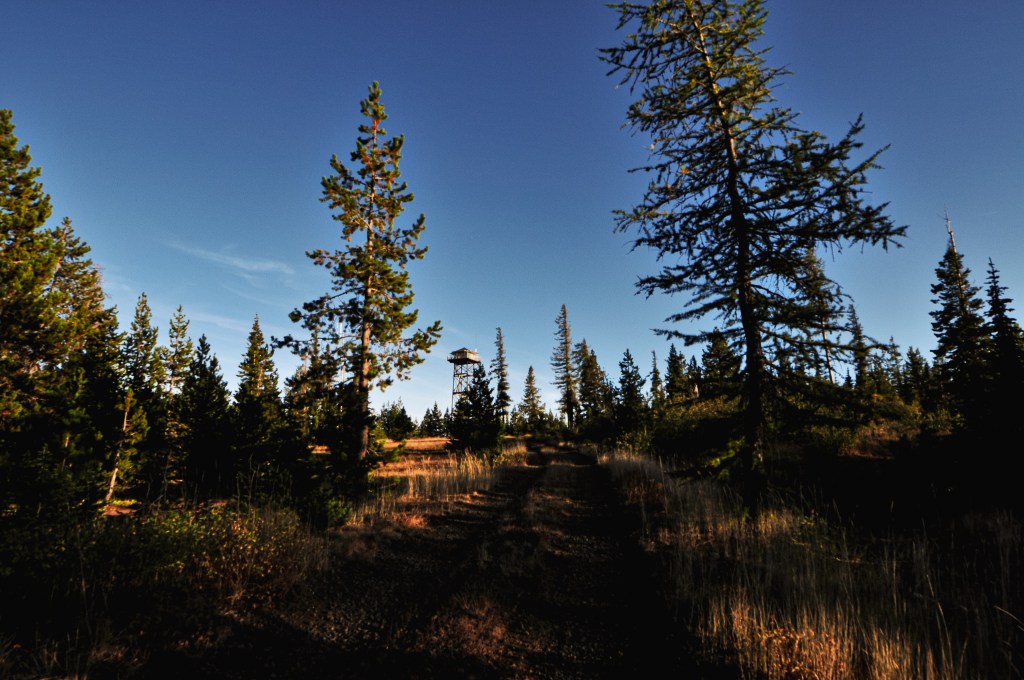
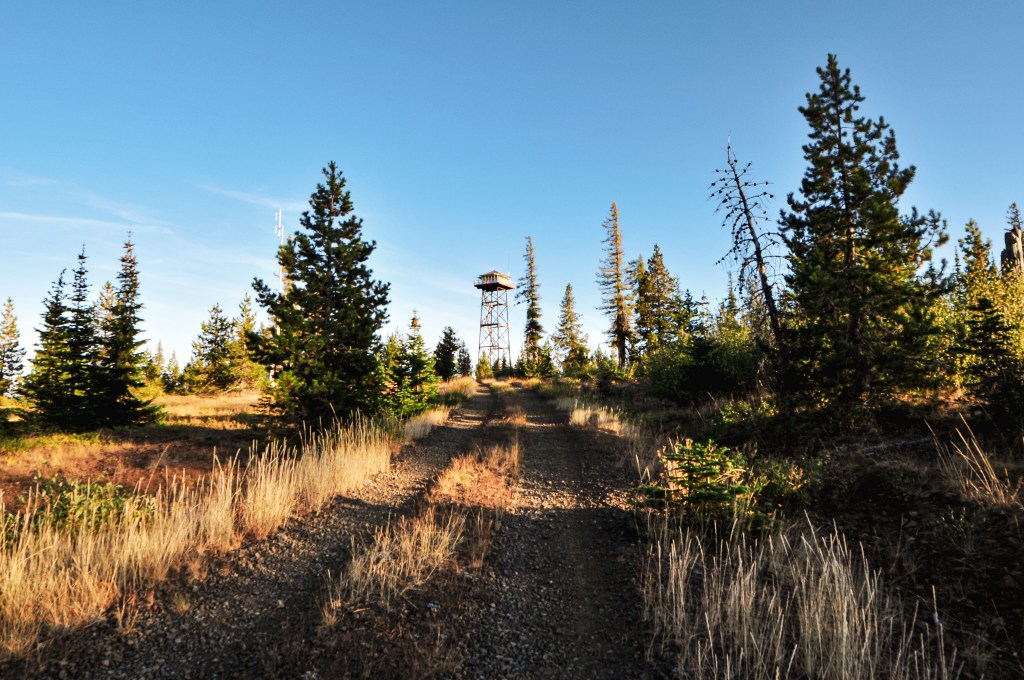
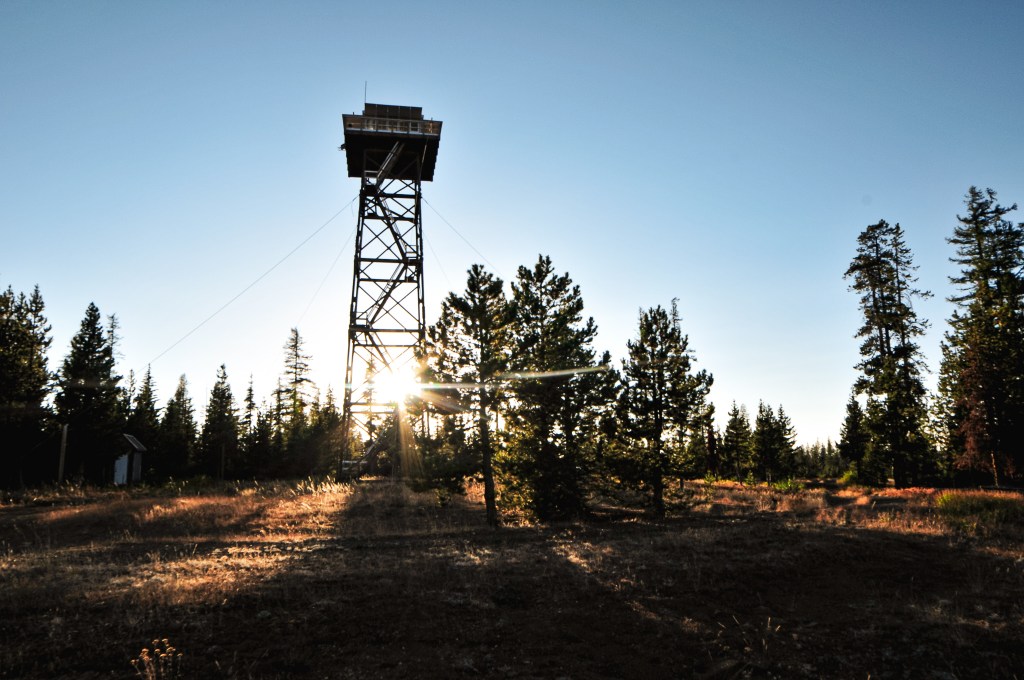
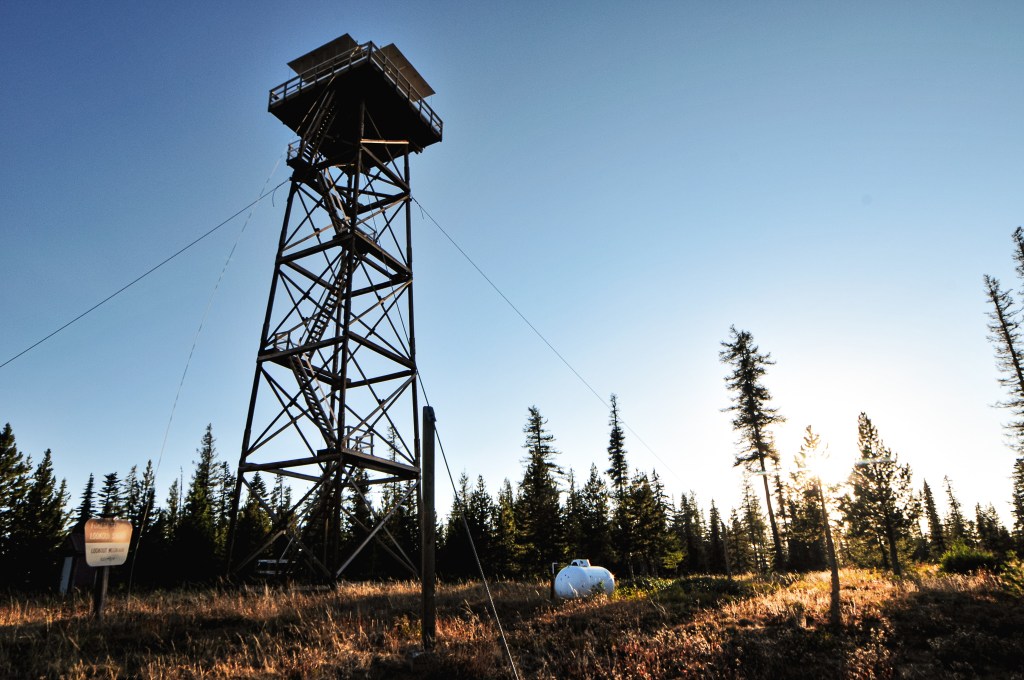
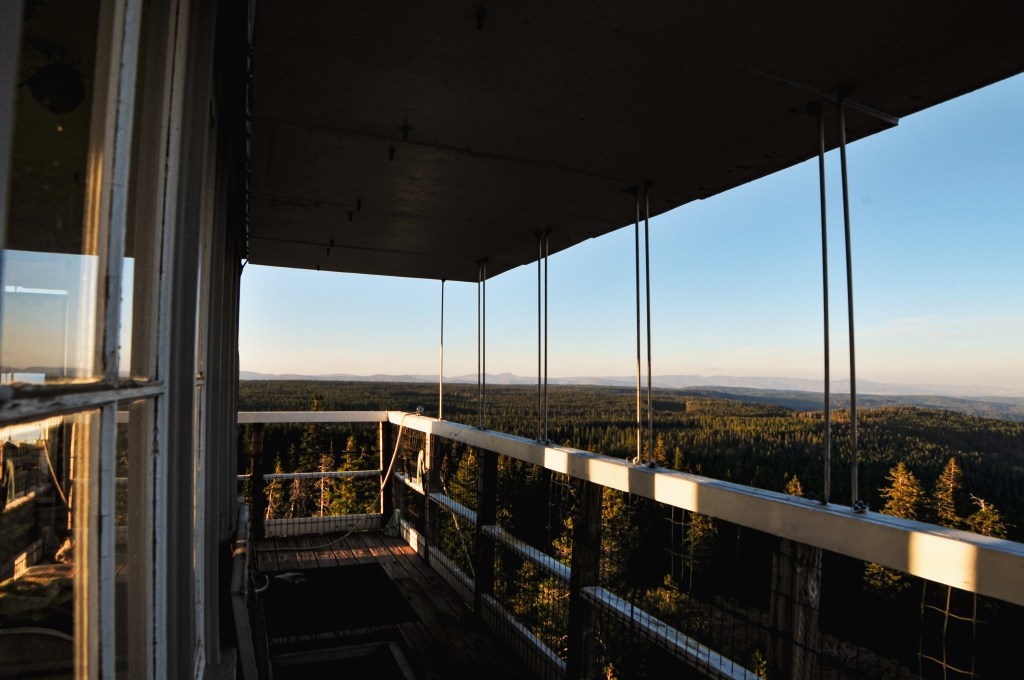
The first lookout structure was built on the summit in 1935. It was a pole timber tower between 16′ to 24′ with an L-4 cab. I’m unsure of the exact height. It is listed on the Former Fire Lookout Site register due to the tower being dismantled and removed in 1956. I personally would consider this an existing lookout site due to the 10′ open platform tower that still stands today. There is no information on when this structure was built or if it was utilized for fire detection. The only mention of it I could find was on the geocache site. It states this structure was built from recycled material of the previous lookout. It reminds me of the lookout structures utilized on Green Butte (post) and Craft Point (post).
We leisurely packed up our camp to move towards Tamarack and Ant Hill (post) for the day. We didn’t have to drive very far from where we were currently situated. Garnet had previously been to that area of the Umatilla NF during the 2017 solar eclipse and already had an idea of where we could camp. We followed NF-21 out of the forest until it turned into CR-847. This took us all the way out to HWY-207 where we turned left to head south. We didn’t have to stay on HWY-207 for very long before we took another left onto NF-24. There was a sign for Tamarack L.O. at the junction that stated it was only 9 miles away. This area seemed to be well signed and the road was made up of good gravel. We stayed on NF-24 until we reached another signed junction with NF-2407. This stated we only had 3 miles left to go to Tamarack L.O. as we turned right. Prior trip reports and some helpful information from other lookout enthusiasts we met told us the road would be good most of the way. After 2 miles the road turns into NF-040 and becomes rockier. We started up this section before deciding to abort and walk the remaining distance. Unfortunately, I was already in the rockiest section and the heat shield once again caught on something as I was backing down to the saddle. It was already hanging lower than normal from our mishap at the Mt. Ireland trailhead (post). Garnet had spent some time bending it back as best as he could for not having much more than some basic tools with us. This basically undid all the work he had done. It was even worse than before but we wouldn’t be able to touch it until it cooled down. I was annoyed at myself for not being more cautious and I was annoyed at the heat shield for causing more problems. We parked in the saddle between Tamarack and Little Tamarack to start our hike up the road. The last mile isn’t terrible, but it would have required some caution in a lower clearance vehicle.
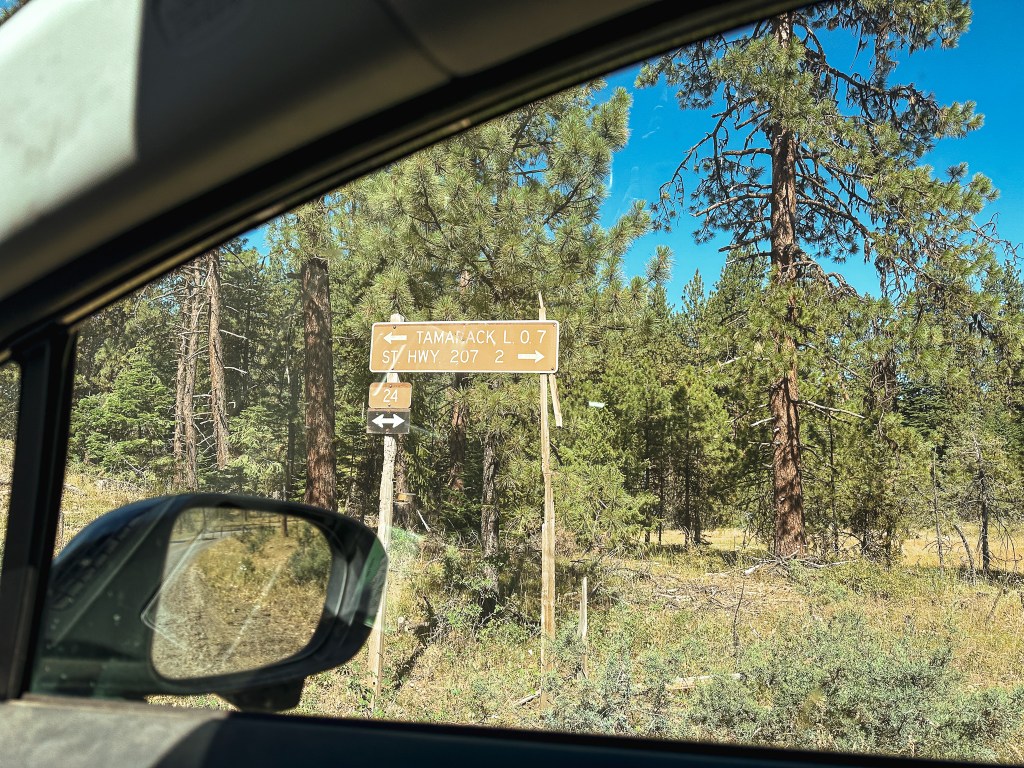
Sign at junction along NF-24
Sign at NF-2407 junction
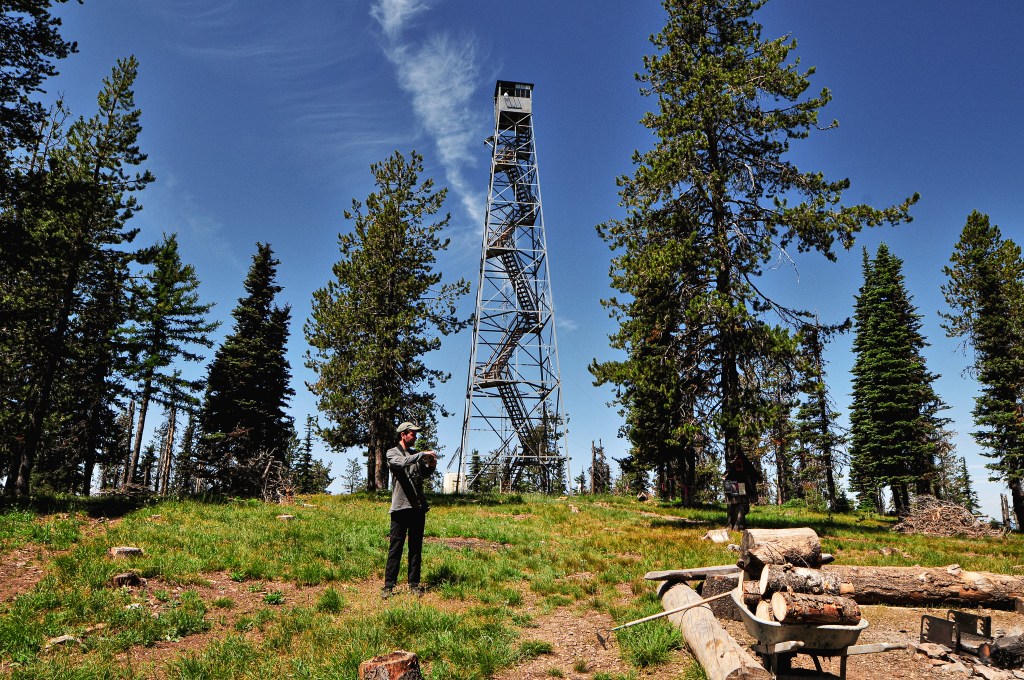
It didn’t take us long to reach the summit. It was only a 0.8 mile hike (1.66 RT) with 304′ of elevation gain from where we parked. The lookout tower on Tamarack is a tall Aermotor with a cabin at the base. It’s unique in that the cabin is rented out for recreational use, while the tower is still staffed every season. This leaves the lookout attendant to provide their own means of housing. A bit backwards and greedy in my opinion. We learned from Chuck on Madison Butte (post) that this was due to it being managed by two separate agencies. The Forest Service no longer wanted to staff the fire lookout and moved it to the rental program to make some profit. The state felt it was a crucial lookout to keep staffed and started staffing it themselves. The Forest Service let the state use the tower, but decided to keep the cabin for rentals. It’s not surprising that two government agencies wouldn’t agree on something, but it is unfortunate to those staffing the lookout. I would also feel terrible as a renter at this location. I’m sure most are unaware of the situation or at least I hope that is the case. There were renters onsite during our visit, but the lookout attendant was gone for the day. We knew their name was Sarah from our conversation with Chuck. We were bummed we didn’t get to meet them, but I left a note in their visitor log. I was able to connect with them later via Instagram.
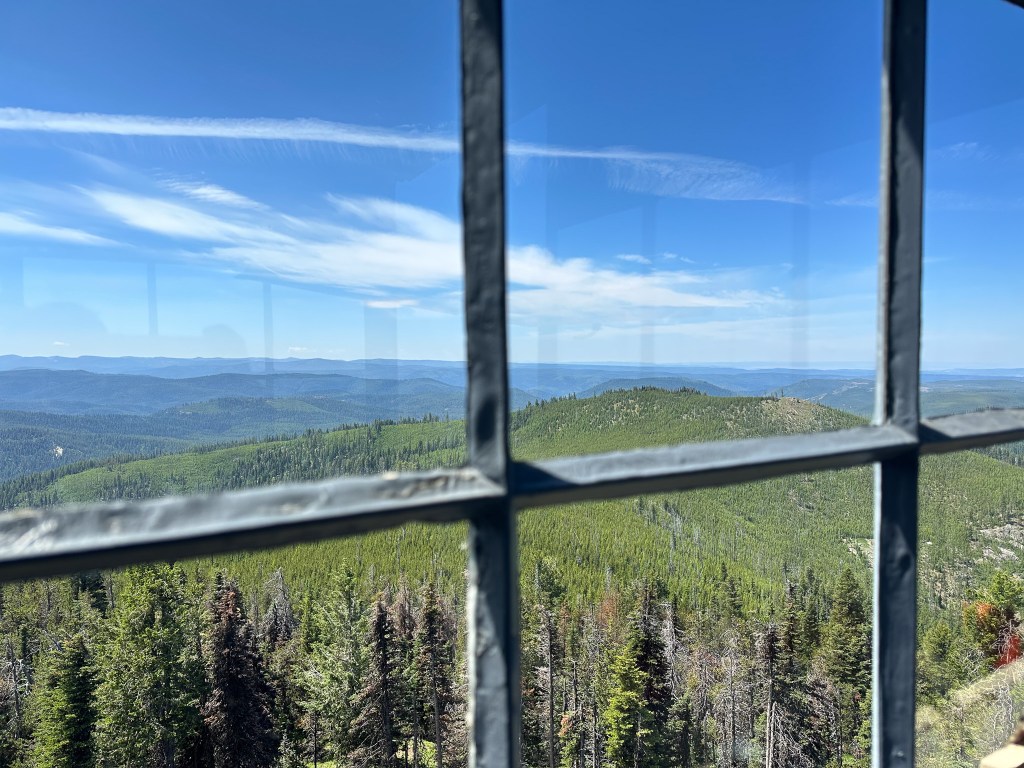
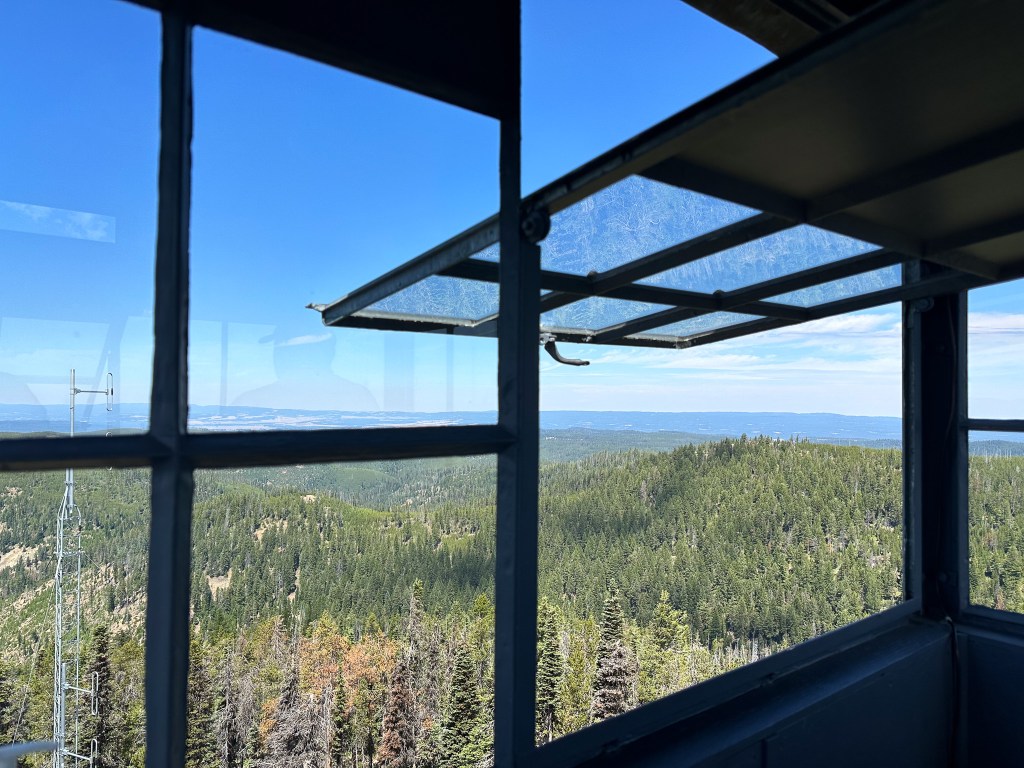
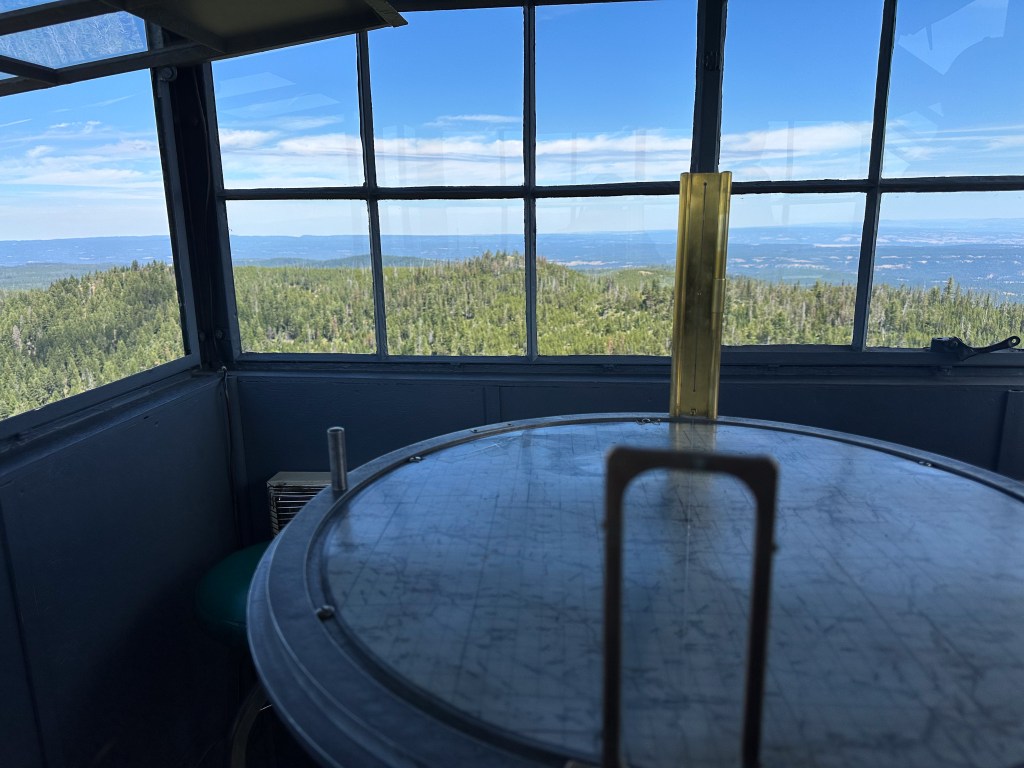
We climbed the tower to get a better view since there was not much to see from the base and no one was onsite to disturb. Garnet climbed all the way to the last landing while I stopped around the 5th landing. There was a custom camper, hammock, and veggie garden at the base of the tower as well. It looked like a nice set up despite the circumstances. We had never seen a lookout trying to grow fresh veggies before and I thought it was a neat touch. After taking in the view, we headed back to the car to deal with the heat shield. Garnet was able to bend it back to a better position, but we would have to address it again once we were back home. Driving a Civic through the forest always keeps things interesting. Our next stop for the day would be Ant Hill (post).
History.
Tamarack Mountain is named after the Western Larch, a tree that frequently grows under the drier conditions of the Blue and Wallowa Mountain ranges. I guess Tamarack is another common name used for larch trees of all varieties. The site was first established for fire detection with a crows nest platform on top of a tree. Most resources, including the Forest Service website, state this platform was built in 1925. But, Ron Kemnow’s collection of articles from withdrawal records, Morning Oregonian, Heppner Harold, and Heppner Gazette Times shows the site could have been used as early as 1908. In 1933, a 96′ steel Aermotor tower was built with a cabin for living quarters. The cabin accidentally burned down in 1966, but the original tower still stands today. Instead of rebuilding the cabin, the garage/utility shed was converted for the living quarters. It’s unclear when the Forest Service decided to stop staffing the fire lookout and add it to the rental program. The cabin is rentable to the public from May 15th to November 23rd. The lookout is currently actively staffed by the Oregon Department of Forestry every season, but I am unsure when they took this over. The Friends of Blue Mountain Lookouts, a volunteer run group, replaced the stairs in September 2021.
From Ukiah, we headed west on HWY-244 to cross HWY-395 into the Umatilla NF via NF-53. This starts out as a county road before entering the forest, but I don’t recall seeing a sign with a road name. There was a road construction sign at the junction noting they were doing a chip seal on this road and to expect delays. We seemed to be hitting all the activity this trip with work around the fire lookouts or on the roads getting there. Luckily, this time we missed the crews working on the road or they had already completed most of the work when we drove through. The NF-53 road is paved all the way to the junction with NF-21 and is in good condition. We turned left to continue on NF-21 which winds its way in and out of drainages. This was made up of good gravel and took us past the rentable Ditch Creek guard station and the staffed Tupper work center. Our plan was to camp in the area and hike the trail to Madison Butte the following day. Madison Butte can be accessed via a road as well from a completely different direction, but I believe it is seasonally gated and in terrible condition. Garnet’s dad mentioned the road getting there was not great years ago when he had been there and we were inclined to believe it hadn’t improved. Our biggest concern would be the conditions of the trail instead. Upon setting up camp, we came to the conclusion we wouldn’t have to move camps for the first time this trip. We had buffered an entire day for Madison Butte and since we were already in the area there was no need to move camps for 2 nights. The only stops we had left on our itinerary (after Madison Butte, of course!) were Tamarack (post) and Ant Hill (post), both easily accessible and close to each other.
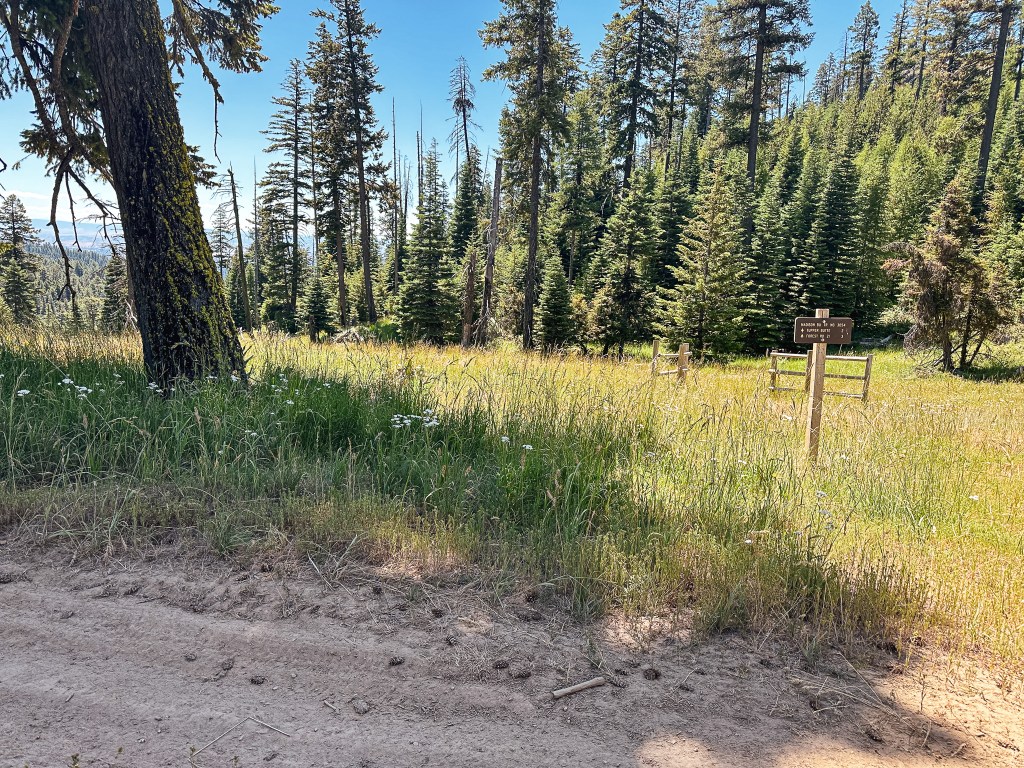
The Madison Butte Trail #3054 starts from a trailhead just off NF-21 adjacent to the Tupper work center. There was a sign at the junction, but it only faced the direction we came in from. This is just something to keep in mind if you are heading in from HWY-207 instead of Ukiah. There’s not much else in the area so it should be fairly easy to find. We parked the car near the gate just before 9:30AM and prepped for our hike. The trail sign looked fairly new and listed Tupper Butte at 1 mile, NF-033 at 3 miles, and Madison Butte at 3-1/2 miles. There was also a warning notice posted to the tree next to the trail sign stating there was fire activity along one of the connecting trails. This was not new and out of date information from a previous fire in the area. We thought it was ironic that even with a work center full of fire crews right across the road no one had removed the warning sign. It just goes to show this is not a frequently visited trail.
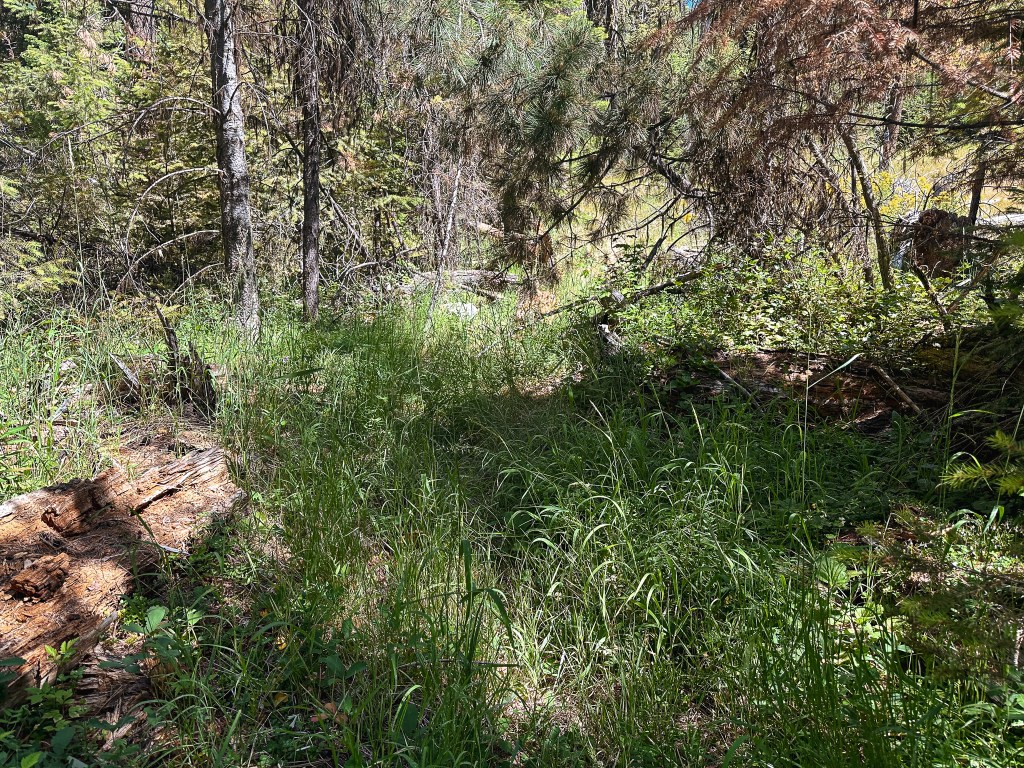
The trail starts from behind the gate. You will need to pass through a cattle fence on the side or squeeze below the gate for access. The trail starts out as an old road bed and wastes no time gaining elevation in the first 1/2 mile. It follows up the side of Tupper Butte gaining around 700′ by the time you reach the junction with the Tupper Butte Trail #3065. The trail to Tupper Butte continues to the left for another 1/2 mile to the summit. This junction was only indicated by a wooden post. We decided against visiting Tupper Butte this time and continued straight to stay on the Madison Butte trail. Once the trail gains the side of Tupper Butte it levels out to enter a dense forest. There is a cattle gate here that you will have to pass through. Make sure to always close any gate behind you after you’ve passed through it. There was a confusing makeshift arrow at the base of the gate pointing to follow the fence line. This could be misleading to hikers who haven’t done prior research. There even appeared to be a trail along the fence line, but it was nothing more than a game trail. The trail started to gradually lose elevation from here until it opened up to an exposed slope where we were greeted with a view out to Madison Butte (and how far we still had to hike). The trail sharply turned down to reach a saddle and lost a lot of the elevation we previously gained. Make sure to pay attention in this section, there was a tricky switch back that appeared to continue straight. From the saddle, the trail turns up again to skirt around another butte before dipping into another saddle. The final climb up to the NF-033 road is more gradual and continuous. Once we reached the piped Bottle Spring, we knew we were almost to the road. The plants around the spring have started to over take the trail and it was hard to see where it continued. I headed up the drainage cross country toward what looked like a fence post (it was definitely man made) and was able to meet up with the last portion of trail. The fence post ended up being the trailhead and I was at the road. Garnet was still cooling off at the spring, but he planned to catch up shortly. I turned right to head the last 1/2 mile up the road to the summit.
Tupper Butte Junction
Cattle Gate with Arrow
Bottle Spring
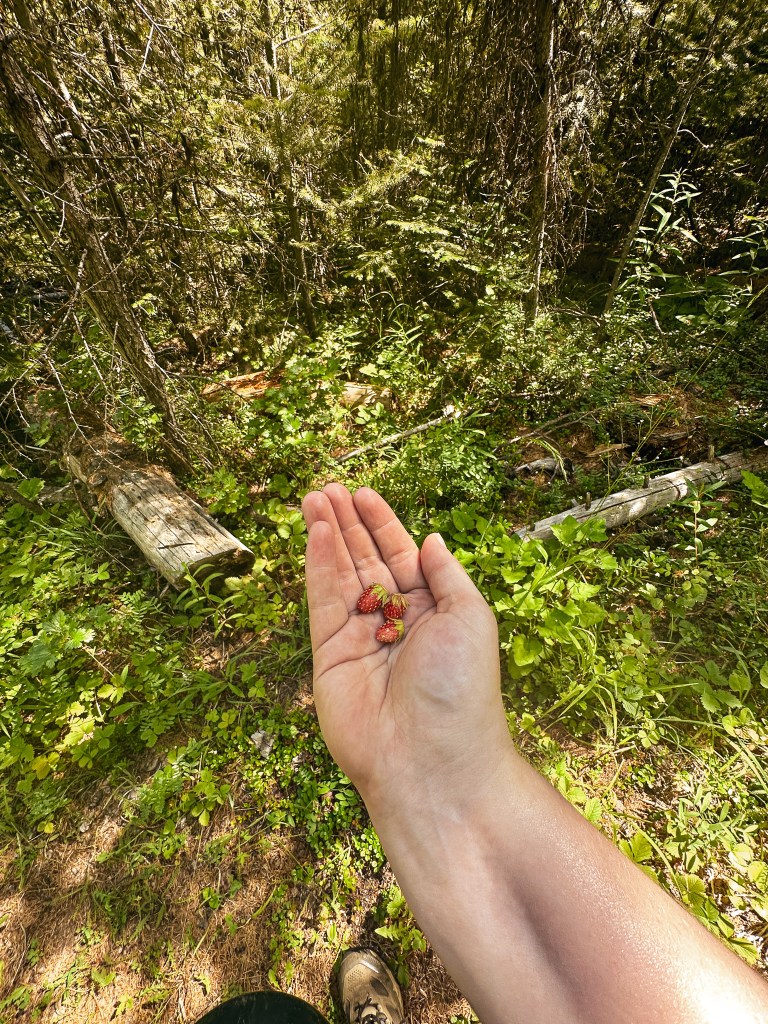
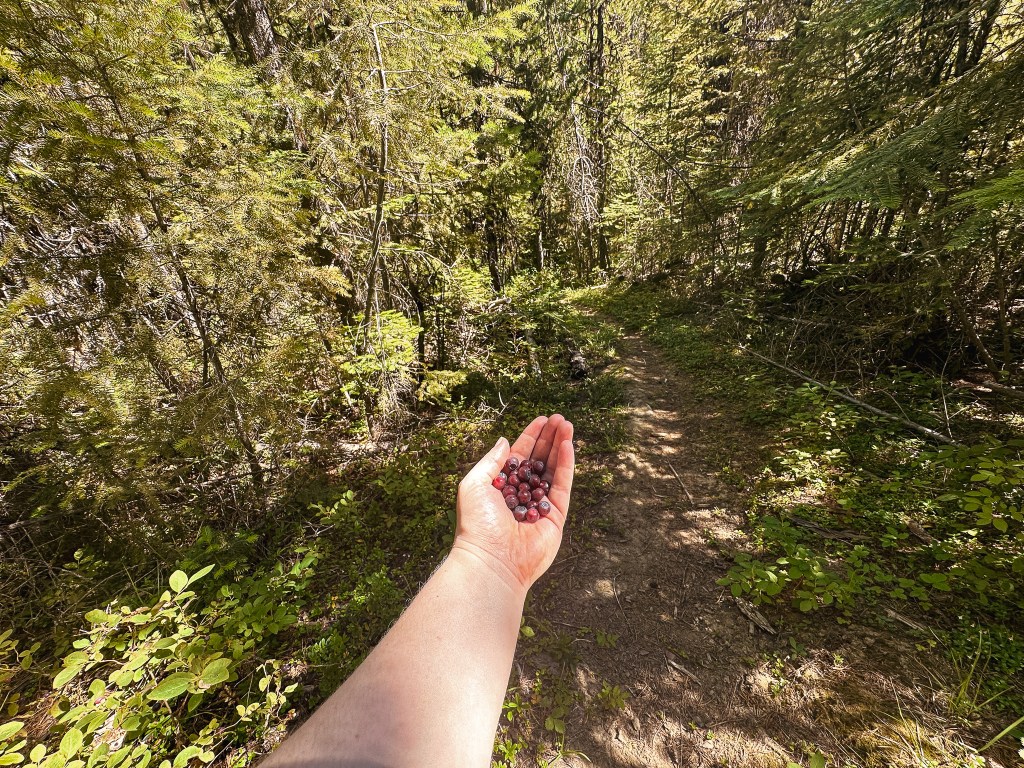
The heat was starting to get to me and I couldn’t seem to keep up on my water intake. The trail had varied between shaded forest and exposed slopes with tall grass. It was faint in some sections with a bit of blow down, but we never had any trouble staying on track. There were white markers in the trees to help. I wouldn’t classify it as a lost trail yet, but it definitely doesn’t see a lot of foot traffic. The tall grass also really aggravated my allergies and had me sniffling the majority of the way. Despite the ups and downs, the grass allergies, and the heat we were constantly rewarded with huckleberries and wild strawberries along the way. This helped to keep us motivated. On a small section of road just below the lookout there were tons of butterflies enjoying the flowers. I had never seen so many in an area all at once. This trail had a lot of fun surprises that I didn’t expect.
We were greeted by the lookout attendant, Chuck, shortly after approaching the base of the fire lookout. His dog seemed protective of the space so we didn’t get too close, but we did have a nice conversation from the road. He had been at the base of the tower grabbing some more water to haul up when we arrived. He asked if we came up the road or the trail. We said the trail to which he confirmed we missed the “fun” road conditions below. We talked for a while about his experiences as a lookout and our trip as well. When I introduced myself, he mentioned the lookout attendant on Aldrich Mountain (post) was also named Danielle. She had staffed Tamarack Mountain (post) the year prior, but it was now staffed by her friend Sarah. He also seemed passionate about the cryptocurrency market. I’ve never dabbled myself because, just like the stock market, it requires a lot of time and effort to be successful in knowing the trends. It all feels like made up monopoly money to me anyway (no offense to the finance bros!). He asked me about my camera and tripod, which made me realize I actually know very little about it. I had more interest and momentum in learning the dynamics of it when I first started, but have become more of a point and shoot photographer along the way. My Nikon doesn’t work as an auto adjust point and shoot since I have an off brand lens. But, I don’t fuss with it beyond the ISO, shutter speed, and aperture. My tripod on the other hand is a low grade Manfrotto, which is a brand that came recommended by a photographer I knew. It’s sturdy but definitely not as robust as some. I couldn’t justify spending more as an amateur though. He told me about his camera and that he found a nice tripod package on sale at Walmart for around $30. It came with a few attachments for his camera and even his phone. I told him that seemed like a nice deal since I spent closer to $80 on mine and it didn’t come with any of those fun attachments. I also mentioned how it would be nice to have an attachment for my phone when I don’t need or want to use my camera. He quickly offered me one of his since he ended up getting two of the tripod packs, but had no use for two phone attachments. I insisted he didn’t have to do that, but before I knew it he had climbed his tower and came back with the attachment still in the package. I accepted his gift and thanked him profusely for the kindness. It has already come in handy a few times and I will forever remember that it came from the lookout on Madison Butte.
We didn’t get invited up to check out the view from the cab, but it is their home for the summer and should always be respected. We said our goodbyes after taking a few more pictures and headed down the road to have lunch on the slope below with a view. I think the dry conditions along with the grass allergies really irritated my nose because while we were enjoying lunch it started bleeding for no apparent reason. It was an inconvenient place for a bloody nose. The quick loss of blood made me a bit light headed as well which wasn’t a great way to start our hike back. I had already drank my 32oz Nalgene full of water and was half way through my 32oz Nalgene of electrolytes. Garnet had already drank a lot of his 64 ounces of water as well. Typically, this would be enough water to get us back since we are usually hiking down hill on the return. But, something to keep in mind about this trail is the return trip takes just as much energy as the hike there. We tried to keep ourselves cool by soaking our shirts and hats in the Bottle Spring. We took more breaks on the return and kept our energy up with huckleberries. By the time we reached the final mile, both of us had diminished our water supply. We were both feeling the effects of dehydration. At least we knew there would be water waiting for us back at the car and we were close. This hike made me realize I really need to start packing my water filter on day hikes. If I had it with me, we could have easily replenished water at the Bottle Spring and would have been in much better shape on our return. I was even tempted to risk drinking the unfiltered water directly from the spring, but Garnet had advised against this. We made it back in one piece and chugged as much water as we could safely handle. My Strava App calculated this hike at 8.44 miles with 2,638′ of elevation gain. This made us extra thankful that we didn’t have to move camps until the morning.
Lookout Chuck.
Chuck has been the lookout on Madison Butte for 10 seasons, but has also worked on Lookout Mountain and Goat Peak in Washington. He is accompanied by his most recent rescue dog, Oliver. He lives in Northern Washington in his off seasons. He used to do work as a wildland fire fighter prior to becoming a fire lookout. This has allowed him to extend his seasons by assisting with slash pile burning in the shoulder seasons. His hobbies include photography and cryptocurrency. His favorite things to photographs are the thunderstorms that roll through the area.
History.
It’s possible the site of Madison Butte has been used for fire detection as early as 1909. Some old withdrawal records listed on Ron Kemnow’s site makes mention of plans to build a small cabin for men on lookout at this station once funds are available. It is unclear if that ever happened. A new telephone line was constructed to the summit in 1922 and by 1923 a D-6 Cupola ground cabin had been built to house the lookout. It was replaced in 1957 by a 37′ steel tower with CL-100 cab. We’ve realized the majority of CL-100’s in Oregon were built during that year. It is still actively staffed every season.
I got back to the car from our hike up to Mount Ireland (post) much later than my partner. He said he had been waiting for me for close to 40 minutes. I didn’t feel like I was going much slower than normal, but the back to back mileage must have been taking its toll. I felt it mostly on the downhill. We had to rethink our camping plans since the flat area near the trailhead was no longer viable. We decided to start heading towards Johnson Rock (post) and hoped to find a camp along the way. As we were backing out from the trailhead, my car’s heat shield caught on a small tree we had rolled over to get into the spot. This ended up bending it to hang lower than normal which caused us to scrape on the loose bits of gravel on our way out. It has never been the same since our Tower Point incident (post) and has been a reoccurring issue. It’s just a protective plate so it’s not a concern to my car’s functionality, but it is definitely an annoyance that I need to find a better solution for. This is just some of the joys that come with driving a low clearance vehicle to these kinds of places.
We backtracked on NF-73 towards Granite passing the junction to head into the Umatilla NF again. The NF-73 road skirts along the boundary of the Umatilla NF and Wallowa-Whitman NF until it makes a hard right turn to head towards Anthony Lakes. We stayed straight to continue onto NF-52 past the North Fork John Day campground. We briefly debated camping here since it was getting late, but ultimately decided to continue on to find a dispersed spot. A little ways past the campground we came to another junction where NF-52 continued left and NF-51 was to the right. We had planned to take NF-51 to connect to the Johnson Rock road, but we were met with a sign that said “Road Closed 3 Miles Ahead”. We optimistically headed on NF-51 anyway in hopes that it was an old road closure sign. Sure enough though, around the three mile mark, the road was completely closed. We cursed ourselves for not checking on road closures prior to the trip. We decided to pivot our plans to Tower Mountain instead and would check the road status once we had service again. This meant continuing farther on NF-52 until we reached the NF-5226 road. We eventually found a place to camp before the last bit of day light was gone, but we had to set everything up in the dark.
The next morning we headed up NF-5226 and kept our fingers crossed that we would make it all the way to the tower without any road walking. The research I found prior to our trip said that the NF-5226 road was best coming from the south and should be suitable for most. You have the option to access Tower Mountain and NF-5226 from HWY-244 in the north, but it is a much longer route. There is also access via a hiking trail, Tower Mountain Trail #3156, through the North Fork of the John Day wilderness that starts from the NF-52 road. The Wandering Yuncks have a trip report from June 2021 that describes the conditions of the trail in detail (post). We caught glimpses of the tower and where we were headed as we drove along NF-5226. It was a mostly decent road with only a few bumps, ruts, and narrow sections to mind. We parked at the junction where the road leads to the cabin and tower to walk the remaining distance.
We could see someone looking out of the tower from where we parked. Garnet had been in contact with the lookout attendant, Mike, prior to our visit via a group chat. He was aware we’d be coming within the next couple of days. We were a day early though given our change in plans. He gave us a wave as we started to walk towards the tower and asked if we were planning on coming up. We both said yes and started up the stairs. Half way up the tower I got a bit squeamish of the height and decided to take pictures around the base instead. Garnet ended up talking to Mike for well over an hour. I had been waiting at the base checking updates on my phone, but the service was slow and spotty. Eventually, I decided to suck it up and make the final push to the top of the tower. When I reached the cab, Mike said I looked like I was doing well for someone afraid of heights. It wasn’t so bad once I finally got up there, but it’s more a fear of falling than being high up. I didn’t ask as many questions as I normally would since I wasn’t sure what they had already talked about and I didn’t want to make him repeat himself. We asked if he knew about the NF-51 road closure, but he didn’t. He reached out to John, who is currently staffing Johnson Rock (post), but he wasn’t sure if the road was closed before or after the turn off from the north end. There was a wash out somewhere along the NF-51 road with some helicopter activity on the Grande Ronde. We were able to ask him about the road conditions and he said it depended on how adventurous we were. He said the worst of it was within the last 2 miles. He suggested calling the Ranger Station in La Grande to confirm access. While we were still visiting with Mike, a fire crew drove up and the foreman climbed the tower. It’s a pretty tight fit to have four adults in an Aermotor cab. She climbed to ask Mike about the trees that needed to be removed around the tower. They were going to replace the communication tower for the lookout and needed to clear a path for the equipment. We took that as our cue to head out and thanked Mike for his time.
Lookout Mike.
Mike Duffy has been a lookout on Tower Mountain for 14 non-consecutive seasons. He has also worked on Madison and Desolation Butte. He keeps in contact with Table Rock, Desolation Butte, and Indian Rock during his season. He is gregarious and will invite most people up for a chat in the tower if they are willing to make the climb. The area gets a lot of visitors due to the extensive ATV trails in the vicinity. His most asked question is about the wildlife he sees in the area. The most unique animal he has seen from the tower is a Lynx.
History.
The existing fire lookout on Tower Mountain is a 92′ Aermotor with 7’x7′ steel cab and was built in 1935. The living quarters were moved from the Lucky Strike lookout site sometime in the late 1940s. Prior to its move, the ground cabin was built on the Lucky Strike site in 1936. The surrounding area was burned by the 1996 Tower Complex that threatened the lookout, but was saved due to the efforts of our Wildland Fire Crews. Rex’s website also mentions there being a previous fire lookout on the summit in the 1920s. It states that this was a 60′ pole tower with 6’x6′ cab. This wasn’t mentioned anywhere else to confirm. He also states that Tower Mountain used to be Lookout Mountain until it was renamed in 1925. I wasn’t able to confirm this anywhere else either, but I wouldn’t be surprised if that’s true. There is a Lookout Mountain in every forest, if not multiple.
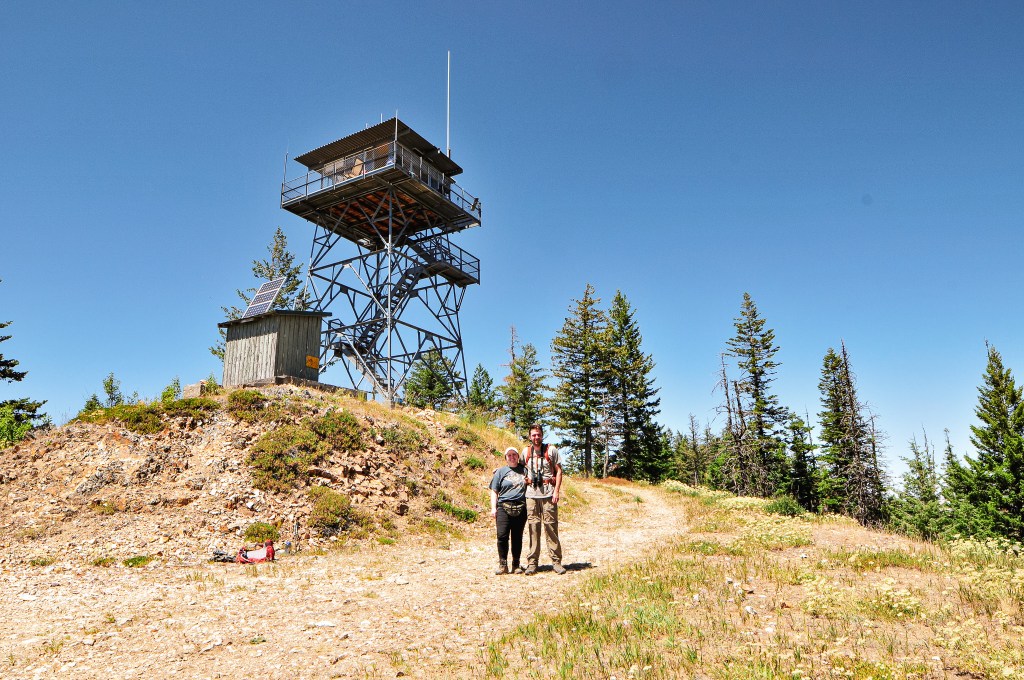
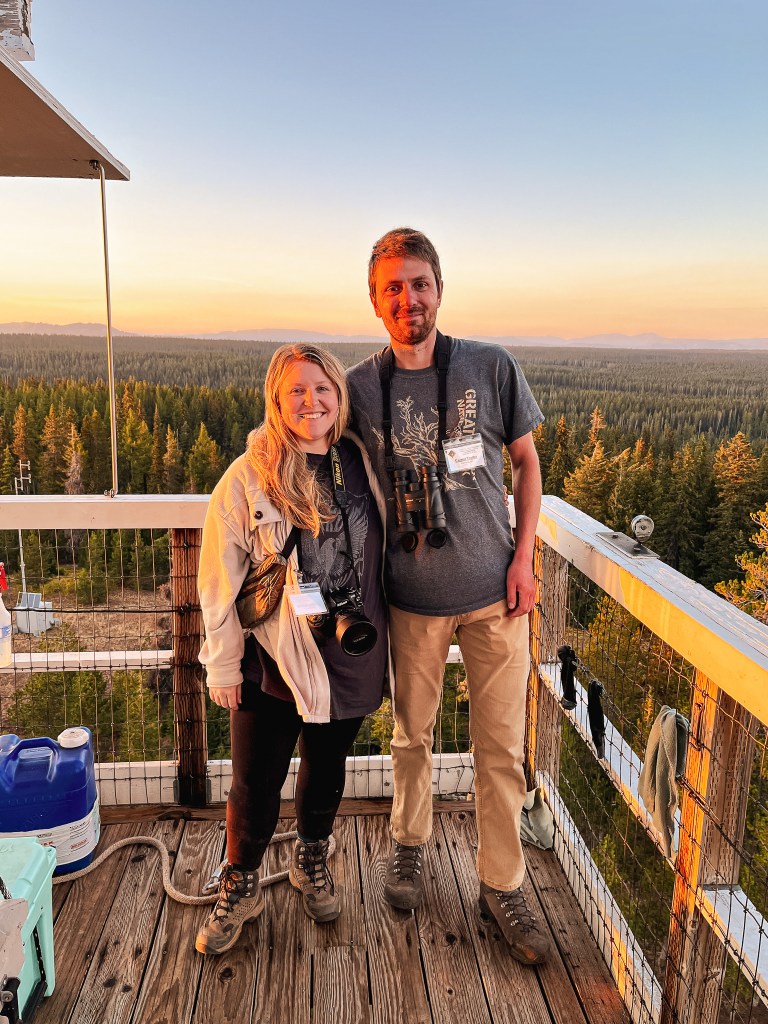
I’m not sure what happened to the picture of us together, but for every picture of us there is a picture of Garnet waiting
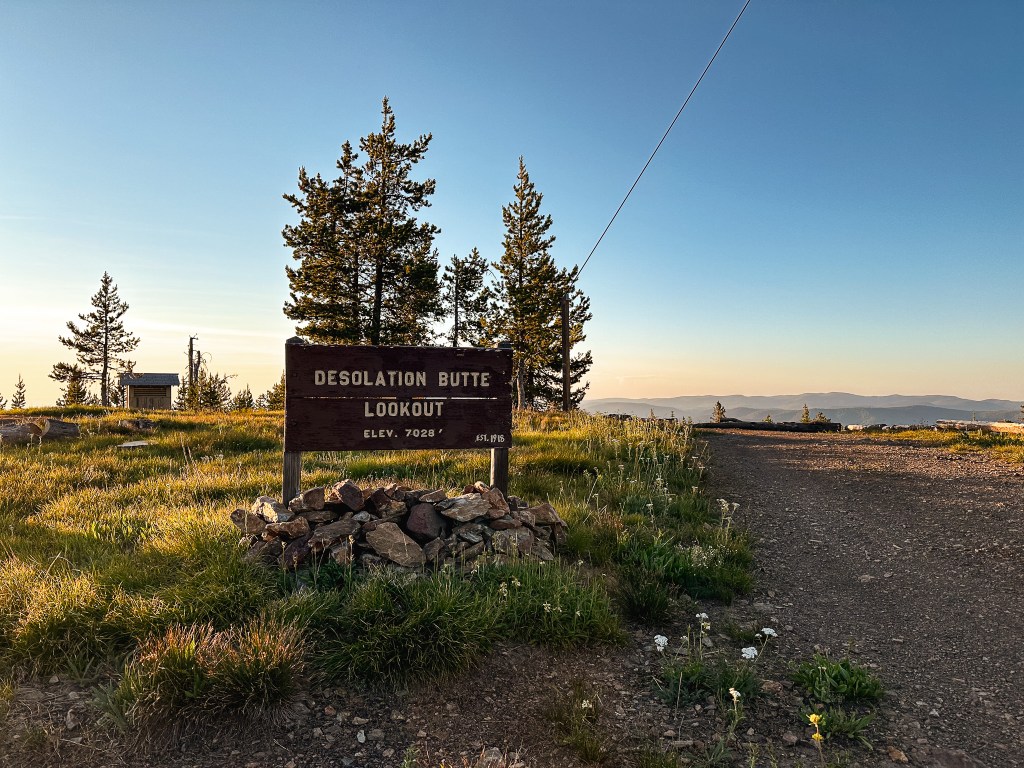
There is no quick way to get to Desolation Butte, but I think our route this trip might have been the worst of them all. We’ve been fairly close to Desolation Butte two separate times. The first was the closest on an extended weekend backpacking trip to the North Fork of the John Day wilderness in September 2019. We came in from Dale and drove to the Lost Horse trailhead off of NF-800 which is only about 4 square miles away on the map from the fire lookout. I can only vouch for the roads we drove on, but NF-1010 and NF-10 were drivable to at least the trailhead in the Civic. The NF-55 and NF-5505 were good up until it got closer to the junction with NF-1010. The second time was for a week long backpack through the main part of the North Fork of the John Day wilderness in June 2021. We were at the main trailhead that starts in the North Fork John Day campground. This would have required an extra day to drive down NF-73 to NF-10 from Granite to get to the lookout. The roads getting to the campground are paved and were in good condition. This time we were attempting to connect through the forest via NF-45 from Indian Rock (post). We were already limited on time due to our extended conversation with the lookout that morning. We ended up eating even more of our time when I thought I had lost one of my Nalgene bottles. This resulted in us driving back up to the base of Indian Rock (post) to search for it after packing up camp. We didn’t find it there and I accepted it as a loss. The NF-45 road past the junction with NF-537 is not marked as a good road on the map. We had asked Karen at Indian Rock (post) about the conditions, but she said she hadn’t been that way in years. She knew it was at least passable since people would visit her from Olive Lake, but all have had trucks or higher clearance. We decided to test our luck anyway. It’s considered a main connection road from the Malheur NF to the Umatilla NF, how bad could it really be?
The next 8.2 miles of road were some of the worst we’ve ever driven in the Civic. We had thought the Dixie Butte (post) road was bad, but this was definitely worse. It immediately deteriorate after passing the NF-537 road and we briefly debated turning around to head in through Sumpter instead. The only reason we continued on was because I left the decision up to my partner who was currently driving the car. He was head strong and didn’t want to miss out on seeing Desolation Butte again. Unfortunately, this decision was made before we got to the worst parts of the road. I whined multiple times for us to turn around, but eventually we reached a point where we were so far into it that it made more sense to continue through. There were large rocks embedded in the road that required skillful maneuvering in a low clearance vehicle and I had to get out multiple times to move the smaller of large rocks. We eventually reached the boundary where the two forests meet. There is a trailhead here that leads off in both directions. Now that we were on the Umatilla NF the road improved significantly. It still wasn’t a great road as it was made up from larger rock gravel and had some potholes along the way. But, we felt much more relaxed after the boulder field we had experienced on the Malheur NF side. After what felt like an eternity we reached NF-10 which looked like a gravel highway in comparison. We turned right to head towards the Desolation Guard station. The NF-1010 road is immediately after the guard station off to the left. This was a good road up until the large 5-way intersection. The NF-1010 road makes a hard left turn here. We were stopped shortly after that by a rocky section that crossed the entire road. After the trauma from the NF-45 road, we decided to walk the remaining distance to the lookout. It was already getting late in the day so we decided to set up camp and make dinner before heading out. While we were setting up camp I found my missing Nalgene in the smaller cooler we had brought in addition to our larger cooler. I guess when Garnet was collecting our water bottles to refill them for the day a car drove by and he placed it in the cooler to look busy. He immediately forgot about it and we had a good laugh.
NF-1010 left, NF-300 right
I started my hike up the road while Garnet cleaned up the dishes from dinner. He’s a much faster hiker than I am and I figured he’d catch up easily. After the one rocky patch, the road improved which was frustrating. We had already committed to the road walk though and there were a few other rocky patches along the way that would be troublesome in a low clearance vehicle. That’s what I am telling myself at least. The road is mostly treed in on each side which doesn’t offer much for notable landmarks. There is a trailhead within the first 1/2 mile from the junction for the Lake Creek Trail. I stayed on NF-1010 for around 2.5 miles until I reached the junction with NF-300. The NF-300 road was also in decent shape. It was roughly another 1.5 miles along NF-300 to the summit. I was surprised I made it to the summit before Garnet caught up. Every time I turned around to see if he was coming he was no where to be found. My irrational thoughts started to wonder if he accidentally turned onto one of the unmarked spurs off of NF-1010. I was able to talk my anxiety down since I know he’s much more competent than that. He showed up a little while later after I had already finished taking pictures. The sun was already starting to set and I wanted to minimize as much road walking in the dark as possible. I headed off again before Garnet thinking he’d be shortly behind me. It quickly started to get dark and I had already pulled out my head lamp before reaching the end of NF-300. There’s an interesting fork in the NF-300 road which I think is just a continuation of NF-300 from the other direction if you came in via NF-1010 from Dale. I’m not completely sure though.
Something important to note is that I am afraid of the dark or more specifically what I can’t see in the dark. I kept scanning the edges of the road with my head lamp expecting something to be there. Once again, every time I turned around to see if Garnet was coming he was no where to be found. This only put me on edge even more. I made it most of the way without anything notable happening and no Garnet in sight. That was until I was within the last mile of the road walk. I turned around again to see if I could see his headlamp, but my headlamp passed over a shiny pair of eyes in the brush. I stopped in my tracks and stared back at it. I couldn’t tell what it was besides that it was a larger animal. Unsure of what to do I clapped my trekking poles together to see what it would do. Sure enough it started bouncing away, it was just a deer. I started walking faster and occasionally clapping my poles together to alert anything else of my presence. I could finally see the 5-way junction and turned around to see Garnet’s head lamp in the distance. I guess he was a bit spooked too. He said when he was on the tower he had felt someone tap his shoulder but no one was there. The road walk ended up being 8.3 miles RT with 1,103′ of elevation gain.
Desolation Butte is an actively staffed fire lookout but we knew they wouldn’t be there during our visit. Otherwise we would’ve had to rethink our timing. We had tried to connect with Bob LaFrance while we were in the area, but he seemed to be bouncing around and elusive. It was unclear if he was still working as a lookout relief. Based on what Karen on Indian Rock (post) told us no one really knew what he was officially doing this season. He did help us by starting a group chat with the lookout attendants staffing Tower Mountain (post) and Desolation Butte though. This is how we became aware it would be vacant on the day we were visiting.
NF-300 junction with NF-300?
History.
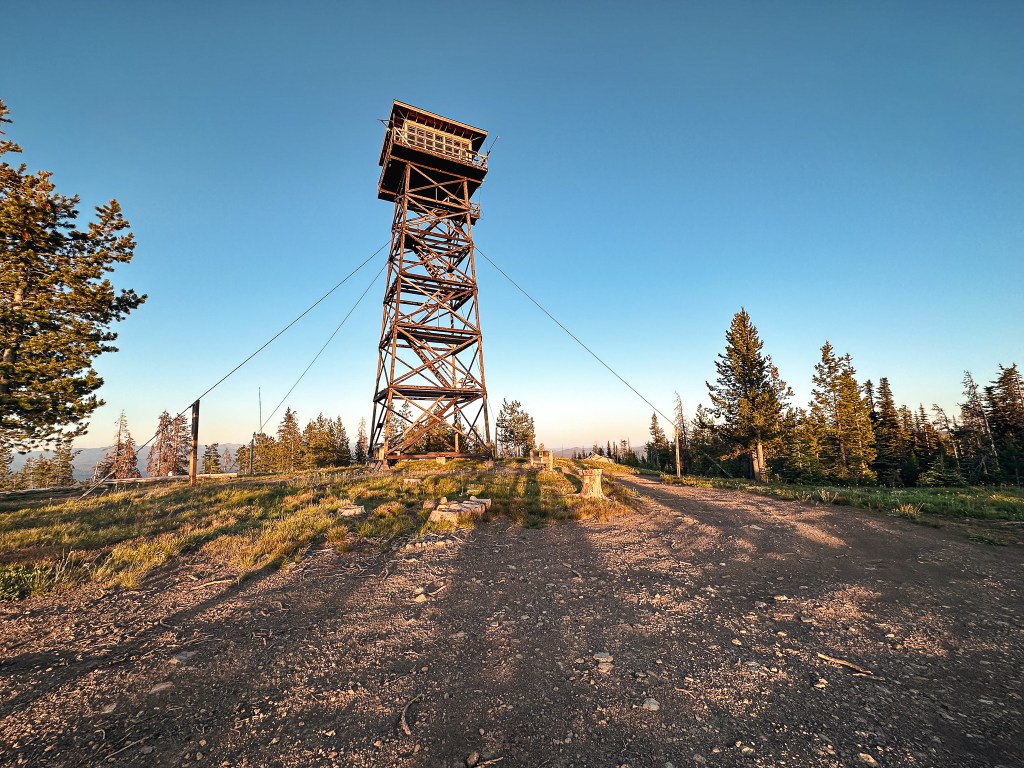
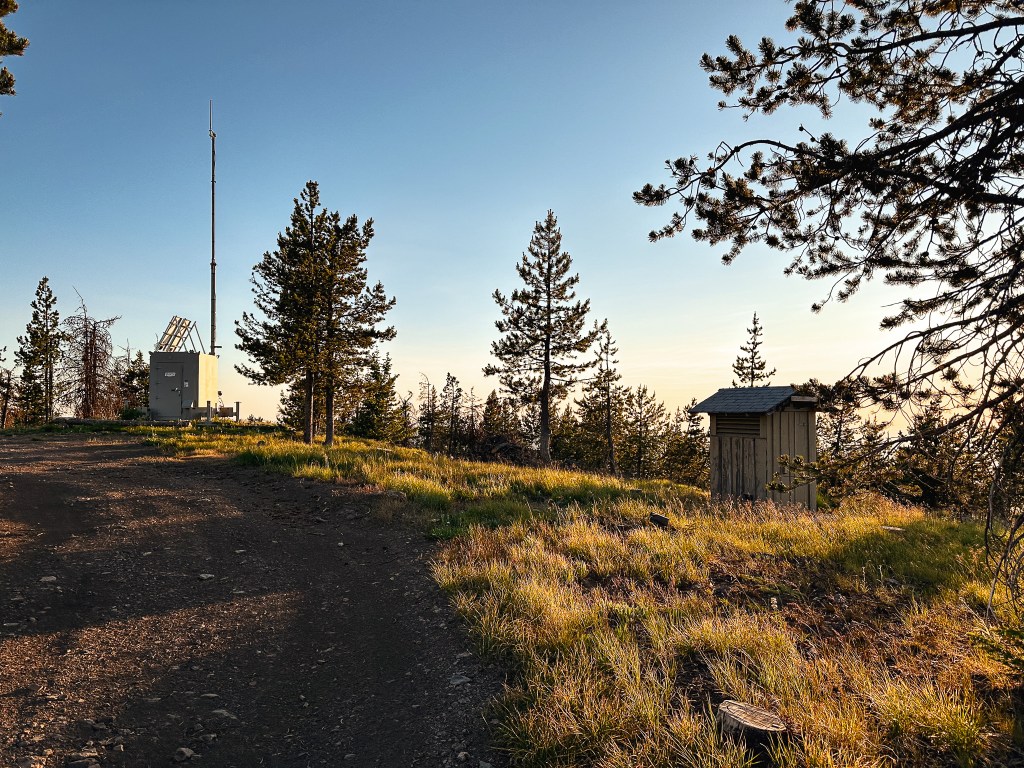
In 1918, the East Oregonian mentions a big steel lookout tower receiving storm damage on Desolation Butte. I could only find mention of this on Ron Kemnow’s site, but there must have been some sort of steel tower added during the 1910s. It was replaced in 1923 by a 50′ steel Aermotor tower with 7×7 cab. There was also a wood frame cabin for the living quarters. The existing tower was constructed in 1961 as a 67′ treated timber tower with R-6 flat roof cab. It was threatened in 1996 by the Bull Complex Fire but survived along with the Olive Lake Campground thanks to the hard work of our Wildland fire fighters. It is still actively staffed every season.
We headed down Whiskey Creek Road from Tope Creek L.O. towards HWY-82. Instead of turning back the way we came on Jim Town Road, we stayed on Whiskey Creek Road to meet up with HWY-82 in Wallowa. The directions we had for Howard Butte L.O. were part of a loop driving tour the FFLA Western Conference was planning on hosting Sunday. This meant we would be coming from the opposite direction mentioned which really only mattered for where the turn off would be along HWY-82. Once we made the turn-off the directions would be the same. We were also not going to be able to stay all day Sunday for this part of the lookout tours, so it was nice that we had time to see some others while here. We turned right onto Yarrington Road which was around 6 miles outside of Minam. The directions said it turned into county road 49 after 3 miles, but it seemed like we just stayed on the same road for roughly 12 miles. This road dropped down to cross the Grande Ronde River over a bridge and met up with Moses Creek Lane that took us to Palmer Junction. At Palmer Junction, there is a paved road that leads off to the left while the gravel continues off to the right. We kept right to stay on the gravel. As we were continuing on the gravel the road forked, this wasn’t mentioned in the directions but it looked like the fork to the right lead to a private residence. The left fork headed up which is typically a good sign when trying to reach a fire lookout and we continued in that direction. The last note on the directions mentioned that there should be a road that heads up the side of the butte to the lookout after 5 to 5-1/2 miles. It didn’t mention what side the road would be on or how far up from the road it would be. That made us assume it would be an obvious junction. After a while of driving, we realized it was getting late and that we wouldn’t make it back in time for the dinner. We also got the sneaking suspicion we were on the wrong road. We stopped after seeing a road marked with a Forest Service road number. Howard Butte is on state land and wouldn’t be marked as such. We decided to re-orient ourselves on a map.
The map we had confirmed our suspicion, we were pretty far off track for getting to Howard Butte L.O. now. We should have forked to the right to head down and across the Grande Ronde River again instead of heading up. We were kicking ourselves for not having the map open while trying to navigate. We had a few options now. The first was to scrap the plan and try to head back to make the dinner at the VFW post. Though it would be unlikely that we would make it back in time. The second was to back track to the correct turn and still try to get to Howard Butte. The third option was to continue further into the forest to reach Lookout Mountain and possibly Hoodoo Ridge too. We had gone far enough off track that we were fairly close to Lookout Mountain now. We figured we could try to stop somewhere, like Terminal Gravity Brewing, in town for dinner with the two latter options. We both agreed Lookout Mountain was the more appealing option and we’d be back in the area to visit Howard Butte some other time.
We continued on what was now NF-6231 with our new objective in mind. We stayed on this road until we reached a large four way junction with NF-62 and turned right. The map we had pulled out was the recreational forest map instead of our usual ranger district map. This showed Lookout Mountain being located right off NF-62 and we figured we’d be able to see it from the road. This wasn’t the case, but I luckily saw a gated road with a “no parking” sign posted on it as the road we were on started to head down. We stopped in the nearest pull out and walked back to check it out. Upon closer inspection, there was also a Covid-19 warning sign posted from when all the fire lookouts were closed to public access. We knew we had found the right road and started walking. This is NF-370 if you have a more detailed map, but I didn’t see any sign for it while there. The gate is recessed from the road as well so it could be easy to miss if you’re not paying attention.
It was already late in the day, much later than we normally would visit a fire lookout. Especially, one that we know is actively staffed. It’s better etiquette to visit between the hours of 9AM and 5PM like you would a business. A reminder that this is their personal space and home for the season. We walked up with that in mind and the intention of only getting pictures of the tower from the ground. The lookout attendant was on the ground working out with a punching bag when we walked up. We gave him his space while we took some pictures and looked at the view. He eventually noticed us and we gave him a wave. He stopped what he was doing and walked over to us to chat. He said he saw us when we first walked up but assumed we were just hunters until he noticed the lack of guns and my camera. He offered to let us climb the tower and take a look around. We told him we didn’t want to impose, but he said it was no problem. This would be the tallest tower I’ve made it to the top of with no issues to date. We talked with him for a while about his background and experience as a lookout. The sun was starting to set and we didn’t want to bother him for too long. We thanked him for his time and headed back to the car.
Before we had left he mentioned the easiest way out was to head back down NF-62 and follow it out until we saw signs for Elign. We followed his direction and turned at the signs for Elign which landed us back at Palmer Junction. This was confusing to us since he said that we’d eventually meet pavement. We also didn’t want to go back the way we came since the road wasn’t great and it was already dark. I thought maybe he meant the paved road that lead out of Palmer Junction, but it only lead us to a dead end at the fish hatchery. We continued back on the gravel road we came from and decided to stay on Moses Creek Lane instead of crossing the Grand Ronde River. This turned out to be the right call as we soon found the pavement and were able to follow it out to Elign. Side note: I would recommend starting in Elign and taking this route to get to Lookout Mountain, it’s low-clearance compatible too. The unfortunate part was Elign is over 50 miles from Wallowa Lake State Park and we still needed to figure out dinner. We realized quickly most places were going to be closed by the time we reached Enterprise. We figured our only option would be to stop at a bar that was open later or head back to camp for the food we already had with us. We cased a few bars as we drove back but none struck our fancy. Eventually, we were too tired to even want to order and wait for food anywhere. We surrendered to the fact that we had plenty of food in camp and had a sad dinner of snacks when we finally got back after 10PM.
Lookout Matt
Matt has been a lookout attendant on Lookout Mountain for 14 seasons. He is from Montana and currently resides in the Billings area during the off-season. He used to live in Portland, Oregon and professionally ice-skated for a while. He also used to staff Bear Mountain L.O. in Idaho that required roughly 8 miles one-way of hiking to reach. He was struck by lightning once while staffing Bear Mountain. He said he had his elbow on the refrigerator when the tower was struck. It sent a bolt from his elbow down through his leg. No scars or major injury, but it did knock the wind out of him. He said a good way to tell a fire lookout has been more recently struck by lightning is to look at the copper wires. If they look shiny and brand new, they were most-likely recently stripped by a lightning strike. If he could staff any fire lookout, he would choose Mineral Peak near Missoula, Montana since it holds a lot of sentimental value and is where he grew up visiting lookouts.
History.
Lookout Mountain was first established with a 60′ round timber tower and enclosed observation cab in 1935. The existing L-4 cab with 87′ treated timber tower replaced this in 1948. A few sources list this as an 82′ tower, but there were two Lookout Mountains in this area at one time. One was 87′ and the other was 82′, I believe the latter was the height of the one that has since been removed. This lookout was actively staffed until 2001 when it sustained damage during a strong wind storm. It was deemed un-safe to staff upon inspection and the lookout on duty was moved to High Ridge L.O. while repairs were completed. Repairs and remodeling were made in 2004. A crane was used to lower the cab from the tower to make the work easier. It received a new roof, wider catwalk, new hand rail, and door during this update. The tower also received work on the cross braces, stair treads, and lightning protection system. It is now actively staffed every season again.














































 The Roaming Civic