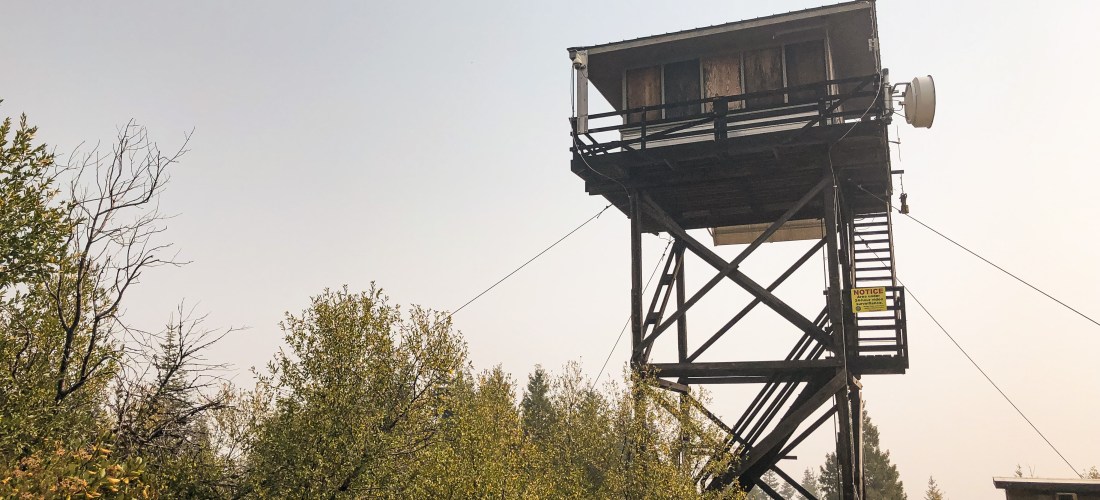
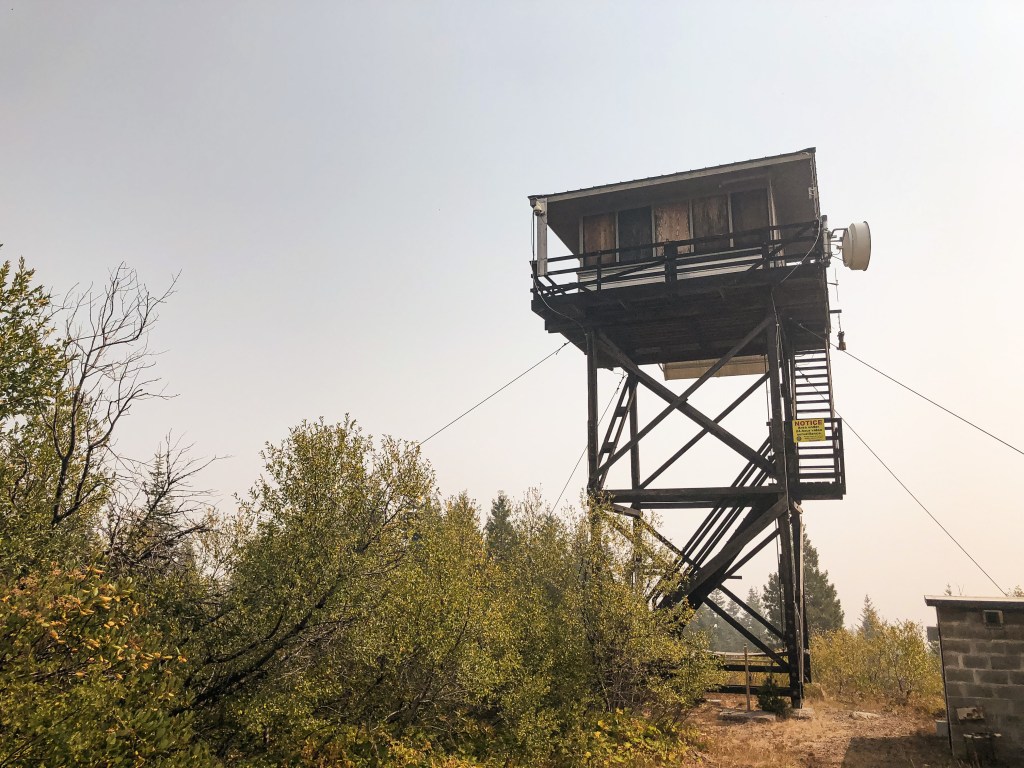
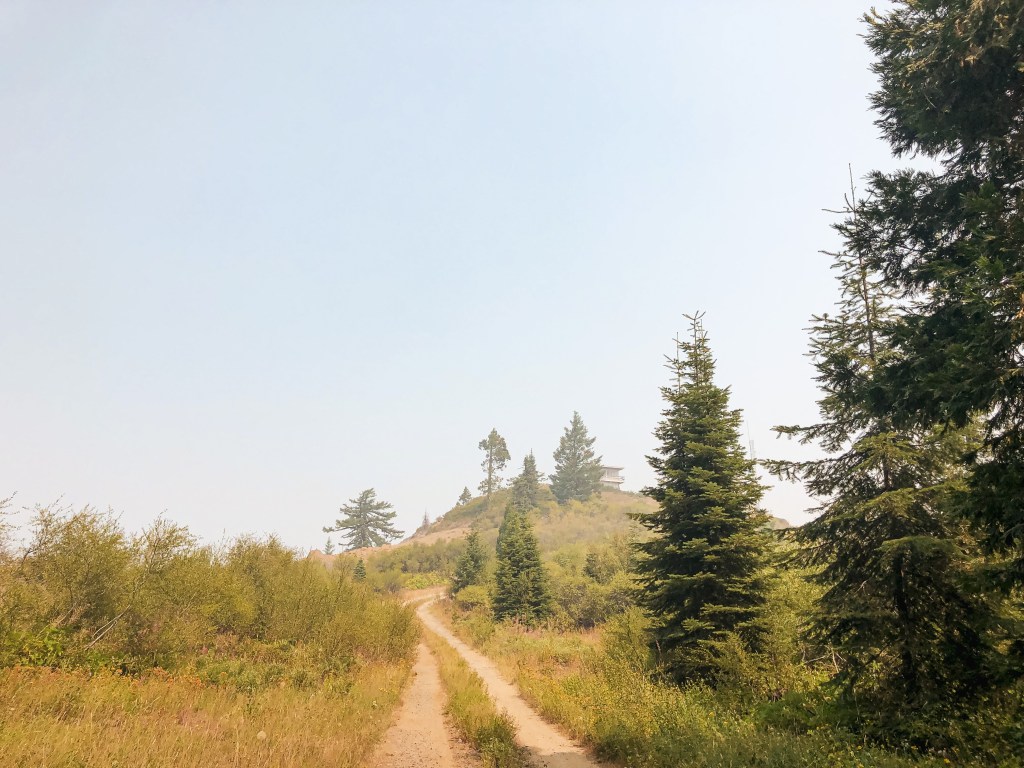
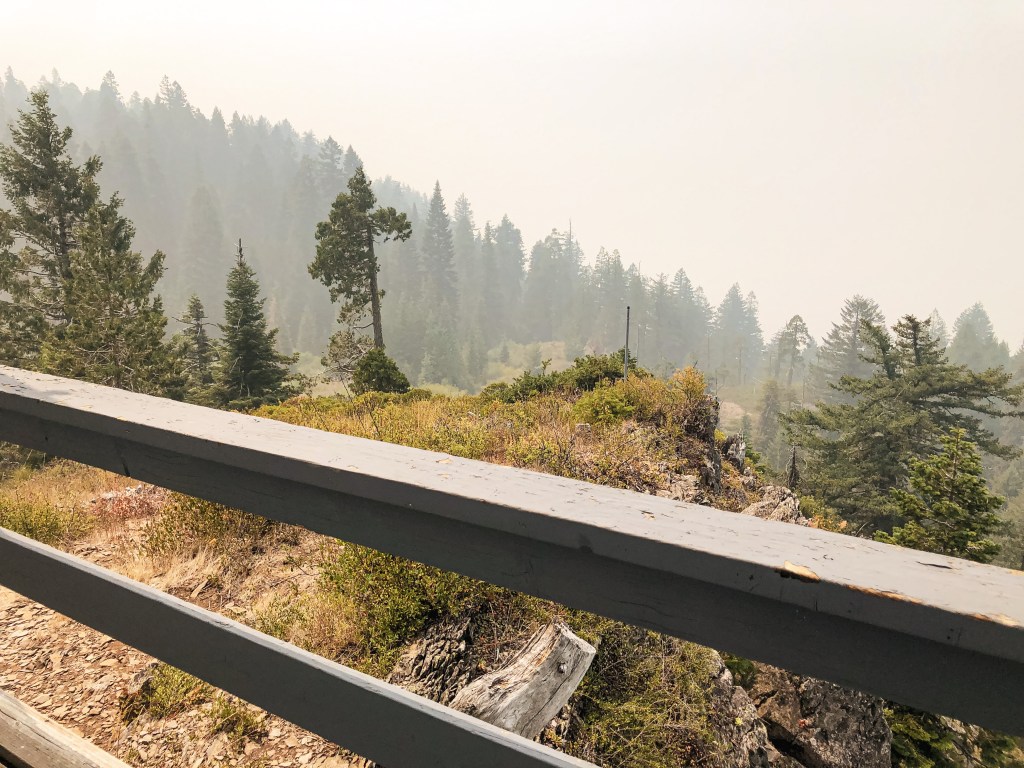
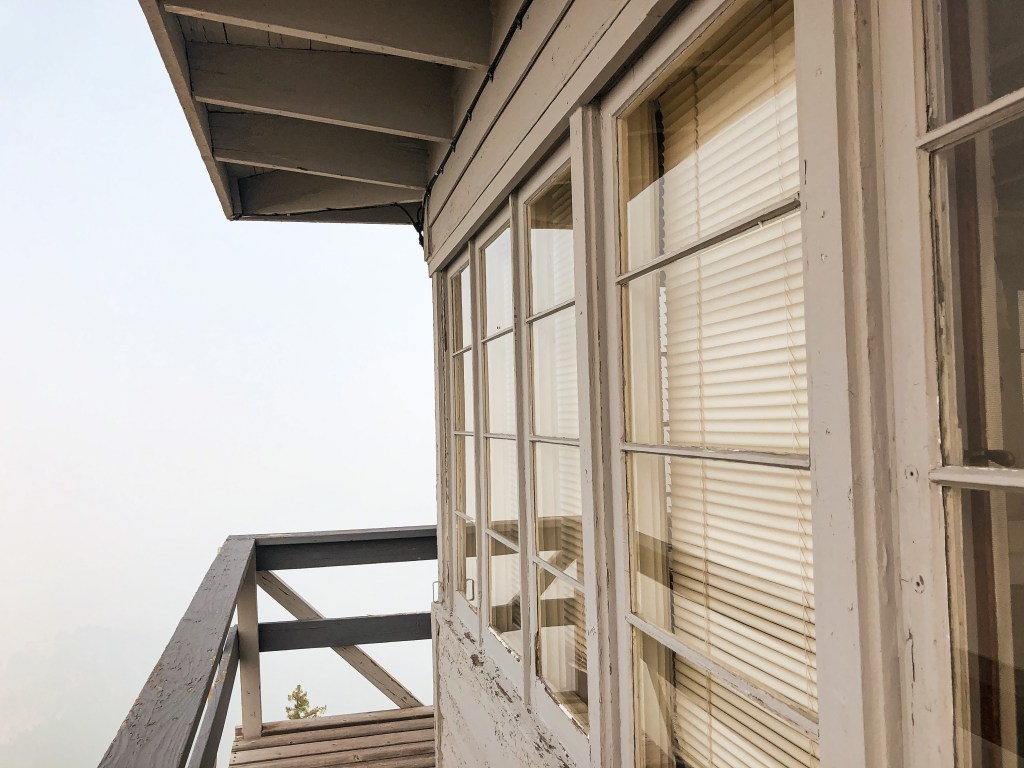
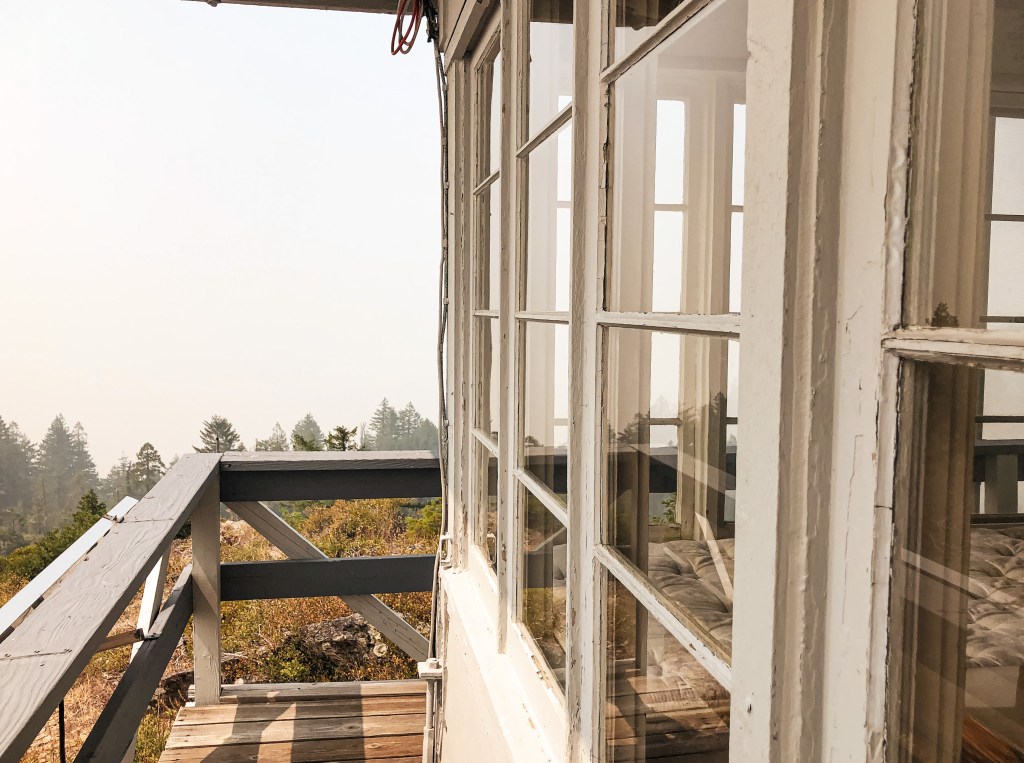
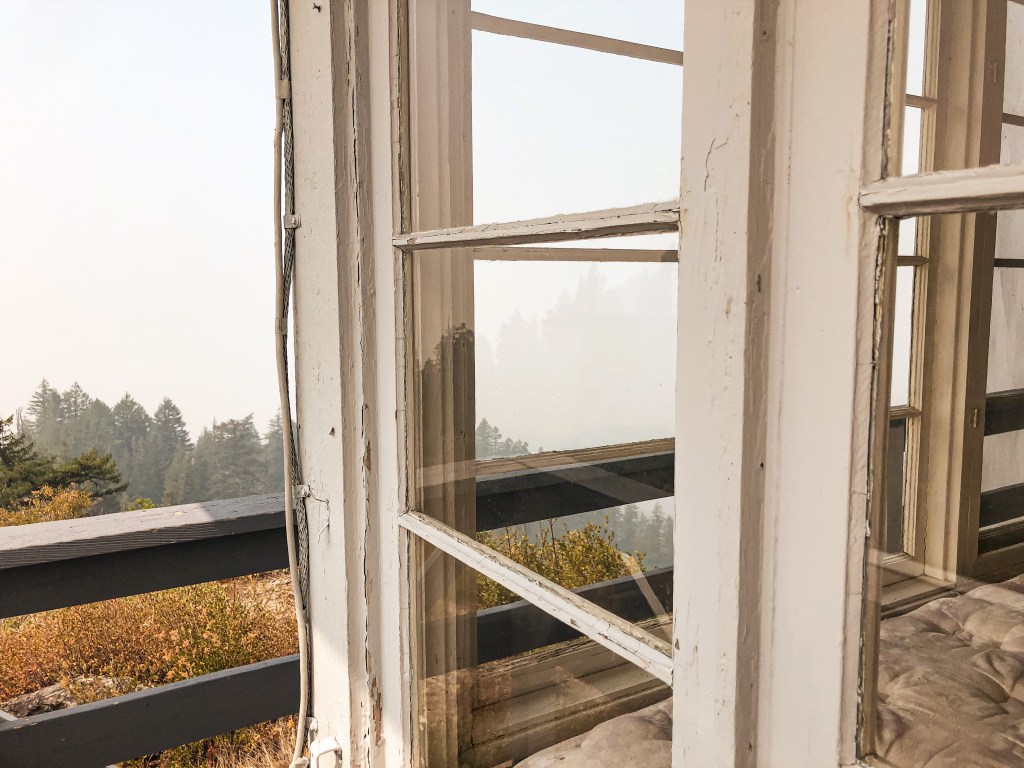
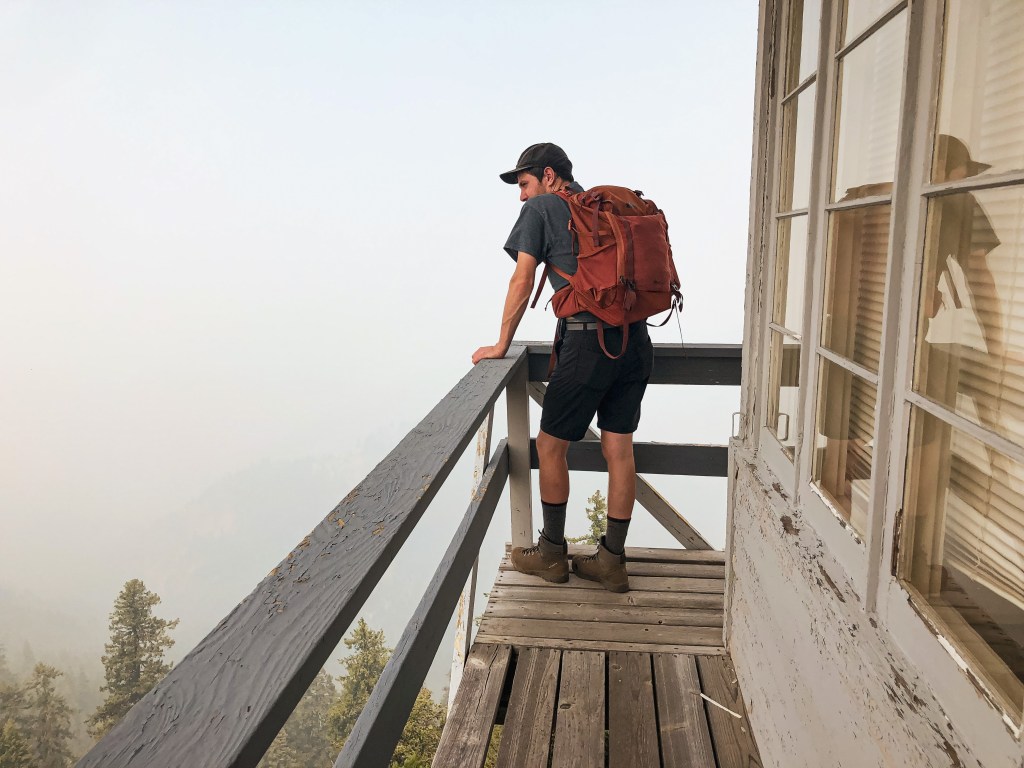
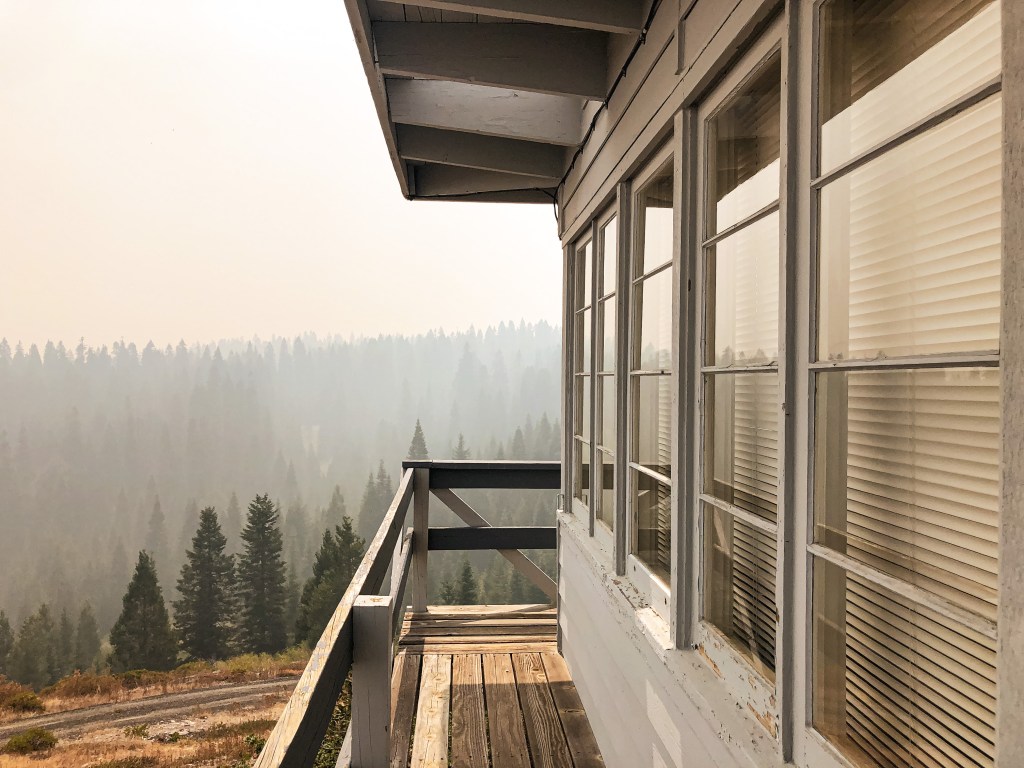
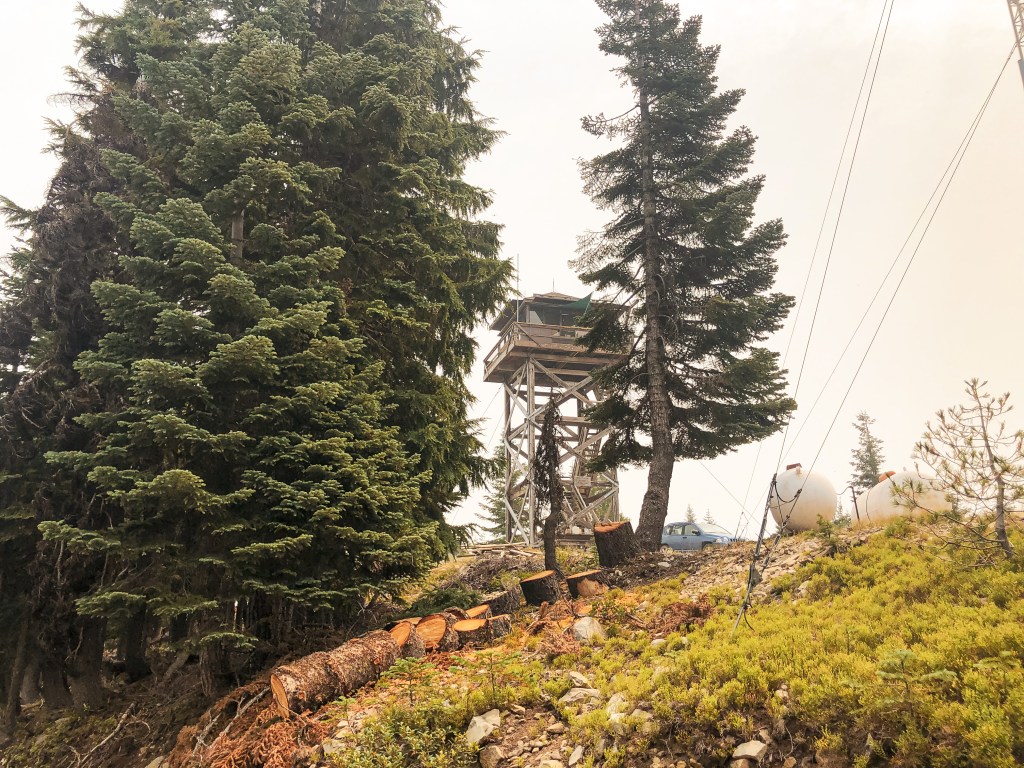
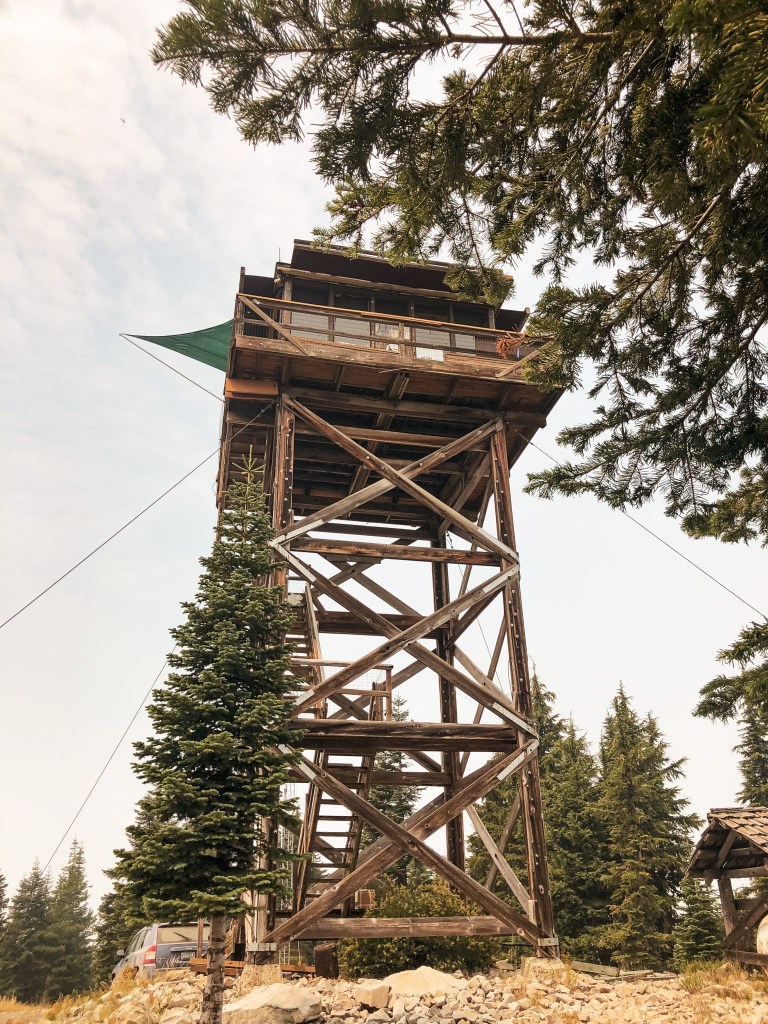
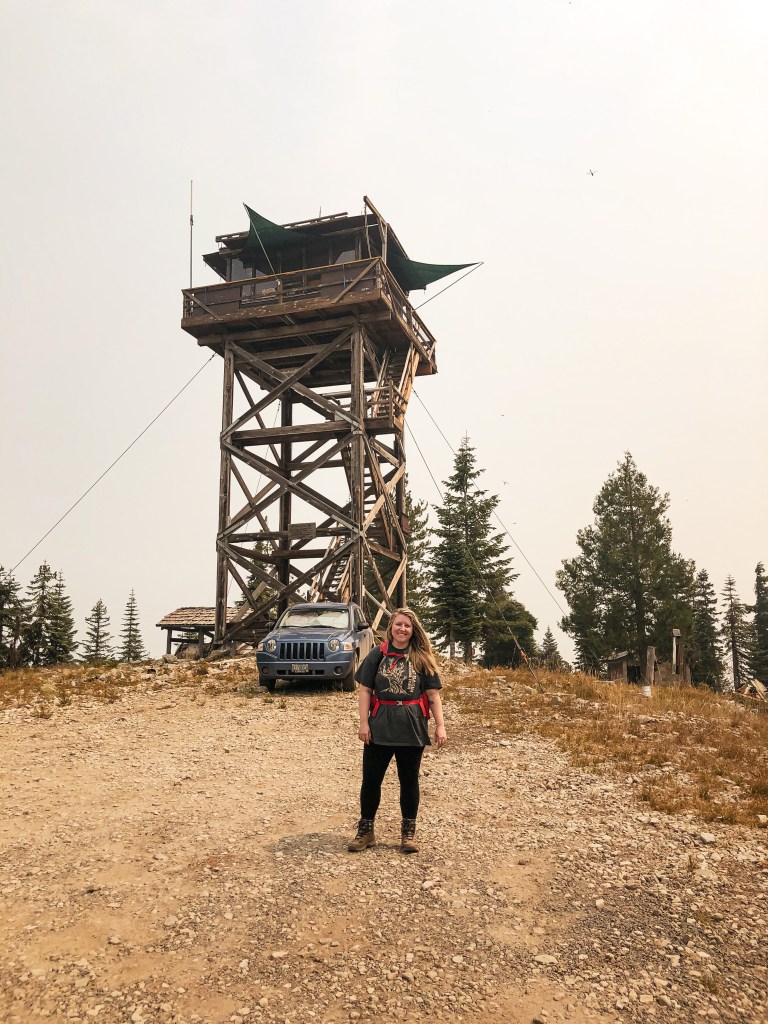
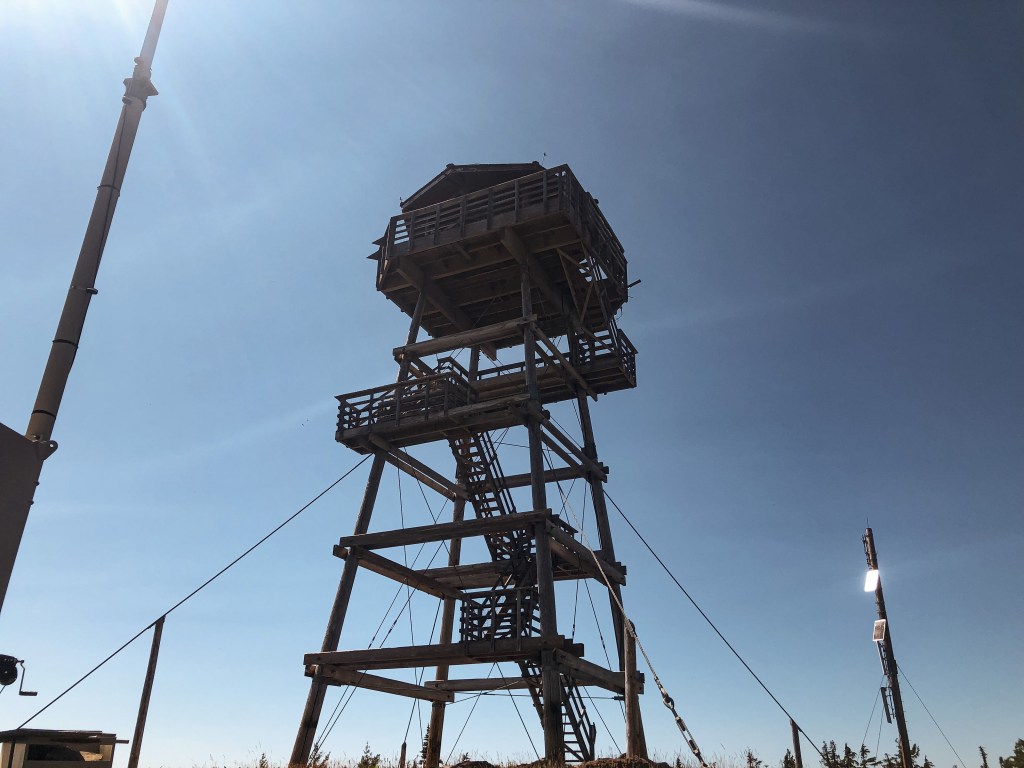
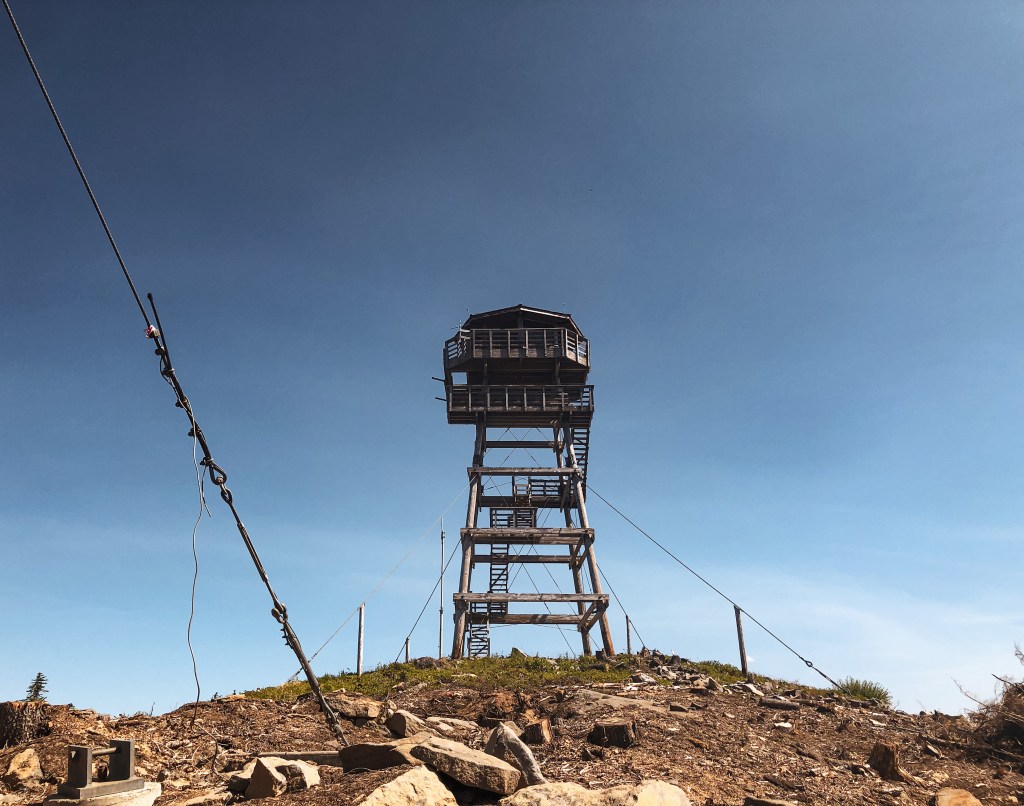
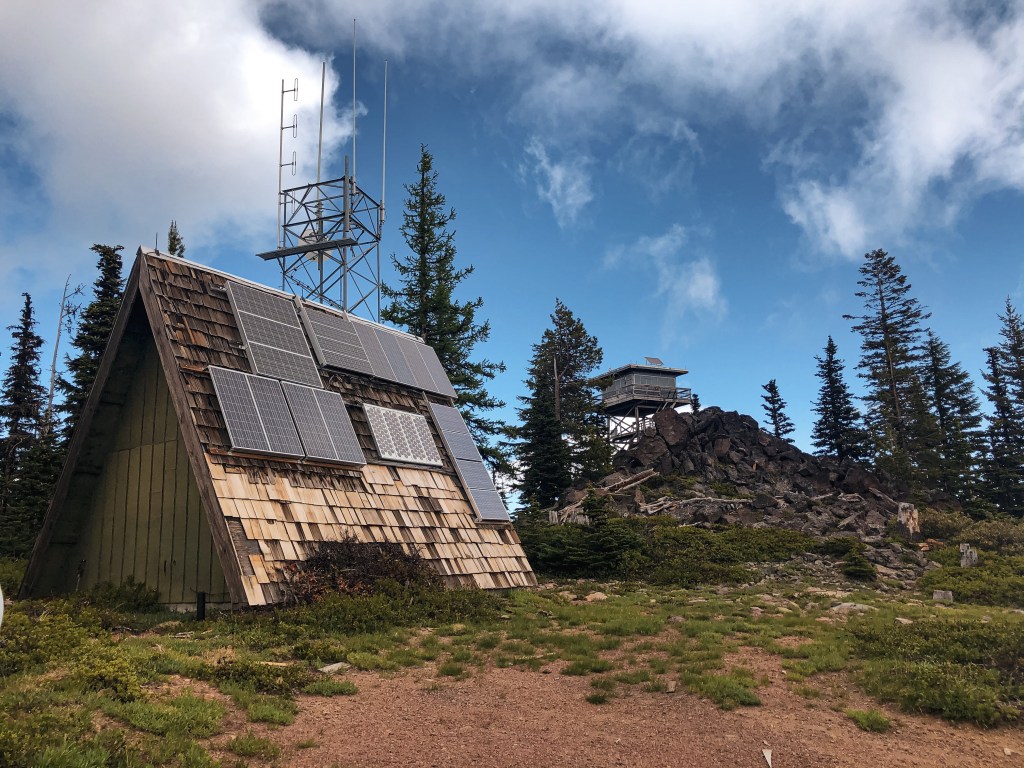
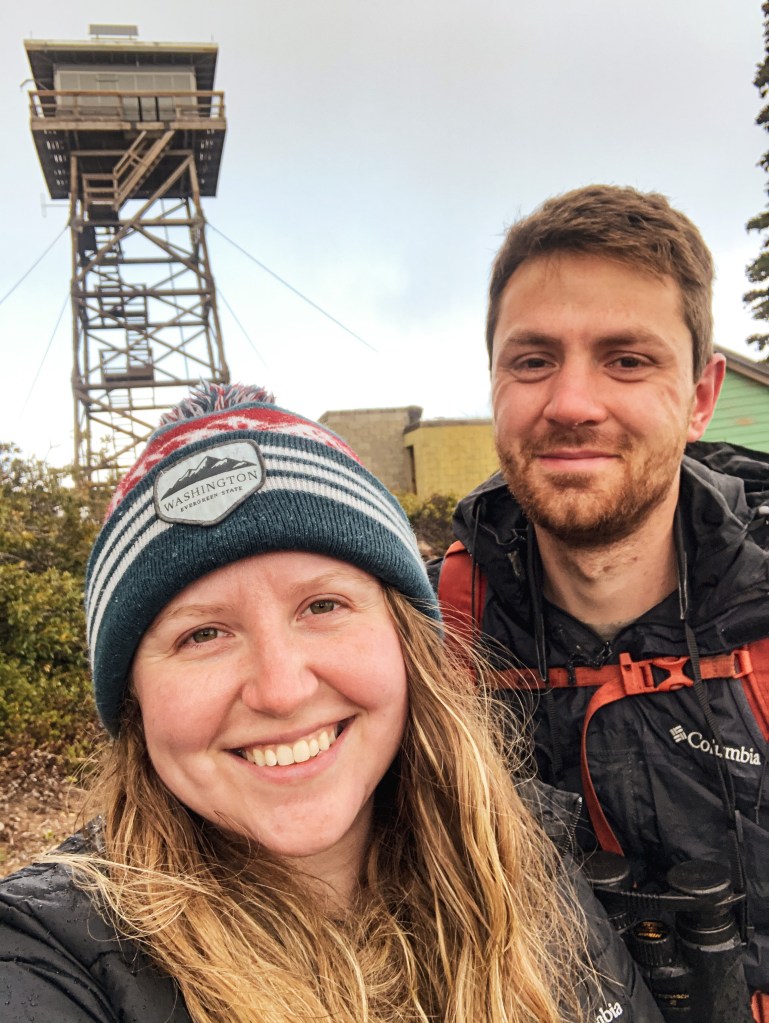
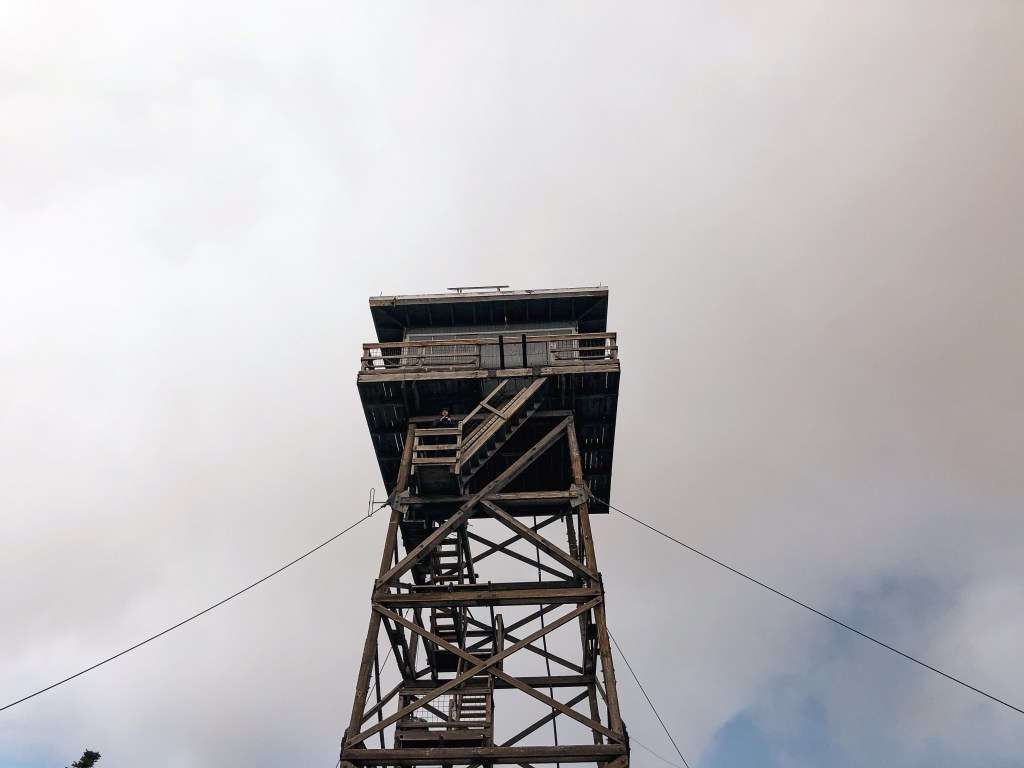
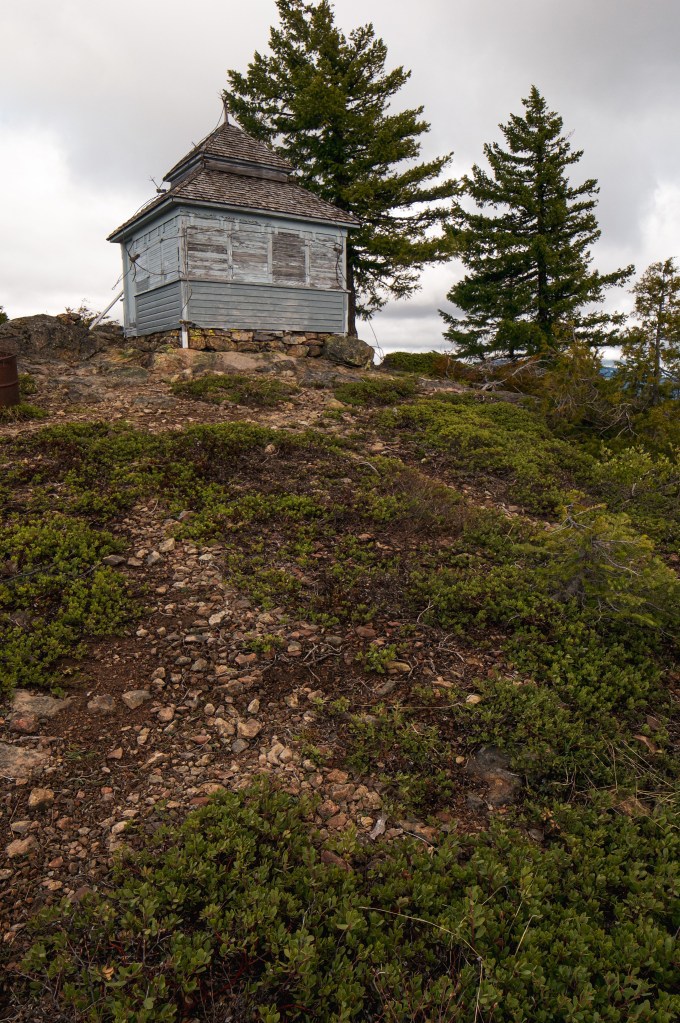
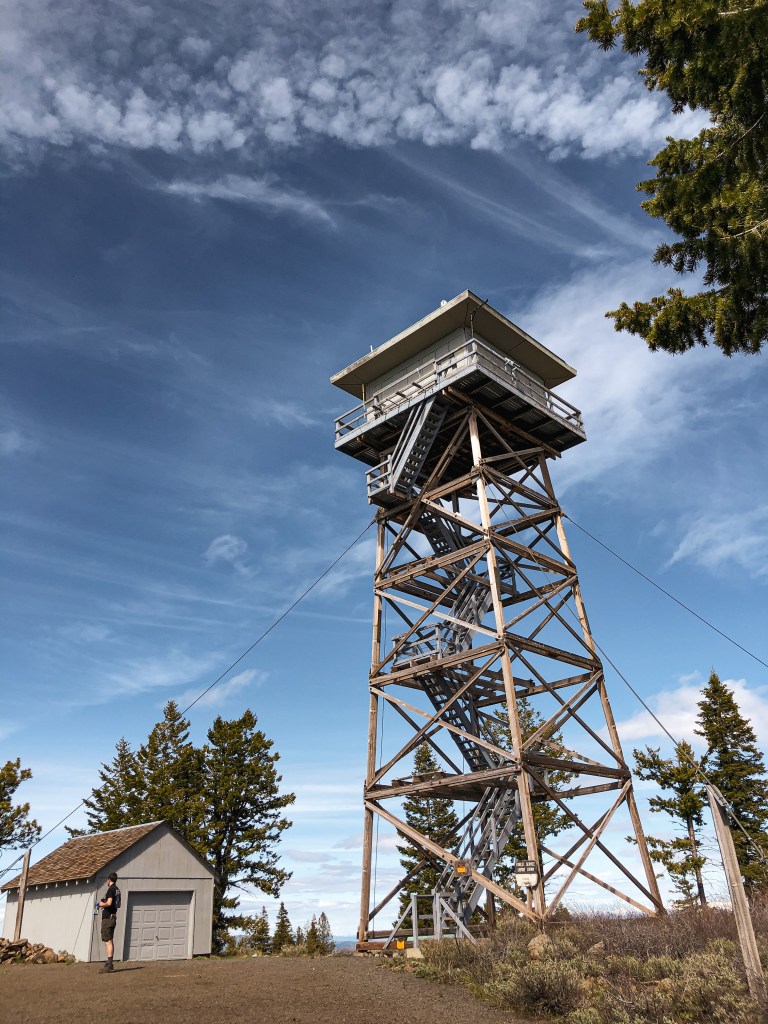
My partner and I had visited Halls Point (post) earlier in the day and were now headed to White Point from my parked car. It was only about a mile road walk from the road junction of NF-200 and NF-290. You will stay left on NF-200 until you reach a gate to get to White Point on the left. The gate was closed but not locked. On the final stretch of road to the lookout there is a large green metal billboard sign. I found this very odd and out of place. Apparently it used to say “White Point Drive-In Theater”, but had no signage when we visited which only adds to the mystery. After spending so much time ogling Halls Point (post), this one was disappointing in comparison. I also found it interesting that Halls Point (post) was painted white but White Point had a dark finish. A trip report from 2011 stated that this had been an actively staffed lookout for years but that the current lookout was worried about losing their job to infrared cameras. It looks like they have since been replaced by said cameras which was unfortunate to see. The catwalk was closed off for access and the windows have been boarded up. There was a 24-hour surveillance warning sign along with a camera. It was hard to tell if there would be much of a view on a clear day. The trees and shrubs seemed to be taking over the area. By the time we were at the lookout, we were in the heat of the day and I was tired from constant smoke inhalation. We didn’t spend too much time here before heading back to the car.
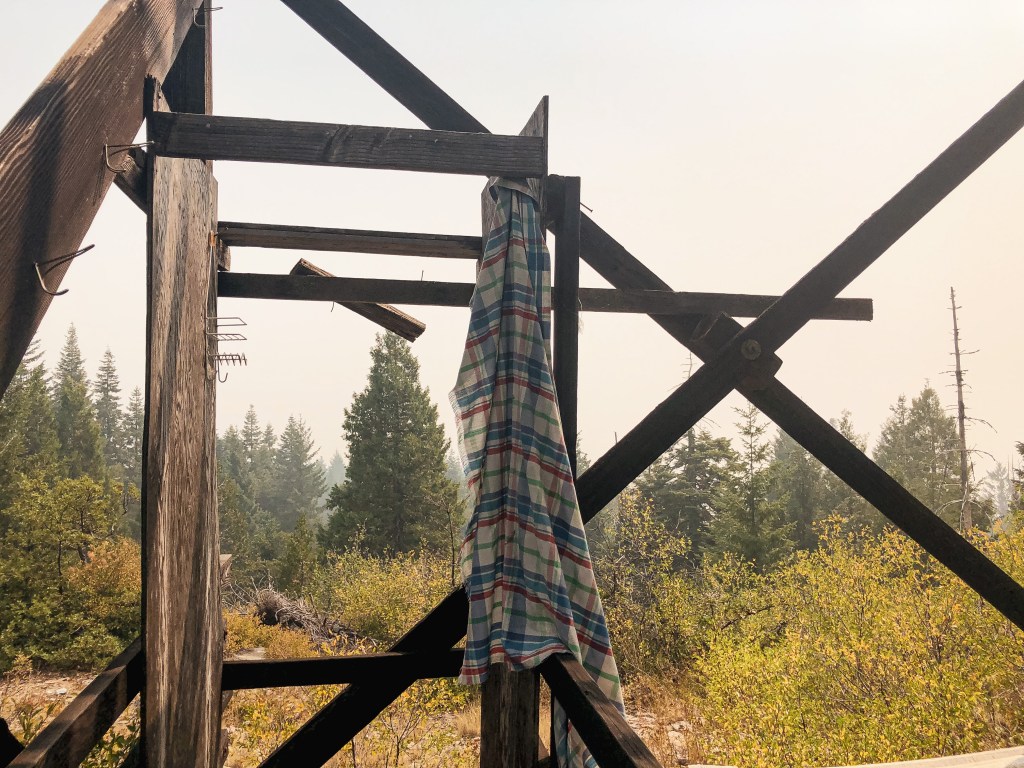
Old shower
History.
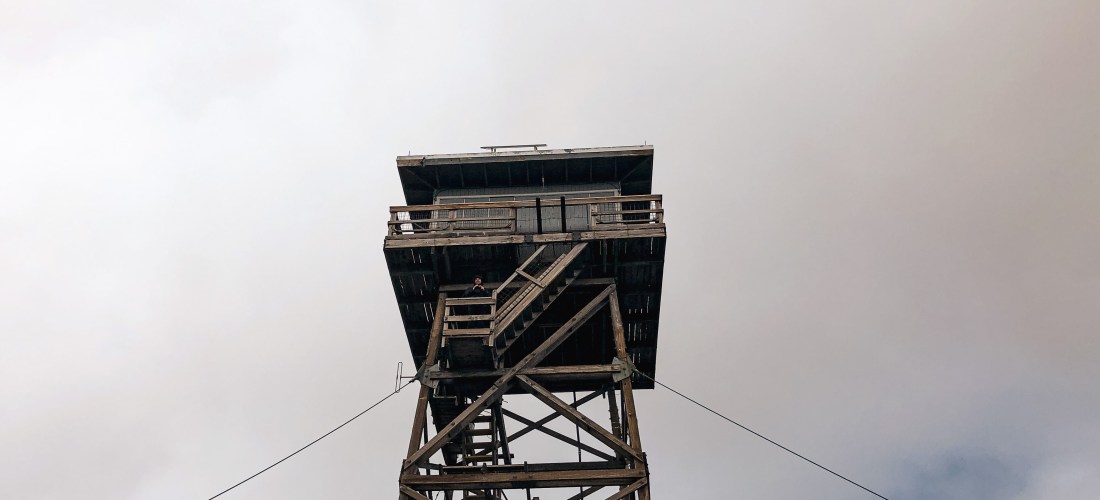
White Point L.O. is an Oregon Department of Forestry lookout instead of the typical Forest Service lookout. The first lookout at this site was built in 1951 with a 40′ tower and 14’x14′ live-in cab. It was replaced in 1974 when they dismantled the Burnt Peak L.O. They reused the wooden tower uprights from Burnt Peak L.O. to build a new 30′ tower with ODF cab. On Ron Kemnow’s site it is described as a 28′ tower fitted with a 14×14 Amort flat roof cab.
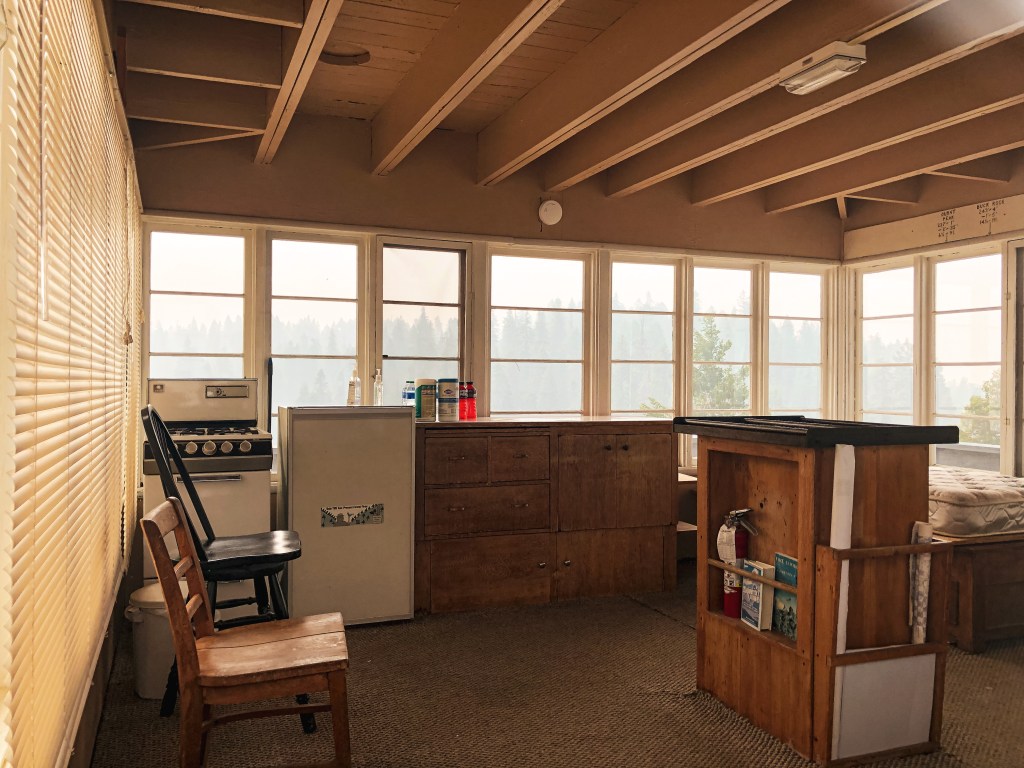
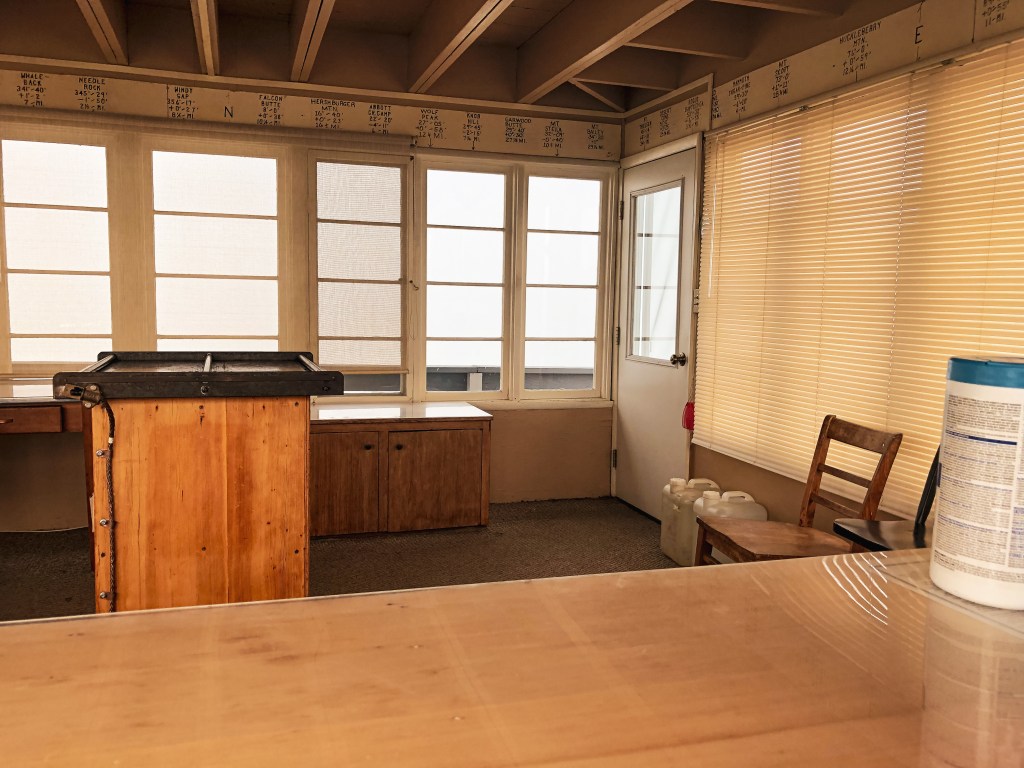
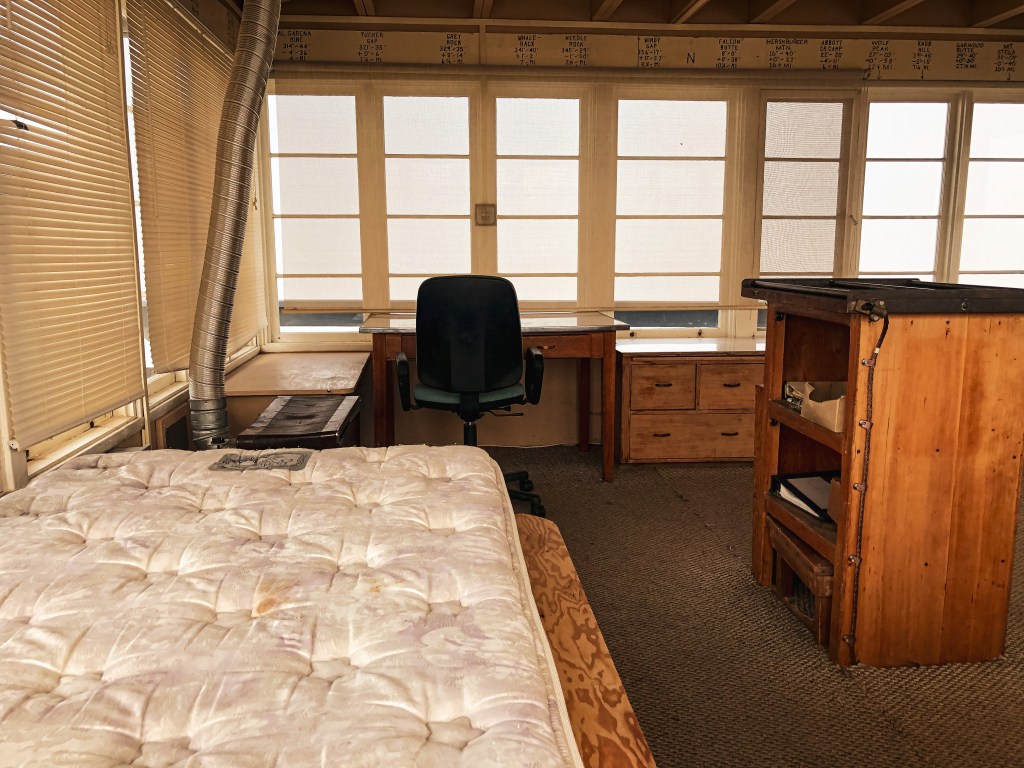
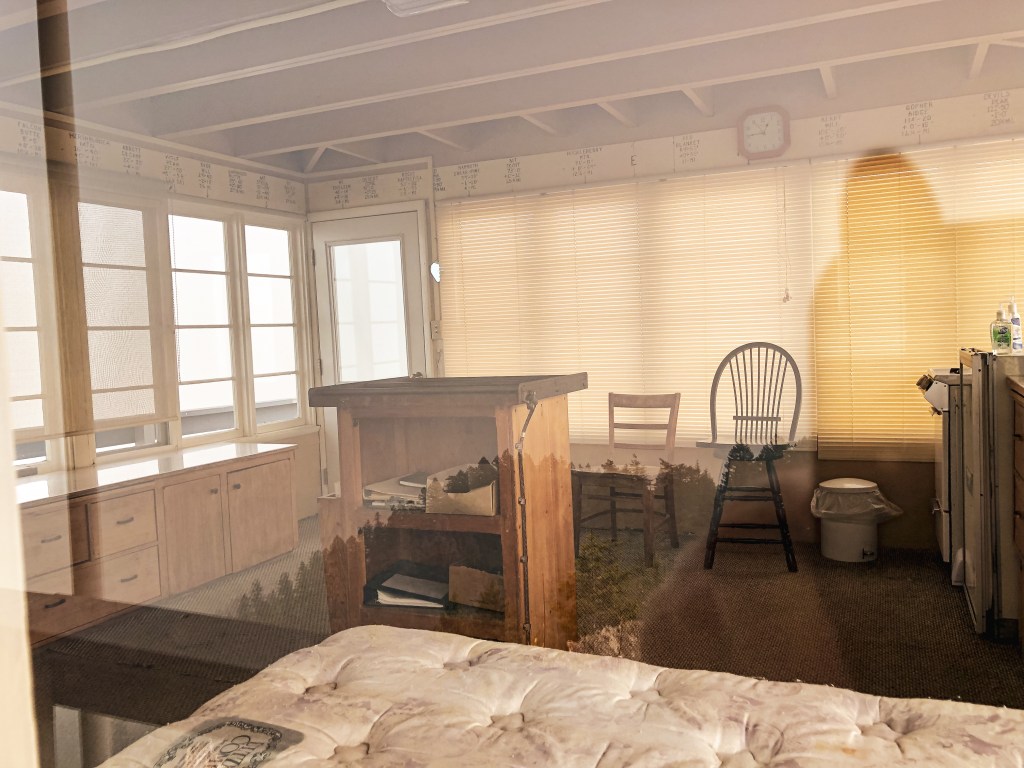
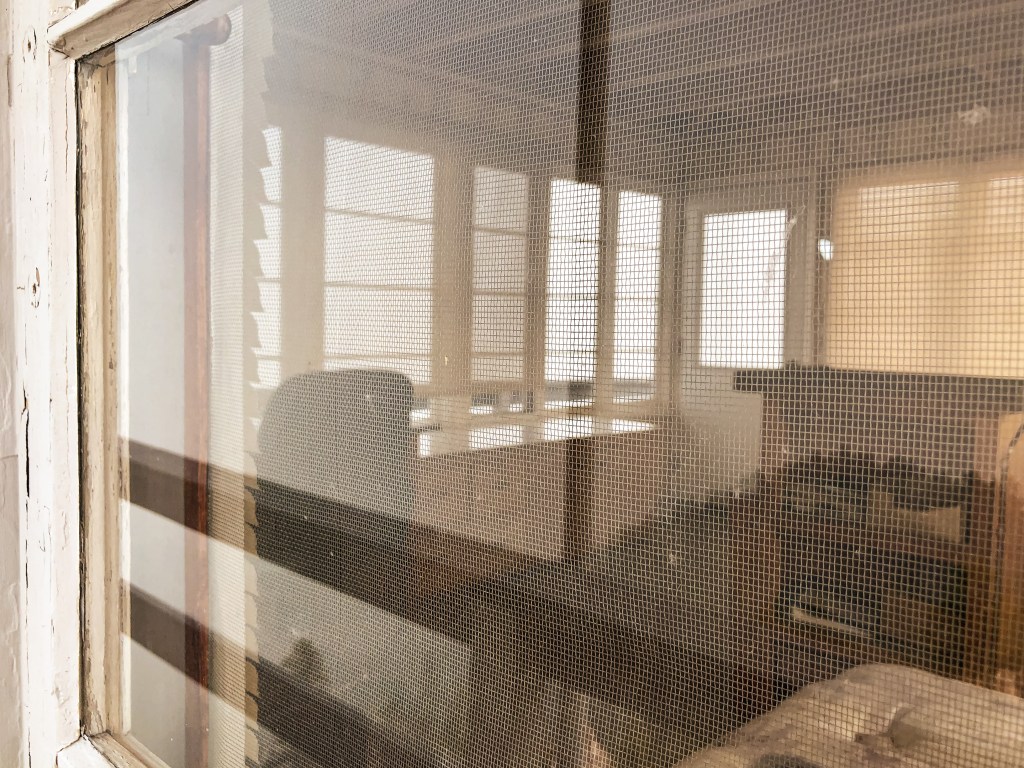
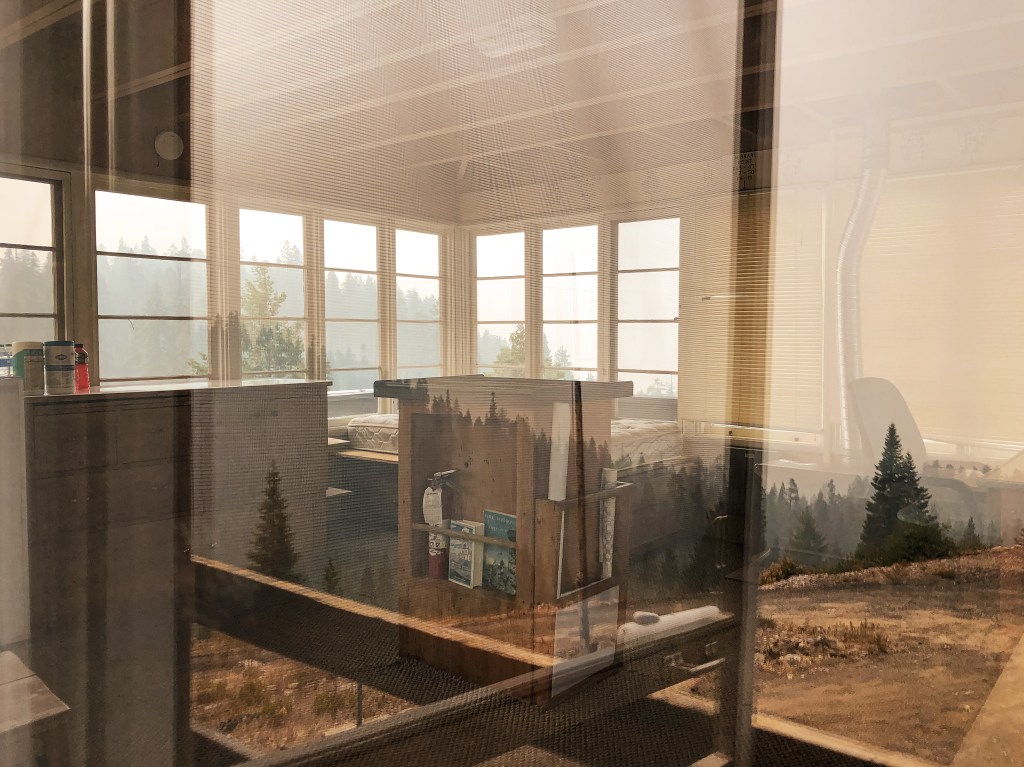
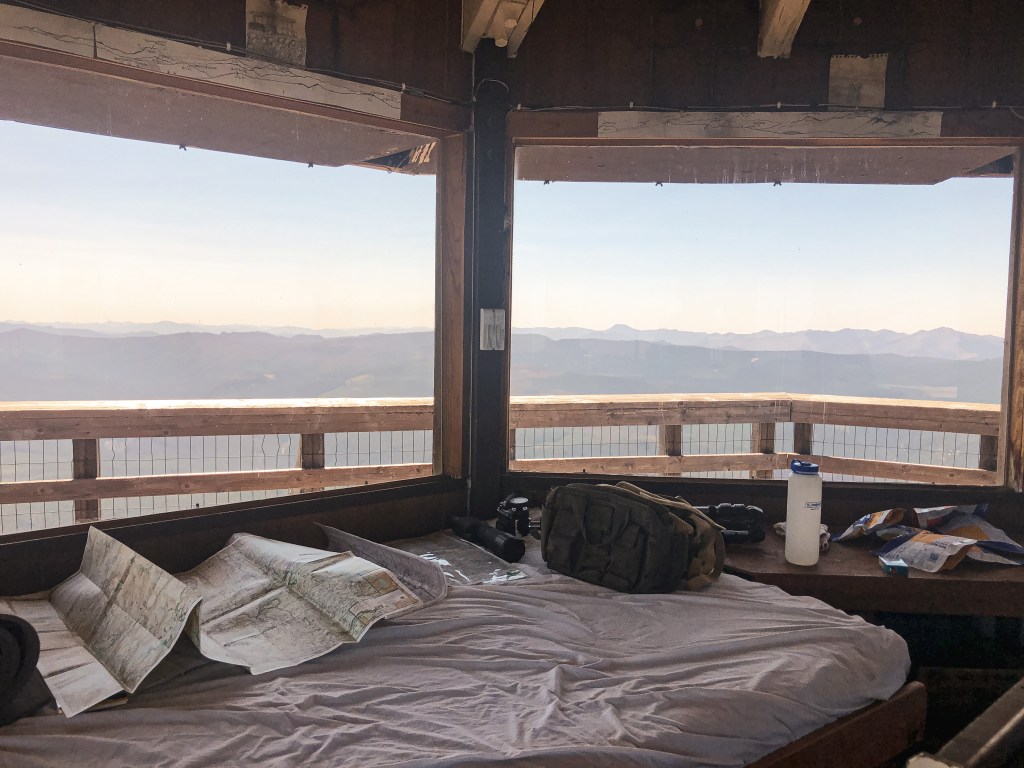
The day after visiting Rustler Peak (post), we decided to venture out to Halls Point and White Point (post). They are located within two miles of each other on the same ridgeline, so it was easy to see both in the same afternoon. From Prospect, we drove to NF-64 and took this until we reached NF-200, which is on the left. You will take this road all the way up until you meet a junction with NF-290. NF-200 was steep but drivable in my Civic. I really didn’t like driving on the steep grade, so I had my partner drive on the way back down to camp. Once at the junction, you can continue left on NF-200 to White Point (post) or right on NF-290 to Halls Point. The roads seemed to deteriorate after the junction, so we decided to park and road walk the remaining distance. It was about a mile or so to each lookout from where we parked the car. We decided to start with Halls Point and headed down NF-290. It was a hot and dusty road walk, and the amount of smoke in the air didn’t make it any easier. High clearance vehicles can drive farther down NF-290 from the junction until they reach the gated road. From the gate it’s only another 1/4 mile to the lookout. The trip reports we found online noted that Halls Point is actively staffed. We even saw fresh tire tracks on the road past the gate. Given the extreme fire danger on the forest, in conjunction with the nearby Devil’s Knob Complex wildfire, we assumed we’d be met by a lookout attendant when we reached the summit. Halls Point sits low to the ground on a rocky knob and the shades were drawn on the side from which we approached. There weren’t any vehicles on the summit but I still didn’t want to disturb the lookout attendant if there was one. I called out a questioning “hello?”, to see if anyone was there. I didn’t receive a response and we didn’t hear any movement inside the lookout either. I called out again and waited before approaching. Once on the catwalk, we could see that there was no one there. However, it appeared someone had recently been up at the lookout, since there were unopened water and Gatorade bottles on one of the tables. There were also a couple of full water jugs on the floor and a mattress was on the bed frame. The door was locked but we were still able to see what was left inside of the lookout. We took our time on this summit with lunch and enjoyed our non-existent view. This is definitely one of my favorite lookouts that I’ve been to so far and I would like to come back on a clearer day to catch the view. On our way back down to the junction we saw a skunk walking up the road. My partner noted that skunks are typically nocturnal creatures and that there might be something wrong with it if it’s out during the day. We waited for it to leave the road before cautiously walking around it. Back at the junction, we walked past my parked car to NF-200 and on towards White Point (post).
History.
Halls Point has been an active lookout site since 1912, when a crow’s nest platform used to occupy the summit. In the 1930’s, an L-4 tower was built to house the lookout attendant. In 1956, the L-4 tower was replaced by the current R-6 flat cab. It appears to be well maintained by the Forest Service even though it is no longer staffed full-time. There was also a beautiful bench on the summit in memory of Verna Hegler. She staffed this lookout for 21 years, from 1994 until her death in 2015 at the age of 74. We speculated that it might not be staffed full-time anymore due to her passing.
In 1994 Verna began the career she loved most of all, staffing the historic Hall’s Point fire lookout on the High Cascades Ranger District. The mountain was a part of her, and she a part of the mountain. For more than two decades no smoke escaped her watchful eye. Verna’s calm and quiet voice was one of confidence and the legals she gave for the fires she turned in were always dependable. No one knew the landmarks from that vantage point better than she did. From closing the lookout in fall to opening the next season, how soon she could return to her summer retreat was never far from her mind.
Her spirit will surely visit often in this favorite spot.
My partner and I took a long weekend to visit the central area of Oregon. Our plan was to see Rustler Peak, Halls Point (post) and White Point (post) lookouts while camping in the area. There were a few other points of interest that we could check out as well if we had time. We were pretty close to the Devil’s Knob Complex fire and the area was socked in with smoke. I don’t recommend camping that close to an active wildfire. Even though we weren’t close enough to assume any risk, the air quality was at unhealthy levels. We thought about switching up our plans to avoid the smoke but most of Oregon and Washington were smoked out depending on how the wind was blowing that day. We decided to visit Rustler Peak L.O. first. We were driving down NF-37 from the north, and there appeared to be multiple roads leading up to Rustler Peak L.O. We decided to check out the route starting from Parker Meadows Campground since it was before the other road junction and looked to be a shorter route. Parker Meadows is noted as a campground on the map but it looks like it has since been decommissioned. There were no vault toilets or picnic tables. There were camp spots but they looked more like dispersed camp spots with rock fire rings. One of the camp spots had a snow shelter but there were no other notable structures. We started down NF-661 only to quickly realize this was not a drivable road for my Civic. We walked up the road a bit to see if it improved at all and debated whether we should road walk up this way or attempt the other road. After consulting our map I noticed that NF-640 led all the way up to the lookout and was most likely the main route to get there. We exited Parker Meadows C.G. and continued on NF-37 until we met up with NF-640. You could tell this was a well used route and the road looked like it was in great condition. We headed up this road and only encountered a few bumps along the way. It was one of the easiest Forest Service roads I’ve driven in my Civic to get to a lookout. The last mile to the lookout is a gated road. We parked my car in a pullout before the gate and started walking. It’s a relatively easy road walk from the gate to the summit. Because this is an actively staffed fire lookout, we were hopeful we’d get to meet the lookout attendant since they were noted as being friendly on another trip report. Unfortunately, they were either busy working or didn’t feel like socializing that day and we were unable to check out the cab. Always make sure to be respectful of the lookout attendant’s space and only climb the tower if you’ve been invited up. There wouldn’t have been much to look at from the catwalk anyway since the summit was shrouded in smoke. Even on the hike up we had a hard time making out the peaks only a few miles away. We enjoyed lunch on the summit’s picnic table before hiking back down.
History.
Rustler Peak has been noted as an active fire lookout site since 1913. I’m not sure what kind of structure was used for the fire lookout back then. In 1917, they built a cupola cabin on top of a 18′ steel tower. Maintenance on the lookout was performed by the South Fork CCC camp throughout the years. They even helped build the current lookout, which was erected in 1948. It is a 31′ 6″ tower with an L-4 cab. I couldn’t find any information on what happened to the previous lookout but it wasn’t on the summit when we visited. I can only assume it was moved or disassembled. They had contractors add a modern vault toilet to the summit in 2006. This lookout has been staffed every fire season and will continue to be for many more.
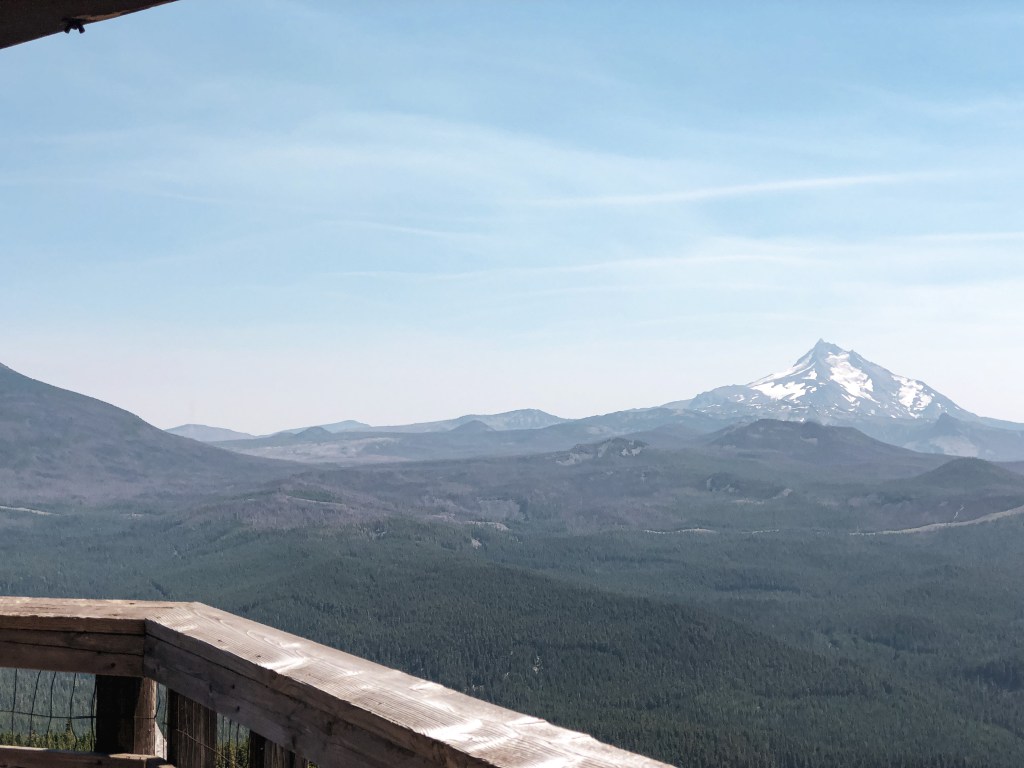
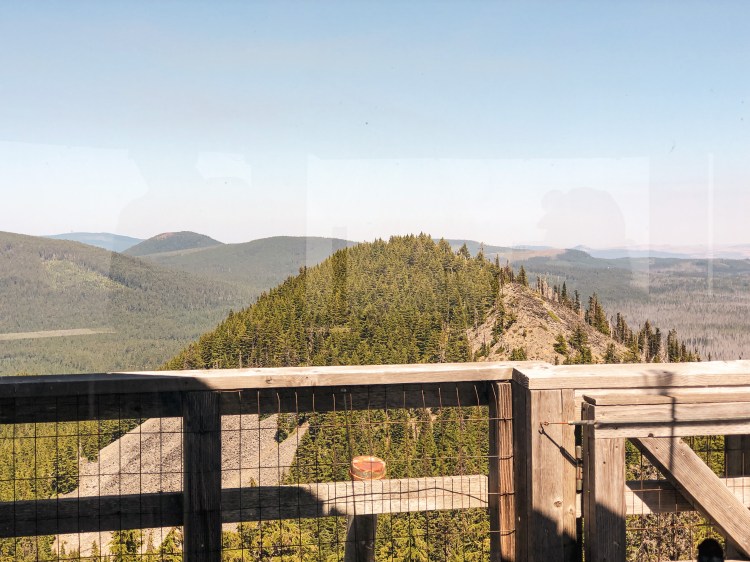
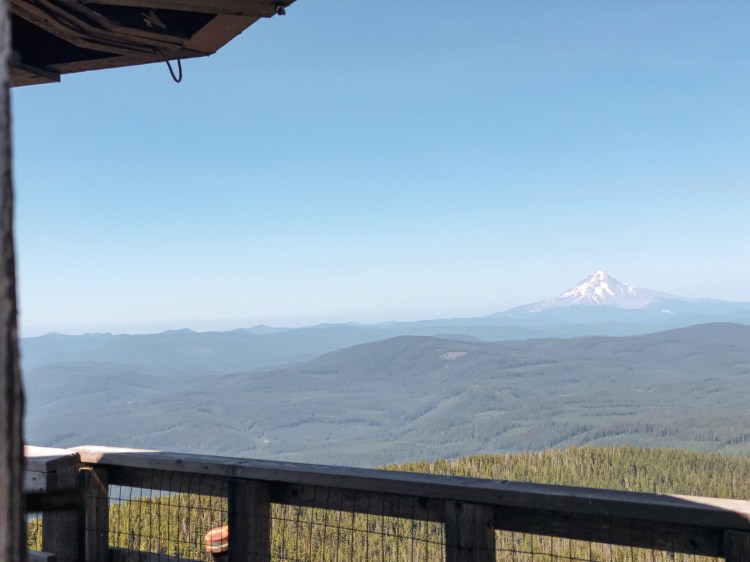
My partner and I decided to explore somewhere a little closer to home this weekend. We set out seeking dispersed camp spots near Sisi Butte L.O. with the expectation of hiking to it before heading out the next morning. We figured we would have to spend the majority of the day finding a camp spot since Mount Hood NF is a popular area, but we were able to find one fairly early in the day. After finding camp we decided we had enough day light to hike up to Sisi Butte L.O. that evening instead. We found the gated road NF-120 off of NF-4220. Driving here with my Civic posed no issues. We almost drove past it since it wasn’t signed, but after seeing previous trip reports with pictures of the gate we knew we were at the right road. There are no trails up to the summit and they keep the road gated to help deter vandals. The only way to reach the lookout is via road walking. It’s a fairly easy 3 miles one-way with 1,400 feet of elevation gain. Just remember to not block the gate when you park your car. Given the condition of the road, we most likely would’ve had to walk to the summit even if it wasn’t gated. We passed a trailer camped in a pull out on the hike up where the full-time lookout attendant stays during the night instead of in the tower. The trailer didn’t appear to be currently occupied. Sisi Butte L.O. is staffed in high fire danger so we knew there would be an active lookout attendant when we reached the summit. Always make sure to be respectful of the active lookout attendant’s space and only climb the tower if you’ve been invited up. When we reached the summit we were greeted by Brent who was the lookout fill in for the weekend. We assumed the full time lookout that stays here during the week must have gone to town since they weren’t in their trailer. Brent invited us up and offered to let us explore the cab. It was his first official day up there for the season. Wildfire season had already started but we were lucky enough to get some spectacular views that weren’t completely hazy. We chatted with Brent for a while about wildfires and other lookouts in the area. He used to be a wildland fire fighter and was very knowledgeable on the subject. He showed us the active Bruler Fire, that was burning on the Deschutes NF, with the fire finder. He said it was the only one he could currently see. I found it interesting that he didn’t stay in the lookout cab either. He lived close enough to make the drive up and down everyday during the weekends. We didn’t want to pester him too long so we said our good byes, thanked him for the visit, and started our hike back down.
Mt Jefferson
Part of Sisi Butte
Mt Hood
History.
I couldn’t find information on the first lookout that was built on this butte except that it was sometime in the 1940s. It was later replaced with a 40′ tower and standard L-4 cab in 1953. It served as the main lookout until it was dismantled in 1997 to prepare for the current lookout to be built. Similar to Calamity Butte (post), the current lookout is a 50′ tower with an octagonal cab. I’m not sure how many other lookouts where built in this style between 1996 and 2001 but these are the only two I’ve seen so far. The tower was in good condition despite missing its copper wires. Those help to ground it during a lightning storm. Brent said that instead of replacing the wire they are expected to vacate the area whenever a lightning storm passes through. He stated that it was low on their priority list for budget in replacements. They did recently do some maintenance around the base of the lookout though. They cut down all the trees closest to the lookout on the summit when it was threatened by the Riverside/Lionshead Fires. They hoped to create a more defensible space for fire breaks.
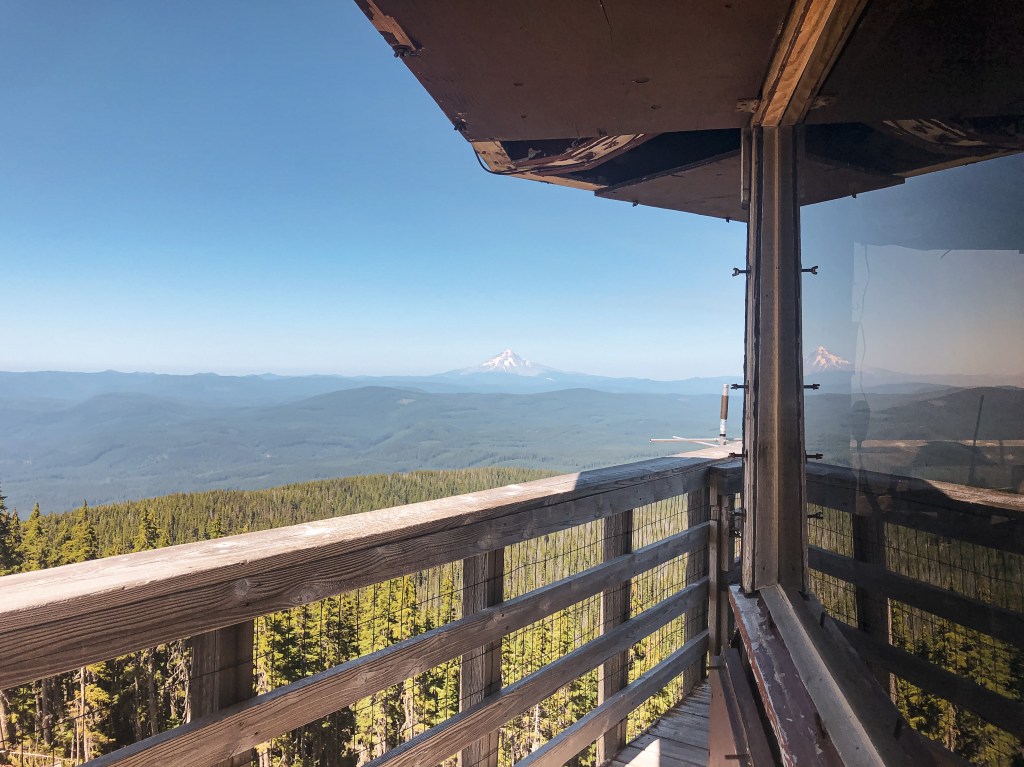
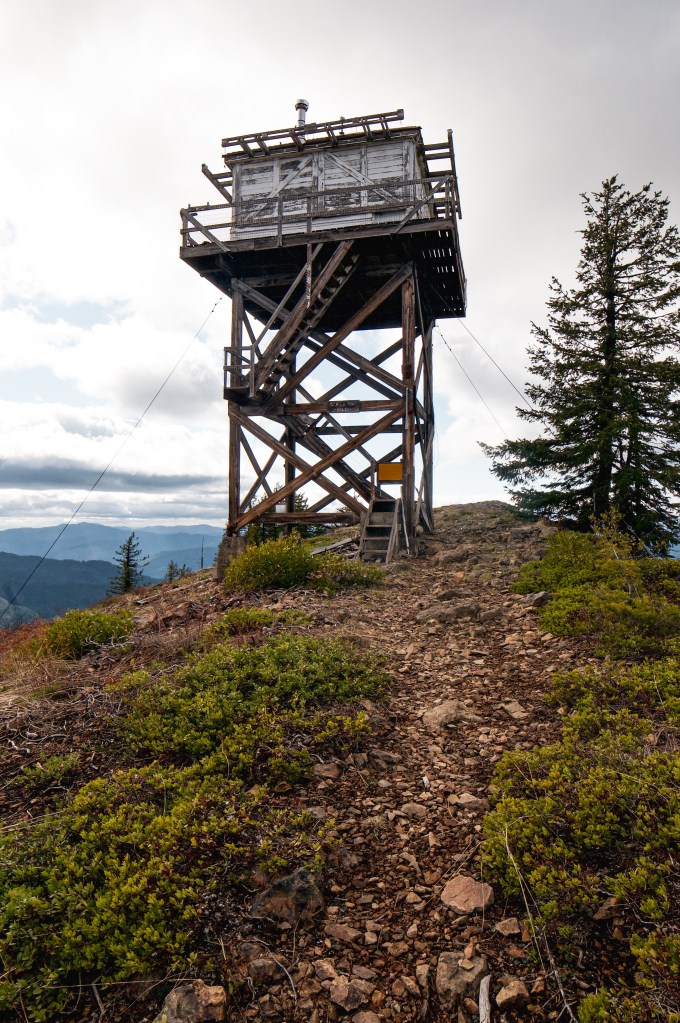
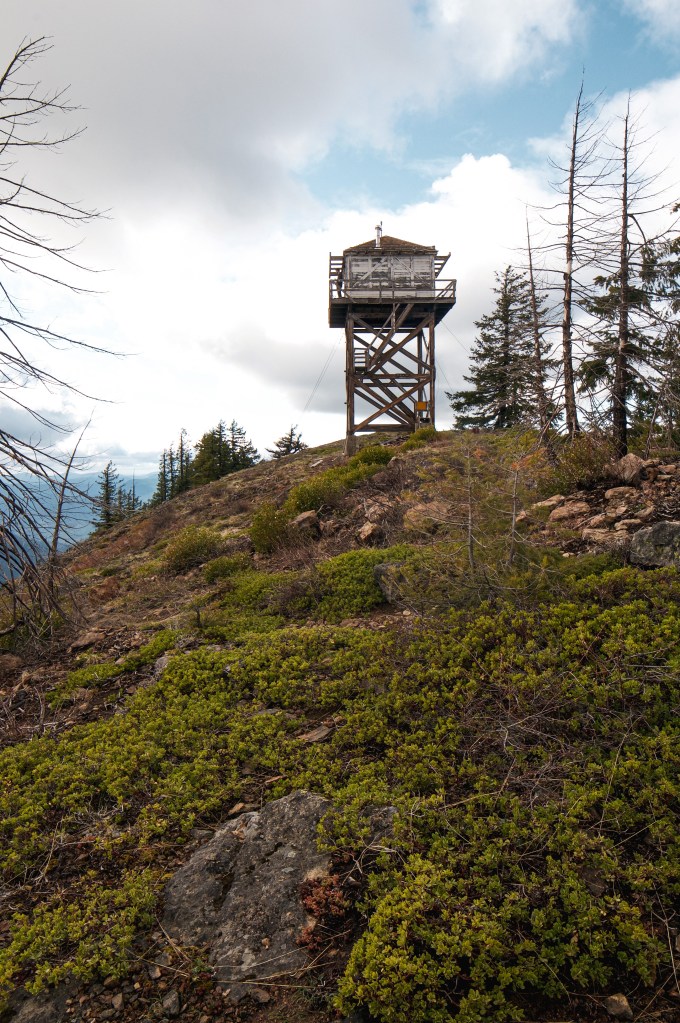
There are multiple ways to get to Flag Point Lookout via roads and trails. My partner and I had decided to disperse camp in the area for a night due to the proximity to Portland. We hadn’t planned on hiking this trail but knew we were close when we were looking for camp spots along NF-2720. We ended up reaching the end of the road and decided to hike to the lookout since we were already there. There is an un-marked connector trail that starts from the end of the road on the left side and meets up with Tygh Creek trail #460 in the Badger Creek Wilderness. You’ll follow this trail until you come to a fork where it continues up or down the ridge, you will want to continue up along the Tygh Creek trail #460. The trail leading down is the Tygh Creek Cut-Off trail #460A and will only take you farther into the wilderness. You could potentially do this as a loop using Little Badger Trail #469 from Tygh Creek Cut-Off Trail #460A . We did meet two people hiking out before we started that mentioned they had done this loop. They said there were still some patches of snow along Little Badger Trail #469 so we opted for an out and back. Eventually Tygh Creek trail #460 meets up with NF-200. You will have to road walk the remainder of the distance to get to the lookout. From NF-2720 to the lookout is about 2.5 miles one-way and gains 1,122 feet of elevation. It was a cold day with some stormy gusts of wind rolling through when we visited. We even had a rain and snow mix on the summit. Due to the weather we didn’t get the prominent view of Mount Hood that is visible from the summit. Be careful on your hike back down if you take this route. We completely missed the unmarked connector trail back to NF-2720 and ended up hiking along Tygh Creek Trail #460 for longer than we needed. Eventually we were able to find it after paying closer attention and back tracking a couple times.
History.
The current lookout is an R-6 15’x15′ flat top style cab that was built in 1973. It is still actively staffed in the summer but was boarded up for the season when we were there. Flag Point Butte had two other lookouts on the summit before being replaced with the current one. The first lookout was built in 1924 as a 6’x6′ observation cabin on a 40′ tower. The fire lookout used to tent camp below since it wasn’t a live in cabin. In 1932 the observation cabin was replaced by a standard L-4 cab on a 30′ tower. The existing lookout used to be available for rentals in the winter but was removed from the register in 2016. They had trouble maintaining this in the winter conditions due to the remote location and vandalism.
NOTICE: As of July 14, 2024 this area is currently closed due to the active Falls Fire and Telephone Fire.
Location.
Malheur National Forest
Status.
Abandoned; Currently standing
Estimated drive time from Portland, OR.
6-1/2 hours
Date visited.
May 30, 2021
Elevation.
6,025′
National Historic Lookout Register.
US 1705; OR 167
Trip Report.
My partner had found Craft Point through Rex’s Fire Lookout page (site), which lead to a Geocache (site) that provided some direction on how to get there. We were already camping in the area for a visit to Calamity Butte (post) and King Mountain (post) with my partner’s dad. Based on the directions, we followed NF-28 to NF-2815 heading east to NF-046. We parked in a pull out near where the road was blocked off by larger rocks. Unfortunately, I don’t recall much about the road conditions since we were in the truck. But, I’m inclined to believe it was passable with caution to most vehicles. From where we parked, the directions get a bit loosey-goosey and becomes more of a choose your own adventure. We essentially cut into the forest from the road directly towards the ridge line above until we met up with the fence line. We turned right at the fence and followed it along the ridge. A few times we had to cross over the fence to stay safely on the ridge. We came to an exposed rocky section that no longer followed the fence. Here it was unclear which side of the ridge to stay on to best access the higher point. I was ready to call it quits, but my partner wanted to continue on. His dad and I sat in the shade while he explored on ahead. He returned a short while after exclaiming that he had found it. We followed him to the left side of the ridge that skirted below some larger rocks. Eventually, we met up with an old game trail that took us directly to the summit. The last portion of the trail was steep and headed directly up the slope. We enjoyed lunch on the summit. Getting back to the car was a bit easier since we just had to retrace our steps as best as possible.
History.
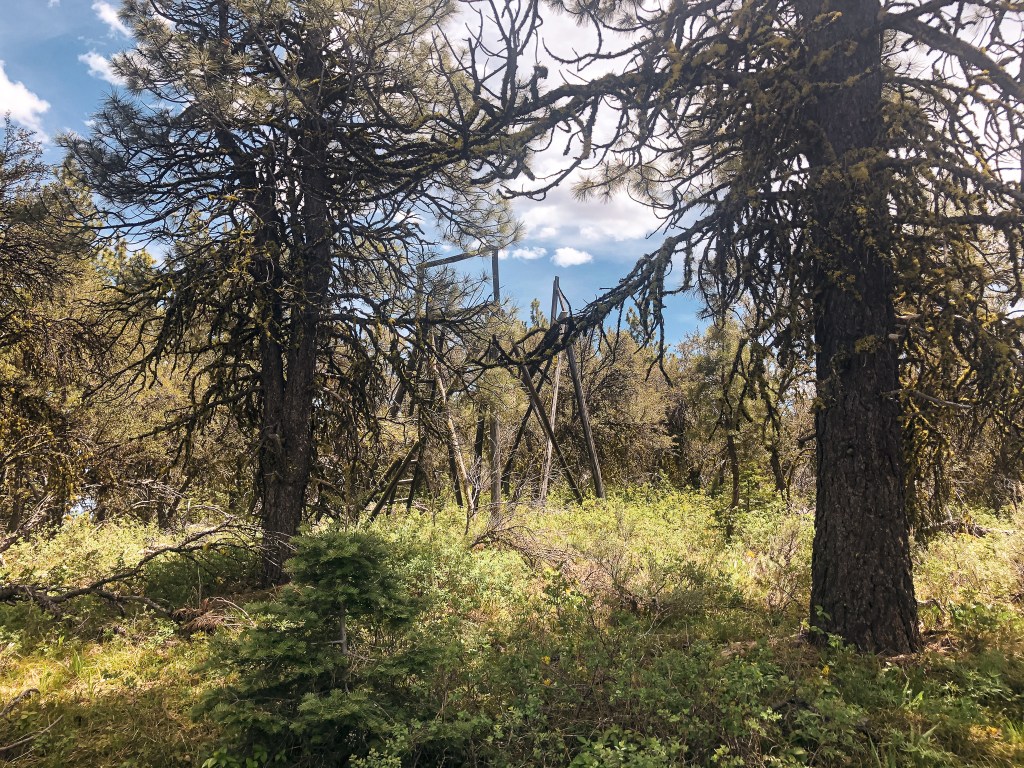
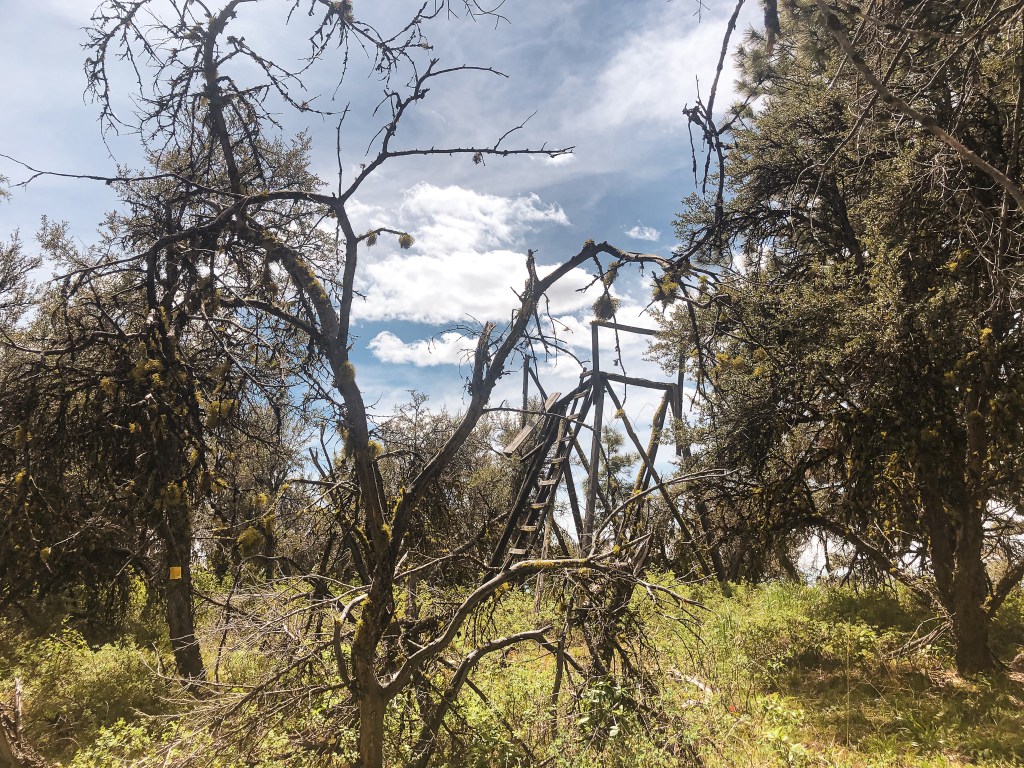
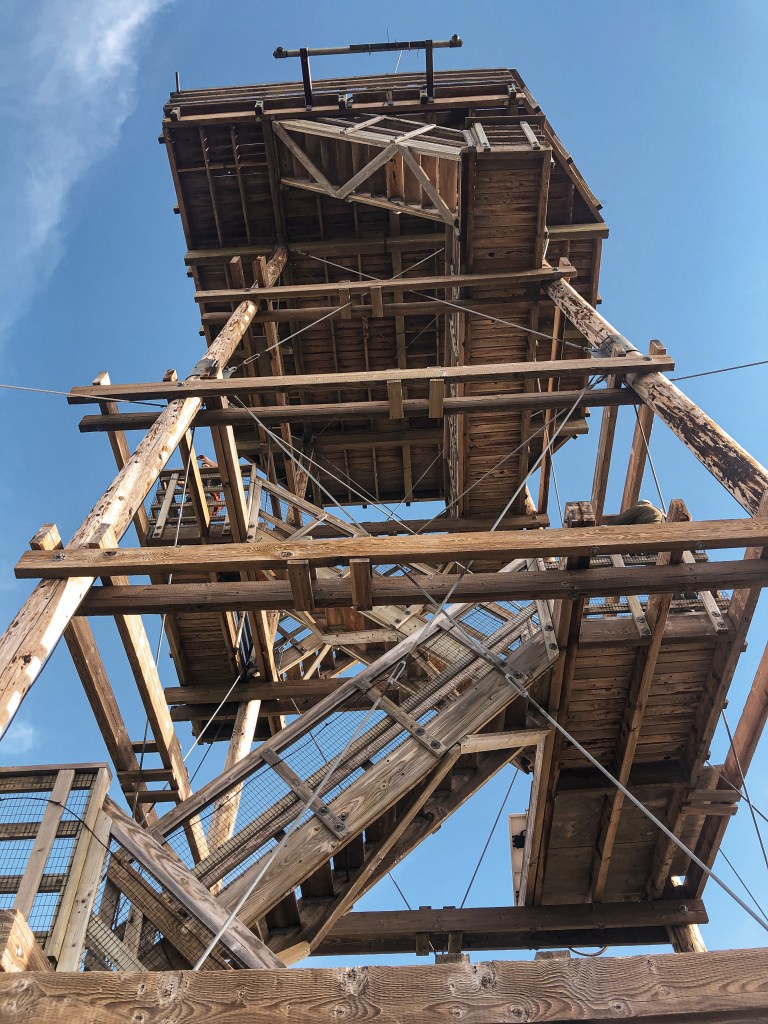
Craft Point was built in 1930 as a 15′ pole platform tower. The site was never upgraded to a more substantial structure and was abandoned in the 1940s. It’s possible it was used during emergencies, but there is little to no information online about it. It has fallen into a state of disrepair but still stands.
NOTICE: As of July 14, 2024 this area is currently closed due to the active Falls Fire and Telephone Fire.
Location.
Malheur National Forest
Status.
Active; Currently standing
Estimated drive time from Portland, OR.
6-1/2 hours
Date visited.
May 30, 2021
Elevation.
6,695′
National Historic Lookout Register.
US 73; OR 10
Trip Report.
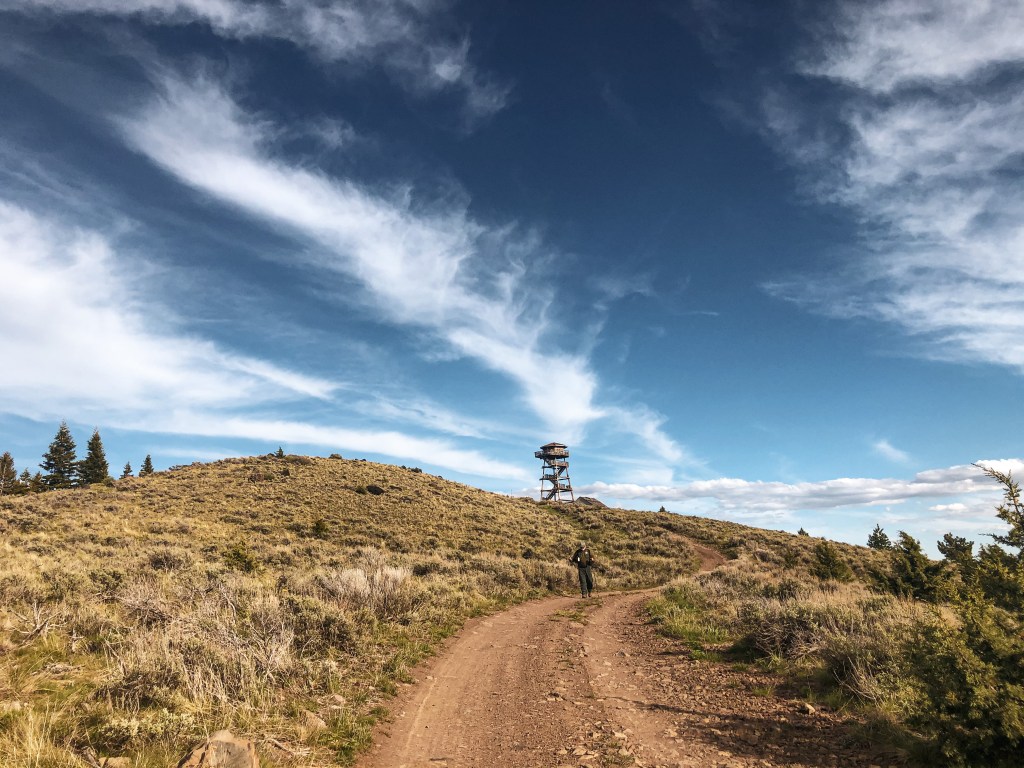
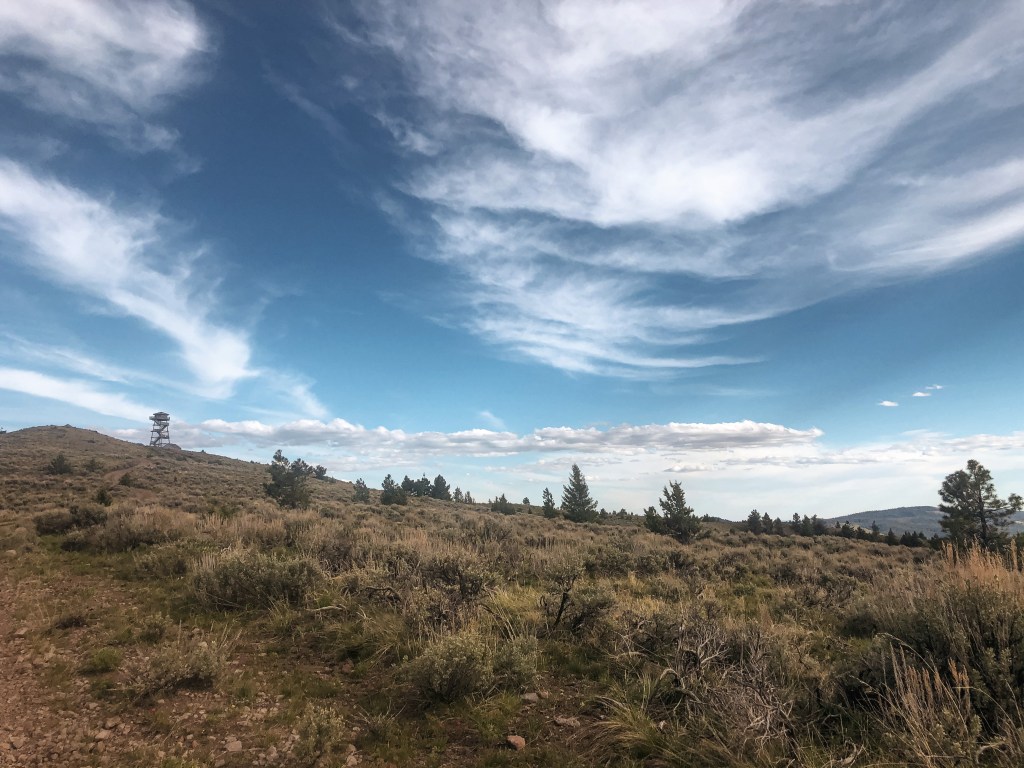
We decided to visit Calamity Butte L.O. the day after King Mountain L.O. to help break up our time in the truck. We took NF-28 to NF-2860. NF-28 might as well be considered a major highway. It is a well maintained double wide gravel road. NF-2860, on the other hand, is extremely rough, narrow, and bumpy. I would most likely have to park at the bottom of this road and road walk up it if we had drove my Civic here. Luckily we were in a truck this time and were able to make it up to the spur NF-155 that leads to the lookout. We parked on a pull out after turning on to NF-155 and walked the remainder of the road. A high clearance vehicle can make it to the lookout but we didn’t feel like maneuvering around the remaining road hazards. This is an actively staffed lookout but when we visited it was still boarded up for the season.
History.
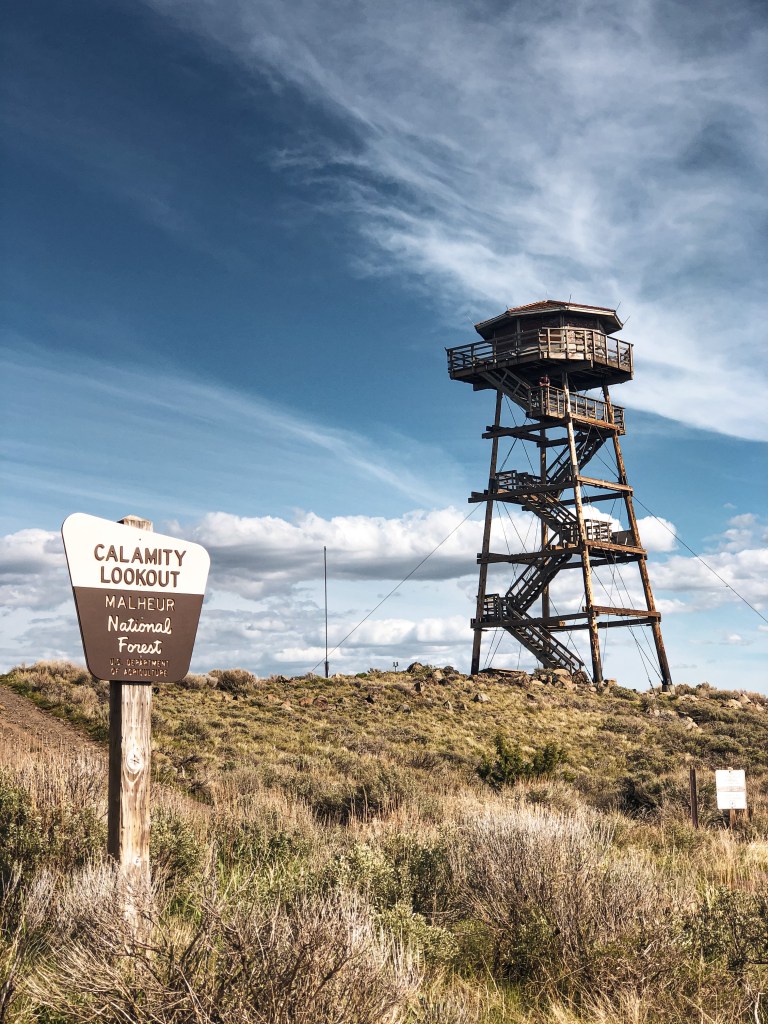
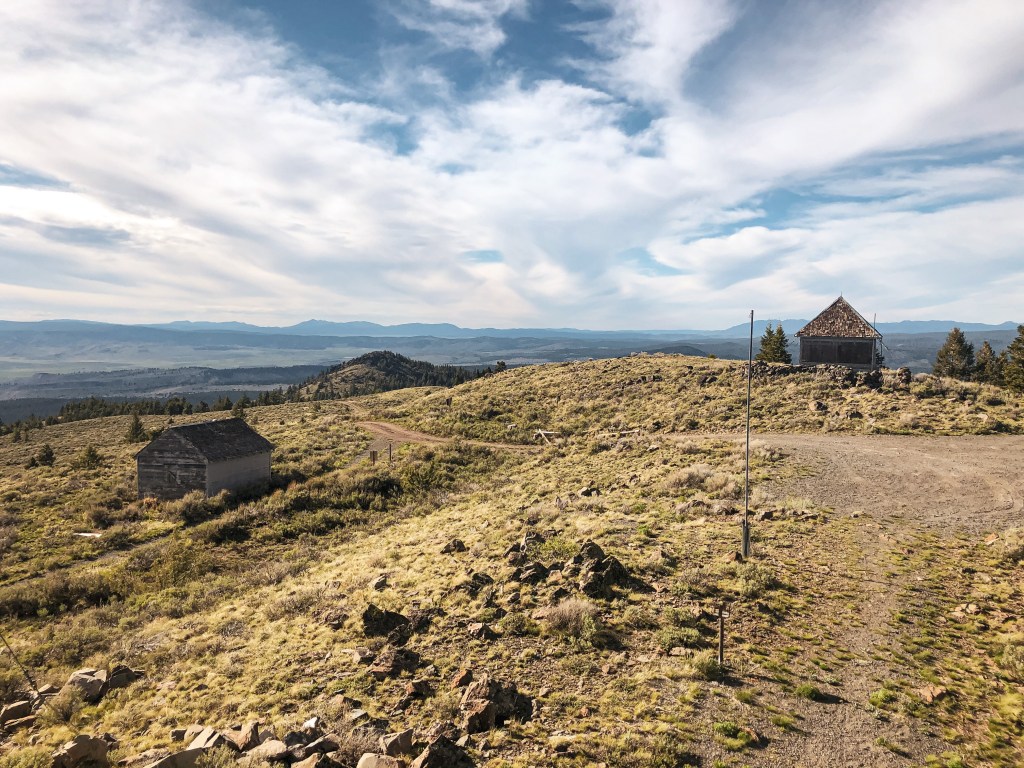
The first lookout that was built on Calamity Butte was a D-5 ground house in 1927 and can still be found on the summit today. It has a National Historic Lookout Register sign posted on the door front. The current lookout didn’t start construction until 1996 and was completed in 2001. It’s a 50′ tower with an octagonal cab. I’m not sure what lead the forest service to start building lookout cabs as octagonal, but it seems the newer structures built during that time frame were all moved to this shape. You can also find an older garage on the summit. Fun Fact: This point use to be named Bald Butte but it was later changed to Calamity.
NOTICE: As of July 14, 2024 this area is currently closed due to the active Falls Fire and Telephone Fire.
Location.
Malheur National Forest
Status.
Abandoned; Currently standing
Estimated drive time from Portland, OR.
6 hours
Date visited.
May 29, 2021
Elevation.
6,678′
National Historic Lookout Register.
US 469; OR 66
Trip Report.
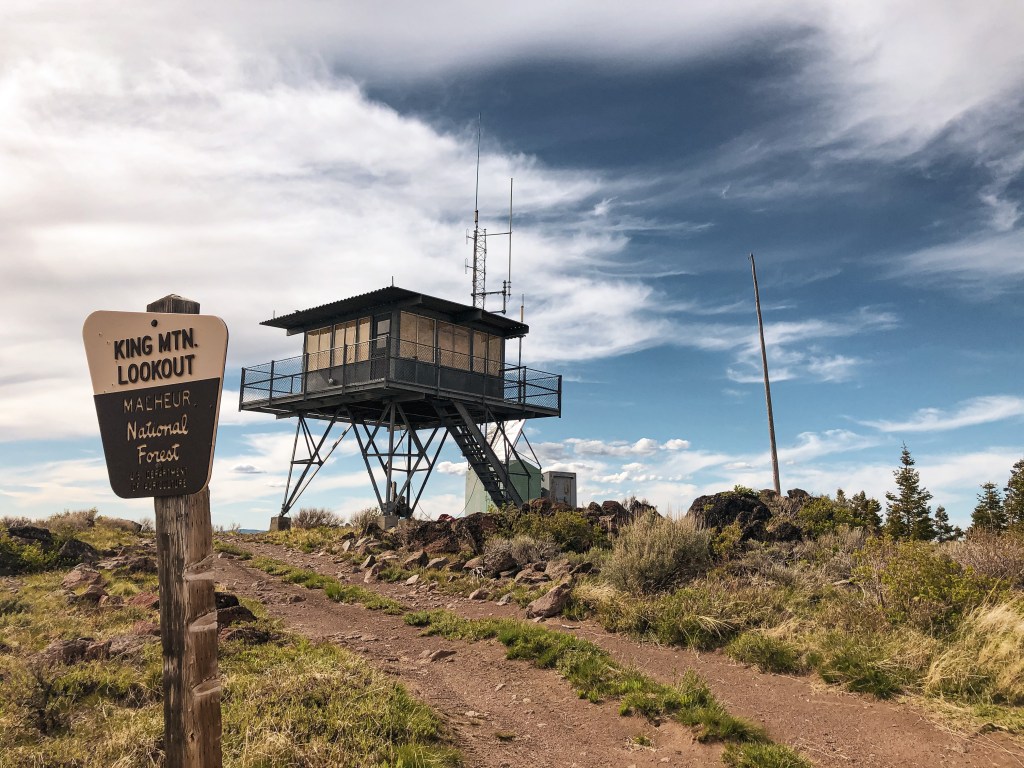
My partner, his dad, and I were dispersed camping in the area for the Memorial weekend. Our plan was to see the lookouts in this area along with a few other points of interest. We decided to go up to King Mountain L.O. for our lunch stop of the day. There is a sign off of NF-2820 that notes when you are at the road to the lookout which is NF-503. We had a truck for the weekend but NF-503 is in good condition for passenger vehicles up until the last 1/2 mile. The water run off from rain and snow is causing deep ruts and erosion on the last bit of the road. We parked the truck and walked the remaining distance.
History.
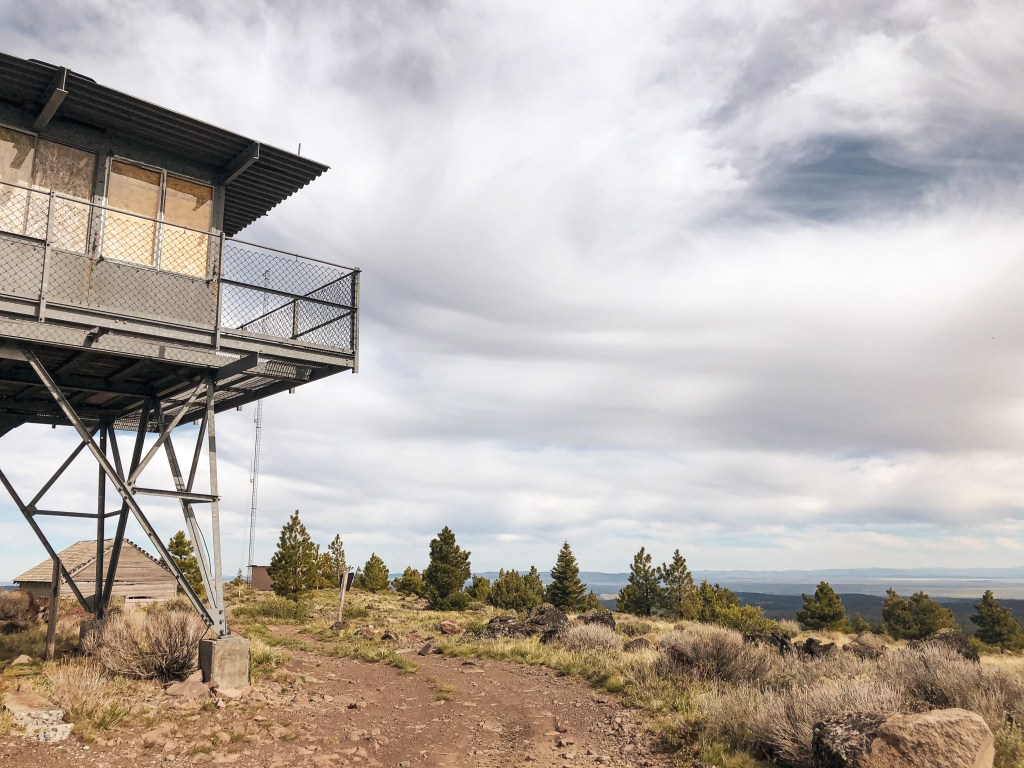
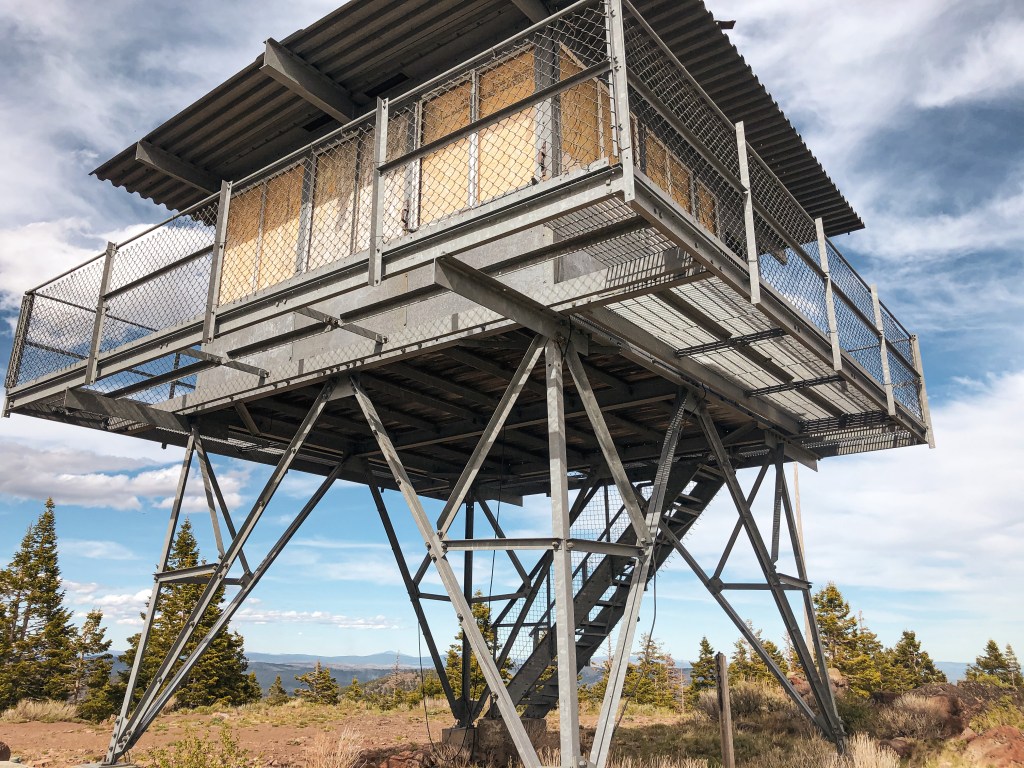
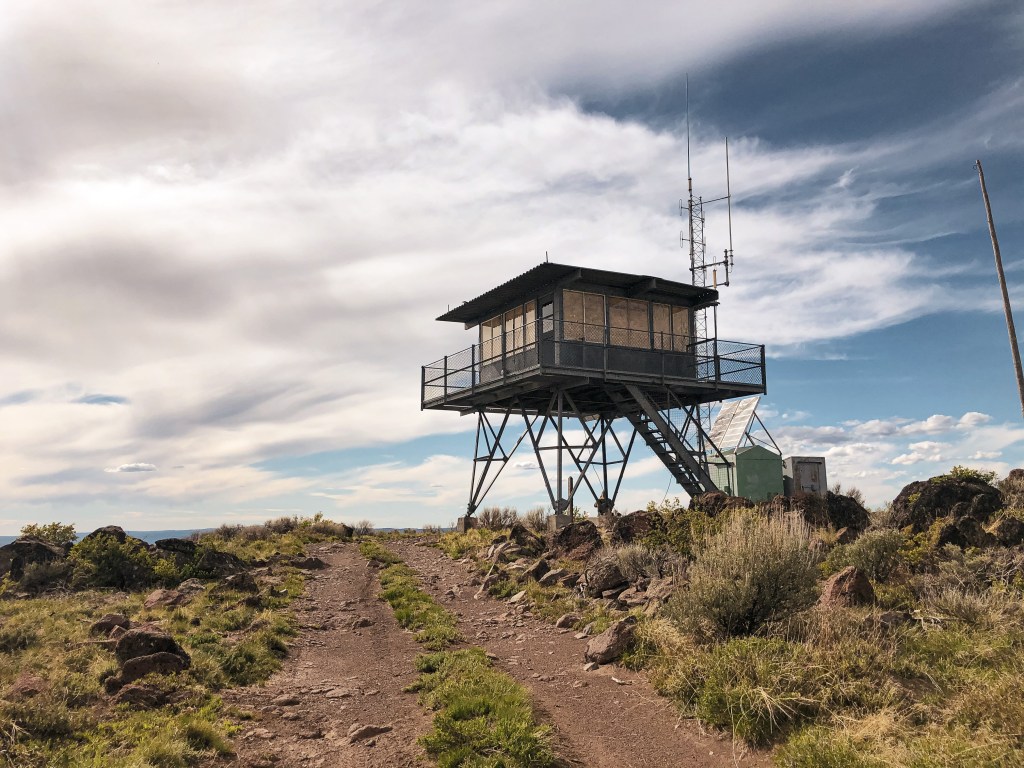
On the summit of King Mountain there is a 10′ steel tower lookout with steel cab, an old wooden garage, and communication towers. The steel fire lookout was built back in 1957 to replace the original Cupola cabin that was built in 1923. The garage looks like it’s the original from 1934 and I don’t believe it would be standing without the wire supports in place. Unfortunately, this lookout is no longer staffed and is slated to be torn down by the Forest Service. Due to the accessibility of this lookout, they had to remove part of the catwalk and board up the windows to deter vandalism. One of the windows was broken with the ply wood removed when we visited.
NOTICE: As of July 20, 2024 this area is currently closed due to the active Diamond Complex.
Location.
Umpqua National Forest
Status.
Abandoned; Currently standing
Estimated drive time from Portland, OR.
6 hours
Date visited.
May 1, 2021
Elevation.
5,392′
National Historic Lookout Register.
US 98; OR 13
Trip Report.
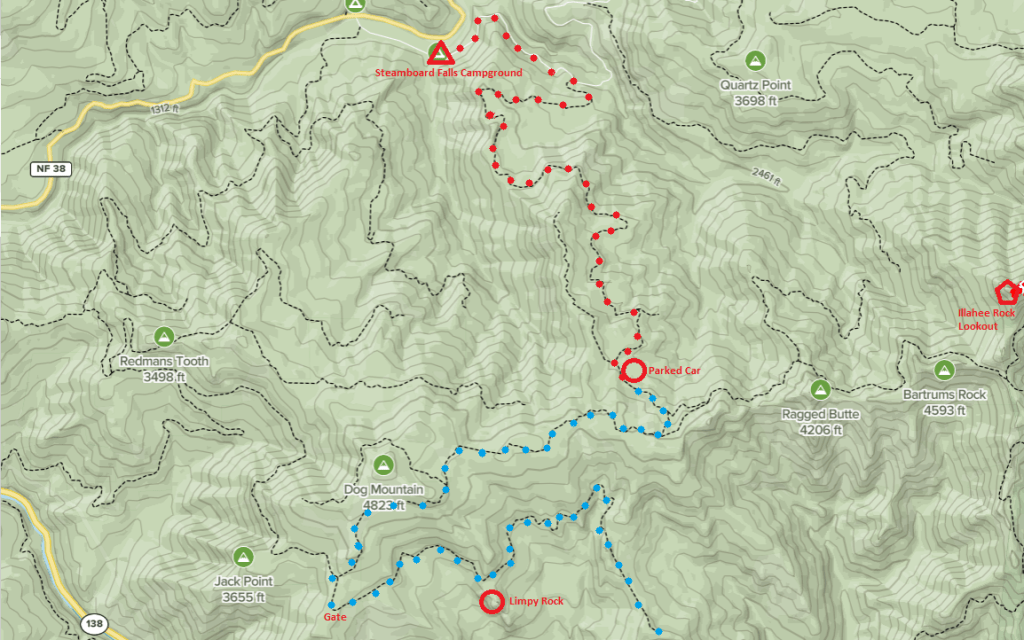
The first time my partner and I thought about visiting Illahee Rock Lookout was on my birthday weekend in April 2021. At the last minute, we had decided to travel to the Umpqua NF for the weekend instead of Olympic National Park. We did not do any proper research on what was in the area due to the last minute change and came unprepared without a topographic map. Illahee Rock Lookout was marked on our general road atlas and seemed to even note the Forest Service road needed to get there. It appeared to be direct and we figured we would give it a shot. We were closer to Steamboat Falls C.G., so we decided to take the back road to get there. We drove my Civic up NF-4760 that is just past the campground. The road was in great condition and we became optimistic as we caught a glimpse of the lookout sitting on the ridge. My car made it all the way to the junction with NF-300 where there was a deep patch of snow covering the road. We decided we were close enough to reach the lookout via a road hike and parked the car in a pullout. We started to trudge through the snow banks on the road, alternating between clear patches and deep snow. We came to a sharp fork in the road where neither of the roads had a visible number sign. It appeared to us that the main road continued straight and the road that sharply turned was a spur road. Later, we would come to find out it was the opposite. We continued straight on this road for miles, walking up and over a ridge that we assumed to be Ragged Butte. We even came to a junction that appeared to have parking and an old gate like you would find near a fire lookout. We continued down this road assuming we were finally at the road junction leading to the lookout trail. We even passed an extremely large rock that we assumed had to be Bartrums Rock or even Illahee Rock itself. It wasn’t until we met the road’s dead end that we realized how far off track we truly were. When I say we were hopeful that we were on the right track, I mean that we were so sure it was around the next corner that we convinced ourselves to hike 7.77 miles away from my car. Which meant we had to hike another 7.77 miles back. We didn’t make it back to the car until well past dark and got back to camp closer to midnight. To make matters worse, I had neglected to fully charge my headlamp before coming and we had to rely on my partner’s light on the way back. When I finally saw the reflection from our light on my Honda, I cried tears of joy.
After consulting a much better map upon our return to Portland, we realized we had ended up on NF-100. The ridge we thought was Ragged Butte was actually Dog Mountain. The junction with the gate was NF-120, which wasn’t marked. Otherwise, we would have known to turn around sooner. And the rock we saw was Limpy Rock, not Bartrums. After such a complete failure we were determined to redeem ourselves and make it to Illahee Rock Lookout as soon as humanly possible.
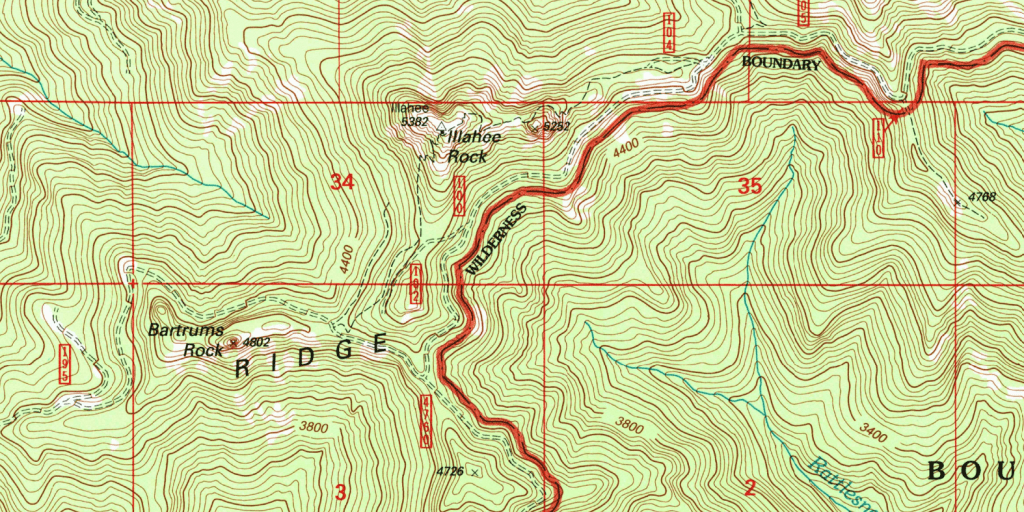
ILLAHEE ROCK LOOKOUT REDEMPTION! We decided on our next free weekend we would drive down early Saturday morning to hike to Illahee Rock Lookout and then camp at Steamboat Falls C.G. for a night before heading home. We did more research on the area, packed a better map, and decided to go up the more conventional route on the other side of NF-4760. This side of the road is just as well maintained and I had no issues driving my Civic up it. We were once again met with snow on the road and pulled my car into another pull out. This time I was happy to find we were just a 1/2 mile short of the junction with NF-100 (same number but different road from the last time we were in this area). We walked along this road until we met with NF-104, which leads to the trailhead. We were once again optimistic! That is until we rounded the corner and were met with deep snow drifts. Feeling uneasy about another trudge through more snow I convinced my partner we should go up the “other trail.” It was on the more exposed side of the mountain and in theory, would be snow free. According to the topographic map of this area there are two trails that lead up to Illahee Rock Lookout, one originating south of the lookout and one beginning north of the lookout. After backtracking, we started to search for where the other trail should be according to the map. At one point we found a game trail that we followed for a while but it only led to Bartrums Rock and wasn’t on the correct side of the road. We searched again and found an old road that might have led to where we needed to go but was too overgrown to know for sure. Accepting that this trail no longer exists, we backtracked again to NF-104. We made our way over the snow banks until we found the actual trailhead. It does exist! From there it is supposed to be a little less than a mile one way.
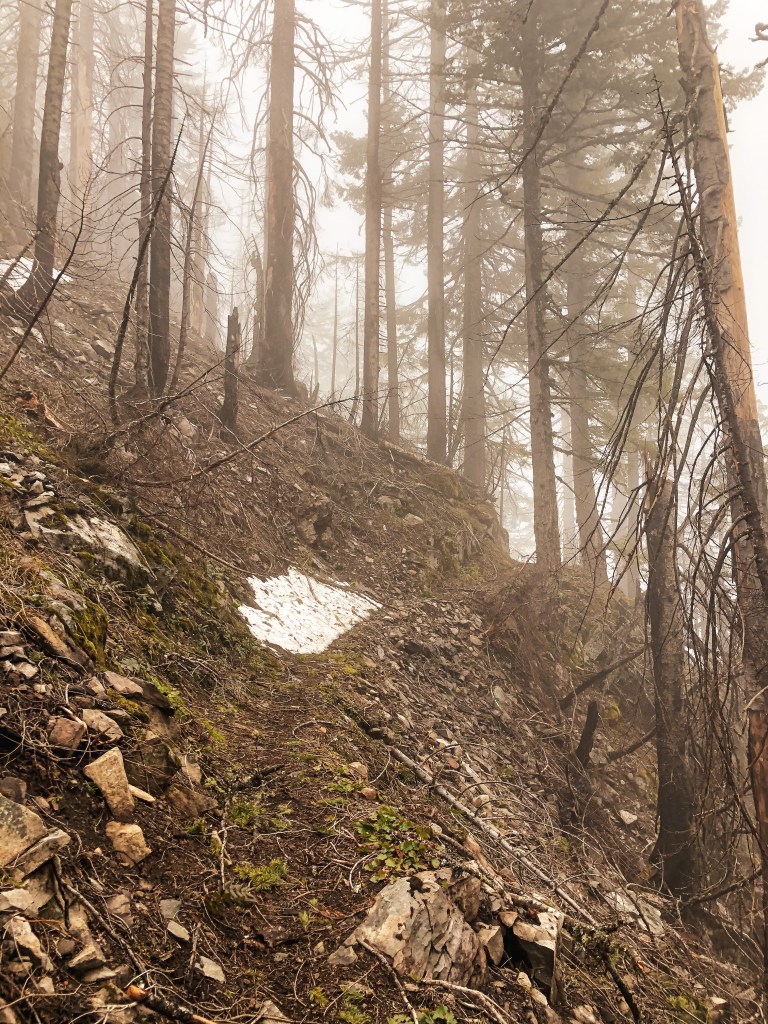
We started up the official Illahee Lookout trail #1539. We crossed one major snow bank that was easy to maneuver on a gradual slope. The trail seemed to be mostly snow free as we switchbacked up. It wasn’t until we went around to the northern side of the trail that we found we were wrong again. We became frustrated, knowing that we were so close to this lookout. However, these snowbanks were different than the ones we faced on the roads, they were now sloping off of a cliff covering a narrow trail. My fear of falling kicked in and I opted to turn around. My partner is more headstrong and was not going to leave without seeing this lookout. I decided to wait on the trail while he continued on over the snow. I waited there for a while hoping for the best and fearing the worst. I started to hear someone whistling down the trail and assumed it was him on his jolly way back. I was shocked to see another couple come around the bend instead of him. I was so shocked that I didn’t even bother to ask them if they saw my partner or how the trail conditions were. I could only muster up a “hello” as they passed by. I figured that if there were other people on this trail then it couldn’t be that bad around the corner and maybe I should have attempted to hike up the trail as well. Soon after my partner returned and told me how close we were. He claimed there weren’t too many snow banks to cross and it wasn’t as bad as it looked. He also told me that there were no footprints in the snow before his, so the couple we saw somehow climbed up the talus slope on the other side. They might have been crazier than us to try that from what I saw on that side of the mountain. After talking it over for a while he was able to convince me to head up the rest of the way to the lookout. It took a lot of hand holding and a bit of tears for me to make it because once I rounded the first snowbank there were many more to face and they were worse than I thought. I used kick steps to shuffle my way up and down them but my anxiety didn’t subside until I returned to the spot where I had originally waited for my partner.
History.
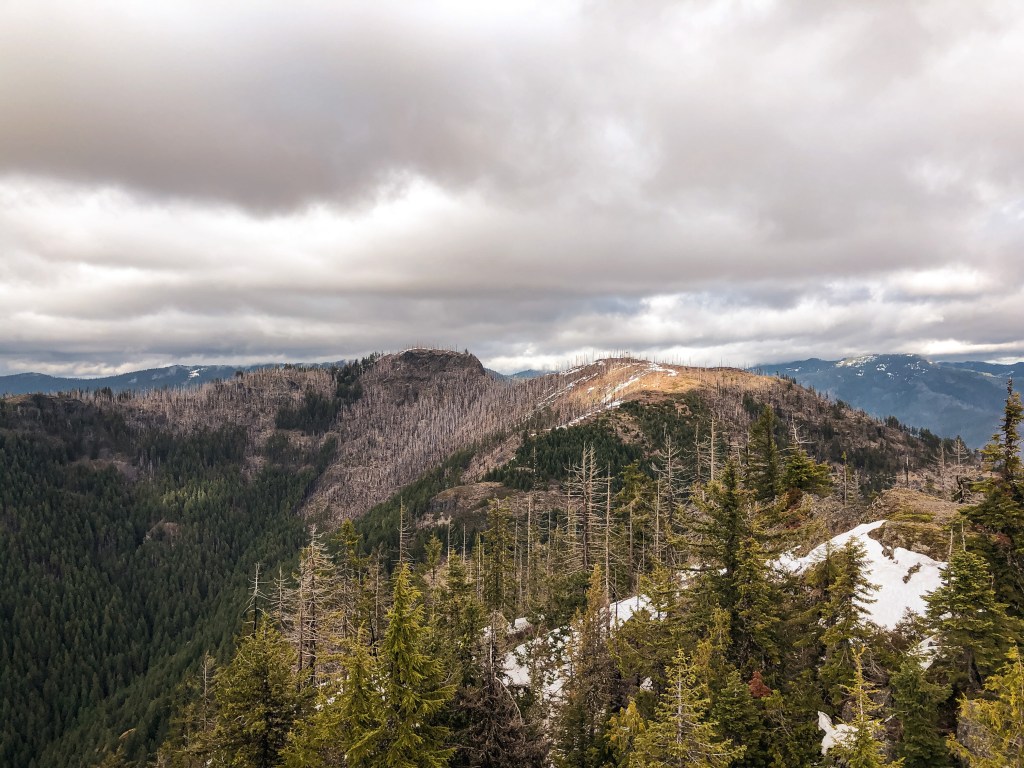
The whole day we had been circling this butte it had been clouded in fog. But now that we were both on the summit it had cleared out to a spectacular view. The original D-6 Cupola from 1925 is still standing and was converted to a tool shed in 1958. The L-4 tower was built in 1956 when the D-6 was considered too small to house two fire lookouts. Illahee Rock Lookout does not appear to be actively staffed anymore since there was no longer a solar panel when we visited. It might still be staffed in high fire danger but I couldn’t find any information to confirm.
Illahee Rock Lookout is a short, two mile round trip hike with roughly 600 feet of elevation gain. But in total we ended up hiking 24.74 miles trying to get to this lookout. The moral of the story is this: don’t go chasing fire lookouts in early spring!
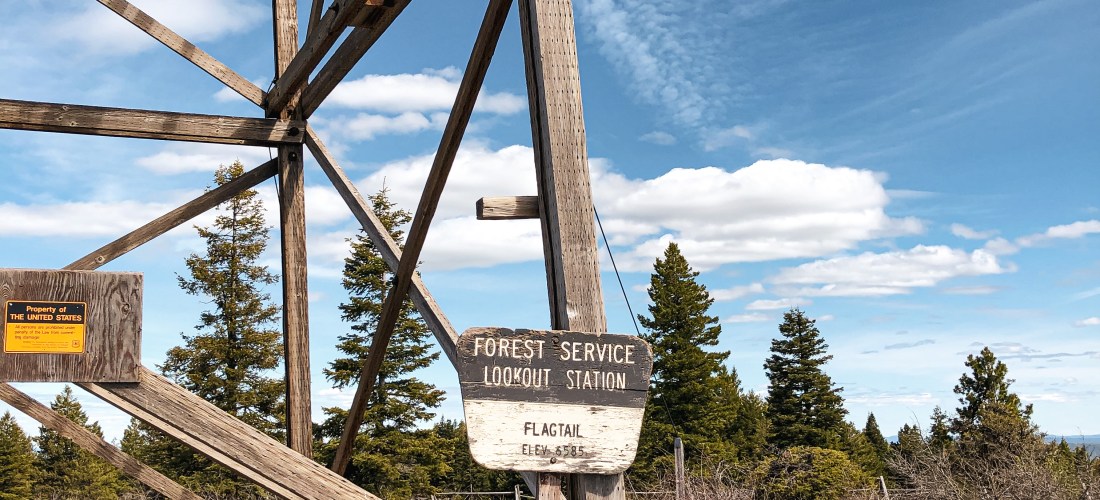
My partner and I were dispersed camping in the area for Memorial Day weekend. We were checking out the points of interest on our topographic maps and found Flagtail Mountain noted as a lookout. I drove my Civic on NF-63 until we met up with the junction of NF-594. Typically, three numbered Forest Service roads are rough and I didn’t want to find out the hard way. We parked my car at the junction at a pullout and started hiking up the road. From my recollection the road wasn’t terrible and I definitely would have been able to drive farther up the road to shorten our road walk. However, I wouldn’t have made it to the top in my Civic. There was a lot of ATV activity in this area and we were dusted up a few times by passing vehicles. I’m pretty sure they all thought we were crazy for choosing to walk up the road to see the lookout. During the summer this is a staffed lookout, but when we visited it was still closed up. On our way back down, we found an unattended fire left by a group of people on ATVs that we had passed on our way up the road. There was still some snow in the area and we decided to pack it on the fire to help douse it. Please always make sure your fires are dead out before leaving them!
History.
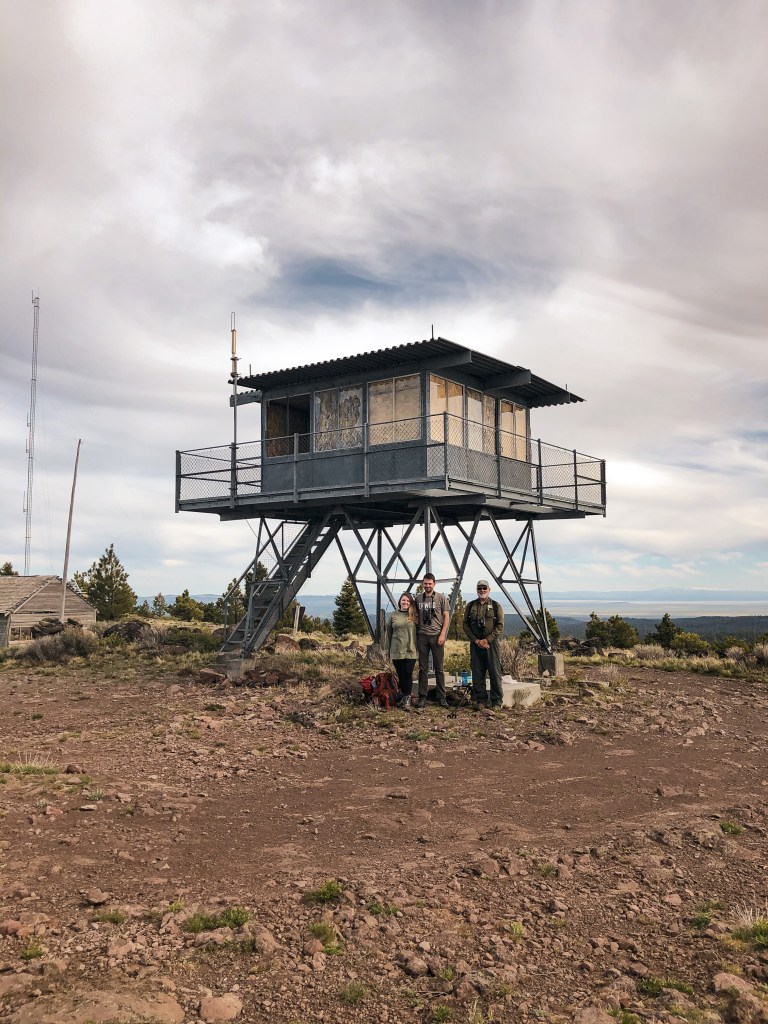
Flagtail mountain has been the site of a fire lookout since 1922. It started as a platform on a juniper tree, which still stands. In 1934, they built a 20′ round pole tower with L-4 cab. This was used until the current R-6 lookout was built in 1966. It is still actively staffed every summer.





























































 The Roaming Civic