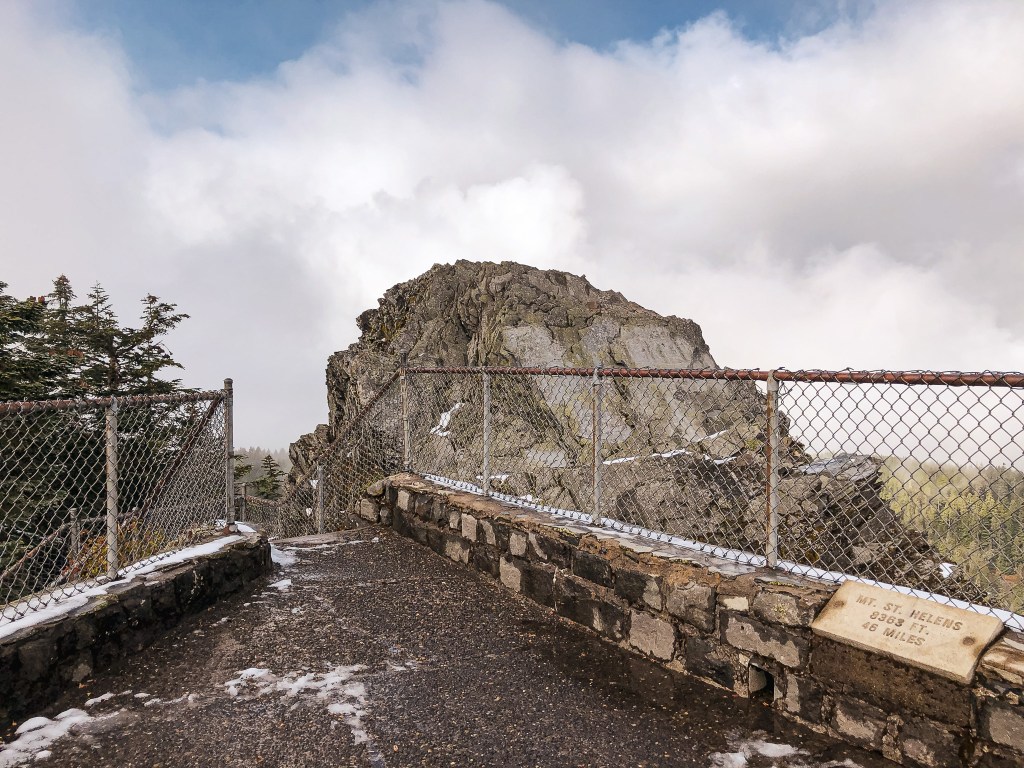
Grasshopper Point & Rocky Butte

Former Lookouts

Location.

Mt. Hood National Forest

Date visited.

October 29, 2022

Trip Report.

View from Rocky Butte
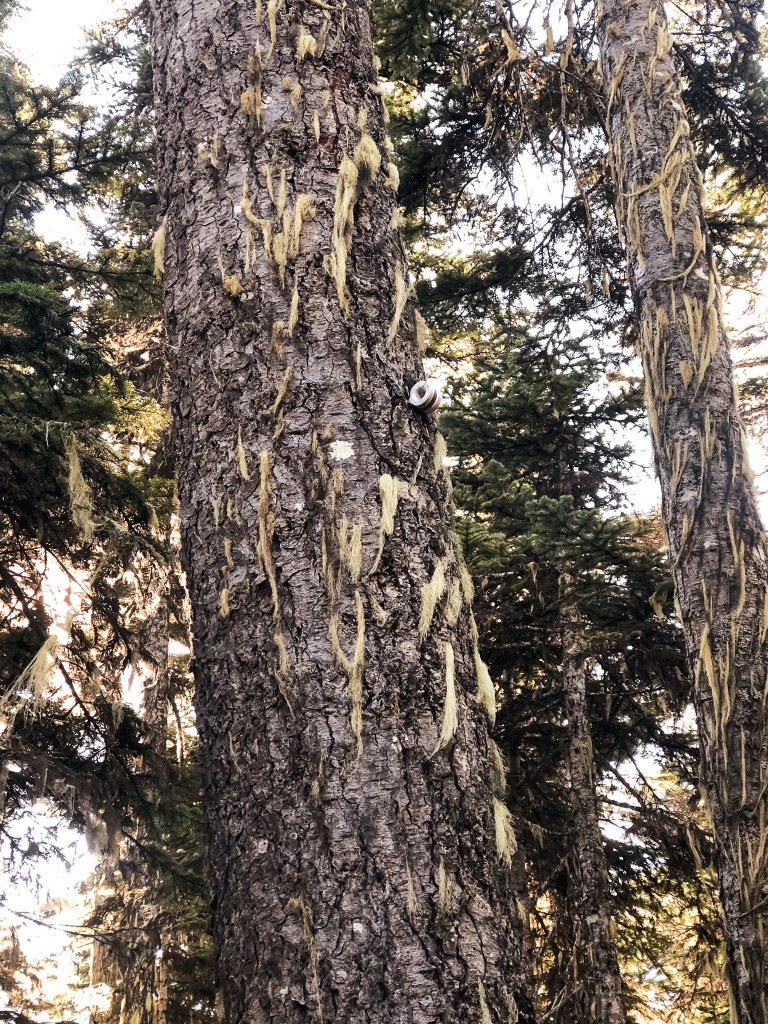
Conduit in tree
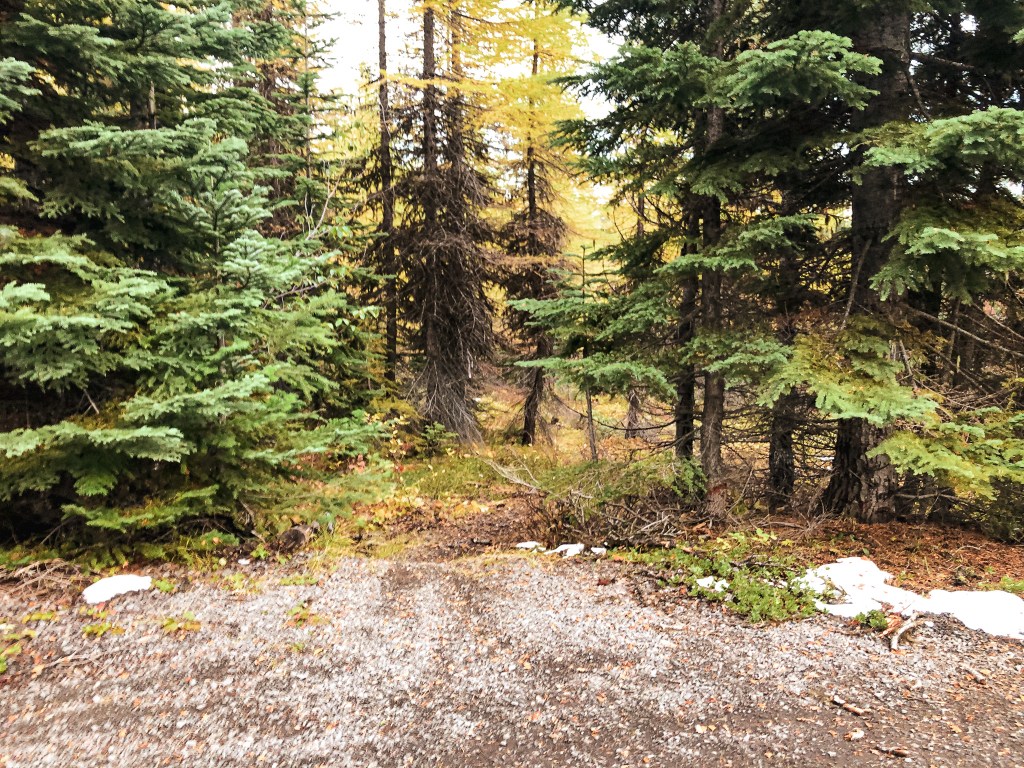
Where the trail meets NF-130
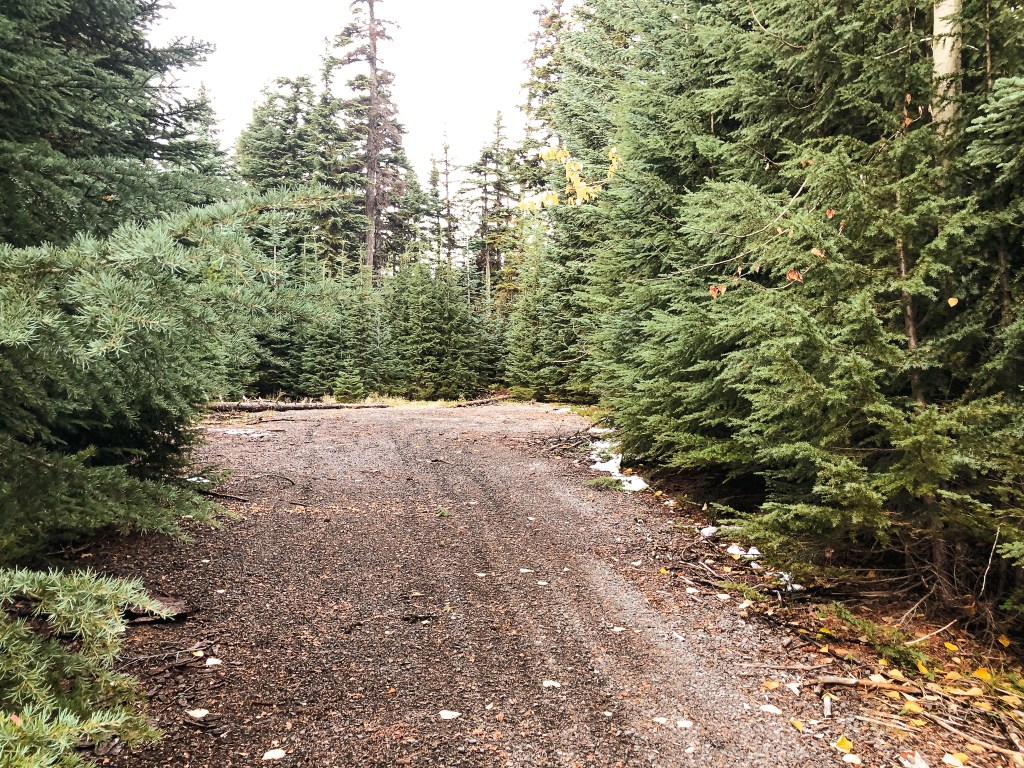
Dead end at NF-130
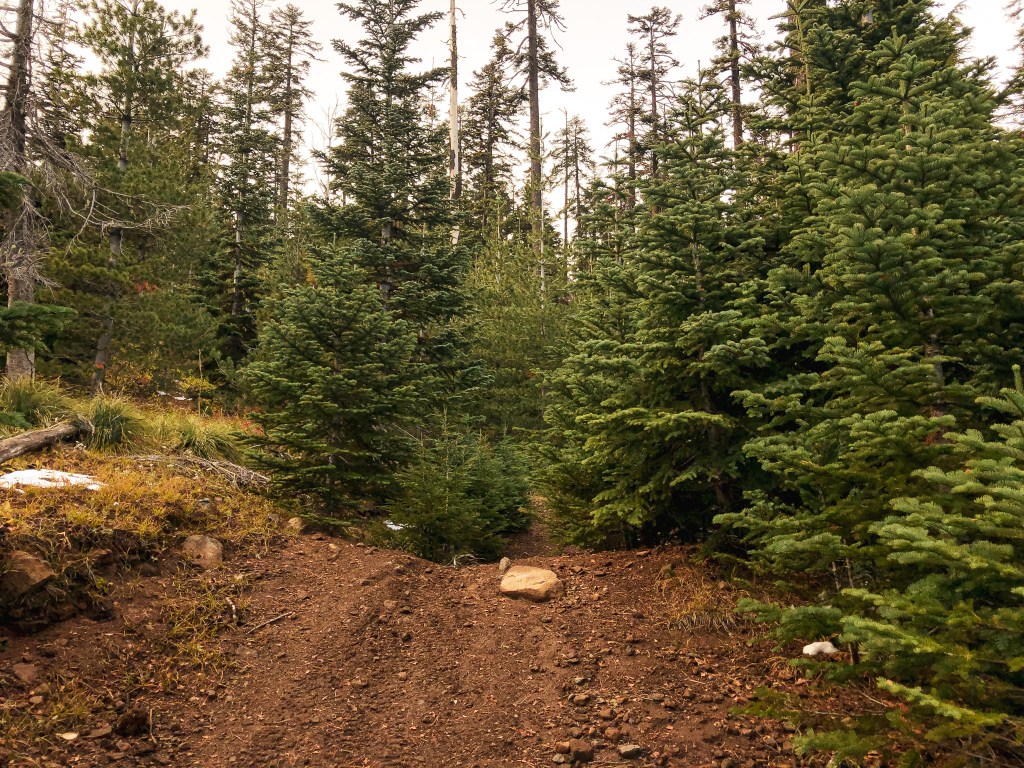
Where the trail continues from NF-130

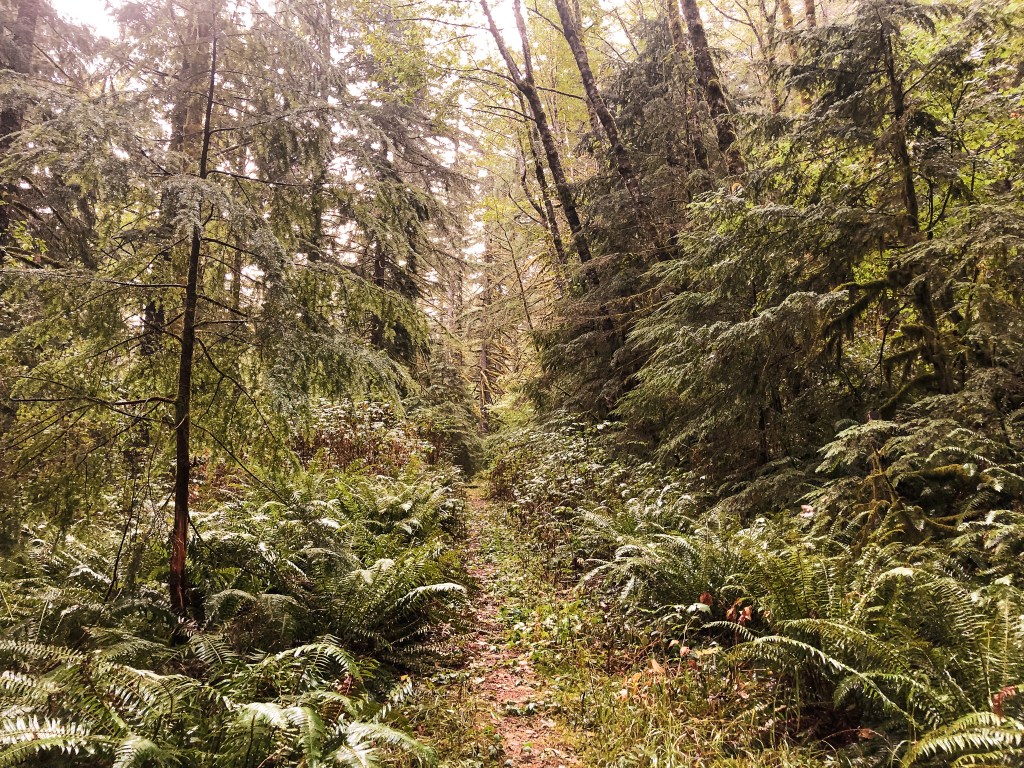
Ever since our first trip up to Rocky Butte (post) last winter, we have wanted to connect the trail to Grasshopper Point. We also wanted to squeeze one last backpacking trip in before calling our end of season. This isn’t a traditional backpacking destination given that it’s not in a wilderness and the trail is short. We planned to hike to Rocky Butte and drop our gear before continuing our hike to Grasshopper Point. Directions to the trailhead for Rocky Butte can be found in my previous post. There is an old fire ring on the summit of Rocky Butte that was most likely left over from when it was in service and where we would set up camp for the night. Oregon Hikers (post) has marked this hike as a lost hike, so continue at your own risk. We pin pointed our bearing with a compass and ranger district map before starting the remainder of our hike. Or I should say, my partner did this and I watched to learn. This is helpful if you know where you are currently located on a map and where you are wanting to head. It will help keep you on track in the general direction from point A to point B. Continuing up and over Rocky Butte the trail is still well defined. We followed this to the first road crossing with NF-130 and picked the trail up down the road to the left. From here the trail alternated between visible tread and following the flagging. There were only a few spots that caused us to pause and search a bit harder for flagging, cut logs, or a blaze in the trees. The cross-country hiking here is fairly easy and could still be accomplished by following the path of least resistance along the compass bearing. We reached a second road crossing with NF-140 that had an OHV trail #475 sign on the ground pointing towards an old decommissioned road. We followed this well worn tread until we spotted an old trail sign for #475 nailed in a tree off to the left. Reading the detailed description from Oregon Hikers led us to believe we should turn here. There was also another old sign nailed to a tree off to the right side of the OHV trail. This implied that the hiker use trail crossed the OHV trail here. After searching around the signed tree we were unable to find any obvious tread or flagging to indicate a trail. We decided to follow the OHV trail instead since it was well defined and if it truly did follow the old NF-142 road it would get us close enough to cross country back to the actual trail.

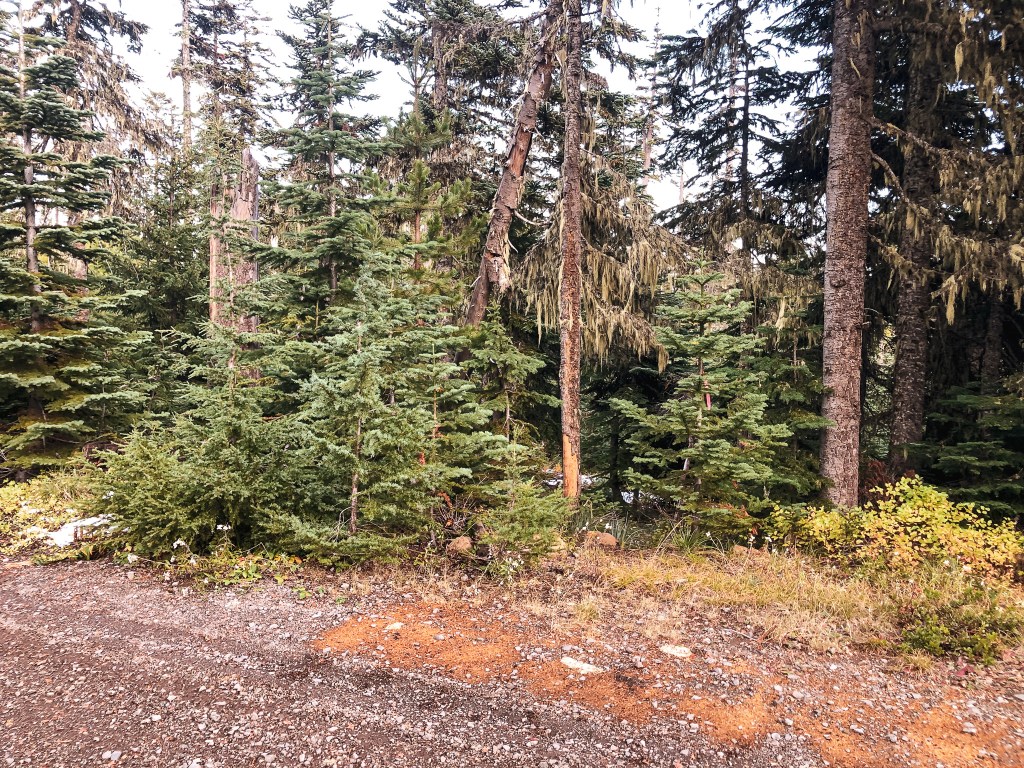
Trail condition example: tree flagging & worn down log
Where the trail meets NF-140
Trail #475 OHV sign
Start of OHV trail on abandoned NF-142
Trail #475 hiker sign
Trail condition example: visible tread

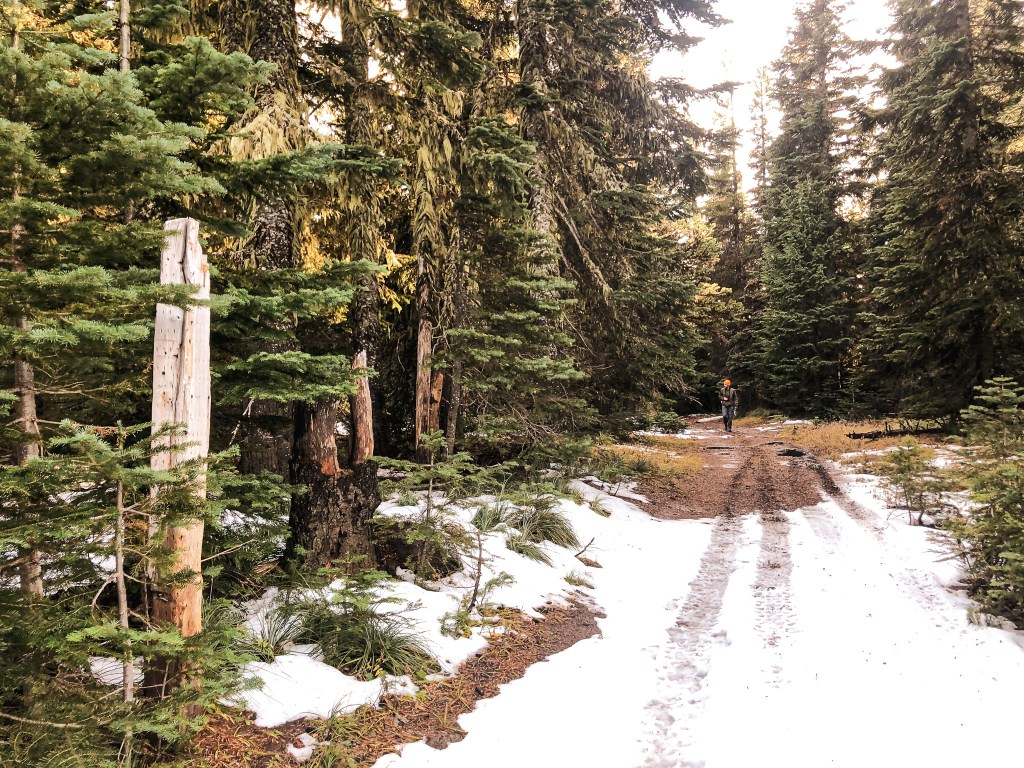
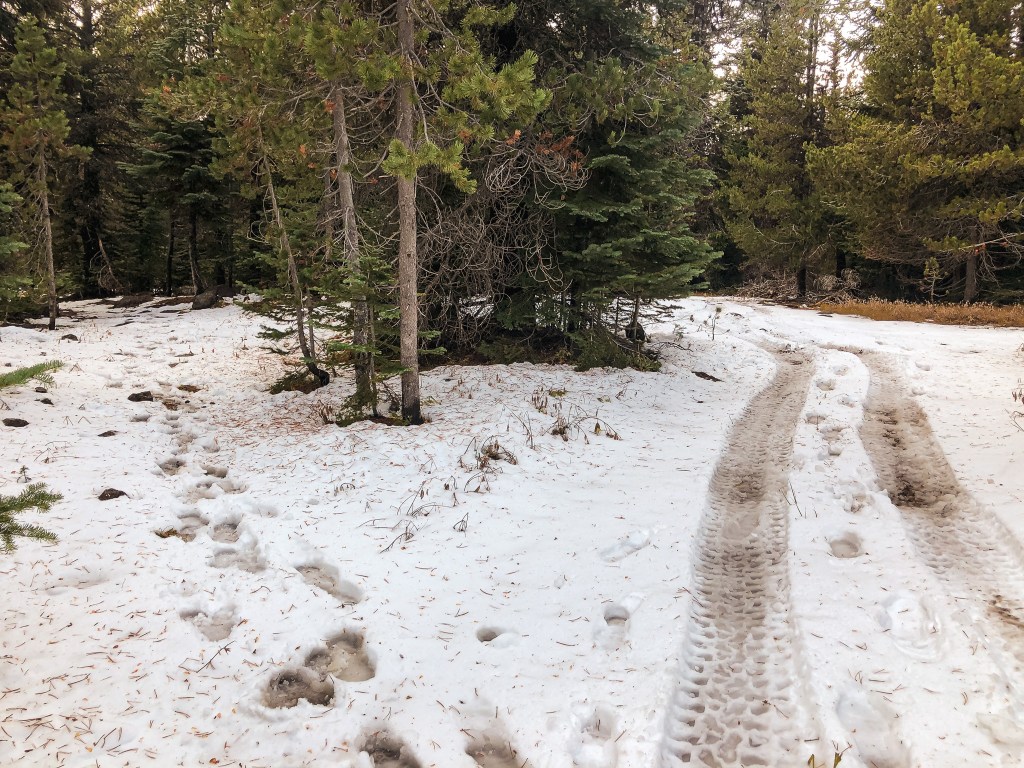
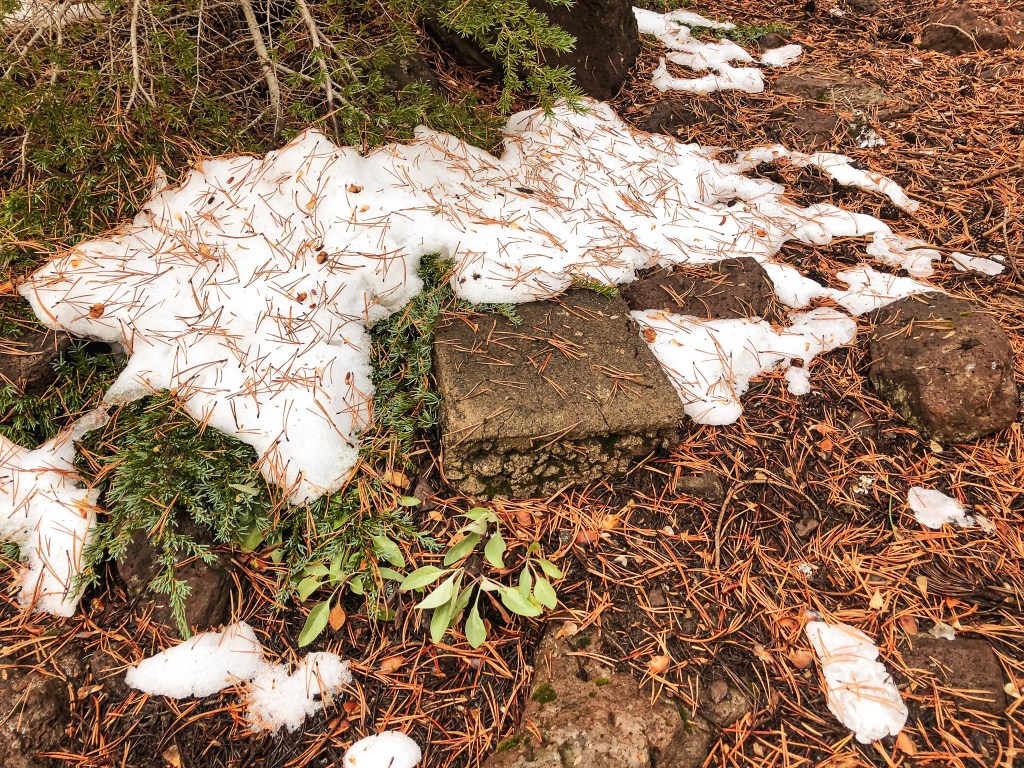
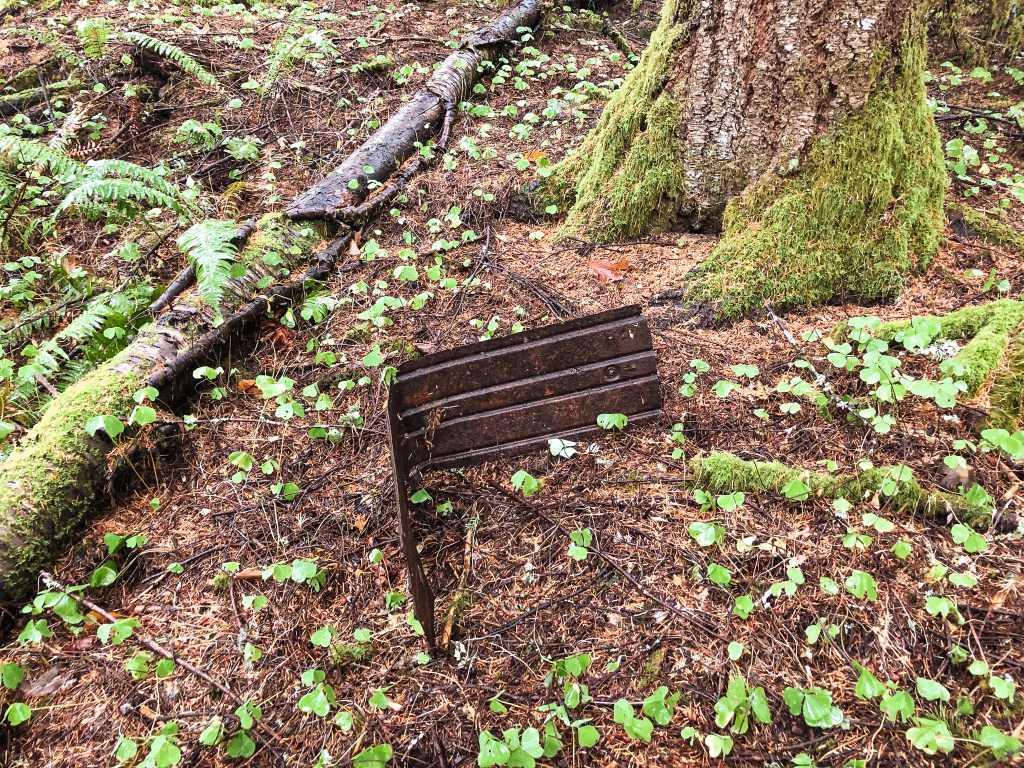
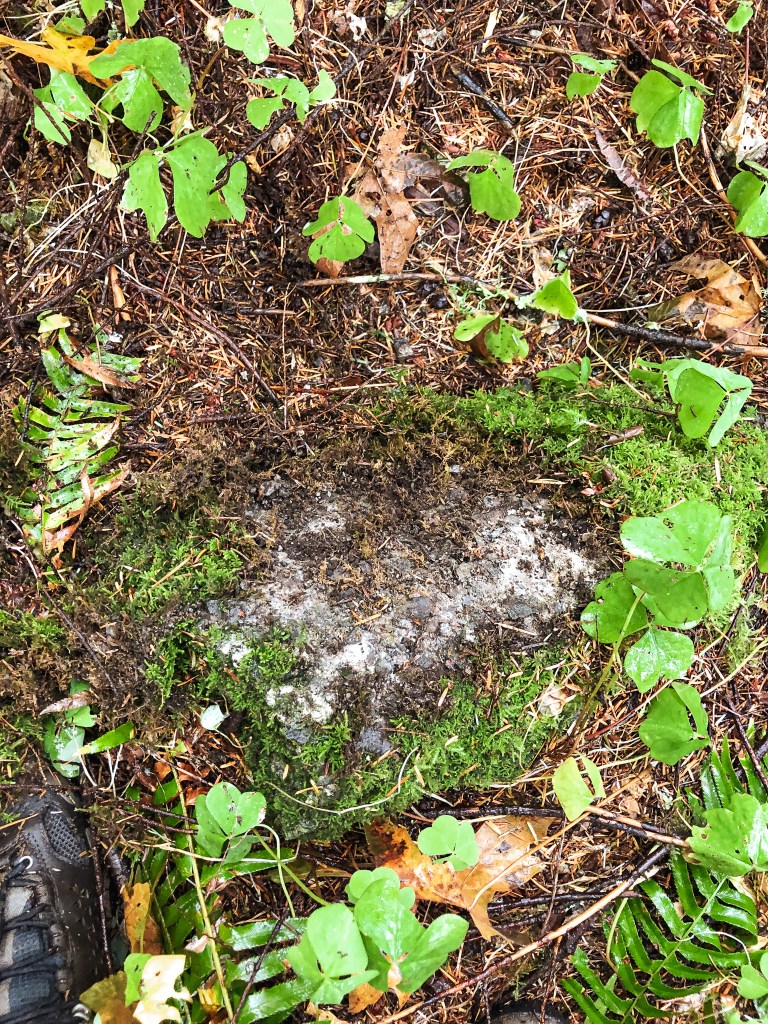
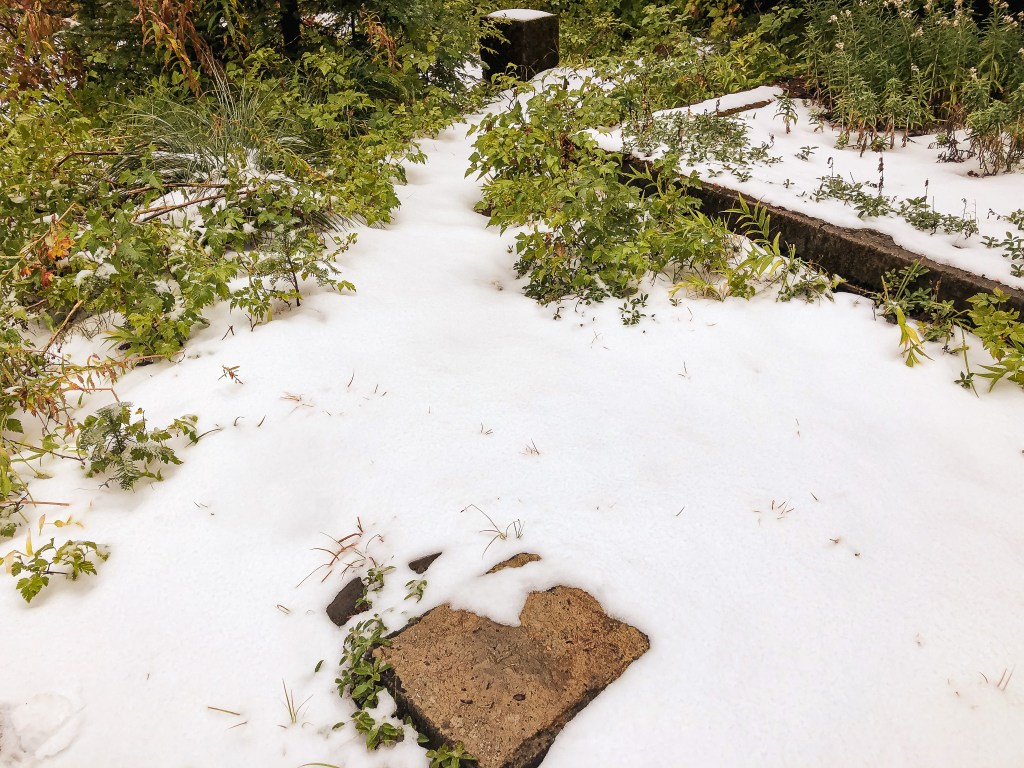
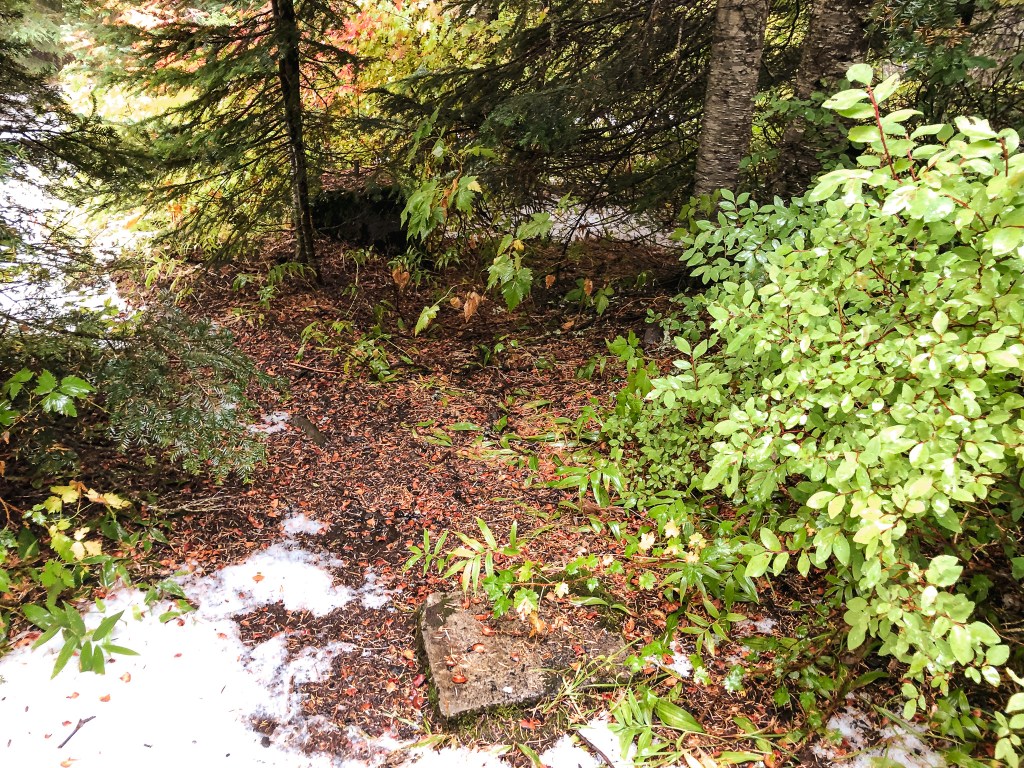
We followed the road tread until it petered out and turned into a user trail with flagging to the left. This eventually connected to a more obvious trail that we could only assume was the one we needed. It seemed well defined heading both left and right, but given the lack of trail near the signs we found we didn’t believe it stayed that way for too long. We turned right to continue towards Grasshopper Point. There were patches of snow through out the trail as we gained elevation, but now most of the trail was covered. Someone had been here fairly recently as we started to follow footprints. I assumed they were a hunter given that it was Elk Season and not many other people head out this way during this time of year. It’s always good to be aware of your state hunting seasons when recreating in the shoulder season. We like to use the big game magazine to gauge the risk of the area by checking the type of hunt and number of tags taken out. We also wear blaze orange beanies while hiking during hunting season. This felt particularly necessary since we were hiking on a less traveled trail and somewhat cross-country. We followed the snowy track and footprints all the way to the NF-4860 road crossing. There is a post here to mark the trail for OHV users. The footprints and trail continued directly across the road to head up the final side of the point. We followed the footprints and flagging for a while but it seemed like the trail started to head down the slope. The footprints had also disappeared and deviated from the trail here. We decided to head straight up the slope instead of following the trail down. This is were things got confusing for us. We figured we were very close but couldn’t find anything in the obvious clearings. The description we had of the area wasn’t very helpful either and, if anything, confused us more. We spent a good chunk of time backtracking and circling around the broad summit. We were about to give up and start heading back when my partner stumbled upon the foundation blocks. Success! It looks like some of them have been moved from their original location, but they are still there. I will continue the directions from where we left the “trail”. After heading up the slope to the flat summit, you will continue farther until you reach a well defined road. This road was not listed on our ranger district map. Where we came out there was a post which made us think this was at one time a trail. Take a left on the road and follow it. The road makes a bend to the right where we found another post with a US Forest Service marker off to the left. This also seemed to be marking a “trail” and might be where the trail we were following earlier comes out but I can’t say for sure. We continued on the road past the bend. Shortly after this the road makes a fork. The left fork is faint while the right fork is defined. If you head down the faint left fork you can find the foundation off to the left of the road. It is in a rocky area and might be hard to spot if you’re not looking closely. We saved ourselves any further confusion on the way back by going the same way and avoiding the other potential “trails”. This hike was around 4.7 miles RT with 1,010′ in elevation gain.

The user trail we connected via NF-142 (left); Main #475 trail (right)
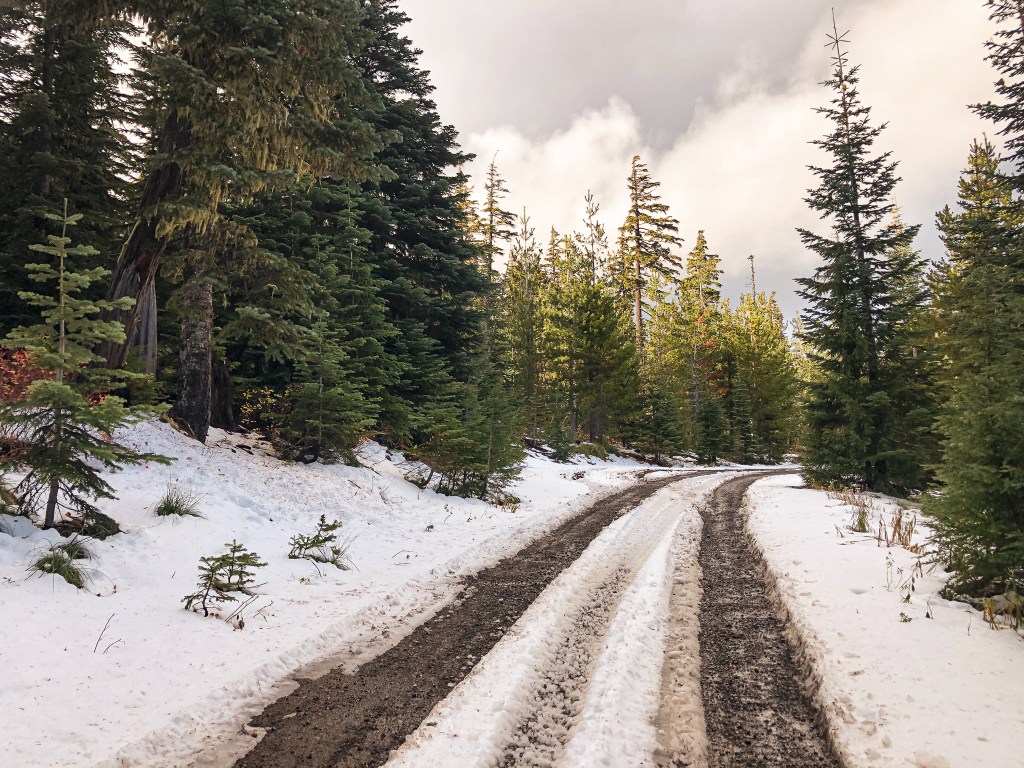
Where the trail meets NF-4860
NF-4860
Where the trail continues across NF-4860
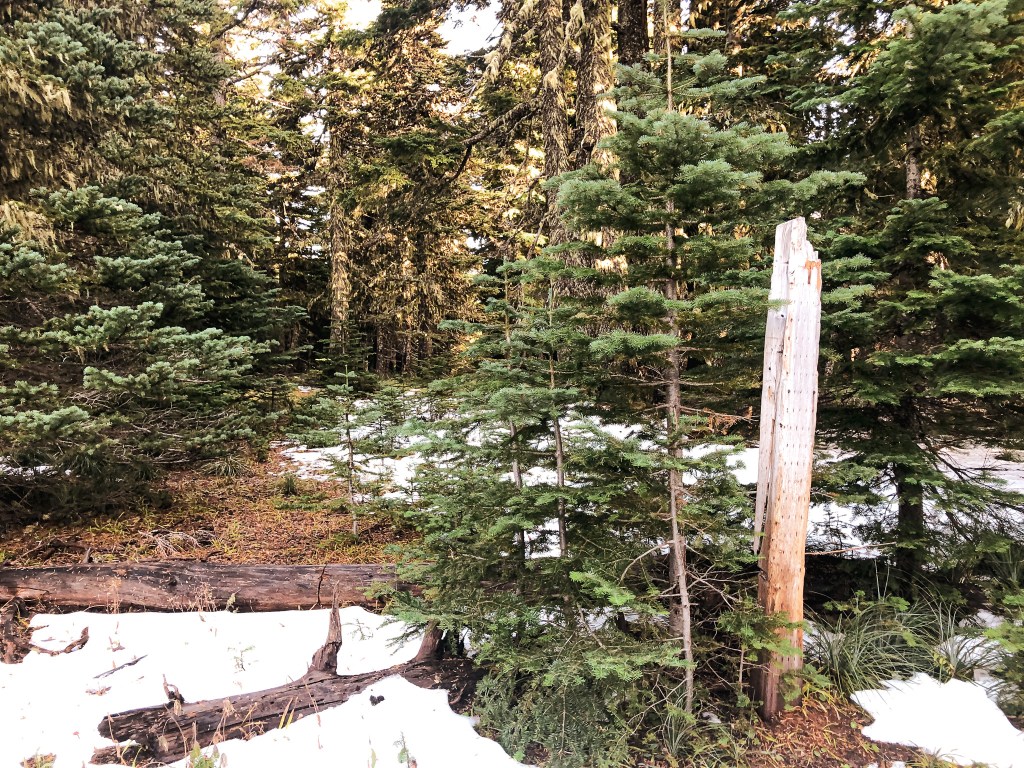
Old post where we met the unmarked road
Unmarked road heading left
Where I think the real “trail” meets the unmarked road
Post at real “trail” junction
Fork in unmarked road, head left to find foundation

History.

Grasshopper Point (5,385′).

Former Fire Lookout Site Register: US 597; OR 38

A tower was first built on Grasshopper Point in 1933 as a 72′ timber tower with L-6 cab. The following winter it was blown over during a storm. They re-erected the tower in 1934. I’m inclined to believe they built it taller given other sources list it as an 84′ treater timber tower, but it’s also possible these are conflicting heights. It was used as an Aircraft Warning Station in the 1940s. Old photos show there was a cabin for living quarters and another structure that was either used for storage or a garage at the base. It was last staffed in 1964 and destroyed sometime between 1967 and 1969 by intentional burning.

Rocky Butte (4,796′).

Not registered on the National Historic Lookout or the Former Fire Lookout Site Register.

There is minimal information on when Rocky Butte was built but it pre-dates 1930. It was most likely abandoned in the 1930s or 1940s, but still stands today. This crows nest sits atop a 60′ Ponderosa pine. The guy wires, some of the top boards, and most of the ladder are still present.
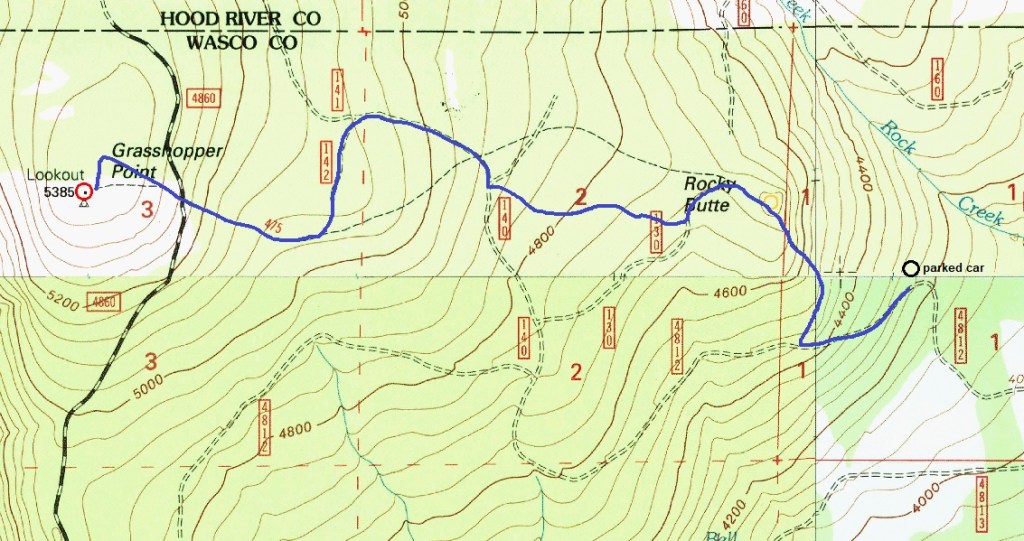
a rudimentary outline of our route

Larch & Pepper Mountain

Former Lookouts

Location.

Mt. Hood National Forest; Columbia River Gorge Scenic Area

Date visited.

October 23, 2022

Trip Report.

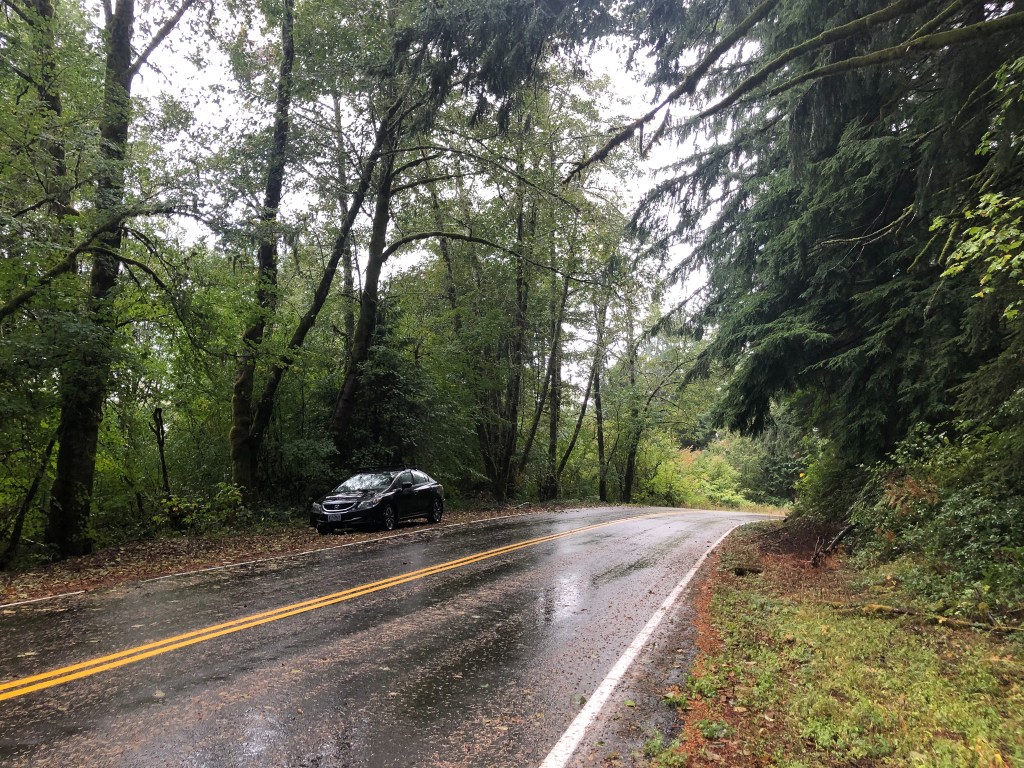
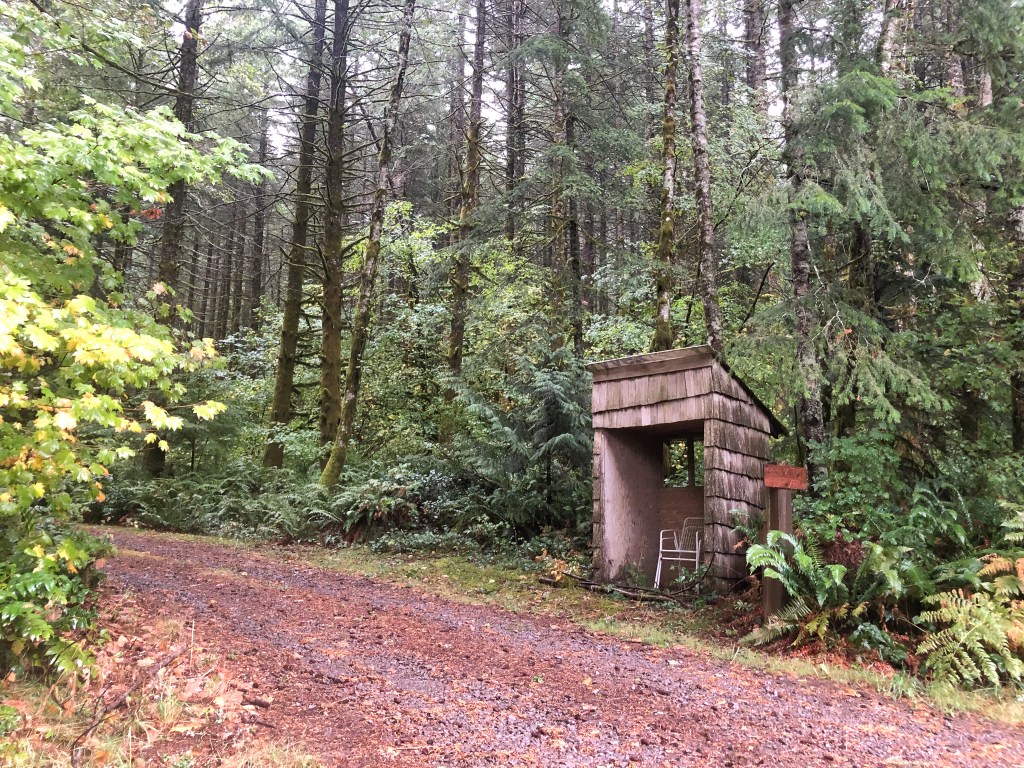
The fires this season might have been late to arrive, but they have also been late to leave. Rain was finally in the forecast for the weekend after an unusually dry and smoky start to October. They were even calling for snow on peaks as low as 5,000′ which meant we would have to start limiting our options. We decided to focus on former lookout sites close by after I vetoed driving down to Bland Mountain and Tiller area for a one night trip. I was craving a slower weekend after being in Minnesota for a week, camping with Garnet’s dad for a weekend, and then Arizona the weekend after that. We settled on Pepper Mountain for one and decided to add Larch Mountain since they were off the same road. The gate up to Larch Mountain was still open for the season too (it closes around mid-November depending on snow levels). We headed out of town just after 8AM only briefly following I-84 into the Columbia River Gorge until we reached exit 22 towards Corbett. We followed Corbett Hill Road and signs towards the Vista House until it met up with E Larch Mountain Road. You will want to take the fork off to the right to head towards Larch Mountain. We stayed on this road for a little over 4 miles and turned left onto SE Brower Road. From this road we were looking for NF-1500 off to the right. This can be found just under 2 miles down Brower road and has a notable shelter at the junction. This is used as a private drive as well so we parked in a pull out just a few 100 yards past the road. This is where we started our hike up to Pepper Mountain.

Trail leading Left to summit
Trail leading Right to viewpoint

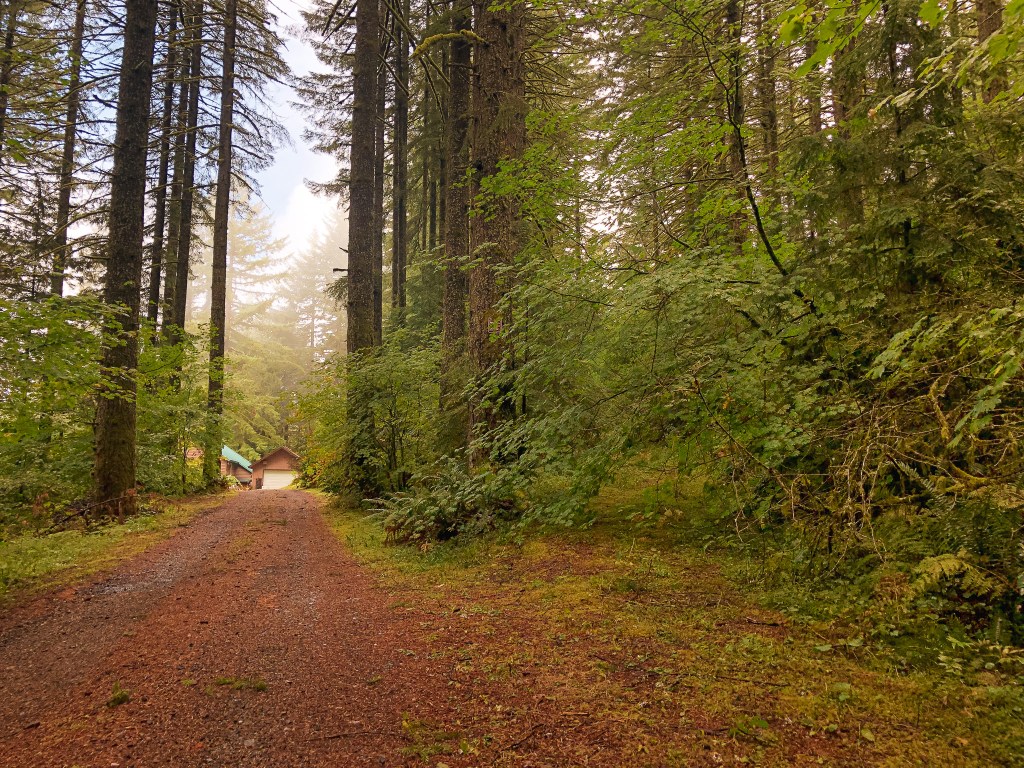
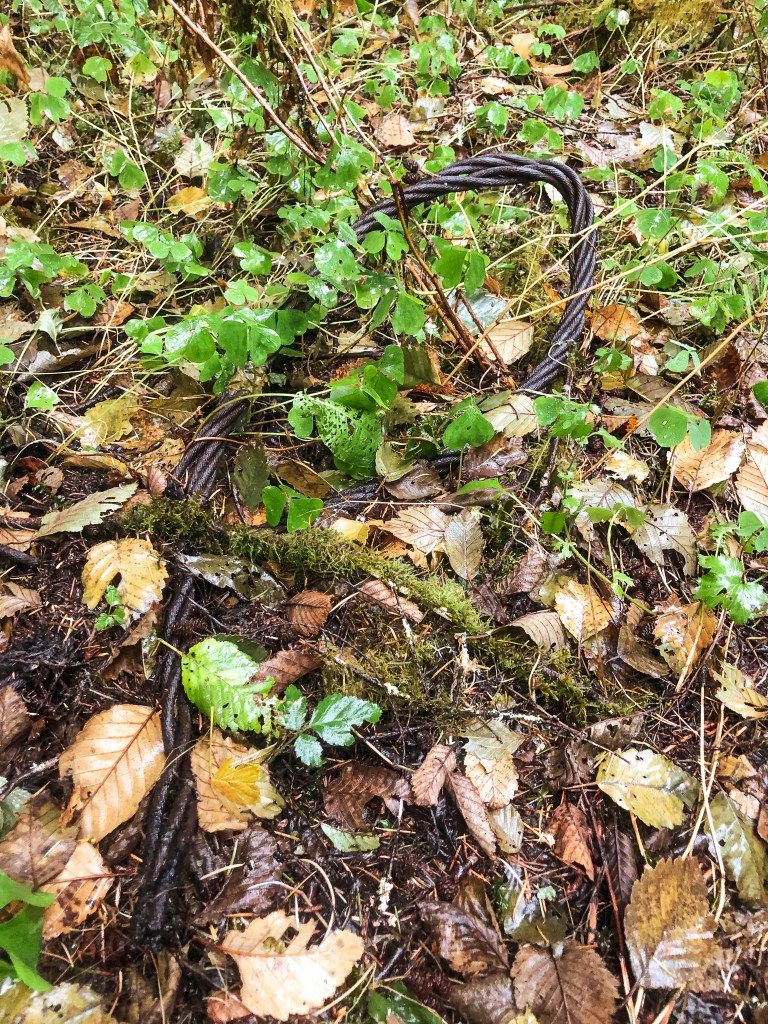
We hiked along the NF-1500 road to a junction just before we reached the residence. There is an old overgrown road off to the right of the house that you will want to take. We followed this until we met a fork in the trail. It is a faint junction, so pay close attention. If you head left, it will take you to the summit. If you head right, there is a view point out towards the Tualatin Hills. The trail heading left has a lot more brush and is less defined, but was still easy enough to follow. I would recommend long pants for this hike no matter the season since there are a lot of prickly berry bushes along the route. As we were hiking up, we spotted a cable along the side of the trail. I thought maybe it could be an old guy wire from the former lookout, but others mention it was used for logging the area. The trail eventually dead ends at a small clearing on the summit that was the former lookout site. There are no remaining views which made it an appealing pick for a rainy weekend. Most trip reports from the area mentioned there were no longer any remains on the summit. We found that hard to believe and did a thorough search of the surrounding area. I found a hole which I thought looked like a filled in pit toilet area (it’s possible it was just a hole though) and my partner was able to find some old cement blocks that must have been part of the foundation. Some were fairly mossy and appeared to just be large rocks at first, but upon closer inspection were obviously man made. They looked like they had been dug up and tossed from their original location. We speculated this probably happened whenever they logged the area. Fairly satisfied with our find, we headed back to the car to continue on to Larch Mountain. This hike was roughly 2 miles round trip with 700′ in elevation gain.

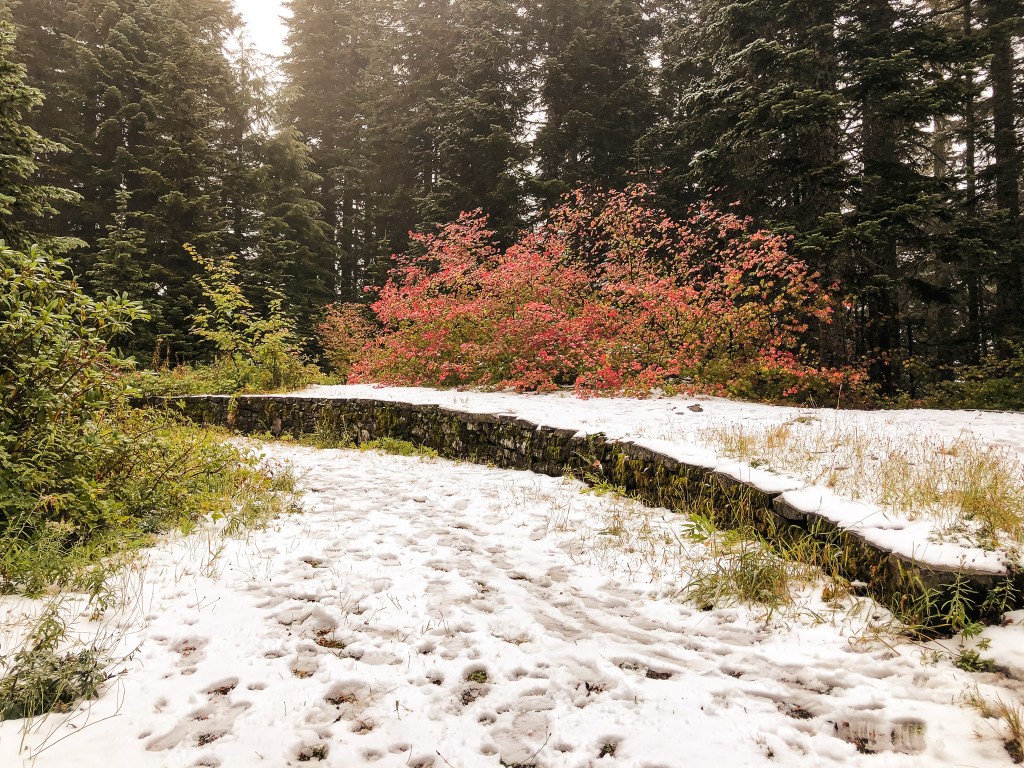
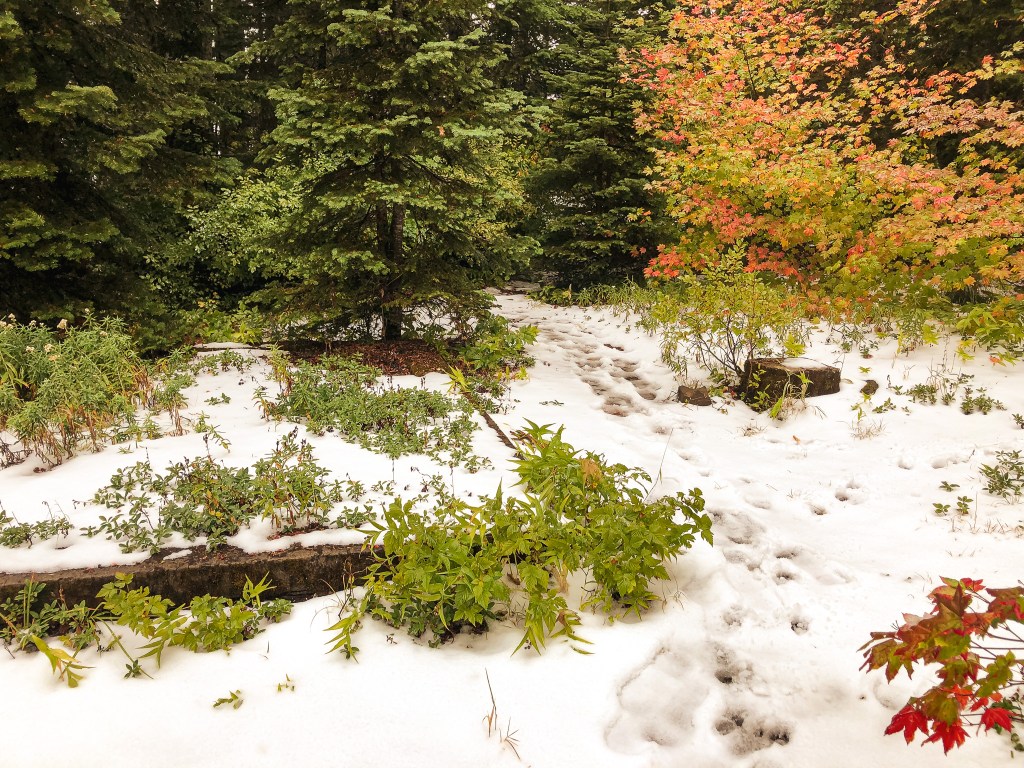
We headed back from SE Brower Road and turned left to head farther up E Larch Mountain Road. I didn’t do much prior research on how to get to Larch Mountain, but I was fairly certain this road would dead end at the summit. If not, I knew it was a popular enough area to have signs. Shortly after leaving Brower Road, we entered the Larch Mountain Corridor. This is a protected area around Larch Mountain designated for recreation. As we drove further up the mountain, we started passing multiple cars in pull outs. We joked that this was all the overflow parking for the Larch Mountain trailhead, but figured that they were more than likely mushroom foragers given the recent rain. That is until we passed the base camp of some very official white vehicles with flashing lights. It was a search and rescue operation. Who or what they were looking for was unclear, but there were a lot of them. Almost every pull out up to the summit of Larch Mountain was filled with official or volunteer vehicles. We continued on since there was no area closure or blockade, but it was a bit unsettling. A half of a mile from the summit we started seeing snow. It was mostly melted on the pavement, but it looked like it received at least an inch or two recently. This was a surprise given that the forecast only called for snow in the 5,000′ range. We seem to be making hard shifts into our seasons this year. We reached the summit shortly after we met the snow and parked the car. There were 11 other cars here around noon. I assume on a clear sunny day this parking lot is already full by this time.

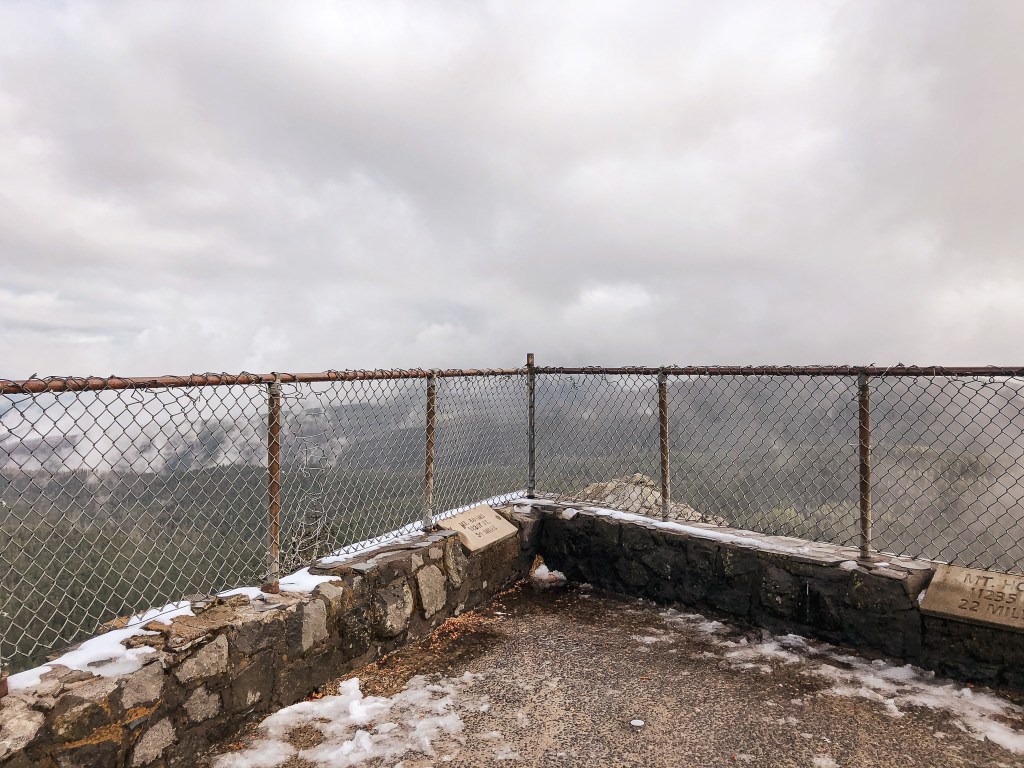
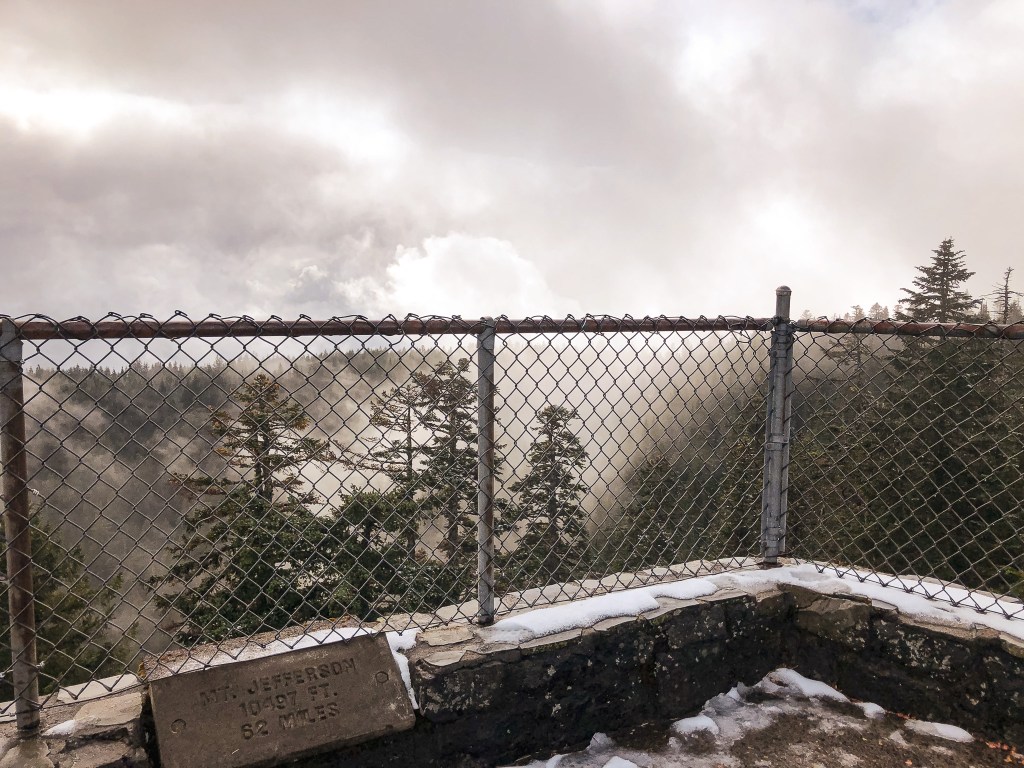
From the parking lot, we decided to set out to find the old foundation spot first. We were able to locate this quickly by heading up the paved trail between the bathrooms and picnic area. It was less than half a mile from the parking lot. There isn’t much left besides a few foundation blocks, a cement slab where the storage shed was located, and the retaining wall. But, I’m glad they didn’t pave over it when developing the area. I believe you can connect to Sherrard Point from here and make a loop, but it looked slick with the recent snow coverage. We headed back to the parking lot and headed to the right where there’s a sign for Sherrard Point. This is a flatter portion of the paved trail that will take you to the stairs that lead up to the point. It is also less than half a mile from the parking lot. Both areas play a role in Larch Mountain’s fire history. We decided to have our lunch on Sherrard Point since no one else was here at the time. Unfortunately, we didn’t get much of a view due to the clouds. We had planned to continue our hike around the crater of Larch Mountain to get some additional exercise, but the unplanned snow and minimal day light left dissuaded us. We saw what we had set out to see and that was enough for us this time. We took the lazy approach to this summit by driving there and not hiking around the rim. But if you’re up for a challenge, Larch Mountain can also be accessed from the Multnomah Falls trailhead via a 14 mile round trip hike. As we drove back down the paved road, we passed the Search and Rescue team again. This time they had all gathered in a group and some of them even had overnight packs on. We tried to do more research on this when we were back in town, but they hadn’t posted anything about it. A healthy reminder to research an area before you visit, know your limits, and come prepared with the 10 essentials. We all assume a risk when recreating outside, but accidents can happen. I hope whoever they were searching for is ok and located quickly.

History.

Pepper Mountain (2,137′).

Former Fire Lookout Site Register: US 1759; OR 504

Built in 1937 as a 10′ wooden tower with L-4 cab. It was briefly used for the Aircraft Warning Service between 1942 and 1943. The tower was abandoned in 1955. It was removed sometime afterward 1957, but I couldn’t find a specific date or year. Old panoramic photos from 1933 show a crows nest style lookout in the picture. I am unsure how long the site was used for fire detection prior to that picture.

Larch Mountain (4,058′).

Former Fire Lookout Site Register: US 609; OR 50

The site was established for fire detection as early as 1910 when a fire finder was used on the rocky outcropping of Sherrard Point. Between 1914 and 1915 a platform cab was built atop two 90′ fir trees. It was replaced by a 90′ steel tower with 7’x7′ cab and accompanying ground house in 1924. This site was used for the Aircraft Warning Service as well between 1942 and 1943. The last structure to be built on the summit was in 1945. They replaced the steel tower with a tall timber tower and L-4 cab with observation deck below for visitors. I am unsure of the actual height of the tower due to conflicting information from multiple sites, but it was somewhere between 80′ and 100′. The lookout structure was removed in 1976.

More Information.

Oregon Hikers (Pepper; Larch)

AllTrails (Larch)

US Forest Service (Larch)

Friend of the Columbia Gorge (Larch)