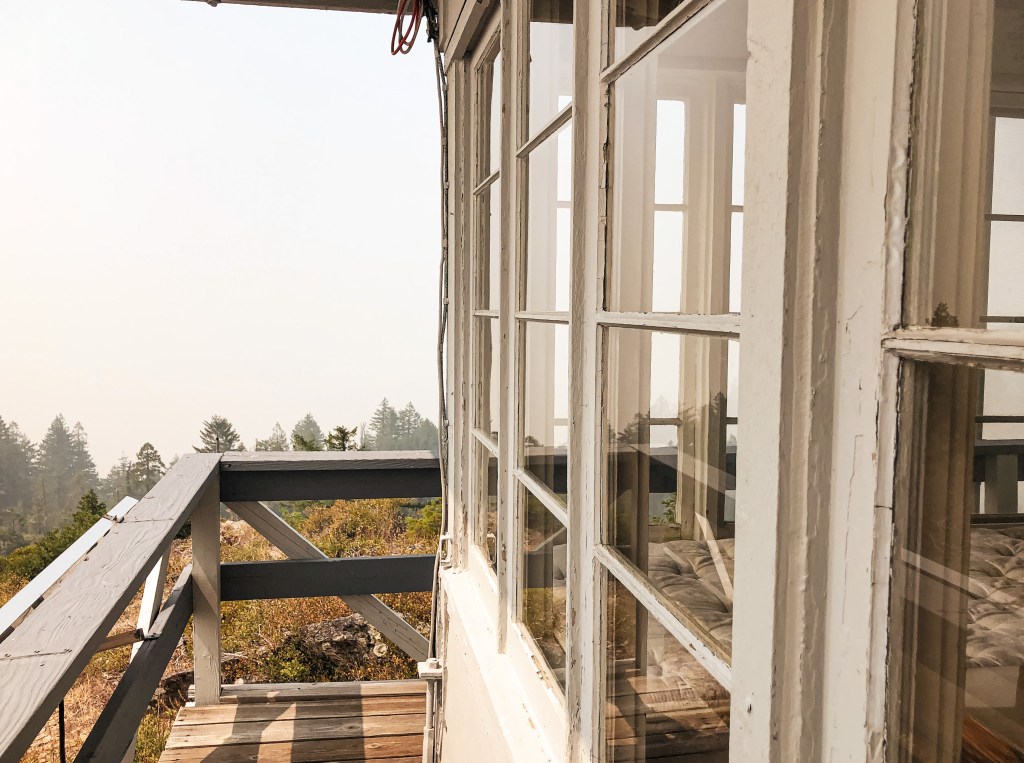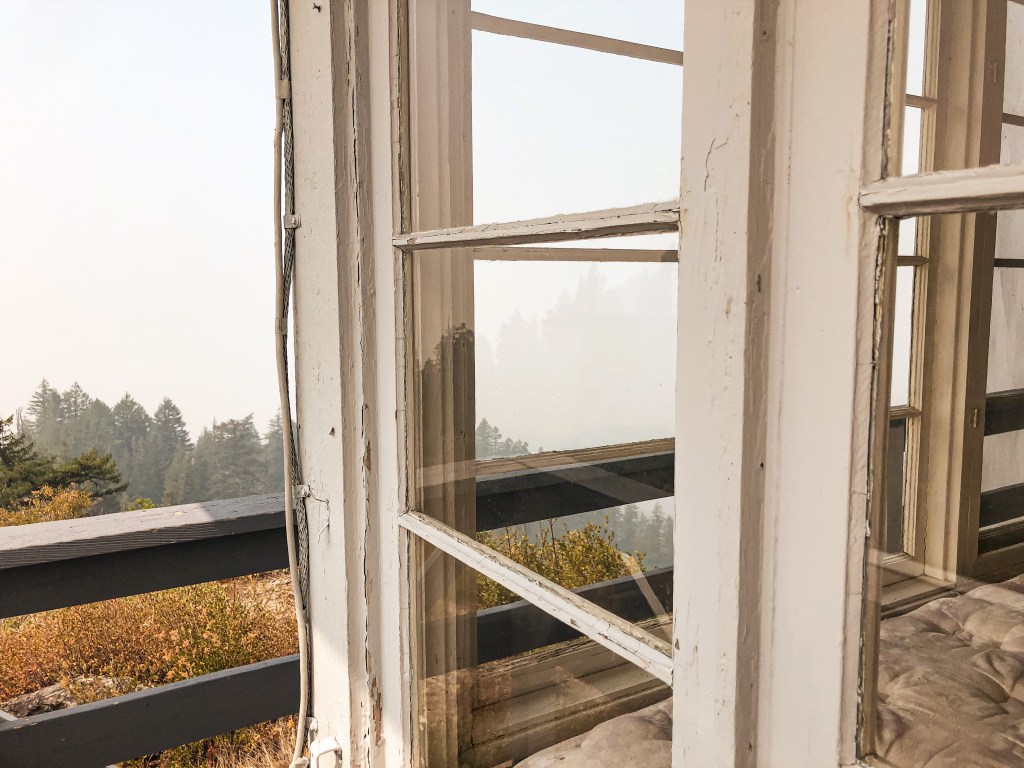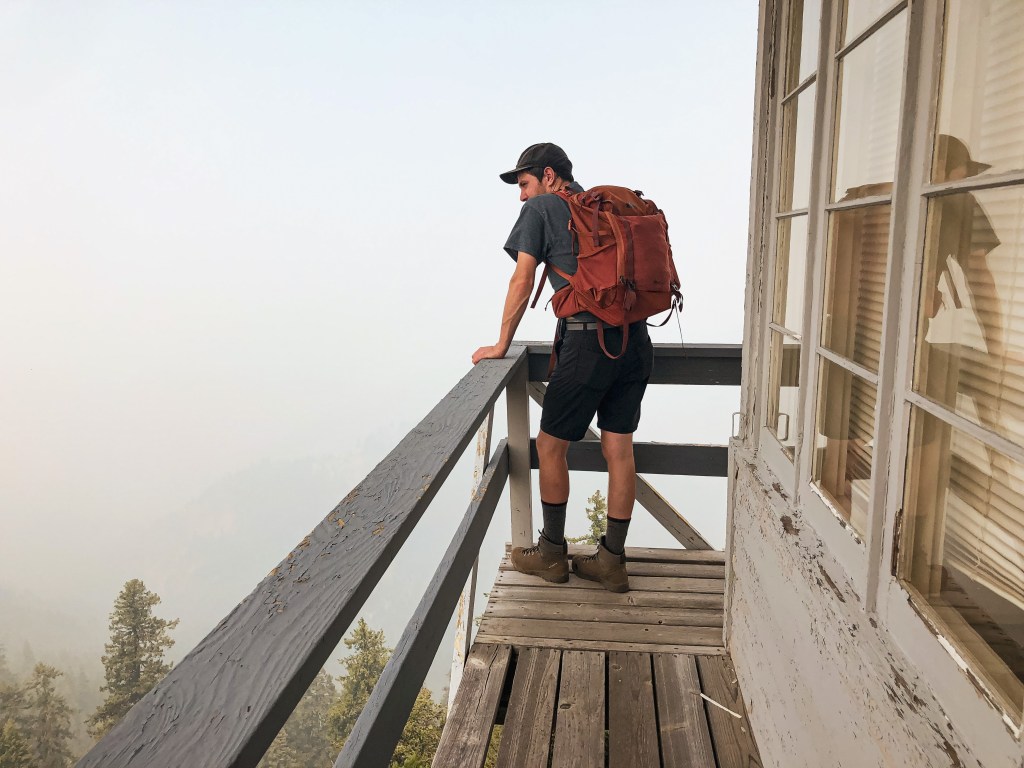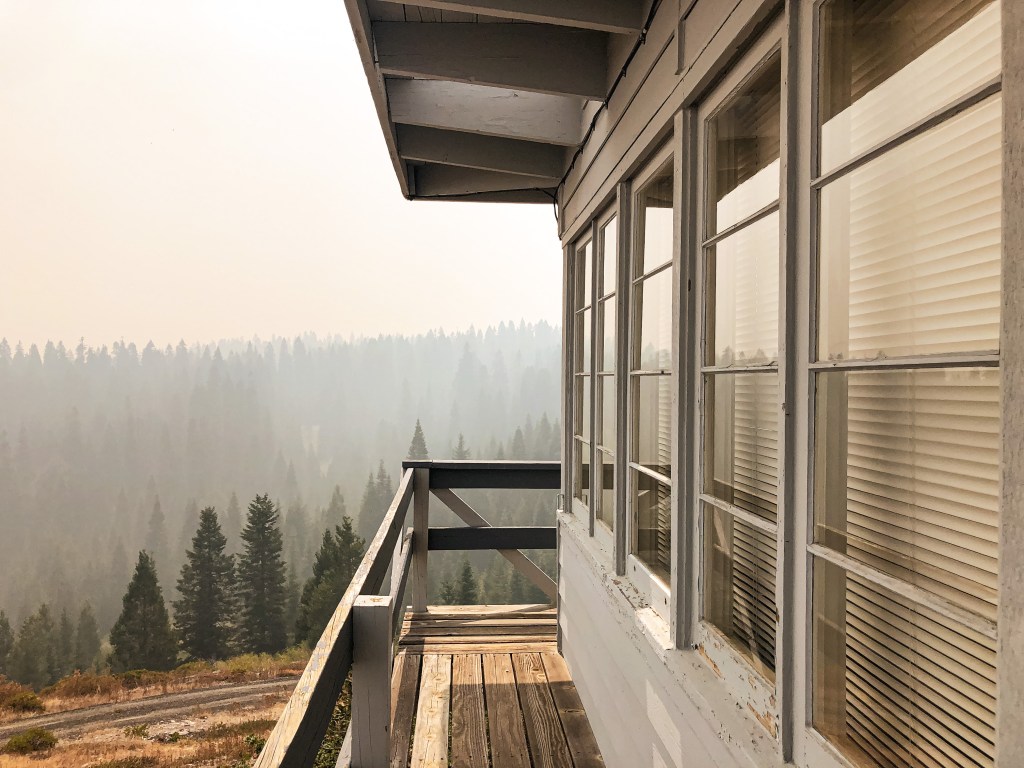
Lava Butte L.O.

Oregon Lookouts

Location.

Newberry National Volcanic Monument; Deschutes National Forest

Status.

Active; Currently standing

Estimated drive time from Portland, OR.

3-hours

Date visited.

October 10, 2021

Elevation.

5,016′

National Historic Lookout Register.

US 508; OR 100

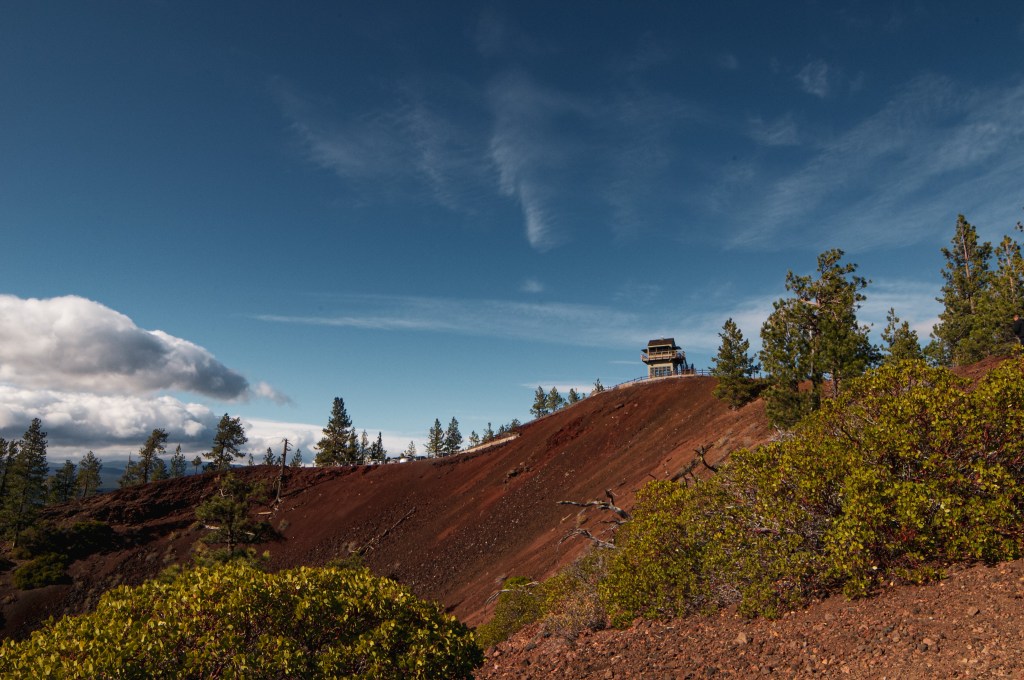
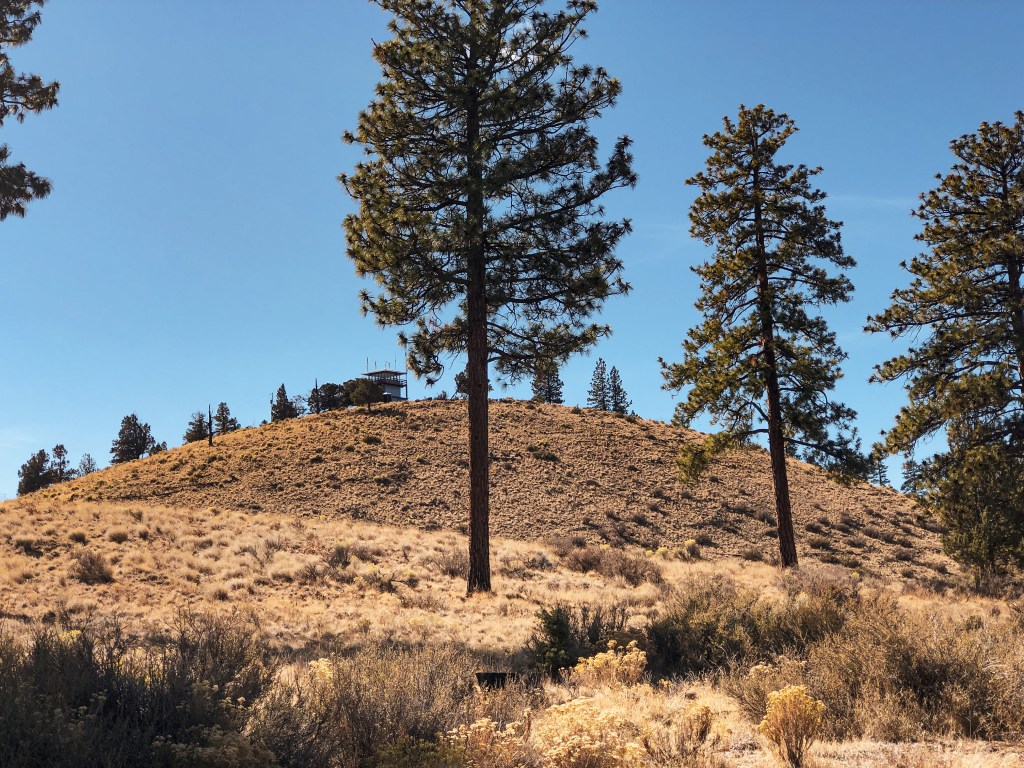
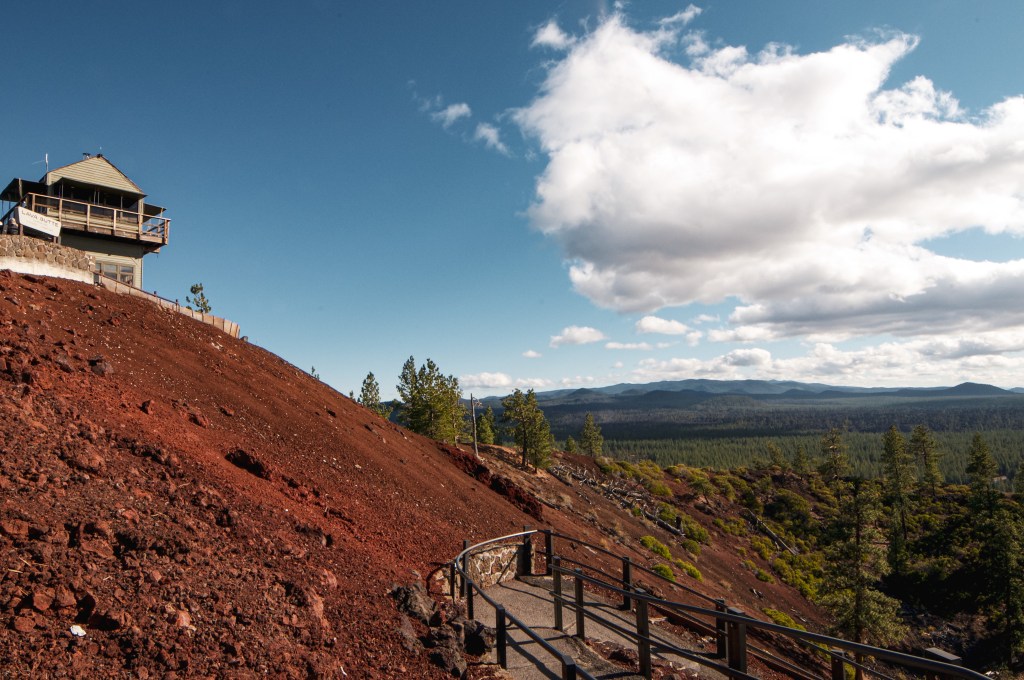
Looking at Lava Butte From Black Rock Trail

Trip Report.

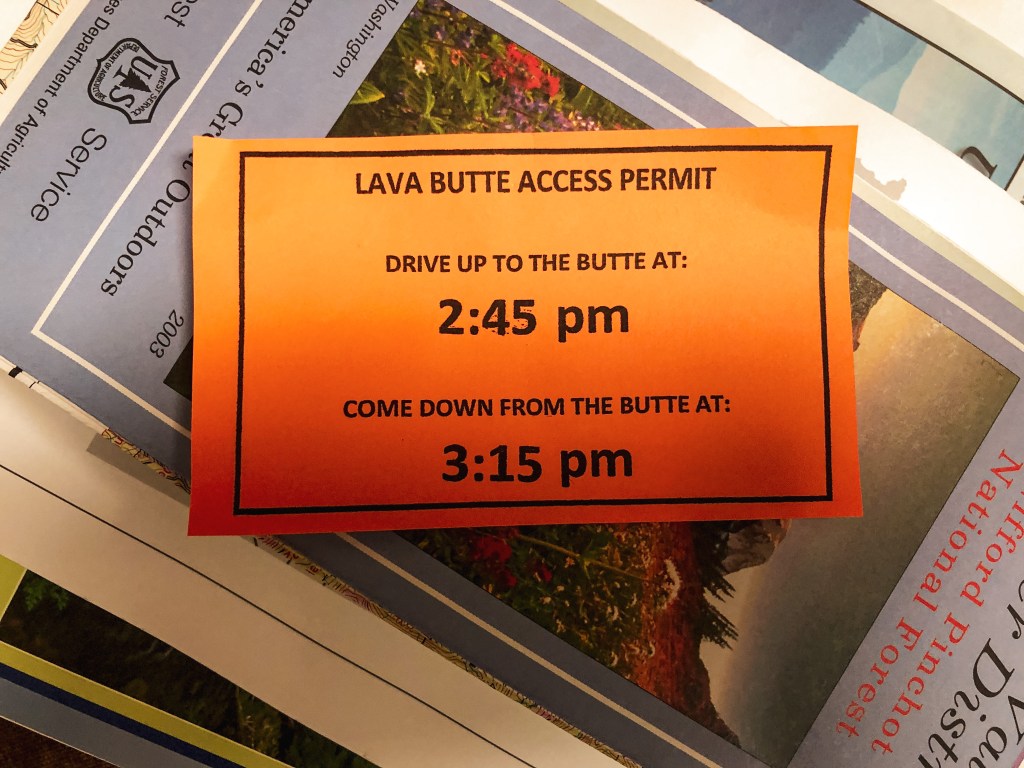
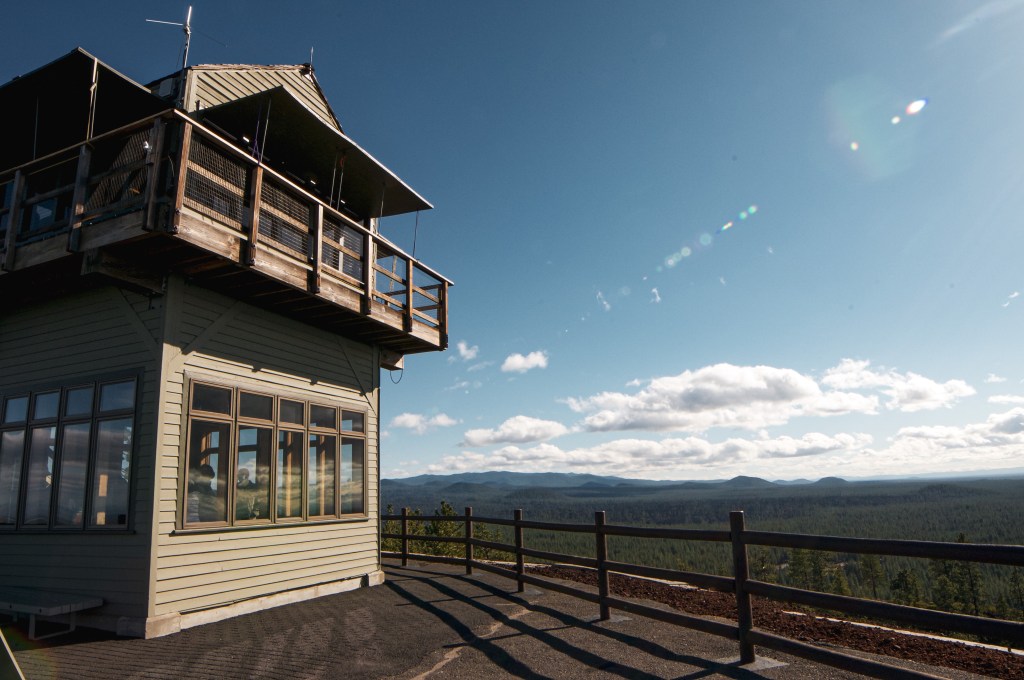
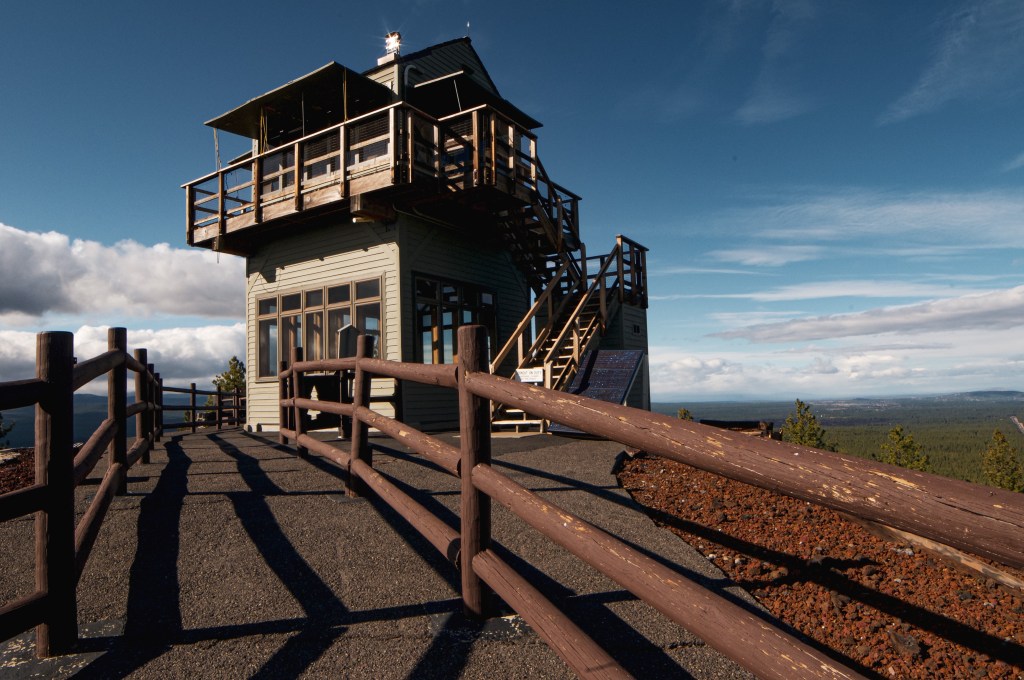
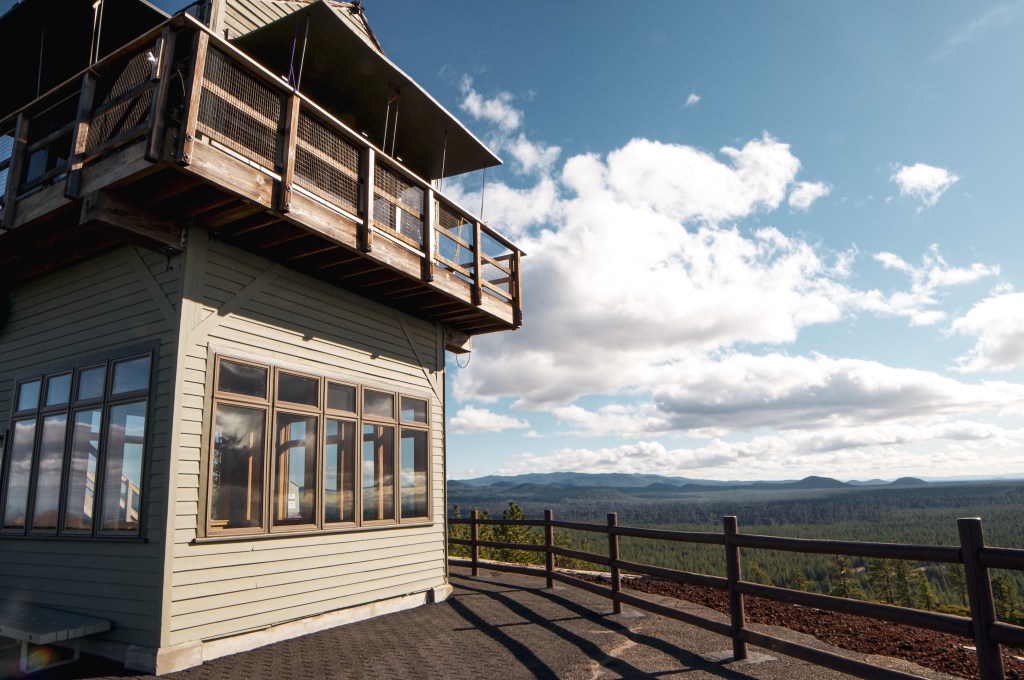
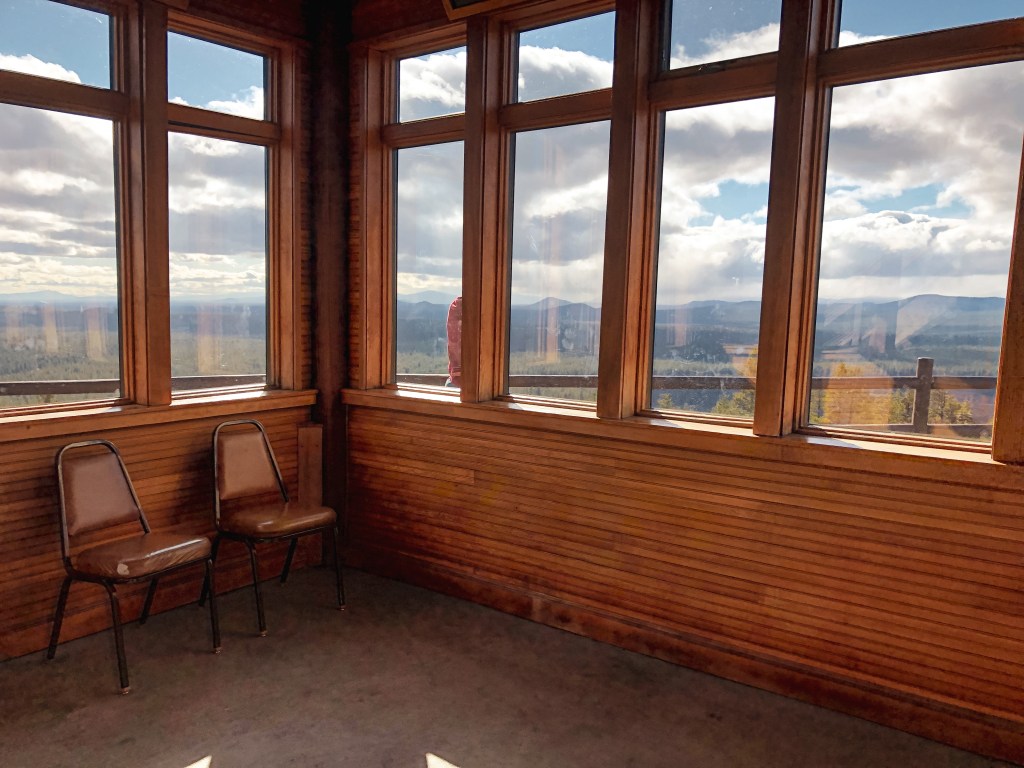
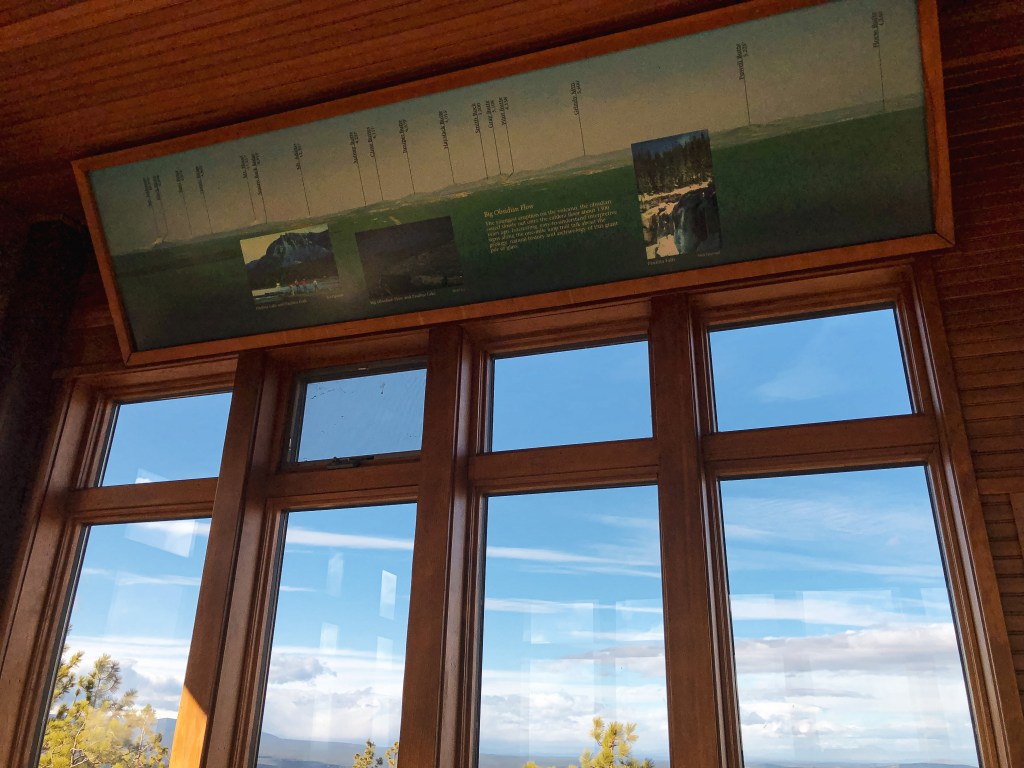
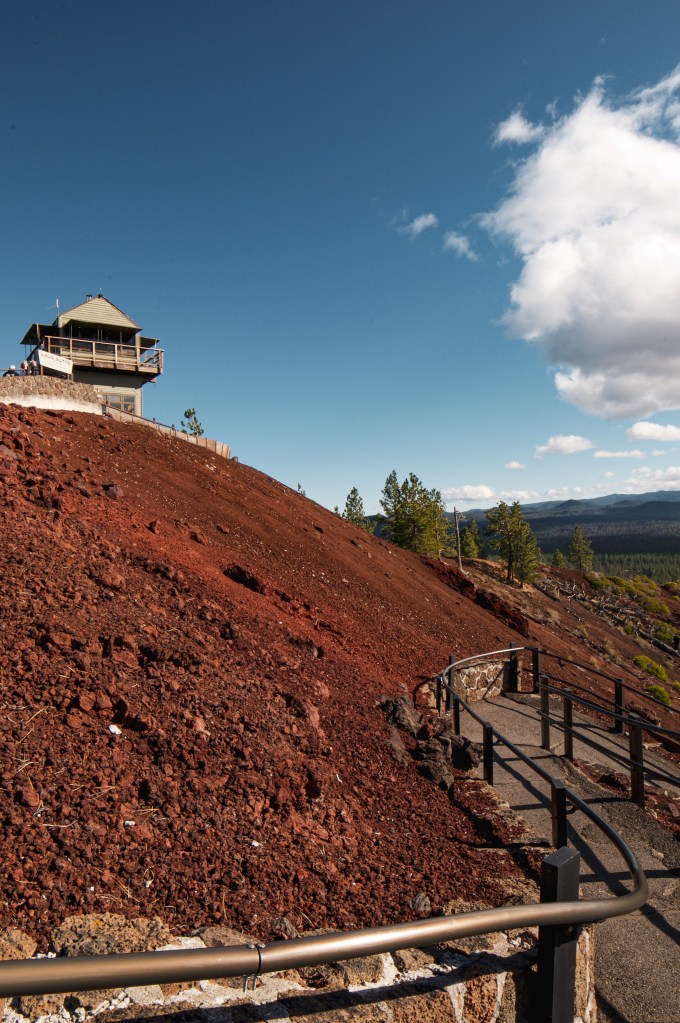
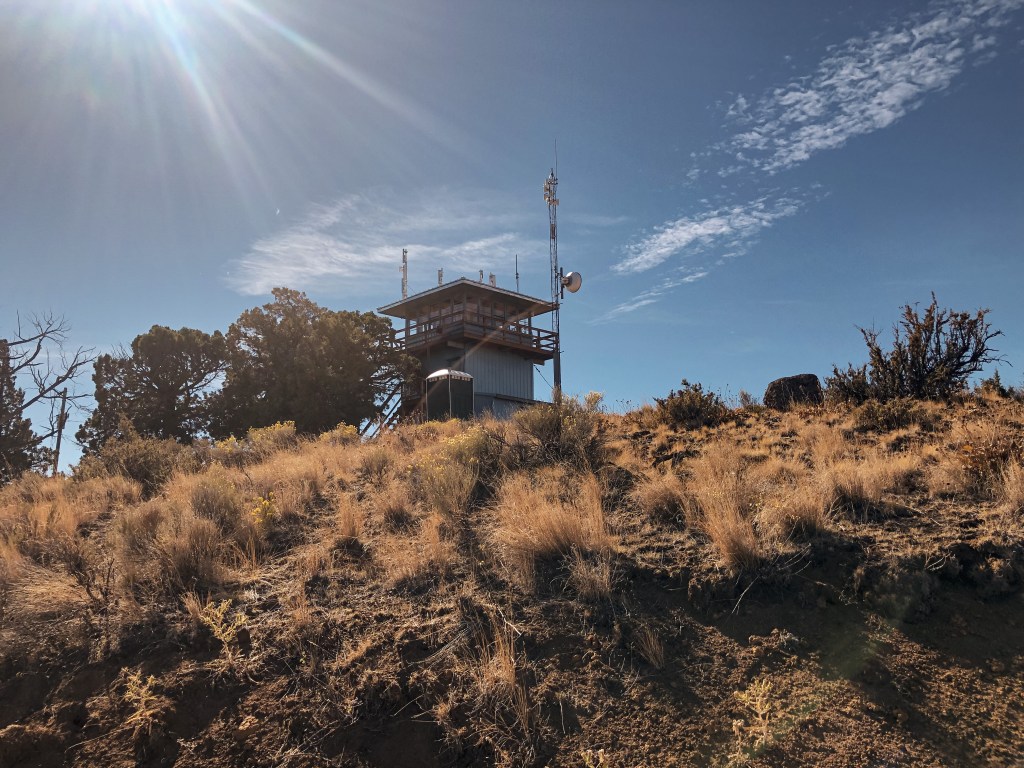
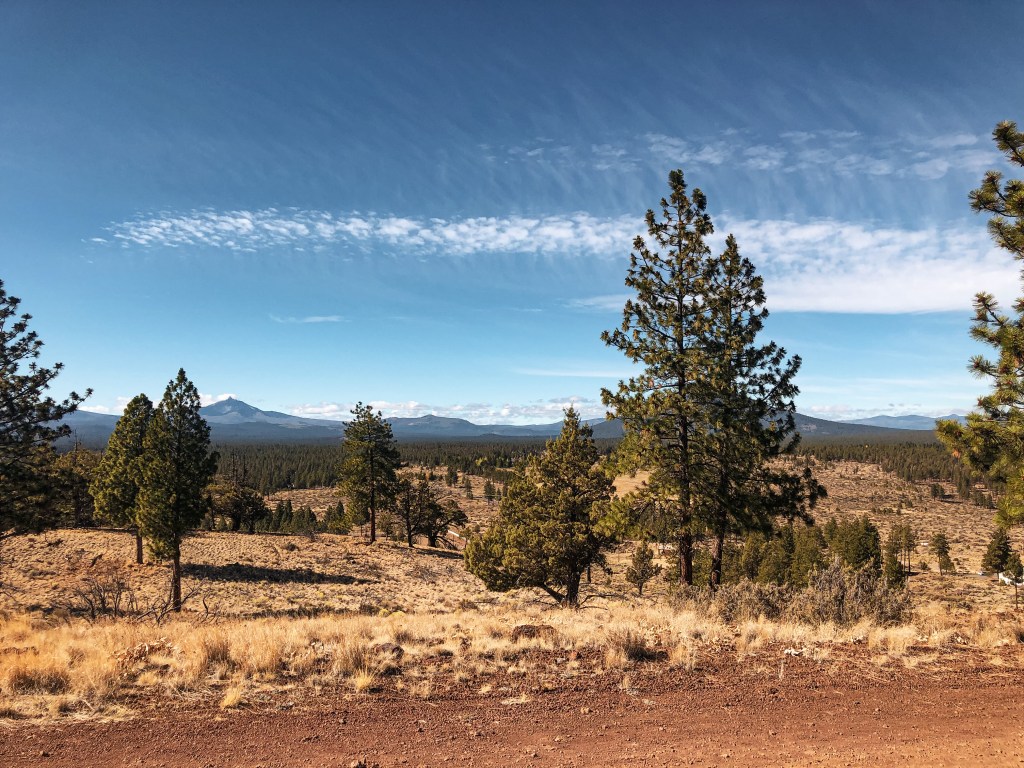
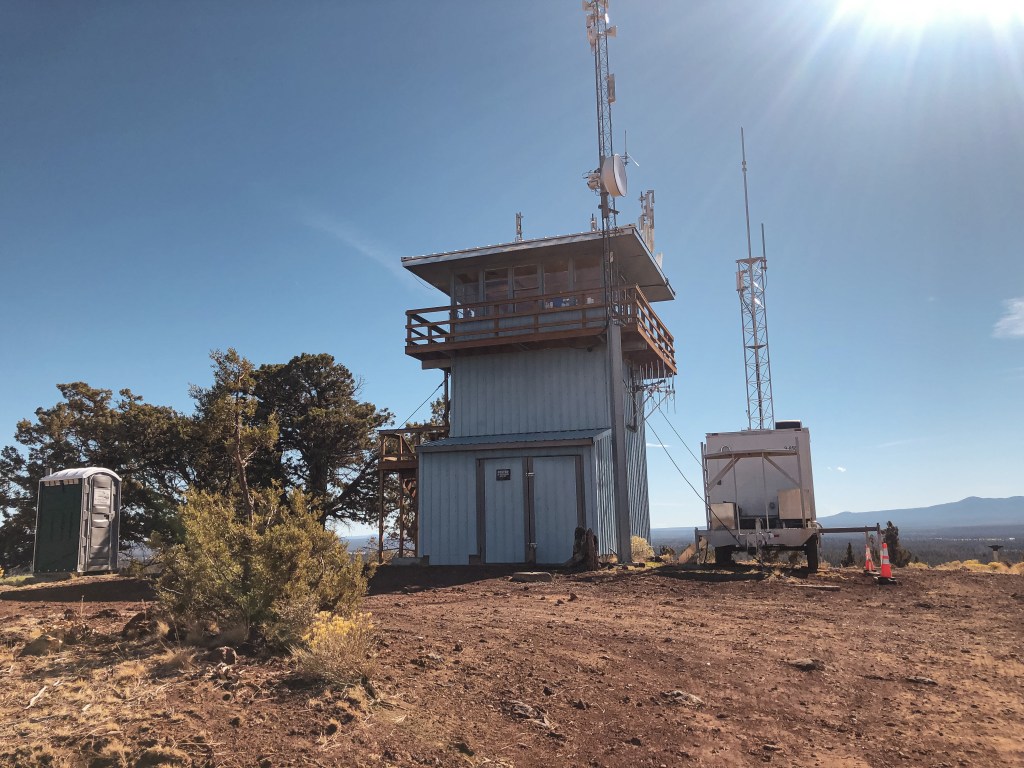
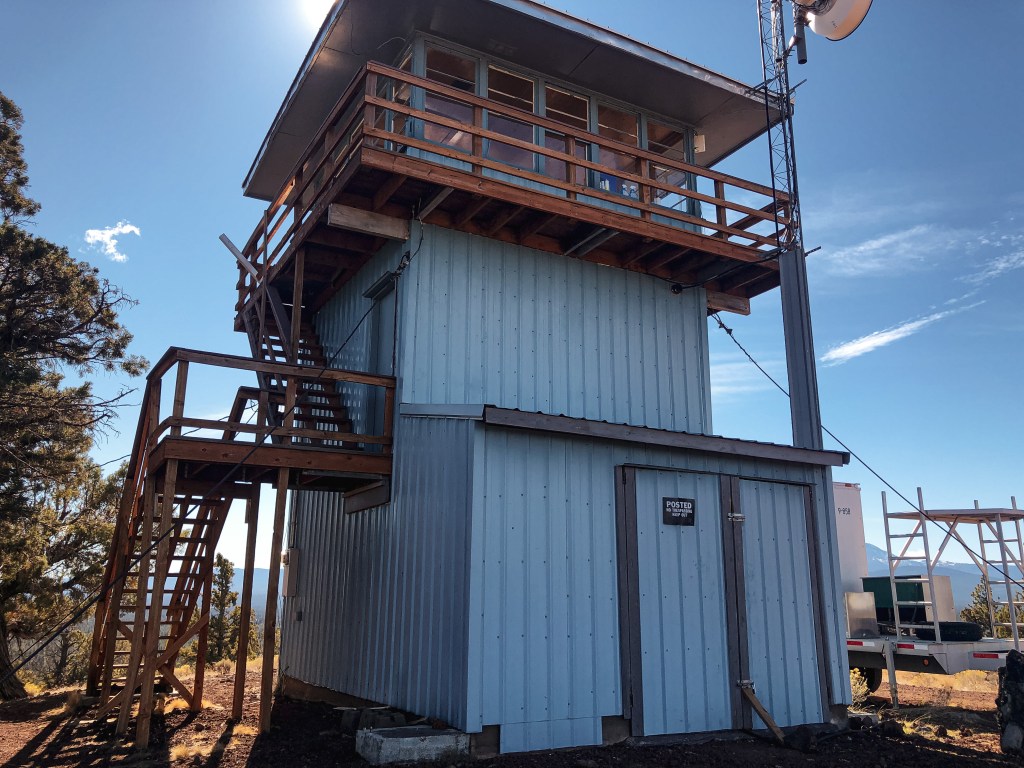
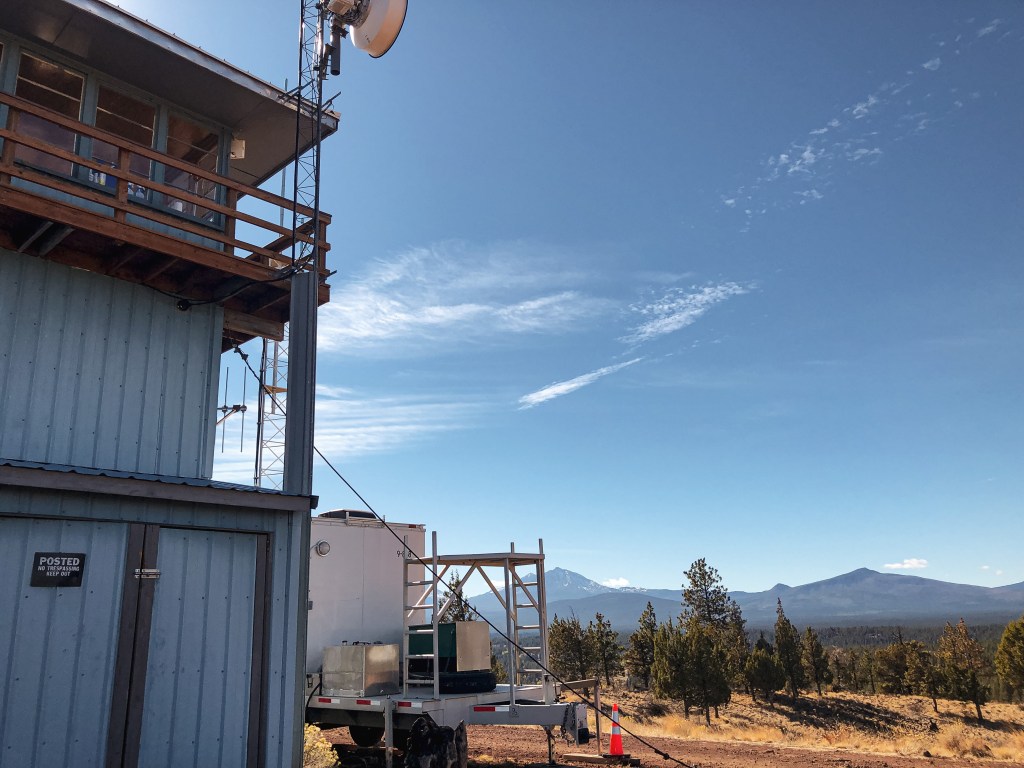
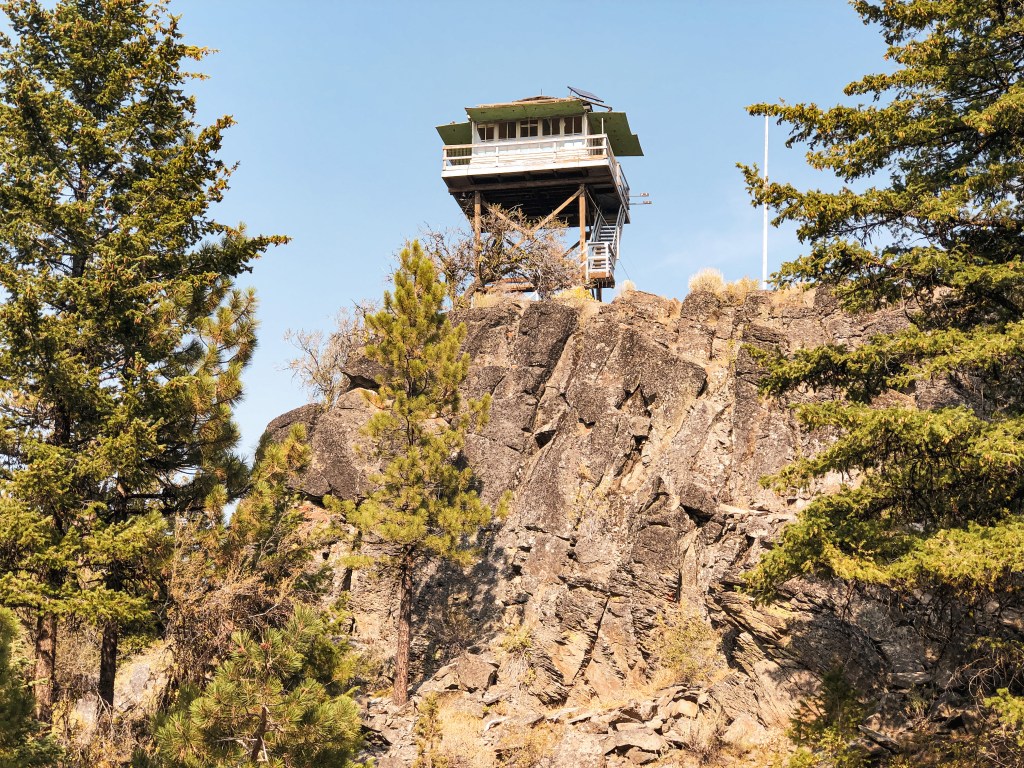
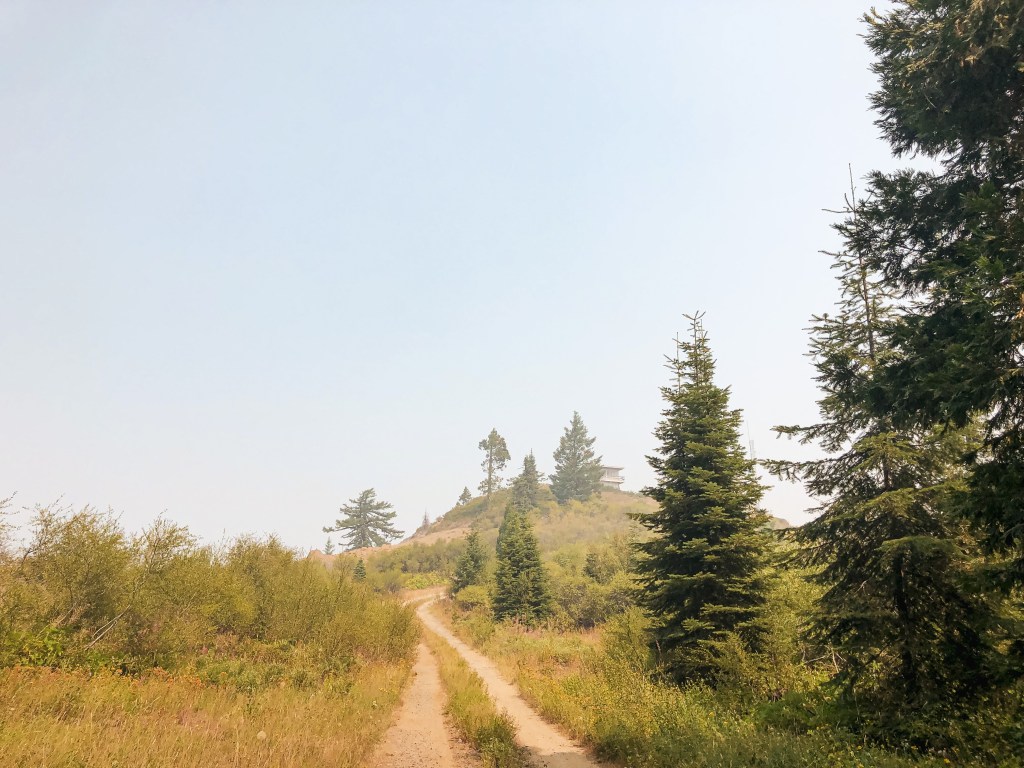
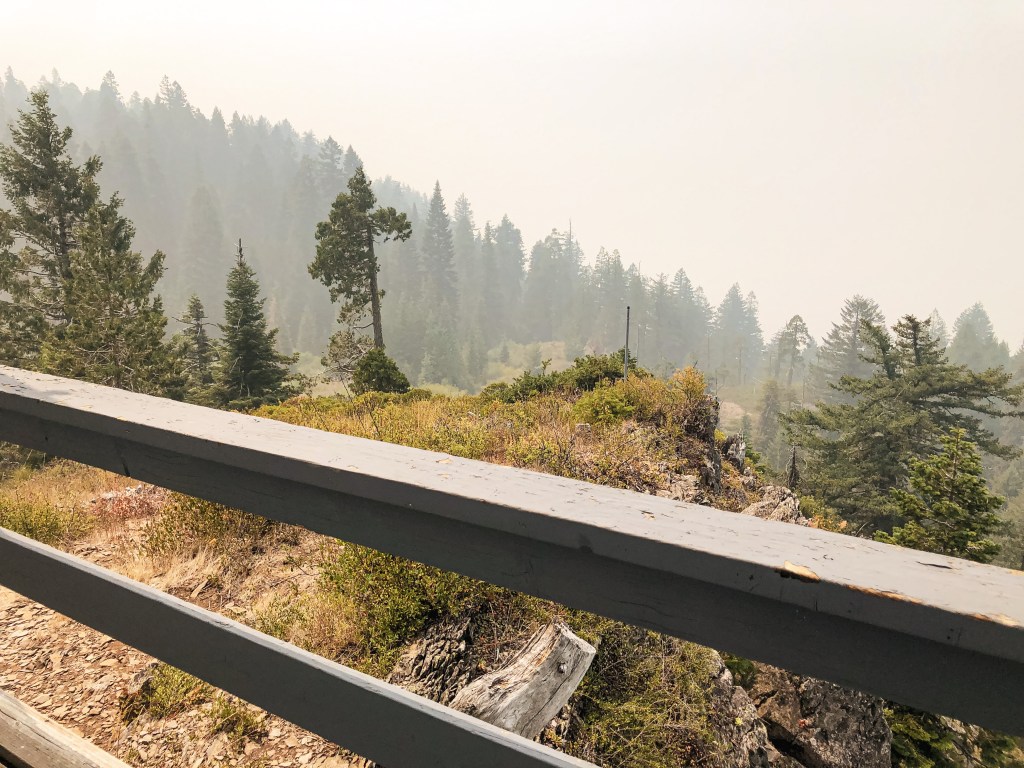
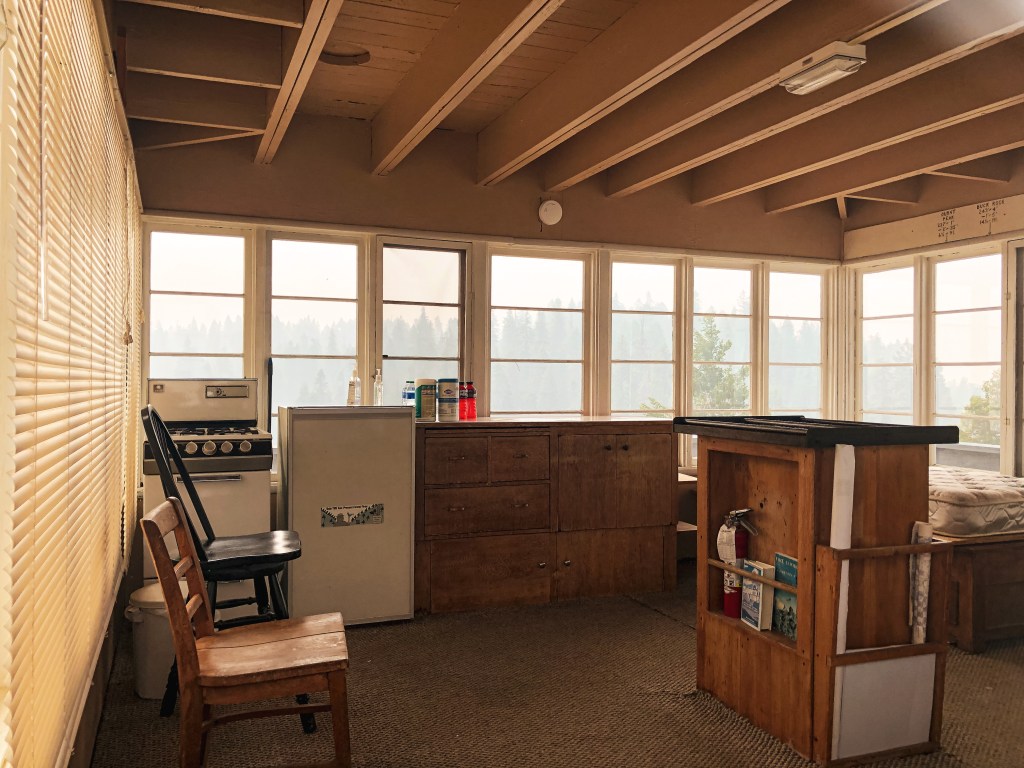
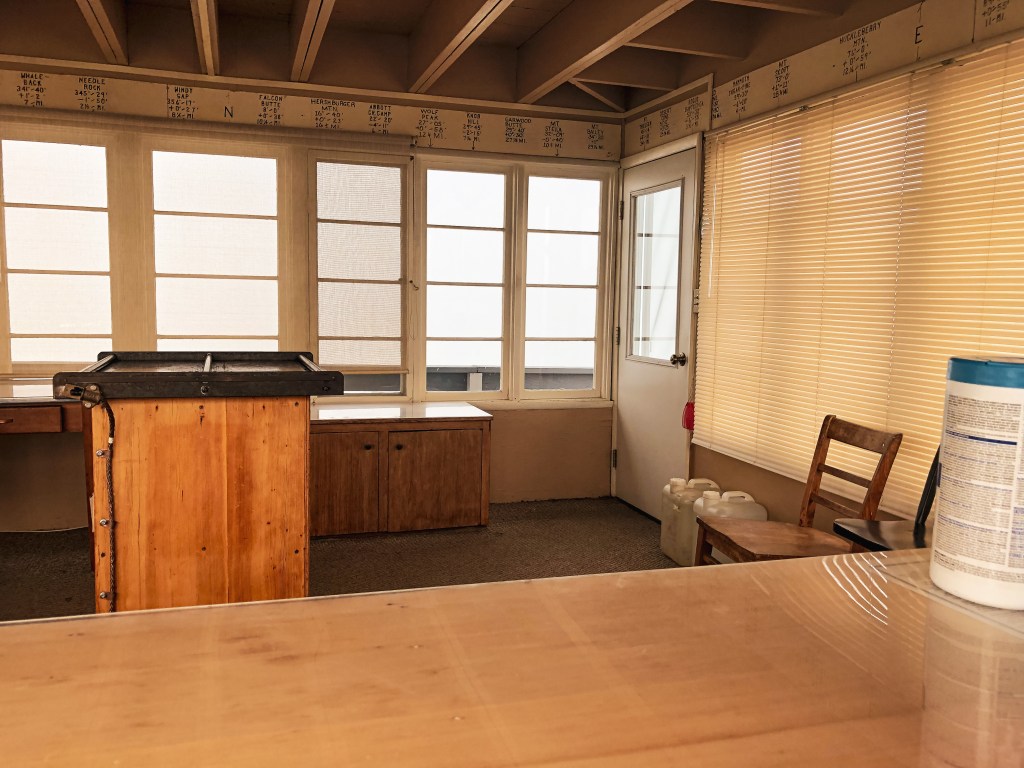
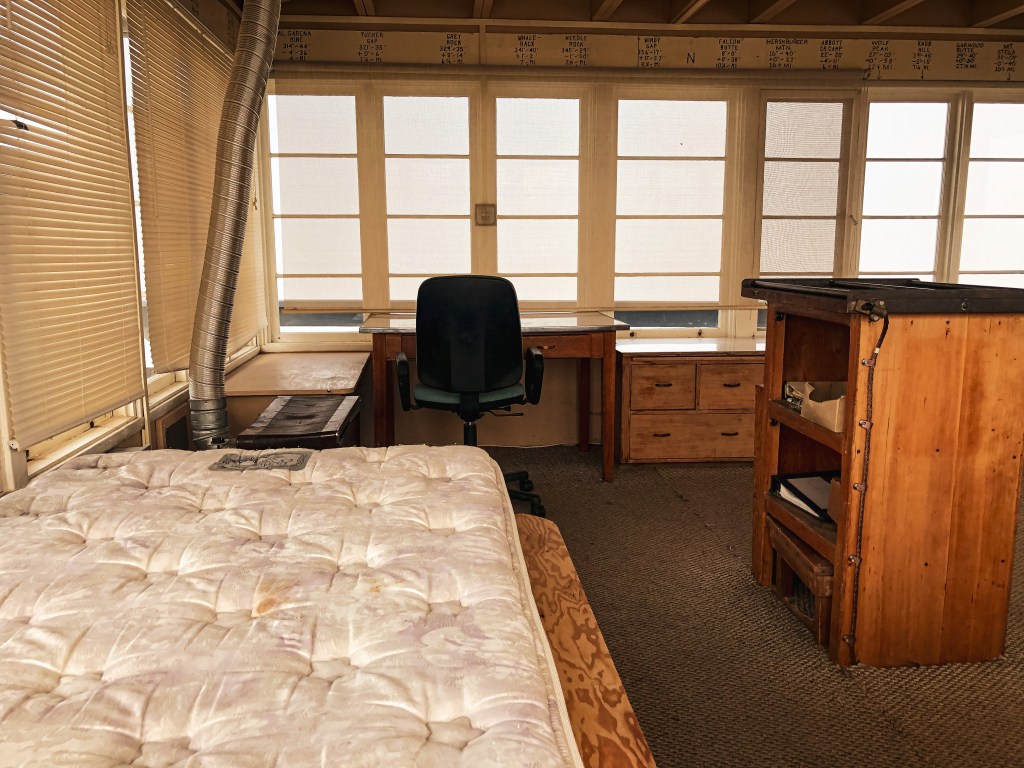
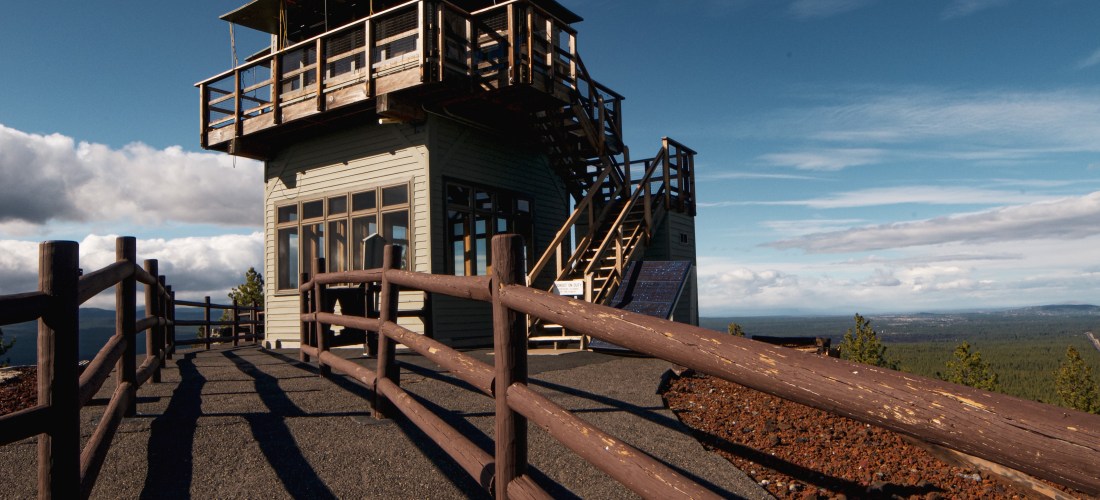
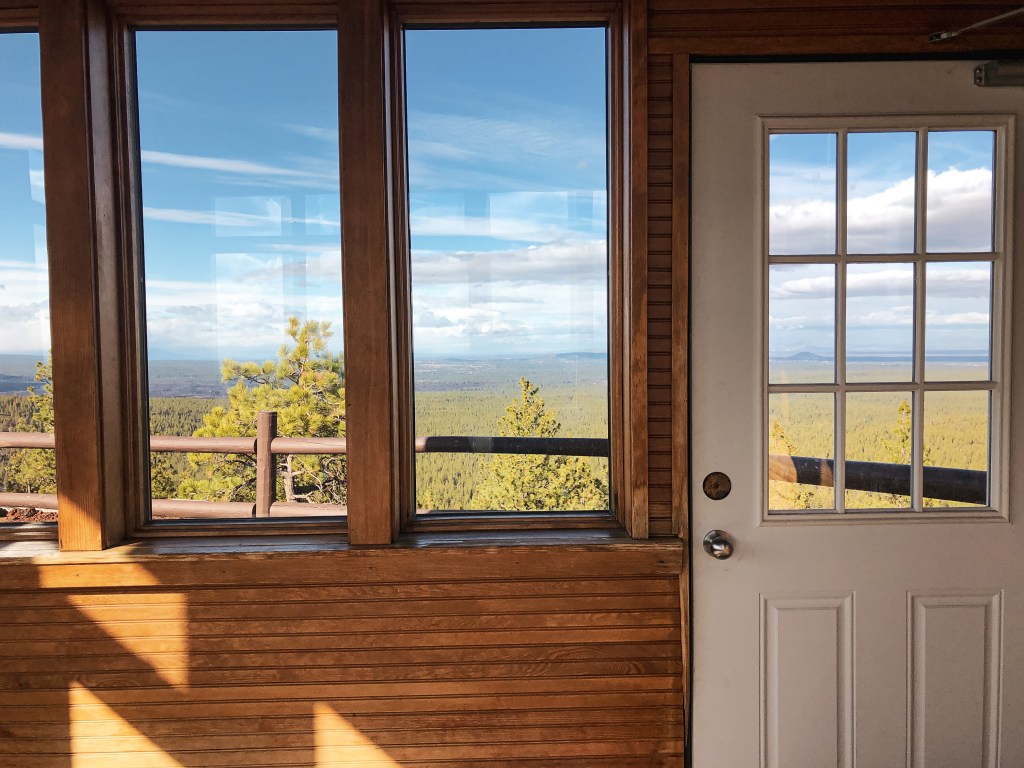
Lava Butte L.O. is one of the easiest accessed active fire lookouts in Oregon and, no doubt, the most visited. We decided to stop here on our way back to Portland since it is only a short paved drive to the top. The lookout is within the Newberry National Volcanic Monument near the Lava Lands Visitor Center. You will need to have a Northwest Forest Pass, National Parks Pass, or pay an entry fee to access. Due to the limited parking at the top of the cinder cone, you need to have a time access permit. These are free to visitors and are handed out at the entry kiosk. We did not know this at the time of our visit and were told we’d have to wait an hour to gain access. Driving to the top of the cinder cone is only permitted from late May to mid-October. We just happened to be here on the last day it was open for the season. Hiking up the road to the top is permitted year-round and is an alternative option if you do not want to wait for a time permit. We figured by the time we hiked to the top and back it’d be our time to drive anyway. We decided to wait and check out the Black Rock trail on the other side of the parking lot in the mean time. Once on the summit it is a short paved walk to the base of the lookout. The top is actively staffed and inaccessible to the public. The base of the lookout acts as a visitor center that has informative signs to help locate the surrounding landmarks. There is also a short un-paved trail that hikes away from the lookout around the cone. The time permit for the top only allows for 30-minutes, but we found this was plenty of time to check it out and take some pictures.
History.

Lava Butte has been a site used for fire detection since 1913 and has had four different types of lookout structures. In 1913, they only had a telephone line to the summit and were expected to camp near the base. The fire attendants during this time were staffed by the Deschutes Valley Fire Patrol Association. It wasn’t adopted as a fire lookout by the Forest Service until 1924. The first lookout structure was built in 1931 as a 14×14 L-4 hip-roof house. It was one of the three first lookouts established in the Deschutes NF and was considered one of the most visited lookouts even then. The other two were Odell Butte L.O. and Black Butte L.O. (post) The second structure built on Lava Butte was a 2-story R-6 flat cab in 1957 to replace the existing. In 1960, the first floor was expanded to include a visitor center. It was later dismantled in 1997 to start construction on the current lookout. In 1998, they completed a 2-story replica of a gable-roofed L-4 cab with a 1st floor visitor center. Despite the easy access to this lookout and proximity to Bend, it plays a pivotal role and is noted as reporting more fires first than any other lookout on the Deschutes NF.
More Information.

US Forest Service

AllTrails

Henkle Butte L.O.

Oregon Lookouts

Location.

Deschutes County

Status.

Fire Detection Camera; Currently standing

Estimated drive time from Portland, OR.

3 hours

Date visited.

October 9, 2021

Elevation.

3,412

National Historic Lookout Register.

US 915, OR 119

Henkle Butte is a lookout ran by the Oregon Department of Forestry and staffed every summer. It sits on top of a butte that overlooks expensive neighborhoods in Deschutes County. The tower isn’t accessible to the public but can be viewed from the road. It’s listed on geocache and peak bagger sites, but it’s unclear if the summit is accessible to the public. Be aware a lot of this area is private property and posted signs should be respected.

History.

Henkle Butte received its name from a competition. The commander stationed at Camp Polk offered a prize to the soldier that could make the quickest trek to and from the butte. It was around two miles northeast from the camp. The butte was named after the winner, Jeremiah F. Henkle. He was stationed at Camp Polk during the winter of 1865-1866. It is commonly mislabeled as Hinkle Butte. The first live-in fire tower wasn’t built until 1943. It was constructed from recycled material by the CCC as a 42′ tower with a 14×14 L-4 cab. The current structure was built in 1961 as a 3-story enclosed ODF cab.

Trout Creek Butte L.O.

Oregon Lookouts

Location.

Deschutes National Forest

Status.

Abandoned; Currently standing

Estimated drive time from Portland, OR.

3-1/2 hours

Date Visited.

October 9, 2021

Elevation.

5,546′

National Historic Lookout Register.

US 506; OR 98

Trip Report.

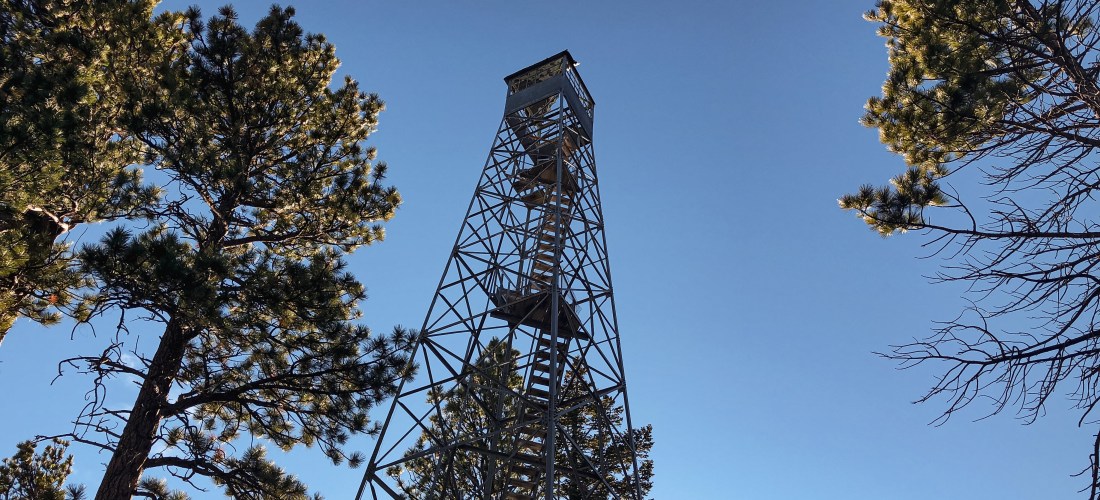
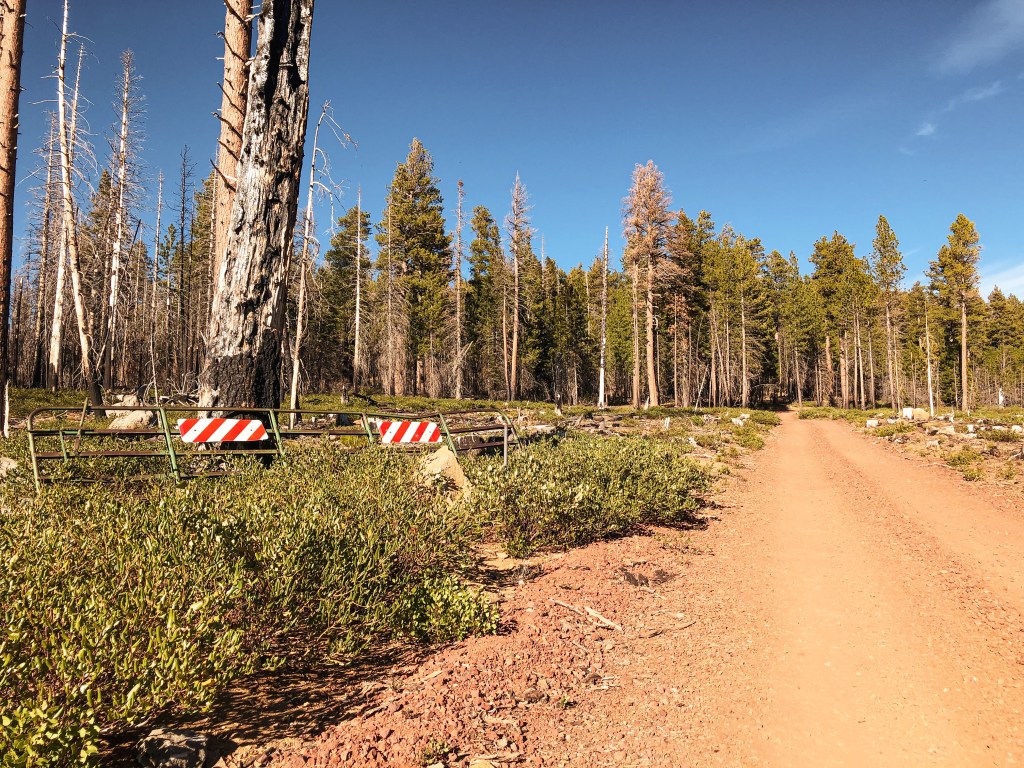
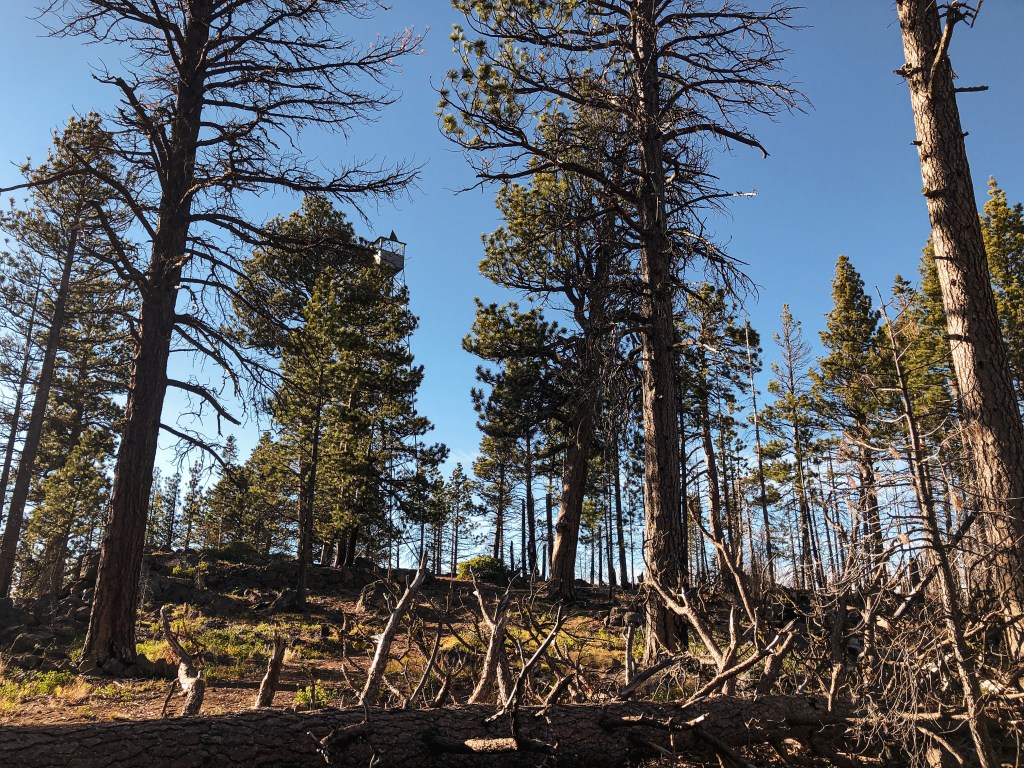
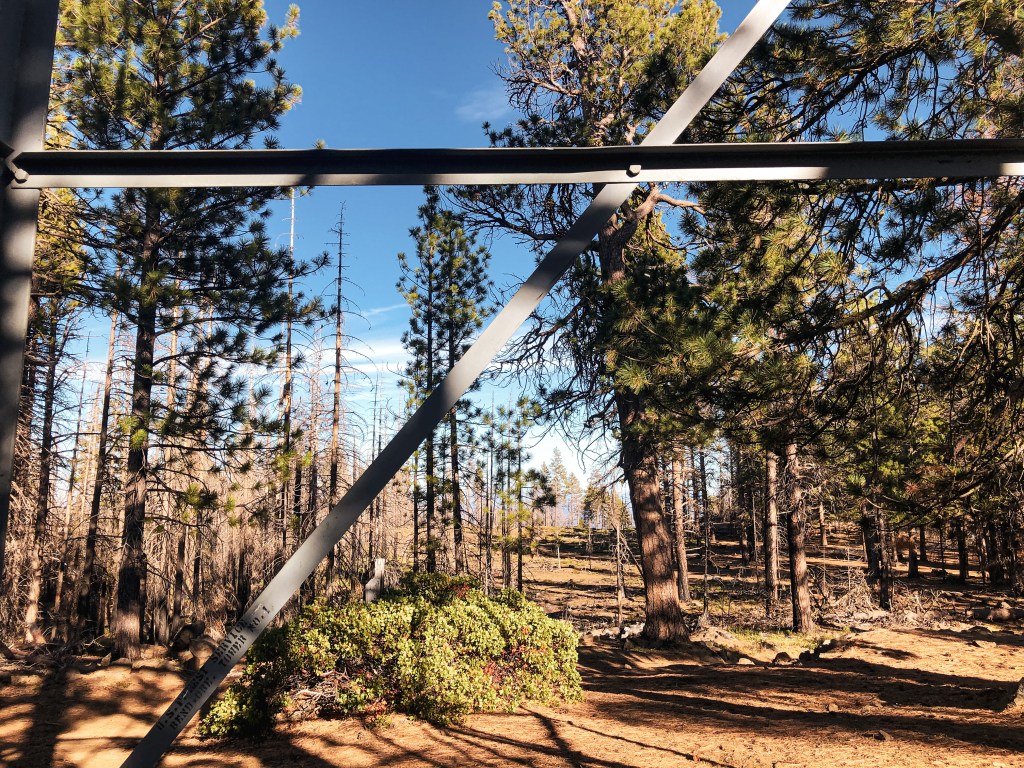
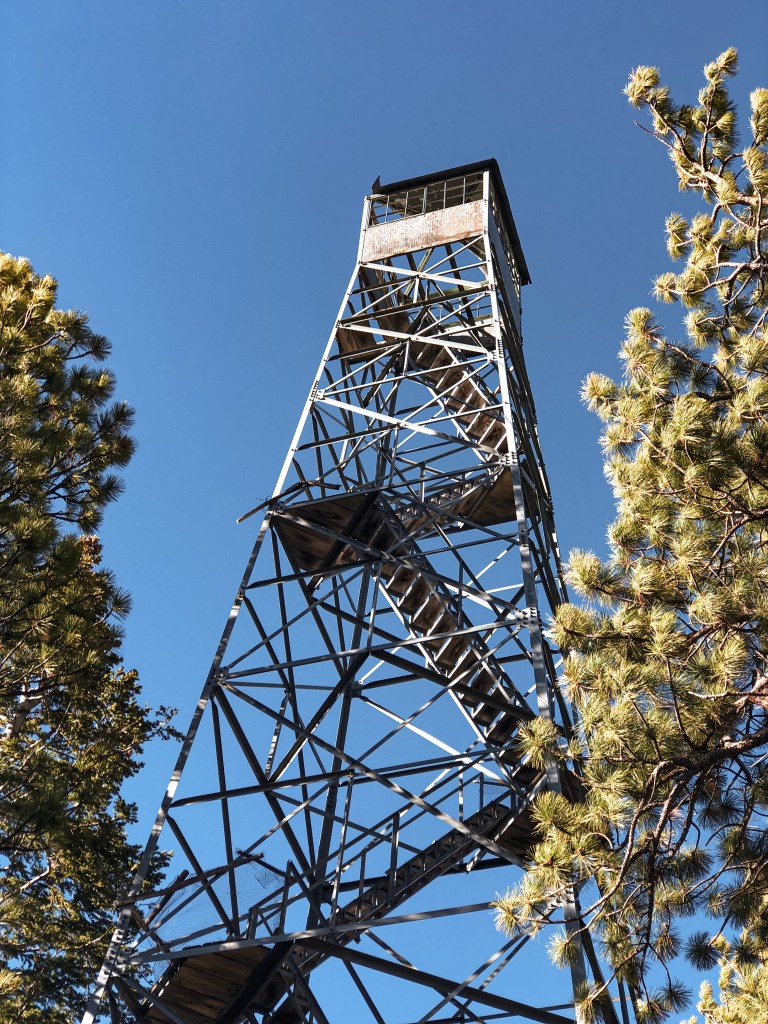
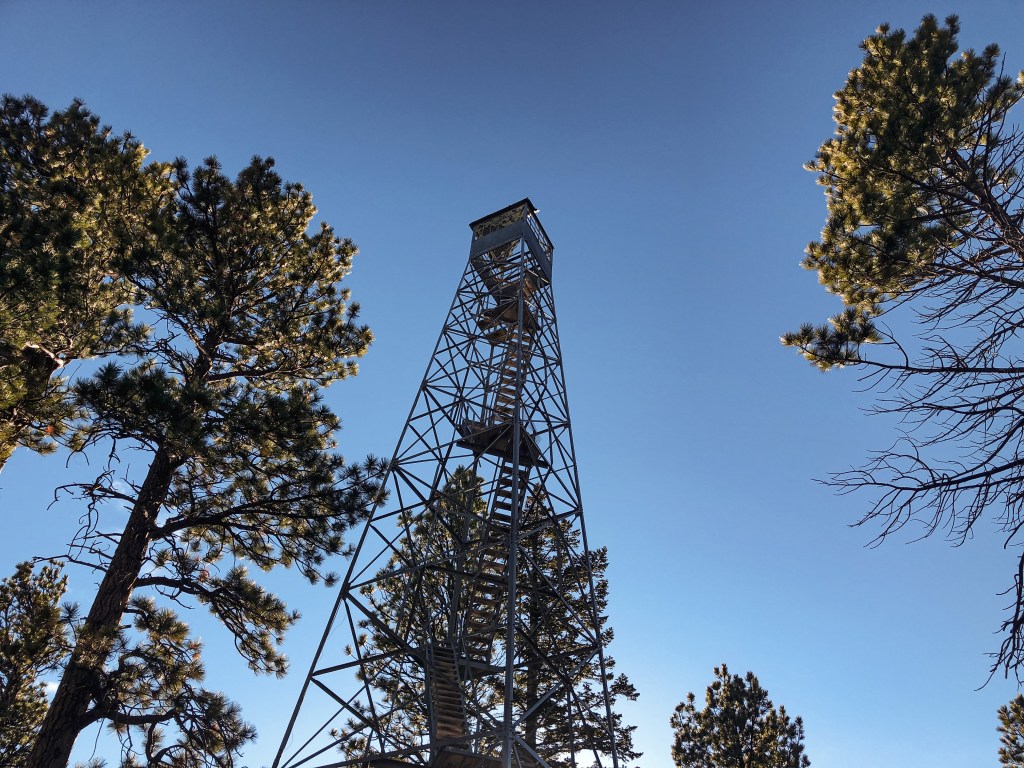
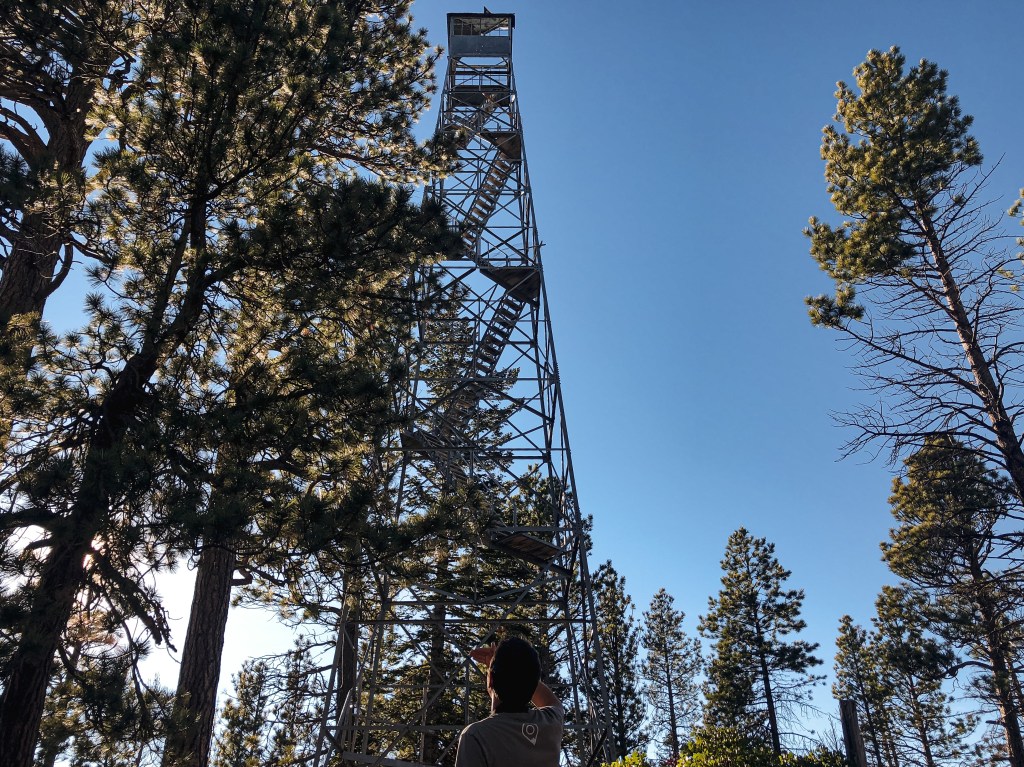
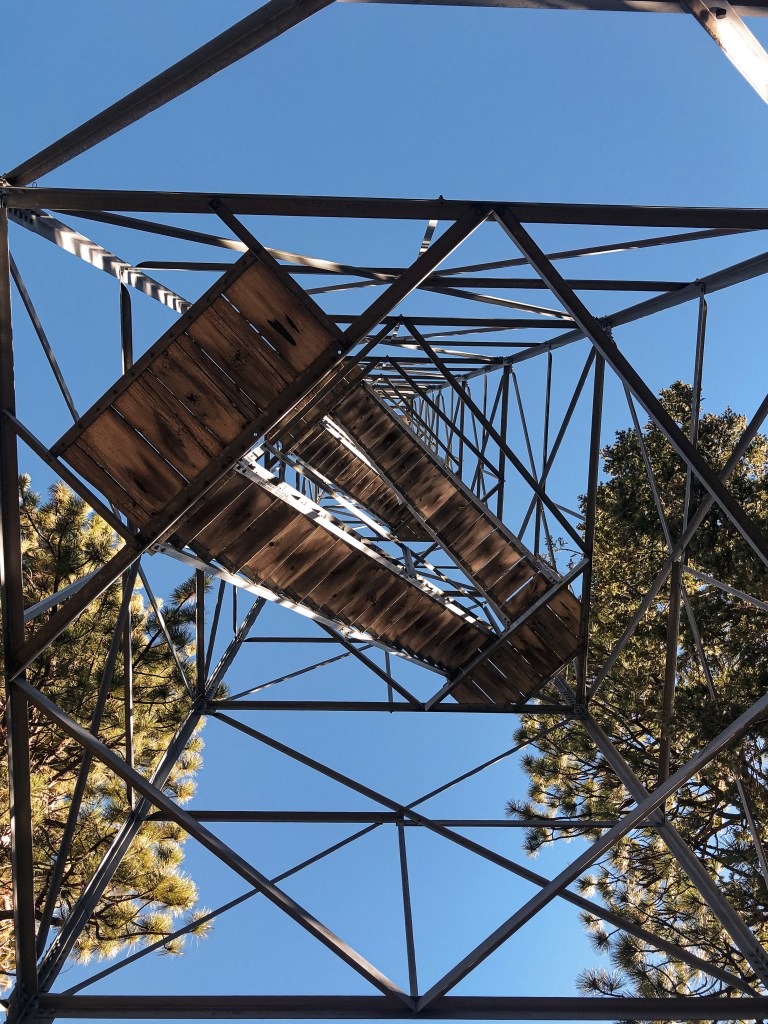
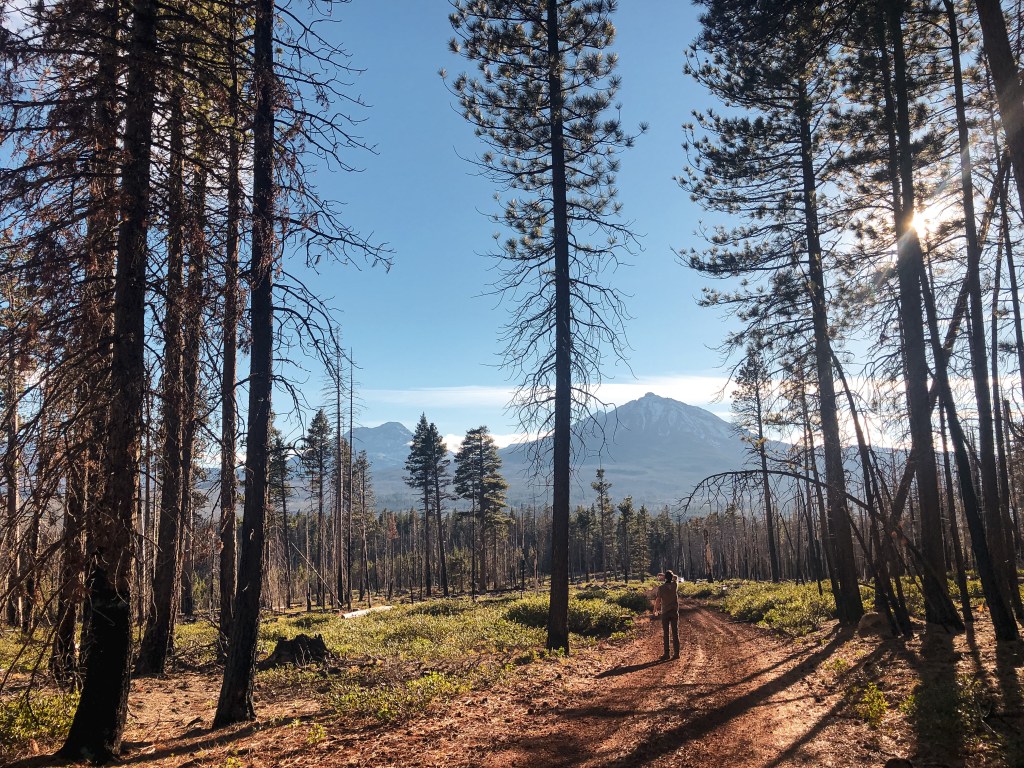
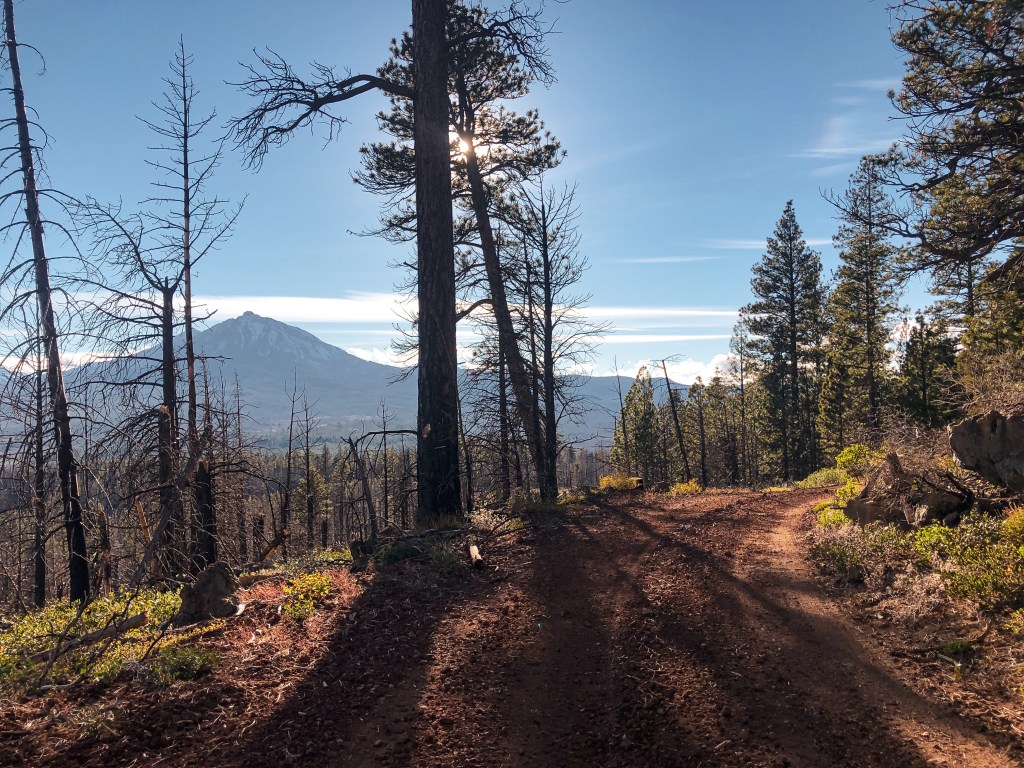
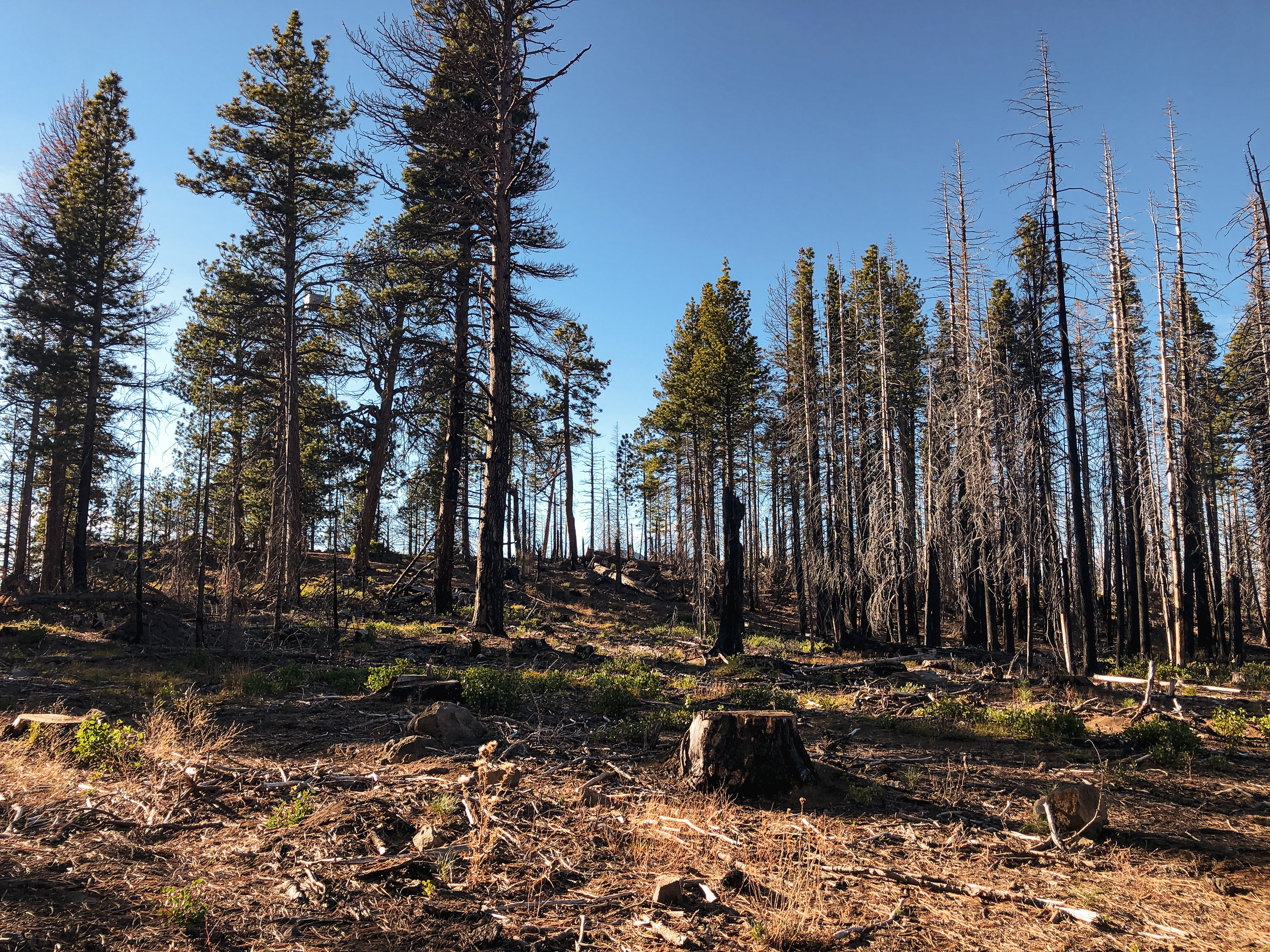
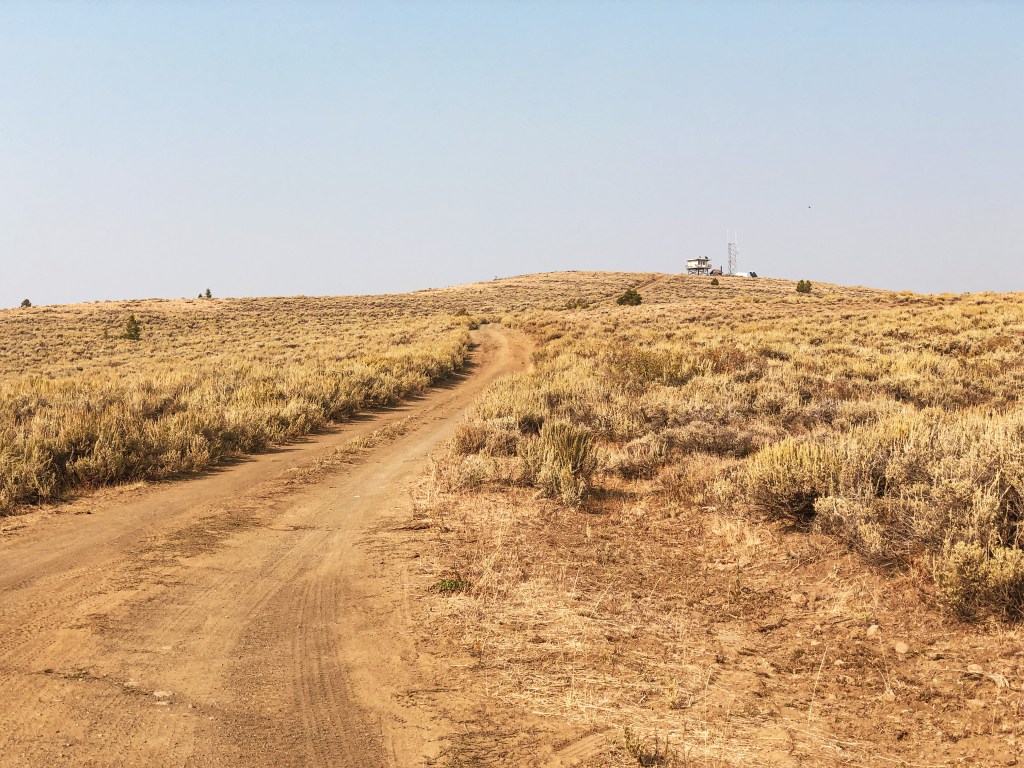
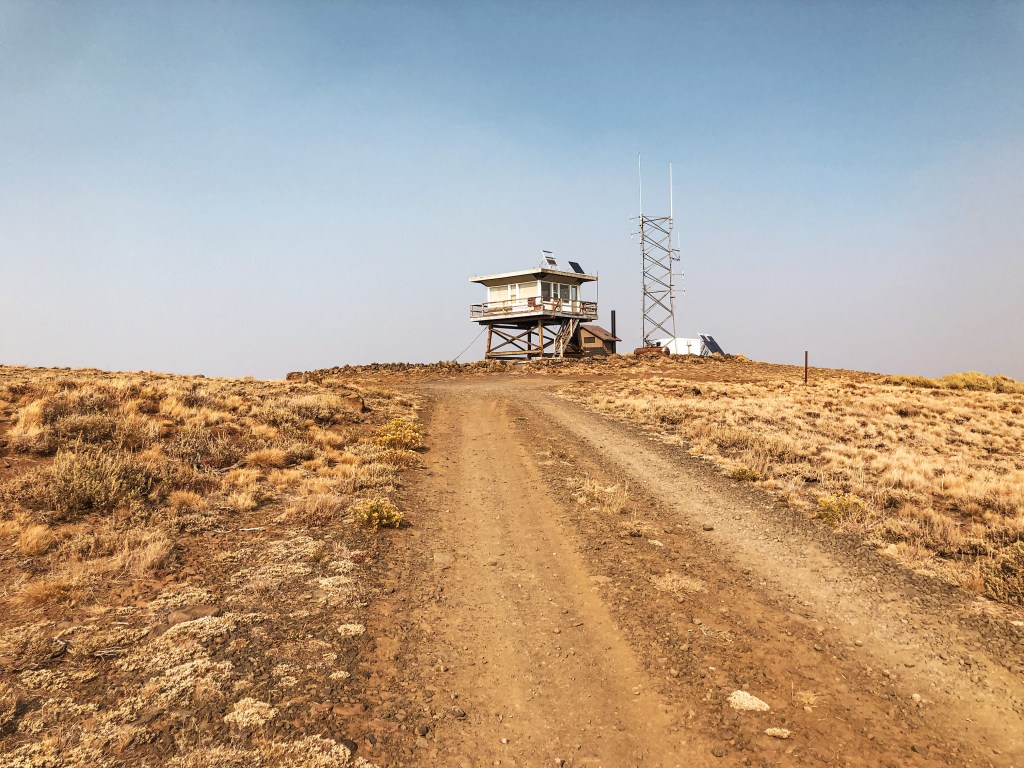
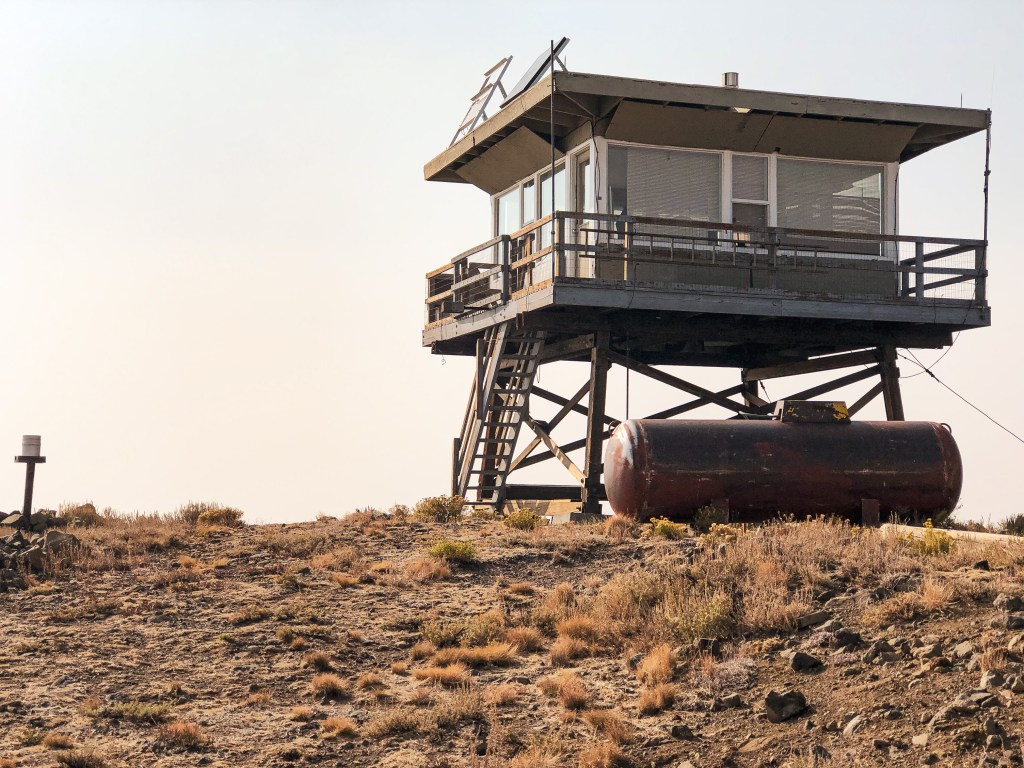
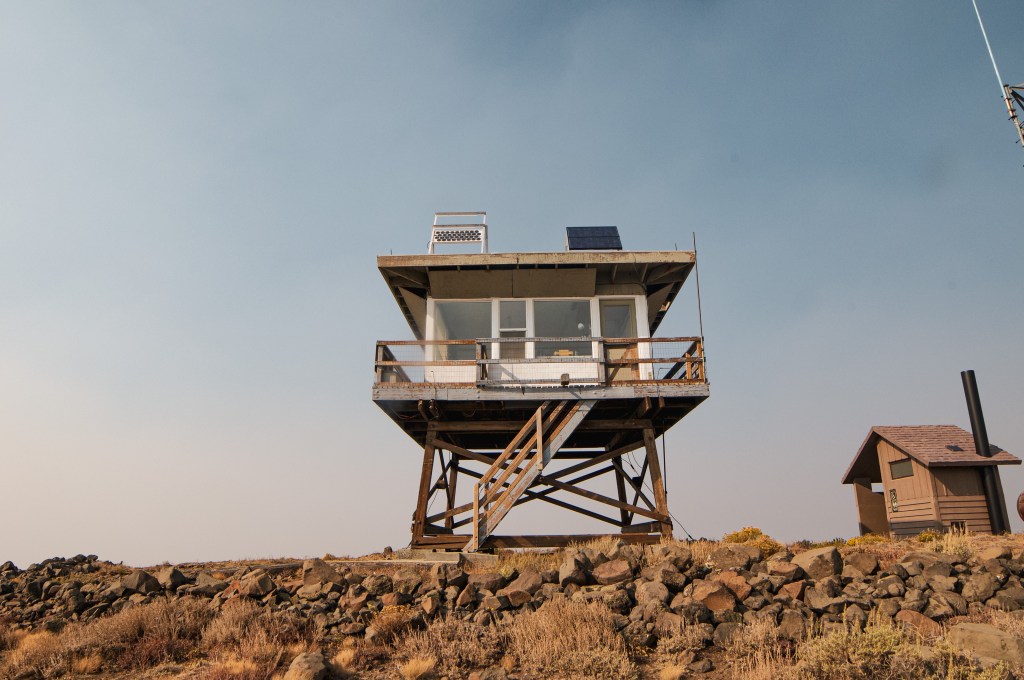
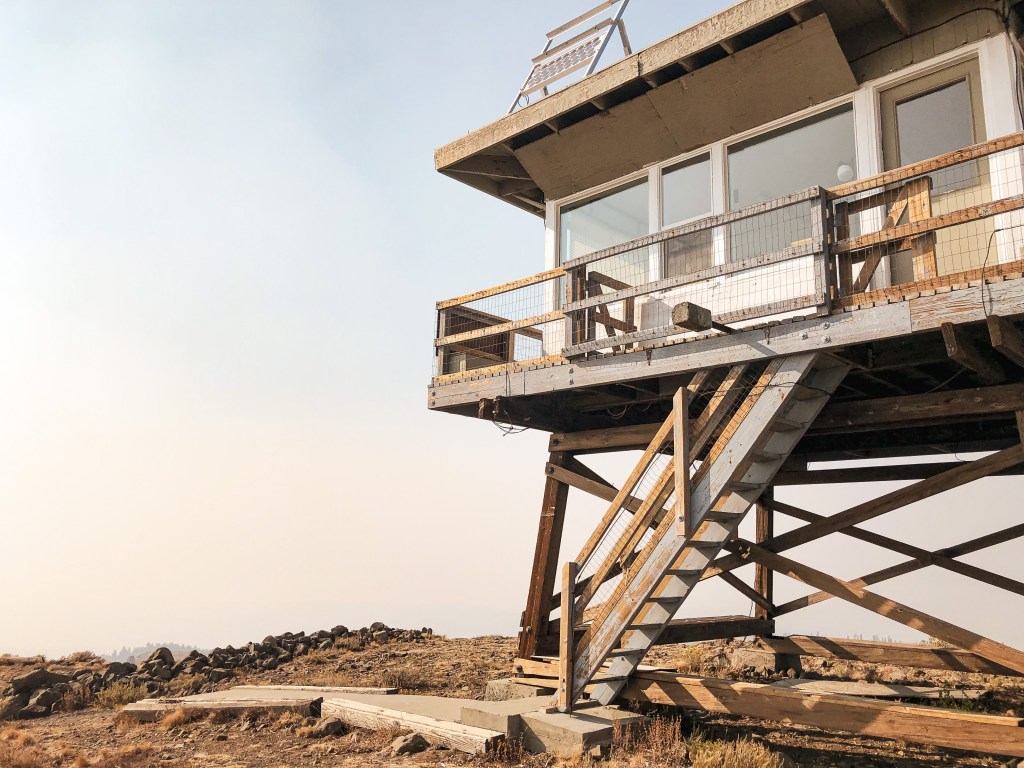
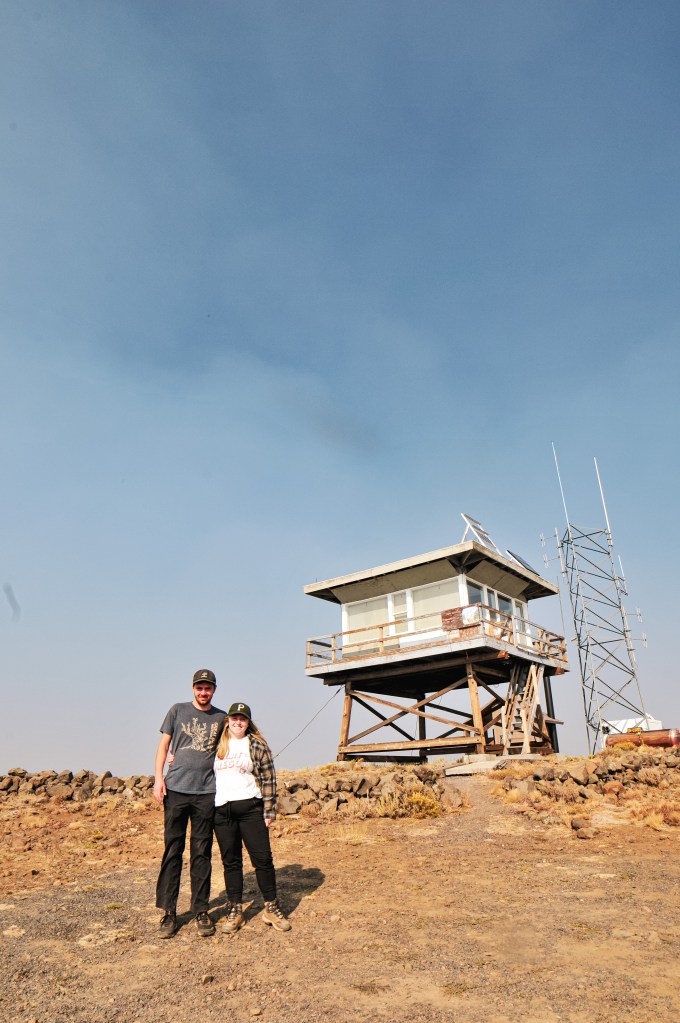
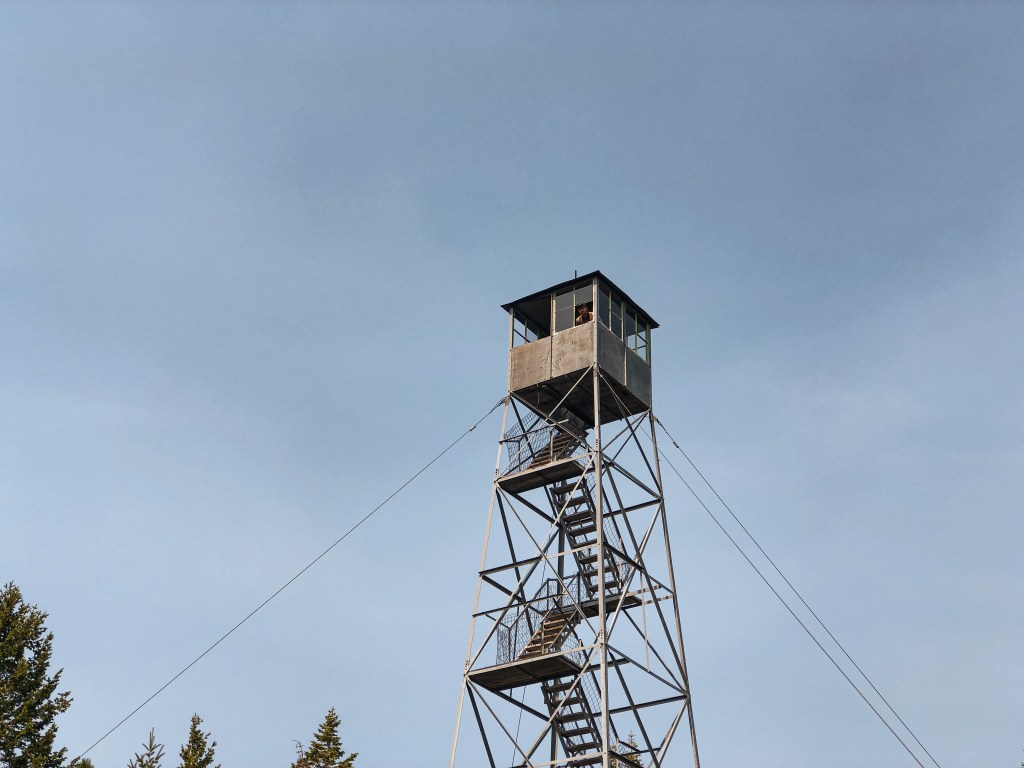
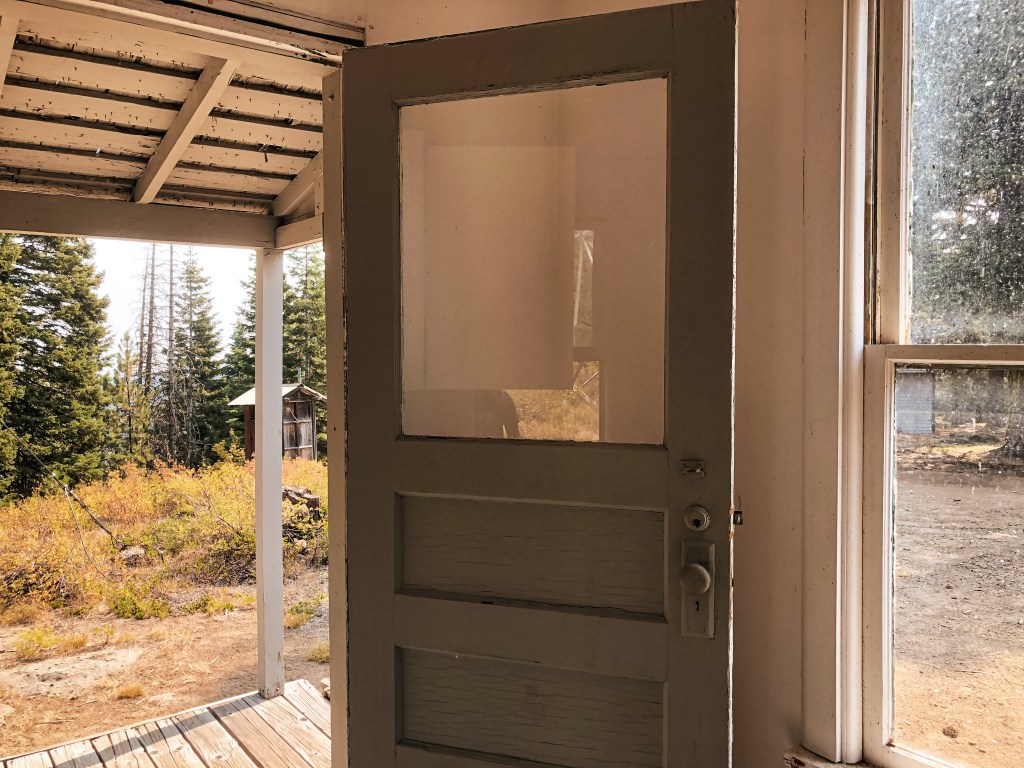
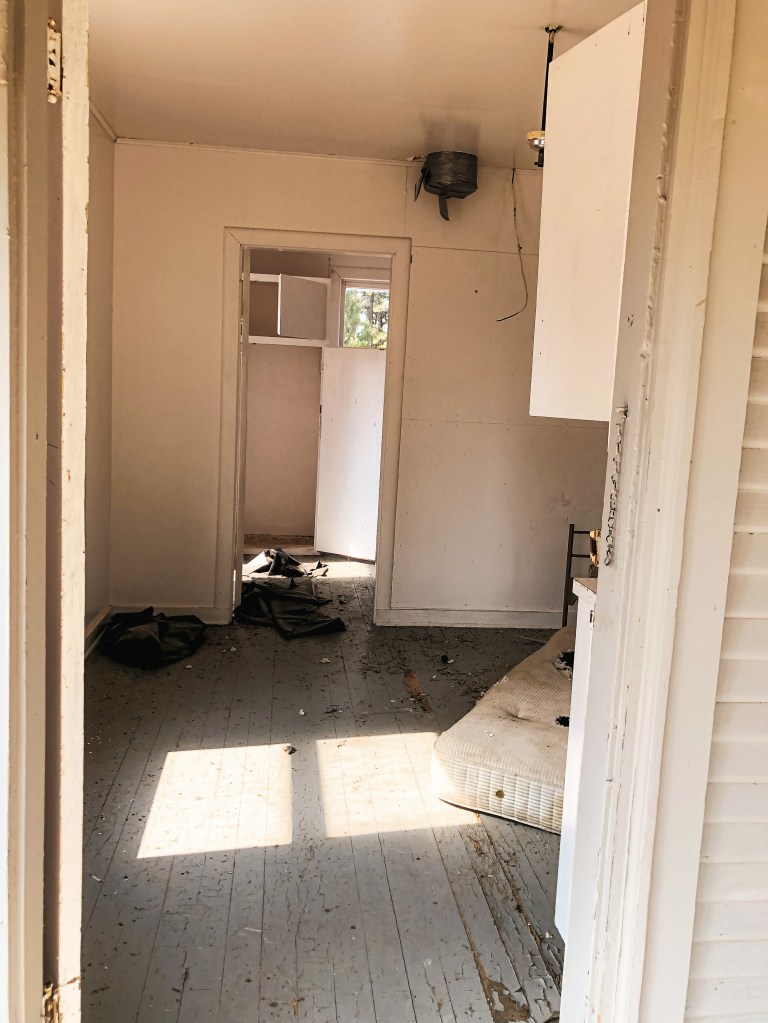
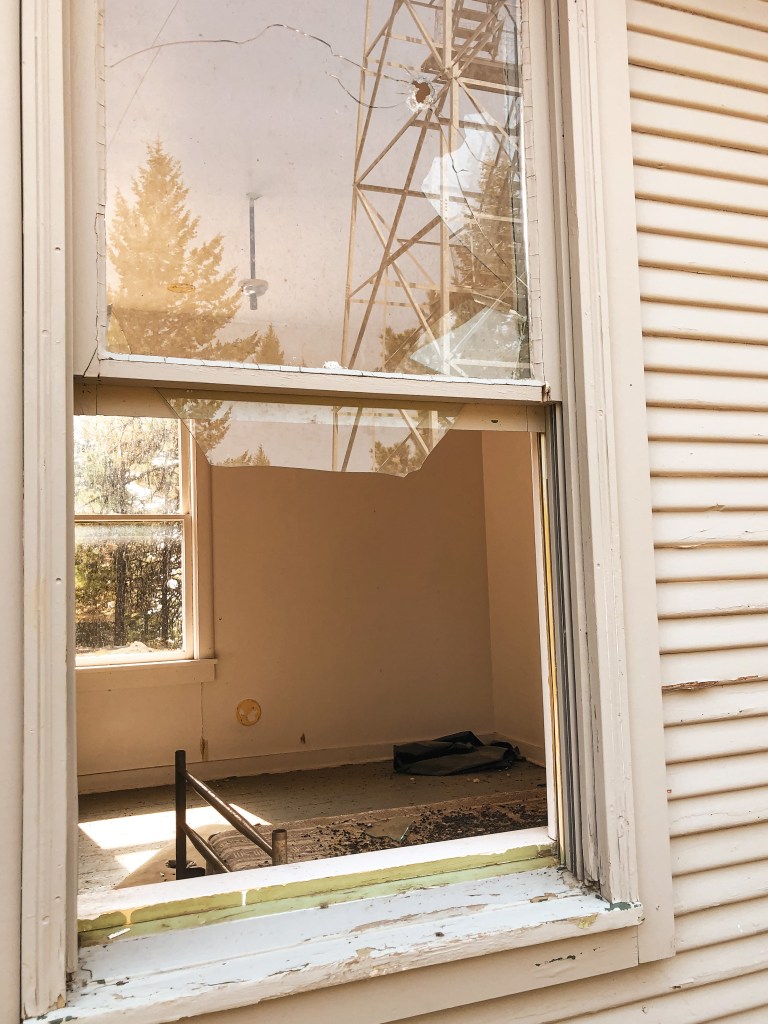
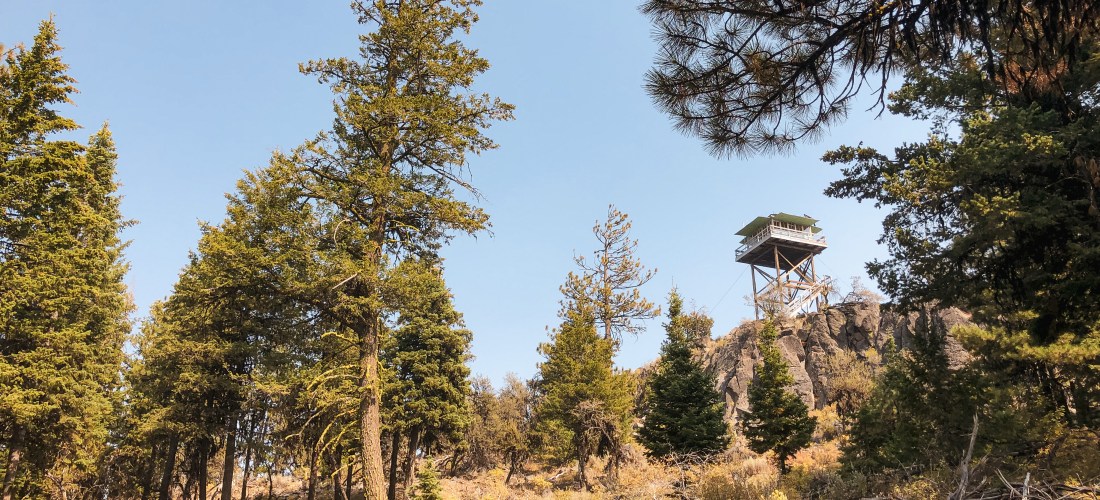
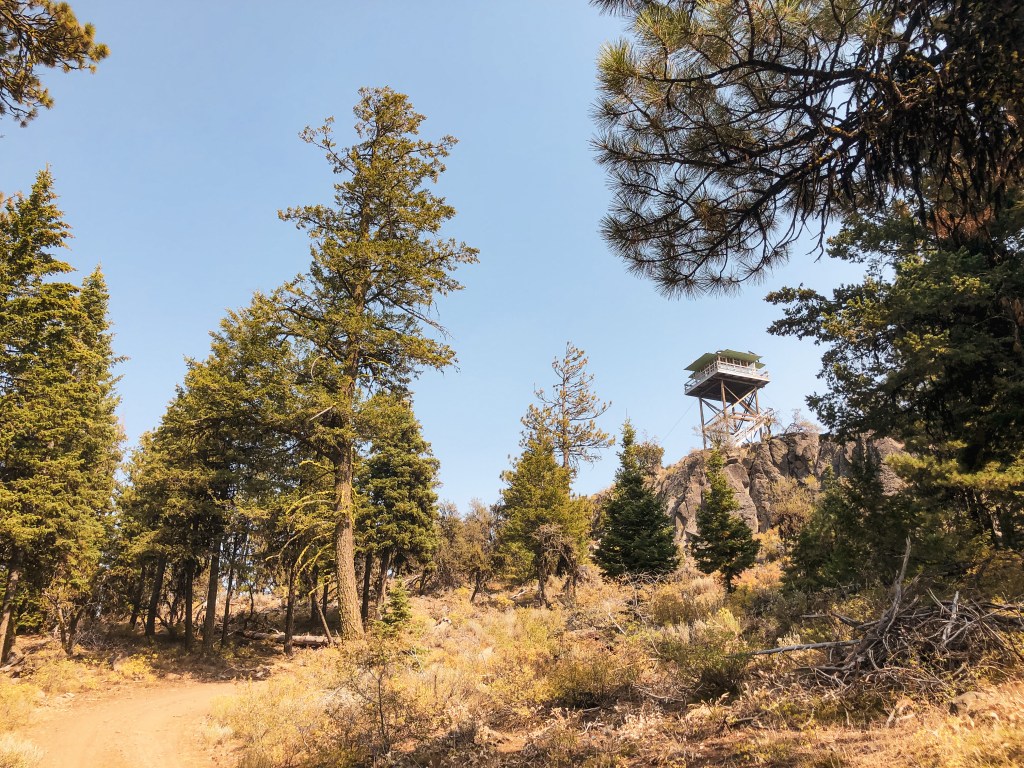
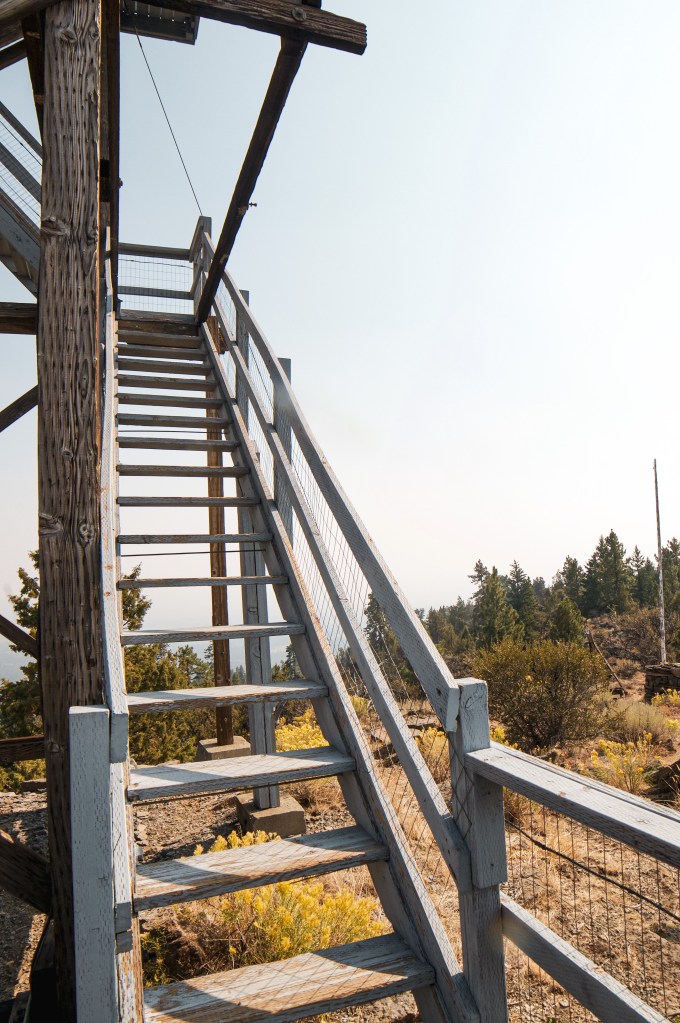
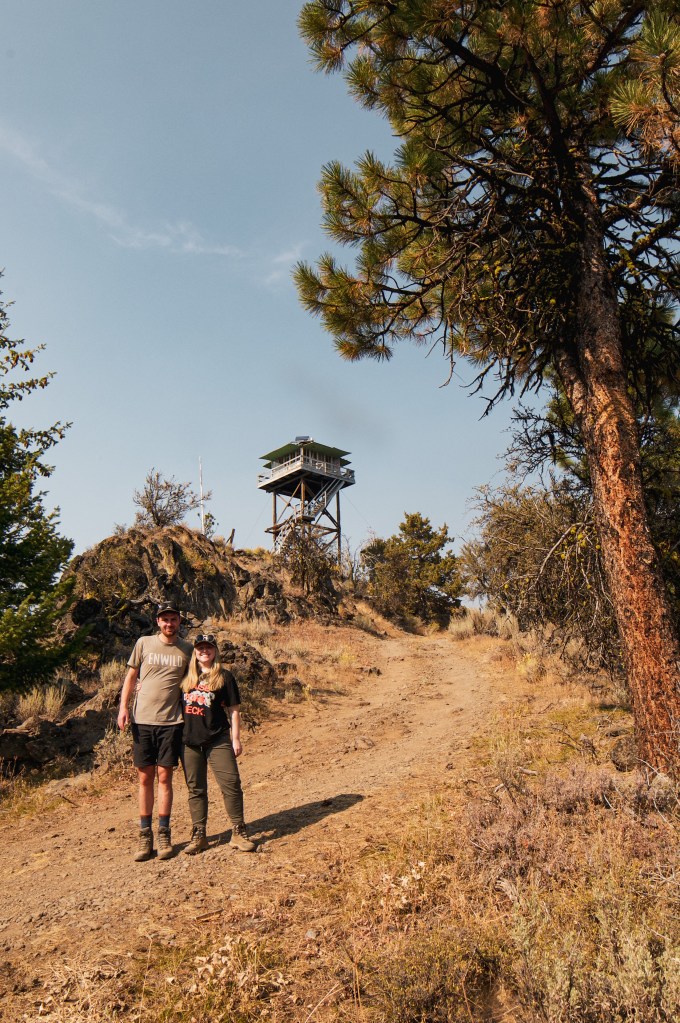
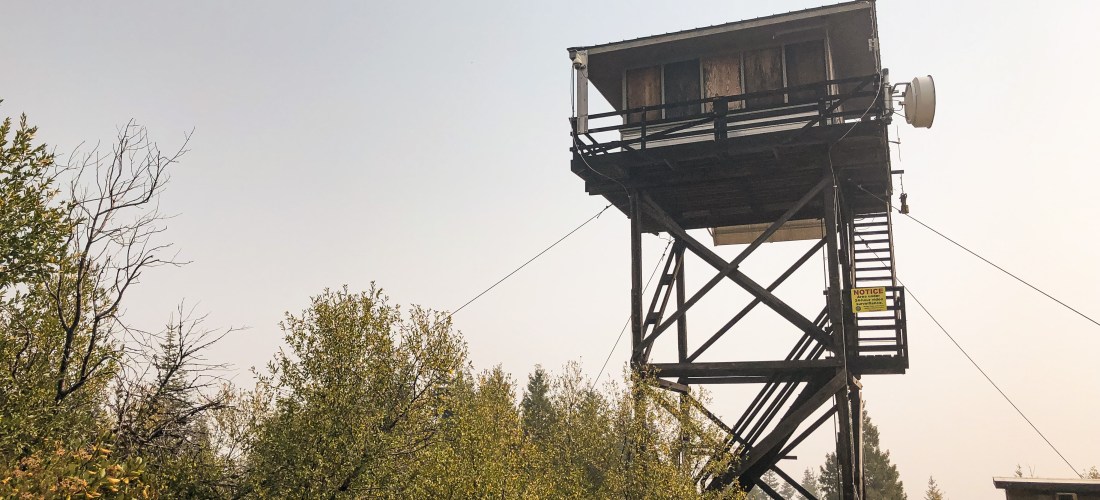
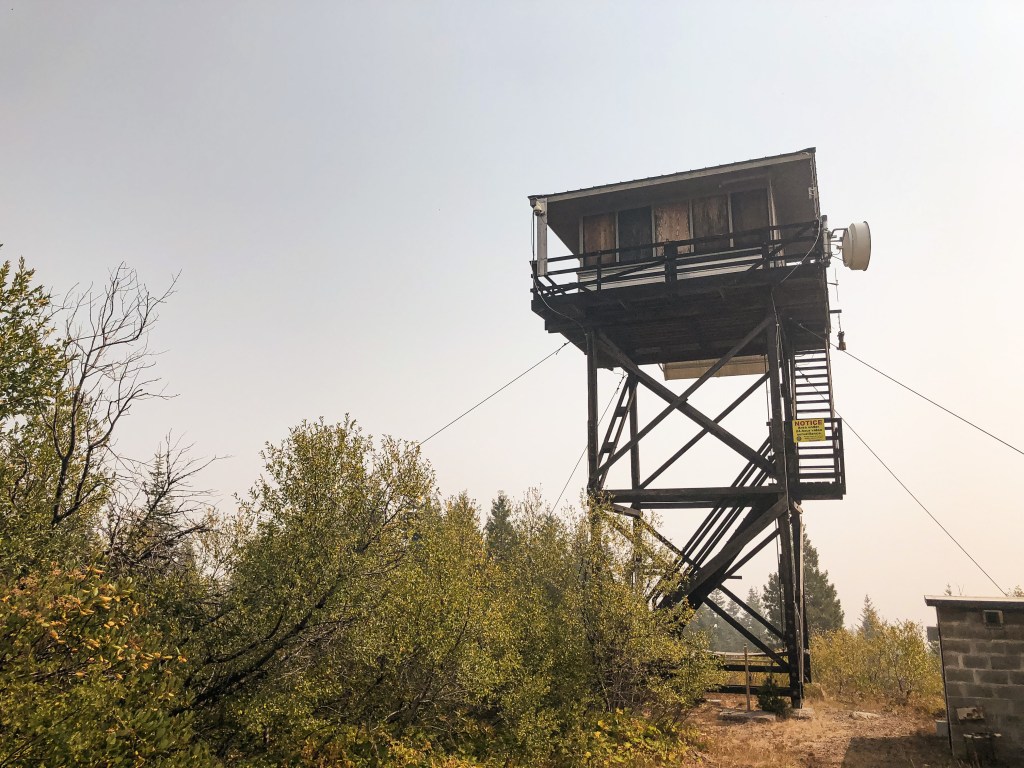
My partner and I decided to make a quick one-night trip down to the Deschutes National Forest area for the weekend. We wanted to try and see Henkle Butte (post), Trout Creek Butte, and Lava Butte (post) lookouts. Trout Creek Butte L.O. is an easy drive just outside of Sisters. We took the Mackenzie HWY-242 to signed NF-15 to get there. The NF-15 road starts out paved and eventually turns into well-maintained gravel. After 5 miles it forks to become NF-1524 and NF-1522. We kept right to stay on NF-1524. Eventually it will fork again with NF-1524 continuing to the left and NF-1018 to the right. We stayed right at this junction as well. We continued on NF-1018 until we reached the NF-800 spur on the right. It was a pretty distinct road since it is made up of red rock instead of fresh gravel. NF-800 will take you the remaining way to the summit. All roads were in decent condition and are manageable in a passenger vehicle. There are a few bumps on NF-800 but you’ll make it with caution to at least the gate. We decided not to drive to the summit and parked in a pull out before the old gate. The gate is still there but no longer blocks the road. It’s about a 1/2 mile walk to the summit from this point in the road. As we were walking up the road to the summit, we became worried that the tower might have fallen or already been removed. The area was burned over in the 2017 Milli Fire but there are still a lot of tall trees on the summit obscuring the view. We weren’t able to see the tower until we were almost to the base of it. It was like playing Where’s Waldo? with a lookout. Scroll down if you want to try and spot it in my pictures. The first three levels of stairs are removed due to safety concerns and to help deter vandalism. The tower is in terrible condition. The cab on top is missing its floor, window glass, and part of the roof. Although there is not much of a view from the summit, the views from the road before the summit are worth the stop alone. We drove back down NF-800 to the junction with NF-1018. Instead of heading back out the way we came, we turned to take NF-1018 in the other direction. If you stay on NF-1018, it will eventually take you all the way back to HWY-242. We were running out of day light so we decided to camp at the Whispering Pine C.G. for the night.

History.

This 75′ steel Aermotor tower with 7×7 cab is the original built by the CCC in 1933. Some sources note this as a 86′ tower instead, but I believe this is counting the concrete poured for the tower. The tower was last used for emergencies up until the 1970s. There used to be a T-1E 16×18 garage and 14×16 wood living cabin on the summit as well. Both were built a year after the tower in 1934, but I couldn’t confirm any information on what happened to these structures. The outhouse was relocated to Sand Mountain L.O. as part of a restoration project in 1992. The tower is the only remaining structure on the summit and is slated to be decommissioned by the Deschutes NF.

Can you spot the lookout?

Pull the slider to the left to see where the lookout is located in the below pictures.

Snow Mountain L.O.

Oregon Lookouts

Location.

Ochoco National Forest; Administered by Malheur National Forest

Status.

Active; Currently standing

Estimated drive time from Portland, OR.

6 hours

Date visited.

September 5, 2021

Elevation.

7,163′

National Historic Lookout Register.

US 502; OR 94

Trip Report.

After exploring West Myrtle (post) and Sugarloaf Mountain (post) we decided it made the most sense to move camps the next day. Snow Mountain L.O. was in the area by forest standards but it would’ve been a long day of driving from our current camp. We drove out of the Malheur NF and into the Ochoco NF via NF-37 to NF-47 to NF-43. We drove NF-43 all the way to NF-4380 which lead directly to the lookout. We set up camp in the area and decided we had enough time left in the day to see the lookout. We figured if we were successful in seeing the lookout that afternoon, than we would have time to see Tower Point L.O. the following day. We continued up NF-4380 which was a decent road for my Civic until the last mile where it deteriorated significantly. I was able to drive within a 1/2 mile of the lookout, but it was another bumpy road that was graded over a scab and required caution. We parked in a pull out and walked the remaining distance. There were no trees on this summit and we could see the lookout from where we parked. We were surprised to find no lookout attendant onsite and the catwalk locked up. This is noted as an actively staffed lookout online and from what we could see in the windows there were signs that someone had been there recently. We speculated that the weekend fill-in attendant must have already left for the day and the full-time lookout had not arrived yet. We enjoyed exploring the summit undisturbed and what limited views we had before heading back down to the car. We did attempt to see Tower Point the next day but were unsuccessful. I ended up bottoming out on the ruts in the road and was too distraught afterwards to attempt road walking. Thankfully, my Civic only received minor damage to the heat shield.

There is a beautiful hand carved map in the Idlewild C.G. that we stopped at to fill our water containers. It notes most lookouts in this area except for West Myrtle Butte (post). It is pretty rudimentary when it comes to the actual roads getting to these places but gives a general idea of what is in the area.

History.

Snow Mountain was developed as a fire lookout site in 1915 with a D-5 ground cab. They replaced the ground cab in 1930 with an L-4 cab. And later replaced the L-4 cab in 1961 with the present structure. The current standing lookout is a 10′ treated timber tower with an R-6 flat top cab. The summit also has a current Forest Service style vault toilet and communication towers. We weren’t able to climb the lookout but the views from the base would still be panoramic on a clear day.

West Myrtle Butte L.O.

Oregon Lookouts

Location.

Malheur National Forest

Status.

Abandoned; Currently standing

Estimated drive time from Portland, OR.

6 hours

Date visited.

September 4, 2021

Elevation.

6,384′

National Historic Lookout Register.

US 428; OR 53

Trip Report.

My partner and I decided to switch our Labor Day weekend plans from backpacking to car camping due to the wildfire smoke. Our plan was to head out to the Malheur NF to see West Myrtle Butte, Sugarloaf Mountain (post), and Snow Mountain (post) lookouts. And if we had time we would attempt to go to Tower Point L.O. in the Ochoco NF as well. The Malheur NF looked to be the most promising for visibility and air quality. We knew it would be busy since it was bow hunting season and a holiday weekend but we were still able to find somewhere to disperse camp. We decided to start by checking out West Myrtle Butte since it was the most northern of the three. We took NF-37 to NF-641 to get there. We were able to drive my Civic down NF-641 until there was a fork in the road. NF-641 continues to the left up to the lookout. The road immediately deteriorated after passing this junction. We parked in the shade on a pullout and road walked the remaining 0.7 miles. You are basically already on the ridge at this point so the grade getting to the lookout from here is gradual.

History.

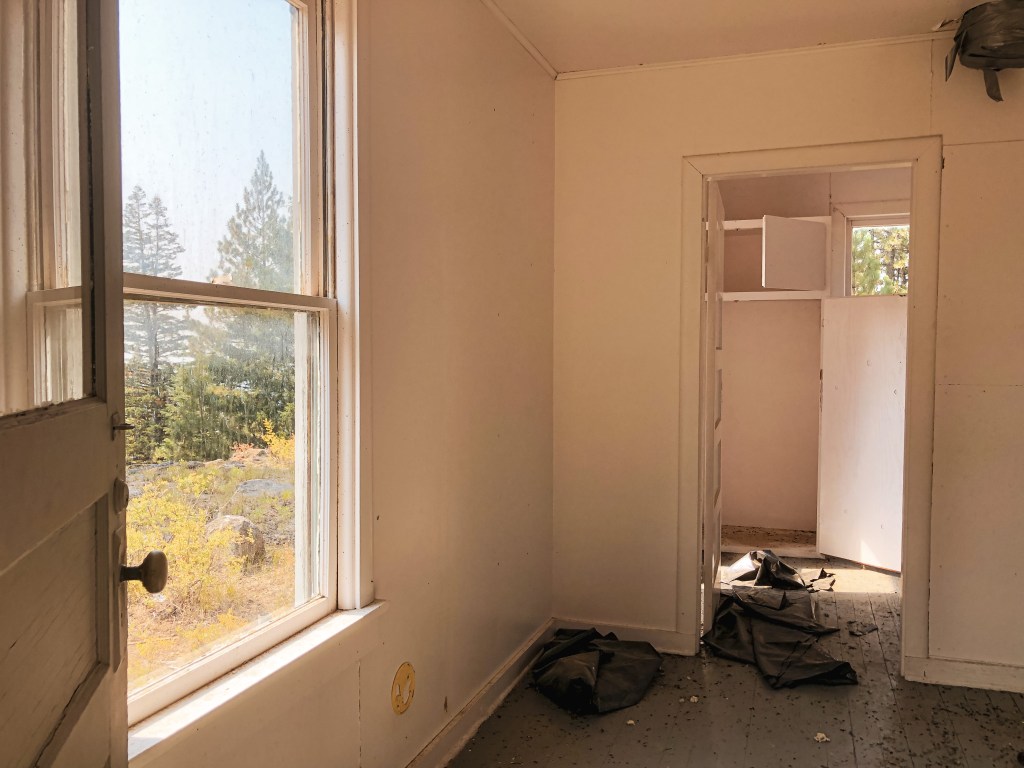
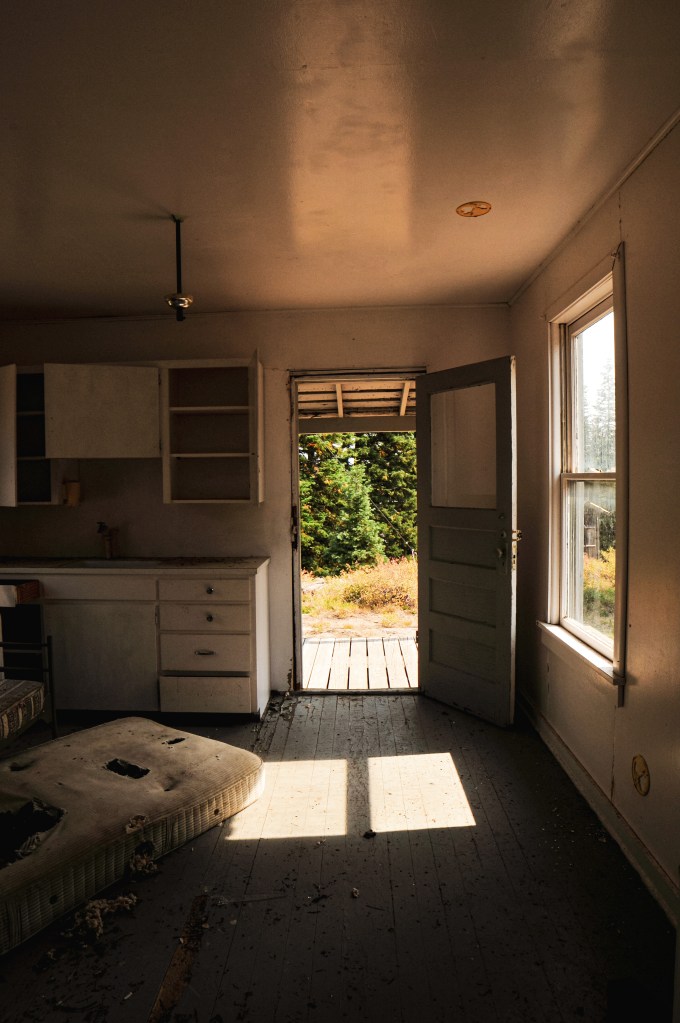
There are two living quarters on the summit along with a pit toilet and Aermotor tower. The Aermotor is an 80′ steel tower with a 7’x7′ cab. The main living quarters were a wood 16×20 foot plan 6-D 61. Both of these structures were built in 1929 and are still standing. A 16×20 wood frame Aladdin style garage was added to the summit in 1934. I don’t recall seeing a garage on the summit when we visited, but it might have been the second structure. It appeared to be more of a storage area or additional living quarters than a garage but I couldn’t find any information on this. It may have also been torn down. The main living area had some vandalism with broken windows but is in otherwise fair condition. The Aermotor tower was open to climb even though the FS had deemed it unfit for use. All structures showed signs of wood rat activity, and there was even a nest in the fire finder platform cupboard. All of these structures are slated for decommission by the Malheur NF.

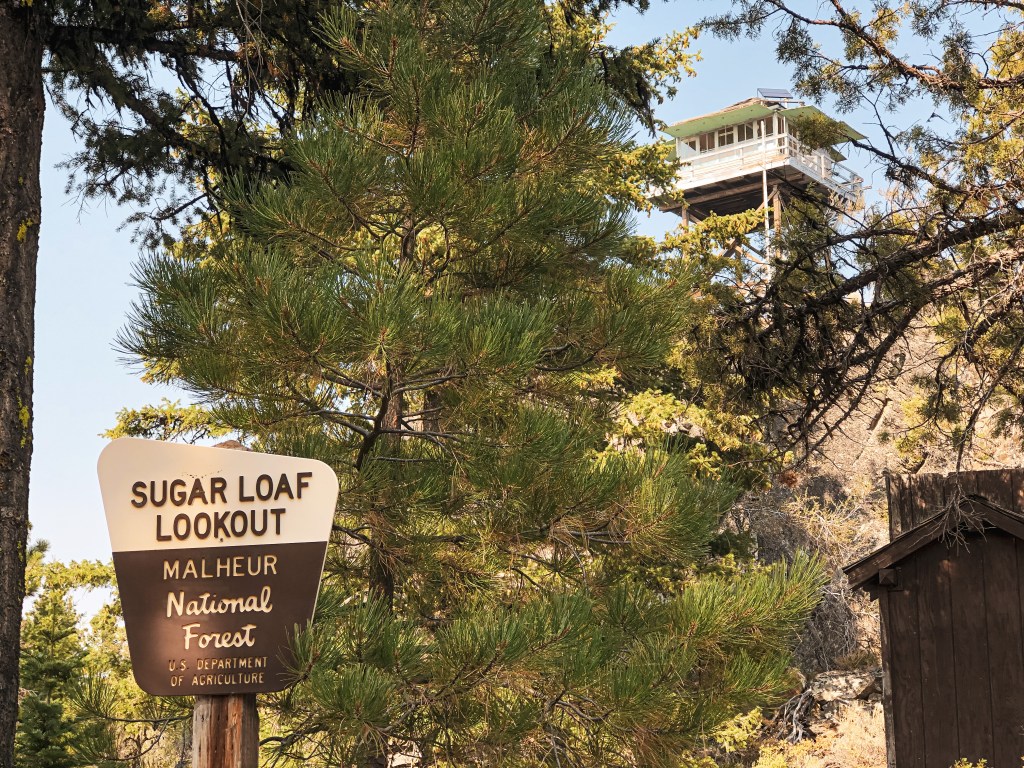
Sugarloaf Mountain L.O.

Oregon Lookouts

Location.

Malheur National Forest

Status.

Active; Currently standing

Estimated drive time from Portland, OR.

6-1/2 hours

Date visited.

September 4, 2021

Elevation.

6,128′

National Historic Lookout Register.

US 427; OR 52

Trip Report.

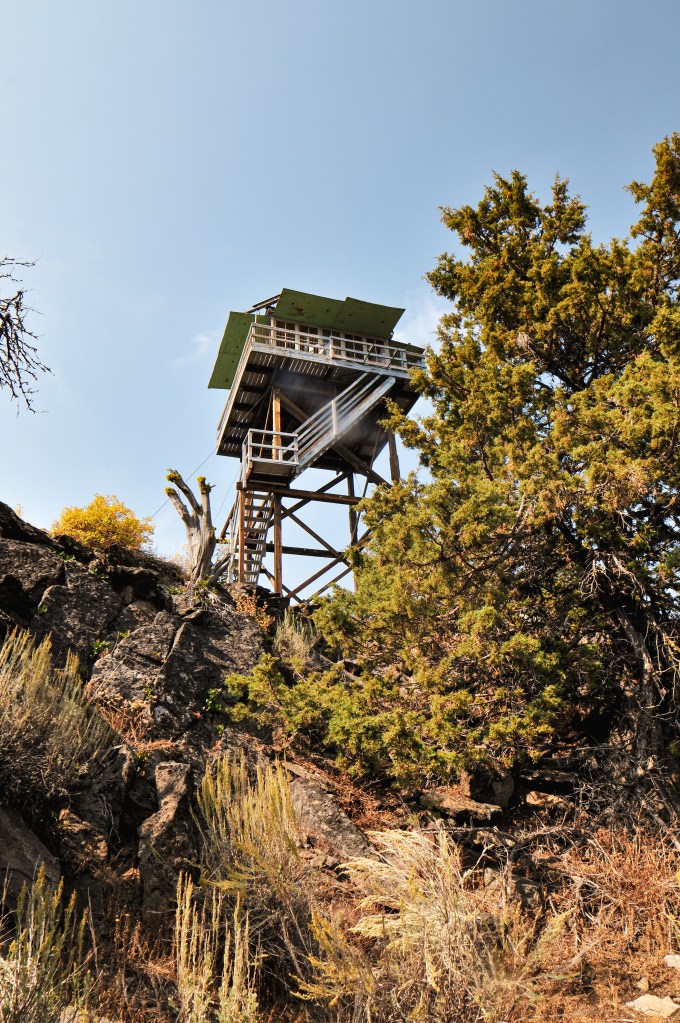
We decided we had enough time left in the day, after an easy visit to West Myrtle (post), to visit Sugarloaf Mountain as well. We drove back down NF-37 until we passed Yellowjacket Reservoir and reached the junction with NF-3740. NF-3740 has a sign that notes Sugarloaf Mountain L.O. as 5 miles away. The road was basically graded over a scab which made it a bumpy 5 miles to the gate of the lookout. It wasn’t a great road to drive on but passable to my Civic with caution. We parked near the gate and hiked the remaining 0.64 miles to the summit. There was a Forest Service vehicle parked at the top and we were greeted by the fill-in lookout attendant a few minutes later. She was very friendly and chatted with us for 30 minutes before returning to work. She said she’d been serving in that role for the past 30 years. She had previously worked at King Mountain (post) and Dry Mountain (post), but Sugarloaf Mountain was her favorite by far. She hoped that once she retired the Forest Service would let her continue to be the fill-in there on the weekends. She was disappointed there wasn’t a clearer view to show off the forest to us. She also mentioned it made her sad that she had to close the gate to the lookout. You could tell she enjoyed interacting with people and sharing her love of the forest with them. Unfortunately, we forgot to catch her name or what kind of work she does for the Forest Service during the week. We didn’t get invited up to check out the cab, but we assumed this was due to COVID-19 precautions given some comments she made during our visit. We enjoyed lunch at the picnic table below the lookout before heading back down the road. As we took a last look from the road, the lookout attendant came out to give us a parting wave and good-bye.

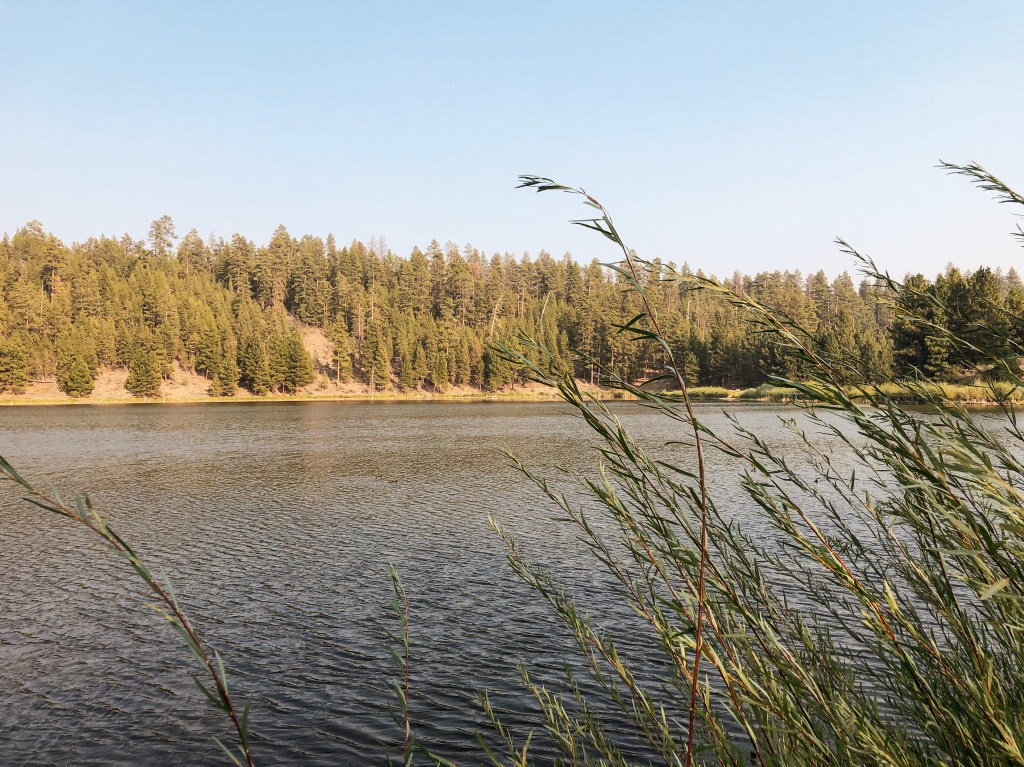
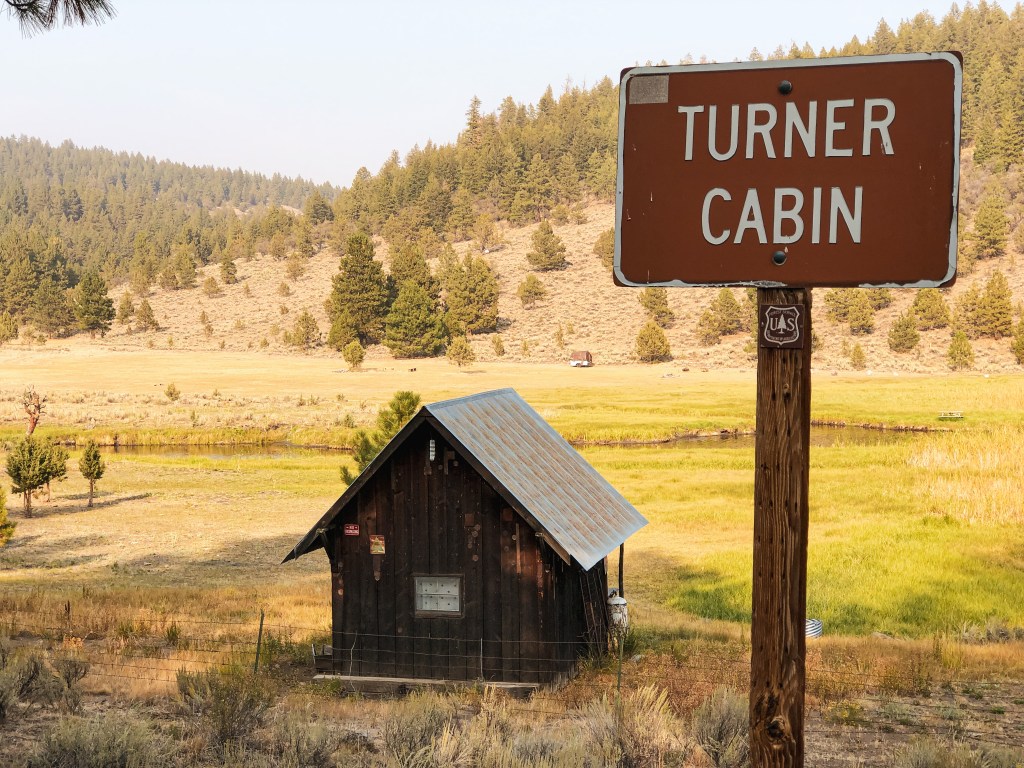
We stopped at Yellowjacket Reservoir on our way back to camp to see if it had water to refill our containers. The campground next to the reservoir was surprisingly empty given the holiday weekend, there were only a few campers and the host. It was a decent sized campground with vault toilets, potable water, and at least 20 spots. The reservoir was larger than I expected too, but still not large enough for motorized boats. It did have a ramp area for non-motorized boats and off-shore fishing though. We also stopped to take a look at the noted Turner Cabin along the road to Yellowjacket Reservoir. It’s technically on private property but it can be seen from the road. It looks to be well maintained by the owners and has even been updated.

History.

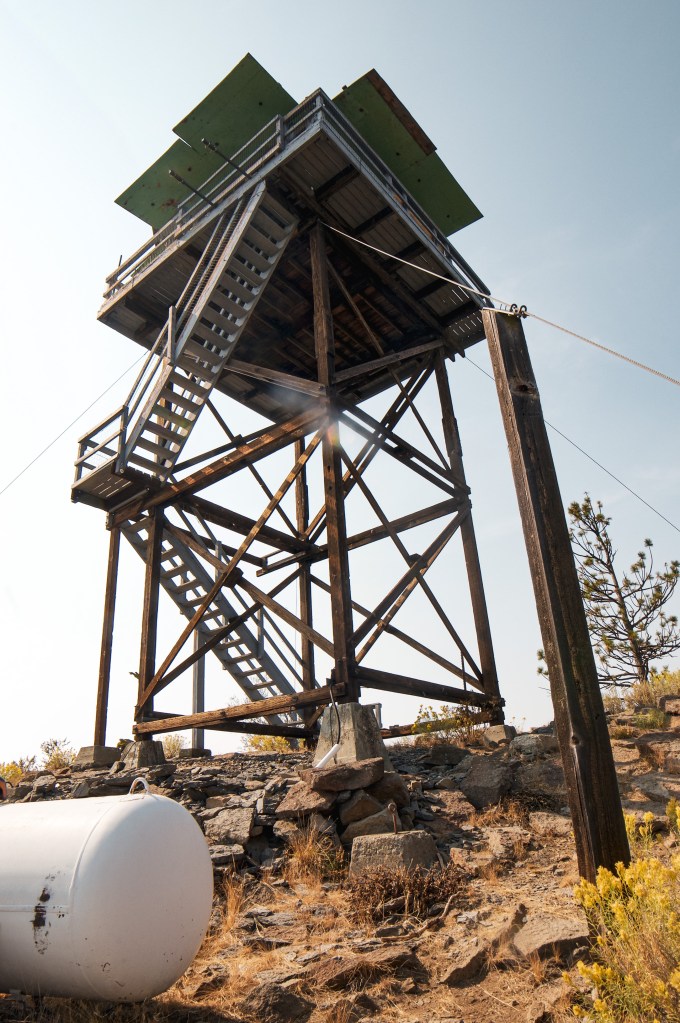
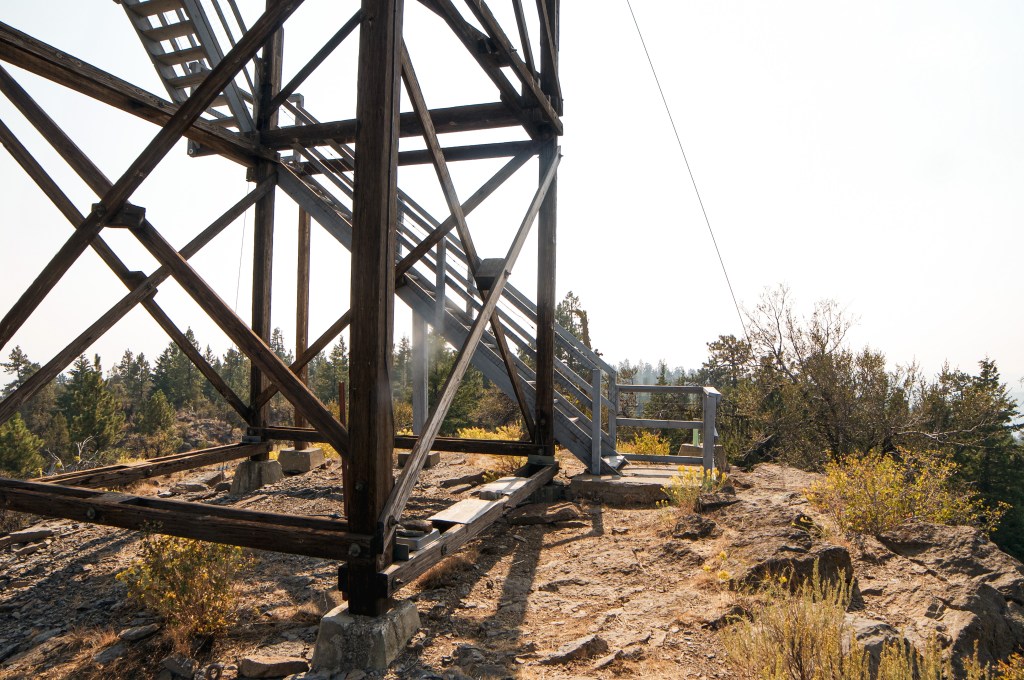
Sugarloaf Mountain has been used for fire detection since 1933 when a 15′ round tower with L-4 cab was built. The 16×18 garage was added in 1934 but has since collapsed. The roof remains can still be found on the summit. The present tower is a 32′ tower of treated timber with L-4 cab. It was built in 1949 to replace the older tower despite it still being in fair condition.

There was a cross made out of horseshoes nailed to a juniper tree on the summit. This was added as a memorial for the previous full-time lookout attendant who passed away due to heart failure last year.

Horny Toad Lizard on the road

White Point L.O.

Oregon Lookouts

Location.

Rogue River-Siskiyou National Forest

Status.

Fire detection camera; Currently standing

Estimated drive time from Portland, OR.

5 hours

Date visited.

August 15, 2021

Elevation.

5,075′

National Historic Lookout Register.

US 507; OR 99

White Point Drive-In Theater Billboard

Trip Report.

My partner and I had visited Halls Point (post) earlier in the day and were now headed to White Point from my parked car. It was only about a mile road walk from the road junction of NF-200 and NF-290. You will stay left on NF-200 until you reach a gate to get to White Point on the left. The gate was closed but not locked. On the final stretch of road to the lookout there is a large green metal billboard sign. I found this very odd and out of place. Apparently it used to say “White Point Drive-In Theater”, but had no signage when we visited which only adds to the mystery. After spending so much time ogling Halls Point (post), this one was disappointing in comparison. I also found it interesting that Halls Point (post) was painted white but White Point had a dark finish. A trip report from 2011 stated that this had been an actively staffed lookout for years but that the current lookout was worried about losing their job to infrared cameras. It looks like they have since been replaced by said cameras which was unfortunate to see. The catwalk was closed off for access and the windows have been boarded up. There was a 24-hour surveillance warning sign along with a camera. It was hard to tell if there would be much of a view on a clear day. The trees and shrubs seemed to be taking over the area. By the time we were at the lookout, we were in the heat of the day and I was tired from constant smoke inhalation. We didn’t spend too much time here before heading back to the car.

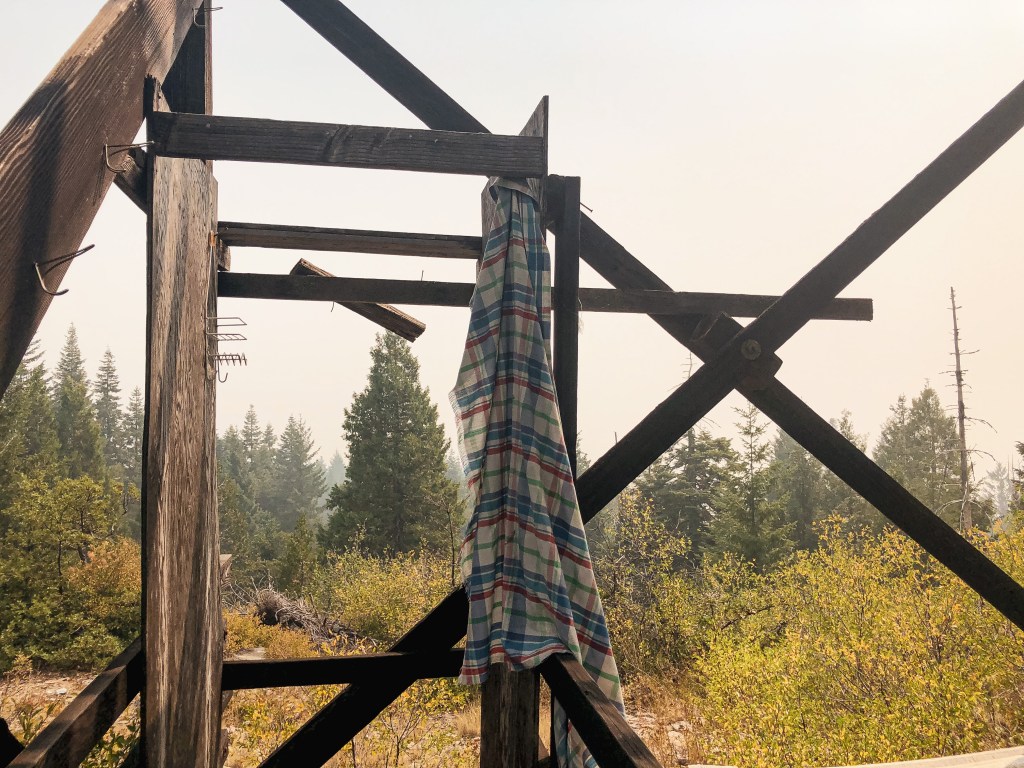
Old shower

History.

White Point L.O. is an Oregon Department of Forestry lookout instead of the typical Forest Service lookout. The first lookout at this site was built in 1951 with a 40′ tower and 14’x14′ live-in cab. It was replaced in 1974 when they dismantled the Burnt Peak L.O. They reused the wooden tower uprights from Burnt Peak L.O. to build a new 30′ tower with ODF cab. On Ron Kemnow’s site it is described as a 28′ tower fitted with a 14×14 Amort flat roof cab.

Too tired to stand up straight

Halls Point L.O.

Oregon Lookouts

Location.

Rogue River-Siskiyou National Forest

Status.

Emergency; Currently standing

Estimated drive time from Portland, OR.

5 hours

Date visited.

August 15, 2021

Elevation.

5,100′

National Historic Lookout Register.

US 491; OR 84

Trip Report.

The day after visiting Rustler Peak (post), we decided to venture out to Halls Point and White Point (post). They are located within two miles of each other on the same ridgeline, so it was easy to see both in the same afternoon. From Prospect, we drove to NF-64 and took this until we reached NF-200, which is on the left. You will take this road all the way up until you meet a junction with NF-290. NF-200 was steep but drivable in my Civic. I really didn’t like driving on the steep grade, so I had my partner drive on the way back down to camp. Once at the junction, you can continue left on NF-200 to White Point (post) or right on NF-290 to Halls Point. The roads seemed to deteriorate after the junction, so we decided to park and road walk the remaining distance. It was about a mile or so to each lookout from where we parked the car. We decided to start with Halls Point and headed down NF-290. It was a hot and dusty road walk, and the amount of smoke in the air didn’t make it any easier. High clearance vehicles can drive farther down NF-290 from the junction until they reach the gated road. From the gate it’s only another 1/4 mile to the lookout. The trip reports we found online noted that Halls Point is actively staffed. We even saw fresh tire tracks on the road past the gate. Given the extreme fire danger on the forest, in conjunction with the nearby Devil’s Knob Complex wildfire, we assumed we’d be met by a lookout attendant when we reached the summit. Halls Point sits low to the ground on a rocky knob and the shades were drawn on the side from which we approached. There weren’t any vehicles on the summit but I still didn’t want to disturb the lookout attendant if there was one. I called out a questioning “hello?”, to see if anyone was there. I didn’t receive a response and we didn’t hear any movement inside the lookout either. I called out again and waited before approaching. Once on the catwalk, we could see that there was no one there. However, it appeared someone had recently been up at the lookout, since there were unopened water and Gatorade bottles on one of the tables. There were also a couple of full water jugs on the floor and a mattress was on the bed frame. The door was locked but we were still able to see what was left inside of the lookout. We took our time on this summit with lunch and enjoyed our non-existent view. This is definitely one of my favorite lookouts that I’ve been to so far and I would like to come back on a clearer day to catch the view. On our way back down to the junction we saw a skunk walking up the road. My partner noted that skunks are typically nocturnal creatures and that there might be something wrong with it if it’s out during the day. We waited for it to leave the road before cautiously walking around it. Back at the junction, we walked past my parked car to NF-200 and on towards White Point (post).

History.

Halls Point has been an active lookout site since 1912, when a crow’s nest platform used to occupy the summit. In the 1930’s, an L-4 tower was built to house the lookout attendant. In 1956, the L-4 tower was replaced by the current R-6 flat cab. It appears to be well maintained by the Forest Service even though it is no longer staffed full-time. There was also a beautiful bench on the summit in memory of Verna Hegler. She staffed this lookout for 21 years, from 1994 until her death in 2015 at the age of 74. We speculated that it might not be staffed full-time anymore due to her passing.

In 1994 Verna began the career she loved most of all, staffing the historic Hall’s Point fire lookout on the High Cascades Ranger District. The mountain was a part of her, and she a part of the mountain. For more than two decades no smoke escaped her watchful eye. Verna’s calm and quiet voice was one of confidence and the legals she gave for the fires she turned in were always dependable. No one knew the landmarks from that vantage point better than she did. From closing the lookout in fall to opening the next season, how soon she could return to her summer retreat was never far from her mind.

Her spirit will surely visit often in this favorite spot.

Forest Service Bench

Rustler Peak L.O.

Oregon Lookouts

Location.

Rogue River-Siskiyou National Forest

Status.

Active; Currently standing

Estimated drive time from Portland, OR.

5-1/2 hours

Date visited.

August 14, 2021

Elevation.

6,208′

National Historic Lookout Register.

US 217; OR 27

Trip Report.

My partner and I took a long weekend to visit the central area of Oregon. Our plan was to see Rustler Peak, Halls Point (post) and White Point (post) lookouts while camping in the area. There were a few other points of interest that we could check out as well if we had time. We were pretty close to the Devil’s Knob Complex fire and the area was socked in with smoke. I don’t recommend camping that close to an active wildfire. Even though we weren’t close enough to assume any risk, the air quality was at unhealthy levels. We thought about switching up our plans to avoid the smoke but most of Oregon and Washington were smoked out depending on how the wind was blowing that day. We decided to visit Rustler Peak L.O. first. We were driving down NF-37 from the north, and there appeared to be multiple roads leading up to Rustler Peak L.O. We decided to check out the route starting from Parker Meadows Campground since it was before the other road junction and looked to be a shorter route. Parker Meadows is noted as a campground on the map but it looks like it has since been decommissioned. There were no vault toilets or picnic tables. There were camp spots but they looked more like dispersed camp spots with rock fire rings. One of the camp spots had a snow shelter but there were no other notable structures. We started down NF-661 only to quickly realize this was not a drivable road for my Civic. We walked up the road a bit to see if it improved at all and debated whether we should road walk up this way or attempt the other road. After consulting our map I noticed that NF-640 led all the way up to the lookout and was most likely the main route to get there. We exited Parker Meadows C.G. and continued on NF-37 until we met up with NF-640. You could tell this was a well used route and the road looked like it was in great condition. We headed up this road and only encountered a few bumps along the way. It was one of the easiest Forest Service roads I’ve driven in my Civic to get to a lookout. The last mile to the lookout is a gated road. We parked my car in a pullout before the gate and started walking. It’s a relatively easy road walk from the gate to the summit. Because this is an actively staffed fire lookout, we were hopeful we’d get to meet the lookout attendant since they were noted as being friendly on another trip report. Unfortunately, they were either busy working or didn’t feel like socializing that day and we were unable to check out the cab. Always make sure to be respectful of the lookout attendant’s space and only climb the tower if you’ve been invited up. There wouldn’t have been much to look at from the catwalk anyway since the summit was shrouded in smoke. Even on the hike up we had a hard time making out the peaks only a few miles away. We enjoyed lunch on the summit’s picnic table before hiking back down.

History.

Rustler Peak has been noted as an active fire lookout site since 1913. I’m not sure what kind of structure was used for the fire lookout back then. In 1917, they built a cupola cabin on top of a 18′ steel tower. Maintenance on the lookout was performed by the South Fork CCC camp throughout the years. They even helped build the current lookout, which was erected in 1948. It is a 31′ 6″ tower with an L-4 cab. I couldn’t find any information on what happened to the previous lookout but it wasn’t on the summit when we visited. I can only assume it was moved or disassembled. They had contractors add a modern vault toilet to the summit in 2006. This lookout has been staffed every fire season and will continue to be for many more.

Sisi Butte L.O.

Oregon Lookouts

Location.

Mount Hood National Forest

Status.

Active; Currently standing

Estimated drive time from Portland, OR.

2-1/2 hours

Date visited.

July 24, 2021

Elevation.

5,617′

National Historic Lookout Register.

US 368; OR 42

Trip Report.

My partner and I decided to explore somewhere a little closer to home this weekend. We set out seeking dispersed camp spots near Sisi Butte L.O. with the expectation of hiking to it before heading out the next morning. We figured we would have to spend the majority of the day finding a camp spot since Mount Hood NF is a popular area, but we were able to find one fairly early in the day. After finding camp we decided we had enough day light to hike up to Sisi Butte L.O. that evening instead. We found the gated road NF-120 off of NF-4220. Driving here with my Civic posed no issues. We almost drove past it since it wasn’t signed, but after seeing previous trip reports with pictures of the gate we knew we were at the right road. There are no trails up to the summit and they keep the road gated to help deter vandals. The only way to reach the lookout is via road walking. It’s a fairly easy 3 miles one-way with 1,400 feet of elevation gain. Just remember to not block the gate when you park your car. Given the condition of the road, we most likely would’ve had to walk to the summit even if it wasn’t gated. We passed a trailer camped in a pull out on the hike up where the full-time lookout attendant stays during the night instead of in the tower. The trailer didn’t appear to be currently occupied. Sisi Butte L.O. is staffed in high fire danger so we knew there would be an active lookout attendant when we reached the summit. Always make sure to be respectful of the active lookout attendant’s space and only climb the tower if you’ve been invited up. When we reached the summit we were greeted by Brent who was the lookout fill in for the weekend. We assumed the full time lookout that stays here during the week must have gone to town since they weren’t in their trailer. Brent invited us up and offered to let us explore the cab. It was his first official day up there for the season. Wildfire season had already started but we were lucky enough to get some spectacular views that weren’t completely hazy. We chatted with Brent for a while about wildfires and other lookouts in the area. He used to be a wildland fire fighter and was very knowledgeable on the subject. He showed us the active Bruler Fire, that was burning on the Deschutes NF, with the fire finder. He said it was the only one he could currently see. I found it interesting that he didn’t stay in the lookout cab either. He lived close enough to make the drive up and down everyday during the weekends. We didn’t want to pester him too long so we said our good byes, thanked him for the visit, and started our hike back down.

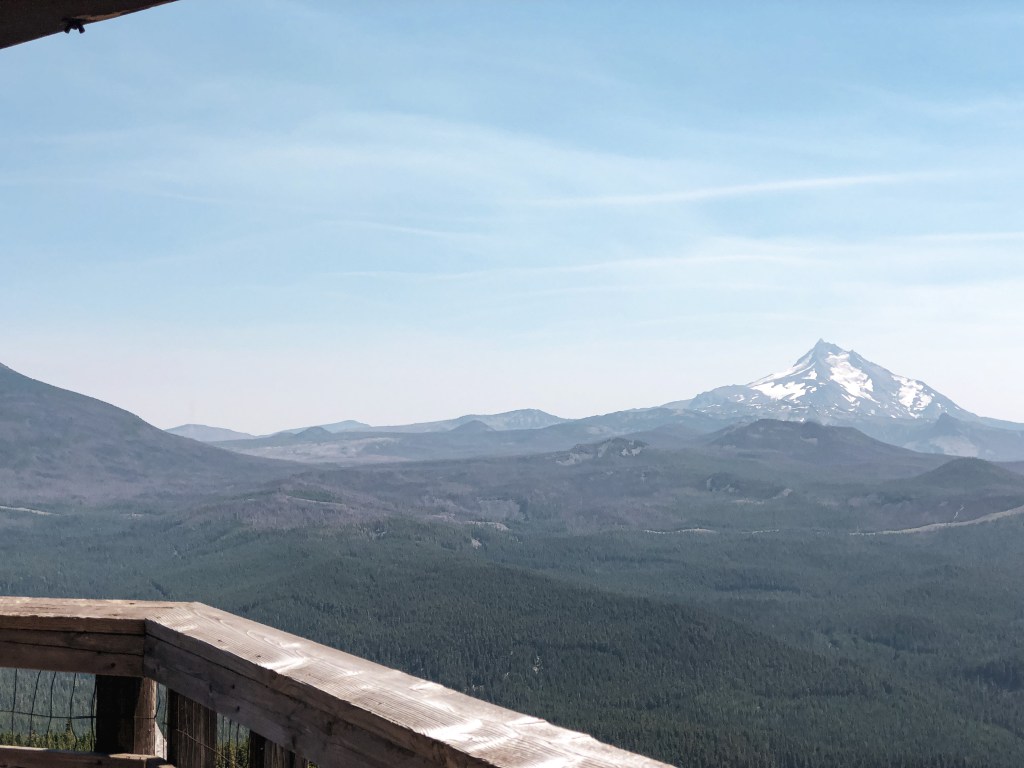
Mt Jefferson
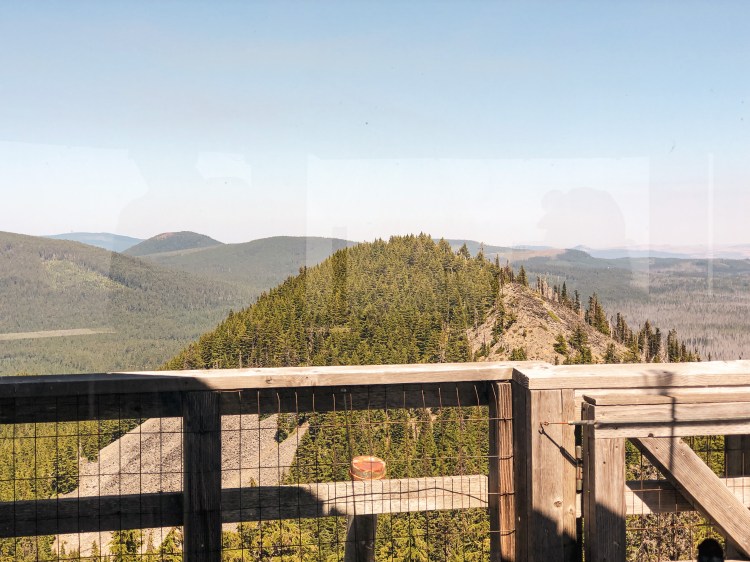
Part of Sisi Butte
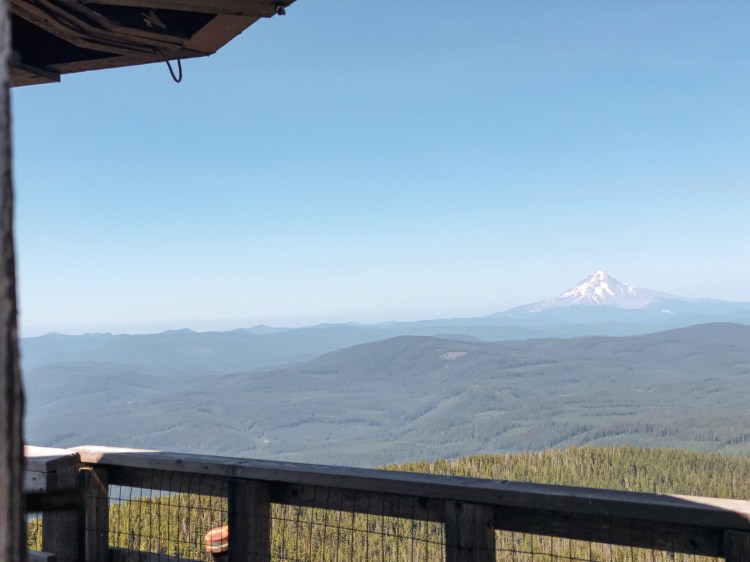
Mt Hood

History.

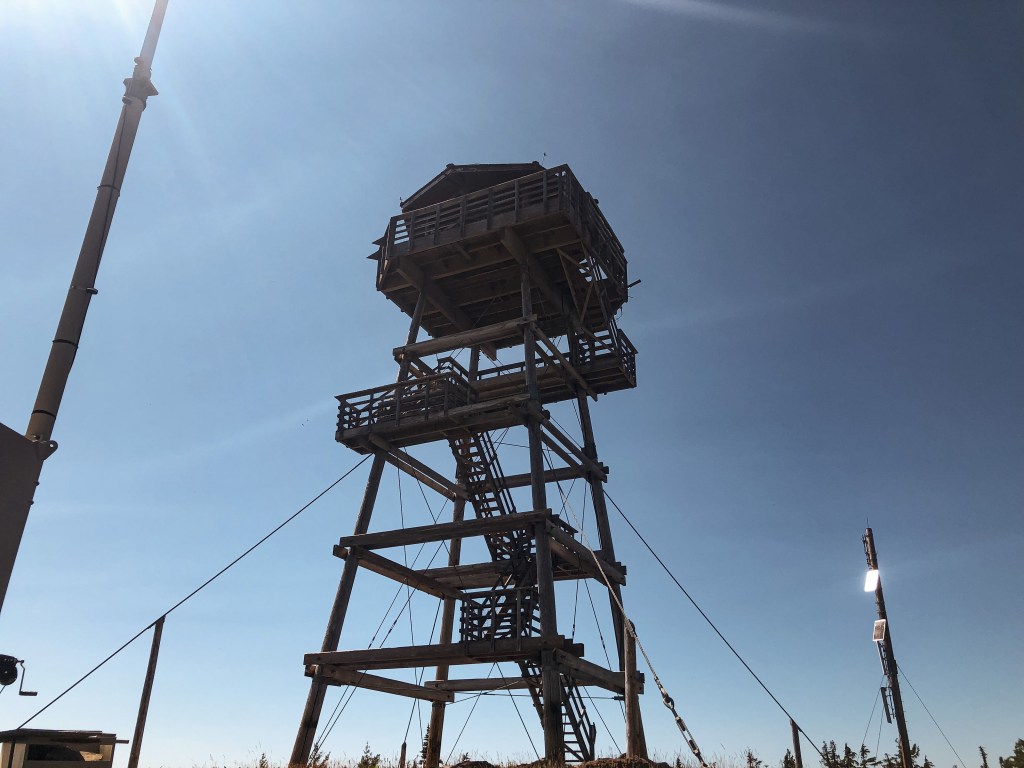
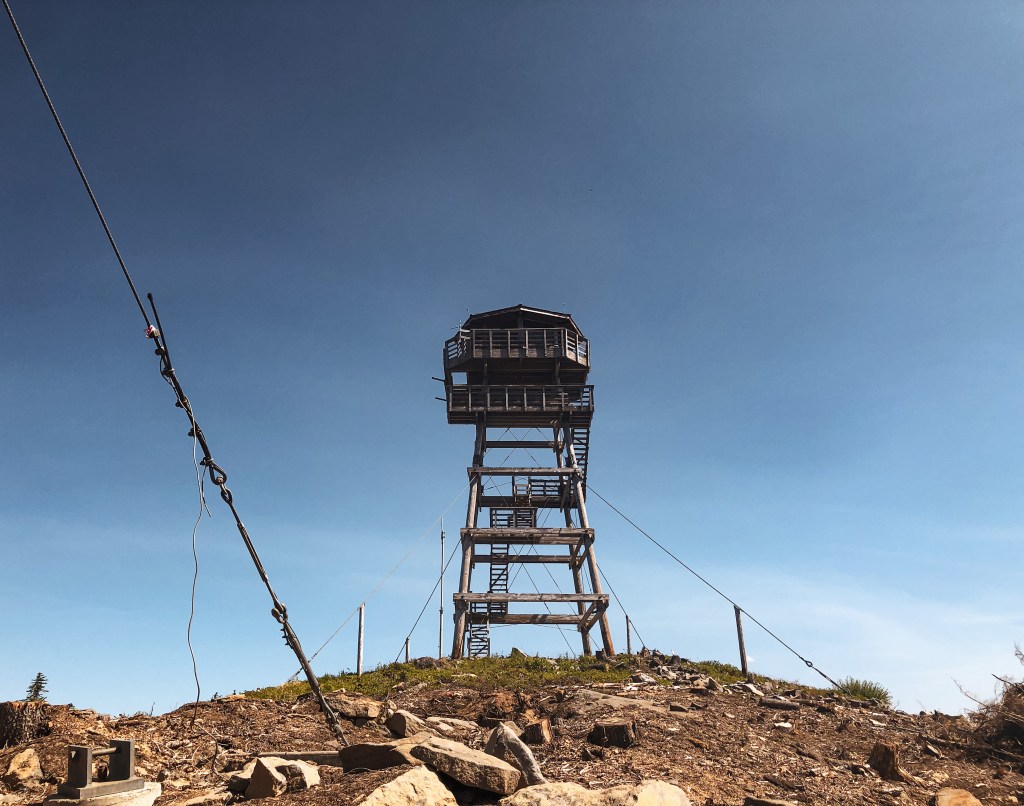
I couldn’t find information on the first lookout that was built on this butte except that it was sometime in the 1940s. It was later replaced with a 40′ tower and standard L-4 cab in 1953. It served as the main lookout until it was dismantled in 1997 to prepare for the current lookout to be built. Similar to Calamity Butte (post), the current lookout is a 50′ tower with an octagonal cab. I’m not sure how many other lookouts where built in this style between 1996 and 2001 but these are the only two I’ve seen so far. The tower was in good condition despite missing its copper wires. Those help to ground it during a lightning storm. Brent said that instead of replacing the wire they are expected to vacate the area whenever a lightning storm passes through. He stated that it was low on their priority list for budget in replacements. They did recently do some maintenance around the base of the lookout though. They cut down all the trees closest to the lookout on the summit when it was threatened by the Riverside/Lionshead Fires. They hoped to create a more defensible space for fire breaks.

More Information.

Oregon Hikers

NW Hiker