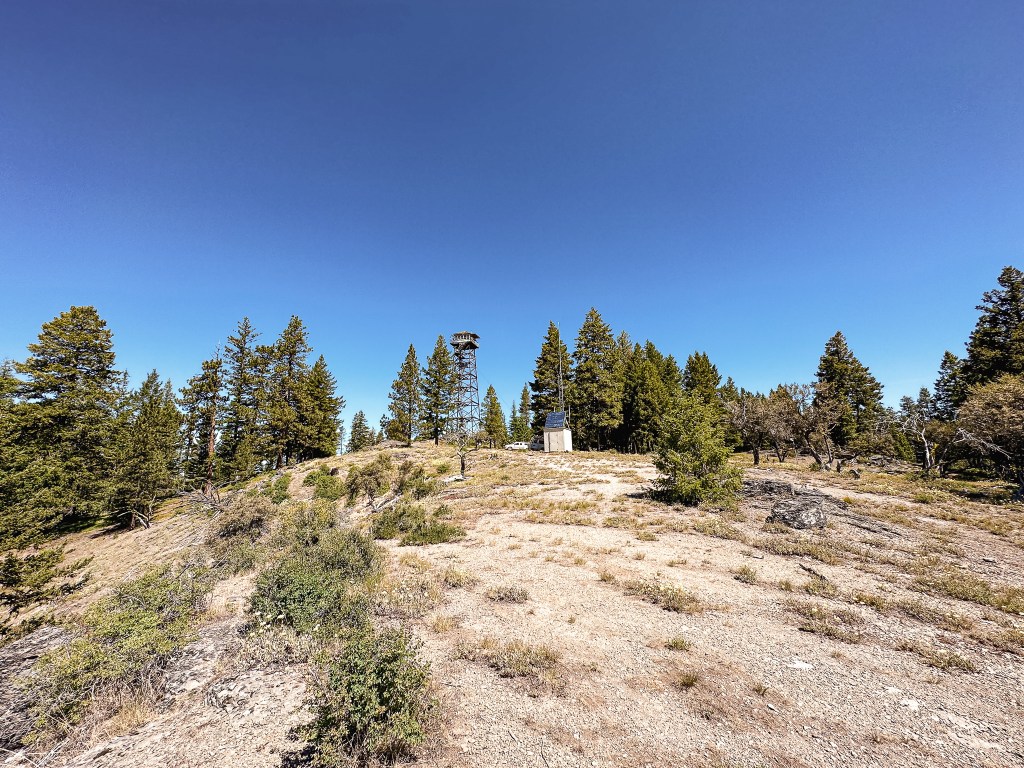
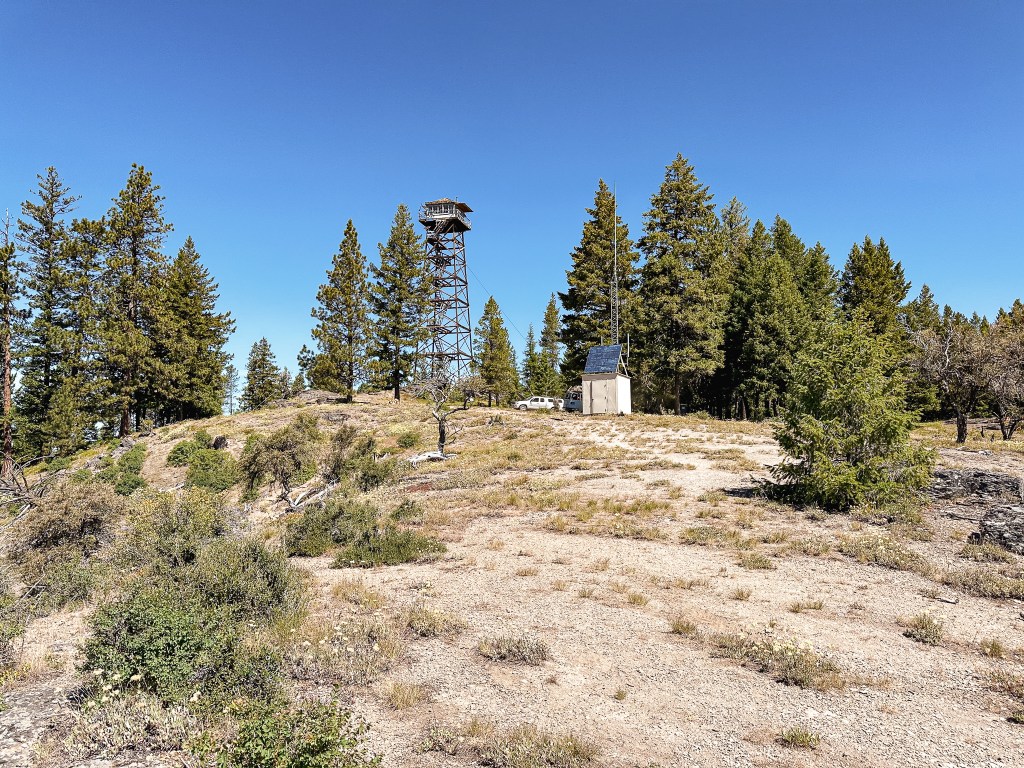
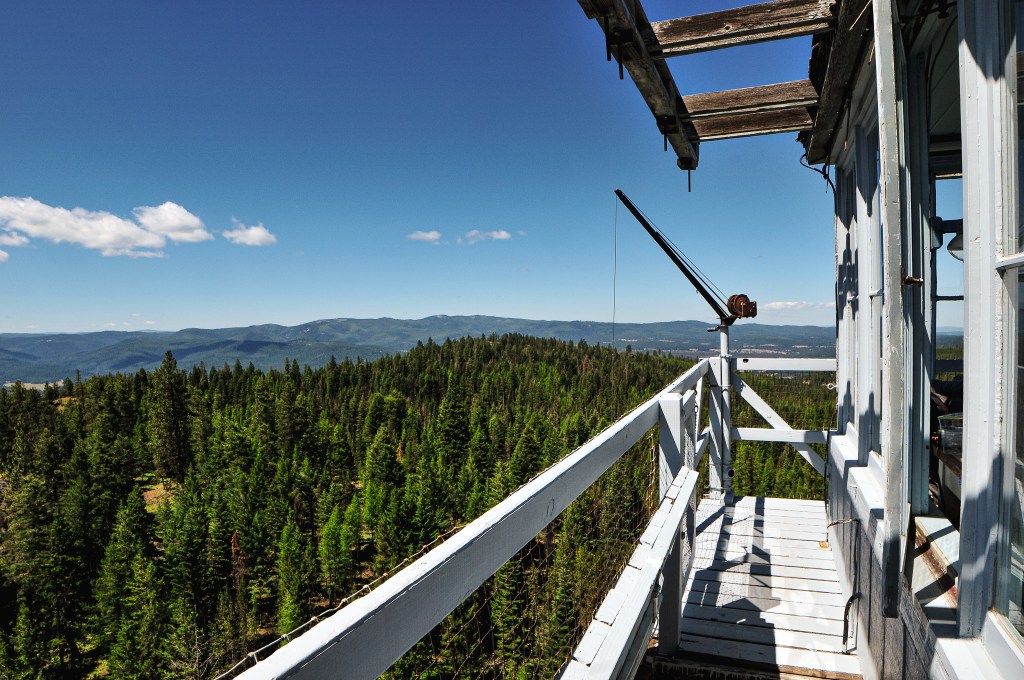
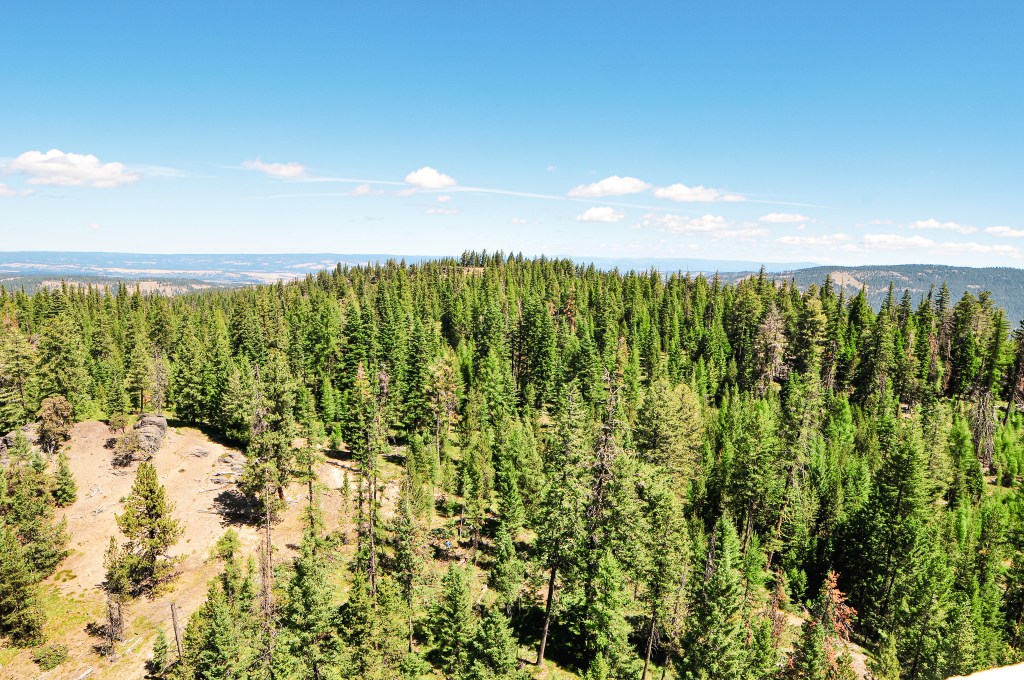
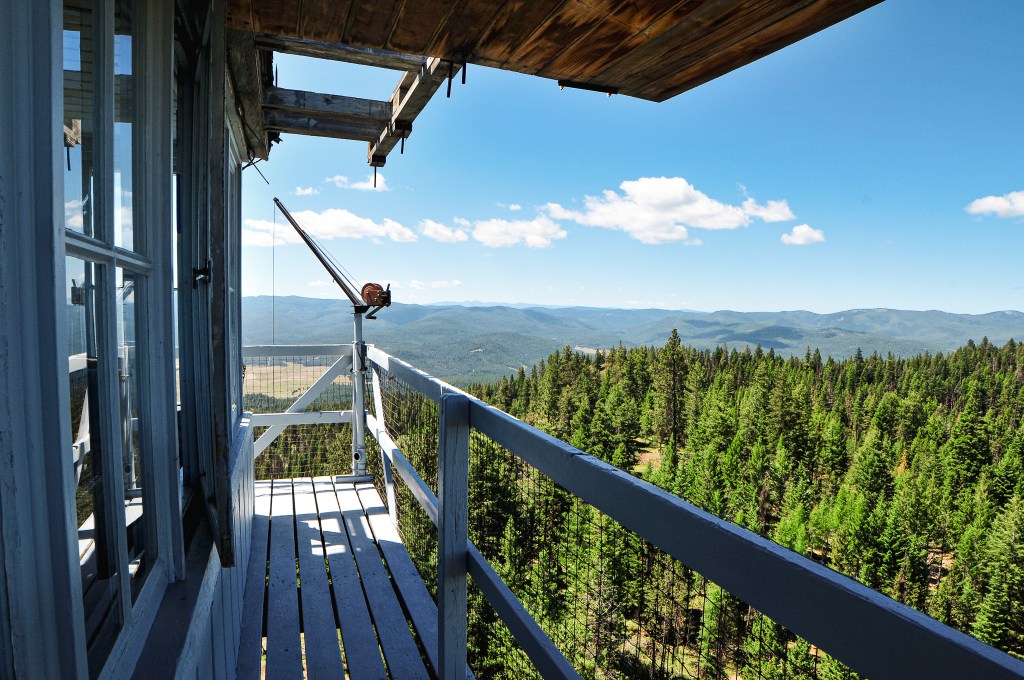
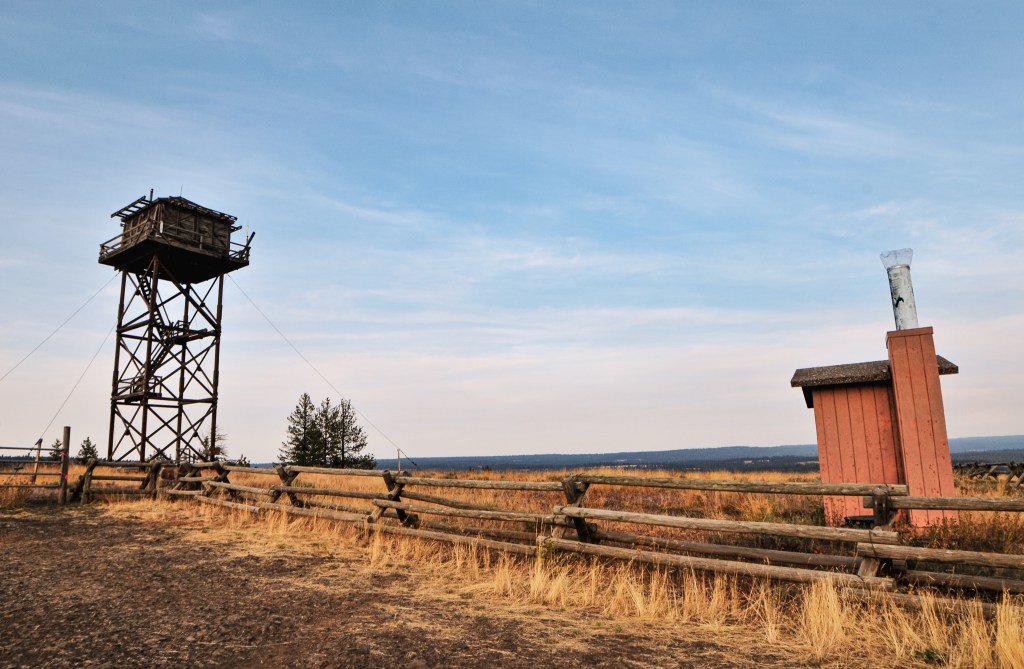
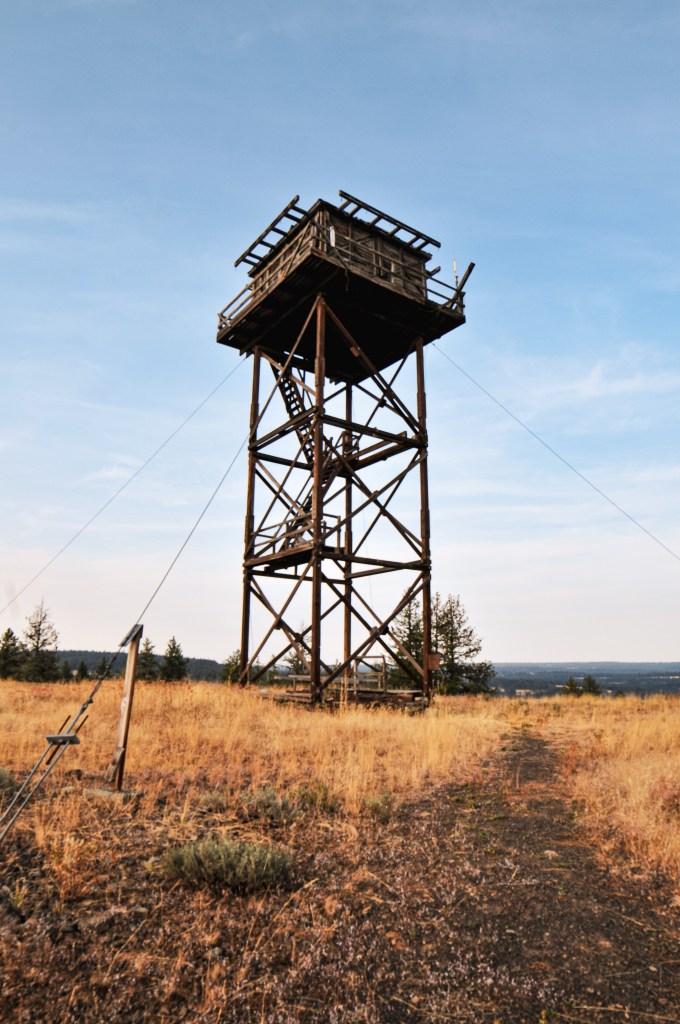
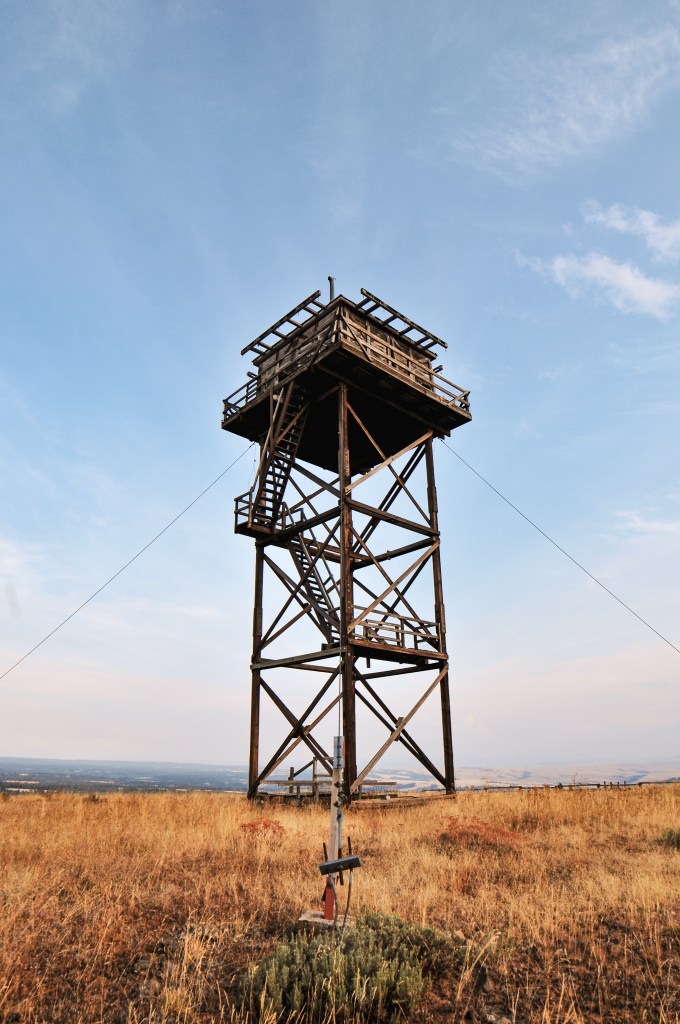
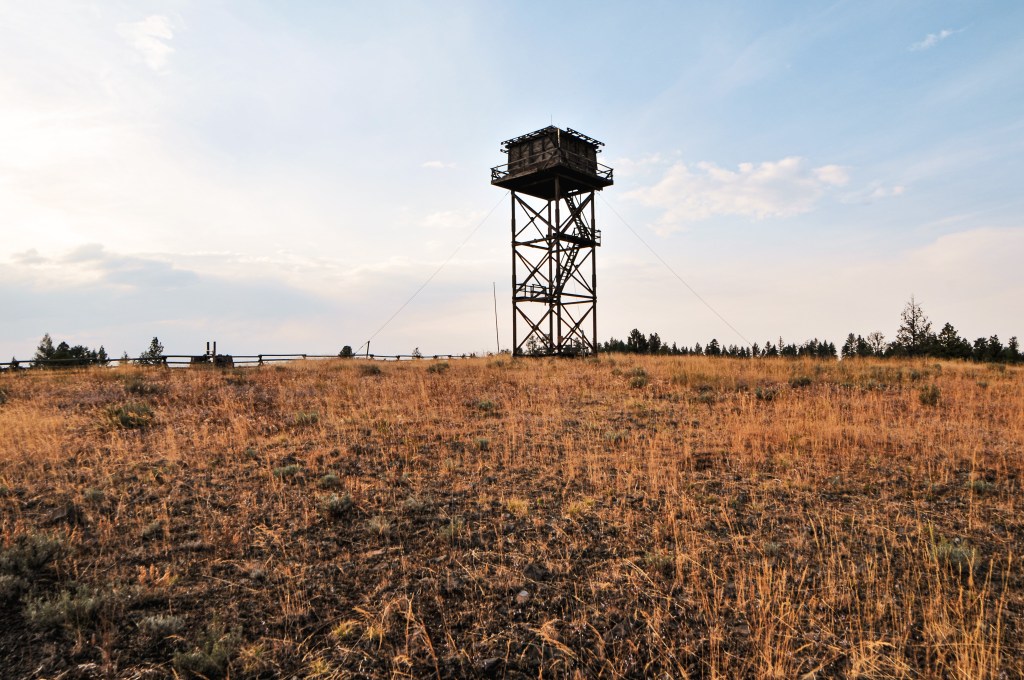
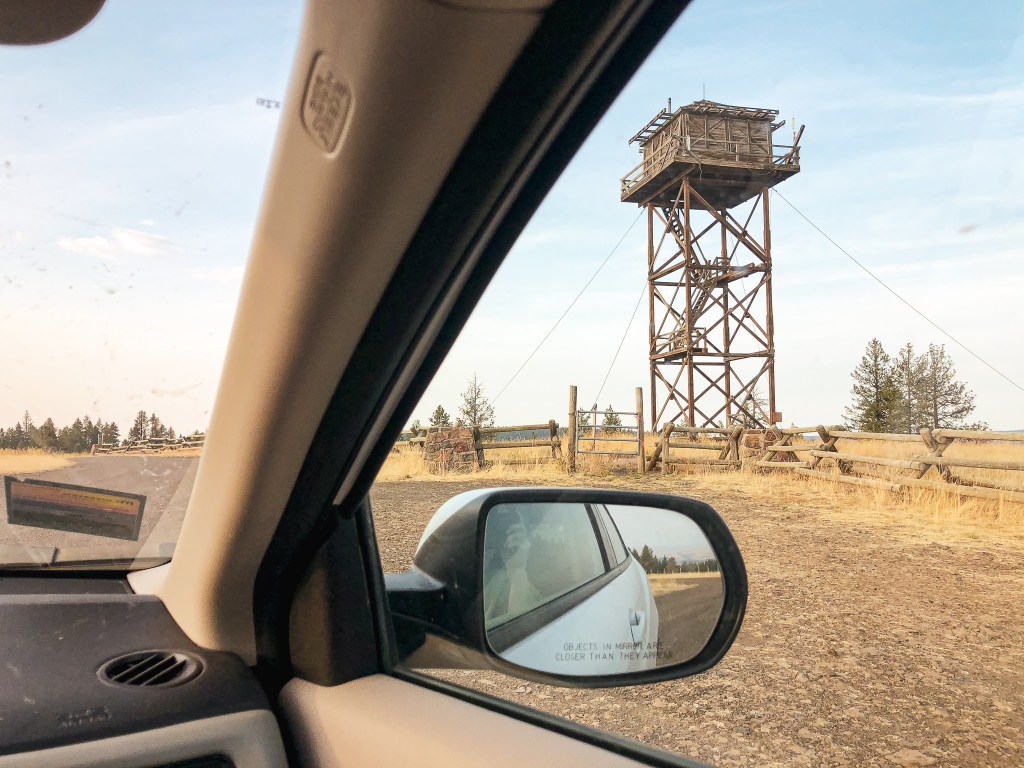
Summit Point L.O.

Oregon Lookouts

Location.

Wallowa-Whitman National Forest

Status.

Active; Currently standing

Estimated drive time from Portland, OR.

6-1/2 hours

Date visited.

September 2, 2023; September 5, 2023

Elevation.

7,006′

National Historic Lookout Register.

US 1642; OR 160

Trip Report.

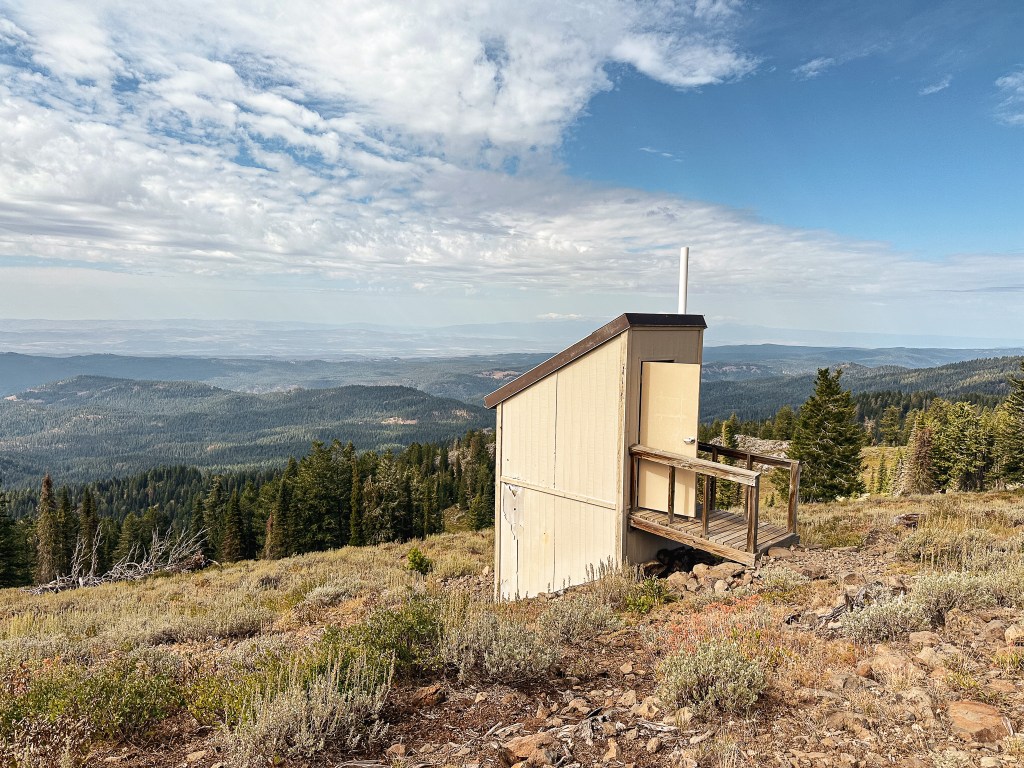
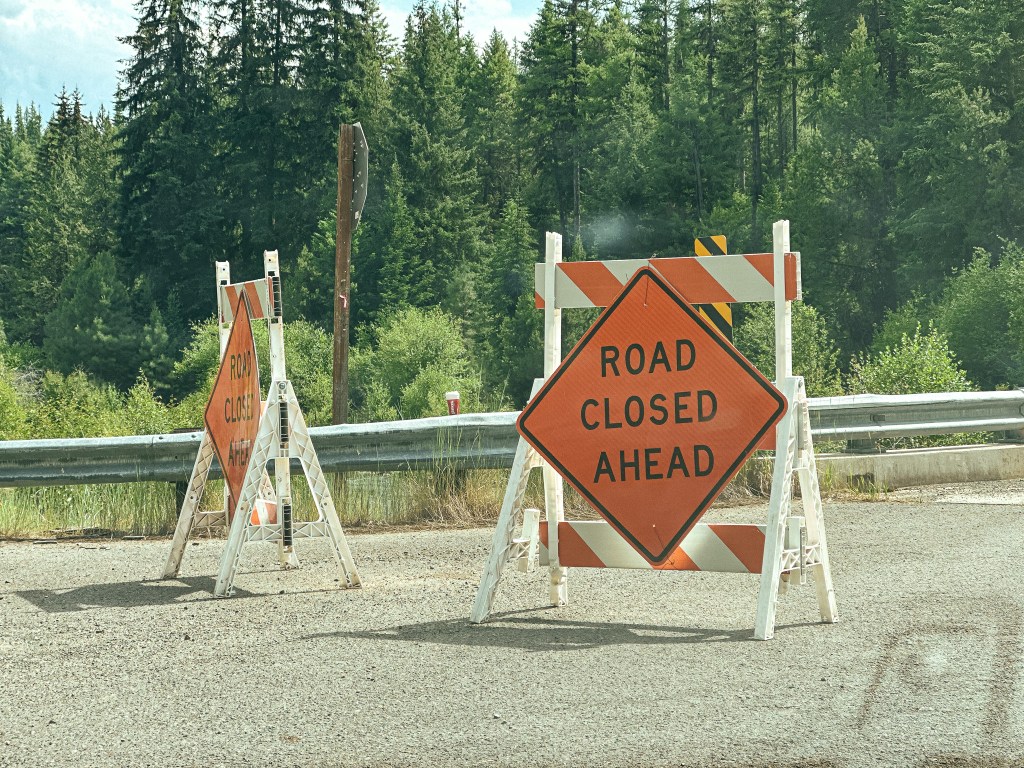
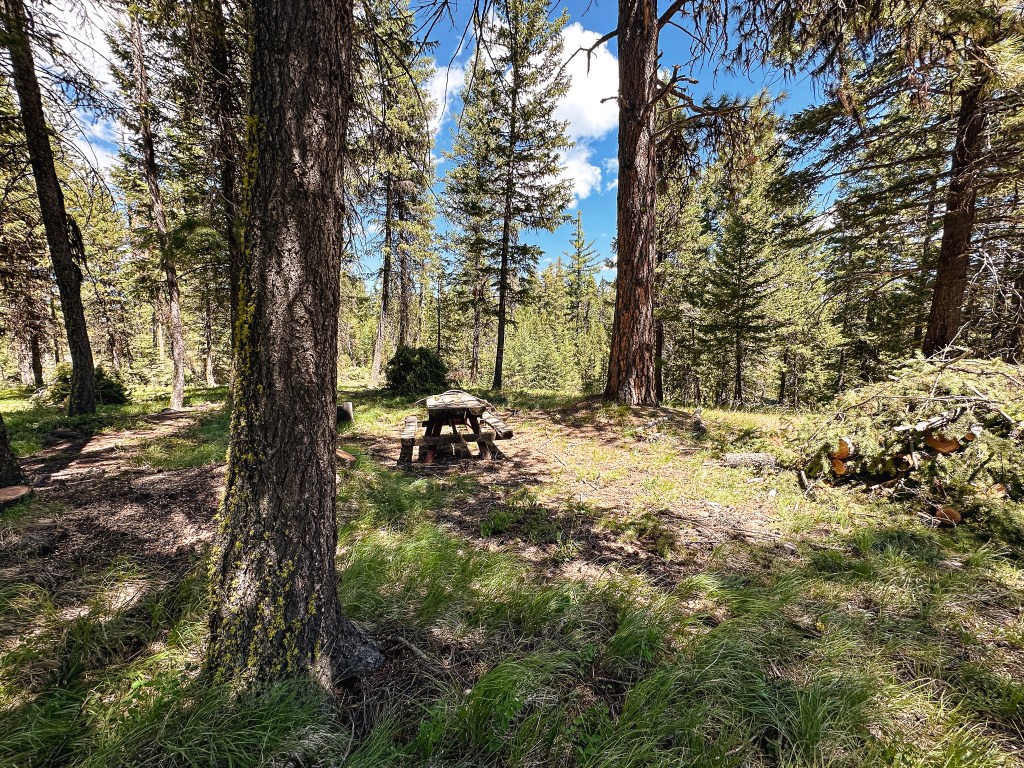
Friday, September 1st – The Summit Point trailhead is best accessed from HWY-86 via NF-77 to NF-7715 just before reaching Halfway, Oregon. We initially drove past this junction to check out the fire lookout at the Pine Ranger Station (post). After a quick stop, we back tracked to turn onto NF-77. This junction on HWY-86 is signed, but for some reason is labeled as the Summit Creek L.O. instead of Summit Point. I’m not sure if it was actually ever referred to as such or if it was just a misprint too costly to fix. We drove roughly 11 miles on NF-77 before we reached another signed junction with NF-7715 to the right and the McBride Campground to the left. The sign on the NF-7715 road was correctly labeled and stated there were 5 more miles to reach the trailhead. We already knew we wouldn’t have enough time to make it to a backcountry camp before dark and turned into the McBride Campground to see if there were any available spots for the night. This is a free unmaintained campground that offers fire pits, picnic tables, and pit toilets that were surprisingly stocked with toilet paper. There is also water access along the Summit Creek from most of the camp spots. I was surprised to find an empty campground given that it was a Friday on Labor Day weekend. We picked a camp spot on the far right end near the creek to set up. This put us the farthest away from the entrance if someone did decide to join us later in the evening. Dinner was simple since we only had our backpacking food and equipment to fuss with. We fell asleep to a light rain and some nearby thunder, but I hoped it would clear up by morning.

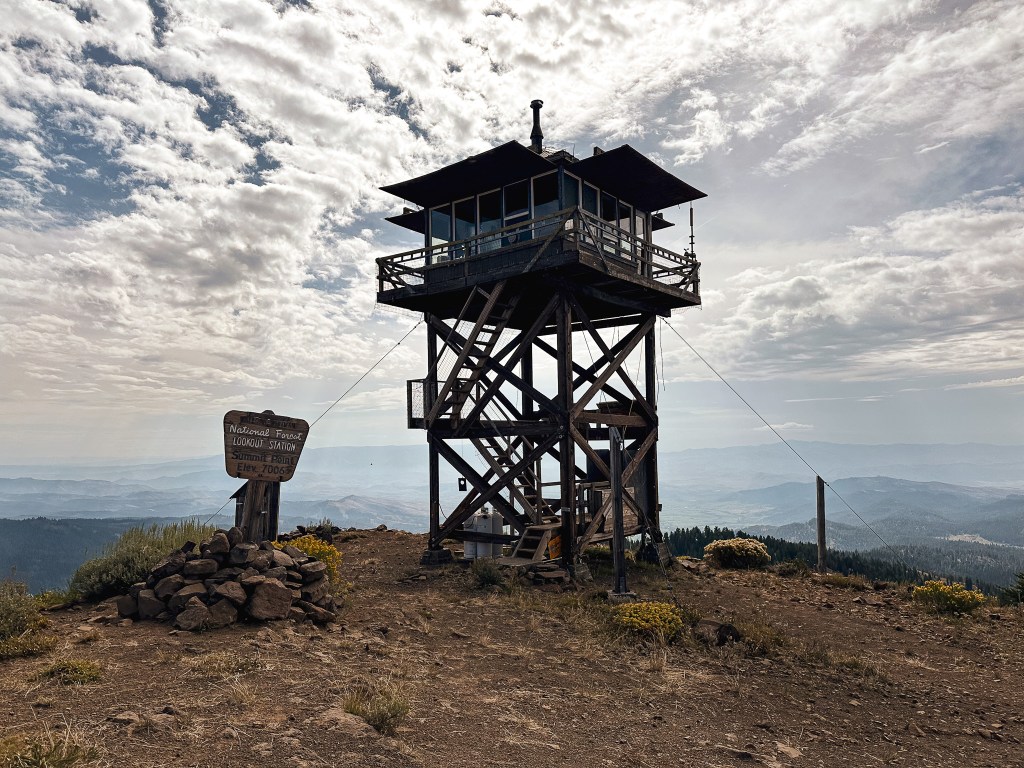
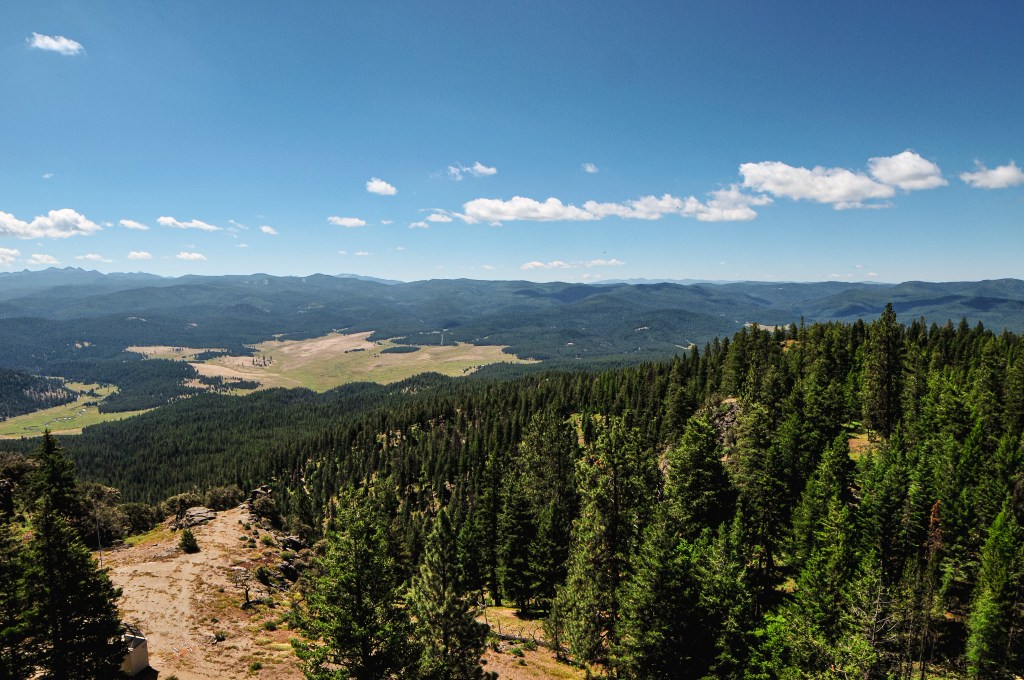
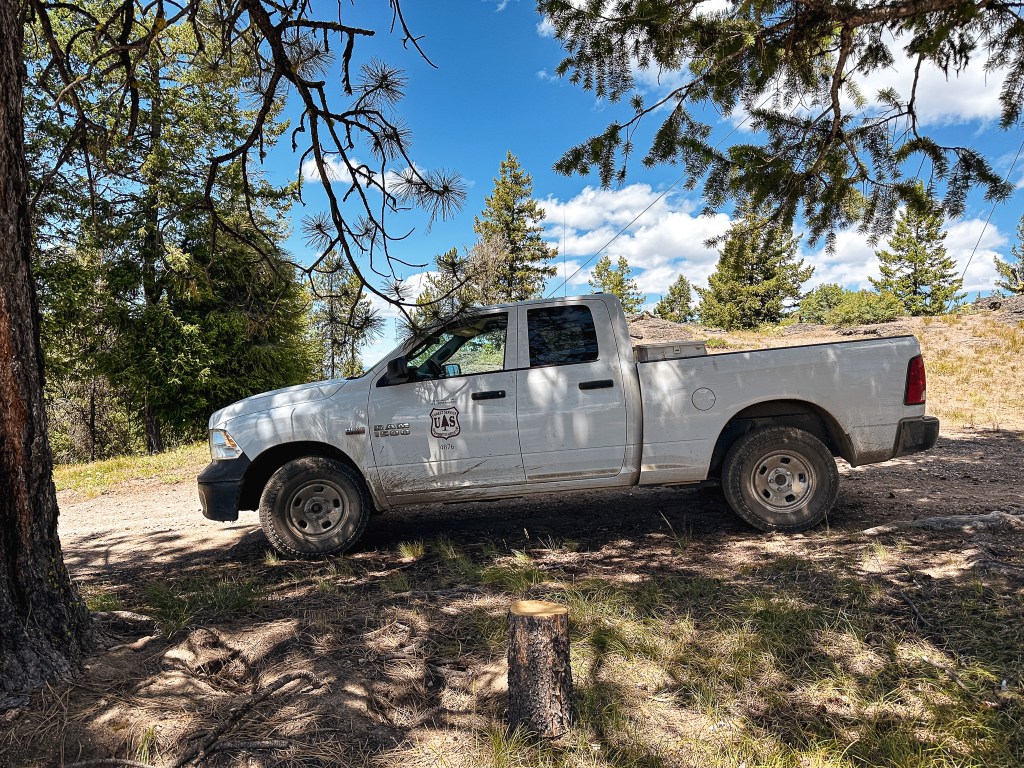
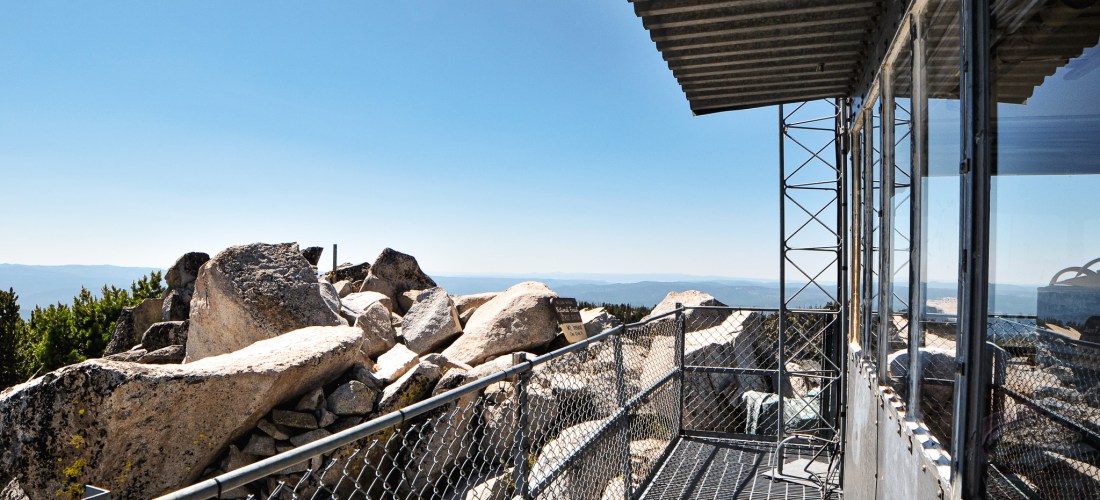
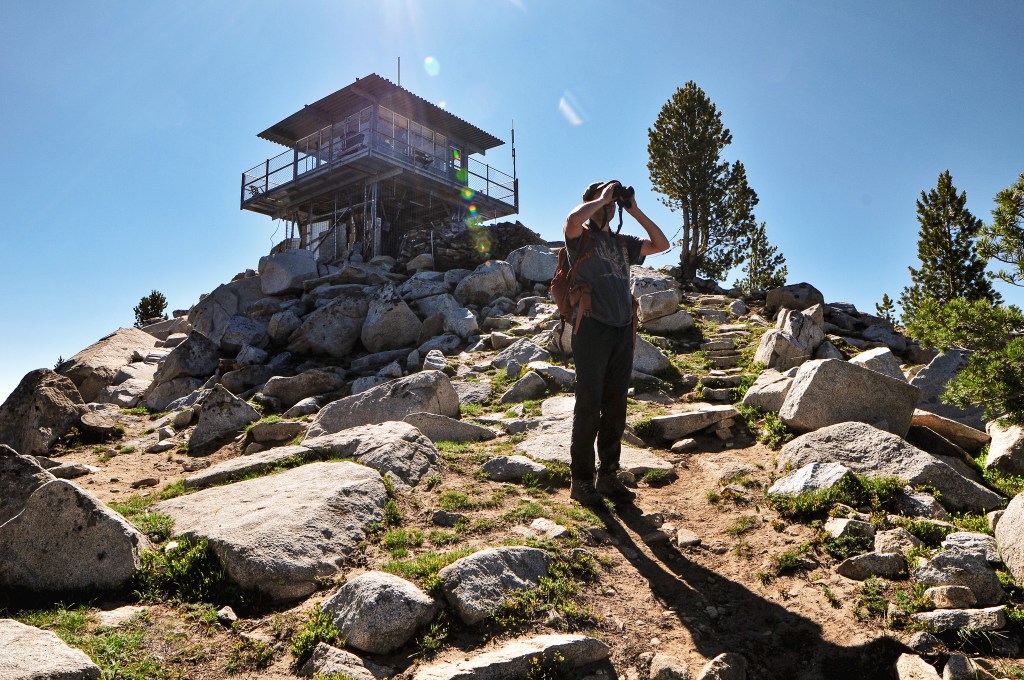
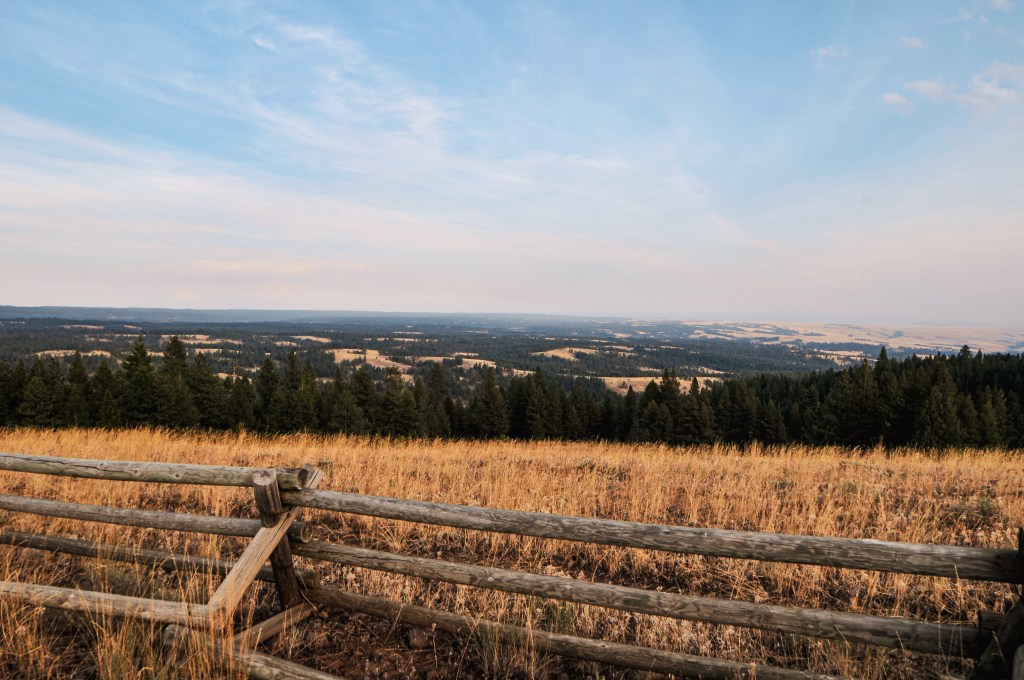
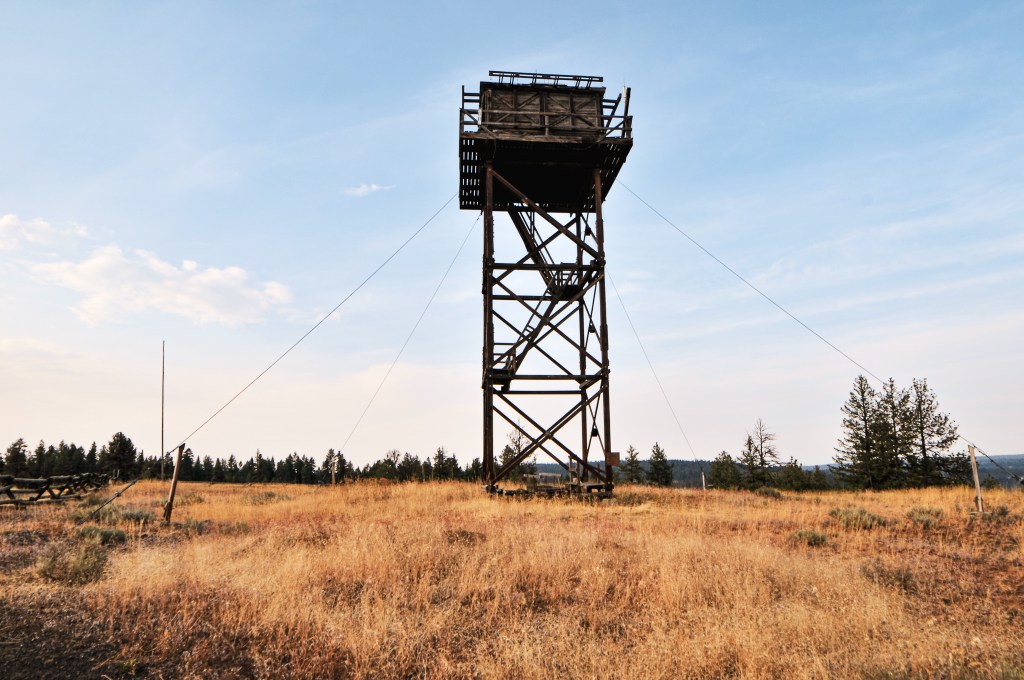
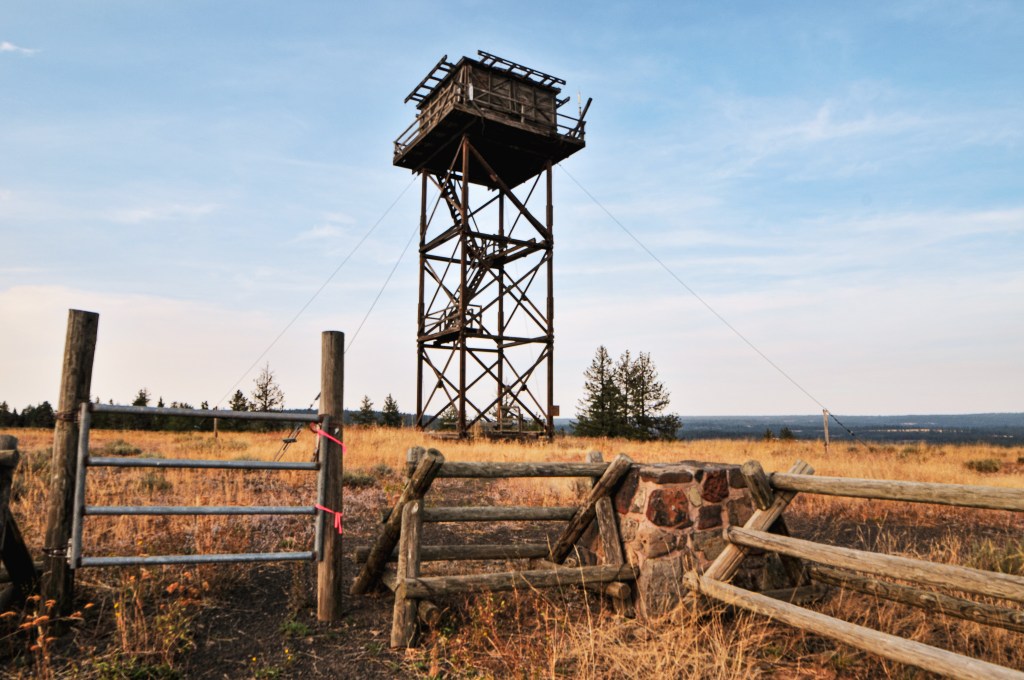
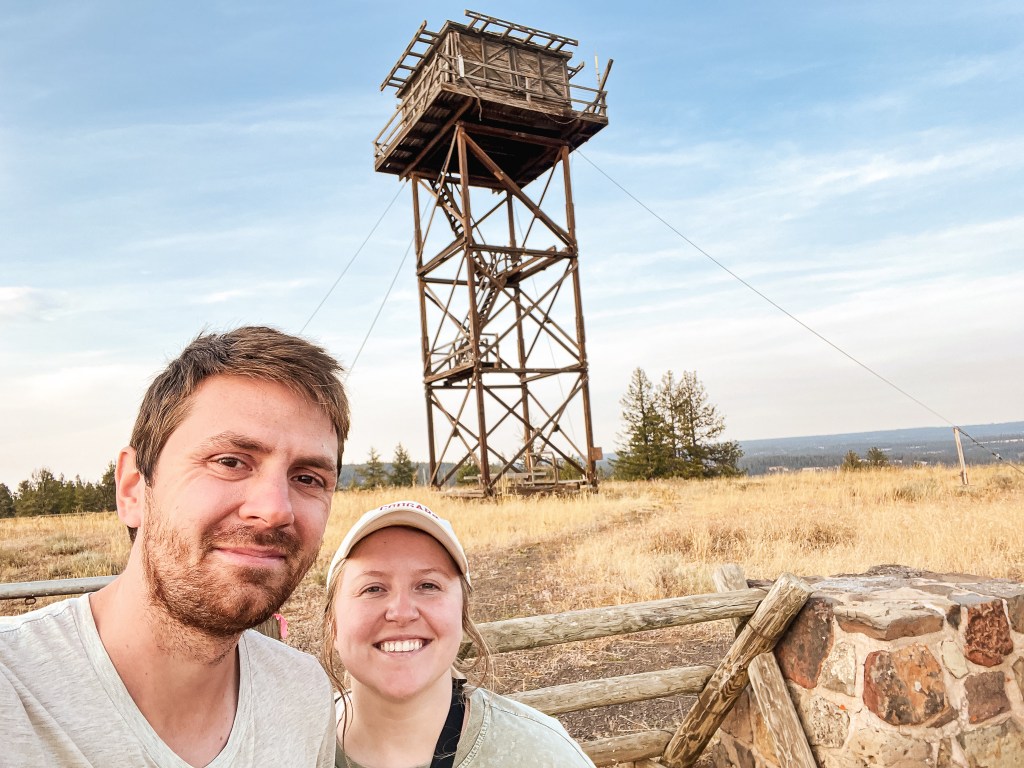
Saturday, September 2nd – We still had the campground to ourselves when we awoke the next morning. The skies were cloudy and slightly threatening in comparison to the day prior. The pack up was simple and quick, but we still weren’t on the road until after 8:30AM. We are not early risers by any means and didn’t feel the need to rush given our proximity to the trailhead. The NF-77 road had been a good gravel road all the way up to the junction with the McBride Campground. There had been a few minor rocks or potholes, but nothing extraordinary. The start of NF-7715 wasn’t daunting and we hoped for similar conditions. I had read from a prior trip report that “most any vehicle with normal clearance can negotiate it, taking care in the bad spots”. We found this to be accurate and it took us 46 minutes to drive the 5 miles to the trailhead (my car’s odometer calculated it at 4.6 miles). I will say some of the bad sections were a bit intimidating, but going slow and thinking through your wheel placement helps. We were more determined to make it all the way since we would be backpacking beyond the fire lookout. We were also met by a truck coming down when we were heading up in a tricky spot. I wasn’t able to move out of the way due to washout on the road. They were nice enough to back up and let us pass, but I felt bad that I had to take up the whole road. There is ample parking at the trailhead and my Civic stuck out among the 4 other pick up trucks. It was not surprising to see people here since it was elk bow hunting season during a holiday weekend. The road continues beyond the trailhead parking for the lookout attendant to access the tower. There was a gate blocking this at one point, but I guess someone felt it was an inconvenience to them. We started our hike up the road with 45lbs each on our backs for the long weekend. We both hadn’t been backpacking much this summer due to our house duties and could feel the weight immediately. Garnet’s new bike commute is a marathon every day, 13 miles each way, that helps keep him fit. I’m not as active during the week since I drive to work and have a desk job, so one can assume I was feeling it a bit more than him. We are normally able to slip away for a night in the backcountry here and there throughout the summer to keep our backpacking legs in shape, but that hasn’t happened much this season either. I quickly fell behind as we continued to follow the road. I reached the junction where the road to the lookout continued to the right and our “trail” turned into an old road bed. I decided to drop my pack here to catch up with Garnet. The Strava app stated it was only 0.9 miles from the trailhead to the base of the fire lookout. The attendant must have had the day or weekend off since no one was onsite during our visit. This is an actively staffed fire lookout and it seemed too early for their season to be over. After taking in the view and some pictures, we headed back to where I dropped my pack. I reloaded my back with the 45lbs and we turned to continue on the official “trail” into the wilderness.
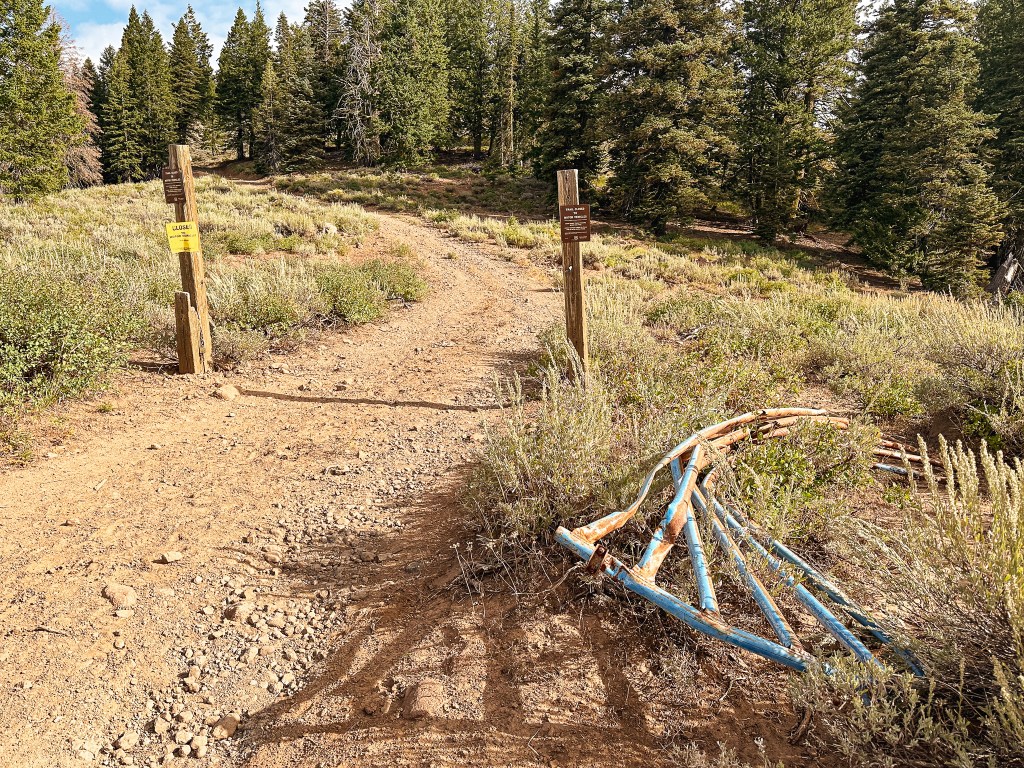
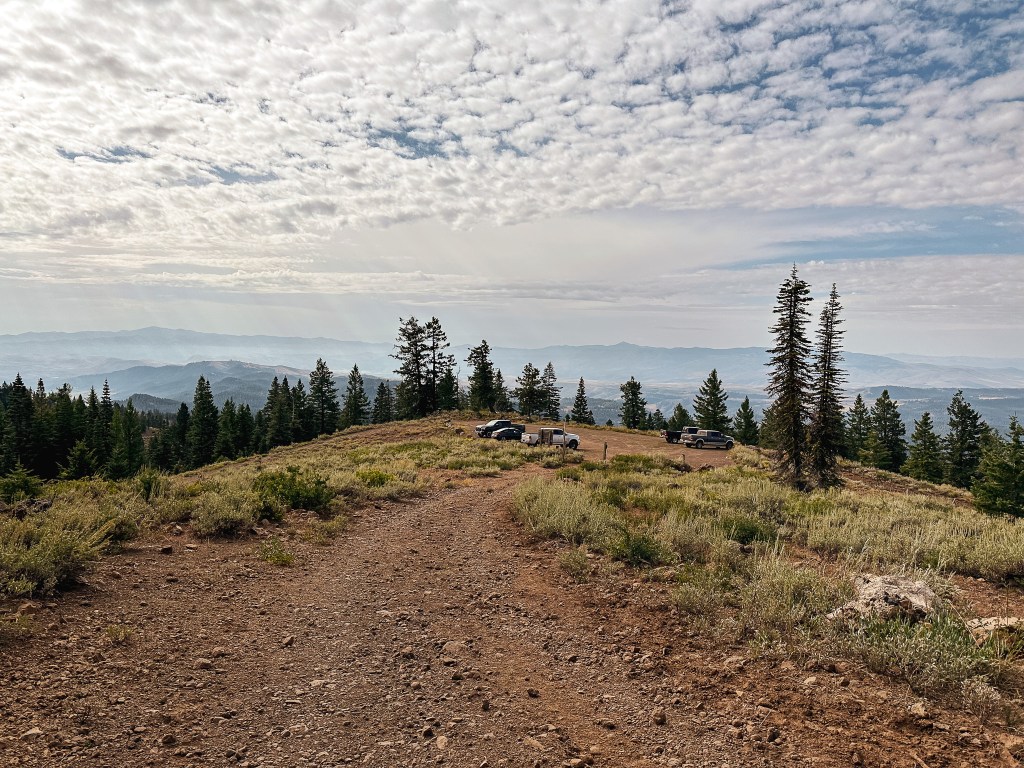
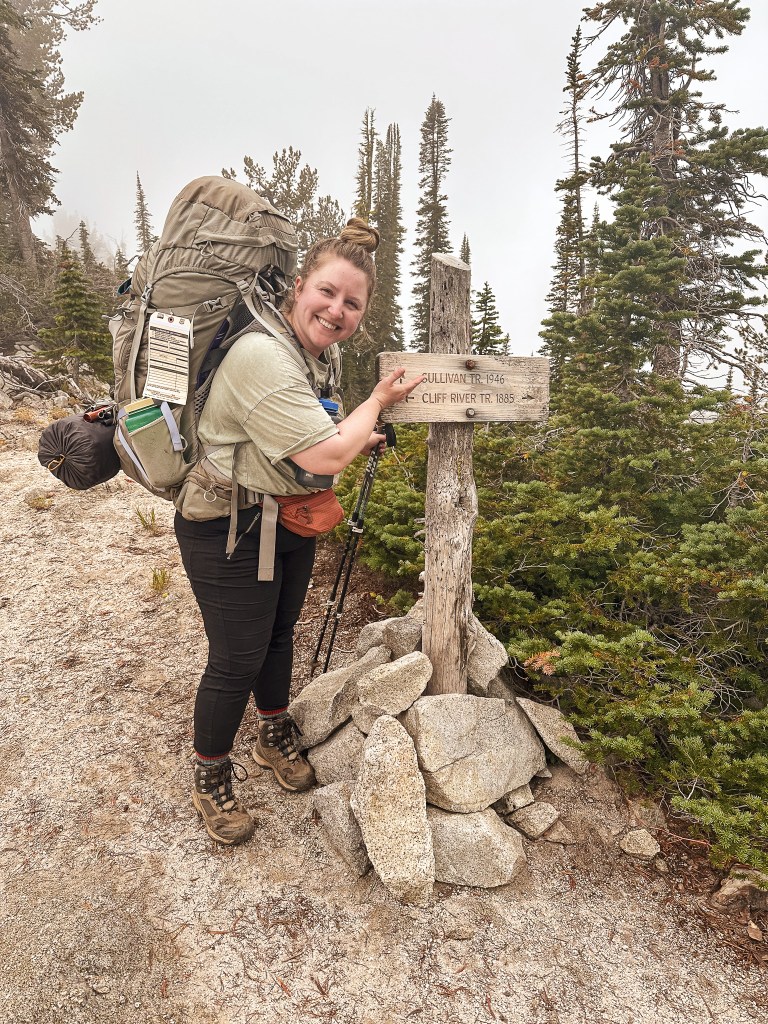
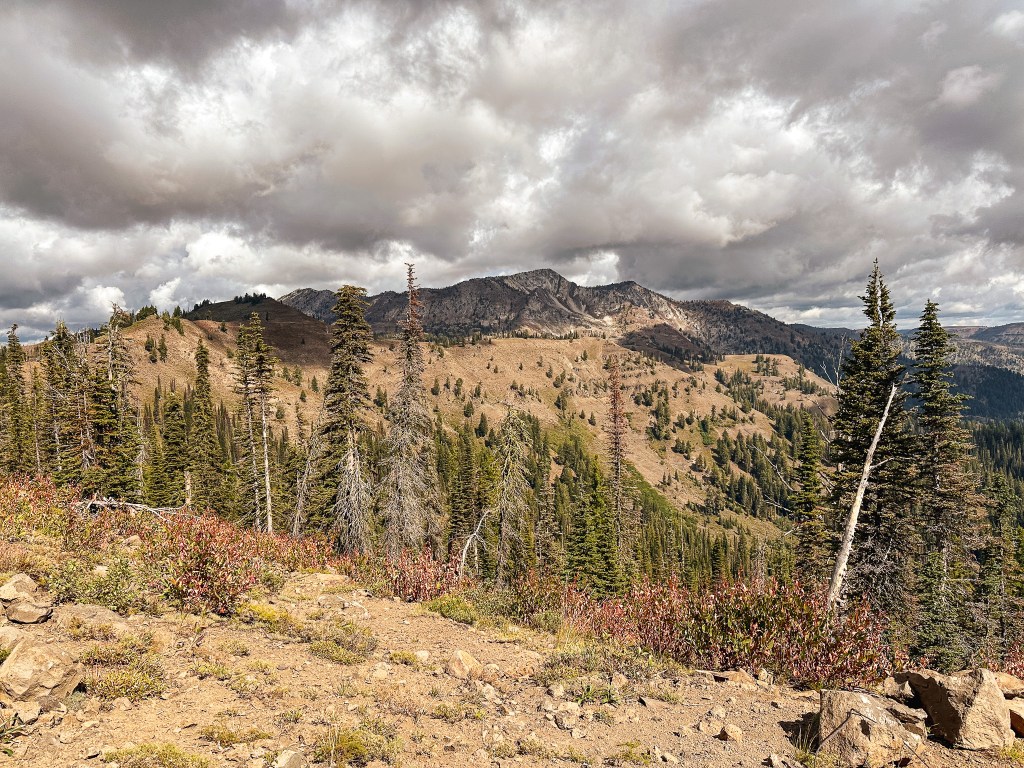
The Cliff River Trial #1885 starts out by following an old road bed that climbs up and over a hill to reach the meadow below Cornucopia Peak. We had to cross through a cattle guard and follow the fence line to reach the official wilderness boundary. The trail through the meadow can get convoluted with the many different user and game trails. We just followed the most defined of the trails to the base of Cornucopia Peak. If you have the time and energy to do some off trail navigation, Cornucopia Peak offers a rustic trail to a former fire lookout site. That wasn’t in our cards for this trip, but it was tempting being so close. Garnet had spotted an old hunting or mining cabin across the meadow on the way in and wanted to check it out while we were here. I decided to stop for snacks and to filter more water at a spring while he was off looking for the cabin. Our plan was to continue our climb along the Cliff River Trail to Crater Lake for the night. The Cliff River Trail continued to the left of Cornucopia Peak and steadily climbed up to a pass that met up with the Sullivan Trail #1946. I thought this was novel since my last name is Sullivan. From there, the trail dips down before climbing to another pass that meets up with the Pine Lakes Trail #1880. There is a lot of exposure along this section of trail and it is best done during a cooler day. I wouldn’t recommend it during the heat of summer. There was also quite a bit of erosion along this portion due to the loose scree texture of the slope. It’s not a matter of if, but when, this trail will eventually wash out. I’m not even sure trail maintenance would be able to help solve this issue given the terrain. Once at the second pass, you can see your destination off in the distance. The trail heads down from here to wind around the base of Granite Mountain until you reach the junction with the Little Kettle Creek Trail #1945. The Cliff River Trail continues all the way down to the South Fork Imnaha River, but to access Crater Lake we turned left onto the Little Kettle Creek Trail. It’s only a short distance along the Little Kettle Creek Trail to the lake. The hike from the trailhead to Summit Point and then on to Crater Lake had been 8.2 miles with 2,148′ of elevation gain. I’m not sure what it is about the Eagle Cap Wilderness, but it always seems to chew me up and spit me out rotten. Garnet had continued on ahead of me after we had reached the final pass and said he was getting ready to send out the search parties by the time I reached the lake. I dropped my pack once we found our camp for the night and laid on a nice cool rock for 30 minutes before moving again. Despite only seeing one couple hiking out from the Pine Lakes Trail, we shared the lake with two groups for the night. One was just a couple as well and the other was a group of six plus a few dogs.

Sunday, September 3rd – I had already decided the day prior that today was going to be a rest day. Garnet had previously mentioned hiking down to the South Fork Imnaha River, but we were both too tired after yesterdays hike. We spent the majority of the day reading and lounging around camp. Both groups that were camped at the lake packed up to either head out or hike deeper into the wilderness. This left the lake to us for the evening. We took a stroll around the perimeter of the lake to check out the other vacant camp spots. There were about 3 or 4 decent spots including ours and a couple of flat spots that would make due in a pinch. Despite getting quite a few people hiking past us along the Little Kettle Creek Trail, none stopped to camp at the lake. They all seemed to be heading back out to the trailhead, either Eagle East TH or Little Kettle Creek TH, coming from somewhere else within the wilderness. At one point during the day we were able to spot a mountain goat on the side of the ridge between Granite and Red Mountain. We watched it for a long time with our binoculars picking its way along the steep rocks. We gave up when some low hanging clouds rolled in to obstruct our view. Crater Lake sits just below 7,600′ which kept the temperatures cold all day. Rain rolled in later that evening and we could hear some distant thunder storms during the night. This made our tent feel extra cozy, but I hoped for clear skies in the morning.

Monday, September 4th – We initially planned to move our camp to Pine Lakes for the final night of our trip. But, after seeing how far we’d have to hike out to the Summit Point TH combined with the long drive home, we decided camping closer to the trailhead made more sense. The rain from the evening prior had thankfully stopped, but the clouds were still hanging low. We decided to try and find a camp for the night in the meadows below Cornucopia Peak. This would set us up for a much shorter hike out on Tuesday. The climb out from Crater Lake felt much easier than the hike in. Our packs were lighter than when we had started and the cloud coverage helped to keep the heat of the sun off of our backs. We only saw a group of three hiking into Crater Lake as we were hiking out. After 5.4 miles and 808′ of elevation gain we found ourselves back at the meadow. We knew there was a least one camp spot near the old cabin Garnet had checked out prior, but we decided to take a look around to see if there were any others among the trees. This is a popular area for cattle grazing, so it was hard to find a flat spot that wasn’t littered with cow pies. We eventually found a very old one set back from the trail with a fire ring that hadn’t been used in years. After setting up camp, I decided to take a hike over to the cabin since I didn’t check it out with Garnet. It was a surprisingly nice kept cabin that definitely is utilized by someone. The door frame was comically small and even shorter than me. I’m not sure the history of this cabin, but I would love to know. I realized you could see Summit Point from the cabin area and took a look at it through the binoculars. There was still no one there that I could see. We had a bit of service in camp and decided to check if there was a burn ban in effect for this area. There was not. We don’t normally go to the trouble of building a fire while backpacking, but it was cold and walking through the damp grass made our boots wet. This helped to keep us warm for the evening.

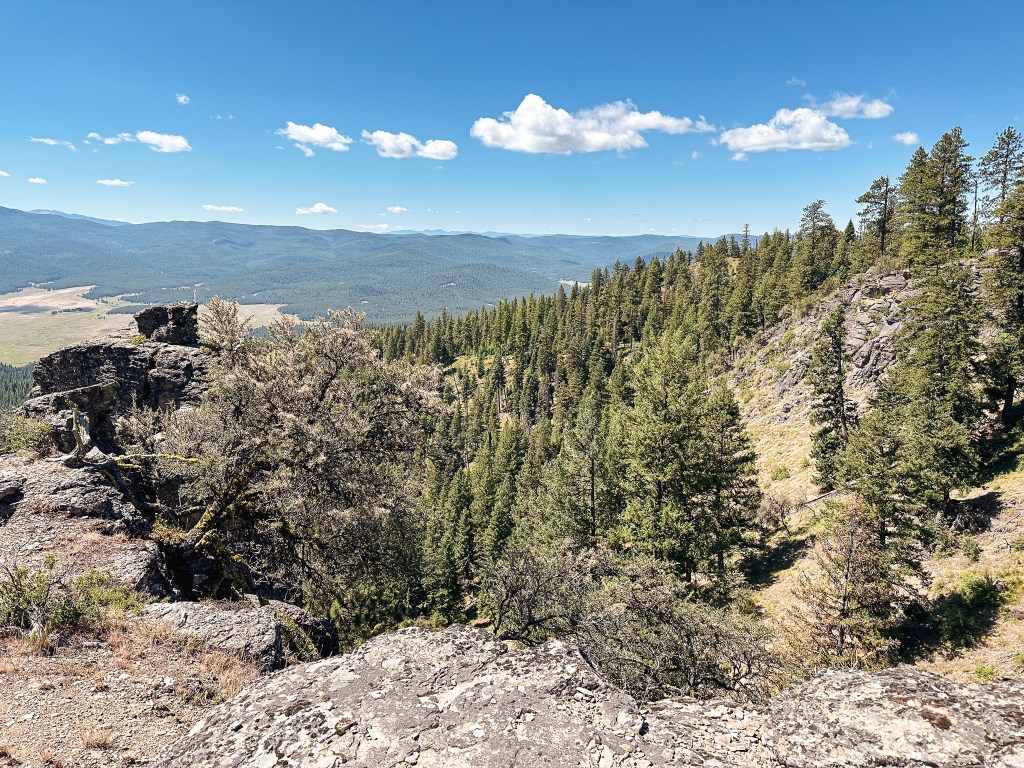
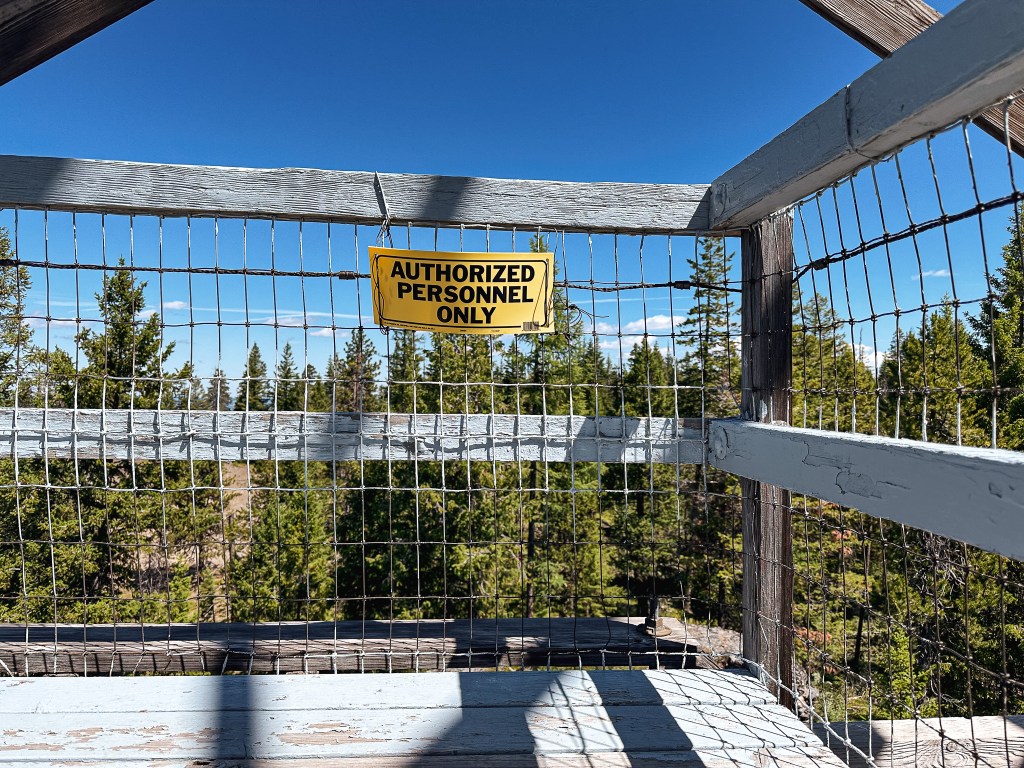
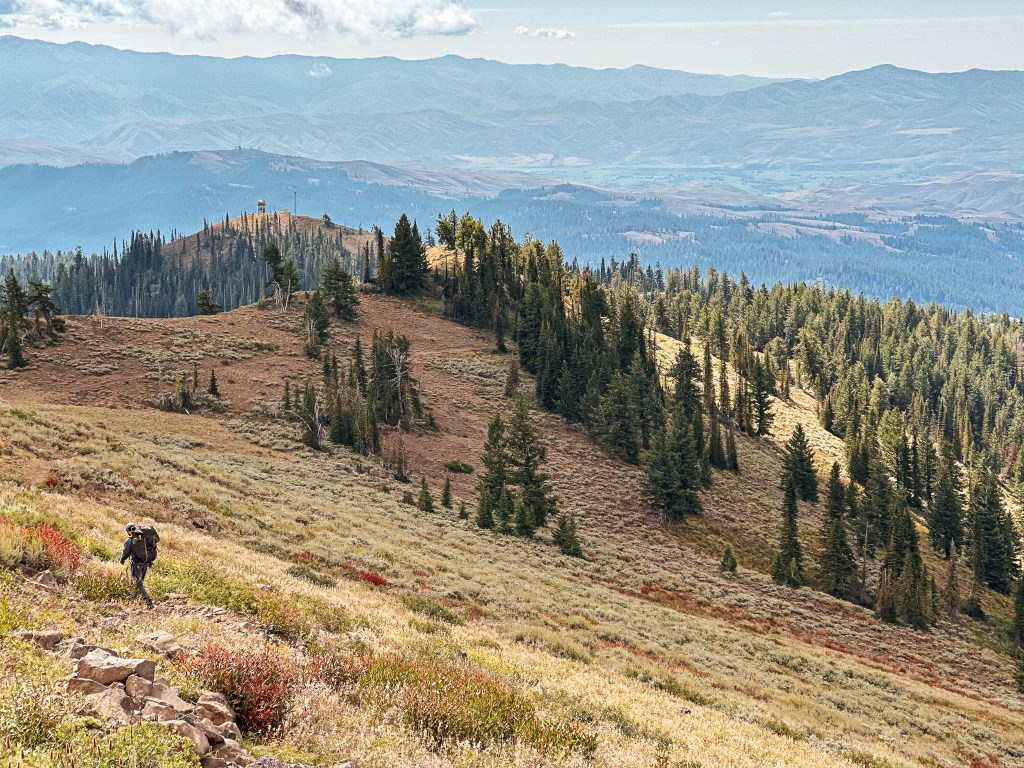
Tuesday, September 5th – We woke up to clearer skies and decided it might be worth making a trip back out to Summit Point for some better views. The hike out was going to be much shorter today, but we still had a 6-1/2 hour drive home. We saw quite a few people as we were heading out. Once we gained a view of the fire lookout again, we could see someone moving around in the cab. We decided to definitely make an extra side trip back since we were hopeful to meet the lookout attendant. We both dropped our packs at the junction this time and hiked the remaining distance along the road. As we approached the fire lookout we were surprised to see no vehicle. This was confusing since we definitely saw someone from a distance in the cab. There were also fresh tire marks on the road that hadn’t been there at the start of our trip. We also noticed the catwalk door was now open. All signs pointed to someone being there. The sun was positioned awkwardly where I couldn’t really see inside the cab from the ground. We weren’t sure if they had just left or if someone had dropped them off. As we walked around to take in some more pictures and better views, we both thought we could hear someone walking around in the cab. We stood where they could see us and decided to locate all the visible surrounding fire lookouts in hopes that they would come out to greet us eventually. After sometime we realized they probably didn’t want any visitors and said our good-byes to Summit Point. As we were turning around to leave Garnet said he saw the woman open the door to the cab, but I only heard the door when she shut it again. It was a bit odd since it seemed like she was going to come out to talk to us, but then decided against it. It’s possible she just thought we were another pair of hunters scoping the view for game. Regardless, It’s their space and should be respected. We hiked back to our packs and made the final decent to the car. The hike from our camp in the meadows to Summit Point and then back to the trailhead came out to 3.3 miles with 334′ of elevation gain. We decided to start a tradition of getting burgers after backpacking in Eagle Cap. Our first trip to the wilderness was in 2021 where we did a week long loop through a lesser used portion. It was rough and beautiful, but that trip kicked our butt too. We hiked out a day earlier than planned to get burgers and a beer at Terminal Gravity in Enterprise. They were the best burgers we’ve ever tasted (possibly because we had been eating trail mix and dehydrated food for a week). This trip we made our way to The Main Place restaurant in Halfway before heading home. Their burgers tasted pretty good as well.
History.

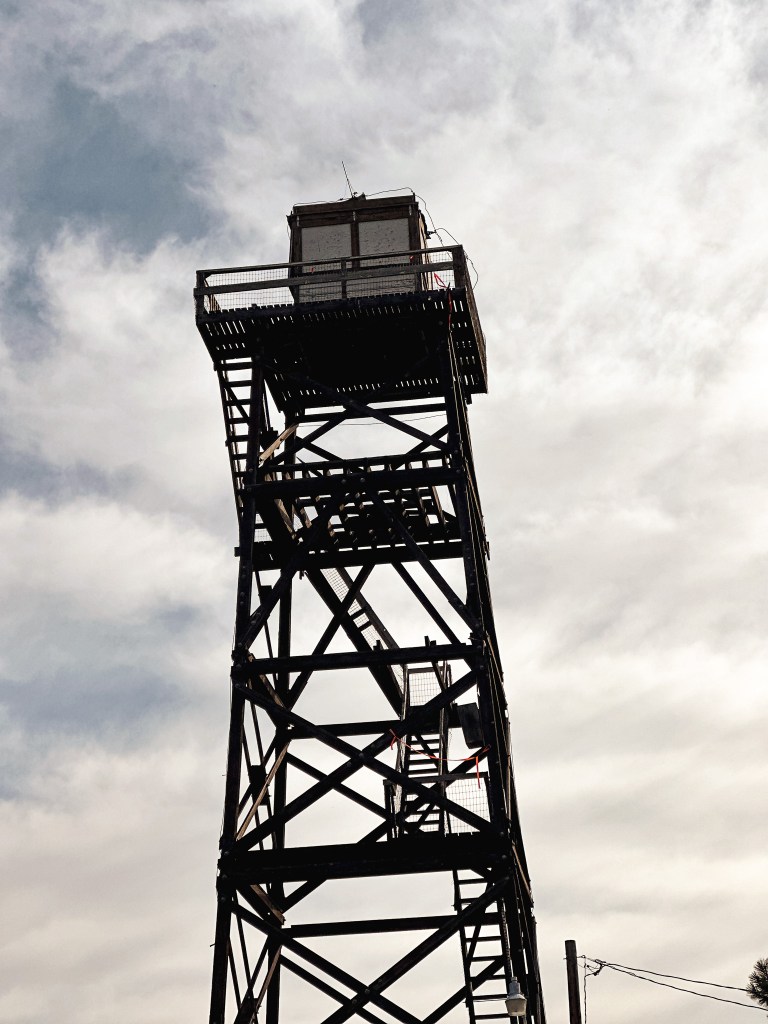
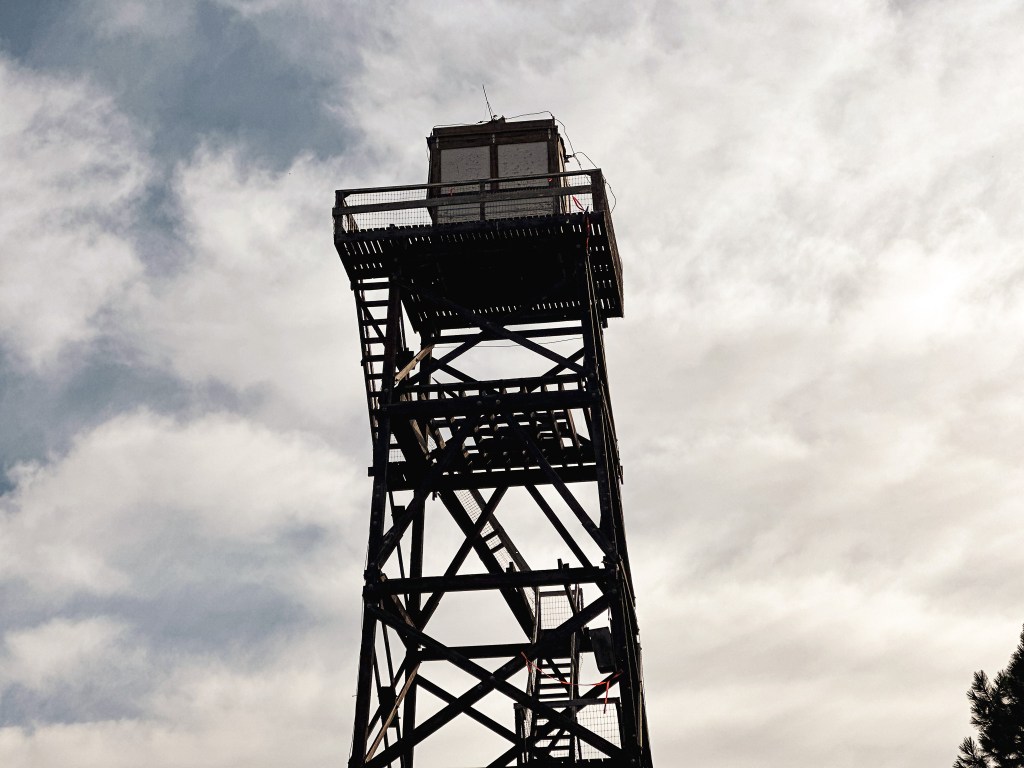
Summit Point was first established as a fire detection site in the 1930s when a 20′ open platform tower was built on the north end of the ridge. Construction for a new tower began on the most southern end of the ridge in 1949 and wasn’t completed until 1951. This move was noted due to constant fog obstructing the view from the northern end. The lookout built was a 20′ treated timber tower with a 14’x14′ L-4 cab. It is still actively staffed every season.

Pine Ranger Station L.O.

Oregon Lookouts

Location.

Baker County, OR

Status.

Emergency; Currently standing

Estimated drive time from Portland, OR.

6 hours

Date visited.

September 1, 2023

Elevation.

2,600′

National Historic Lookout Register.

US 1623; OR 144

Trip Report.

The Labor Day weekend has become historically smoke filled over the past few years where planning ahead doesn’t bode well for the eager traveler. It has started to feel like any place we decide on as our final destination will ultimately catch on fire or be in the direct line of smoke by the time the holiday arrives. Our Plan A moves to Plan B moves to Plan C. This year we had to ditch all three of our potential plans due to smoke and fire closures. We’ve avoided most of Oregon’s wildfire season thus far by focusing on projects at home, but that hasn’t stopped it from coming nonetheless. Our current wildfires have been fairly mild in comparison to other states and years prior, but the smoke has been heavy. The source of said smoke has been completely dependent on which way the wind was blowing that day. As the week prior to Labor Day progressed, we searched for alternatives. The AirNow map has become our best friend when trying to plan around the air quality and smoke. But, as soon as we thought we had a Plan D set in place the weather started to shift. The forecast called for rain and thunderstorms across the majority of the state. We were now dodging poor weather conditions on top of the smoke and we had to ditch our plans once more.

This trip has been much anticipated since we have spent the majority of August, and even parts of July, scraping and painting around the trim of our house. Yes, it’s as fun as it sounds. We are currently on the do it yourself budget which is affordable and rewarding, but comes with the hefty cost of our personal time. I was able to escape my responsibilities for a weekend at the beginning of August (post), but Garnet hasn’t been out since our road trip (post). Needless to say we planned to be absolutely feral in the woods for 5-days of backpacking no matter where we ended up. We eventually settled on a Plan E the night before departure. Our final plan (so we thought) was to make a loop through the Eagle Cap Wilderness starting and ending in Cornucopia. We planned to make stop overs to the fire lookouts in the area at the Pine Ranger Station and Summit Point as well. The weather only called for a 20-30% chance of precipitation with potential for occasional thunderstorms and temperatures ranging from high 60s/low 40s.

We woke up Friday morning later than planned since we stayed up late the night prior prepping for our trip. We were further delayed as we realized we left our ranger maps, road atlas, and Garnet’s binoculars on the roof of the car after starting our drive. This added a trip back to our house retracing our route in hopes that they were not a complete loss. We were unsuccessful in finding any of the items as we pulled into our drive way to regroup. Once resituated we headed out towards I-205 again to connect to I-84. As we were pulling out of our neighborhood, I spotted them. Some kind stranger must have picked them up from the road and neatly set them on the street corner. This corner had been blocked from our view by a car on the drive back. We were thankful for this act of kindness and continued on our way. We think someone might have ran over the binoculars, but the optics were thankfully still intact. This delay set us back significantly though. We knew we wouldn’t have enough time to make the hike in to our original destination and would have to change our plans once again. As we made the drive east via I-84 towards Baker City, I proposed a modified route. Instead of starting in Cornucopia, we would start from the Summit Point trailhead and hit our intended destinations as an out and back. This would also allow us to car camp near the trailhead for an earlier start the next morning.

We continued on I-84 the majority of the drive until we reached the junction with HWY-86 towards Halfway. We decided it made the most sense to make a pit stop at the Pine Ranger Station before heading into the forest. There is a fire lookout located there and it is easily accessible if you are in the area. From HWY-86, we turned right onto Sawmill Cutoff Lane. This is just before the turn off for Halfway and there is a sign for the Ranger Station near the junction. The Ranger Station is only a short distance down this road off to the right. It is near the junction with Pine Town Lane, but it should be obvious and signed. We pulled into the visitor parking area just before 5pm. The Ranger Station was already closed for the day, but you can see the tower from there. We walked to the right of the visitor center following the road to the back quarters. There was an authorized personnel only sign that we decided to ignore. I think this is more of a grey area and intended for visitor vehicles since Ranger Stations are open to the public. There were even a few people out, but no one said anything to us as we walked back to take pictures of the fire lookout. We didn’t stay long enough to be a naissance or a concern to those onsite anyway. I’m sure if the Ranger Station had been open and you wanted to ask to see it they would happily agree.

History.

There is little information available on this fire lookout. It is located on the grounds of the Pine Ranger Station, also known as the Pine Field Office, just 2 miles southeast of Halfway. It was built in 1938 as a 52′ treated timber tower with 7’x7′ cab. It is also referred to as the Halfway Lookout and is still used during emergencies. It is unclear when it was last used and if it was ever used for consistent fire detection. A Ranger onsite might know the story, if you stop in during visiting hours. There is now a fence around the tower to keep unwanted guests from climbing it.

Johnson Rock L.O.

Oregon Lookouts

Location.

Wallowa-Whitman National Forest

Status.

Active; Currently standing

Estimated drive time from Portland, OR.

5 hours

Date visited.

July 13, 2023

Elevation.

5,714′

National Historic Lookout Register.

US 1628; OR147

Trip Report.

Day 6/9: Lookout Road Trip 2023

We headed out from Tower Mountain (post) the same way we came in on NF-5226. One might argue we should have continued through the forest on NF-5226 to connect with HWY-244 since we were planning on going that way to get to Johnson Rock. But, I didn’t feel like taking any chances on another forest service road and we wanted to stop in Ukiah for amenities. We drove the remaining distance of NF-52 out of the forest until it turned into CR-1475. This county road will dump you into the heart of Ukiah. We decided to check the Ranger Station in Ukiah to see if they knew anything about the NF-51 road closure. It was technically out of their forest management, but we figured they might know anyway. Unfortunately, when we got there the station was only open to visitors by appointment. Strike one. Ukiah also didn’t have any cell service for us, so we weren’t able to call the La Grande station from here. Strike two. We moved on to check out the local business we thought would have gas, but it appeared to be closed indefinitely. Strike three. It appeared our luck had run out completely. The only amenities we were able to secure were refilling our water reservoirs in the local county park. Ukiah did have another convenience store that was open where we were able to buy some ice for our cooler too. In hindsight we probably should have asked the locals about their gas station, but we just assumed they no longer had any available. For future reference, I think they still offer gas at the Byrnes Oil off of Pine Street. It appeared people were stopped there filling their tanks when we drove through again the following day.

We sat along side the county park for a while debating what we should do. Do we risk it and drive to see if the road is open for ourselves? Or do we assume the worst and move on to our next destination? Garnet had the idea to start driving in the direction of Johnson Rock until we could find suitable service to call the La Grande Ranger Station. We decided to go that route and headed east out of Ukiah on HWY-244. We didn’t get service until we were on the Blue Mountain summit and pulled over to make the call. The ranger we spoke with was aware of the NF-51 closure but wasn’t sure when it would be re-opened. Also, just doing a basic search on the Forest Service road closure notices there was nothing mentioned about this road being closed (so any prior research wouldn’t have brought this to our attention). We asked the ranger about access to the Johnson Rock lookout. He wasn’t sure if that was part of the closure which meant he would have to get back to us, but he knew you could at least drive to the Spool Cart campground which is just before the turn. We gave him our contact information and we were back at square one. No one seemed to know much about this closure or at least the information we needed. We sat on the side of HWY-244 debating our options again. How long should we wait to see if he’ll call back? Do we drive to see if the road is open for ourselves? Or, once again, do we assume the worst and move on to our next destination?

We decided we were close enough that it made sense to check it out for ourselves. We also knew we should probably refuel soon and La Grande was our next closest option. We turned right onto NF-51 from HWY-244 towards the community of Starkey, this was marked as the Grande Ronde River Road prior to entering the forest again. There was no road closure sign posted at the junction, but we passed one that said “Road Closed 16 miles Ahead” once we got closer to the boundary. Based on our estimated mileage calculation prior this would put the road closure past the turn off we needed. We passed the Spool Cart campground with no issues and figured we’d make it to our turn after all. We reached NF-5115 off to the right only to be met with two more signs. Both said “Road Closed Ahead” and were partially blocking the road. Garnet and I debated what that meant. Did it mean the road behind the sign was closed ahead? Or was it referring to the other road closure on NF-51? At this point I was willing to throw in the towel on Johnson Rock, no one knew anything and it was unclear if we should be driving up this road. Garnet rationalized with me that if the road was actually closed there would be a road block farther up and we could turn around from there if needed. We continued up NF-5115 past the signs and hoped for the best. The NF-5115 road was in good shape and after a mile and a half we came to the junction with NF-5120. We turned left onto NF-5120 that would take us the remaining distance to the lookout, if road conditions were on our side. The conditions of the road deteriorated after leaving NF-5115. There were quite a few wide shallow pot holes that consumed the whole road and blind hills that would be a bad spot to meet oncoming traffic. Minor highlines and wash outs were also something to be aware of along this road. John was right about the road deteriorating significantly around 2 miles from the lookout. We made it to the NF-500 spur before deciding this was as far as we should probably drive. This was just beyond where the map said the road stopped being maintained. We set up camp in the flattest spot we could find and planned to hike to the fire lookout in the morning. We still weren’t 100% sure if we should be here, but we were never met with a road closure beyond the signs. We could hear and see the large helicopter doing work along the Grande Ronde. I had thought that I heard John mention they were practicing water drops on the phone with Mike. This lead to the irrational thought that they would accidentally drop a metric ton of water on us thinking no one would be in the area. I asked Garnet what would happen if they dropped that amount of water on someone and he said one would probably die from the shear force. A comforting thought.

The next morning, I woke up early to the sound of the helicopter again and had a hard time going back to sleep since it sounded closer to us than it was yesterday. We eventually got up and packed lunch for our hike up the road. We also packed up our camp so things would be ready to move when we got back to the car. As we started up the road we realized quickly where we had stopped was a good call. There were portions of the road that were fine, but the few significant rocky sections would be un-passable in our car without bottoming out. When Mike had talked to John the day before he mentioned there was a private contractor thinning the trees around the lookout that kept starting their chainsaws at 5am every morning. I didn’t recall hearing a car drive by that morning but it’s possible we didn’t hear it due to the helicopter starting around the same time. It was a pleasant walk from where we had parked but it was already getting hot for the day. The most notable things from our road walk were an occasional Pileated woodpecker flying across it, wild strawberries, and having something grunt at us from the bushes. We were pretty sure this was an elk but never saw it to confirm. As we got closer to the fire lookout, we could finally hear the symphony of chainsaws. I’m sure this wasn’t relaxing for John to hear all day, but they were making good work of thinning out the area. John was aware we’d be attempting to visit him sometime based on his call with Mike. We walked over to the viewpoint at the edge of the rock and wondered if we should try to make ourselves known. Before we could decide what to do, John called down from his catwalk and asked if we wanted to come up.

We climbed the tower and were not only greeted by John but his very large string bass. He also had a guitar and a mandolin there as well. I couldn’t believe he had hauled such a large string instrument all the way up there. He said he didn’t use the winch either because he didn’t trust it with such an item. He also confirmed that the helicopter we had seen along the Grande Ronde was moving logs to build salmon habitat. This made more sense than practicing water drops and I was happy to know my fears were unwarranted. We chatted for a bit about his experiences as a lookout and our trip around the area before heading back down to have lunch. While enjoying our lunch under the shade of a tree, an official Forest Service vehicle drove up. There were two rangers in the vehicle, and we wondered if they’d say anything to us about being there. It was still a grey area in our minds at this point, but less so now that we had made it to the lookout itself. They were only here to inspect the work of the private contractors and didn’t give us much more than a wave. I’m sure they were more confused than concerned about why we were there. We didn’t dilly dally much after we finished lunch and made the short hike back to the car. My Strava App recorded this road walk at 5.02 miles RT with 905’ of elevation gain.

The drive out felt much shorter than the day before. The signs that had previously blocked the road were now gone. Garnet’s phone also had a voicemail from the ranger we spoke with in La Grande confirming the road was open for recreation. It was good to know we had no reason to worry, but it felt a little too late at this point. We drove the remaining distance of HWY-244 to La Grande in search of fuel. Once we had a full tank, we backtracked to Ukiah again. We can now say we’ve driven the full length of HWY-244 twice. Our next destination was Madison Butte (post) on the Umatilla NF.

Lookout John.

This was John’s first season on Johnson Rock, a fittingly named lookout for him. He has worked as a fire lookout for 9 seasons on different towers such as Numa Ridge in Glacier NP, Tower Point in Oregon, and Aztec in Arizona to name a few. Prior to his seasonal work as a fire lookout he was a teacher. He uses his free time as a fire lookout to learn new skills and hobbies such as playing the string bass, guitar, and mandolin.

History.

There isn’t too much history behind the fire lookout on Johnson Rock. The first structure was built in 1938 as an L-4, but there is no information listed on if this was a ground cabin or tower. Given that the current 14’x14’ L-4 cab was built on an 82’ treated timber tower, I can only assume its predecessor also had a tall tower. The existing lookout was built in 1952 and is still actively staffed every season. Although the structure is still utilized the cab could use some work. The shutters on own side were blown off during the previous season and it would benefit from a new roof.
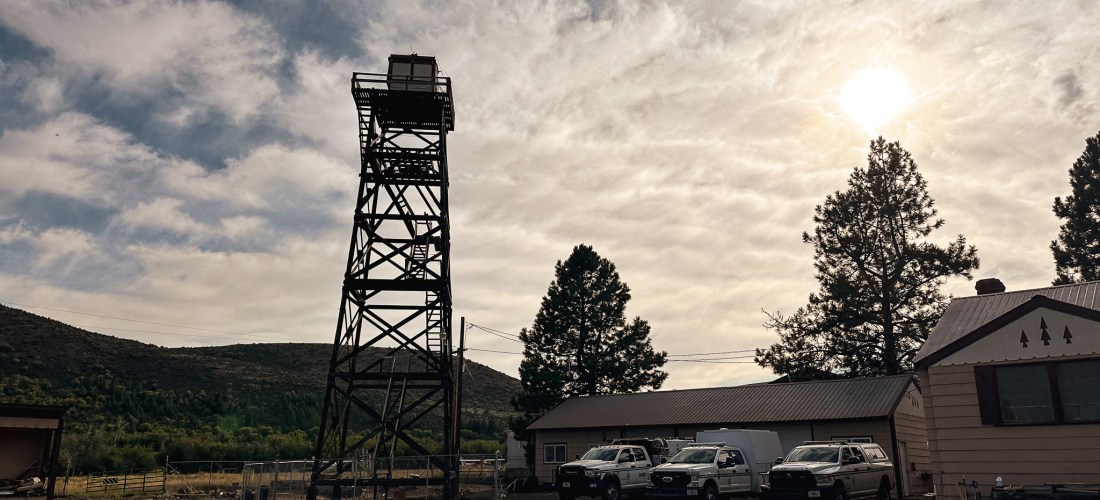
Not sure what happened to our picture together so here’s another picture of the lookout

Mount Ireland L.O.

Oregon Lookouts

Location.

Wallowa-Whitman National Forest

Status.

Active; Currently standing

Estimated drive time from Portland, OR.

7 hours

Date visited.

July 11, 2023

Elevation.

8,346′

National Historic Lookout Register.

US 1338; OR 153

Trip Report.

Day 4/9: Lookout Road Trip 2023

Garnet had already visited Mount Ireland in September 2022 while heading to the FFLA Western Regional Conference (post). He had met the lookout attendant staffing the lookout at the time, Warren, and his wife. Garnet ended up talking to him for hours, helping around the lookout, and exchanging phone numbers. He talked very highly about Warren and his passion for Mount Ireland. We knew we wanted to go back sooner than later in hopes that I would get a chance to meet him as well. Unfortunately, his wife was having back issues and struggling to make the climb by the end of season. We were disappointed to find they wouldn’t be back this season after working it into our route. I believe she was having surgery to help with her back issues and I’m hoping she makes a good recovery. Hopefully, we will get a chance for our paths to cross again. Based on the information we had from the other lookouts in the area, the Forest Service hadn’t found a suitable replacement and there wouldn’t be anyone staffing it during our visit.

While packing up our camp, a truck driving by stopped to let us know the O’Rouick spring on NF-1010 had good water for drinking. They appeared to be locals, so we took their word for it and topped off our water reservoirs. Normally we wouldn’t trust drinking untreated water directly from a spring, but this one was piped and we had no issues with it afterwards. We headed out of the Umatilla NF via NF-10 towards Granite. You are essentially in the Wallowa-Whitman NF by the time you reach the small mining town. We took a quick spin through Granite while we were there. The main convenience store with gas was posted for sale, so I’m not sure if this would be a reliable source for fuel. We turned onto NF-73 to head towards Sumpter (a left turn if you’re coming out of Granite, but a right turn if you’re coming from NF-10). We followed this until we reached NF-7370 off to the left. It was on a blind corner from the direction we were coming and we initially drove past it. Garnet noticed it as we were already driving by, so it was a quick turn around. It’s a more obvious road coming from the other direction. There is actually a sign for the Mt Ireland L.O., but it is offset from the road and slightly being overtaken by brush. We followed the NF-7370 road to the junction with NF-100 that will take you the last bit to the trailhead. This is a drivable road for low-clearance vehicles, but it is narrow and steep with drop offs along some sections. We arrived at the trailhead, or what was left of it, just before noon. Garnet said that last year there was a big flat pull around area that used to offer a lot more parking. It appeared they had done some much needed thinning of the trees in the area, but used the previous trailhead for the slash piles. There’s only a few pull outs left for parking now. We picked one in the shade and started prepping for the hike. There was also a large white truck parked in the pull out closest to the start of the trail. We were surprised to see anyone else here since it’s already considered a pretty lonely trail and we were here on a Tuesday.

Trail heads to the left
Trail heads to the right
Trail heads to the left
Where we were headed
Campsite at the road crossing
Headed towards Mt. Ireland, trail heads left
Headed towards the trailhead, trail heads right

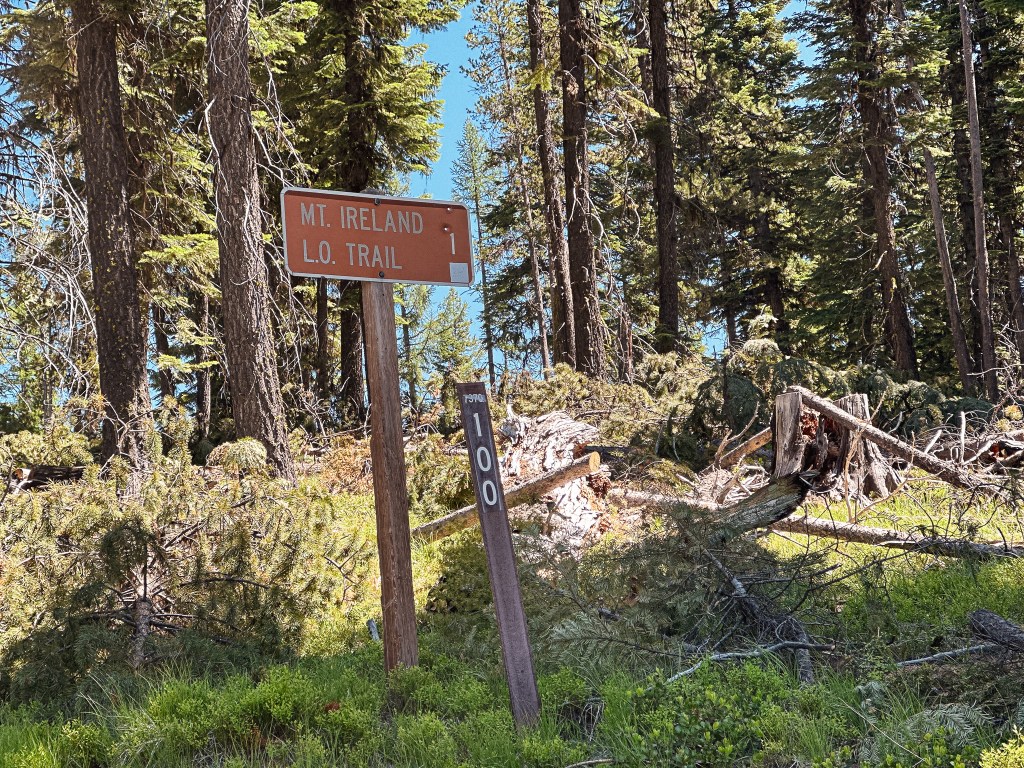
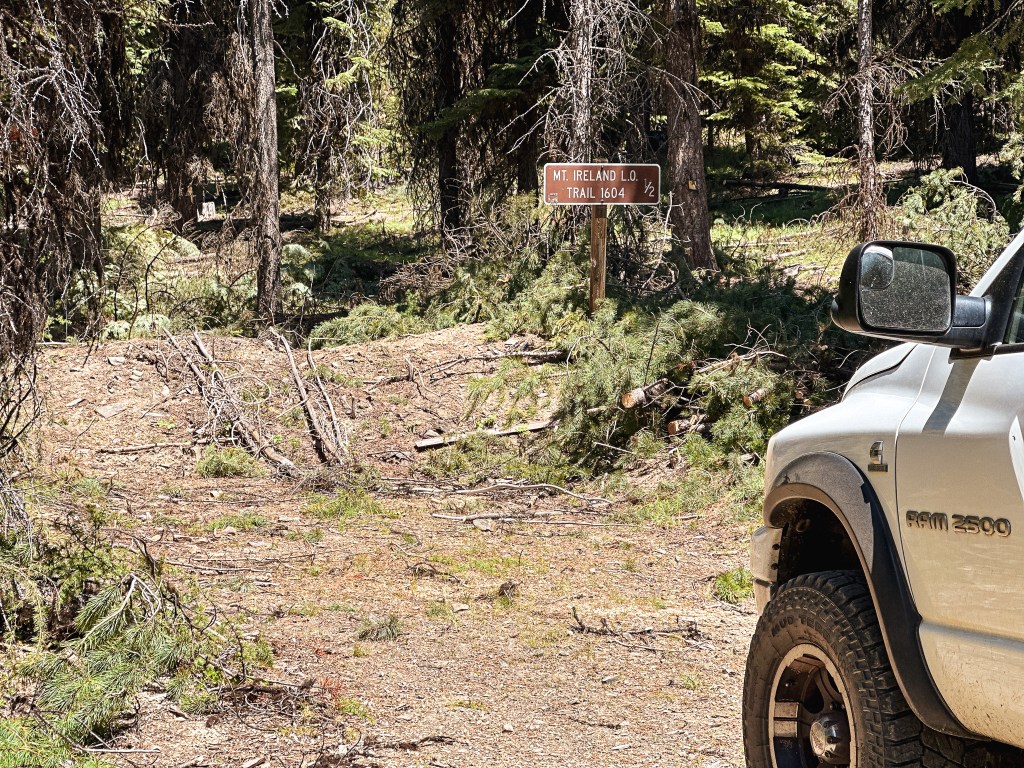
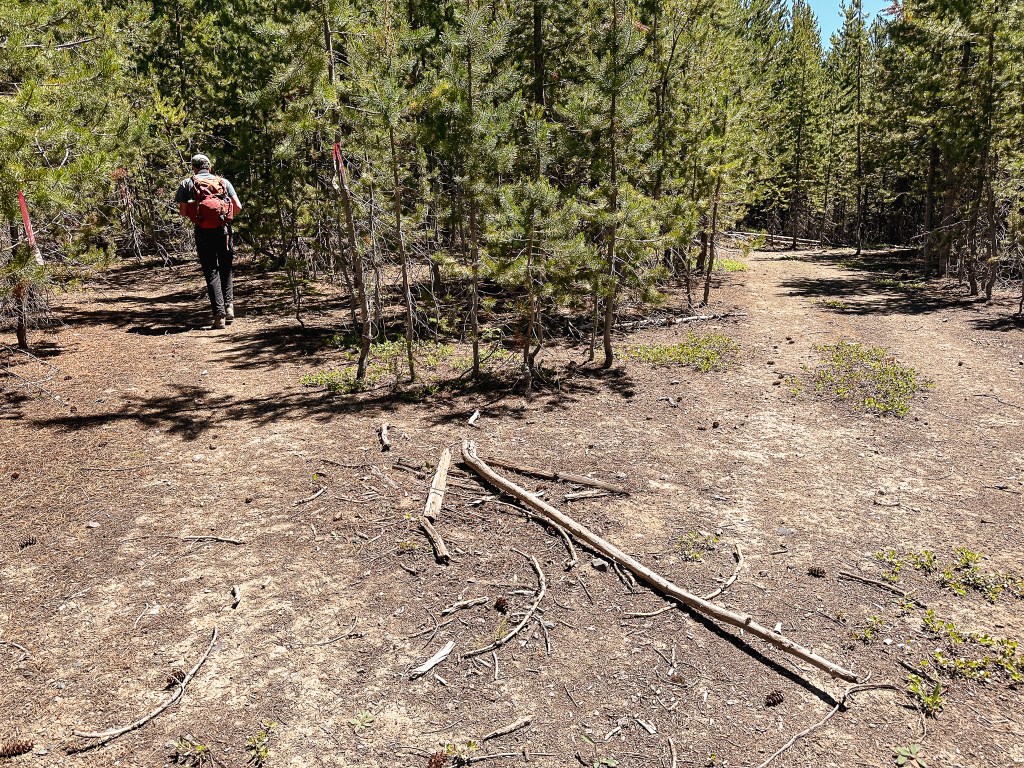
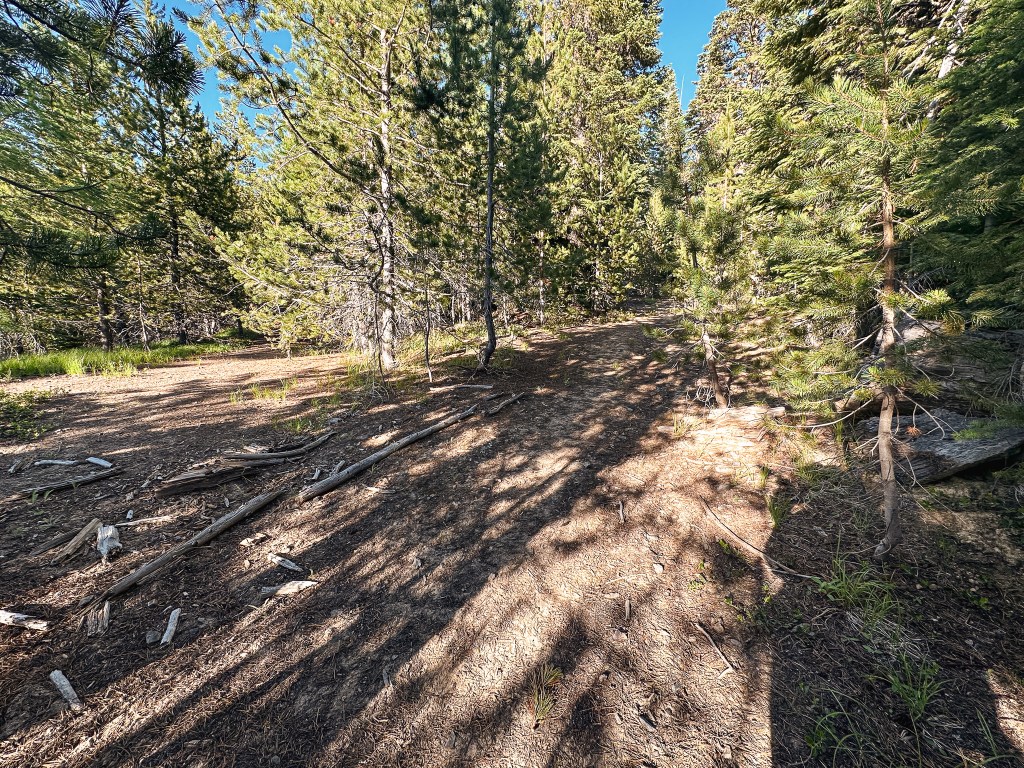
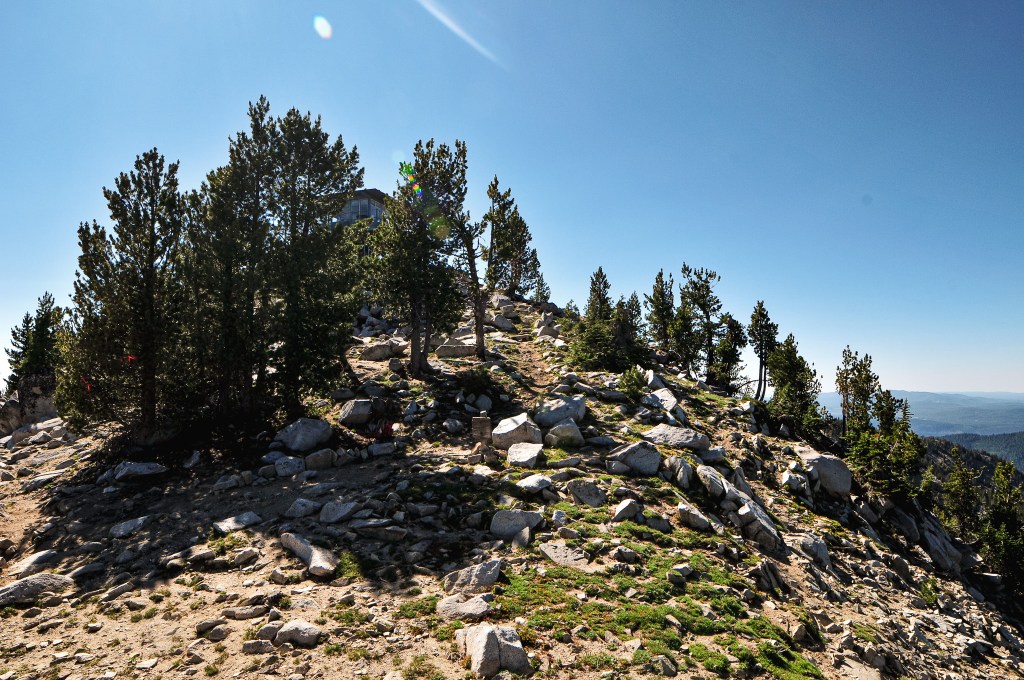
There is a surprising lack of online information for this trail. It’s not listed on AllTrails, Oregon Hikers (minus a trip report), or even the Forest Service’s website. This probably explains why it’s not heavily trafficked. The hike starts along the old decommissioned road that is marked with a sign post for Mt. Ireland L.O. Trail #1604. The road steeply climbs for a half of a mile to meet up with the trail. There are a few turns along the road to note, but all seemed to be well flagged or blocked off to corral you in the right direction. The first turn was off to the left where some flagging and a make shift arrow pointed the way. The second was shortly after to the right, the path to the left had some branches laid across it to signal not to head that direction. The final turn is off to the left after a particularly steep section of road where the official trail begins. It looks like the road might continue straight, but there were once again more branches laid across to signal you shouldn’t go that way. Once on the trail it starts to level out for the next mile. Make sure to look up occasionally for old insulators in the trees along this section, we were able to spot more than a few. You will get glimpses of where you are headed through the trees, which will either be encouraging or discouraging to your progress. While we were stopped to look at the fire lookout through the binoculars we heard a helicopter in the distance. We patiently watched as it landed on the helispot for Mt. Ireland and took off again. This could only mean one thing, they found someone to staff the lookout. Now it made sense why someone else was parked at the trailhead on a Tuesday. The trail eventually crosses an old road with a camp spot and starts to gain elevation again. Garnet remembered there being a trail sign here, but it looks like the sign or the tree have since been removed. A trip report from the Wandering Yuncks a year prior confirms this sign existed (post). We came to an exposed junction with an ATV trail around the 2.5 mile mark. We turned left to head up the last steep mile to the lookout. You will start to lose tree coverage here, so make sure to take advantage of the shade and bring lots of water. The whole while we were hiking we were able to watch the helicopter return 3 or 4 more times. Unfortunately, we didn’t make it to the summit in time to see their last run up close but it was still neat to watch from the trail below. There was an official U.S. Forest Service ATV parked on the trail where it became significantly more rocky. This allegedly used to be the old road to the lookout, but even an ATV wouldn’t be able to make it all the way now. The last pitch of trail before you reach the summit is steep, dusty, and loose for footings. Along this section we were passed by a group of four fire crew members heading back to the ATV. They had been there to help open up the fire lookout for the season and get the new lookout situated, it was his first day! It looks like we had just missed all the commotion, most likely for the better though since we’d probably be in their way.

Photo taken by Garnet

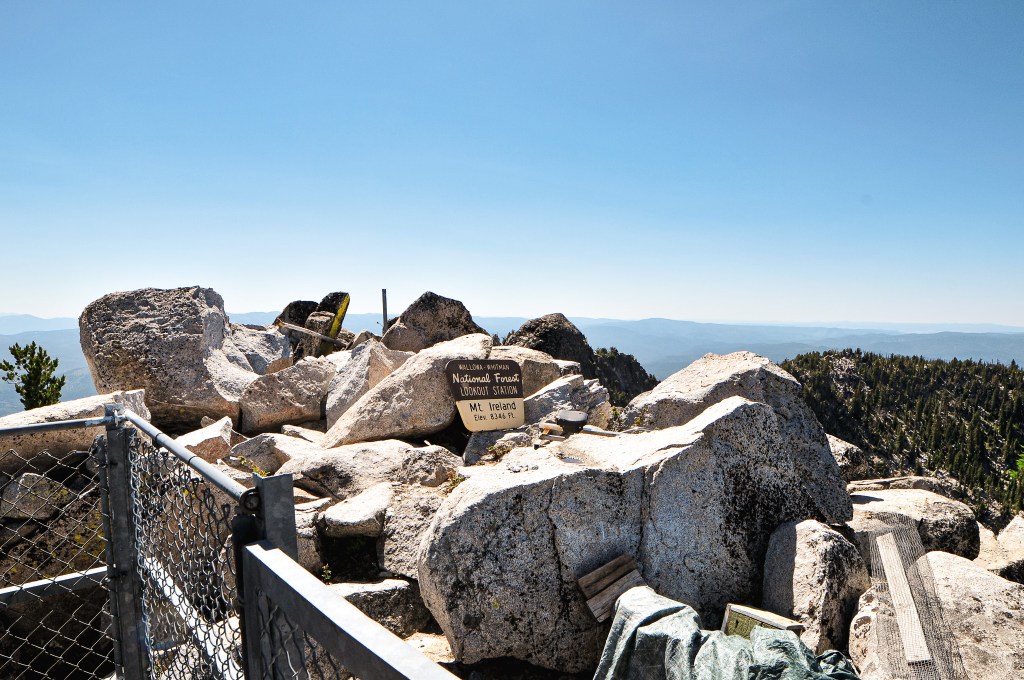
As I reached the saddle below the fire lookout, I looked up to see someone on the catwalk looking down at us. I waved up to them to say hello to which they said “you’re doing better than I did”. I laughed and replied “I’m not so sure about that” as I wheezed my way closer to the lookout. He ended up inviting us on the catwalk if we were interested. We gladly joined him and talked for a while about fire lookouts, our trip, and the surrounding area. He joked about how he couldn’t wait to get up here for the peace and quiet only to have his first visitors come mere minutes after the fire crews had left. He was very hospitable as he offered his stools for us to sit on in the shade and even refilled our empty water bottles before we left. We mentioned how we could see the helicopter making deliveries on our way up and he said that they only get one for the season so he had to make it count. Anything else that he might want throughout his season he would have to be pack up himself. This is also typically a good spot to see mountain goats, there is even a salt lick for them provided by the Forest Service, but they were no where to be seen after all the noise. We thanked him for his time and wished him a good (and more importantly quiet) first season!

Lookout Darren.

This was not only Darren’s first day on the job, but also his first season as a fire lookout ever. He said it had been a bucket list item for him ever since he visited a family member that used to staff one. He has two dogs that he plans to accompany him, but they weren’t there yet since he was planning to hike out the next day. His official season didn’t start until that following Monday. He used to be a state trooper for the Oregon State Police and has also done work for ODOT auditing trucking companies. He grew up in Baker City and currently resides there now, but has lived in different parts of Oregon as well during his time working for the state.

History.

A cabin with open platform on the roof was constructed on a stacked rock foundation in 1916. It was first staffed by Orlin L. Ireland, the son of Henry Ireland who was the mountains namesake. At the time, the mountain was named Bald Mountain. The US Geographic board approved the name change to Ireland Mountain in 1917. This was to commemorate the late Henry Ireland who was the supervisor of the Whitman NF for a decade. A cupola was added in 1928 to enclose the fire finder. In 1957, the cupola and previous foundation were destroyed by blasting it off the mountain to prep for the new lookout. It was replaced with a 13×13 CL-100 all steel live-in cab that still stands today. It is actively staffed every season.
More Information.
Wandering Yuncks

Oregon Hikers

Red Hill L.O.

Oregon Lookouts

Location.

Wallowa-Whitman National Forest

Status.
Abandoned; Currently standing

Estimated drive time from Portland, OR.

6-1/2 hours

Date visited.

September 17, 2022

Elevation.

5,020′

National Historic Lookout Register.

US 1679; OR 166

Trip Report.

We headed back out to HWY-3 from Courtney Butte once we were free from the confines of the caravan. We headed south towards Enterprise for another 20 miles until we reached the turn for NF-46 off to the left. According to the map, Red Hill would be situated just off of NF-46 and should be obvious. Though we knew this wasn’t always the case, an immediate example being our visit to Lookout Mountain the previous evening. As we headed up NF-46, I was less confident that we’d have enough time to get there and back before dinner. I wasn’t going to miss out on that this time! I gave us a cut off time of 5:30PM. If we hadn’t made it there by then we would ultimately turn around and plan to visit on Sunday instead. The first portion of NF-46 is paved and wide enough for two large vehicles to pass each other, it looked like relatively fresh pavement too. Once it turned to gravel there were some pot holes from wet condition drivers in certain areas. It was a mostly decent road and you would be able to drive it in a passenger vehicle with some caution.

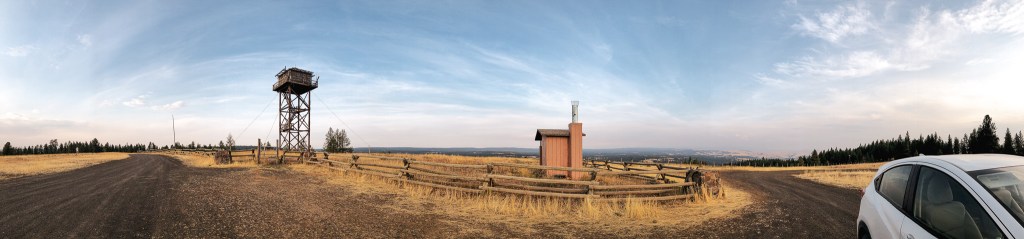
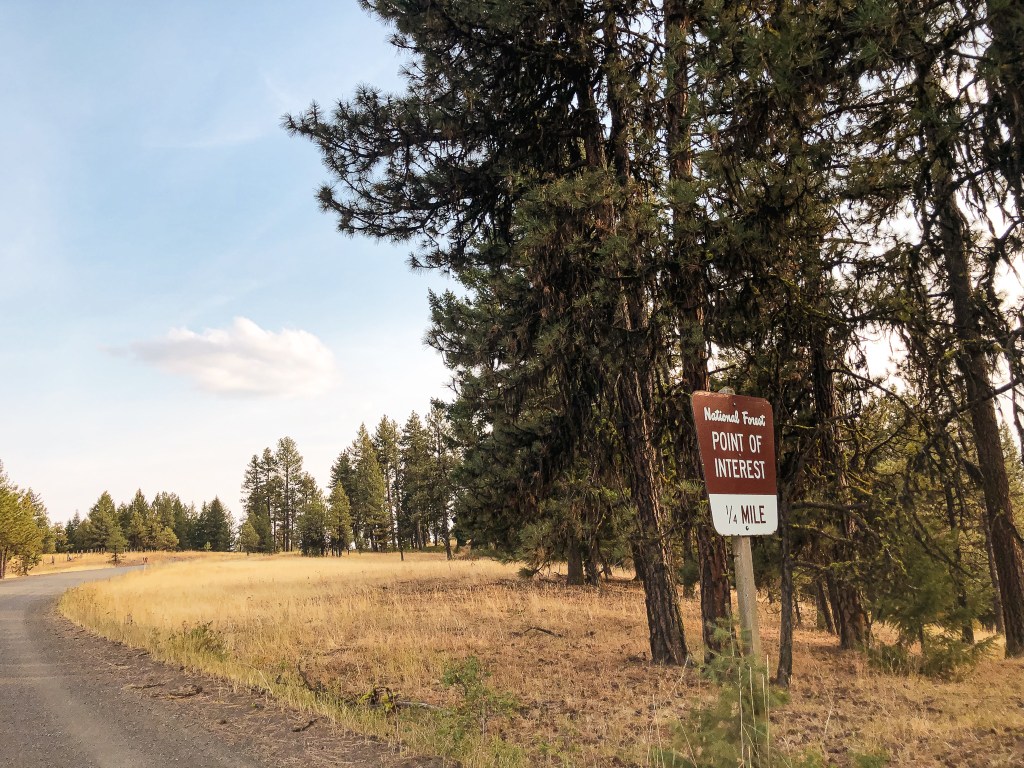
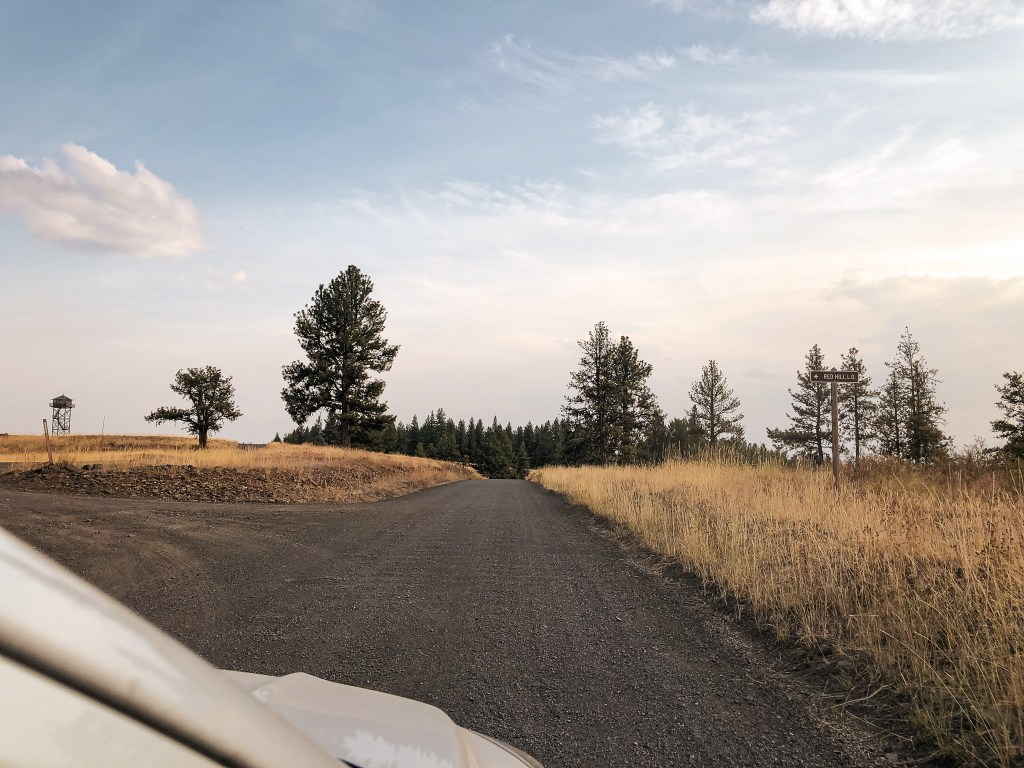
We reached Red Hill almost exactly at 5:30PM. It was about 22-1/2 miles from HWY-3 to the lookout. There was a sign 1/4 of a mile from the turn off to Red Hill that just said “point of interest”. We thought that was interesting, but knew it was referring to the fire lookout. There was also a small sign for Red Hill L.O. at the turn. The lookout is located in a open field and would be hard to miss even without all the signage. We had planned to head to Kirkland Butte as well since it was so close, but there just wasn’t enough time to do it all. We would be back in the area sometime to get the ones we missed.

We parked and walked around the base of the lookout while taking pictures. We knew we couldn’t spend too much time here and gave ourselves 10 to 15 minutes to explore around. The first flight of stairs is completely removed to keep people from climbing the tower. I’m sure it helps to deter vandalism as well. The cab wasn’t in the best of shape, but the super structure looked fairly sturdy. This would make a good project for the FFLA. We left around 5:45PM and it took us almost an hour exactly to get back to the VFW post. I would’ve liked to spend more time on Red Hill, but I also really wanted the Pizza dinner they were offering.

History.

The site on Red Hill has been used for fire detection since 1922, possibly even as early as 1917. The first tower was a tree with added spikes to aid in climbing. This tree was over 115′ and the lookout attendant would climb to where the tree forked a few feet from the top. It even had its own 25′ flag pole attached to the top. In 1924, a pole tower with 10’x10′ cab was built to replace the tree. The current lookout was completed in 1949 as a 40′ treated timber tower with L-4 cab. It has since been abandoned and is in bad enough shape that they removed the first flight of stairs to prevent people from climbing the tower.