
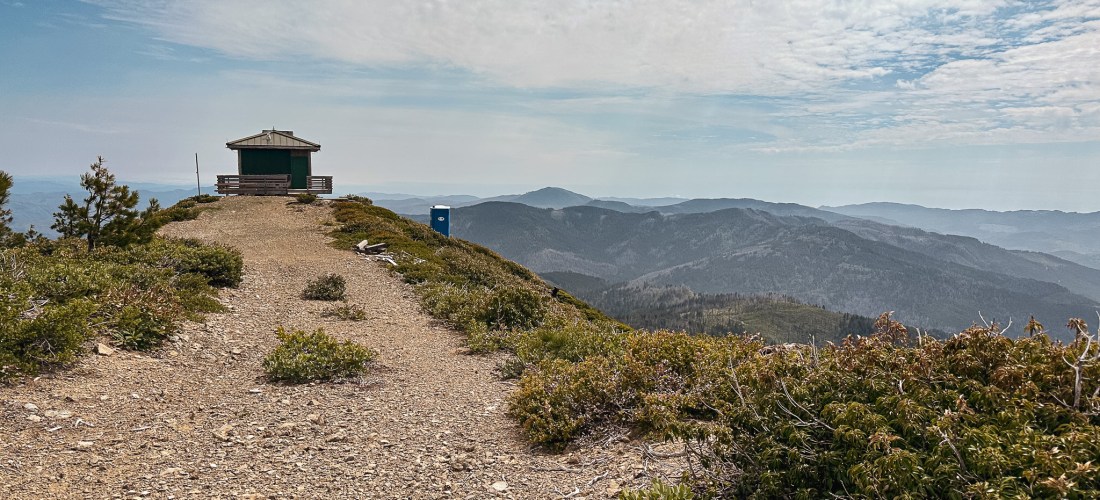
NOTICE: July 15, 2023 – this area was impacted by the Flat Fire that burned 34,242 acres through the Rogue River Siskiyou National Forest.
Location.
Rogue River-Siskiyou National Forest
Status.
Rental program; Currently standing
Estimated drive time from Portland, OR.
6-1/2 hours
Date visited.
May 27, 2023
Elevation.
4,223′
National Historic Lookout Register.
US 13; OR 4
Trip Report.
We packed up our camp near Quail Prairie and started to head back out of the forest. We made a brief pit stop to check out Packer’s Cabin since no one appeared to be staying there. We also tried to find the old lookout site along Long Ridge but there were no remnants to confirm we were in the right spot. We white knuckled our way back out on the N Bank Chetco River Road. Garnet would disagree with this statement since he was driving and thought it was fine. But, people really do drive too fast on this road. We watched someone swerve off the road to avoid us because they had taken the corner too fast. They were lucky to be on the side with the shoulder. If they did the same maneuver on our side of the road it would’ve been off the side and down the cliff instead. Big yikes. We made it safely out to HWY-101 without any other incidents and started back tracking towards Gold Beach. We planned to re-enter the forest via Jerrys Flat Road in Gold Beach that follows along the Rogue River and would eventually turn into NF-33. We wouldn’t exit the forest again until we were on the other side in Powers. The turn off for Jerrys Flat Road is right before or after the bridge depending on which way you are traveling. We were heading North on HWY-101, so it was right before the bridge off to the right. Despite the cautionary warning from the ranger the day prior we decided to try our luck with Snow Camp. The plan was to see how close we could get. If there was truly 14″ of snow on the road we would park and walk the remaining distance, assuming it wasn’t too far.


We winded along Jerrys Flat Road until we passed Lobster Creek Campground. There aren’t that many roads off to the right and we knew it would be the first major junction after this campground. The road is NF-3313, but we didn’t see a sign for it when we came to the junction. Garnet mentioned there was one if you were heading west but I didn’t see it. If you reach the Quosatana Campground, you’ve gone too far. We stayed on NF-3313 for a little over 8 miles until we came to a junction with NF-3680. The NF-3313 road was made up of good gravel. There was a sign for Snow Camp pointing to the left that noted it was only 7 miles away. We decided to stop and have a quick lunch here since there was enough room to park out of the way. We also knew we’d be too hungry to wait to have lunch on the summit. The directions on recreation.gov states that it is 6.7 miles along NF-3680 to the turn off for the lookout. We continued left as the sign suggested, but our odometer clocked in around 7.2 miles along NF-3680 before we reached the gate. All the flat sections along this road were filled with pot holes that slowed us down significantly, but it was otherwise a fine road. We did encounter one snow drift, but it had melted enough since last Tuesday to go around. Even if it had been blocking the road we would have been close enough to the gate to make the hike. After seeing the snow drift, I realized that is what they meant by 14″ of snow on the road. This made me feel better about the remaining conditions for the rest of the trip since Snow Camp was the highest of the fire lookouts we would be visiting. If we could make it this far, we should have no issues anywhere else. At least in relation to snow.


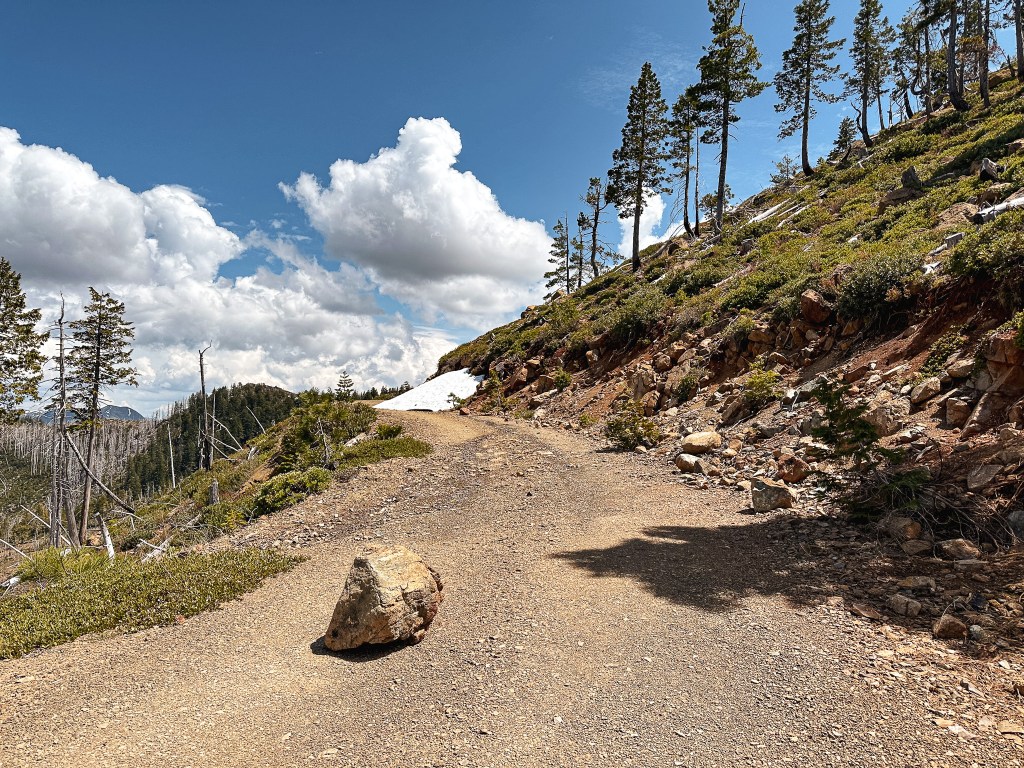
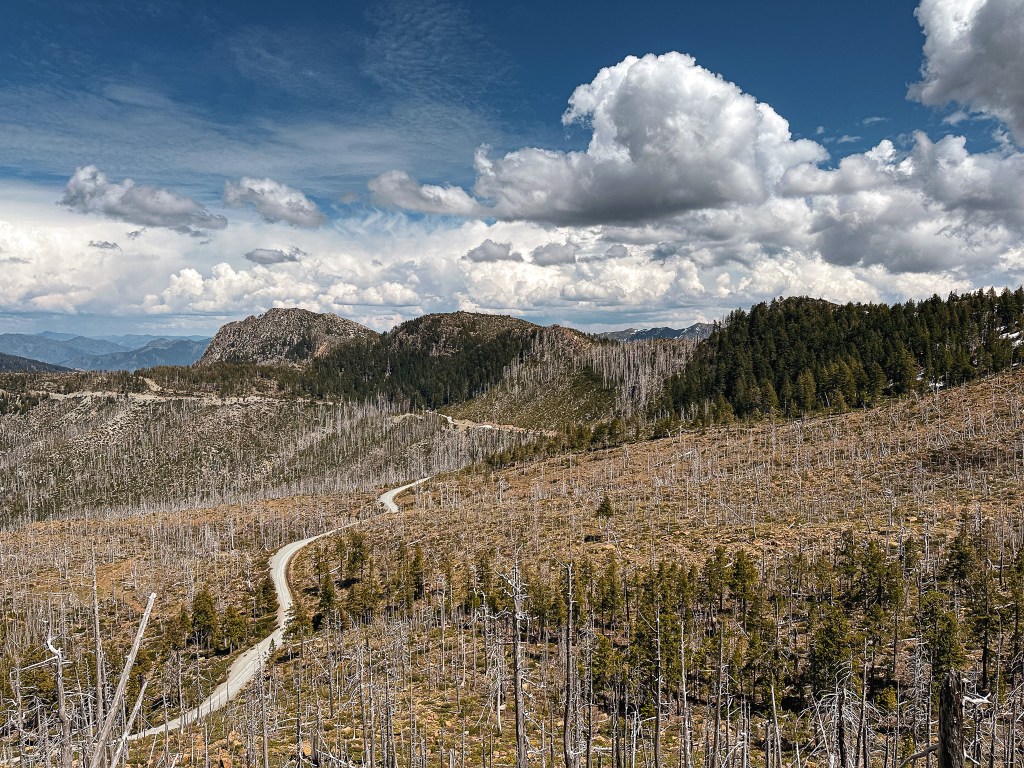
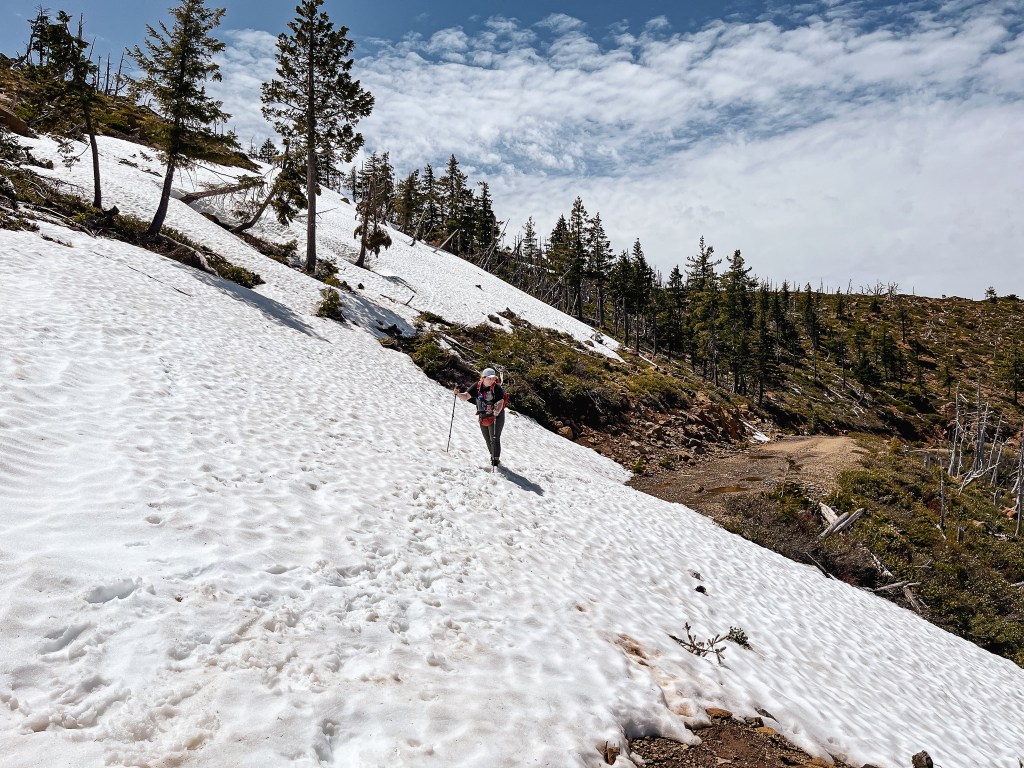
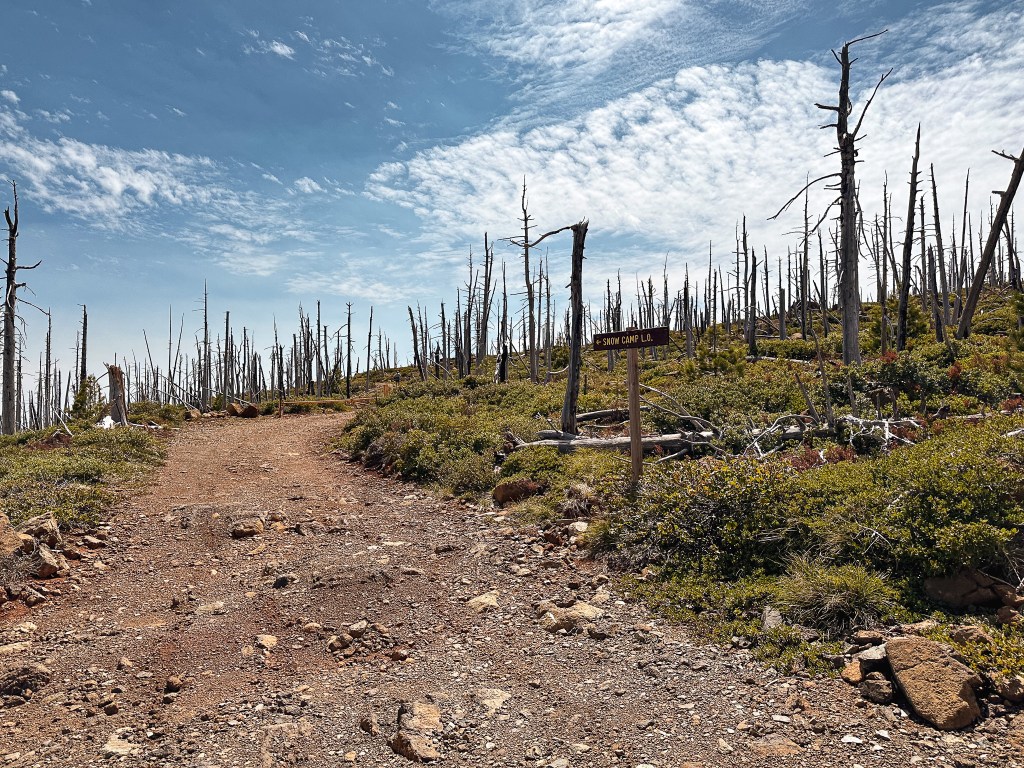

There are two options from here to get to Snow Camp. You can either hike the NF-1376 road or the trail. The sign at the gate stated that it was 2 miles to Snow Camp from here. I believe this gate is typically open when the fire lookout is open to renters in the summer. It was still closed for the season during our visit. The Snow Camp Trail #1103 starts from the same NF-3680 road a little ways back. There was a trailhead that we passed with a large group camping there. It’s roughly 3.25 miles along the trail to the summit. We decided to hike the road since it was shorter and would be easier to maneuver around any additional snow. Though it is a pretty area and I’m sure the trail is well worth the hike. We set off up the road and quickly climbed out of the shady forest on to an exposed slope. It felt like we had left the coastal range and stepped straight into Eastern Oregon. The landscape didn’t match what I thought it would be, it was much more. People often complain about how a fire destroys an area, but I don’t think they talk enough about the beauty that can come after. There is a different kind of beauty, that I really love, in a sea of ceanothus and manzanita with the matchstick ghosts of the forest past. This area was not only unique in landscape, but botanically too. We noticed a few young pines along the road that had pinecones growing directly out of their trunk. Garnet thought they might be Sugarpine (Pinus Lambertiana) at first, but later research found them to be Knobcone Pines (Pinus Attenuata). If you are unfamiliar with Knobcone Pines, their range is mainly in south-western Oregon with some patches in California. They are unique in that their reproduction is exclusively controlled by fire. They are a closed cone species meaning their cones remain sealed with a hard resin until a fire burns hot enough for them to open. An unburned Knobcone will remain unopened even after the parent tree has fallen. It favors harsher conditions and is typically associated with other plants that are fire-followers. Another interesting plant we had never seen before was a Groundcone (Kopsiopsis Hookeri). We initially thought someone had taken some pine cones and stuck them straight up in the dirt. Upon closer inspection we realized it was actually a plant. This one is considered parasitic, but was still really cool to see.


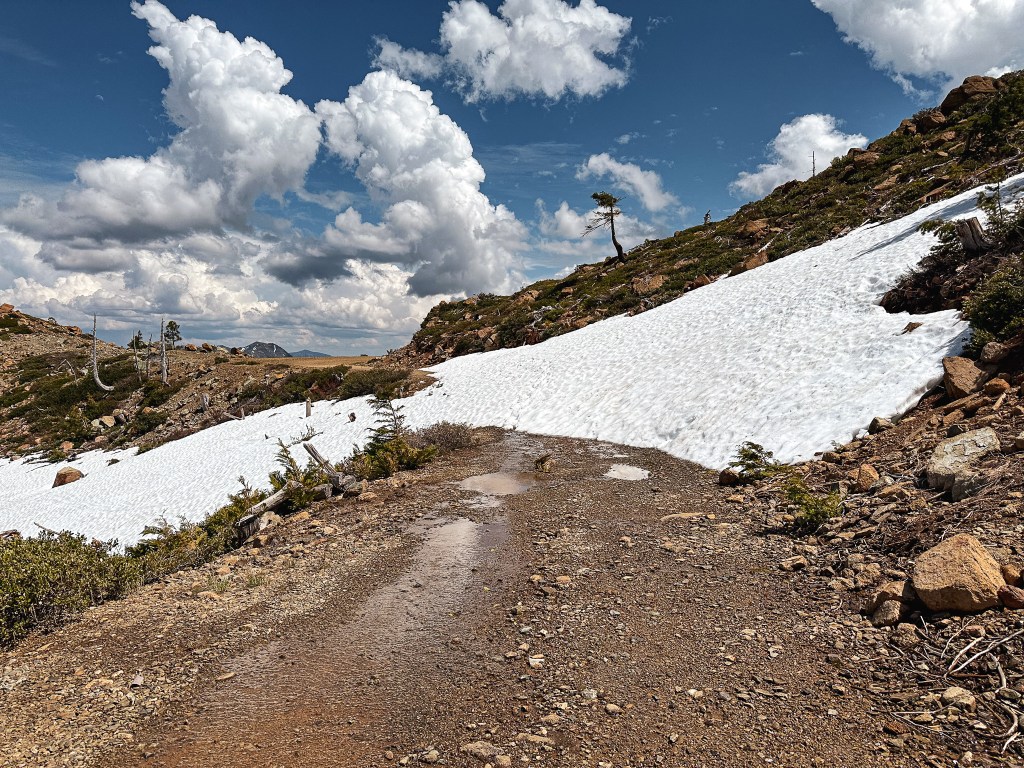
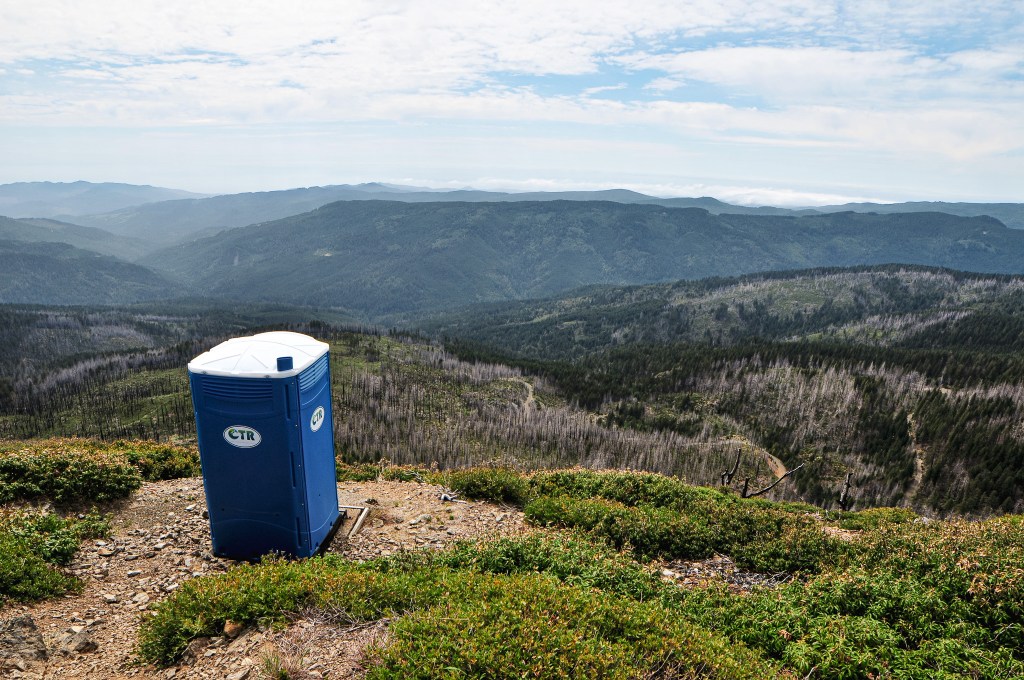
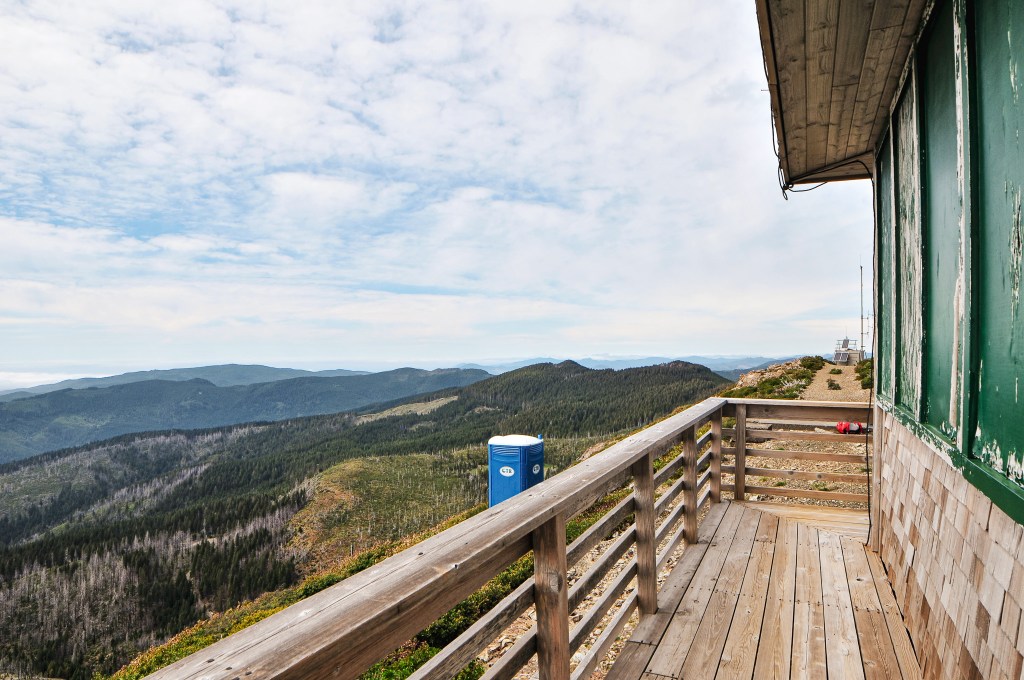
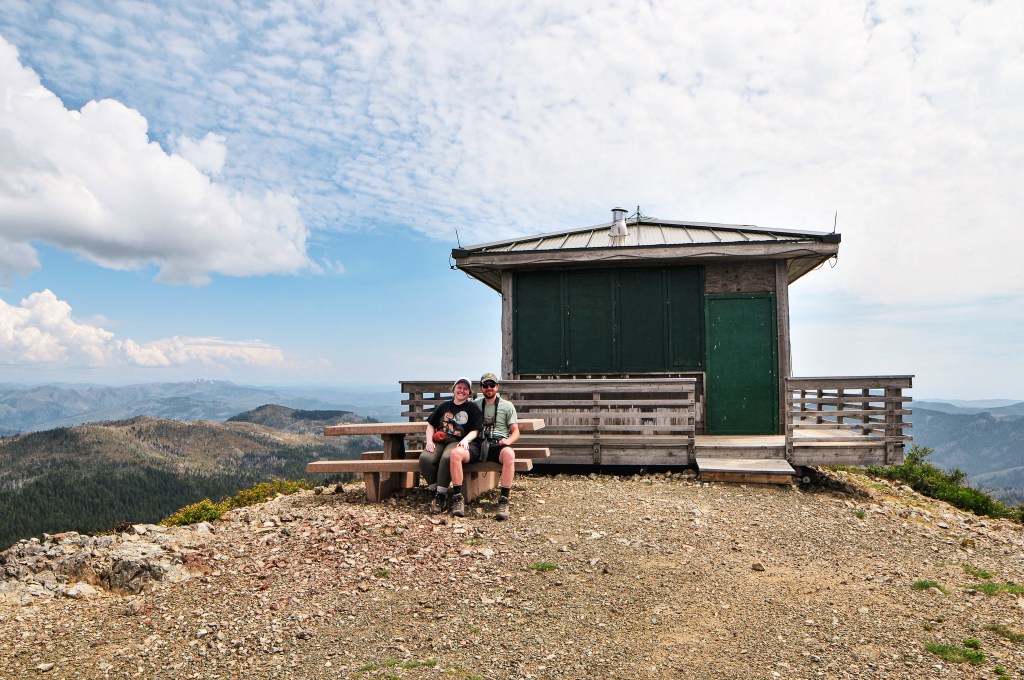
There was some major rock fall and a much larger snow drift that blocked a portion of the road we were hiking on. The Forest Service would need to spend time clearing this before they could open the fire lookout to renters for the season. There is a second gate when you come to a junction with the spur road to the lookout off to the right. There was a sign for the lookout here as well. It looked like there were recent tire tracks coming up from NF-1376 which was interesting given that the road is noted as closed and gated on the map in the other direction. We could have hypothetically connected to Snow Camp from Quail Prairie via this route, but it would have required driving 25 miles of gravel on NF-1376 from the N Bank Chetco River Road. There would also be no way of continuing north via that route due to the snow drift and other gate. We continued our hike past the second gate for the final stretch to the lookout. The Strava app tracked in around 1.725 miles from our parked car to the summit. It seems whoever made the mileage signs in this area was just rounding to the nearest full mile. The last pitch of road to the lookout is undriveable to most vehicles and very steep even to walk up. The views from the summit are spectacular though. You can see the ocean and a lot of the surrounding coastal range. I’m sure you could pick out some of the prominent peaks in the state as well on a clear day. We had some haze on the horizon obstructing our farther off views either from the wildfires in Canada or field burning. We didn’t stay for too long after taking pictures since we wanted to visit Wildhorse L.O. before setting up camp for the night. As we were hiking back to the junction with NF-1376 we saw a Jeep driving back down. We were just about to comment on how we hadn’t seen anyone too. They didn’t seem to notice us, but we could see from their tire marks and footprints in the snow bank that they got out to debate trying to drive over it. It’s a good thing they didn’t since they would have been very disappointed to find a locked gate at the end. Once back at the car we continued on to Wildhorse and hoped we would find a good camp along the way.



History.
The existing fire lookout was built in 2004 by Don Hartley and a team of volunteers. Don Hartley is the owner of Don Hartley Construction in Crescent City, CA and was a frequent visitor to this area. It is a 15’x15′ original structure that has never been used for fire detection. It was built with the purpose to be a rental for the public after the original fire lookout burned down in the 2002 Biscuit Fire. The site was first established in 1910 for fire detection when an Alidade was mounted to a post. A canvas house or rag camp was built in 1915 to provide a more permanent place for the lookout attendant to live. It didn’t see its first structure until 9 years later in 1924. A 14’x14′ cabin considered a “Hall Special” was constructed at the time and was actively used until it was replaced in 1958. The site was in service during both World War I and World War II. It was apart of the Aircraft Warning System in 1942. The replacement lookout was a standard 15’x15′ R-6 flat cab. It’s unclear when they stopped actively staffing it and added it to the rental program. A portion of the Snow Camp Trail was identified by “Chief” Elwin Frye, a packer for the Forest Service, as an Indian travel route that provided access to Windy Valley. Many of the trails in the area follow historic aboriginal routes.


 The Roaming Civic