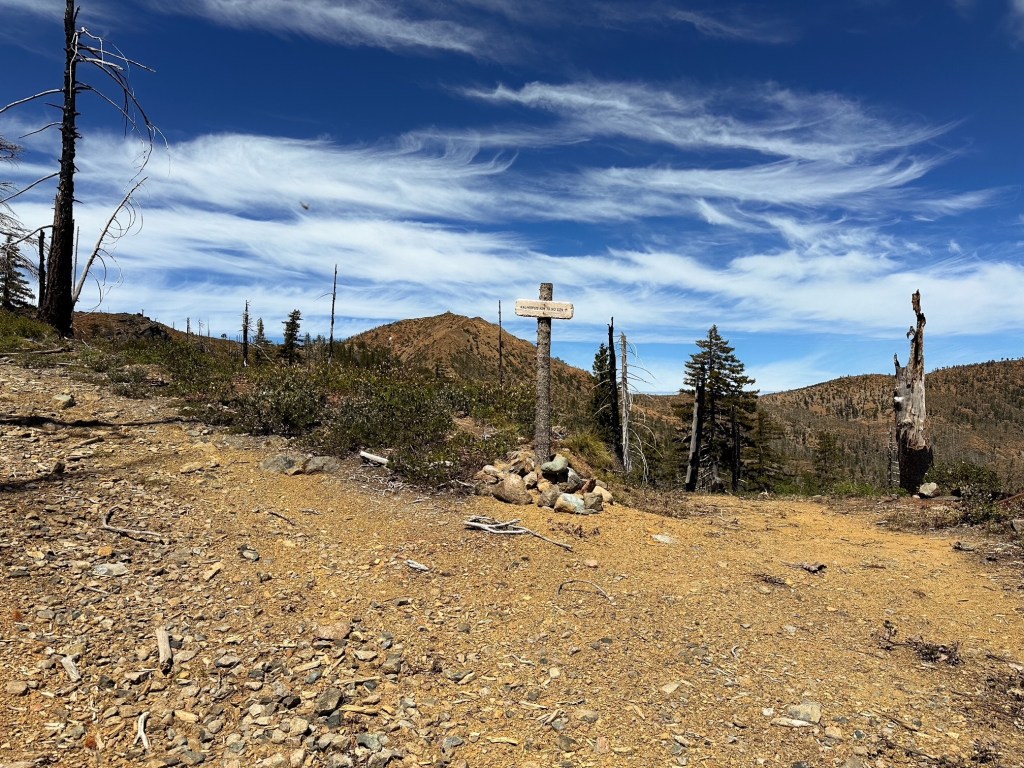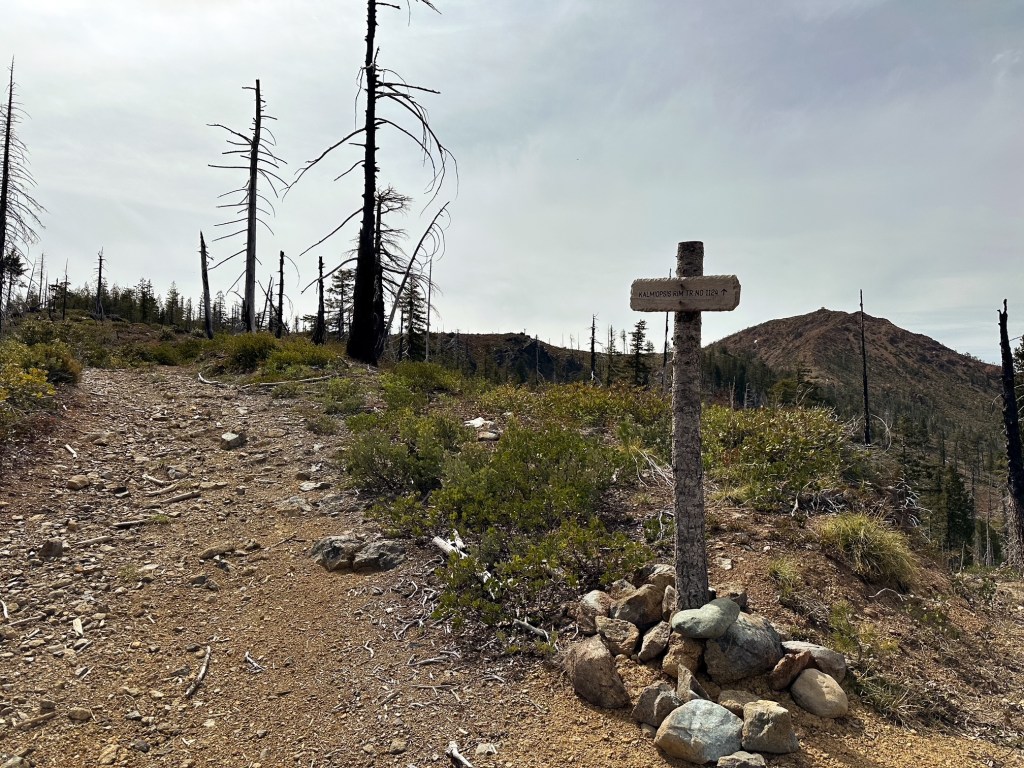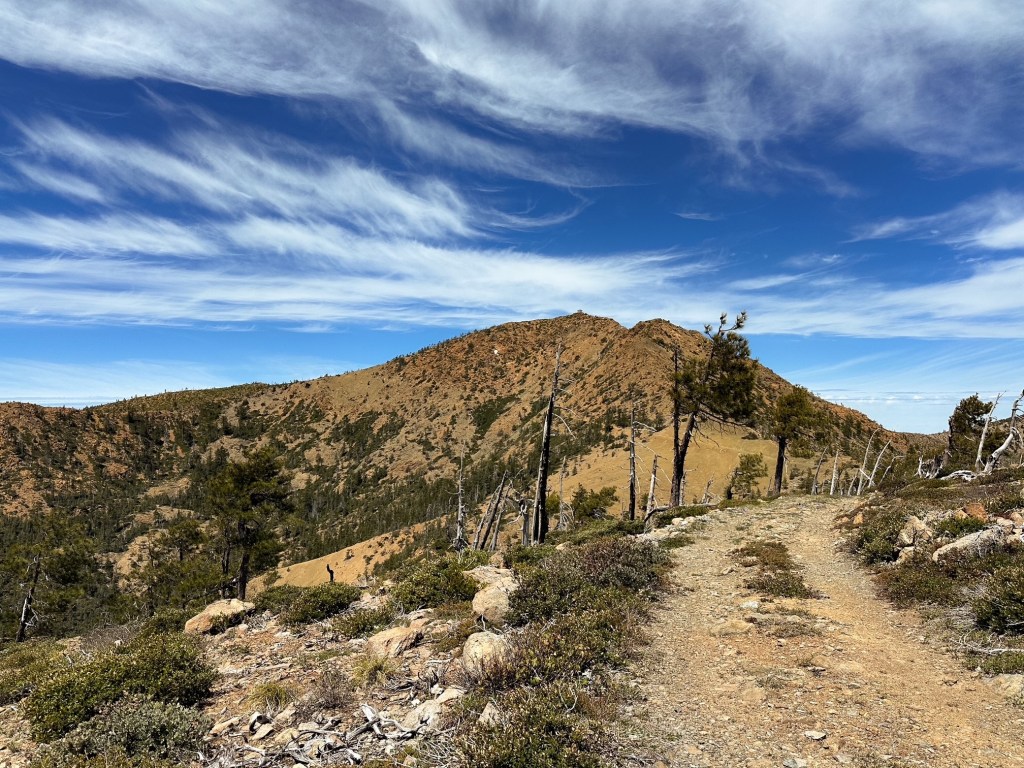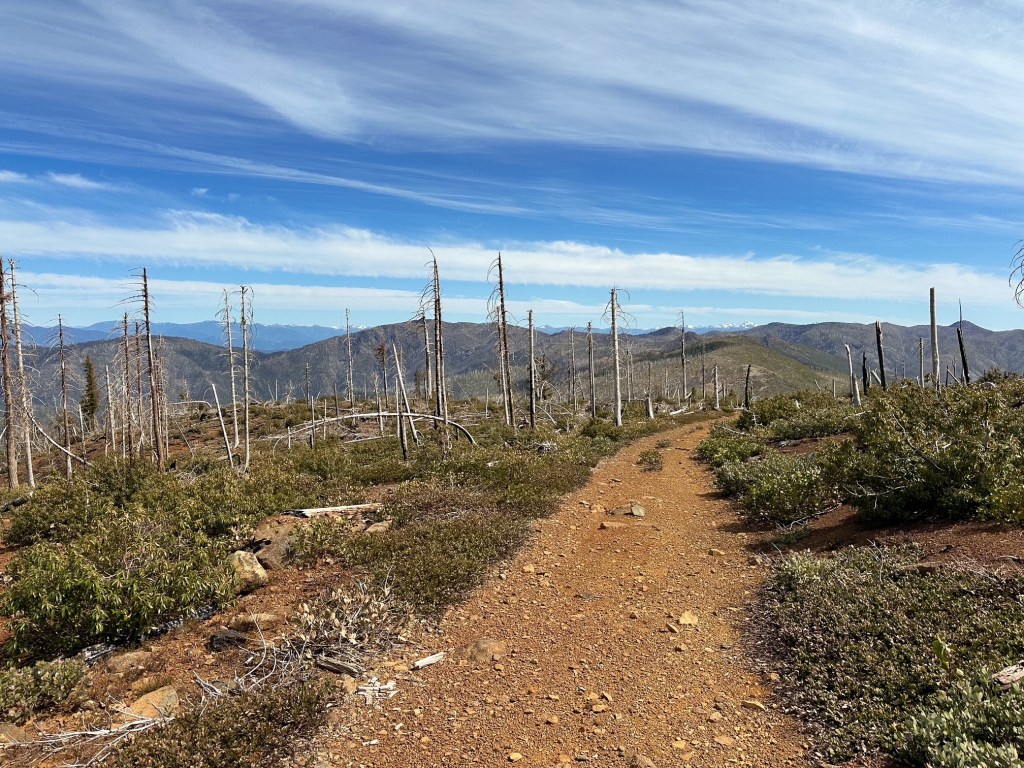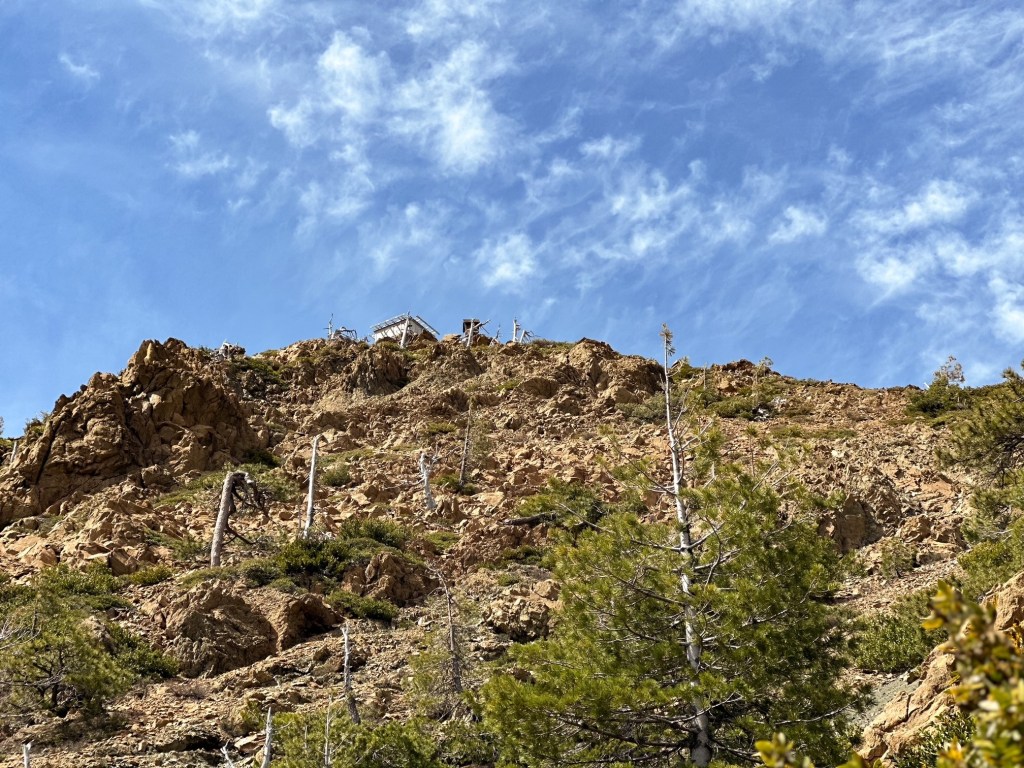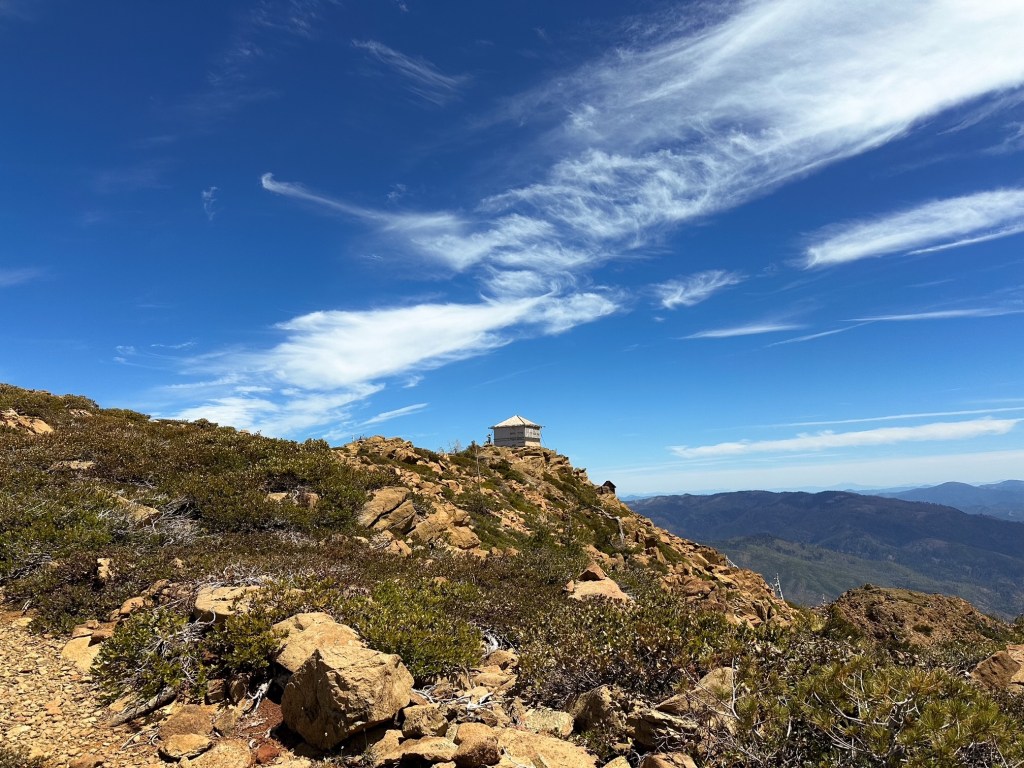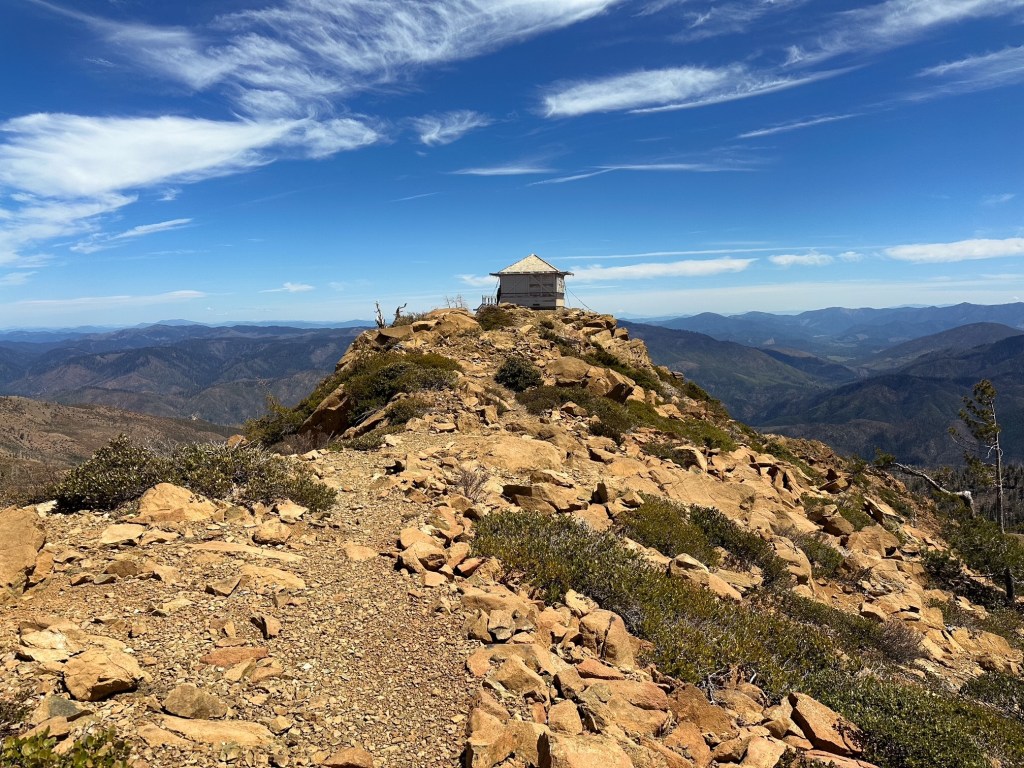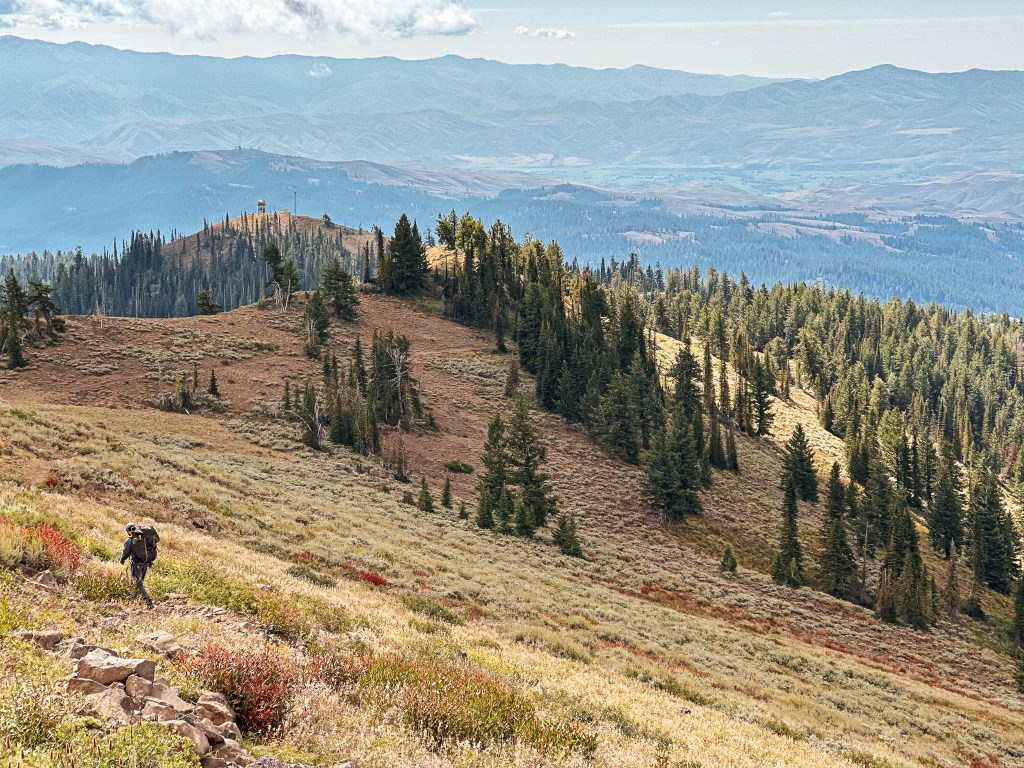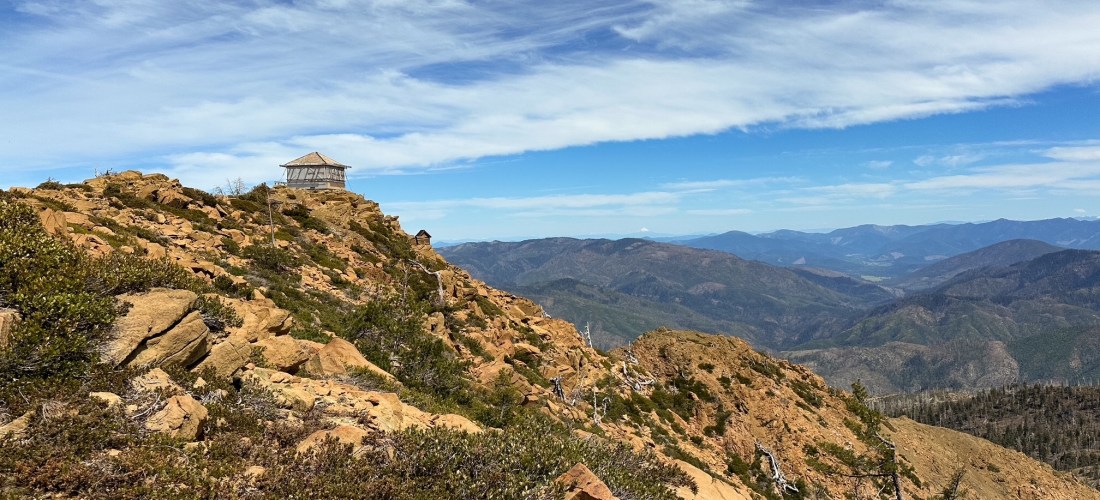
Dodger Point L.O.

Washington Lookouts

Location.

Olympic National Park

Status.
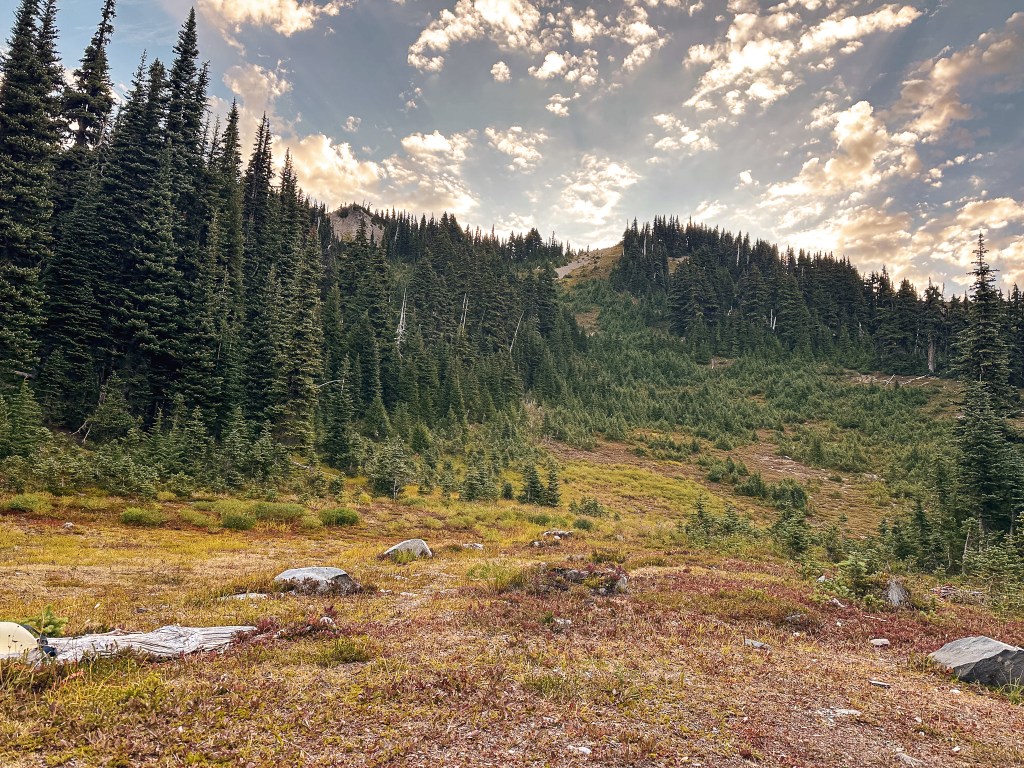
Currently standing

Estimated drive time from Portland, OR.

4-1/2 hours

Date visited.

September 1, 2024

Elevation.

5,728′

National Historic Lookout Register.

US 1112; WA 65

Trip Report.

We bounced around a few different ideas for our Labor Day trip this year ranging from the Sky Lakes to the Salmo-Priest Wilderness. We have been heavy handed on the backpacking this year and wanted to continue that trend. Our final decision wasn’t made until the Monday prior when I booked our permits. The wildfire season has been hot and fast this year, but had quieted down some in the mild August conditions. Though after regaining cell service this weekend we found the fire season had been extended. Lightning had caused some new fires over the weekend and predictions are calling for a hot September. It was quite the contrast from when we left the cell service range prior. Normally smoke and fire ends up dictating our plans for this high holiday weekend. It still played a minor role but it was nice to have what felt like more flexibility. Dodger Point has been thrown around a couple times in the past as a potential trip option, but we have been deterred by the cost of permits and the time needed to get there. It requires a bit more planning than your typical fire lookout. We ultimately decided to bite the bullet after agreeing that the permits are not going to get any cheaper or the distance any shorter or us any younger.
Things to note for a trip to Dodger Point L.O.:

  • America the Beautiful Pass – Annual $80 or 7-Day $30 for trailhead parking
  • Olympic National Park Wilderness Permits – $8 per adult per night + $6 reservation fee (2-adults for 4-nights was $70). Permits for this can be found under the Elwha starting area on Recreation.gov. Please note: Recreation.gov imposes a 15-mile limit between campsite permits. If you select another campsite first such as Humes Ranch, the Dodger Point campsite should appear as an option for the second night. If you plan to hike to the Dodger Point campsite on the first night the permit will have to be set up in person, via e-mail, or over the phone with the WIC.
  • Bear Canister – the back country campground below Dodger Point does not have a bear hang wire and a bear canister is required for storing your food properly. You can check these out from a WIC on a first-come first-serve basis with your permit if you do not own one.
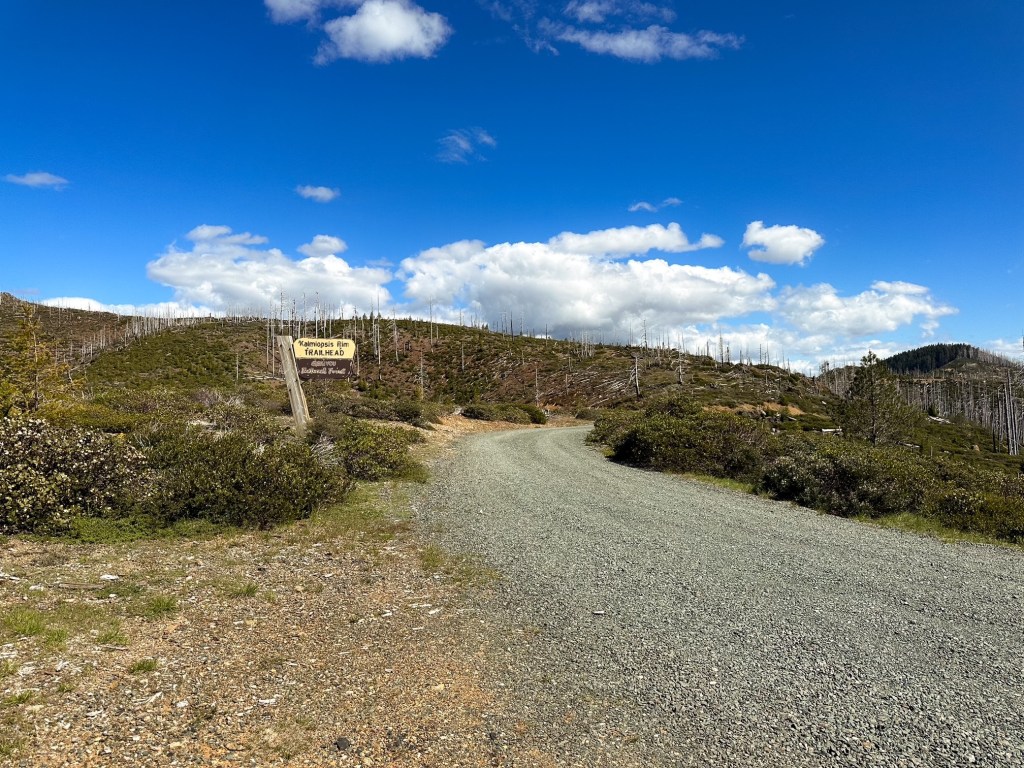
  • Parking – the Olympic Hot Springs Road which had previously provided access to the Whiskey Bend trailhead has been washed out indefinitely since December 2017. The closest trailhead for parking is Madison Falls and the remaining distance along the road must be hiked or biked. This adds an additional 7 miles (one-way) of hiking along the road to access the necessary trailhead.
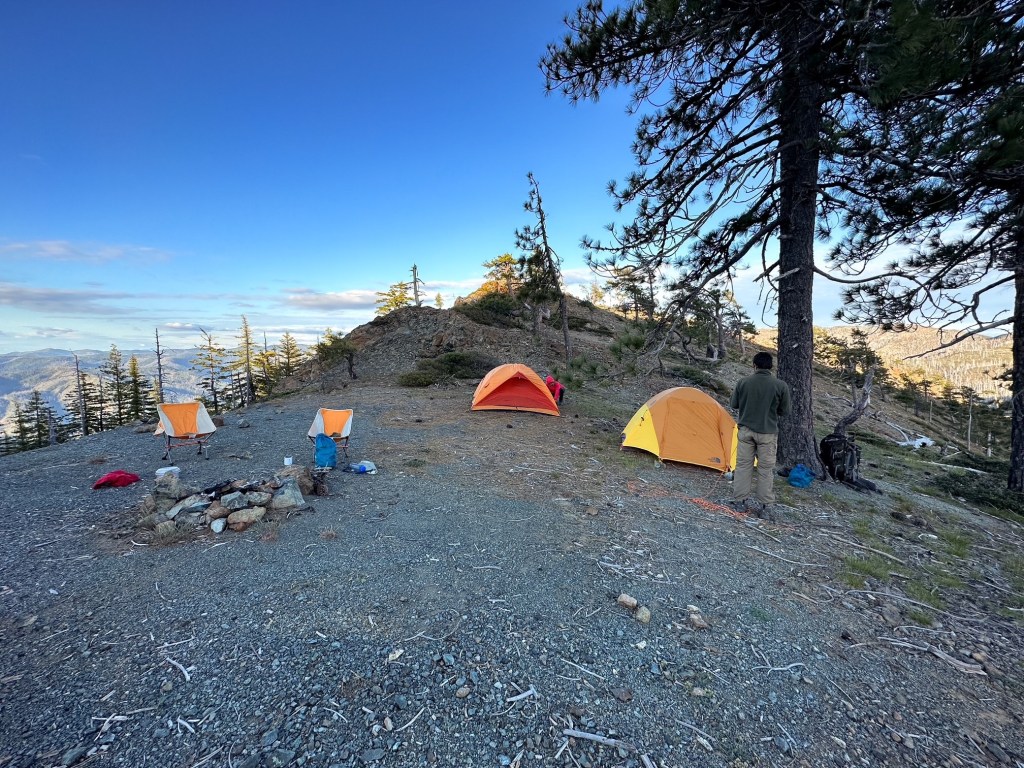
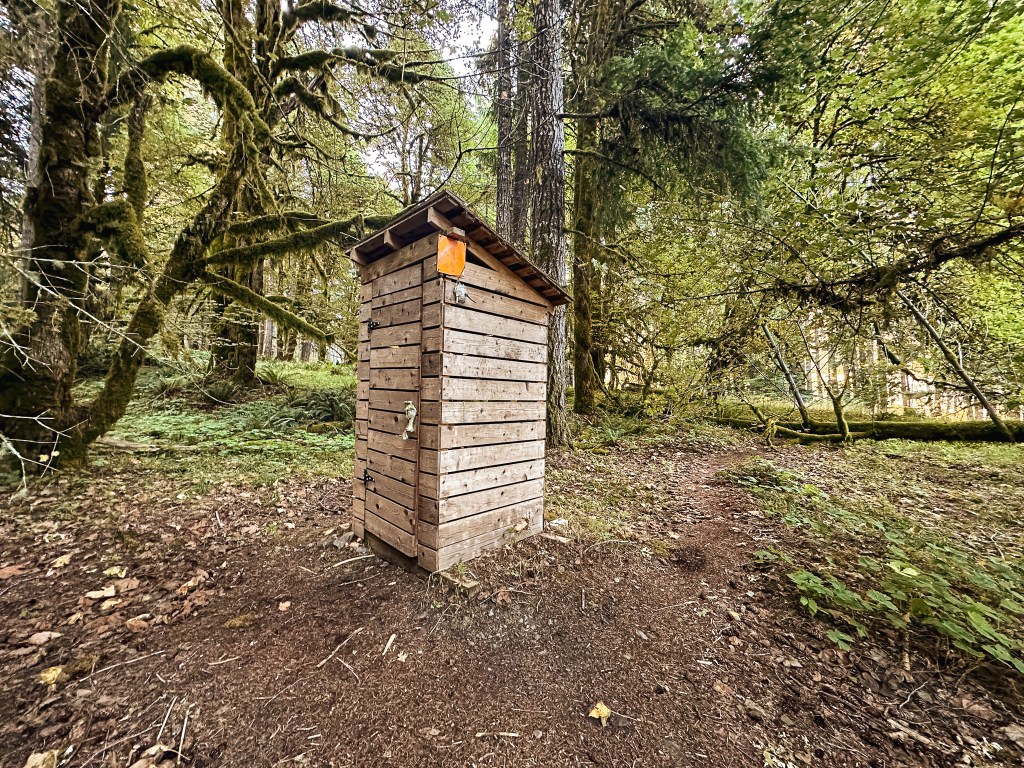
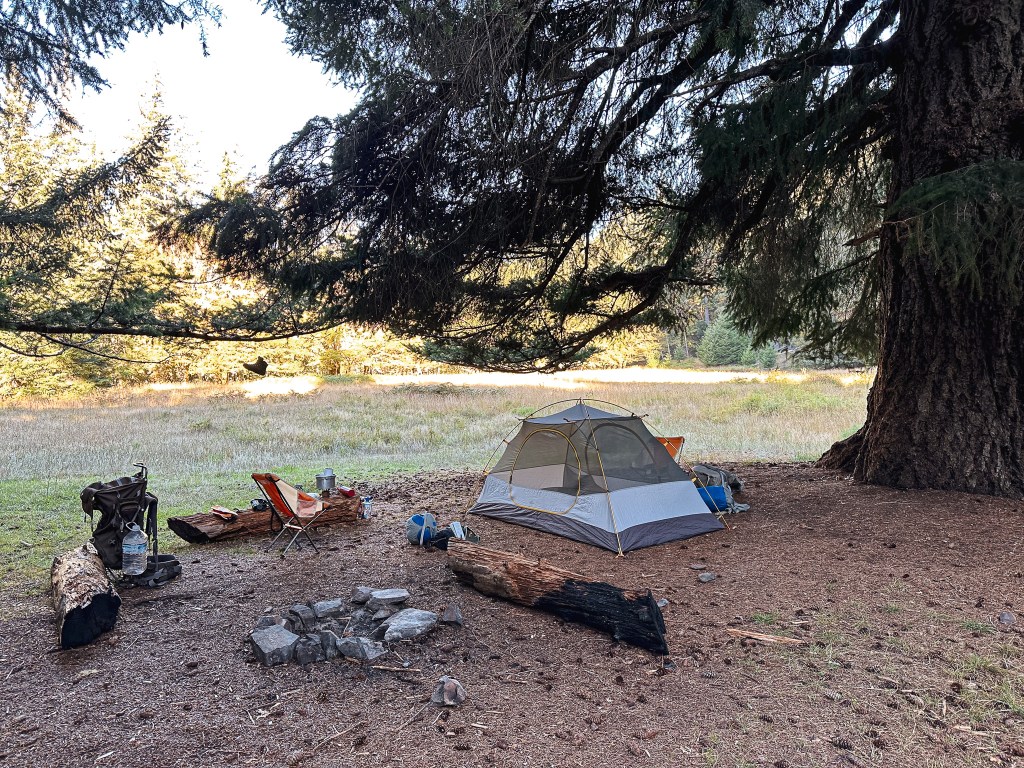
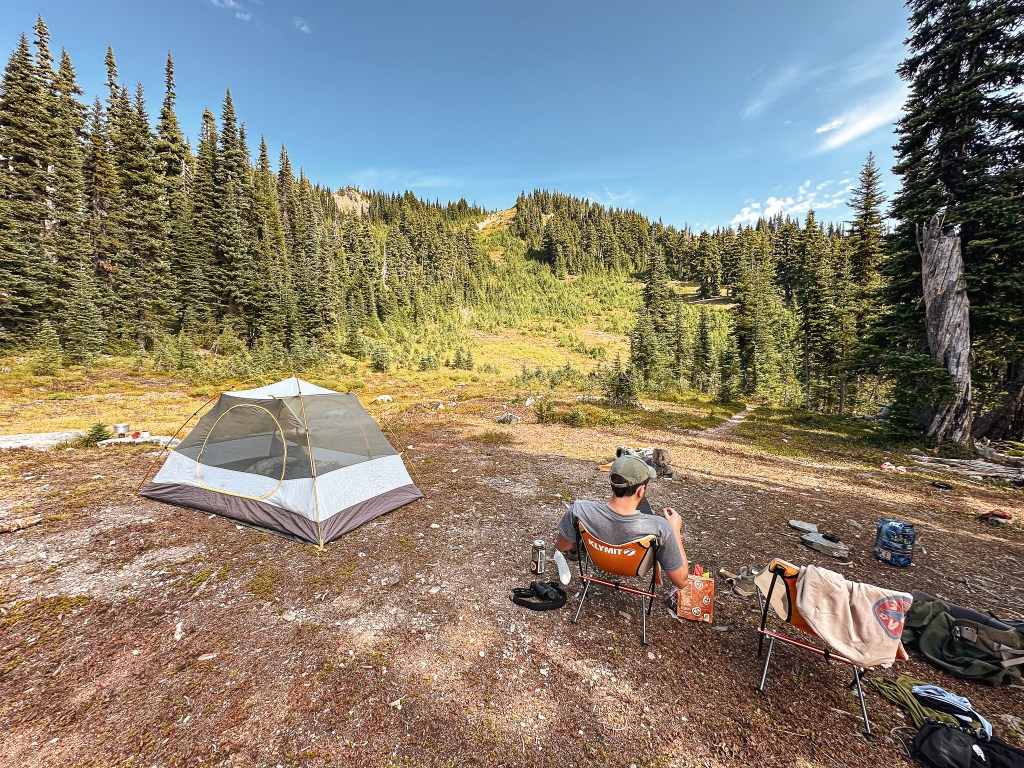
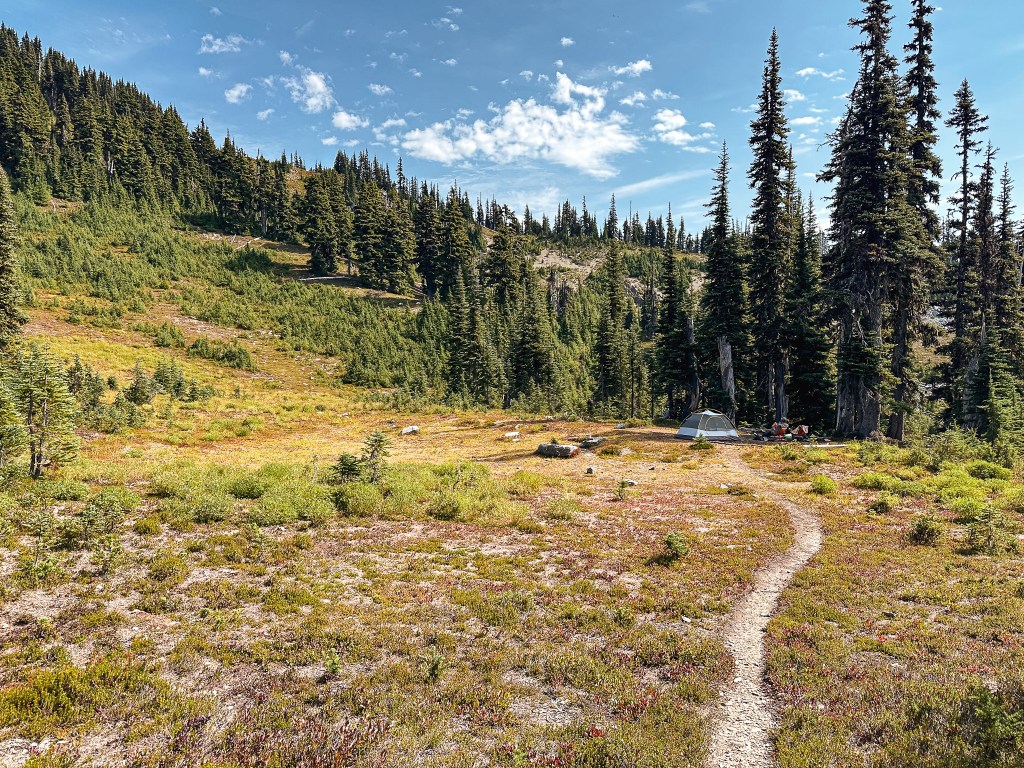
  • Camping – There are two backcountry campgrounds that hikers typically use on their route to Dodger Point. The first is Humes Ranch along the Elwha River at 9.5 miles from Madison Falls TH. There is a bear hang wire here and back country toilet. Though trip reports confirm the bear wire is in bad shape and is noted as more of a bear piñata. It was completely down during our visit but I’m not sure if that was intentional or not. The second is appropriately named Dodge Point as it sits just below the fire lookout off of the Long Ridge trail. This campground is located 20 miles from the Madison Falls TH. There is no bear hang wire, no toilet, and no campfires allowed. It seems that most break up this hike into a 2 or 3-night backpacking trip.
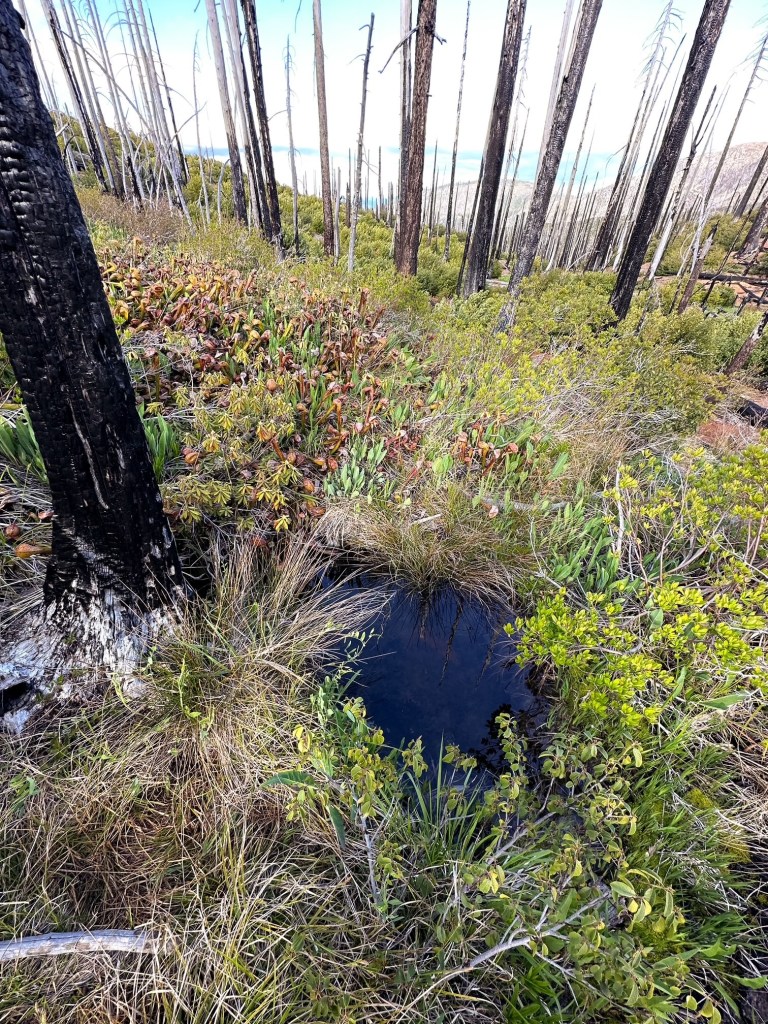
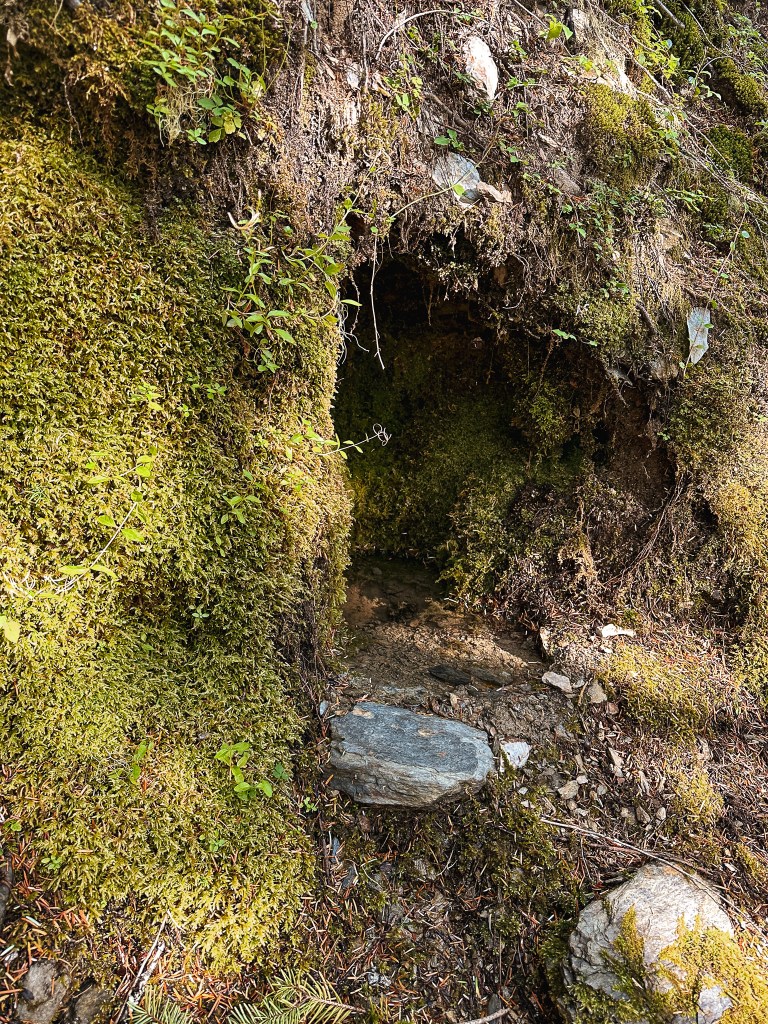
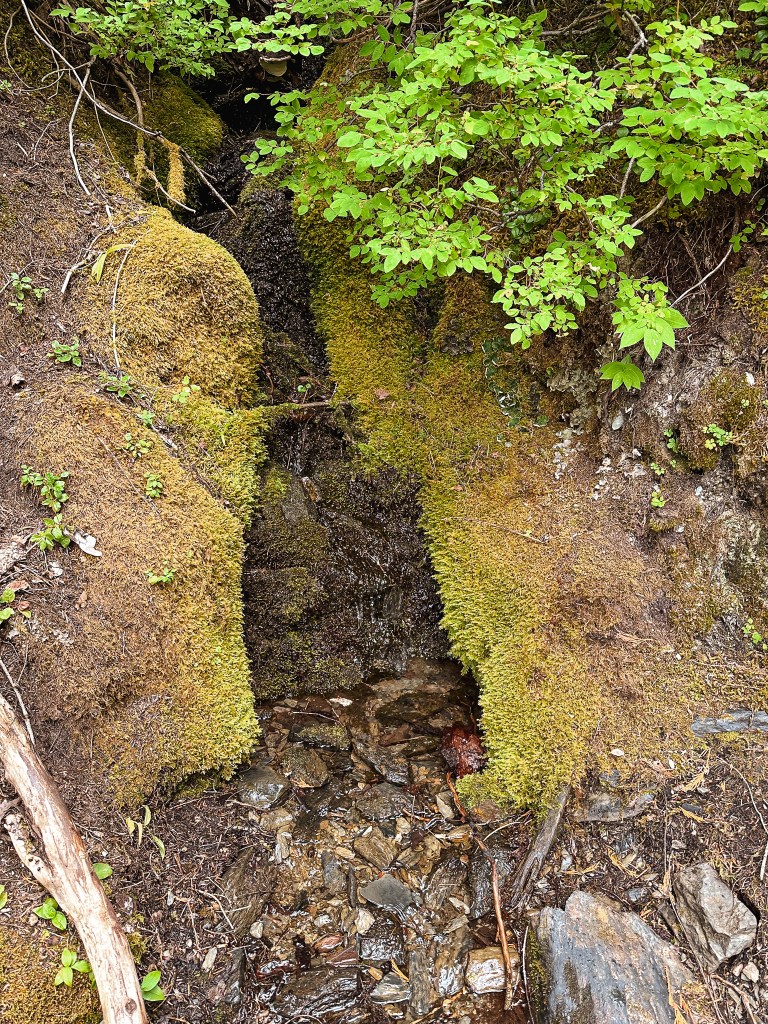
  • Water – the water source located at the Dodger Point camp is noted as unreliable especially late in the season. You will need to plan appropriately to carry enough water for your stay. There is a reliable spring 2-1/2 miles before you reach the camp that we found to be the best water source. We did notice a few sources closer to the camp still running but they were much smaller or stagnate.

Friday.

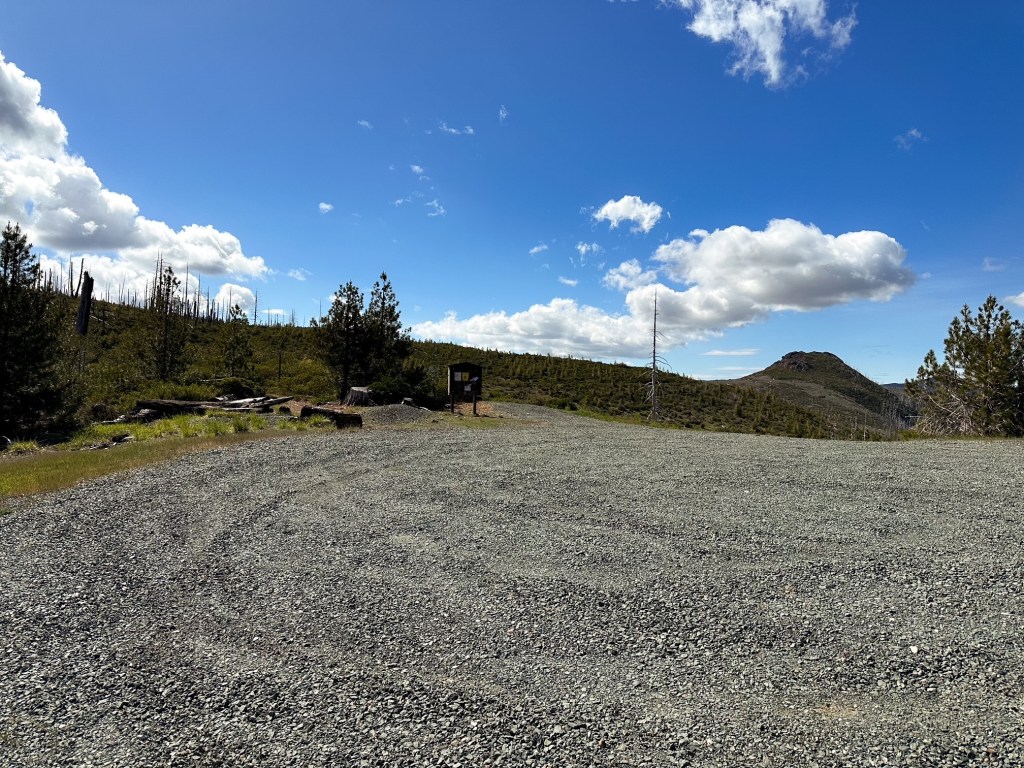
We decided to plan our route to Dodger Point as a 5-day/4-night trip since those were the days we had already requested off from work. This allowed us to camp below Dodger Point for two nights giving us a rest day between the longer hiking days. I already own a BV500 bear canister that I bought specifically to have on hand for back country trips like this to Washington. But given the length of our trip we quickly realized it would not fit all of our food. We decided to test our luck at the Port Angeles WIC to rent a second one for the weekend. Our hopes were slim to none since it was the Friday of Labor Day weekend, but it never hurts to ask. We didn’t leave Portland until 7:30AM since I needed to book a last minute camp spot for a planned girls trip, but they weren’t available on Recreation.gov until 7AM PST. We still managed to avoid most of the holiday traffic until we reached Port Angeles. The WIC located in town was busy but we were surprised to see they had rows of bear canisters ready for use over the long weekend. We were able to check out one with no issues and were headed to the trailhead shortly after noon. The Ranger that assisted us with the bear can mentioned we might be visiting the only quiet part of the park this weekend. Finding a less traveled trail in some of the busiest areas is our forte. The Madison Falls TH was only 15 minutes outside of Port Angeles off of the paved Olympic Hot Springs road. The main parking area was full, but we had no issues finding parking in the overflow area. We brought lunch to eat in the car before starting our trek out to Humes Ranch. Garnet didn’t want to leave any food in the car after our mouse experience from Jarbidge and was trying to finish off everything we brought before heading out. I was getting worried about time since I’m not a fast hiker especially when saddled with a backpack and decided to get a head start.

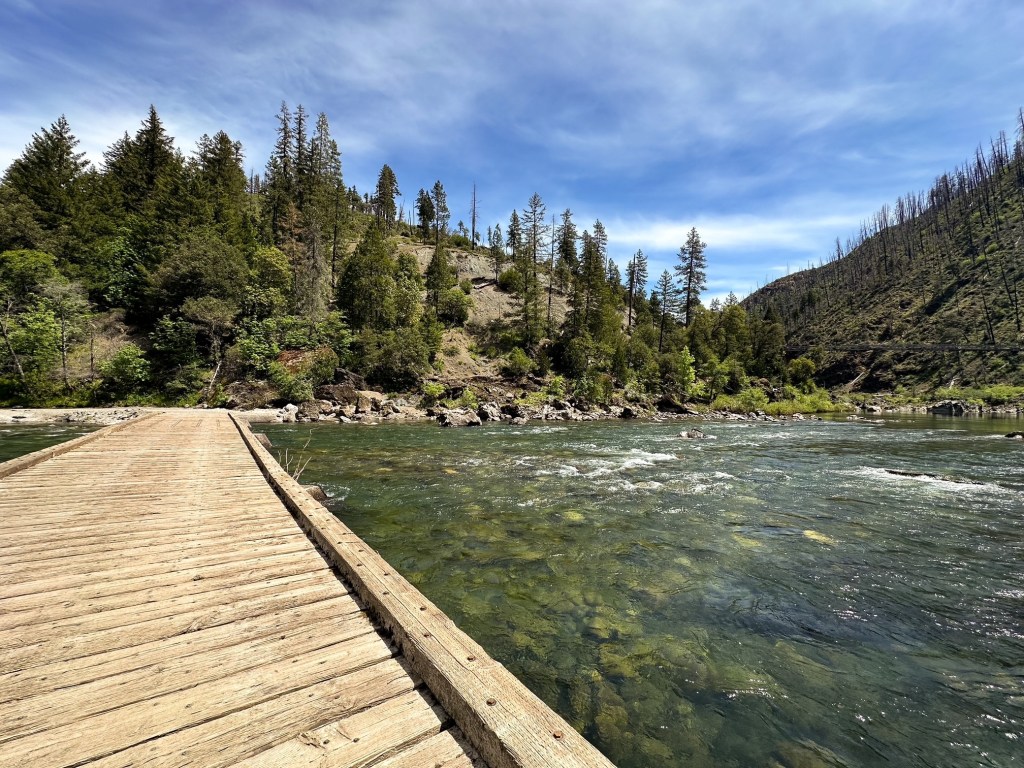
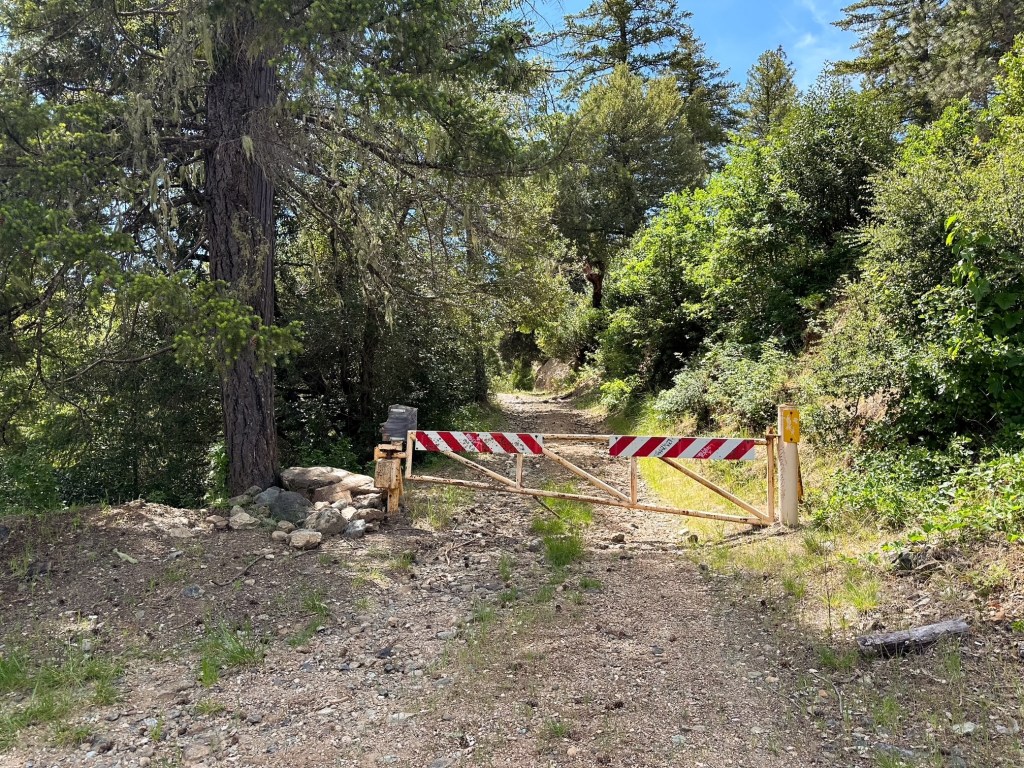
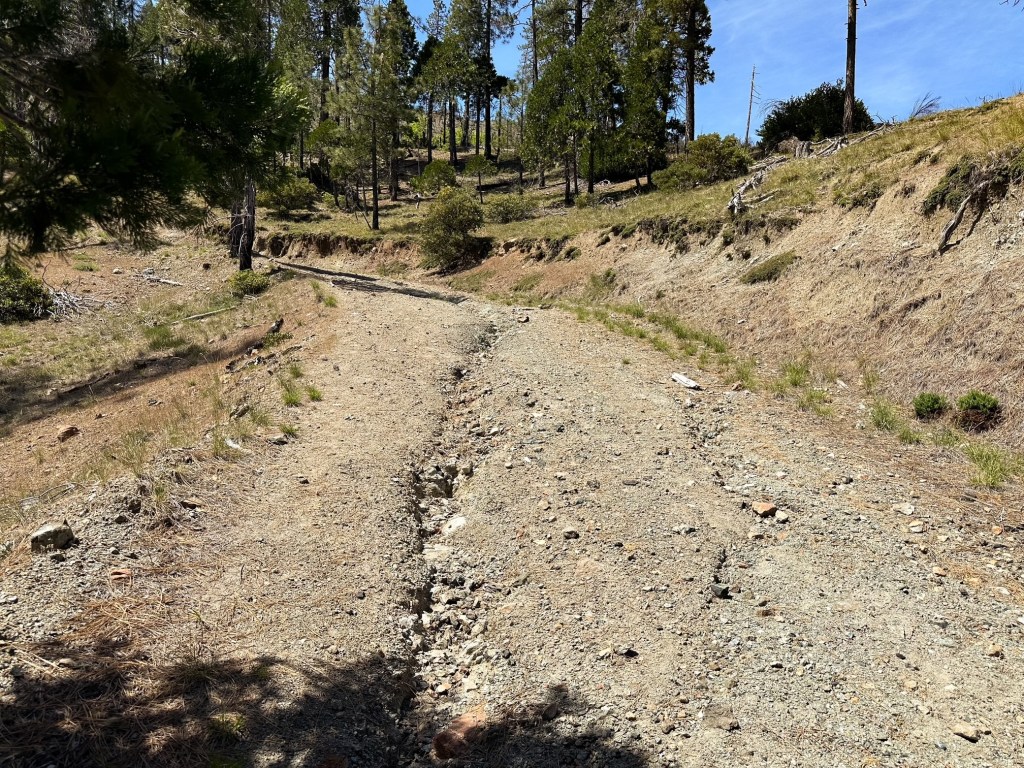
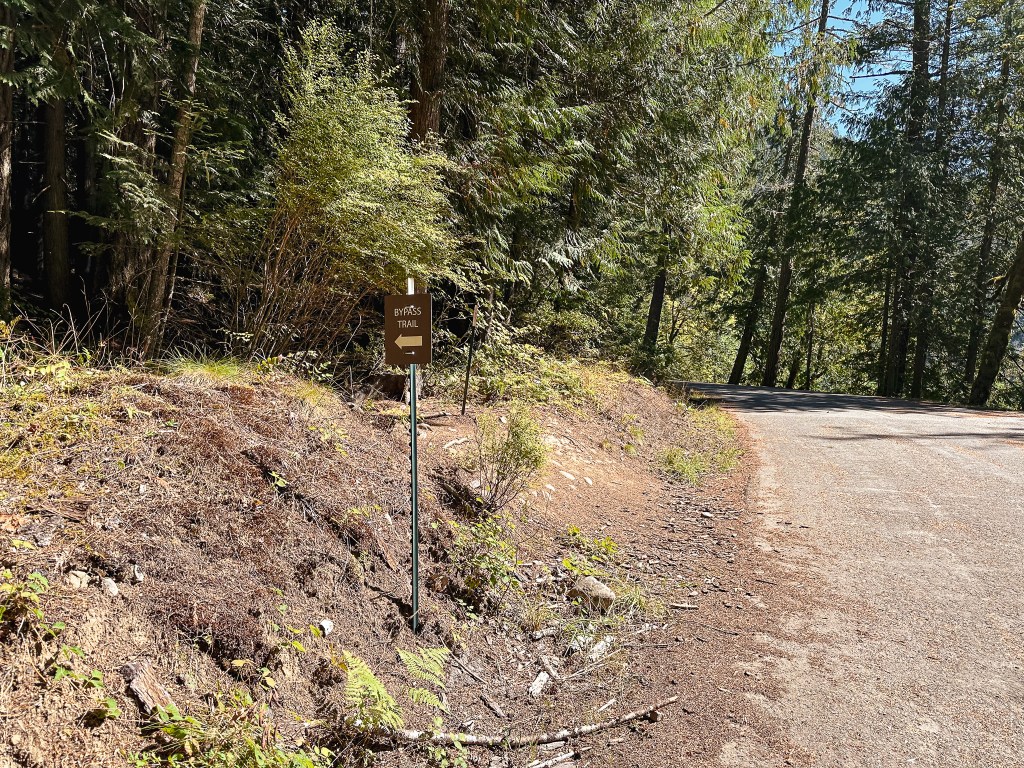
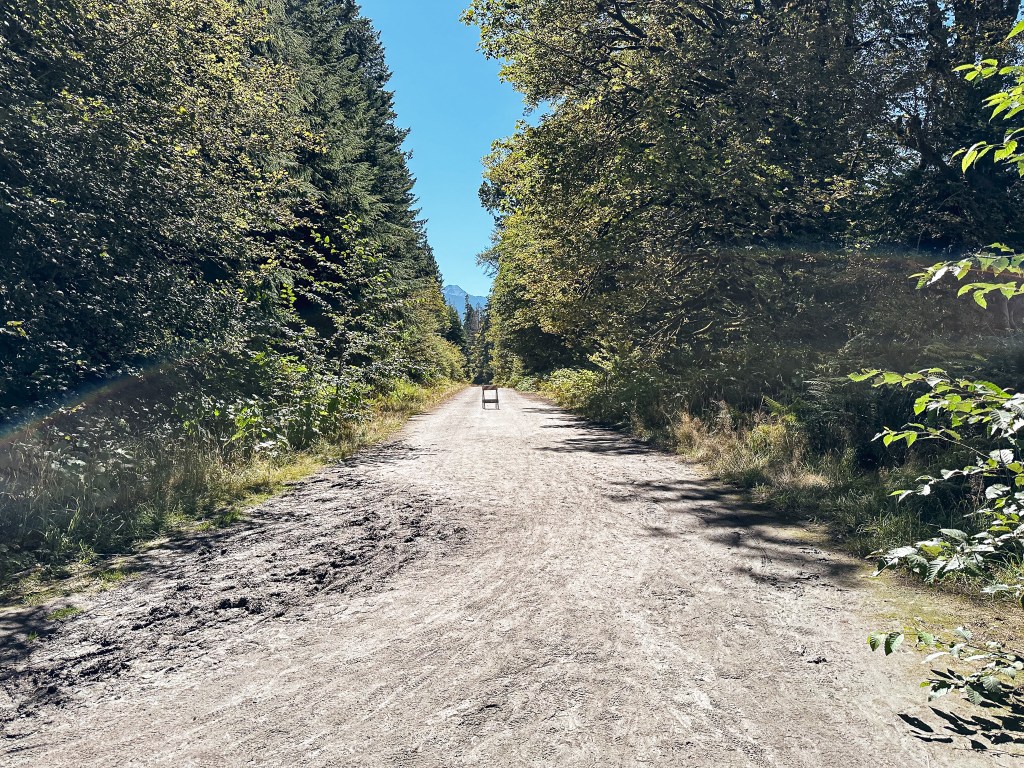
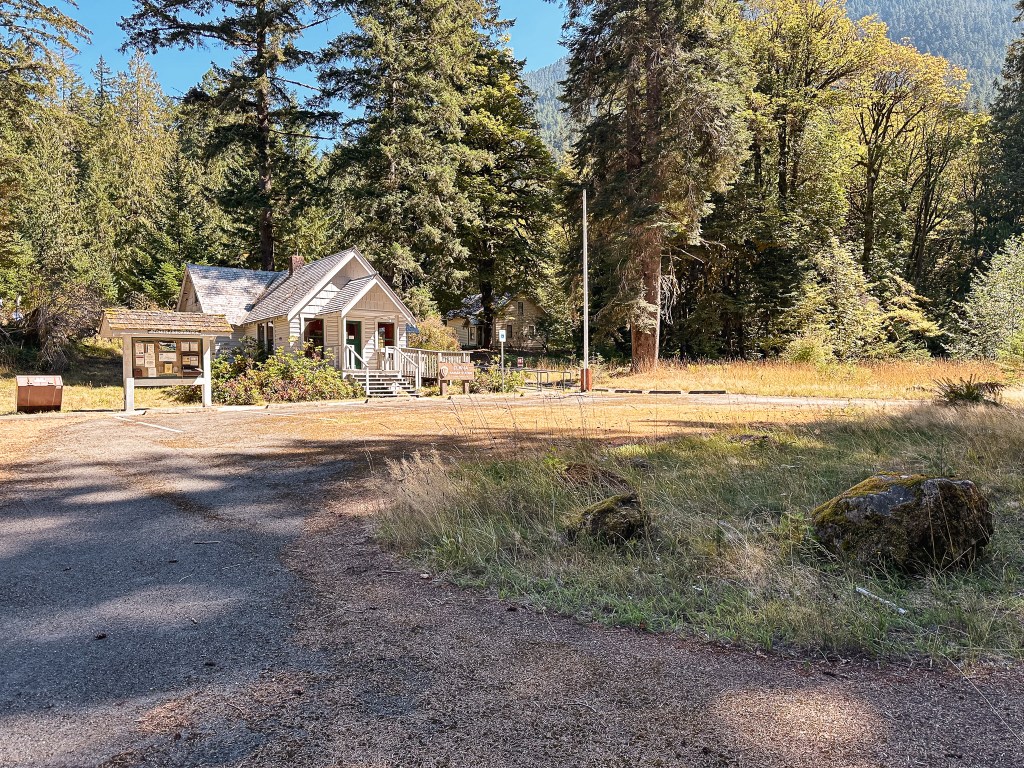
The “hike” starts beyond the gate along the Olympic Hot Springs road. This portion is on pavement until you reach the Bypass Trail that circumvents the road wash out. It was a surprisingly steep little trail as it directs you up and away from the road before dropping back down. This section can be challenging for those trying to bike the road. Once off the Bypass Trail it was back to pavement until I reached the old Elwha Ranger Station. The ranger station is located 2-1/2 miles from the trailhead and makes a good turn around point for day hikers. It is an interesting collection of buildings that are starting to show signs of neglect. It seems this area has been mostly abandoned by the parks service after the road washed out. I met where the road forks just beyond the station and continued left to turn onto the Whiskey Bend road. The paved Olympic Hot Springs road continues further to the right to access different areas within the park. The road walking turns to gravel from this junction to the trailhead. It was another 4-1/2 miles along this road. I had been hiking ahead of Garnet at this point, but I was slightly worried he might not notice the road turn off. There was a sign but it was mostly worn down and unreadable. I waited for a bit near the junction until I saw him heading up the road. From there, he caught up to me quickly. My legs were feeling good at this point and for once we were able to keep a similar pace. We stopped briefly to check out the remains of the Elwha Dam that had been removed in 2011-2012 to help restore the river. I’m pretty sure this is what eventually led to the road being washed out. The gravel road was mostly in good condition minus one or two parts that have sunk down. Something to note if they do manage to reconstruct the Olympic Hot Springs road in the future. There were some signs of construction along the bypass trail that suggested it might be in progress, but I haven’t done any additional research to confirm.

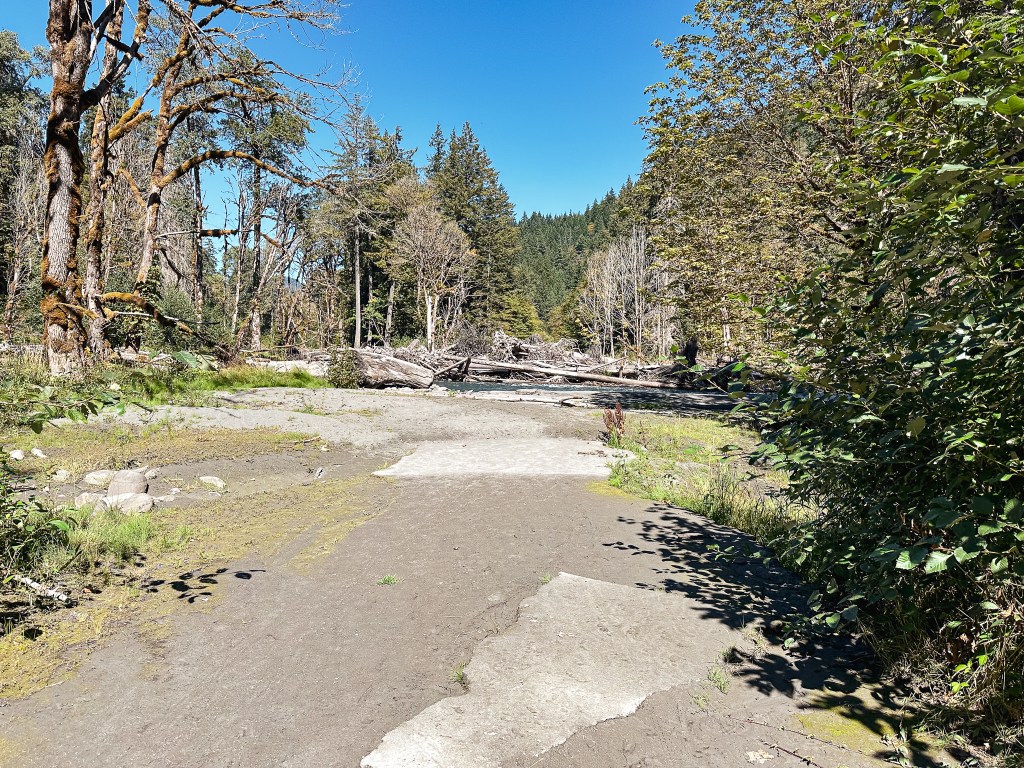
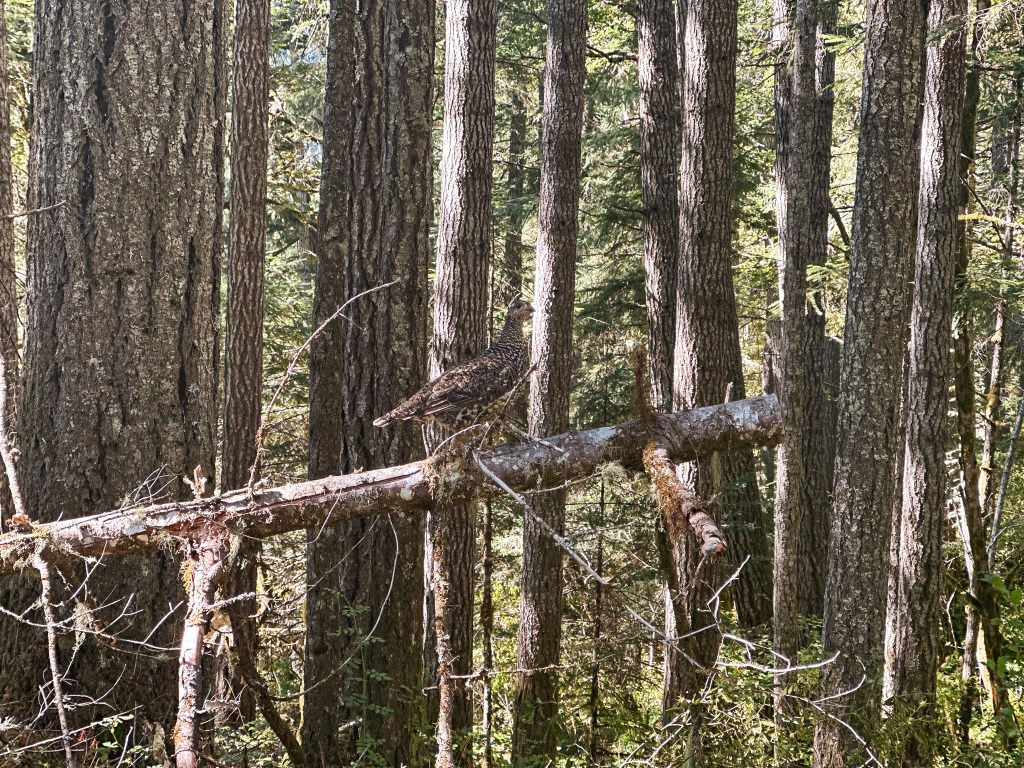
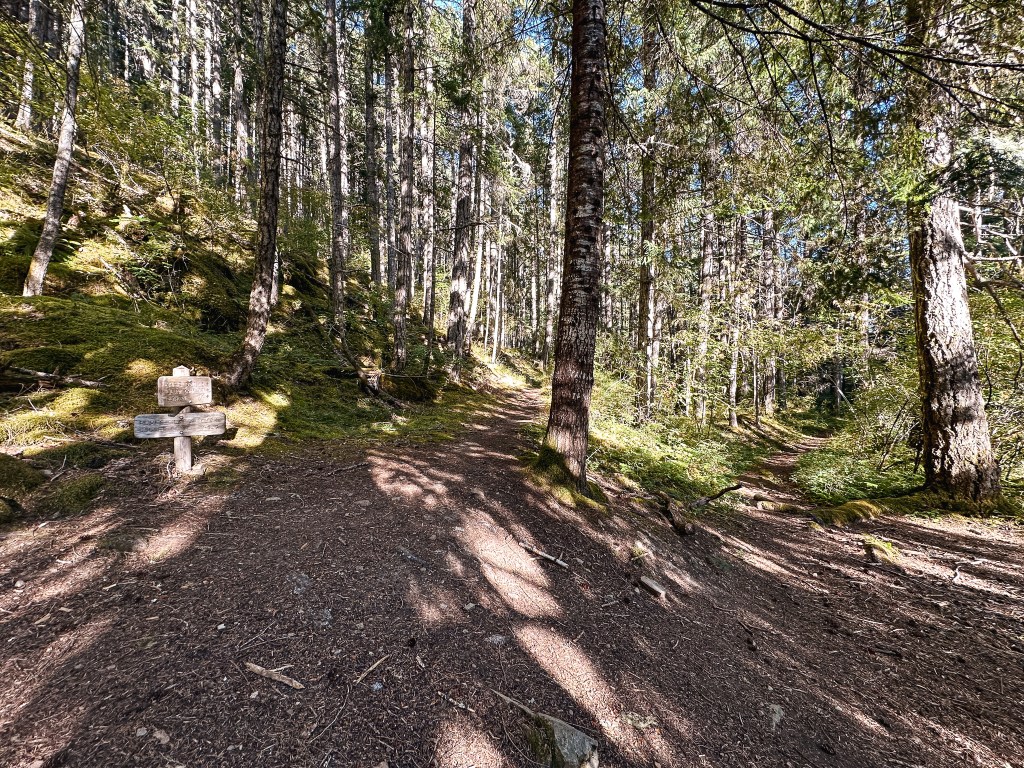
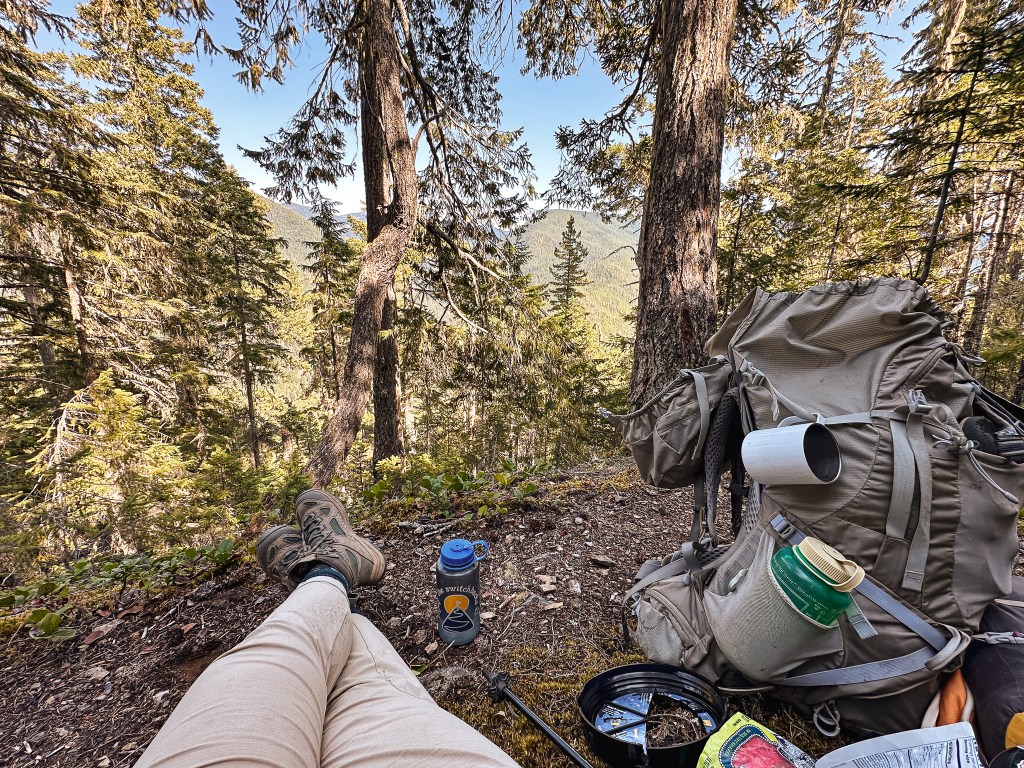
While hiking along the road we were met with a family of grouse, I believe they were Sooty Grouse, that seemed completely unbothered by us. It reminded me of the Spruce Grouse we encountered while in Minnesota’s Boundary Waters in 2022. They did not have the best fight or flight instincts and were willing to get within an arms reach. Garnet fell behind trying to identify them with the Merlin app as I continued ahead. I finally reached the trailhead, sweaty and tired, after 7 miles of road walking. I took off my pack and laid down on the picnic table until Garnet arrived. Road walking can be really hard on your feet. The remaining distance to Humes Ranch was 2-1/2 miles along the official Elwha River trail. There are a few different junctions heading off to the right to note along this trail. The first we came to was an over grown trail that had a sign for an overlook. The second was an obvious junction but was not signed. We debated whether this was our turn or not since the trails all seemed to interconnect on the map. We decided to stay on the Elwha River trail. Looking at a map after the fact, it appears this was the Rica Canyon trail. The third junction we came to was labelled with a sign for Krause Bottom. We figured this might be our junction and even started to head down the trail a bit, but decided to turn around after the tread started to grow faint. Once again looking at a map after the fact, it looks like this would have connected to Humes Ranch but it is not the main route. We continued on the Elwha River trail until we reached Michael’s Cabin. There is an obvious junction here signed for Humes Ranch and Dodger Point. The trail drops down from here to the edges of the Elwha River passing another trail fork for Dodger Point, a cabin from the Humes Ranch, and a junction that connects to Krause Bottom. There is a small camp spot where the trail first meets up with the Humes Meadow, but the main camping area is located across the meadow. We assumed we would see people while we were here since there were more than just our permits taken out for the night. We were surprised to find an empty campground and as the sun started to set we were surprised no one ended up joining us later in the evening. We hadn’t seen anyone else since we left the paved part of the road.

Our estimated mileage for the day was 9-1/2 miles with 1,800′ of elevation gain. These numbers are just an estimation since I didn’t use the tracker on my phone due to being worried about conserving my battery.

Saturday.

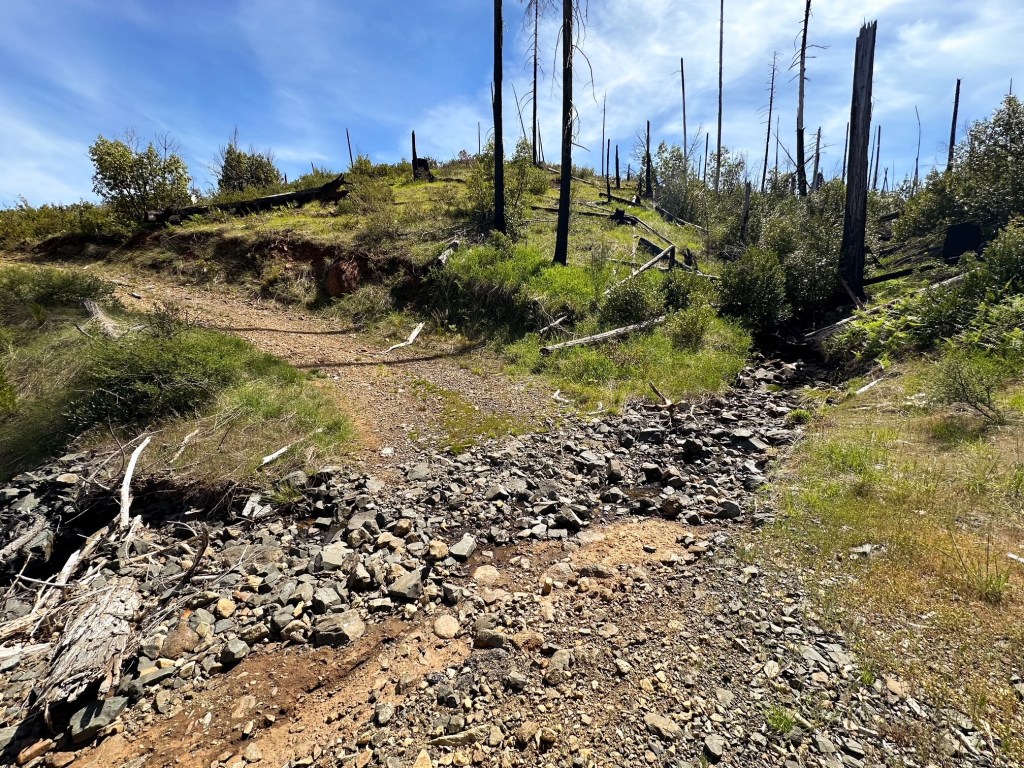
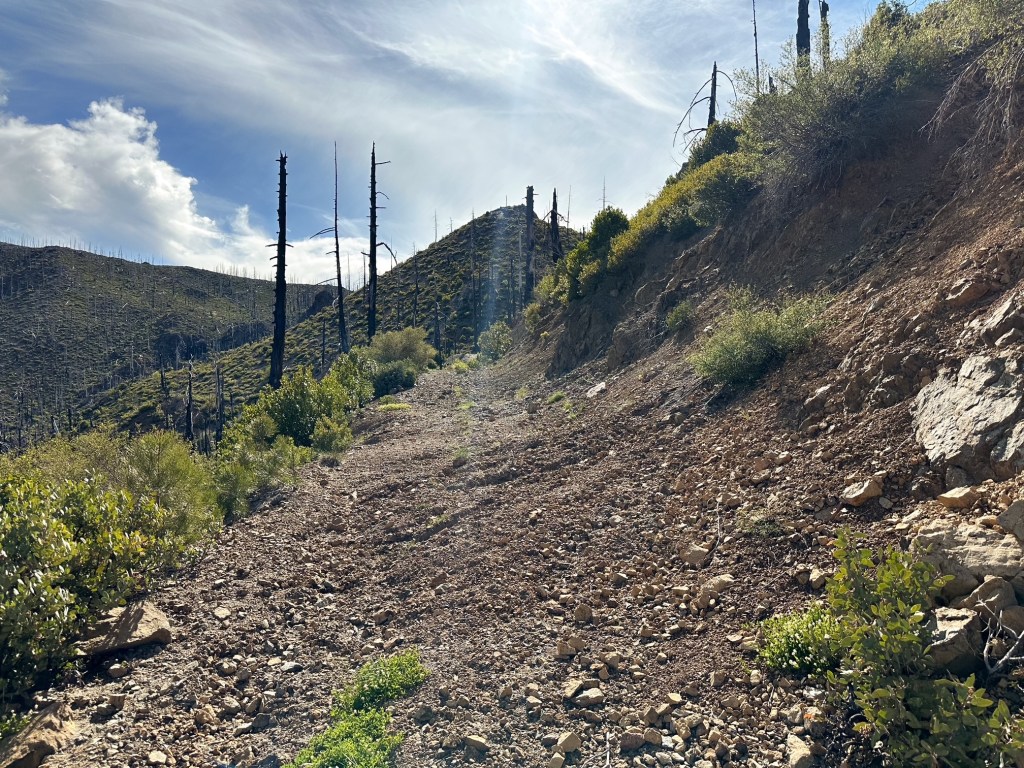
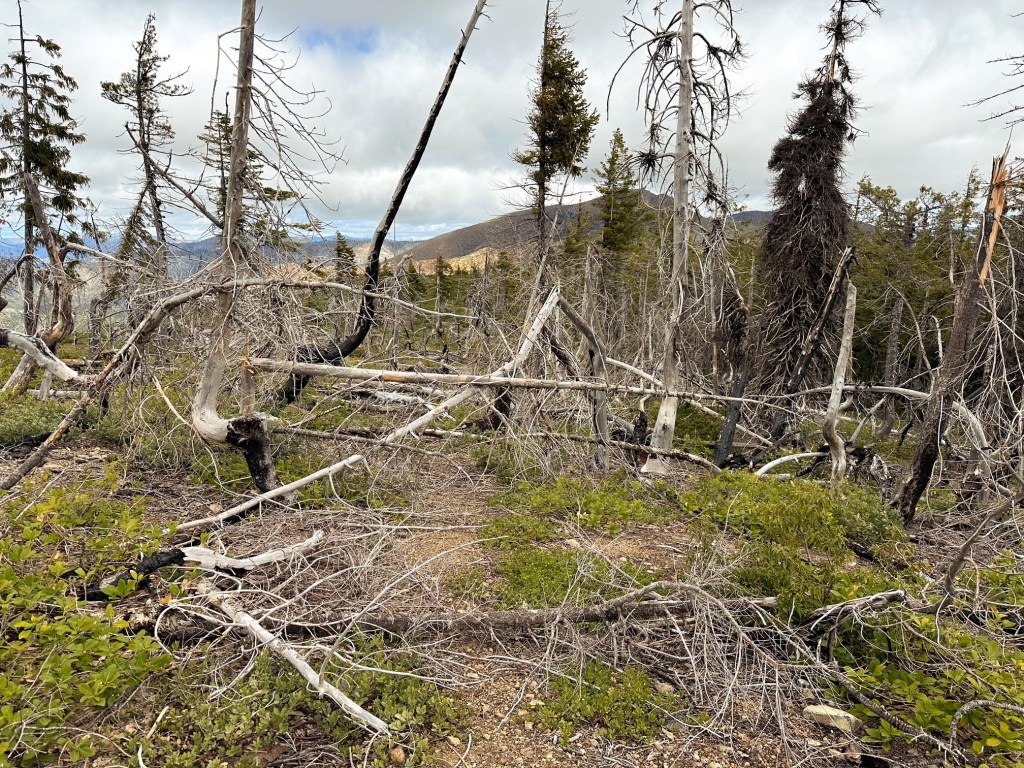
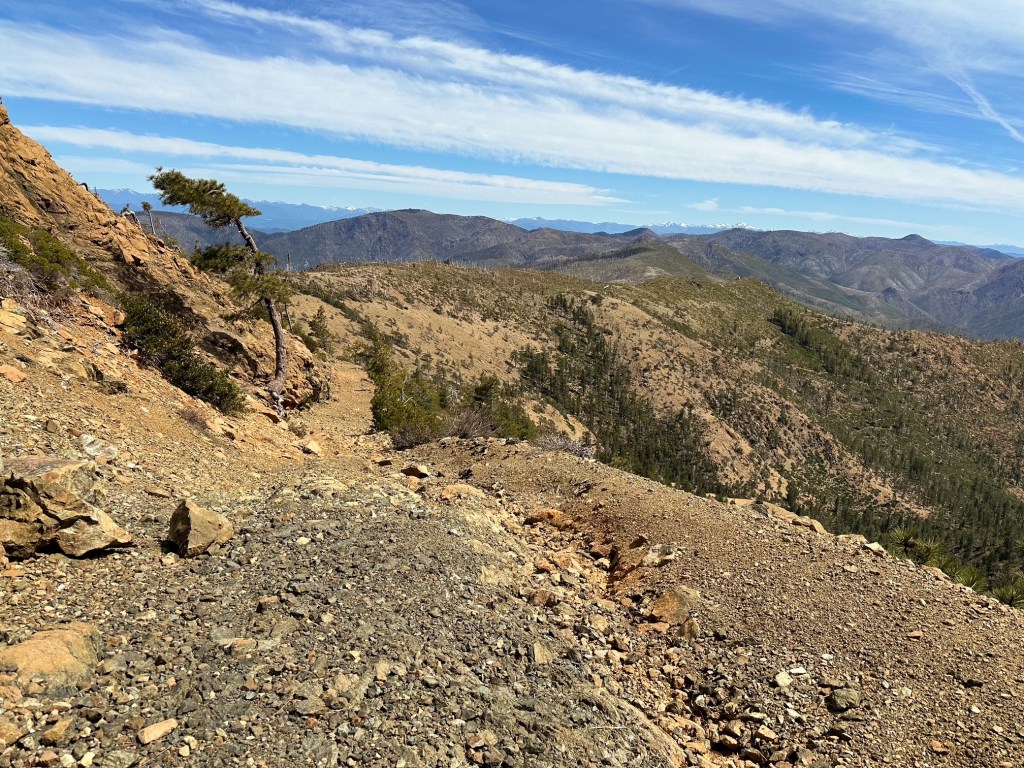
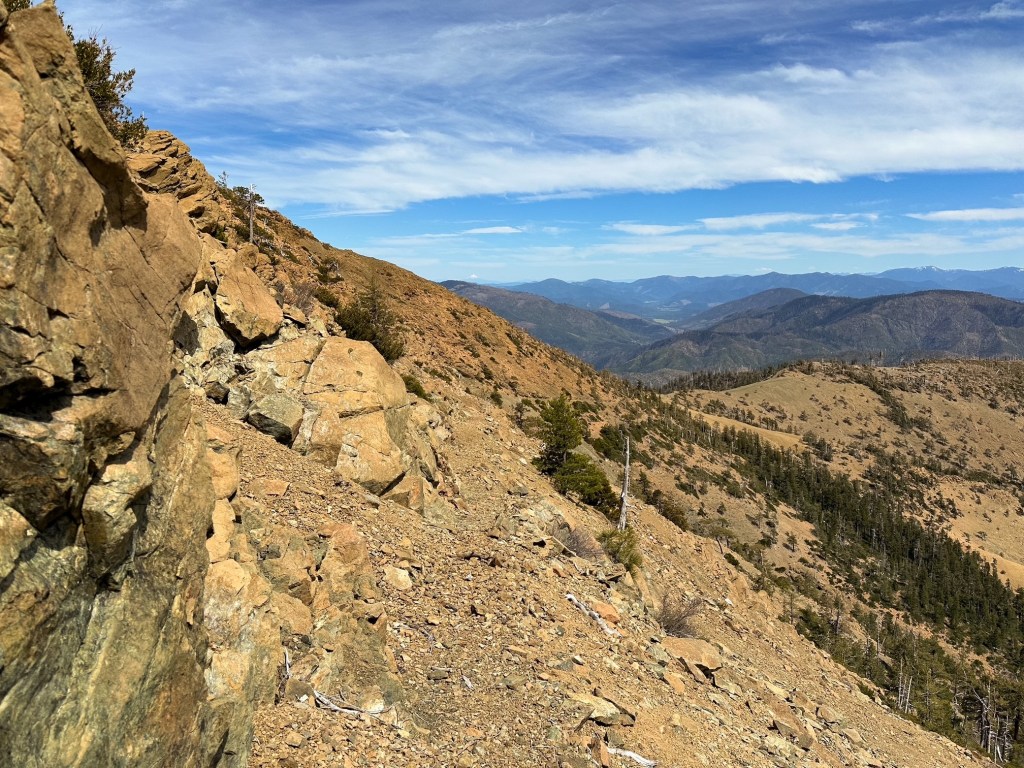
We didn’t set an alarm for the morning and didn’t attempt to wake up any earlier than we normally would while camping. This probably wasn’t our best call, but today was going to be an uphill marathon not a sprint. My joints were still stiff from the day prior and I hoped I’d be able to make it all the way. I decided to get a head start on Garnet since I had finished repacking my bag before he was ready. I headed back up the steep little trail we came down yesterday until I met up with the fork that was signed for Dodge Point. I turned right to continue on this trail. I could tell no one had been this way in the last day or two due to the amount of cobwebs that greeted my face. After hiking for a mile I came to another junction pointing back to Humes Ranch. I cursed myself for not looking closer for a cut off trail while in camp the day prior and made a note to take it on the way back. I had known all the trails around Humes Ranch interconnected, I just hadn’t known where it ended and began. I wasn’t completely sure how much mileage this would have cut off, but it would have definitely saved some back tracking and unnecessary elevation gain. I debated whether to wait at this junction for Garnet or not, but shortly became worried he might already be ahead of me if he found this junction from camp. I continued on since there were still many more miles to be seen for the day and Garnet would catch up soon enough. The trail had been mostly in good condition until it started to turn back towards the Elwha River where signs of erosion have crept in. One particular section of note was only a short distance but barely wider than my foot. In a more exposed rockier section you could tell where the land had slid and users had reworked their own trail over the moved debris. Both of these sections made me a bit uneasy knowing I was barely over a mile into our hike for the day; what other obstacles lie ahead? would the suspension bridge still be there? and why hadn’t Garnet caught up yet?

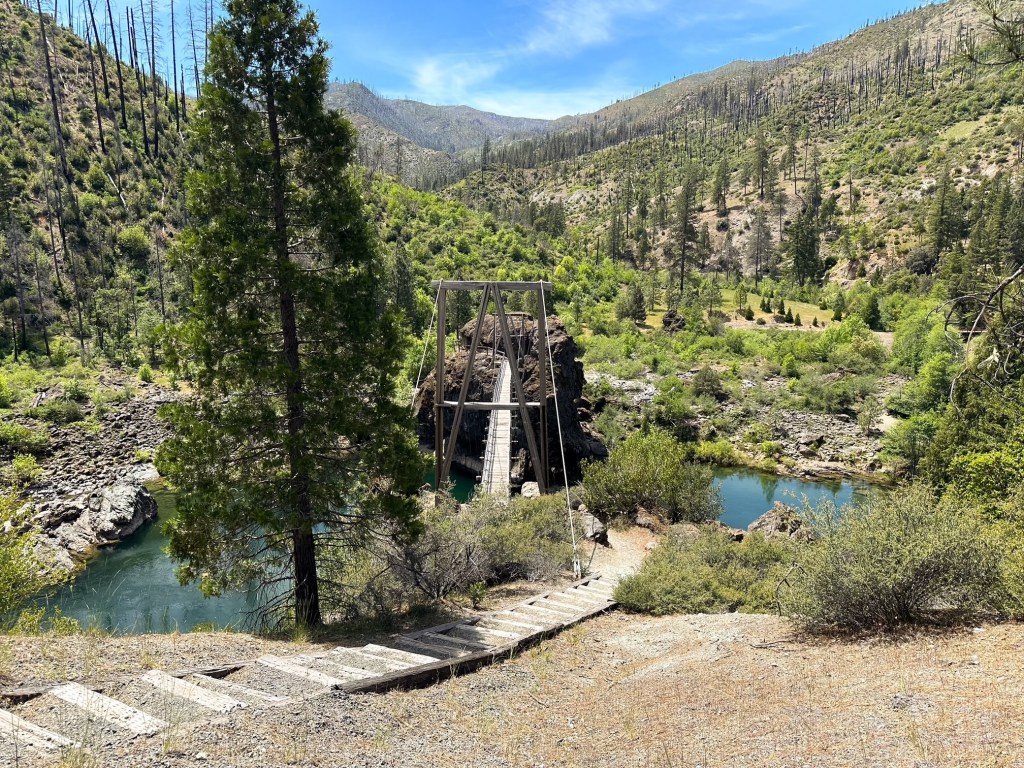
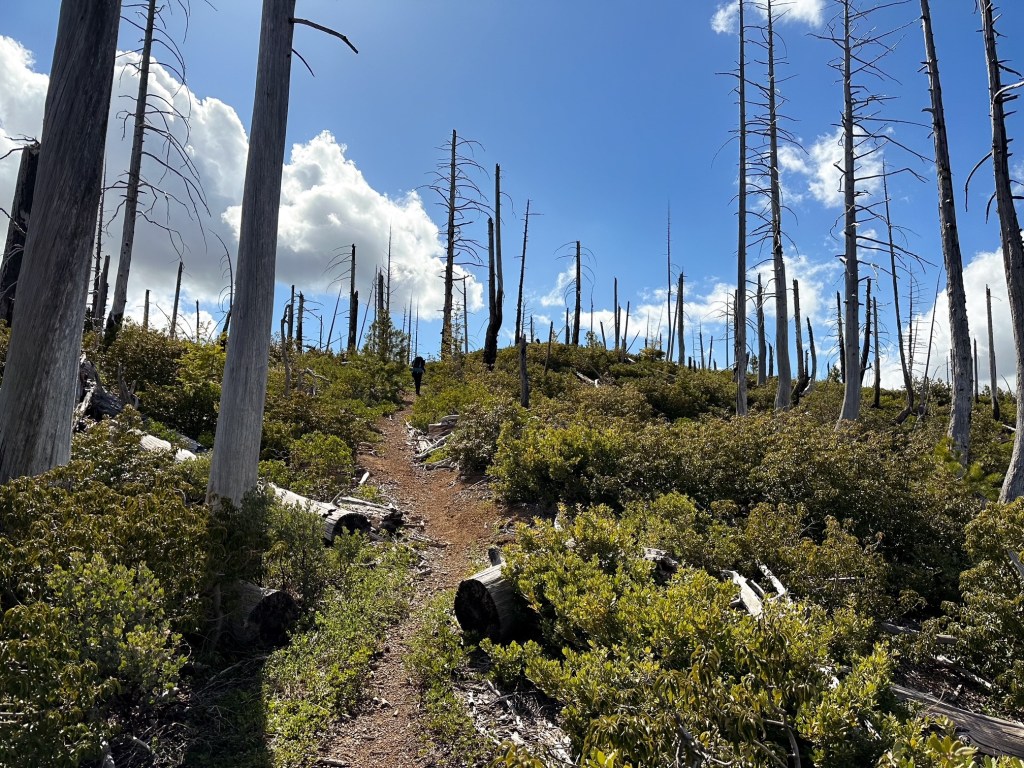
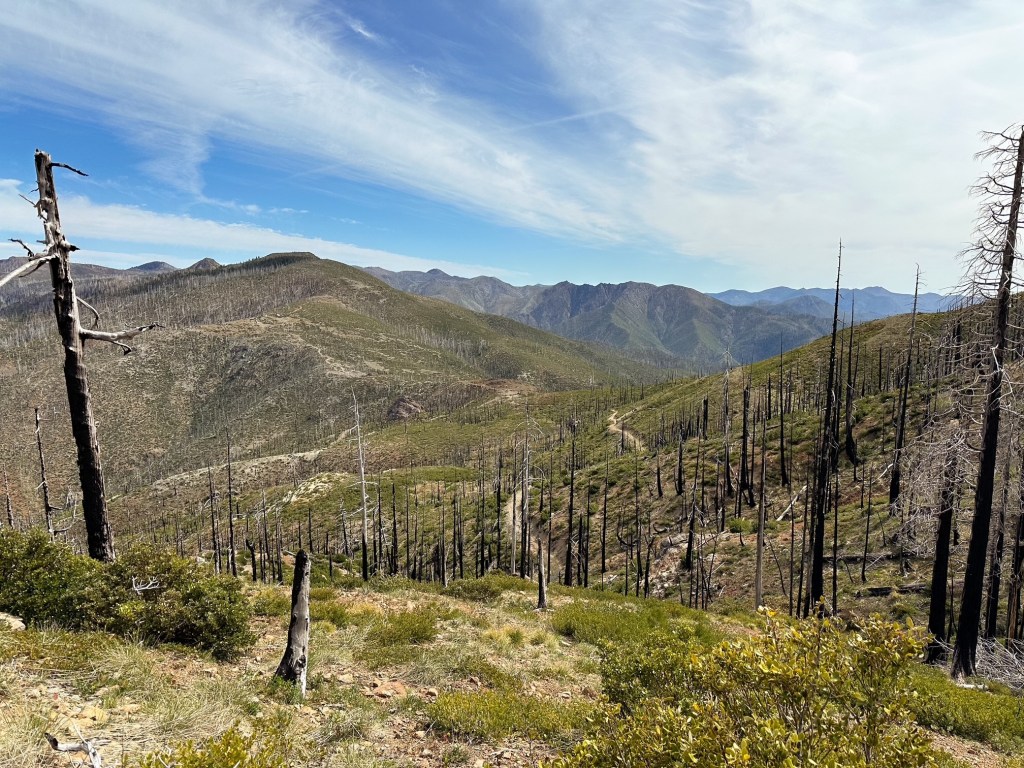
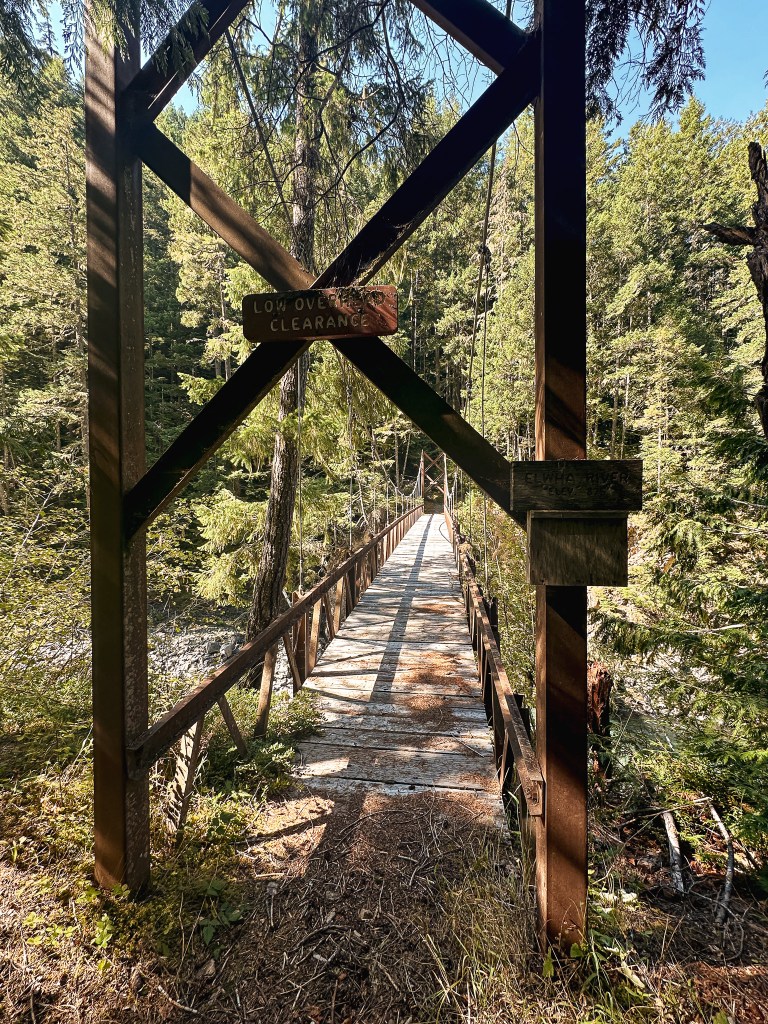
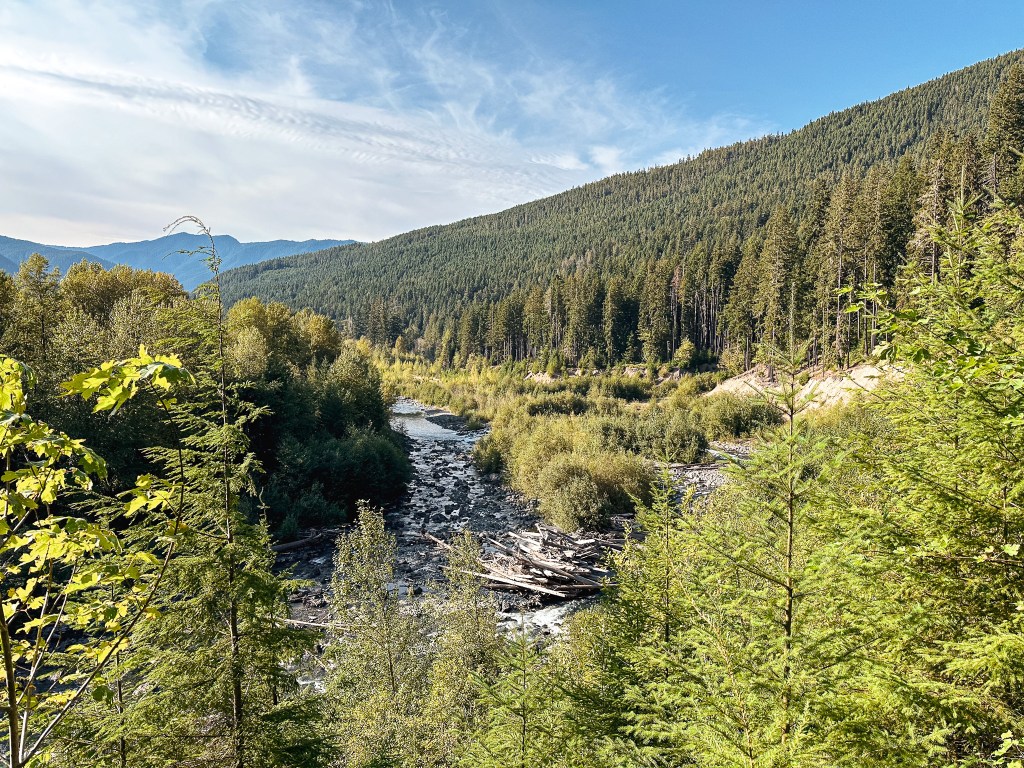
One of my questions were quickly answered as the trail headed steeply down to meet the suspension bridge to cross the Elwha. It’s an impressive bridge. The river crossing would not be possible without it, at least at this section of trail. I crossed the bridge after taking in the impressive flow and drop down to the river. The bounce of the suspension always gives me a bit of anxiety. I paused on the other side and decided to wait a bit for Garnet again. But the longer I waited, the more I felt the pressure of the miles ahead. I continued on with the reminder that today was a marathon not a sprint. The trail turned gently up from here and any signs of erosion where left behind the other side of the bridge. I started to lollygag after every downed tree or mild obstruction wondering “how Garnet hadn’t caught up yet?”. I probably should have just stayed focused on making it farther but my mind always ponders if something could have gone wrong. He caught up to me around 2-1/2 miles into the hike as we continued our way up, up, up. There was a brief section of flat trail as we met a shelf in the ridge. If you look at the topo lines on the map the real climb begins beyond this shelf as you switch back quickly up to the main ridge line. The trail straightens out after this initial climb to make a gradual ascent for the rest of the way. This section is aptly named the Long Ridge Trail as you follow the ridge for what feels like a very, very long time. We stopped to have our lunch around 3:30PM and roughly 6 miles into our hike along the main section of switchbacks. We had been holding out for a decent place to sit but had no luck and eventually just picked somewhere along the trail. At this point we thought we were over halfway to our camp for the night with only a few miles left. Oh how wrong we were. The information I had from online stated that it was only 10-1/2 miles from Humes Ranch to Dodger Point camp. Oh how wrong we were.

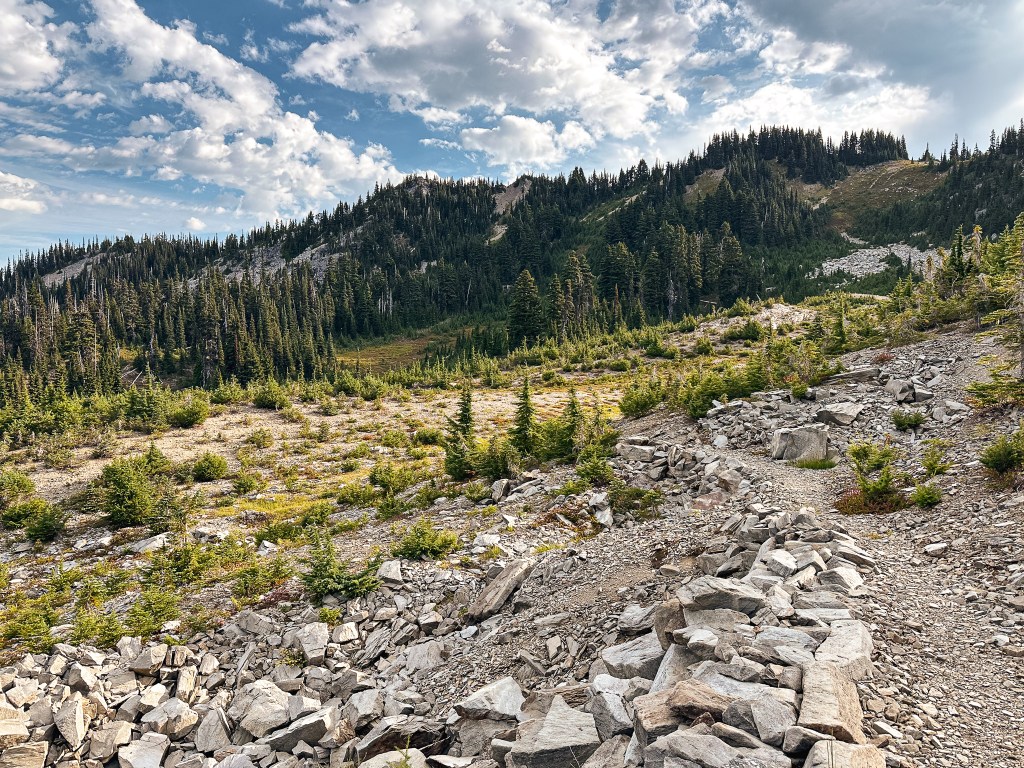
Dramatics aside, this piece of misinformation really added to how long the ridge felt. There comes a point in the trail where you can start to see out beyond the trees. This unfortunately didn’t help with our perceived length of the trail either as we thought our destination grew closer only to turn the corner and find more ridge. I knew this late in the season we would have to find a water source prior to camp and water carry for a least a couple of miles. I was unsure of the exact location of the recommended water source and thinking that we were closer than we actually were made me worried when we came upon the first water source. It was barely a drip of a spring with a mildly murky pool that didn’t replenish fast enough to fill all of our water containers. We took what we could and hoped for a better source along the way. Luckily, we found a few better sources roughly between 8.3 to 8.8 miles into the hike. We ended up dumping the murky water we had and replacing it once clearer sources were found. We were also able to fill the remainder of our containers with these sources. We each had two 32oz Nalgene bottles, along with my 3L water filter, and a plastic gallon jug. The goal was to bring enough water to support us for the next two nights until we could return to these sources on the way out. We cursed a bit for being too proactive as we came to the best and most reliable water source at 9.7 miles into the hike. This was the one I had seen recommended previously on someone else’s trip report. Their report mentioned it was around 2-1/2 miles from the camp which is accurate. Unfortunately, given that I thought we only had to hike 10-1/2 miles, the water sources back at the 8-1/5 mile made sense to me. We decided it didn’t hurt to replenish our water again and topped everything off for the last time. It was roughly 6:45PM now.

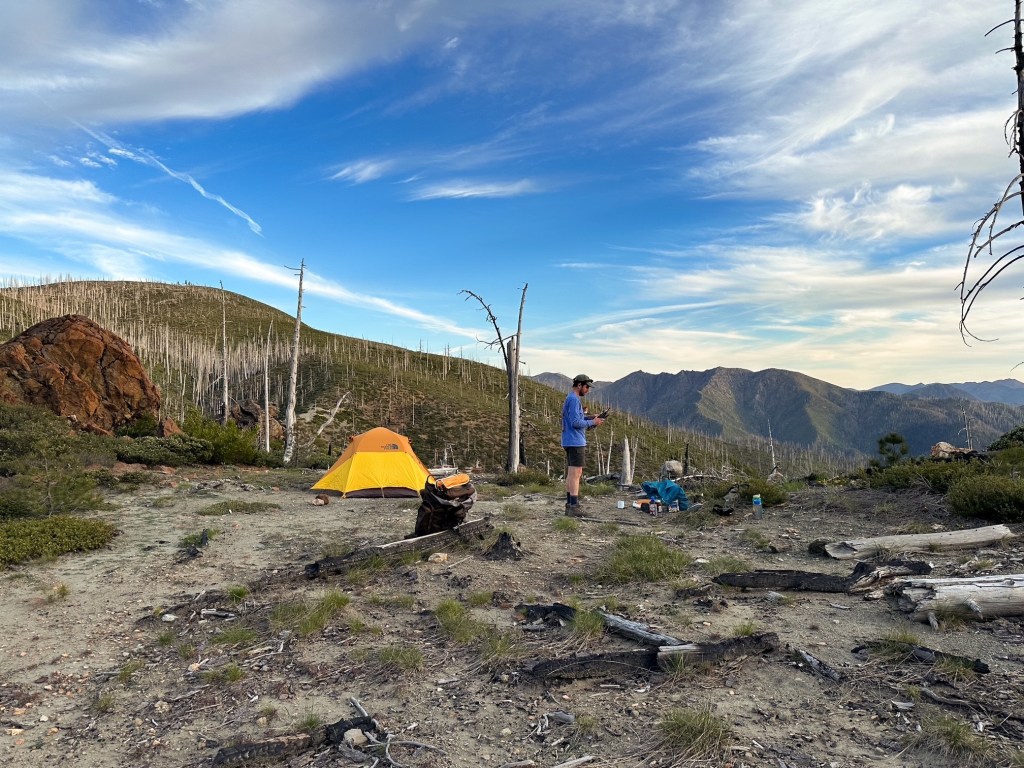
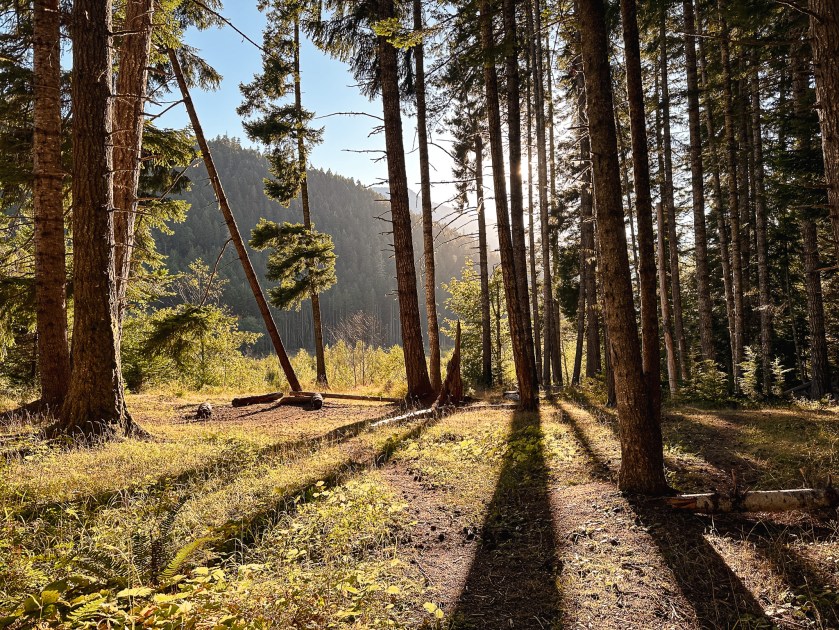
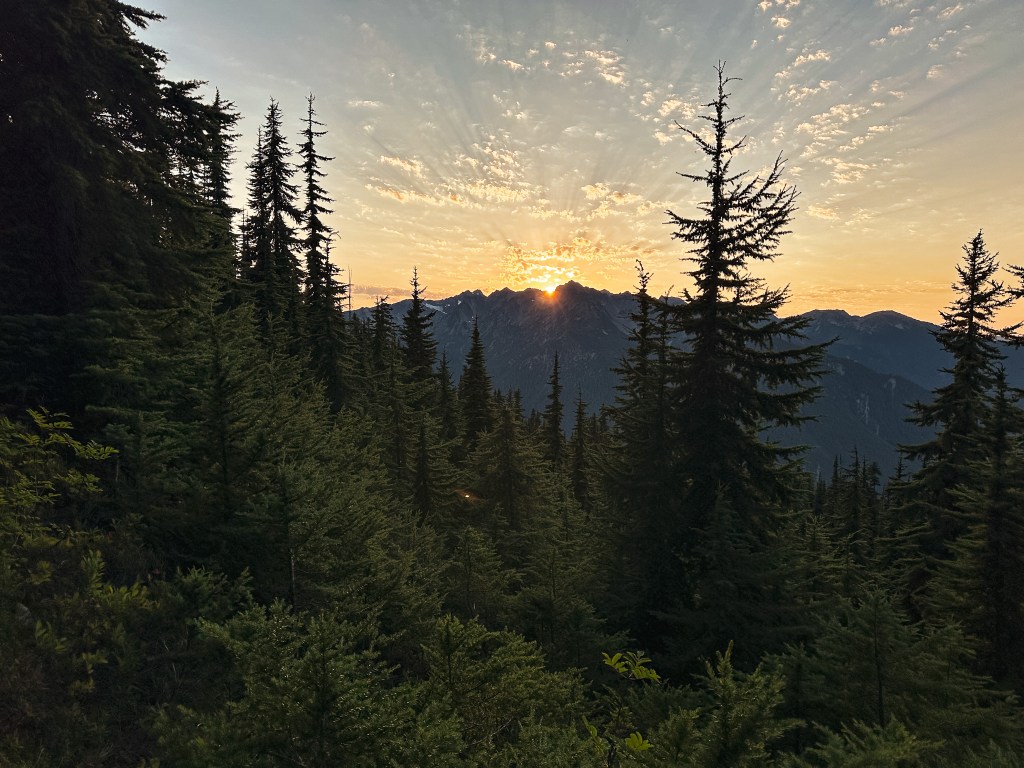
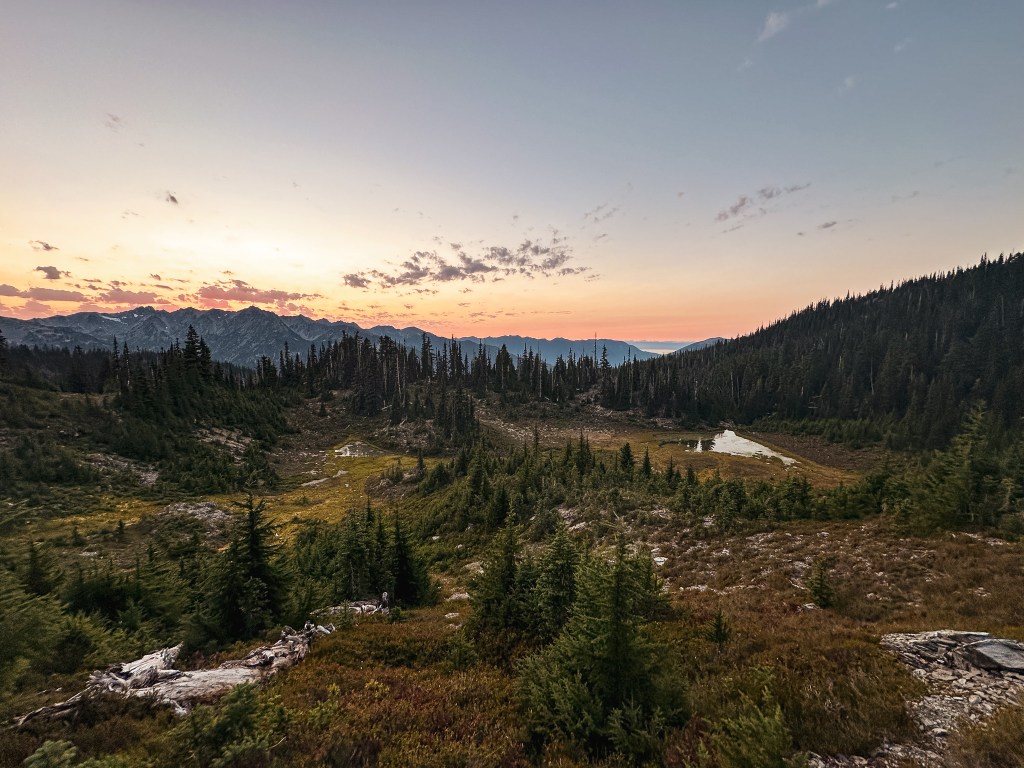
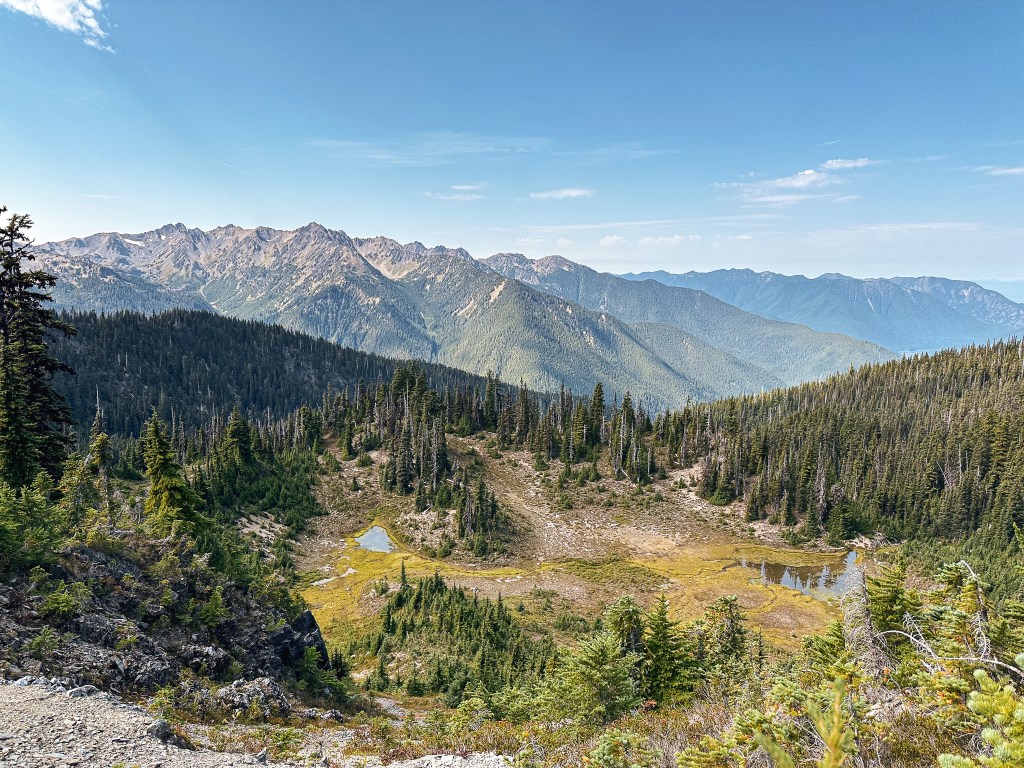
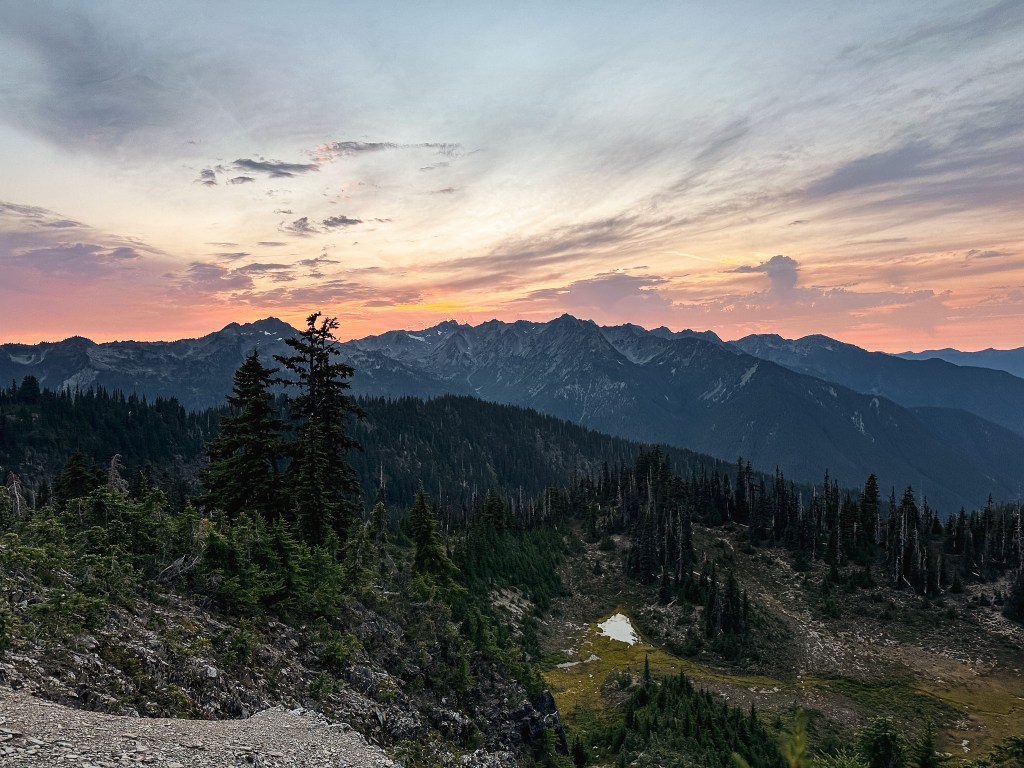
From here, I let Garnet hike ahead since he was carrying the gallon jug for us and I figured I wasn’t going to get there any faster at this point. I continued on with the reminder that today was a marathon not a sprint! The additional water weight stacked on top of the miles for the day started to slow me down and I had to start a mantra in my head to keep my feet moving. I had to keep telling myself that there was still a mile left to go because every corner and downed tree was starting to deceive me of ever reaching our destination. I was thankful that the days still had some length to them otherwise I would have been hiking in the dark. I still came very close as the sun set behind the ridge and I was still hiking at 8PM. I knew I was at least somewhat close to camp as I saw the tarns below that I recognized from many previous trip reports. I started to lose it a bit as I crested the hill beyond into a more open area with no sign of Garnet or an obvious camping area. Garnet eventually spotted me as I was hobbling along the trail and called out to me from behind the trees that obscured my view of the camp. Originally we had hoped to make it up to the lookout today, but any plans of that were thrown out along the Long Ridge trail. I was just happy to make it to camp as my feet screamed at me and the final bits of sunset dropped away. We set up camp and ate our dinner under the light of our headlamps. My body was equal parts stiff and restless as I tried to lay down for the night.

The total mileage for the day came out to 12.11 Miles and 4,845′ of elevation gain according to my Strava tracker. The final 4 miles included the additional water carry which could have been lessened if I had been more aware of where the reliable water source was located. Some mileage probably could have been cut if we had found that connector from camp at the beginning. One forgiving aspect of this trail was the gentle grade, it was a continuous up for most of it but never gruelingly steep.

Sunday.

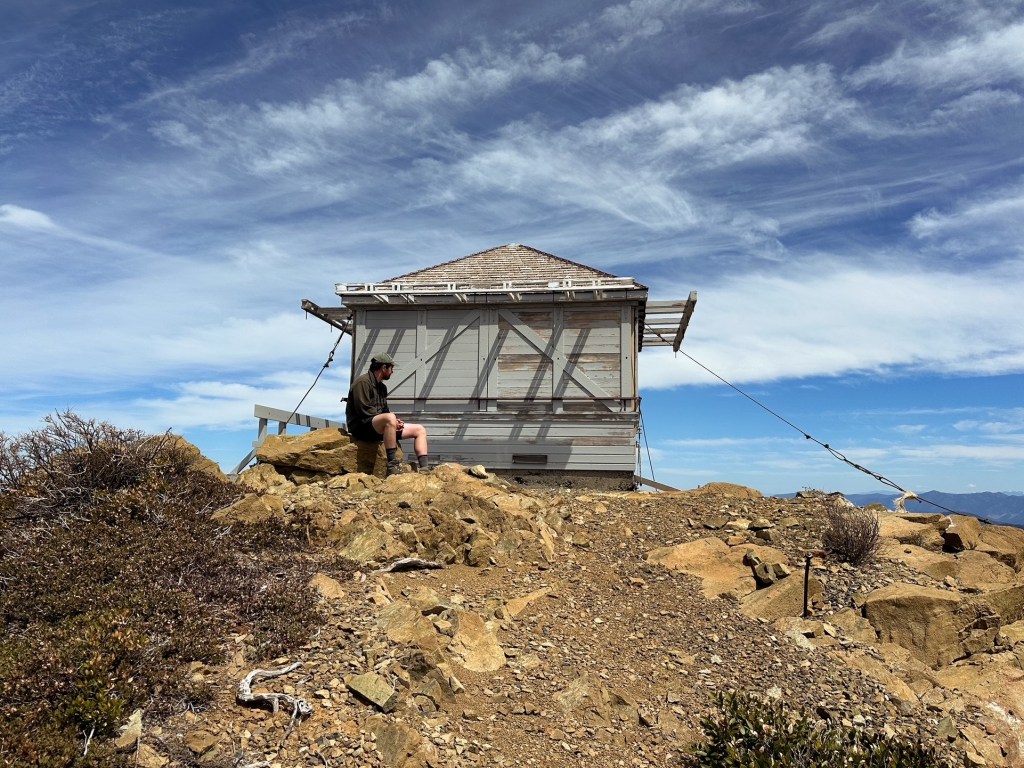
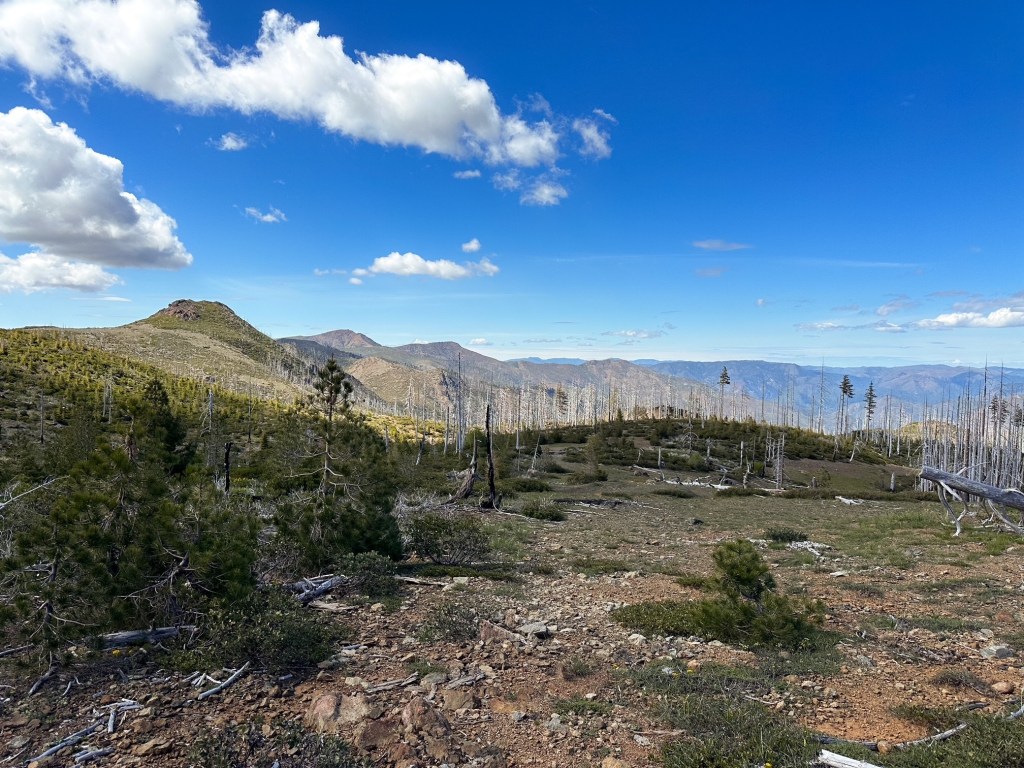
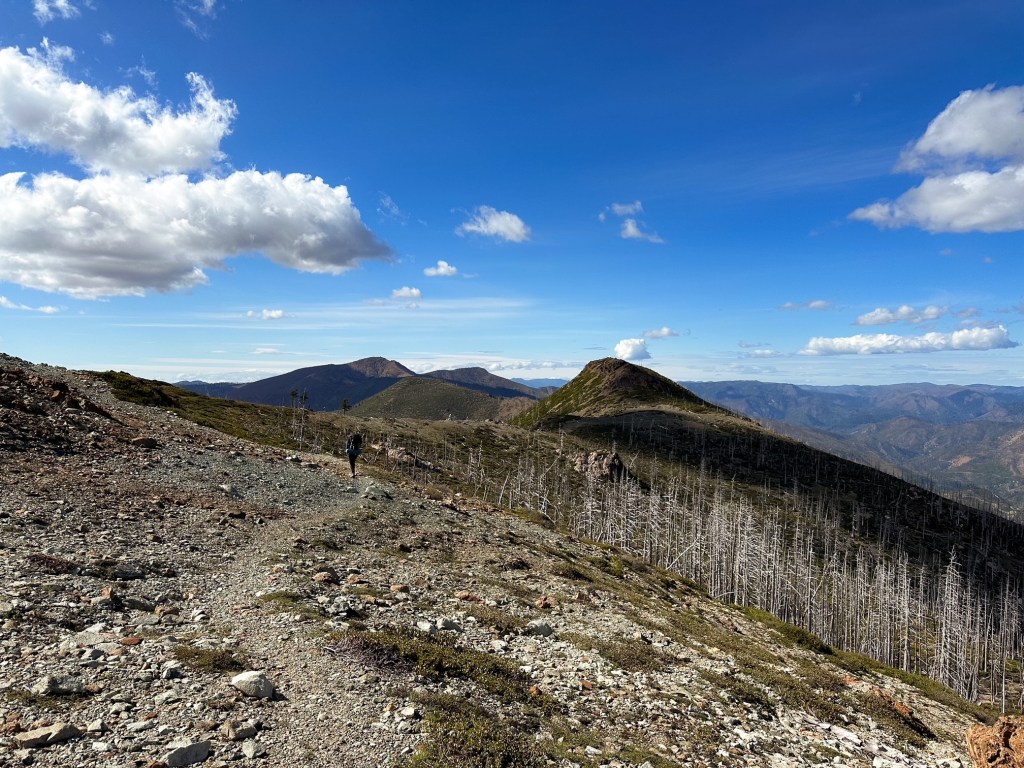
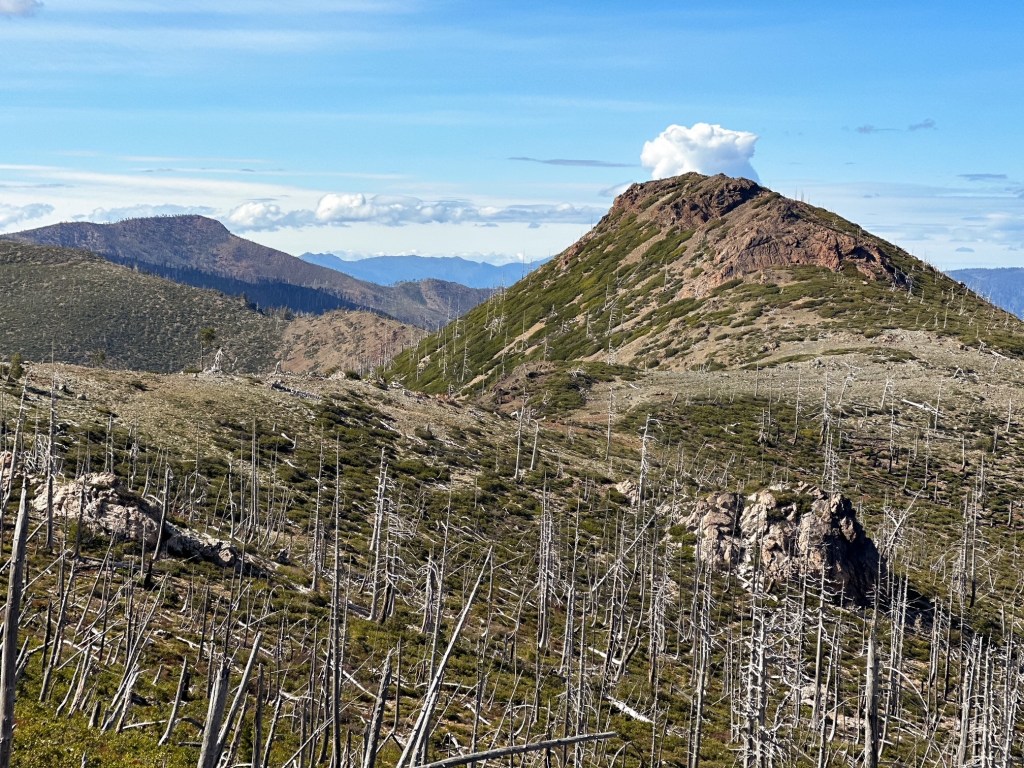
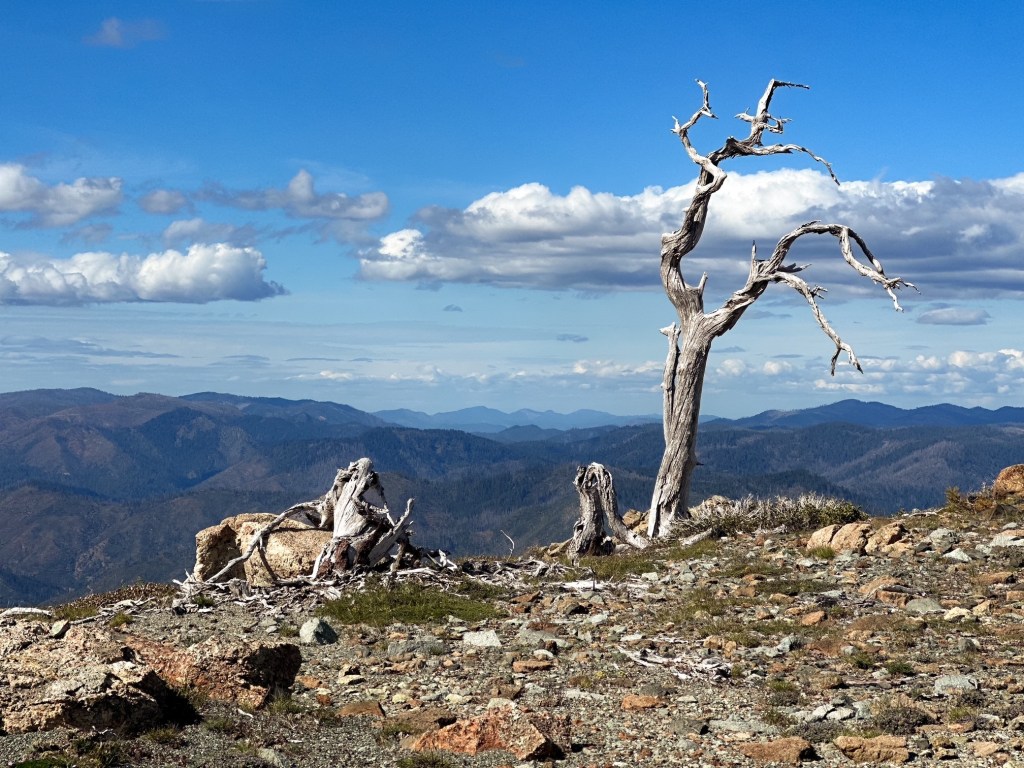
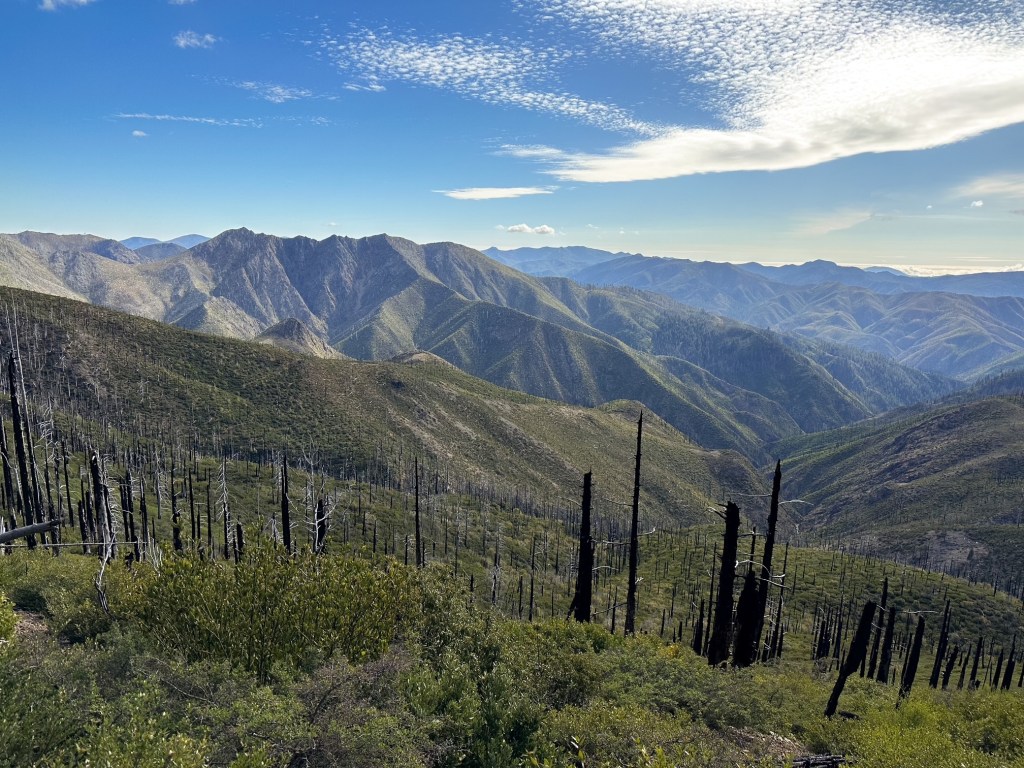
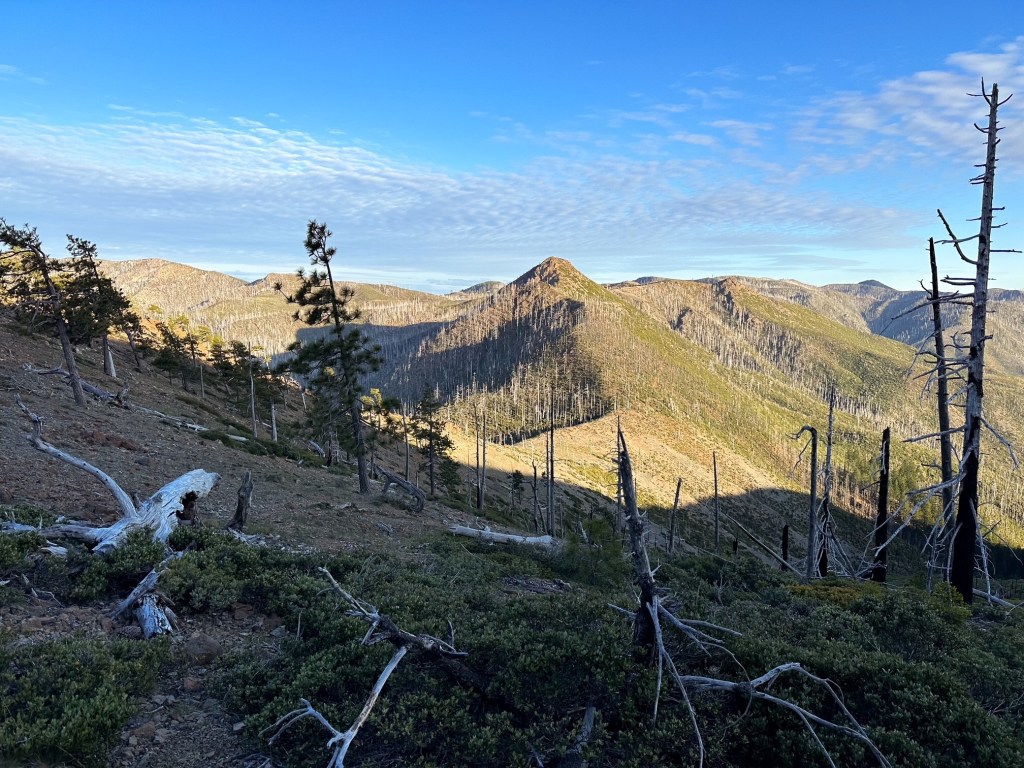
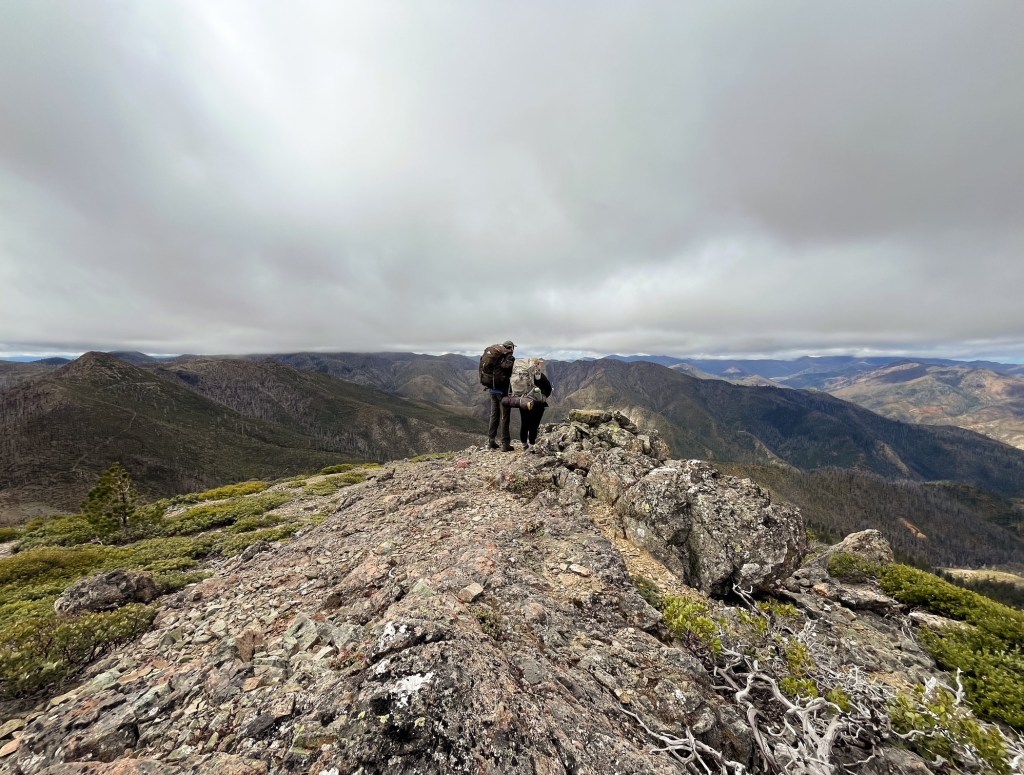
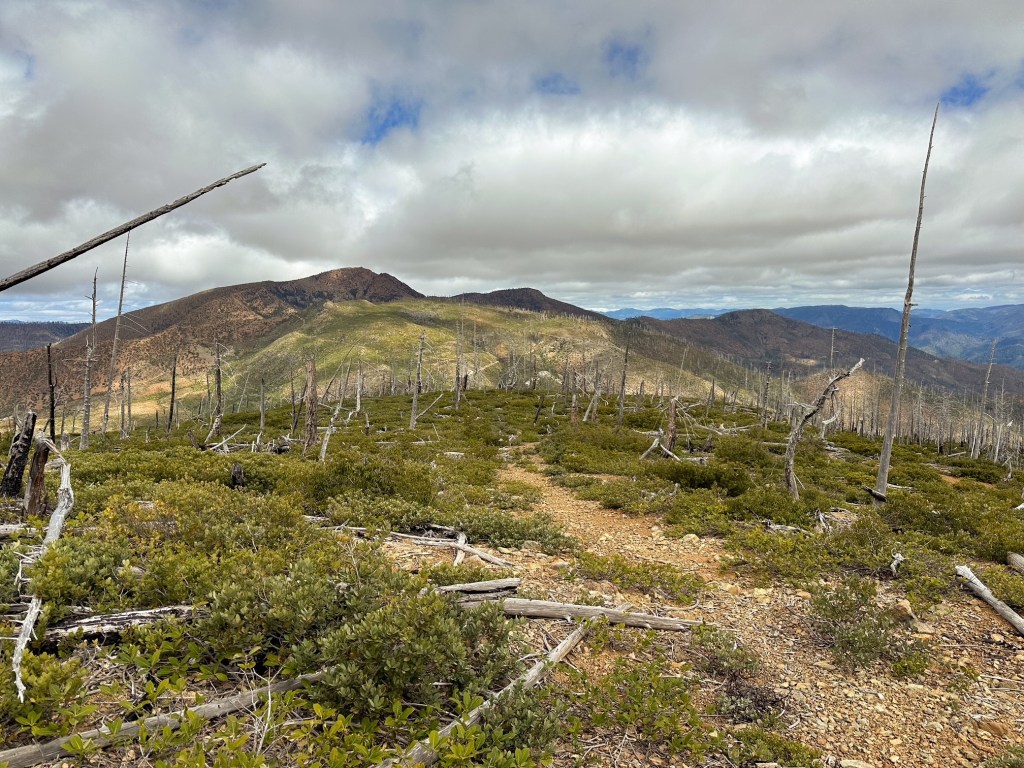
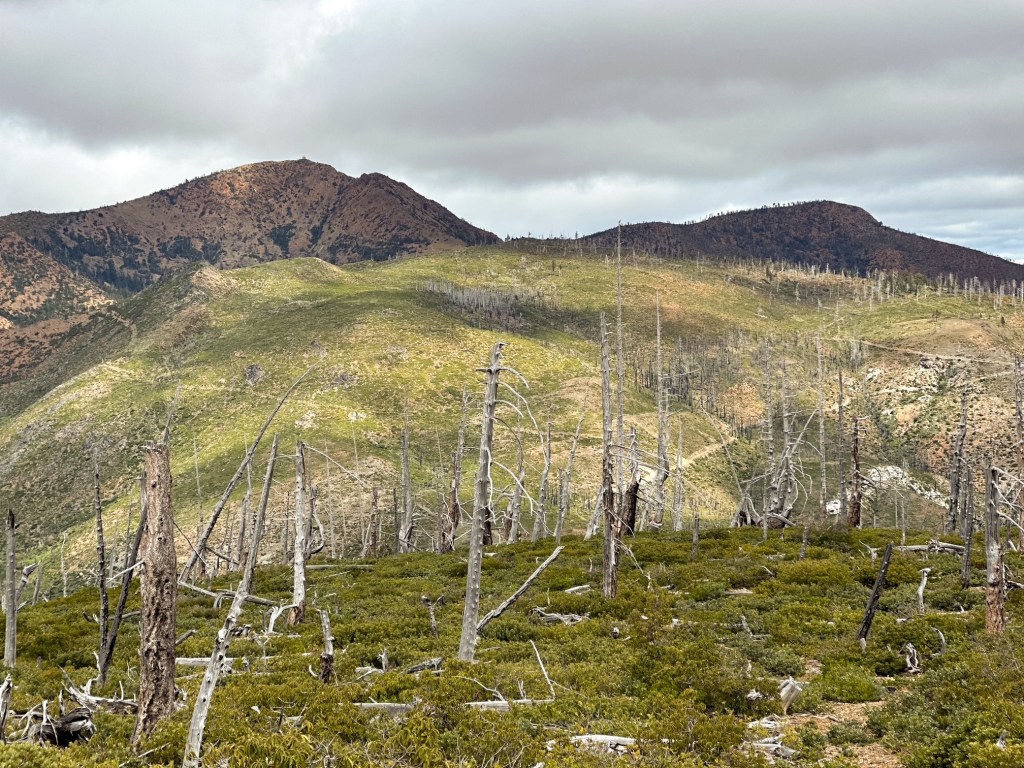
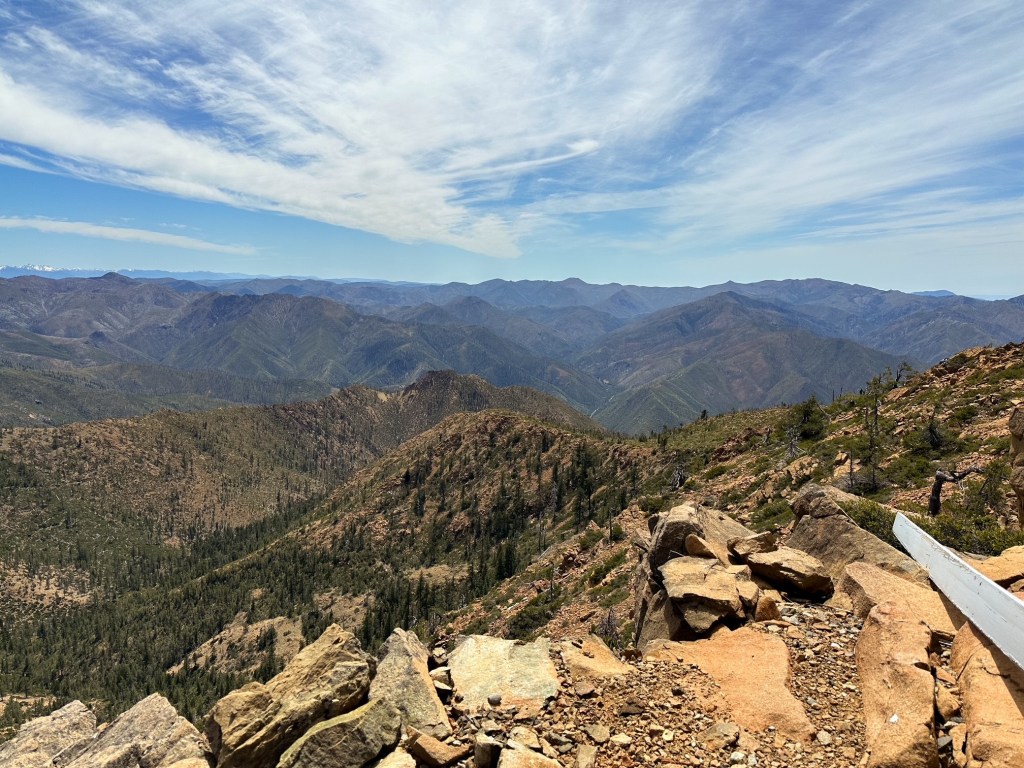
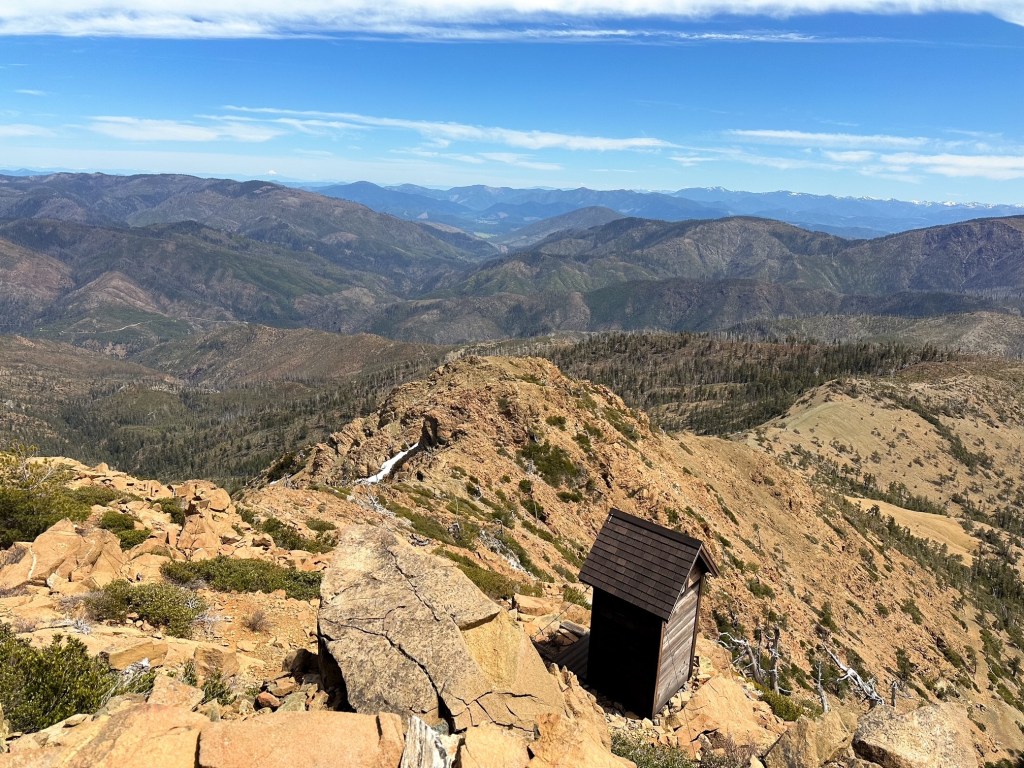
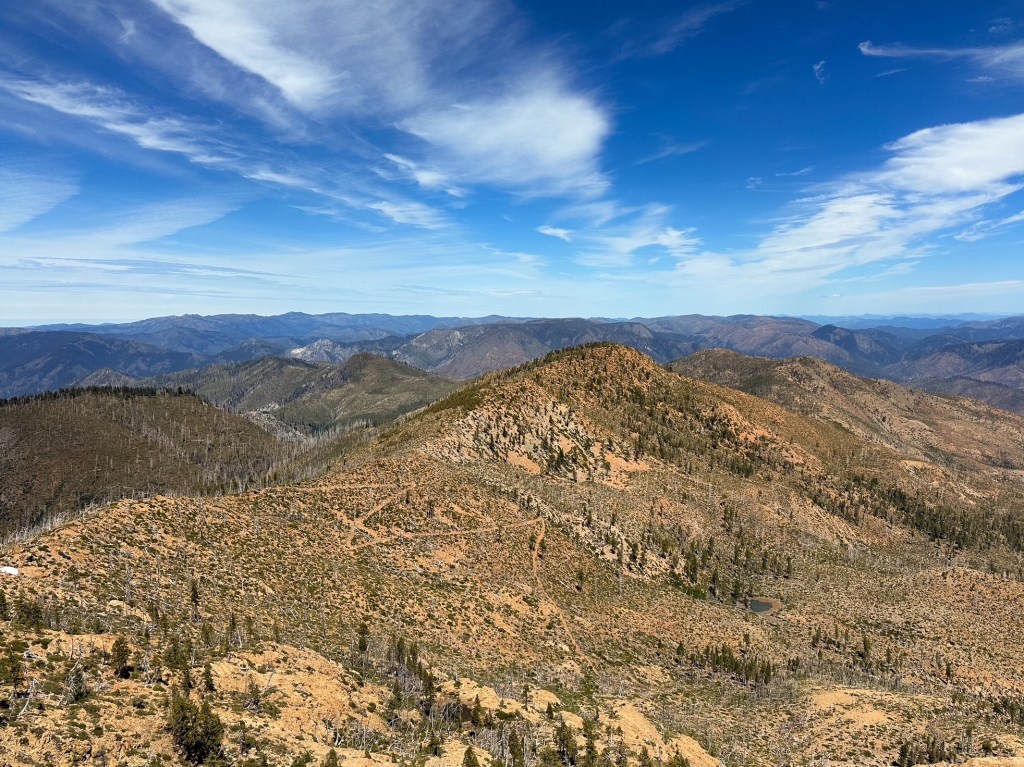
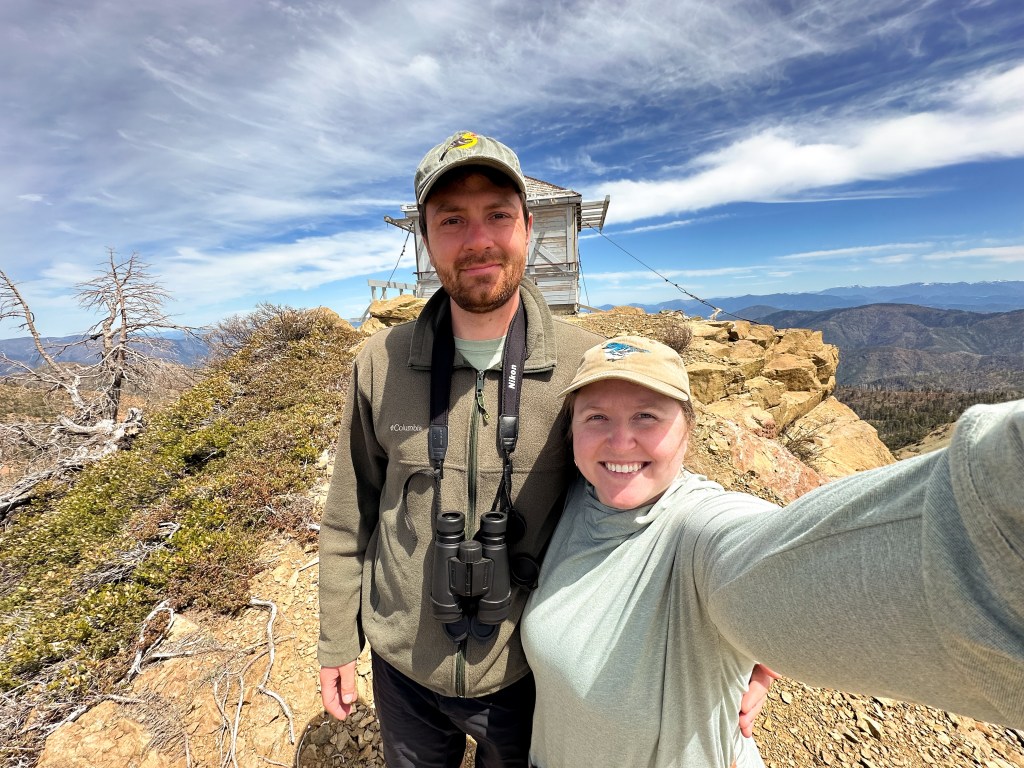
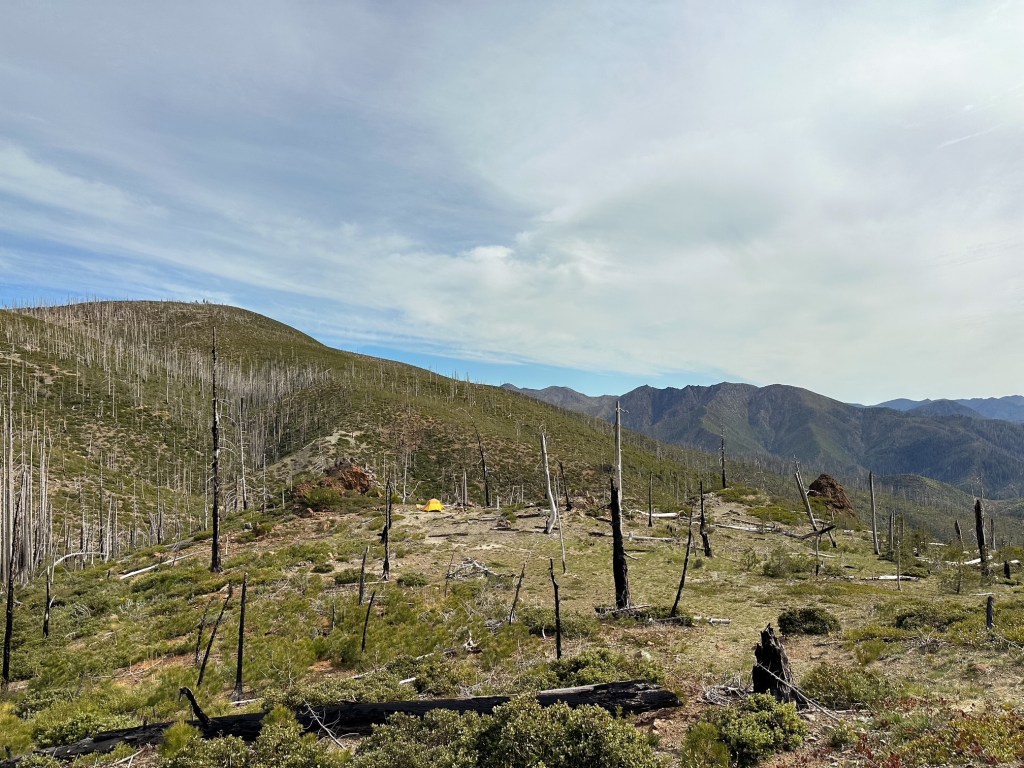
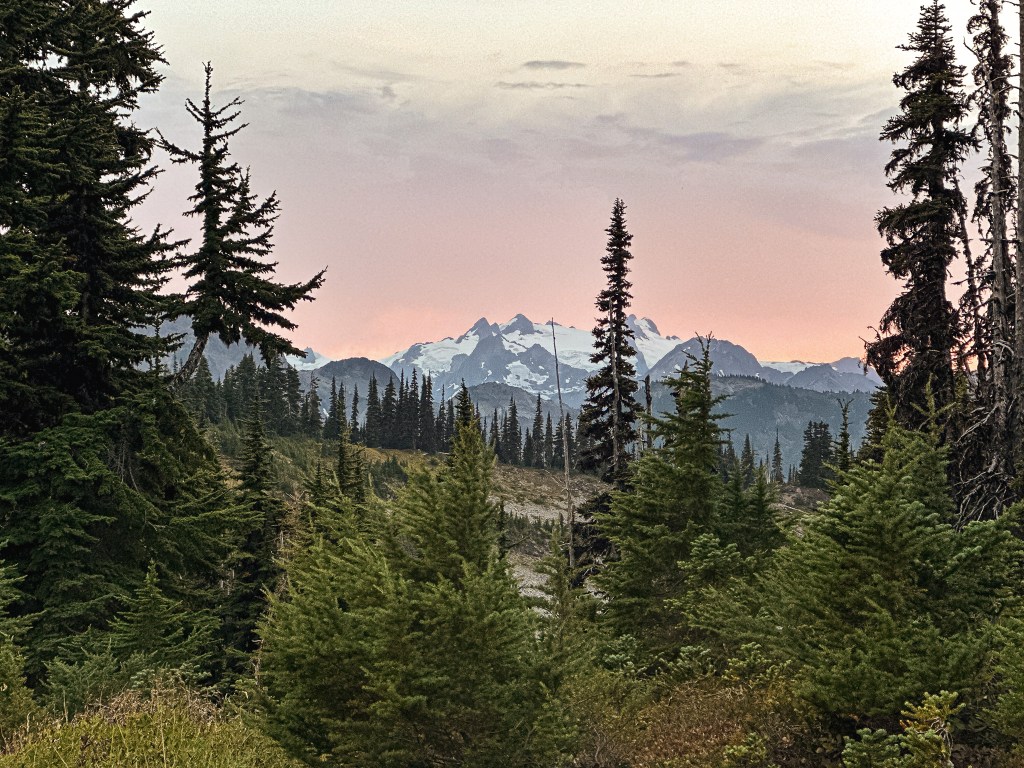
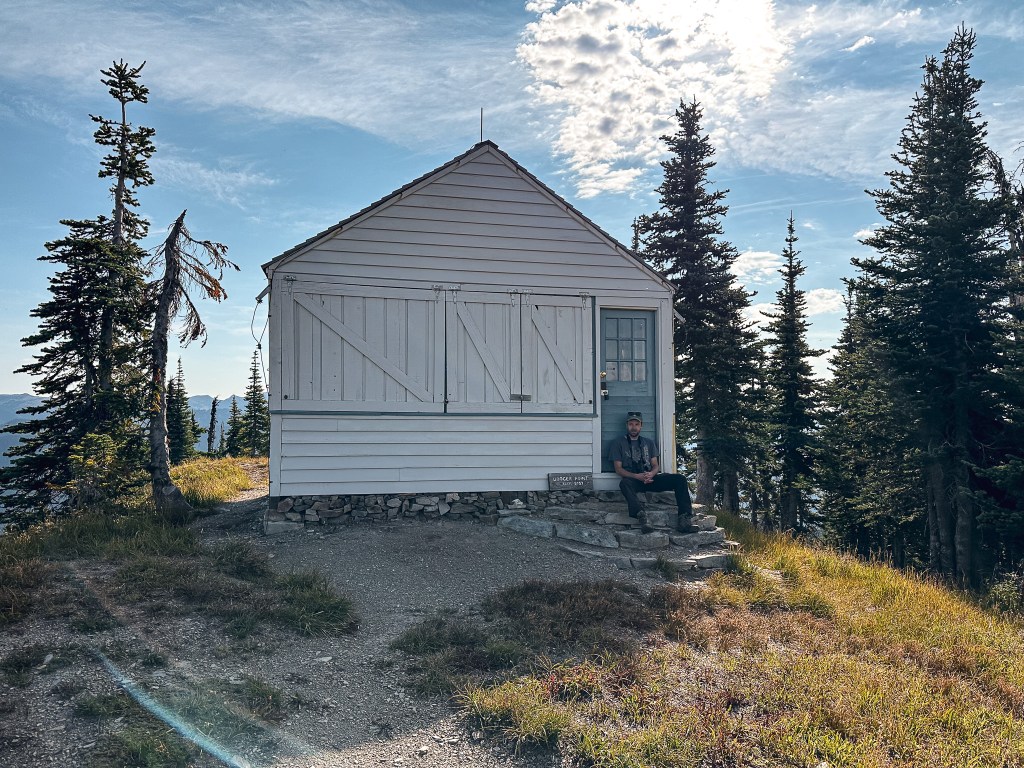
The only agenda for the day was to make it the remaining distance to the fire lookout just above camp. We decided to make this our first task after breakfast to avoid the heat of the day. I got another head start on Garnet since he was still fussing around camp and I wanted to take my time getting there. My legs and feet were still very sore from our prior two days of hiking. I meandered my way up to the top of the ridge and reached the lookout around 9:30AM. I took some photos and sat on the steps to enjoy the view while I waited for Garnet to join me 30 minutes later. Dodger point has a spectacular view of the inner Olympics, the Strait of Juan de Fuca, and even some peaks of Canada in the back drop. We had a pretty clear view of Hurricane Ridge as well. It was an interesting contrast watching the endless cycle of cars and hikers while we were completely alone. Both locations are similar in elevation and views, but have drastically different means of reaching them. We hung out on the summit for a couple of hours before we decided to head back down for lunch. We figured we could always make our way back up for sunset if we felt the need.

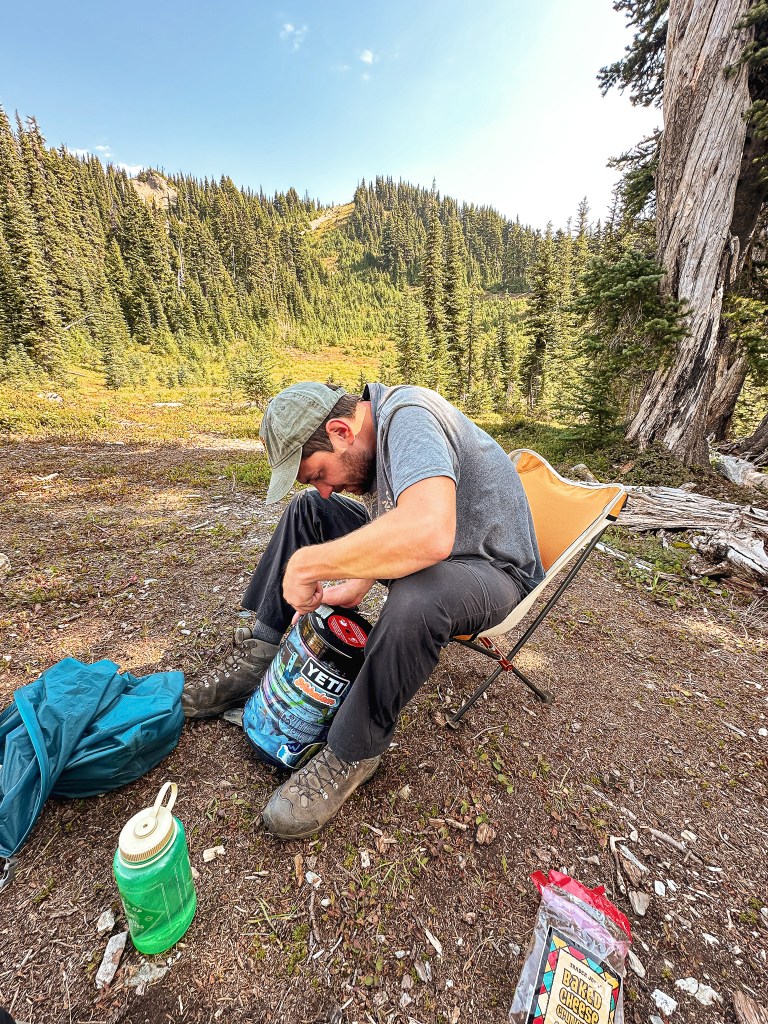
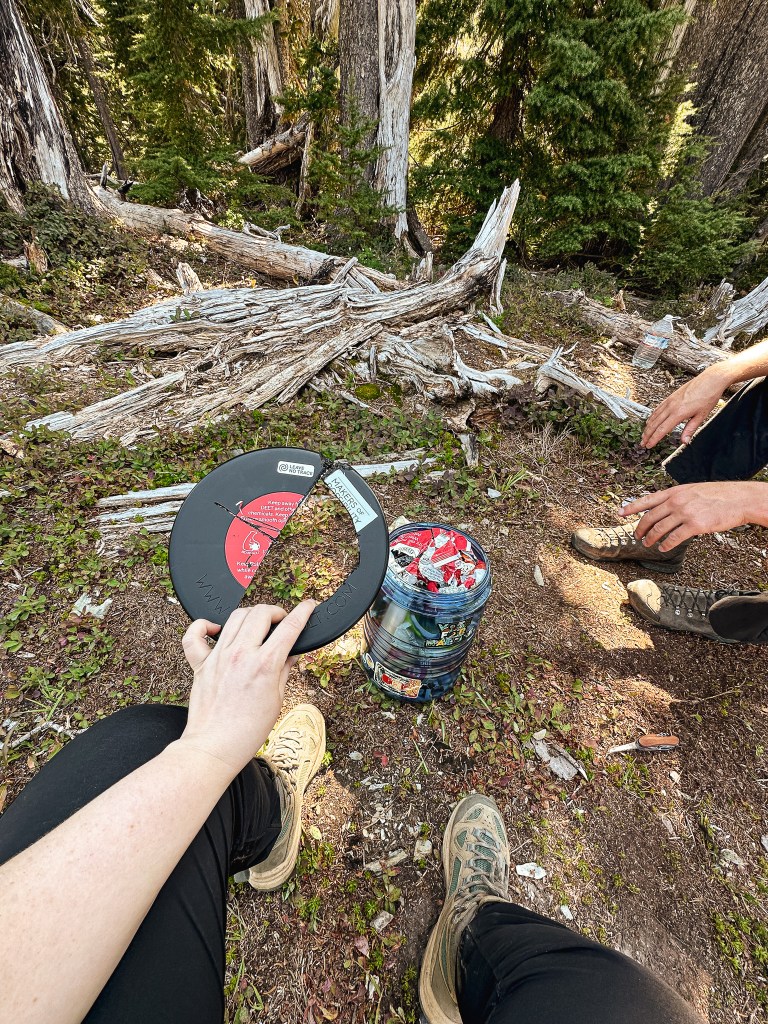
We expected to laze about camp for the remainder of the day; reading, eating, and lounging. And although that was the gist of our day, we were met with an additional complication. The bear canister lid on my BV500 would not open. This was a problem because it contained half of our food for the trip. Garnet is a very strong individual and despite his multiple attempts was unable to get it to budge. I tried too but it is to be expected that I was unsuccessful as well. The solution ended with us sawing off the lid using my multi-tool and finding that it was all due to a well placed chip clip. The bright side was that due to the placement the outcome would have had to happen regardless of where we were located, so it wasn’t a wasted effort. The down side was that it could have been avoided if the chip clip had been placed in a different location before the lid was closed. I was also thankful that I left my multi-tool in my backpack. We normally rely on Garnet’s Leatherman, but it had been stored away in the bear canister as well. This would have left us in a much different predicament. Luckily, we usually overpack our food so there was no danger of us going hungry even if we had been unsuccessful.

Prior to leaving for the weekend, I hadn’t seen any other permits taken out for Dodger Point. We knew it was still a possibility that we might see someone, but it felt unlikely given that we hadn’t seen a soul since we left the paved road on Friday. That’s why it was a shock to see someone show up in camp without a pack on. It was just a girl and she was asking if there was a water source nearby to which we had to inform her of our water carry. The tarns below camp would be her best option if she didn’t want to hike back 2-1/2 miles to the spring. After talking with her for a bit, her hiking partner joined us in camp seeking the same answer. They both didn’t have packs on which we can only assume they dropped back on the trail to scope around for water. We asked them where they had come from and if they were camping here for the night. It seemed like the most logical assumption since they came up from Humes Ranch. When he responded he seemed unsure of where they planned to camp. Their “route” headed toward Ludden Peak and would hopefully loop back via the Olympic Hot Springs road. I was confused by this initially since there was no mapped trail in the direction he mentioned. We wished them luck on their trip as they headed out into the afternoon. Once back in cell service I was able to find the route he was describing known as the Bailey Range Traverse. Let’s just say they were on a much more extreme wilderness experience than I would prefer and I hope they made it through without issues. I’m not sure how the permitting works for those kind of routes either.

The exact distance from our camp to the fire lookout was only 0.81 miles with 482′ of elevation gain according to my Strava tracker. Round trip this made our total mileage for the day 1.62 miles (excluding any wandering done around camp). We didn’t end up hiking back for sunset, but we did get to see a full grown Black Bear grazing on the hill from camp.

Monday.

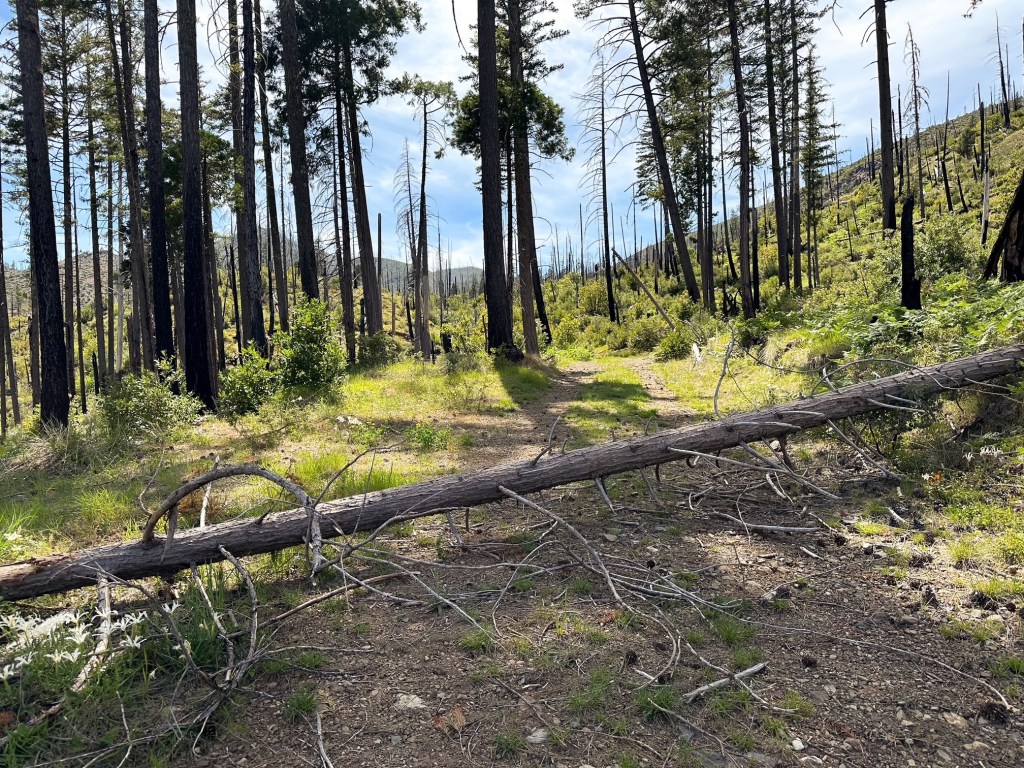
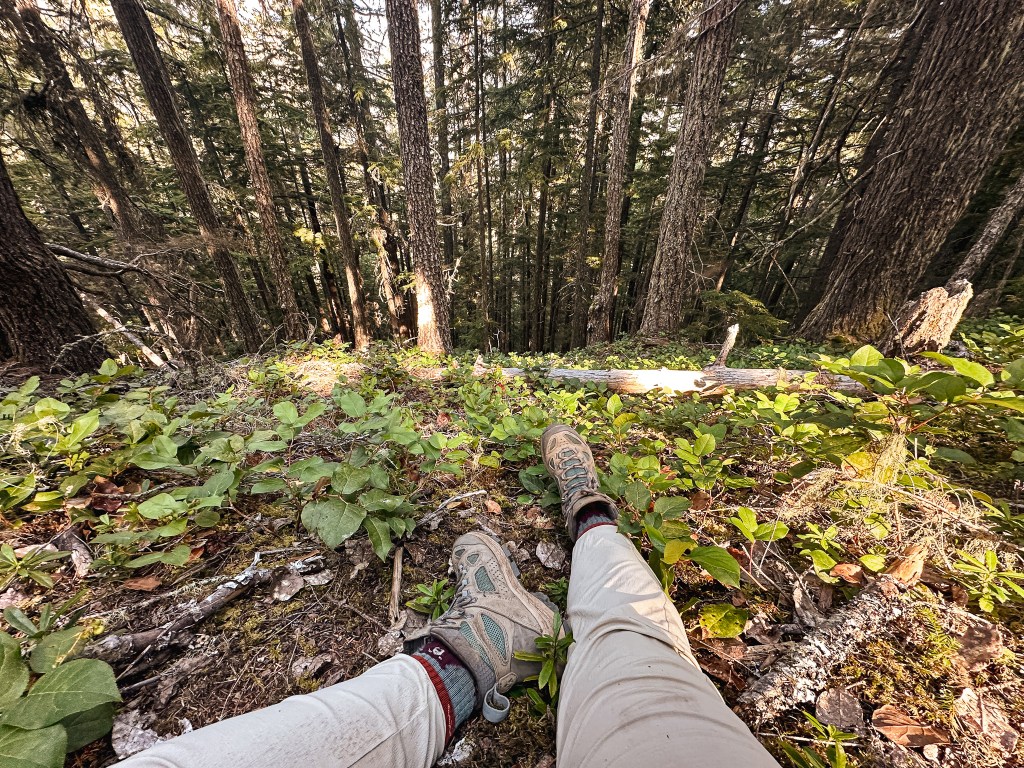
We didn’t manage to get an earlier start even though we knew it would take us a while to get back down to Humes Ranch. Though not nearly as long as it took for us to get up the ridge. We started our downward trek around 10:30AM. Sometimes this can be harder than the up on the joints. The route had quite a bit of downed trees, mostly small and easy to maneuver. We decided to count them as we headed down since I recalled reading a previous trip report stating there were 100 along the route the year prior. I was curious to find out if they had been right or were over exaggerating. We called out the count as we stepped over each tree to help keep track. And down, down, down we continued. We replenished our water once we reached the spring at the 2-1/2 mile mark even though we still had some left over from our original water carry. The gallon jug, 3 liters, and four 32oz nalgene bottles worth of water ended up being the perfect amount for us over two nights. The hike down was fairly uneventful since we knew what to expect. It was much easier to track our progress as we passed notable milestones. There were the false final springs where we filled up the water first. The sign stating we were at 3,500′ and no open fires/stoves beyond that point. The end of the long ridge into the switch backs. The random spot along the trail we decided to have lunch previously. We opted not to have lunch in the same location. We wanted to make it to what we deemed the “comfy spot” because it was located closer to camp and had a nice bed of moss to lay on. Garnet had stopped there on the way up while waiting for me along the switchbacks. When I had finally caught up with him he looked so peaceful and comfortable hence the name “comfy spot”. There were still a few times we passed switchbacks thinking we had made more progress than we actually had. From the “comfy spot” we had roughly 4-1/2 miles left to camp. And down, down, down we continued. Passing the small flat section of trail and eventually meeting up with the suspension bridge again. Garnet and I had hiked together most of the trail leap frogging each other every so often until he eventually ended up ahead. He waited for me once he reached the bridge and we crossed it together.

The small section heading up and away from the river felt much steeper than it did when we had hiked down it two days prior. My joints and feet were screaming at me during this final push. The eroded portion of trail felt insignificant now but I still stopped to take pictures. We turned on the connector trail we missed previously leaving camp and were dumped out at the other end of the campground. This trail was much shorter and flatter than the other one we had taken out. We made it to camp a little after 5PM. I had stopped counting the downed trees after I reached 100 but there were definitely more (somewhere in the 106-116 range). We encountered our first person of the day once we reached Humes Ranch. There was one other backpacker camped in the spot we had taken originally. There are a few other spots in the camp ground and we choose the next best one that offered the most amount of privacy. A group of three joined us a couple hours later. We spoke with them briefly about their route and they had hiked across the length of the Olympics from a southern starting point in the same amount of days. We didn’t get a chance to talk with the other backpacker and were unsure if they were starting or ending their journey. I’m always impressed at how much mileage people can cover with what seems like ease. Meanwhile, I feel like I am struggling to convince my joints to make it the 12 miles down hill.

I didn’t track the mileage for this day since I had tracked it on the way up and wanted to conserve battery for the final day. We can assume it was around 12 miles with mostly elevation loss. The connector trail probably cut off 1/2 of a mile total.

Tuesday.

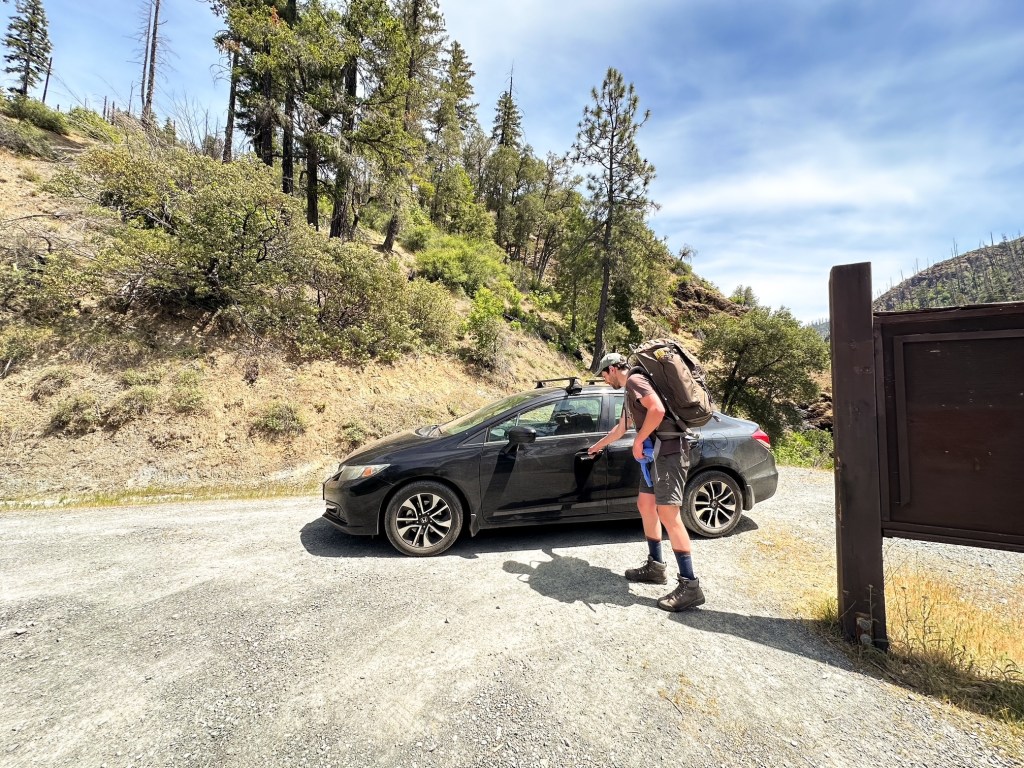
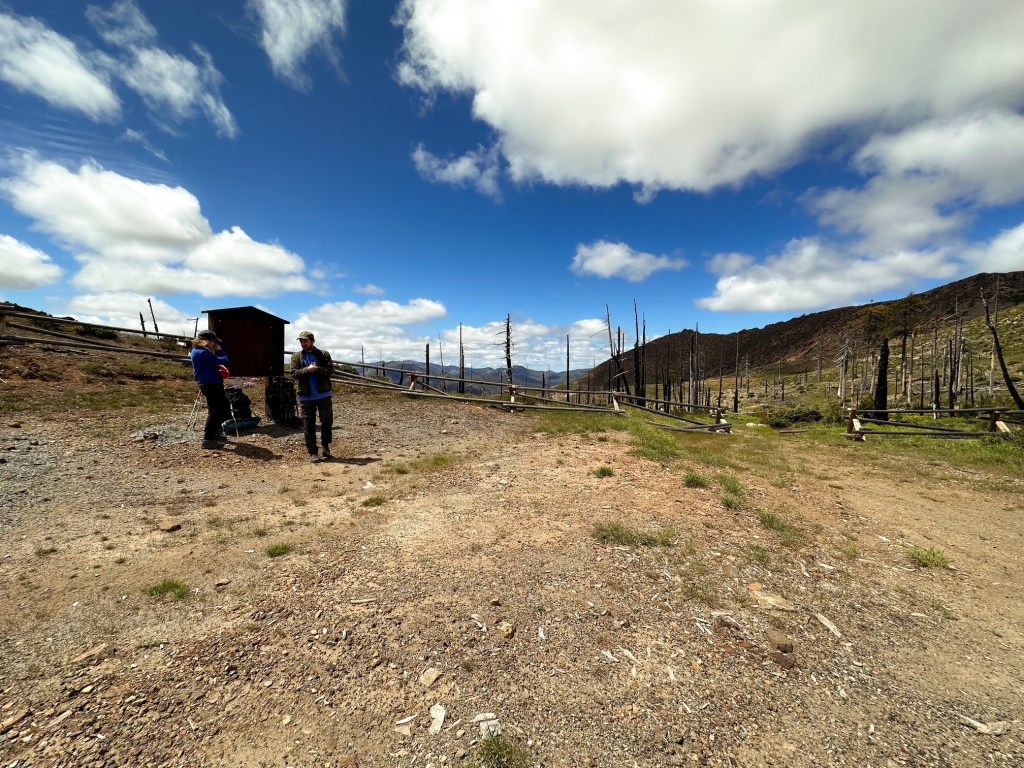
This morning we made more of an effort to start early since we knew we had a 9-1/2 mile hike out, at least a 4-1/2 hour drive home, and minor stopovers to return the bear canister and see Garnet’s mom for her birthday. The other backpackers in camp were already up as well getting ready to move out. The solo backpacker was the first to depart with us shortly after. We managed to eat, pack up, and knock out the first 2-1/2 miles from Humes Ranch to the former trailhead by 10AM and thus began the long road walk back to the new trailhead. Once on the road Garnet ended up ahead of me. It wasn’t long before the group of three caught up and passed me as well. I didn’t manage to take any pictures on the hike back besides the one in front of the trailhead sign. I was only focused on keeping my body moving and getting back to the car. Garnet had been waiting for me near the old guard station, but I wasn’t able to keep up with him at this point and fell behind again. Back on the pavement we saw a lot more day hikers and other backpackers heading out. I tried to keep my composure so I didn’t look like I was in as much pain as I was, but Garnet told me later I had a very noticeable limp by the time I reached the car. Two people at the trailhead ended up asking if I had made it to the Hot Springs to which I told them no and that I had gone much deeper than that. They followed up with “was it pretty at least?” to which I responded with “it was gorgeous!”.

Strava tracked our final day at 9-1/2 miles with 941′ of elevation gain. We had no issues returning the bear canister or driving home. It made for a long travel day home, but it was worth the effort. This was definitely the most remote fire lookout we have visited to date. There are not many left this deep within the wilderness and it is a destination we will remember for a life time. Our total trip mileage estimation from start to finish is around 45 miles with at least 5,000′ of elevation gain (if not more).

History.

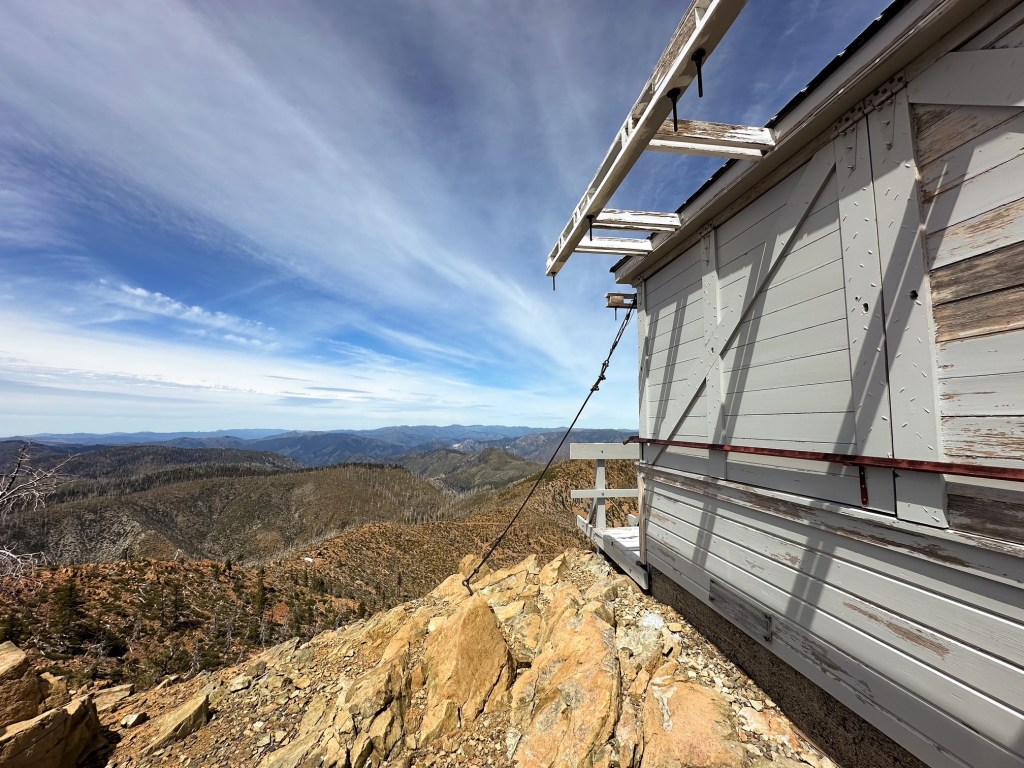
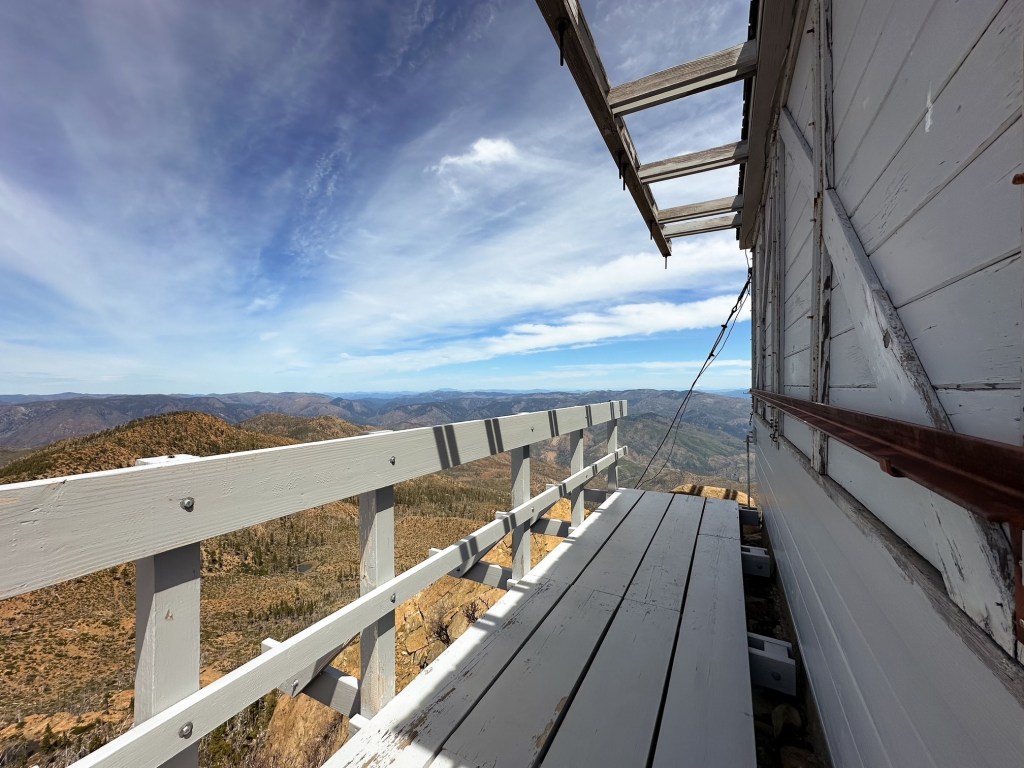
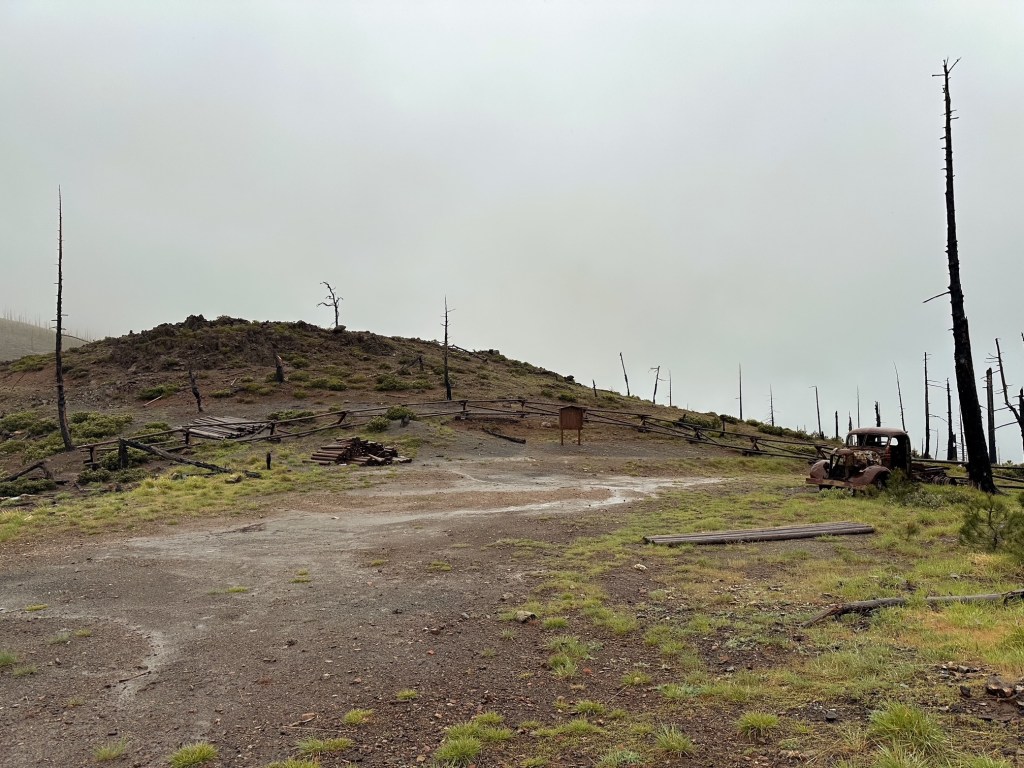
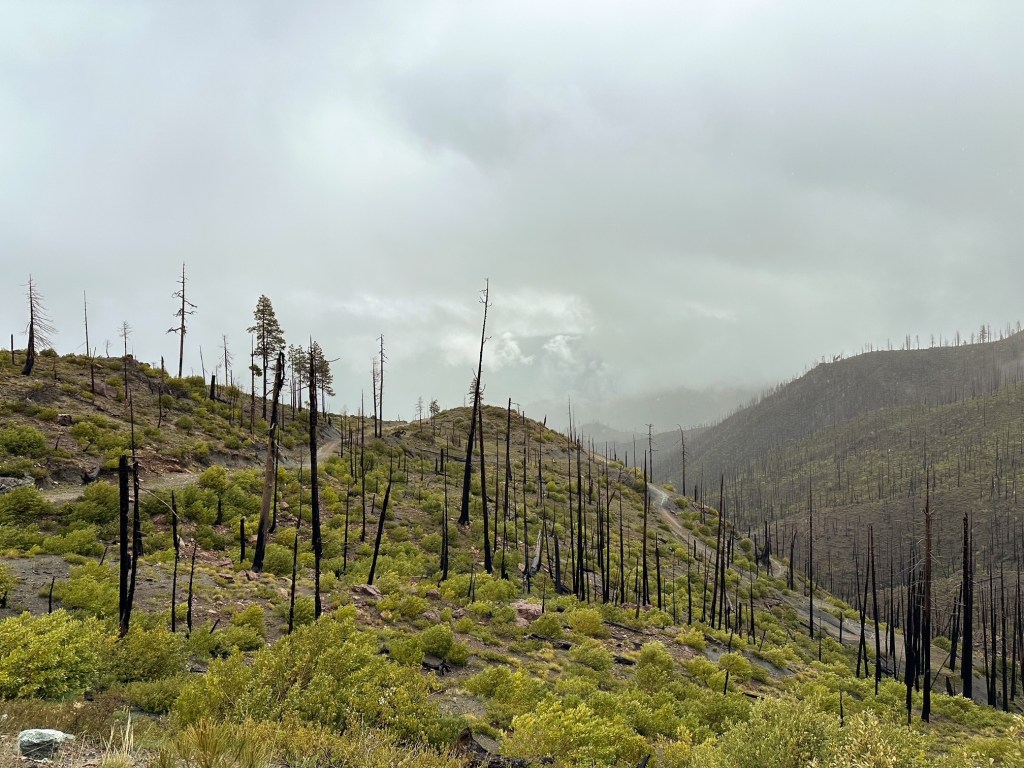
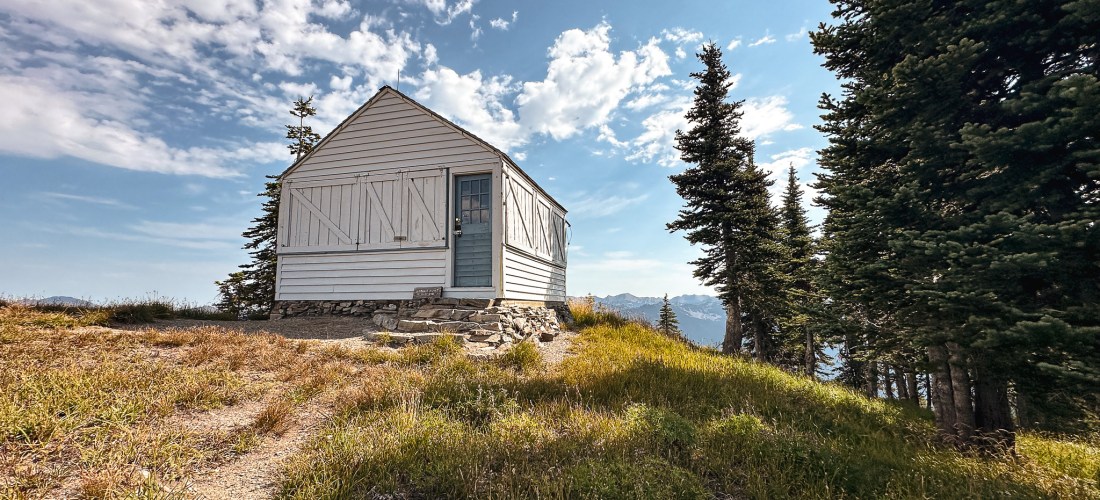
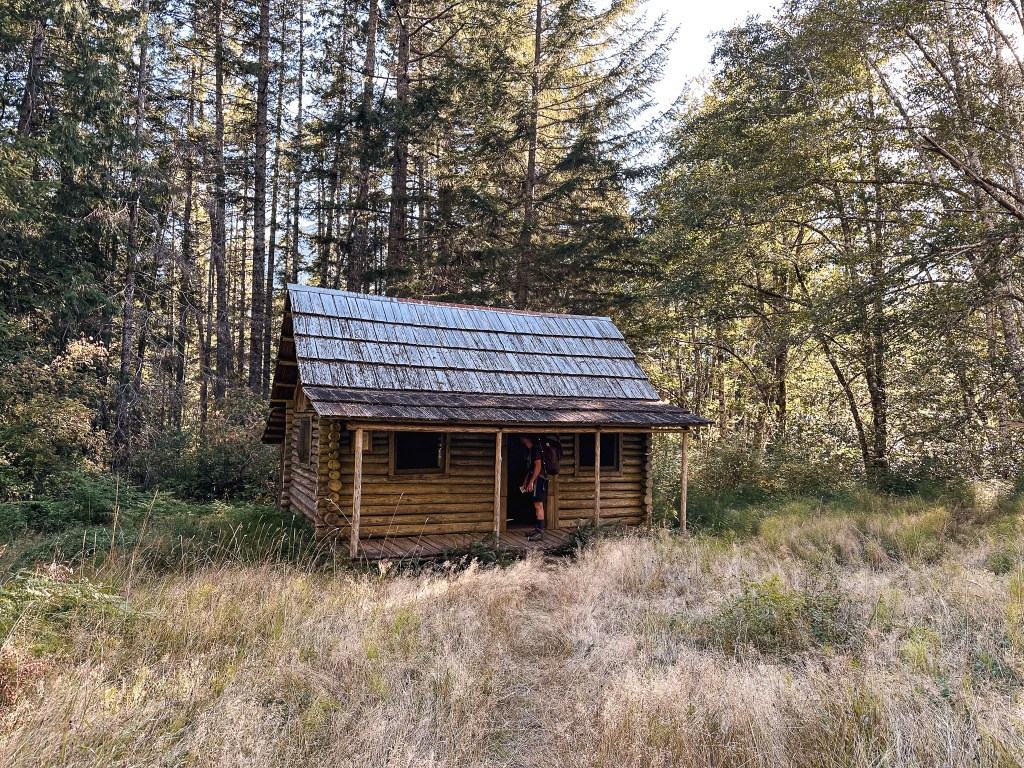
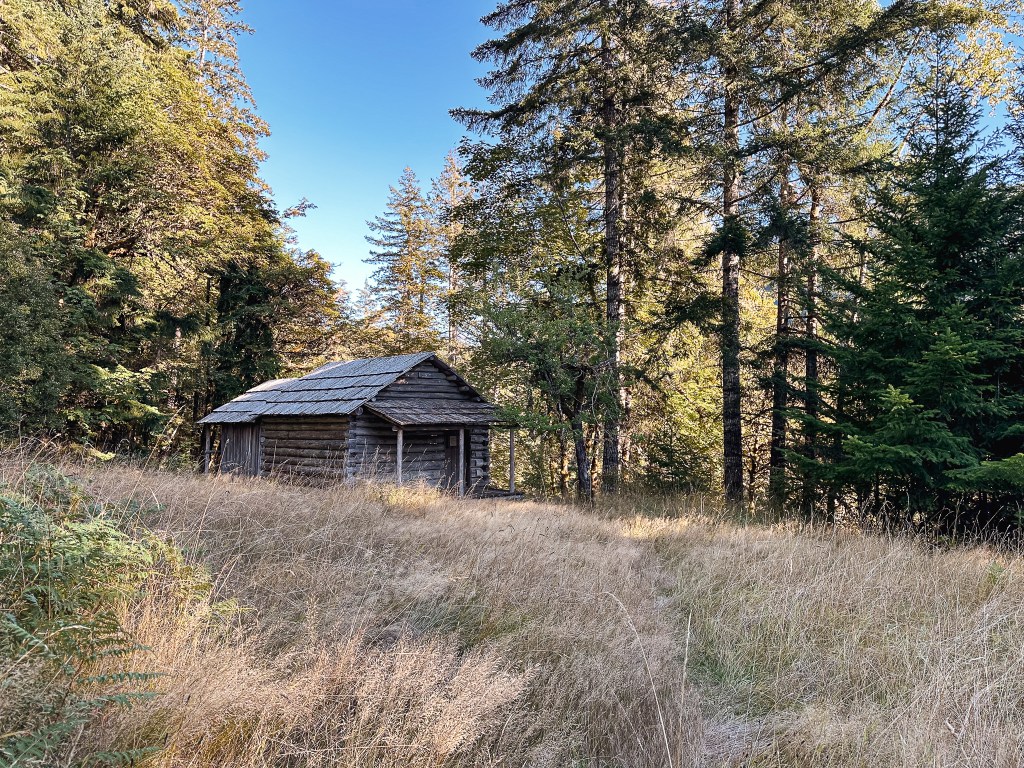
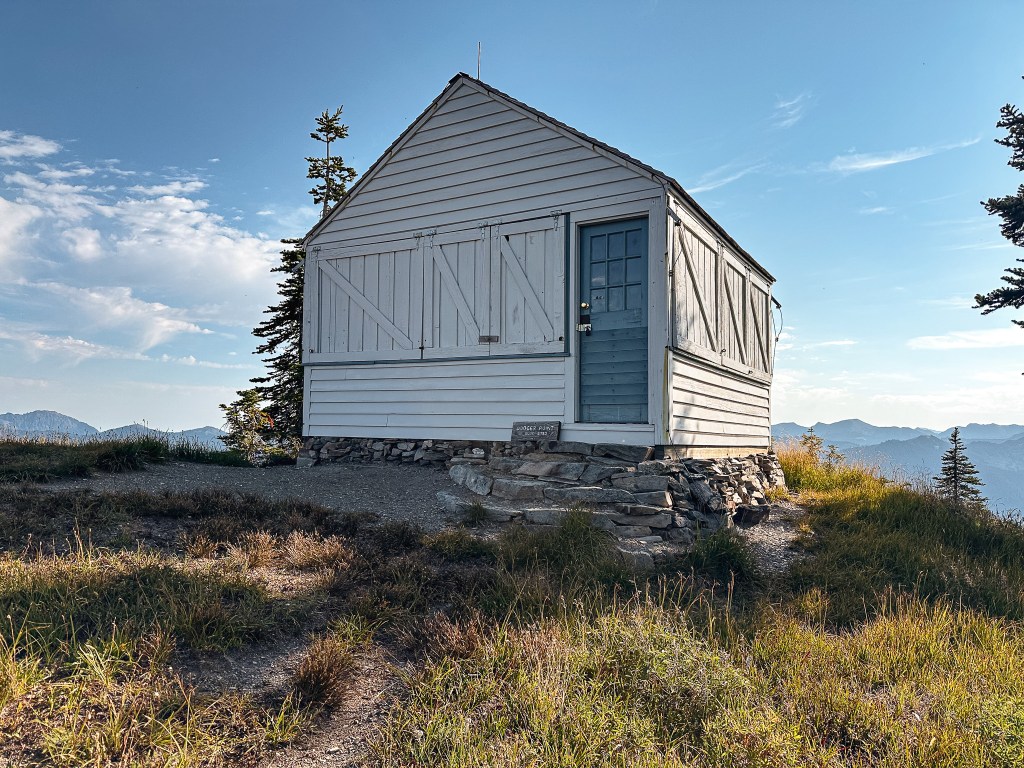
The fire lookout located on Dodger Point is a standard 14’x14′ L-4 ground cabin that was built in 1933. At the time this was built and managed by the U.S. Forest Service and considered a part of the Olympic National Forest. All of the lumber and windows were packed to the remote location via horse back. The point was named Dodger Point after Dodger Bender who had done trail, telephone maintenance, and construction work for the Forest Service. The Olympic National Forest wasn’t designated as a National Park until 1938. It was utilized as an Aircraft Warning System in early 1940s like many other fire lookouts within the area during WWII. It was most recently restored in 2017 by a group of volunteers with grant funding from the National Park Fund and REI Foundation. This is one of two remaining fire lookouts standing within the Olympic National Park boundaries today. I could not locate information on when the fire lookout was last staffed, but it appears it is still listed for emergency use. The cabin is locked and not open to public use.

Summit Point L.O.

Oregon Lookouts

Location.

Wallowa-Whitman National Forest

Status.

Active; Currently standing

Estimated drive time from Portland, OR.

6-1/2 hours

Date visited.

September 2, 2023; September 5, 2023

Elevation.

7,006′

National Historic Lookout Register.

US 1642; OR 160

Trip Report.

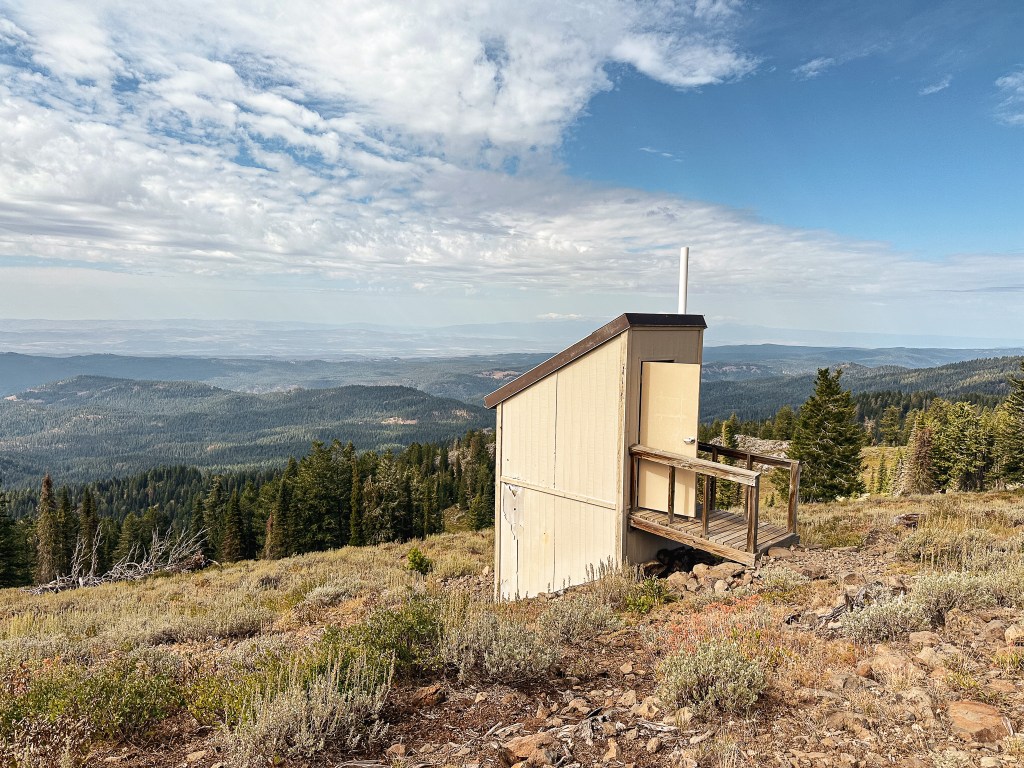
Friday, September 1st – The Summit Point trailhead is best accessed from HWY-86 via NF-77 to NF-7715 just before reaching Halfway, Oregon. We initially drove past this junction to check out the fire lookout at the Pine Ranger Station (post). After a quick stop, we back tracked to turn onto NF-77. This junction on HWY-86 is signed, but for some reason is labeled as the Summit Creek L.O. instead of Summit Point. I’m not sure if it was actually ever referred to as such or if it was just a misprint too costly to fix. We drove roughly 11 miles on NF-77 before we reached another signed junction with NF-7715 to the right and the McBride Campground to the left. The sign on the NF-7715 road was correctly labeled and stated there were 5 more miles to reach the trailhead. We already knew we wouldn’t have enough time to make it to a backcountry camp before dark and turned into the McBride Campground to see if there were any available spots for the night. This is a free unmaintained campground that offers fire pits, picnic tables, and pit toilets that were surprisingly stocked with toilet paper. There is also water access along the Summit Creek from most of the camp spots. I was surprised to find an empty campground given that it was a Friday on Labor Day weekend. We picked a camp spot on the far right end near the creek to set up. This put us the farthest away from the entrance if someone did decide to join us later in the evening. Dinner was simple since we only had our backpacking food and equipment to fuss with. We fell asleep to a light rain and some nearby thunder, but I hoped it would clear up by morning.

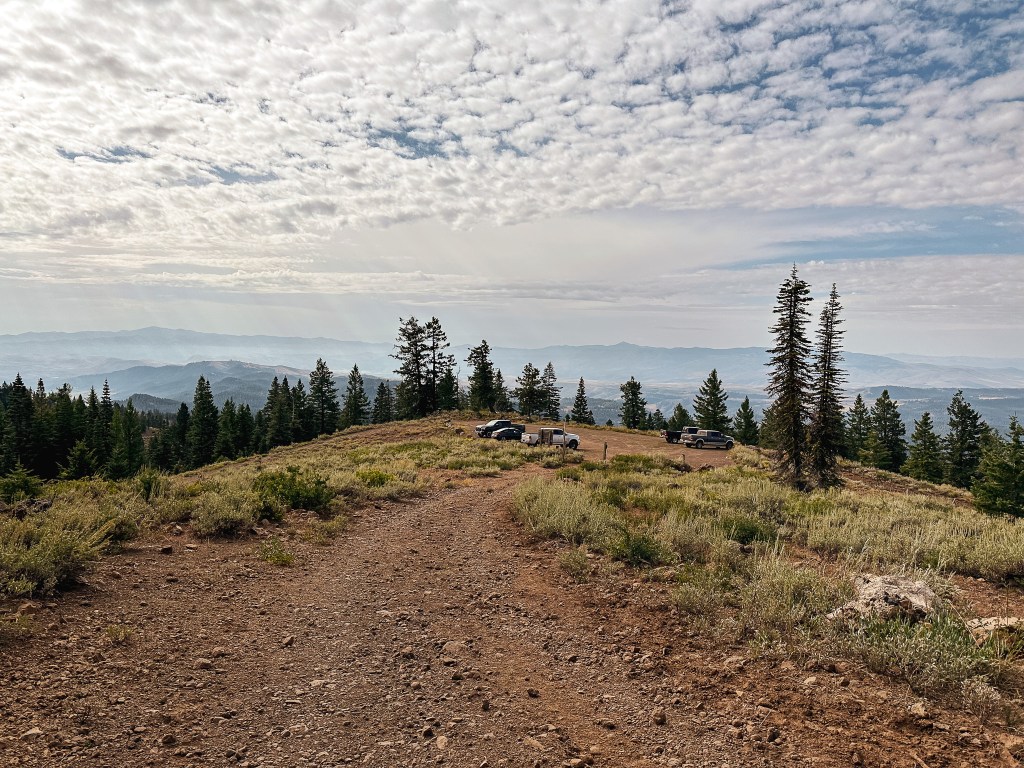
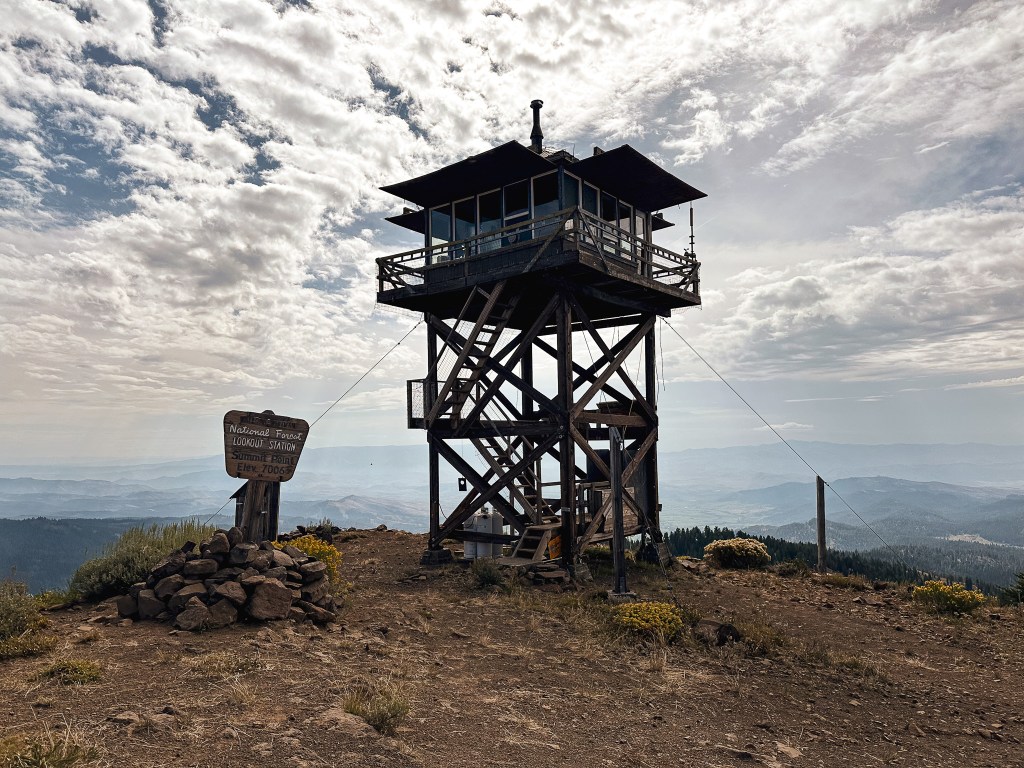
Saturday, September 2nd – We still had the campground to ourselves when we awoke the next morning. The skies were cloudy and slightly threatening in comparison to the day prior. The pack up was simple and quick, but we still weren’t on the road until after 8:30AM. We are not early risers by any means and didn’t feel the need to rush given our proximity to the trailhead. The NF-77 road had been a good gravel road all the way up to the junction with the McBride Campground. There had been a few minor rocks or potholes, but nothing extraordinary. The start of NF-7715 wasn’t daunting and we hoped for similar conditions. I had read from a prior trip report that “most any vehicle with normal clearance can negotiate it, taking care in the bad spots”. We found this to be accurate and it took us 46 minutes to drive the 5 miles to the trailhead (my car’s odometer calculated it at 4.6 miles). I will say some of the bad sections were a bit intimidating, but going slow and thinking through your wheel placement helps. We were more determined to make it all the way since we would be backpacking beyond the fire lookout. We were also met by a truck coming down when we were heading up in a tricky spot. I wasn’t able to move out of the way due to washout on the road. They were nice enough to back up and let us pass, but I felt bad that I had to take up the whole road. There is ample parking at the trailhead and my Civic stuck out among the 4 other pick up trucks. It was not surprising to see people here since it was elk bow hunting season during a holiday weekend. The road continues beyond the trailhead parking for the lookout attendant to access the tower. There was a gate blocking this at one point, but I guess someone felt it was an inconvenience to them. We started our hike up the road with 45lbs each on our backs for the long weekend. We both hadn’t been backpacking much this summer due to our house duties and could feel the weight immediately. Garnet’s new bike commute is a marathon every day, 13 miles each way, that helps keep him fit. I’m not as active during the week since I drive to work and have a desk job, so one can assume I was feeling it a bit more than him. We are normally able to slip away for a night in the backcountry here and there throughout the summer to keep our backpacking legs in shape, but that hasn’t happened much this season either. I quickly fell behind as we continued to follow the road. I reached the junction where the road to the lookout continued to the right and our “trail” turned into an old road bed. I decided to drop my pack here to catch up with Garnet. The Strava app stated it was only 0.9 miles from the trailhead to the base of the fire lookout. The attendant must have had the day or weekend off since no one was onsite during our visit. This is an actively staffed fire lookout and it seemed too early for their season to be over. After taking in the view and some pictures, we headed back to where I dropped my pack. I reloaded my back with the 45lbs and we turned to continue on the official “trail” into the wilderness.

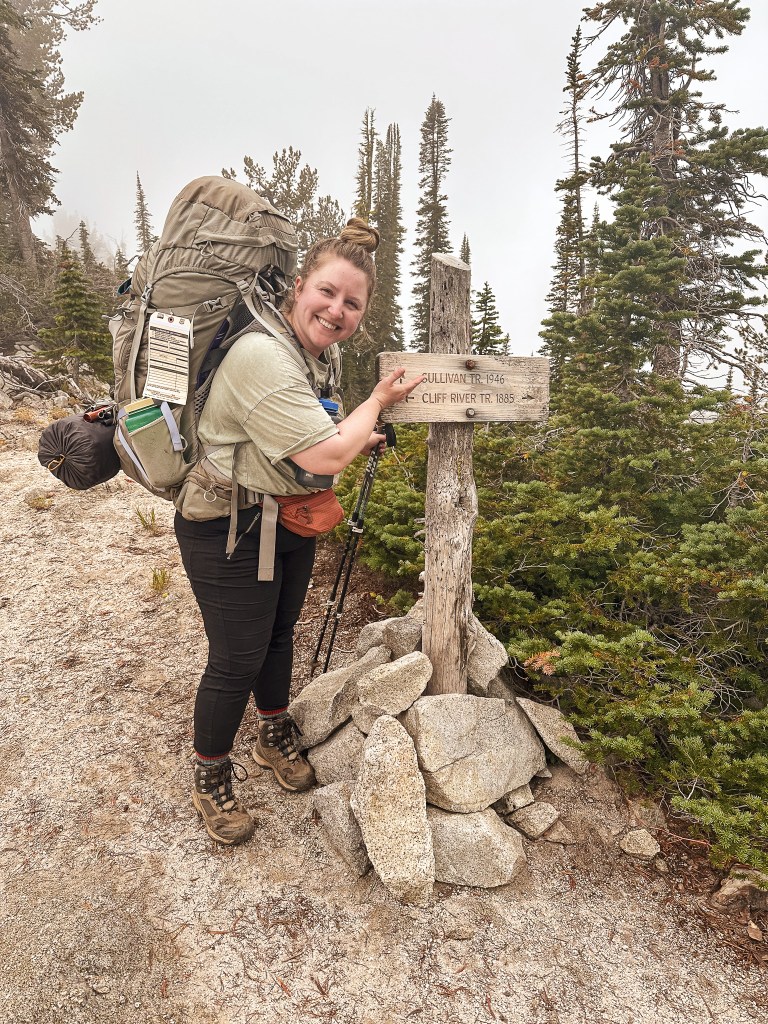
The Cliff River Trial #1885 starts out by following an old road bed that climbs up and over a hill to reach the meadow below Cornucopia Peak. We had to cross through a cattle guard and follow the fence line to reach the official wilderness boundary. The trail through the meadow can get convoluted with the many different user and game trails. We just followed the most defined of the trails to the base of Cornucopia Peak. If you have the time and energy to do some off trail navigation, Cornucopia Peak offers a rustic trail to a former fire lookout site. That wasn’t in our cards for this trip, but it was tempting being so close. Garnet had spotted an old hunting or mining cabin across the meadow on the way in and wanted to check it out while we were here. I decided to stop for snacks and to filter more water at a spring while he was off looking for the cabin. Our plan was to continue our climb along the Cliff River Trail to Crater Lake for the night. The Cliff River Trail continued to the left of Cornucopia Peak and steadily climbed up to a pass that met up with the Sullivan Trail #1946. I thought this was novel since my last name is Sullivan. From there, the trail dips down before climbing to another pass that meets up with the Pine Lakes Trail #1880. There is a lot of exposure along this section of trail and it is best done during a cooler day. I wouldn’t recommend it during the heat of summer. There was also quite a bit of erosion along this portion due to the loose scree texture of the slope. It’s not a matter of if, but when, this trail will eventually wash out. I’m not even sure trail maintenance would be able to help solve this issue given the terrain. Once at the second pass, you can see your destination off in the distance. The trail heads down from here to wind around the base of Granite Mountain until you reach the junction with the Little Kettle Creek Trail #1945. The Cliff River Trail continues all the way down to the South Fork Imnaha River, but to access Crater Lake we turned left onto the Little Kettle Creek Trail. It’s only a short distance along the Little Kettle Creek Trail to the lake. The hike from the trailhead to Summit Point and then on to Crater Lake had been 8.2 miles with 2,148′ of elevation gain. I’m not sure what it is about the Eagle Cap Wilderness, but it always seems to chew me up and spit me out rotten. Garnet had continued on ahead of me after we had reached the final pass and said he was getting ready to send out the search parties by the time I reached the lake. I dropped my pack once we found our camp for the night and laid on a nice cool rock for 30 minutes before moving again. Despite only seeing one couple hiking out from the Pine Lakes Trail, we shared the lake with two groups for the night. One was just a couple as well and the other was a group of six plus a few dogs.

Sunday, September 3rd – I had already decided the day prior that today was going to be a rest day. Garnet had previously mentioned hiking down to the South Fork Imnaha River, but we were both too tired after yesterdays hike. We spent the majority of the day reading and lounging around camp. Both groups that were camped at the lake packed up to either head out or hike deeper into the wilderness. This left the lake to us for the evening. We took a stroll around the perimeter of the lake to check out the other vacant camp spots. There were about 3 or 4 decent spots including ours and a couple of flat spots that would make due in a pinch. Despite getting quite a few people hiking past us along the Little Kettle Creek Trail, none stopped to camp at the lake. They all seemed to be heading back out to the trailhead, either Eagle East TH or Little Kettle Creek TH, coming from somewhere else within the wilderness. At one point during the day we were able to spot a mountain goat on the side of the ridge between Granite and Red Mountain. We watched it for a long time with our binoculars picking its way along the steep rocks. We gave up when some low hanging clouds rolled in to obstruct our view. Crater Lake sits just below 7,600′ which kept the temperatures cold all day. Rain rolled in later that evening and we could hear some distant thunder storms during the night. This made our tent feel extra cozy, but I hoped for clear skies in the morning.

Monday, September 4th – We initially planned to move our camp to Pine Lakes for the final night of our trip. But, after seeing how far we’d have to hike out to the Summit Point TH combined with the long drive home, we decided camping closer to the trailhead made more sense. The rain from the evening prior had thankfully stopped, but the clouds were still hanging low. We decided to try and find a camp for the night in the meadows below Cornucopia Peak. This would set us up for a much shorter hike out on Tuesday. The climb out from Crater Lake felt much easier than the hike in. Our packs were lighter than when we had started and the cloud coverage helped to keep the heat of the sun off of our backs. We only saw a group of three hiking into Crater Lake as we were hiking out. After 5.4 miles and 808′ of elevation gain we found ourselves back at the meadow. We knew there was a least one camp spot near the old cabin Garnet had checked out prior, but we decided to take a look around to see if there were any others among the trees. This is a popular area for cattle grazing, so it was hard to find a flat spot that wasn’t littered with cow pies. We eventually found a very old one set back from the trail with a fire ring that hadn’t been used in years. After setting up camp, I decided to take a hike over to the cabin since I didn’t check it out with Garnet. It was a surprisingly nice kept cabin that definitely is utilized by someone. The door frame was comically small and even shorter than me. I’m not sure the history of this cabin, but I would love to know. I realized you could see Summit Point from the cabin area and took a look at it through the binoculars. There was still no one there that I could see. We had a bit of service in camp and decided to check if there was a burn ban in effect for this area. There was not. We don’t normally go to the trouble of building a fire while backpacking, but it was cold and walking through the damp grass made our boots wet. This helped to keep us warm for the evening.

Tuesday, September 5th – We woke up to clearer skies and decided it might be worth making a trip back out to Summit Point for some better views. The hike out was going to be much shorter today, but we still had a 6-1/2 hour drive home. We saw quite a few people as we were heading out. Once we gained a view of the fire lookout again, we could see someone moving around in the cab. We decided to definitely make an extra side trip back since we were hopeful to meet the lookout attendant. We both dropped our packs at the junction this time and hiked the remaining distance along the road. As we approached the fire lookout we were surprised to see no vehicle. This was confusing since we definitely saw someone from a distance in the cab. There were also fresh tire marks on the road that hadn’t been there at the start of our trip. We also noticed the catwalk door was now open. All signs pointed to someone being there. The sun was positioned awkwardly where I couldn’t really see inside the cab from the ground. We weren’t sure if they had just left or if someone had dropped them off. As we walked around to take in some more pictures and better views, we both thought we could hear someone walking around in the cab. We stood where they could see us and decided to locate all the visible surrounding fire lookouts in hopes that they would come out to greet us eventually. After sometime we realized they probably didn’t want any visitors and said our good-byes to Summit Point. As we were turning around to leave Garnet said he saw the woman open the door to the cab, but I only heard the door when she shut it again. It was a bit odd since it seemed like she was going to come out to talk to us, but then decided against it. It’s possible she just thought we were another pair of hunters scoping the view for game. Regardless, It’s their space and should be respected. We hiked back to our packs and made the final decent to the car. The hike from our camp in the meadows to Summit Point and then back to the trailhead came out to 3.3 miles with 334′ of elevation gain. We decided to start a tradition of getting burgers after backpacking in Eagle Cap. Our first trip to the wilderness was in 2021 where we did a week long loop through a lesser used portion. It was rough and beautiful, but that trip kicked our butt too. We hiked out a day earlier than planned to get burgers and a beer at Terminal Gravity in Enterprise. They were the best burgers we’ve ever tasted (possibly because we had been eating trail mix and dehydrated food for a week). This trip we made our way to The Main Place restaurant in Halfway before heading home. Their burgers tasted pretty good as well.

History.

Summit Point was first established as a fire detection site in the 1930s when a 20′ open platform tower was built on the north end of the ridge. Construction for a new tower began on the most southern end of the ridge in 1949 and wasn’t completed until 1951. This move was noted due to constant fog obstructing the view from the northern end. The lookout built was a 20′ treated timber tower with a 14’x14′ L-4 cab. It is still actively staffed every season.