Well surprise, surprise! It’s me, still behind on writing about our most recent adventures or not so recent adventures anymore. Garnet and I just got back from a 7-day backpacking trip through the remote and rugged Jarbidge Wilderness in Nevada. It was equal parts challenging, beautiful, and rewarding. Unfortunately, it ended on a slightly sour note when we realized a mouse moved into my car while we were away. It had taken a bite out of all the food we had stashed in the trunk for our drive home and even decided to take a few holes out of Garnet’s newer shirt. This is how we found ourselves at the Sleep Inn in Jerome for our final night of the trip. Our original plan was to car camp in one of the many free BLM campgrounds along the Jarbidge River like we had on our first night of the trip. But once we stopped we could hear it in our console still and were unable to get it out when I opened my air filter. We hoped by taking everything out of the car into the hotel that it would vacate and save ourselves any additional damage to our gear. We even set some traps in the car for the night, but ultimately didn’t catch anything. This is my wordier way of saying we were closer to civilization after our trip and it set us up nicely to visit some fire lookouts. We had briefly talked about stopping at one of these fire lookouts on the way out during our drive down. Though I think if we were still camping along the river the last night we probably wouldn’t have had enough time to do both plus drive the 10 hours back home.
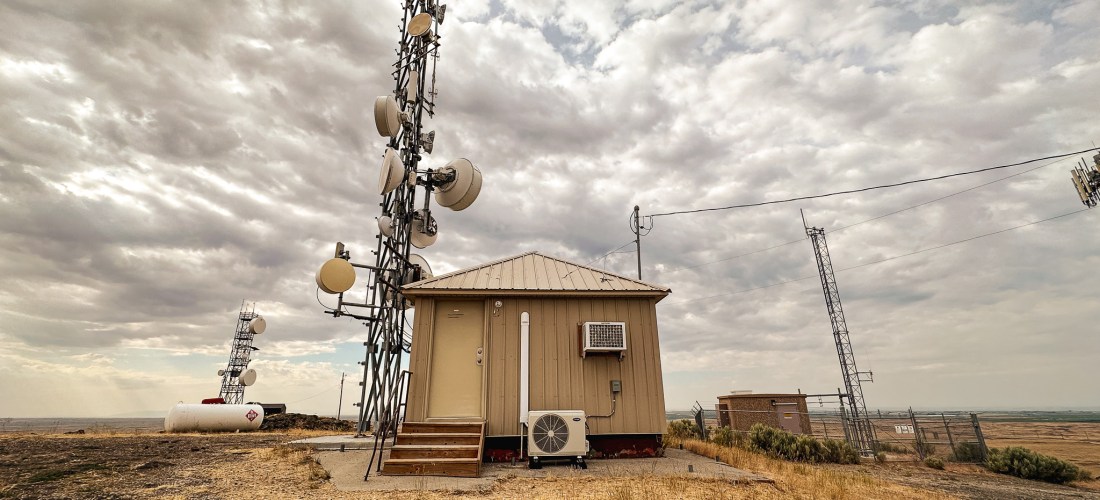
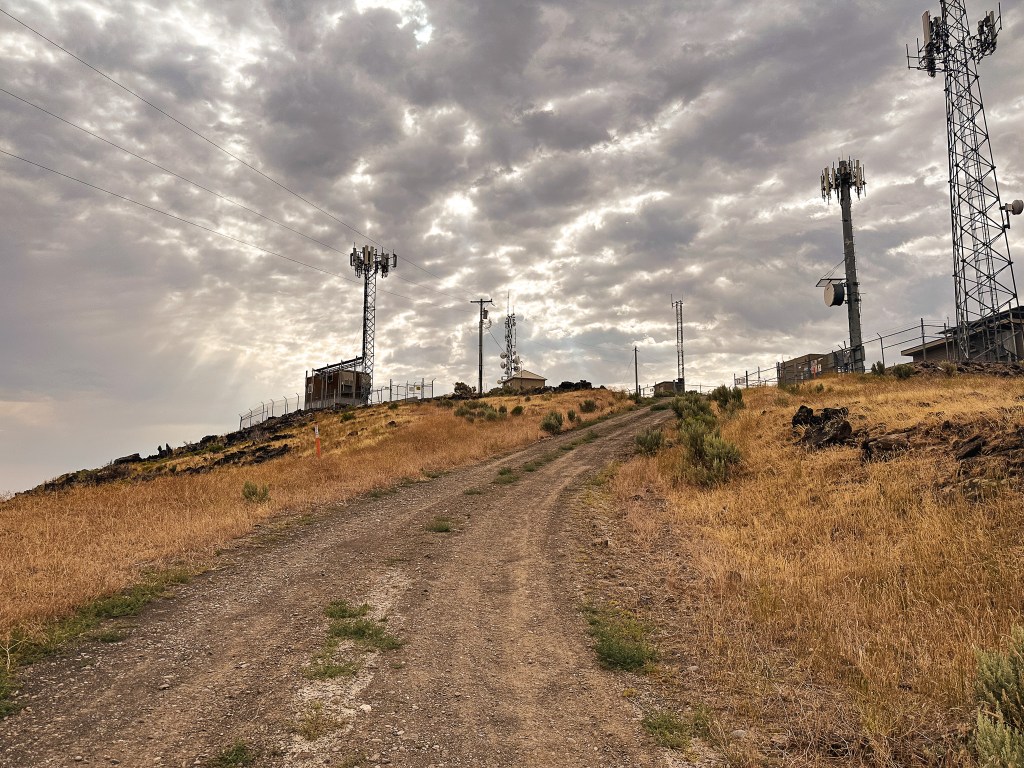
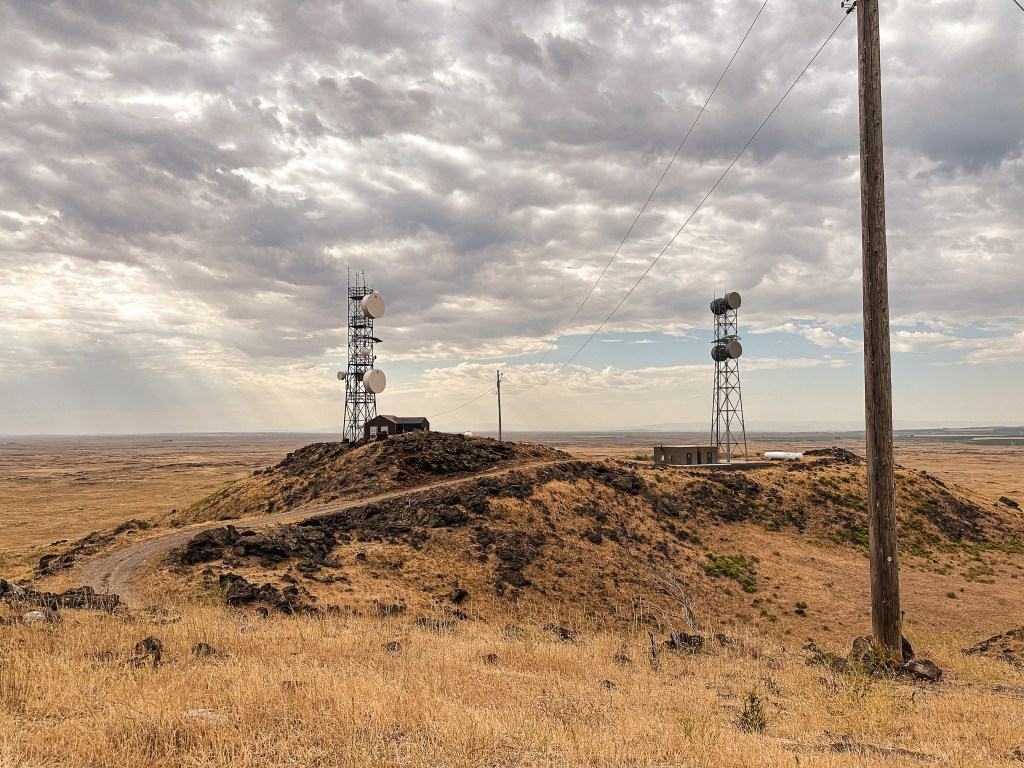
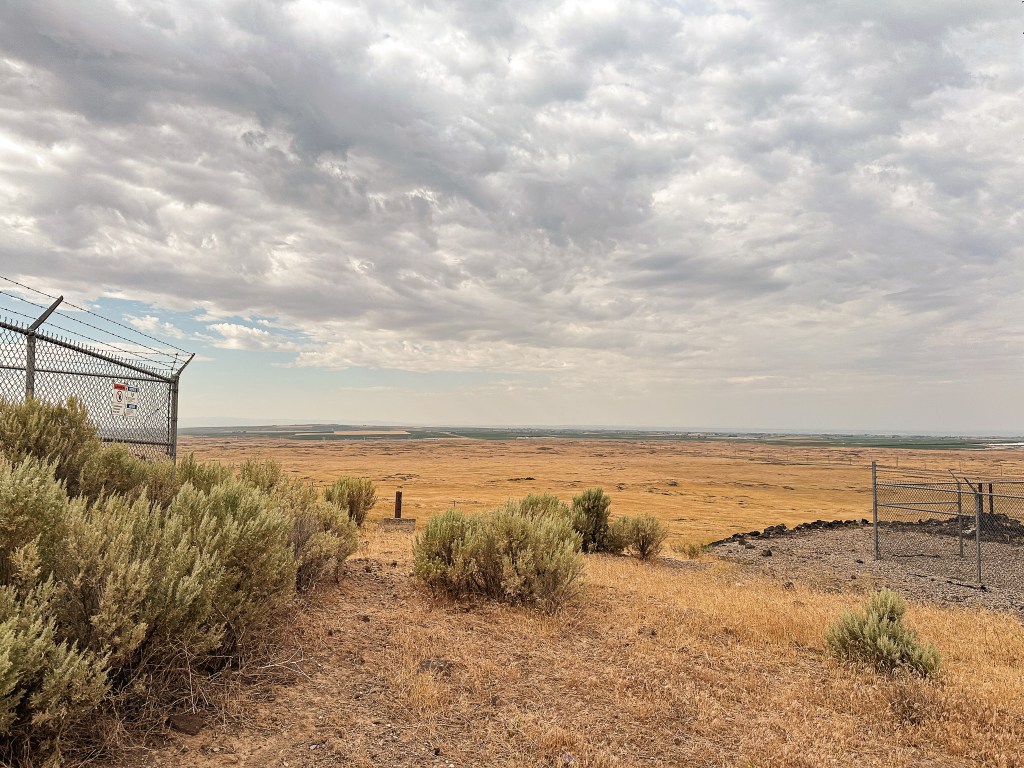
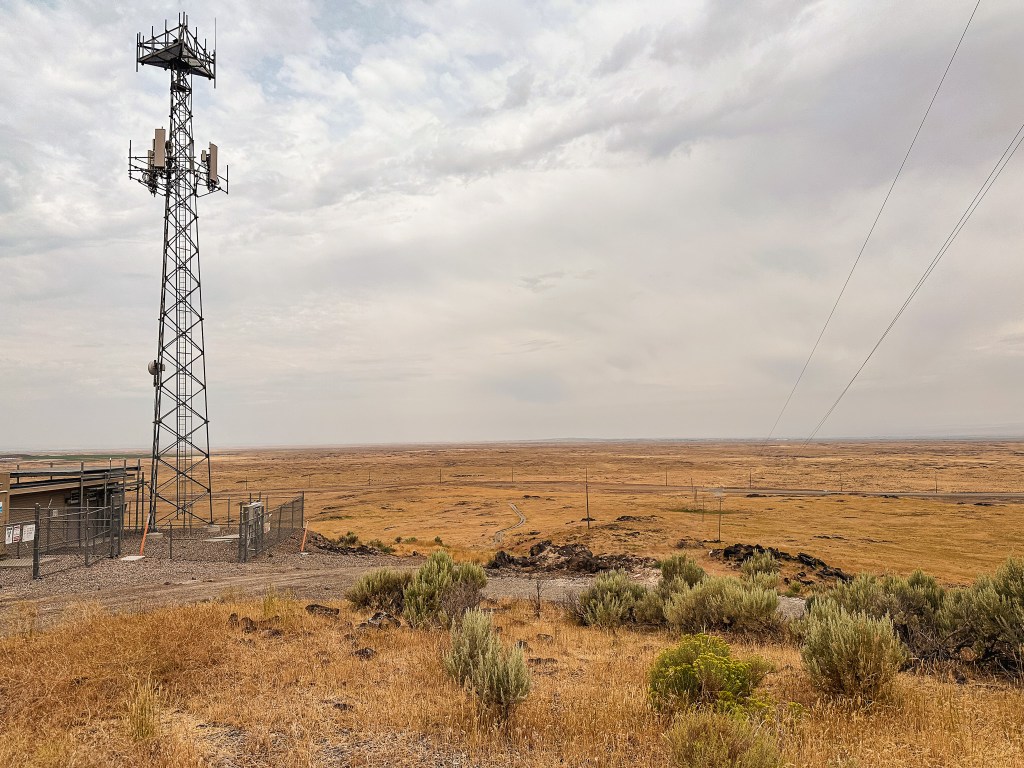
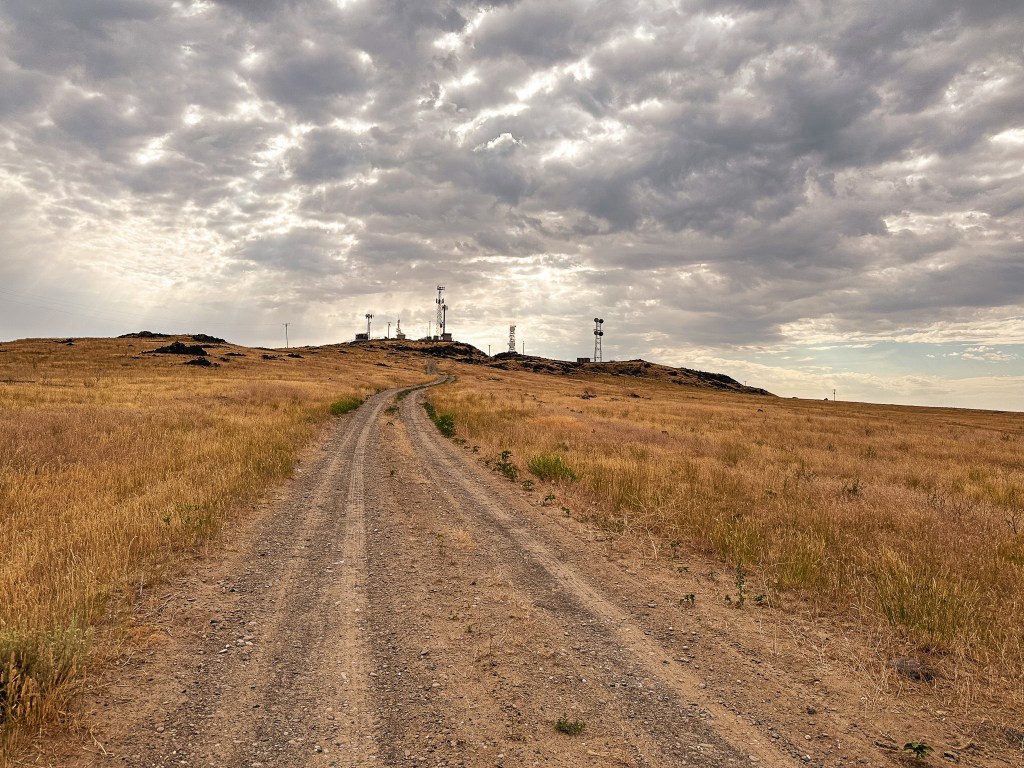
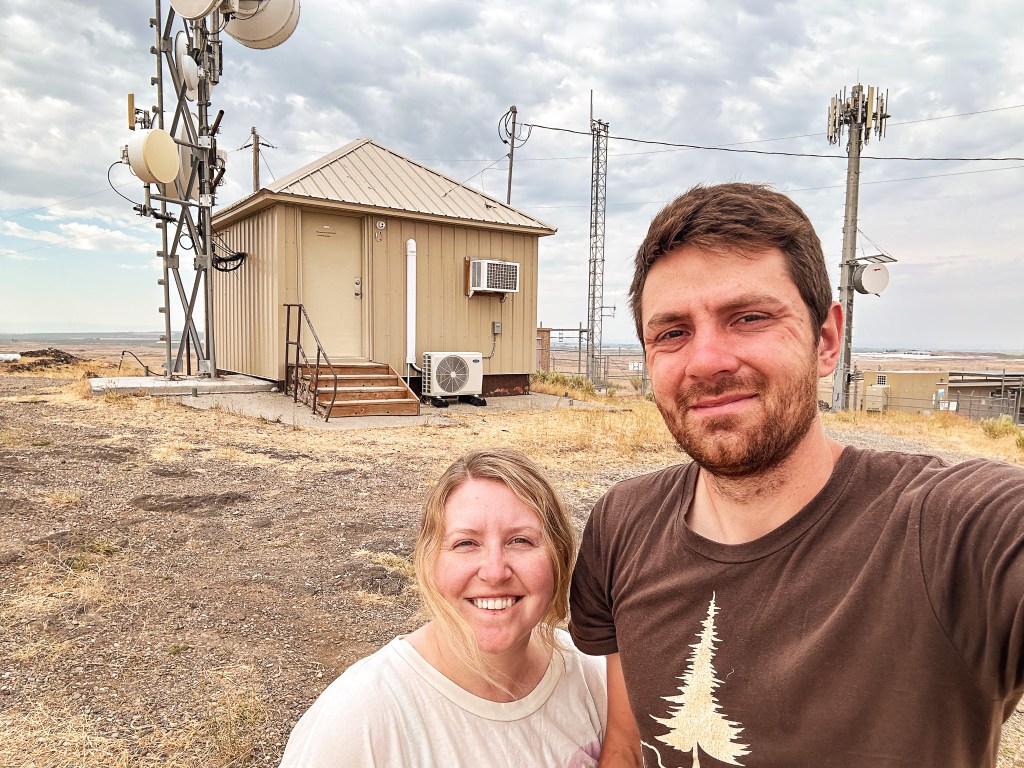
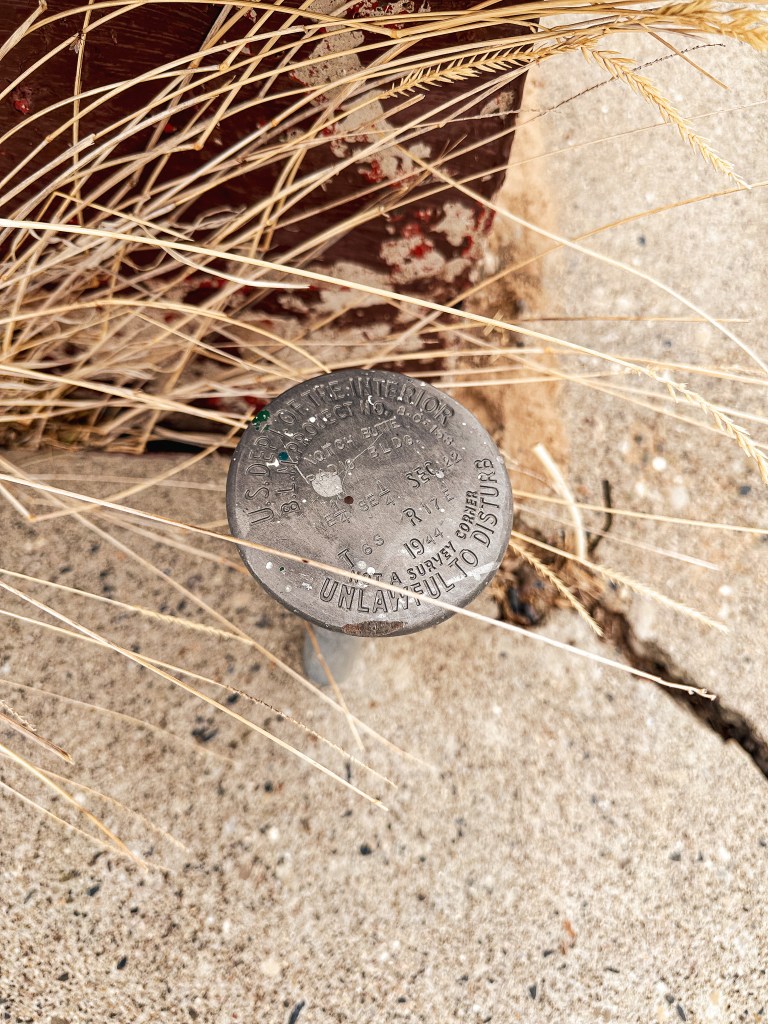
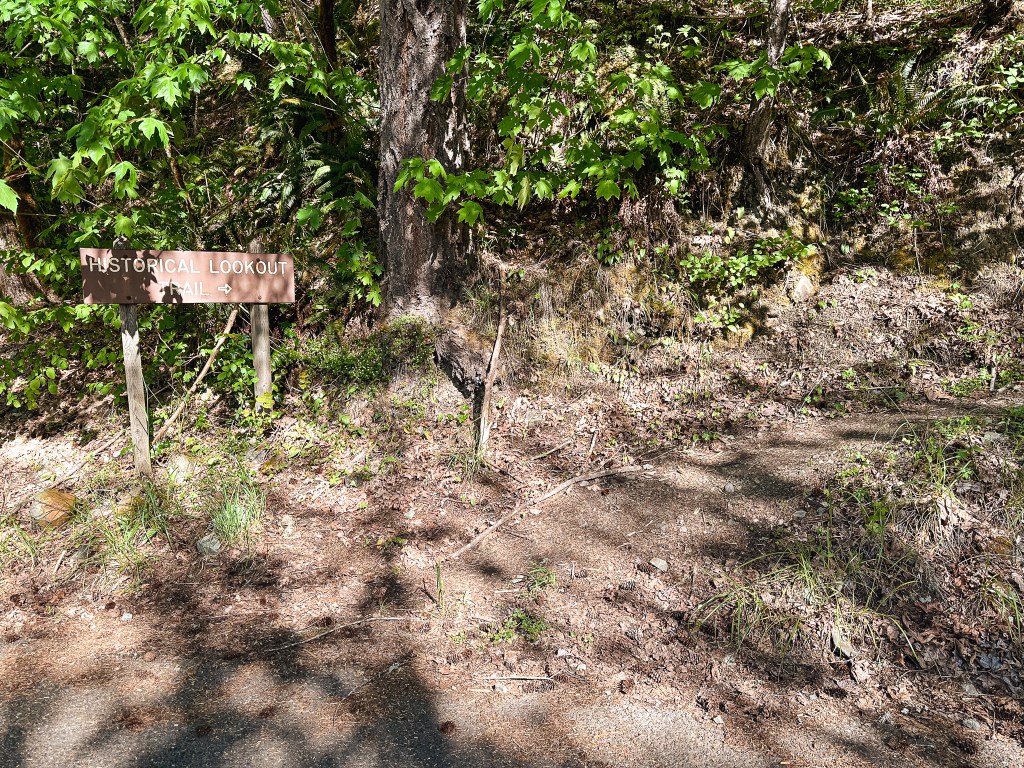
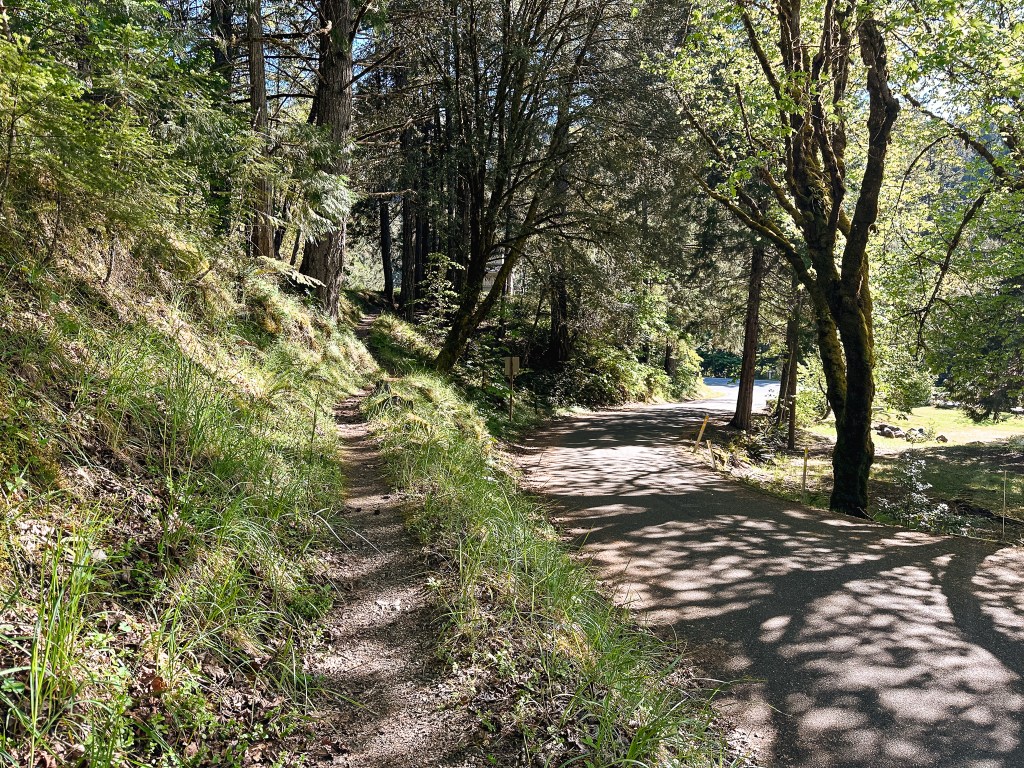
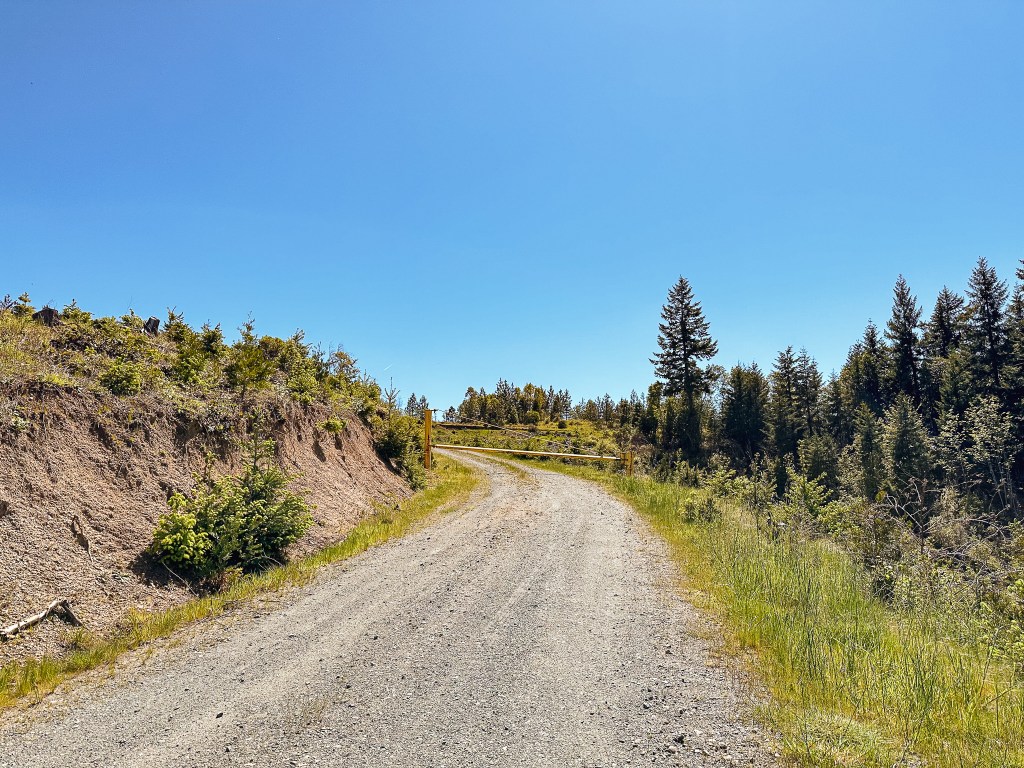
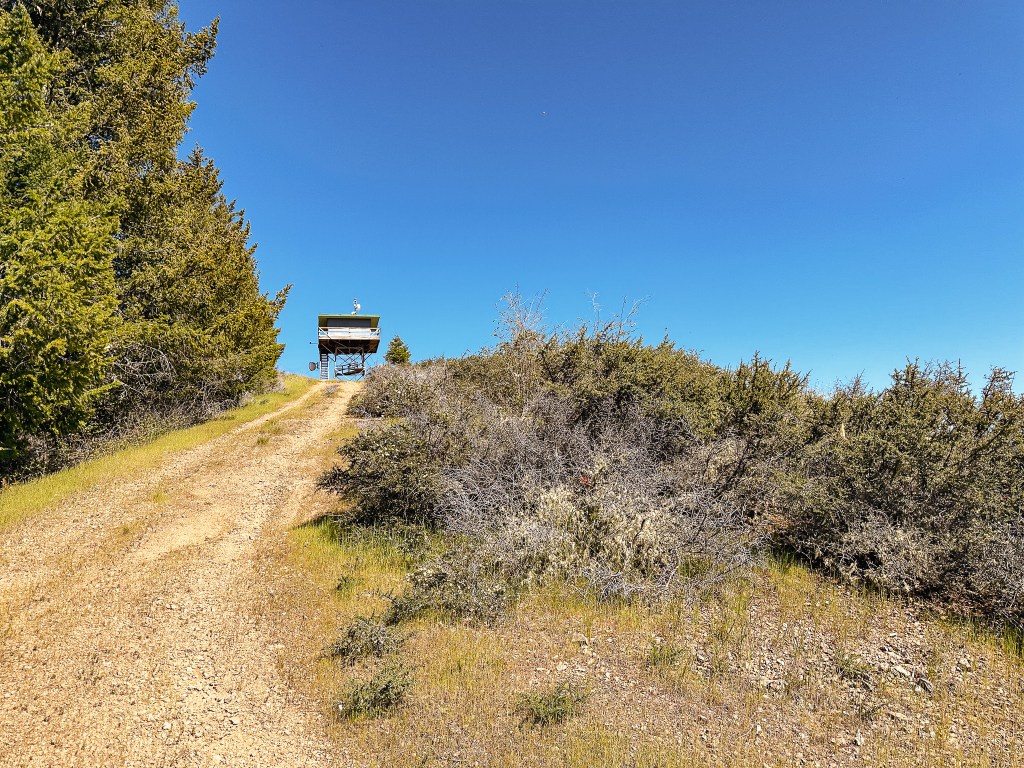
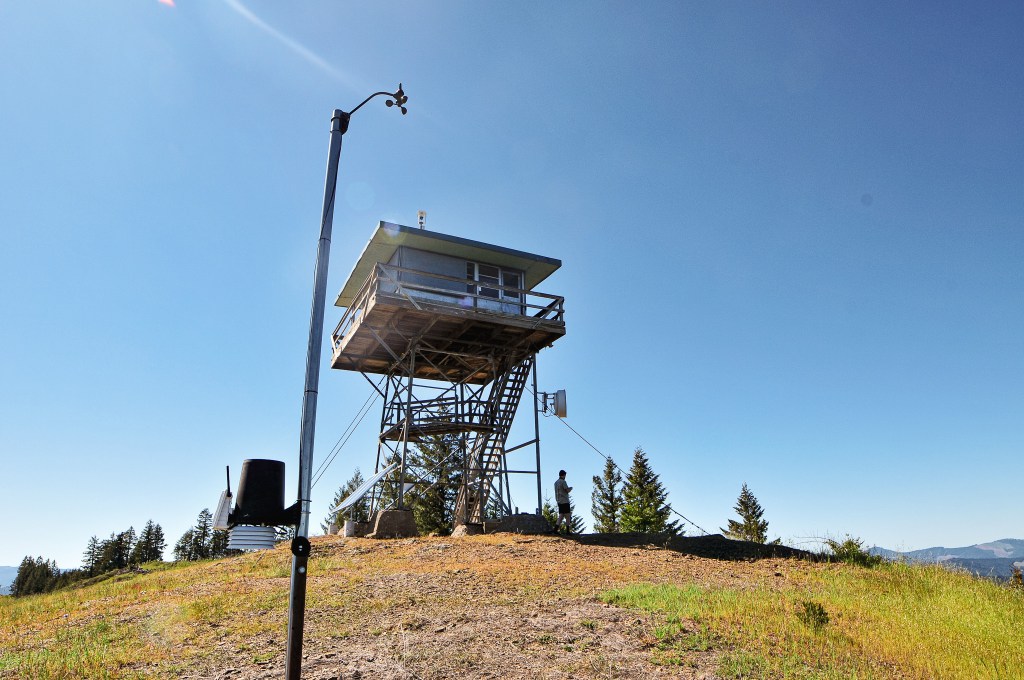
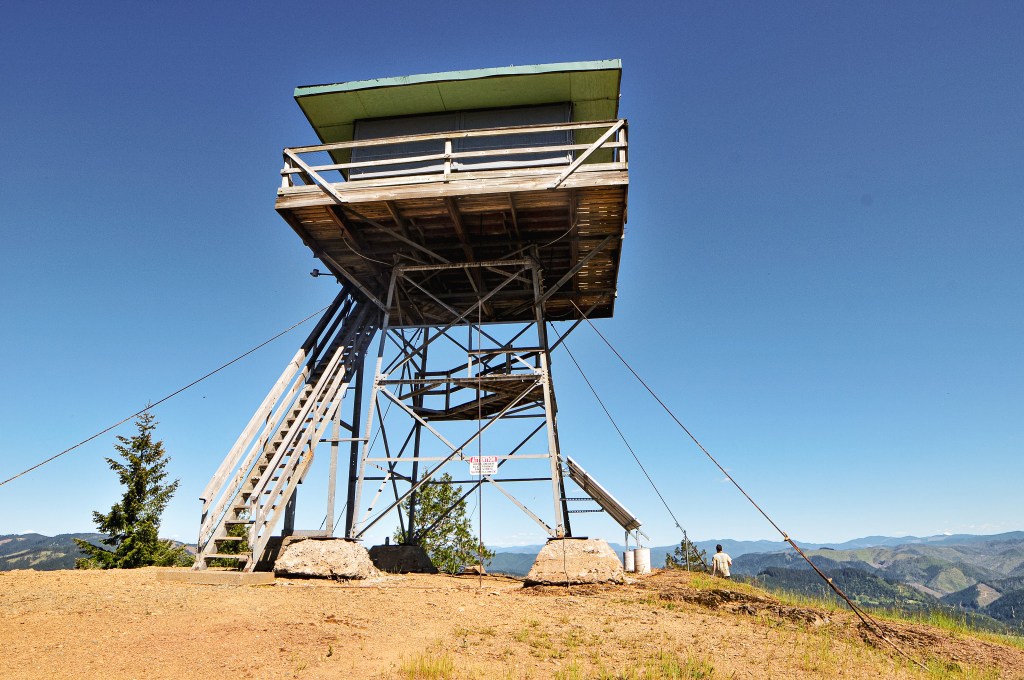
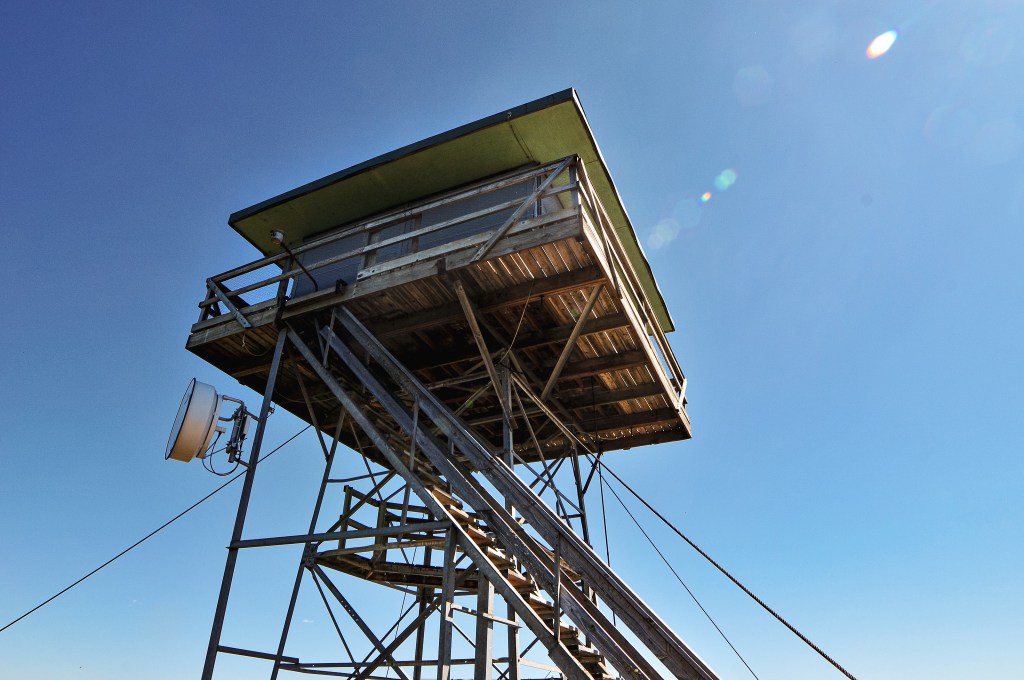
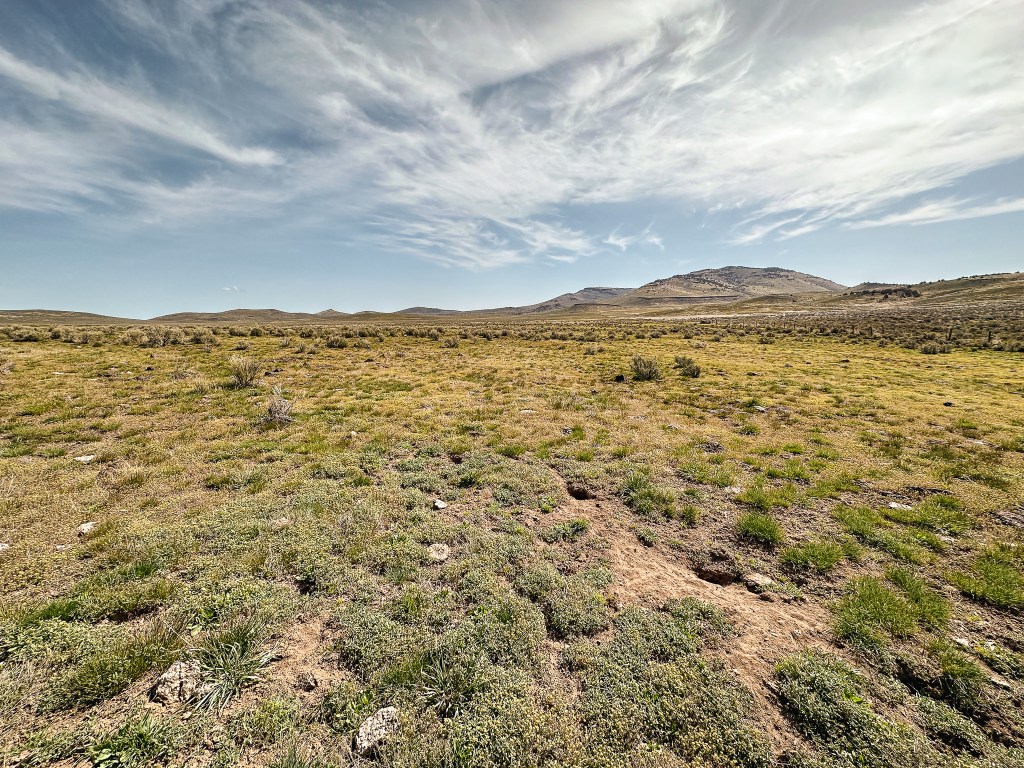
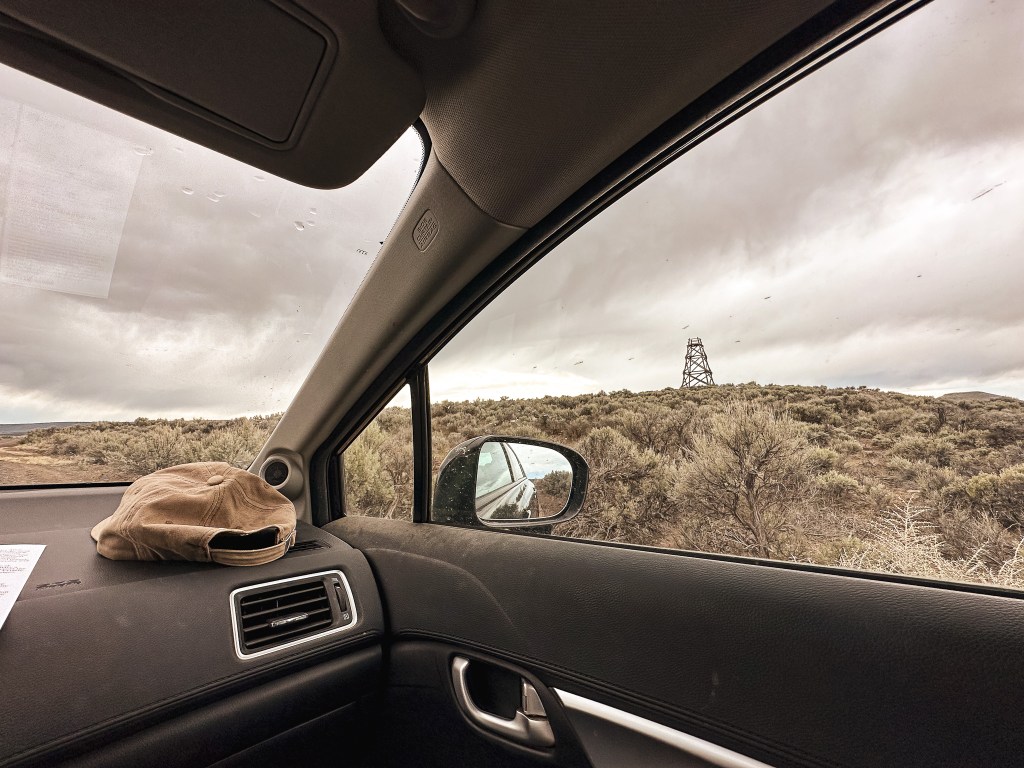
Notch Butte is located roughly 15 miles outside of Jerome and 4 miles South of Shoshone just off of HWY-93. This area of Idaho is made up of flat farm land and the butte is easy to spot from the highway. The road is noted as Notch Butte road on Google maps, but it was unsigned during our visit. Heading North from Jerome towards Shoshone, it was our first turn off to the right after milepost 70. The road is gravel with some minor ruts in it, but any car should be able to drive to the summit. I personally decided to park and walk since it was such a short distance. The road is a little over half of a mile from the highway to the summit. After making the turn from the highway you will pass over a cattle guard and veer left at the unmarked junction to reach the summit. Not to say it should be obvious, but it should be obvious. The surrounding field seemed to have a lot of vole activity and we even saw an antelope crossing the road while we parked. There’s not much else to note except it was muggy and hot. This is the first fire lookout we have had the chance to visit in Idaho and it won’t be our last. This is a state we’ve both talked about exploring more of often but have not yet carved out the time to do so. It has been slowly creeping closer to the top of our priority list.
History.
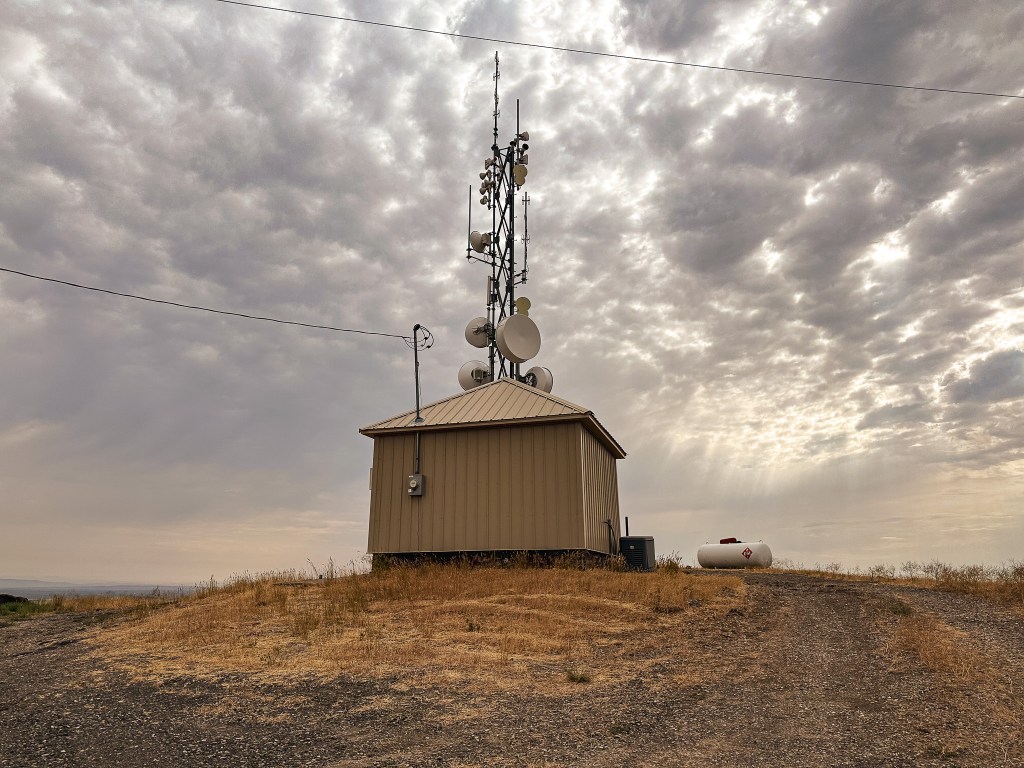
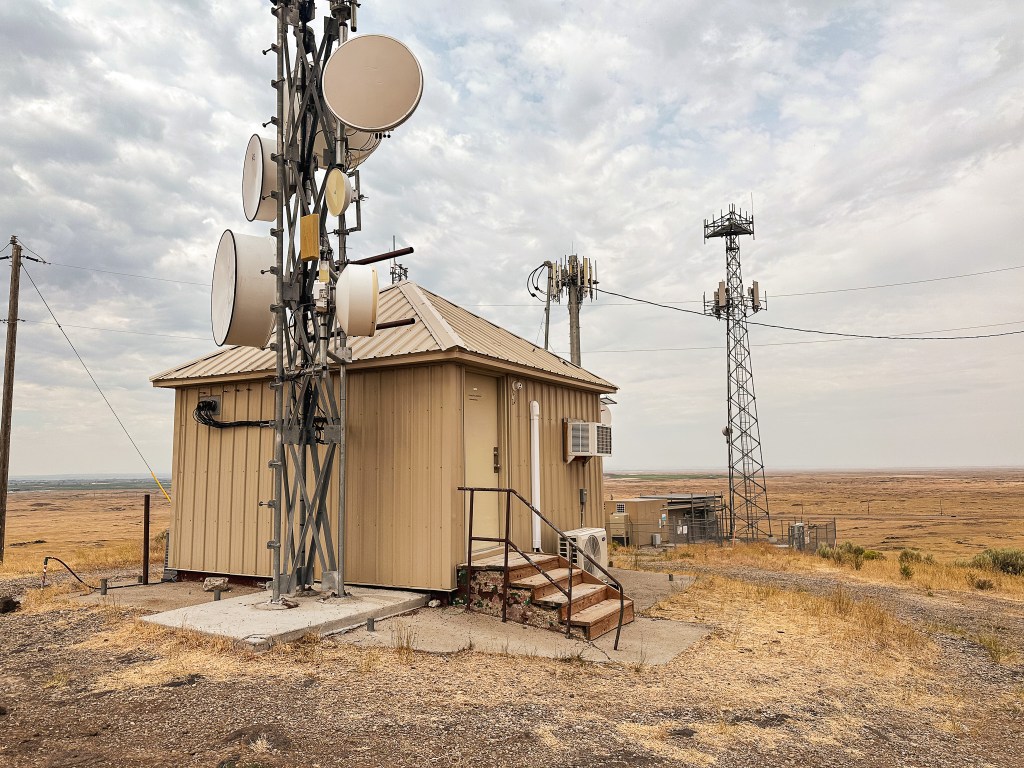
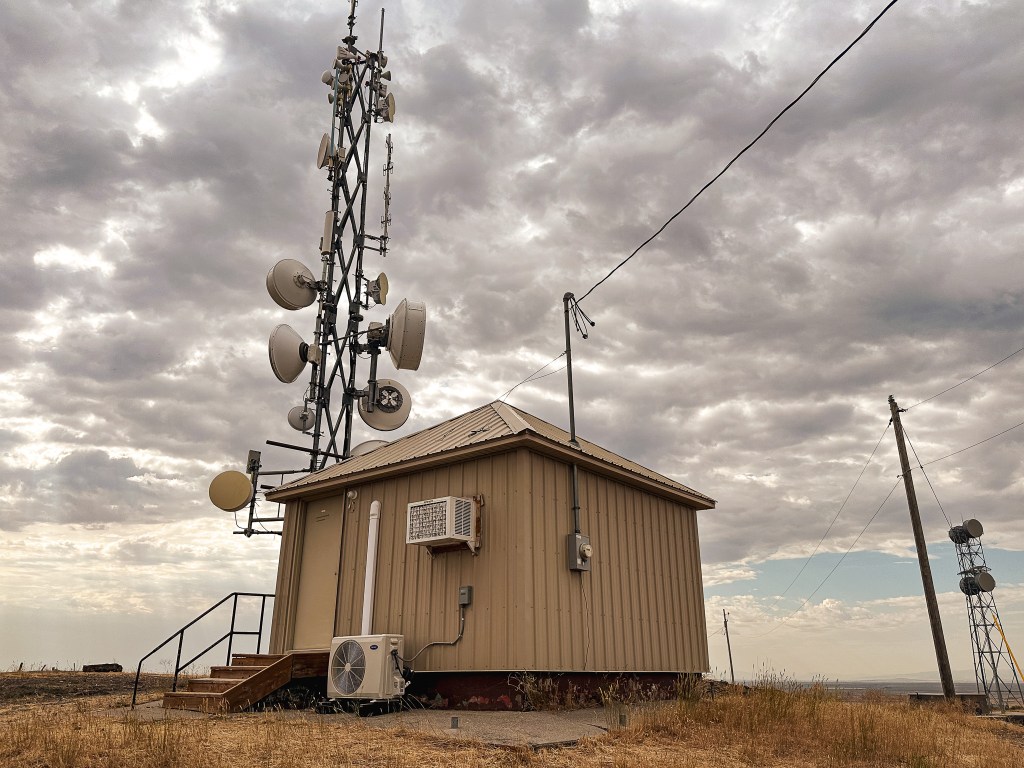
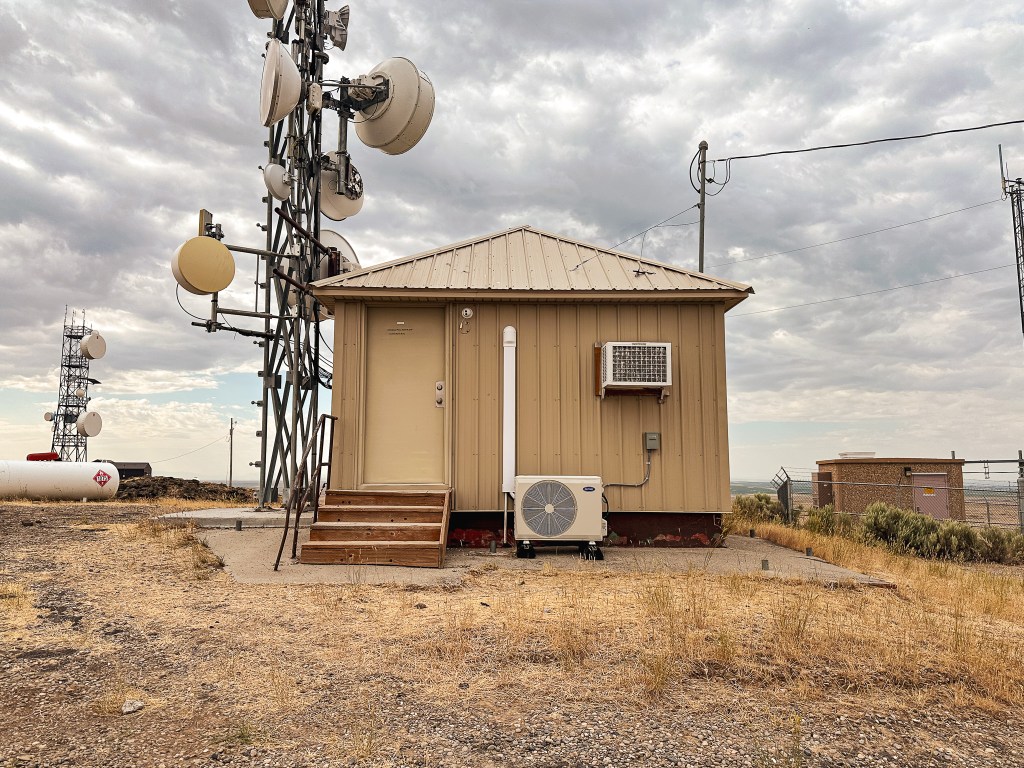
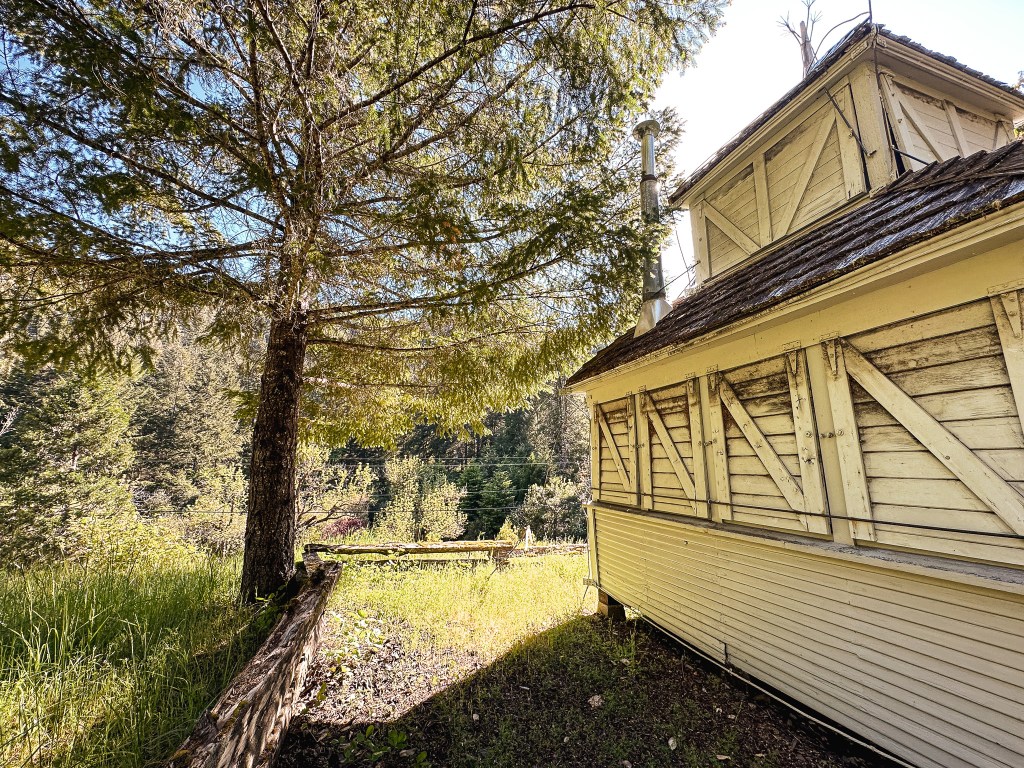
Built in 1941, the lookout on Notch Butte was a 14’x14′ USFS Region 1 ground cabin. It is noted as being used for emergencies into the 2000s, but has since been converted into a communication building. I wish there was more information on why they chose to build a fire lookout here. It seems it was mostly used to spot fires on range land surrounding the Union Pacific railroad.
We still had one more night of our trip but I had fudged the reservation at Pickett Butte and only booked two nights. We brought all our gear to disperse camp for the final night. The trickiest part would be locating a good spot to camp. We got up early enough to pack up our things and clean up the fire lookout before locking up. Always try to leave it better than you found it. We headed back out to the paved CR-46 and turned right to head deeper into the forest. If you stay on CR-46 long enough it eventually turns into NF-28 once you have reached the forest boundary. We drove a little bit past our turn for Acker Rock to check out the South Umpqua Falls first. This is a popular swimming area in the summer when the water and current are not as strong. There were still a handful of people here trying to take advantage of the warm weekend in the shallower areas. We didn’t stay too long since the day was only getting warmer and we didn’t want to be hiking in the heat of the day if possible.
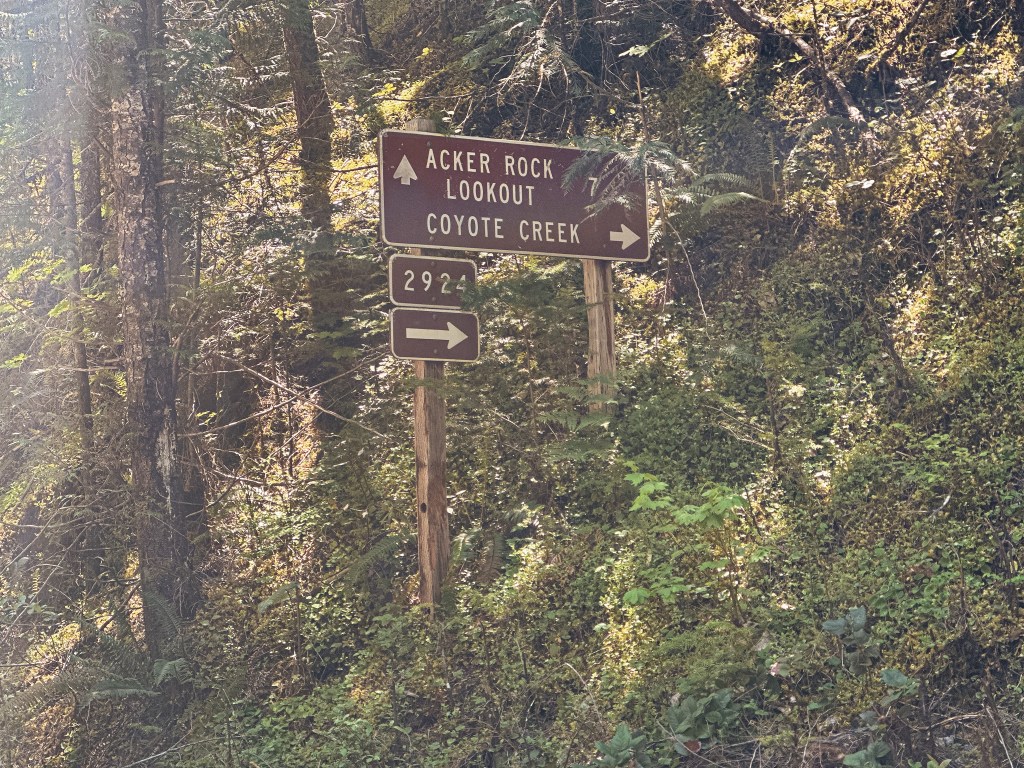
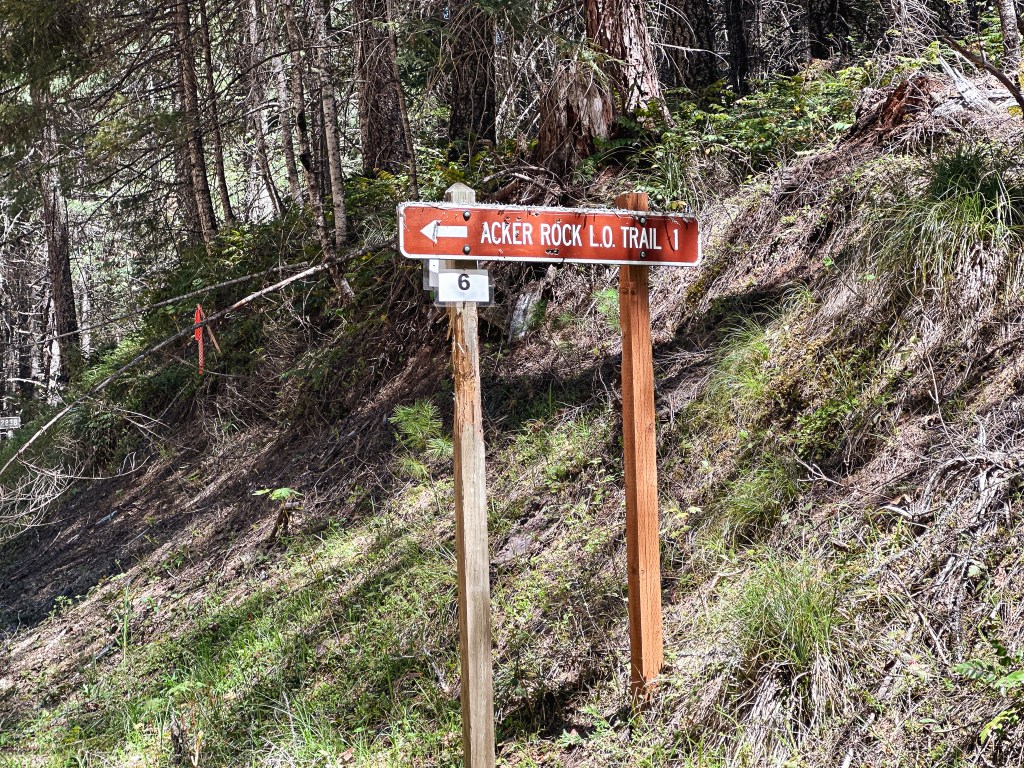
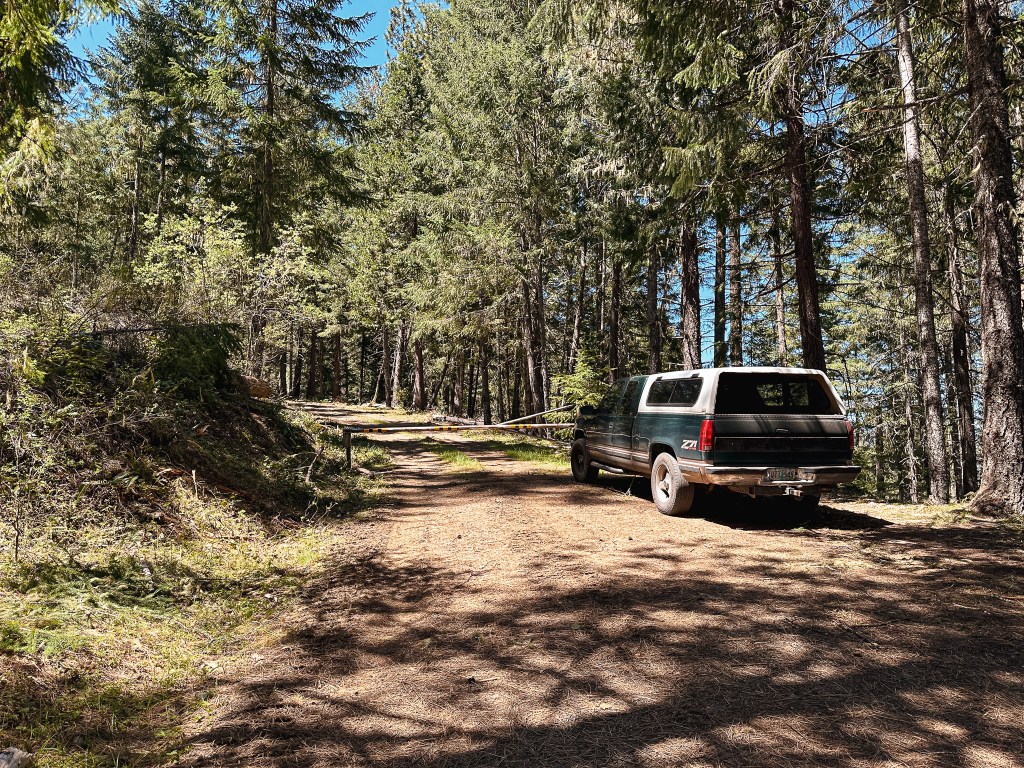
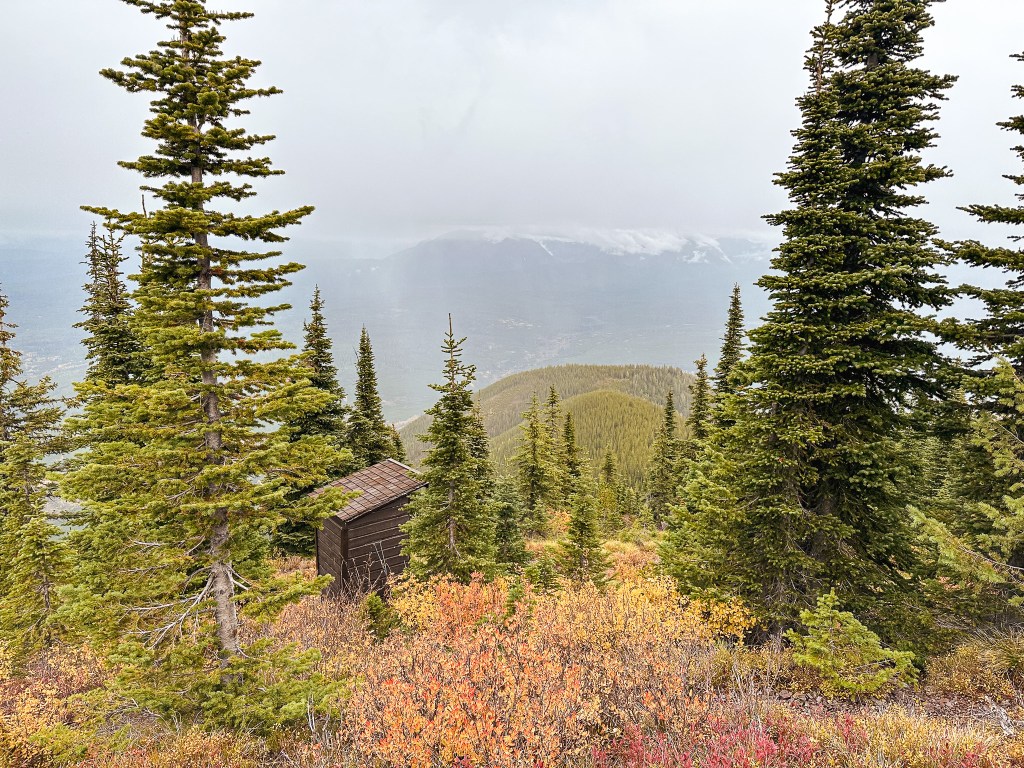
We back tracked a bit to cross the South Umpqua River on NF-29 and followed this to NF-2838 off to the left. We stayed on NF-2838 until we reached the gated NF-950 where the road walking would begin. There were a couple signs for Acker Rock along this route that made it easy to navigate. This is a rentable fire lookout as well, but the season is much shorter and it does not open until August 1st. We decided to visit outside of the rental season since it’s directly on the ground and would make it hard to visit without disturbing the renters. There was one other car parked near the gate when we arrived and we could only assume they were at the lookout. If you are renting, you should get a code to unlock the gate to drive closer. Though there is still a short but steep 0.4 mile hike to the fire lookout to be aware of. We packed a lunch to have at the lookout and began our road walk. It’s fairly straight forward. We followed the road until it dead ends in a parking/turn around area. From there, it turns into more of a trail that switchbacks up the side of the ridge. You will pass the exposed composting toilet on your way up and hope that no one is using it at the time of your visit (or hope that no comes up while you are using it). There were some smaller downed trees we had to navigate around at the start of the trail, but I’d be surprised if someone hadn’t cleaned them up since our visit. There was no one else at the lookout when we arrived and we didn’t run into anyone along the road either. We speculated that maybe the vehicle was abandoned or they were wondering somewhere off trail. We eventually got our answer as we saw two guys rock climbing up the other side of the ridge. One of them came over to check out the lookout while we were having lunch and gave himself a scare when he didn’t hear us. We spent a good chunk of time hanging out at this lookout since the only thing left to do for the day was find a place to camp.
The Strava app calculated this hike at 3.08 miles RT with 1,025′ of elevation gain. You can assume the road is around 1-1/2 miles from the gate to the summit. We ended up camping off the side of a road in a grassy pull out for the night. We passed up a couple different official dispersed spots given their location or otherwise. Not all dispersed camp spots end up being what we want and are more about convenience for the night. There were a couple of campgrounds in the area, but we had passed on those as well.
History.
Acker Rock was first established as a fire lookout site in 1932-1934 when a 14×14 L-4 gable roofed ground cabin was built on the summit. At the time the lookout was accessible by driving 21 miles outside of Tiller and then hiking an additional 3 miles. It was noted as possibly being used as a lookout point prior to this but no structure was utilized. It was replaced in 1963-1964 by the current R-6 flat cab structure and was staffed until at least the late 1980’s. Given the precarious location of the lookout, replacing the structure was no easy task and required helicopter assistance. A news article from 1963 stated “the lookout house appeared to be supported on one side by rock and on the other by little more than imagination”. In 2006, the roof was replaced and needed repairs were completed before it was added to the current rental program.
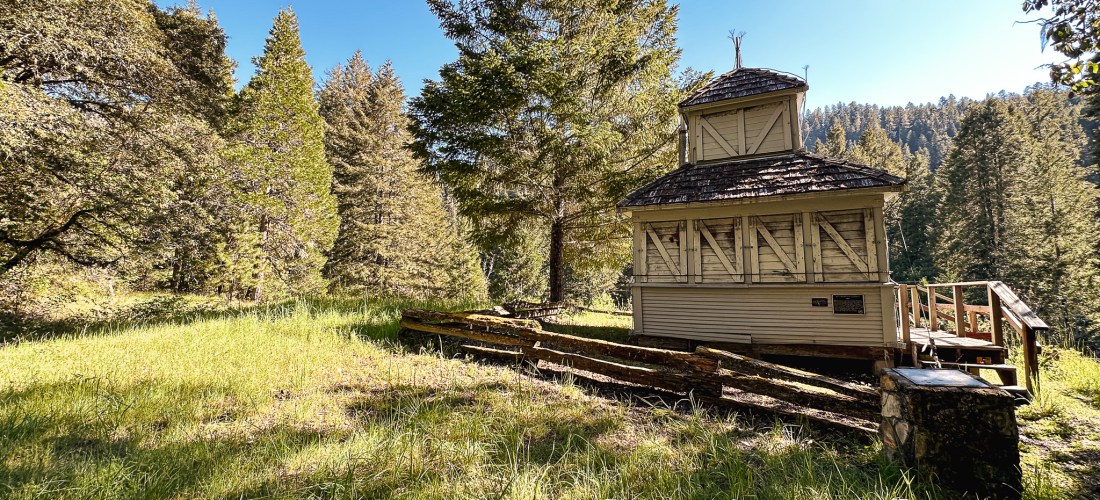
After heading back down from Bland Mountain (post), we continued our route along county HWY-1 to reach the community of Tiller. The ranger station is easily located after crossing the South Umpqua River on the left hand side. The office building was already closed for the evening but you are still welcome to explore the grounds. The access to the re-located fire lookout is found to the right of the main parking lot via a short trail. You can see the fire lookout from the lot and it is well signed for access. The lookout was closed up for our visit, but I believe they open it up to visitors during working hours upon request. Despite being well cared for throughout the years, it is definitely starting to show its age. I’m curious to see if access and maintenance on the lookout will change once the rangers are relocated to Canyonville. I would guess that it would make it and the other historic buildings onsite an easier target for vandals. Strava tracked the walk as only 0.24 miles RT with not enough elevation change to register. There wasn’t much to note about out visit except there is a spigot in the parking lot that provides water to the public. After taking a refreshing rinse, we continued on into the forest for the weekend.
History.
The original site of Red Mountain was developed in 1921 by adding a 25′ platform crows nest with tent camp. A D-6 style 12’x12′ cupola cabin was added to the site in 1928. The fire lookout was actively staffed into the 1960s. It sat unused on the site until it was relocated to the Tiller Ranger Station in the fall of 1985. There is a dedication plaque on the lookout crediting Roy O. Brogden, District Ranger 1984-1998, with heading the relocation and restoration efforts in this area. Restoration work was completed in June 1986 by a combined effort of the Forest Service, State Historic Preservation Office, and the National Advisory Council on Historic Preservation. Additional restoration work was completed in 2000 by community volunteers in celebration of National Public Lands day. The site is open to self guided tours at anytime, but the lookout itself is locked. You can inquire about gaining access between Monday through Friday from 8am to 3:30pm. I’m unsure if access to the interior will be available after they move the Rangers stationed here to Canyonville.
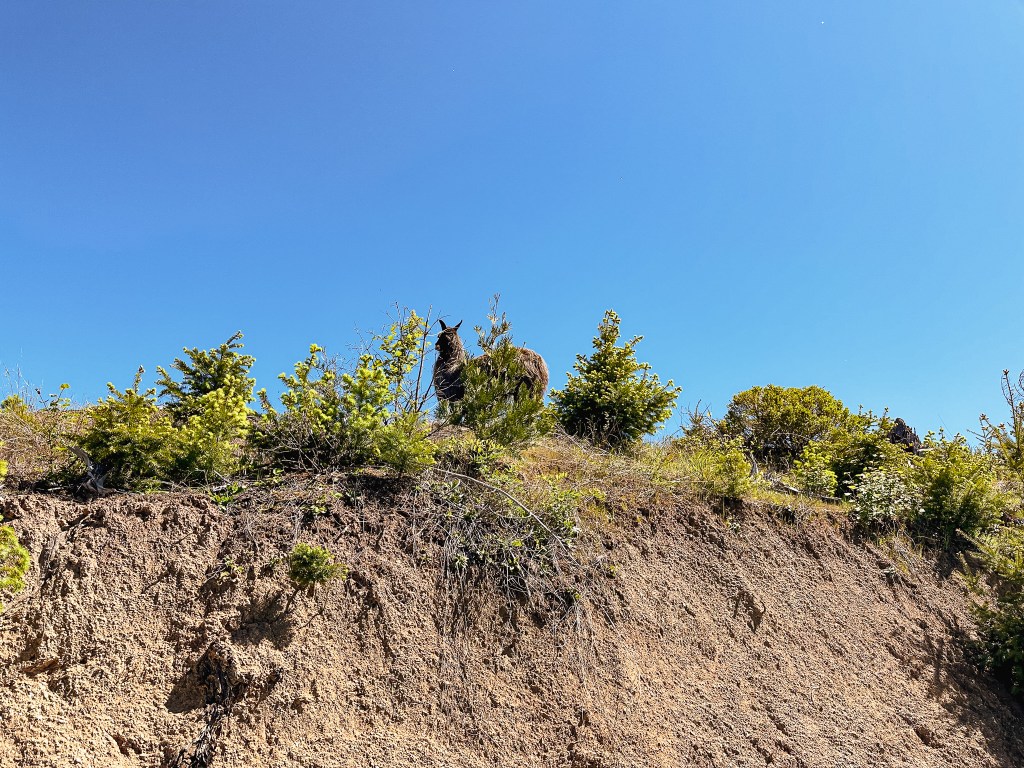
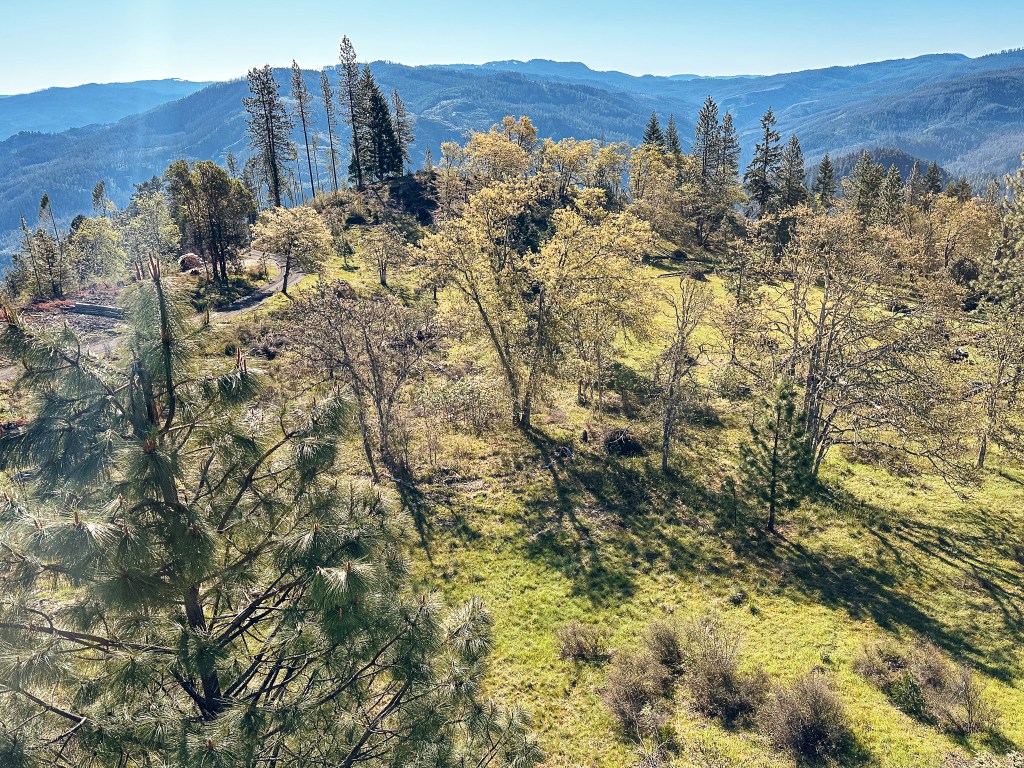
We were headed out on a four day trip to explore the South Umpqua drainage in celebration of Garnet’s 30th birthday. I had booked Pickett Butte for two nights and we planned to disperse camp for the third night. Bland Mountain was planned as our first stop before heading into the forest for the weekend. It is located just outside of the community of Days Creek on BLM land. From Portland, we shot down I-5 all the way to Canyonville and turned onto county HWY-1 to head towards Tiller. We followed this to Days Creek where we hung a left onto Days Creek Road. The road is located right off the bend entering the community. We were following the directions off a Peakbagger report from Dennis Poulin. He seems to have a lot of helpful reports on Peakbagger in relation to accessing fire lookouts. I always click on his reports first when I see his name listed. Unfortunately, we saw somewhere that he had passed away (may he rest in peace). His directions indicated that the BLM road 30-4-10 was only 2 miles down Days Creek Road. This was helpful since most of the roads off of Days Creek are private drives. There was a sign for the BLM road, but it would have been impossible to spot from the main road due to it being turned around and slightly leaning in the brush. It’s easy enough to locate if you keep an eye out for a main gravel road off to the right around the two mile marker. Once on the BLM road 30-4-10 its a little under 2-1/2 miles to the gate for Bland Mountain. There was one junction that wasn’t mentioned on the directions after we entered a clear cut and had a view of the fire lookout ahead. The road we were on looked to continue straight but there was another road veering right that looked like it could have headed toward the summit as well. We stayed left (straight) since it wasn’t mentioned. The next junction we met off to the right was on a bend in the road and was the one we took to reach the gate. The gate is shortly after you start up this road and doesn’t offer much room to turn around. I’d recommend parking below and hiking up from there if you’re not comfortable making a tight turn around or backing down the road. We parked at the gate and prepared to walk the remaining distance. As I was turning around the car I noticed an animal off to the left. This might be one of the strangest things I’ve seen in a while, but it was a llama free range grazing near the gate. I can only assume it was owned by someone in the area, but there was no one else around that we could see.
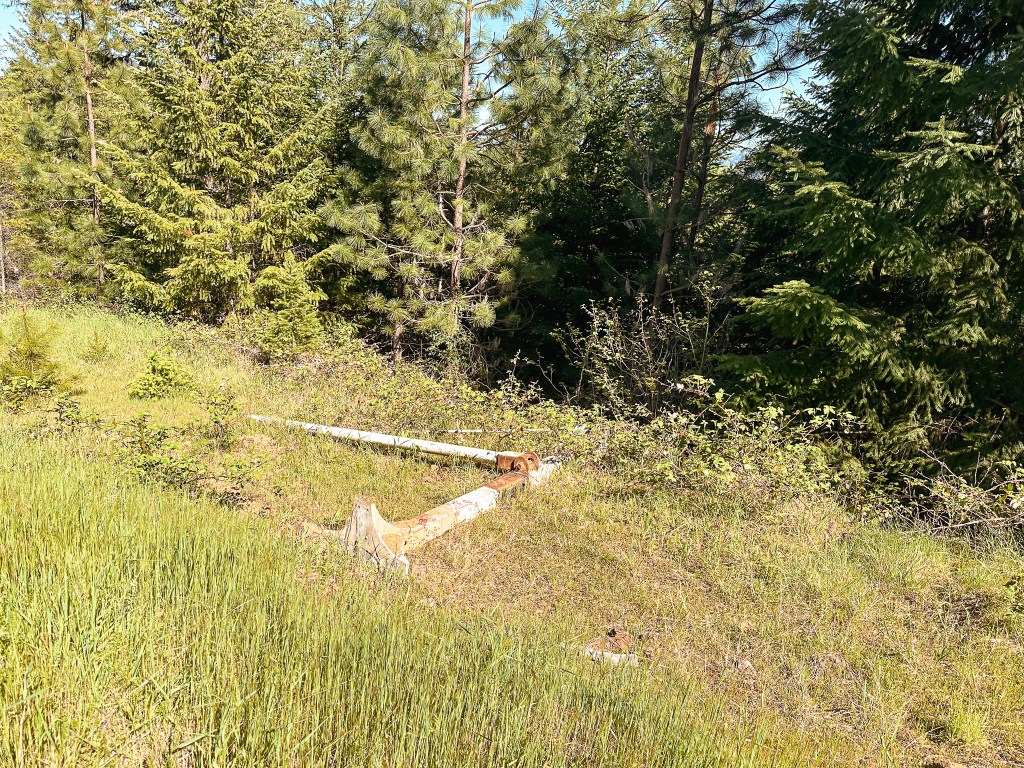
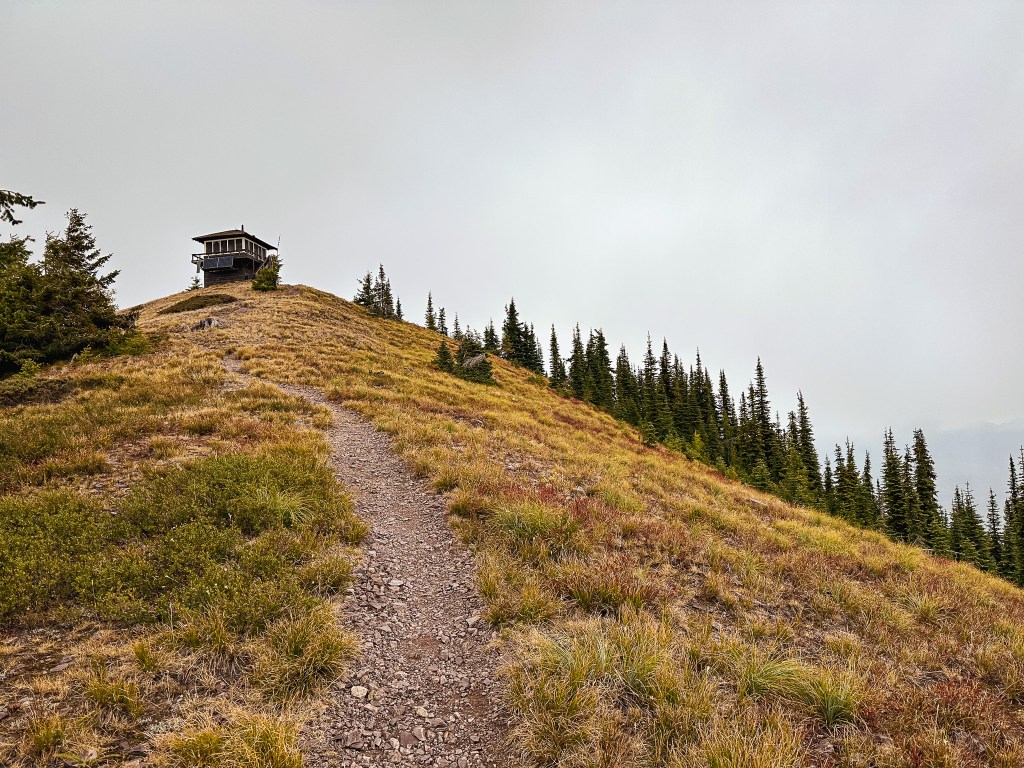
There wasn’t much to note about the road walk to the summit except that it was too hot and dry for early May. I feel like we’re gearing up for a terrible fire season this year *narrator: a terrible fire season indeed*. This entire spring has been lacking what Oregon is best known for, rain. There was a pretty display of California Poppies lining the road. I even found signs of an old gate that was probably used back when the fire lookout was staffed. The final spur to the fire lookout was off to the right while the main road continued straight. Despite being a short hike, I was struggling in the heat by the time I reached the base of the tower. I waved to the fairly new looking camera and headed for a spot in the shade of the tower. A new lock had been added to the trap door to keep visitors from accessing the catwalk and, more importantly, to keep them away from the fancy equipment. The view was pretty much the same from the base of the tower anyway. I found this lookout and summit to be accurately named. It does have a uniquely repurposed base to add interest though. We didn’t linger for too long since we still wanted to visit the lookout at the Tiller Ranger station and get settled at Pickett Butte for the night. All the roads getting here were good pavement or decent gravel and we had no issues in our Civic. The hike along the road came in at 1.75 miles RT with 472′ of elevation gain on the Strava App.
History.
Bland Mountain was established as a fire detection site in 1942 with a tent camp. The first tower was built in 1947 as a 20′ treated timber tower with 14’x14′ cab. The NHLR notes it as being a 25′ tower. The base was replaced in 1996 by a 20′ tapered metal tower that was formerly used to support a water tank. It was actively staffed up until the late 2000s, but has since been abandoned. It’s most likely still listed for emergency status. A camera has been added to the cab for surveillance of the area.
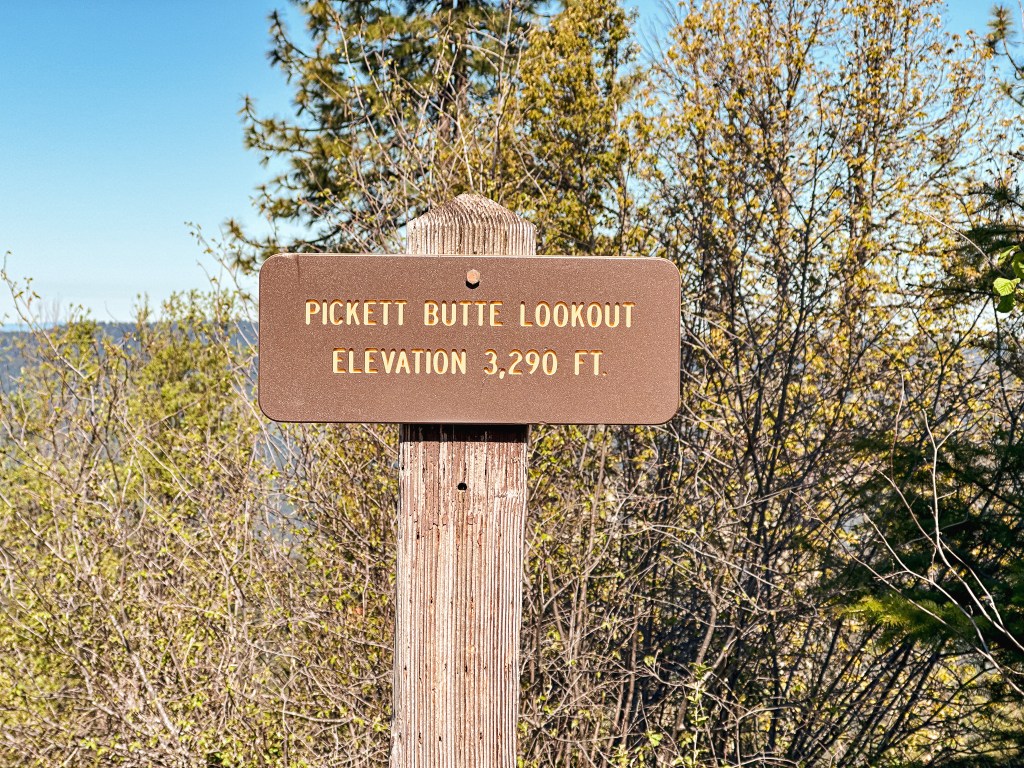
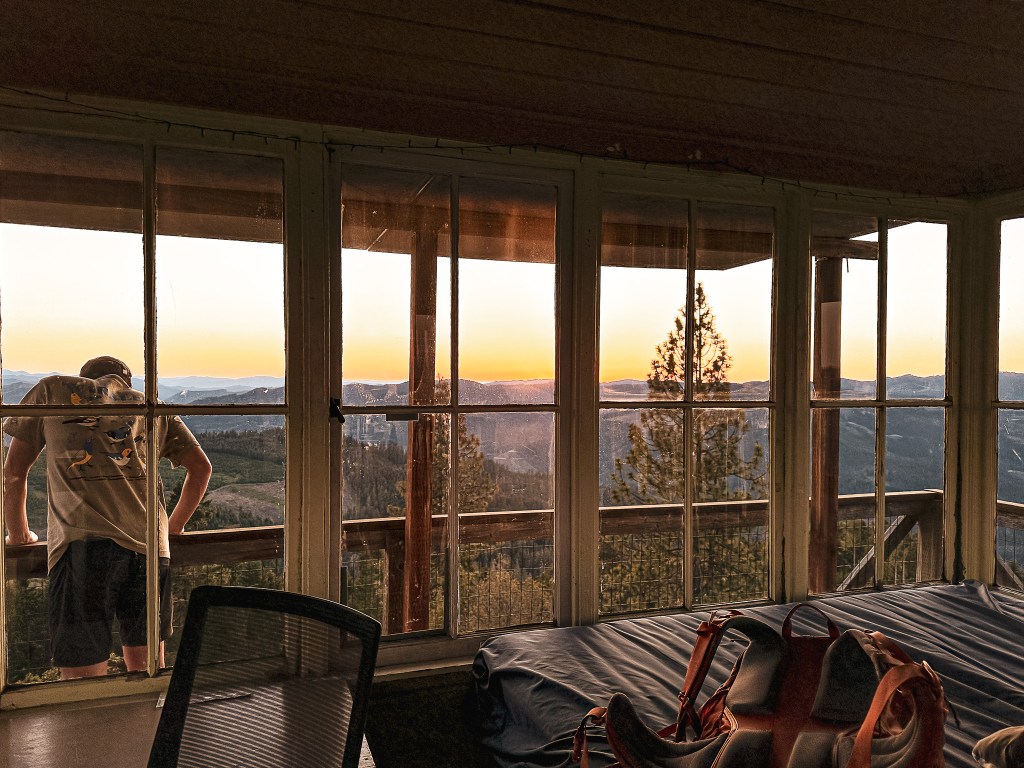
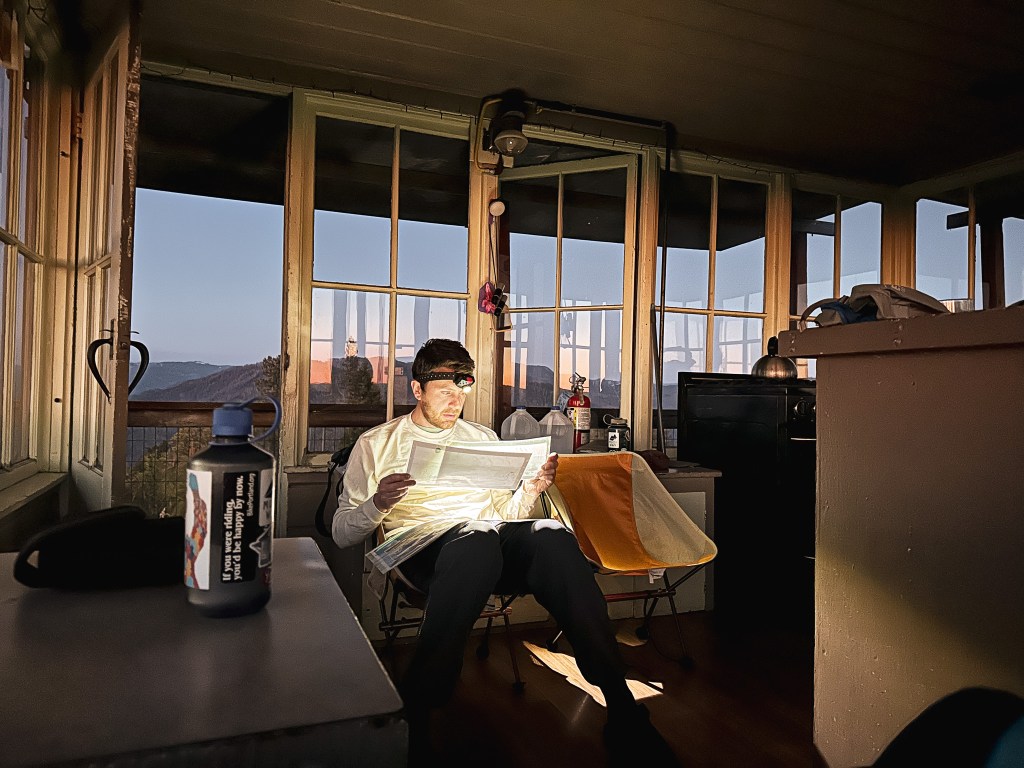
It seems that stumbling upon available fire lookout reservations has been our luck. We have yet to actively seek out renting a fire lookout, but have simply been looking at the recreation.gov page at the right time. This was how we acquired our Steliko Point (post) reservation and that is essentially how we acquired this one. I feel fortunate in this aspect since some people attempt for years to get certain reservations with no luck. We were searching for potential places to travel during my birthday trip in April and stumbled upon Pickett Butte availability. At first glance we thought the dates were for April, but quickly realized it was available during Garnet’s birthday weekend in May instead. We decided to roll the dice and book it with hopes of it being snow free with decent weather. It is a fairly low elevation fire lookout, so the main concern was how the weather would pan out. I did end up fudging our reservation a bit because I thought I needed to wait to book the third night, only to realize I should have booked it at the same time (a little too late). This was not a big deal to us, it just meant we needed to bring more gear to accommodate dispersed camping for one of the nights we’d be gone. Somehow our gamble paid off and the weather was forecasting in the mid 80s with sunny clear skies for the whole weekend.
Friday.
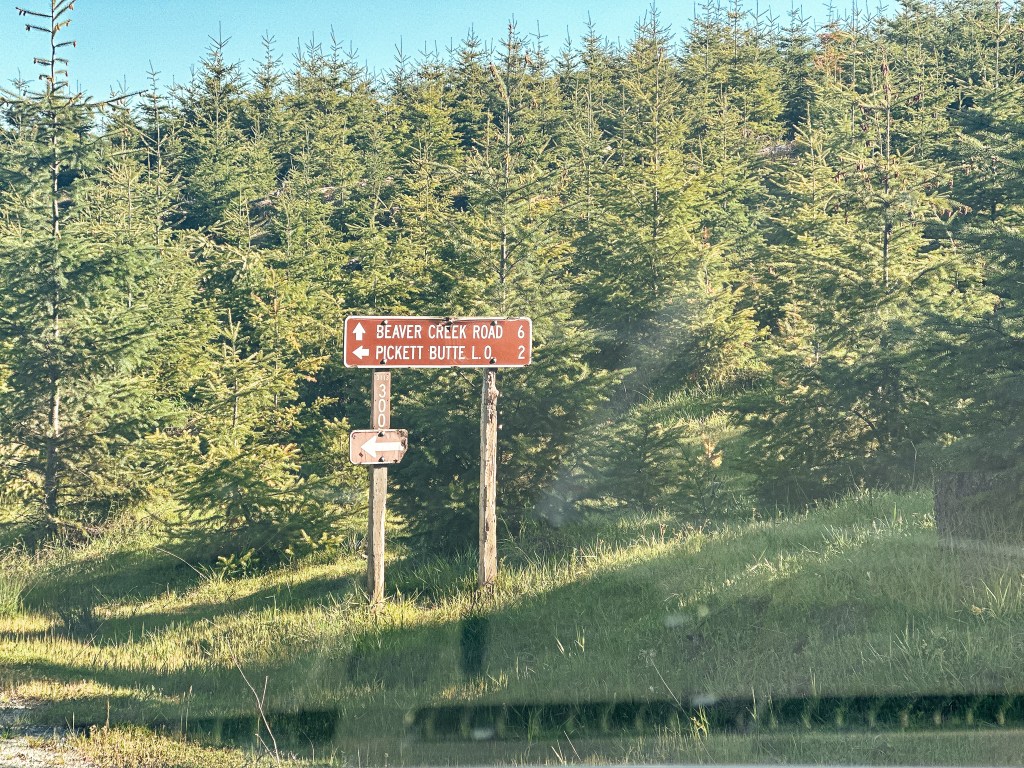
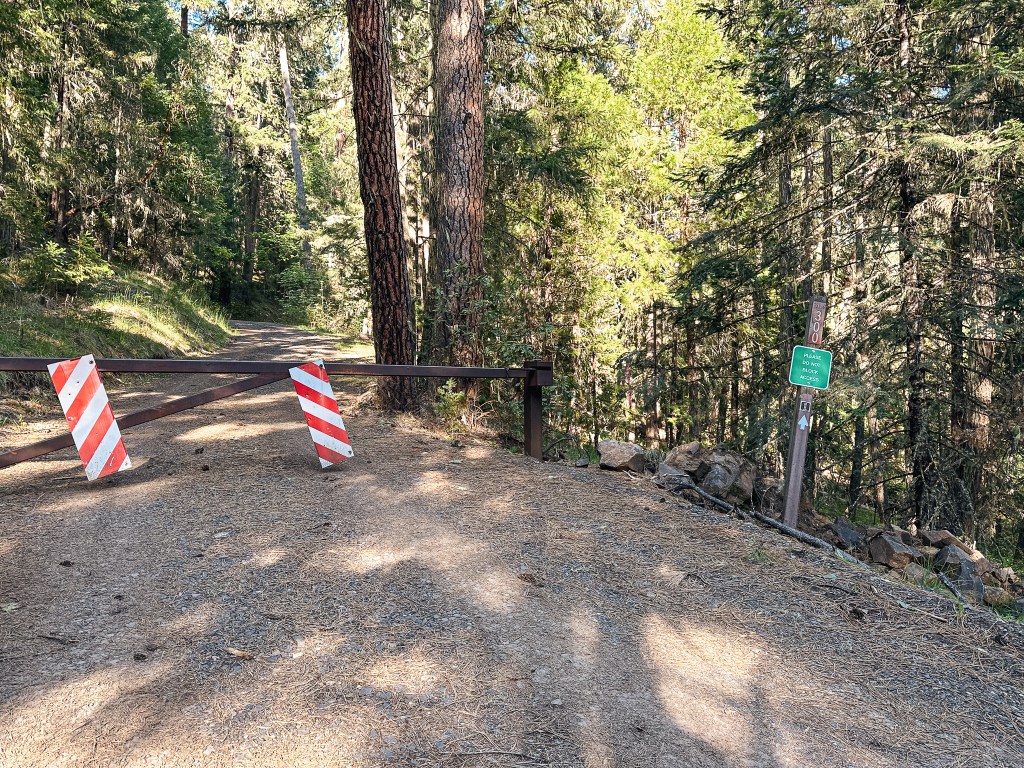
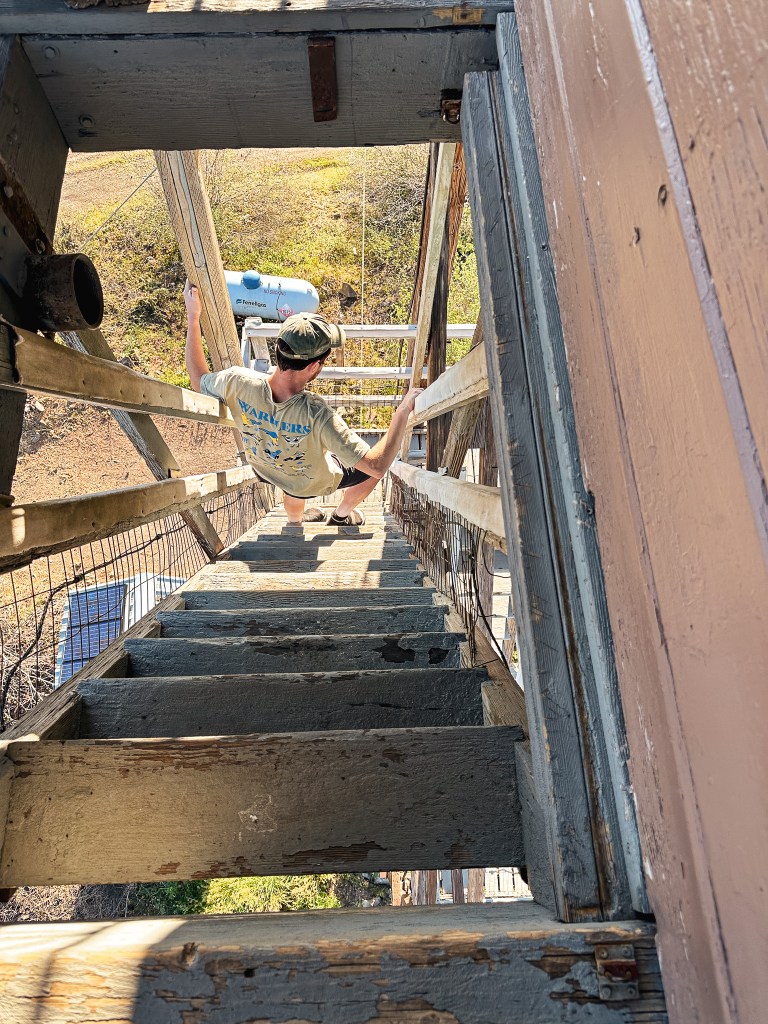
We headed out via I-5 and exited in Canyonville to turn towards Tiller on the county HWY-1 making brief stops at Bland Mountain (post) and the Tiller Ranger station (post). We turned onto CR-46 that is situated right before the ranger station. We stayed on this for 3 miles until it reached a signed junction with NF-3113 off to right. The route is well signed and seemed to be well maintained. We stayed on NF-3113 for 5 miles until we reached another signed junction with NF-300. It is an additional 2 miles to the fire lookout from this junction. There is a gate below the lookout that you will need the code for if you have a reservation for the night. Otherwise, this is where you would park to walk the remaining 0.6 miles along the road. Though the best time to visit if you’re not planning to make a reservation would be from mid-June to mid-October when it is staffed for the season. Keep in mind whether you visit during the active fire season or the renter season, it is their space and inviting you up to enjoy the view is at the discretion of those onsite. The road beyond the gate had the most signs of wear with a few water runoffs starting to form across it. There were a handful of potholes along the entire route, but they were minimal and easily avoided. This is probably one of the easier rentable fire lookouts to access in Oregon. Once parked we debated what we wanted to haul up or not. We thought it would be novel to cook something in the fire lookout, but ultimately opted to leave our food/cooking at ground level. There is a crate on a hand wench system to help bring your gear up, but it’s small and would require many loads. The stairs are also narrow and steeply pitched, more so than other fire lookouts we have visited. I could see making this effort if we had planned to hang around the fire lookout all weekend. But per usual, we had our days fully packed and only hauled the essentials to the top.
Saturday.
Our plan for the day was to back track out the way we came and continue further on county HWY-1 in search of the crows nest on Callahan Mountain. All the sources we found online claimed it was still standing and should be there. There are no trails or roads that lead directly to the summit, but we were able to get close enough to hike cross country the remaining distance. After a bit of wandering around the summit Garnet was able to identify the tree by a remaining grounding wire hanging from the branch. We are happy to confirm the tree is still very much alive and well with minimal evidence that it was ever used for fire detection. After a successful find, we headed back up CR-46 passing our turn off for Pickett Butte and continuing on to Cathedral Falls and the (former) World’s Tallest Sugarpine. There was some debate prior to our trip about adding in a former fire lookout site, but we were already feeling the fatigue from the heat and decided to enjoy a more leisurely afternoon instead. We stopped at a nice spot with access to Jackson Creek along NF-29 to cool off before heading back to the lookout for the evening.
Sunday.
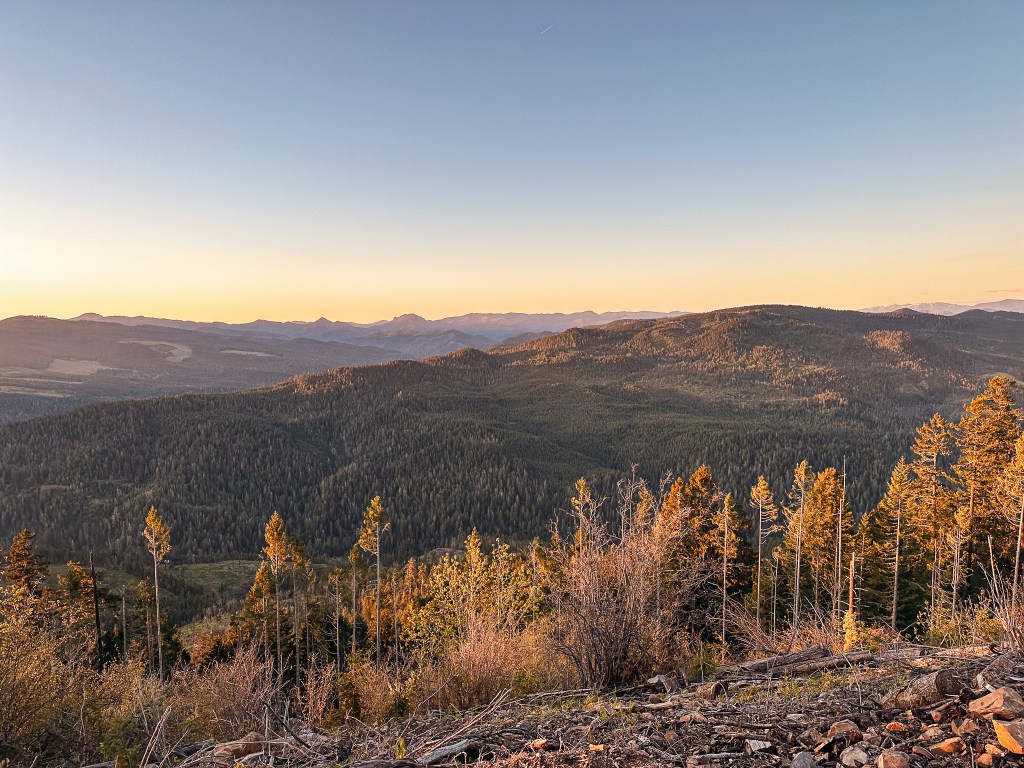
We spent our morning packing up our gear since we wouldn’t be coming back to Pickett Butte for the night. Our agenda for the day included a stop at South Umpqua Falls and a hike to Acker Rock. That gave us the rest of the evening to locate a dispersed camp spot in the area. We had already spotted a few around, so we knew they existed. Our day eventually ended in a grassy pull out after passing up and vetoing a couple of our more official dispersed options. Nothing felt quit right to either of us. It wasn’t our best camp spot but it wasn’t our worst either. Thankfully the temperatures were much cooler that evening which was a nice change after feeling over heated the entire trip. We both agreed this area was pretty, but we much preferred the vibe of the North Umpqua area. Monday was spent driving home and finding out we missed a spectacular show of Northern Lights after coming back into service. It was unfortunate since where we were would have been a great spot to see them if we hadn’t been asleep. We didn’t even stay up for our regular star gazing and Milky Way.
History.
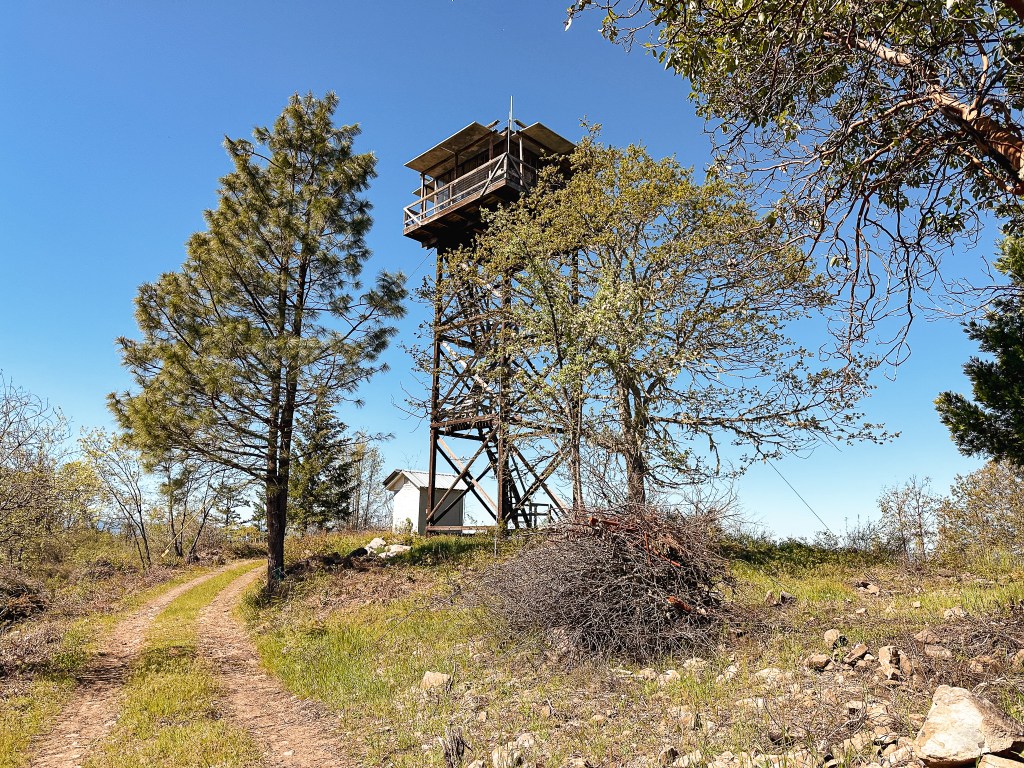
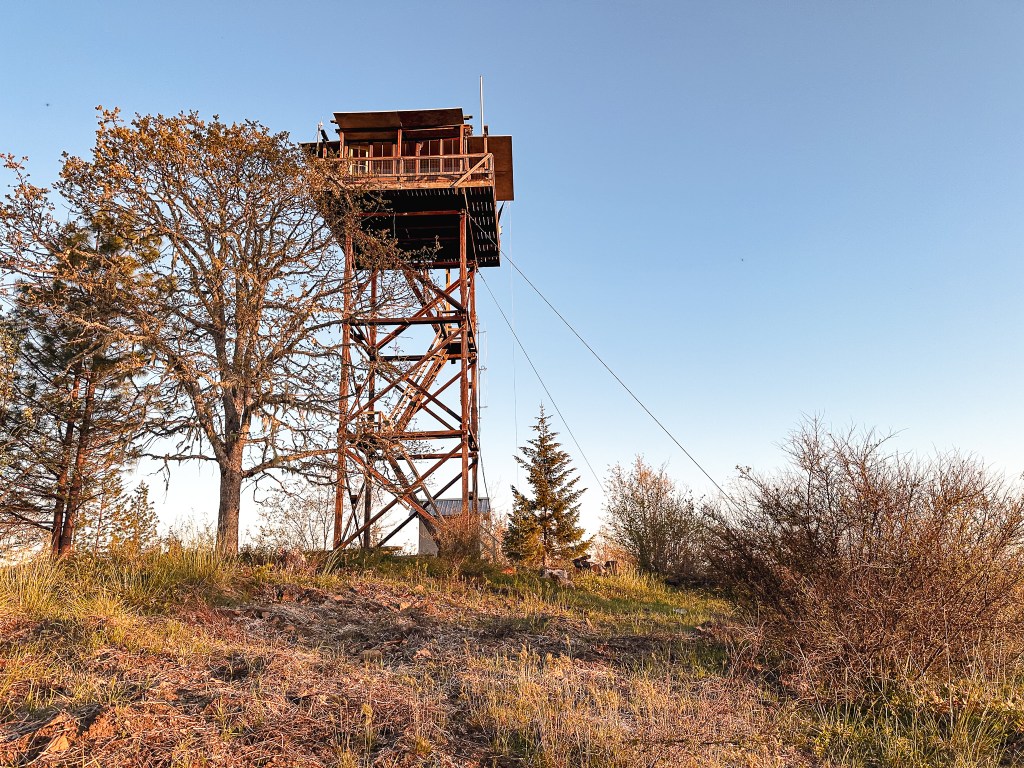
Pickett Butte gets its name from the homesteader, William T. Pickett. He traveled to the area via horseback in 1898 and decided to stay. The first lookout structure was built on the butte by the CCC in 1934 as a 25′ round timber tower with L-5 cab. It was replaced in 1941 by the current 41′ treated timber tower with L-4 cab. It was actively staffed up until the late 1990s. Eventually it was moved to the rental program for recreational use. In 2001, it was moved back into active duty to be staffed during the fire season while only offering this as a rental during the off season. As far as I can tell, this still remains to be true.
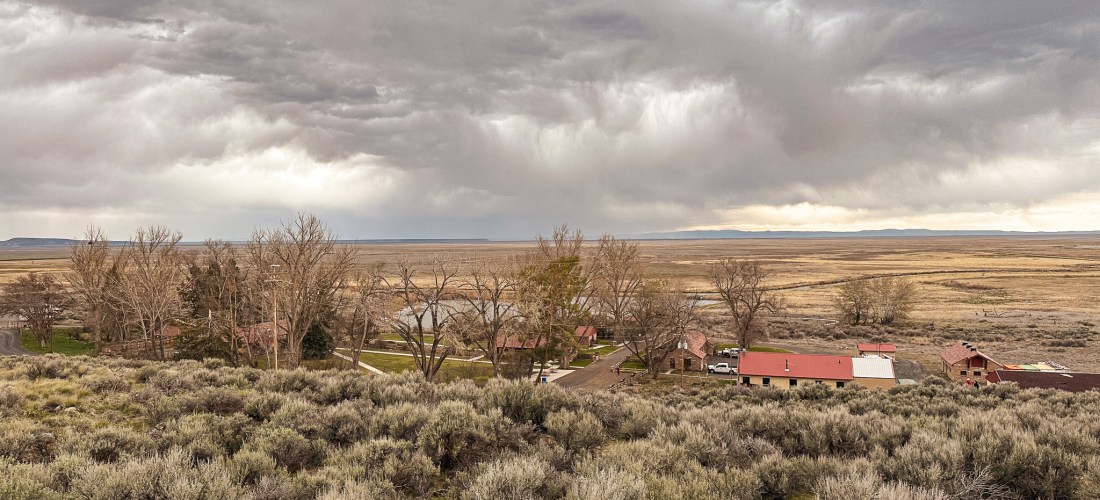
The Malheur National Wildlife Refuge is an important wetland for year round resident birds and wildlife managed by the U.S. Fish and Wildlife Service. It’s also a major stop over for migrating birds along the Pacific Flyway. It is located in the south-eastern portion of Oregon’s high desert and is considered part of the start of the Great Basin. The Refuge was established in 1908 to help protect the migratory bird population and now encompasses over 187,000 acres. Within the boundaries of the Refuge, you will find more than just a plethora of wildlife and resources. There is also a significant amount of history ranging from early Indigenous peoples (Petroglyphs) to the first European settlers of the area (Round Barn, P Ranch, & Sod House).
I decided to spend my birthday camping near the Malheur NWR in hopes of seeing a decent amount of birds and visiting the lookout towers noted in the area. Early April is always a challenging time when trying to locate a place to camp with decent weather. I was robbed again of visiting the Enchanted Valley in the Olympic National Park and almost everywhere in the state was forecast to be wet. I didn’t realize until the morning of our departure that this was the exact same weekend of the Migratory Bird Festival in Burns, OR. We were a bit concerned about not being able to secure a spot at the Page Springs Campground after reading about it. Many birders come to this area in early spring to watch the migrations. One might say they flock to the area, har har. But, we decided to risk it and hoped for the best. It took us around 7 hours from Portland to reach the area. We were lucky to be coming in on a Thursday and were able to find a camp spot, almost all were taken by the end of the day.
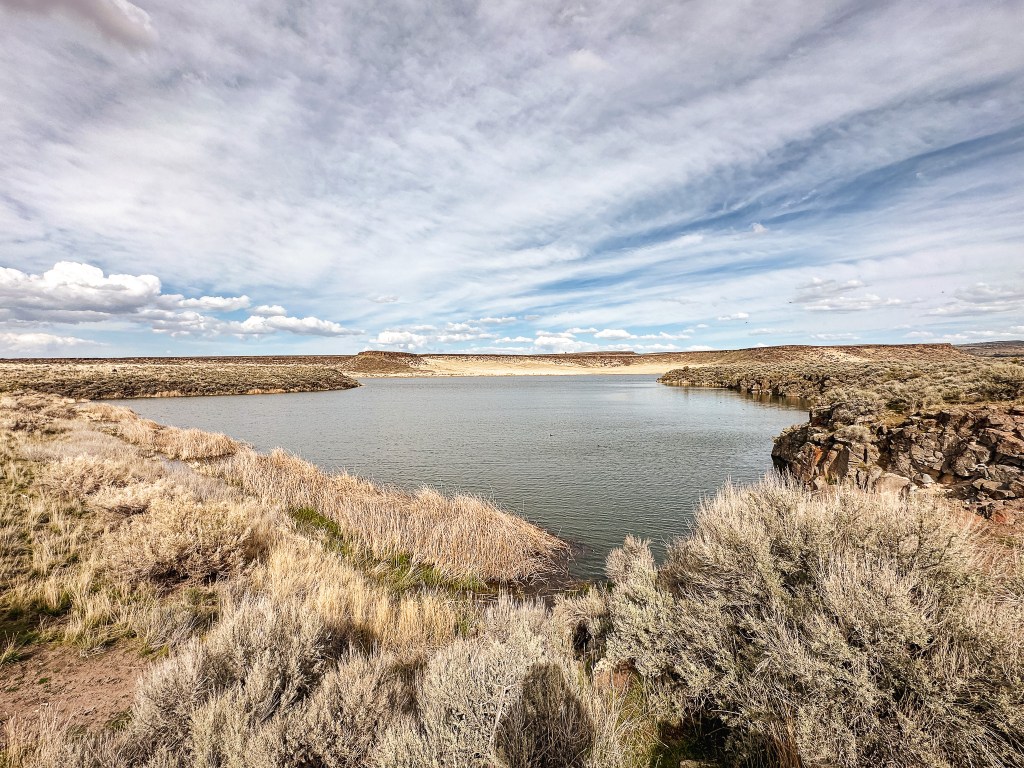
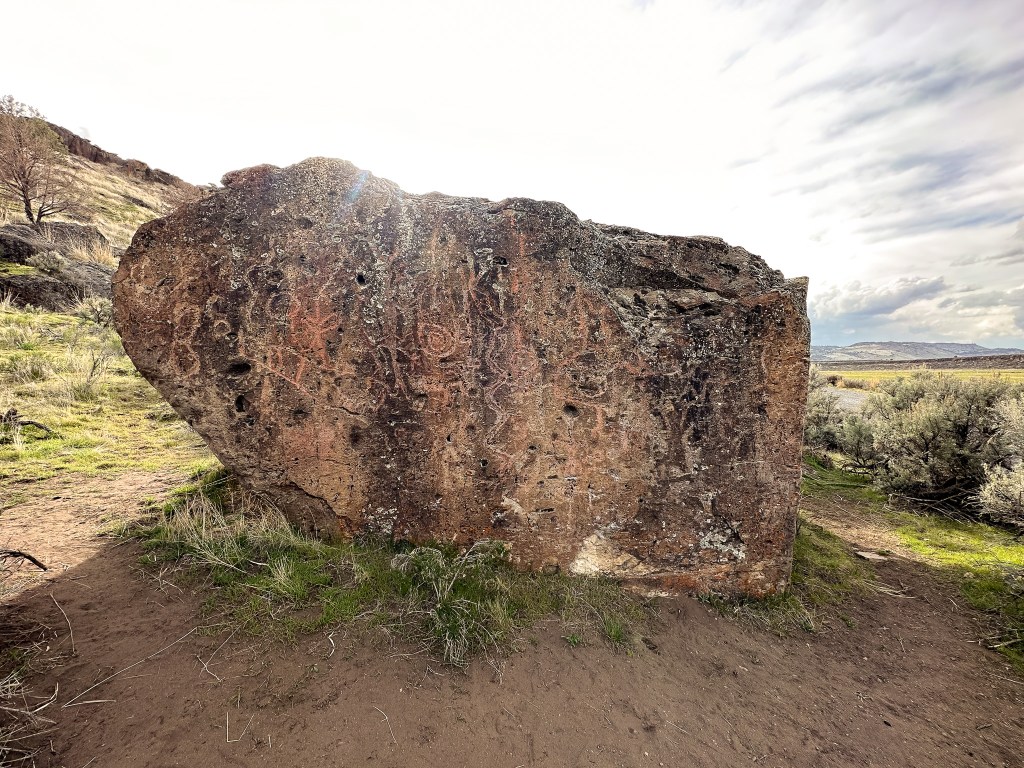
We were able to visit all four of the towers in one full day along with the visitor center and taking the auto tour through the Refuge. Our second day we had hoped to visit Riddle Mountain L.O., but decided not to continue our attempt after meeting a particularly muddy section on the road. Our tire had even sunk in a bit after making an attempt to circumvent it. We knew there was still snow on top from the AlertWildfire camera, but figured it was hikable if we could have driven closer. This one will have to wait for when we know the area will be dry. It was a bit of a disappointment since this one is very isolated to reach and will require its own trip. The trade off was that we now had time to see the Round Barn, the Diamond Craters Outstanding Natural Area, the petroglyphs near Krumbo reservoir, and the old homestead site at Benson Pond. We were pretty lucky on our weather conditions as well. The highs were in the 70s and we got mostly sunny skies during our trip. The forecasted thunderstorms and rain seemed to only roll in during the evening and were usually gone by the morning. Minus our final morning, where we had to pack up everything wet while it rained.
I will preface this list below with the fact that there doesn’t seem to be any confirmed evidence that any of these were used to detect wildfires. I am still going to count them towards my total, but I’m inclined to believe they were built and used primarily for wildlife viewing in the area. Two of them are even listed on the NHLR, but I think that mostly has to do with the fact that they are the same Aermotor design as a fire lookout. I found this interesting since I have gotten some push back on a couple sites I tried to nominate due to not meeting requirements. Everyone has their own qualifications on what they count as a fire lookout. My personal take is that if a structure, of any form, was used in the detection and spotting of wildfires it should still count no matter if it has been relocated or not. If said structure, of any form, is still intact at the original site or standing it should still count as existing. It becomes a former site, in my mind, once the structure has fully collapsed, been removed, or burned down. Take that for what it is, my opinion.
P Ranch.
Date visited.
April 11, 2024; April 12, 2024
National Historic Lookout Register.
US 430; OR 55
About.
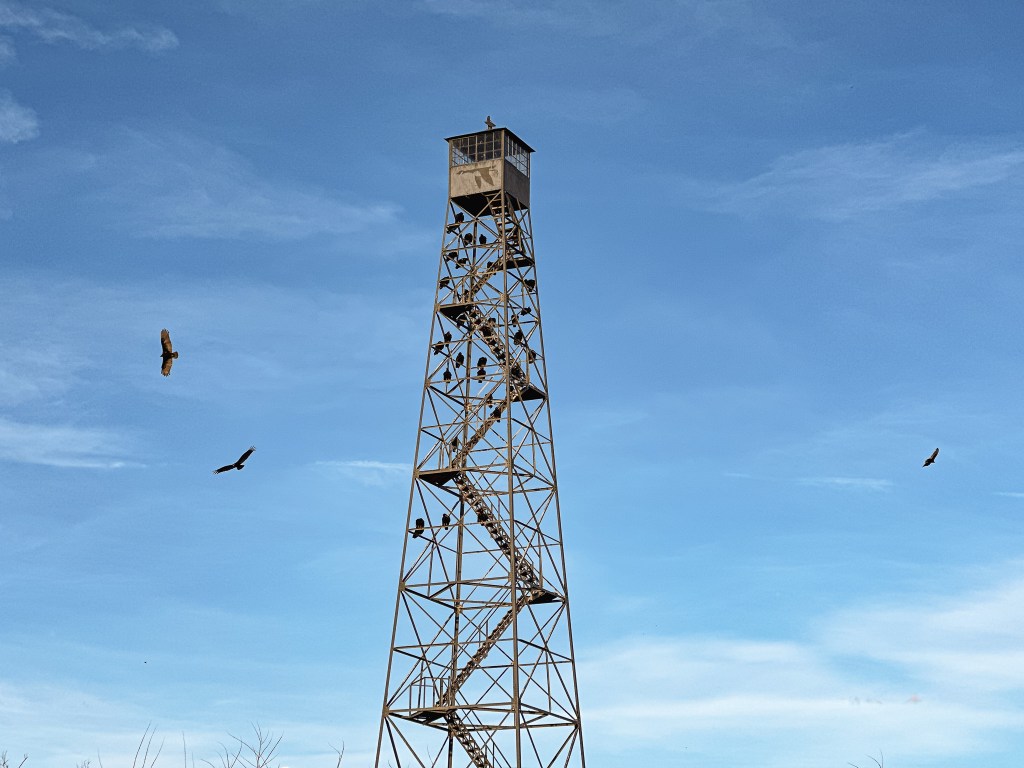
The 72′ Aermotor tower with 7’x7′ cab was built by the CCC in 1933 near the site of the original P Ranch. Most of the ranch buildings were demolished by the CCC during the same time and the main ranch house burned in 1947. In 1935, the site became a part of the adjacent Wildlife Refuge. This tower can be easily accessed from Frenchglen by taking the Steens Mountain Loop road and turning left onto the Center Patrol Road. It’ll be the first left off the Central Patrol Road and can be found by following the signs to P-Ranch. It sticks up high enough though that you will see. The area around the base of the tower is closed due to wildlife, but it can easily be viewed from the road, parking lot, or the Riverview trail. I really enjoyed how the Turkey Vultures used this one to roost at night. This is stop #19 on the Blitzen Valley Auto Tour Route.
Sod House (Headquarters).
Date visited.
April 12, 2024
National Historic Lookout Register.
US 429; OR 54
About.
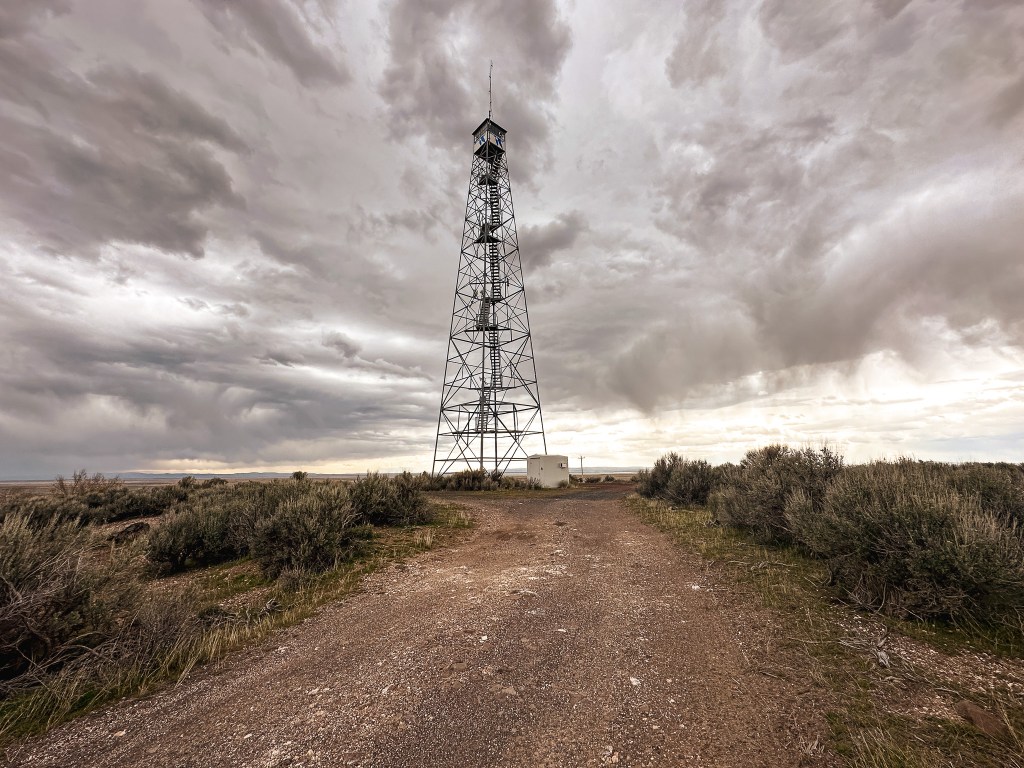
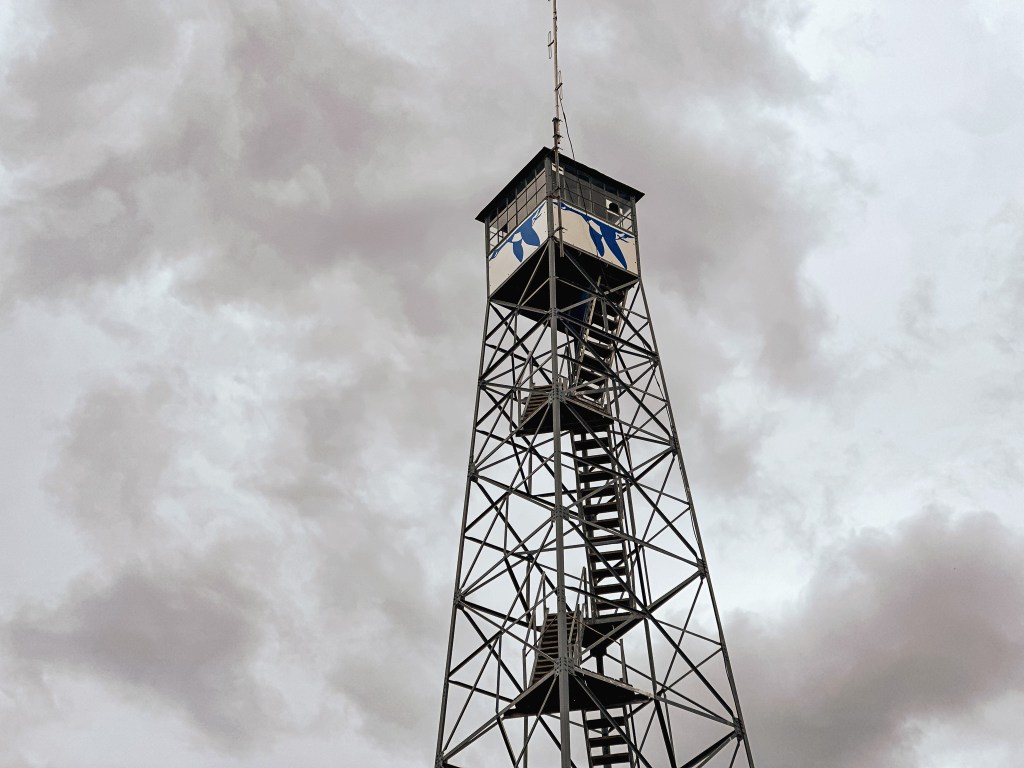
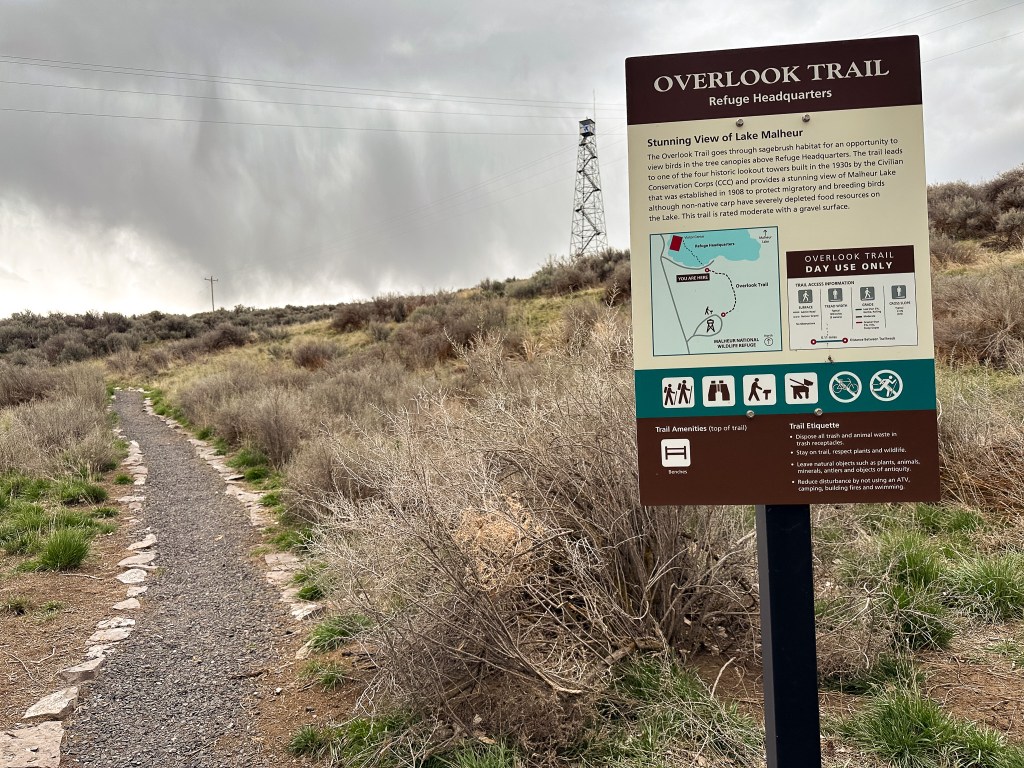
The Aermotor tower with 7’x7′ cab was also built by the CCC in the 1930s. It was most likely completed around the same time as the Refuge headquarters in 1935. I found conflicting information on height varying from 80′ (NHLR) to 90′ (Rex’s Fire Lookout Page) to 99′ (Burns Herald-Times). This tower is easily accessed from HWY-205 by turning on to Sodhouse Lane and following the signs for the Refuge visitor center. You can either drive right up to the base or access it from the short Overlook trail starting at the visitor center. The trail is only 0.11 miles of packed gravel. You can walk up to the base of this tower, but the bottom stairs have been removed to keep visitors from climbing it. The base of the tower offers a nice view out over Malheur Lake and the headquarter grounds below. This is stop #1 on the Blitzen Valley Auto Tour Route.
Stubblefield Butte.
Date visited.
April 12, 2024
National Historic Lookout Register.
Not registered.
About.
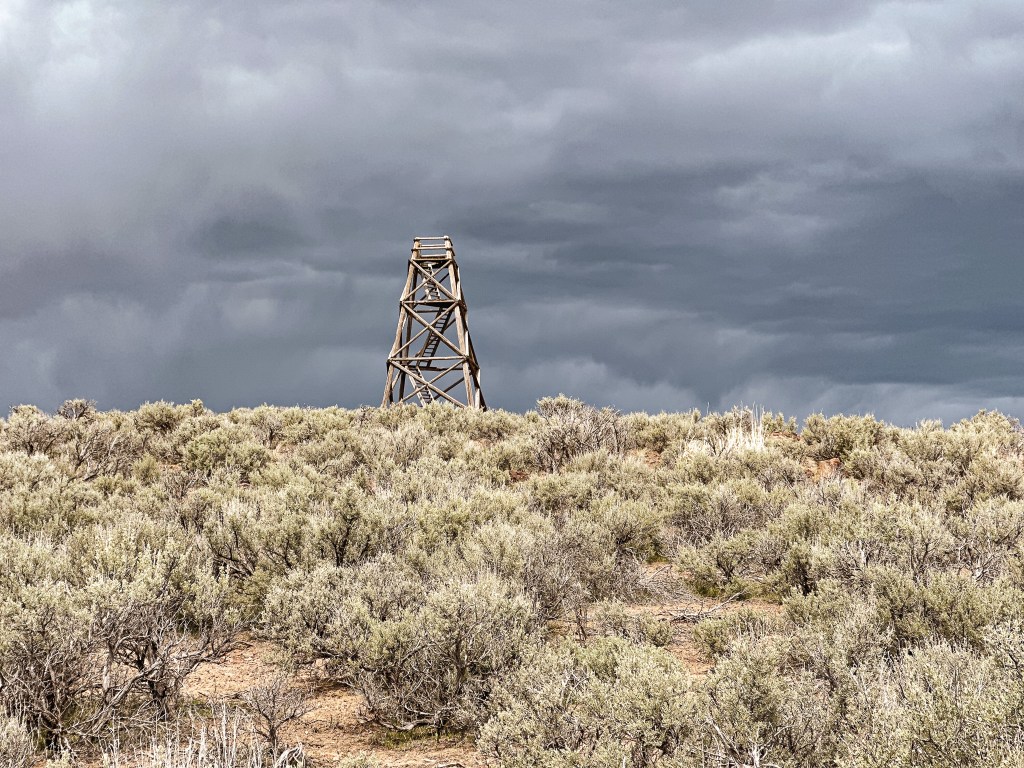
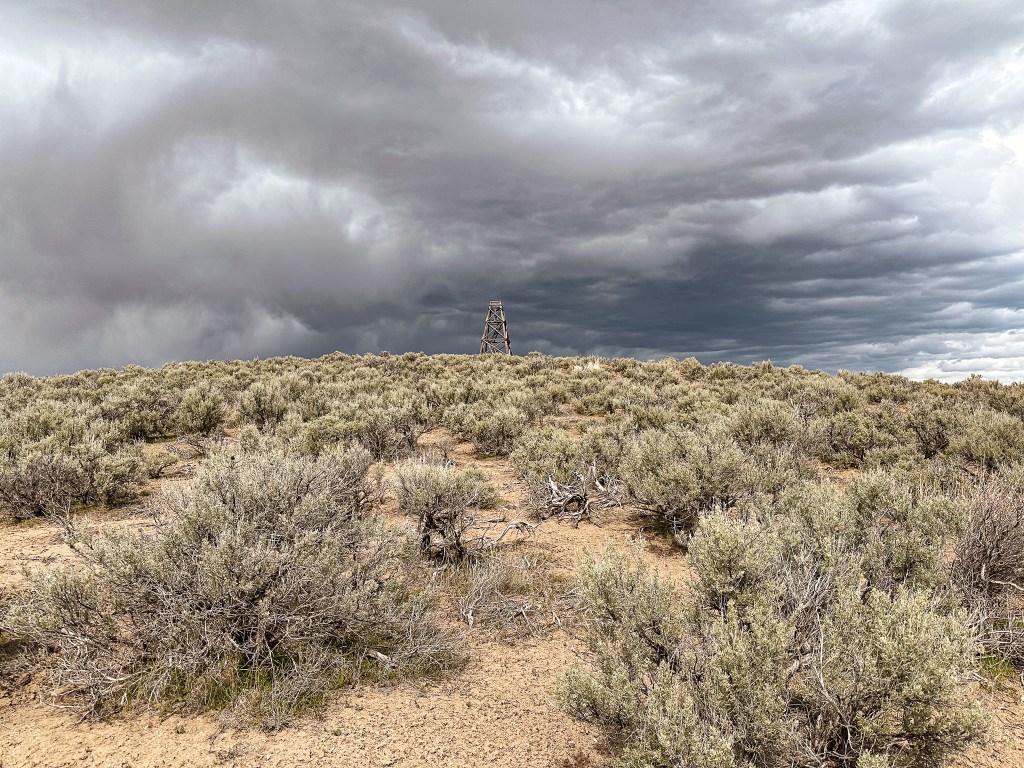
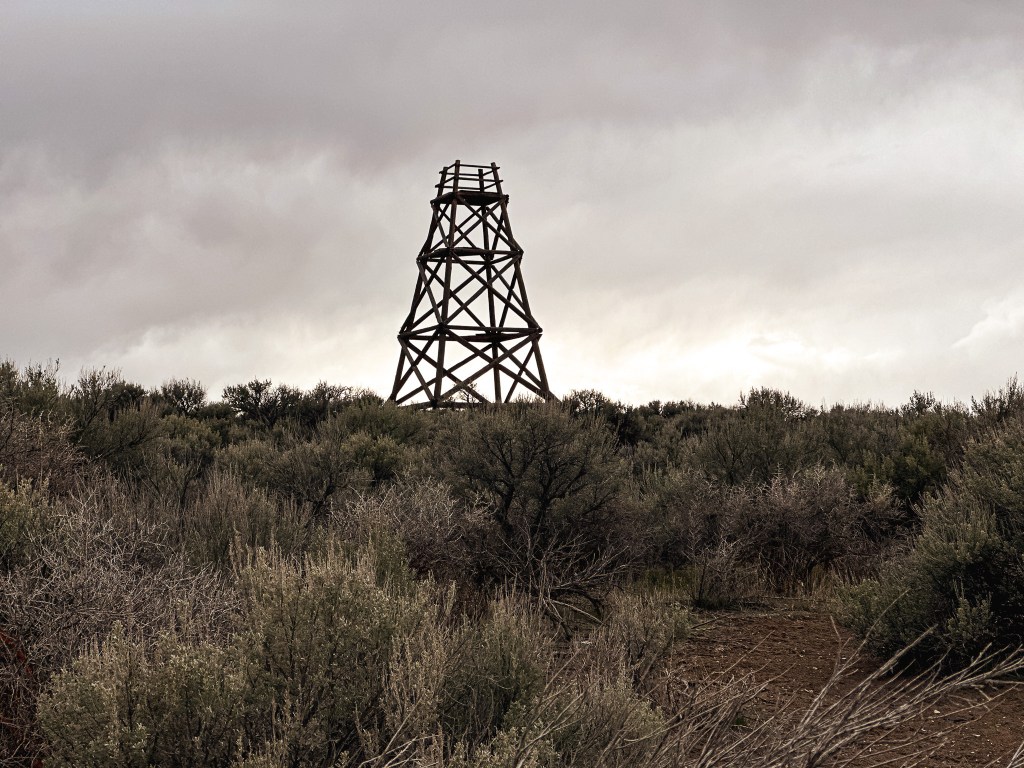
This 50′ tower with wooden platform was built by the CCC in the 1930s. It appears that the main access is from the road along the Stubblefied Canal, but the area has since been closed to the public due to wildlife. It is best viewed from HWY-205, but can be seen from the Center Patrol Road as well. We found the best view was from a small pull out just across the highway from a private residence near Saddle Butte. You might be able to get a closer look from hiking along adjoining BLM land, but make sure to have a decent map. It’s not completely clear on what is private and BLM land beyond the fence line. I recommend a good pair of binoculars for viewing. This tower still has it’s stairs intact due to the limited accessibility.
Rattlesnake.
Date visited.
April 12, 2024
National Historic Lookout Register.
Not registered.
About.
This 50′ tower with wooden platform was built by the CCC in the 1930s. It is best viewed from the Center Patrol Road that is considered a part of the Auto tour route of the Refuge. This is included in stop #6 on the Blitzen Valley Auto Tour Route. You can no longer walk up to the base of the tower, but the road gets you really close. The surrounding area is closed to the public due to wildlife. The stairs on the tower have been removed to dissuade visitors from attempting to climb the tower. The tower is named after the larger Rattlesnake Butte across the road that used to provide the only natural crossing of the Blitzen River for miles.
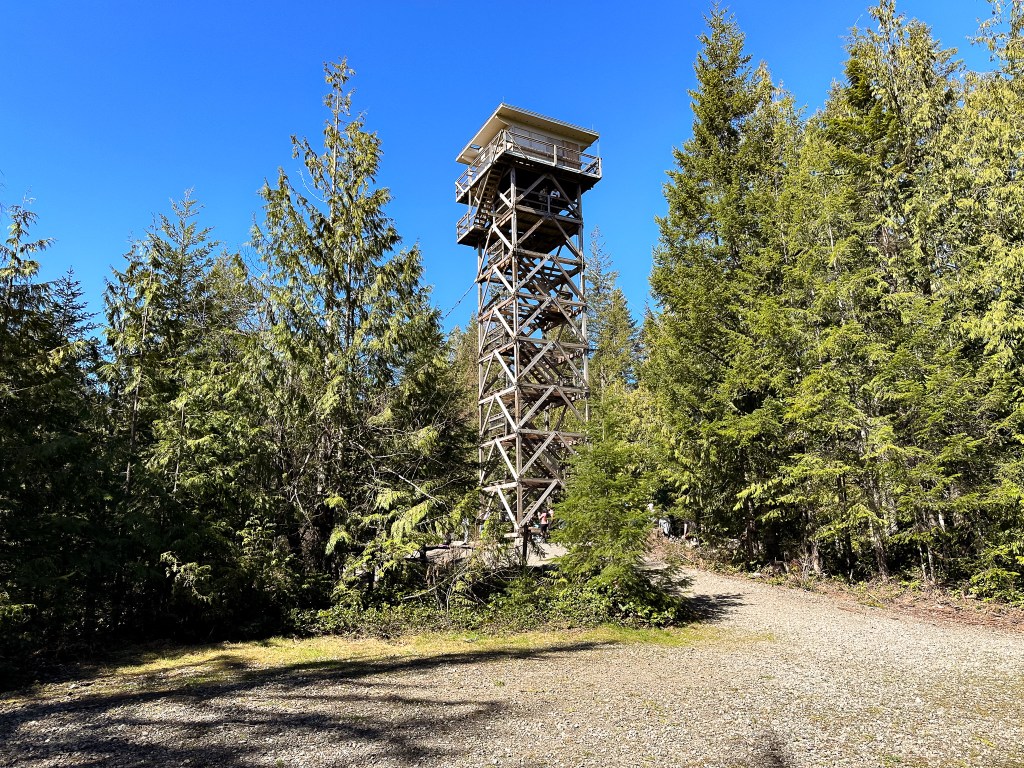
Please reference our original trip report on Heybrook L.O. for information on the history of the lookout, status, our initial site visit, and directions (post).
Date revisited: March 31, 2024
Trip Report.
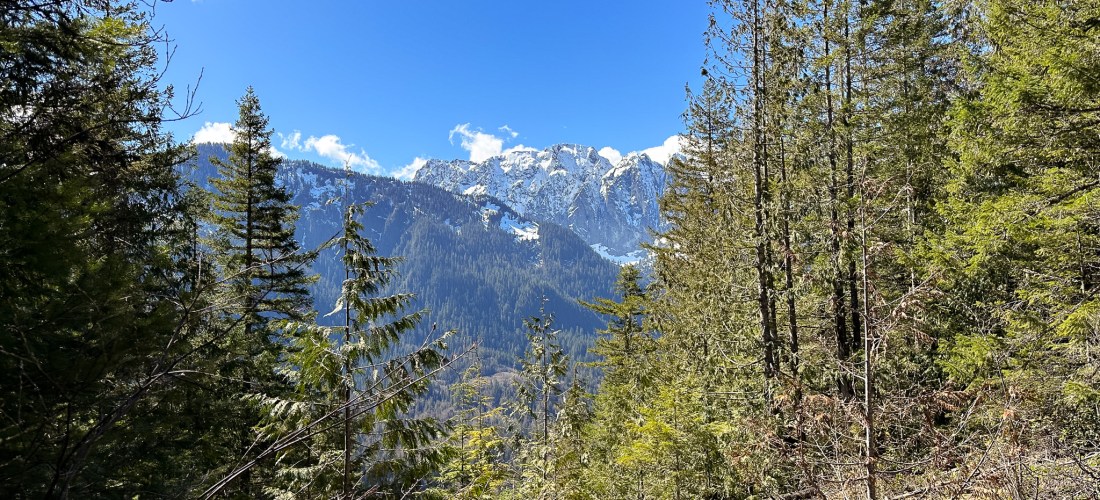
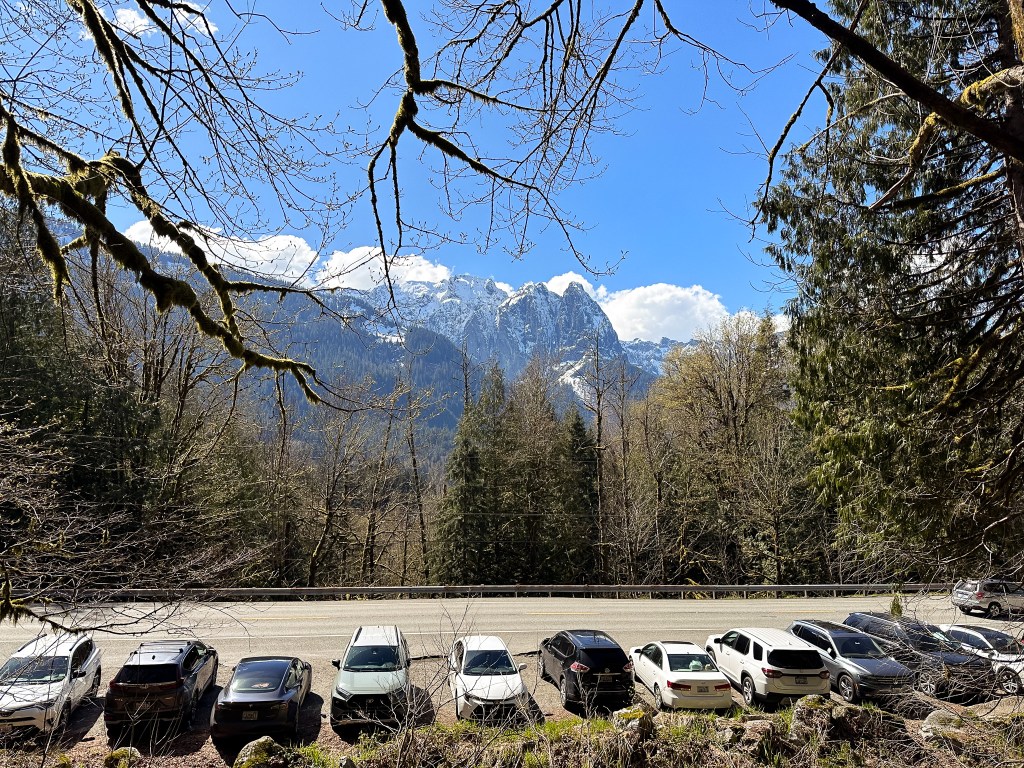
We found ourselves in Kirkland once again for the weekend visiting my friend, Anjelica. The reason for this trip was bittersweet since we were getting together to celebrate our mutual friend’s engagement and simultaneous going away party. Her and her now fiancé are moving to California to be closer to his family (and a multitude of other reasons). I already only get to see her a handful of times a year, so the move won’t be much of a change in that aspect. But, it still offers the emotional growing pains of early adulthood as we all search for our next steps in life. Last time Garnet and I were in the area together was for Friendsgiving in November, which is when said friends announced their upcoming move. We had debated making a trip to Heybrook L.O. before heading home then, since Garnet hadn’t been yet, but the weather wasn’t ideal at the time. This time around the forecasted weather was sunny with a potential high of 57 degrees. Where we were staying in Kirkland was conveniently located for a visit to Heybrook and it only took us 50 minutes to get to the trailhead off of HWY-2. Unfortunately, a lot of people had the same idea as us and the parking lot was completely full when we got there around 11AM. There was enough of a pull out across the highway to park our cars and no signs in sight prohibiting us. It’s a busy highway though so always be cautious and careful of oncoming traffic. We noticed a few people were double parked in the actual parking lot just waiting like sharks for someone else to leave. This is on par with most of what I’ve experienced from popular hikes in WA, there’s just so many more people in this area than Oregon and it seems to be a larger international tourist destination. This isn’t to say you can’t find uncrowded hikes there, they exist, but if you want to visit somewhere you’ve seen online close to Seattle you better be prepared to join the assembly lines or go extremely early (even then I’ve been to a popular trailhead and just barely snagged the last parking spot at 7AM). Oregon is much less competitive in my opinion. We spent the first steeper portions of the hike leap frogging with some other groups as we each stopped to catch our breath. I haven’t been on a trail since January 1st and my stamina reflected that significantly. This is my sign to start conditioning now for our summer season before I hurt myself later. Once we reached the ridgeline we had a little more breathing room from the other hikers until it bottle necked again right before the lookout. There were a good amount of people on and around the lookout when we got there. We waited awhile at the base before Garnet and Anjelica decided to hike up the tower while I opted to wait at the bottom. They said there weren’t too many people on the viewing platform, but squeezing past people on the stairs was difficult. We were surprised to see that the cab was completely boarded up for the season, I had thought it was rented year round. A quick search on Recreaton.gov confirmed it’s only rented from May 1st to October 31st. I’m sure I mentioned it in my other trip report, but I would feel like Rapunzel trapped in my tower if I ever stayed in this lookout during a weekend. It was still nice to get outside and absorb some much needed Vitamin D, but Garnet and I both agreed we probably won’t be back here again. The amount of people would not be as bad if everyone respected hiking etiquette and had more spatial awareness. But unfortunately, when you get a hike this busy you have people blasting their music and no yielding of any kind. And you kind of have to do the same in return to make any progress. On the hike down, Anjelica and I were separated from Garnet due to people not being able to wait to get by us going in both directions. We yielded for them, but no one yielded for us. Once back at the trailhead, the cars had multiplied in the pull out we had parked and was now full of cars as well. There were even some people walking along the highway from a more distant pull out. It starts to reach dangerous territory when you have this much crowding and is part of the reason places end up being permitted. I know it probably seems like I complain a lot about the amount of people, but it is meant to provide a realistic expectation. I am not out seeking nature to be apart of the crowds. If you still plan on visiting, I’d recommend it during a weekday. I saw significantly less people on an early Friday afternoon in August and it was much more enjoyable to me. My Strava app only calculated this hike at 2.07 Miles RT with 812′ of elevation, but I had forgotten to start it from the trailhead.
We have been in a deep hibernation this winter and are finally defrosting ourselves for the season. Although this is a repeat for me, this was a first for Garnet and is our first visited fire lookout for 2024. We will have to wait and see where else the Forest Service roads, weather, and fires take us this year. In the meantime, I will try to finish up our trip reports from Montana before our busy season begins. Happy Trails!
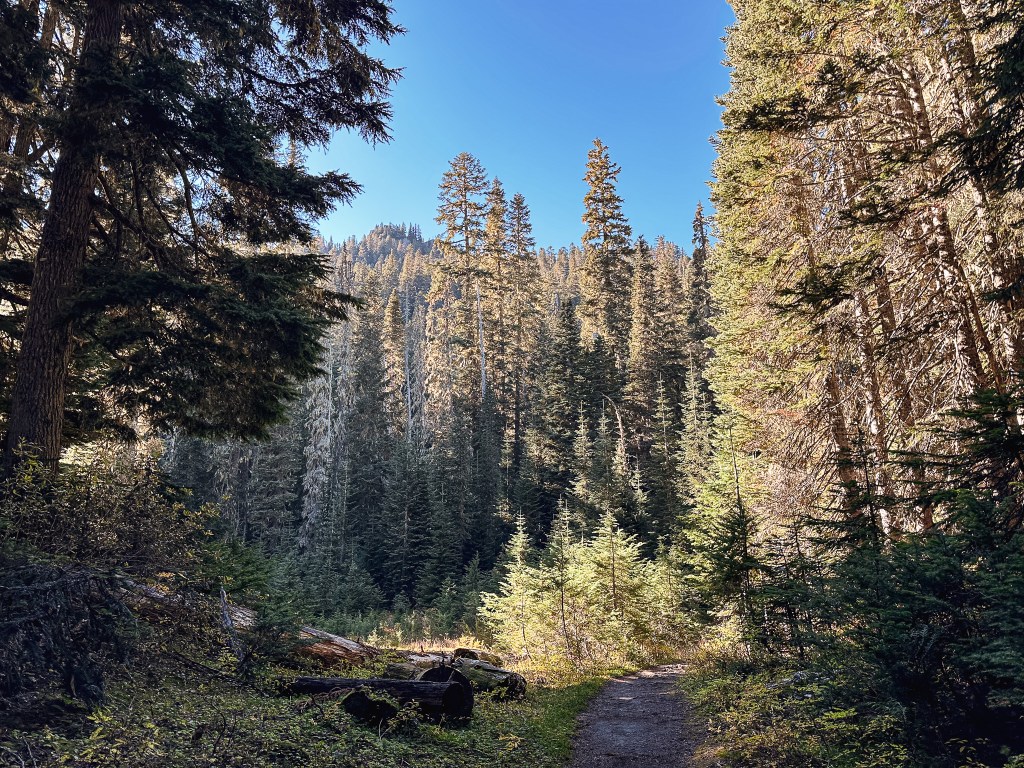
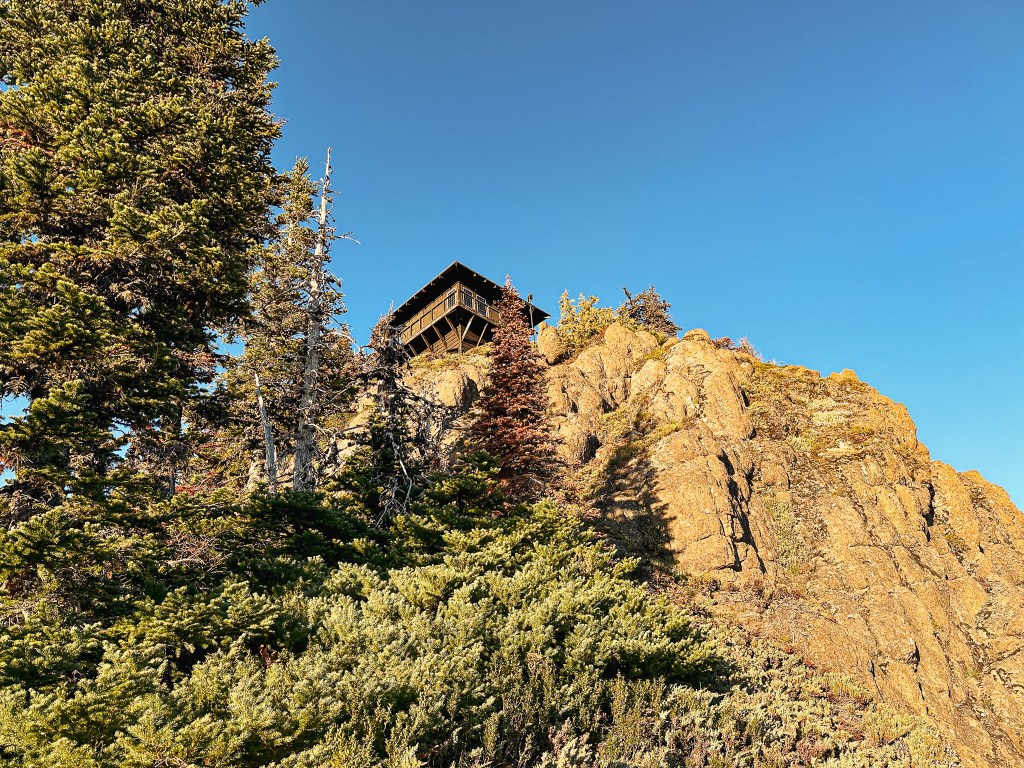
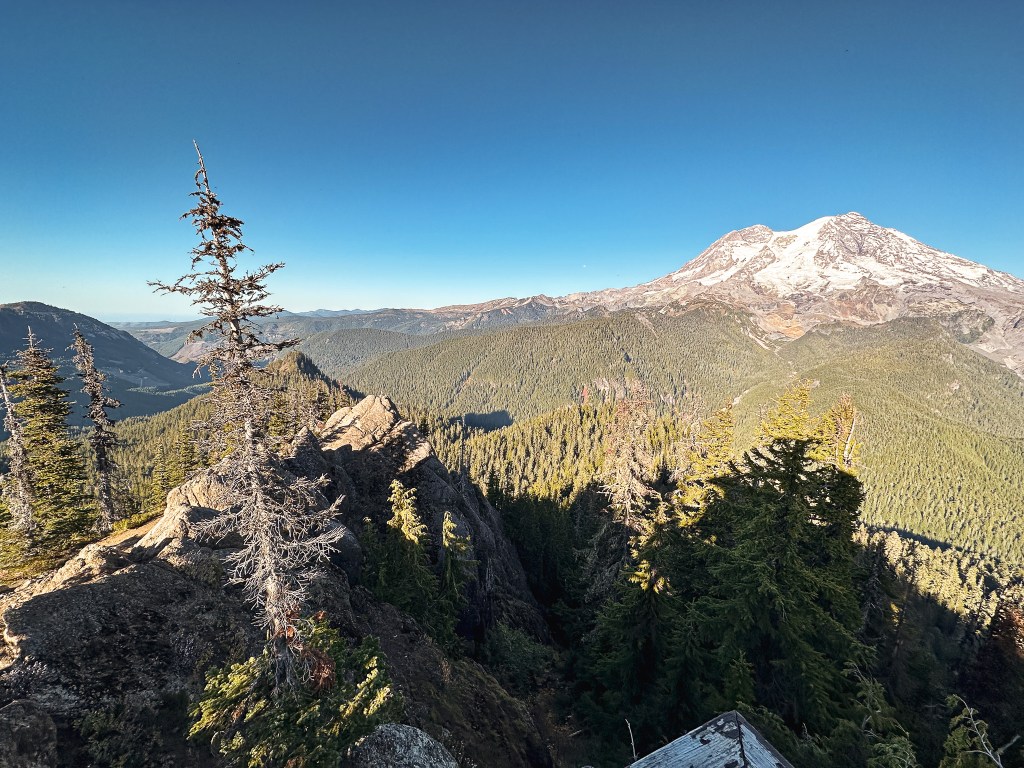
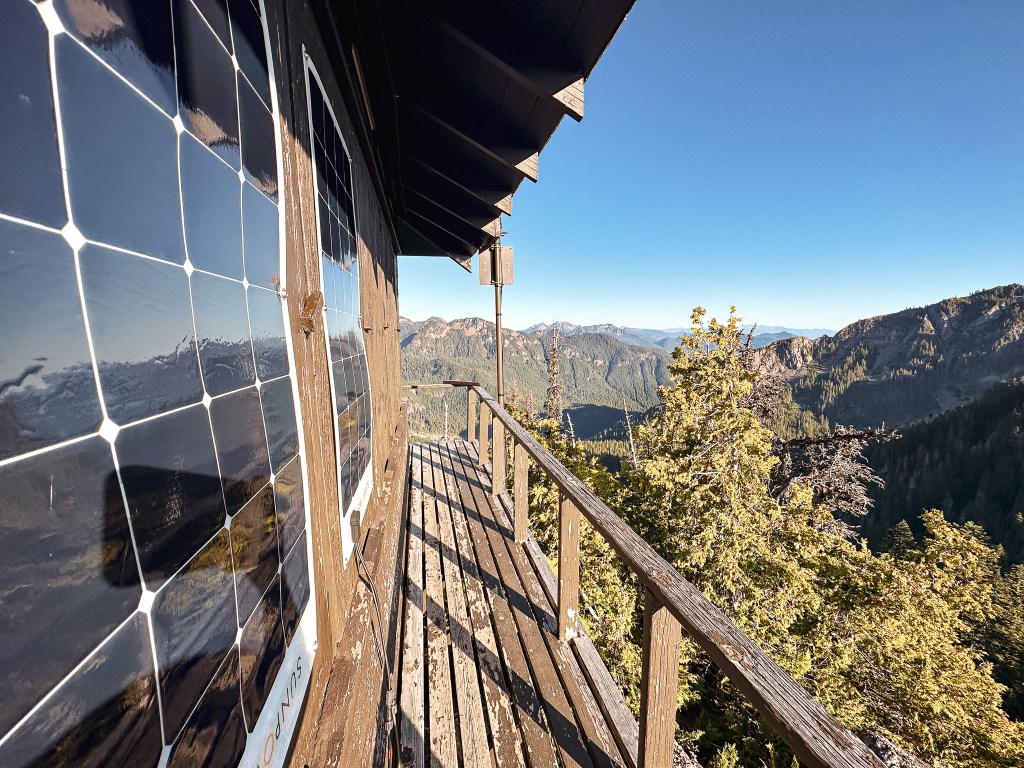
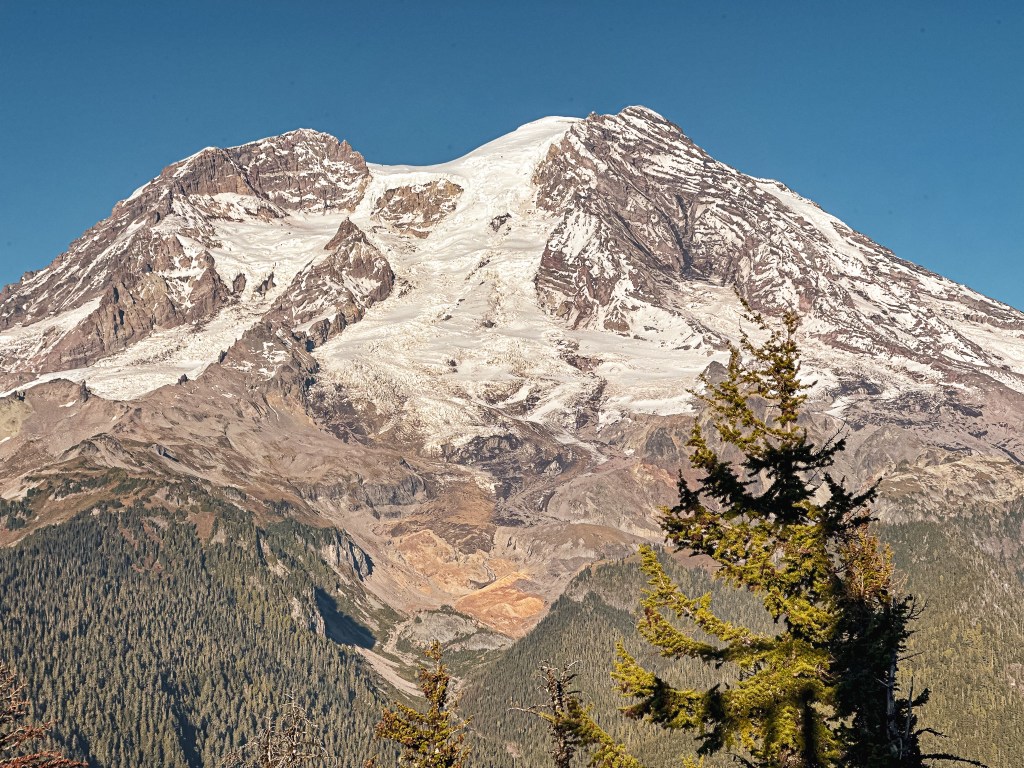
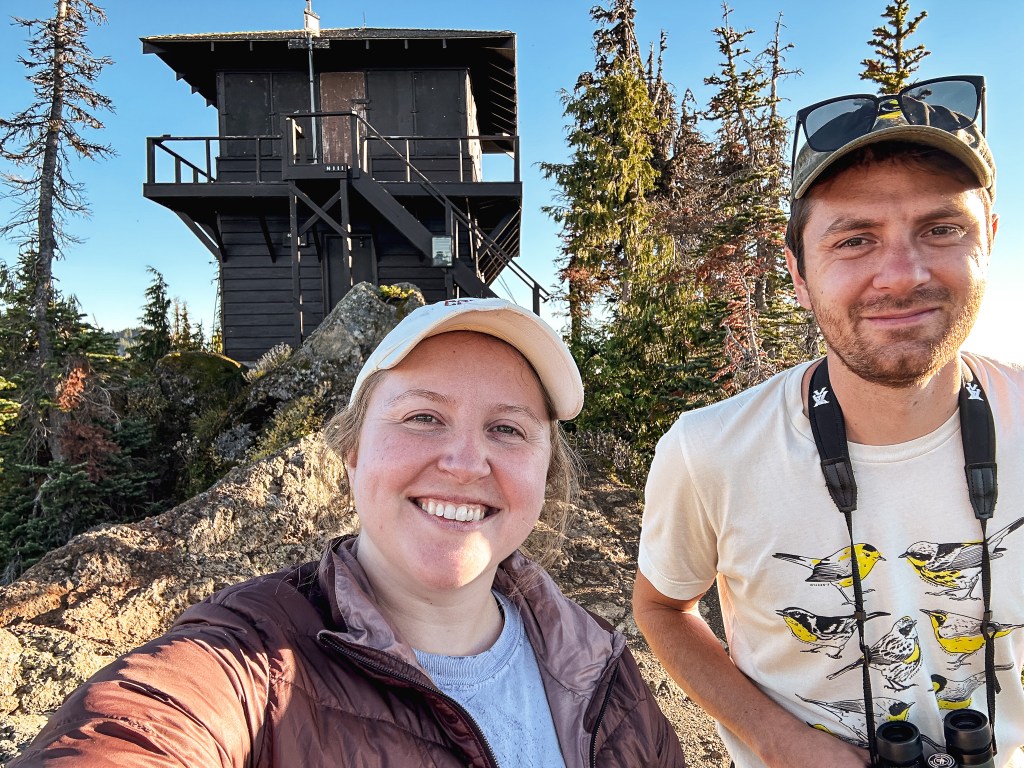
Gobbler’s Knob has been long standing in my back pocket for a decent late season hike or backpack. It has eluded us the last couple of years due to early season snow or bad weather during the weekends we had previously allotted for it. This was the last fire lookout I needed to visit to complete my set for Mount Rainier’s fire lookouts within the National Park. There are lists that include others, but they are technically not located within the park boundaries. Garnet still has Tolmie Peak (post) and Mount Fremont (post) to visit since I did both prior to meeting him. These are ones I look forward to revisiting when the time comes. Especially, Mount Fremont (post) since that was the first fire lookout I ever had the pleasure of visiting. We had just returned from our week away in Glacier National Park and there was definitely house projects and work to catch up on at home. September has been busy (the outdoorsy fun kind of busy) and progress has been slow. But, when we noticed the weekend forecast called for sunny skies and warm temperatures, decisions were made. The other late season backpackers must not have checked the forecast yet because there were still all the wilderness permits available online when this idea took shape Monday and was executed by Tuesday. At the time you did not need a permit to hike to this fire lookout as a day hike, just a National Parks Pass for access and parking. Though it sounds like Mount Rainier is going to be adopting the limited entry/day use permits in 2024 for high use areas of the park. Make sure to do your own due diligence when visiting the park. Our plan was to stay the night at Lake George for the evening to help break up the distance. For this, a backcountry permit is required and can be booked ahead of time via Recreation.gov. You will need to pick up the permit in person from your choice of Wilderness Information Centers. These are only held until noon the day your hike is scheduled to begin and can be picked up as early as one day prior. If you know you will be picking up your permit later than noon, you will need to notify the Rangers ahead of time to schedule a later pick up. Otherwise your permit reservation is cancelled and re-designated as a first-come, first-serve. You also have the option to try and snag a walk up permit but there are usually only two designated for walk up in this area and it’s never a guarantee. There are limited permits available and this can be a popular destination during the summer months, so additional planning may be required. The closest WIC to Gobbler’s Knob is located in Longmire, or the Longmire Museum if it’s during the off season. Always double check the operating hours before selecting your pick up location.
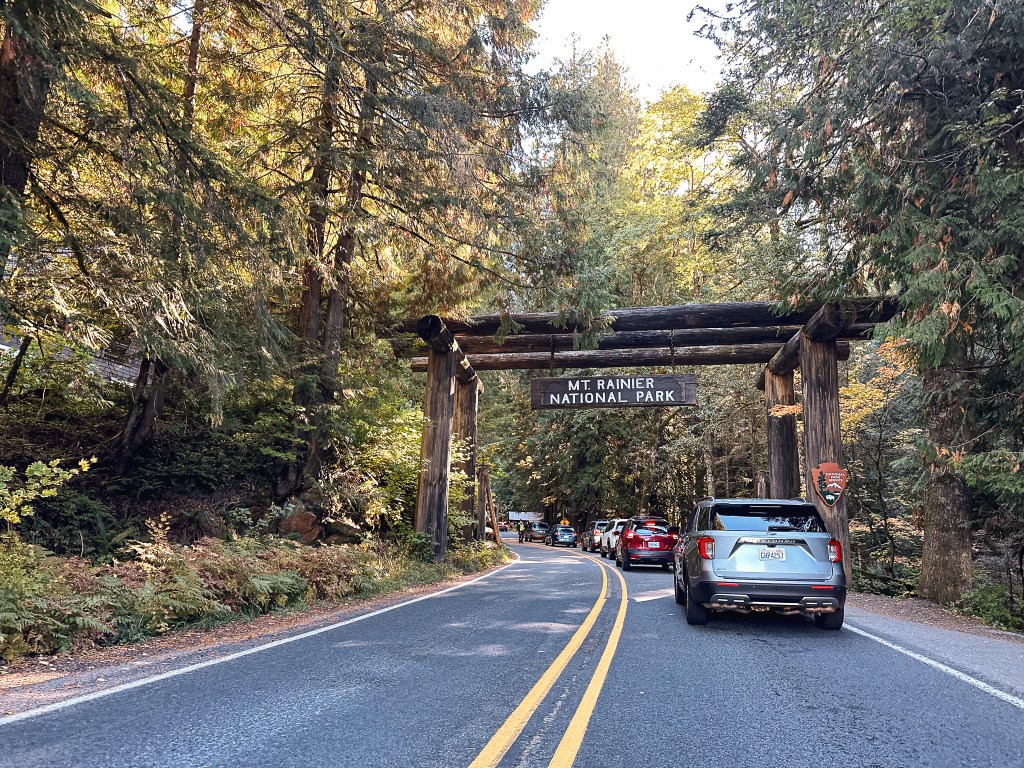
We planned to pick up our permit from the Longmire WIC since it wasn’t closing for the season until October 10th. This is just shy of a 3 hour drive from Portland depending on traffic. We knew this meant we would need to get an early start and set our alarms for 5:45AM. Our wheels didn’t hit the pavement until 7:30AM though, since we wanted to make a hearty breakfast and needed to button up things around the house. We set out via I-205 to I-5 to connect to HWY-12 and cut up via HWY-7 to eventually get to HWY-706 that would take us to our needed entrance of the park. By the time we reached Ashford, we realized everyone had a similar idea to us. October is supposed to be a time of the year when hiking trails settle down and get less use, but the unseasonably warm weekend brought everyone out for one last hoorah (ourselves included). The forecast called for clear skies and temperatures somewhere in the 70-80 degree range depending on what elevation you were situated. We joined the assembly line of vehicles and waited for our turn at the kiosk. I know Mount Rainier is a popular National Park, but after seeing the entrance back up at 10AM in October I can’t even fathom how the summer lines compare. As the line crept on at a snails pace with no entrance in sight, we started to get worried we wouldn’t make it through before our noon deadline. We debated calling the ranger station, but had spotty service near the entrance. Luckily we did end up making it through just fine after a 30-40 minute wait, but it’s definitely something one should factor in to their travel time. Once in the park you will still need to drive a little ways past the entrance to get to Longmire. We even passed the turn to access the trailhead and had to back track after picking up our permit. The WIC was easy to find and was one of the farthest buildings to the left of the lodge. Something else to note is this backcountry campsite requires you to use their bear hang or a bear canister. We were aware of this but didn’t bring our bear canister with us since it said online the bear pole was usually up until there is snow on the ground. The ranger informed us due to how late in the season it was the pole had already been removed for winter and offered to let us check out one of their bear canisters for the night. The National Park offers these for free to check out as long as their supplies last. You only need to provide a drivers license to obtain this. Once again something to keep in mind if you’re visiting in the off season. Now with permit and bear canister in hand, we headed for the trailhead.
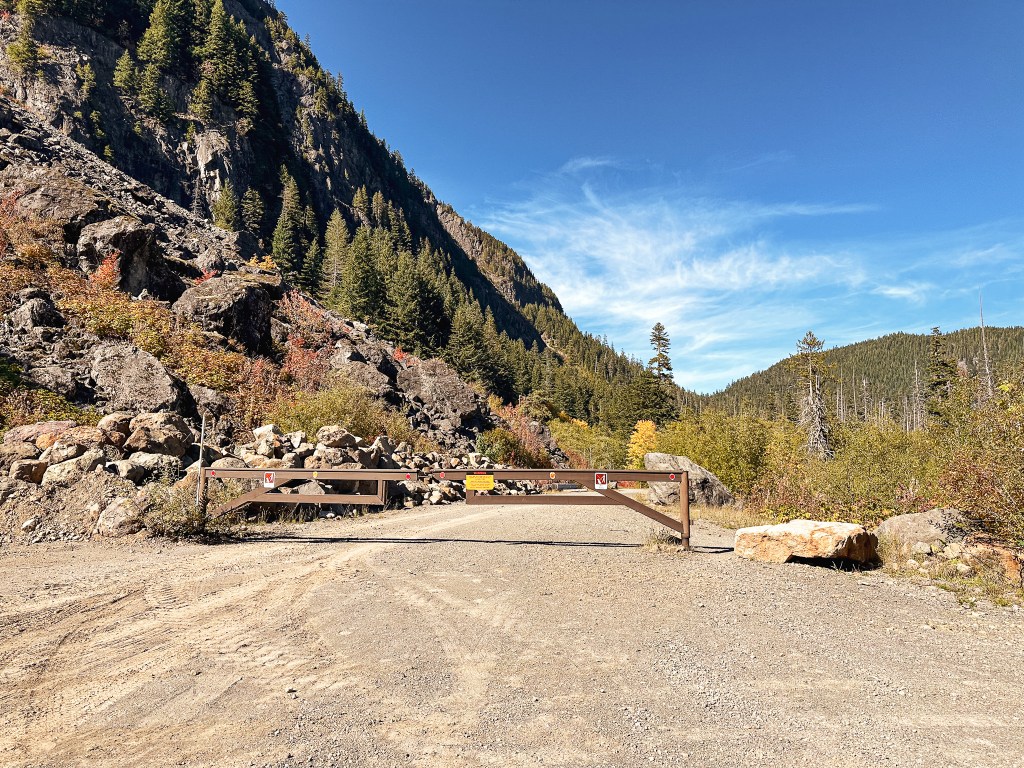
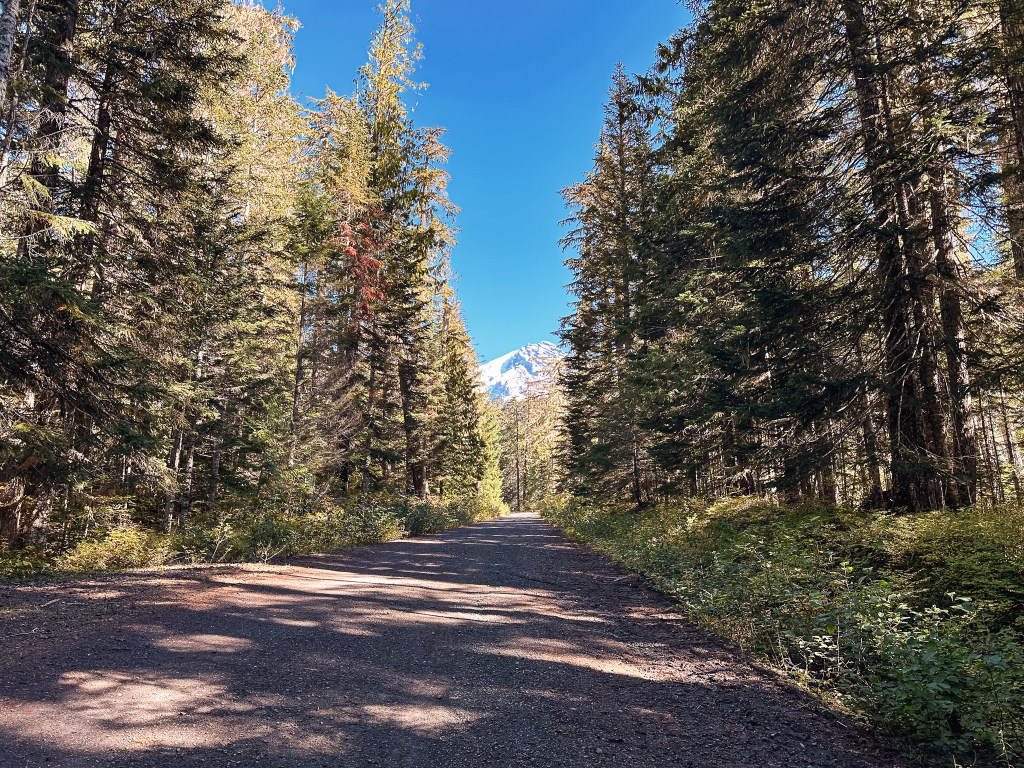
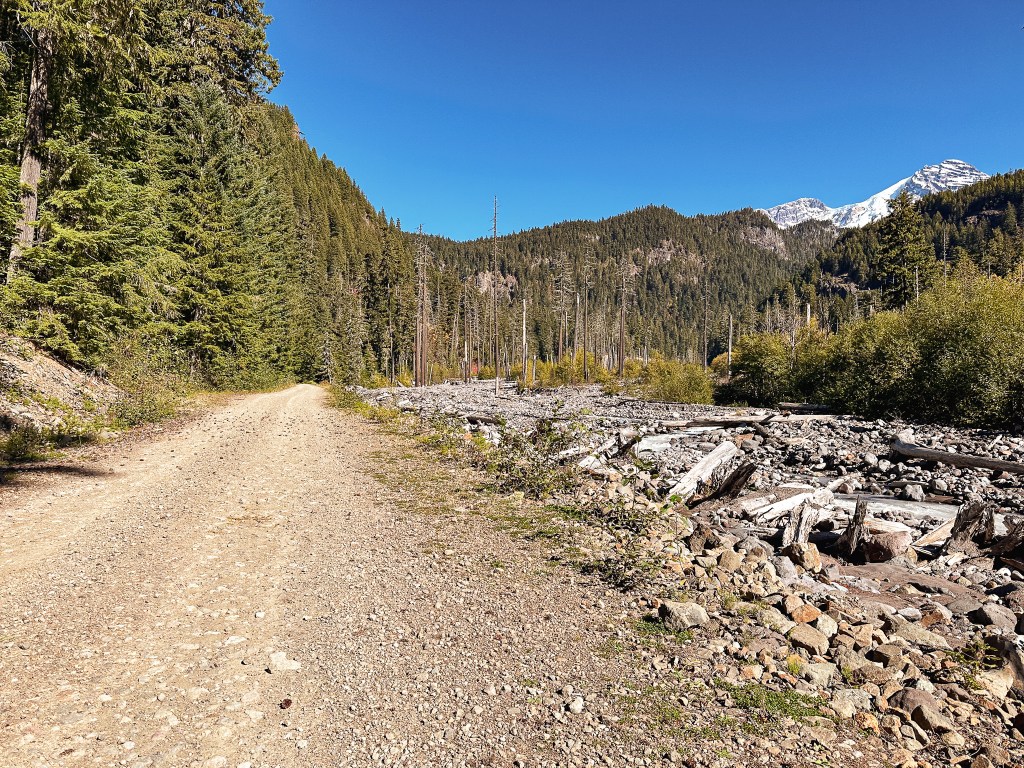
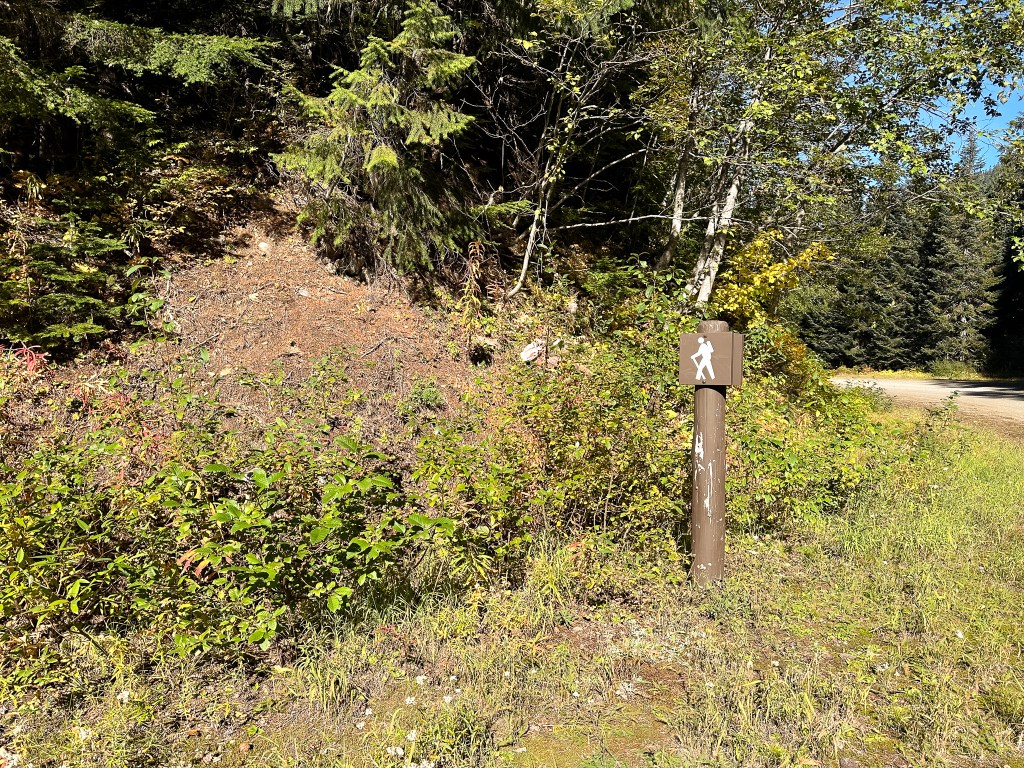
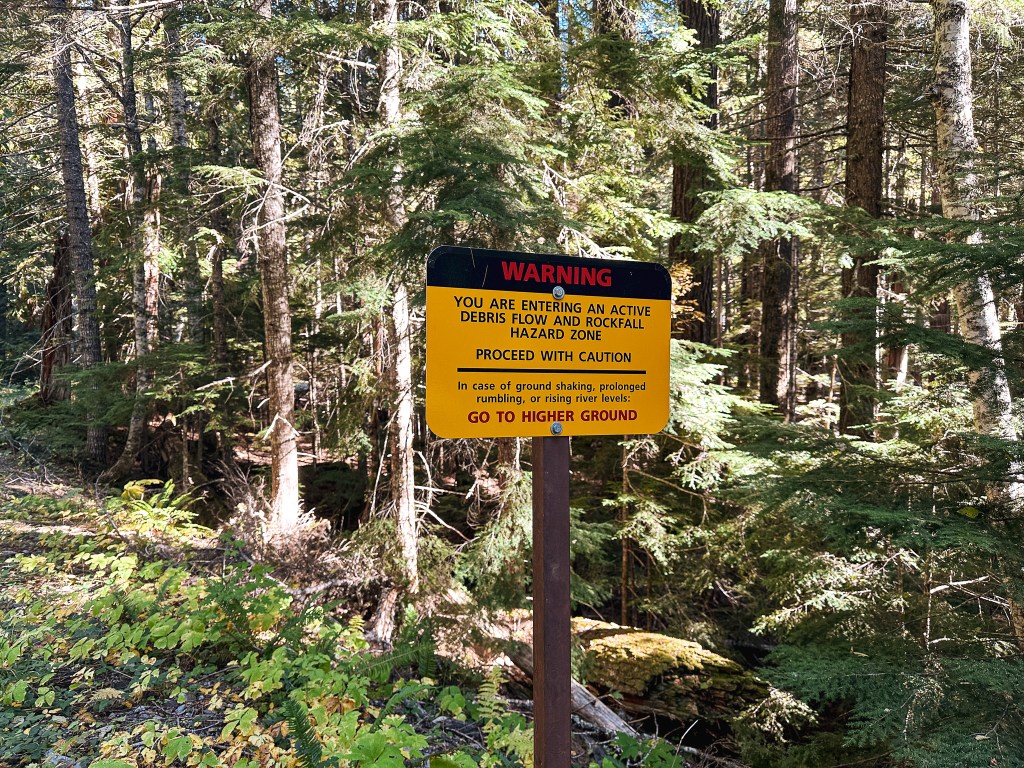
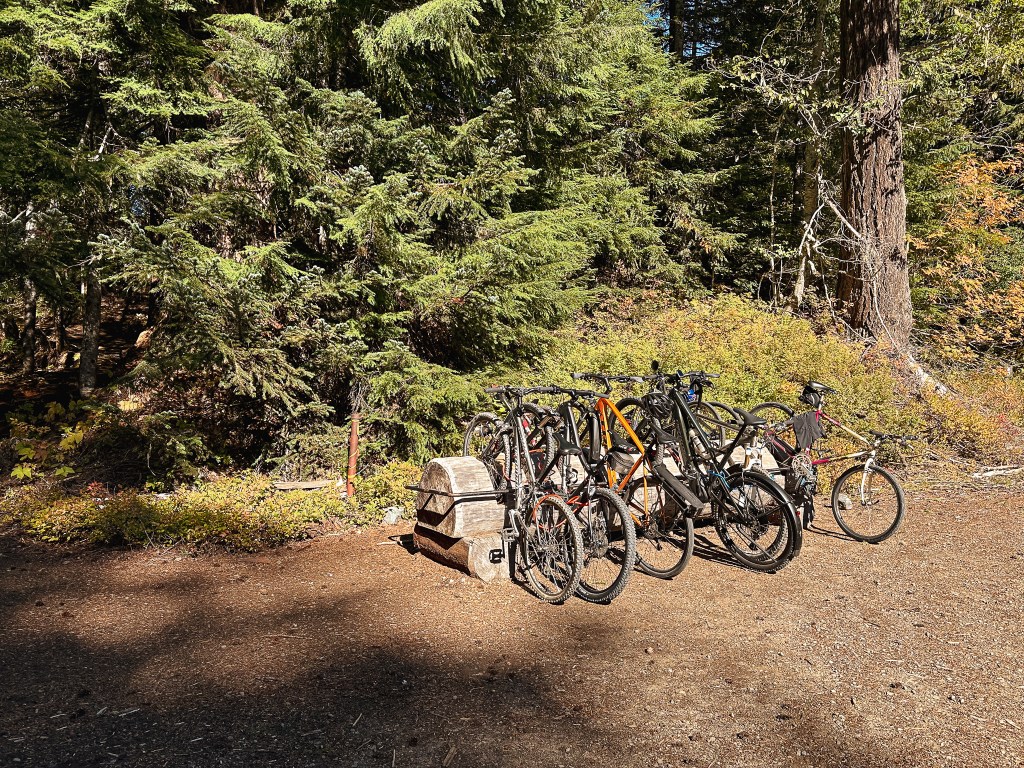
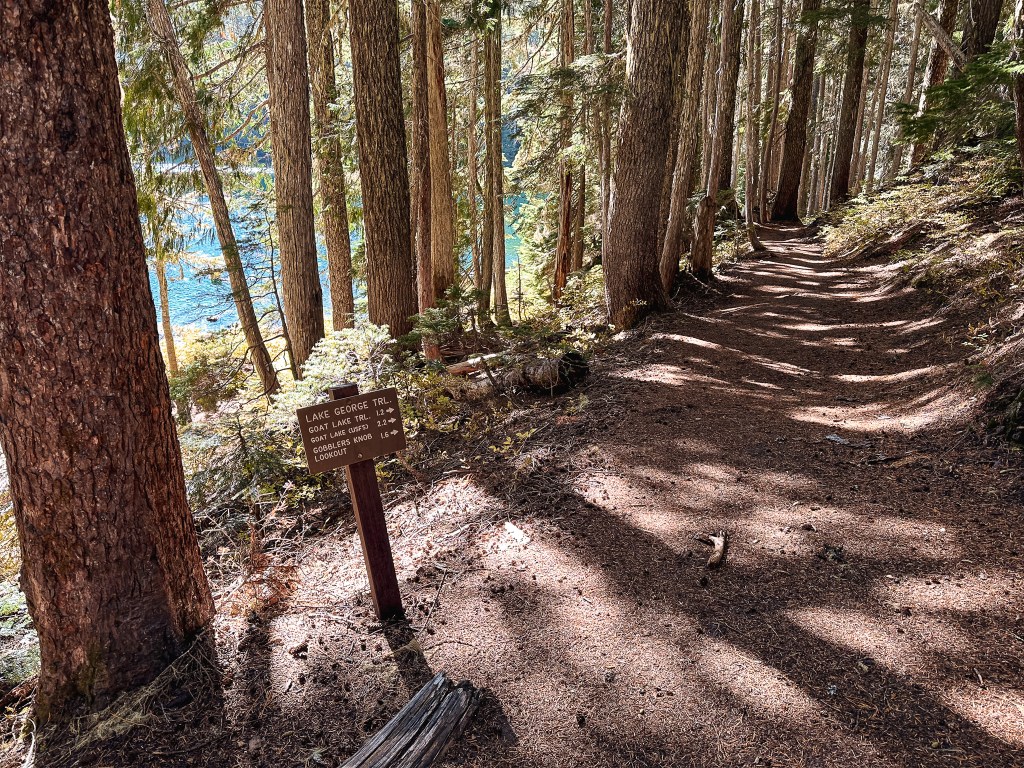
To access the trailhead, we turned on to the Westside road and followed it until the road closure. The road is off to the left if you’re heading in from the entrance of the park, but off to the right if you’re heading back from Longmire. There was ample parking for 15-20 vehicles where the road was closed (possibly more). It should be noted the Westside road is made up of gravel, but in decent condition with only minor potholes and rocks to avoid. Any standard low clearance vehicle should be able to make it without issue, but you can always ask the Ranger for current conditions. Once parked, we readied our packs and started up the road. At the time, I didn’t connect that this road continued on past the Lake George trailhead to access other areas within the park. I thought every car parked here was either at Lake George, the fire lookout, or on their way there as we hiked the road. With a mostly full parking lot this left us speculating for the next four miles on how busy it was going to be there, if there might be people there trying to backpack without a permit, or if last nights backpackers hadn’t left their camp spots yet. The hike along the road is fairly uneventful and mostly shaded by the surrounding trees. Don’t get me wrong though, it’s a nice walk in the woods. You will start out by passing around a large locked gate that marks the beginning of your road walk. Shortly after you will cross a bridge over Fish Creek. Once over the bridge there will be signs of washouts until it eventually opens up to a view of the mountain top and a ragging creek. This section parallels what I believe to be Tahoma Creek. There are plenty of signs of how this creek has pushed, overflowed, and manipulated the landscape around it which I can only assume is part of the reason why the road is kept closed. You will wind your way along the road for roughly 4 miles until you see a hiker sign off to your left. There is a distinguishable bike rack made from a tree trunk to mark the trailhead as well. It was full of bikes when we reached the trailhead despite not seeing many people along the road. The official hiking trail starts to the left of the bike rack. From here, it is 0.9 miles to reach Lake George and 2.5 miles if you are headed for the fire lookout. The tread becomes steeper once you leave the road and the real climb to the fire lookout begins.
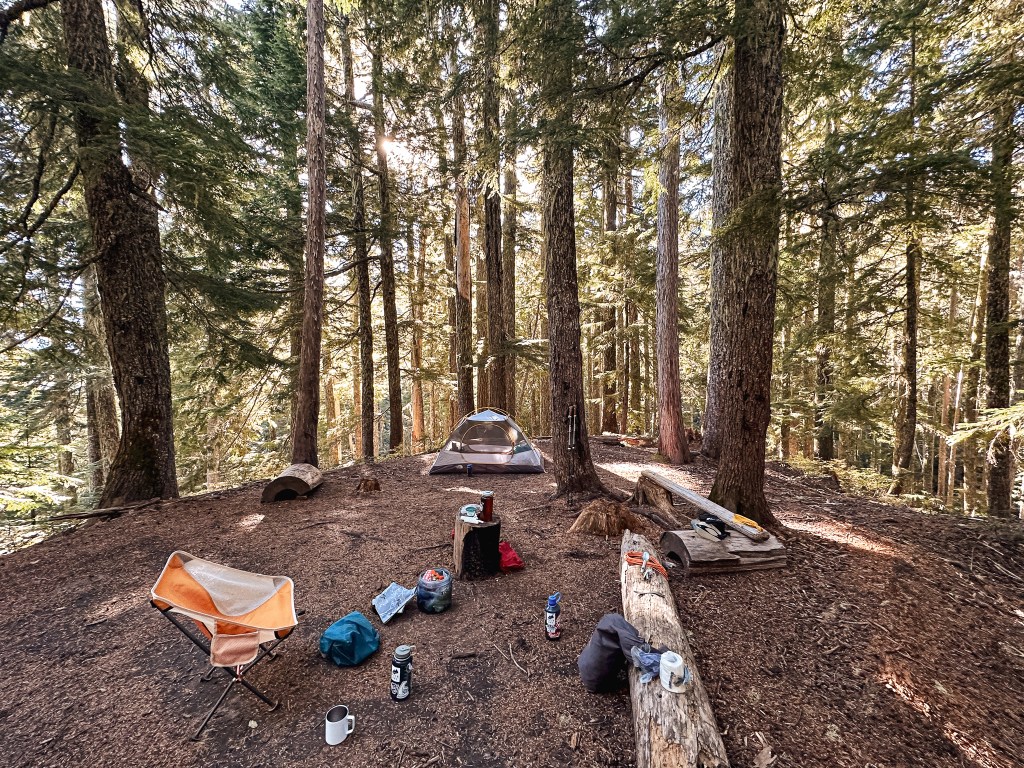
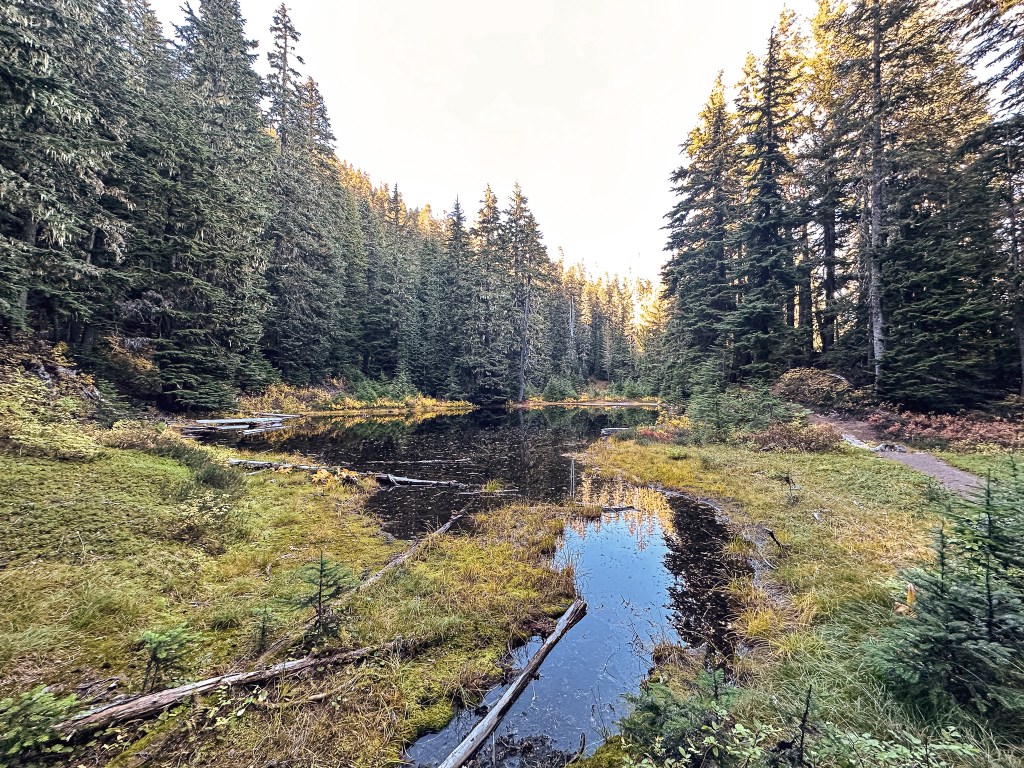
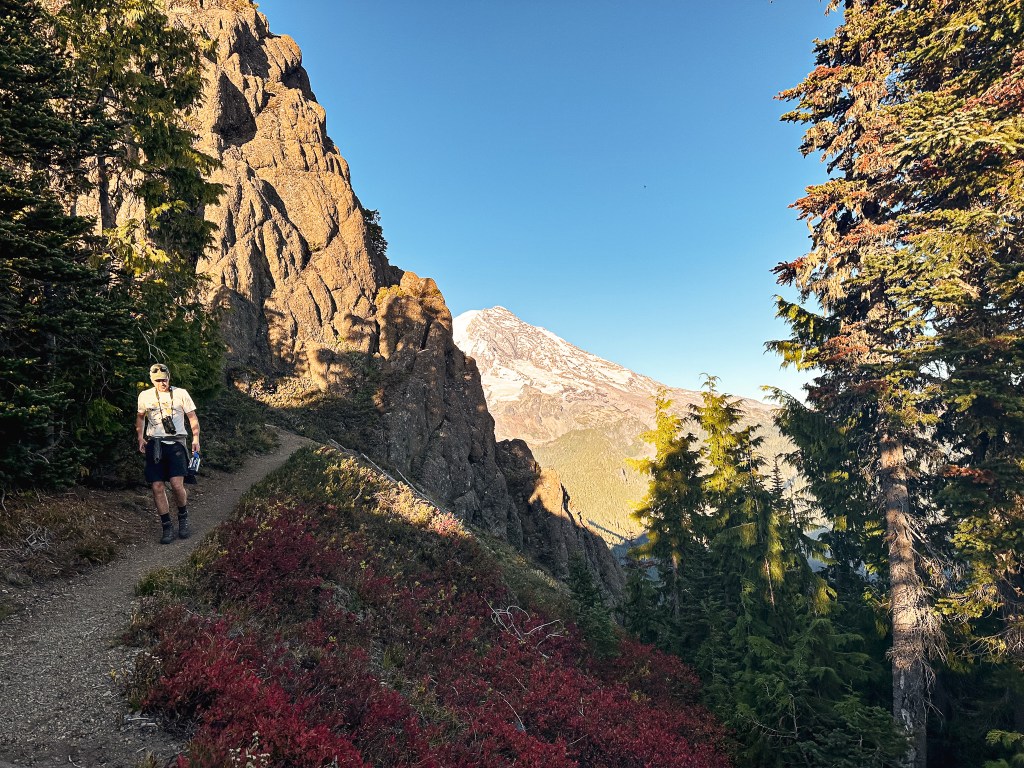
We were surprised to find all the camp spots were empty when we reached Lake George and had our pick of the five. We only passed one group of four day hikers hiking out and were left wondering where the heck everyone was? Were they all at the fire lookout? Did they hike farther into the Goat Lake Wilderness? At this point, I knew the road continued to other trails which explained the amount of cars but why were there so many bikes at the trailhead and so few people on this trail? We decided to set our speculations aside for awhile to pick our camp spot for the night. We both agreed on number 4 since it was the farthest spot to the back and offered the most amount of privacy from the other camps. This was strategic since we knew we’d be joined by at least two other groups later in the day (potentially more if people snagged the walk up permits as well). After our stake was claimed and lunch was devoured, we felt re-energized to continue our ascent to the fire lookout. You gain most of the elevation during this hike within this last 1.6 miles from Lake Georg to Gobblers Knob. We kept our loads light by leaving most of our gear in camp for the remainder of the hike. I only brought my valuables (i.e. car keys, wallet, phone) in a fanny pack, a warm puffy layer, headlamp, a 32oz Nalgene, and my trekking poles. We passed a couple of day hikers coming back from their visit to the fire lookout and asked them if anyone else was currently up there. They said they had it to themselves and were wondering where everyone else was as well (they too mentioned a full bike rack). So, the mystery continues. We were excited at the potential of having the summit to ourselves though. This section was slow going since my body was still feeling the fatigue of hiking in Glacier NP. There are not too many views to expect from the trail since it is mostly treed until you get closer to the summit. But eventually your slog ends, you round that corner, and the views open up. And what a spectacular view it is.
Per usual, the hike back down felt like a breeze in comparison to the hike up. We didn’t see anyone else while on the summit or on the hike down, but the other two groups of backpackers had finally showed up in camp. It was almost dark by the time we reached our camp again, started filtering water, and making dinner. This was partially due to us lingering on the summit longer than normal and partially due to the days getting shorter. This was our official end to the 2023 season and we felt it. We slept in a bit the next morning holding on to the last glimpses of summer. We were the last group to leave camp. Our hike out was spent forecasting where we wanted to go in 2024 and what our favorite trips were from 2023. We never did figure out the mystery of where everyone else was either because the bikes were no longer at the trailhead when we left and most of the cars were gone from the parking lot. The hike from the trailhead to the summit came out at 6.7 miles with 2,744′ in elevation gain on the Strava app. In total, it was 13.34 miles and 2,792′ in elevation. Depending on what kind of adventure you are looking for this can make for a hardy day hike or a fair backpack.
History.
This is one of the four remaining Fire Lookouts within the Mount Rainier NP and the closest to the peak. This lookout was built in 1933 and is the same standard 2-story frame cab design that you will find within the park. It was staffed into the 1980’s but stands now as an educational site. It is also occasionally used as a standby detection or recreation site for backcountry rangers.
It was the final day of our trip before we had to make the long drive back to Oregon. The fall weather the forecast had been threatening had finally arrived and the Going-to-Sun road was officially closed for the season. We had one more fire lookout on our list to visit in the park and we weren’t going to let a little bad weather stop us. Although this hike and lookout are within the park boundaries, you have to exit the park to get there. We left our camp towards West Glacier and turned left onto HWY-2 to head farther east toward grey wet skies. The trailhead is located near the most southern tip of the park boundary behind the Walton Ranger station. It is signed and right off the highway on the lefthand side if you’re coming from West Glacier. We reached the trailhead just before 9:30AM and I was a little uneasy as we pulled into another empty parking lot. It wasn’t all too surprising given the conditions, but even still you could tell this trail saw less use than others. There were five spots with picnic tables that I assume are mostly for day use and an additional area for back country parking that could fit 3-4 cars. Our goal was Scalplock Mountain, but this was also a starting point for many different interconnecting trails into the back country.
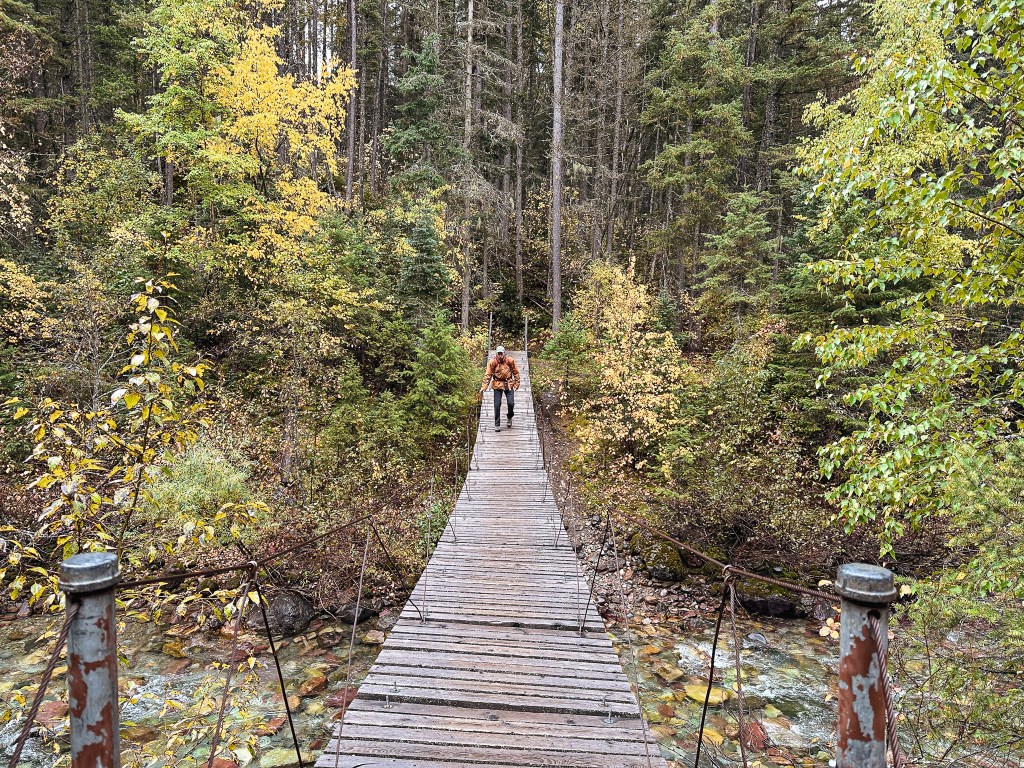
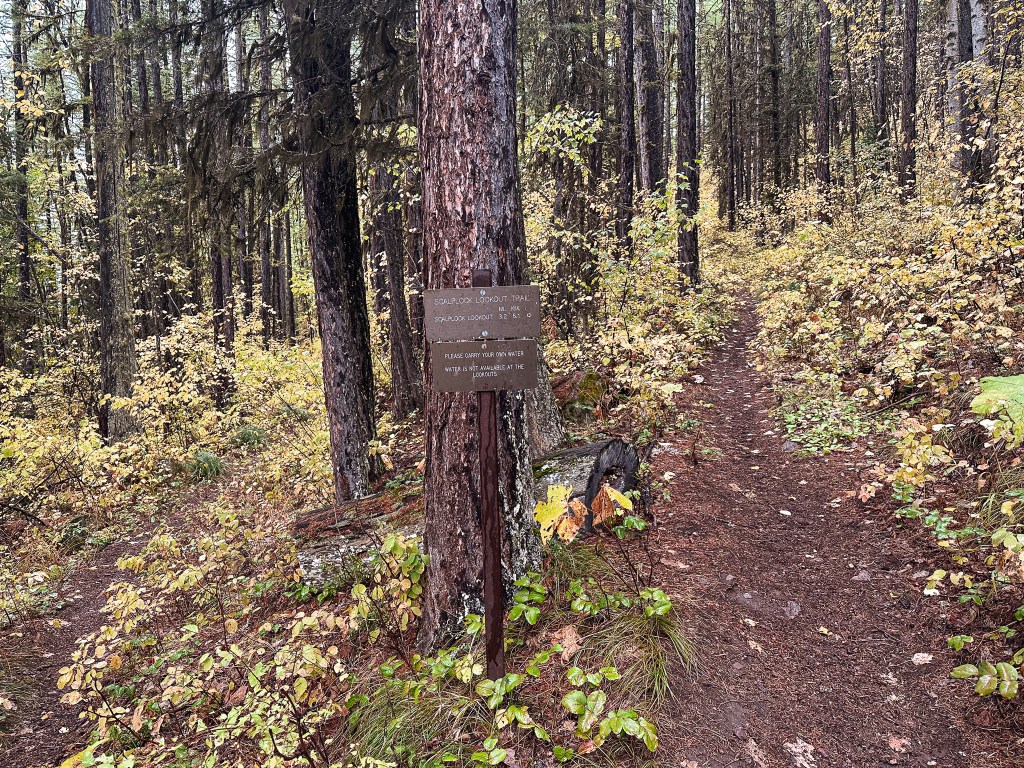
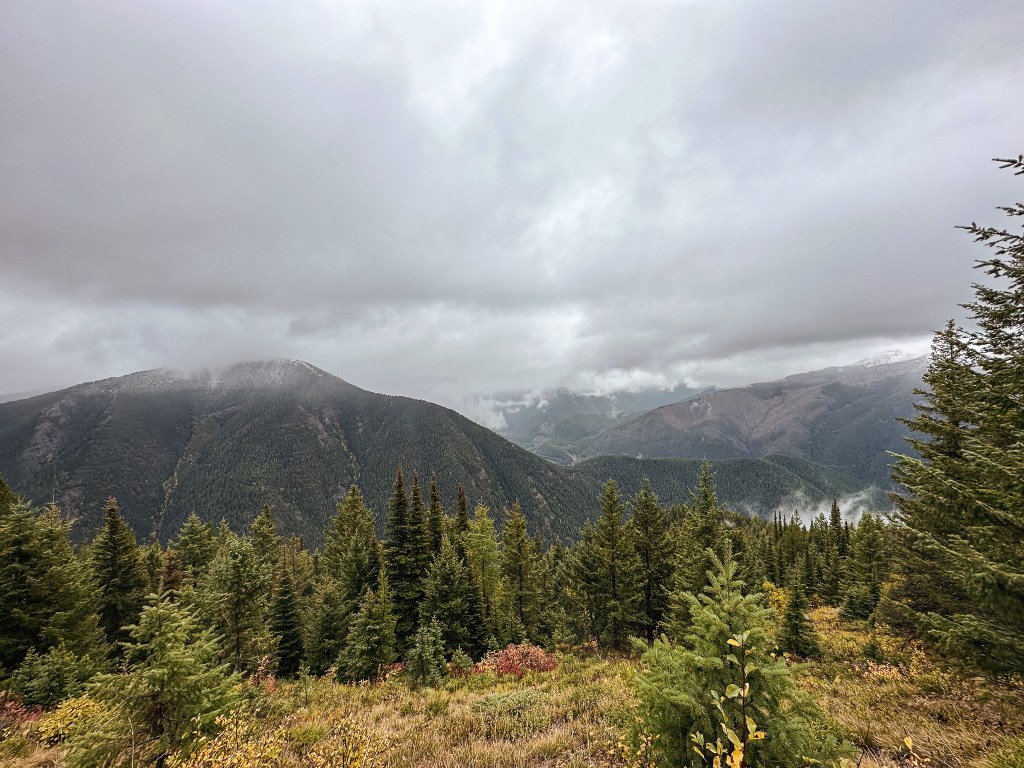
It wasn’t raining when we started our hike, but all the plants were damp from the previous night. This quickly saturated our pants as we brushed through the denser areas. The hike starts along the Boundary Trail following the Middle Fork of the Flathead River and quickly turns into the forest to cross Ole Creek on a suspension bridge. Please only cross one hiker at a time as the sign states. After the crossing, the trail made a sharp turn to gain a bit of a hill which brought us to an open view. The low hanging clouds were lifting slightly, but we figured we would be hiking up to reach them soon enough. There was a light dusting of snow on top of the next ridge over. We decided not to consult our map to confirm if we’d be going that high. A little over one mile from the trailhead, we reached our first junction with the Ole Creek Trail. We turned left to stay on the Boundary Trail for another half of a mile to the next junction. The official Scalplock trail forked to the right here. This area seemed to be well signed and it was easy to stay on track. Once we left the Boundary Trail the real ascent began. The majority of the elevation gain was concentrated within the next 3-1/2 miles to the summit.
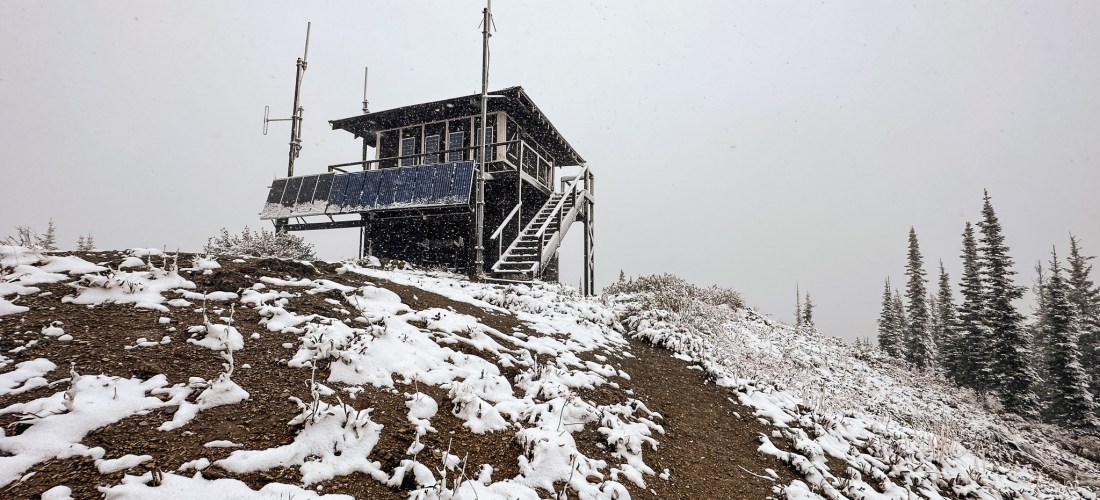
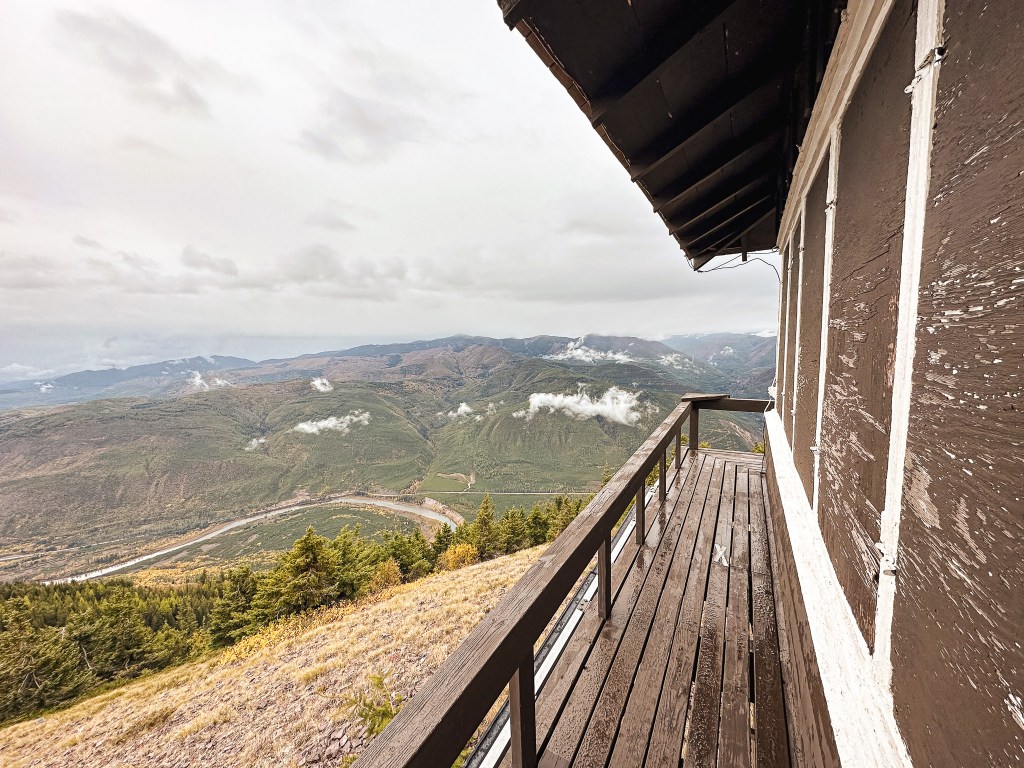
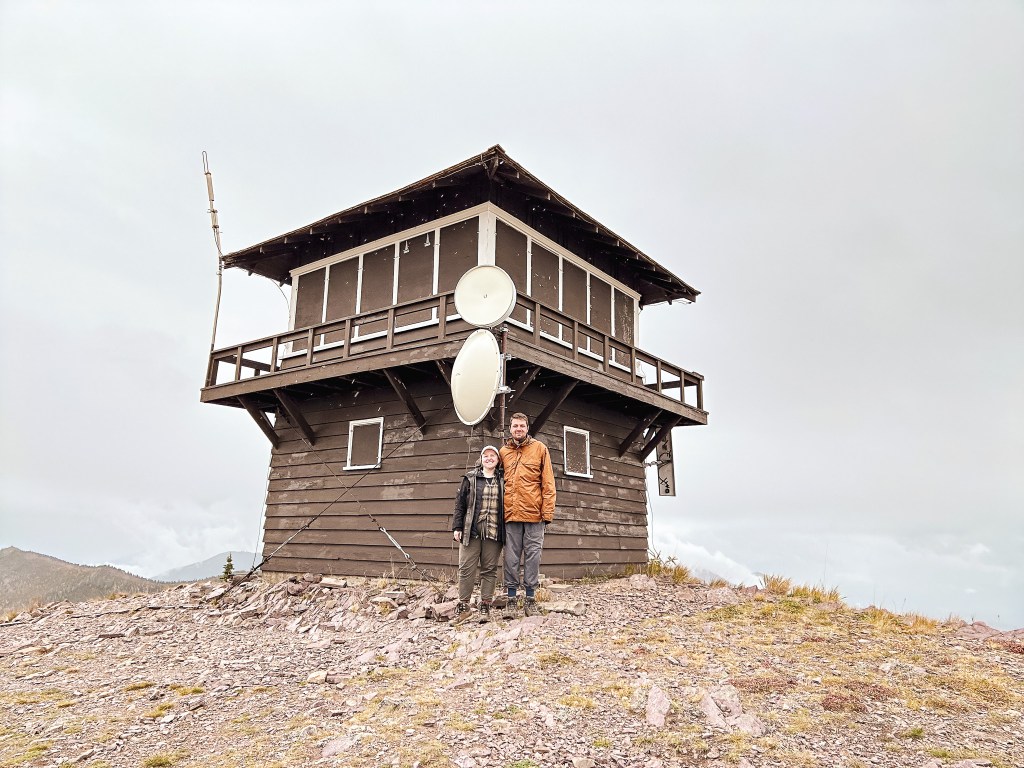
The water collected from the brush had completely soaked through my pants and was starting to seep into my shoes and socks. My rain jacket was able to keep the top half of me dry but the water made each step a little heavier. It was hard to tell if it was actually raining on us as the water dripped from trees above and fog rolled around us. Occasionally we’d get a break in clouds that offered views of the valley below. There are around 19 switchbacks to reach the summit from the Boundary Trail. There was only one spot that had some blow down. As we grew closer to the summit there were even a couple of sections that felt like false summits. We got our answer on if there would be snow within the last half mile as we crested an open portion of the ridge. Spoiler: there was snow. Garnet had hiked ahead at this point because I wanted to take more breaks than he needed. There was a bit more than a dusting on the protected slopes of the trail as it continued to gain elevation. This quickly turned our damp clothes painfully cold. It wasn’t too much farther to the lookout after I reached the snow line. We attempted to have our lunch on the summit but the combination of damp clothes, wind, and snow starting to fall kept our time short. I kept myself moving and stayed long enough to take a few pictures and finish my sandwich before heading back down. I didn’t expect much of a view but it was still disappointing there wasn’t a small break. Looking at other pictures online the summit offers great views of Mount Saint Nicolas and Mount Jackson to the north. Unfortunately, you can’t always wait around for the perfect weather to visit these places. I mean technically you can wait all you want (don’t let me stop you). But we’ve personally found waiting can be a matter of a fire lookout being there or not. It’s always a race against time as wildfires and age continue to claim them.
The hike down was fairly uneventful as rain settled in and we didn’t see anyone the entire hike. I thought this would have been a good place to see a bear, but we didn’t encounter much wildlife at all. It was very cold and wet by the time we reached the car. I decided to change at the trailhead to help myself warm up. We stopped to get warm food and drinks at the Glacier Highland Restaurant before returning to camp. Strava tracked this hike at 9.86 miles with 3,271′ of elevation gain.
History.
Scalplock Mountain is the southern most standing fire lookout within Glacier National Park and one of the four remaining that are still actively staffed in the summer. Though with budget cuts, staffing issues, and a push to move to camera surveillance it’s unclear how long this will remain to be true. It was built in 1931 as a 14’x14′ cab with 10′ enclosed tower and overhanging roof, a style favored by the NPS. The term Scalplock refers to a long lock of hair remaining on a shaved head worn by certain Native American warriors. According to Glacier Administrative History, the mountain received it’s name after a small tuft of trees remained on the summit after a fire burned through the area resembling a Native American’s scalplock. It was last refurbished in 1999 but appears to receive basic maintenance for upkeep. It is one of the nine fire lookouts that remain standing within the National Park.
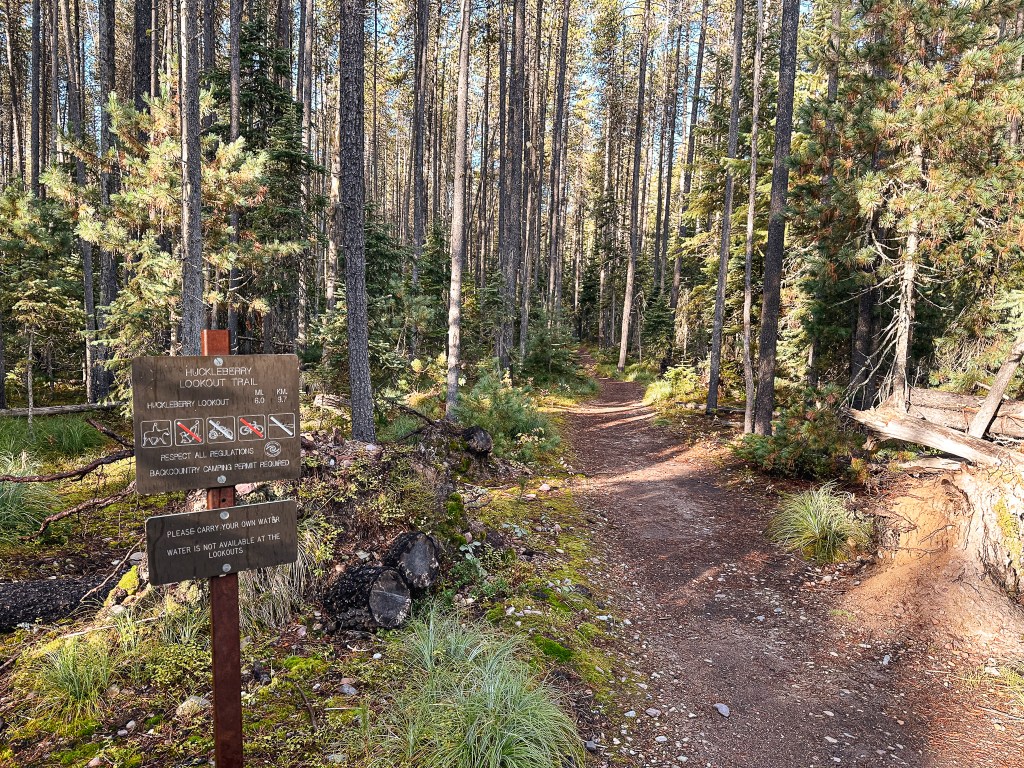
Tuesday evening the weather started to shift towards colder temps and rain. We knew the rest of the trip would be a gamble weather-wise, but we were going to roll with whatever it dealt us. We were pleasantly surprised to wake up to blue skies Wednesday morning after a night of heavy rain. Our goal for the day was Huckleberry Mountain, a commonly used name. We even have one here in Oregon. This is another easy to locate trailhead right off a main road. From the Apgar Campground, we headed back towards the visitor center. At the intersection, we kept straight to continue on to Camas Road. If you were heading into the park from the West Glacier entrance, you would come to the same intersection but turn left to reach Camas Road. You will stay on this road, exiting through the Camas entrance kiosk, until you see the trailhead off to the left. There was enough parking for at least 7 or so vehicles, but we were the only ones there at 9AM. It was a bit unsettling knowing we’d be heading into bear country with no one else on the trail with us. Everywhere else we’ve been so far has had at least some people on the trails. The clear morning skies made it crisp and cold as we started our hike. You could tell this trail was less frequently used than the others just based on the width of the tread. The busier trails tend to widen as crowds circumvent each other, but this was nothing more than a single track with a bit of brush encroaching on it. The surrounding brush was still damp from the rain and slowly started to soak through our clothes.
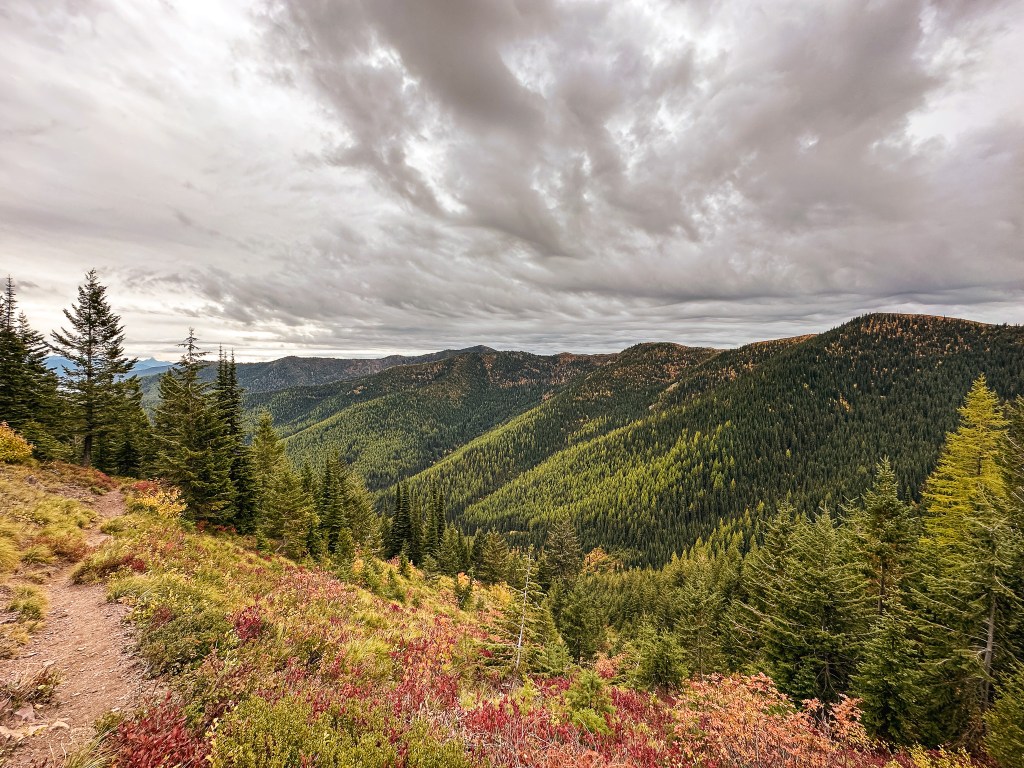
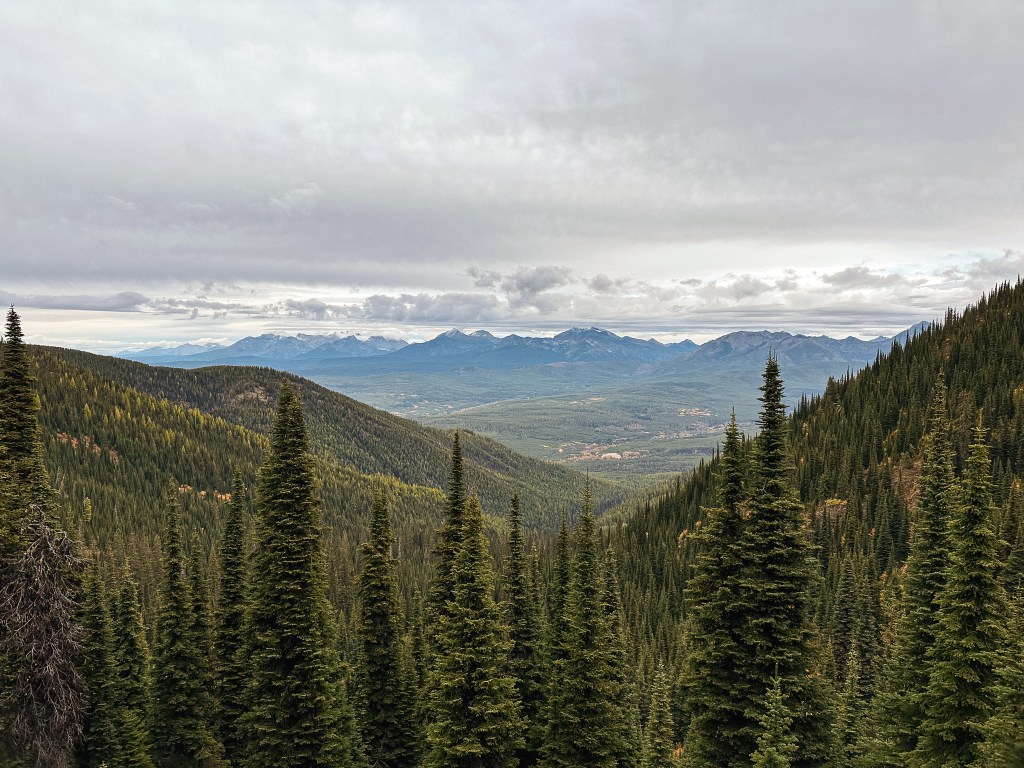
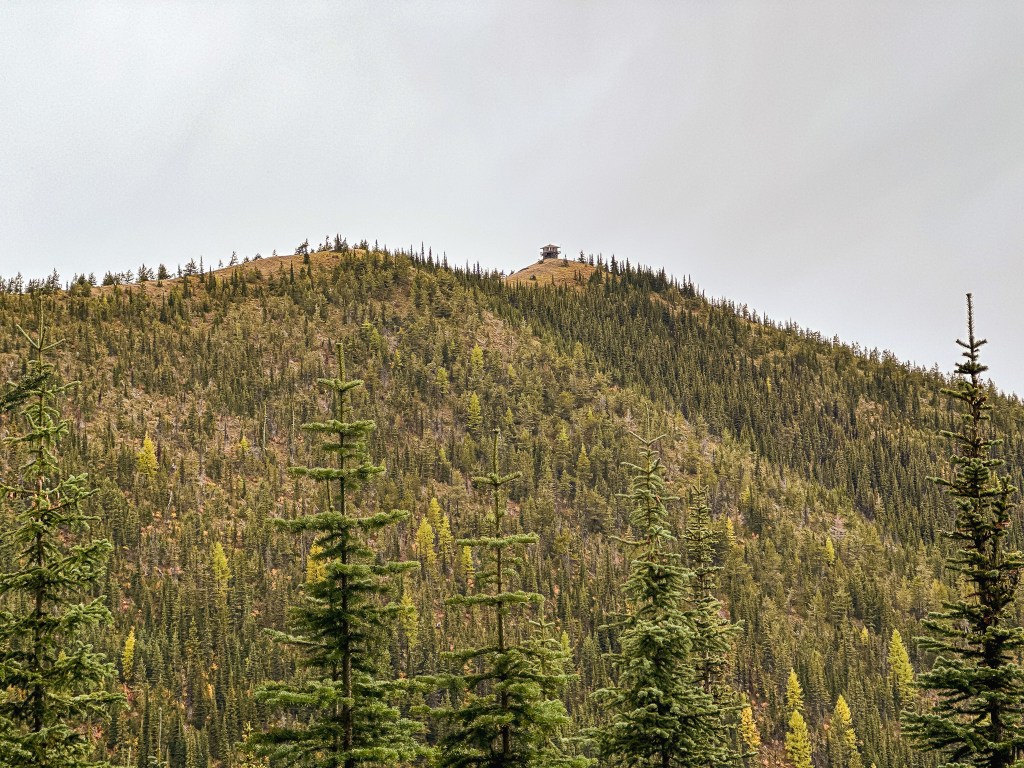
The hike starts out flat through a dense forest and crosses a creek on a log foot bridge before it starts to gradually climb. Once the trail starts to turn up it continues that way until you reach a saddle. It is consistent but gradual. The trail flattens out for a bit after reaching the saddle before continuing the final climb to the fire lookout. The steepest portion of trail is the last half mile. We thought we might have the entire hike to ourselves, but were passed by a pair of hikers on our way up the gradual section. The day had heated up significantly after we started this hike making it slow going. Garnet decided to continue up ahead prior to the saddle to find a good spot to step off the trail while I picked my way up the slope. I thought I’d meet up with him once I reached the saddle, but I was greeted by the other pair of hikers picking huckleberries and having lunch. I asked them if my partner came through here while I caught my breath. They mentioned he passed through and offered to let me hike with them the rest of the way to the lookout. I was no longer too concerned about running into wild life at this point, but figured it couldn’t hurt to stick with more people. They were two older ladies and one lived in the area locally while the other was a visiting friend. The local had been on this hike before and had even met the lady that staffed the fire lookout that summer. She spent the rest of the hike pointing out different peaks we could see through the clouds and I talked about the other fire lookouts my partner and I visited so far in the area. I trailed behind a bit since my pace wasn’t quite as quick until I rejoined with them on the summit. I had once again assumed we would find my partner on the summit, but we were surprised to find no one else. I thought maybe he was in the privy, but that was locked up for the season. I was only mildly concerned since I knew he hiked ahead and planned to step off the trail to use the “facilities”, but I figured he would have still beat us to the summit. The ladies were nice enough to wait with me for a bit and even offered to let me hike back with them. I politely declined since we were still planning to have lunch on the summit and take our pictures, but we exchanged numbers just incase. We said our farewells and just as they started to hike away we could spot Garnet headed up the trail. The clouds were starting to roll in and the temps were getting cold again by the time he reached the summit.
We spent a while longer on the summit enjoying our lunch, but eventually it started to drizzle which was our cue to leave. Just as we were taking one final lap around the lookout and collecting our pictures, we spotted a deer in the brush. Then another. And another. And another. And another. It was a group of four adults and three baby mule deer. We decided to watch them for a while until they started to head closer to our packs, which were now sitting below the lookout and not on our backs. I assume they smelt our food, but I didn’t want them rummaging through it. They seemed habituated enough to not be concerned by our presence but our movement towards the packs was enough to keep them away. Heavier clouds were growing closer and the rain was finally upon us – that was enough dilly dallying. Garnet wanted to snag a few more pictures, so I gave myself a head start knowing he’d easily catch up to me. The hike back down was a wet one and we were completely soaked by the time we reached the car. The final mileage according to my Strava was 11.88 miles with 2,699′ of elevation.
Before heading back to camp we drove out to the edge of the park and did a small loop trail called the Forest and Fire trail. It was only an additional 0.95 miles with 66′ of elevation change. This had a few signs about the relationship between the forest and wildfires which we enjoyed.
History.
The first structure built on Huckleberry Mountain for fire detection was a cupola style cab in 1923. It even had a telephone line running to the summit. It was replaced in 1933 by the existing lookout structure. The current structure is noted as a 14’x14′ two story cab with a hip roof that extends to cover the catwalk. These national park designs differ from the USFS L-4 designs in that their shutters are removable instead of folding. This is one of nine remaining fire lookouts within Glacier National Park and is still regularly staffed during the season.













































































 The Roaming Civic