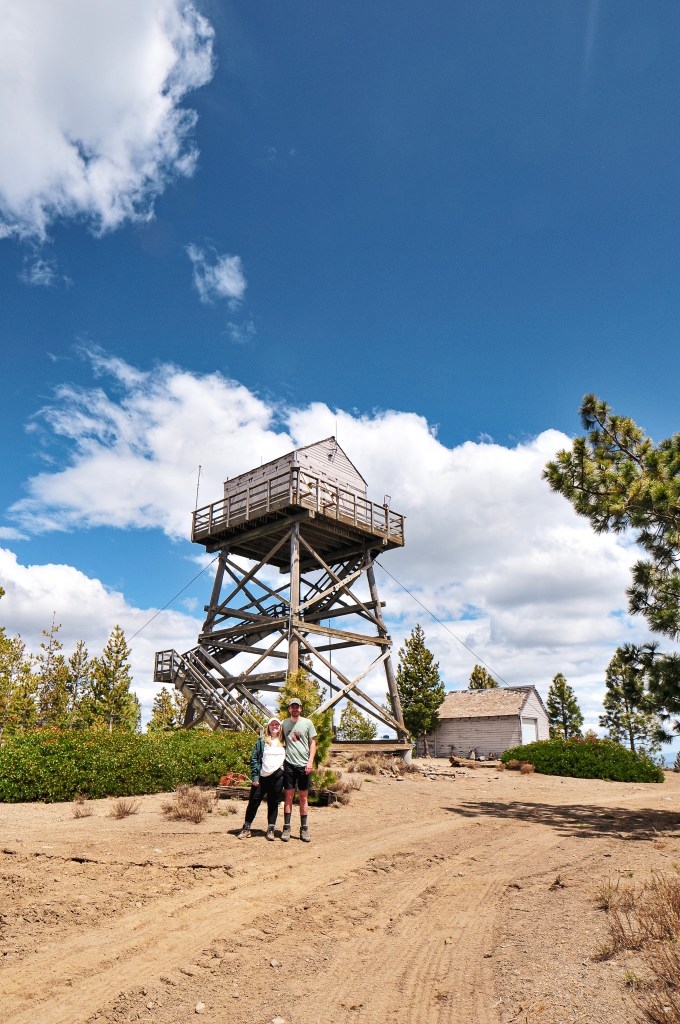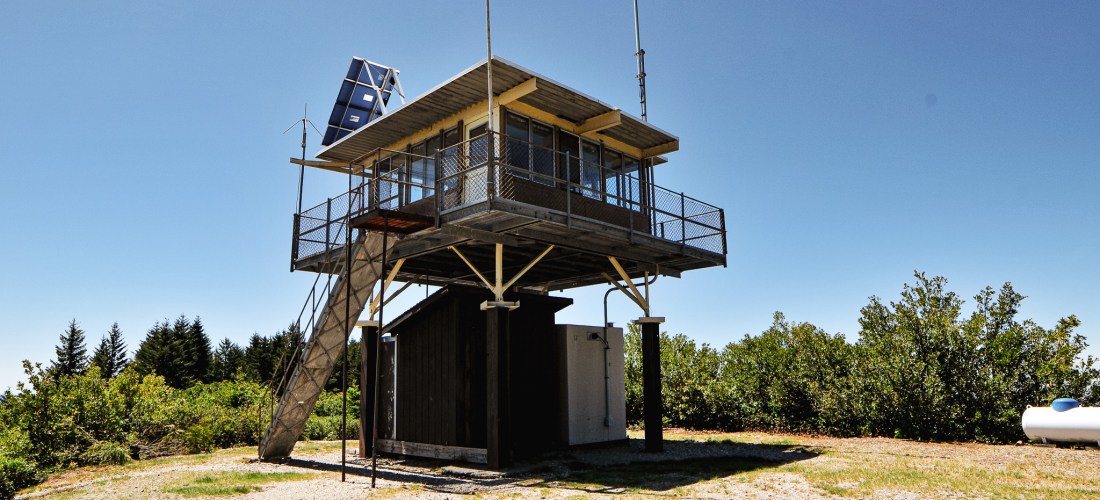
Lake O’ Woods L.O.

Oregon Lookouts

Location.

Rogue River-Siskiyou National Forest

Status.

Rental program; Currently standing

Estimated drive time from Portland, OR.

7 hours

Date visited.

May 28, 2023

Elevation.

3,419′

National Historic Lookout Register.

US 494; OR 87

Trip Report.

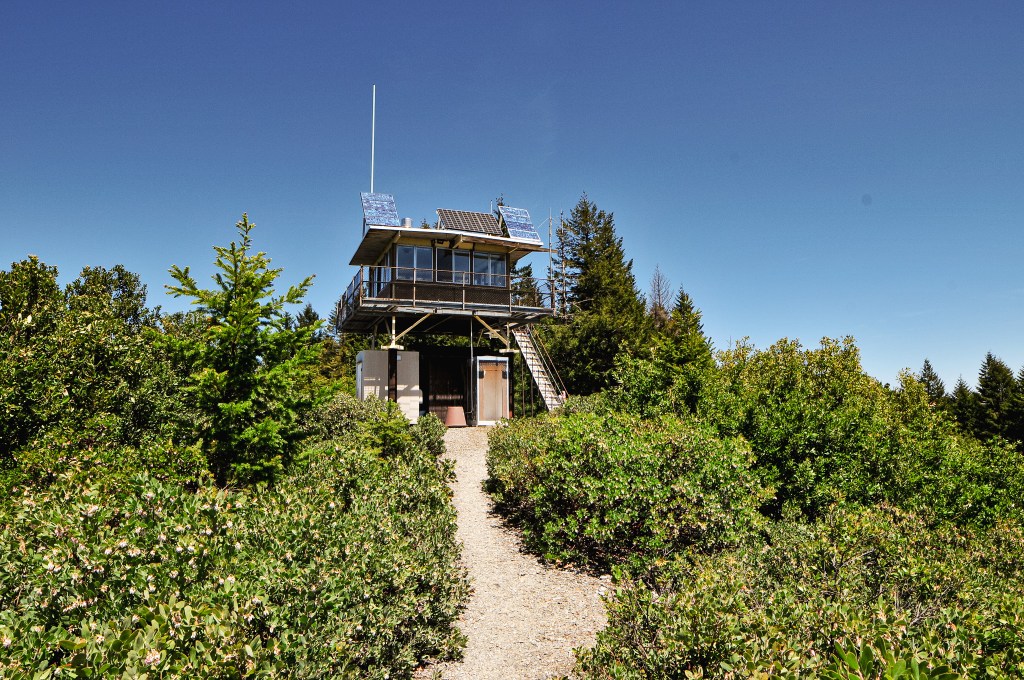
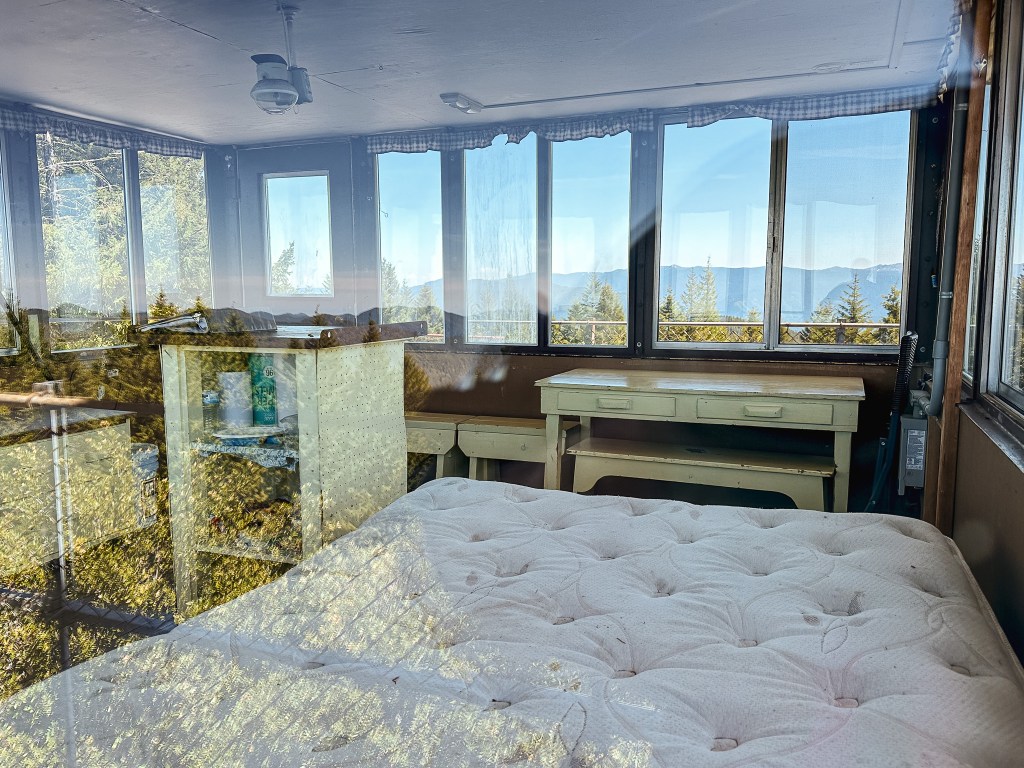
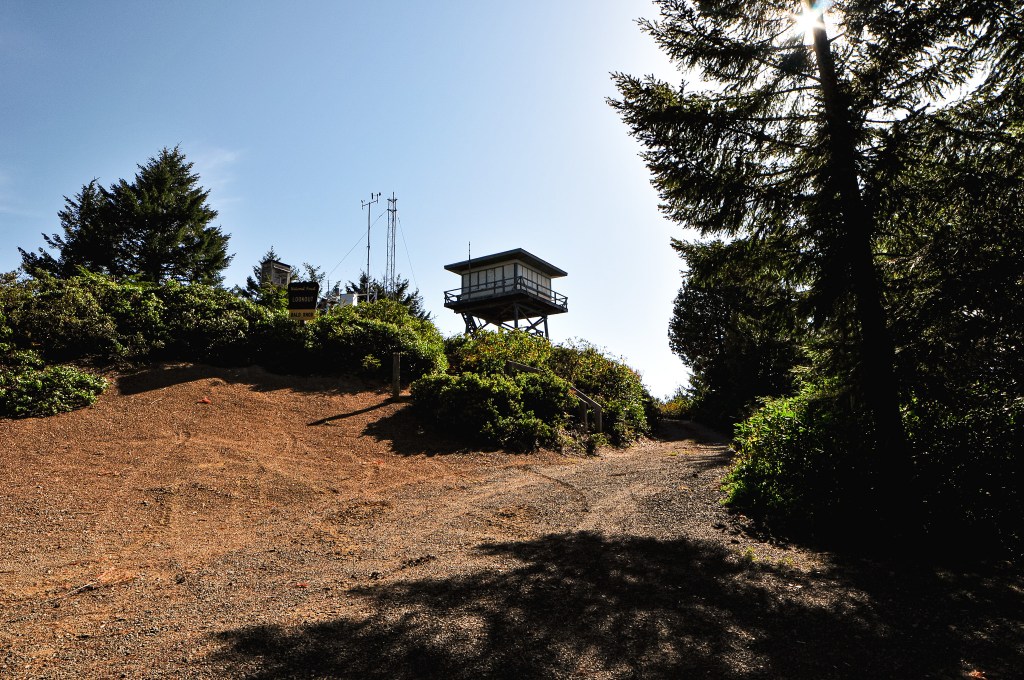
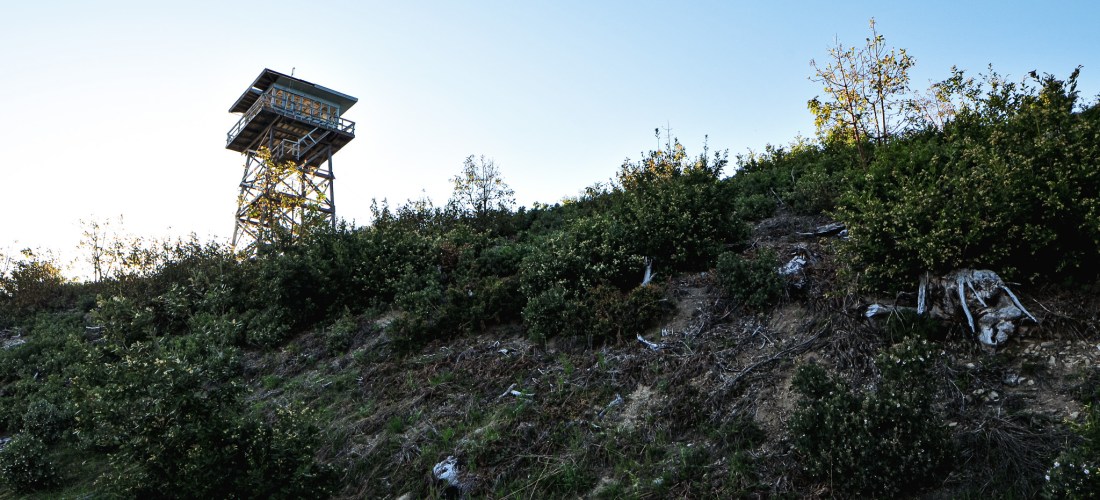
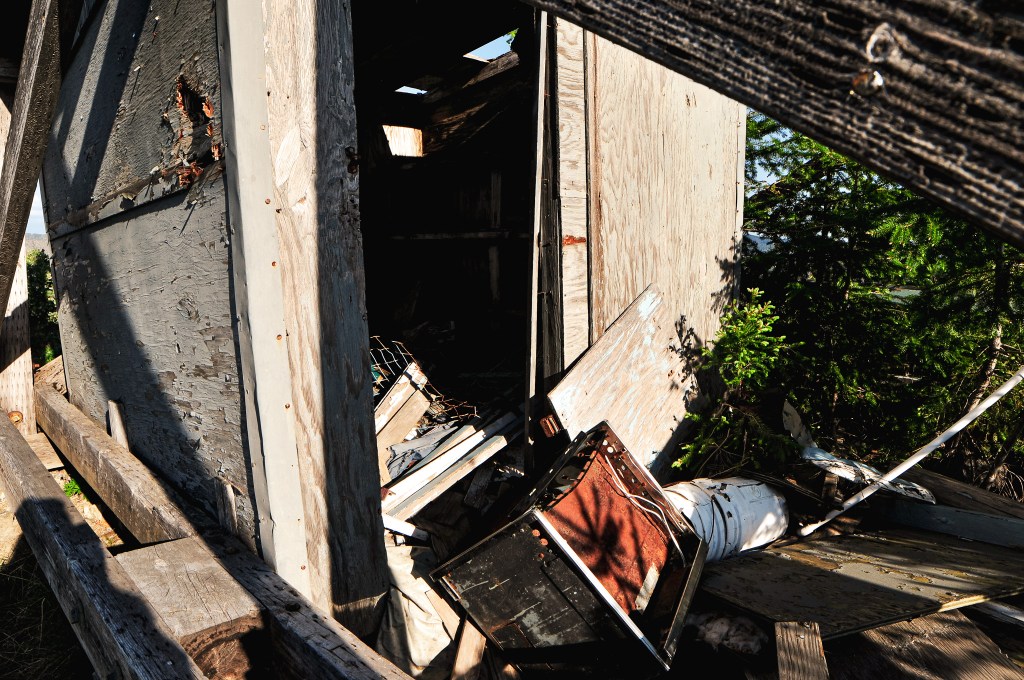
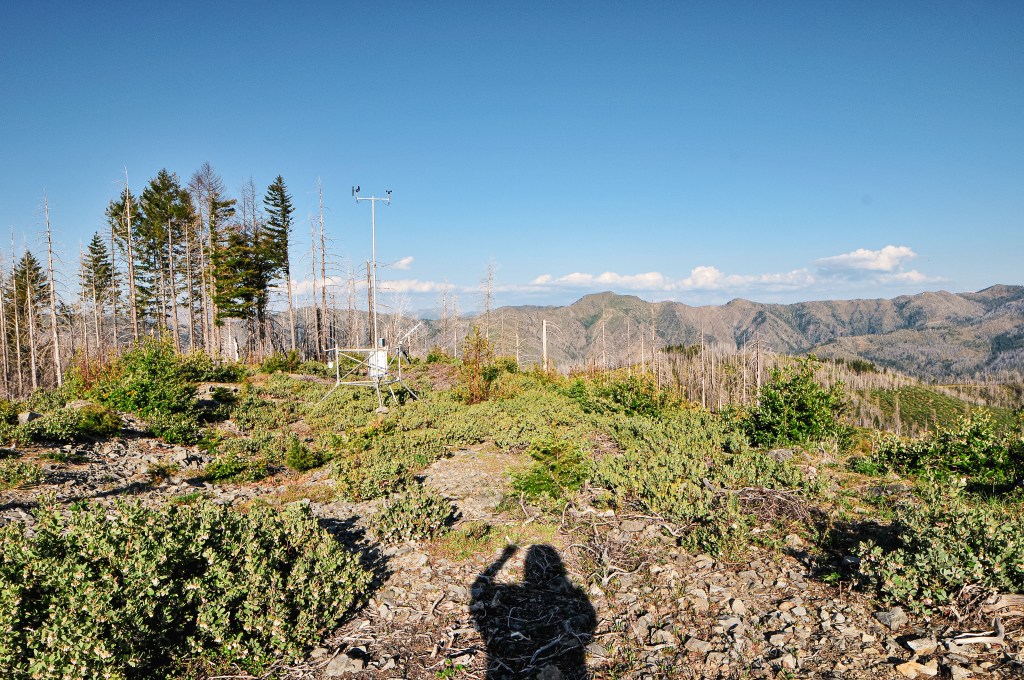
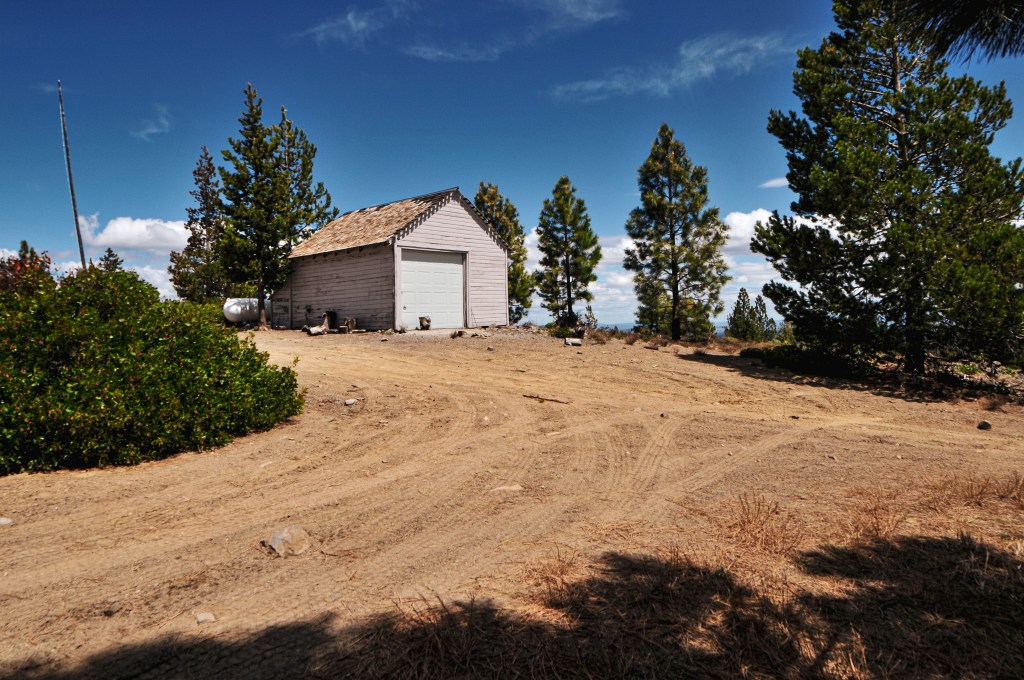
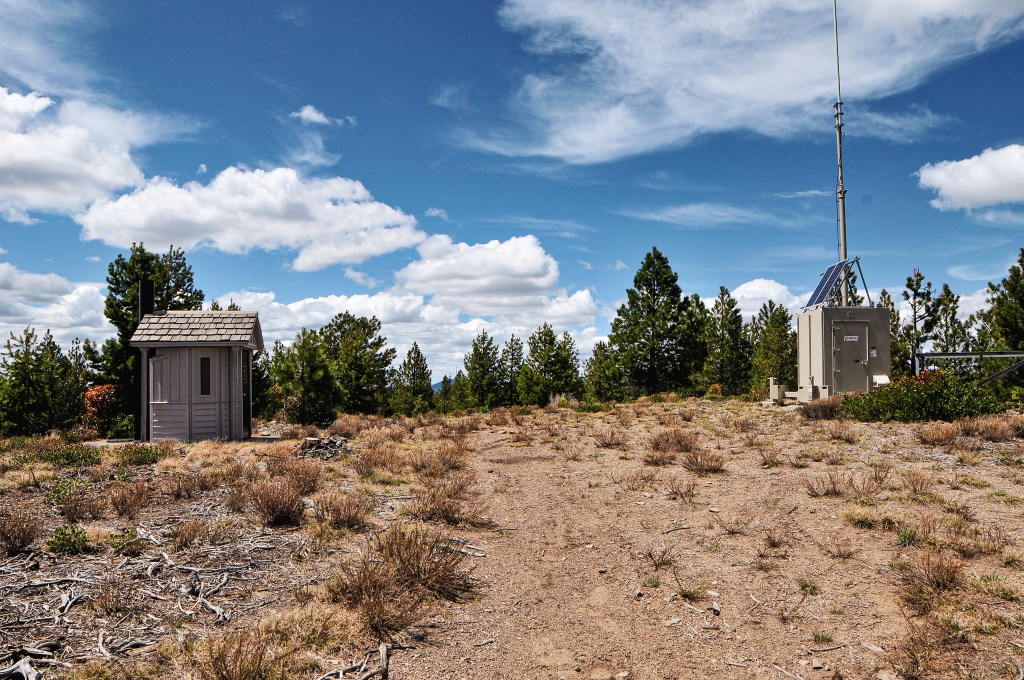
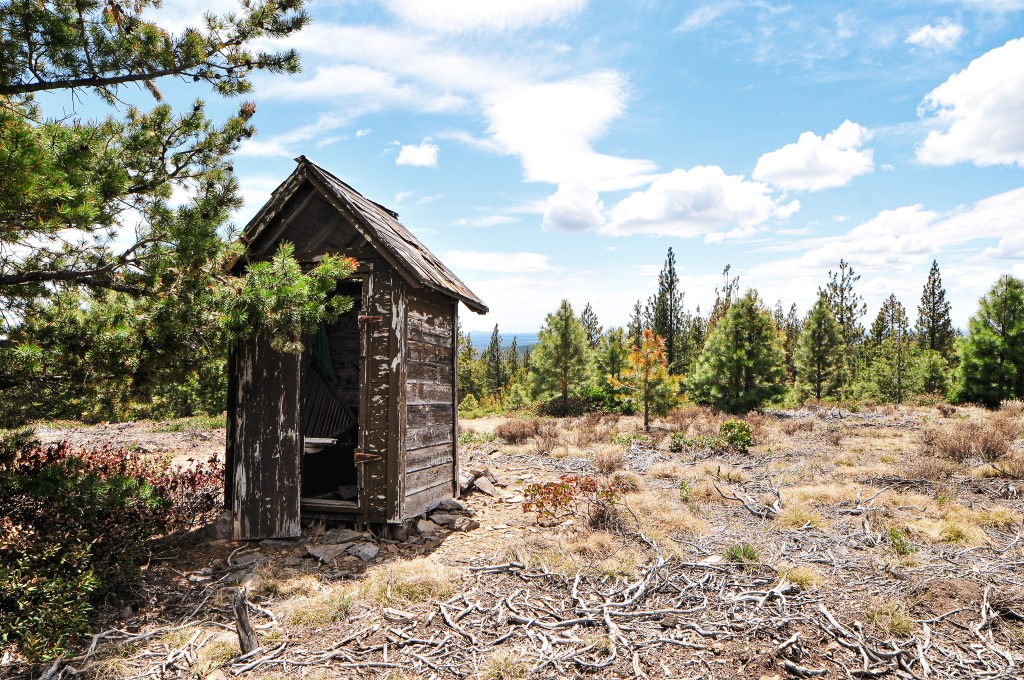
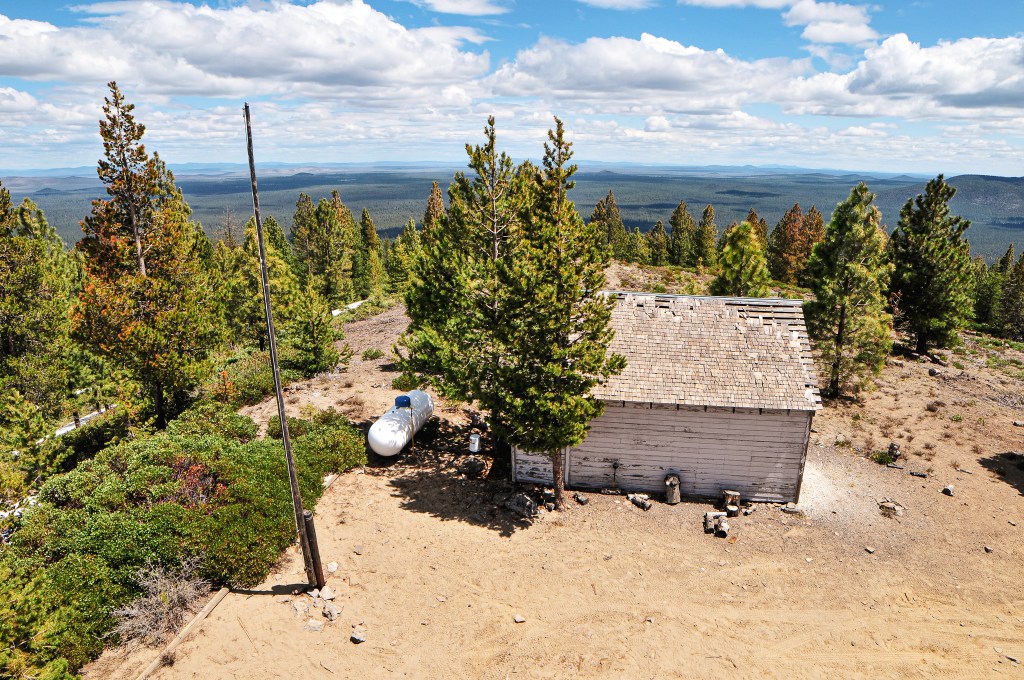
The next morning we awoke in a fog cloud that had rolled in while we slept. It made for a much colder wake up call than the morning prior. I threw together some breakfast burritos and coffee to warm us up. Our objective for the day was to make it to the rentable Lake O’ Woods L.O., more commonly referred to as Lake of the Woods. if time permitted, we would try for Bald Knob L.O. as well. We packed the car and headed down NF-3318 to NF-33. We hung a right on NF-33 to continue our route through the forest. The road remained paved until we passed the small community of Agness and crossed the Rogue River. The gravel portion of NF-33 was well maintained and looked to have been recently re-graveled. I was following directions I pulled from the Recreation.gov site that said to take NF-3340 to get there. I figured this would be the best route since it was recommended by the Forest Service. Granted it does have you connect to this road via NF-3310, but since I originally thought we’d be doing this route in the opposite direction I didn’t write that down. I had figured we could connect via the other side of NF-3340 with no issues. There was some confusion to this when we drove past a sign that pointed to Lake O’ Woods at the junction with NF-3336. It noted the fire lookout at 9 miles away. I decided we needed to continue on to NF-3340 since I figured that would be the better road. I kept telling myself “it’s the road the renters take, so it had to be the better option”. Oh how wrong I was.

When we came to the junction with NF-3340, the road looked narrow and headed up steeply from NF-33. It also appeared to be much less traveled than the other signed road we had passed. I was still convinced otherwise and made the sharp left turn. I was getting a bad feeling that we were not where we should be the farther we climbed up the road. It was covered in tree debris and some rocks, but that’s not necessarily uncommon for a lookout road. What didn’t sit right with us was that it didn’t look well traveled enough for a lookout on the rental program. Honestly, It really didn’t look traveled at all. We decided to turn around when we were met with a large drop in the road. This was a blind drop that would’ve been treacherous if we had not stopped to get out and look at it. We might have been able to maneuver around it, but beyond I could see the road turned sharply up at a steeper angle than the road had already been. Everything about this felt wrong and we decided to try our luck with the NF-3336 road. It at least had a sign for the fire lookout.
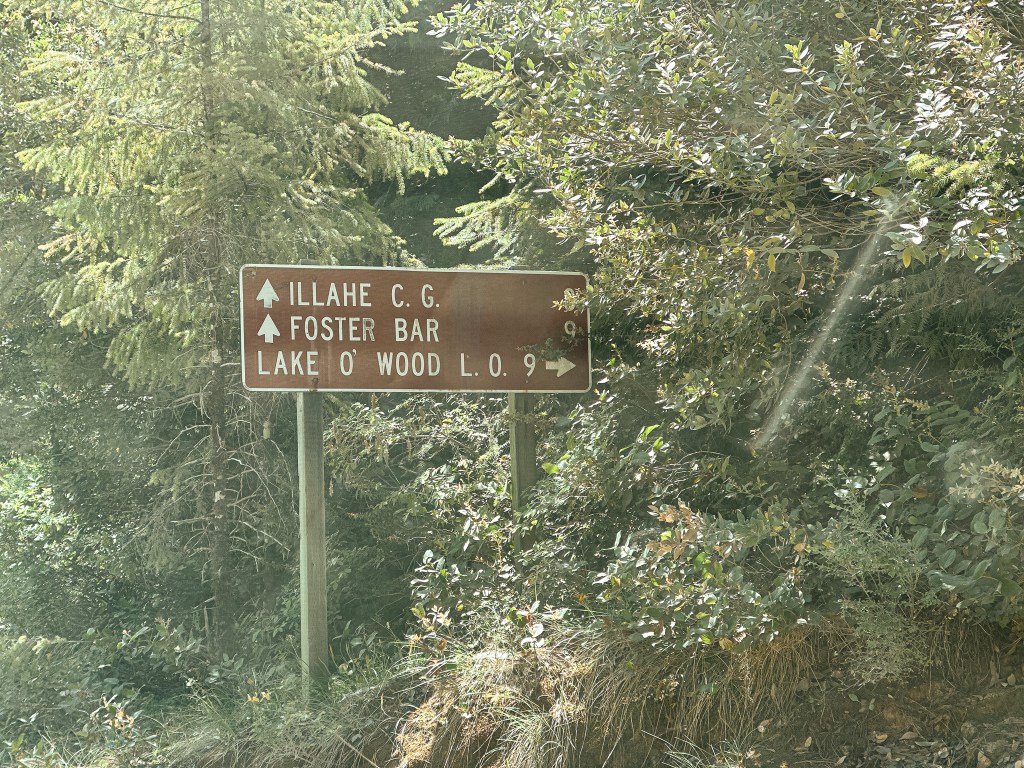
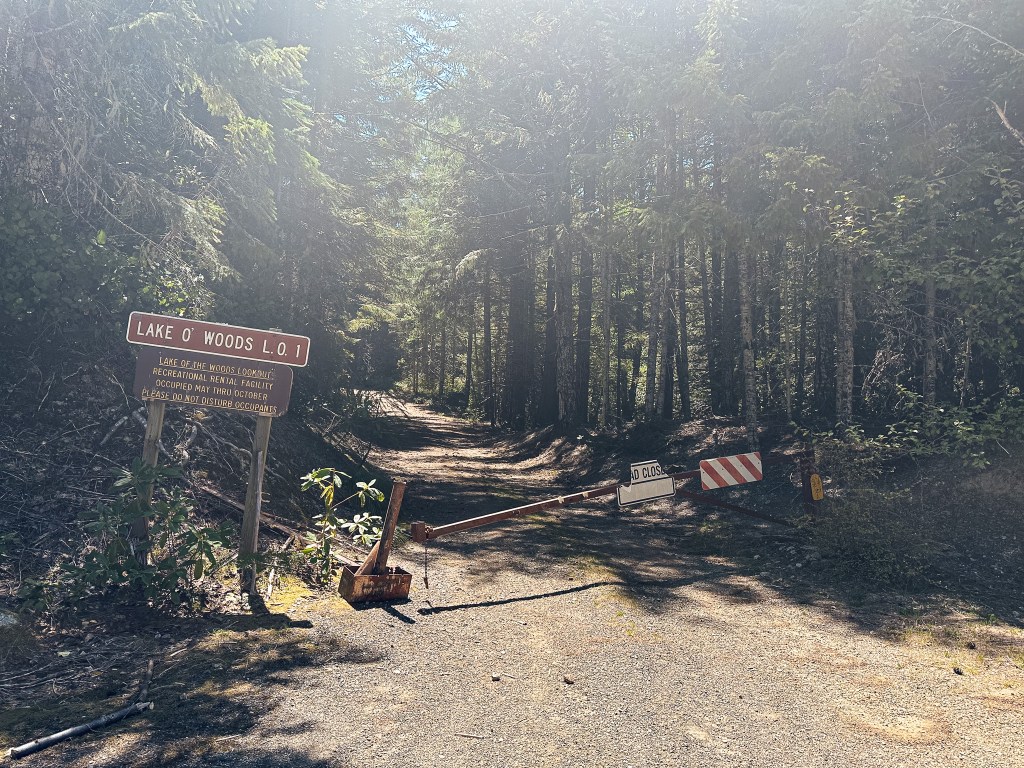
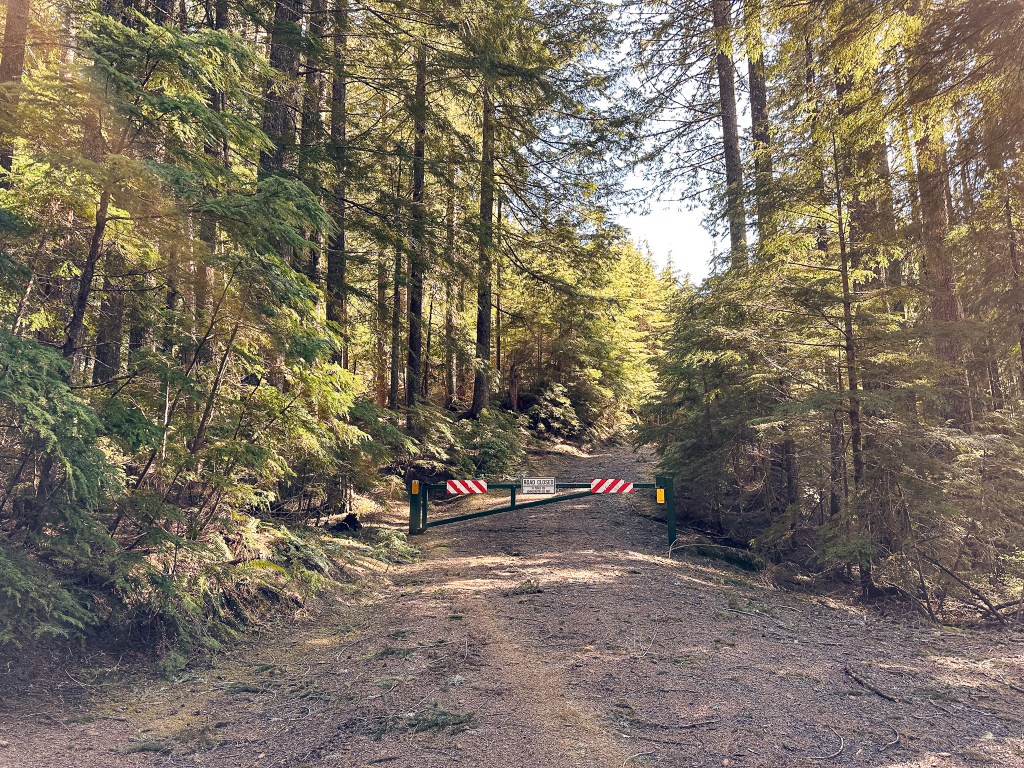
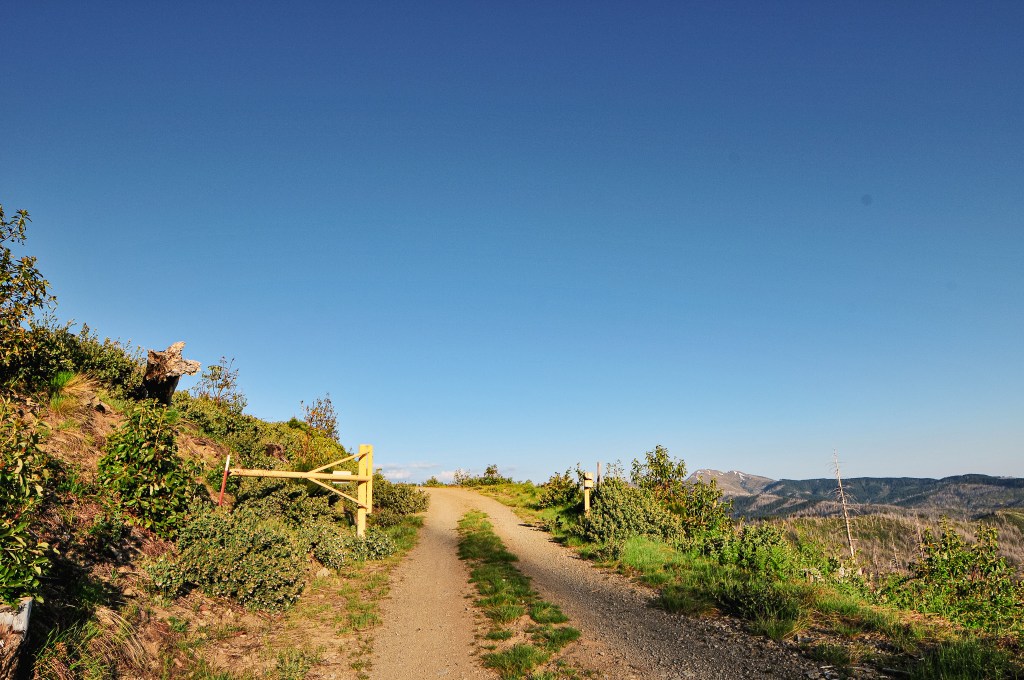
After the fiasco with the NF-3340 road, I let my partner take over the driving on NF-3336. This road seemed to be better from the start. But, don’t get me wrong, this is not a great road either. For the next 8 miles, I stressed and moaned as Garnet maneuvered around large dips where the very narrow windy road was beginning to wash out. Let’s just say I’m not the best as a passenger. The pull outs were essentially non-existent and we were happy we didn’t meet any oncoming traffic. We did make it all the way to the five way junction though. The NF-141 road to the lookout is signed and gated. If we had followed the actual directions from the Recreation.gov site, the road would have been paved all the way to this junction. Though pavement in the forest does not always equate to better road conditions. I have a feeling it is probably better than the route we ended up on though. The gate to the road was unlocked during our visit. Out of respect for the potential renters, we decided to walk the remaining distance on the spur road. We parked our car in the shadiest spot we could find and started to pack a lunch for the summit. As we were locking up the car another vehicle drove up the same NF-3336 road. It was a RAV-4 which I’m sure had a much easier trip up the road. The vehicle parked near the gate and a family of four got out to start prepping for the hike as well. We had a head start on them, but I figured they might pass us on the way up. The hike up the road came in just slightly under a mile at 0.89 miles according to my Strava tracker. This made the total road walk 1.79 miles round trip from our parked car.

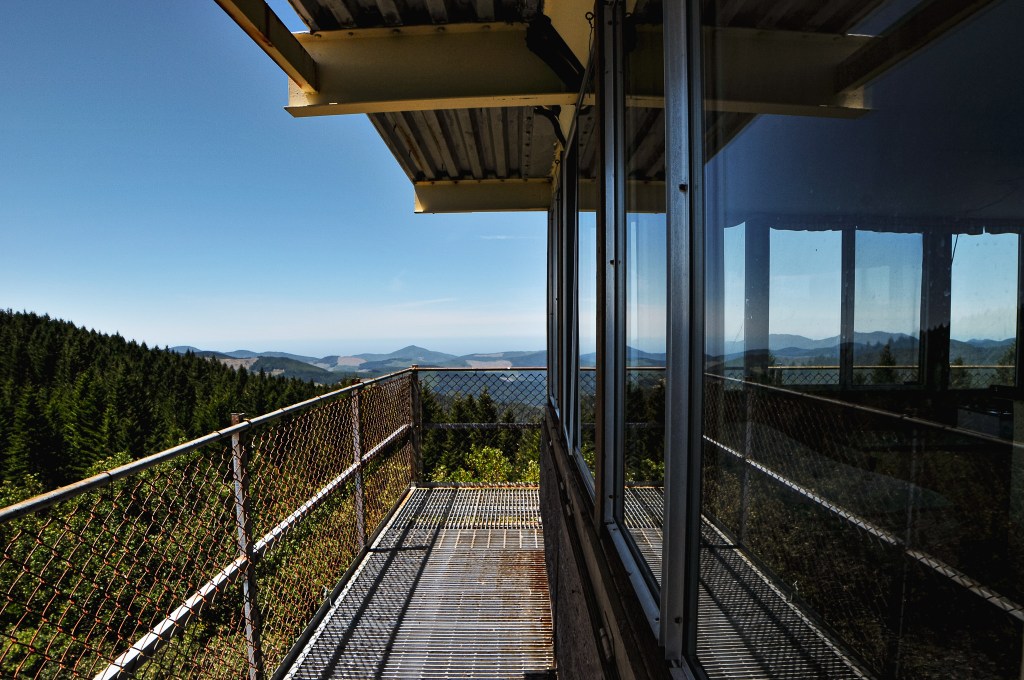
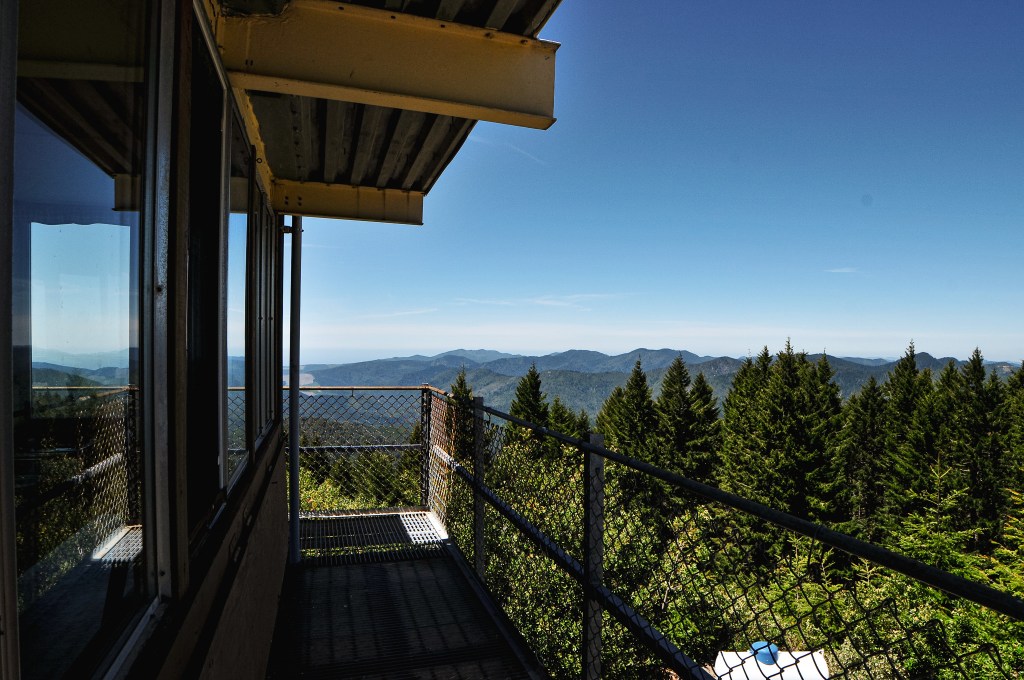
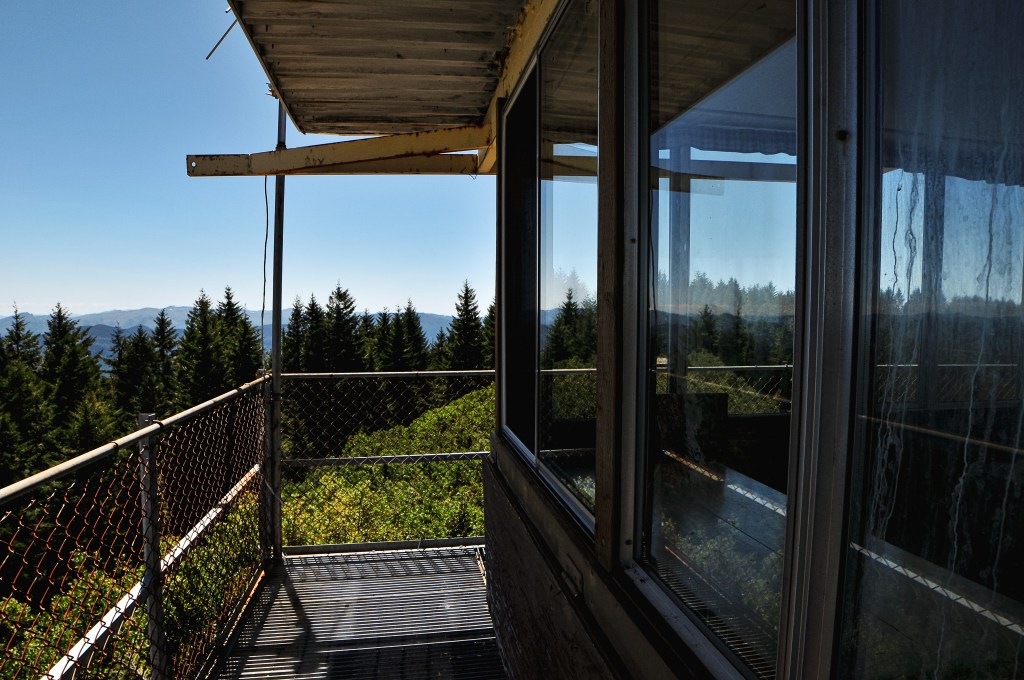
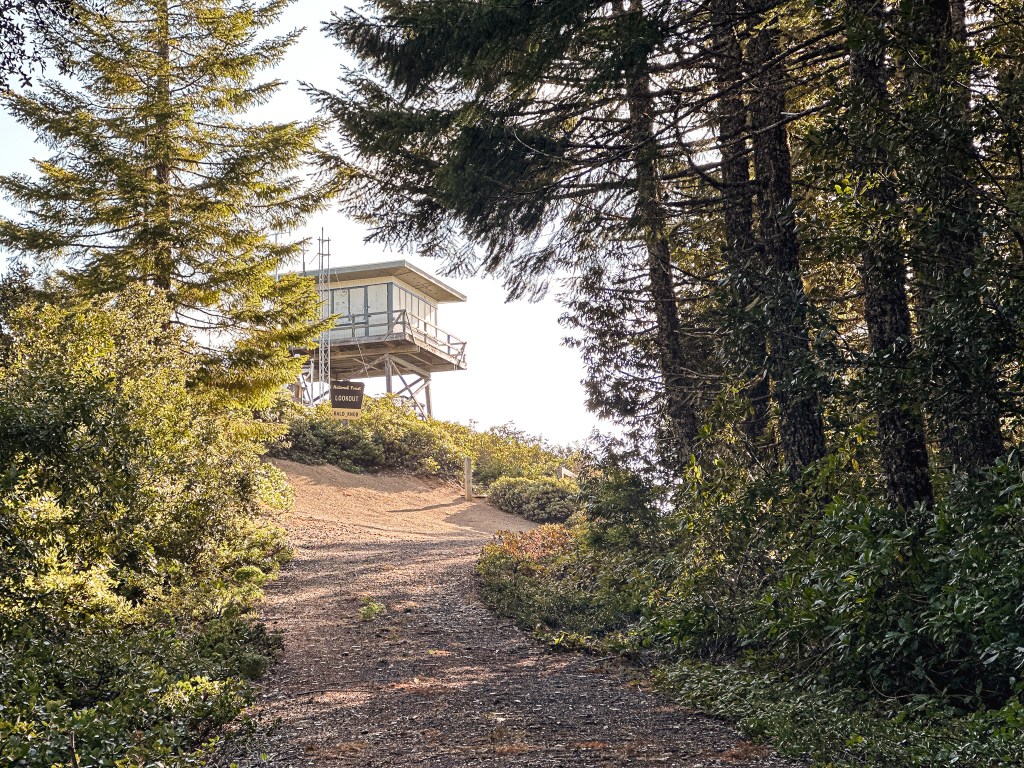
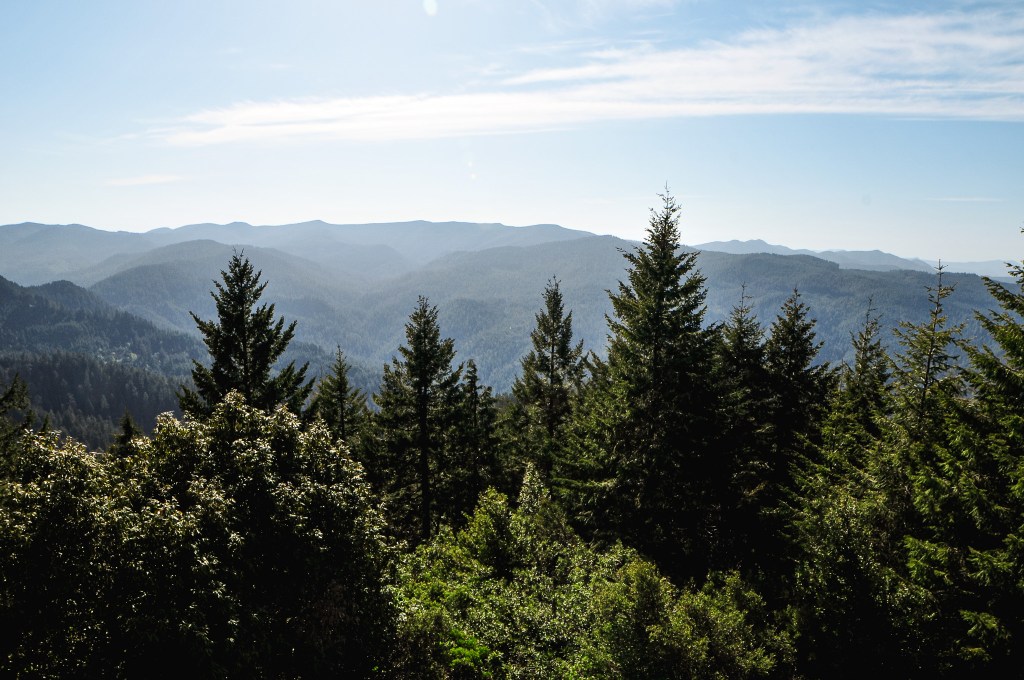
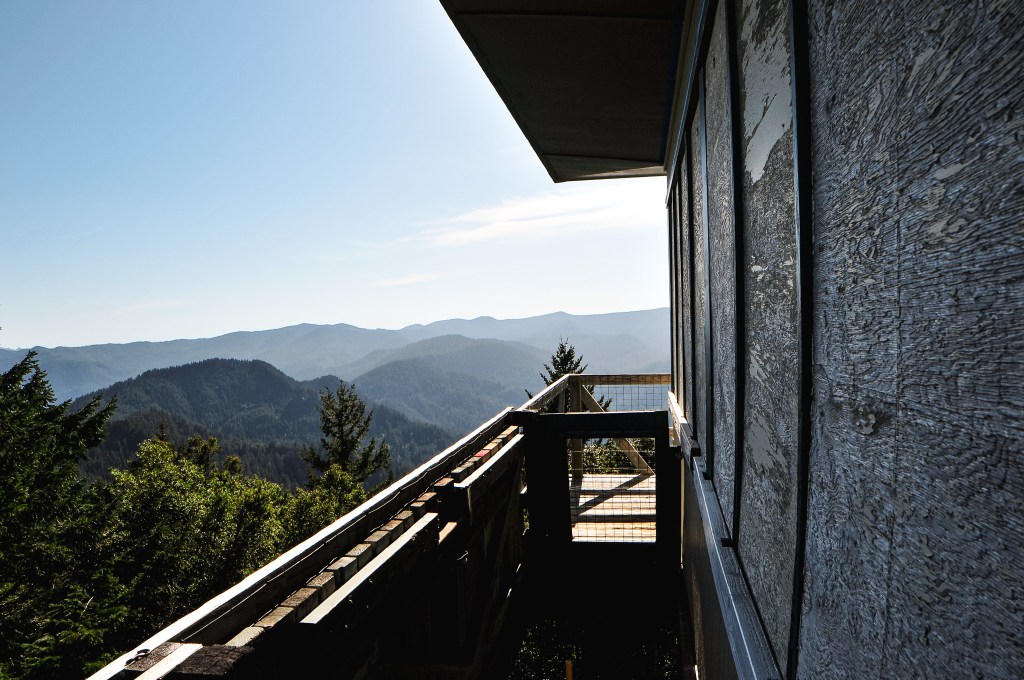
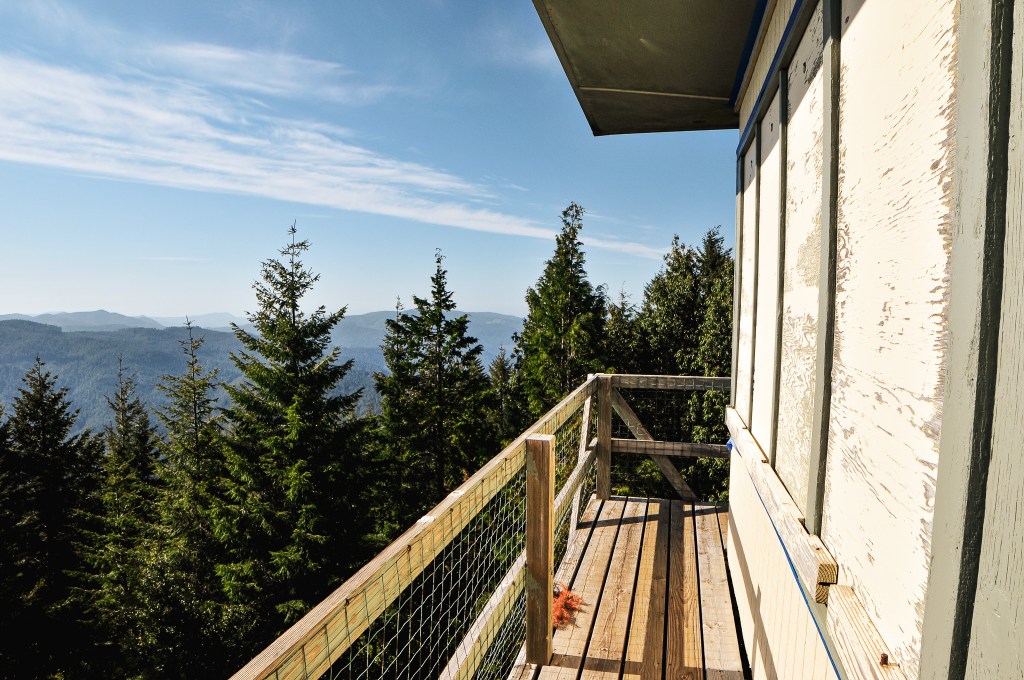
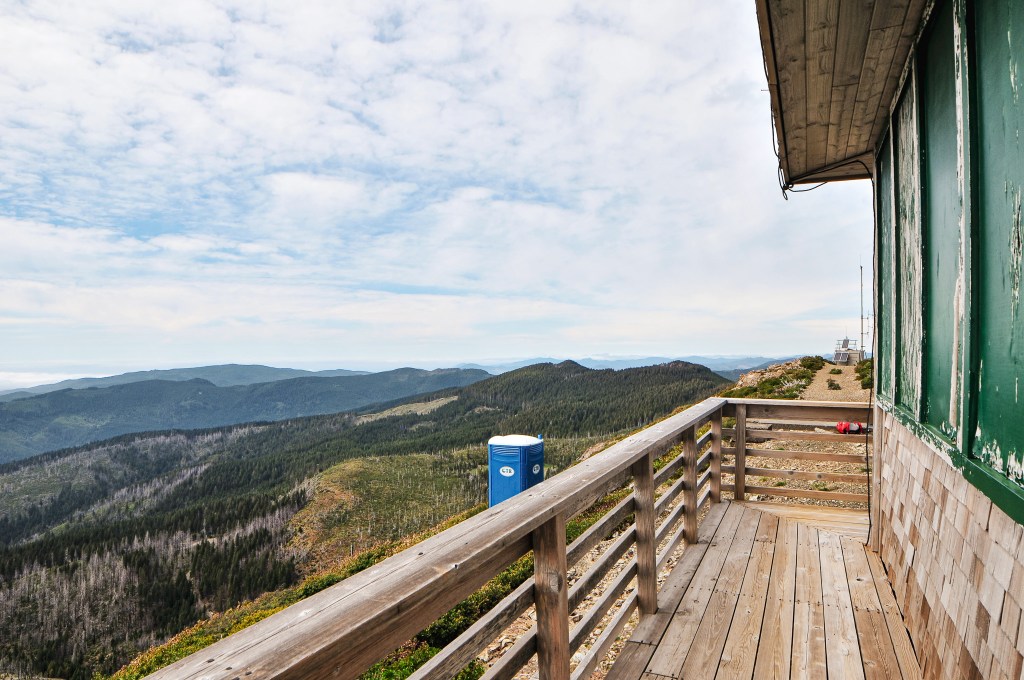
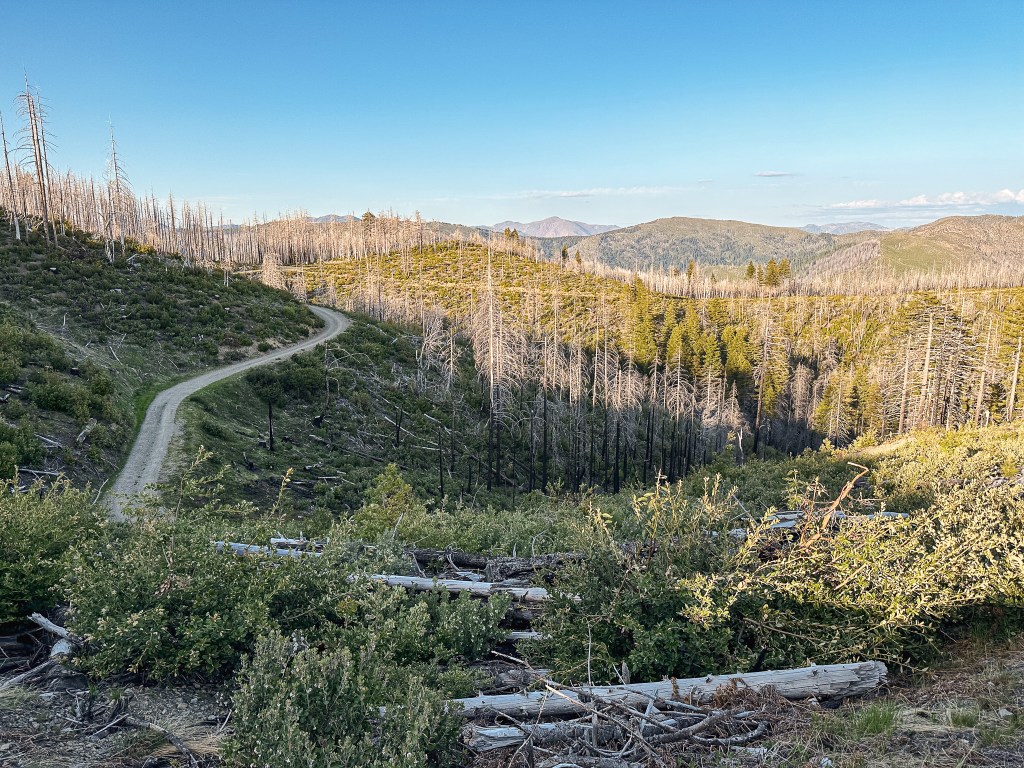
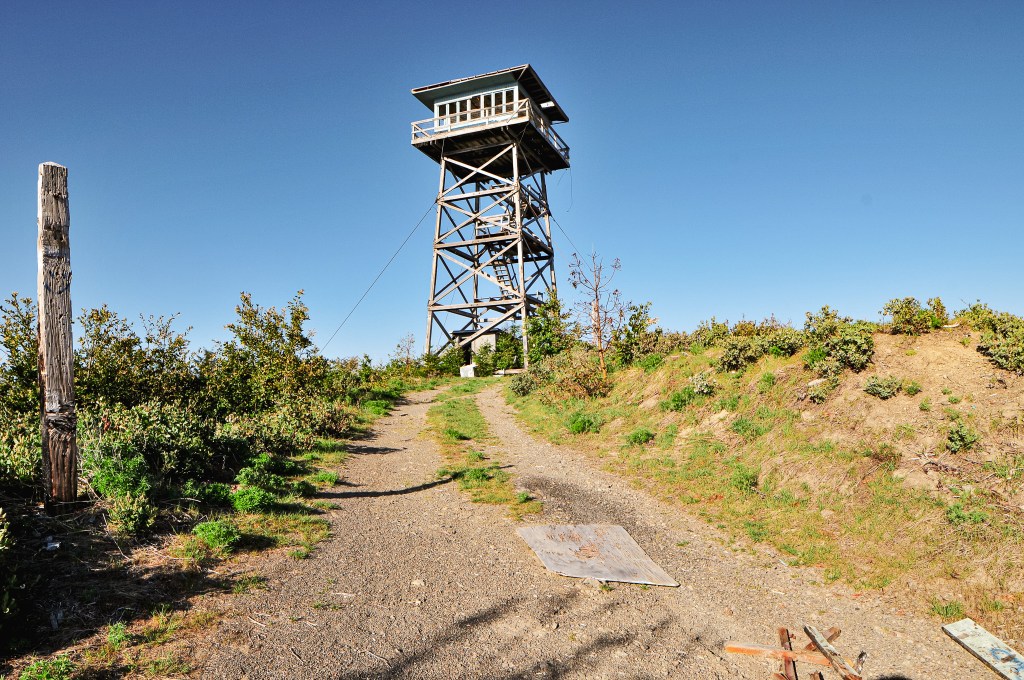
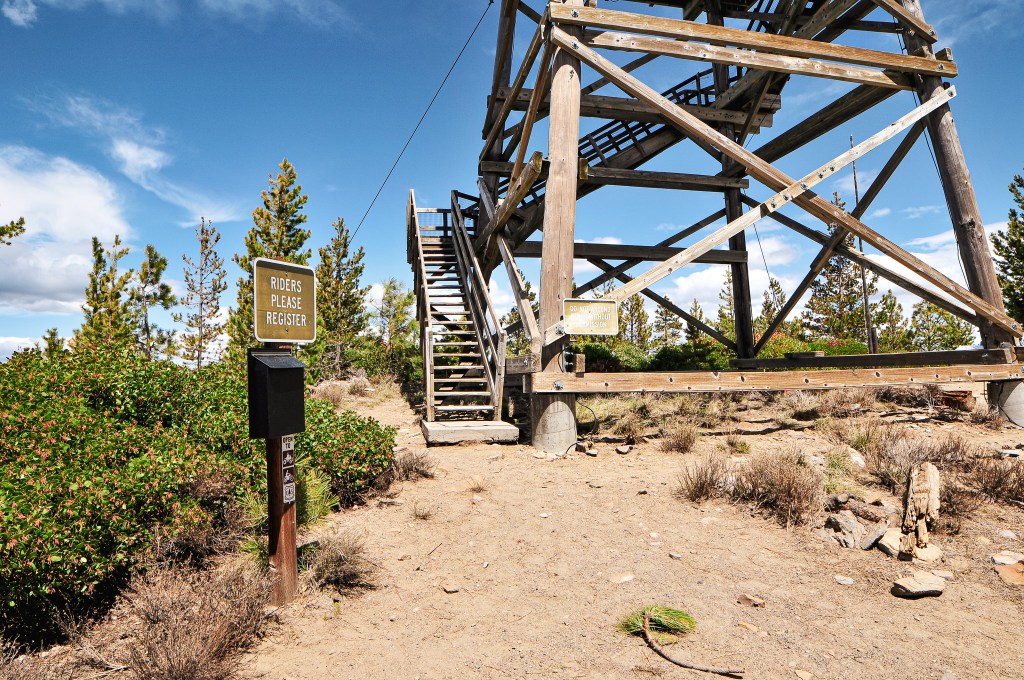
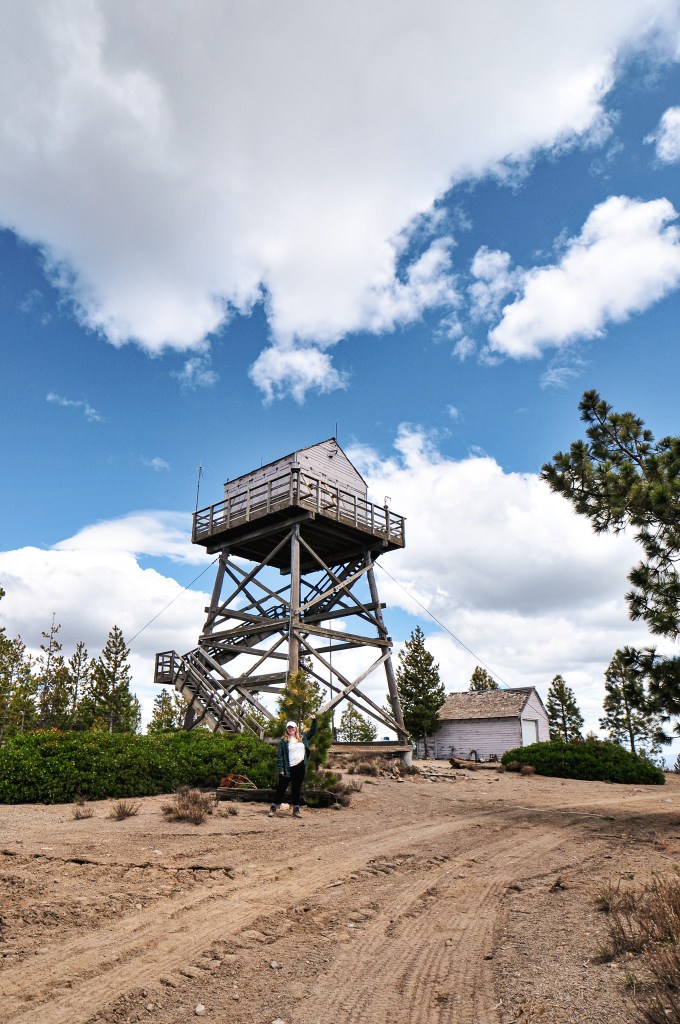
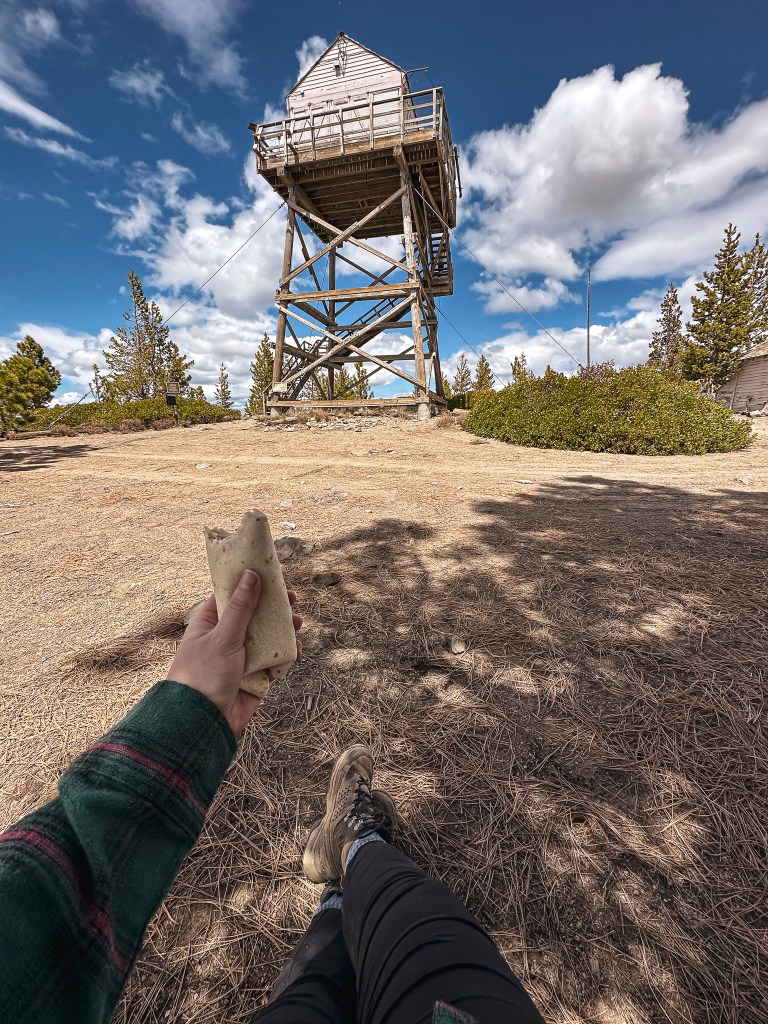
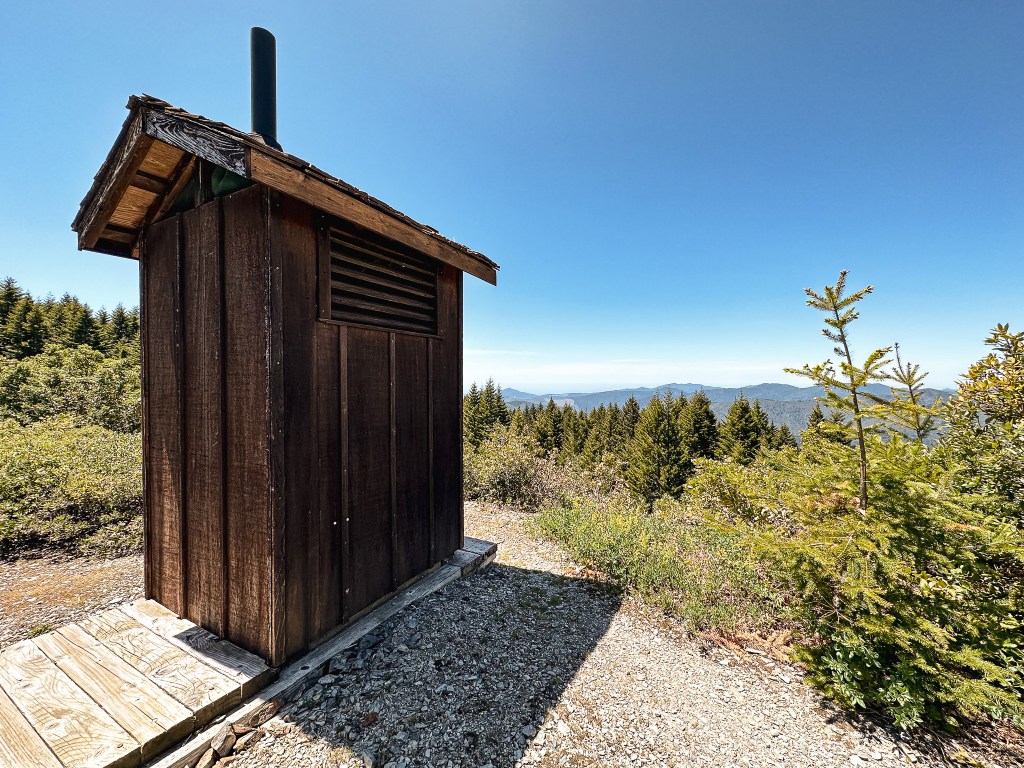
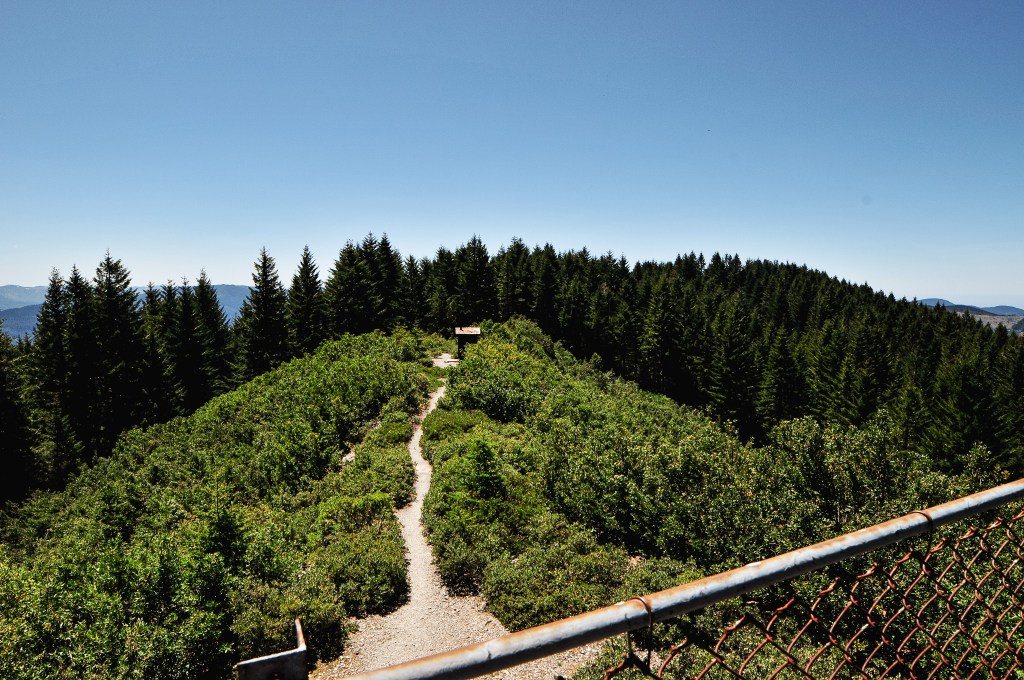
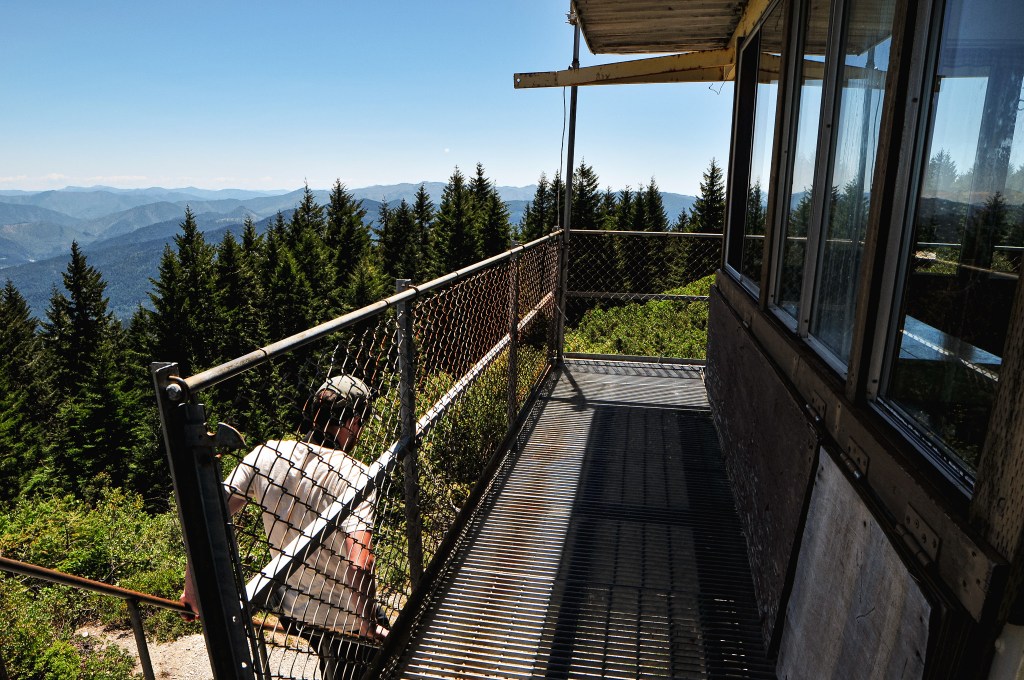
The road beyond the gate was in fairly good condition minus the final pitch towards the tower which would be hard to navigate in a lower clearance vehicle. We almost felt like we were on the wrong road as it started to head down before heading up again. It feels like a trick anytime a lookout road angles down instead of up since you’re usually aiming for the highest point. We reached the summit before the group of four. I guess the teen they had in tow slowed them down. I’m usually the slower hiker in comparison to most. There was also no vehicle here indicating that there were no renters or they had already left for the day. We quickly decided to try and get the pictures we wanted first before anyone else joined us. Afterwards we settled in to eat our lunch in the shade of the catwalk. It was too hot to sit at the picnic table directly in the sun. There was no trap door to block it off from access and luckily no renters were onsite for us to disturb. We called out a hello to double check before we climbed the tower. If there had been renters, we would have found a different lunch spot. The lookout itself might be on public land, but the structure is being rented out for private use.
The family of four made it to the summit shortly after we started our lunch. We briefly spoke to the grandparent of the group. They were locals from Agness and visited this fire lookout on occasion. She mentioned it hasn’t been rented out the past couple of years due to the Pandemic and she didn’t think it was being rented out this season either. But, the listing on Recreation.gov seems to be completely booked out for the season. The ranger we spoke with in Gold Beach also mentioned there would be renters here this weekend. I felt better about our decision to drive up via the NF-3336 road knowing they were locals and had came up the same route. They didn’t have much with them, besides a diet coke and an empty Gatorade bottle, and didn’t stay very long before heading back. We took our time before following suit. We hung a left to continue North on NF-33 towards Bald Knob L.O. after making it back down NF-3336. We still needed to find a camp for the night and hoped there would be something along our route.
History.

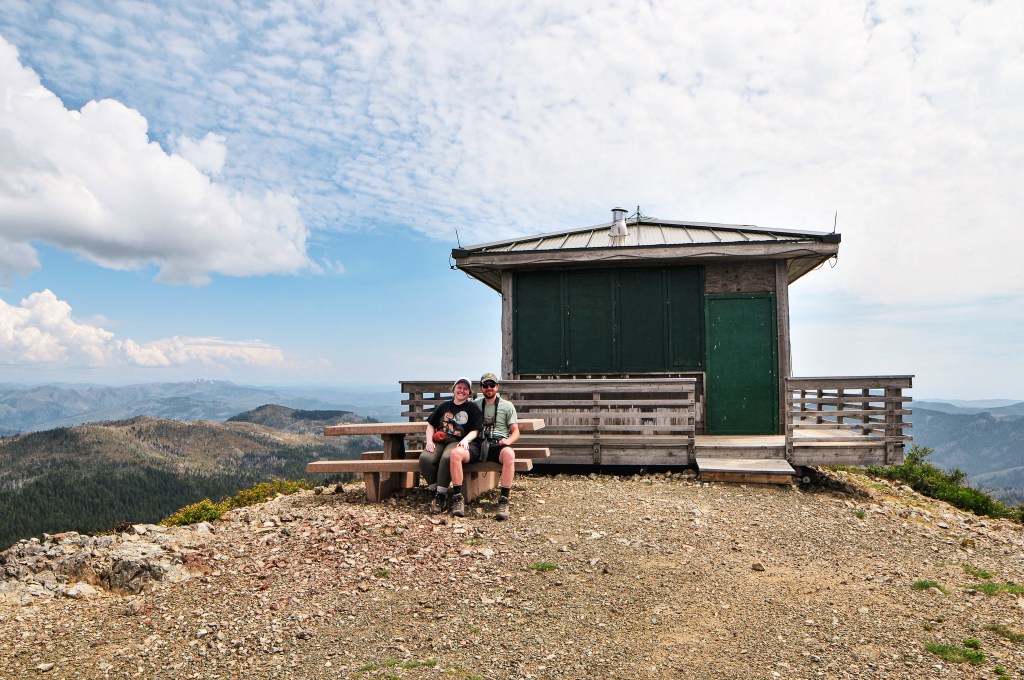
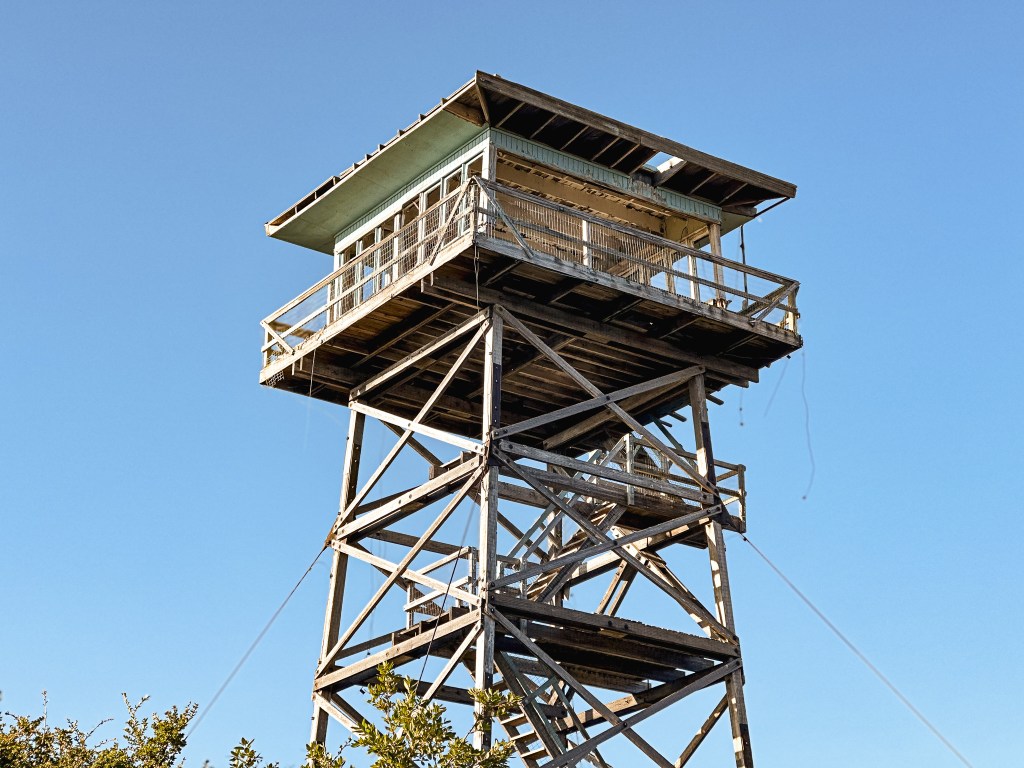
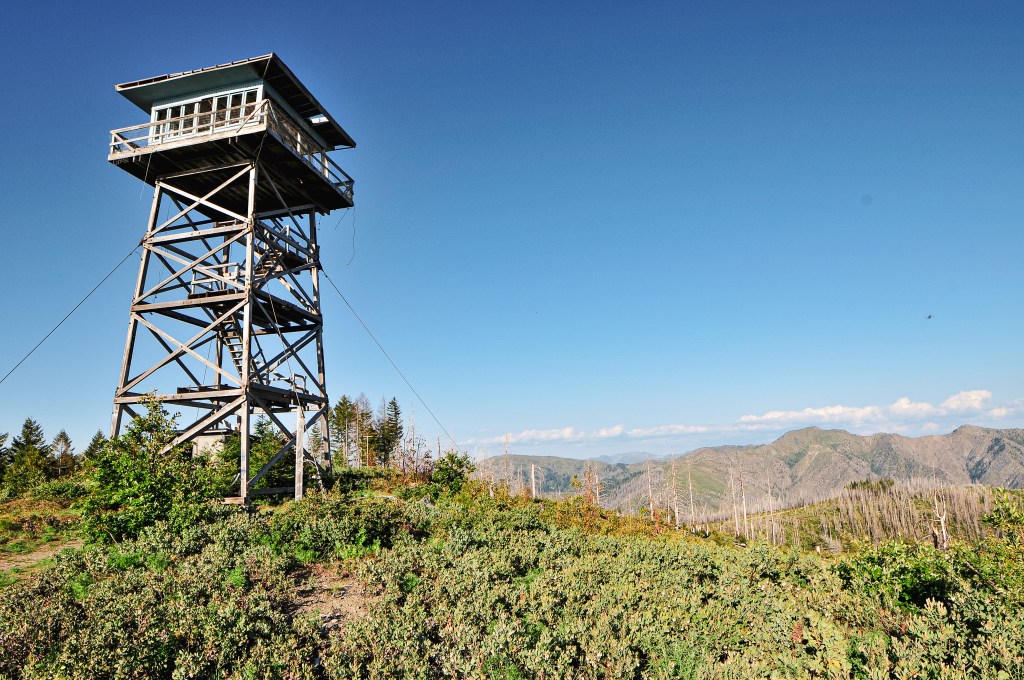
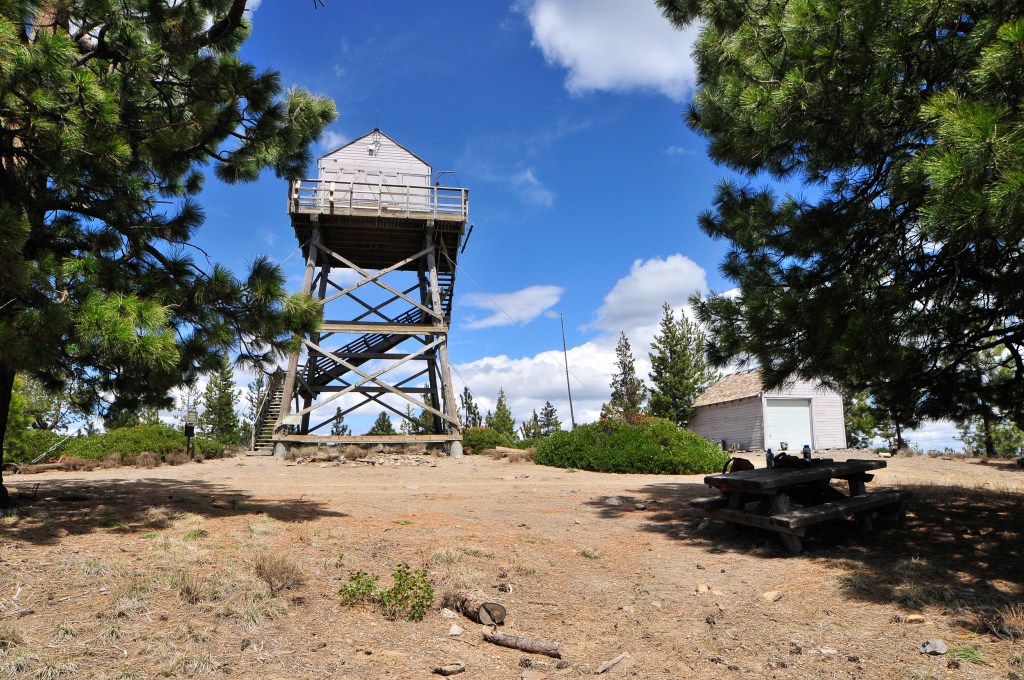
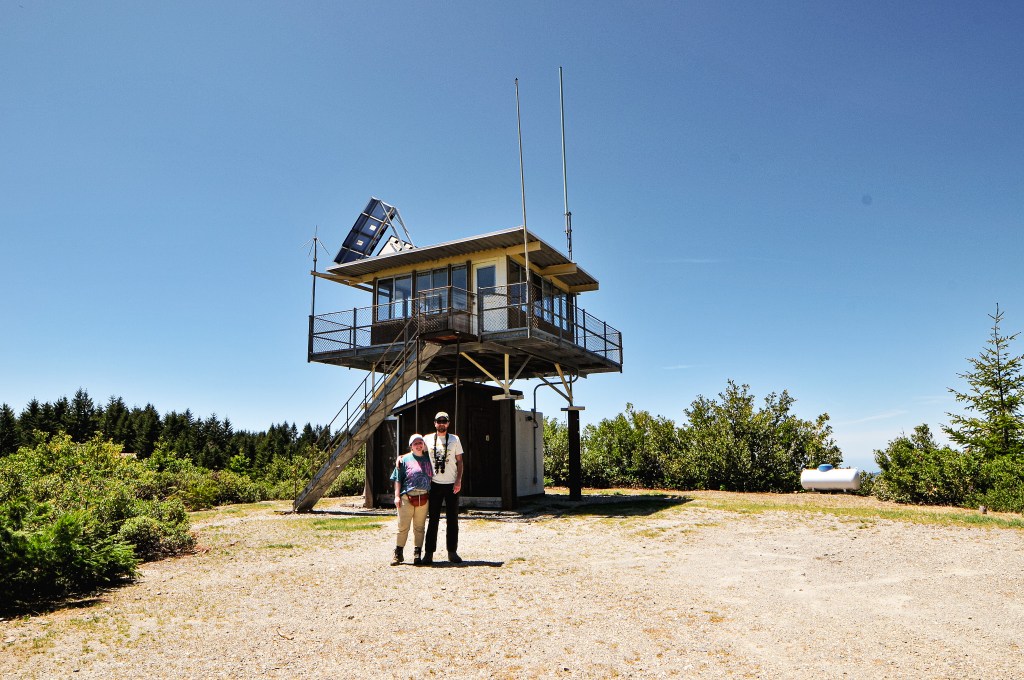
The existing tower for Lake O’ Woods was moved from the nearby Barklow Mountain in 1974. It was flown 12 miles via an air-crane helicopter that was owned and operated by the Erickson Air-Crane Company of Marysville, CA. The company was logging in the district that the lookout structure was moved to. It was set atop a 8′-12′ steel tower and had extensive remodeling done after its move. It was originally built on Barklow Mountain as a ground cabin sometime between 1955 and 1957. There seems to be conflicting information on what the steel structure is classified as though. It looks similar to a CL-100 series structure to me which is what it is noted as on Ron Kemnow’s website. The NHLR notes it as a CL-160 metal flat top while the Forest Service’s website labels it as an R6 flat-roofed cabin. It was actively staffed from 1974 until 1996. It is now apart of the rental program. Prior to this their was a 14’x14′ L-4 ground cabin built in 1933. But, the site was first used for fire detection regularly in the 1920’s. The lookout used to live in a shake cabin and would lookout from a crows nest in a fir tree on the ridge. The fire finder was mounted in the open.
Bald Knob L.O.

Oregon Lookouts

Location.

Rogue River-Siskiyou National Forest

Status.

Rental program; Currently standing

Estimated drive time from Portland, OR.

6 hours

Date visited.

May 28, 2023

Elevation.

3,630′

National Historic Lookout Register.

US 1572; OR 131

Trip Report.

Continuing on from Lake O’ Woods, we followed NF-33 up and over Agness Pass until it turned into pavement again. We stayed on the pavement until we passed the turn for Rock Creek Campground, NF-3347, off to the left. Our turn for NF-3348 was immediately after this on the right hand side. If you reach Island Campground, you’ve gone too far. But, more than likely, unless you plan to follow our route through the forest you will be accessing Bald Knob from Powers, OR. That means the road will be on the left hand side just after the Island Campground instead. The NF-3348 road is also paved and in decent condition, minus a few land slides partially covering sections of the road. There was enough room to maneuver around them without any issues. We turned onto the first major road off to the right, NF-5520. This was just past the trailhead for Coquille River Falls. We stayed on this road for a little over a mile and took another right onto NF-020. This road would take us the remaining 3 miles to the lookout or at least the gate for it. A good portion of NF-020 drives through private property, so be mindful of that when visiting. The road was narrow and didn’t offer much room for pull outs due to overgrown and brushy sides. Thankfully we didn’t meet any oncoming traffic here either. The roads were a bit rocky too, but nothing unmanageable in the Civic. It’s pretty obvious which sections are private given the clear cuts and lack of older trees.

We passed an open gate after re-entering the forest that made us think it was left open by renters. There wasn’t anywhere to pull out, so we continued farther up the road until we found a good spot to stop without blocking the road. We didn’t want to drive all the way up if someone was staying here especially since it was getting later in the evening. We started walking up the road and figured we had to be fairly close to the fire lookout. That was until we rounded a corner and found a more robust gate that was closed. This was the actual gate for the lookout. We assumed the first gate we passed was an older one that was used back when the fire lookout was actively staffed. There was a pull out before the gate that we briefly debated camping at for the night. Garnet offered to go back to get the car, but we ultimately decided it was too sloped for camping. We continued closer to the gate until we noticed the trailhead off to the left for the Panther Ridge Trail #1253. There was a nice flat parking area with enough room for a camp. We hadn’t seen any camp spots on our drive here and decided this was worth going back to get the car. There were some pull outs along the road we could have made work in a pinch for the night, but this was a much better option. Garnet graciously ran back to get the car before we made the final walk up to Bald Knob. While I was waiting I heard people talking in the distance, I assumed this must have been the renters staying at the lookout for the night. It didn’t take long for Garnet to retrieve the car.

We decided to set up camp after we continued our hike up the road. It was only a half of a mile from the gate to the summit. When we finally saw the lookout I was confused. It was still completely closed up for the season. I guess that is a better outcome than skirting around renters, but who did I hear talking earlier?? I never was able to figure that out. While we were taking pictures we discovered the trap door to the catwalk was unlocked and decided to get a better view. It looked like someone had been up here this year to paint some of the siding. We speculated they must have been doing some updates and maintenance before they opened it to renters for the season. We hung out on the catwalk for awhile since we knew we no longer had to search for a camp and it was only a short walk back to the car. We decided to take advantage of the service we had from here and ordered some items from the REI Memorial Sale. We don’t normally online shop while visiting fire lookouts, but we had talked about getting another camp table and knew the sale would be over before we had service again.

Our plan for the next day had been to move camps again to visit Eden Ridge, but both of us had noticed our gas level was a little lower than expected by the time we reached Bald Knob. Normally, we fill up before entering the forest or bring a gas can if we know we will be driving around more than usual between towns. We failed to do either of those things this time. I had filled the tank in Brookings before we headed to Quail Prairie at the beginning of our trip, but I should have refilled again in Gold Beach. There was plenty of gas in the tank to get us out of the forest from where we currently were. There was also enough to definitely get us to Eden Ridge the next day as well. The gamble would have been if we had enough gas to get to Eden Ridge and then back out. I’m not afraid of a little risk taking but this one didn’t sit right with me. It’s possible everything would have been fine but if we were wrong the outcome would be costly. There was no in between. We decided to spend our last day in the area around Bald Knob instead. We had a slower morning around camp and then hiked a little way along the Panther Ridge Trail #1253. This is definitely a little used trail and is slowly becoming a lost trail. While hiking a section that crossed the private property we missed a turn to stay on the actual trail. We ended up following an old road bed that we thought was the trail until it spit us out on NF-020. We were able to confirm this was the NF-020 road from a bearing tree. Once we realized our mistake we decided to accept defeat by hiking back up the road to our camp. It was an overall successful trip minus a few early season mistakes.

History.

The first structure was built on Bald Knob in 1914 as a simple shake shelter to house the lookout. A more robust building was added in 1918 after the shelter kept getting broken into during the winter by hunters. A gable roofed L-4 style lookout was built on the summit in 1931. It served as an Aircraft Warning Station from 1942 to 1943 during World War II. They added a small cabin during that time for the observers to live in. The lookout was badly damaged during the Columbus Day Hurricane in 1962. It was replaced the following year with the existing lookout which is a 20′ tower with R-6 cab. It is now a part of the recreation rental program. It is unclear on when they stopped staffing this lookout and added it to the program. A fire detection camera was added to the site in 2010.

Wildhorse L.O.

Oregon Lookouts

Location.

Rogue River-Siskiyou National Forest

Status.

Abandoned; Partially standing

Estimated drive time from Portland, OR.

7 hours

Date visited.

May 27, 2023

Elevation.

3,778′

National Historic Lookout Register.

US 509; OR 101

Trip Report.

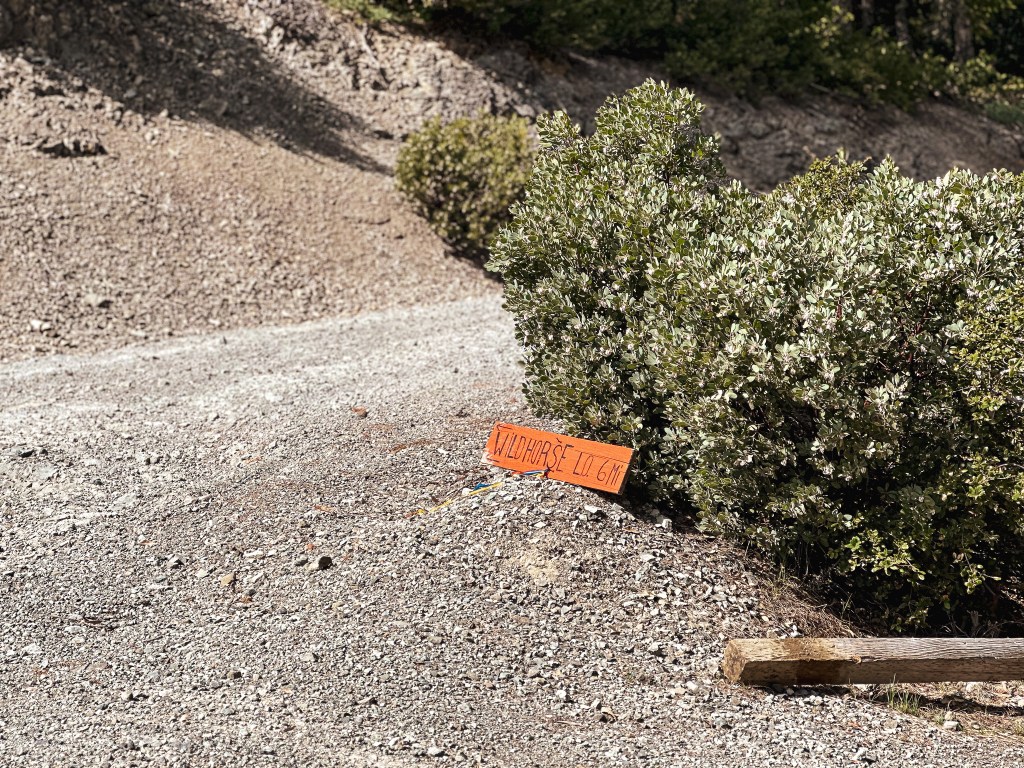
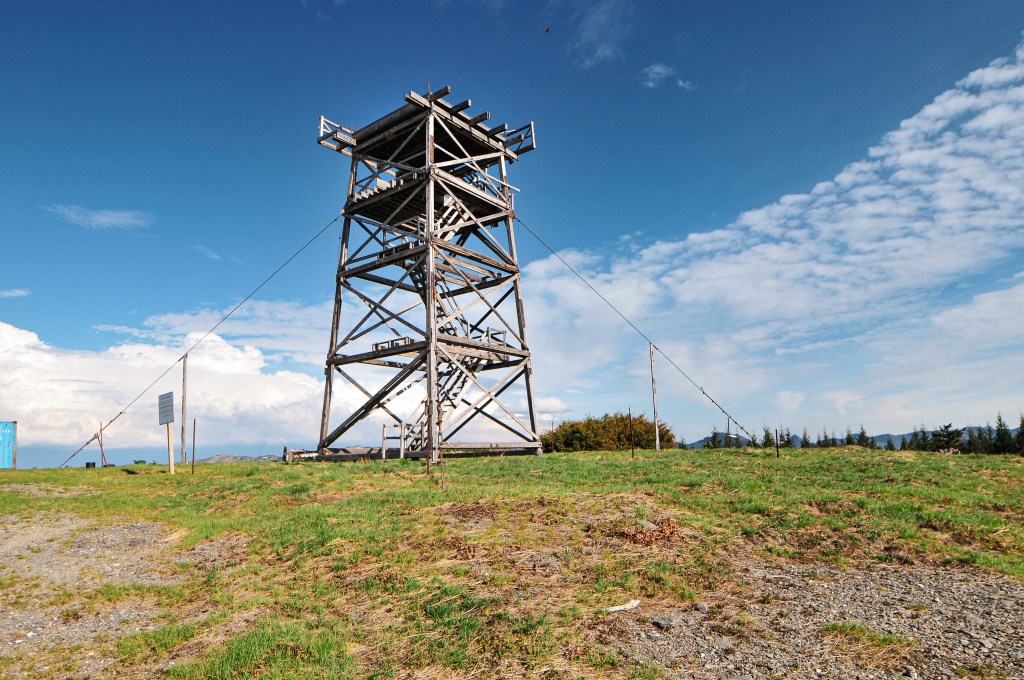
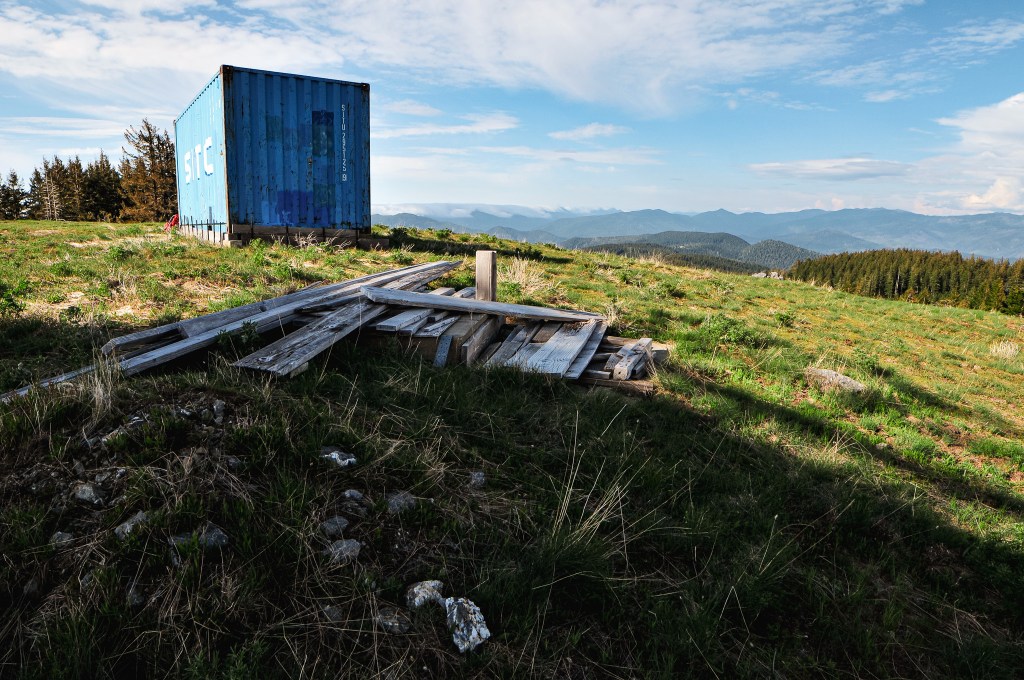
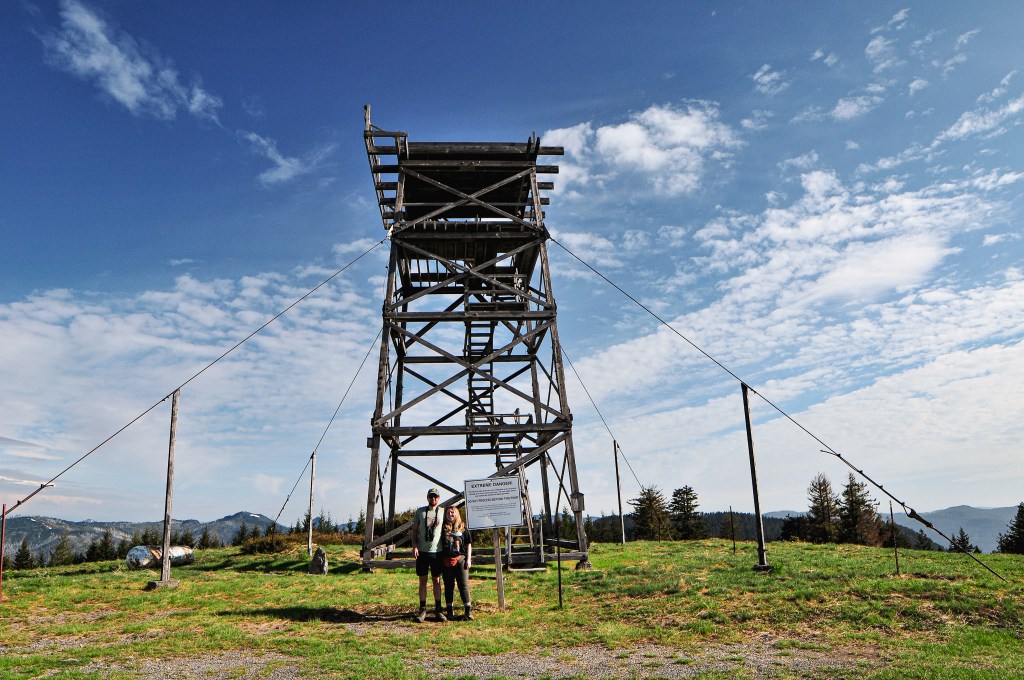
I originally thought we’d have to head back out the same route we came to NF-33 and then back up NF-3318 to access Wildhorse. But, after making it to the gate for Snow Camp we realized the NF-3680 road we were on connected to NF-3318. There was even a sign for Wildhorse L.O. at the junction stating it was only 6 miles away. The main concern from here were the road conditions. We took a sharp right turn onto NF-3318 from NF-3680 and started to weave our way up, down, and around ridge lines. The road was in fairly decent condition with some rocks and potholes to avoid. We saw another sign for Wildhorse L.O. at a four way junction with NF-240 and NF-304. We only had 2 more miles to go and continued straight to stay on NF-3318. The NF-200 spur road is just past the Wildhorse campground off to the left. It does have a gate and you will need to walk the remaining distance to reach the lookout. If you are coming up from NF-33, Jerrys Flat Road, it is roughly 10 miles up the NF-3318 road before the campground on the right hand side instead. The paved portion coming up from Jerrys Flat Road is in decent condition, but it had some pot holes to watch out for along the way. We parked at the gate and started our walk. This was one we didn’t worry about blocking the gate. We knew there would be no one trying access this road at 5:30PM on a Saturday during a holiday weekend. It was only a half of a mile up the road to the fire lookout. The ranger we spoke with in Gold Beach advised not to attempt to climb the tower, but there is nothing blocking you from doing this. Climb at your own risk. The super structure is the only portion left standing since the cab was removed some time ago. I read that the Sand Mountain Society was planning on refurbishing this lookout, but that was some years ago. There was a cargo container near the structure that I assumed housed materials for this project. Older photos of the lookout didn’t have this container on the summit, so I hope this is a sign that someone plans to work on it soon.

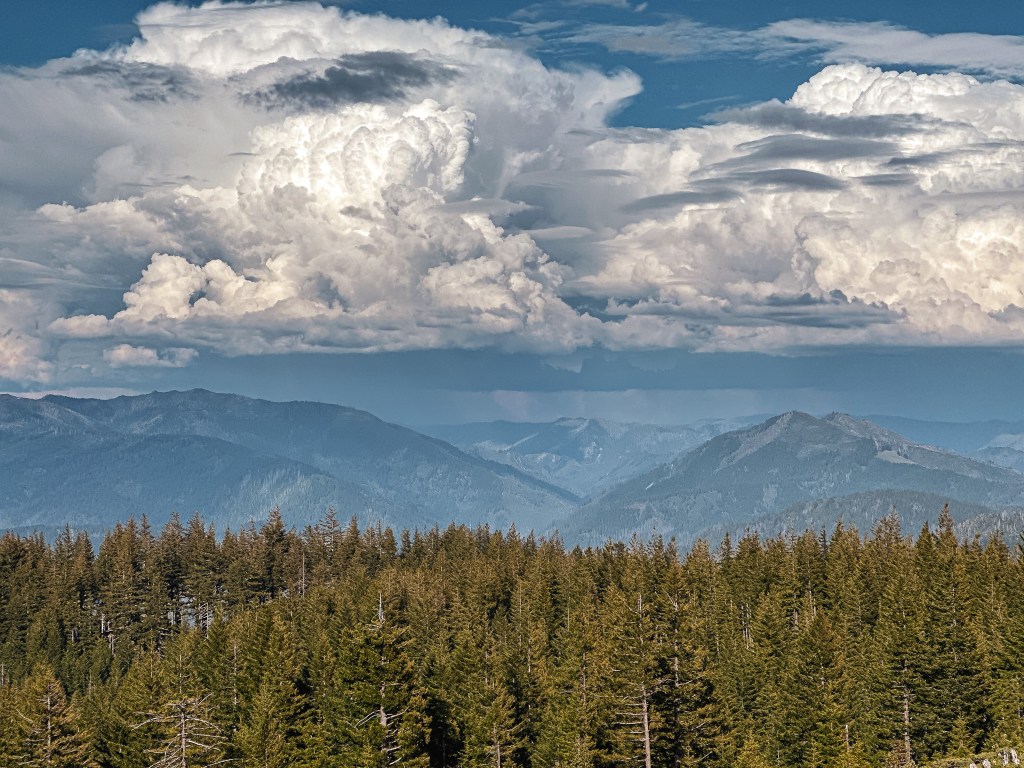
There were some thunderheads off in the distance and some other neat clouds that looked like they were pouring over a ridge. We still had to find a camp for the night, so we made a quick trip back to the car. The Wildhorse C.G. had limited spots and was already full when we drove past it. Our only option was to continue on our route and hope we found something along the way. We passed an old mine that had two camp spots at the edge of the tailings, but we both decided we wanted to keep searching incase there was something better. We drove all the way down to where the NF-3318 road turns to pavement with no luck. We turned around and made our way back to the tailings camp. It was only for the night anyway. We’d be heading further into the forest on NF-33 in the morning.

History.

The first structure on Wildhorse was a fireman’s cabin built in 1929. According to “A History of the Siskiyou National Forest”, they authorized building an R1 type cabin on a tower in 1931 to help combat fire hazards more successfully. The NHLR and Rex’s site note a 40′ pole tower with gabled L-4 cab being built in 1935. It was briefly used for the Aircraft Warning Service during World War II. The current structure was built in 1947 as a 40′ treated timber tower with 14’x14′ L-4 hip-roofed cab. It was last staffed by the Coos FPA in 1998. The cab didn’t collapse until the winter of 2007-2008 under heavy snow. The Sand Mountain Society removed the crumbled cab the following summer in hopes to start work on it. The superstructure is all that still remains on the summit.

Snow Camp L.O.

Oregon Lookouts

Location.

Rogue River-Siskiyou National Forest

Status.

Rental program; Currently standing

Estimated drive time from Portland, OR.

6-1/2 hours

Date visited.

May 27, 2023

Elevation.

4,223′

National Historic Lookout Register.

US 13; OR 4

Trip Report.

We packed up our camp near Quail Prairie and started to head back out of the forest. We made a brief pit stop to check out Packer’s Cabin since no one appeared to be staying there. We also tried to find the old lookout site along Long Ridge but there were no remnants to confirm we were in the right spot. We white knuckled our way back out on the N Bank Chetco River Road. Garnet would disagree with this statement since he was driving and thought it was fine. But, people really do drive too fast on this road. We watched someone swerve off the road to avoid us because they had taken the corner too fast. They were lucky to be on the side with the shoulder. If they did the same maneuver on our side of the road it would’ve been off the side and down the cliff instead. Big yikes. We made it safely out to HWY-101 without any other incidents and started back tracking towards Gold Beach. We planned to re-enter the forest via Jerrys Flat Road in Gold Beach that follows along the Rogue River and would eventually turn into NF-33. We wouldn’t exit the forest again until we were on the other side in Powers. The turn off for Jerrys Flat Road is right before or after the bridge depending on which way you are traveling. We were heading North on HWY-101, so it was right before the bridge off to the right. Despite the cautionary warning from the ranger the day prior we decided to try our luck with Snow Camp. The plan was to see how close we could get. If there was truly 14″ of snow on the road we would park and walk the remaining distance, assuming it wasn’t too far.

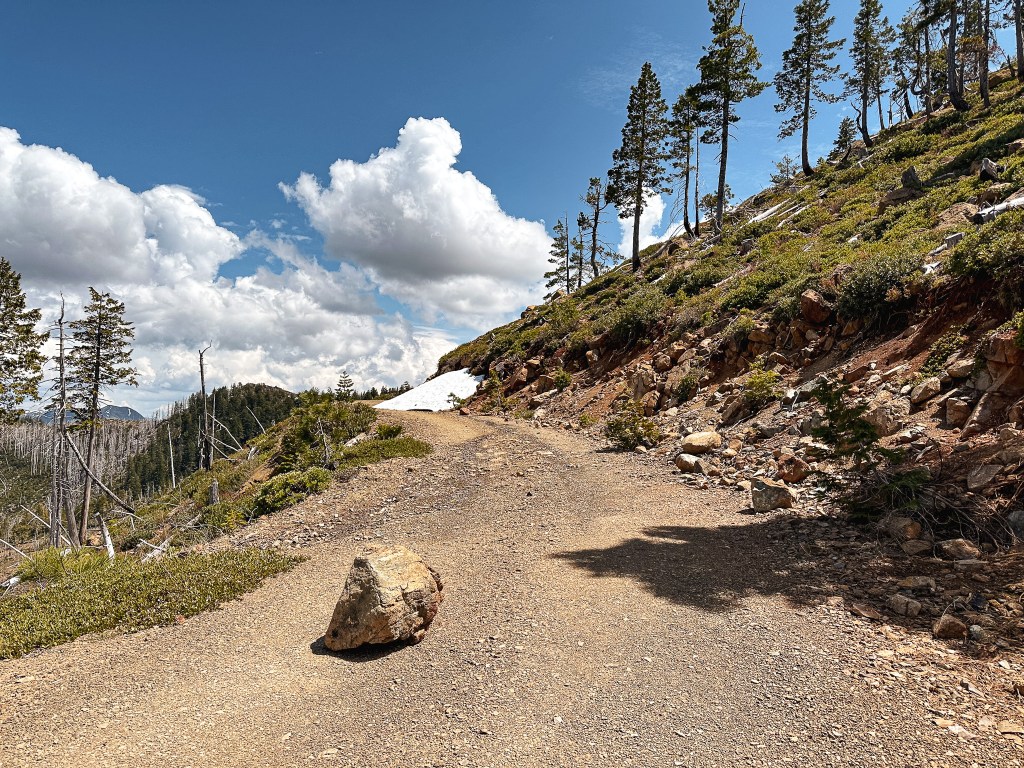
We winded along Jerrys Flat Road until we passed Lobster Creek Campground. There aren’t that many roads off to the right and we knew it would be the first major junction after this campground. The road is NF-3313, but we didn’t see a sign for it when we came to the junction. Garnet mentioned there was one if you were heading west but I didn’t see it. If you reach the Quosatana Campground, you’ve gone too far. We stayed on NF-3313 for a little over 8 miles until we came to a junction with NF-3680. The NF-3313 road was made up of good gravel. There was a sign for Snow Camp pointing to the left that noted it was only 7 miles away. We decided to stop and have a quick lunch here since there was enough room to park out of the way. We also knew we’d be too hungry to wait to have lunch on the summit. The directions on recreation.gov states that it is 6.7 miles along NF-3680 to the turn off for the lookout. We continued left as the sign suggested, but our odometer clocked in around 7.2 miles along NF-3680 before we reached the gate. All the flat sections along this road were filled with pot holes that slowed us down significantly, but it was otherwise a fine road. We did encounter one snow drift, but it had melted enough since last Tuesday to go around. Even if it had been blocking the road we would have been close enough to the gate to make the hike. After seeing the snow drift, I realized that is what they meant by 14″ of snow on the road. This made me feel better about the remaining conditions for the rest of the trip since Snow Camp was the highest of the fire lookouts we would be visiting. If we could make it this far, we should have no issues anywhere else. At least in relation to snow.

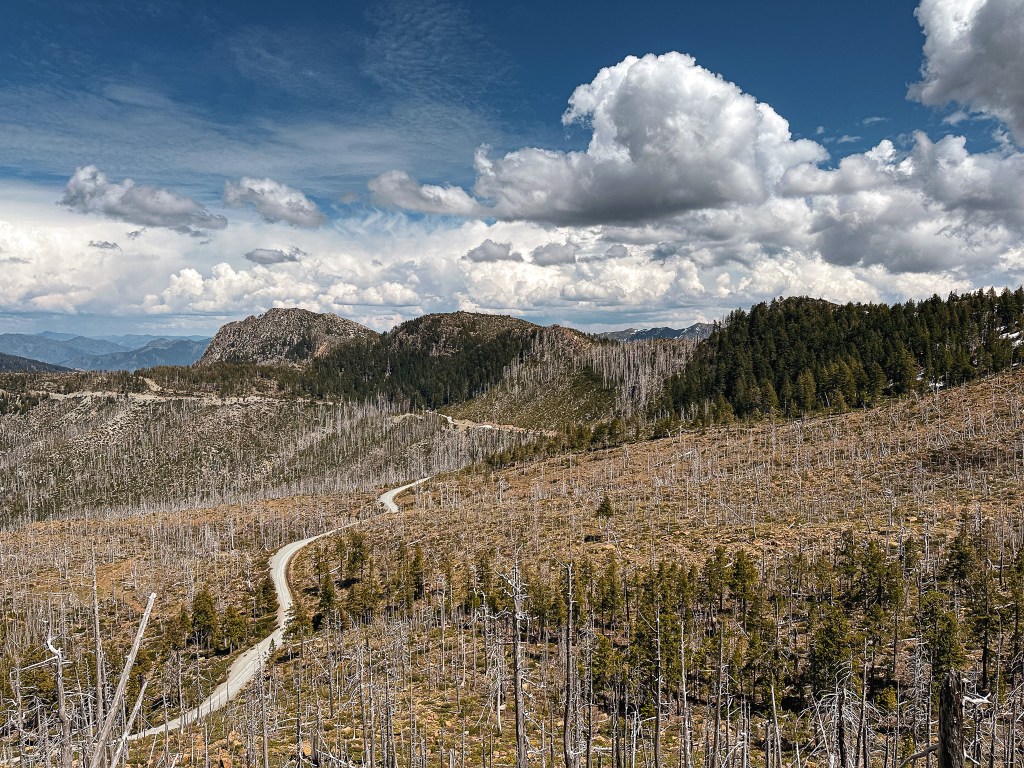
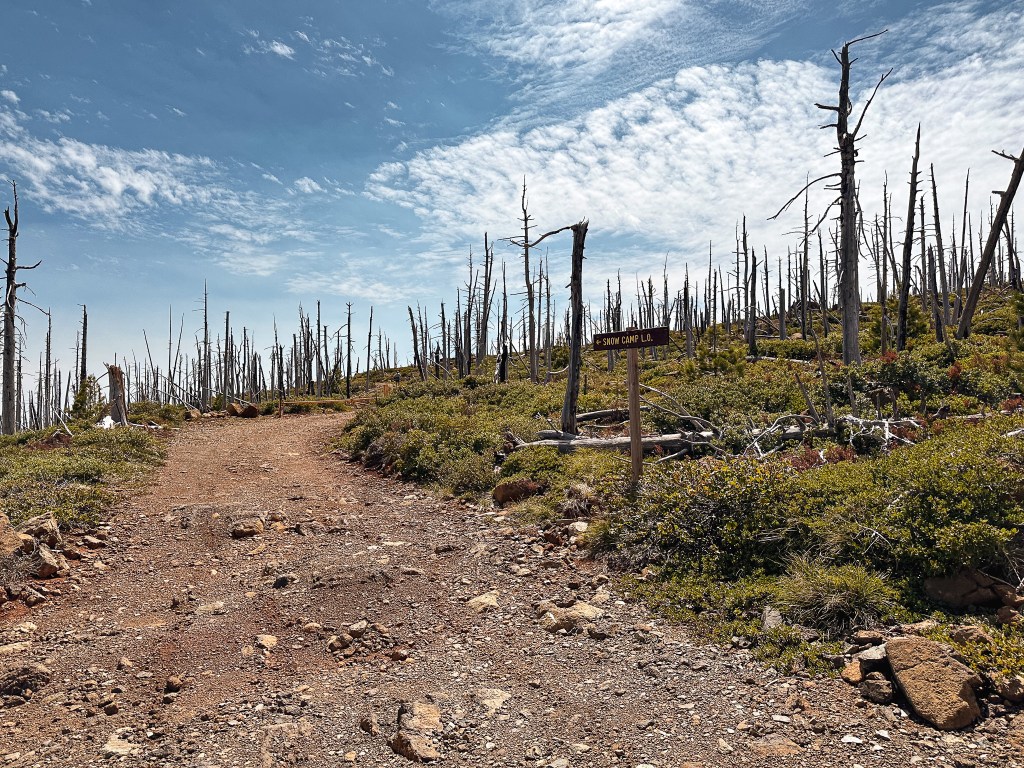
There are two options from here to get to Snow Camp. You can either hike the NF-1376 road or the trail. The sign at the gate stated that it was 2 miles to Snow Camp from here. I believe this gate is typically open when the fire lookout is open to renters in the summer. It was still closed for the season during our visit. The Snow Camp Trail #1103 starts from the same NF-3680 road a little ways back. There was a trailhead that we passed with a large group camping there. It’s roughly 3.25 miles along the trail to the summit. We decided to hike the road since it was shorter and would be easier to maneuver around any additional snow. Though it is a pretty area and I’m sure the trail is well worth the hike. We set off up the road and quickly climbed out of the shady forest on to an exposed slope. It felt like we had left the coastal range and stepped straight into Eastern Oregon. The landscape didn’t match what I thought it would be, it was much more. People often complain about how a fire destroys an area, but I don’t think they talk enough about the beauty that can come after. There is a different kind of beauty, that I really love, in a sea of ceanothus and manzanita with the matchstick ghosts of the forest past. This area was not only unique in landscape, but botanically too. We noticed a few young pines along the road that had pinecones growing directly out of their trunk. Garnet thought they might be Sugarpine (Pinus Lambertiana) at first, but later research found them to be Knobcone Pines (Pinus Attenuata). If you are unfamiliar with Knobcone Pines, their range is mainly in south-western Oregon with some patches in California. They are unique in that their reproduction is exclusively controlled by fire. They are a closed cone species meaning their cones remain sealed with a hard resin until a fire burns hot enough for them to open. An unburned Knobcone will remain unopened even after the parent tree has fallen. It favors harsher conditions and is typically associated with other plants that are fire-followers. Another interesting plant we had never seen before was a Groundcone (Kopsiopsis Hookeri). We initially thought someone had taken some pine cones and stuck them straight up in the dirt. Upon closer inspection we realized it was actually a plant. This one is considered parasitic, but was still really cool to see.
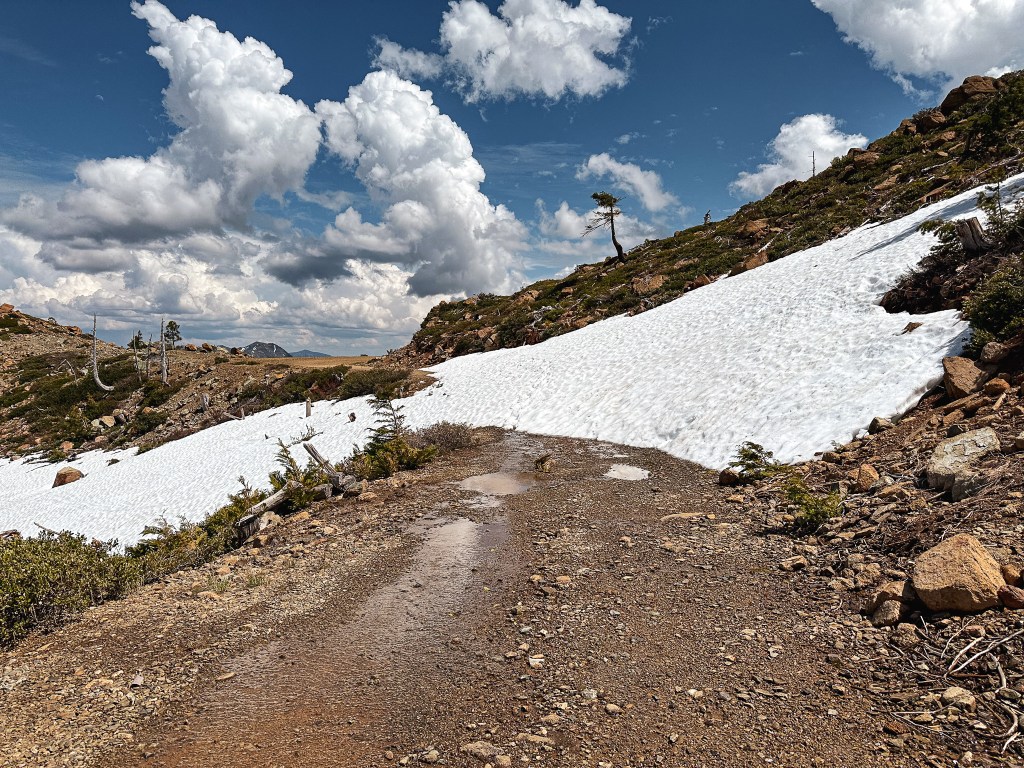
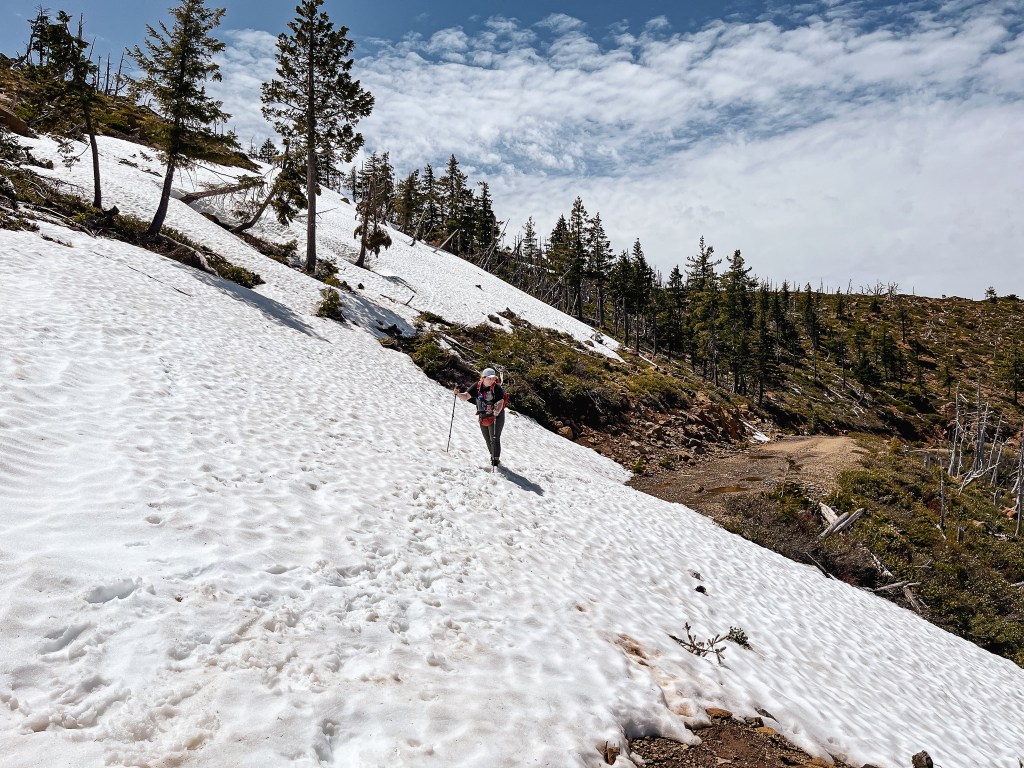
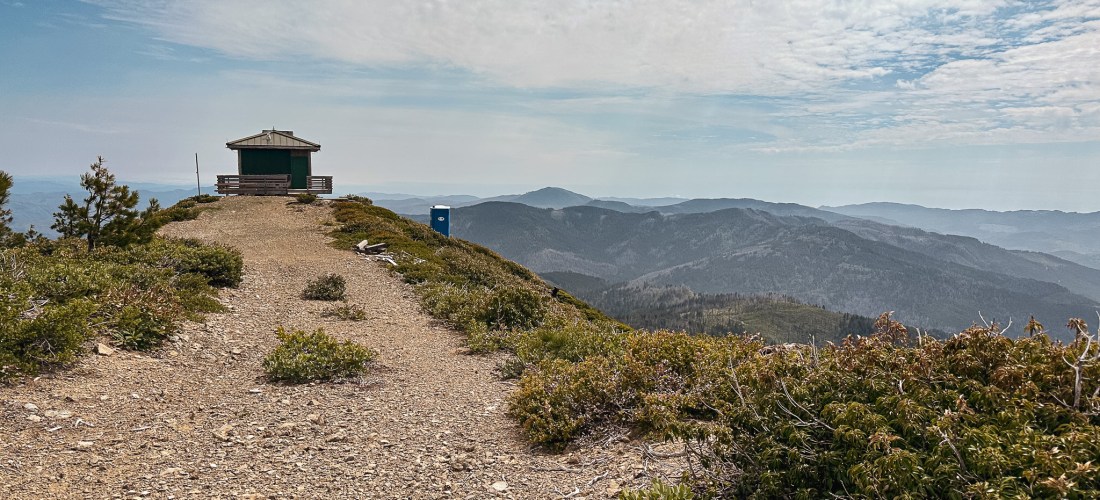
There was some major rock fall and a much larger snow drift that blocked a portion of the road we were hiking on. The Forest Service would need to spend time clearing this before they could open the fire lookout to renters for the season. There is a second gate when you come to a junction with the spur road to the lookout off to the right. There was a sign for the lookout here as well. It looked like there were recent tire tracks coming up from NF-1376 which was interesting given that the road is noted as closed and gated on the map in the other direction. We could have hypothetically connected to Snow Camp from Quail Prairie via this route, but it would have required driving 25 miles of gravel on NF-1376 from the N Bank Chetco River Road. There would also be no way of continuing north via that route due to the snow drift and other gate. We continued our hike past the second gate for the final stretch to the lookout. The Strava app tracked in around 1.725 miles from our parked car to the summit. It seems whoever made the mileage signs in this area was just rounding to the nearest full mile. The last pitch of road to the lookout is undriveable to most vehicles and very steep even to walk up. The views from the summit are spectacular though. You can see the ocean and a lot of the surrounding coastal range. I’m sure you could pick out some of the prominent peaks in the state as well on a clear day. We had some haze on the horizon obstructing our farther off views either from the wildfires in Canada or field burning. We didn’t stay for too long after taking pictures since we wanted to visit Wildhorse L.O. before setting up camp for the night. As we were hiking back to the junction with NF-1376 we saw a Jeep driving back down. We were just about to comment on how we hadn’t seen anyone too. They didn’t seem to notice us, but we could see from their tire marks and footprints in the snow bank that they got out to debate trying to drive over it. It’s a good thing they didn’t since they would have been very disappointed to find a locked gate at the end. Once back at the car we continued on to Wildhorse and hoped we would find a good camp along the way.
History.

The existing fire lookout was built in 2004 by Don Hartley and a team of volunteers. Don Hartley is the owner of Don Hartley Construction in Crescent City, CA and was a frequent visitor to this area. It is a 15’x15′ original structure that has never been used for fire detection. It was built with the purpose to be a rental for the public after the original fire lookout burned down in the 2002 Biscuit Fire. The site was first established in 1910 for fire detection when an Alidade was mounted to a post. A canvas house or rag camp was built in 1915 to provide a more permanent place for the lookout attendant to live. It didn’t see its first structure until 9 years later in 1924. A 14’x14′ cabin considered a “Hall Special” was constructed at the time and was actively used until it was replaced in 1958. The site was in service during both World War I and World War II. It was apart of the Aircraft Warning System in 1942. The replacement lookout was a standard 15’x15′ R-6 flat cab. It’s unclear when they stopped actively staffing it and added it to the rental program. A portion of the Snow Camp Trail was identified by “Chief” Elwin Frye, a packer for the Forest Service, as an Indian travel route that provided access to Windy Valley. Many of the trails in the area follow historic aboriginal routes.

Quail Prairie L.O.

Oregon Lookouts

Location.

Rogue River-Siskiyou National Forest

Status.

Abandoned; Currently standing

Estimate drive time from Portland, OR.

7 hours

Date visited.

May 26, 2023

Elevation.

3,033′

National Historic Lookout Register.

US 467; OR 64

Trip Report.

The high holiday weekend was upon us and snow was still lingering lower than previous years. Similar to a relative that has overstayed their welcome. Memorial weekend is usually considered the official start of the camping season for the general population. But, I think a lot of plans changed as reservations were cancelled and campgrounds failed to open in time. We typically like to start our season earlier by creeping our way into the lower elevations as early as March. This year had been slow to start with the snow levels and our added responsibilities as new home owners. We still managed to make it to the Northern Redwoods for my birthday in April and Eastern Oregon for my partner’s birthday in May. Despite those two previous trips this felt like our first substantial trip of the season. It would also formally kick off our fire lookout season. Though I don’t think we’ll be able to top last year after visiting a little over 50 standing lookouts in one season. Our plan for the next 5-days was to take a tour of the fire lookouts within the Southern Oregon coast range. We figured they were all low enough elevation to be snow free by this time. Plus the coastal range tends to get less snow in general than the rest of the state. There were a few posts about rental reservations in that area being cancelled on the Oregon fire lookout Facebook page that were some cause for concern. But, we didn’t really have a plan B in mind and decided to leave it up to luck. We would only pivot and reroute if absolutely necessary.

My partner and I stayed up late Thursday packing the car and prepping the remaining items for the trip. No more packing our gear down three flights of stairs the morning of departure! We also didn’t have to get up as early with the car already packed, minus the cooler of food. We just had to make sure to leave early enough to make it to Gold Beach before their ranger station closed for the weekend. We were on the road by 9AM heading south via the I-5 corridor to cut over on HWY-38. There are a few different options to connect to the coast, but HWY-38 offers the least amount of curves and is flatter than most. We met up with HWY-101 from Reedsport and continued heading south. The Gold Beach ranger station closed around 4:30PM and we made it in time with an hour to spare. The ranger on duty was very helpful. He confirmed their current snow levels were around 5,100′ with a few lower elevation snow drifts in the northern slopes. This was good to hear since all the fire lookouts we planned to visit were around or below 4,000′. We told him our intended route and asked about road conditions. He thought we should be fine getting to most, even in our Civic, but he didn’t recommend Snow Camp or Eden Ridge. The last report on Snow Camp was from the previous Tuesday where there was still 14″ of snow on the road. I took that as the entire summit being covered in snow, but more on that later. He cautioned around visiting Eden Valley due to some recent timber theft and a few land slides in the area that they still needed to clean up. Our plan was to head to Quail Prairie after our visit to the ranger station and camp in that area for the night. Another ranger showed up while we were talking about this plan and they confirmed that area was accessible to at least Packer’s Cabin, which is located 3 miles below the lookout and rentable through the Forest Service. She cautioned us to be very careful heading up the Chetco River though due to the high traffic on a very narrow road. We bought a ranger district map of the area and thanked them for their helpful information.

We headed back out on HWY-101 continuing south to Brookings. We wanted to start with the southern most fire lookout and slowly work our way back north to set us up for a shorter drive home. From Brookings, we turned left onto the N Bank Chetco River Road to head into the forest. This is a narrow paved road that winds along the edge of the Chetco River with steep drop offs as the ranger had mentioned. There were a few gravel bar campgrounds along this route that were filled to the brim with campers. The pavement was in good shape minus one spot before the last campground that drops down due erosion. If you’re not careful you could bottom out. We were able to crawl over this at an angle and others had driven their trailers beyond this section. After passing the last campground, we crossed the South Fork of the Chetco River on a single lane bridge and came to a T-junction. We turned left onto NF-1376 and the pavement ended. We weren’t on this road for very long before we came to a major fork. The NF-1376 road continues to the left along the Chetco River, but we turned right to start our climb up NF-1917. Shortly after starting up this road, I let Garnet take over the driving when the road made a dip on a narrow section. No use in wasting our time having me freak out while driving. The NF-1917 road climbs up along Long Ridge and past the Packer’s Cabin. As we got closer to the summit, there were some downed trees along the road. Luckily, the wood cutters had been through here and cleared just enough room for us to make it around. The spur road NF-180 for the lookout will be obvious since there is a gate and you can see the tower from the road. The road continues past the spur but turns into an unmaintained jeep track from there. We parked at the junction and decided to walk the remaining distance. The Strava App tracked the road walk at a little under half of a mile to the summit. The gate was open and we probably could have driven the Civic up, but we were both ready to stretch our legs after a full day in the car. The roads getting here had been decent with a bit of caution needed over a few bumps and dips.

The fire lookout looks similar to Bald Butte in the Ochoco NF given that it is completely missing a wall on the R-6 cab. The first flight of stairs have been removed to keep visitors from climbing the tower. There is no glass in the windows either, but I’m unsure if they were intentionally removed or just broken. The storage shed has since been rummaged through with items tossed from it haphazardly. There was graffiti and trash on the summit that indicated people come up here fairly often too. It is a bit sad to see given that this was on the rental program as recently as 2007 and the Forest Service still lists it as closed for repairs. But, it seems the time and place for repairs has come and gone. It just goes to show if you don’t put in the maintenance on something how quickly it will fall into disrepair. It still stands and could possibly be salvaged if the local community found an advocate team for it through the FFLA. But, that is part of the problem it seems. The FFLA calls for more leaders and local chapters in their recent magazine, but I’ve learned you can’t force people to care about fire lookouts. You can only inform them about things they didn’t already know. Then you have people, such as Garnet and myself, that care but lack the skills or know how or are not centrally located to be of any help. Places like this will continue to fall into disrepair for that reason alone.

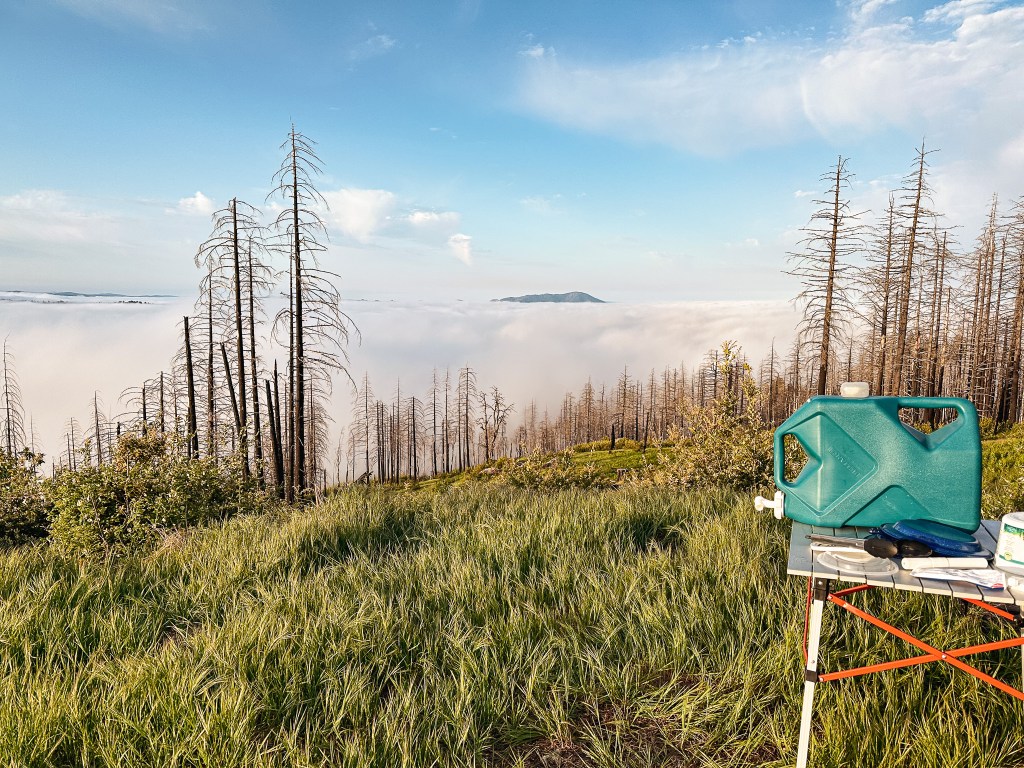
The area had been burned over a while back which opened up the views from the summit and road. You are mostly overlooking the peaks of the Kalmiopsis Wilderness. We could even spot Pearsoll Peak in the distance. Unfortunately, it was already late in the day when we arrived which gave us little time to explore. We briefly debated just camping on the summit since there were no official dispersed camp spots along the road. That was one down fall we encountered all weekend, the camp spots seem to be few and far between in the coastal range unless it was an established campground. The peaks might not be that high here, but you still have to climb up from sea level which leaves little flat areas to camp. We ultimately decided not to camp on the summit since there was a nice grassy landing a few miles below that I preferred instead. A cloud inversion started to roll in around sunset and stayed through the night into the late morning. It was gorgeous!

History.

Quail Prairie was built in 1963 and one of the last fire lookouts to be built by the Forest Service in southwestern Oregon. It was considered an important fire detection facility for this area due to the limited established road systems. The tower is a 41′ treated timber with 8×8 wooden legs and R-6 flat cab. It was built as a replacement for the neighboring Long Ridge L.O. that was destroyed during the Columbus Day Hurricane in 1962. The Forest Service actively staffed it up until the mid-1990s. It was moved to the rental program sometime after that until it was damaged in the early 2010s. It sustained substantial damage to the side causing part of the wall to buckle. I assume this is the same wall that is currently missing from the cab. It used to be furnished with a single bed, table, two chairs, a stool, broom and fire extinguisher. It also used to feature a wood burning stove, propane stove, and propane fridge. It has since been abandoned and fallen into a state of disrepair.

Green Butte L.O.

Oregon Lookouts

Location.

Deschutes National Forest

Status.

Abandoned; Currently standing

Estimated drive time from Portland, OR.

4-1/2 hours

Date visited.

May 15, 2023

Elevation.

5,754′

National Historic Lookout Register.

Not registered (Former Fire Lookout Register: US 2057, OR 570)

Trip Report.

In 2022, we had made an attempt to visit Green Butte around this same time in May. Garnet was successful in his attempt and I, unfortunately, was not due to the lack of time. Later that year in August lightning started a fire along the slope of Green Butte. After seeing the news we figured there was no way the small structure would remain. The fire ended up only burning around 23 acres but it was around the top of the butte. There was no way to confirm if it was gone until we made it back to the area, but we assumed the worst. That was until Garnet found a report from a Geocacher stating the structure remained intact. Despite the odds, I was given a second chance to see it in person. We hadn’t initially planned to come back to the area this soon, but the lingering winter snow gave us limited options.

2022 Photos courtesy of Garnet.

It was now the end of our 4-day camping trip and we were packing up to head out. We planned to make the hike up to Green Butte before our 4-hour drive back to Portland. We drove out on NF-22 to meet up with NF-2222. Our turn was off to the left since we were heading towards La Pine. If you were heading into the forest from La Pine, NF-22 starts out as Finley Butte Road and your turn would be on the right hand side. NF-2222 is a passable road to a low clearance vehicle, but I wouldn’t consider it a good road. Similar to other roads within this area, it’s made of cinder rock that tends to offer a road filled with larger rocks and washboards. Please use caution if traveling in a sedan. We stayed on NF-2222 until we met up with NF-700 off to the right. This road is not signed, but will be the first road after passing NF-600 off to the left. The NF-600 road is signed, but was not listed on our map. The road we needed was a more defined road than last time due to its use by the fire crew for access to the Green Butte Fire. Shortly after turning onto NF-700 we reached the junction with NF-720. This road is signed and off to the right. We parked at this junction to start our road walk. As we were hiking up the road we realized it had been brushed out by the fire crew to allow for larger fire vehicle clearance. Due to the heavy traffic from the equipment the road was a bit bumpy, but a higher clearance vehicle would have no issues driving farther than we did because of this. The fire crew had also taken the time to close off the NF-725 spur by covering it with downed trees. Last time we were here this spur was confusing since it looked like it headed towards the butte and we didn’t have the map with us to confirm. We were confident in our route this time as we turned right onto NF-550 and followed this to NF-555 where we turned right again. The NF-555 road will take you steeply up to the summit as it winds around the butte.

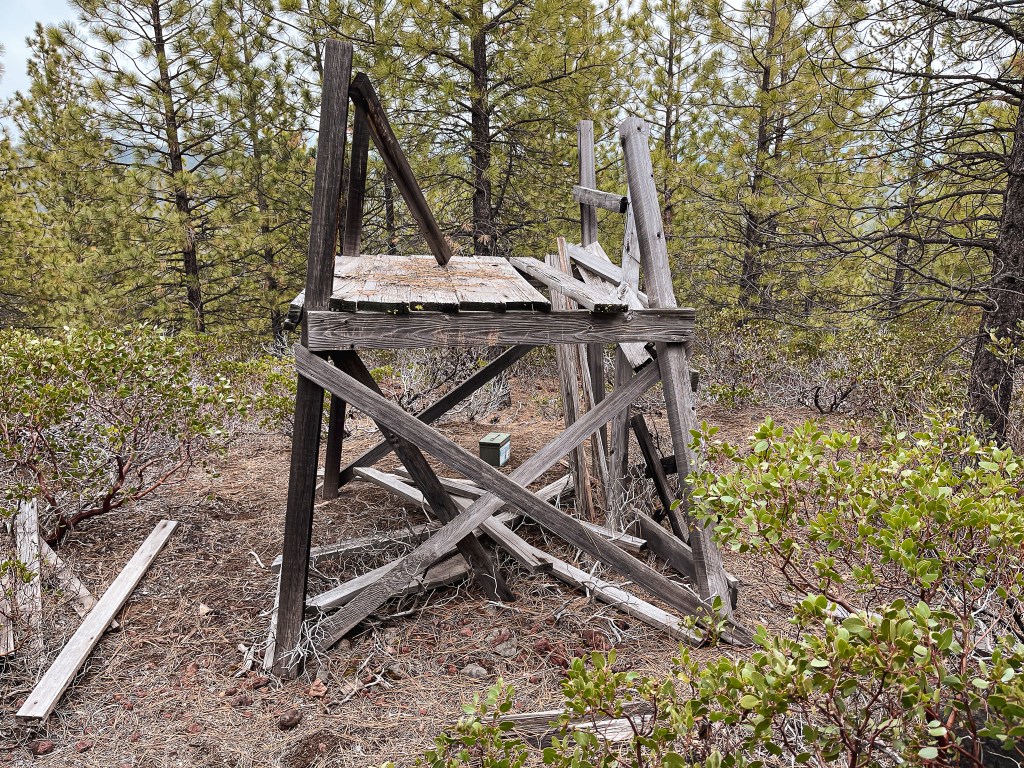
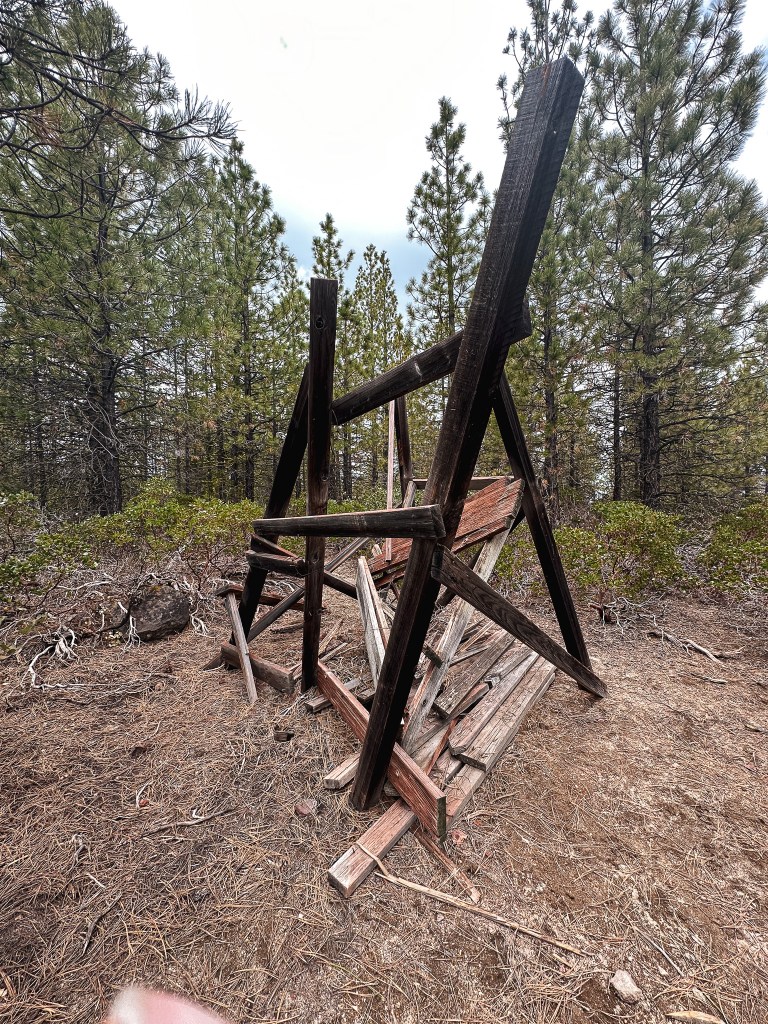
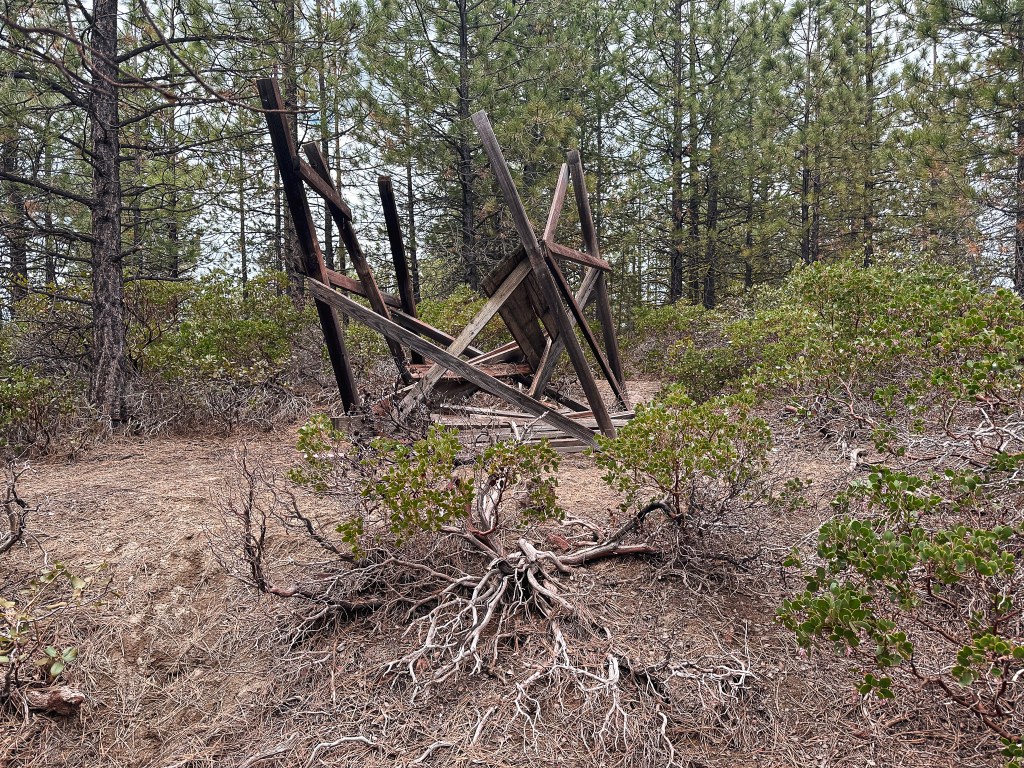
As I got closer to the summit, I could see where they used the road as the fire break. It came within a few feet of the structure. I eventually came to the end of the road with no platform or Garnet in sight. I called out a confused “hello?” and heard Garnet off to the left as he said “over here”. There is a small user trail that continues to the left after the road ends that will take you to the platform tower. It was still standing among the brush, but you could tell it was no longer standing strong. Garnet said some of it had fallen over since he was here last year. The heavy snow had taken its toll and will most likely claim it one of these winters. I would recommend visiting sooner than later if you want to see it while it still stands. I’ve added Garnet’s pictures from the previous year for comparison. We headed back to our car via the same route. Garnet even saw a badger on his walk back, he was ahead of me at the time though so I didn’t see it. Make sure to enjoy the view from the road since the summit is completely over grown with no view to offer.

History.

I’m not sure why the National Historic Lookout Register considers this a Former Fire Lookout Site because the original structure is still there. It states it was removed around 2000, but a visit to the site proves otherwise. The 6′ wooden platform tower was built in 1990 for use while the Spring Butte L.O. was being re-constructed. I don’t believe it had any use after the new lookout tower was completed for Spring Butte.

East Butte L.O.

Oregon Lookouts

Location.

Deschutes National Forest

Status.

Active; Currently standing

Estimated drive time from Portland, OR.

5-1/2 hours

Date visited.

May 14, 2023

Elevation.

6,371′

National Historic Lookout Register.

US 464; OR 61

Trip Report.

Garnet had already visited East Butte back in 2021 during a camping trip to the area with his dad. During his visit the fire lookout was staffed, but he wasn’t invited up given his late arrival. Though we’ve read due to the high traffic of people and ATVs in that area they don’t invite anyone up regardless. They did briefly exchange hello’s while Garnet took pictures around the base before heading back down to the truck. We were in the area again in 2022, but didn’t have enough time to visit East Butte with our other endeavors. This year we found ourselves back here again for a third year in a row given the lingering low level snow across Oregon. It’s a beautiful area, so we didn’t mind.

2021 Photos courtesy of Garnet.

This was the third day of our trip and our intentions were set to see East Butte and China Hat. We debated making the drive out to Pine Mountain afterwards if we finished earlier than expected. This plan was short lived since we didn’t get up as early as we had hoped. We headed out from camp on NF-23 to NF-22 until we reached the 4-way junction with NF-18. If you’re coming in from La Pine, you will head towards the forest via Finley Butte Road which eventually turns into NF-22. We headed north on NF-18 from the junction, if you head south you will end up in Fort Rock. Garnet remembered from his trip back in 2021 that NF-18 was a horrible mess of washboard. We were pleasantly surprised to find it was more recently graveled and graded which made for easy driving in the Civic. It’s also wide enough to be a highway in some sections. We stayed on NF-18 until we reached the signed junction with NF-1850. The NF-1850 road skirts between China Hat and East Butte. Eventually, we came to a weird four way junction where we turned right onto NF-200. We veered left at the fork to continue onto NF-220. We took another left onto NF-700 that started to gain elevation up the butte. This road continues on, but you will want to park at the gated junction with NF-750 that leads to the summit. All the roads getting here were in decent condition minus a few rocks and bumps to avoid. We could tell a grader had recently made some bumps in the NF-700 road that didn’t necessarily improve it. We parked near the sign at the junction, but there is additional parking for a few cars next to the gate as well. Please remember to not block the gate during your visit.

A little ways past the gate you will come to a junction with an ATV trail. You have two options to get to the summit from here. You can either follow the ATV trail that cuts around the southern and eastern side of the slope or you can walk the road that loops around to the northern side. It should be noted this is a popular ATV recreation area and hiking the designated trail comes with its own risk. Garnet decided to hike up the ATV trail this time since he had already walked the road previously. I chose to take the road since my experience with hiking ATV trails hasn’t been the best. There is minimal difference in the mileage, but the ATV track is slightly shorter. My Strava App tracked in around 1.7 miles via the road walk and about 1.4 miles for the ATV track. I made this into a nice 3.10 mile loop by walking up the road and hiking down the ATV trail for comparison. As I was hiking up the road an unmarked white vehicle was driving down from the lookout. We gave each other a wave and I wondered if that was the lookout attendant for the season. There was still snow on the northern slopes of the butte. I could tell the grader had driven up this way as well since the minimal snow on the road had a fresh layer of dirt over it.

Once I reached the summit, my partner confirmed the person I saw was a fire crew member but not the lookout on duty. The fire lookout was still shuttered for the season, but it should be opening up fairly soon. They were up here to scope out the current conditions prior to the season. Since the fire lookout was unoccupied and there was no one there for us to disturb, we climbed the stairs to get a better view of our surroundings. It’s always fun to try and pick out the peaks and other fire lookouts in the area. After taking some pictures, we enjoyed our lunch and headed back to the car. The hike back along the ATV track was very dusty. It had a lot of rolling bumps in it which is probably fun for an ATV but felt unnecessary on foot. Our next stop was to visit China Hat on the neighboring summit. We didn’t make it very far up the road since it ascends on the northern slope and was still covered in snow.

History.

This site was first used for fire detection when an emergency lookout was stationed on the butte in 1930. Between 1931 to 1934 they spent time developing the site each year with a road, then lookout tower, and then garage. The fire lookout constructed was a 14×14 gable-roofed cabin with 30′ round timber tower. The garage was a standard plan T-1E with wood frame and still stands today. This fire lookout was staffed until 1995 when they had to transfer the duties over to Fox Butte. During that time they cut down and burned the existing tower to make room for a new one. The existing tower was completed in 1996 as a replica of the original and duties were transferred back to the site. Though the National Historic Lookout Register lists it as only being a 20′ tower now. They also state that it will only be listed on the Historic Lookout Register until it reaches 50 years old. It is unclear why it would be removed after that time frame. East Butte is still actively staffed every summer.